
Salt intake
Salt: the mineral, the work and the foods it makes
Salt seasons a meal, shapes fermentation and preserves food. Its history follows the people who mine, harvest, trade and transform it, and the choices hidden inside an ordinary packet.
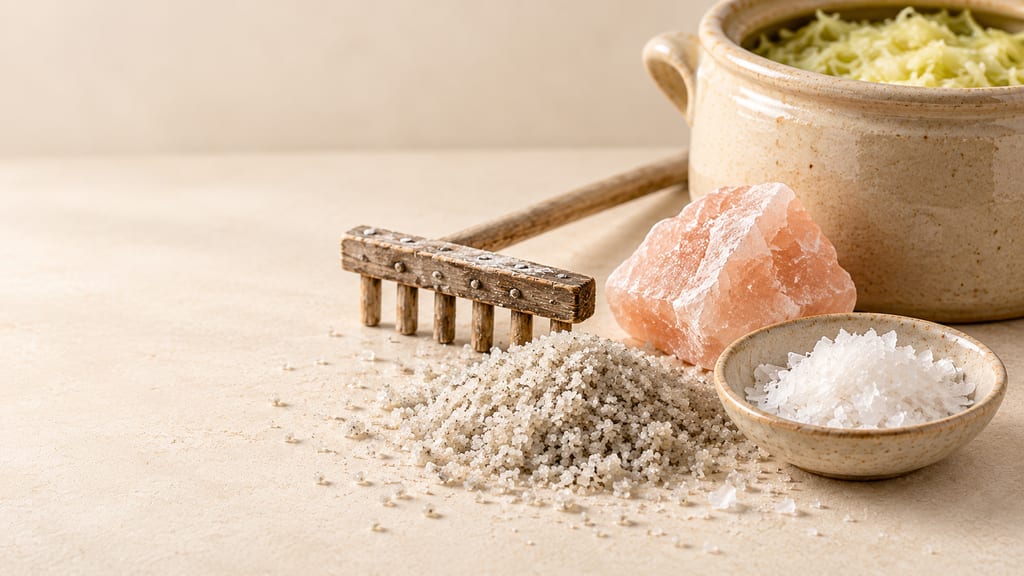
Coarse grey sea salt, white flake salt and pink rock salt: one mineral, harvested from water and from rock.
Salt before the packet
A crystal of salt can begin as rock cut from an underground seam, water drawn from a spring, or seawater concentrated in shallow beds. It can reach the kitchen as a dense grain, a damp grey crystal, a fragile white flake or a seasoning mixed with garlic. Much of that variety rests on the same principal compound, sodium chloride. The differences belong to the source, the work done to it and the way it reaches food.
That is why salt deserves more than a contest between an expensive finishing salt and an ordinary table salt. A cook choosing crystals for a tomato wants something different from a cheesemaker managing a brine. A saltworker tending coastal ponds solves a different problem from someone boiling an inland spring. A maker roasting salt inside bamboo is changing a product that another maker might sell after drying and grading. These are connected subjects, but each has its own process and history.
The history also has several clocks. The geological age of a salt deposit does not date the first meal seasoned from it. An excavated workshop dates production more directly than it dates a particular food. A surviving recipe records what someone instructed a cook to do; it need not record the invention of that preparation. A present-day brand can draw on an old landscape without having existed for centuries itself.
Keeping those distinctions in view makes the story richer. Instead of one substance with a single origin story, salt becomes a meeting point between geology, water, fuel, skilled labour and food. Its practical qualities explain why people sought it. The arrangements for making and obtaining it explain why it could also become a source of income, obligation and conflict.
Finding early saltmaking
Salt dissolves and disappears, so its early history often survives in what making it left behind. At Poiana Slatinei–Lunca in northeastern Romania, repeated fires beside a saline spring built up layers of ash, charcoal and burnt soil. Radiocarbon work places early exploitation at 6050–5500 calibrated BCE. This is strong evidence for production in the Early Neolithic. It does not identify the first person to use salt, or establish whether every early batch went into human food, animal feeding, preservation or exchange.
The durable remains of a salt industry can be quite unlike its finished product. Ceramic vessels, hearths and supports survive where crystals do not. Archaeologists use the term briquetage for fired-clay equipment associated with concentrating brine and forming salt. Identifying such equipment depends on its context and use, rather than treating every vessel found near a salty landscape as a salt pan.
At Zhongba in China, chemical and microscopic work strengthened the interpretation of the pottery. X-ray fluorescence, X-ray diffraction and scanning electron microscopy supported salt production in first-millennium BCE material. Similar ceramic assemblages suggest an earlier sequence, but that suggestion has a different evidential strength from the tested material. The distinction prevents the earliest occupation of a site from becoming an automatic date for every activity carried out there.
Hallstatt in Austria shows how production evidence can meet food evidence. Wooden basins once interpreted as houses or brine collectors were redated to the thirteenth and twelfth centuries BCE. Large quantities of animal bones, mainly pig, helped identify substantial meat processing. The remains connect salt extraction with an organised curing economy. They do not preserve a complete modern ham recipe.
When the food itself comes into view
A short Babylonian recipe makes the culinary evidence unusually direct. The Old Babylonian tablet YBC 4644, broadly dated to about 1900–1600 BCE, contains brief stew and broth instructions. Its wild-pigeon preparation names fine-grained salt alongside fat, dried barley cakes and alliums. Salt had a chosen physical form within a dish. The tablet does not supply the gram weights, pan sizes or cooking schedule that a modern reconstruction might add.
Cato's instructions for salting hams provide another kind of detail. The meat is arranged in salt, moved and rearranged, then subjected to drying, oiling and smoking, with oil and vinegar used later in the sequence. The account shows several operations serving a finished food. It should be read as evidence of Roman practice, not converted into a current preservation recipe without the work needed to establish safe processing today.
Pliny's account distinguishes salts by place, moisture, colour, taste and intended use. He connects moist, readily dissolving salt with prepared food and sharper dry salt with keeping meat. His categories mix observation, reputation and medicinal claims. They cannot be translated directly into modern assays. A red or purple salt in an ancient text is not enough to identify its mineral composition, and an ancient name resembling fleur de sel does not prove that the products are the same.
Archaeology can reveal food processing even when the food itself has not survived. At the Paynes Creek saltworks in Belize, microscopic wear on stone tools indicated cutting fish or meat and working hides. Together with the salt-boiling workshops, the evidence supports the interpretation that preserved marine foods entered the Classic Maya economy. The conclusion is an archaeological argument, rather than a recovered recipe or proof that every workshop made the same product.
The people, rights and obligations behind salt
Saltworks are also arrangements between people. At Maras in Peru, spring water is distributed through channels into stepped evaporation beds. The landscape depends on water management, access to individual ponds and shared knowledge. The communities of Maras and Pichingoto are central to its continuing operation and administration. Calling the salt simply an Andean pink salt removes the people and infrastructure that make it a particular product.
At Kibiro beside Lake Albert in Uganda, women maintain a different system. Saline earth is gathered, leached and boiled to recover salt. Salt gardens and knowledge pass through female lines. This is not seawater poured into a pan, and the soil is part of the collection process rather than an accidental impurity added to finished crystals. Its history belongs with the ownership and transmission of the craft. Published heritage accounts disagree or speak loosely about its precise duration; a confident continuous chronology would conceal that uncertainty.
Control over salt could also support the state. The Han court debate of 81 BCE set defenders of salt and iron monopolies against critics who opposed government competition for profit and its effects on ordinary livelihoods. The defenders linked the revenue to frontier expenditure. The disagreement concerns the organisation of an established economy, rather than the discovery of salt. It shows how the everyday need for a commodity could become a question about what government should do.
The Atlantic salt trade also involved forced labour. Mary Prince's life included enslavement and work in the salt ponds of Turk's Island; her account was published in 1831. Any history that describes only attractive salt landscapes and trading fortunes misses that work and the coercion behind it. Labour conditions are part of a salt's history even when they cannot be read from the crystal.
In India, salt became an instrument of resistance. Gandhi's march began at Sabarmati on 12 March 1930 and led to the challenge to the salt law at Dandi in April. The campaign made an everyday necessity a means of confronting colonial authority. It belongs beside production and culinary history because access to the ingredient was itself the disputed issue.
Water, rock and the cost of concentration
Recovering sodium chloride means separating it from a deposit or removing enough water for crystals to form. In a solar saltworks, seawater or another saline water enters shallow ponds. Sun, wind and the management of the water concentrate the brine. Harvesting is followed, as the product requires, by draining, washing, drying, crushing and screening. A finished solar salt may therefore have undergone considerable processing.
Rock salt follows another route. Machinery cuts or breaks the deposit, and the material is brought to the surface and graded for its market. The source alone does not establish food grade: the same industry can supply food, chemicals, roads or animal feeding. A culinary product needs its own specification and handling chain. A decorative block and a packet of edible crystals are different products even when they began in the same mine.
Solution mining turns underground salt into brine by introducing water and pumping the solution to the surface. Purification can remove calcium, magnesium and other materials before crystallisation. In a vacuum plant, reduced pressure permits boiling at lower temperatures. A succession of evaporators can reuse heat from one stage in the next. The technology changes energy use, consistency and the way crystals are recovered; it does not make the product cease to have a geological source.
Heating brine also appears in much smaller craft systems. The useful question is how the maker concentrates it, what the heat source is, how crystals grow and what happens before packing. Saltverk, for example, describes geothermal heat in its Icelandic sea-salt production. That is a specific production choice. It should not become an unsupported claim that all small saltworks have the same environmental footprint.
The sea-versus-rock distinction remains useful, but it cannot answer every question. Water source, concentration, refining, crystallisation and later treatment each describe a different stage. A clear account follows the salt through those stages instead of asking one attractive origin label to stand for the whole process.
Two harvests from one landscape
Guérande shows why place and grade need separate names. Its grey salt crystallises on the clay bottom of the final salt beds. Fleur de sel forms at the surface and is skimmed before it sinks. Under the protected specification, both are hand harvested, neither is refined or washed after harvest, and neither has added ingredients. Their shared landscape does not erase their different harvests, colour and physical character.
Fleur de sel is therefore not a synonym for every large or delicate crystal. A surface harvest describes where and how crystals are collected. A pyramid or flake describes their shape. Maldon's product is described by its maker as hand-harvested pyramid flakes; that description does not turn Maldon into the generic name for flaky salt from any origin. Equally, the French wording of a grade does not establish that a packet came from Guérande.
These distinctions matter in cooking. A fragile flake can be crumbled over a finished dish so that some of its structure remains when eaten. A coarse, moist salt can be chosen for a different handling or dissolving task. Grinding either one changes its form without creating a new geological origin. Once crystals dissolve completely, their original geometry no longer supplies crunch.
They also matter when choosing a salt. Guérande grey salt and Guérande fleur de sel share a source landscape while offering different harvests and forms. A cook can compare either with another named product by asking how it was collected and what happened after harvest. A package size or a translated spelling does not change that answer. The useful distinctions are between the source, grade and actual product, rather than between slightly different names.
Following an origin label all the way through
Some salt travels before it becomes the product a cook recognises. Hakata no Shio's manufacturing flowchart begins with solar salt imported from Mexico or Australia, dissolved in Japanese seawater. Filtering and heated crystallisation follow, then the coarse and roasted products take different finishing routes. Japanese manufacture and imported starting crystals are both part of that description. Neither can be replaced by the country printed most prominently on the packet.
Pakistan's Salt Range provides another reason to be precise. Khewra is one of several sources of rock salt there, alongside workings such as Warcha and Kalabagh. A broad market name such as Himalayan salt does not identify a particular mine, grade or packing location. The region produces white as well as pink material, and its salt has edible and non-food markets. Traceability belongs to the actual product.
Colour can disguise a different kind of origin problem. A manufacturer describes Hiwa Kai black Hawaiian-style salt as sea salt mixed with activated charcoal from coconut shells. Its technical document identifies Australia as the base-salt origin and Washington as the processing and packing location, while retail country-of-origin wording differs. The Hawaiian-style description is therefore not enough to establish a Hawaiian salt harvest. It also does not make charcoal-black salt the same thing as sulphurous kala namak or roasted bamboo salt.
A useful salt label answers several questions separately: where the raw salt or saline water came from, where it was crystallised or recrystallised, what was added, and where it was packed. A producer may know all of these while the retail name states only one.
Grain, distribution and the timing of taste
Saltiness reaches the tongue after salt dissolves. Grain size, shape and the food carrying the crystals influence that delivery. Fine particles expose a different surface relative to their mass from large dense grains. Thin flakes can fracture easily; powdered salt can coat a surface differently from a coarse topping. These are practical physical properties, rather than evidence that every expensive salt contains a chemically unique seasoning principle.
A controlled study of salted potato crisps found that smaller salt particles dissolved and delivered sodium to saliva faster than larger particles under its chewing protocol. The smaller fraction also produced a stronger peak saltiness response. The finding explains why particle design can matter for surface seasoning. It does not establish that the same grain wins in every soup, dough or food eaten in a different way.
Bulk density adds another variable. A spoonful measures the occupied volume, including spaces between crystals. Equal spoonfuls of a light flake and a dense fine salt need not contain equal masses. NCHFP's pickle guidance explicitly identifies variable flake density as a problem. A recipe based on a specified salt and volume cannot be translated casually into another product because both names end in salt.
Distribution matters as well as total amount. A crystal on the surface provides a local concentration before it disperses. Salt already dissolved through a liquid has lost that textural delivery. Research on model broths also shows that sodium chloride and potassium chloride can produce different effects on bitterness even when both contribute saltiness. The taste of a lower-sodium mixture therefore cannot be predicted by matching saltiness alone.
For a kitchen comparison, first decide what is being compared. Weighing samples controls the amount more closely; using them on a surface preserves the effect of crystal form. Dissolving them removes that particular variable. Neither comparison, by itself, establishes a nutritional advantage or validates a substitution in a preservation process.
Salt makes a fermentation environment
Salt can favour a useful fermentation without being the organism that performs it. In fermented vegetables, it draws out liquid and helps suppress competing microorganisms while acid-producing bacteria develop. The salt and the later acidity have different jobs. The result depends on the vegetables, formulation and conditions, so a successful cabbage method cannot simply supply the concentration for every other food.
This also explains a common confusion about pickles. A fermented cucumber and a quick vinegar pickle reach acidity by different routes. In one, microbial activity produces acid during fermentation. In the other, vinegar supplies acid as part of the preparation. The salt may contribute to flavour and texture in both, but permission to reduce it in a tested quick-pickle recipe does not establish the same option in a fermented one.
NCHFP advises keeping the required salt in its sauerkraut and fermented-pickle recipes. It recommends canning or pickling salt and states that both iodised and non-iodised table salt may be used. Some anticaking materials can make brine cloudy. Cloudiness from an ingredient is a different question from whether a batch has acidified properly; neither a clear jar nor an active-looking jar proves safety.
The denominator in a percentage needs equal care. Salt measured relative to vegetable mass, salt relative to water, and salt as a fraction of the whole solution describe different formulations. Brine surrounding food can also change as water leaves the food and salt moves inward. A number without its basis, ingredients and process cannot do the work of a recipe.
Salt is therefore a process ingredient as well as a seasoning. Its role is clearest when a method states the actual product, quantity and stage of addition, together with the conditions under which the fermentation develops. A speciality salt's story can be worth knowing without making it the appropriate choice for every controlled batch.
Dough, cheese and salted mash use it differently
In bread, salt influences both structure and pace. It strengthens dough handling through its effects on the gluten system and slows yeast activity. Leaving it out can change fermentation and dough behaviour as well as taste. Professional baking expresses salt relative to flour weight; that basis is different from the total mass of a bowl of dough or a surrounding brine. The baker's other controls, including temperature and the amount and maturity of preferment, remain part of the schedule.
Cheesemaking presents a different set of movements. Salt may be mixed into curd, applied to the surface or supplied through a brine. It promotes further whey loss, slows acid development and affects microbial growth and ripening. The same overall salt percentage can conceal a different distribution between surface and centre or a different relationship to the cheese's moisture. The moment at which salt is added can matter as much as its final total.
A cheese brine is also a working medium with its own condition. Calcium balance, acidity, concentration and cleanliness affect the cheese surface and the process. That makes it a subject to study within a particular cheese method, rather than a generic jar of salty water that can be borrowed without qualification. A watery or slimy surface is a process observation to investigate, not a reason to improvise a new preservation rule.
Soy sauce and miso show why salt must be distinguished from the organisms and enzymes around it. In koji-based production, enzymes break down starches and proteins, providing sugars and amino acids. Salted mash then supports the particular fermentation and maturation system, including salt-tolerant bacteria and yeasts. Salt helps restrain unwanted growth; it does not perform starch conversion or protein breakdown itself.
The order matters. Preparing koji, adding brine, fermenting a mash, pressing and heating are different operations. Roasting salt or drying a herb blend is different again. Describing every change as fermentation obscures the useful explanation: what changed, what caused it, and why the maker needed that stage.
Preservation is a process, not a taste
Dissolved salt lowers water activity, the availability of water in a food relative to pure water under the same conditions. Water activity differs from total moisture. A moist food can bind some of its water through dissolved substances; drying changes the system in another way. This is part of how salt makes growth harder for many microorganisms. It is not a declaration that salty food is sterile.
The whole product matters. Salt in the liquid outside a thick piece of food does not immediately describe the centre. A formulation must allow for movement and distribution, and a finished measurement is useful only within a process whose controls are understood. A kitchen salinity reading, a pH reading and a water-activity result measure different properties. None can silently stand in for the others or prove that a needed pathogen reduction occurred earlier.
Fish adds a hazard that later seasoning cannot repair. In susceptible species, poor handling can allow histamine to form. Some organisms associated with its formation tolerate salty conditions. Once histamine is present, normal cooking and freezing do not remove it. A fish can also look and smell ordinary. A description of historical salt fish or garum therefore cannot supply a safe modern method merely by adding a large amount of salt.
Meat curing introduces further ingredients. Sodium chloride, nitrite and nitrate are chemically distinct. Nitrite helps create cured colour and flavour and contributes to control of particular hazards within suitable processes. Nitrate can supply nitrite through microbial reduction; its behaviour depends on the system. Commercial curing products differ in their active ingredients and concentrations, so their names, colours or equal spoonfuls cannot establish interchangeability.
These differences leave plenty of room for practical recipes, but each needs its own evidence. A seasoning brine, a cooked cured bacon, a dried sausage and a salt-only ham are different projects. Their formulation, dimensions, temperature, time, drying and storage need to remain attached to the method that supports them.
When salt itself becomes the preparation
Some salt traditions transform a recovered salt; others use plants as part of collecting and concentrating minerals. Keeping the plant's role visible prevents them from collapsing into a single category called ash salt. A plant can be a fuel, a carrier for seawater, a source of minerals, a filter component or an added flavour ingredient. Those roles can occur together, but they are not interchangeable explanations.
Asin tibuok in Bohol begins with coconut husks soaked in seawater. Drying, burning, making a concentrated brine and repeated heating in specially made clay pots produce the dense salt mass. The finished form and the pot belong to the same craft. The knowledge is transmitted through family practice, and UNESCO placed the tradition on its urgent-safeguarding list in 2025. Its documentary sequence is valuable; a household reconstruction still needs information about materials, source water and the control of the actual process.
Modern moshio uses seawater and seaweed, with methods that vary by maker. The Awaji producer describes its premium product as made from local seawater and seaweed through a largely manual process. A related producer account describes concentrating seawater and infusing it with hondawara seaweed. That is different from mixing dried seaweed into ready-made salt. The preparations can share flavours and ingredients without having the same production history.
Korean bamboo salt begins with sea salt packed inside bamboo and sealed with clay, followed by high-temperature roasting. A manufacturer's account describes repeated roasting and grinding before a final treatment. This establishes a transformed product and a craft sequence. It does not independently establish medicinal claims, exceptional purity or a practical home furnace design. Exact temperatures and repeat counts belong to the chosen maker's process rather than to every product carrying the name.
Smoked, charcoal-treated and sulphurous salts deserve the same precision. Smoke treatment differs from added smoke flavouring; charcoal-black salt differs from kala namak. Each preparation should identify its starting salt, added materials, treatment and intended use. A dark photograph supplies none of those facts on its own.
Blending makes another set of foods
A cook can also make salt into a seasoning by combining it with other foods. Svanuri marili, Svan salt, mixes salt with garlic, herbs and spices in the cooking traditions of Svaneti in Georgia. Its character depends on the particular plants and their preparation, not on the discovery of a new mineral. A regional recipe can be documented without declaring one household's proportions to be a universal formula.
Sesame-and-salt gomashio, citrus salts and herb salts follow different flavour routes. Roasting sesame, grinding spices, distributing peel through salt and drying a herb mixture change what the cook will eat. Understanding a blend means following those operations as well as reading the ingredient list. The base salt provides seasoning while the added foods supply their own aroma, texture and character.
A fresh garlic or herb mixture brings water and a different handling problem from a blend assembled entirely from dry ingredients. Salt in the name does not establish a shelf life.
Blends can also introduce allergens or ingredients hidden by a broad name. Gomashio contains sesame. Insect-seasoned salts such as sal de gusano require the identity and source of the insect, as well as the salt and chile. Seaweed blends need the actual seaweed, and mushroom salts need the mushroom or added aroma identified. These details explain the food more usefully than a list of interchangeable flavour adjectives.
Some of these seasonings can be made in small kitchen batches with ordinary utensils. Others depend on a saltworker's equipment and knowledge. Reading about a craft can deepen the pleasure of using its product without pretending that a brief description contains every measurement and control needed to reproduce it.
Food salts beyond sodium chloride
Chemistry uses the word salt more broadly than the kitchen salt cellar does. Magnesium chloride and calcium sulphate can help coagulate heated soy milk into tofu. Calcium chloride can affect the firmness of produce and has uses in cheesemaking. Their roles depend on the food and process; they are not stronger or weaker versions of ordinary table salt.
Nigari connects this chemistry back to saltworks. The magnesium-rich liquid left after much sodium chloride has crystallised can supply a tofu coagulant. Commercial nigari mixtures and purified magnesium chloride need separate identities. A tofu method has to account for the actual coagulant, soy-milk composition and coagulation conditions, rather than replacing one packet by an equal spoonful of another.
Kansui takes the story toward noodles. It names an alkaline ingredient system that can include sodium and potassium carbonates and other specified salts. Its effects include characteristic noodle texture, flavour and colour. A carbonate's alkalinity has a different job from sodium chloride's seasoning role. Mineral lake extracts and plant-ash alkalis need their own compositional evidence; a regional word translated as potash does not establish pure potassium carbonate.
Sodium citrate and phosphate salts have another set of functions in formulated foods, including buffering, calcium management and emulsifying systems. MSG is the sodium salt of glutamic acid and supplies umami. Its commercial production can begin with fermentation of carbohydrate materials before recovery of the ingredient. That manufacturing history does not make a bag of MSG a live starter culture.
These compounds offer useful recipe connections: tofu, alkaline noodles, cheese sauces and particular baked goods. Their chemical identities should remain separate from the foods made with them. Food grade, concentration and the intended application matter, and a substance's presence in a food-additive register is not a universal household recipe for using it.
Colour, minerals and iodine
The reasons to enjoy a salt can be culinary or cultural without becoming a nutritional claim. Pink salts contain minerals beyond sodium and chloride, but their amount varies. An analysis of 31 pink salts sold in Australia found that ordinary servings did not provide a meaningful contribution of the additional nutrients. One sample exceeded the lead limit used in that study. Neither finding establishes the composition of every salt from the same broad market category.
Iodised salt serves a deliberate purpose. Iodine is needed to make thyroid hormones, and fortification places a controlled amount into a familiar ingredient. Sea salt, kosher salt, Himalayan salt and fleur de sel are not usually iodised unless the label says so. Marine origin alone does not make a salt a dependable iodine source. A claim about many trace minerals is a different claim from a declared fortificant and its quantity.
Potassium-containing lower-sodium salts alter the main formulation by replacing part of the sodium chloride. WHO's 2025 recommendation is conditional and concerns table-salt use by adults in the general population. Its scope excludes children, pregnant women and people whose circumstances impair potassium excretion. It does not establish a substitution in fermentation or curing recipes.
The nutritional and process questions therefore need separate answers. A useful salt specification can support traceability and consistent cooking. A label can identify iodine or potassium additions. A tested preservation method determines what ingredient it requires. None of those questions is settled by colour, the number of minerals in advertising or the geological age of a deposit.
Choosing a salt for the food in front of you
Start with the job. Maldon flakes offer a form that can be crumbled over food. Guérande grey salt and fleur de sel bring different harvests from one landscape. Maras salt carries the story of an inland spring and terraced evaporation beds. Plain iodised salt has a declared nutritional addition, while pickling salt offers the consistency wanted in the preservation guidance that specifies it. These are different reasons for choosing an ingredient.
Read the whole identity before substituting. Fine, sea, iodised and a producer's name can all describe one purchase. A damp salt and a dry salt may handle differently; a smoked or garlic salt adds more than sodium chloride. Where the formulation matters, use the product and measurement basis the recipe actually names. Where crystals are part of the finished experience, notice their size, fragility and distribution.
Food grade is a separate question from an attractive source. A caravan slab, a museum demonstration or an industrial saltworks does not identify a current culinary product. The broader chemical category also includes substances unsuitable for eating. Road salt, bath salts and cleaning products do not become kitchen ingredients because their names contain salt. A traceable food product lets the cook ask the more interesting questions: how was it made, what does it bring to this dish, and why choose it here?
Related
Discussed in this article
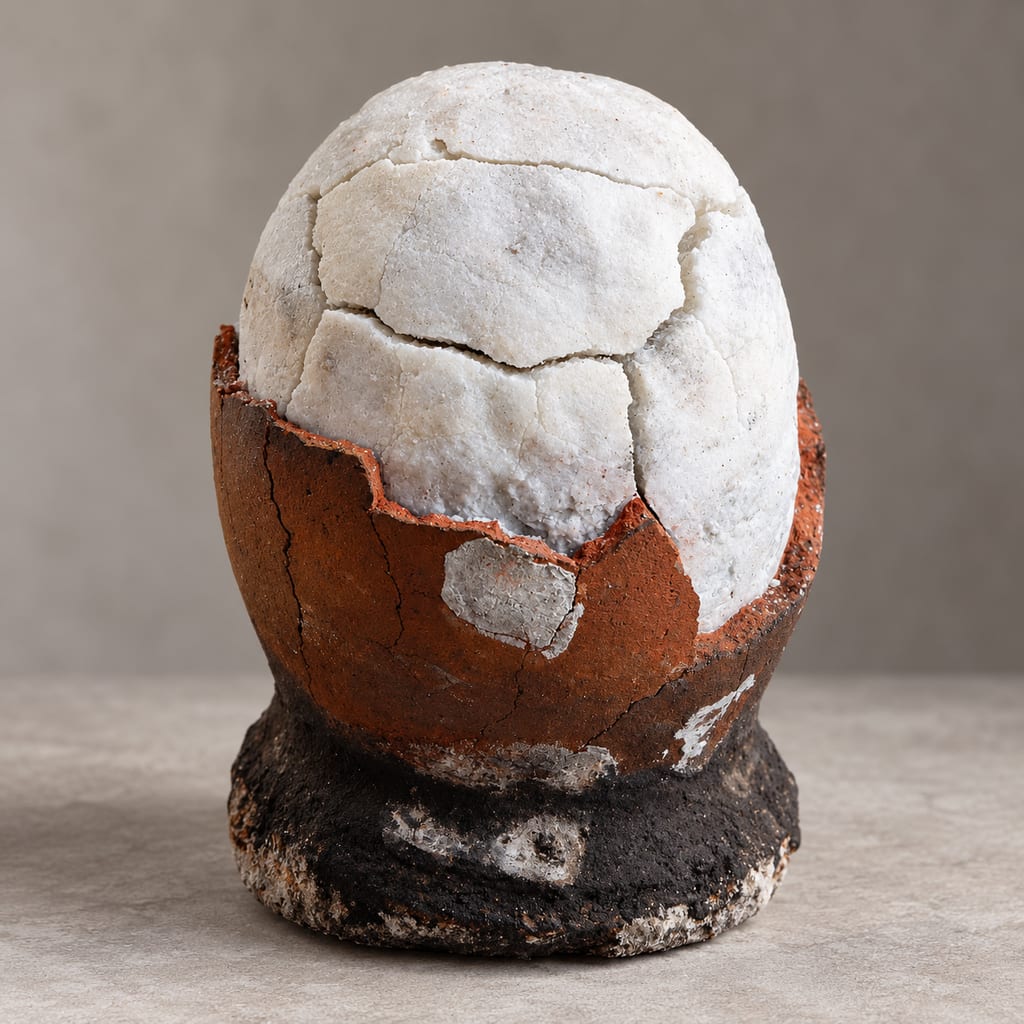
Alburquerque Asin Tibuok
Asin tibuok is a Boholano salt-making craft that turns seawater-soaked coconut husks into a salt-rich ash, brine and formed sea salt in specialized clay pots. This record follows one published account of the community process; it is not a validated household formula.
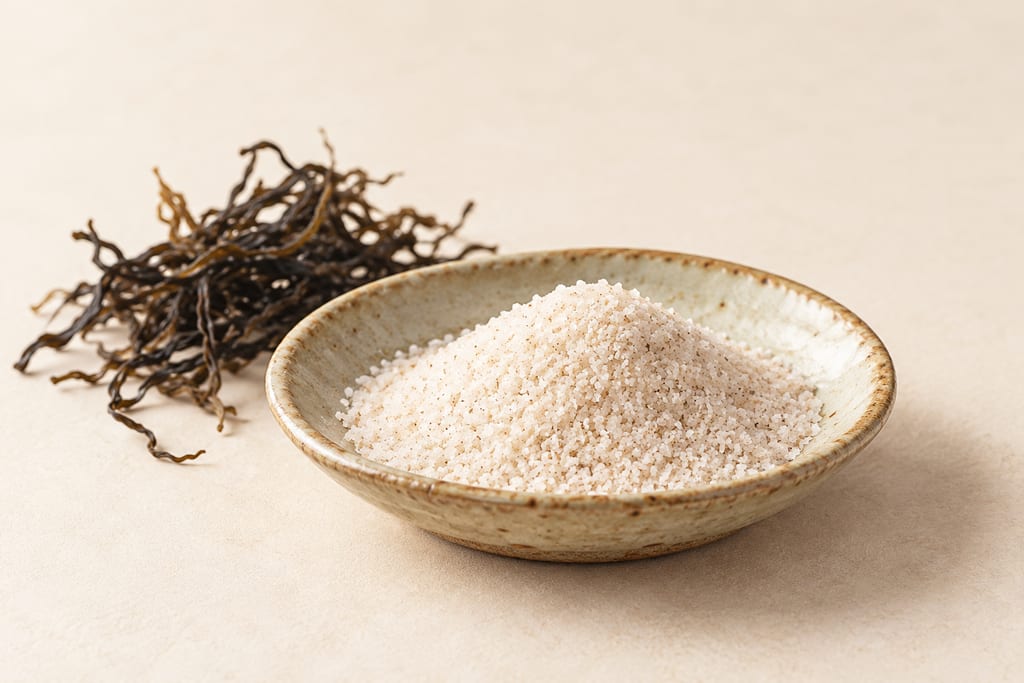
Amabito no Moshio
Amabito no Moshio is a modern, pale beige Japanese seaweed salt made from Seto Inland Sea water and hondawara seaweed. Its documented factory method concentrates filtered brine in kettles, then separates and dries the salt.
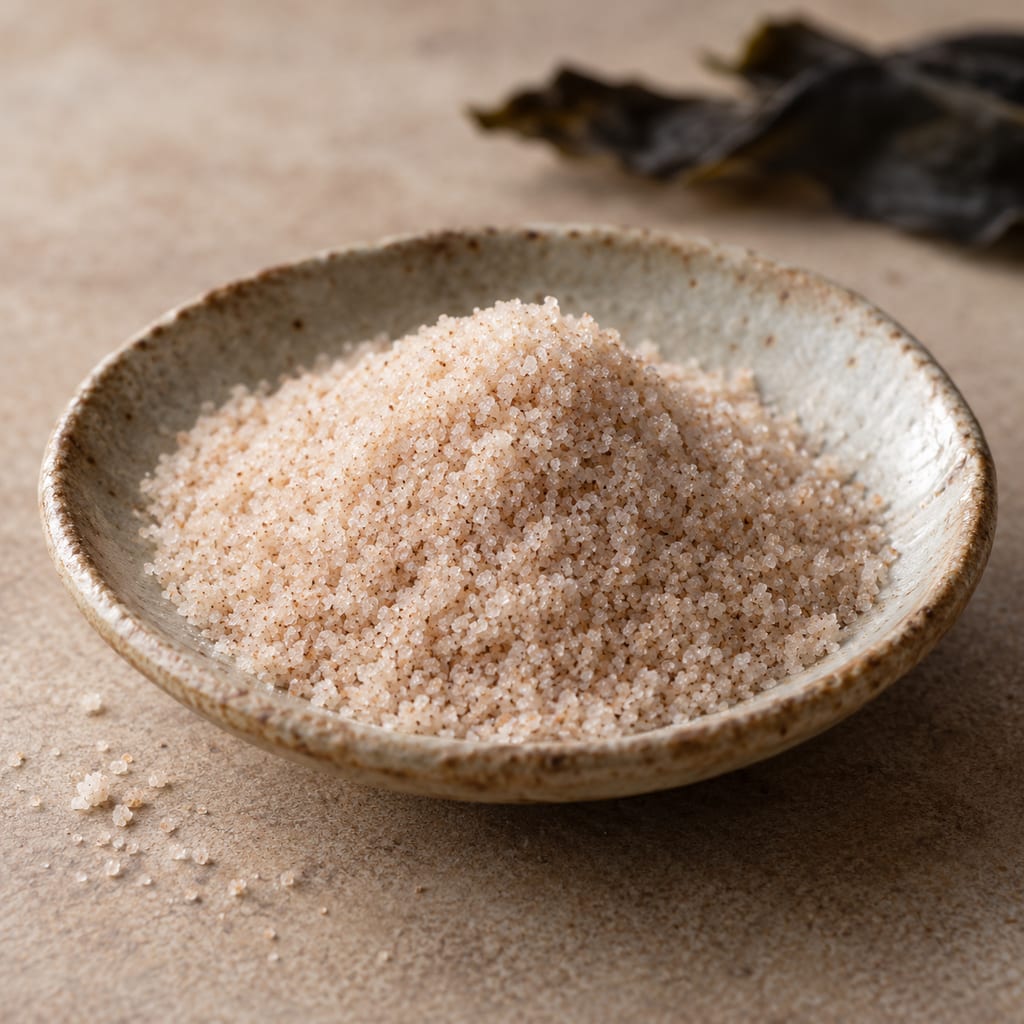
Awaji moshio
Awaji moshio is a modern Japanese seaweed salt made by TaDa PHILOSOPHY from Awaji Island seawater and seaweed. Its premium process concentrates brine, extracts seaweed flavor, then crystallizes, separates, dries and grades the salt.
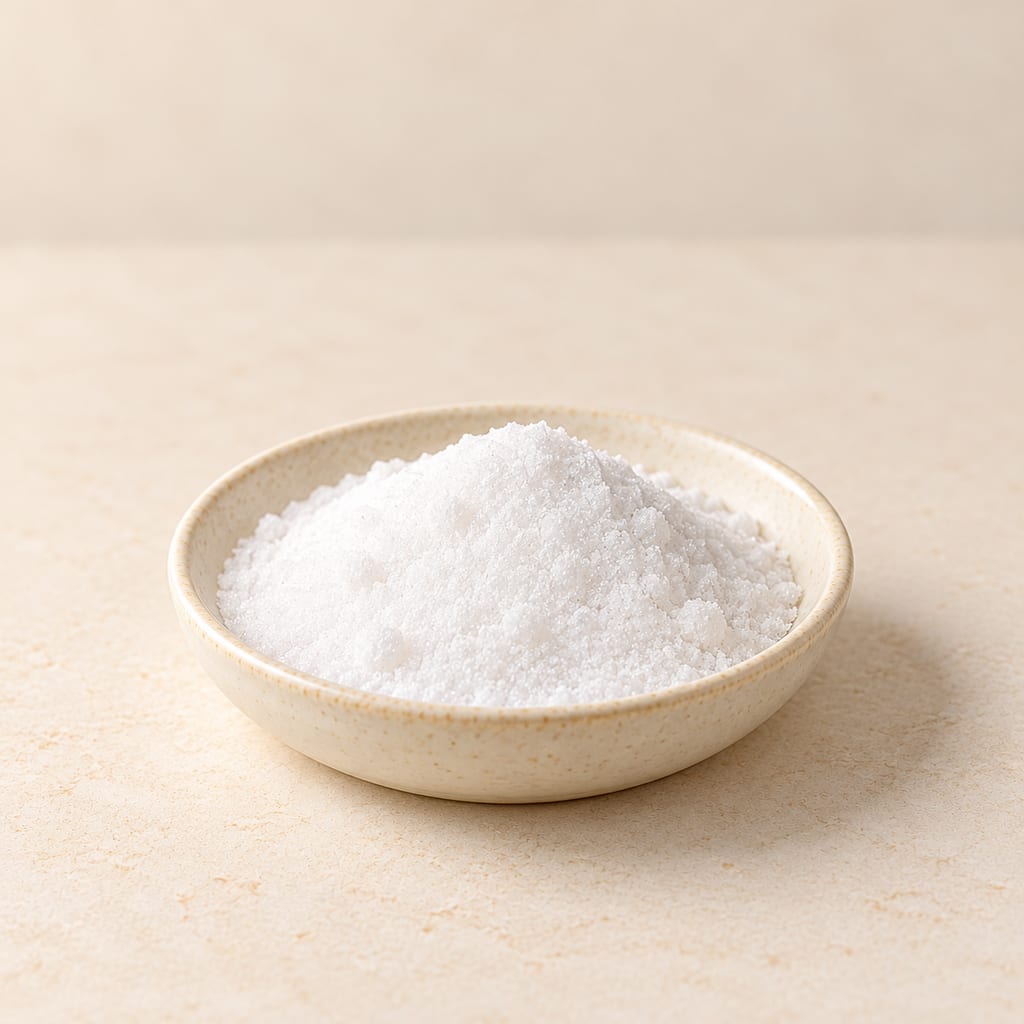
Baking soda
Baking soda is food-grade sodium bicarbonate, a single alkaline powder that releases carbon dioxide when it meets acid in a wet batter. It lifts quick breads without a living culture.
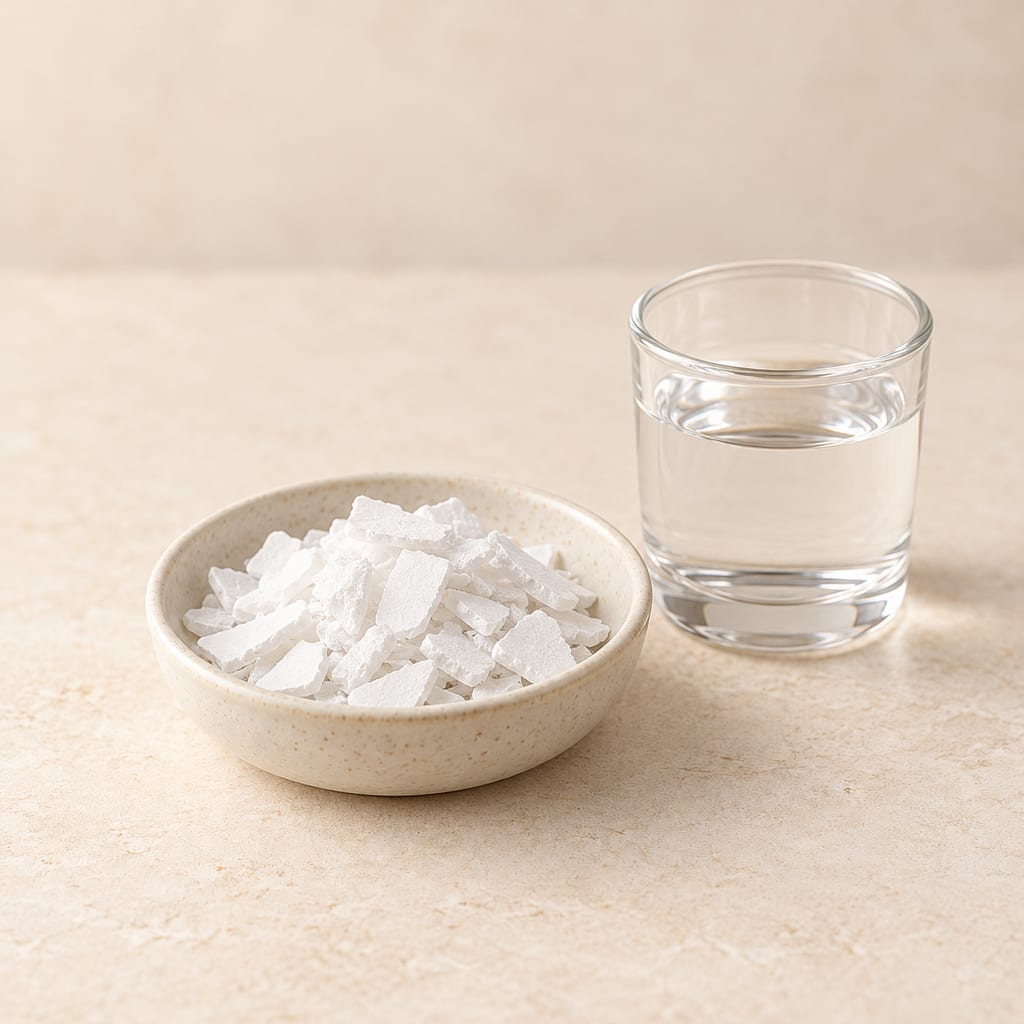
Calcium chloride
A soluble calcium salt used to support cheese curd formation, balance cheese brines, reinforce some plant tissues and adjust brewing water.
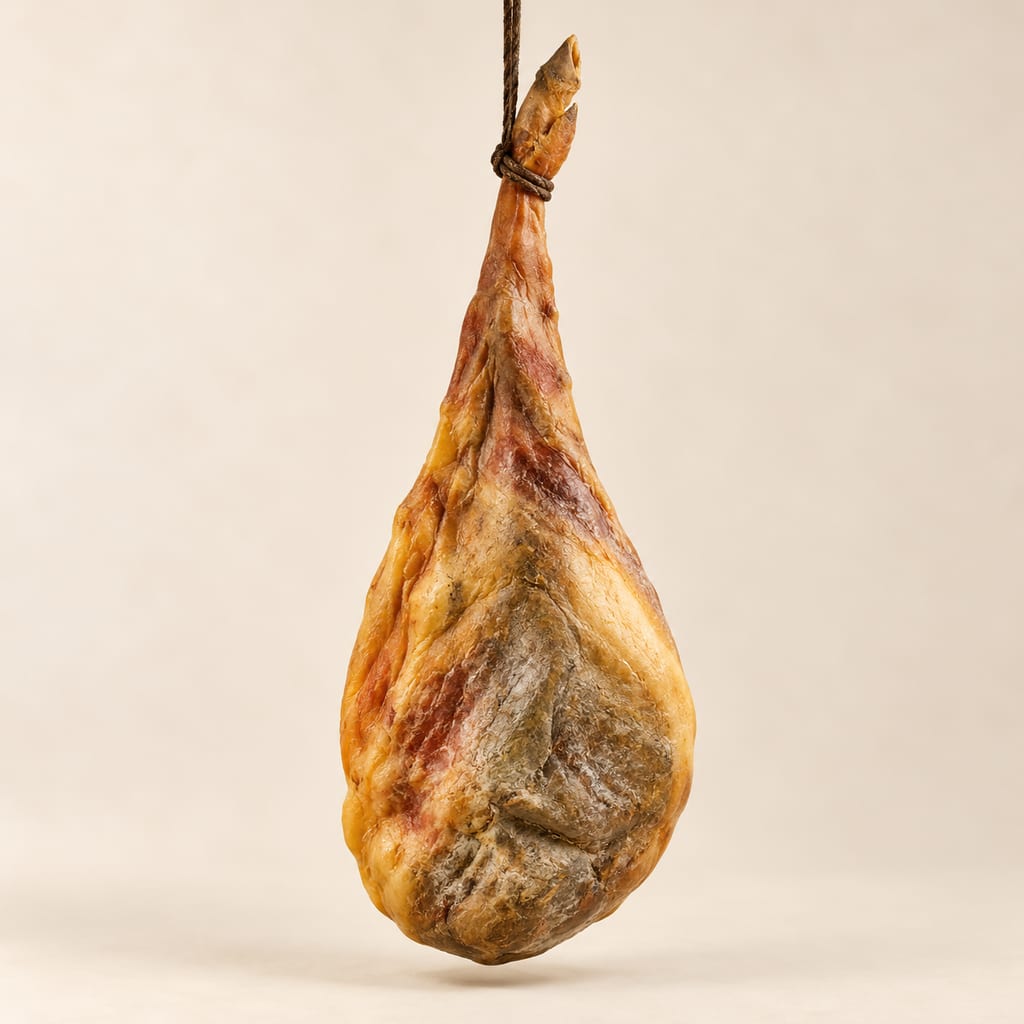
Cato’s salted ham
Cato the Elder records a second-century BCE sequence for salting, air-drying, and smoking ham. This historical account is not a validated modern curing protocol.
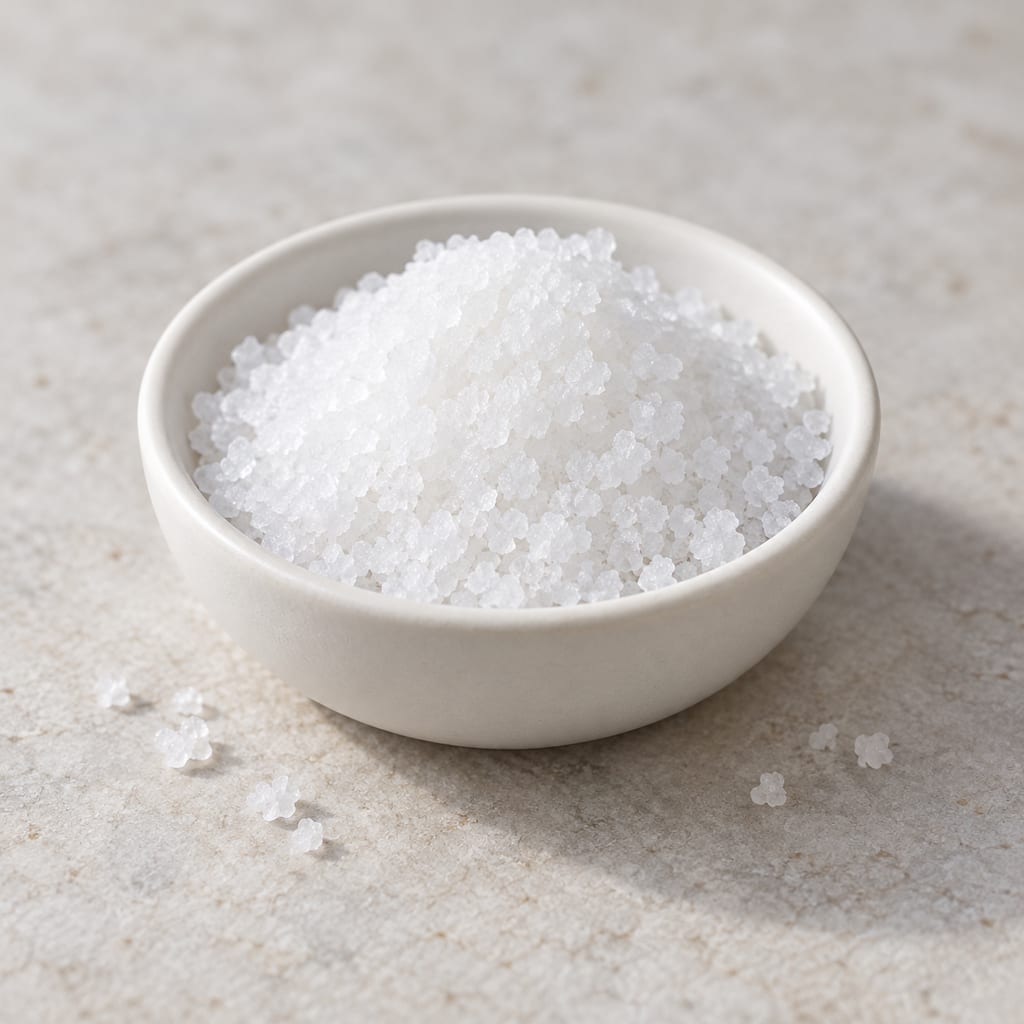
Cheese salt
Food-grade sodium chloride selected for cheesemaking seasons curd and changes its moisture, microbial environment and rind; grain and application must suit the particular cheese.
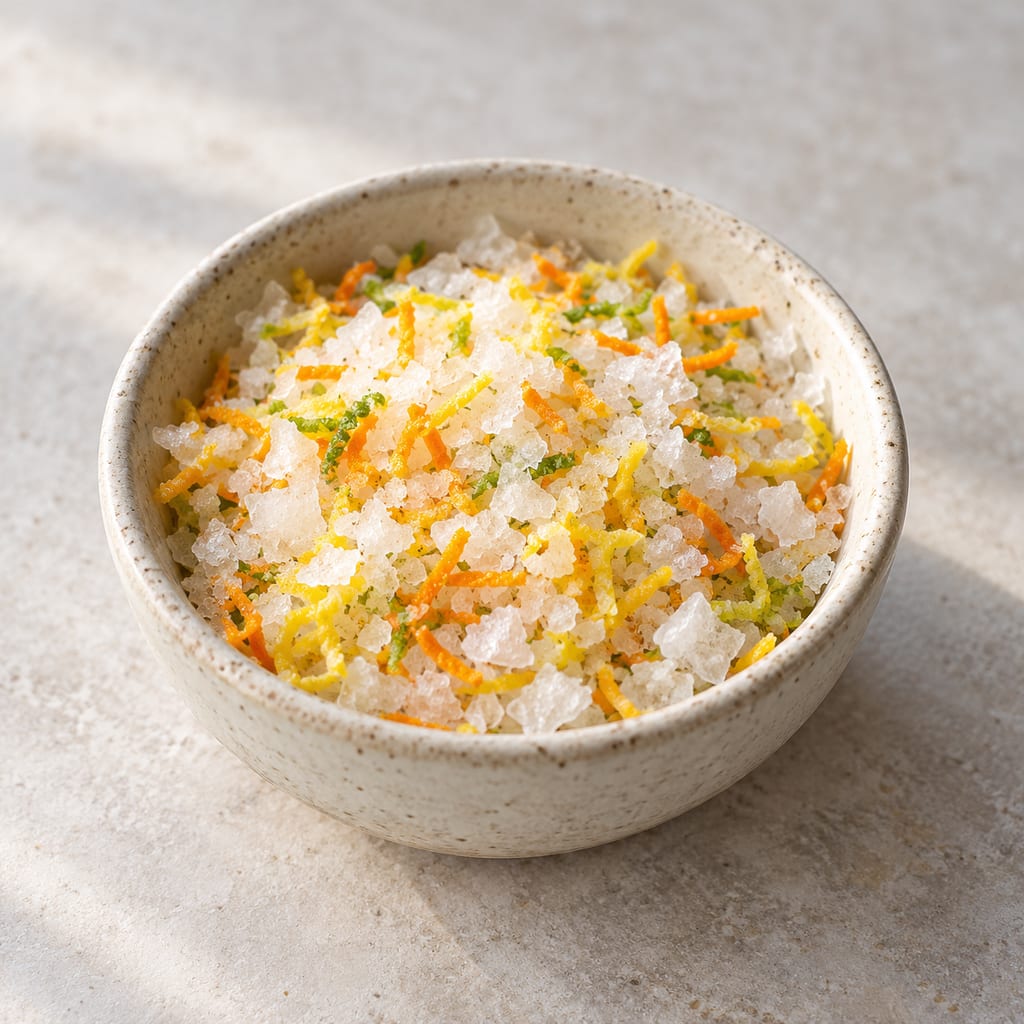
Citrus salt
Citrus zest is rubbed into coarse or flake salt and dried on a tray. This peel-based seasoning preserves the chosen citrus aroma without adding juice.
Community
No community contributions have been published for this entry yet.
Share what you made
Sign in to contribute. Published comments and photos are free to read.
Sources
Olivier Weller and Gheorghe Dumitroaia; Antiquity
The earliest salt production in the world: an early Neolithic exploitation in Poiana Slatinei-Lunca, RomaniaCited in: Finding early saltmaking
Rowan Flad and colleagues; PNAS
Archaeological and chemical evidence for early salt production in ChinaCited in: Finding early saltmaking
Cuneiform Digital Library Initiative; Klaus Wagensonner and Eckart Frahm
A Babylonian Cookbook: YBC Highlights 91Cited in: When the food itself comes into view
Cato; Loeb translation reproduced by LacusCurtius, University of Chicago
Cato On Agriculture, sections 158–162Cited in: When the food itself comes into view
Pliny; Bostock and Riley translation, Perseus Digital Library
Natural History, Book XXXICited in: When the food itself comes into view
Heather McKillop and Kazuo Aoyama; PNAS
Salt and marine products in the Classic Maya economy from use-wear study of stone toolsCited in: When the food itself comes into view
Peru Ministry of Culture; UNESCO World Heritage Tentative List
Salt Mines of MarasCited in: The people, rights and obligations behind salt; Choosing a salt for the food in front of you
Uganda Ministry of Tourism, Wildlife and Antiquities; UNESCO World Heritage Tentative List
Kibiro Salt Producing VillageCited in: The people, rights and obligations behind salt
Columbia University, Asia for Educators; historical text in translation
A Record of the Debate on Salt and IronCited in: The people, rights and obligations behind salt
University of Oxford Faculty of English
The History of Mary Prince by Mary PrinceCited in: The people, rights and obligations behind salt
Gandhi Heritage Portal
Background to the Salt SatyagrahaCited in: The people, rights and obligations behind salt
Morton Salt
From Morton to YouCited in: Salt before the packet; Water, rock and the cost of concentration
The Salt Association
How Do You Make Salt?Cited in: Salt before the packet; Water, rock and the cost of concentration
Institut national de l'origine et de la qualité
Sel de Guérande ou Fleur de sel de GuérandeCited in: Salt before the packet; Two harvests from one landscape; Choosing a salt for the food in front of you
Maldon Salt
Our SaltCited in: Salt before the packet; Two harvests from one landscape; Choosing a salt for the food in front of you
Punjab Mineral Development Corporation
Rock SaltCited in: Following an origin label all the way through
SaltWorks
Hiwa Kai Black Hawaiian-style Sea Salt, fine: certificate of analysisCited in: Following an origin label all the way through; When salt itself becomes the preparation
SaltWorks
Hiwa Kai Black Hawaiian-style Sea Salt, wholesaleCited in: Following an origin label all the way through
Ruben Rama and colleagues; Journal of Texture Studies; University of Nottingham repository
Impact of salt crystal size on in-mouth delivery of sodium and saltiness perception from snack foodsCited in: Two harvests from one landscape; Grain, distribution and the timing of taste
Primary research, Physiology & Behavior; PubMed Central
Sodium, but not potassium, blocks bitterness in simple model chicken brothsCited in: Grain, distribution and the timing of taste
National Center for Home Food Preservation; USDA guidance
Salts Used in PicklingCited in: Two harvests from one landscape; Grain, distribution and the timing of taste; Salt makes a fermentation environment; Colour, minerals and iodine; Choosing a salt for the food in front of you
National Center for Home Food Preservation; USDA guidance
General Information on PicklingCited in: Salt makes a fermentation environment
King Arthur Baking, Professional Reference
SaltCited in: Dough, cheese and salted mash use it differently
Arthur Hill and Mary Ann Ferrer; University of Guelph
Cheese Making Step-by-Step: SaltingCited in: Dough, cheese and salted mash use it differently
Japan Ministry of Agriculture, Forestry and Fisheries
Soy sauce, miso, other seasoningsCited in: Dough, cheese and salted mash use it differently
Japan Ministry of Agriculture, Forestry and Fisheries
しょうゆの製造法Cited in: Dough, cheese and salted mash use it differently
US Food and Drug Administration
Water Activity (aw) in FoodsCited in: Salt makes a fermentation environment; Preservation is a process, not a taste
US Food and Drug Administration
Fish and Fishery Products Hazards and Controls Guidance, chapter 7Cited in: Preservation is a process, not a taste
USDA Food Safety and Inspection Service
What is curing?Cited in: Preservation is a process, not a taste
Canadian Food Inspection Agency
Preventive control recommendations on the use of nitrites in the curing of meat productsCited in: Preservation is a process, not a taste
UNESCO Intangible Cultural Heritage
The practice of making Asin TibuokCited in: When salt itself becomes the preparation
Ehime Hyakkasen product programme; Hakataengyou
Saredo Salt MoshioCited in: When salt itself becomes the preparation
Insan
Bamboo salt manufacturing processCited in: Salt before the packet; When salt itself becomes the preparation
Georgian National Tourism Administration, Georgia Travel
Svan SaltCited in: Blending makes another set of foods; Choosing a salt for the food in front of you
USDA Agricultural Marketing Service
2024 Technical Report: Calcium Chloride, Handling/ProcessingCited in: Food salts beyond sodium chloride
World Instant Noodles Association
Frequently Asked Questions: kansuiCited in: Food salts beyond sodium chloride
US Food and Drug Administration
Questions and Answers on Monosodium Glutamate (MSG)Cited in: Food salts beyond sodium chloride
Flavia Fayet-Moore and colleagues; Foods; Macquarie University repository
An Analysis of the Mineral Composition of Pink Salt Available in AustraliaCited in: Colour, minerals and iodine
NIH Office of Dietary Supplements
Iodine: Health Professional Fact SheetCited in: Colour, minerals and iodine; Choosing a salt for the food in front of you
World Health Organization
Use of lower-sodium salt substitutes: WHO guidelineCited in: Colour, minerals and iodine
University of California Agriculture and Natural Resources, Master Food Preserver
Citrus SaltCited in: Blending makes another set of foods
University of California Agriculture and Natural Resources, Master Food Preserver
Fragrant Herb SaltCited in: Blending makes another set of foods
World Health Organization
Launch of lower-sodium salt-substitute guideline: road to finalizationCited in: Colour, minerals and iodine
Gaps
- Historical colour names do not establish chemical composition.
- Incomplete traditional methods do not establish household recipes or storage limits.
Updated 2026-10-26