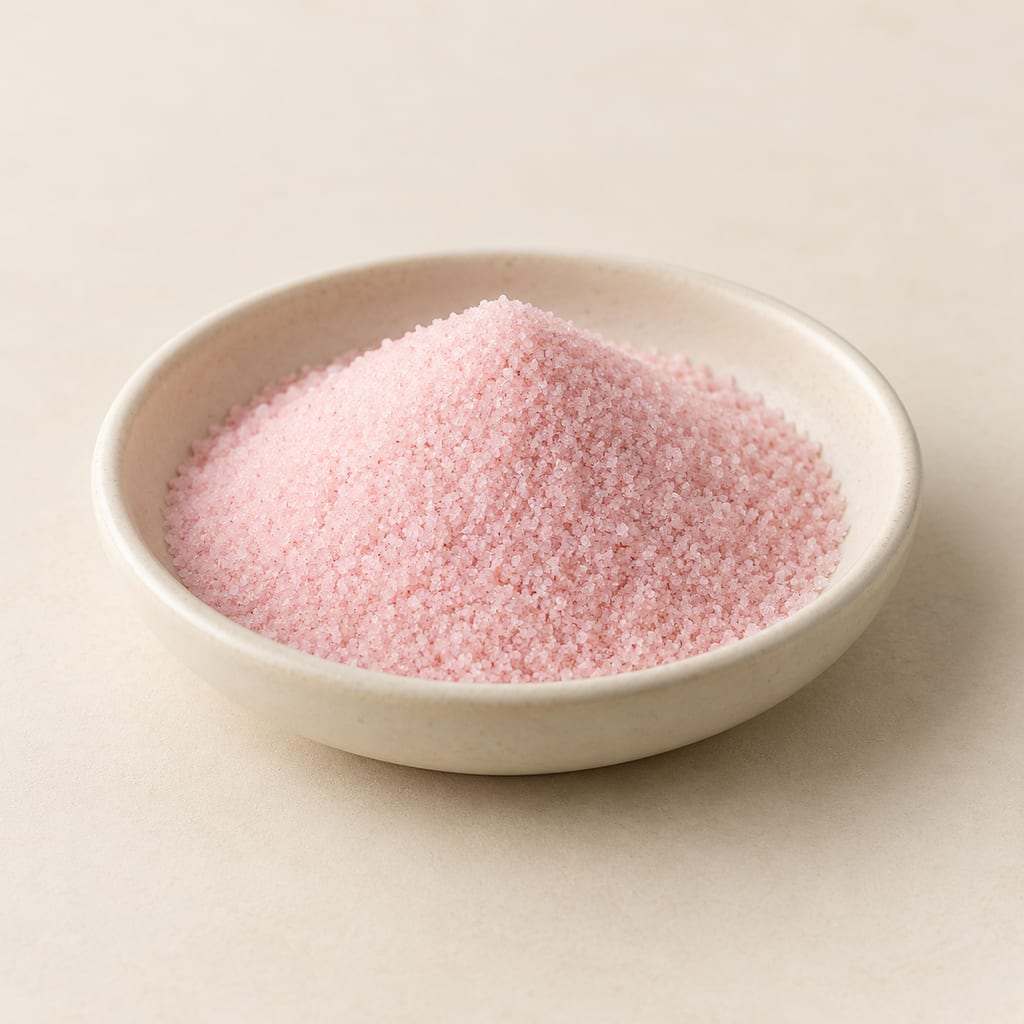
Insta Cure #1
Insta Cure #1 is a measured salt and sodium nitrite blend used in specified meat-curing methods, including bacon and some sausages. It differs from nitrate-containing Cure #2 and must be matched to the recipe and product.
 FermenteaWhere food goes to change
Salt
Curing salts are measured blends of sodium chloride with sodium nitrite, or nitrite and nitrate, used to cure meat. Cure #1, Cure #2 and proprietary mixes differ in composition and in the processes they suit.
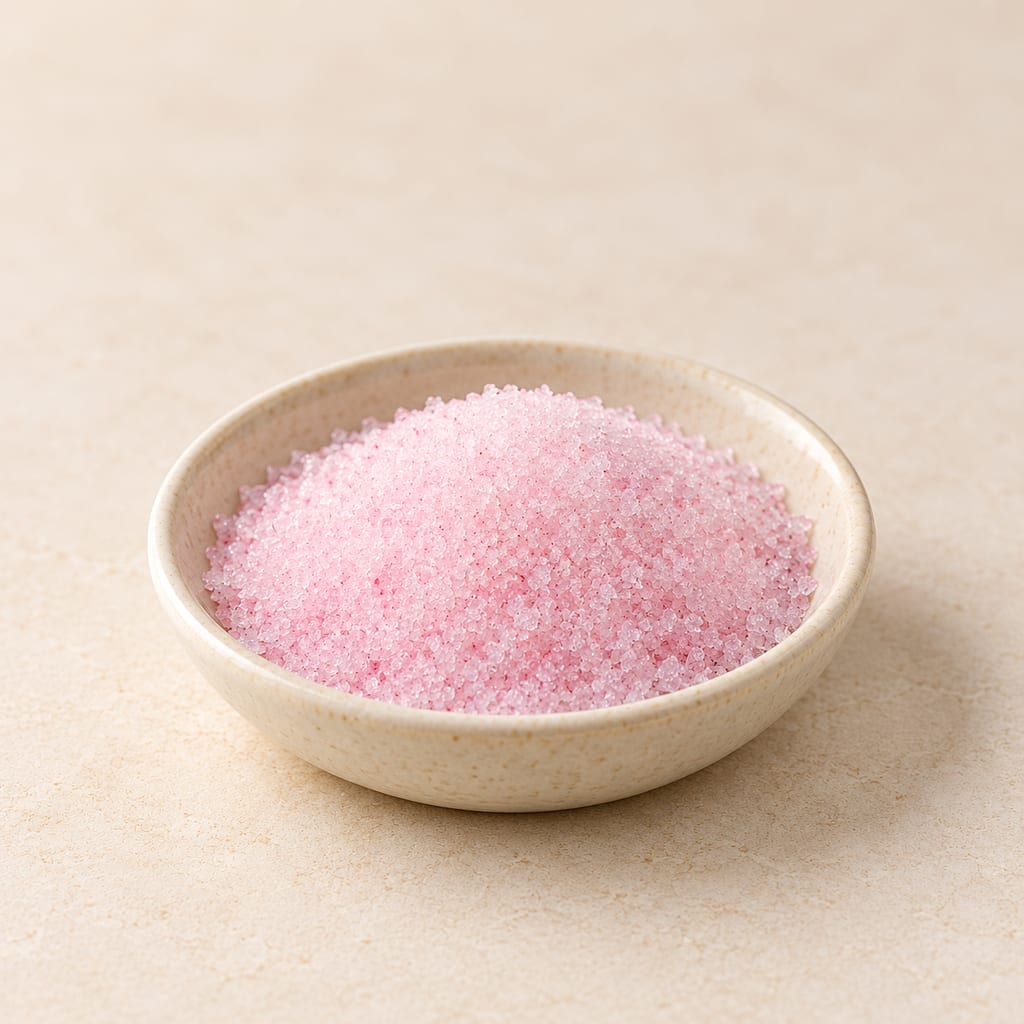
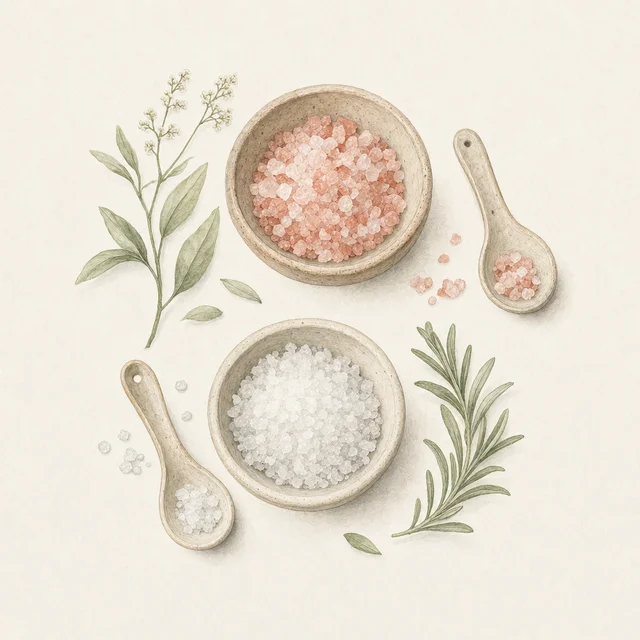
Curing salt is a family name. It covers a salt blend containing sodium nitrite, a blend containing both sodium nitrite and sodium nitrate, and the proprietary mixes that add sugar, flavourings or other preservatives. The sodium chloride in ordinary salt is the main ingredient of every one of them, but salt alone does not cure in this sense. The cure is the nitrite, and sometimes the nitrate, that has been diluted into salt so a few grams can be spread through kilograms of meat.
Two names dominate home use. Prague Powder #1, also sold as Curing Salt #1 or Insta Cure #1, contains 6.25% sodium nitrite and 93.75% salt, according to Oregon State University Extension. Prague Powder #2, sold as Curing Salt #2 or Insta Cure #2, includes up to 4% sodium nitrate as well as 6.25% sodium nitrite; the extension service describes the nitrate as a slower, time-release curing agent and says the blend is meant for cured meats that are not cooked before eating, such as salami or prosciutto. A current Sausage Maker listing for naturally coloured Insta Cure #1 declares 6.25% sodium nitrite with annatto, while its #2 listing declares nitrite, nitrate, salt and annatto and states that the product is not for brine or wet curing. The percentages describe particular formulations, so the label on the tub in hand is the authority for that blend.
Colour is the other thing to read correctly. Most curing salts are dyed pink so nobody mistakes them for table salt. Himalayan pink salt is a different thing: it is pink from trace minerals and contains no curing agent. Proprietary products such as Morton Tender Quick combine nitrite or nitrate with salt, sugar and other ingredients and follow their own directions. They are not synonyms for Cure #1 or #2, and a recipe written for one is not automatically right for another.
Curing meat with salt is old. The American Meat Science Association traces it to the Sumerian culture of the Tigris and Euphrates valleys around 4000 BC. Salt of that period was impure, and it is commonly believed that the saltpetre (potassium nitrate) in it helped meat keep a lasting red colour; longer storage life was noticed soon after. No text says when processors learned that nitrite, not nitrate, was the working agent. Experiments in the late 1800s showed that nitrate in a cure was converted to nitrite by nitrate-reducing bacteria, since nitrite turned up in meat and pickle when only nitrate had been added. In 1899 two researchers, Lehmann and Kisskalt, separately concluded that the typical colour of cured meat belonged to nitrite and not nitrate.
That knowledge allowed processors to add nitrite directly instead of waiting for bacteria to make it. The USDA authorised nitrite in meat and poultry curing beginning in 1925, and Oregon State describes nitrite and nitrate salts as in commercial use since at least the 1920s. Diluting the active salt in ordinary salt made a small, known addition possible; the names Prague Powder and Insta Cure are modern trade names for such dilutions. The practice has not been free of doubt. In the 1970s a report that nitrosamines could form in cured meat made nitrite controversial, and a generation of research followed on how to cure with less risk of them, including the rule that bacon may not be made with nitrate and must contain a cure accelerator.
Each ingredient of a cure has its own job. Salt removes moisture from the meat and draws salt in, lowering water activity, and Oregon State notes that high salt levels prevent the growth of pathogens, spoilage bacteria and most fungi. Nitrite reacts with the meat pigment myoglobin through nitric oxide to form the stable pink pigment of cured meat, adds the characteristic cured flavour and slows rancidity. The American Meat Science Association calls it a unique ingredient, because no known substitute reproduces its colour, flavour and antimicrobial properties together.
Nitrite is also a safety measure. Oregon State describes curing salts that include nitrite as an effective inhibitor of Clostridium botulinum growth and toxin production, and notes that bacon can be made without nitrite only if it is kept below 40 degrees Fahrenheit throughout. The USDA's Food Safety and Inspection Service treats nitrite together with salt as one hurdle among several in fermented, salt-cured and dried foods. Formulation, fermentation, time, temperature, drying, water activity and evidence that the process works all count, and a pink interior shows none of these.
Nitrate is a reservoir. It does nothing until bacteria reduce it to nitrite, and FSIS notes that the rate and amount depend on bacterial numbers and on temperature, moisture, salt and pH, which makes the result hard to control. This is the real difference between the two common blends. Cure #1 supplies nitrite at once, and Oregon State recommends it for bacon. Cure #2 supplies nitrite and a nitrate reserve, and is meant for meats cured over a long time and eaten uncooked. A longer cure does not by itself prove nitrate is needed, and the number on the tub does not prove the process has the nitrate-reducing bacteria to use it. FSIS says nitrite alone can be used in fermented products or combined with nitrate for long-term processing, and recommends nitrite rather than nitrate in inspected establishments because nitrate reduction is harder to manage.
Vegetable products can stand in for the sodium nitrite in a label, though not for a measured blend. Many plants are naturally high in nitrate, and processors use celery juice powder, parsley, cherry powder, beet powder or spinach in their formulations. Oregon State explains that because no nitrite or nitrate ingredient has been directly added, such bacon is legally natural, uncured bacon, and that the risk of nitrosamine formation is similar to that of traditionally cured bacon. The American Meat Science Association adds that in the United States the label uncured is reserved for products without purified or synthetic nitrate or nitrite, and that products so labelled often have the same colour, aroma and flavour as their cured counterparts. Uncured therefore does not mean that no nitrite is present.
A vegetable powder is a different material from a pink cure. Its nitrate has to be converted to nitrite, usually by a culture, before it can cure, and the quantity depends on the powder and the conversion. A cook who swaps celery powder for Cure #1 gram for gram is changing the recipe, not following a substitution.
A sausage formula that names a curing blend gives it a line of its own, apart from table salt. The two lines do different work. The salt seasons and lowers water activity; the blend delivers the nitrite. The shape of the food matters as well. A ground, stuffed sausage spreads the cure through the batter and dries from the casing inward, while a whole muscle, such as a ham, takes salt in slowly from the surface. Oregon State lists three ways to cure bacon: dry curing with salt and curing salt rubbed on the pork belly, immersion in a brine, and pumping the brine into the meat. Immersion is usual at home and pumping is usual in factories.
Regulation follows the same distinctions. The American Meat Science Association summarises US rules, as they stood in 2014, as limits on in-going nitrite by product: up to 200 ppm for pumped or massaged cured meats other than bacon, up to 156 ppm for comminuted products, 120 ppm for bacon together with 550 ppm of erythorbate or an equivalent, and 625 ppm for dry-cured products. The same summary says the USDA did not allow nitrate in bacon. These limits are measured against the weight of the meat block, for commercial processors, and they are not a home dose. The European Union amended the nitrite and nitrate entries in Annex II of its additives regulation through Regulation (EU) 2023/2108, and Great Britain keeps its own Register of Food Additive Authorisations. Each jurisdiction states its limits by food category.
Oregon State's home bacon recipes cure the pork belly in a refrigerator at 40 degrees Fahrenheit for 5 to 7 days, rinse it, and cook it to a minimum internal temperature of 160 degrees Fahrenheit, using Curing Salt #1 in the amounts its tested recipes give. The publication warns that nitrite and nitrate salts are relatively toxic and must be used in the quantities established in researched recipes. It does not recommend Prague Powder #2 or other nitrate-bearing blends for bacon, because nitrate is likely to produce more nitrosamines when the bacon is cooked at high temperatures.
Treat a curing blend as a measured additive, not as seasoning. Keep it in its labelled package, closed, and apart from ordinary salt and spices, since a pink tub is easily mistaken for a pink spice and pure sodium nitrite is far more concentrated than any cure blend. Check the label for its dye, carrier and other ingredients, because these differ between brands. Allergen and cross-contact information, shelf life and storage conditions all belong to the product on the shelf, and none is the same for every brand.
Nitrite and nitrate also have a health context beyond their use in curing. The UK Food Standards Agency published a rapid evidence assessment on 1 October 2025 covering literature from 2016 to 2024. It concluded that the evidence linking intake of these additives with cancer and other outcomes is inconclusive; individual studies reported some associations, but the agency rated their certainty low because results were inconsistent. It also found that higher cooking temperatures, longer cooking times and curing with nitrite salts are associated with higher levels of nitrosamines and other N-nitroso compounds. Oregon State explains the chemistry. In cured meat the natural breakdown of proteins creates amines, and these combine with the added nitrite to form nitrosamines, some of which are carcinogenic in test animals at high doses. Cooking at high temperature encourages more of them, fried bacon is one of the larger sources in the human diet, and smoked fish contains them too. Its practical advice for bacon follows: avoid cooking to well done, since burned bacon contains measurable amounts, and note that bacon cooked in a microwave develops fewer than fried bacon. These findings concern the finished meat and how it is cooked. They are not a reason to leave nitrite out of a long dry cure or to add extra to a short one.
The percentages given for named retail products describe the listings read for this page and can change with the maker. The American limits quoted are those the American Meat Science Association summarised in 2014, so a current regulation should be checked before relying on a figure. The page does not give a curing dose for any recipe: the proper amount depends on the weight of the meat, the product and the process described by its own source.
A manufactured additive class has no single place of preparation; regulatory examples name jurisdictions, not origins.
Insta Cure #1 is a measured salt and sodium nitrite blend used in specified meat-curing methods, including bacon and some sausages. It differs from nitrate-containing Cure #2 and must be matched to the recipe and product.
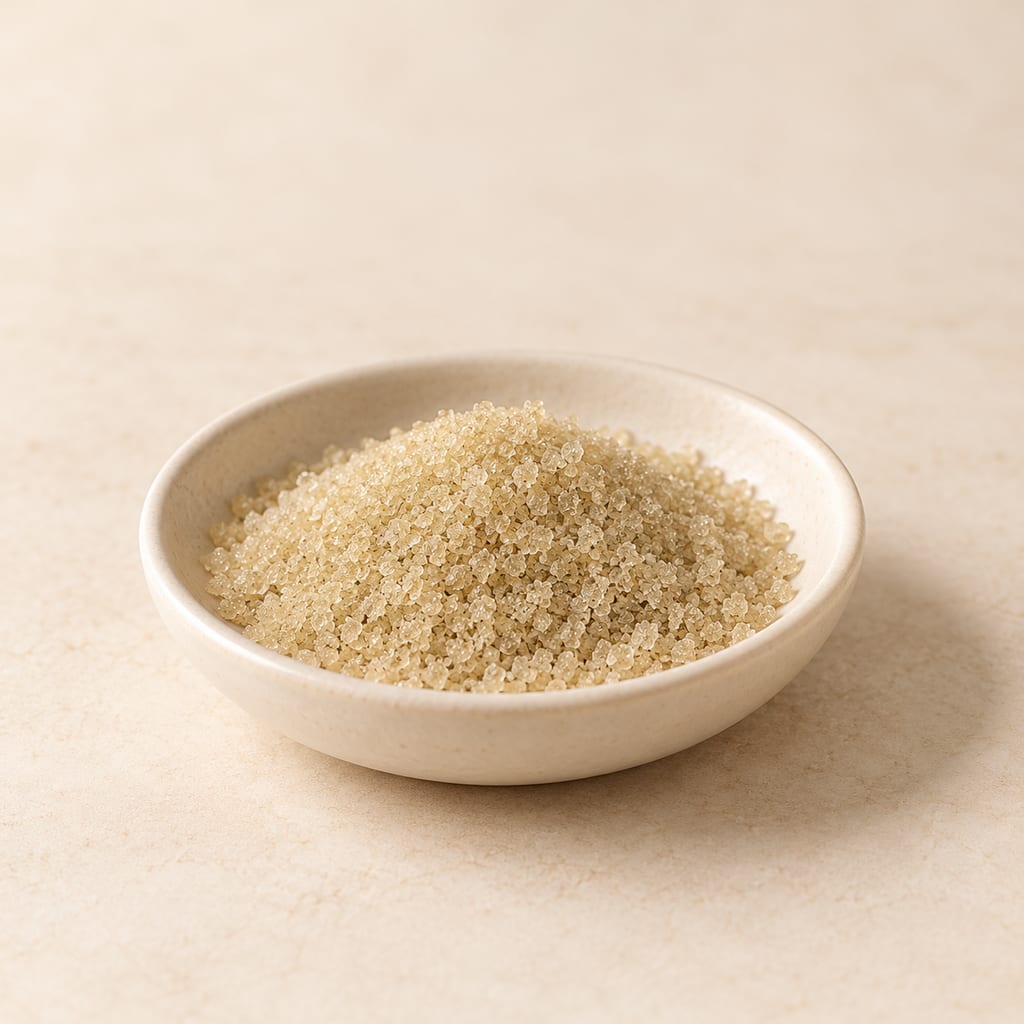
The Sausage Maker’s currently declared dry-curing blend contains salt, 6.25% sodium nitrite, 1% sodium nitrate and annatto. Its identity and role differ from plain salt and other Cure #2 formulations.
No community contributions have been published for this entry yet.
Sign in to contribute. Published comments and photos are free to read.
The Sausage Maker, Inc.Identity
Insta Cure #1 Pink Curing Salt – Prague Powder #1, No Red Dye (SKU 11-1052)A current retail Insta Cure #1 product declares 6.25% sodium nitrite with annatto as colorant.
Cited in: A family of blends, not one ingredient; Handling, storage and health context
The Sausage Maker, Inc.Identity
Insta Cure #2, Naturally Colored (No Red Dye) (SKU 11-1058)A current retail Insta Cure #2 product declares sodium nitrite, sodium nitrate, salt and annatto, and the maker states it is not for brine or wet curing.
Cited in: A family of blends, not one ingredient; Handling, storage and health context
Oregon State University Extension, Washington State University Extension, University of Idaho ExtensionIdentity · Safety · Preparation
Making cured bacon at home (PNW 784)Salt and nitrite roles; Prague Powder #1 as 6.25% sodium nitrite and 93.75% salt; Prague Powder #2 with up to 4% sodium nitrate and 6.25% nitrite; pink cure versus Himalayan pink salt; proprietary blends such as Morton Tender Quick; nitrite and nitrate in commercial cured meat since at least the 1920s; nitrosamines and cooking temperature; celery-powder products labelled uncured.
Cited in: A family of blends, not one ingredient; From saltpetre to a measured blend; What salt, nitrite and nitrate each do; Natural cures, uncured labels and other substitutes; Using a cure in sausage, ham and bacon; Handling, storage and health context
American Meat Science Association; A. G. McKeith, Western Kentucky University, 2014History · Regulation
Traditional vs "Natural" Curing (PIG 12-05-10)Salt curing traced to Sumerian culture about 4000 BC; saltpetre contamination and red colour; Polenske 1891 on bacterial reduction of nitrate to nitrite; Lehmann and Kisskalt 1899 on nitrite as the source of cured colour; 1970s nitrosamine controversy; USDA in-going nitrite limits by product; uncured labelling and natural nitrite sources.
Cited in: From saltpetre to a measured blend; What salt, nitrite and nitrate each do; Natural cures, uncured labels and other substitutes; Using a cure in sausage, ham and bacon
USDA Food Safety and Inspection Service, AskFSISRoles
What is curing?Defines curing ingredients and describes preservation, colour, flavour and microbial-control roles.
Cited in: What salt, nitrite and nitrate each do
USDA Food Safety and Inspection ServiceProcess
FSIS Ready-to-Eat Fermented, Salt-Cured, and Dried Products Guideline (FSIS-GD-2023-0002)Nitrite with salt as a hurdle in fermented, salt-cured and dried products; nitrate must be reduced to nitrite by bacteria, and the rate depends on numbers and conditions; nitrite alone may be used, or combined with nitrate; process support and matching parameters.
Cited in: What salt, nitrite and nitrate each do; Using a cure in sausage, ham and bacon
USDA Food Safety and Inspection ServiceHistory
Clostridium botulinum & BotulismUSDA authorized nitrite in meat and poultry curing beginning in 1925; nitrites inhibit C. botulinum spores in certain cured products.
Cited in: From saltpetre to a measured blend
Electronic Code of Federal Regulations, Office of the Federal RegisterRegulation
9 CFR § 424.21, Use of food ingredients and sources of radiationUS commercial meat and poultry rules set additive uses and limits by product category and method.
Cited in: Using a cure in sausage, ham and bacon; Notes and open questions
European Commission / EUR-LexRegulation
Commission Regulation (EU) 2023/2108 of 6 October 2023 amending Annex II to Regulation (EC) No 1333/2008Commission Regulation (EU) 2023/2108 amends Annex II to Regulation (EC) No 1333/2008, revising entries for nitrites and nitrates.
Cited in: Notes and open questions
Food Standards Agency; S. Kaur, D. Webley, E. Sutton, S. Reva, S. Hodgson and W. HarrisHealth
Safety of Nitrates and Nitrites as Food AdditivesFSA rapid evidence assessment published 1 October 2025: evidence linking intake of nitrates and nitrites to cancer and other outcomes is inconclusive; higher cooking temperatures, longer cooking times and nitrite curing are associated with more N-nitroso compounds.
Cited in: Handling, storage and health context
UK Government / Food Standards AgencyRoles
Food additives, section 8: Nitrites and nitratesUK consumer context for colour, cured flavour, microbial role and additive assessment.
Cited in: What salt, nitrite and nitrate each do
Food Standards Agency, UK GovernmentRegulation
Guidance on using the Register of Food Additive AuthorisationsThe Register of Food Additive Authorisations is the primary GB source for authorised additives and their conditions of use.
Cited in: Notes and open questions