
Suska sechlońska
Małopolska plums smoked and part-dried over a wood fire in a regional kiln for several days, giving a dark, concentrated fruit with a protected name.
 FermenteaWhere food goes to change
Traditional method
A protected pork sausage associated with Liszki and Czernichów; its application describes commercial curing and smoking, not a home batch.
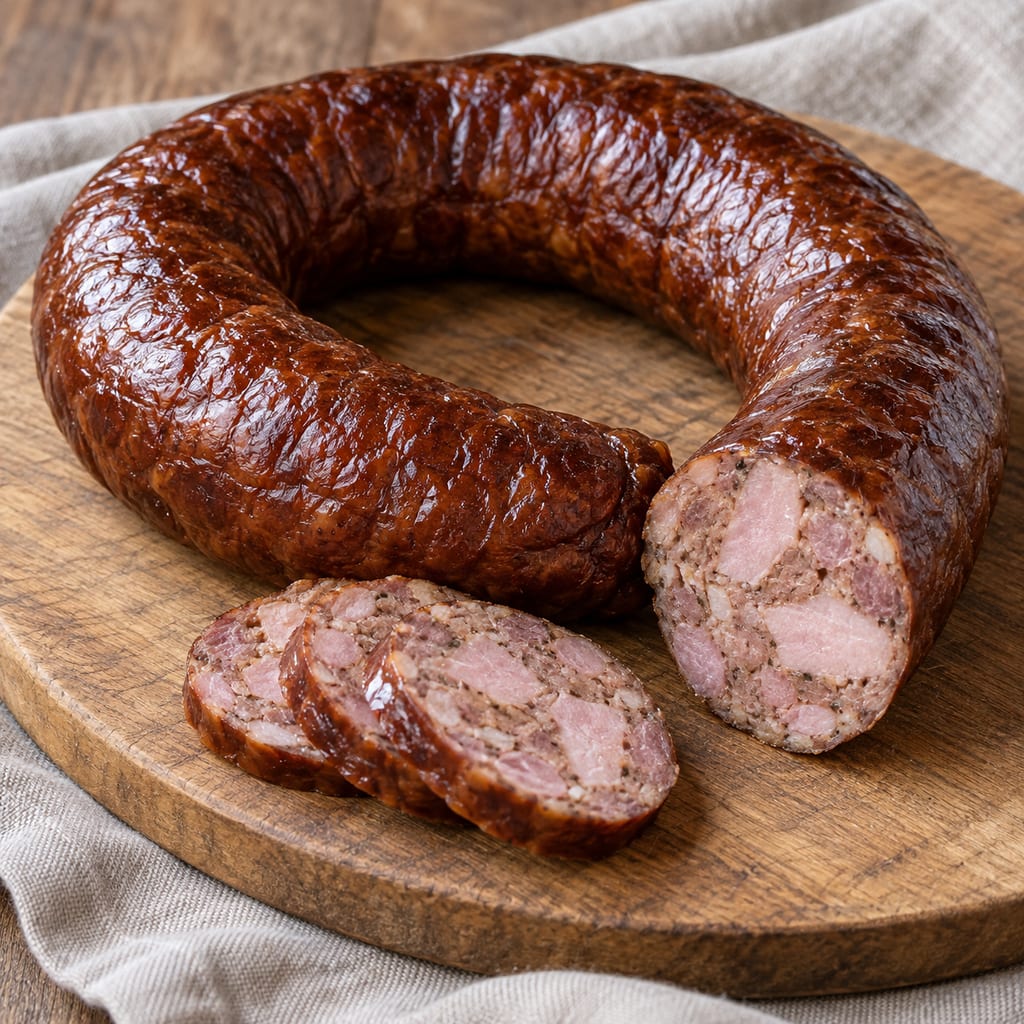
Kiełbasa lisiecka is a traditional Polish smoked pork sausage from the municipalities of Liszki and Czernichów, west of Kraków.
Its defining feature is the use of large pieces of high-quality pork ham. Unlike finely minced sausages, a slice of kiełbasa lisiecka reveals substantial pieces of pale pink meat surrounded by a more finely chopped binding mixture.
The sausage is seasoned principally with garlic, pepper and curing salt, then filled into relatively large casings and smoked over hardwood.
Its flavour is pork-forward, gently peppery, garlicky and distinctly smoky.
It is a protected regional product, with a detailed specification governing its production.
The preparation described here is a commercial production specification, not a validated home meat-curing recipe. Its process requires controlled curing, nitrite management, smoking and cooking.
Polish — English
Kiełbasa lisiecka — Liszki sausage
Kiełbasa — Sausage
Liszki — Municipality associated with production
Czernichów — Second municipality in the protected area
Szynka — Ham
Peklosól — Nitrite curing-salt mixture
Wędzenie — Smoking
Wieprzowina — Pork
Domestic pig: Sus scrofa domesticus.
The sausage is not established as a lactic-acid fermented salami. Its documented preservation and processing depend on curing, smoking and heat treatment.
The area around Kraków has a substantial documented meat-processing tradition.
Historical records identify butchers operating in Liszki, Czernichów and neighbouring communities during the nineteenth century.
Electoral lists from 1865, 1867 and 1870 contain names of local butchers.
An 1894 manuscript preserved in Kraków's Ethnographic Museum documents the importance of butchery in the district.
By the 1930s, kiełbasa lisiecka had developed as a distinct preparation associated with the wider family of coarsely cut Kraków sausages.
It became recognized for its specific meat selection and smoking process.
Production continued through the Second World War and the subsequent socialist period, when local cooperative meat production helped preserve the tradition.
After 1989, private businesses continued the regional method.
The sausage entered the European Union's protected geographical indication register through Regulation 918/2010, dated 12 October 2010.
The protected name is tied to production within Liszki and Czernichów, rather than simply to a generic Polish smoked-sausage recipe.
The protected formulation specifies three classes of pork.
Pork component — Proportion
Class I: lean pork from ham — 85%
Class II: trimmings from ham and shoulder — 10%
Class III: selected shin trimmings — 5%
Class I provides the large, recognizable pieces.
Class II and III contribute material that can be chopped more finely to form the binding mixture.
The proportions produce the characteristic mosaic-like appearance of the sausage when sliced.
This composition is central to its identity.
Substituting an ordinary evenly minced pork filling would produce a different product.
The published protected specification gives ingredient amounts per 100 kg total production weight:
Ingredient — Quantity
Nitrite curing-salt mixture, peklosól — 1.5 kg
Fresh garlic — 400 g
Ground white pepper — 300 g
Optional coarse black pepper — Up to 50 g within the stated pepper allowance
Process water — Maximum 5% of total production weight
The curing-salt figure means 1.5 kg of a formulated nitrite curing-salt product, not 1.5 kg of pure sodium nitrite.
The specification does not authorize substituting arbitrary nitrite concentrations.
Meat curing is a controlled food-safety process, and misuse of curing agents can be dangerous.
The protected sausage is made in natural bovine small-intestine casings or approved protein casings.
The specified diameter is approximately 52 mm.
The finished sausage is formed into a ring.
The average ring length is 35–40 cm.
The casing affects appearance, portion size, drying and heat transfer.
A much smaller casing would change the product's dimensions and cooking behaviour.
Use pork meeting the protected specification.
The raw meat is chilled and has not previously been frozen.
The published raw-material storage range is −1°C to +4°C.
A more detailed product specification records meat selection around 48–120 hours after slaughter, subject to the commercial process requirements.
Trim the meat according to its class.
Cut Class I lean ham into 3–5 cm cubes.
This large cut is essential to the final cross-section.
Class II and III meat remain in their trimming forms until later processing.
Each pork class is cured separately using the specified formulated nitrite curing salt.
The commercial curing temperature is 4–6°C.
Relative humidity is specified as 85%.
The curing stage lasts two to four days.
This is a controlled commercial procedure, not a general instruction to cure meat in an ordinary refrigerator without validated controls.
Class I meat remains in large pieces.
Class II meat is chopped to approximately 10 mm.
Class III meat is chopped more finely, to approximately 3 mm, with garlic and pepper.
The protected specification describes repeating the fine chopping.
The finer meat provides a binding phase around the large lean pieces.
Begin mixing with the Class I meat.
Continue until the meat develops the intended cohesion.
Add the remaining pork components and incorporate the seasonings.
The extended product specification describes approximately 15 minutes of mixing, depending on the properties of the meat.
The mixture is intended to become cohesive without destroying the large pieces.
Fill the casings firmly.
Form individual rings and close the ends with approved wooden picks or sausage twine.
Hang the stuffed sausages on smoking rods.
The specified settling period is approximately two hours in a well-ventilated environment.
This is part of the commercial process, not as unrestricted ambient holding of raw sausage.
The traditional smokehouse burns hardwood beneath the hanging sausages.
Suitable woods include alder, beech and fruit trees.
The smoking-and-cooking process includes drying, smoking and cooking stages.
The documented total duration is approximately 3½–4½ hours.
The protected summary does not establish a complete transferable household smoker-temperature programme or a validated domestic internal-temperature endpoint.
The specification describes controlled cooling, with air-temperature and humidity parameters governing the commercial process.
A published cooling environment is 8–12°C and 85–90% relative humidity, with the sausage temperature reduced to no more than 18°C during the specified cooling stage.
These are intermediate commercial processing conditions, not permission to store finished sausage at 18°C.
Further storage and distribution require the producer's approved controls.
Salt reduces water availability and changes the behaviour of meat proteins.
It also contributes flavour.
Nitrite-containing curing mixtures participate in reactions responsible for the characteristic cured-meat colour.
These reactions involve muscle pigments, especially myoglobin.
Nitrite also has important antimicrobial functions under correctly controlled curing conditions.
However, safety depends on the complete process: raw-material condition, nitrite concentration, salt, time, temperature, heat treatment and storage.
The presence of curing salt does not make a sausage automatically safe.
Mixing meat with salt extracts some salt-soluble muscle proteins.
These proteins contribute to the sticky, cohesive character of sausage filling.
During cooking they set into a structure that helps hold the meat pieces together.
The large ham cubes remain visible.
The finer meat fills spaces around them.
The resulting slice should show distinct chunks rather than a uniform paste.
Wood smoke contains a complex mixture of volatile compounds.
Some contribute characteristic smoky aromas and flavours.
Smoking can also affect colour and surface drying.
The type of wood, combustion conditions, airflow and smoke duration influence the final character.
The protected process uses traditional smokehouses rather than replacing smoke exposure with liquid-smoke flavouring.
Poor combustion conditions can generate undesirable contaminants, including polycyclic aromatic hydrocarbons.
The presence of genuine wood smoke is therefore not in itself proof of safer production.
Kiełbasa lisiecka is eaten as a regional cured and smoked meat product.
It may be sliced and served with bread.
Its characteristic appearance makes it particularly suitable for platters, where the large meat pieces are visible.
Mustard and horseradish are familiar accompaniments to Polish smoked sausages, although the protected specification does not prescribe an obligatory serving garnish.
It can also be warmed or incorporated into cooked dishes.
The meat and smoke flavour should remain the focus.
The casing should be dark brown, clean and slightly wrinkled.
The sausage should have a firm, compact consistency.
The cross-section should reveal large pale-pink meat pieces within darker, more finely chopped filling.
The flavour should be moderately salty, garlicky and peppery.
A sausage that looks uniformly finely minced would not match the protected product's defining texture.
A loose, crumbly structure can indicate inadequate binding.
Excessively strong smoke may overpower the pork.
Incorrect curing conditions can produce both quality and safety problems.
Raw pork and curing mixtures require controlled handling.
No safe home-production process can be derived from the commercial specification alone.
In particular, nitrite concentration, cooking endpoint and subsequent refrigeration must not be improvised.
The product should be purchased from a compliant producer unless a separate validated sausage-making process is available.
The official application and ministry register document the protected product and their attributed history. Their commercial specification does not supply a household batch.
Scaling: not applicable
The protected-product application describes commercial processing, not a household recipe or validated home controls.
Hazard sourceThe finished product’s exact retail state is not classified here. For meals that cook pork, Polish sanitary consumer advice covers thorough cooking and separation of raw and ready-to-eat foods.
Hazard sourceFollow the product label. For a meal prepared with raw pork, use local consumer guidance for separation and thorough cooking; it does not convert the GI specification into a home curing method.
Control sourceHigher-risk consumers should follow FDA advice on relevant ready-to-eat or dry sausage categories; product state must be checked rather than inferred from the name.
Control sourceDo not use the protected-product application as a home sausage-curing formula. The product specification does not establish household validation.
A source-specific documented preparation, not a claim of origin.
Małopolska plums smoked and part-dried over a wood fire in a regional kiln for several days, giving a dark, concentrated fruit with a protected name.
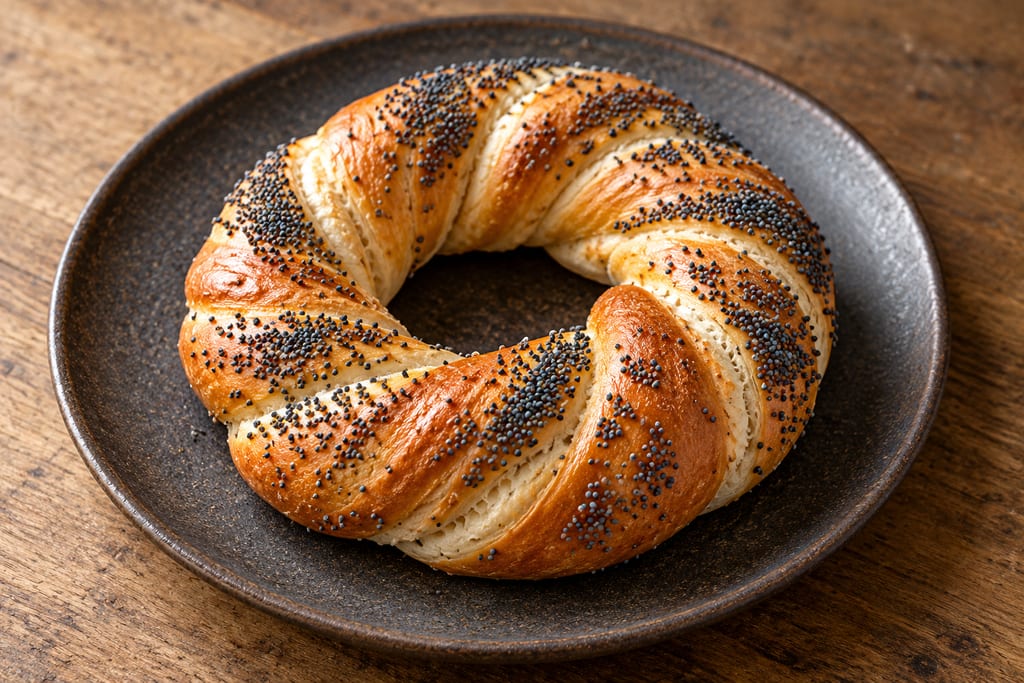
A home version of the Kraków twisted ring: yeast dough is braided, briefly dipped in boiling water, topped with seeds or salt, then baked. It is not represented as a certified PGI product.
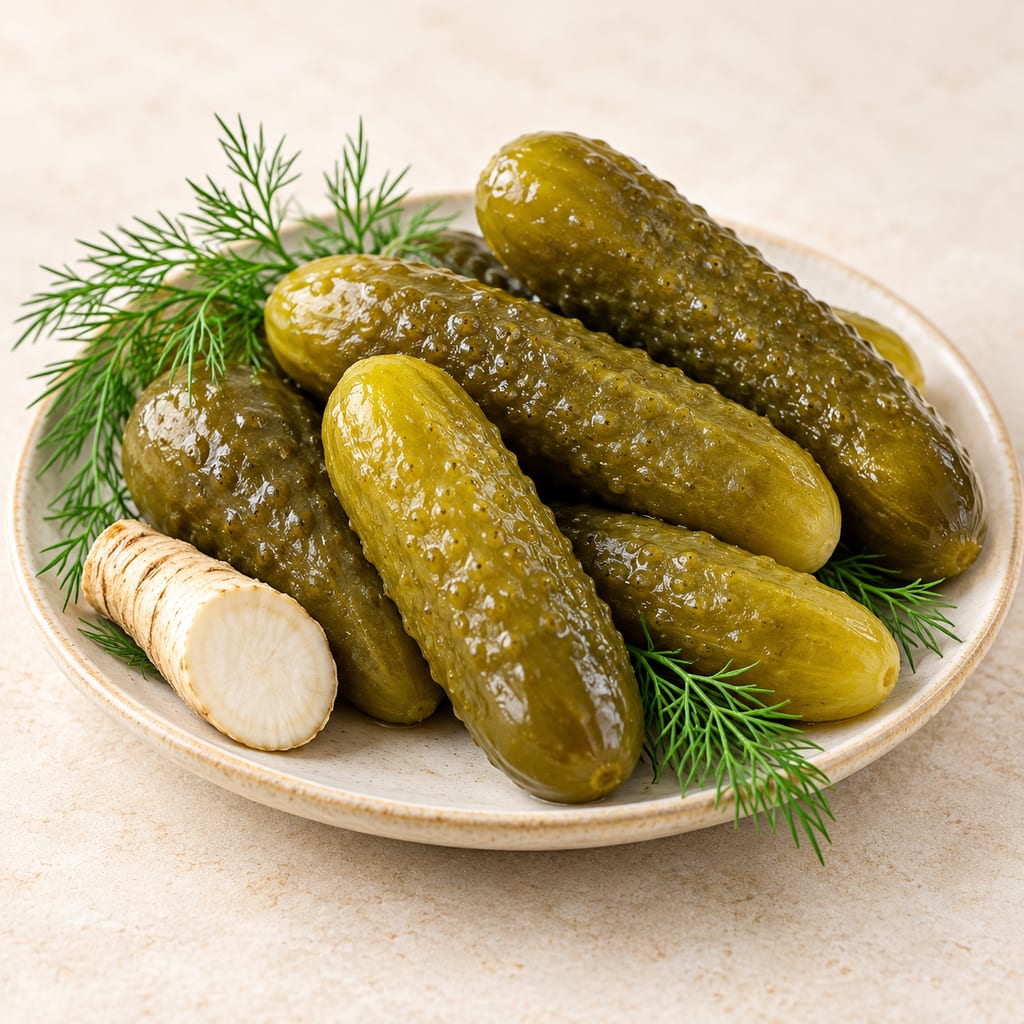
Ogórki kiszone are Polish brine-fermented cucumbers. Two registered local practices keep the barrels in a well near Zakliczyn and under lake water at Kalisz Pomorski. Neither gives a validated process.
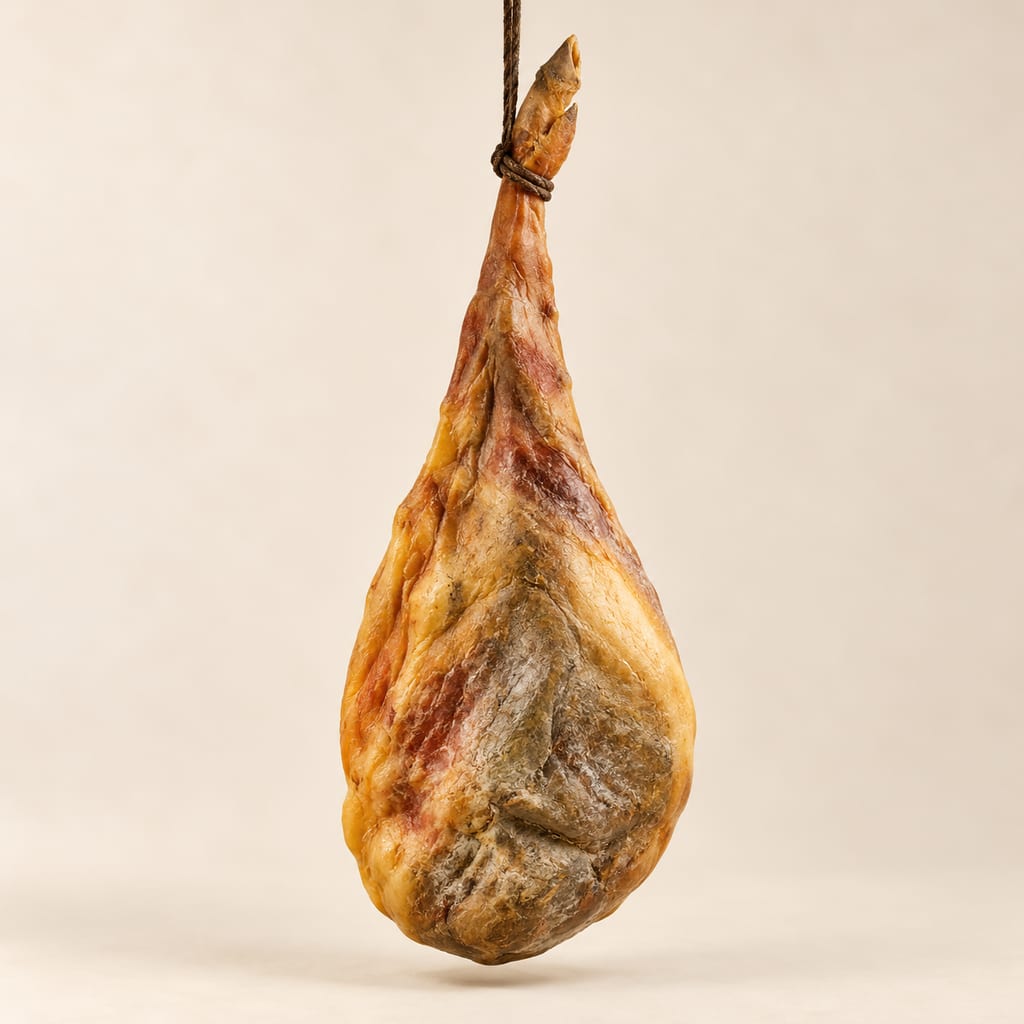
Cato the Elder records a second-century BCE sequence for salting, air-drying, and smoking ham. This historical account is not a validated modern curing protocol.
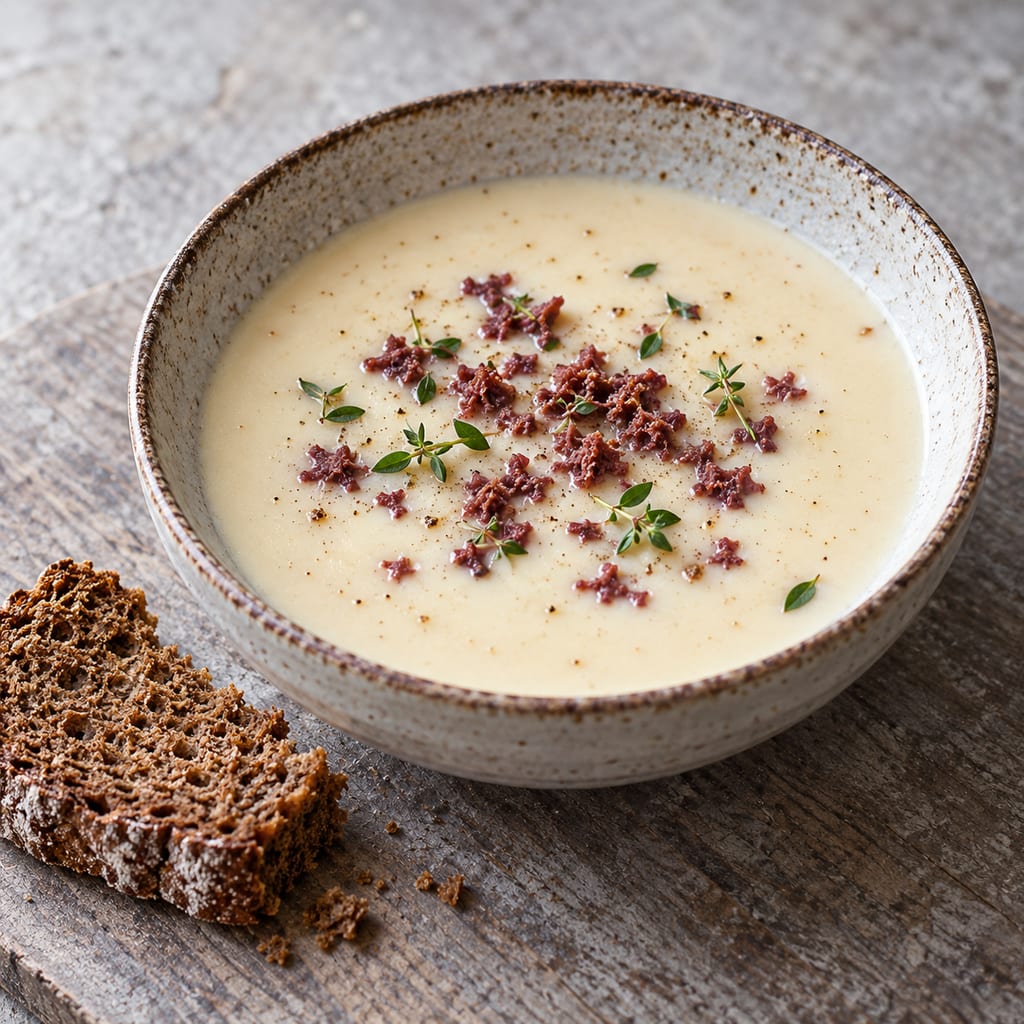
Kylmäsavuporokeitto is a creamy cold-smoked reindeer soup with onion, stock and cheese, served with bread.
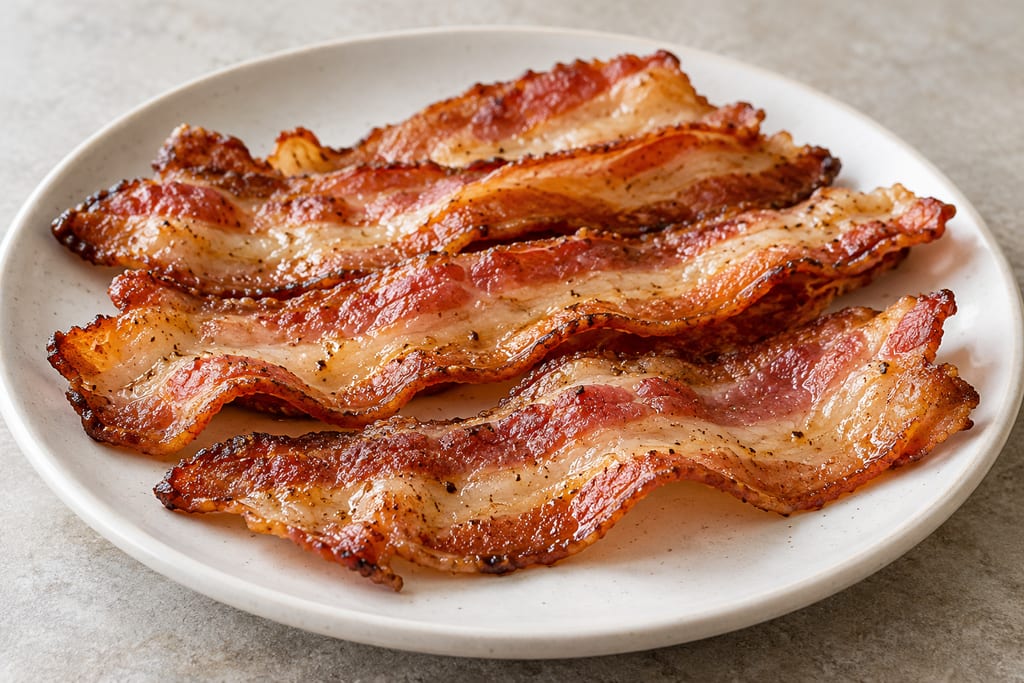
Pork belly receives a measured salt-and-sugar cure with coffee and spices, then is refrigerated before cooking or hot smoking.

Finnish pea soup simmers dried peas with palvikinkku or a vegetable alternative, then is served with mustard and chopped onion.
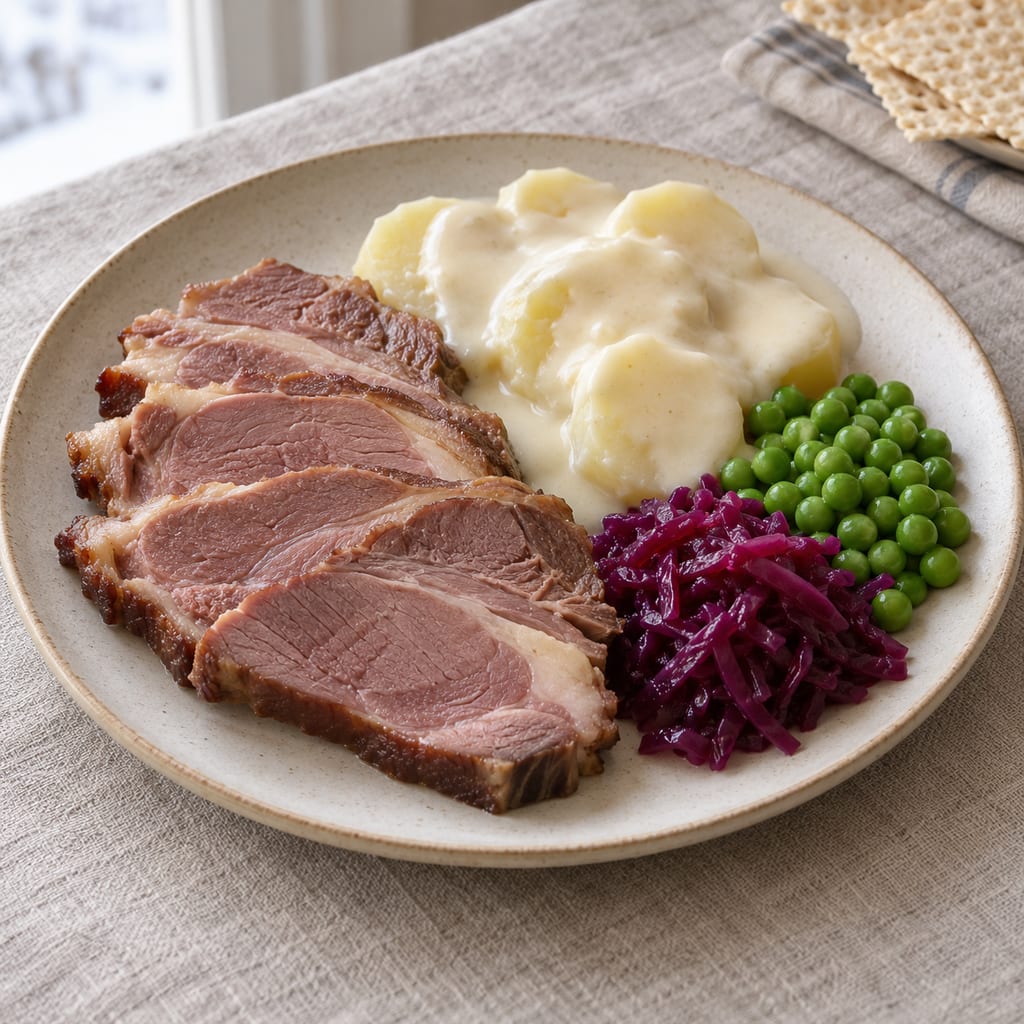
A six-person Icelandic Lamb serving recipe for deboned hangikjöt with potato bechamel, pickled cabbage, peas and laufabrauð. It cooks the product; it does not smoke or cure it.
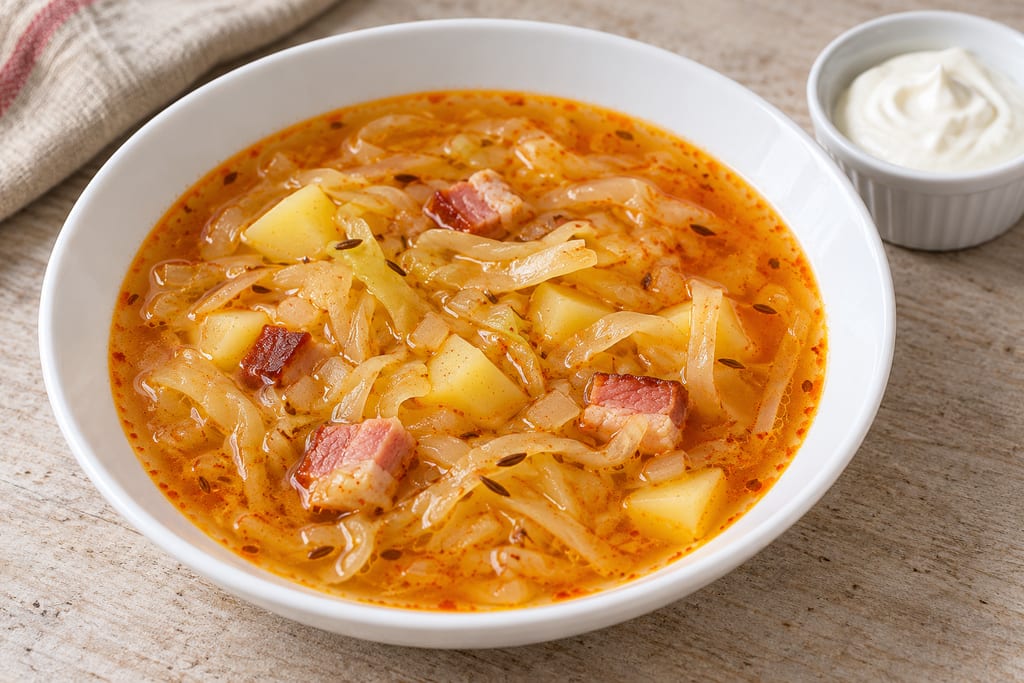
A two-portion cabbage soup with onion, potato and finished Geselchtes, served with garlic sour cream.
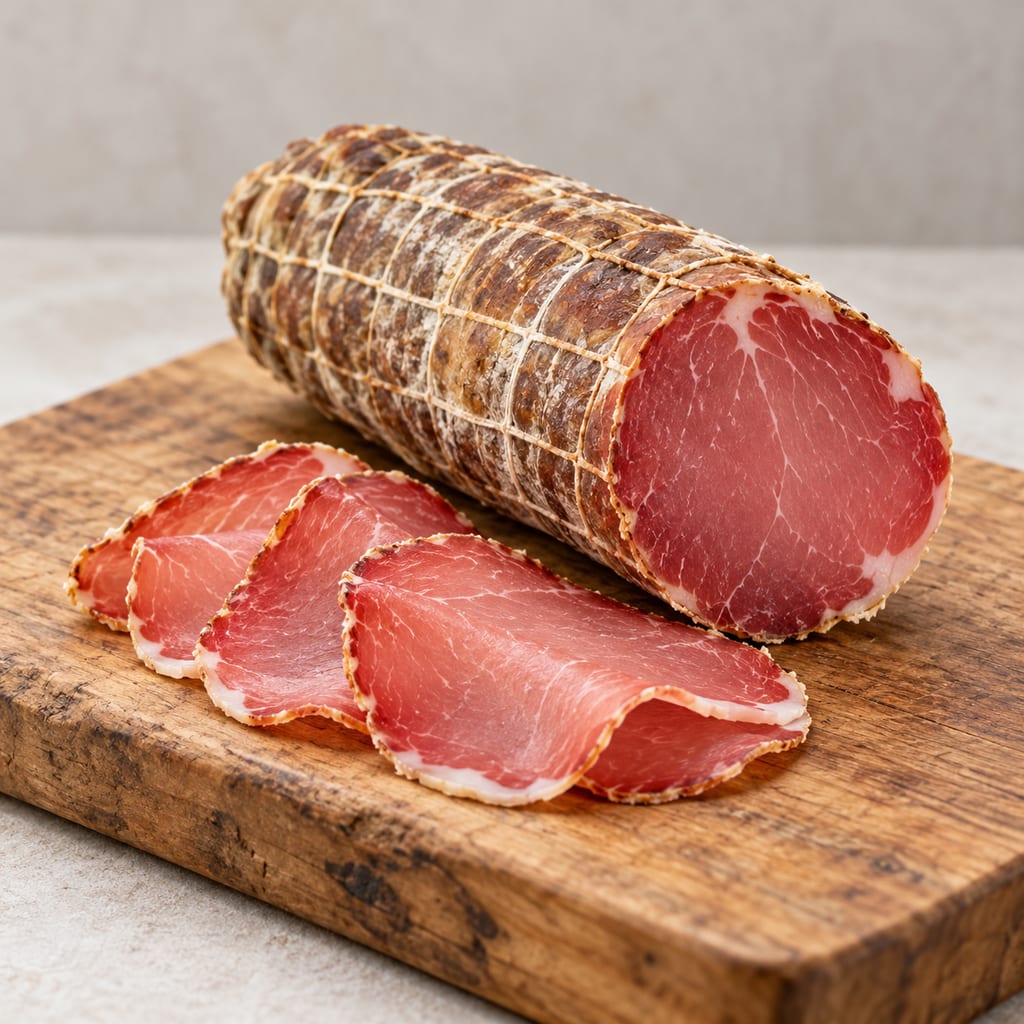
Documentary account of Italian regional cured-loin traditions, including Tuscan and Marche variations; no home-cure instructions are provided because the published professional methods lack validated safety controls.
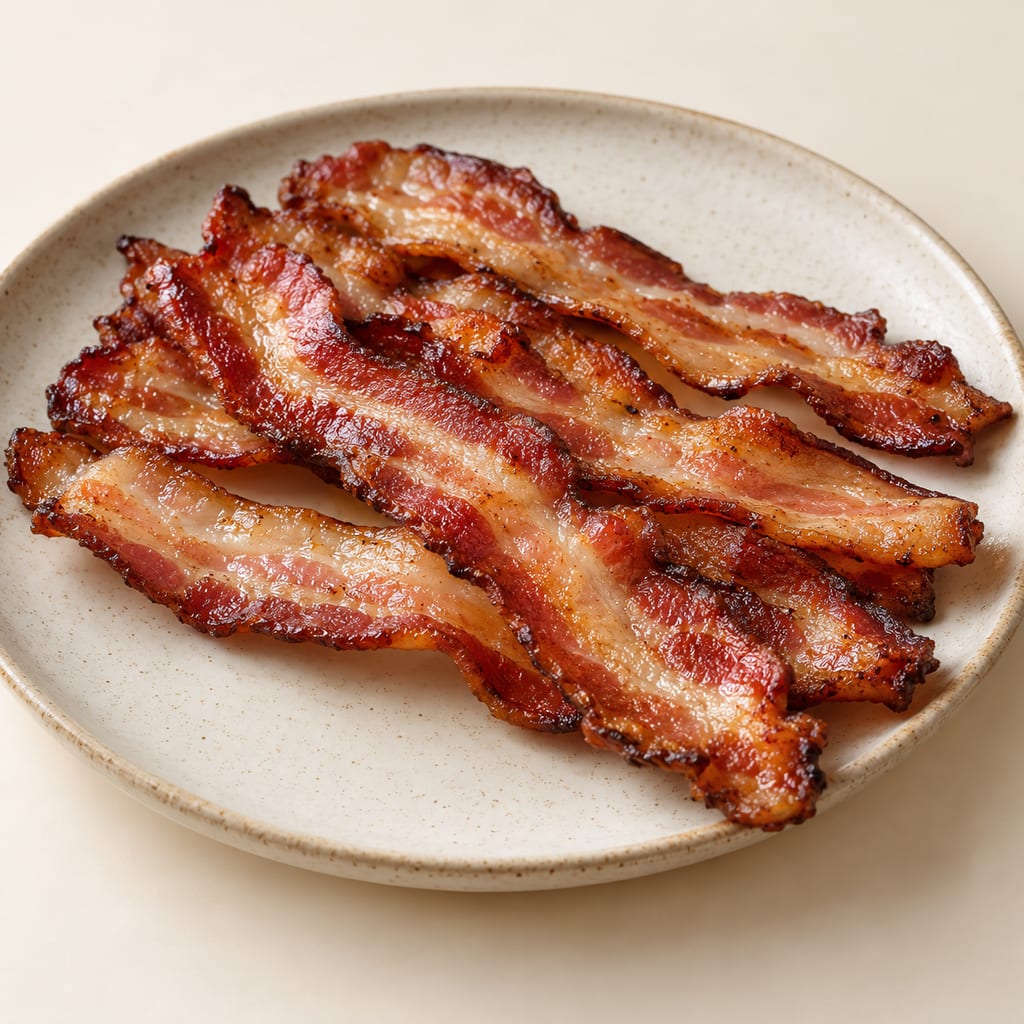
A refrigerated pork-belly brine combines beer and maple syrup with salt, garlic powder and measured Cure #1.

A Cap-Pelé boucanière is an Acadian herring-smoking building. The documented Willie Niles example is a one-storey wood-frame structure with a ridge smoke vent and interior bays for hanging fish-bearing cannes.

Achcharu is a family of Sri Lankan vinegar pickles made with mixed vegetables or seasonal fruit and a piquant spice dressing. This version is a quick, refrigerated, non-fermented mixed-vegetable pickle.

The acocote is a long, hollowed and dried gourd used to draw aguamiel from a mature maguey. It is a harvesting tool: the sap is transferred to a separate vessel before it ferments into pulque.

Adrak murabba preserves young ginger in sugar syrup, a sweet South Asian preparation recorded in Indian cookery and food-processing sources.

Parkia biglobosa seeds are fermented into regional West African seasonings, including nététou, iru, dawadawa and soumbala. The yellow fruit pulp is a separate food, and names and methods vary by place.

Japanese reddish-brown vinegar from sake lees matured about three years, turned to vinegar by acetic bacteria; the vinegar of Handa and Edomae sushi rice.

A refined common-wheat flour blended for a broad range of baking; its protein and behavior vary with wheat, milling and market.

The almond mushroom, Agaricus subrufescens, was cultivated in eastern North America in the 1800s, lost its market, and returned as a cultivated mushroom from Brazil, where it is grown under several names.
No community contributions have been published for this entry yet.
Sign in to contribute. Published comments and photos are free to read.
European Commission, Official Journal of the European UnionProduct specification
Publikacja wniosku: “Kiełbasa lisiecka”, 2010/C 28/12The application specifies commercial dry-curing, then drying, smoking and baking; this is not a home method.
Polish Ministry of Agriculture and Rural DevelopmentProduct identity · Process context
Kiełbasa lisieckaThe ministry register describes the named protected sausage and its attributed historical narrative; this is not a household recipe.
Cited in: Names and identity; Eating and serving; Identifying good quality
U.S. Food and Drug AdministrationSafety guidance
People at Risk of Foodborne IllnessU.S. consumer guidance identifies higher-risk groups and cautions about raw or undercooked foods, refrigerated smoked seafood, deli salads, and unpasteurized cheese; apply only to the relevant product categories.
Powiatowa Stacja Sanitarno-Epidemiologiczna w TrzebnicySafety guidance
Profilaktyka zatruć pokarmowychPolish state sanitary inspectorate consumer advice covers refrigeration, separation of raw and ready-to-eat foods, thorough cooking of meat including pork, and leftovers; it is general advice, not validation of the cookbook recipes.
Cited in: Defects and safety
History · Method
European Commission — Official Kiełbasa Lisiecka specificationCited in: A sausage defined by its meat; Names and identity; Historical background; The distinctive pork composition; Official seasoning formulation; Casings; Stage 1 — Select the meat; Stage 2 — Trim and cut; Stage 3 — Dry-cure; Stage 4 — Chop the secondary meat; Stage 5 — Mix; Stage 6 — Stuff; Stage 7 — Settle; Stage 8 — Smoke and cook; Stage 9 — Cool; What curing does; Why the sausage binds; Why hardwood smoke matters; Eating and serving; Identifying good quality; Defects and safety
History · Method
Commission Regulation (EU) 918/2010 — Protected registrationHistory · Method
UK Government copy of the detailed English product specificationCited in: Historical background; The distinctive pork composition; Official seasoning formulation; Casings