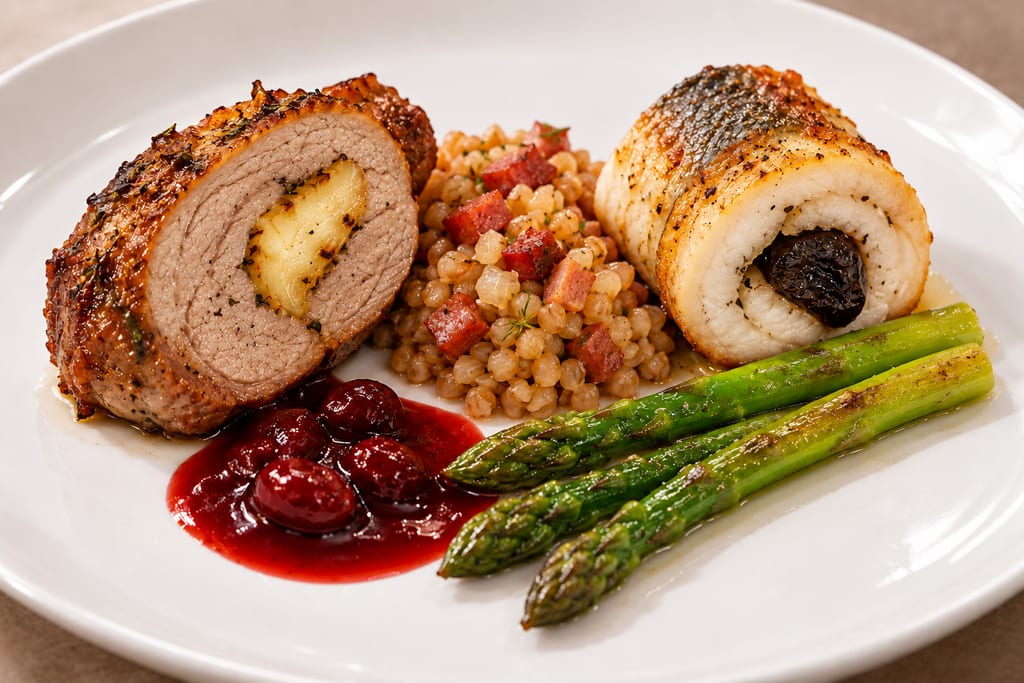
Lamb and zander with Oscypek and suska
A student cookbook pairs lamb stuffed with Oscypek and zander with suska, then serves wheat groats with a small amount of kiełbasa lisiecka.
 FermenteaWhere food goes to change
Traditional method
Małopolska plums smoked and part-dried over a wood fire in a regional kiln for several days, giving a dark, concentrated fruit with a protected name.

Suska sechlońska is a distinctive smoked and partly dried plum produced in a defined area of southern Poland.
It is recognised as a Protected Geographical Indication (PGI) product.
The name itself explains its geographical identity. Suska refers to a smoked and dried plum in the local tradition, while sechlońska refers to Sechna, the village associated with the practice.
Its botanical source is the European plum, Prunus domestica L., particularly varieties suitable for drying and smoking.
The finished fruit has dark, slightly sticky skin, a smoky aroma and a sweet, concentrated flesh.
Unlike a fermented fruit preserve, Suska sechlońska is not defined by microbial fermentation.
Its transformation depends on heat, smoke and the removal of moisture.
The food therefore belongs in a collection of preserved foods, smoking techniques and dried fruit rather than being classified as a fermented plum.
Suska sechlońska comes from the Małopolskie region of southern Poland.
Its protected production area covers the municipalities of Laskowa, Iwkowa, Łososina Dolna and Żegocina.
The precise beginning of the tradition is not historically established.
Local stories associate the introduction of plum-smoking techniques with a clergyman who encouraged the inhabitants of the region to preserve their fruit.
That story is part of the product's regional folklore, not documentary evidence for an identified invention date.
The fruit-drying buildings themselves provide more concrete evidence.
Traditional drying kilns survive in the landscape, including examples more than a century old.
The established method of arranging fruit above a wood-burning hearth has been passed between generations of producers.
The region celebrates the tradition through events including the Święto Suszonej Śliwki, or Dried Plum Festival, held in Dobrociesz.
The product's formal geographical protection dates to 2010, when it entered the European Union's PGI scheme.
This recognition protects the regional name and associated specification, rather than merely identifying all smoked plums made anywhere in Poland.
Suska sechlońska is made from suitable varieties of European plum.
The documented production specification identifies varieties including Promis, Tolar, Nektawit, Valjevka and Stanley.
These plums are valued for characteristics that suit smoking and drying, including their sugar content and moisture properties.
Fruit quality matters greatly.
Plums showing rot, unacceptable damage or contamination should not be included.
The original specification requires suitable fresh fruit, not previously spoiled plums rescued through smoking.
Fruit size and maturity influence how quickly moisture can escape.
A very large plum may remain wetter internally than a smaller fruit treated for the same duration.
The variety also affects skin structure, flesh texture and the concentration of sugars during drying.
No fixed household plum batch weight is given.
The method is documented as a regional production process rather than a kitchen recipe for a particular number of kilograms.
The smoke and kiln are essential processing elements. Replacing the process with ordinary hot-air dehydration would produce dried plums but not necessarily a product meeting the PGI specification.
Fresh European plums — Suitable varieties, including the named regional cultivars
Wood for smoke and heat — Used in the traditional fruit kiln
Salt — Not specified or required
Sugar — Not specified as an addition
Water — No deliberate ingredient addition described
Suska sechlońska is produced in special drying kilns built into the local terrain.
The structures have brick foundations and pitched roofs.
A kiln may contain one or several chambers.
The described chambers are approximately 2 m wide and more than 3.5 m long.
Inside, a wooden grid supports the fruit above the hearth.
The grid's construction encourages the circulation of warm smoke through the plum layer.
The documented wooden elements are approximately 4 cm wide, 3 cm high and 1 m long.
The hearth lies beneath the fruit, allowing heat and smoke to rise through the chamber.
This is not equivalent to placing plums directly into flames.
The separation between fire and fruit is fundamental to the drying and smoking arrangement.
Traditional commercial conditions: 45–60°C · 4–6 days · Fruit layer 20–40 cm
These are geographical-product manufacturing conditions, not a validated home smoker schedule.
The process removes water from the fruit.
As moisture escapes, the remaining sugar becomes more concentrated relative to the fruit's mass.
This increases the perceived sweetness and produces a denser texture.
The skin wrinkles and darkens.
Juice can move to the surface, producing a characteristic sticky appearance.
Wood smoke contains a mixture of volatile compounds generated during combustion and thermal decomposition.
Some of these compounds contribute smoky aroma and flavour, while others influence surface colour.
The precise smoke composition depends on wood type, combustion temperature, airflow and the condition of the hearth.
Smoking is therefore a chemical process as well as a drying method.
The combination gives Suska sechlońska its characteristic taste, which is different from an unsmoked prune.
No microbial fermentation stage is required by the protected-product description.
The kiln design reflects local terrain, available materials and historical methods.
The product's flavour depends not only on the plum but also on its interaction with warm smoke over several days.
A modern dehydrator can remove water, but it does not reproduce the same smoke exposure.
Likewise, briefly exposing dried plums to artificial smoke flavour is not necessarily equivalent to the traditional process.
The geographical protection connects the name with an established regional system.
It does not prohibit other producers from making smoked plums; it protects the particular regional designation.
Suska sechlońska may be eaten as a dried-fruit snack.
It can also be used in savoury dishes, where its smoky sweetness complements meat.
Polish cuisine has a long tradition of combining dried fruit with meat, particularly in winter dishes.
The smoked plum may be incorporated into sauces, fillings and slow-cooked preparations.
It is also used in sweet dishes and regional festive cooking.
Its flavour is concentrated, so a relatively small amount may have a substantial influence on a dish.
The fruit's smoky aroma distinguishes it from ordinary dried plums used in baking.
The finished fruit should have the characteristic dark skin and smoky-sweet aroma of the protected product.
A soft, fleshy centre is part of its identity.
Excessive charring, bitter smoke flavours or obvious surface contamination would be undesirable.
A fruit that is wet internally is not automatically unsafe, but its stability cannot be inferred solely from appearance.
The published summary provides no universal domestic water-activity endpoint.
Surface mould or unexplained deterioration should not be considered normal.
Fruit drying involves control of moisture and appropriate hygienic handling.
The starting plums should be sound.
Smoking does not make contaminated or rotten fruit acceptable.
Wood-smoke exposure also requires attention to combustion conditions because poorly managed smoking can introduce undesirable contaminants.
The geographical specification records the traditional process, not a general household food-safety validation.
A home producer wanting to manufacture shelf-stable smoked fruit would need an appropriate drying and storage method rather than simply copying the commercial kiln temperature and time.
The present record should remain classified as smoked-and-dried fruit, non-fermented, with a documented commercial production process.
The inspected 2019 amendment application associates the product and dryer with Sechna and surrounding communes. It does not establish an earliest origin or a household recipe.
Scaling: not applicable
The applicant specification describes a regional commercial process. This research note does not establish home fruit drying or smoking controls.
Hazard sourceDo not treat the applicant’s reported commercial conditions as a home preservation schedule.
A source-specific documented preparation, not a claim of origin.
A student cookbook pairs lamb stuffed with Oscypek and zander with suska, then serves wheat groats with a small amount of kiełbasa lisiecka.
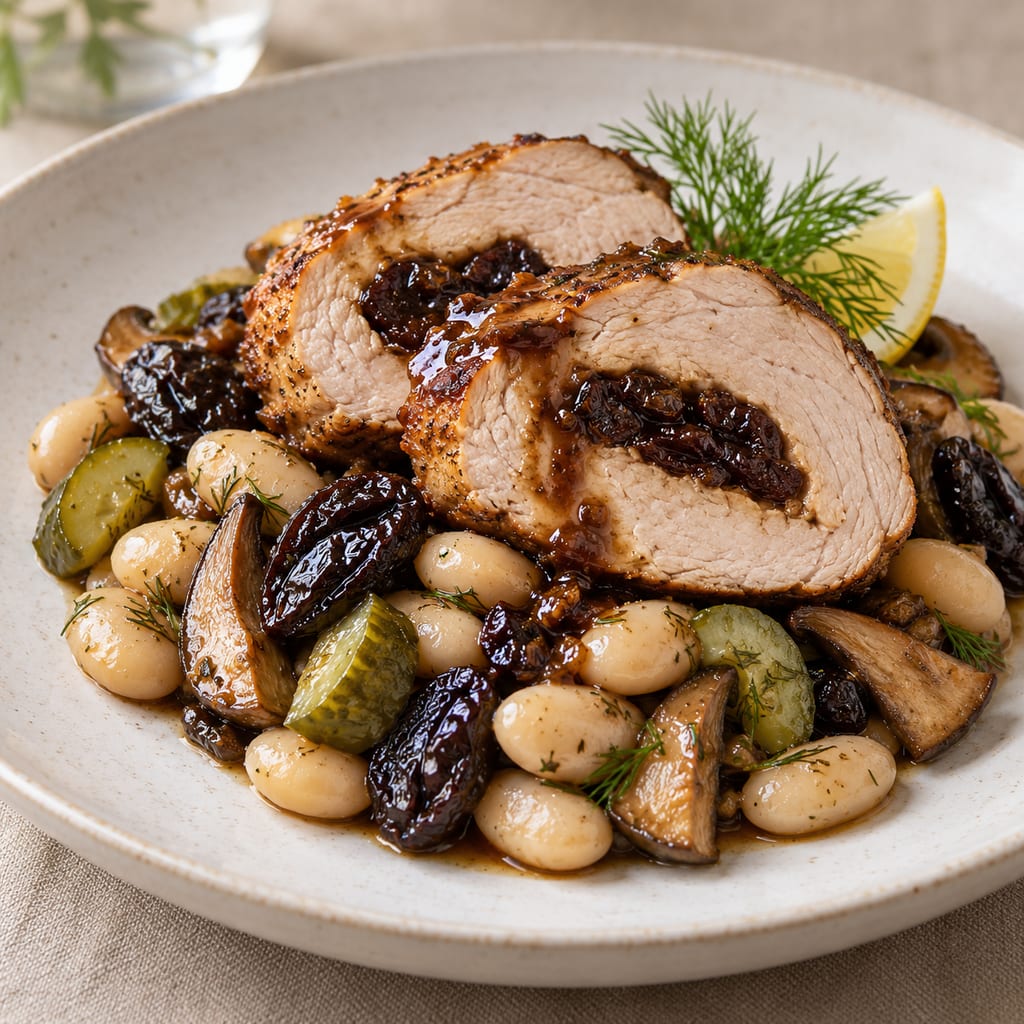
This Polish competition recipe stuffs pork loin with suska and serves it with a bean salad containing more smoked-and-dried plums.
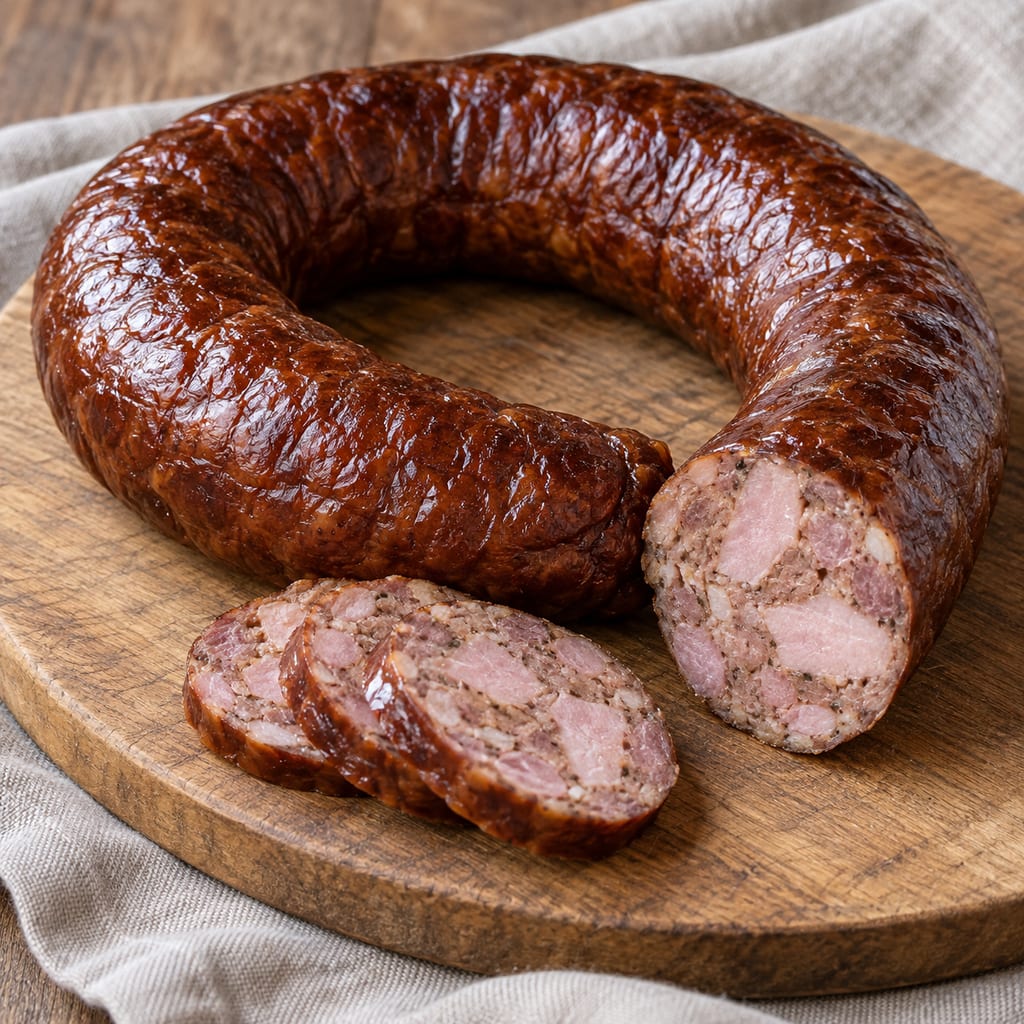
A protected pork sausage associated with Liszki and Czernichów; its application describes commercial curing and smoking, not a home batch.
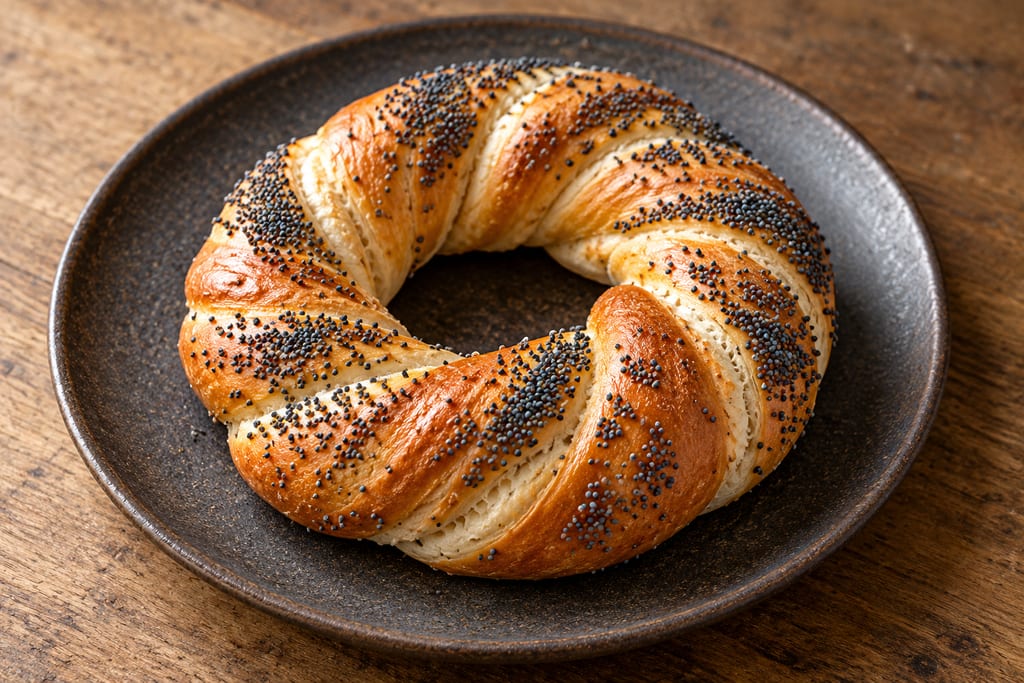
A home version of the Kraków twisted ring: yeast dough is braided, briefly dipped in boiling water, topped with seeds or salt, then baked. It is not represented as a certified PGI product.
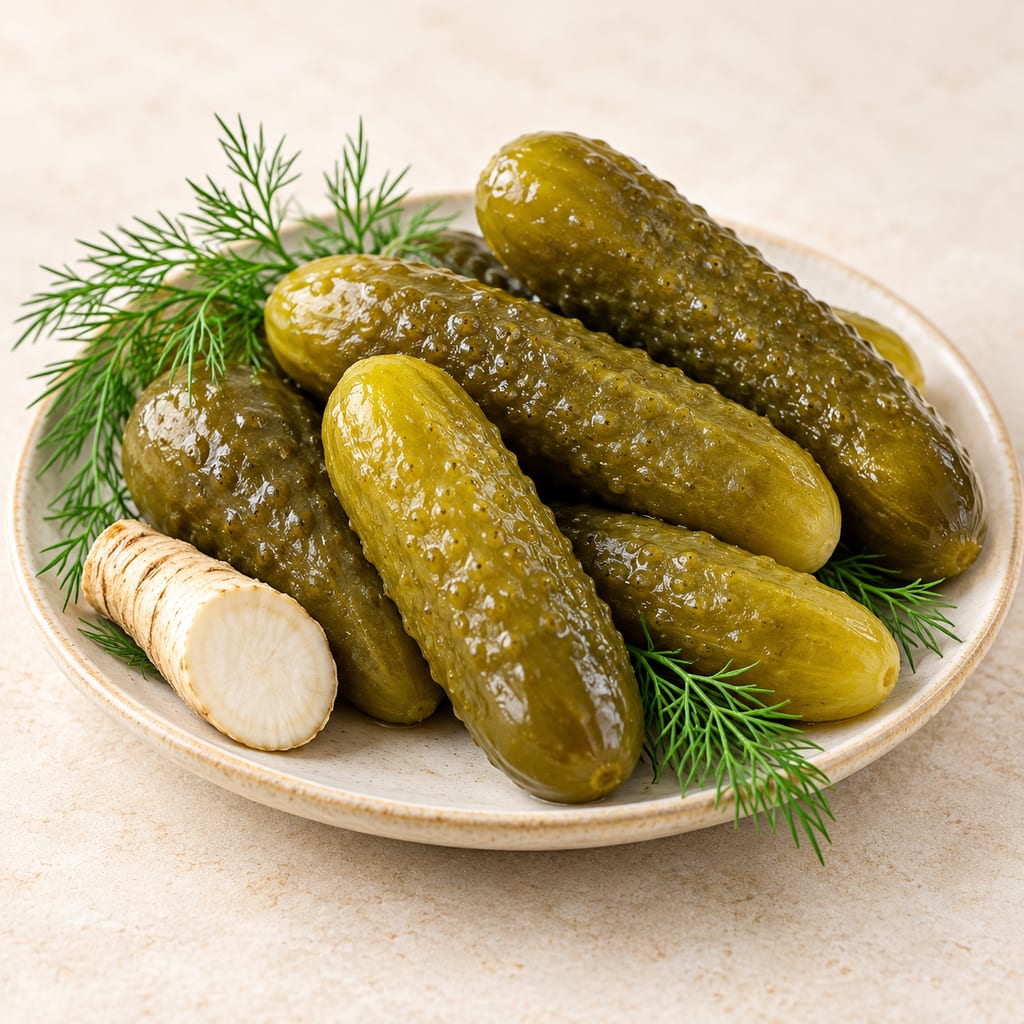
Ogórki kiszone are Polish brine-fermented cucumbers. Two registered local practices keep the barrels in a well near Zakliczyn and under lake water at Kalisz Pomorski. Neither gives a validated process.

Chipotle is a ripe jalapeño pepper smoke-dried in a wood-fired cocedor. Camargo, Chihuahua, documents a large-scale version of the process; its source accounts do not establish a complete home batch or validated safety endpoint.
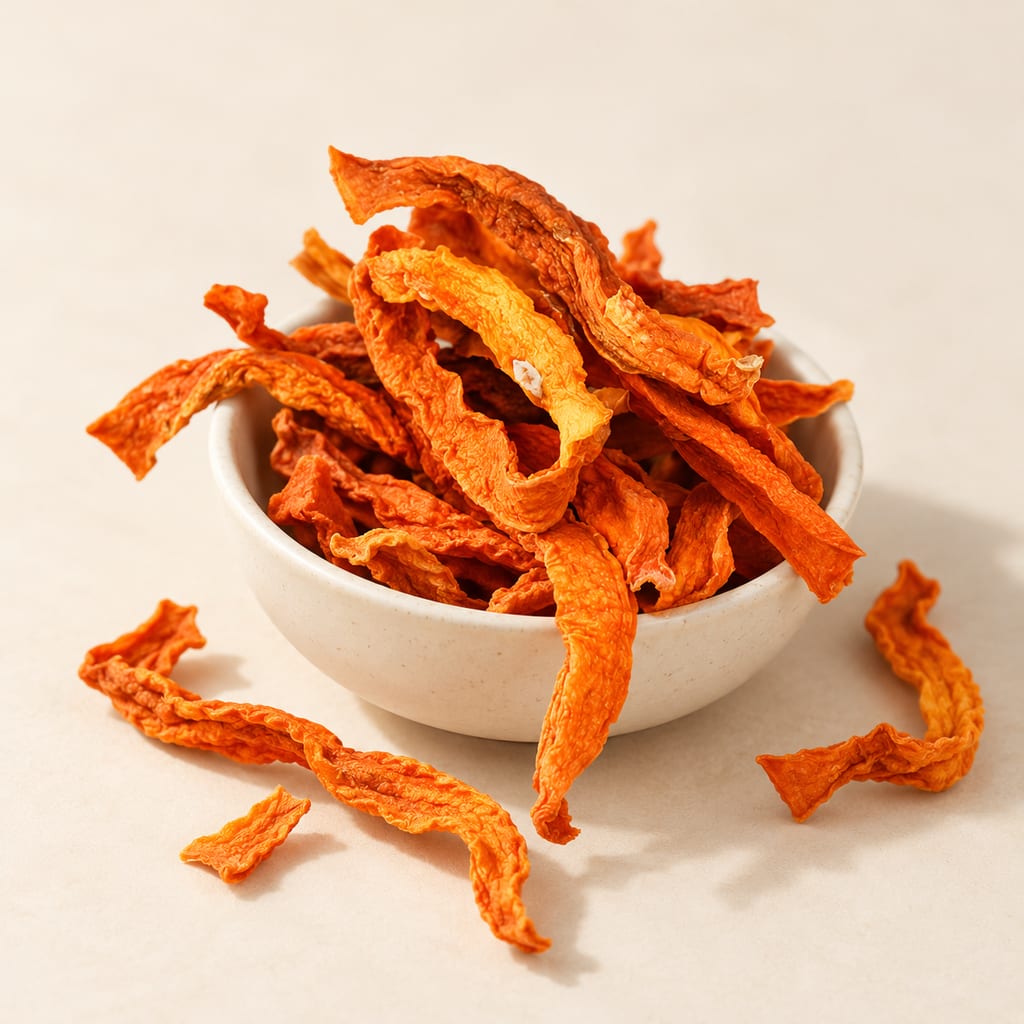
Steam-blanched pumpkin dried until brittle, kept as pieces or ground into powder, with pumpkin-specific packaging and quality guidance.
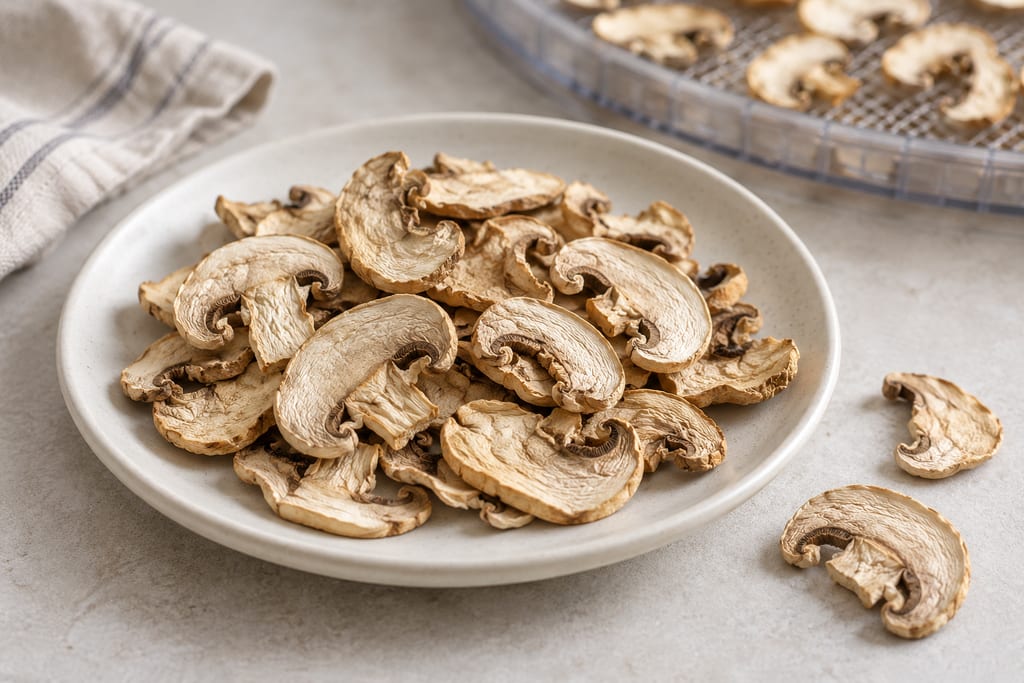
Hot-air dehydrated mushrooms are sliced mushrooms dried in a dehydrator or dryer with heated, moving air; a 2011 study dried button mushroom slices at 60 °C and compared them with microwave-vacuum and freeze-drying.

Merkén is the Mapuche seasoning of dried, smoked and ground ají cacho de cabra chile, sometimes with toasted coriander seed and salt, made in the Maule and La Araucanía regions of Chile.
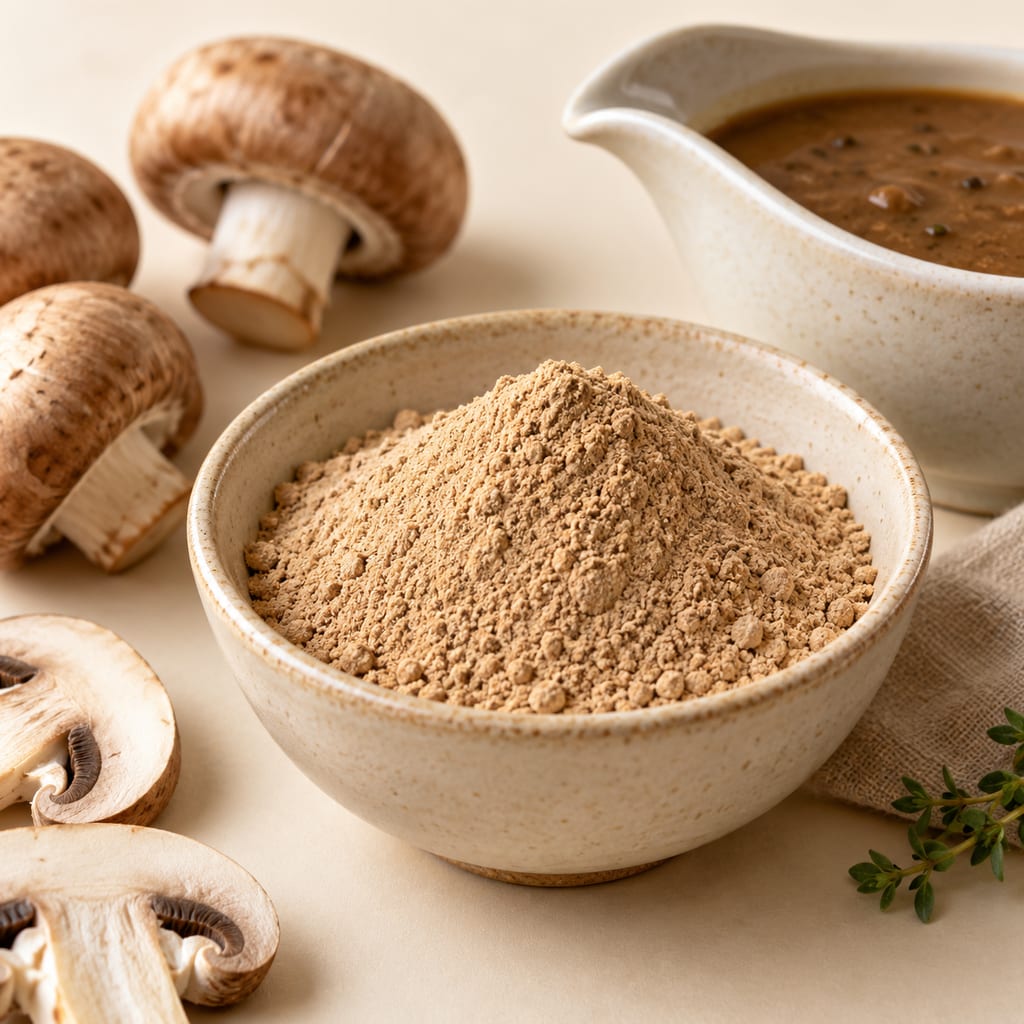
Mushroom powder is dried mushroom tissue ground to a fine powder and added to gravies and sauces. Victorian cooks made it from fresh cultivated mushrooms when fresh ones were not to hand.
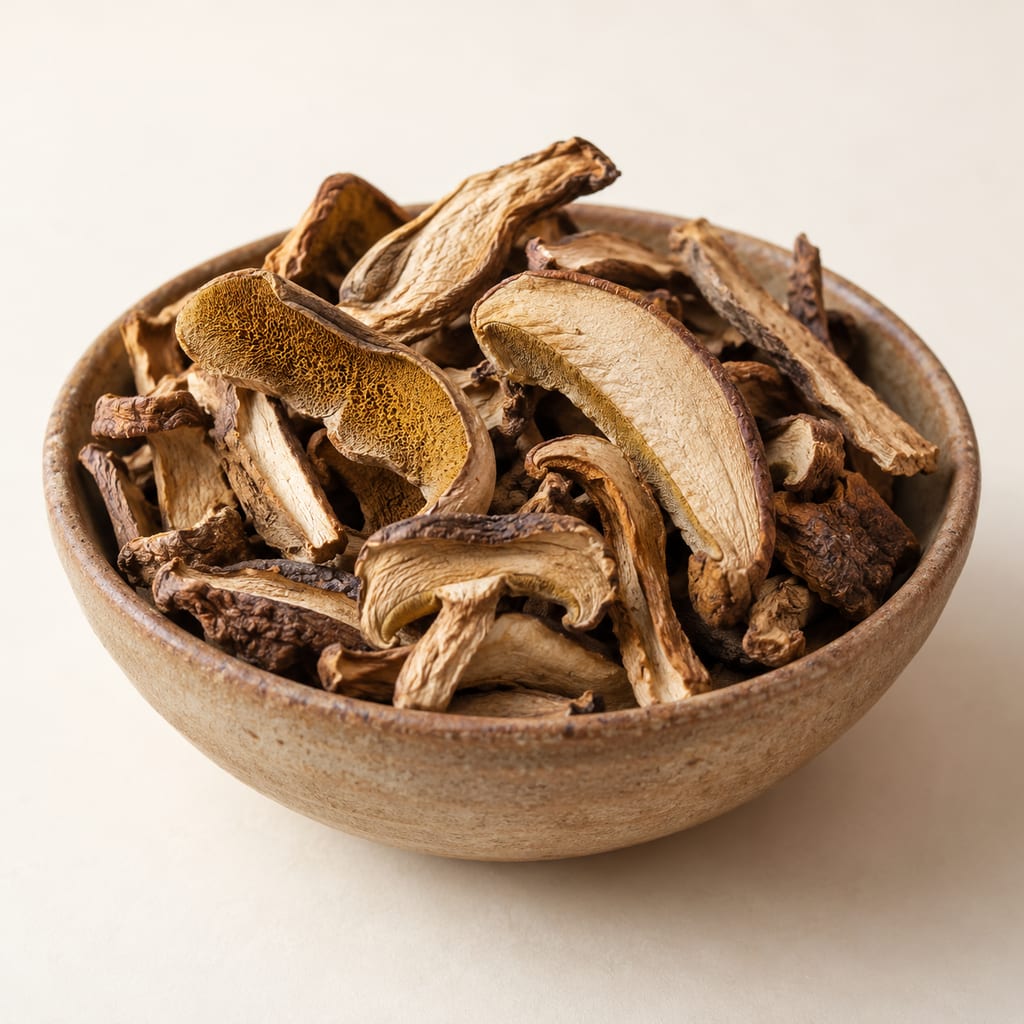
Protected solar-dried mushrooms are slices of wild Suillus luteus dried under a shade cover, a fitotoldo, rather than in open sun, as tested in an experimental study from Apurímac, Peru.
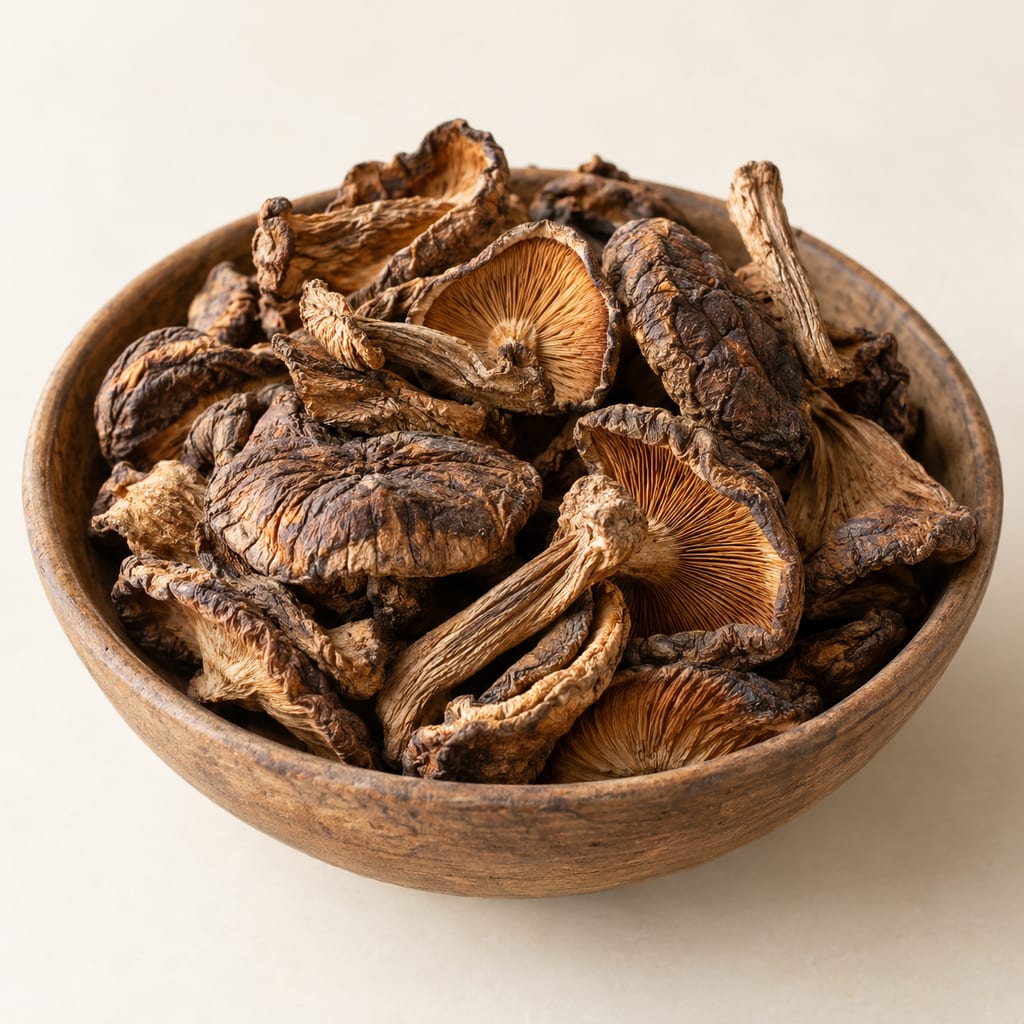
Hearth-dried mushrooms are dried on shelves above a cooking fire, so heat and smoke reach them. Tanzanian records describe the method; a Vietnamese study tested smoke-dried shiitake for fuel-dependent contaminants.
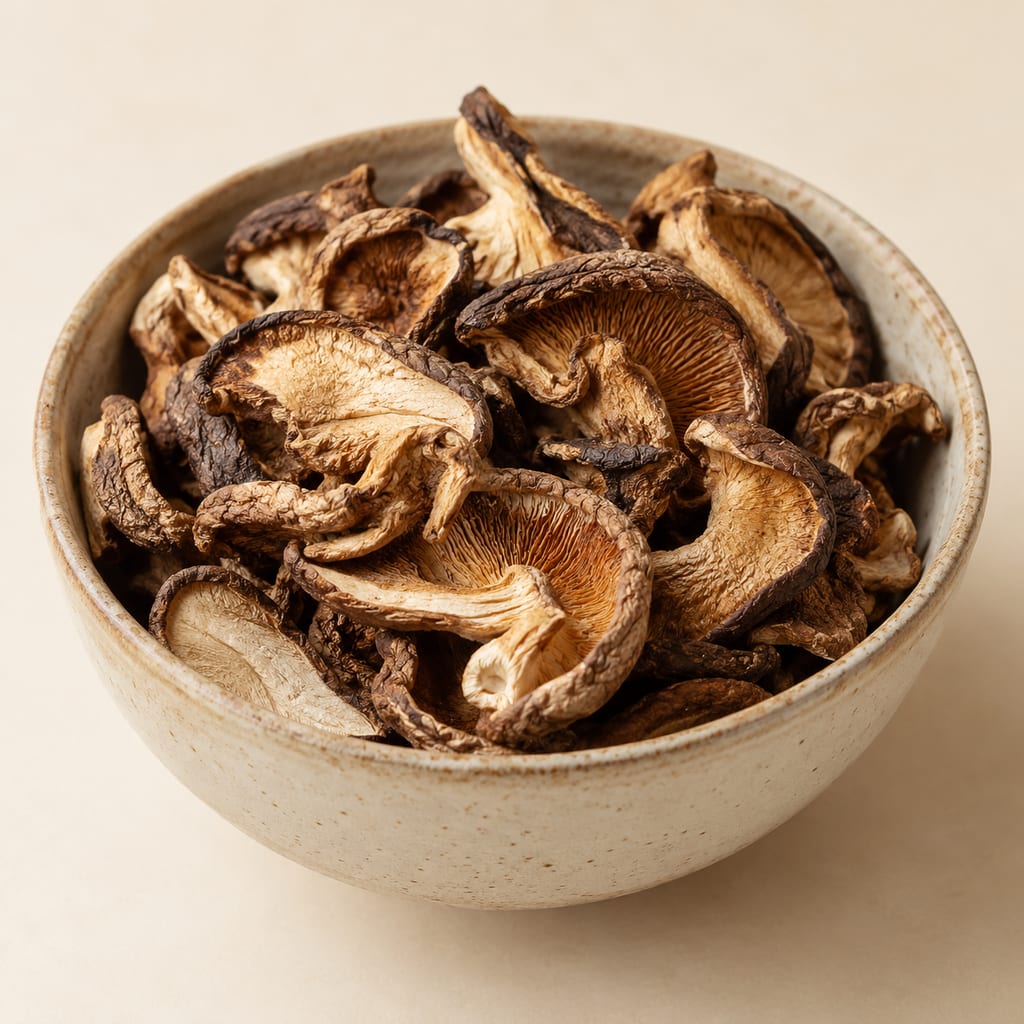
Sun-dried mushrooms are mushrooms spread in open sunlight and left to lose their water to solar heat and moving air, a method recorded in Nigeria, Tanzania, Mexico and among Algerian desert truffle gatherers.
No community contributions have been published for this entry yet.
Sign in to contribute. Published comments and photos are free to read.
Polish Ministry of Agriculture and Rural DevelopmentProduct specification
Ogłoszenie z dnia 28 maja 2019 r.: application to amend the “Suska sechlońska” geographical-indication specificationSelected physical pp.5–9 / printed folios 1–5 describe the named smoked-and-partly-dried plum and the applicant’s dryer/process. The source is an amendment application, not a household recipe.
Cited in: What is Suska sechlońska?; History and regional tradition; The fruit varieties; Ingredients and processing materials; The traditional fruit kiln; The documented production method; How smoking and drying transform the plum; Why the method is regional; How the plums are eaten; Recognising quality; Safety and storage
European CommissionProduct specification · History
Suska sechlońska PGIProtected geographical indication for the smoked and partly dried Małopolska plum, with its production area and process description.
Cited in: What is Suska sechlońska?; History and regional tradition; The fruit varieties; Ingredients and processing materials; The traditional fruit kiln; The documented production method; How smoking and drying transform the plum; Why the method is regional; How the plums are eaten; Recognising quality; Safety and storage
UK GovernmentProduct specification
Protected food name: Suska sechlońskaProtected food name registration for Suska sechlońska.
Cited in: History and regional tradition; Why the method is regional