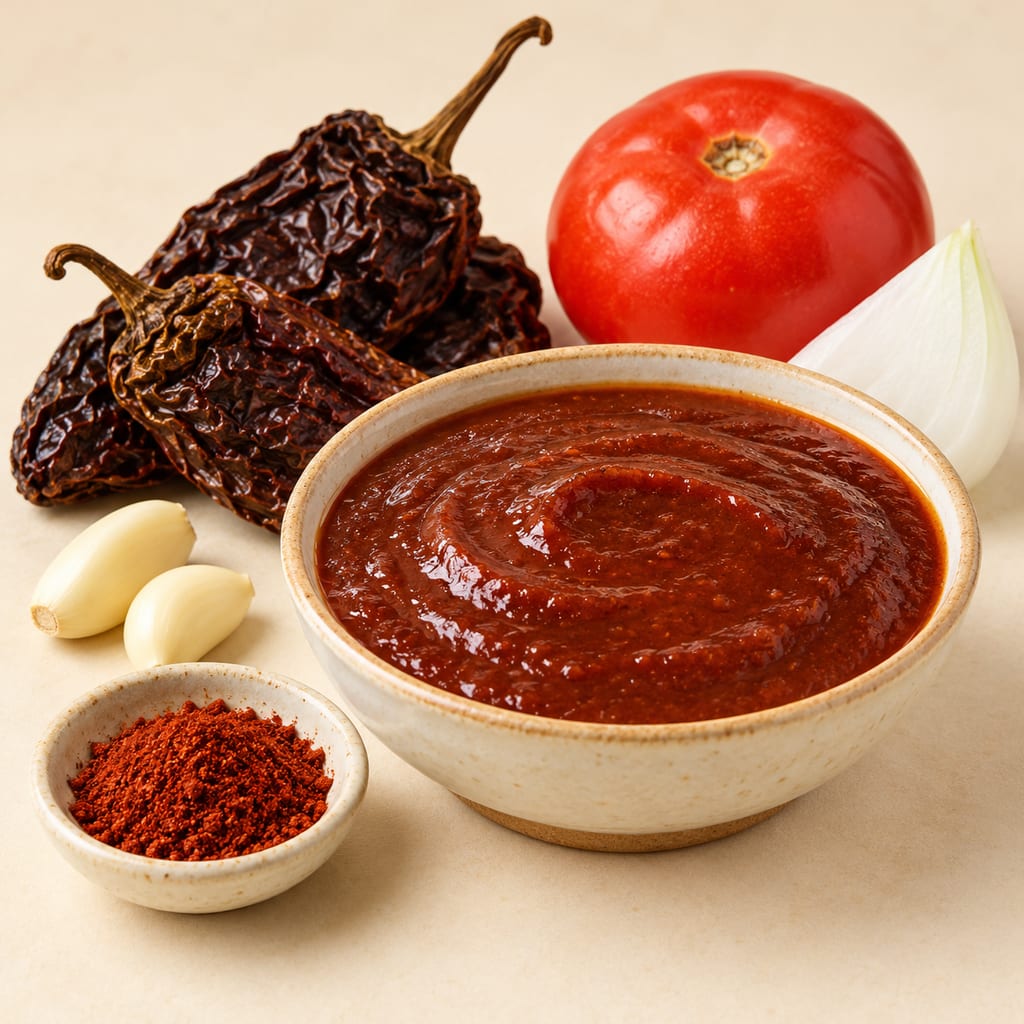
Chipotle adobo
Chipotle adobo is a cooked sauce of smoked chipotle chiles, tomato, onion, garlic, dried chile powder, spices and vinegar, the form in which chipotles are most often sold in the United States.
 FermenteaWhere food goes to change
Traditional method
Chile chipotle · chilpotle · chipocle · chilpocle · chile ahumado
Chipotle is a ripe jalapeño pepper smoke-dried in a wood-fired cocedor. Camargo, Chihuahua, documents a large-scale version of the process; its source accounts do not establish a complete home batch or validated safety endpoint.

Chipotle is a ripe jalapeño pepper that has been smoke-dried. It is a preparation, not a separate fresh variety: the familiar green, thick-fleshed chile is left to mature until red, then exposed to smoke and heat while it dries. The finished pod is smaller, darker and more wrinkled than the fresh fruit. Mexican culinary references describe a range from reddish to deep brown, a smoky flavor, and a pronounced but variable heat. Drying concentrates the pepper’s flavor in a compact pod; smoke adds a second, wood-derived aroma that is absent from a fresh jalapeño.
The product is sold whole, in pieces or ground, and as a prepared preserve. A dried chipotle can be softened in water before it is chopped or blended into a sauce. Chipotle in adobo is a different preparation: the smoked chile is cooked in a seasoned, often sweet-sour sauce and sold canned or in jars. That moist preserve is useful in its own right, but it is not the same product as the smoke-dried pod described here.
Chiles have deep histories in Mexico, but the evidence for the crop must not be mistaken for a dated account of chipotle itself. A Mexican government food-history article places early archaeological evidence for chile consumption in Tehuacán thousands of years ago and describes smoke-drying as a pre-Hispanic preservation technique. Mexican food dictionaries also connect chipotle with Nahuatl words for chile and smoke. These sources support a strong Indigenous-language and culinary context; they do not provide a dated first batch, a single place of invention or a continuous, fully documented recipe from antiquity.
The spelling has never been uniform. Chipotle is widely used, while chilpotle, chipocle, chilpocle, chilpote and other forms are also recorded. One dictionary entry explains the word through chilli and poctli; another spells the Nahuatl form chilpoctli. The shared meaning is smoke-dried chile. The word points to what makes the preparation distinctive, but language alone cannot establish precisely when or where a technique began.
Today the chile belongs to home cooking, market trade and regional processing. In Camargo, Chihuahua, the government’s agricultural information service reports commercial production since 1973. That date describes the modern local industry, not the invention of chipotle. In 2025 Chihuahua officials were preparing documentation for a geographical-indication application covering producers in Camargo and neighboring municipalities. The announcement records a contemporary effort to recognize place-linked practice, not a granted designation.
Camargo’s production joins field decisions to a purpose-built smoking structure. The local crop is cut several times. The first harvests can go to market green; peppers intended for chipotle are allowed to ripen on the plant and harvested red. This shifts the fruit from a fresh vegetable market into a value-added product whose smoke aroma and dry form travel and store differently. Producers’ work continues after harvest: the pods need to be moved, spread, turned and sorted as they change.
The Servicio de Información Agroalimentaria y Pesquera describes Camargo cocedores built from brick and wood, roughly 20 metres long, 6 metres wide and 2.5 metres high. Peppers are placed along a broad plancha, or cooking bed, and wood is burned beneath it. The scale matters: the described operation is a regional production facility, not a tested backyard smoker design. The account does not specify a household load, airflow rate, fuel amount, firebox layout, drying endpoint or operating temperature.
Local reporting illustrates the labor behind that scale. Workers sort the finished pods, and one report describes producers turning peppers at intervals during a multi-day smoke-and-dry run. Such details show that the process is actively managed rather than a passive seasoning step. They should not be turned into universal directions: cocedor construction, fuel and operating practices differ, and the government account does not prescribe a single schedule.
Jalapeños have substantial, fleshy walls. A petition submitted to the United States Department of Agriculture notes that thick-walled peppers hold considerable moisture and are difficult to dry by sun or ordinary dehydration alone. It describes one commercial chamber in which peppers rest on metal grills while smoke enters from a firebox; that is the petitioner’s account, not an agency-validated household design. Smoking and drying therefore do two jobs at once: heat and moving air remove water, while smoke deposits aroma compounds on the fruit and exposes it to the characteristic flavor of wood smoke. Dehydration is a physical change, not fermentation; no starter or microbial culture is part of the preparation.
A study of red jalapeños transformed into chipotle found changes in measured phenolic compounds, antioxidant capacity, capsaicinoids and ascorbic acid; the wood used also affected some measurements. A separate study compared two fresh jalapeño varieties, smoke-dried chipotle samples and commercial sauces, and found the processing affected its measured compounds. Those experiments describe their own samples and conditions. They do not justify treating every chipotle as chemically identical or making a health claim from a single preparation.
The finished color and aroma reflect the combined action of ripeness, drying and smoke exposure. Mexican agricultural information describes hues from light to dark red, a smoky taste and a lightly pungent aroma; culinary references describe the more familiar dark, wrinkled pod. A producer may seek a particular color or smoke intensity, but no one sensory cue establishes that a product is microbiologically safe or completely dry.
Red-ripe jalapeños are the documented Camargo substrate. Their thick walls and moisture make them suited to a process that combines heat, smoke and dehydration; their ripeness supplies the red color associated with common chipotle. The individual variety, fruit size, moisture and maturity can all change how a load behaves. The available Camargo overview gives no standardized cultivar, fruit count, weight or size grade, so those details cannot be converted into a universal formula.
Wood is a process material rather than a seasoning added after the fact. The official description says that wood burns below the cocedor plancha but does not name a species. Separate reports from the region name walnut and oak as contemporary fuels, while a scientific experiment found the type of wood affected some measured compounds. Those observations do not mean that any hardwood is interchangeable or that a particular fuel produces a fixed flavor. The source method leaves the species and quantity open.
Unlike a chili sauce, the basic dried pepper contains no adobo, vinegar, sugar or salt. Adding those ingredients changes the subject into a sauce or preserve. Keeping the product distinct is useful in the kitchen: a cook can choose the dried chile for its smoke and heat, then decide whether to steep, grind or combine it in a separate dish.
Chipotle is a family name as well as a market word. Larousse records variants linked to different jalapeño types and local names. It describes a chipotle tamarindo in the State of Mexico, reddish-brown market chipotles in Xalapa and a larger, dark-red chipotle navideño used in Oaxaca. These names point to distinct local forms and contexts; they should not be collapsed into one exact pepper shape or one universal process.
The word meco is especially easy to misread. Chipotle meco can name a common smoke-dried chipotle, but chile meco can also mean a jalapeño dried without smoke. In that case the two chiles share a fresh substrate but differ in process and flavor. The distinction matters when a recipe calls for smoky chipotle: an un-smoked dried meco does not supply the same wood aroma. Morita is another recognized type associated with jalapeño; sources list it among chipotle forms, but they do not establish that every morita is processed identically to a larger Camargo meco.
These variations appear in markets and dishes rather than as a single ladder of quality. Size, darkness and texture can reflect variety and local preference. A large pod might be chosen for stuffing; smaller or broken pieces can be steeped or ground. Names such as chile ahumado in Veracruz or chile de mole among Totonac speakers describe cultural and linguistic use, not a guarantee that every product bearing them came from one town.
Whole dried chipotles are usually used as a seasoning ingredient, not eaten in the same way as a fresh jalapeño. Softening the pod in water makes it easier to cut or blend; toasting or simmering it in a dish can distribute its smoke and heat through a broth, stew or sauce. The seed and inner ribs carry heat, so removing some changes the balance, though the source references do not prescribe a standard amount. A cook should taste the finished dish for preference only, never to judge the safety of the pepper.
Larousse describes chipotle in adobo as perhaps the most common preserved form. Regional versions simmer chipotles with ingredients such as piloncillo, vinegar, spices, garlic and salt; some sauces use ground guajillo for body. Escabeche follows a related path but omits the ground chile. Canned chipotle in adobo is widely used in sauces, stews and meat dishes, and contemporary cooks also blend the peppers into mayonnaise. These are uses of the dried chile after it has become an ingredient in a second preparation.
The smoke makes chipotle especially effective where a dish would otherwise take a long time to build that aroma. A small amount can season beans, soups, braises, marinades or tomato-based sauces. The point is not that every Mexican dish needs smoke, but that the preserved pepper brings it together with chile heat in one compact ingredient. A cook can use the whole pod for a restrained infusion, or chop and blend it when the dish needs its texture and heat spread throughout.
The method recorded for Camargo begins with mature red jalapeños. Peppers are spread along the cocedor plancha; wood burns below; heat and smoke dry the pods; finished product is packed for market or further processing. A consumer guide describes mature peppers on metal grates in a special oven over several days, while local reports describe repeated turning in commercial production. These accounts support the identity of the method and its main stages, not a single measured household batch.
No source consulted here gives a complete pepper quantity, fuel ratio, target temperature, humidity, water-activity endpoint, validated drying schedule or home-scale equipment specification for this Camargo method. The product page therefore preserves the reported operations and records those missing limits as unknown. It does not offer invented weights or a timer that would make a commercial process look reproducible at home. A professionally controlled smoke-drying line and a domestic grill are not interchangeable just because both produce smoke.
Open smoke-drying exposes food to its surroundings as well as to heat and smoke. A 2009 study of chipotle production investigated wind-borne physical and fecal contamination during open-air processing. It evaluated a protective mesh over the oven, preventing direct worker contact with peppers and disinfecting tools. With all these measures in place, the study reported no detectable fecal coliforms or E. coli and no physical contamination; when all measures were not applied, fecal coliforms reached 210 most-probable-number units per gram in the fruit. Those results show why handling controls matter, but they are not a guarantee for another facility or batch.
Use professionally produced chipotle from a traceable supplier when the process details matter. Keep the dried product clean and dry in its original suitable packaging, and follow the supplier’s storage direction; no shelf life is specified by the sources for a home-produced batch. A dark color, smoky aroma, brittle skin or the absence of visible mold cannot establish safe processing. If peppers are damp, visibly contaminated or stored in unknown conditions, do not rely on smell, taste or later cooking to make them safe.
Modern Mexican government and culinary references describe chipotle as a smoke-dried jalapeño and identify smoke-drying as a longstanding, sometimes described as pre-Hispanic, preservation technique. No dated first attestation or single place of origin was established here.
Scaling: source batch only
Open smoke-drying can expose peppers to wind-borne physical and fecal contamination; a study detected elevated fecal coliforms when all handling controls were not used.
Hazard sourceUse protective mesh over the open processing area, prevent direct worker contact with peppers and disinfect work tools.
Control sourceThe available Camargo descriptions are commercial process accounts, not a validated home recipe; they give no source-backed temperature, moisture endpoint or safety time limit.
Color, aroma, apparent dryness, taste and later cooking do not establish that an inadequately handled batch is safe.
A documented regional production center; this is not a claim that the preparation originated in Camargo.
Modern Mexican references describe smoke-dried chile as a longstanding Mexican preparation; they do not date its first appearance or establish one birthplace.
Chipotle adobo is a cooked sauce of smoked chipotle chiles, tomato, onion, garlic, dried chile powder, spices and vinegar, the form in which chipotles are most often sold in the United States.
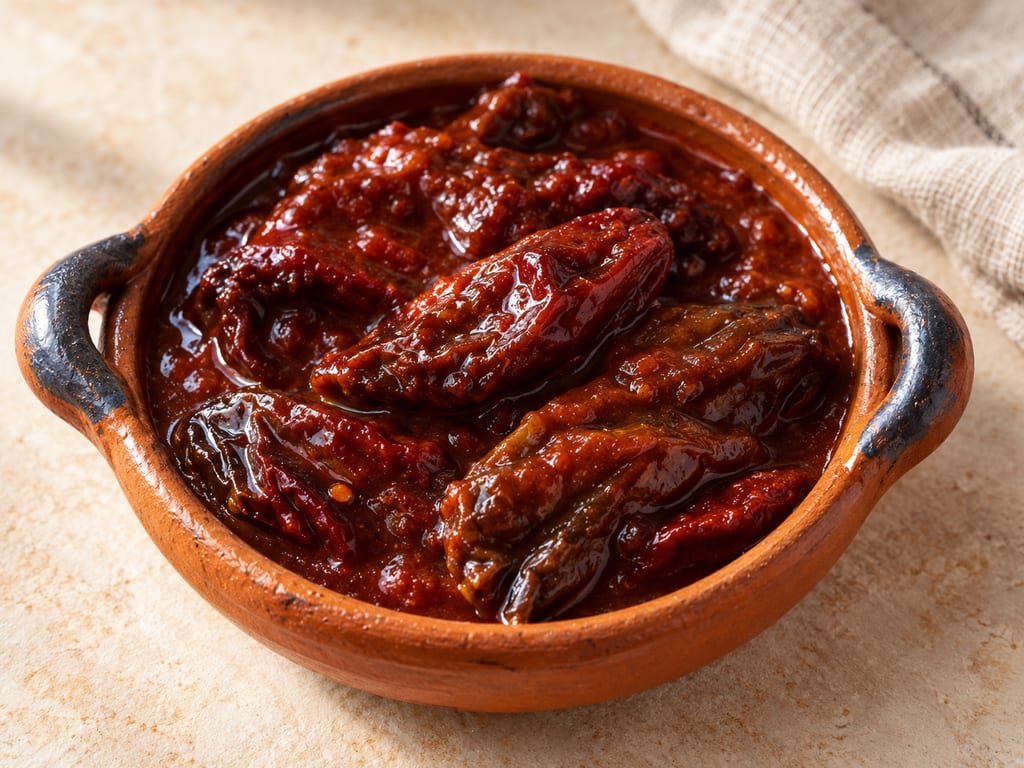
Whole smoked-dried chipotles simmer in a tomato, vinegar and spice adobo: a Mexican condiment with smoky heat and a sauce that seasons the chile as it softens.
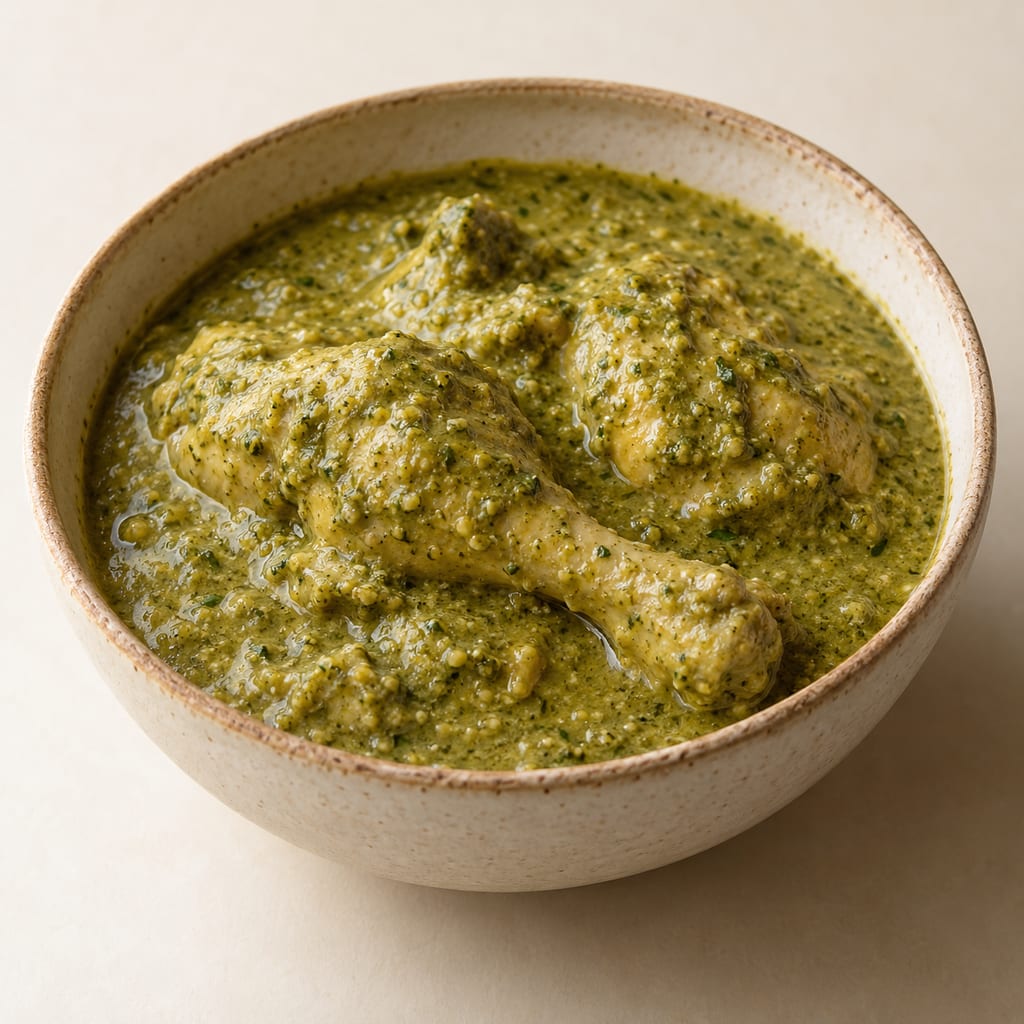
Pipián is a Mexican sauce family built on ground squash seeds, cooked with tomatillo or chile and herbs. The green version uses tomatillo and hoja santa; red versions add peanut, sesame and dried chile.
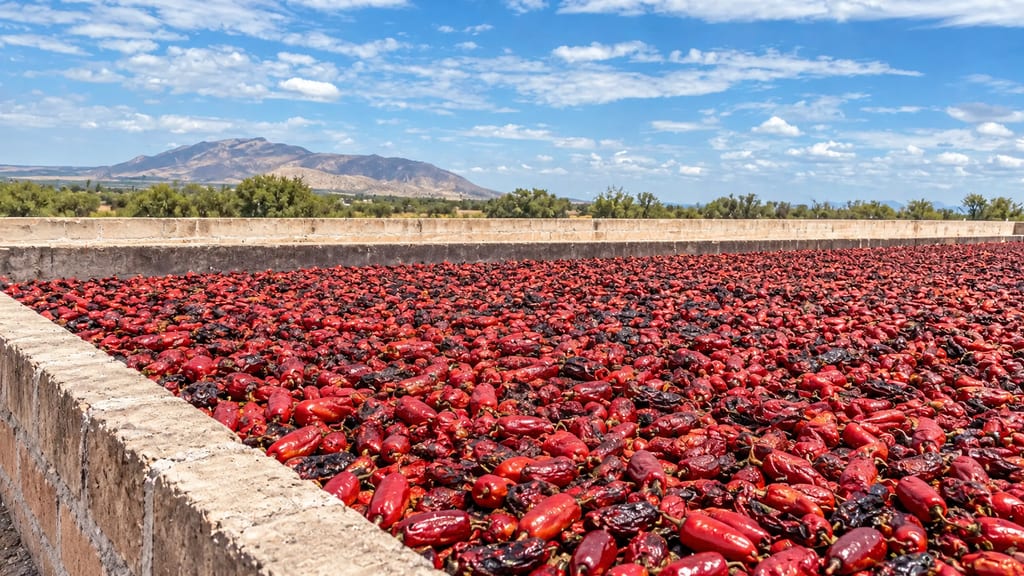
A fixed masonry-and-wood structure used in Camargo to smoke and dry ripe jalapeños into chipotle. Sources give regional dimensions and one separate experimental oven, not a safe construction plan.
A CIMAV industrial chipotle oven combines solar-heated water and recirculated air with auxiliary gas heat and a separate wood smoker. It differs from Camargo’s traditional open masonry cocedores; reports describe capacity differently.
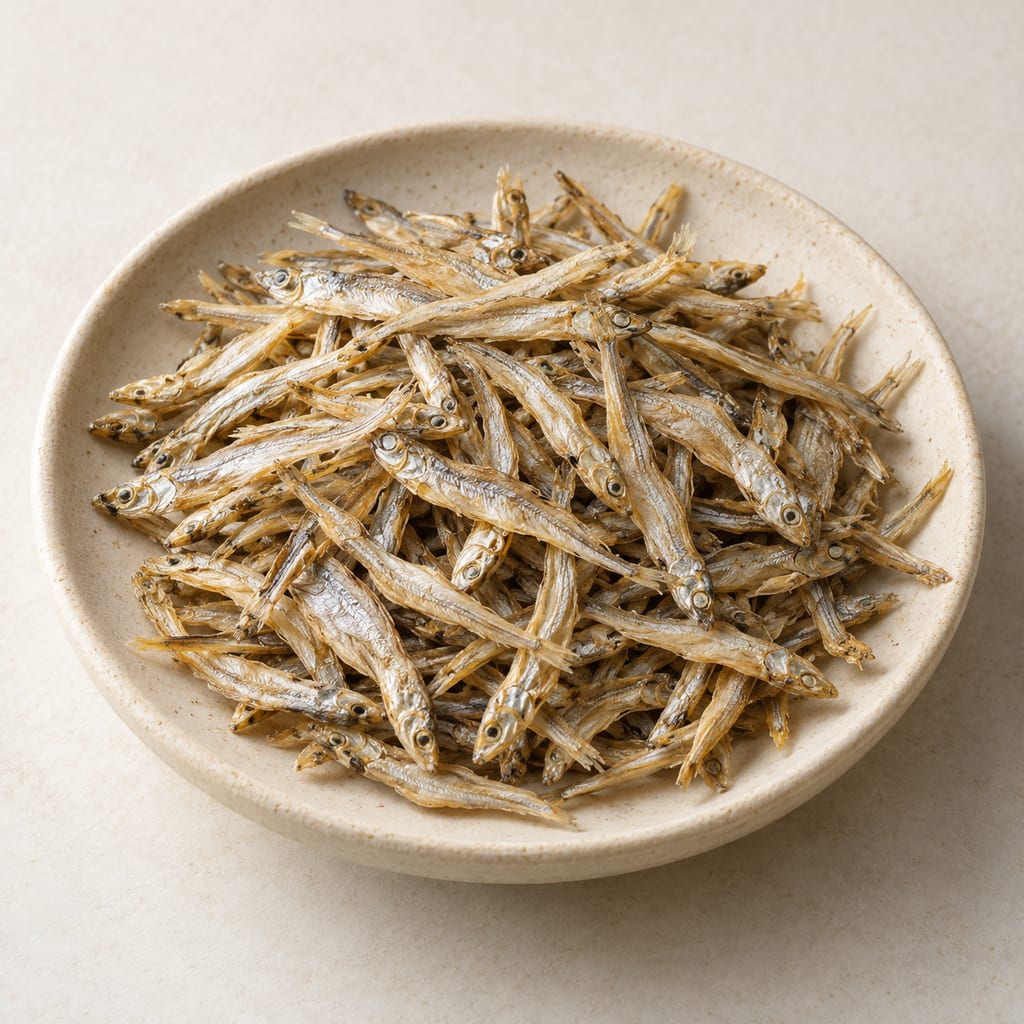
Small central-Mexican lake silversides, Chirostoma spp., dried whole and sometimes salted, then fried, roasted or simmered into Lenten tortitas and snacks.
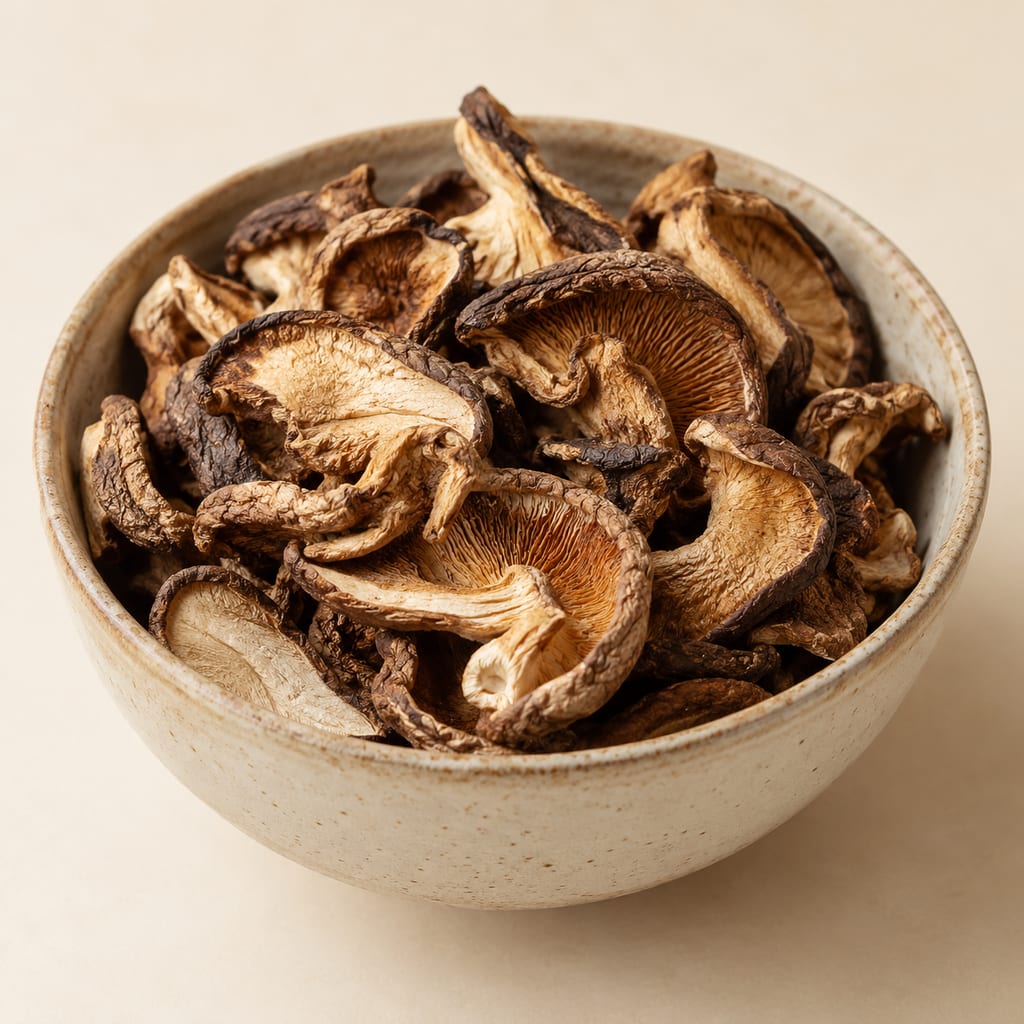
Sun-dried mushrooms are mushrooms spread in open sunlight and left to lose their water to solar heat and moving air, a method recorded in Nigeria, Tanzania, Mexico and among Algerian desert truffle gatherers.
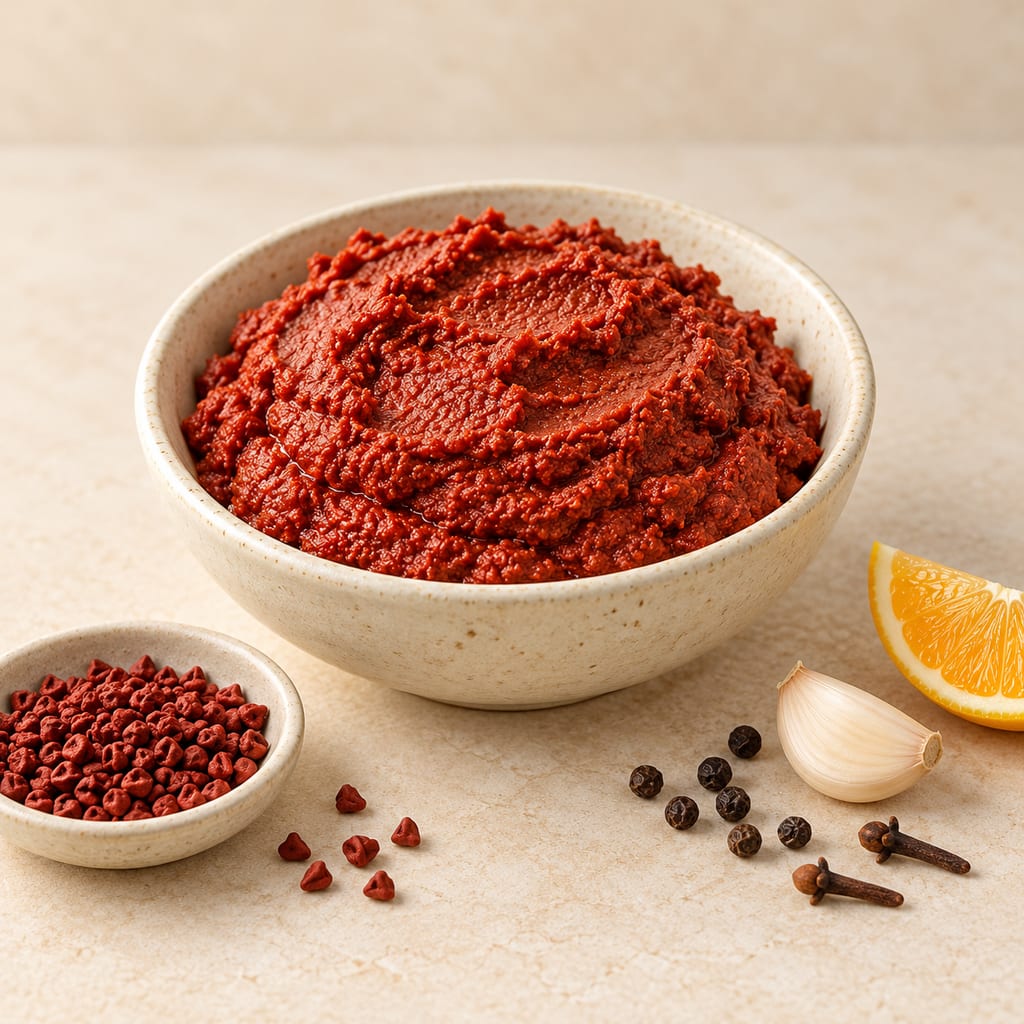
A Yucatecan recado rojo is a brick-red seasoning paste built on annatto seed, garlic and sour orange. This measured home version shows one route into a much wider family of market and household recados.
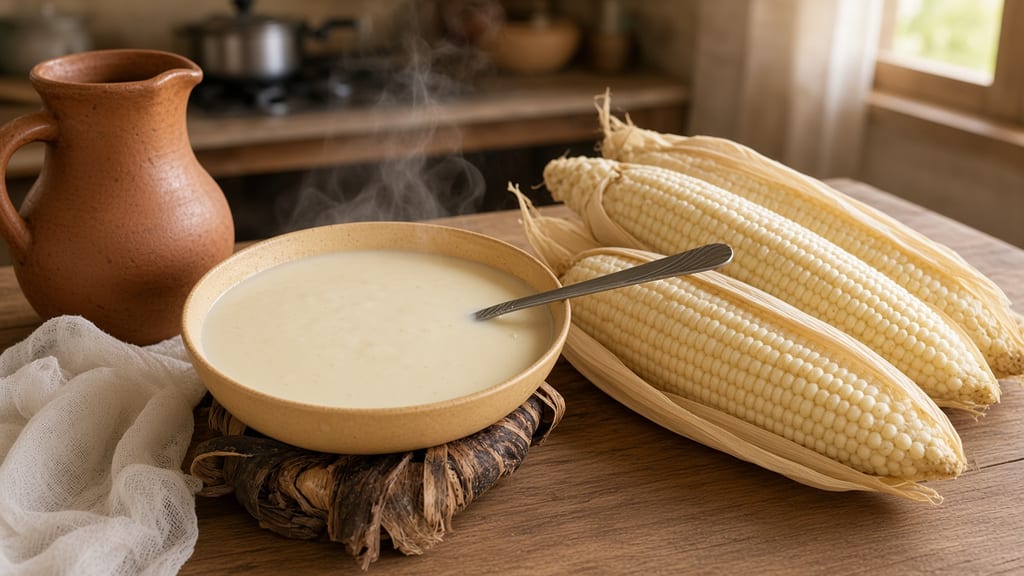
A hot, sour maize drink from Tabasco made from maize that is not lime-cooked. The ground grain sours for half a day, then makers strain it and boil it until thick.
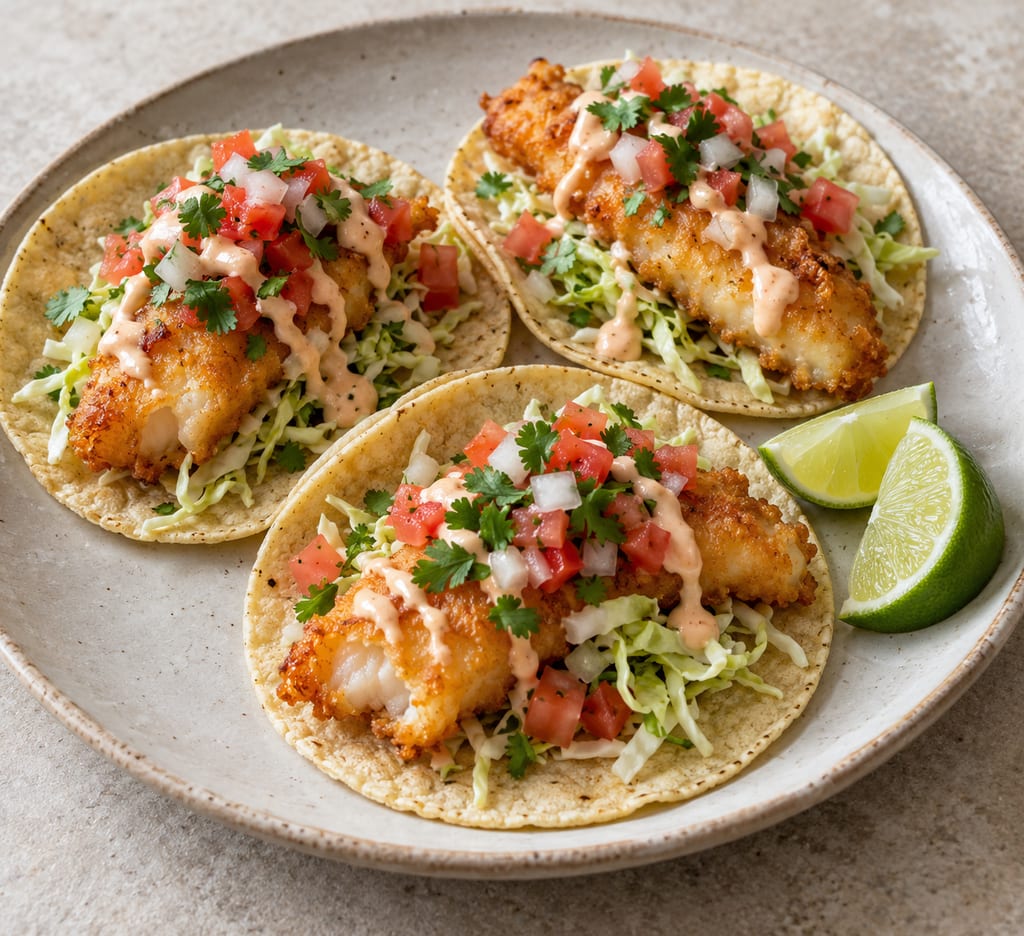
Crisp battered white fish in warm corn tortillas with shredded cabbage, lime and fresh salsa. This home version draws on the Ensenada style without claiming to be a definitive historic formula.
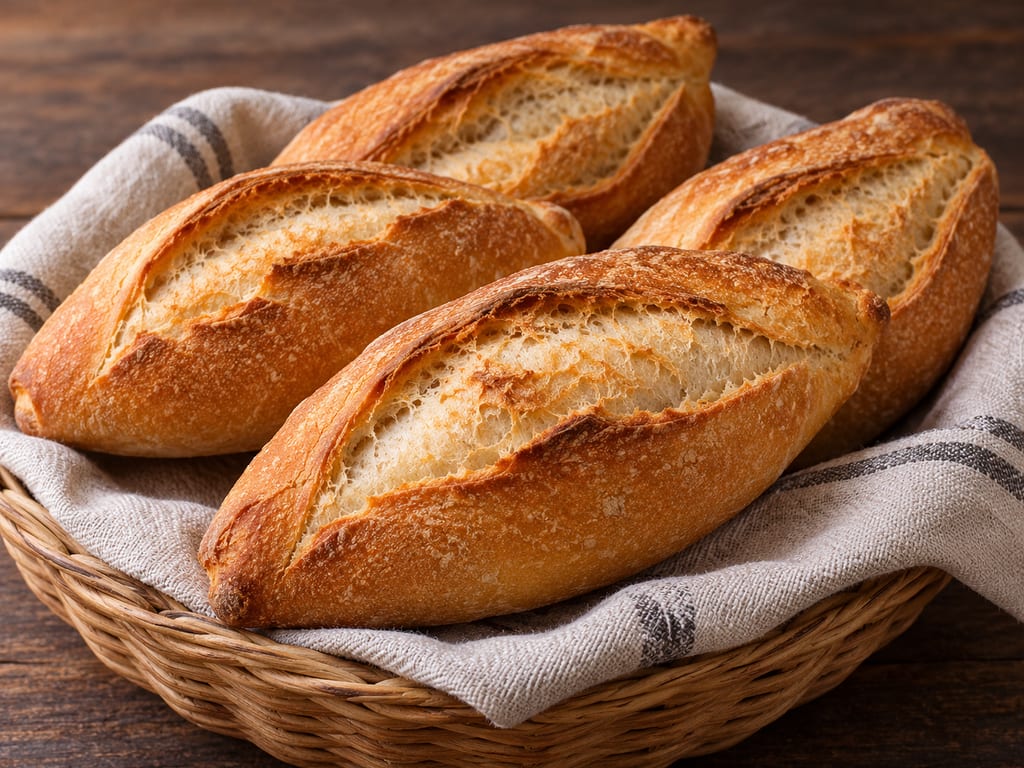
A measured, commercial-yeast home method for Guadalajara-style birote salado, with a six-hour preferment, shaped rolls and a two-temperature steam bake. This formula contains no egg.
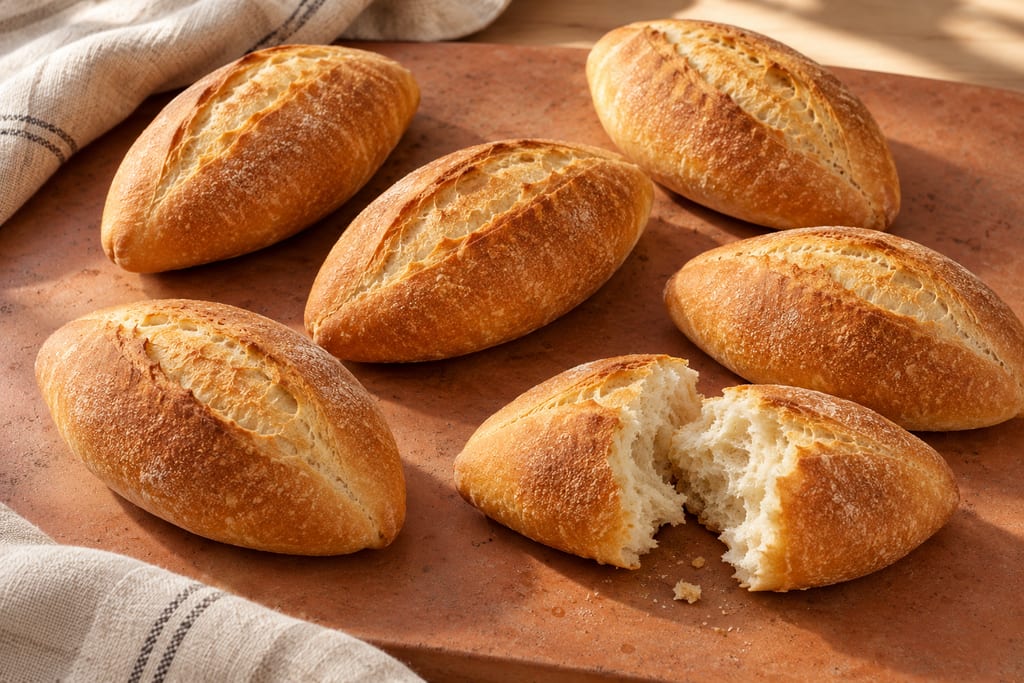
Small, lightly enriched rolls with tapered ends and a scored top; this six-roll formula bakes on a hot stone with steam for a thin, crisp crust.
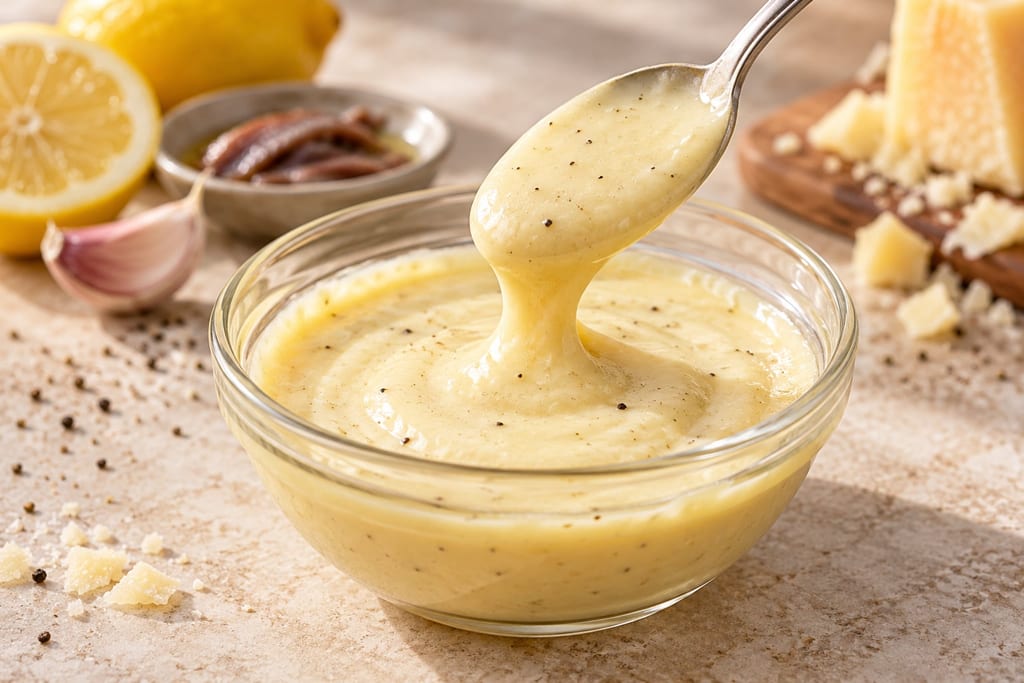
A source-specific Caesar dressing made with pasteurized egg yolks, Parmesan, lemon, anchovy, garlic, mustard and olive oil. This modern Vitamix formulation is distinct from the salad’s disputed 1924 origin accounts.
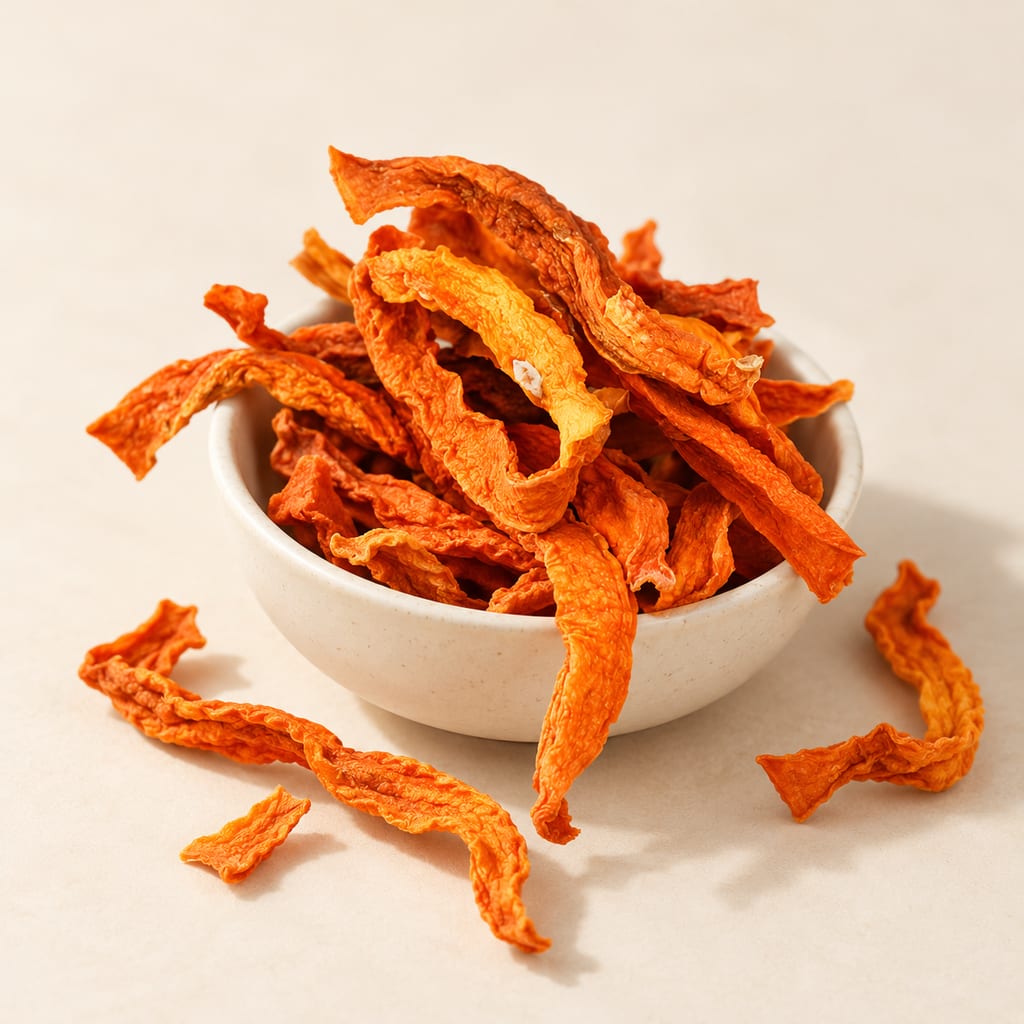
Steam-blanched pumpkin dried until brittle, kept as pieces or ground into powder, with pumpkin-specific packaging and quality guidance.
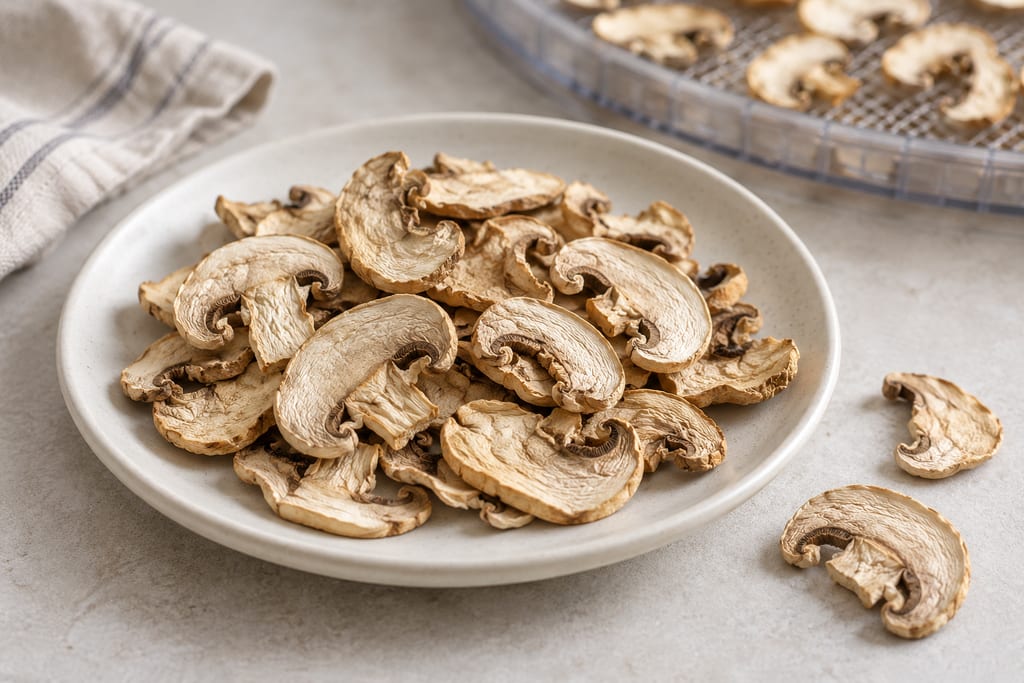
Hot-air dehydrated mushrooms are sliced mushrooms dried in a dehydrator or dryer with heated, moving air; a 2011 study dried button mushroom slices at 60 °C and compared them with microwave-vacuum and freeze-drying.

Merkén is the Mapuche seasoning of dried, smoked and ground ají cacho de cabra chile, sometimes with toasted coriander seed and salt, made in the Maule and La Araucanía regions of Chile.
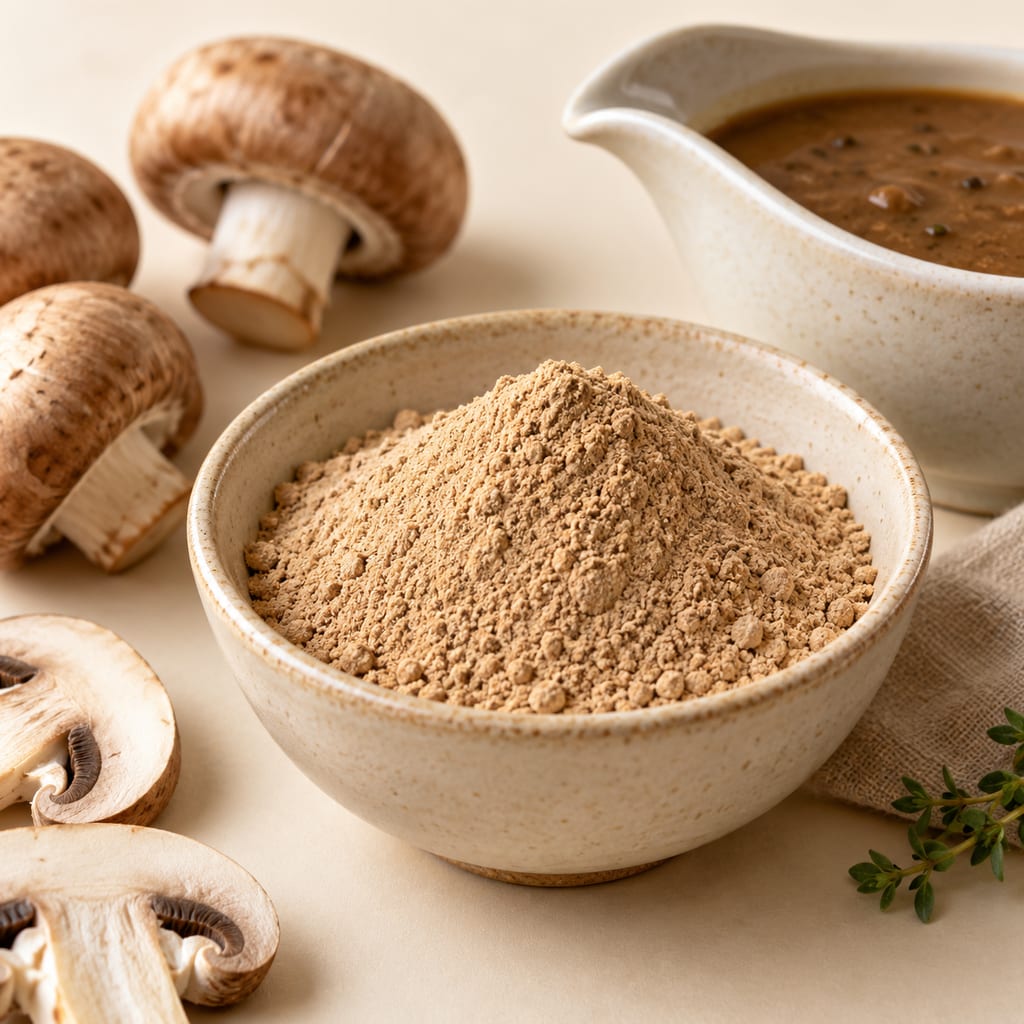
Mushroom powder is dried mushroom tissue ground to a fine powder and added to gravies and sauces. Victorian cooks made it from fresh cultivated mushrooms when fresh ones were not to hand.
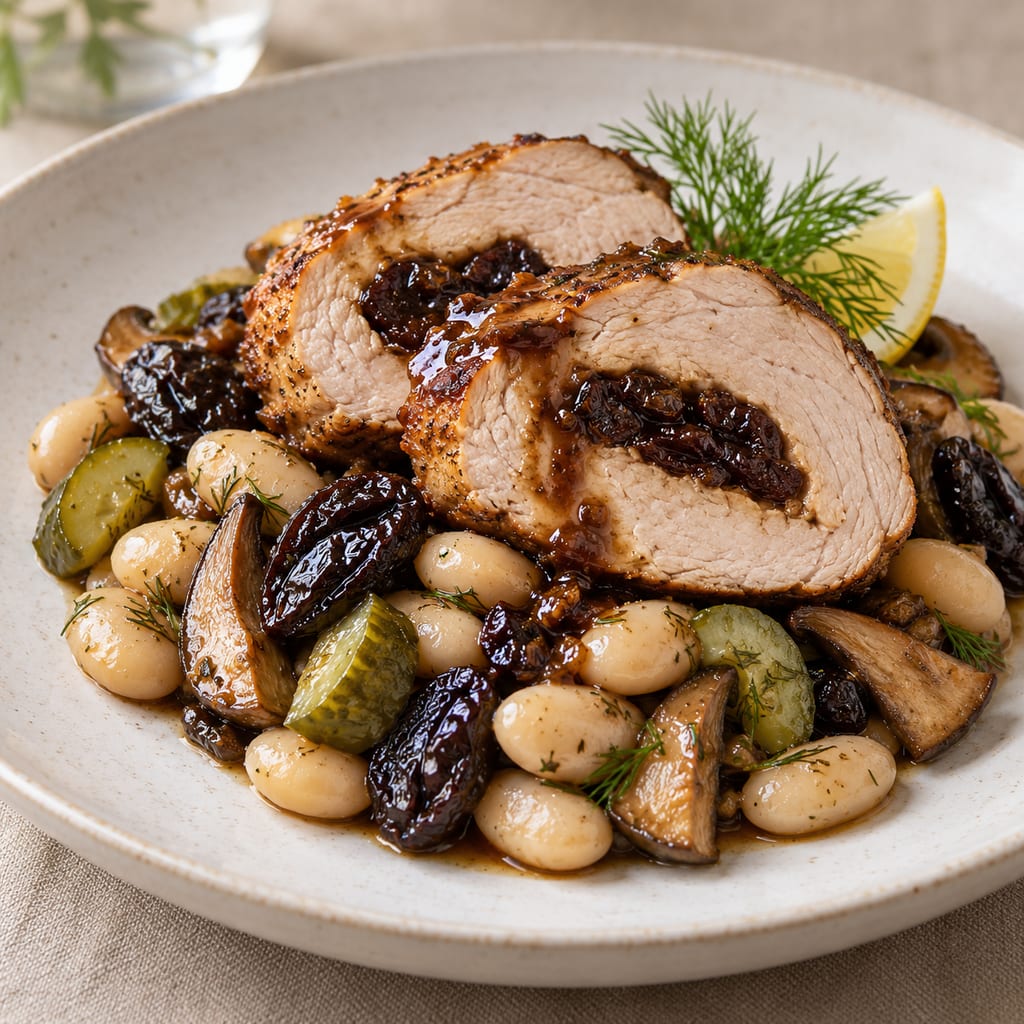
This Polish competition recipe stuffs pork loin with suska and serves it with a bean salad containing more smoked-and-dried plums.
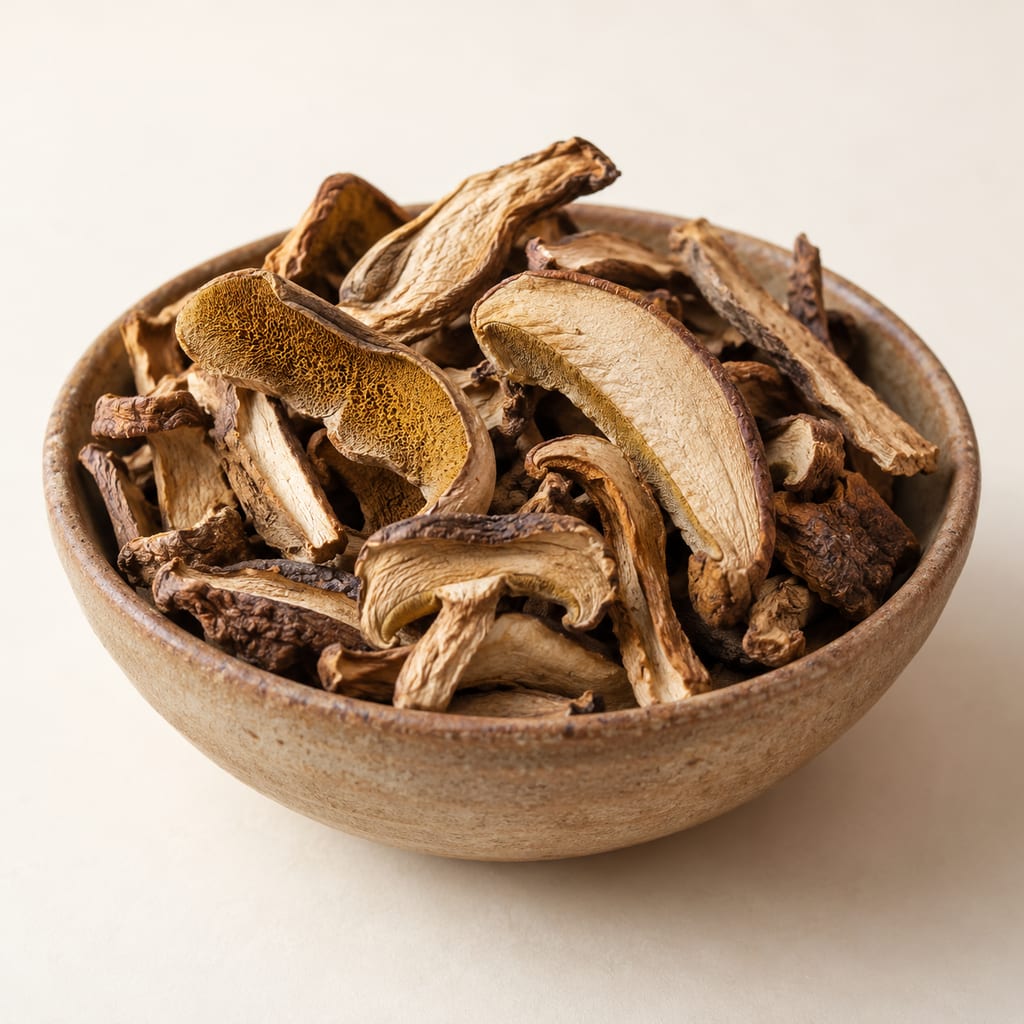
Protected solar-dried mushrooms are slices of wild Suillus luteus dried under a shade cover, a fitotoldo, rather than in open sun, as tested in an experimental study from Apurímac, Peru.
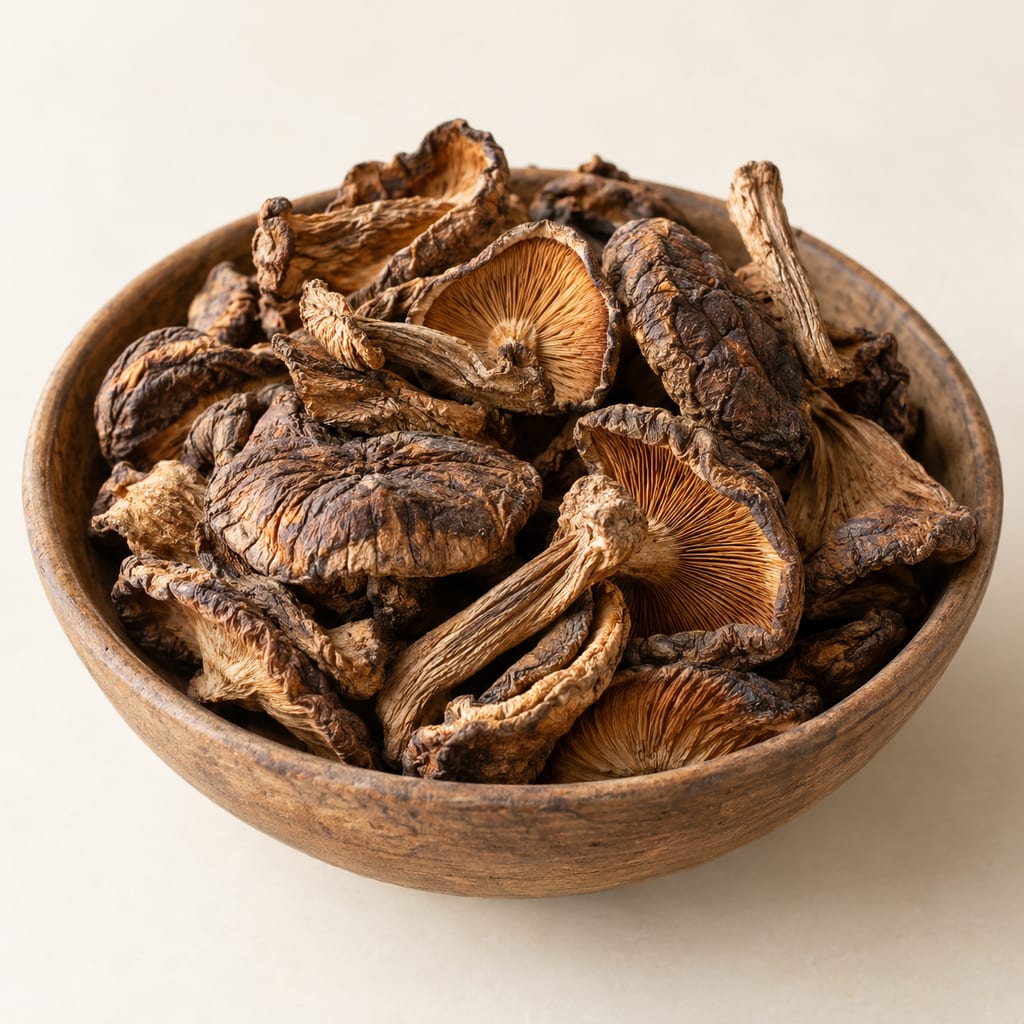
Hearth-dried mushrooms are dried on shelves above a cooking fire, so heat and smoke reach them. Tanzanian records describe the method; a Vietnamese study tested smoke-dried shiitake for fuel-dependent contaminants.

Małopolska plums smoked and part-dried over a wood fire in a regional kiln for several days, giving a dark, concentrated fruit with a protected name.
No community contributions have been published for this entry yet.
Sign in to contribute. Published comments and photos are free to read.
Dirección General del Servicio de Información Agroalimentaria y Pesquera, Gobierno de MéxicoHistory · Process · Geography · Uses
Ahumado y deshidratado, el chipotle sigue siendo apreciadoThe article distinguishes chipotle as a smoke-dried product rather than a pepper variety and names jalapeño, including the morita variety, as substrate.
It reports Camargo production since 1973, two to three jalapeño harvest cuts, leaving the last fruit red-ripe for chipotle, cocedores of brick and wood, approximate facility dimensions of 20 × 6 × 2.5 m, peppers on the cocedor plancha and wood burning below.
It describes the resulting color, smoky flavor and pungency, then packing for market or industry; it supplies no household quantities or measured time/temperature controls.
It notes adobado and canned chipotle as common consumer forms and names ancho, pasilla, tomato and garlic in one account of adobo.
Cited in: A jalapeño transformed by smoke; A long technique, without a securely dated beginning; Camargo and the cocedor; The fruit and fuel each matter; Names and regional forms; At the table: from whole pod to adobo; A documented process, not a home-scale formula; Food handling is part of the craft
Larousse Cocina, Diccionario enciclopédico de la Gastronomía MexicanaHistory · Uses · Variations
Chile chipotle o chile chipocleLists spellings chilpocle, chilpote, chilpotle, chipoctle and chipolcle, and relates the word to Nahuatl chilli and poctli.
Describes dried smoked chipotle as dark, wrinkled and hot and says types vary by jalapeño variety.
Distinguishes chipotle meco from an un-smoked dried chile meco; names chipotle tamarindo, Xalapa market types, Oaxaca chipotle navideño and the Juchitán preparation guiiña biixhi záa.
Describes adobo and escabeche forms and use in sauces and stews.
Cited in: A jalapeño transformed by smoke; A long technique, without a securely dated beginning; Names and regional forms; At the table: from whole pod to adobo
Procuraduría Federal del Consumidor (PROFECO), Revista del Consumidor, July 2020Process · Uses
Radiografía: Chipotle, chile ahumadoDescribes selecting ripe red jalapeños, sometimes allowing partial drying on the plant, arranging peppers on metal grates, then smoking in a special oven over several days until dehydrated.
Names chipotle meco and mentions adobo, escabeche and sauces as customary forms. The PDF was surfaced in indexed text; its publisher URL currently returns 404.
Cited in: A jalapeño transformed by smoke; At the table: from whole pod to adobo; A documented process, not a home-scale formula
Revista Fitotecnia Mexicana, 32(3), 2009; Graciela D. Ávila-Quezada et al.Safety · Process
Contaminación física y microbiológica del chile chipotle durante el deshidratadoThe study treats open-air smoke drying of jalapeño as a chipotle production stage and identifies possible wind-borne physical and fecal contamination.
It evaluates a hail-protection mesh over the oven, avoiding direct worker contact with fruit and disinfecting work tools. With the full set of handling measures, fecal coliforms and E. coli were not detected and no physical contamination was reported; without all measures, fecal coliforms reached up to 210 MPN/g.
Cited in: Food handling is part of the craft
Acta Agrícola y Pecuaria, 7(1), 2021; Ever A. Natividad-Torres et al.Science · Process
Effect of the processing on the antioxidant capacity and bioactive compounds content of jalapeño pepper for chipotle and commercial saucesCompares two jalapeño varieties in fresh and smoke-dehydrated chipotle form and commercial sauces, measuring antioxidant capacity, capsaicin, carotenoids and total phenols.
Reports that the processing affected measured variables; the study's particular samples and results are not a universal nutritional claim about every chipotle batch.
Cited in: Why smoke and drying are paired; The fruit and fuel each matter
Portal Gubernamental del Estado de ChihuahuaGeography · History
Busca Gobierno del Estado posicionar al chile chipotle chihuahuense a nivel internacionalA 2025 state announcement describes an effort to document chipotle production as a geographical-indication candidate from Camargo, Jiménez, San Francisco de Conchos and La Cruz; it is an application effort, not proof of a granted indication.
Cited in: A long technique, without a securely dated beginning
La Opción de ChihuahuaProcess · Geography
Da inicio la temporada de chile chipotle en CamargoReports Camargo-area modern production and sorting of smoke-dried chiles, with local producers describing several days of smoke/drying and repeated turning; this is one reported practice, not a universal schedule.
Cited in: Camargo and the cocedor; The fruit and fuel each matter; A documented process, not a home-scale formula
The Hain Celestial Group, Inc., petition submitted to the USDA National Organic ProgramProcess · Science
Petition for Chipotle Pepper for National List §205.606The petition describes chipotle as smoke-dried ripe chile and explains that thick-walled jalapeños hold moisture and are difficult to sun-dry or dry in ordinary dehydrators.
It describes a commercial chamber with peppers on metal grills and smoke entering from a firebox; those process details are the petitioner's account, not USDA validation.
Cited in: Why smoke and drying are paired
Food Research International, 2017; abstract indexed at PubMed, PMID 28455049Science
Effect of the smoking process and firewood type in the phytochemical content and antioxidant capacity of red Jalapeño pepper during its transformation to chipotle pepperThe study reports changes to phenolic compounds, antioxidant capacity, capsaicinoids and ascorbic acid during smoking of red jalapeño; wood type affected some measured outcomes, with pecan wood producing the strongest effect in that study.
The findings apply to the study’s samples and conditions, not all commercial chipotle.
Cited in: Why smoke and drying are paired