
Chipotle
Chipotle is a ripe jalapeño pepper smoke-dried in a wood-fired cocedor. Camargo, Chihuahua, documents a large-scale version of the process; its source accounts do not establish a complete home batch or validated safety endpoint.
 FermenteaWhere food goes to change
Built structures · Drying kilns and dryers
Cocedor de chipotle · Cocedores
A fixed masonry-and-wood structure used in Camargo to smoke and dry ripe jalapeños into chipotle. Sources give regional dimensions and one separate experimental oven, not a safe construction plan.
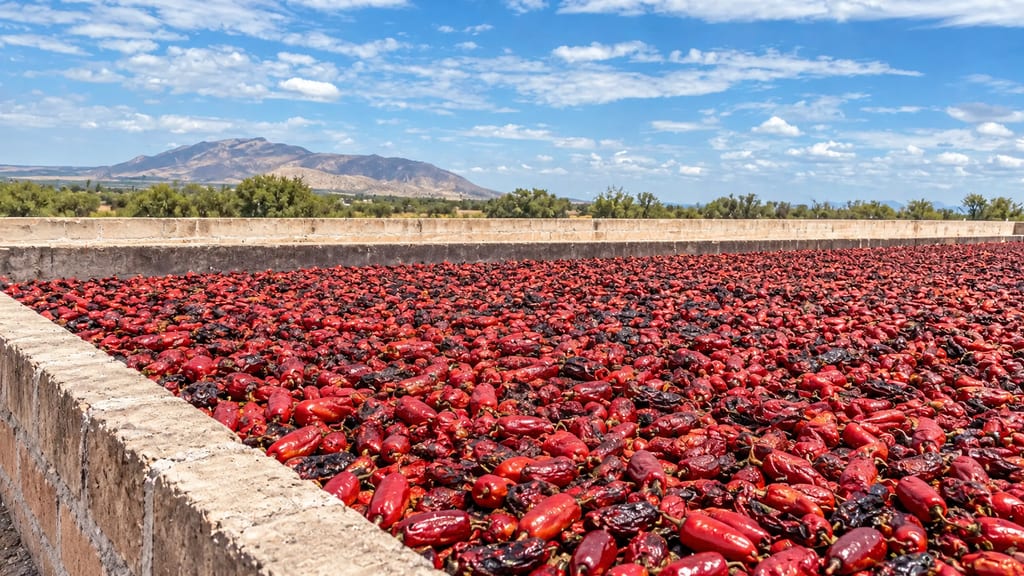
A cocedor is made at the production site rather than carried in as a vessel. Mexico’s agricultural information service describes Camargo examples as brick-and-wood structures about 20 m long, 6 m wide and 2.5 m high. These are reported regional dimensions, not a construction drawing. Ripe chiles are spread across the surface while wood burns below, so smoke exposure and dehydration happen together. The broad masonry bed shown in a Camargo photograph by El Heraldo de Chihuahua is the form discussed here. It is distinct from the CIMAV hybrid dryer, a separate prototype with different heating and smoke systems.
A peer-reviewed paper describes an oven built by a producer in Camargo’s industrial chipotle park in 2003 for a drying study. It reports four concrete-block walls, 1.30 m high, 4 m long and 3 m wide, with wooden grates spaced 0.6 cm apart. Red jalapeños rested on the grates while wood burned below. These measurements belong to one experimental unit; they do not replace the larger regional dimensions or establish a standard design. The study gives no footing, reinforcement, mortar, flue or airflow drawings and does not validate a construction plan.
DGSIAP says Camargo production developed from 1973; that does not date the invention of the oven or the broader practice of smoking food. The documented process applies smoke and heat together while ripe peppers lose moisture. A 2024 El Heraldo de Chihuahua report and credited photograph place cocedores in the local production and festival setting. The inspected sources do not provide a complete construction sequence, capacity, fuel specification, structural design, fire separation or safe operating limits. This is a descriptive record, not build instructions. The chipotle preparation record covers the food process; this page covers the fixed structure.
DGSIAP dates Camargo production development to 1973, not the origin of the cocedor. Sources document current use but not the structure’s earliest origin.
A build is made where it stands: moving it means building it again.
Wood burns below the pepper-bearing surface; local reporting notes fire risk. No safe clearances or limits are established.
Hazard sourceDescriptive record, not construction or operating instructions. The sources do not establish foundation design, structural loading, fire separation, ventilation dimensions, clearances or safe limits.
Sources locate regional cocedores and one experimental oven in Camargo; they do not establish origin there.
Chipotle is a ripe jalapeño pepper smoke-dried in a wood-fired cocedor. Camargo, Chihuahua, documents a large-scale version of the process; its source accounts do not establish a complete home batch or validated safety endpoint.

Soft, spreadable Calabrian pork sausage made with a great deal of red chilli and fatty pork, stuffed into natural casings, sometimes smoked and matured while staying soft.

A way to add independent temperature logging to an existing food dehydrator without changing its built-in controls or protections. It is a monitoring method, not a rewiring plan.

Pleurotus cystidiosus is the abalone mushroom, a cultivated oyster-type fungus with dark brown caps that grows more slowly and is more demanding than other Pleurotus species.

A dark, balanced vinegar from Emilia-Romagna made by combining cooked or concentrated grape must with wine vinegar, then acetifying and refining it in wood under a protected specification.

A living dairy inoculum that starts controlled cream fermentation, developing acidity and aroma before sour cream or cultured butter is finished.

A small electric incubator holds jars at a selected temperature for yogurt and other documented warm food preparations. Controls, capacity and vessel arrangement vary by model.

Adygean salt is a seasoned table salt associated with Adygea and the wider North Caucasian culinary tradition. Salt is blended with garlic and a variable selection of herbs and spices; the exact mix depends on the named style and maker.

The African Caesar-group mushroom, Amanita masasiensis, is a wild ectomycorrhizal species of central and southern African woodlands, eaten locally. The genus contains deadly poisonous species, so identification needs care.
No community contributions have been published for this entry yet.
Sign in to contribute. Published comments and photos are free to read.
DGSIAP, Secretaría de Agricultura y Desarrollo RuralMethod · Geography · History
Ahumado y deshidratado, el chipotle sigue siendo apreciadoCamargo cocedores are brick-and-wood structures about 20 m × 6 m × 2.5 m; ripe chiles are spread above wood fires for combined smoke and dehydration.
Camargo production developed from 1973; this does not date the structure’s origin.
Revista Fitotecnia MexicanaApparatus · Method · Safety
Contaminación física y microbiológica del chile “chipotle” durante el deshidratadoOne 2003 producer-built trial oven in Camargo had four concrete-block walls 1.30 m high, 4 m long, 3 m wide, with wooden grates spaced 0.6 cm apart; red jalapeños rested over wood burned below.
The trial is one experimental unit, not a standard or validated build plan.
El Heraldo de ChihuahuaVisual reference · Geography
¡De Camargo para el mundo! Se acerca el Festival del Chipotle; enaltecerá labor de los jornalerosDocuments Camargo cocedores in local production and festival context and includes a photo of a broad masonry bed loaded with peppers.
Image credit reads “Foto: Cortesía Lalis López”; it does not explicitly identify the photographer.
La Opción de ChihuahuaSafety · Method
Da inicio la temporada de chile chipotle en CamargoLocal reporting describes current Camargo production and reports fire risk near wood-fired production areas; it is not an engineering standard.