
Chipotle
Chipotle is a ripe jalapeño pepper smoke-dried in a wood-fired cocedor. Camargo, Chihuahua, documents a large-scale version of the process; its source accounts do not establish a complete home batch or validated safety endpoint.
 FermenteaWhere food goes to change
Built structures · Drying kilns and dryers
Horno solar híbrido para chile chipotle · CIMAV hybrid chipotle oven · Solar chipotle oven
A CIMAV industrial chipotle oven combines solar-heated water and recirculated air with auxiliary gas heat and a separate wood smoker. It differs from Camargo’s traditional open masonry cocedores; reports describe capacity differently.
CIMAV’s hybrid chipotle oven is a later industrial system, separate from Camargo’s open brick-and-wood cocedores. CIMAV says its researchers designed and built a commercial oven for chipotle production and transferred it to the productive sector. The UNAM account names Forrajes Ocotillo as the first licensee, but does not give the installation address. Its structure is a drying chamber connected to recirculating air, not an open pepper bed with a wood fire directly below it.
The UNAM report describes solar-heated water stored in a tank; warmed air circulates through the drying chamber. When stored solar heat is depleted, an auxiliary gas burner supplies heat. A separate wood-fired smoker contributes the smoke flavour associated with chipotle. CIMAV reports that the design reduced firewood use by more than 95 percent. That is an institutional performance claim, not a general guarantee for other equipment or operating conditions.
UNAM reports food-grade stainless steel and approximate dimensions of 20 metres long, 2 metres wide and almost 2 metres high. It describes a fresh-chile load of 4–4.3 tonnes and roughly 540 kilograms of finished chipotle after about 60 hours. CIMAV’s institutional page describes industrial scaling to a 4.3-tonne chipotle production capacity. Because the accounts phrase capacity differently, this page preserves both reports instead of treating them as the same measured quantity. Neither source provides engineering drawings, component sizes or validated operating limits.
CIMAV places the oven within its renewable-energy and food-processing work. UNAM’s article was published in 2018 and identifies the first licensee, but does not date the invention or locate that company’s installation. The evidence supports a commercial hybrid dryer with solar water heating, recirculated air, auxiliary gas heat and a separate wood smoker. It does not provide a construction plan, fire clearances, fuel controls or a validated food-process schedule. This is a descriptive equipment record, not construction or operating guidance.
CIMAV describes the industrial hybrid oven and its transfer to the productive sector; UNAM/Agencia Informativa Conacyt reported on it in 2018. These sources document the system by that date, not its invention date.
A build is made where it stands: moving it means building it again.
The reported system uses solar heat, an auxiliary gas burner and a wood-fired smoker; the sources provide no operating limits or fire-clearance design.
Hazard sourceDescriptive research record, not construction or operating instructions. The sources do not provide engineering drawings, fire separation, gas safety controls or validated process limits.
CIMAV is identified as the designer/builder and its Chihuahua unit; the cited reports do not locate the first licensee’s installation.
Chipotle is a ripe jalapeño pepper smoke-dried in a wood-fired cocedor. Camargo, Chihuahua, documents a large-scale version of the process; its source accounts do not establish a complete home batch or validated safety endpoint.
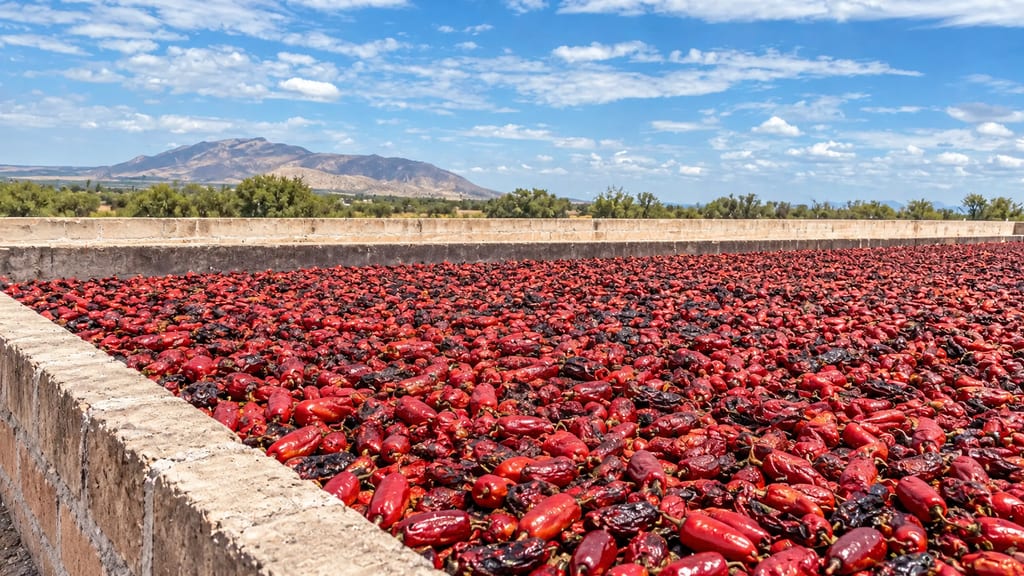
A fixed masonry-and-wood structure used in Camargo to smoke and dry ripe jalapeños into chipotle. Sources give regional dimensions and one separate experimental oven, not a safe construction plan.

Soft, spreadable Calabrian pork sausage made with a great deal of red chilli and fatty pork, stuffed into natural casings, sometimes smoked and matured while staying soft.

A way to add independent temperature logging to an existing food dehydrator without changing its built-in controls or protections. It is a monitoring method, not a rewiring plan.

Pleurotus cystidiosus is the abalone mushroom, a cultivated oyster-type fungus with dark brown caps that grows more slowly and is more demanding than other Pleurotus species.

A dark, balanced vinegar from Emilia-Romagna made by combining cooked or concentrated grape must with wine vinegar, then acetifying and refining it in wood under a protected specification.

A living dairy inoculum that starts controlled cream fermentation, developing acidity and aroma before sour cream or cultured butter is finished.

A small electric incubator holds jars at a selected temperature for yogurt and other documented warm food preparations. Controls, capacity and vessel arrangement vary by model.

Adygean salt is a seasoned table salt associated with Adygea and the wider North Caucasian culinary tradition. Salt is blended with garlic and a variable selection of herbs and spices; the exact mix depends on the named style and maker.

The African Caesar-group mushroom, Amanita masasiensis, is a wild ectomycorrhizal species of central and southern African woodlands, eaten locally. The genus contains deadly poisonous species, so identification needs care.
No community contributions have been published for this entry yet.
Sign in to contribute. Published comments and photos are free to read.
UNAM Global / Agencia Informativa ConacytMethod · Materials · Dimensions · Capacity · History
Chile chipotle con mucha energíaCIMAV designed and built a solar-assisted chipotle oven; its reported system has a recirculating-air drying chamber, solar-heated water tank, auxiliary gas burner and wood-fired smoker.
The article reports food-grade stainless steel, approximate dimensions of 20 m × 2 m × almost 2 m, a 4–4.3 tonne fresh-chile charge and about 540 kg finished product per 60 hours.
The first licensee named was Forrajes Ocotillo; the article does not state that company’s installation location.
Cited in: A distinct industrial system; Solar heat, air and smoke; Reported scale and measurements; Development context and limits
Centro de Investigación en Materiales Avanzados (CIMAV)Technology · Capacity · History · Geography
Cogeneración termosolarCIMAV says its researchers designed and built a commercial chipotle oven for export, reducing firewood consumption by more than 95 percent through solar energy.
CIMAV reports industrial scaling and a 4.3-tonne production capacity; this wording differs from UNAM’s report of a 4–4.3-tonne fresh-chile charge.
Cited in: A distinct industrial system; Solar heat, air and smoke; Reported scale and measurements; Development context and limits