
Chipotle
Chipotle is a ripe jalapeño pepper smoke-dried in a wood-fired cocedor. Camargo, Chihuahua, documents a large-scale version of the process; its source accounts do not establish a complete home batch or validated safety endpoint.
 FermenteaWhere food goes to change
Chiles chipotles en adobo · Chipotles en adobo
Whole smoked-dried chipotles simmer in a tomato, vinegar and spice adobo: a Mexican condiment with smoky heat and a sauce that seasons the chile as it softens.
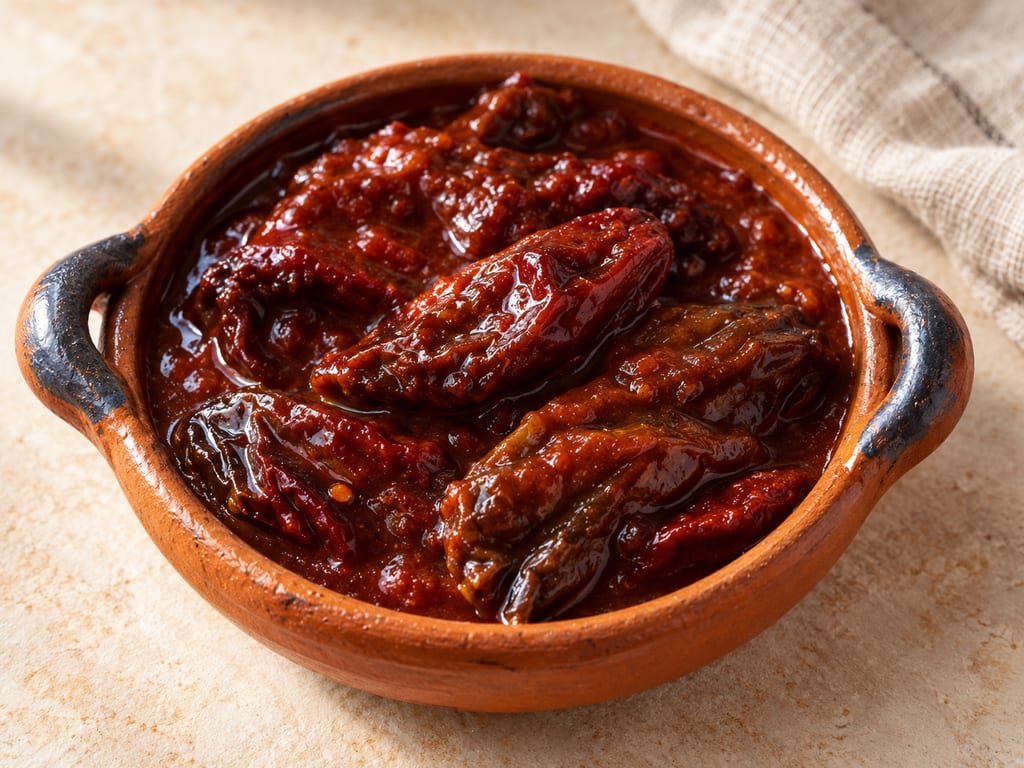
Chipotle begins as a mature jalapeño, not as a separate fresh pepper variety. While green jalapeños are widely sold fresh, fruit left to ripen turns red; the ripe peppers destined for chipotle are then smoked and dried. The Nahuatl-derived name is commonly glossed as “smoked chile.” Mexican public accounts describe the smoke-drying as a long-standing preservation practice, but the available sources do not date this exact chipotle-in-adobo preparation to a particular century. The story of the smoked chile and the story of a specific modern adobo recipe are related, but they are not the same historical claim.
One well-documented production centre is Camargo in Chihuahua. There, growers may pick earlier jalapeño harvests green and leave a later crop to ripen red for chipotle. The traditional cocedores described by the Mexican agriculture information service are brick-and-wood structures: peppers rest on a platform while wood burns below, providing heat and smoke as moisture leaves the fruit. The same government account describes these ovens in Camargo and says the area has produced chipotle since 1973. That date belongs to the reported regional industry, not to the invention of chipotle.
The finished dry pepper is wrinkled and darkened, with smoke aroma and a heat that remains recognisably that of a chile. “Chipotle” can refer to the smoke-dried pepper itself; “chipotle en adobo” means that pepper cooked in a seasoned sauce. Mexican sources also name morita as a jalapeño type used for chipotle, while commercial and household products vary by the chile and the seasoning around it. These distinctions matter in a recipe: dried chipotle is the smoky, hot centre, while the adobo contributes moisture, acidity, savoury depth and sometimes sweetness.
Adobo names a seasoned sauce or marinade rather than one fixed ingredient list. In the Mexican agriculture agency’s description, ancho and pasilla chiles are softened and ground with tomato and garlic; the sauce is fried, seasoned with herbs, salt, pepper, vinegar and, when available, finely chopped onion, then simmered with chipotles that have soaked for a day. The pepper gradually seasons the sauce and takes sauce into its softened flesh. This is a useful account of a traditional preparation pattern, not a universal formula.
The home recipe published by PROFECO, Mexico’s federal consumer protection agency, takes a more compact route. It rehydrates dried chipotles, blends several with tomato purée, strains that purée, cooks it briefly with onion and spices, then simmers the whole peppers in the sauce with water and white vinegar. The souring ingredient is vinegar; the recipe has no fermentation stage, starter or controlled microbial culture. Heat, soaking, blending and simmering are the transformations described here. Calling it a ferment would confuse an acidulated cooked condiment with a biologically fermented one.
Commercial cans and pouches add another set of variations. PROFECO’s product comparison lists labels with combinations of chipotles, water, tomato or tomato paste, vinegar, onion, vegetable oil, salt, sugar and spices; some include starch or other seasonings. This comparison is a snapshot of products in that issue, not a recipe standard. The ingredient order differs among products, and a home version does not need to imitate one brand to be recognisable as chipotles in adobo.
Smoking and drying change the pepper before it reaches the saucepan. A food-science study of chipotle production measured effects associated with smoking time and wood type in moisture, microstructure, colour, texture, phenols, capsaicinoids and volatile compounds. Smoke deposits aromatic compounds, while drying removes water and leaves a shrivelled, concentrated pepper; neither process is the same as fermentation. The study concerns production conditions and measured samples, not a transferable home schedule. Traditional ovens and artisanal handling can vary, so a cook should buy a finished dried chipotle rather than infer an exact smoke time from a household recipe.
Rehydration reverses part of the physical change. Hot water softens the dry skin and flesh enough to blend a few peppers into the tomato base and simmer the rest whole. The pepper pieces become pliable; their smoky chile flavour disperses into the sauce. Straining the blended portion removes coarse skin and seeds from the base, yielding a smoother sauce around the intact peppers. The source does not specify a target thickness or final acidity, so those should not be invented as process controls.
Frying the onion in oil is a cooking step: it softens the onion and carries its savoury aroma into the sauce. Brief cooking of tomato purée, salt, sugar, cloves and allspice lets the seasoning heat through before the rehydrated peppers join it. Vinegar supplies a sharp note that balances tomato and chile. The recipe does not establish that this amount of vinegar acidifies the finished mixture enough for room-temperature preservation. Its flavour and consistency are culinary results; they are not a measure of canning safety.
The PROFECO formula begins with 300 g dried chipotle chiles. It lists 3½ cups of water, 60 ml white vinegar, 20 ml vegetable oil, half a medium onion (60 g), 250 ml tomato purée, half a teaspoon of salt, a quarter teaspoon sugar, two cloves and five allspice berries. It gives two 300 ml jars as equipment, a 700 g yield and about 30 minutes’ preparation time. The printed water line also puts “375 ml” in parentheses beside 3½ cups; those amounts do not agree. The method itself uses two cups for soaking and then calls for the remaining water. The recipe retains the source’s cup quantity and records the conflicting metric note rather than silently converting it.
Rinse the dried peppers. Bring two cups of the listed water to a boil in a saucepan, turn off the heat, add the chipotles, cover, and let them soften for about ten minutes. Remove four peppers, preferably the more open or damaged ones described by the source, remove their stems, and blend them with the tomato purée. Strain this mixture. In a second saucepan, warm the oil without letting it smoke, add the sliced onion, and stir until softened and translucent. Add the strained tomato mixture, salt, sugar, cloves and allspice; cook for three minutes.
Drain the remaining softened chipotles into the sauce. Add the vinegar and remaining water, cover the pan and simmer gently for five minutes. The whole peppers stay intact while the blended peppers thicken and season the surrounding adobo. Transfer for immediate use or into clean food containers, cool promptly and refrigerate. This is presented as a refrigerated home preparation, not a tested shelf-stable preserve. The source’s brief jar-inversion instruction and its printed one-year expiry do not supply a validated canning process.
Two documented formulations offer distinct approaches. The agriculture agency’s traditional account uses ancho and pasilla as the sauce chiles, tomato, garlic and aromatics, and calls for a long gentle simmer after the dried chipotles have soaked for a day. The PROFECO home formula instead relies on tomato purée, vinegar, a short simmer and whole dried chipotles softened in hot water. These are distinct documented formulations, not stages to combine into a single supposedly canonical recipe.
Another published adaptation from Milk Street uses dried morita chiles with onion, garlic, vinegar, ketchup and spices. Ketchup brings its own cooked tomato, sweetness, vinegar and seasoning, so it changes the sauce’s balance and texture; it is a separate household approach, not a one-for-one substitution proved by the PROFECO formula. Packaged versions also vary: product labels show differences in sweetener, oil, tomato components, thickener and spices. A cook can choose among them based on the flavour and texture they want, while keeping the chosen formula internally consistent.
Geography belongs at more than one scale. Mexico is the documented national context for the home recipe and the food’s culinary use. Chihuahua is especially associated in the sources with smoke-dried chipotle production, while PROFECO lists Oaxaca, Puebla, Veracruz and Yucatán among states where chipotle is cultivated or produced. These place claims describe the pepper’s wider supply and use; they do not establish that the specific PROFECO sauce recipe originated in one of those states.
Chipotles in adobo are both a condiment and a concentrated cooking ingredient. Mexican agriculture sources name sauces, dressings, creams, pastes, tinga, meatballs and caldo tlalpeño among the settings where chipotle contributes its smoky heat. A spoonful can season a pot of beans or a broth; a whole pepper and some sauce can be chopped into a filling or blended into a dressing. The sauce clings to food and carries chile flavour beyond the pepper itself, so cooks often use both the pepper and a little adobo.
Drain and chop the pepper when a dish needs separate pieces; mash or blend it with some sauce for an even distribution. The sauce alone can season mayonnaise, crema, soups or marinades, but each addition changes the finished food. If making a mayonnaise or dairy sauce, mix only the portion needed and follow the storage directions for the perishable mixture rather than borrowing a date from the unopened pepper can. The underlying pepper is hot and smoky, so begin with a modest amount and adjust at the dish level.
Variations in the source recipes help explain why two jars can taste different. More ancho or pasilla shifts a homemade sauce toward a broader dried-chile flavour; tomato purée gives a plain tomato base; ketchup adds an already seasoned sweet-sour profile; extra vinegar sharpens the sauce, while sugar rounds it. These are not guaranteed substitutions with equal results. Read the label on a purchased product, because the sauce itself may contribute salt, sugar, oil or starch before any additional seasoning is added.
Dry chipotles can be tough before soaking; after the source’s ten-minute steep they should be workable for blending and simmering. If they remain leathery, the source does not specify a rescue time or liquid ratio, so do not invent one as a safety guarantee. The recipe’s short cooking stages are for preparing the sauce and softening the peppers, not a tested preservation schedule. No pH, validated heat treatment, pressure-canning process or measured shelf life is supplied for this batch.
Handle hot chiles carefully. The National Center for Home Food Preservation advises gloves for handling hot peppers and washing hands thoroughly before touching the face or eyes. Keep the finished sauce refrigerated and use clean utensils and containers. Do not infer that a sealed lid, an inverted jar, bubbling, smell or taste establishes safety. Official home-canning guidance distinguishes tested recipes and process times; its pressure-canning method for plain peppers cannot simply be transferred to this tomato-vinegar mixture. Use a tested preservation recipe when shelf-stable storage is the goal.
Quality differences are expected: chiles vary in size, smoke intensity and heat; commercial sauces vary in sweetness and thickness; a more thoroughly strained tomato blend feels smoother than one with more pepper skin. Taste the cooked sauce with the food it will accompany, because a concentrated spoonful gives a different impression from a thin coating through a meal. The source’s yield is an estimate for its listed batch; scaling the formulation or changing its ingredient balance does not carry over any safety assumption.
Chipotle is smoke-dried ripe jalapeño; Mexican sources describe adobo as one of its familiar forms. The history of smoke-drying is older than the particular home formula recorded here, whose earliest attestation is not established by the consulted sources.
Yield 700 g · Scaling: source batch only
Hot peppers can irritate skin and eyes during handling.
Hazard sourceThis cooked tomato-and-vinegar mixture lacks a tested canning formulation and process.
Hazard sourceWear gloves while handling hot peppers and wash hands thoroughly before touching the face or eyes.
Control sourceRefrigerate the finished batch; do not use jar inversion or a sealed lid as evidence of shelf stability.
Control sourceThis is a culinary refrigerator preparation, not a validated home-canning recipe. No shelf life is established here.
The printed water volume is internally inconsistent; the source gives 3½ cups and also 375 ml.
PROFECO publishes a Mexican home preparation; the agriculture agency describes chipotle use in Mexican cuisine. Neither source establishes a single birthplace.
Chipotle is a ripe jalapeño pepper smoke-dried in a wood-fired cocedor. Camargo, Chihuahua, documents a large-scale version of the process; its source accounts do not establish a complete home batch or validated safety endpoint.
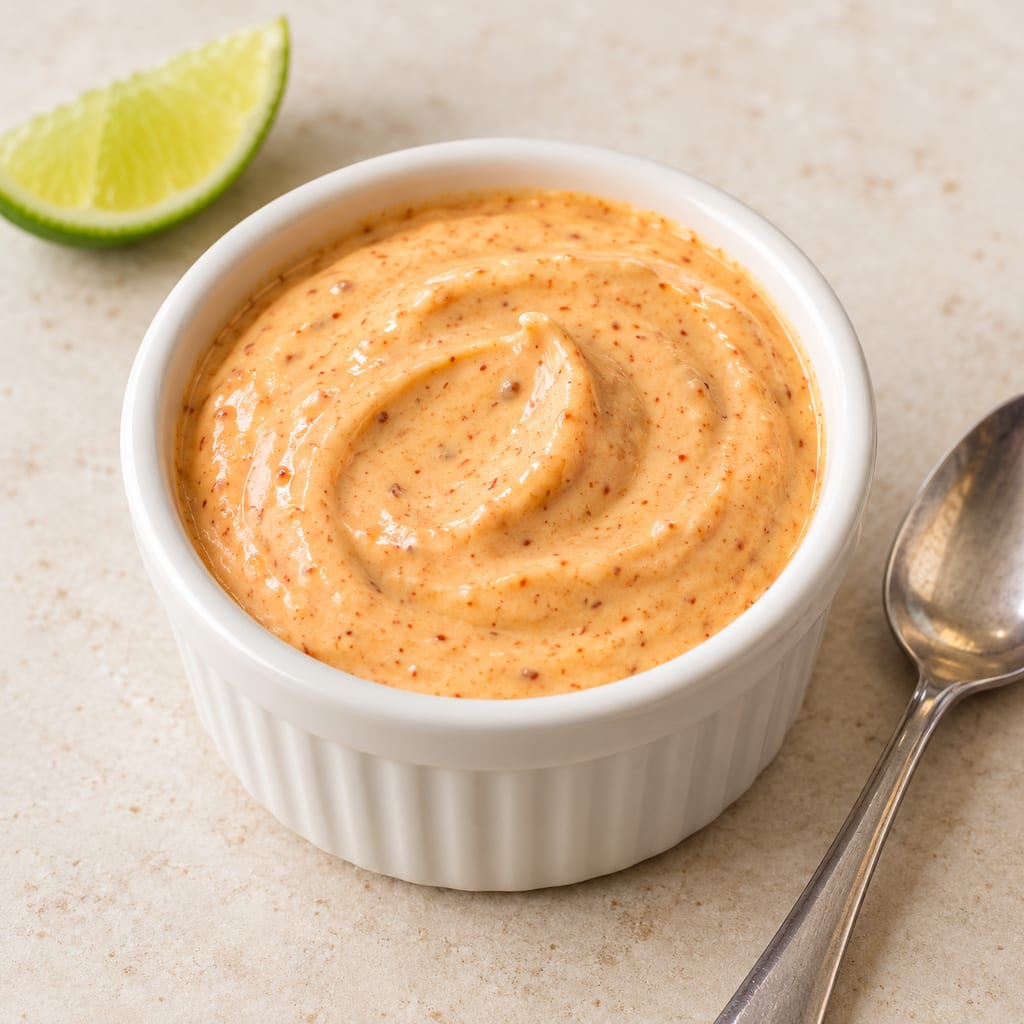
A contemporary, untested mix of finished mayonnaise, mashed canned chipotle in adobo and lime juice, given as starting amounts per 100 g mayonnaise.
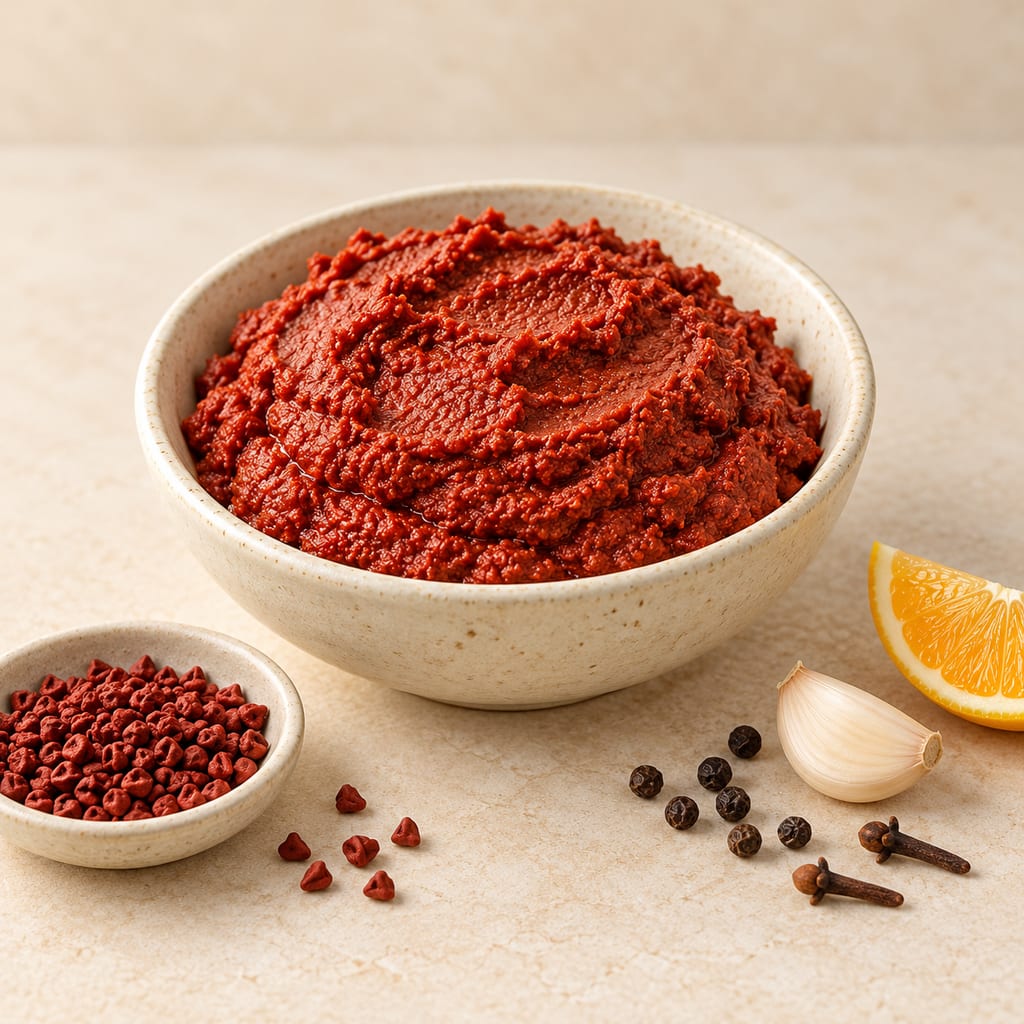
A Yucatecan recado rojo is a brick-red seasoning paste built on annatto seed, garlic and sour orange. This measured home version shows one route into a much wider family of market and household recados.
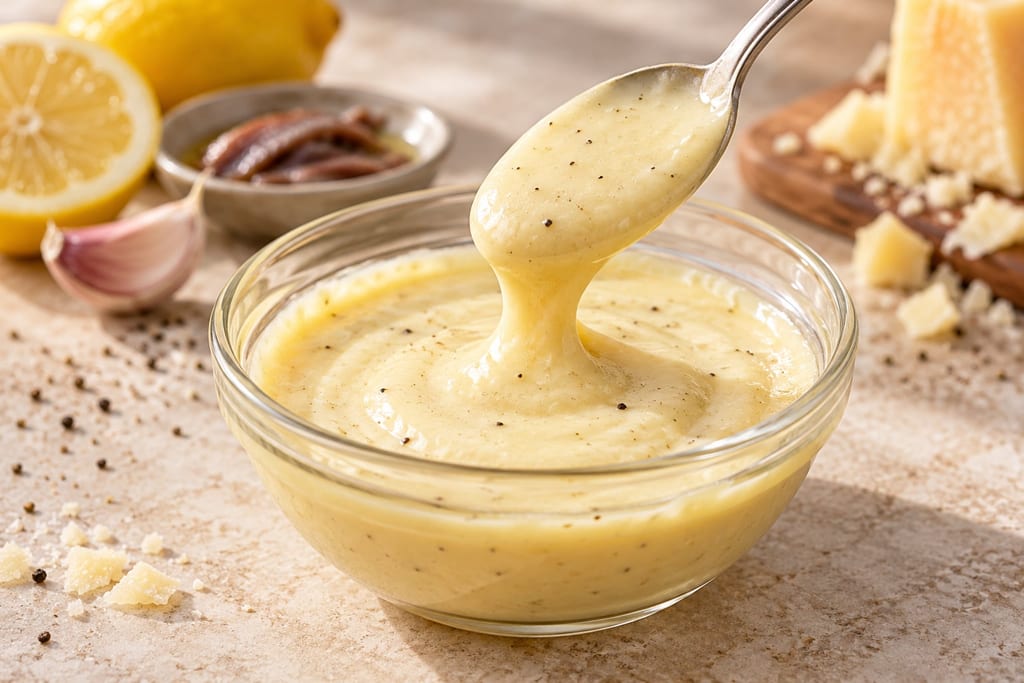
A source-specific Caesar dressing made with pasteurized egg yolks, Parmesan, lemon, anchovy, garlic, mustard and olive oil. This modern Vitamix formulation is distinct from the salad’s disputed 1924 origin accounts.
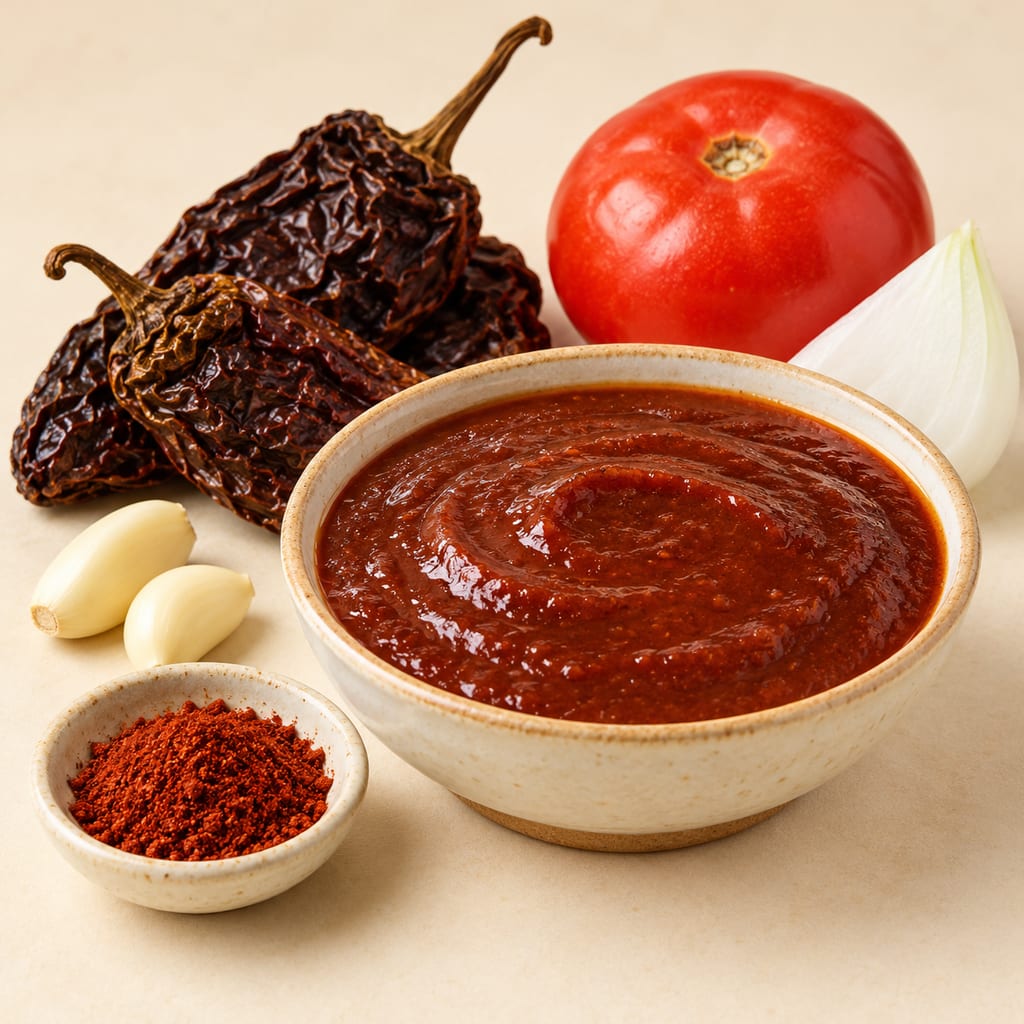
Chipotle adobo is a cooked sauce of smoked chipotle chiles, tomato, onion, garlic, dried chile powder, spices and vinegar, the form in which chipotles are most often sold in the United States.
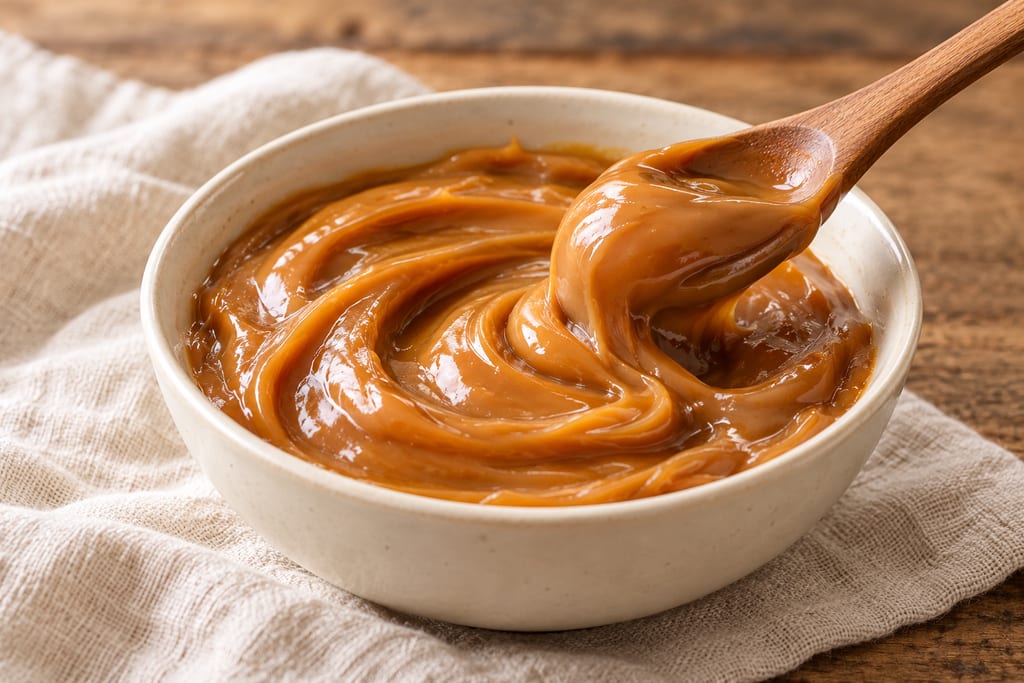
Dulce de leche and its relatives, including Mexican cajeta from goat's milk, are milk and sugar cooked slowly until thick and brown. The name changes across Latin America, and the browning gives each its character.
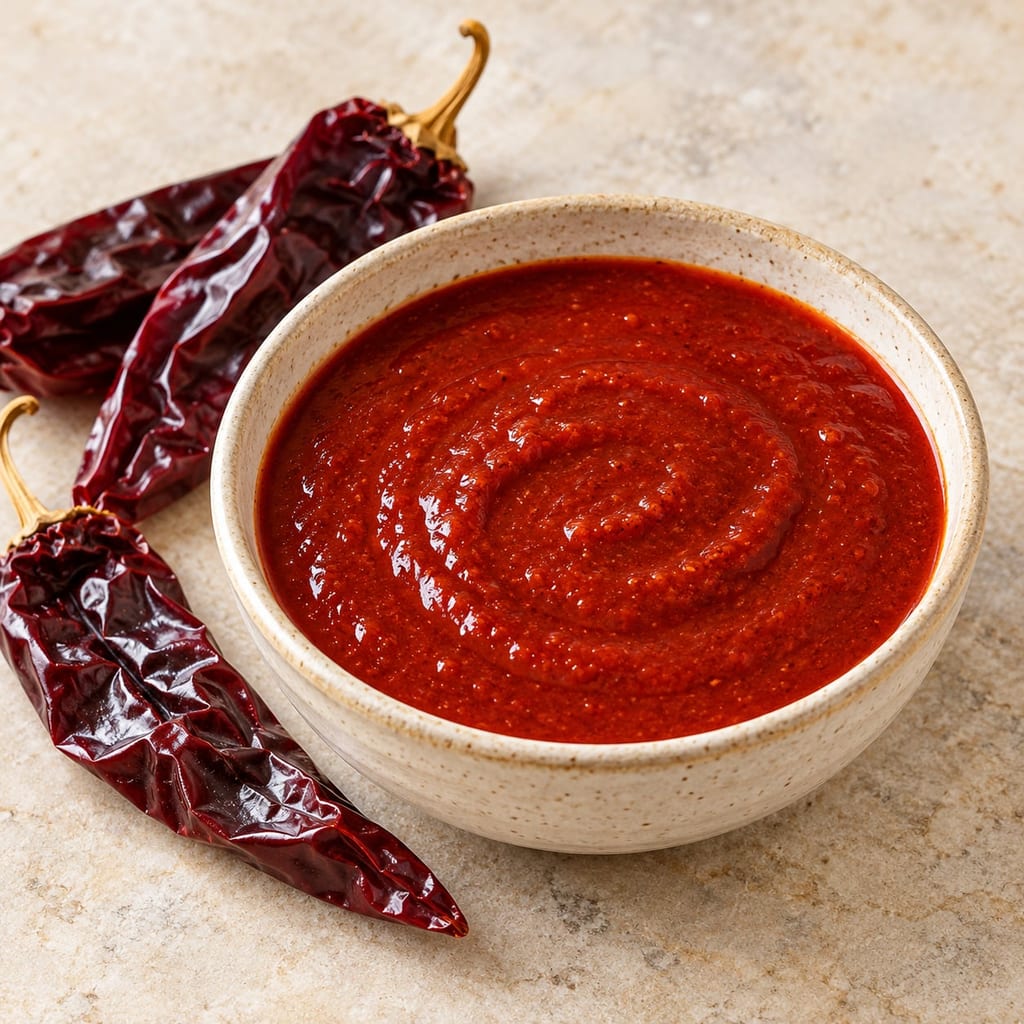
A Mexican sauce in which dried guajillo chiles, toasted and softened in hot water, supply most of the flavour. It is a family of dried-chile salsas, not a tomato sauce with chile added.
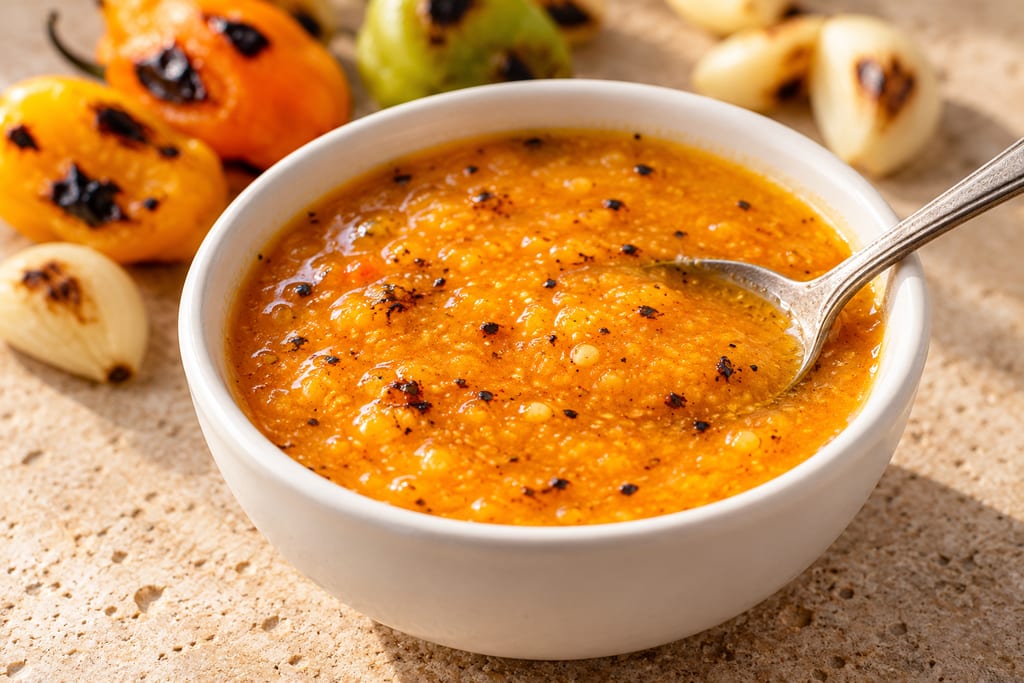
A hot, fruity chile sauce of the Yucatán, built on habanero peppers and often charred with garlic. It sits on the table as a condiment, and the recipes vary widely.
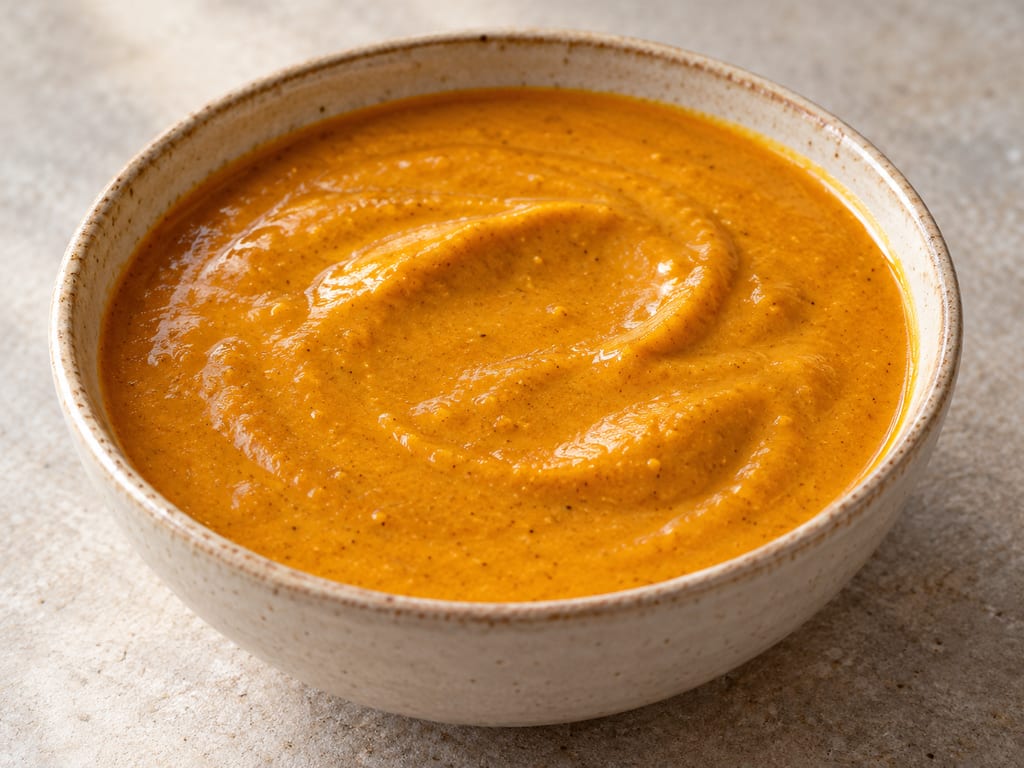
Mole amarillo, also called amarillito, is a yellow to orange Oaxacan mole built on cooked chile purée, thickened with corn masa and flavoured with herbs such as hoja santa, with no chocolate or dense nut mixture.
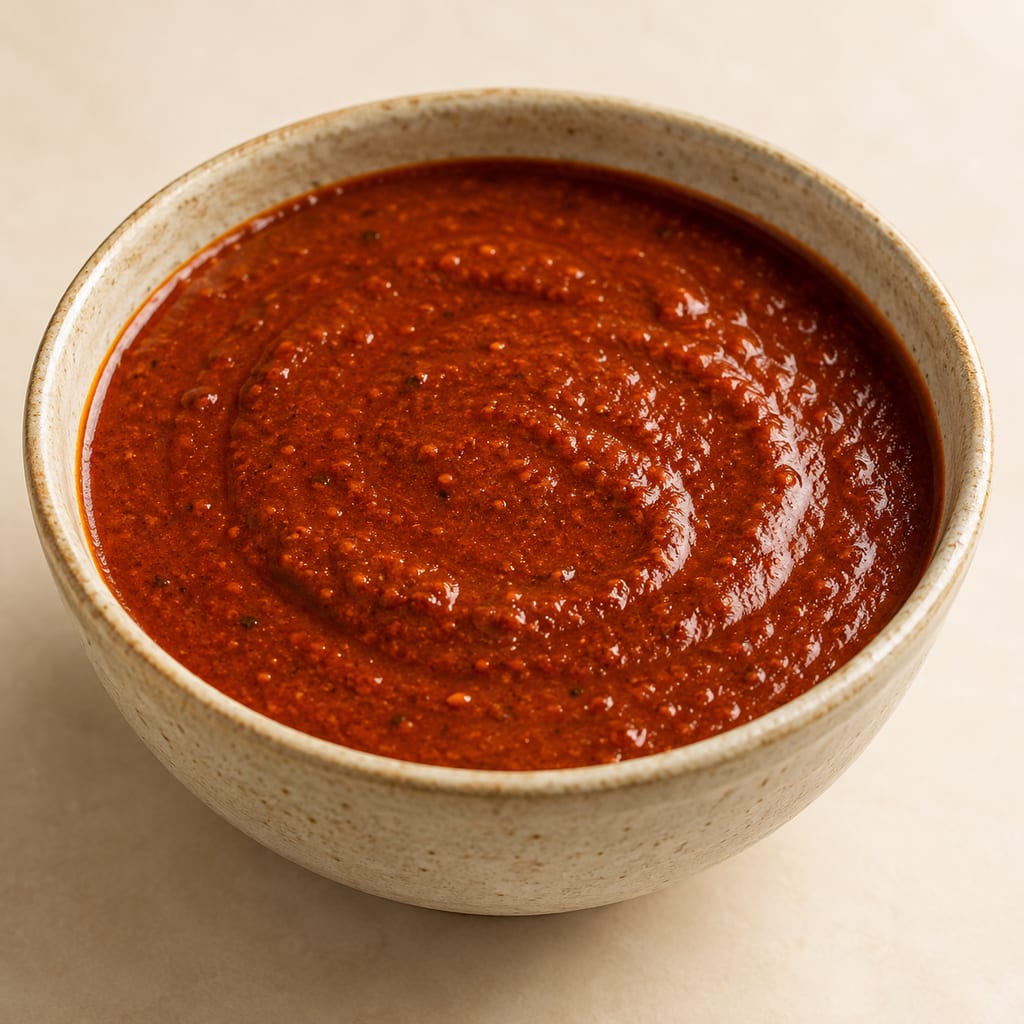
Mole coloradito is one of Oaxaca's seven moles: a brick-red sauce built on ancho chiles and tomato, thickened with ground seeds and nuts and sweetened with fruit, served in a lighter, thinner form than mole negro.
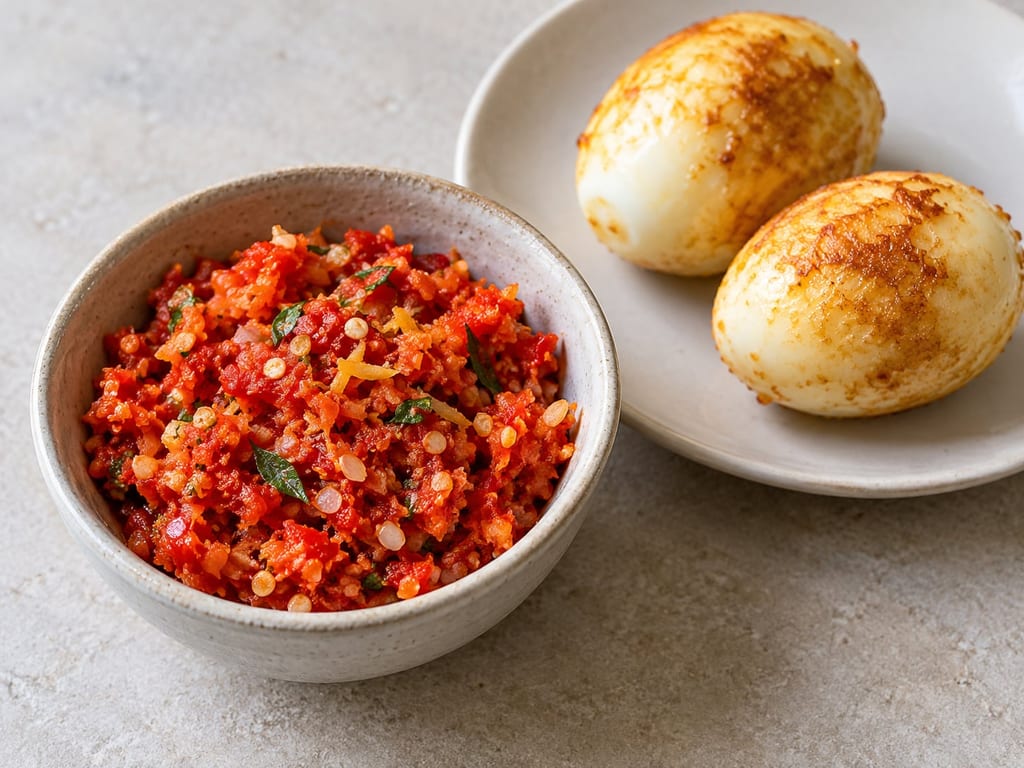
Ai-manas is described as a very hot chilli paste served with Timorese meals. One published version blends fresh chillies, shallots, garlic, Thai basil, ginger, lemon and salt, and serves it with eggs. Sources do not establish a standard formula, precise birthplace or earliest date.
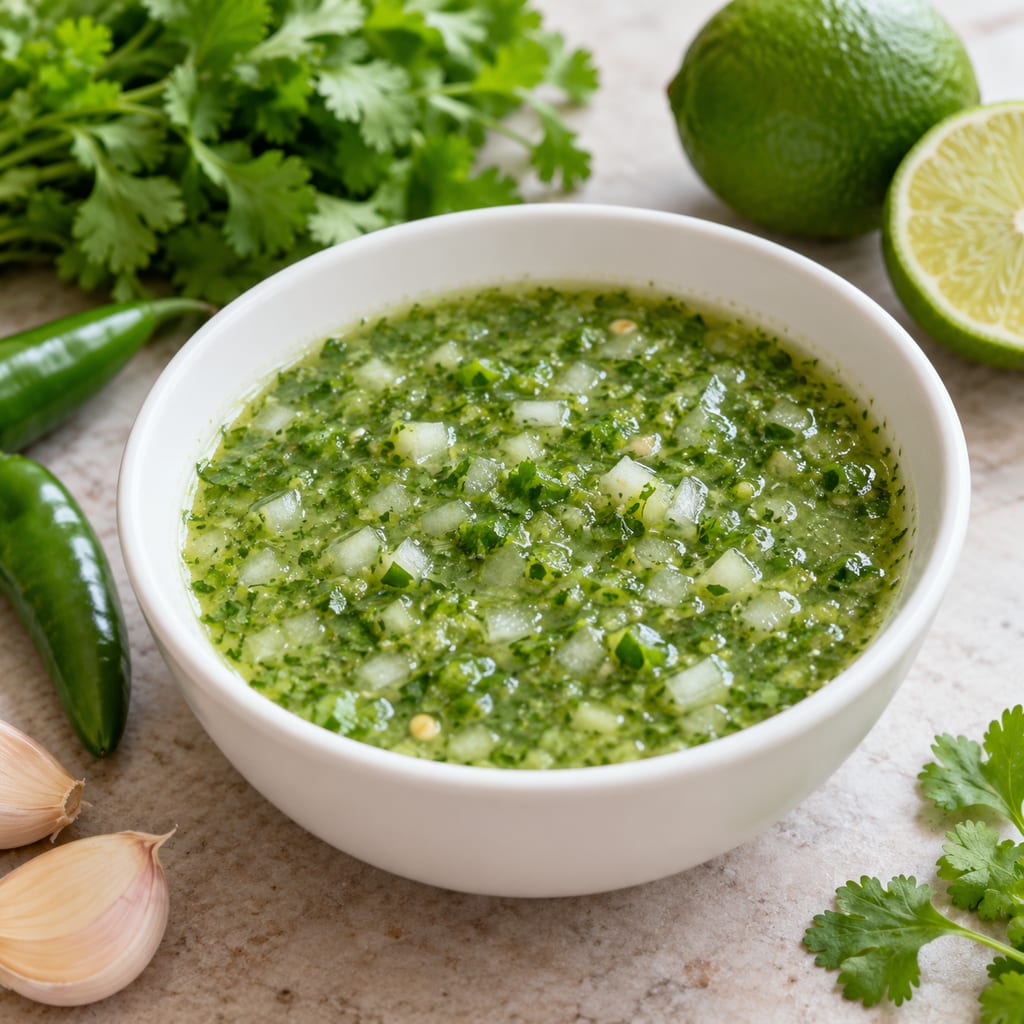
A fresh, uncooked Ecuadorian table sauce of hot pepper, cilantro, garlic and lime, served with most everyday dishes.
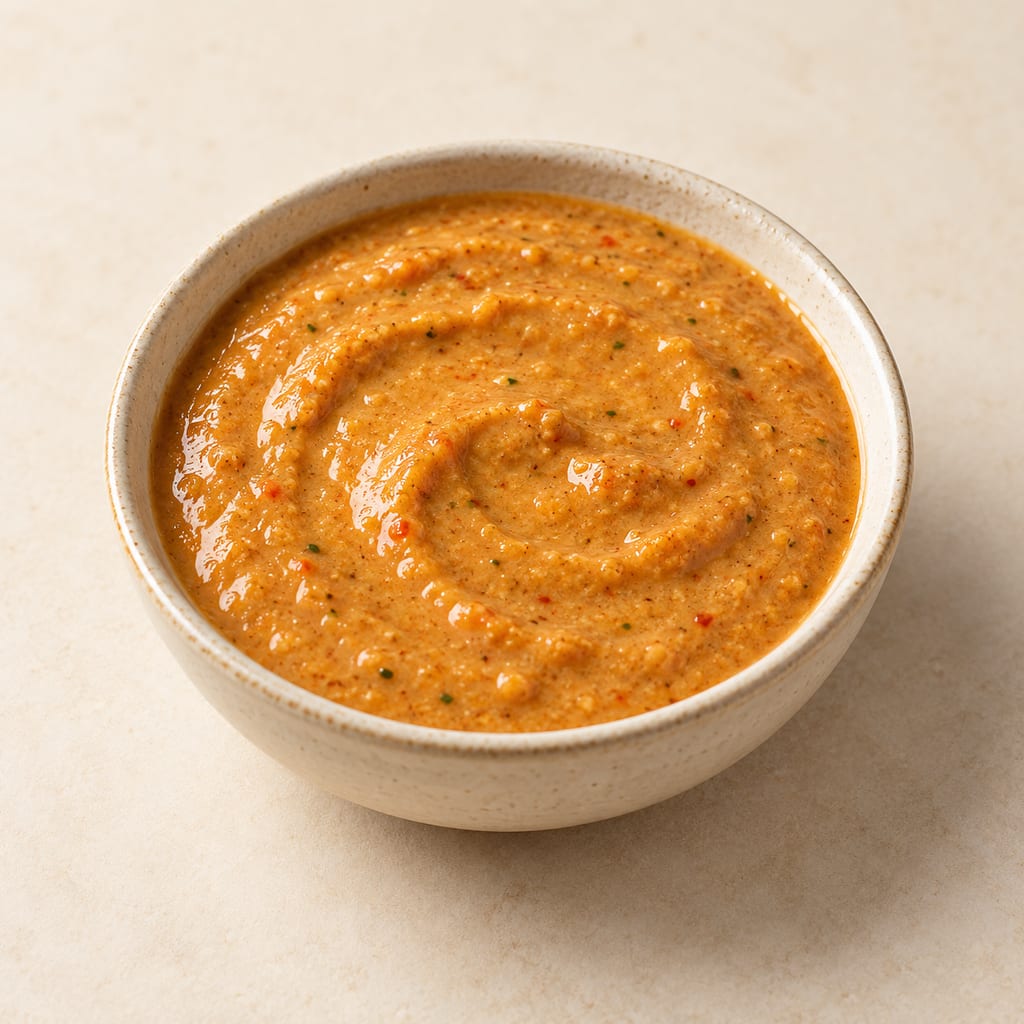
A spicy peanut hot sauce from the Popayán and Cauca region of Colombia, traditionally served with pipián empanadas and tamales.
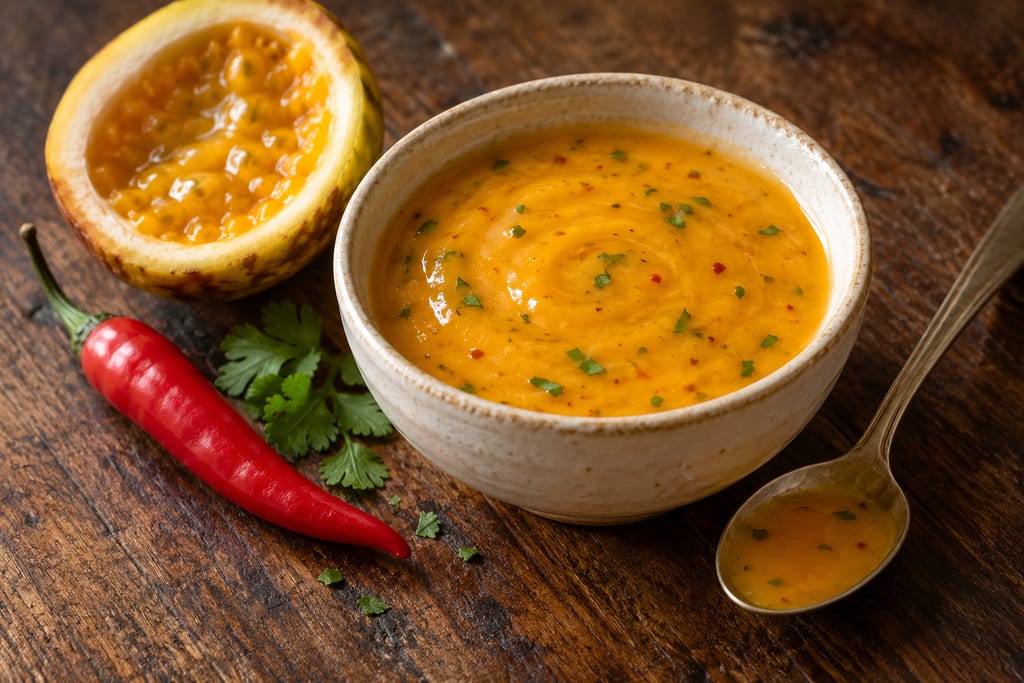
A contemporary Ecuadorian hot sauce that pairs passion fruit juice with boiled chile peppers, oil and lime.
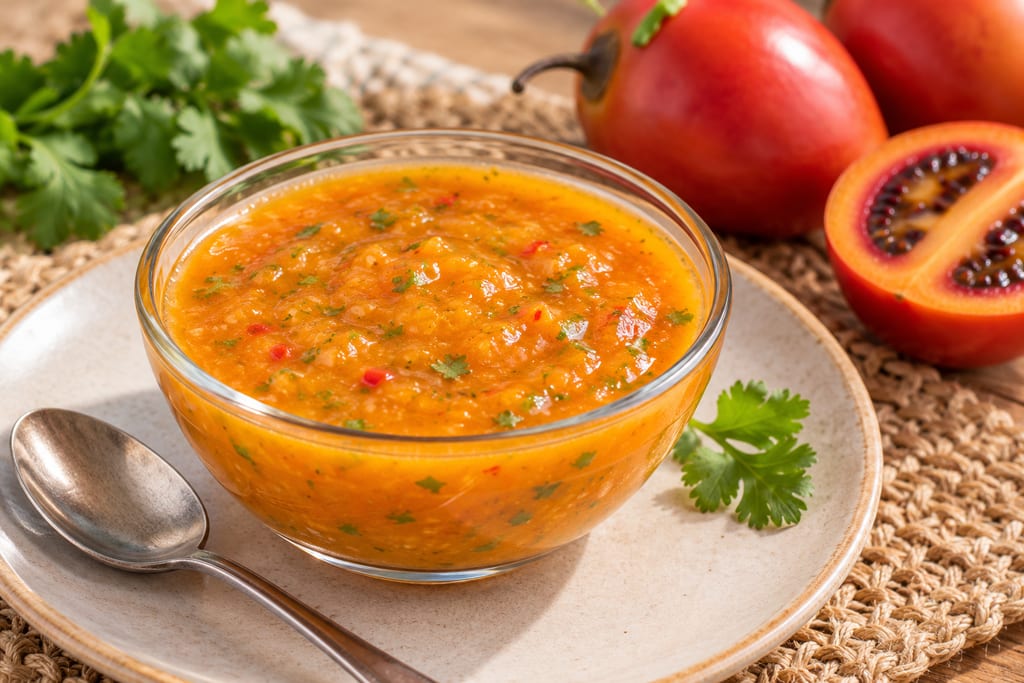
An Ecuadorian hot sauce built on tamarillo, a tart fruit that gives a sharper, fleshier base than ordinary tomato salsa.
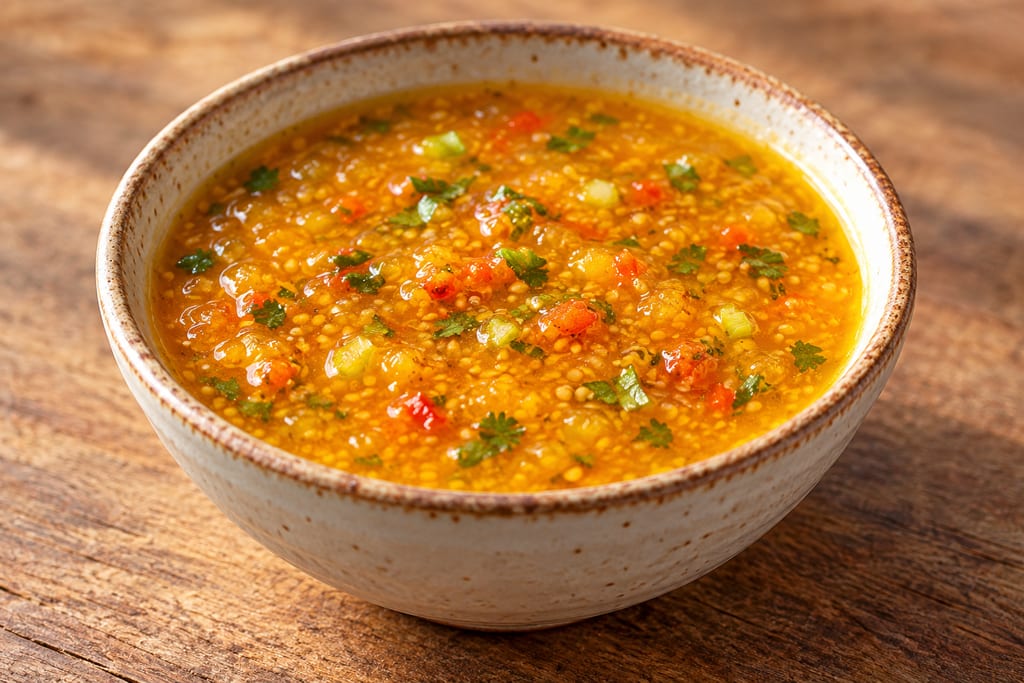
A sweet, tart and spicy Colombian sauce of uchuva, the yellow physalis fruit, with hot pepper, scallion, cilantro and lime.
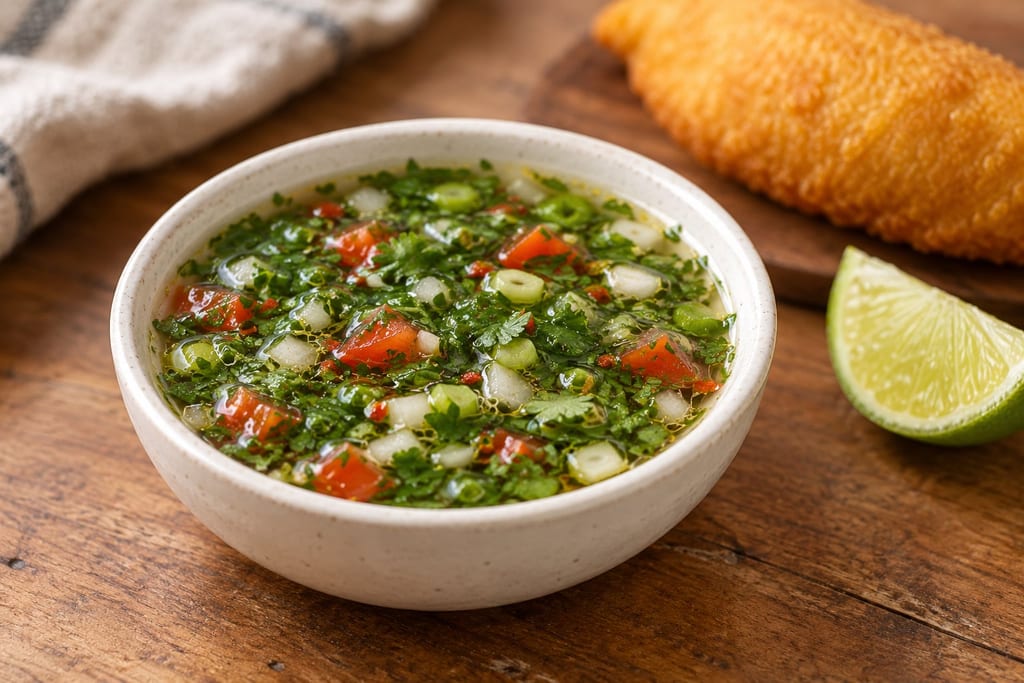
A fresh Colombian table condiment of chopped herbs, scallion and tomato in a vinegar and chile base, served beside fried and filled dishes.
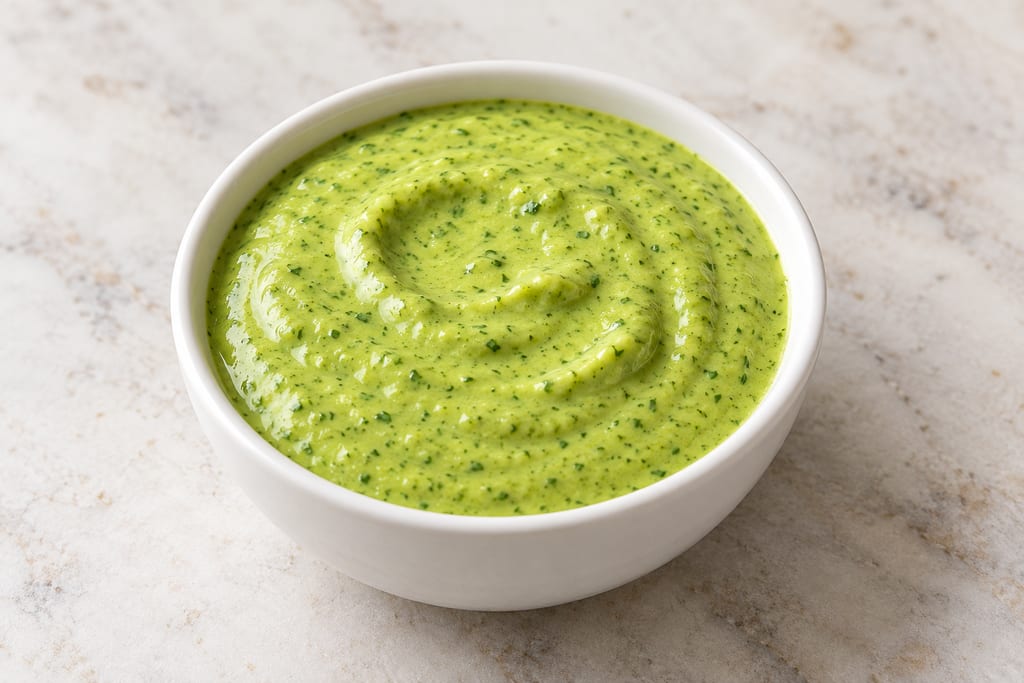
Ají verde is a Peruvian green sauce of coriander, chilli, onion and garlic in a mayonnaise or cheese base. It is best known through Peruvian restaurant cooking abroad.
No community contributions have been published for this entry yet.
Sign in to contribute. Published comments and photos are free to read.
Dirección General del Servicio de Información Agroalimentaria y Pesquera, Gobierno de MéxicoHistory · Geography · Method · Uses
Ahumado y deshidratado, el chipotle sigue siendo apreciadoChipotle is made from mature jalapeño or morita peppers by heat, smoke and drying; the government account documents Camargo, Chihuahua production and cocedores.
The account describes an adobo made with rehydrated ancho and pasilla chiles, tomato, garlic, aromatics, salt, pepper, vinegar and onion; chipotles are simmered in it.
Chipotle is used in sauces, dressings, creams, pastes, tinga, meatballs and caldo tlalpeño.
Cited in: A chile made by smoke and time; The adobo is a sauce, not another fermentation; Regional and household variations; How it is used at the table
Procuraduría Federal del Consumidor (PROFECO), Gobierno de MéxicoMethod · Ingredients · Timing · Yield
Chiles chipotles en adobo: Tecnología DomésticaIngredient list, stated quantities, method order, equipment, approximately 30-minute preparation time and 700 g yield.
The printed water amount gives 3½ cups with a conflicting 375 ml parenthetical; the structured recipe retains the stated cup quantity and notes the discrepancy.
The source prints a one-year expiration and an inverted-jar step; these are not treated here as a validated shelf-stable canning process.
Cited in: The adobo is a sauce, not another fermentation; What smoke, drying and sauce do; A documented home batch; Handling and interpreting the result
Revista del Consumidor, PROFECOHistory · Geography · Variations · Industry
Chipotle, “chile ahumado”The article describes chipotle as smoke-dried mature jalapeño, notes dried, powdered, adobo and sauce forms, and lists production states Chihuahua, Oaxaca, Puebla, Veracruz and Yucatán.
Its comparison of commercial labels shows differences in tomato, vinegar, oil, sugar, salt and spice ingredients among brands.
Cited in: A chile made by smoke and time; The adobo is a sauce, not another fermentation; Regional and household variations; How it is used at the table; Handling and interpreting the result
Food Control, ElsevierScience · Processing
Influence of wood type on anthraquinone levels and quality properties of smoked chipotle pepperA study of chipotle smoking reports changes in moisture, microstructure, phenols, capsaicinoids, volatile compounds, colour and texture associated with wood and smoking time.
The study describes production as smoking plus dehydration and notes that artisanal open-oven processes vary; its measured conditions are not home instructions.
Cited in: What smoke, drying and sauce do
Christopher Kimball’s Milk StreetVariation · Method · Uses
Chipotles in Adobo SauceA distinct documented version uses dried morita chiles, onion, garlic, vinegar, ketchup and spices, showing a tomato-ketchup route distinct from the PROFECO tomato-purée version.
The recipe presents chipotles in adobo as a prepared condiment.
Cited in: Regional and household variations; How it is used at the table
National Center for Home Food Preservation, University of GeorgiaSafety
Ensuring Safe Canned FoodsLow-acid and acid foods mixed together may remain above pH 4.6 unless the recipe has sufficient acid; safe canning depends on a tested formulation and process.
Cited in: What smoke, drying and sauce do; A documented home batch; Handling and interpreting the result
National Center for Home Food Preservation, University of GeorgiaSafety · Handling
Peppers: Canning VegetablesThe tested pepper canning procedure requires a pressure canner and specified process times; it is distinct from the brief jar-inversion step in the PROFECO home recipe.
The guidance recommends gloves for hot peppers and handwashing before touching the face or eyes.
Cited in: Handling and interpreting the result