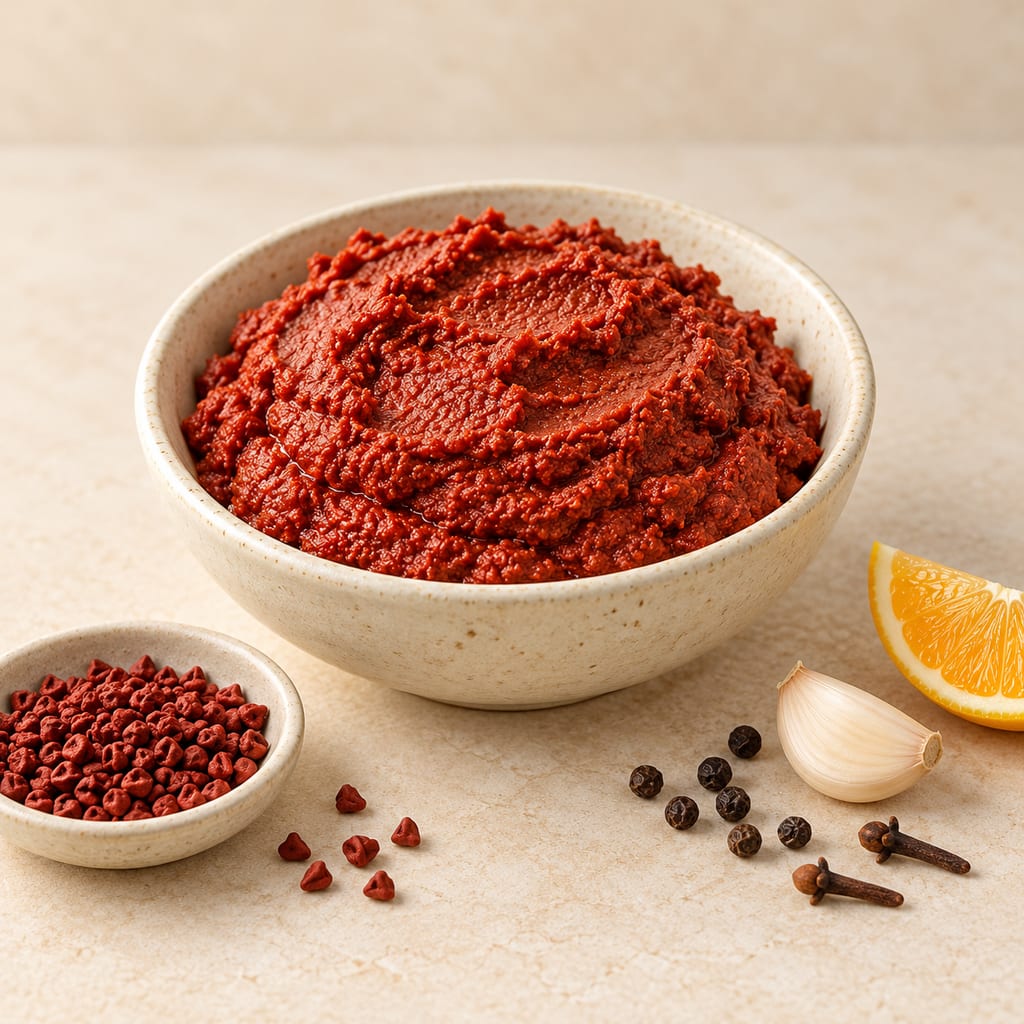
Achiote paste
A Yucatecan recado rojo is a brick-red seasoning paste built on annatto seed, garlic and sour orange. This measured home version shows one route into a much wider family of market and household recados.
 FermenteaWhere food goes to change
Traditional method
Salsa de chile habanero · Yucatecan habanero salsa · Habanero salsa
A hot, fruity chile sauce of the Yucatán, built on habanero peppers and often charred with garlic. It sits on the table as a condiment, and the recipes vary widely.
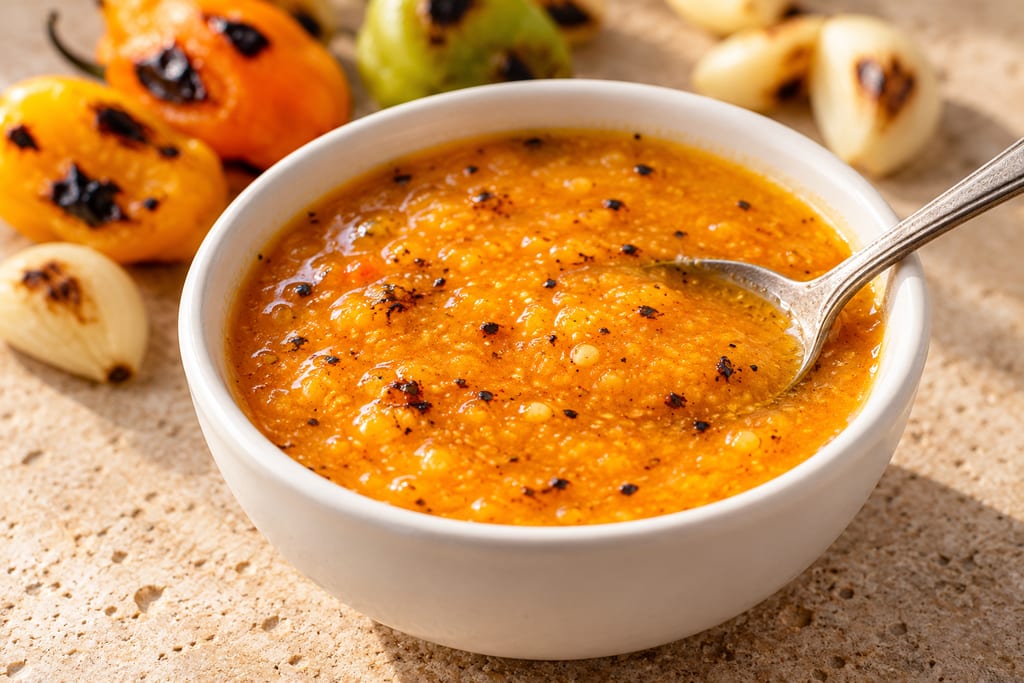
In the Yucatán, habanero salsa is a table condiment in the same way that salt and pepper are. Sunset's recipe describes a very fruity, very hot sauce that sits on the table in Yucatecan homes and is served with panuchos, the fried tortillas topped with meat and vegetables. That setting explains much of the sauce: it is meant to be spooned on food at the table rather than cooked into a dish.
The name habanero refers to the pepper, and the sauce is built around it. Its heat and fruitiness are the reason for the sauce, so the other ingredients are kept to a minimum in most recipes.
Recipes differ in how the habanero is treated. Pati Jinich's habanero salsa chars four habaneros with toasted or roasted garlic. Rick Bayless describes a cooked tomato and habanero mixture as a sauce by name, but notes that in the Yucatán it is thought of as a salsa. The two dishes share the pepper and differ in whether the tomato is cooked and how much the habanero is charred.
Chiltomate is the Yucatecan version of the traditional roasted tomato salsa, in which roasted habanero is the flavouring. Each of these versions is a separate preparation, and the sources read do not establish a single authoritative formula for the sauce.
The habanero sauce made commercially is a separate matter. El Yucateco, one of the best-known habanero sauces, was founded in 1968 by Priamo José Gamboa Ojeda in Yucatán, according to Wikipedia. That is a brand history, not the history of the traditional table salsa, and it is kept apart from this page's account of the home preparation.
The date and place of the first habanero table salsa are not established by the sources read. A Yucatecan culinary text would be needed to date the roasted and cooked forms, and the origin of the habanero in the peninsula is reported in one source with little support, so it is not repeated here.
The habanero table salsa is a Yucatecan condiment whose recipes vary widely. Its origin is not dated in the sources read.
A Sunset recipe describes a habanero sauce that is a fixture on Yucatecan tables. Other Mexican regions also make habanero salsas, which the sources do not describe as one formula.
A Yucatecan recado rojo is a brick-red seasoning paste built on annatto seed, garlic and sour orange. This measured home version shows one route into a much wider family of market and household recados.
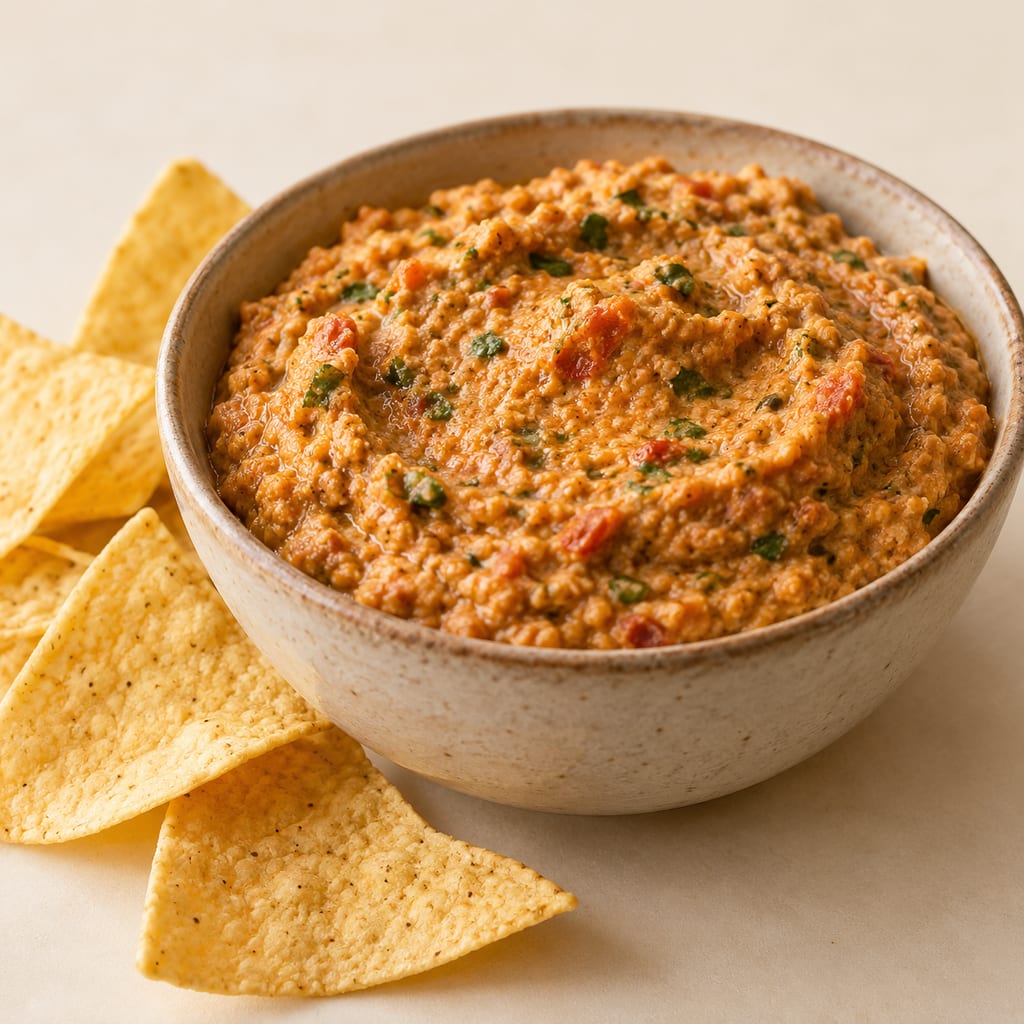
Sikil p’ak is a Yucatecan dip of toasted, ground pumpkin seeds mixed with roasted tomato, habanero, onion and herbs, served with tortilla chips or warm tortillas. Its name is built from Maya words for pumpkin seed and tomato.

Pozol is lime-cooked maize ground to dough, shaped into balls, wrapped in banana leaves and fermented for days, then stirred into water as a sour drink in southeastern Mexico.
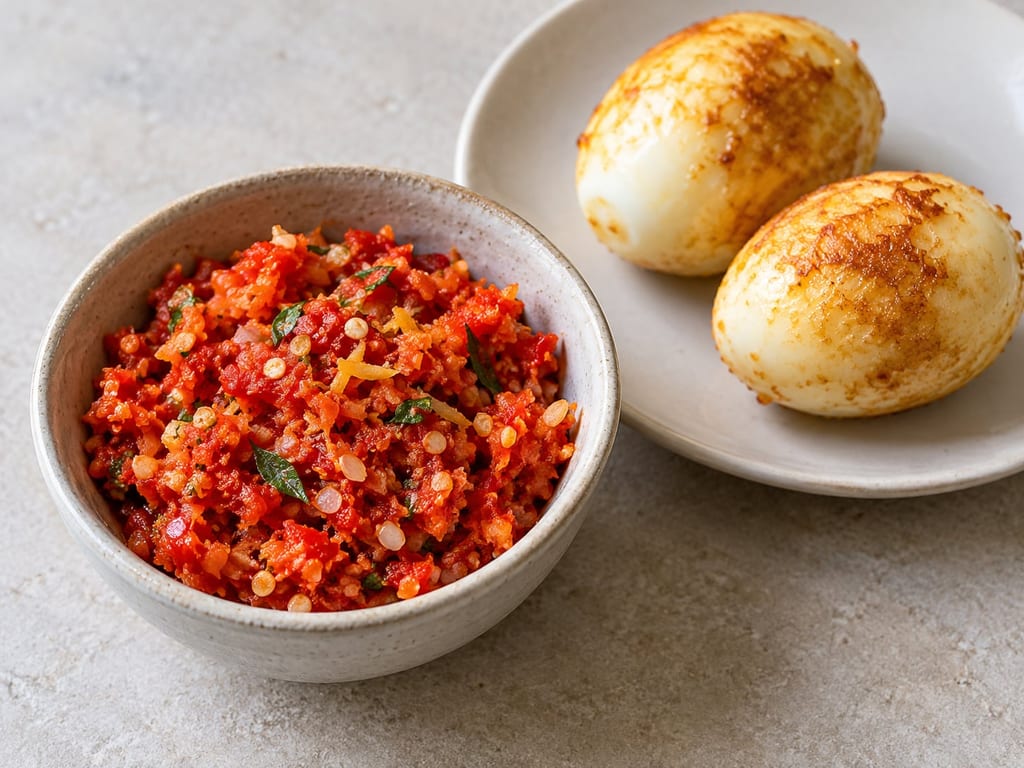
Ai-manas is described as a very hot chilli paste served with Timorese meals. One published version blends fresh chillies, shallots, garlic, Thai basil, ginger, lemon and salt, and serves it with eggs. Sources do not establish a standard formula, precise birthplace or earliest date.
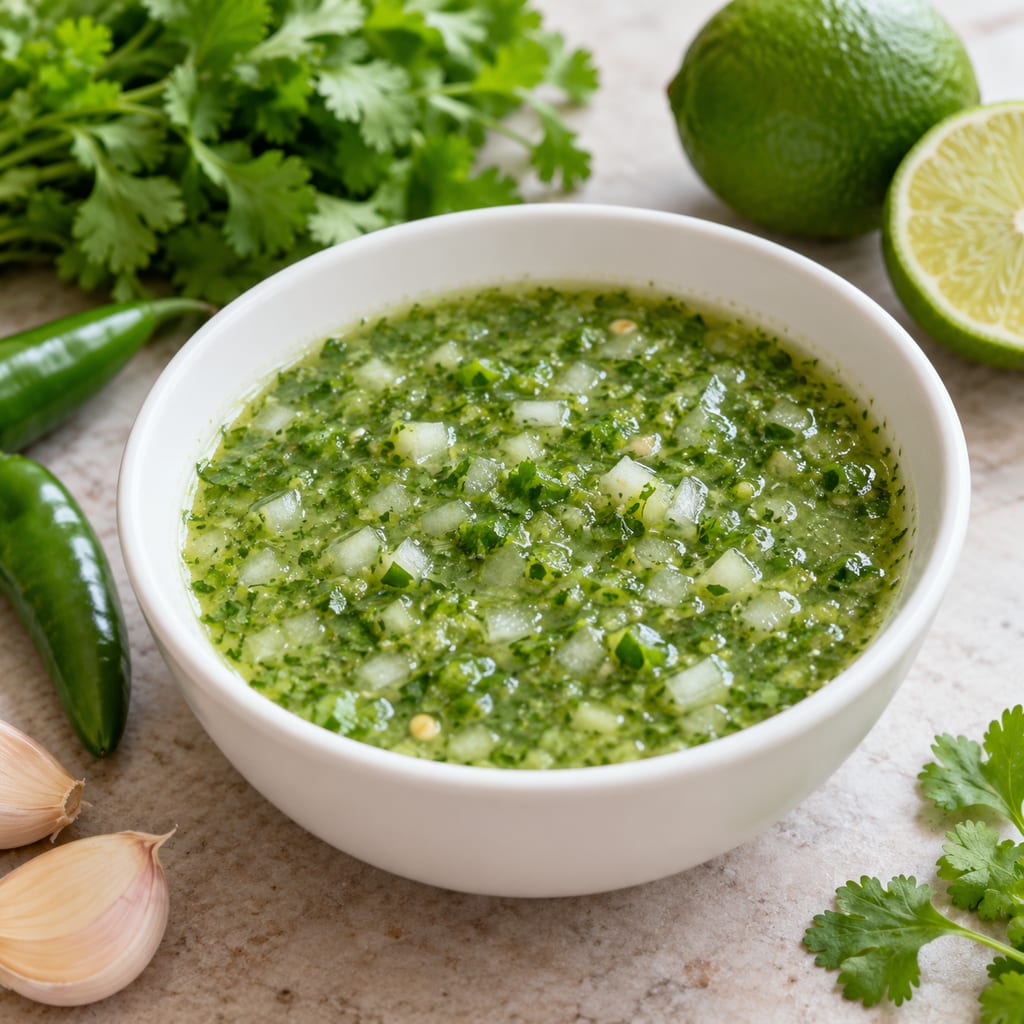
A fresh, uncooked Ecuadorian table sauce of hot pepper, cilantro, garlic and lime, served with most everyday dishes.
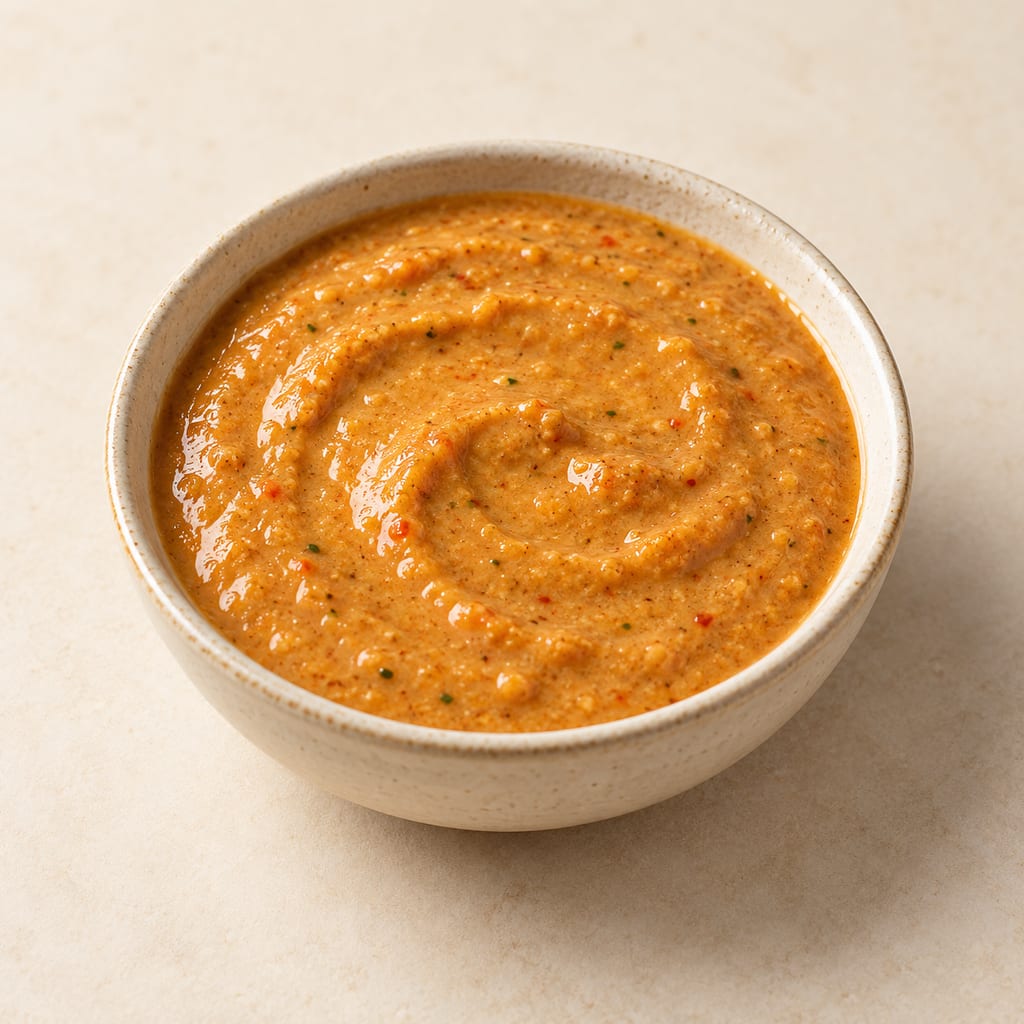
A spicy peanut hot sauce from the Popayán and Cauca region of Colombia, traditionally served with pipián empanadas and tamales.
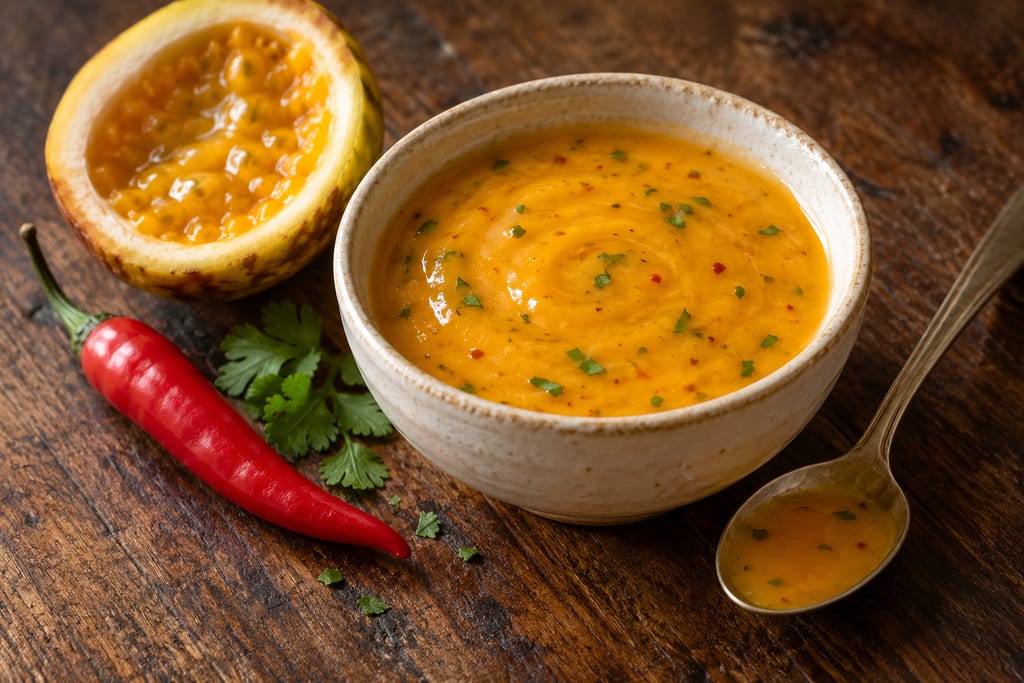
A contemporary Ecuadorian hot sauce that pairs passion fruit juice with boiled chile peppers, oil and lime.
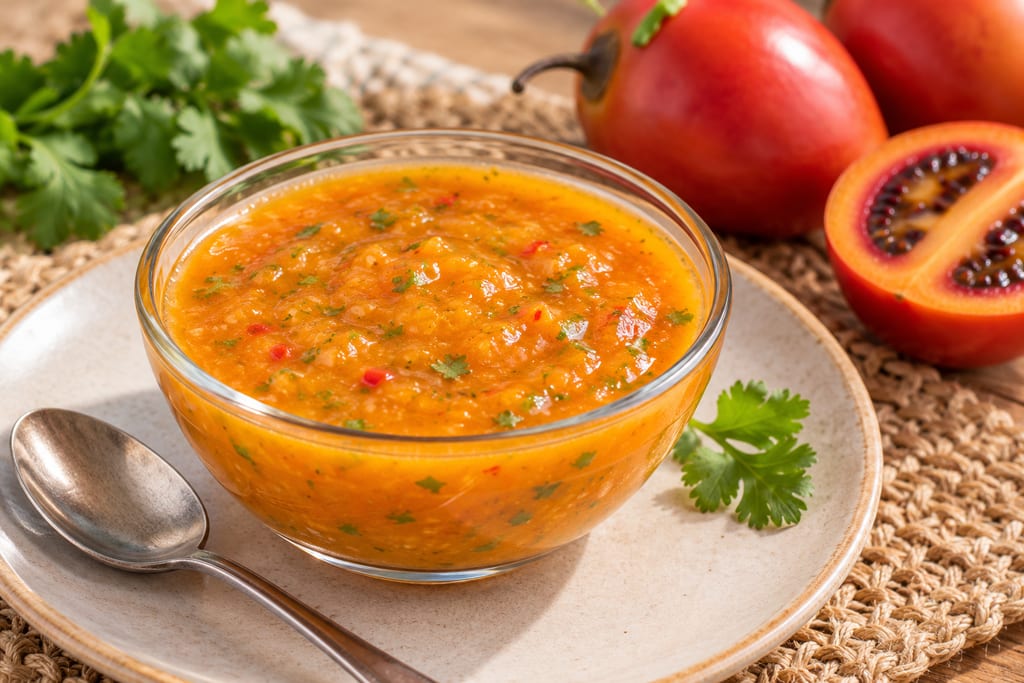
An Ecuadorian hot sauce built on tamarillo, a tart fruit that gives a sharper, fleshier base than ordinary tomato salsa.
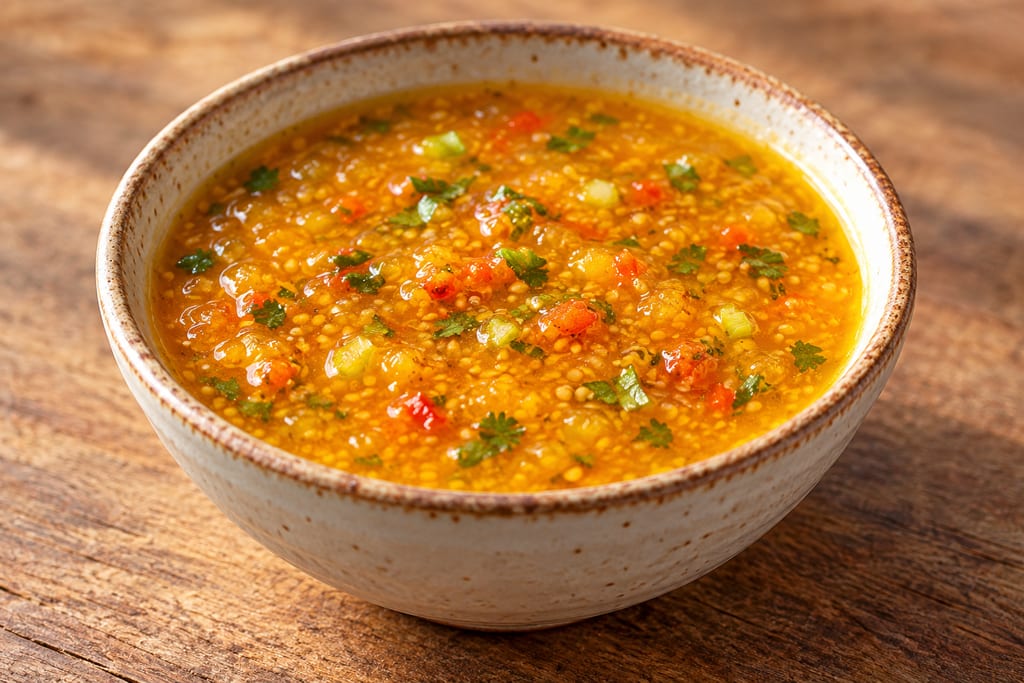
A sweet, tart and spicy Colombian sauce of uchuva, the yellow physalis fruit, with hot pepper, scallion, cilantro and lime.
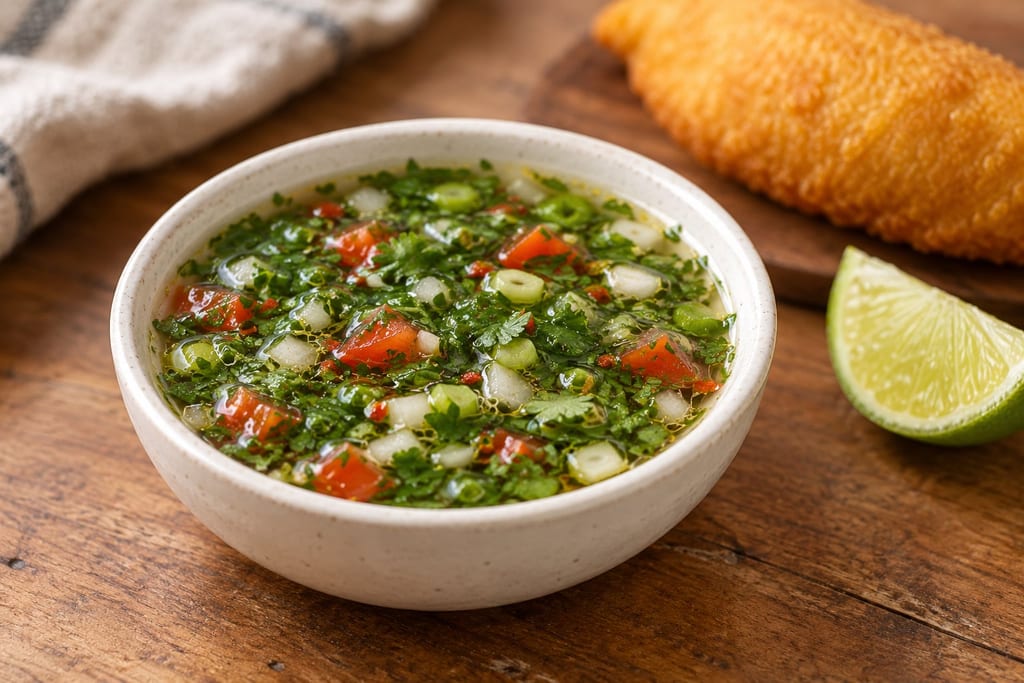
A fresh Colombian table condiment of chopped herbs, scallion and tomato in a vinegar and chile base, served beside fried and filled dishes.
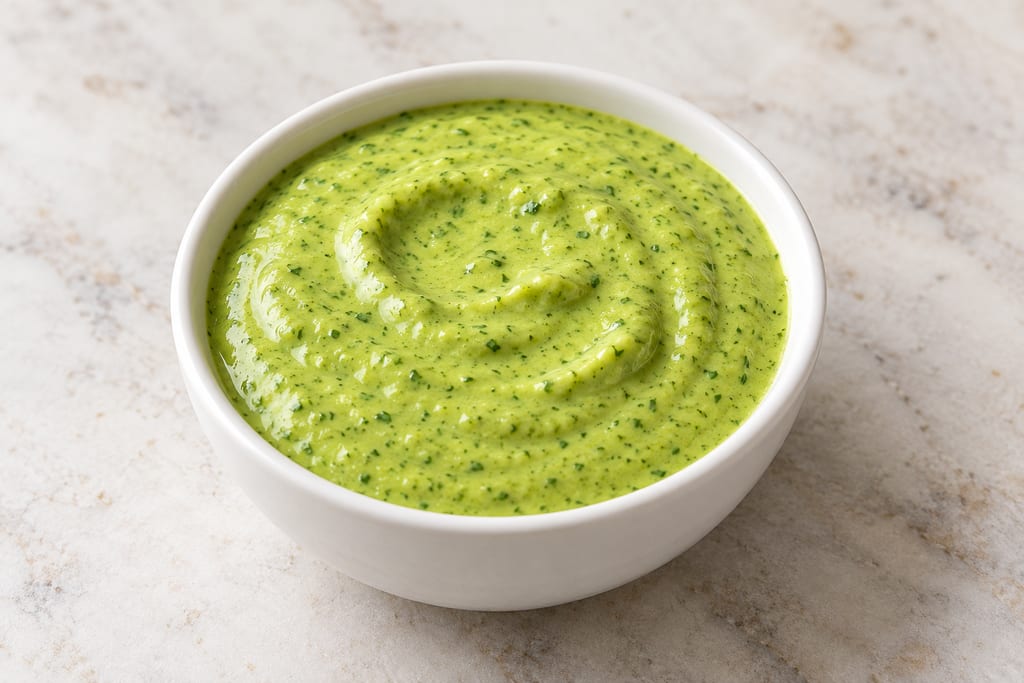
Ají verde is a Peruvian green sauce of coriander, chilli, onion and garlic in a mayonnaise or cheese base. It is best known through Peruvian restaurant cooking abroad.
No community contributions have been published for this entry yet.
Sign in to contribute. Published comments and photos are free to read.
SunsetRegional use · Method
Habanero SauceVery fruity, very hot sauce that is a table fixture in Yucatecan homes
Served with panuchos
Cited in: A condiment as much as a sauce; Open questions
Pati JinichMethod · Ingredients
Spicy habanero salsaFour habaneros charred with toasted or roasted garlic
Cited in: Raw, roasted and cooked versions
Rick BaylessMethod · Names
Essential simmered tomato habanero sauceCooked tomato and habanero mixture called a sauce, thought of as a salsa in the Yucatán
Cited in: Raw, roasted and cooked versions
WikipediaHistory
El YucatecoBrand founded in 1968 by Priamo José Gamboa Ojeda in Yucatán
Cited in: From the kitchen to the bottle