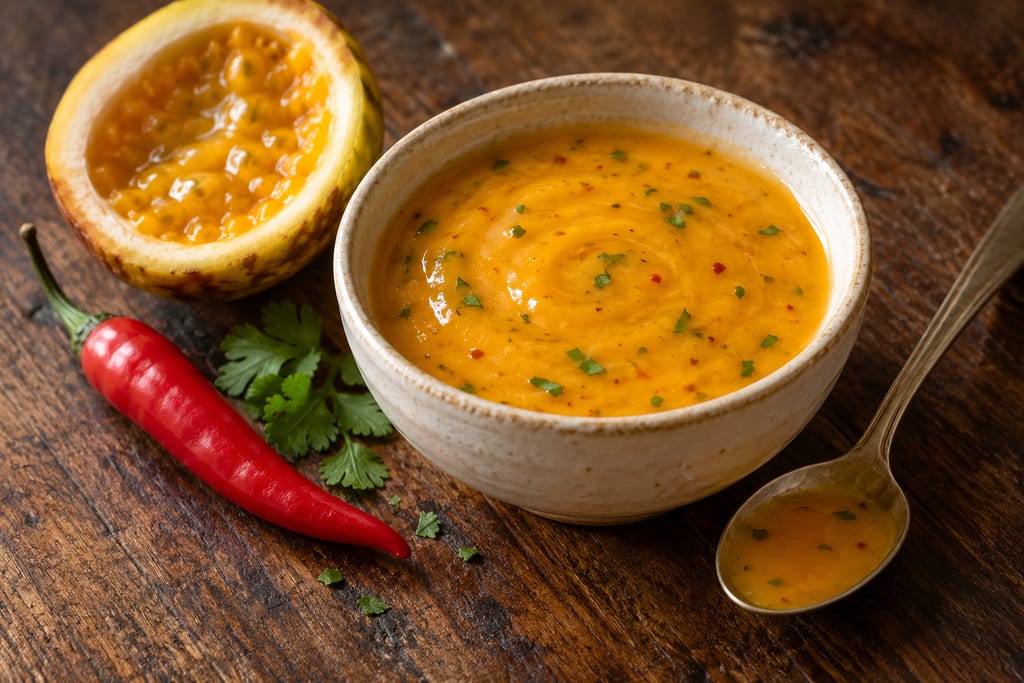
Ají de maracuyá
A contemporary Ecuadorian hot sauce that pairs passion fruit juice with boiled chile peppers, oil and lime.
 FermenteaWhere food goes to change
Traditional method
Ecuadorian hot sauce · Ecuadorian ají
A fresh, uncooked Ecuadorian table sauce of hot pepper, cilantro, garlic and lime, served with most everyday dishes.
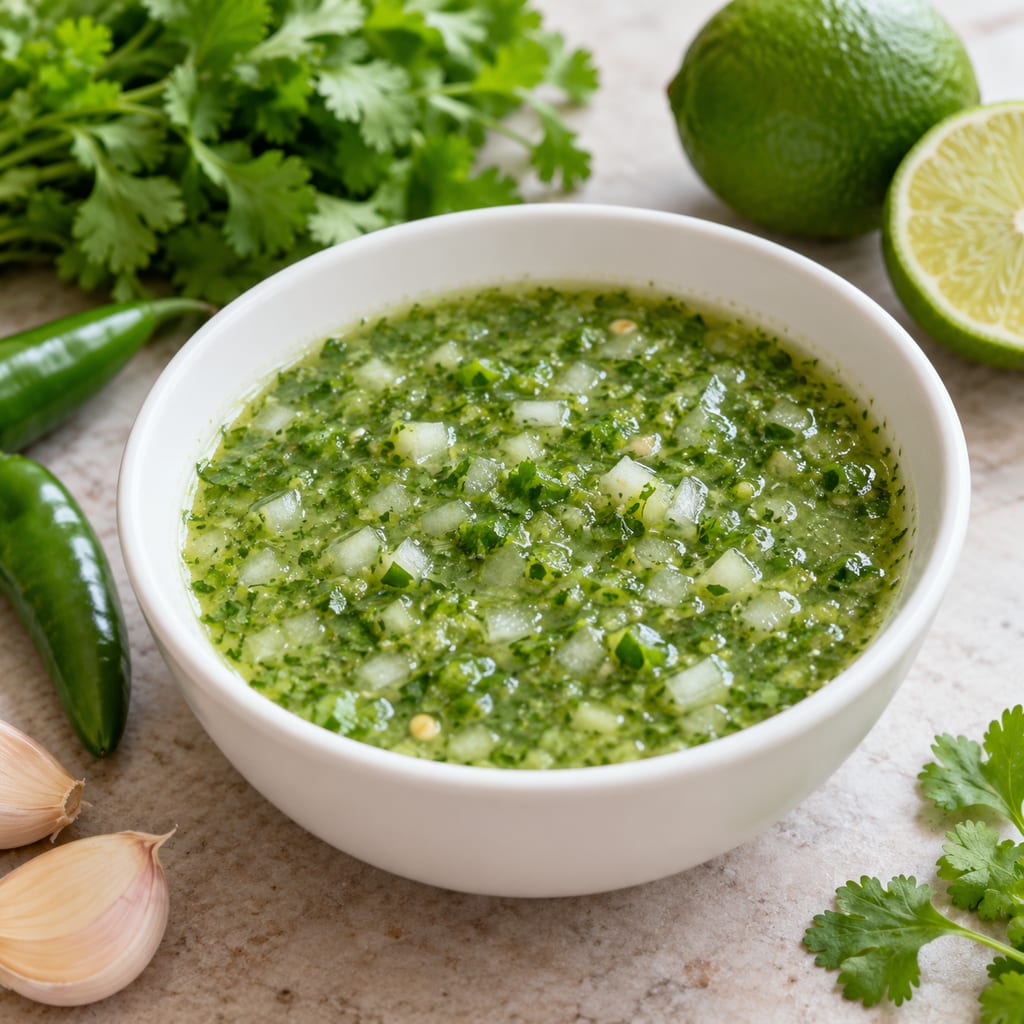
Ají criollo is a fresh Ecuadorian hot sauce made by blending hot peppers with cilantro, garlic and lime. It is made without cooking and is served at the table alongside many everyday dishes.
The source describes Ecuadorian food as generally mild. Restaurants often serve dishes without much heat and leave a homemade ají on the table for diners who want it, which explains why the sauce is valued as a separate condiment.
Peppers, cilantro, garlic, lime juice and water are blended first, which gives the sauce its green base. The white part of a spring onion, or white onion, is then stirred in by hand or blended briefly. Keeping the onion coarse keeps some bite in the finished sauce.
Lime juice gives the acid that brightens the sauce. The source says a little vinegar can be added for more acidity. Water thins the blend to a spoonable texture.
The source recommends a mix of jalapeño or serrano with red fresno chiles. Habaneros make it much hotter. Removing the membranes and seeds makes it milder, and red Korean chiles add colour without much heat.
The author reports that Ecuadorian ají peppers are hard to find outside Ecuador and that Peruvian yellow hot peppers taste closest to Ecuadorian ají común. Those are substitutions, not the local variety.
The author prefers to eat the sauce fresh, ideally the same day, and says it keeps for up to three days. A reader asked about freezing; the author replied that it can be frozen but is best freshly made.
The source names a tree-tomato (tamarillo) ají as another Ecuadorian version and a coastal hot salsa made with pickled peppers and vegetables. Both are separate records; neither is covered here.
The source describes ají criollo as a simple, fresh sauce that many typical Ecuadorian dishes are served with, and notes that Ecuadorian food is not generally very spicy: restaurants often serve mild dishes with a homemade ají on the table. No date for the sauce is given.
Yield 1 cup · Scaling: source batch only
Hot pepper heat varies widely; seeds and membranes carry most of the heat.
Documented as a common Ecuadorian table sauce; the source gives no local origin.
A contemporary Ecuadorian hot sauce that pairs passion fruit juice with boiled chile peppers, oil and lime.
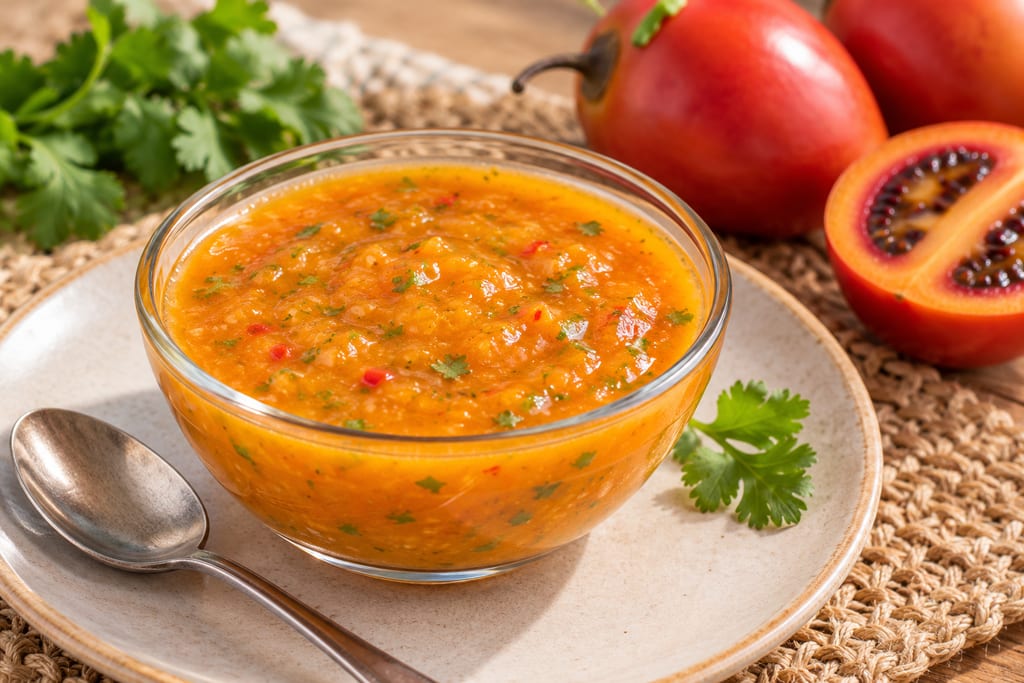
An Ecuadorian hot sauce built on tamarillo, a tart fruit that gives a sharper, fleshier base than ordinary tomato salsa.
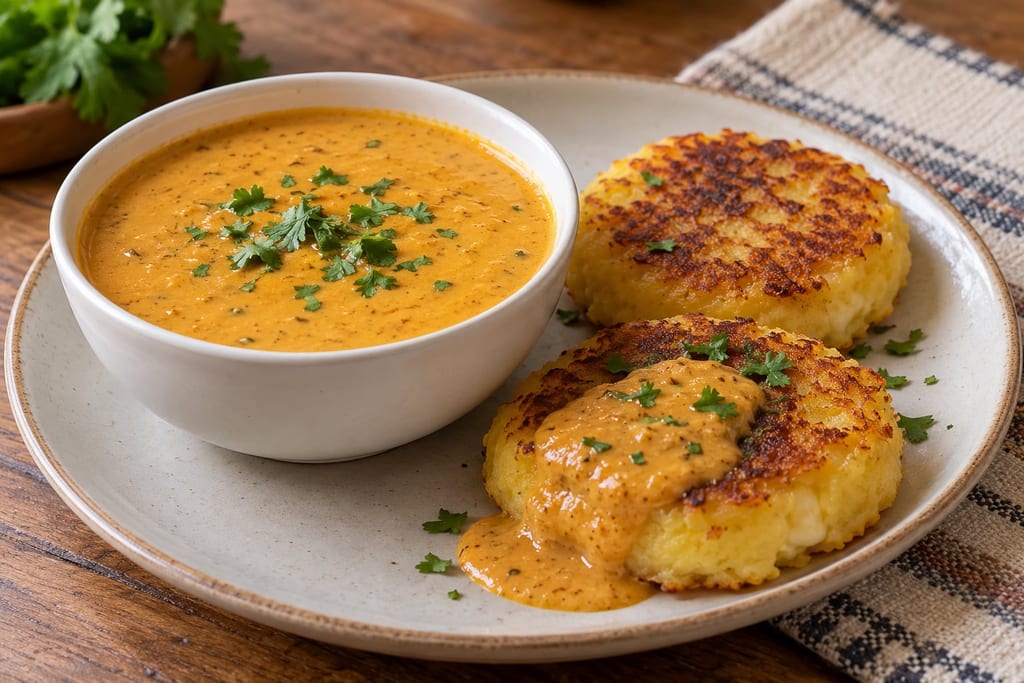
A warm, creamy peanut sauce thickened with milk and seasoned with onion, cumin and achiote, served over potatoes and llapingachos in Ecuador.
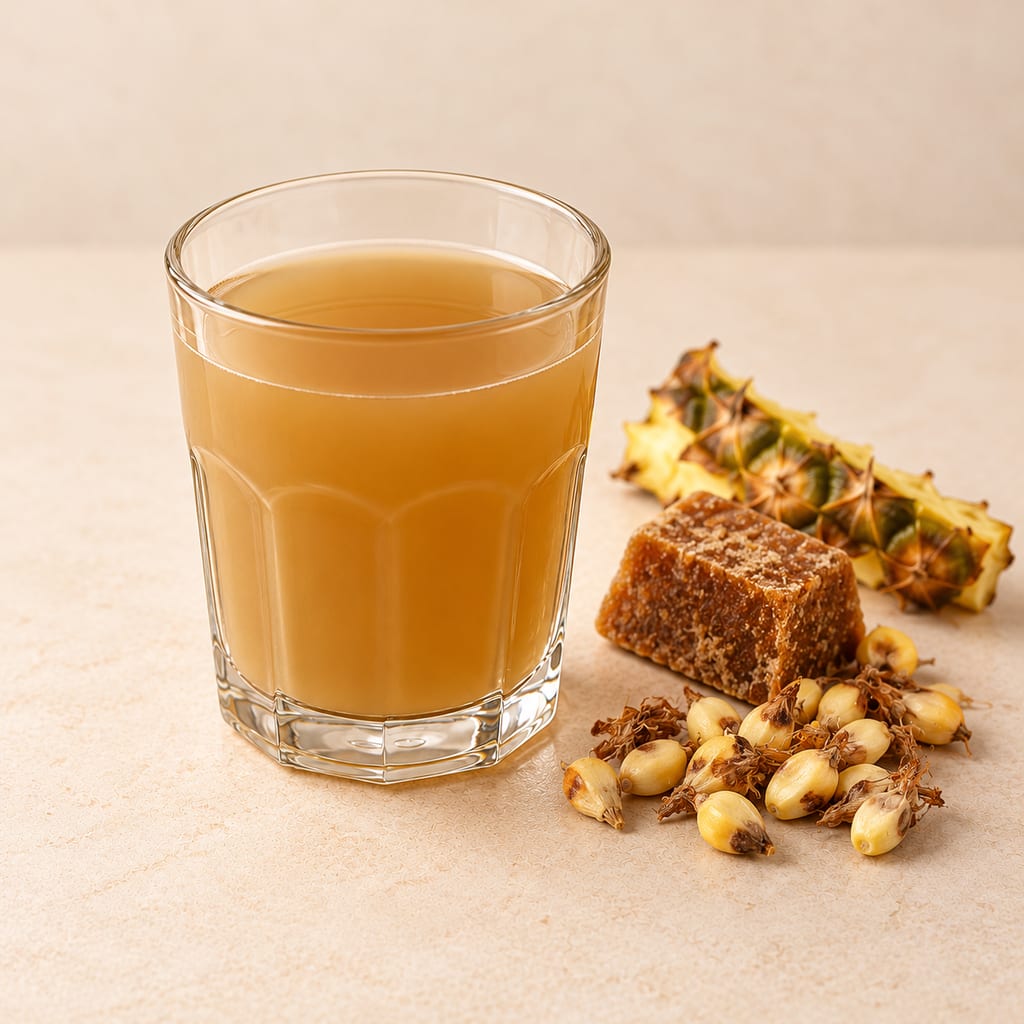
A contemporary Ecuadorian recipe simmers jora flour with spices, then adds panela and pineapple peel before a short spontaneous ferment. Its particular aromatics and measurements belong to this published adaptation.

Ecuadorian filled sweet bread figures with a rounded head and wrapped body, made from an enriched yeast dough. This home method shapes small filled ovals, proofs them on trays and serves them with colada morada.
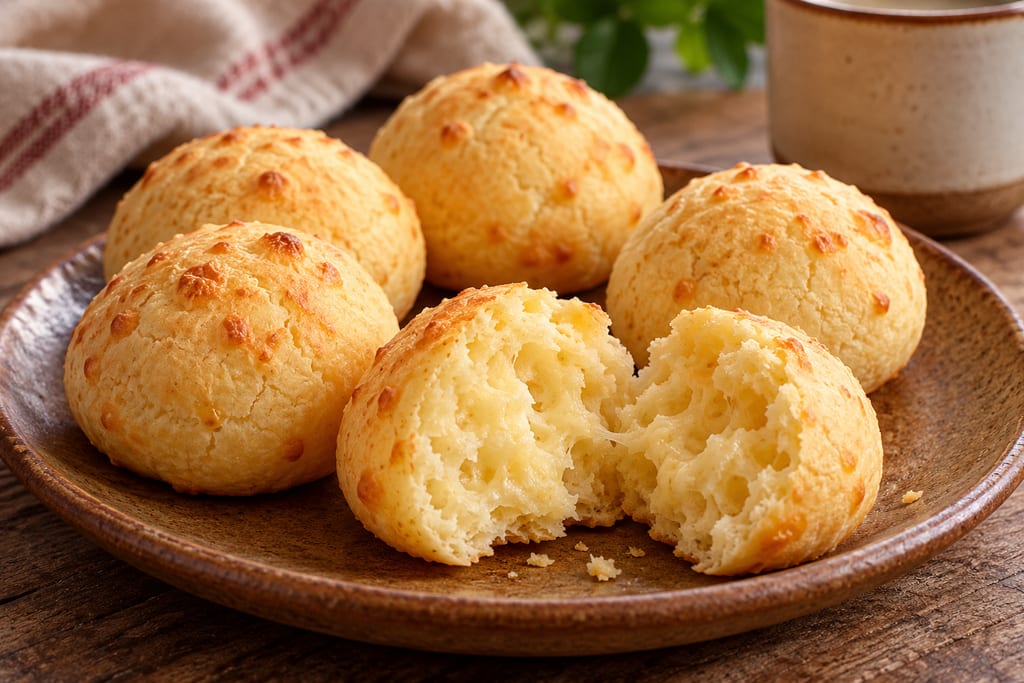
Small cassava-starch cheese breads mixed in a processor, chilled, baked and briefly browned under a broiler. This is Laylita's Ecuadorian-style formula.
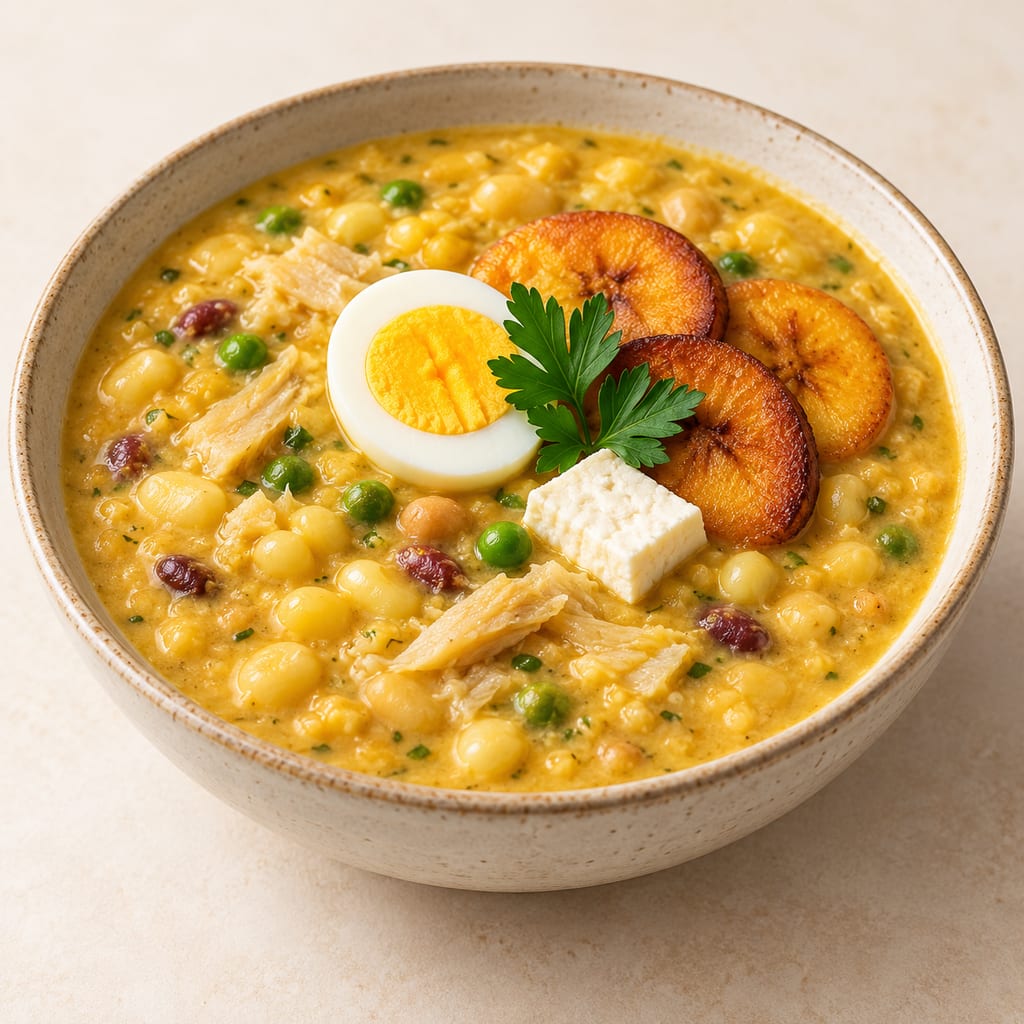
Ecuadorian Holy Week soup of tender grains and pulses, squash, milk and salted fish, thickened with peanut paste and served with contrasting garnishes.
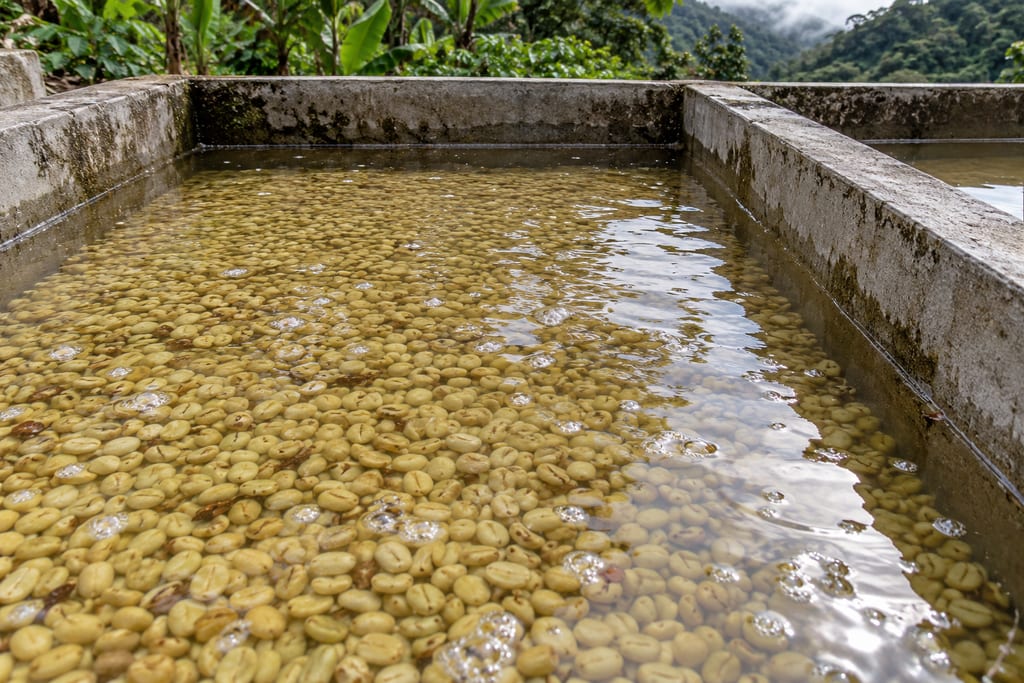
Washed Arabica coffee from Nanegal in Ecuador: depulped beans held under water while microbes and enzymes strip the mucilage, then washed, soaked and sun-dried to green coffee.
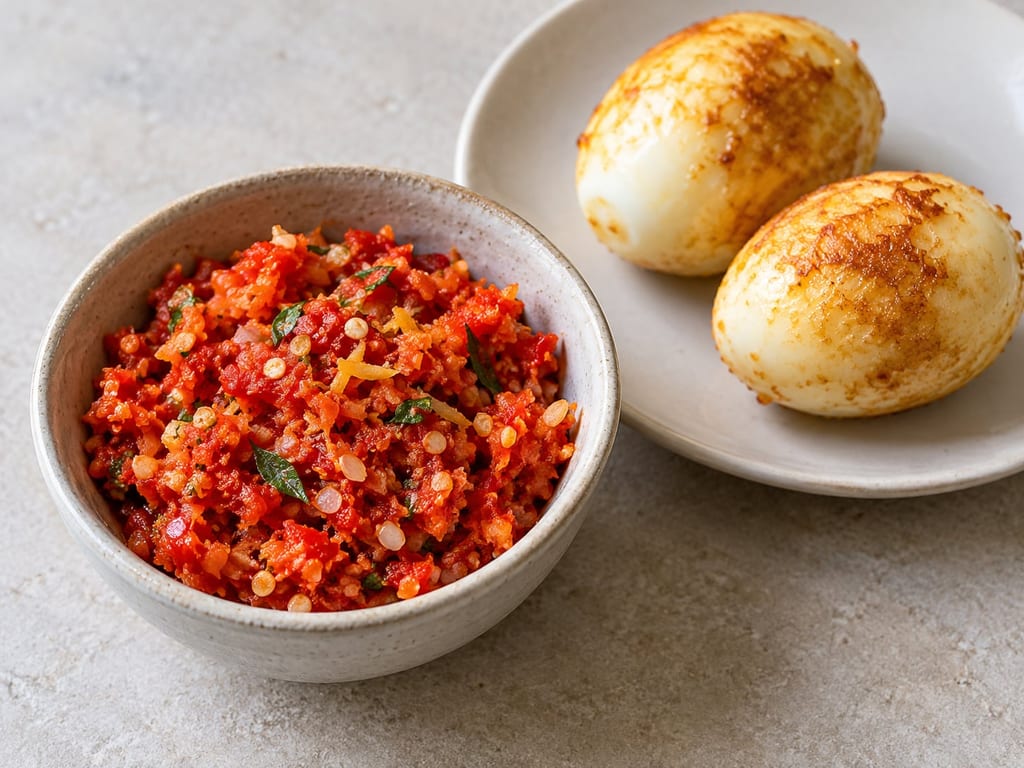
Ai-manas is described as a very hot chilli paste served with Timorese meals. One published version blends fresh chillies, shallots, garlic, Thai basil, ginger, lemon and salt, and serves it with eggs. Sources do not establish a standard formula, precise birthplace or earliest date.
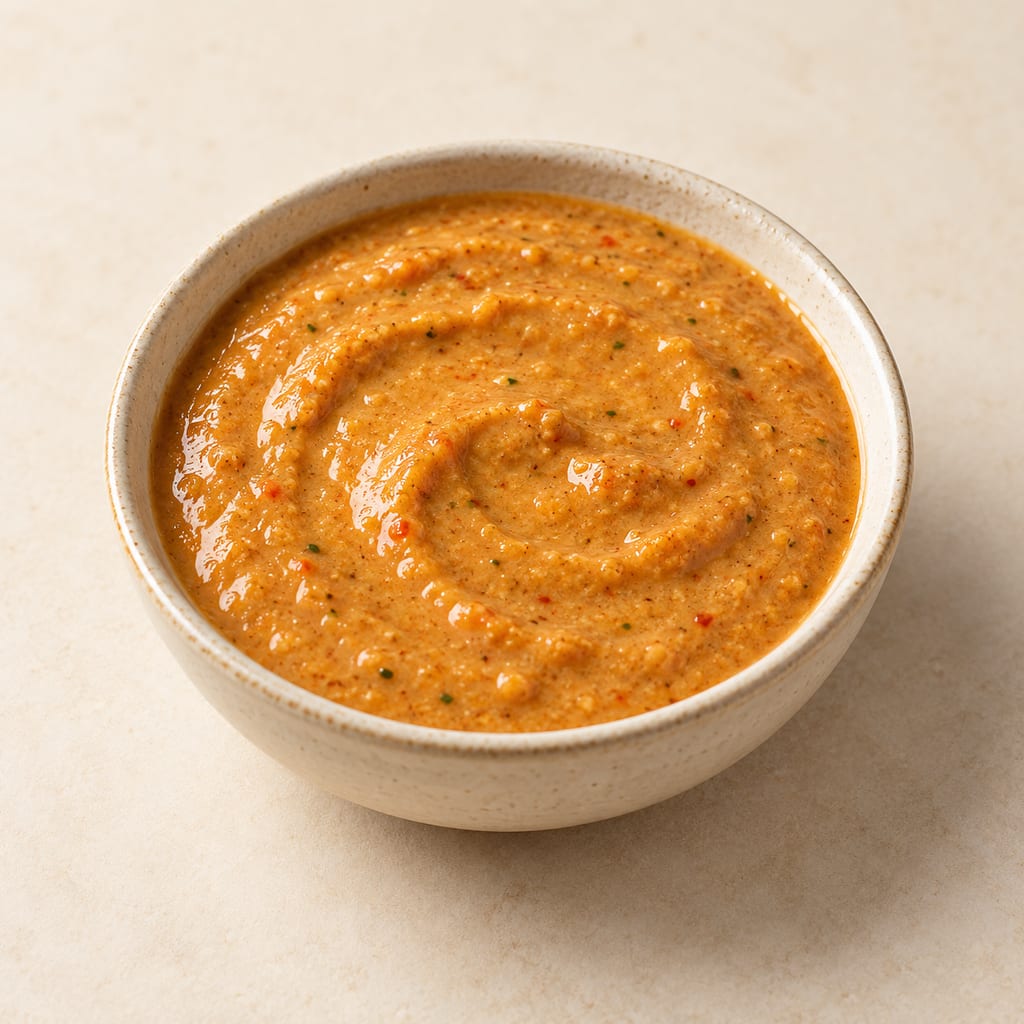
A spicy peanut hot sauce from the Popayán and Cauca region of Colombia, traditionally served with pipián empanadas and tamales.
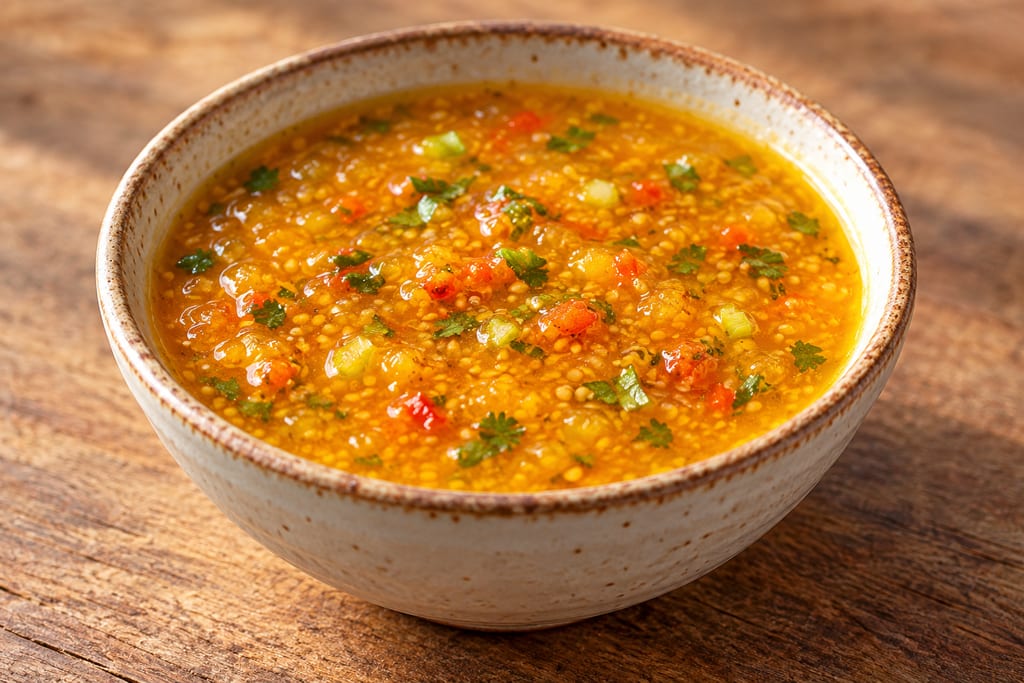
A sweet, tart and spicy Colombian sauce of uchuva, the yellow physalis fruit, with hot pepper, scallion, cilantro and lime.
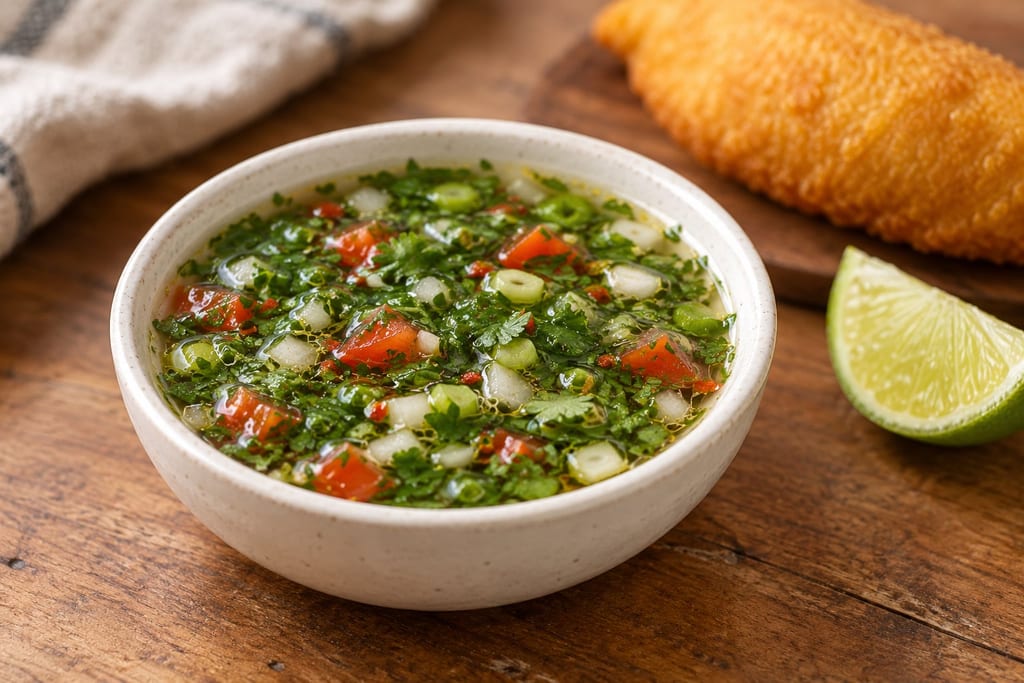
A fresh Colombian table condiment of chopped herbs, scallion and tomato in a vinegar and chile base, served beside fried and filled dishes.
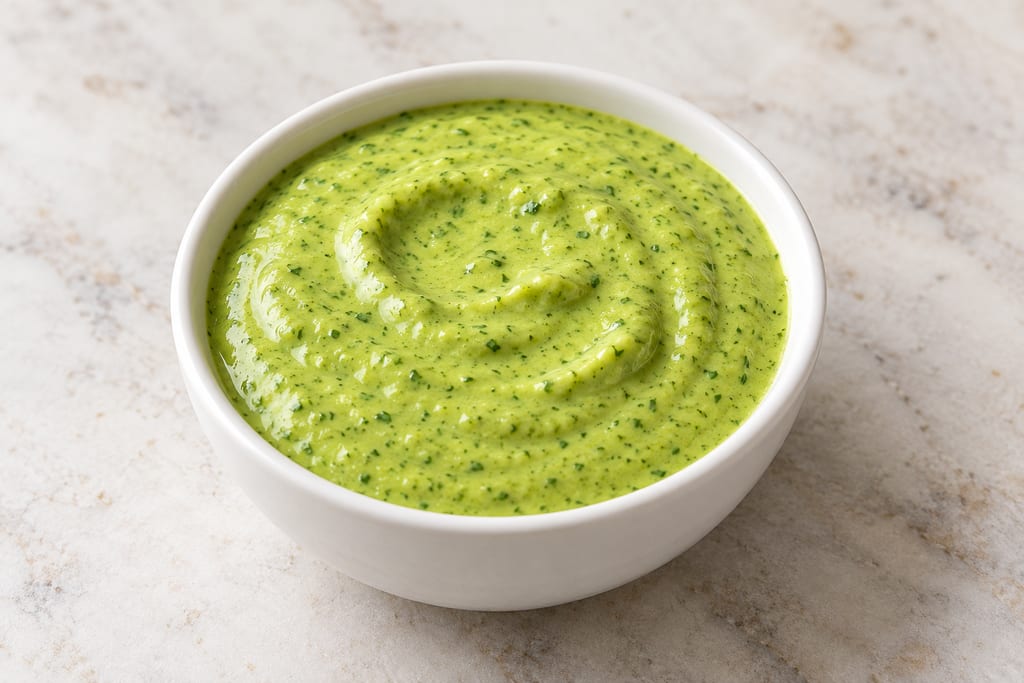
Ají verde is a Peruvian green sauce of coriander, chilli, onion and garlic in a mayonnaise or cheese base. It is best known through Peruvian restaurant cooking abroad.
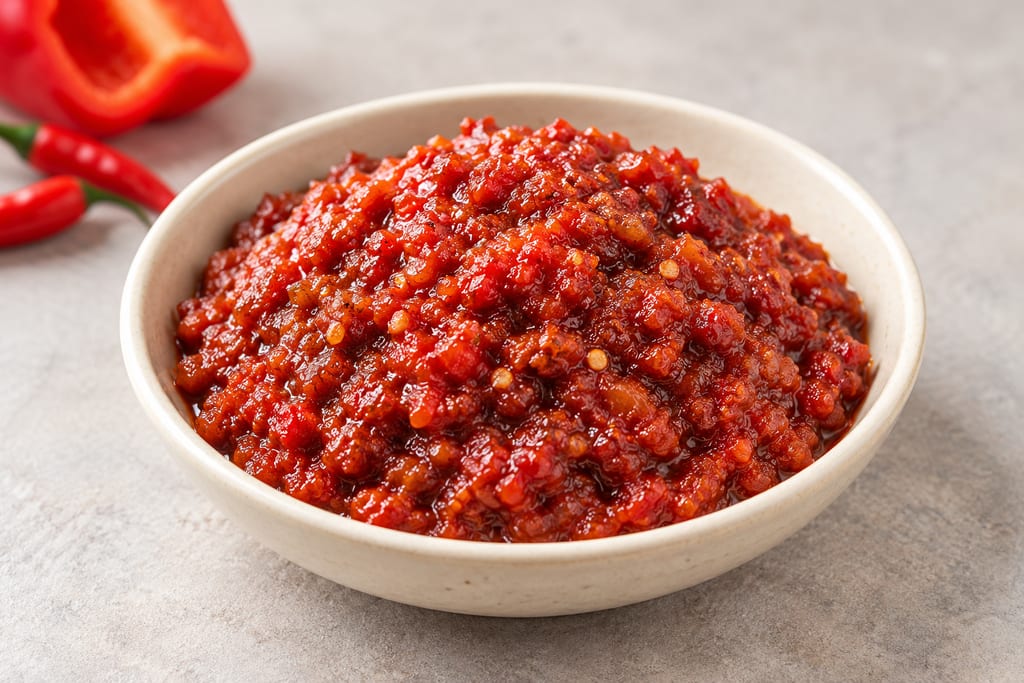
Ata dindin is the Yoruba fried pepper sauce: chillies, red bell pepper and onion blended and cooked down in oil until the oil separates. The same name is also given to a finished stew built on it.
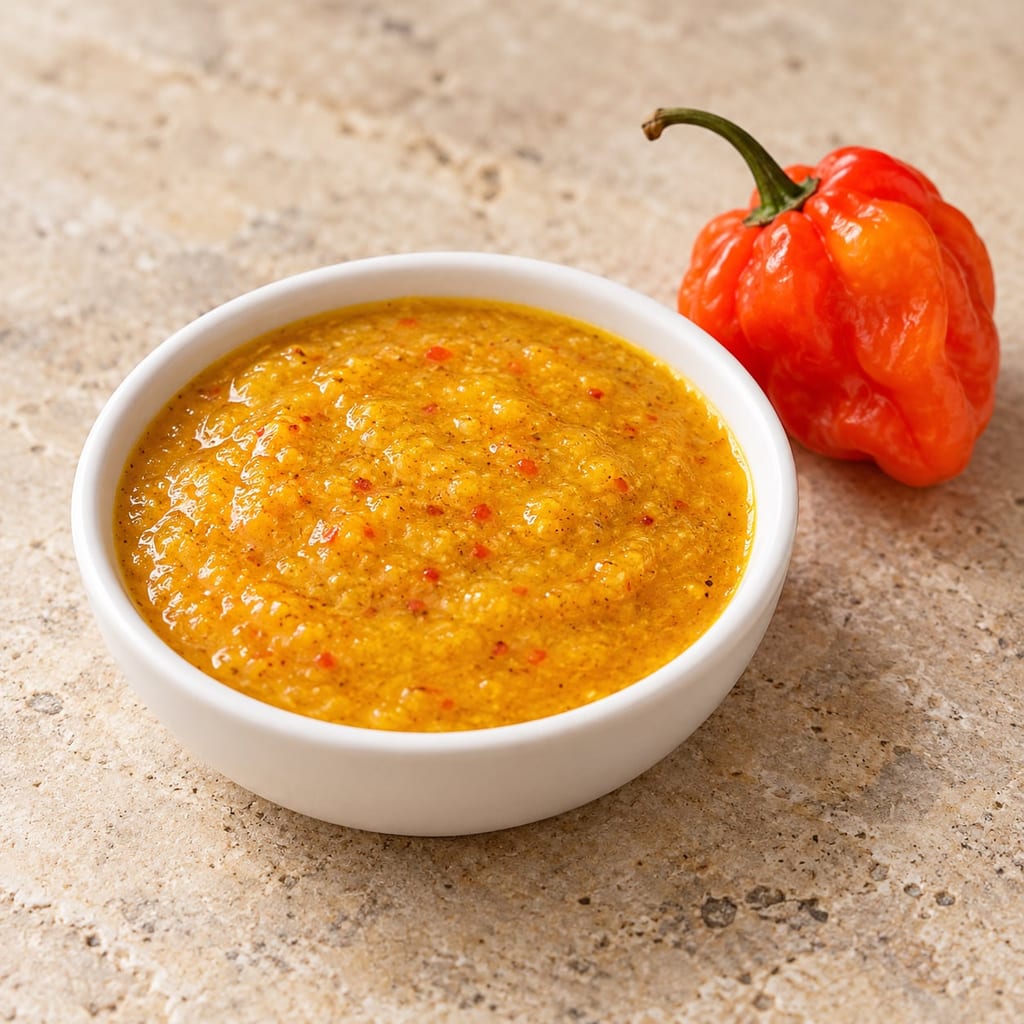
Bajan pepper sauce is a Barbadian hot sauce that blends Scotch bonnet peppers with mustard and vinegar, often with onion, turmeric and oil. Its heat and sharpness come from both the chile and the mustard, which sets it apart from a plain pepper vinegar.
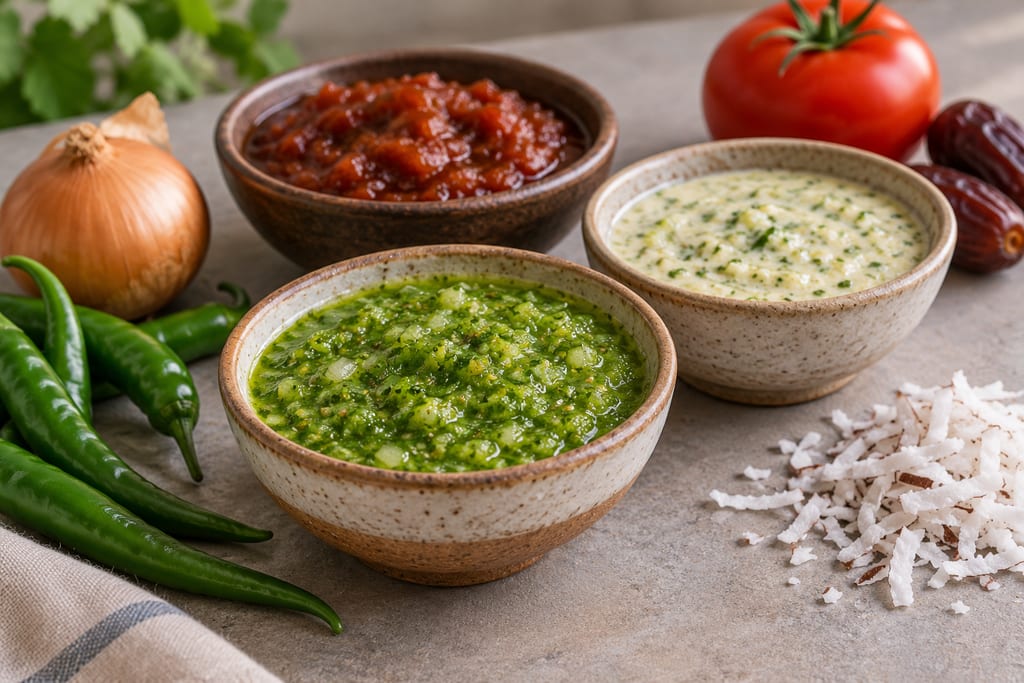
Basbaas is the Somali word for chilli and the name of a family of hot sauces served at the table, so each diner can set the heat. Green, coconut and tomato-based versions are all called basbaas.
No community contributions have been published for this entry yet.
Sign in to contribute. Published comments and photos are free to read.
Laylita's RecipesMethod · Background
Ají Criollo (Ecuadorian Hot Sauce)Ingredients and quantities
Method
Storage up to three days
Pepper choices
Regional and background notes
Cited in: A table sauce, not a cooked dish; Method and the role of each part; Choosing the peppers; Storage; Related sauces