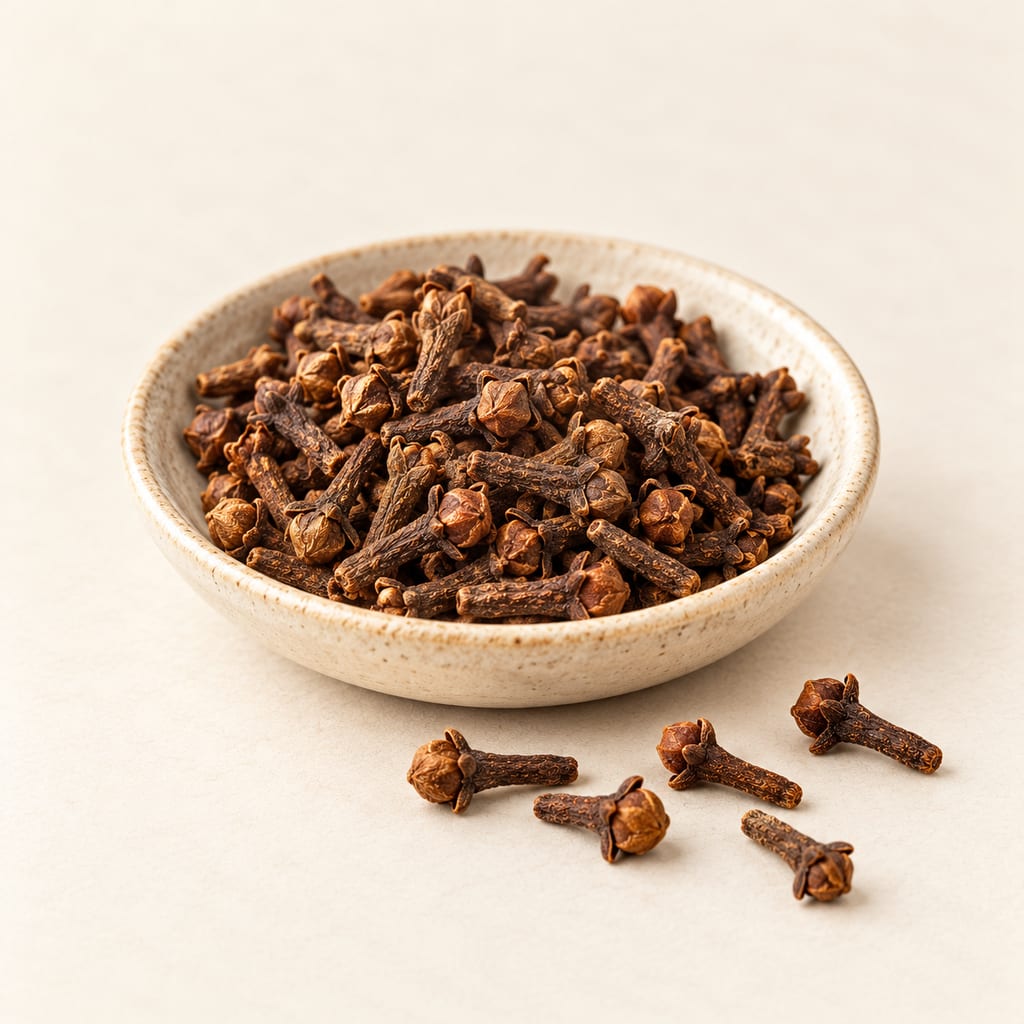
Cloves
Cloves are the dried unopened flower buds of Syzygium aromaticum. Whole buds infuse liquids and can be removed; ground clove disperses its intense aroma through food.
 FermenteaWhere food goes to change
Modern method
Chicha de jora
A contemporary Ecuadorian recipe simmers jora flour with spices, then adds panela and pineapple peel before a short spontaneous ferment. Its particular aromatics and measurements belong to this published adaptation.
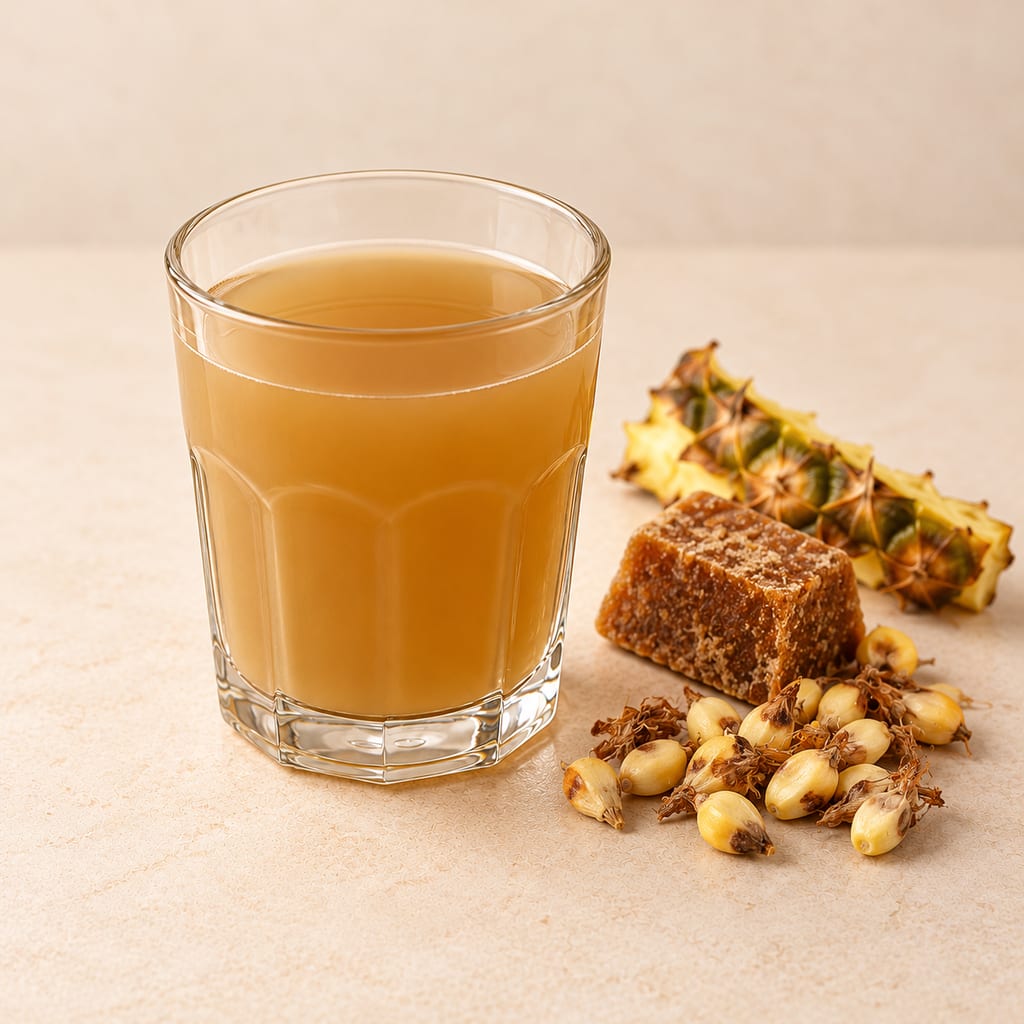
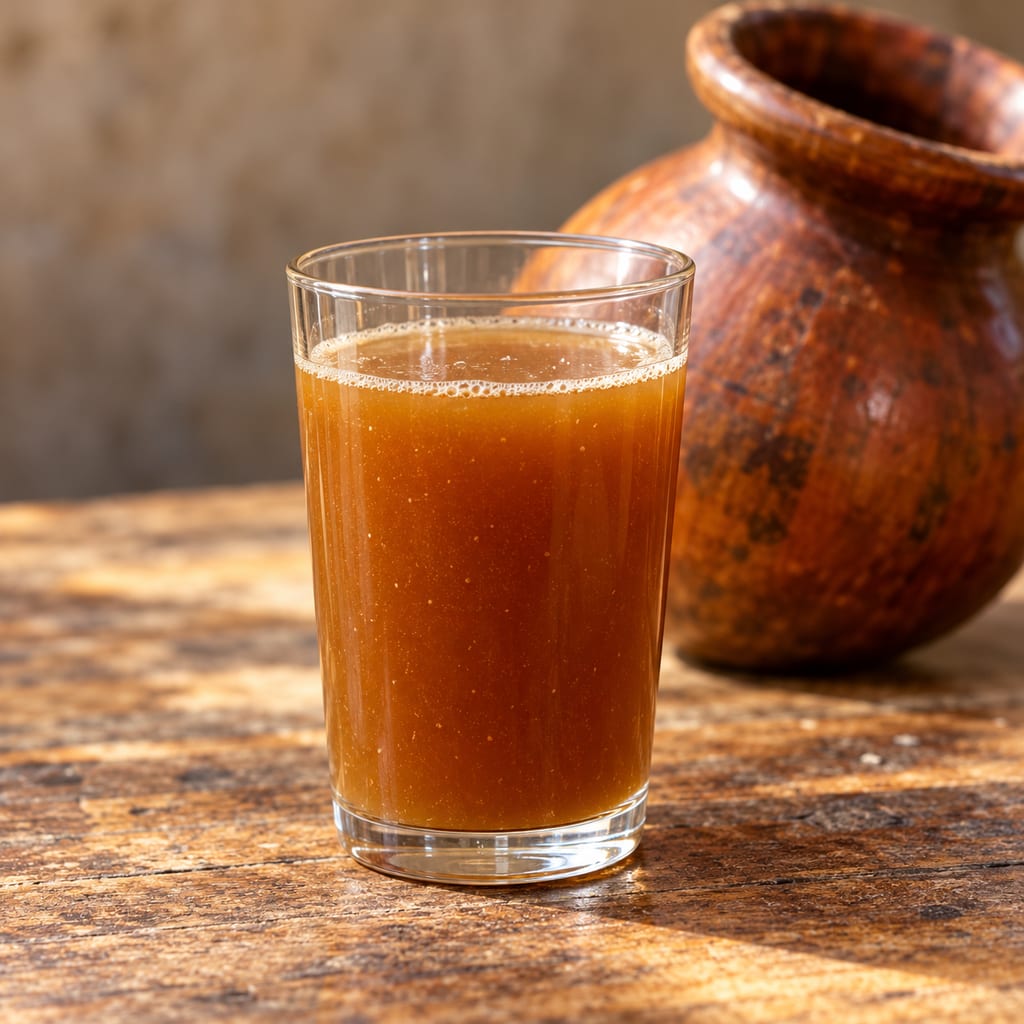
Chicha de jora is a fermented drink built from sprouted maize. The grain is germinated, dried and ground into a flour that carries its own starch-digesting enzymes; that flour is cooked into a thin porridge, cooled, sweetened and left to work on whatever microbes the vessel supplies. The finished liquid is lightly cloudy and golden to amber, with a bright acid edge under the malt. The FAO's survey of fermented cereals treats chicha as a maize beer that is clear, pale yellow and naturally fizzy, tastes not far off cider, and carries between 2 and 12 per cent alcohol by volume across the family of drinks. Swap in a red or purple maize and the same process yields a drink of that colour instead.
The Ecuadorian version recorded here belongs to a specific kitchen. The Asociación de Chefs del Ecuador published it in May 2018 in its recipe section, credited to chef Milton Sambonino, and sizes it at twenty portions: two cups of jora flour, two cups of panela, five litres of water, twelve cloves, twelve pieces of pimienta de dulce, four cinnamon sticks, three pieces of ishpingo and half a cup of pineapple peels. The aromatics go into the cooking water. The panela and the pineapple peels wait until the cooked mash has cooled and been decanted into a cántaro, an earthen jug whose neck is then covered while the drink ferments for two days.
That ordering is what makes this an adaptation rather than a generic formula. Everything that donates fermentable sugar is held out of the pot until the long boil has finished, so the sugar is spent by microbes rather than by the cook. The FAO chapter records the same instinct more plainly: a brown sugar or a molasses addition at a later boil is made for the purpose of lifting the drink's alcohol. Panela, the unrefined whole-cane sugar sold in blocks through the Andes, fits that role in ingredient terms, although the FAO text never names it and never mentions pineapple peel at all. The peel in Sambonino's list is his own, or his source's, and should be read that way.
The Ecuadorian Chefs Association is firm about the category, and its reasoning is a brewer's reasoning: chicha de jora counts as a beer because the grain is malted and then fermented. Sprout the grain to raise enzymes; let those enzymes free sugar from starch; let microbes turn that sugar into ethanol and carbon dioxide. What separates this from a brewery is who supplies the yeast and how much command anyone claims over the result. Nothing in this recipe is measured, and nothing in the two-day wait is temperature-controlled.
It is worth saying what this drink is not. It is not a vinegar, although it turns into one if left alone. It is not an unfermented maize cooler of the kind sold cold in Andean markets. And it is not a single inherited formula handed down intact: the version printed here is a modern kitchen's arrangement of jora, cane sugar, pineapple peel and sweet spices, set down by a national chefs' association in 2018, inside a family of drinks whose older forms shifted with valley, altitude and household.
Two claims about this drink's past circulate so often that they read as fact. The first is that chicha de jora is an Inca beverage, a ritual drink of the empire taken above all at the Inti Raymi, the June solstice festival. The Ecuadorian Chefs Association states exactly that on its recipe page. It attaches no chronicler, archaeological report or scholar to the sentence, and no independent source was retrieved here that corroborates it. So the claim stands as the publisher's assertion rather than established history, and no Inca or pre-Columbian date is attached to this pineapple-and-panela formula.
The second claim is looser but better supported: that maize chicha is old and Andean. The FAO chapter on fermented cereals states that Andean peoples have drunk chicha for centuries and that its production has altered little across that span. That is a general observation about a whole class of maize beers, not a date for any particular recipe, and it does not reach the ingredient set printed in 2018. The defensible position is that the family is long-documented while this variant is dated only to its publication.
Geography can be pinned down more securely, at the precision the sources use it. The Ecuadorian association gives the origin of this formula as Ecuador, Peru and Bolivia, and names the province of Cañar in the southern Ecuadorian highlands, calling chicha an emblematic drink of that province. Cañar is a maize-growing highland zone with a strong surviving chicha culture, and the attribution is a documented regional association rather than a claim of birthplace. The recipe is also credited to a named chef, which places it in professional Ecuadorian cooking and its regional showcases rather than in anonymous household transmission.
The comparative evidence for how much chicha de jora varies is thinner than this record would once imply. A 2010 FAO compilation of high-Andean food traditions was cited in an earlier pass for a second chicha de jora, said to come from the Comunidad Guadalupe near San Juan and to combine toasted jora with barley, flavoured with cloves and sugar over roughly three days of fermentation. That document cannot be opened here — the file is larger than the reader will retrieve — so none of those particulars can be verified, and they have been withdrawn rather than repeated. What remains solid is the narrower point the readable sources do support: the FAO chapter itself lists several distinct germinated-maize drinks by name, and gives a highland process and a lowland process whose ferments run at very different speeds. Variation within this family is real and documented; the specific rival recipe is not.
The comparative material also warns against borrowing rituals across cultures. The same FAO chapter describes tesgüino, the fermented maize drink of the Tarahumara of northern Mexico, as the drink of choice at celebrations, religious rites, funerals and ball games. It is a striking parallel to the ceremonial framing given to Andean chicha, and it is evidence about Mexico, not the Andes. Ceremonial centrality for maize beer is a broad American pattern; the particular Inti Raymi claim for this drink remains unproven here.
Maize is starch, and yeast cannot eat starch. Every chicha has to settle that problem before alcohol is on the table, and the FAO chapter frames it as a choice of two routes: starch can be broken down by salivary amylase, the old salivation method, or by the enzymes the kernel itself manufactures while it germinates. Some makers run both in one batch. Jora is the germination route, and it is the route this recipe relies on, which is why the shopping list asks for jora flour and not cornmeal. Substitute an ungerminated maize flour and the pot holds a thin, sweetish, unfermentable porridge, because nothing in it can cut starch into sugar that microbes can absorb.
Raising jora is farm work measured in days. Dried kernels sit in water for twelve to eighteen hours, usually overnight, are drained, and then are held damp and out of the light for some three days until the first shoots, the plumules, stand a quarter to half a centimetre long. The sprouted grain is piled up and blanketed with burlap for a day or two, and the heap heats until plunging a hand into it becomes uncomfortable. What emerges is pale, dry-looking grain with a fine dusty film on it. It is dried in the sun and then milled to a fine flour, traditionally between stone querns. In the Andean usage the FAO records, the sprouted dried kernel is called jora and the milled product pachucho, and pachucho is what meets the water. Sambonino's two cups of harina de jora are that flour, bought or ground locally, and the recipe assumes somebody else has already carried out the malting.
The grain is not a neutral input either. Any maize will ferment, the FAO notes, but some kinds are thought to make better chicha: Alazan, whose kernels run light to dark red, ripen early and stand up to drought; Viru, a yellow type needing a longer season; and Maize Negro, the deep purple-black maize associated with Arequipa in southern Peru, which tints the finished drink. Jora flour sold for chicha is normally chosen for how well it malts. A flour milled from a soft, floury table maize will behave differently in the pot from one milled from a hard chicha type.
The long boil is the other half of the conversion. In the germinated-grain process the FAO lays out, pachucho is wetted and held at a boil in an earthenware pot for roughly three and a half hours, with water poured back to replace what steams away; the mixture may then be cooked slowly for another full day; once it has cooled, portions are rubbed by hand so the hulls part from the starch; the mixture goes back to the heat for four further hours, then is cooled and passed through cloth or wire. Those are patient operations, and they accomplish two things at once. They swell the maize starch so the malt's enzymes can reach it, and they pull starch and sugars into the liquid while the coarse bran is worked out. Sambonino's method is the same sequence compressed: a two-hour simmer under constant stirring, no second boil, no hand-rubbing, nothing filtered before fermentation. The shorter route gives a denser, cloudier body, and that difference in the glass is real rather than cosmetic.
One figure from the parallel salivation route is worth carrying over as explanation rather than instruction. There the pot is topped up with water and brought to roughly 75 °C instead of a rolling boil, because boiling water leaves an unpleasant pasty texture. The source defends that temperature on textural grounds, not by enzyme kinetics, and it belongs to a different process. Still, it shows that Andean makers have long understood maize starch and hot water as something to be managed rather than simply blasted.
Once the cooked mash has cooled and been decanted into the jug, the panela and the pineapple peels go in and the neck is covered. Nothing is pitched. The fermentation that follows is called spontaneous, though in older practice it was rarely that at all. The FAO records that the strained liquid is run into pots reserved for fermenting alone, so the pots already carry the organisms the process needs. A cántaro used only for chicha is not a clean vessel; it is equipment with a resident population. The same goes for the froth that rises during the ferment, which the FAO describes as lifted off with a cupped hand before drinking and then put to work as a starter for the next batch. A maker who keeps one jug and a spoonful of each batch is backslopping, whether or not anyone in the kitchen uses that word.
General food-safety guidance treats this kind of ferment as a mixed microbial affair. The British Columbia disease-control guideline names chicha once, as a South American corn beverage in which lactic acid bacteria, acetic acid bacteria, moulds and yeasts all take part, and files it under combined fermentation — its term for a ferment driven by more than one class of agent. The FAO chapter is more specific about who leads: Saccharomyces cerevisiae together with Lactobacillus dominate the chichas of northern Argentina, while a Colombian list adds further yeasts along with Leuconostoc, Acetobacter and moulds. That consortium explains why the flavour is not simply alcoholic. Yeast yields ethanol and gas; the bacteria lay down acidity; the two together produce the tang.
The added sugar is what lets the panela and the peel do real work. Yeasts reach for simple sugars ahead of complex carbohydrates such as starch, so a maize mash whose starch has converted only part-way feeds them less than a sugar-fortified one. The FAO states the practice outright: brown sugar or molasses may be added at a later boil to push the alcohol content up. In laboratory work the effect is striking — chicha organisms on a thirty per cent medium of starch, dextrin and fermentable sugar reached 13.4 per cent alcohol by volume, and that mixed culture handled starches, dextrins and sugars better than pure Saccharomyces cerevisiae could. Read that as a bench result on a defined medium, not a forecast for a two-day household batch. Across the class of chichas, the FAO's stated range is 2 to 12 per cent by volume.
The endpoint in the older sources is sensory, and it keeps moving. In the germinated-grain process fermentation runs for about a day, and the drink is considered ready when its sweetness has gone and its taste has turned half-sharp. Leave it undrunk and it sharpens further, ending as vinegar as acetic acid bacteria finish what the yeast began. Two days in a covered jug with two cups of panela dissolved in five litres of liquid is a longer run than that one-day model, and it lands in the zone where the drink is dry and bright and still pleasant, or already past that point. The recipe supplies no temperature, no acidity target and no taste cue, so the only dependable test is the spoon, used early and often.
Altitude accounts for much of the disagreement in reported times, and it is the most useful generalisation available. In the process the FAO records under the names upi, misqui kheta and hanchi, four days of incubation pass before the mixture bubbles hard; the ferment then finishes in roughly six days up in the highlands, yet can be done inside two days in the hot lowlands. The same work on three times the clock, purely because of warmth. A two-day ferment in a warm lowland kitchen and a two-day ferment in a cold Cañar night are not the same process, and no single duration lifts cleanly from one to the other.
**Jora flour, two cups.** The engine of the recipe and the one item with no substitute. It is milled from maize that was germinated and then dried, so it arrives carrying amylase alongside its starch. A recipe that names it assumes the malting was done by someone else, and the quality of the drink is largely settled before the stove is lit: a fresh, pale flour with a sweet malty smell behaves differently from old flour that has been sitting warm, and no amount of stirring recovers the difference.
**Panela, two cups.** Unrefined whole-cane sugar sold in blocks, added in chopped pieces after the boil. It donates the fermentable sugar the yeasts want, and its molasses content darkens and rounds the flavour. The source is unclear about quantity: two cups appear in the ingredient list, step three says to add chopped panela without repeating an amount, and the final step says to sweeten again after straining, again with no amount. Taken literally, the two cups belong to the ferment and the last sweetening is a serving adjustment. A drier, stronger drink stops short of that final sweetening; a sweeter one adds it back at the end, once the fermentation has done its work.
**Water, five litres.** The cooking and fermenting medium, and the reason the batch is described as twenty portions rather than a volume. No serving size is given, so the yield is a count, not a quantity.
**Cloves, twelve whole; cinnamon, four sticks; pimienta de dulce, twelve whole; ishpingo, three pieces.** These are boiled in the water before the flour arrives, which makes the cooking liquid a spiced infusion first and a maize mash second. Cloves and cinnamon need no introduction. Pimienta de dulce and ishpingo are Andean market spices. Pimienta de dulce is a sweet pepper-like spice sold in Ecuadorian markets. Ishpingo appears as three pieces with no further description.
**Hierba luisa.** Named in step one, where the water is to be boiled with all the sweet spices and the hierba luisa, but missing from the ingredient list, with no amount, form or species given. Lemon verbena is the herb the name usually denotes in Ecuador, and it would contribute a lemony top note, but the recipe as printed cannot be followed to a quantity.
**Pineapple peel, half a cup.** Added cold alongside the panela, once the mash has cooled. It is the most modern-feeling item in the list and the least documented: the FAO chapter on fermented cereals mentions neither pineapple peel nor any fruit addition in chicha. Sugars and surface microbes are plausible contributions to a spontaneous ferment, but no source read here establishes that role for chicha, so the peel is presented as this recipe's own addition rather than inherited practice. Nothing read here says what it does to safety or keeping.
The spices are introduced before fermentation, which means their volatile aromatics are extracted in the boil and then sit through two days of microbial activity. That is a different outcome from steeping them in the finished drink: fermentation blunts and reshapes them, and a spice load that reads as heavy in the pot can come through modest in the glass.
**Boil the aromatics first.** Boiling cloves, cinnamon, pimienta de dulce, ishpingo and hierba luisa in the five litres of water builds the flavoured liquid the mash will be dispersed into. Doing it before the flour goes in means the spices steep in free water rather than in a thickening porridge, where extraction would be poor and scorching likely.
**Thin the flour with cold water, then add it.** A slurry made cold disperses; flour dropped into hot liquid clumps and the clumps do not hydrate evenly. This is the step that decides whether the two-hour cook thickens uniformly or ends up with dry pockets.
**Cook two hours, stirring constantly.** This is the shortest stage in the recipe and the most unforgiving. A maize porridge at a simmer, held for two hours with constant stirring, is a scorching risk and a stiffening one; the stirring is not a formality. The purpose is to gelatinise the maize starch so the jora's enzymes can act on it, and to carry the starch and sugars into liquid. The longer traditional sequence the FAO records — three and a half hours, a possible twenty-four-hour slow cook, hand-rubbing to separate hulls from starch, then four more hours — is the same objective pursued with more time and a filtering step this recipe omits.
**Cool, then move to the cántaro.** Cooling is not a courtesy. A boiling or even hot mash into an earthen jug would drive off aroma and leave the vessel too warm for the resident microbes to work in. The recipe says to cool and gives no temperature, and no fermentation temperature appears anywhere on the page, so this is left unknown rather than filled in.
**Add panela and pineapple peel after cooling.** Adding sugar after the boil keeps it fermentable rather than cooked, and it puts the sugar within reach of the microbes from the first hour. The FAO's parallel note about brown sugar or molasses being added to raise the alcoholic content is the closest documented rationale for a sugar addition in chicha, and it is the reason the panela belongs to the ferment rather than the pot.
**Cover the neck and wait two days.** Covering the neck of a cántaro keeps flies and debris out while leaving the vessel otherwise unsealed; there is no airlock and no water seal in the recipe. Over two days the ferment will bubble, and the FAO's account of a froth rising to the surface is what to expect. Skimming that froth is traditional, and a little of it, or of a previous batch, is how a maker keeps a population going rather than starting from nothing each time.
**Strain, sweeten, serve.** Straining removes the spent pineapple peel, the whole spices and the settled maize solids. The final sweetening, in an amount the source leaves unspecified, is a serving decision that masks acidity; it changes how sharp the drink reads without changing what the fermentation did.
The recipe has no step for stopping the fermentation, and no cold stage. That is not an oversight in a tradition where chicha is drunk within a day or two of finishing. It becomes a problem only if the batch is kept, and the FAO chapter is blunt about what happens then: the drink sours and in time turns to vinegar.
Chicha de jora is not one recipe with regional decorations. The FAO chapter describes a family of germinated-maize drinks that share the sprouting step and differ in nearly everything laid on top of it. Alongside chicha it names sora, napé, acupe and fubá, each defined by the same trick of germinating the grain to prepare the substrate. What varies is the grain, the length of the boil, whether anything is filtered, how long the ferment is allowed to run, and what, if anything, is added to feed it. Sambonino's formula is one point in that space: no second grain, no filtering before fermentation, a sweet-spice infusion, cane sugar added cold, and two days in a covered jug.
The chapter's own account of modern Andean chicha sits a long way from that point. Ground jora, called pachucho, is mixed with water and boiled in an earthenware pot for about three and a half hours, with water put back to replace what steams away; the mixture may then be cooked slowly for another full day. Once it has cooled, handfuls are rubbed by hand so the hulls part from the starch, and the mixture is boiled for four further hours before being cooled and strained through cloth or wire. Fermentation then runs about a day in pots kept for that purpose alone. Set against a two-hour simmer with no pre-fermentation straining and a two-day ferment, the difference is not simply one of patience. The long boil plus the hand-rubbing and the filter yield a clearer, thinner drink; the short route leaves more of the grain in suspension, which is why this version is strained at the end instead of before the fermentation starts.
Time itself moves with warmth and elevation, and that is the most useful generalisation the sources allow. In the process the chapter records under the names upi, misqui kheta and hanchi, four days of incubation pass before the mixture bubbles hard; the ferment then finishes in roughly six days up in the highlands, while in the hot lowlands it can be complete within two. The same work on a third of the clock, purely because of heat. A two-day recipe is therefore a warm-room or lowland timeline; carried to a cold highland kitchen it may be barely started, and the Ecuadorian page offers no temperature to adjust by.
Colour and raw material shift with the maize. Chicha made from pigmented varieties runs red to purple rather than the usual yellowish, and the chapter names the types held in particular regard: Alazan, with light to dark red kernels that mature early and tolerate drought; Viru, a yellow type needing a longer season; and Maize Negro, the purple-black maize associated with Arequipa. A maker buying generic pale jora flour is buying a different drink from one buying a named chicha landrace, before either reaches the stove.
There is even a by-product with its own name. After the chicha has been drunk, the sediment left in the pot is filtered to obtain sutu, which resembles chicha in colour but lacks its sparkle and cider tang, and is reported to be stronger; forty litres of chicha give about one litre of sutu. It is a small window onto how continuous the practice the FAO recorded really was: the vessel, the froth skimmed from the surface and the sediment at the bottom all feed back into the next batch rather than being discarded.
One further variant is recorded but cannot be checked here. An earlier pass at this page cited a FAO compilation of high-Andean food traditions for a chicha de jora from the Comunidad Guadalupe near San Juan, said to toast its jora, to blend in barley, and to ferment about three days with cloves and sugar. The file is too large for the reader available here and returned nothing on repeated attempts, so those particulars are not relied on anywhere in this account. The general point they would have made — that some makers toast their malt and add a second grain — is left out rather than asserted.
Chicha as a class is described by the FAO as a maize beer drunk by Andean peoples for centuries, with production changing little over that span. The Ecuadorian Chefs Association calls chicha de jora emblematic of Cañar province and asserts, without citation, that it was an Inca ritual drink taken chiefly at the Inti Raymi; that claim is not corroborated here. This particular panela-and-pineapple-peel formula is dated only to its 2018 publication by chef Milton Sambonino.
Yield 20 servings · Scaling: source batch only
The FAO chapter reports no documented toxic reactions from drinking chicha, but states that chicha made from maize contaminated with mycotoxin-producing moulds such as Aspergillus flavus would likely contain aflatoxin. The risk therefore sits in the jora: sprouting is done warm and damp, and mouldy or off-smelling grain should not be used.
Hazard sourceThis is a spontaneously fermented beverage with no alcohol measurement, acidity target or validated endpoint in the recipe source. The FAO chapter gives 2–12% v/v for chicha as a class, and a laboratory mixed chicha culture reached 13.4% v/v on a defined starch-and-sugar medium; neither is a prediction for this batch.
Hazard sourceStart from clean, sound jora flour and sprouted grain; discard grain that looks mouldy or smells off, because aflatoxin is carried into the finished drink rather than removed by the boil.
Control sourceCover the neck of the cántaro as the recipe directs, keeping flies and debris out of an open ferment.
Control sourceTreat this drink as potentially alcoholic. Do not judge completion or safety by taste or the two-day wait: the FAO chapter’s sensory serving description belongs to a different chicha method, and neither source gives a measured safety or storage endpoint for this batch.
Control sourceThe source does not establish alcohol content, acidity, refrigeration life or a safe endpoint. Do not serve to people avoiding alcohol on the assumption that two days produces none.
Bubbling, smell and taste show that fermentation is happening; they do not show that the drink is safe. The one hazard the sources name for maize chicha is aflatoxin carried over from contaminated grain.
Saccharomyces cerevisiae — Named by the FAO chapter, with Lactobacillus, as a primary fermenting organism in chicha made in northern Argentina; documented for chicha as a class, not identified in this particular batch, which uses no added starter.
Lactobacillus — Named by the FAO chapter as a primary fermenting organism alongside the yeasts in northern Argentine chicha, and the source of the acidity in the drink's cider-like tang; a Colombian chicha list adds further yeasts, Leuconostoc, Acetobacter and moulds.
The Asociación de Chefs del Ecuador gives this formula's origin as Ecuador, Peru and Bolivia, naming Cañar province, and calls chicha an emblematic drink of that province; the recipe is attributed to chef Milton Sambonino.
The FAO chapter's general statement about chicha as an Andean maize beer; it supports the family's long standing, not the date of this recipe.
Named among the origins of this formula by the recipe publisher, and the country where the FAO chapter's germinated-maize chicha practices and the Maize Negro type (Arequipa) are placed.
Listed by the recipe publisher among the origins of the drink; recorded at country precision only, since the page gives no region within Bolivia.
Cloves are the dried unopened flower buds of Syzygium aromaticum. Whole buds infuse liquids and can be removed; ground clove disperses its intense aroma through food.
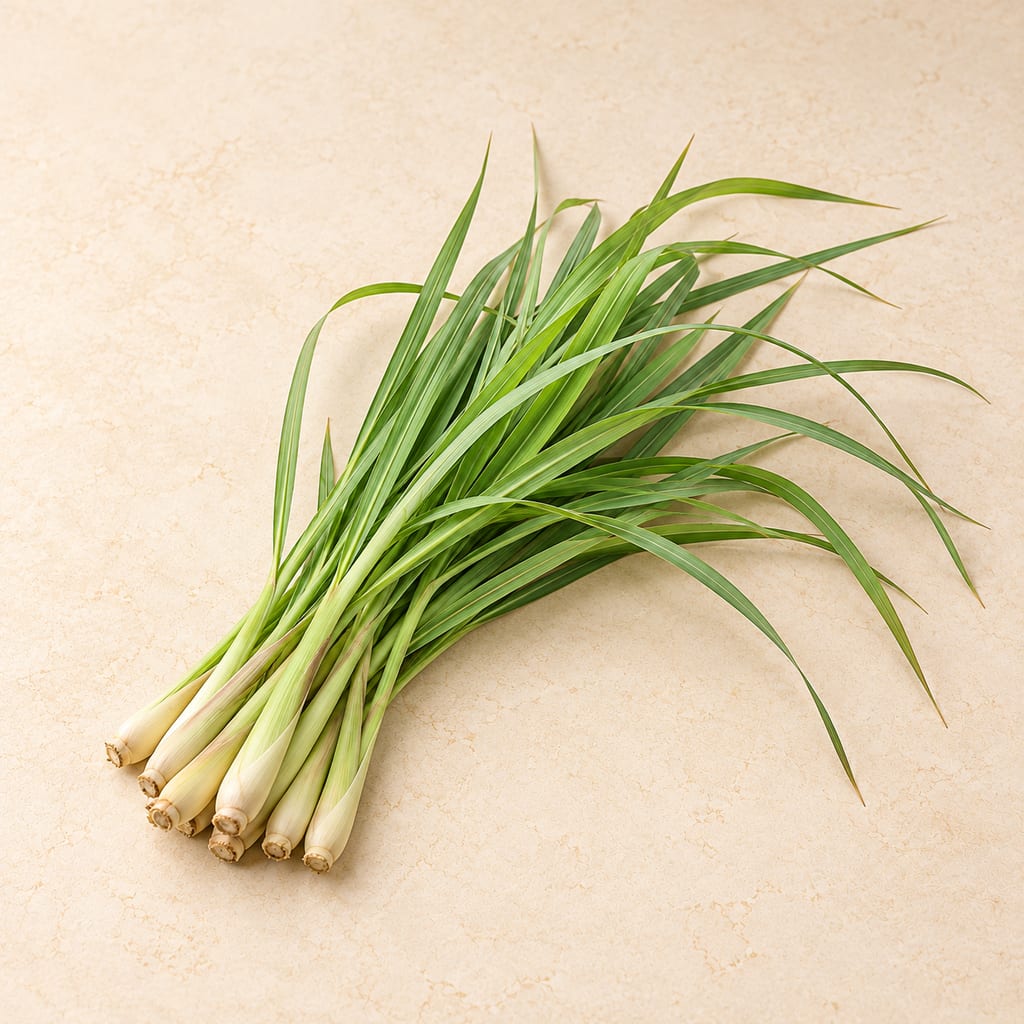
The lemon-scented grass Cymbopogon citratus, sold in Ecuador as hierba luisa or limonaria and steeped for its aroma in chicha de jora, avena and leaf water.
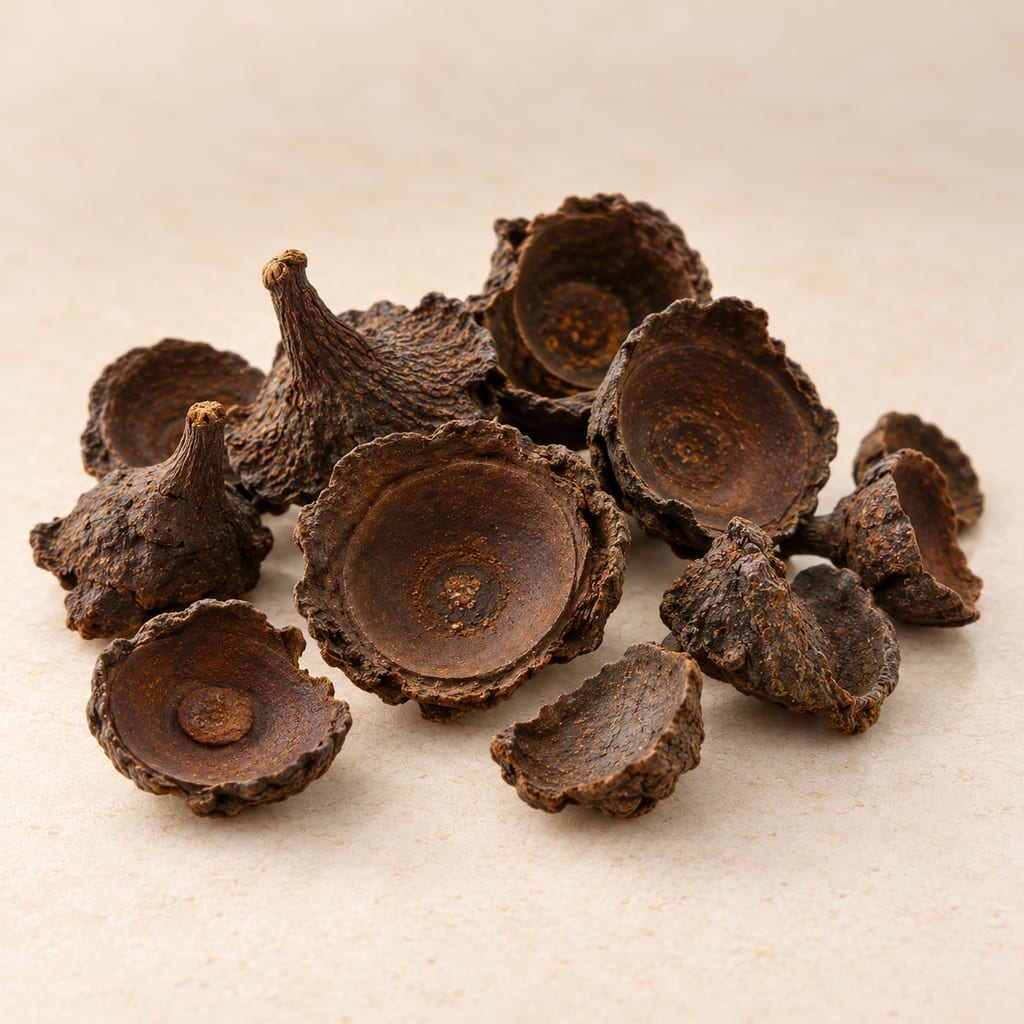
Ishpingo is the dried, hat-shaped calyx of Mespilodaphne quixos, a western-Amazon laurel. Its cinnamon-like perfume seasons colada morada, champús and chicha de jora in Ecuador.
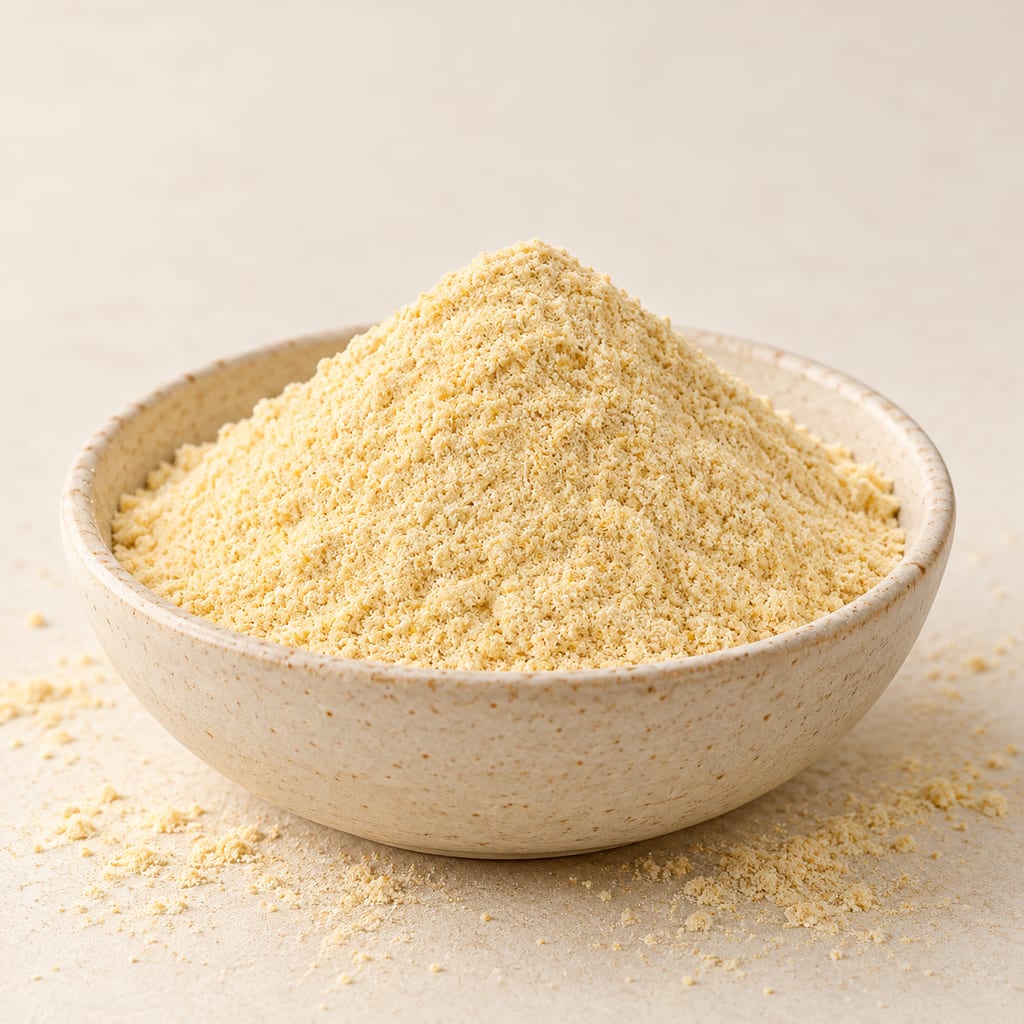
Jora flour is ground malted maize, produced by germinating, drying and milling corn kernels. It provides the enzymatic starch breakdown essential for chicha de jora.
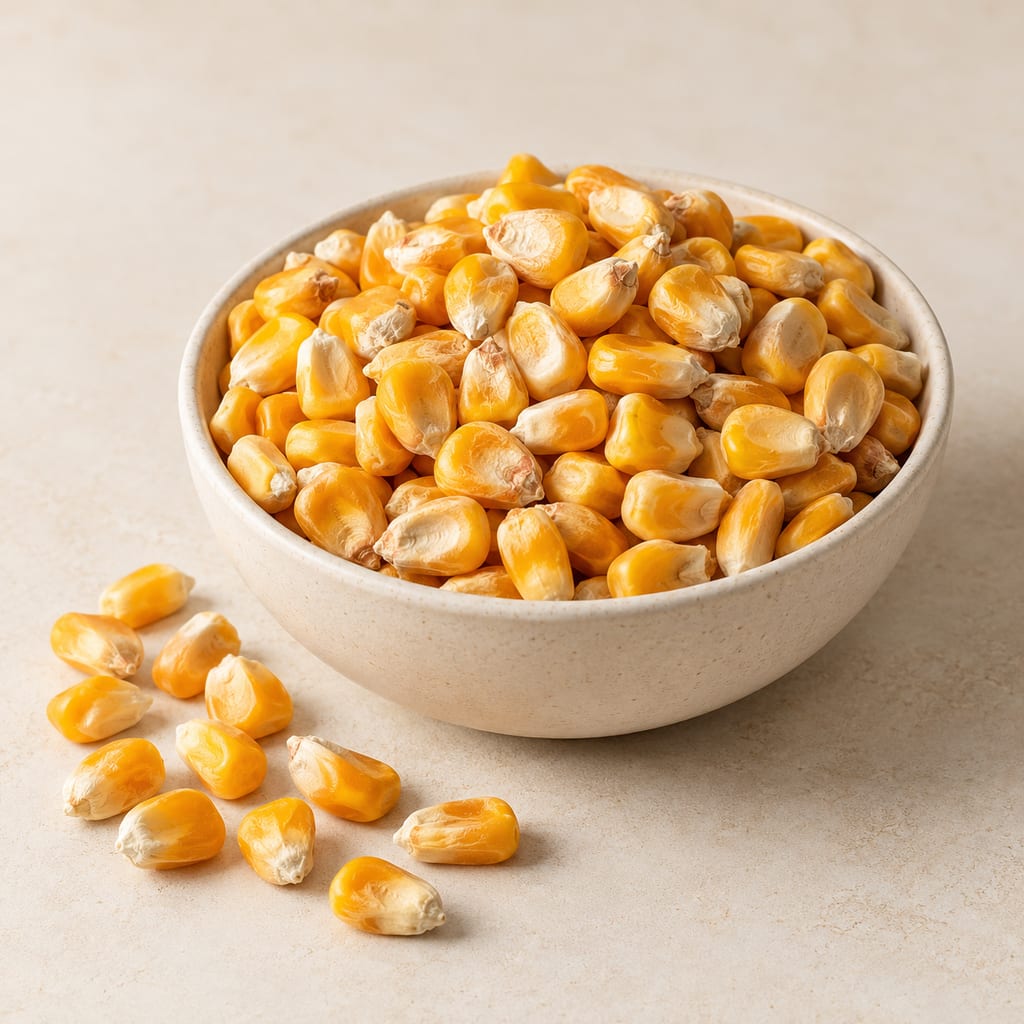
Maize is the foundational grain of Andean fermentation. Its role in brewing chicha de jora depends on germination into jora, a malted form generating enzymes and sugars necessary for alcoholic fermentation.
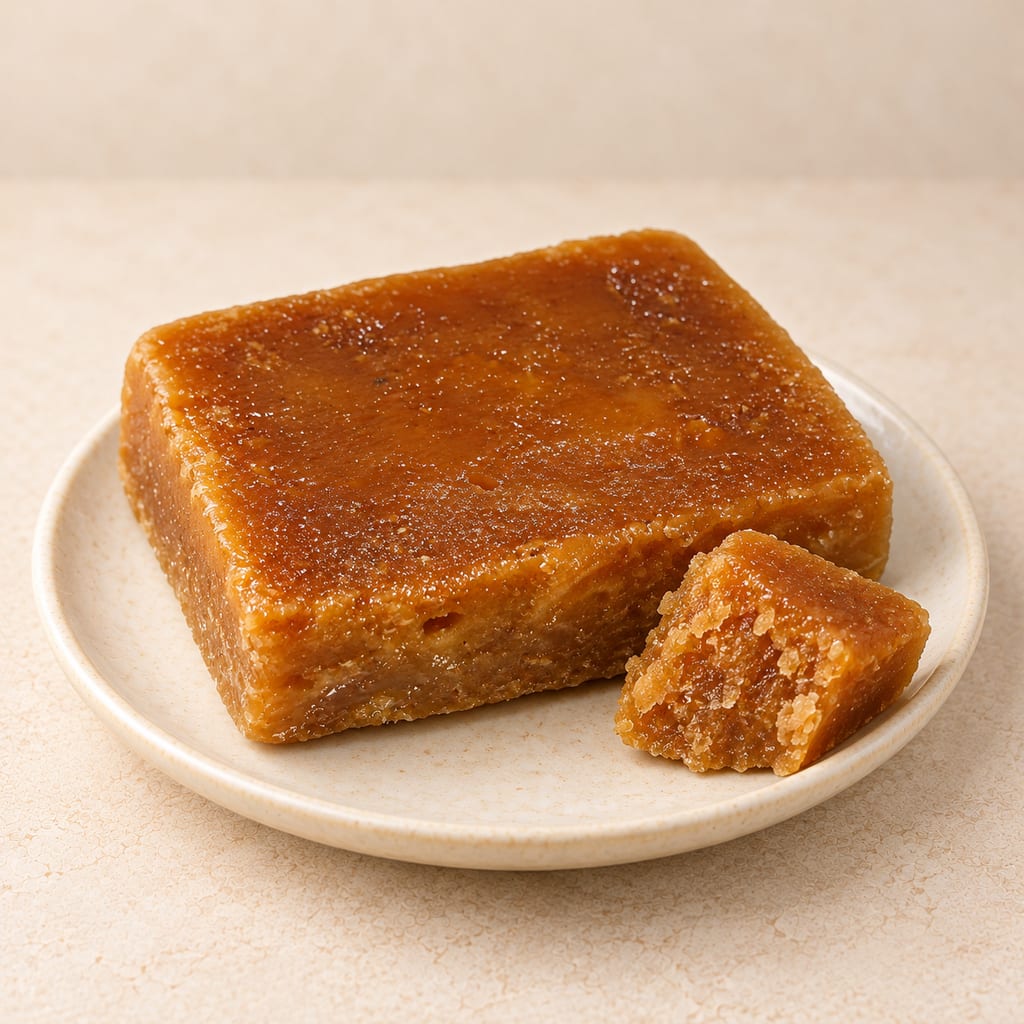
Panela is a solid, non-centrifugal sugarcane sweetener made by concentrating juice and letting it set. A documented Ecuadorian chicha recipe adds it after the cooked jora mixture cools.
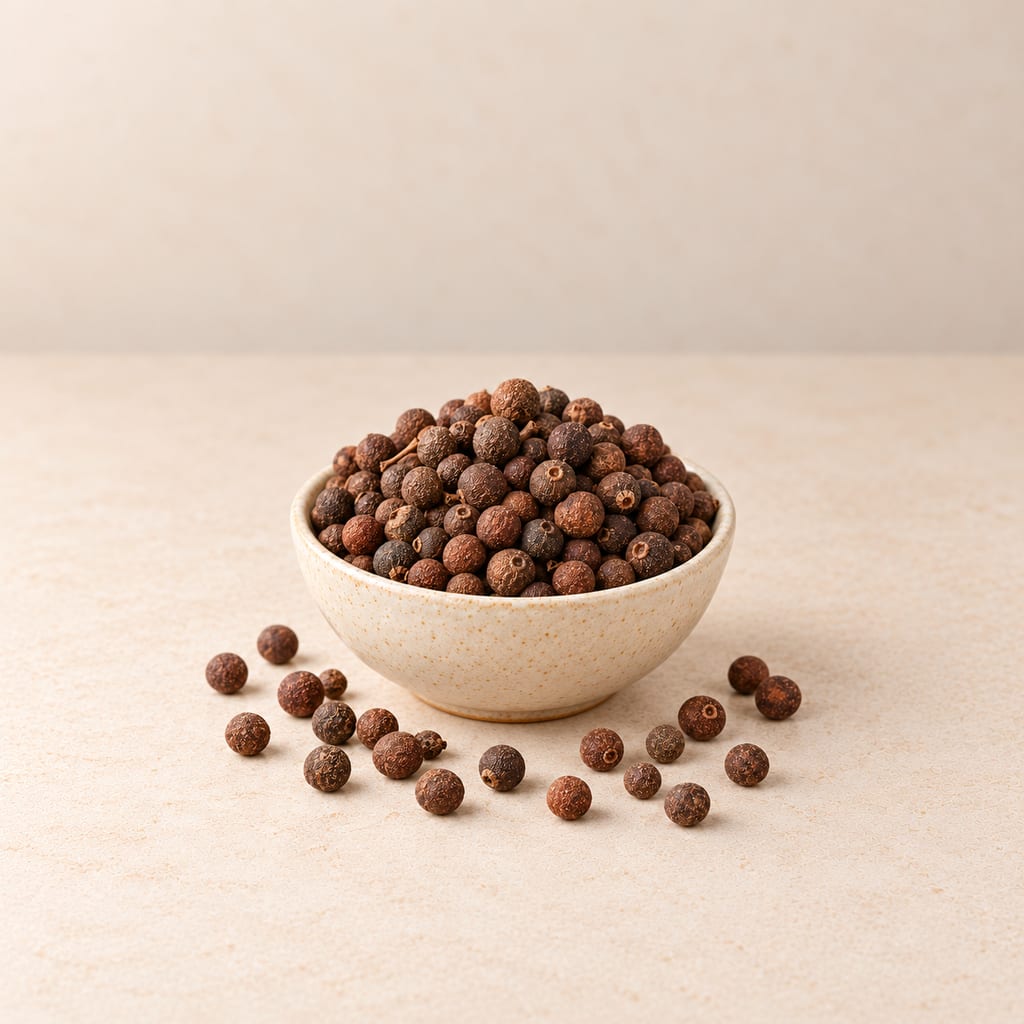
Pimienta de dulce is the Ecuadorian culinary name for allspice (Pimenta dioica), a dried tropical berry. Distinct from true peppers, it offers a complex aroma of clove, cinnamon, and nutmeg, and is used whole in chicha de jora.
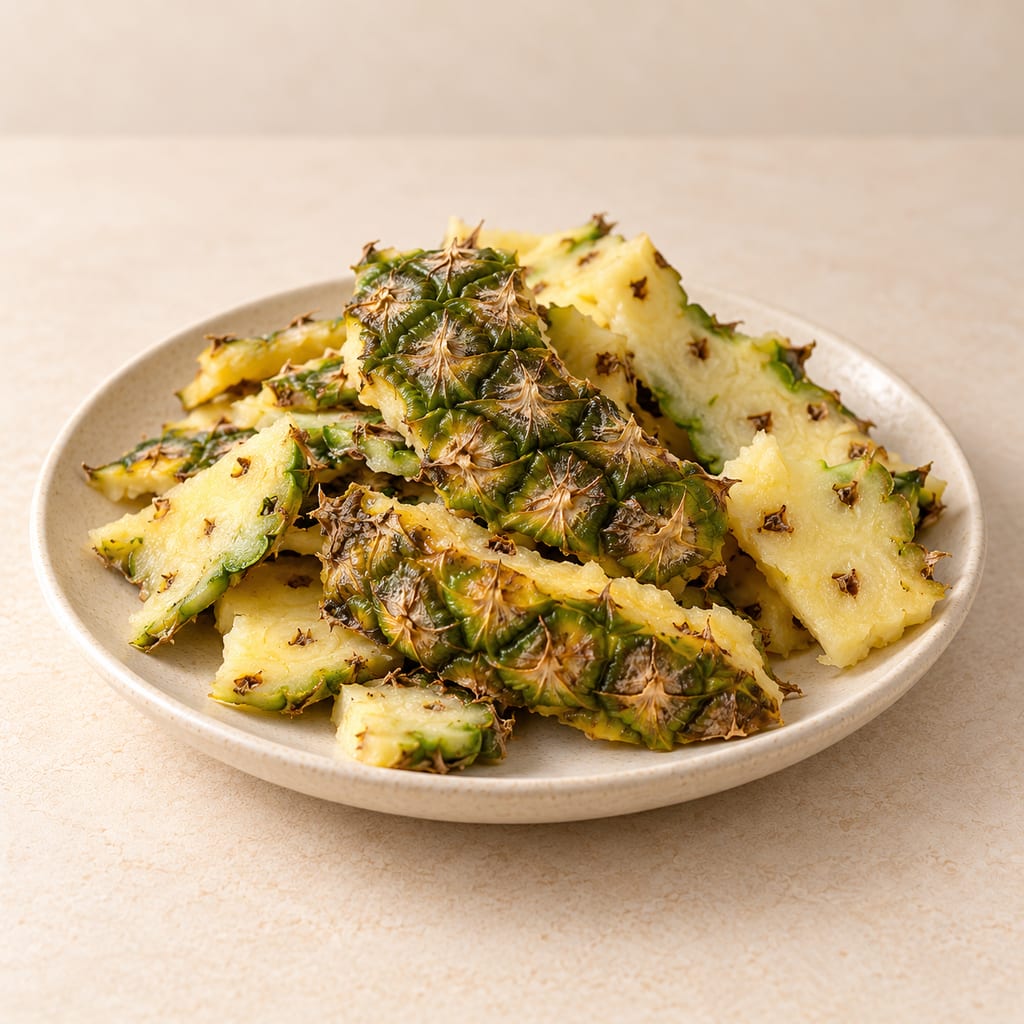
Pineapple peel is the tough, fibrous outer skin of Ananas comosus, comprising roughly a third of the fruit's mass. It serves as a flavoring substrate and fiber source in drinks like chicha de jora and tepache.
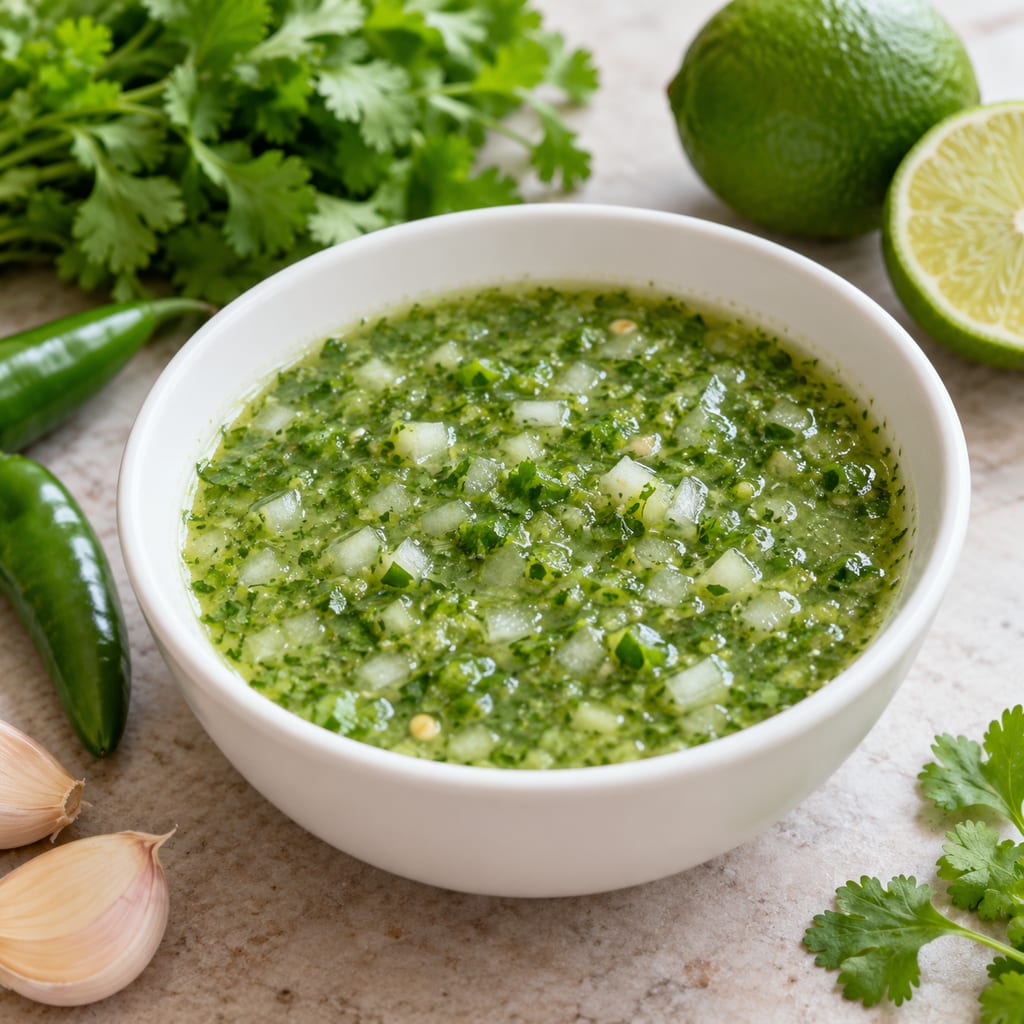
A fresh, uncooked Ecuadorian table sauce of hot pepper, cilantro, garlic and lime, served with most everyday dishes.
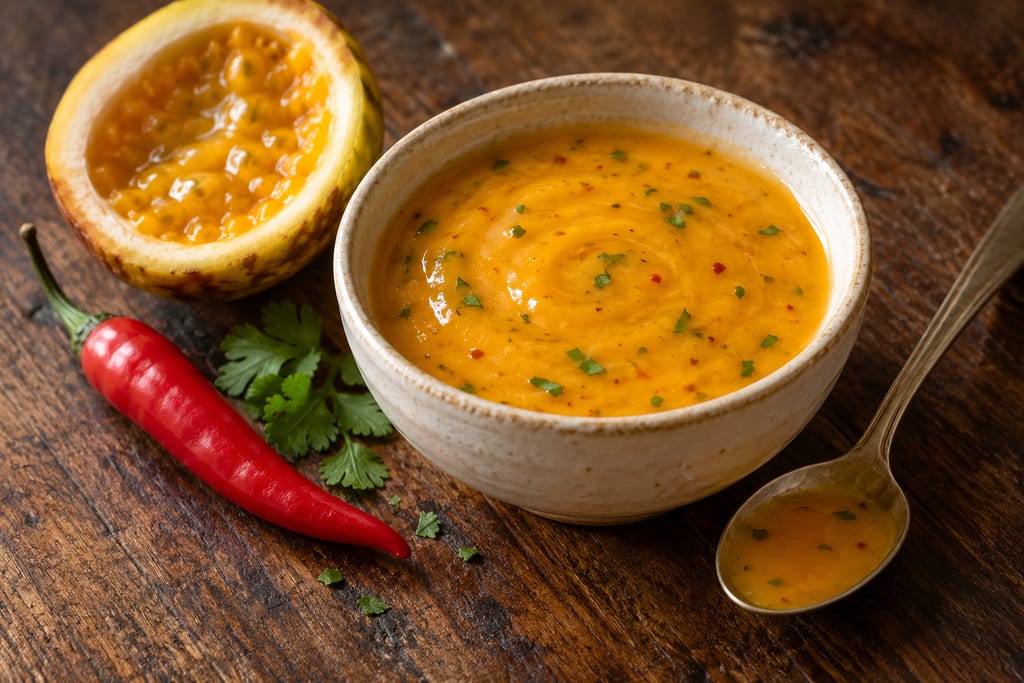
A contemporary Ecuadorian hot sauce that pairs passion fruit juice with boiled chile peppers, oil and lime.
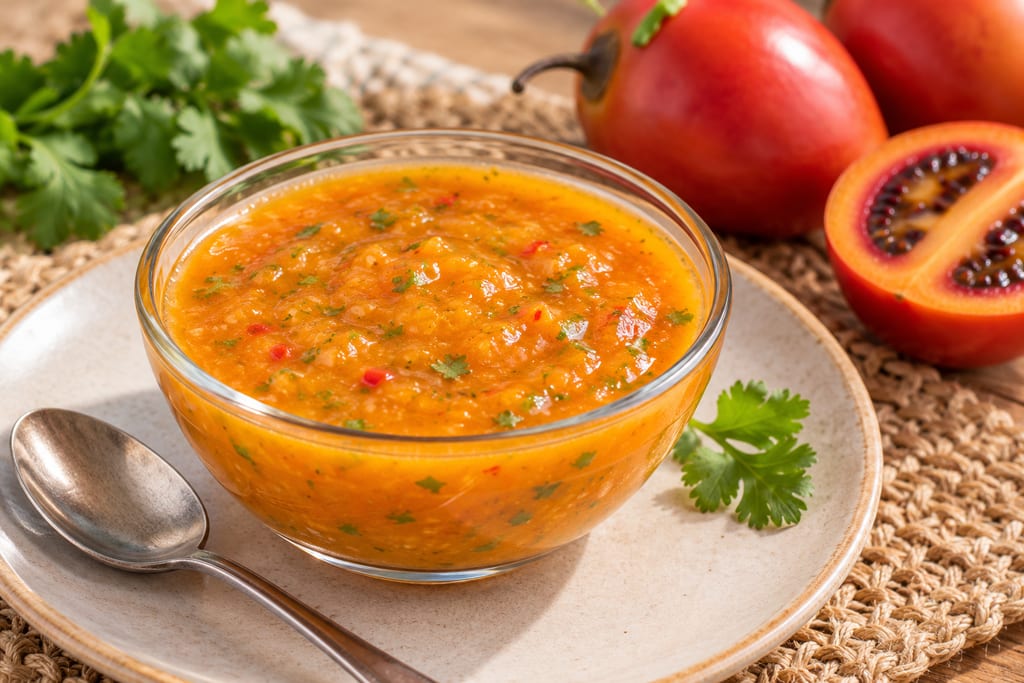
An Ecuadorian hot sauce built on tamarillo, a tart fruit that gives a sharper, fleshier base than ordinary tomato salsa.
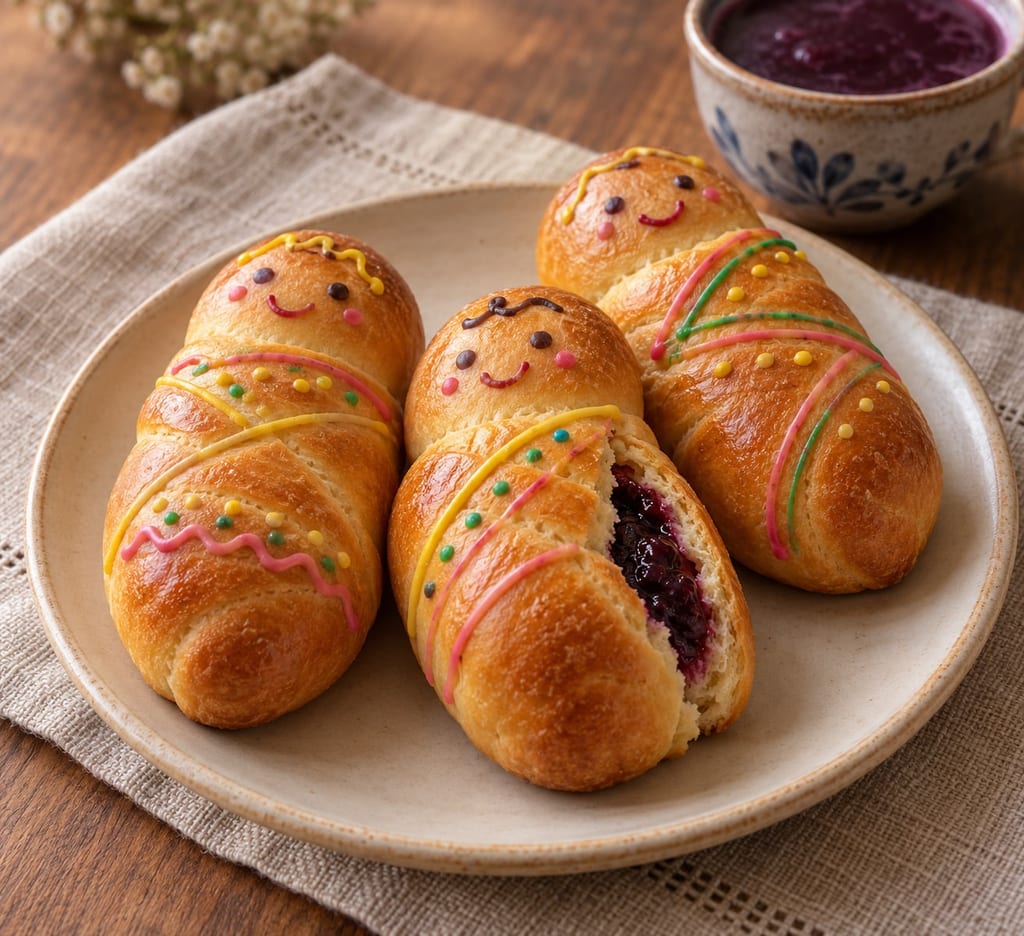
Ecuadorian filled sweet bread figures with a rounded head and wrapped body, made from an enriched yeast dough. This home method shapes small filled ovals, proofs them on trays and serves them with colada morada.
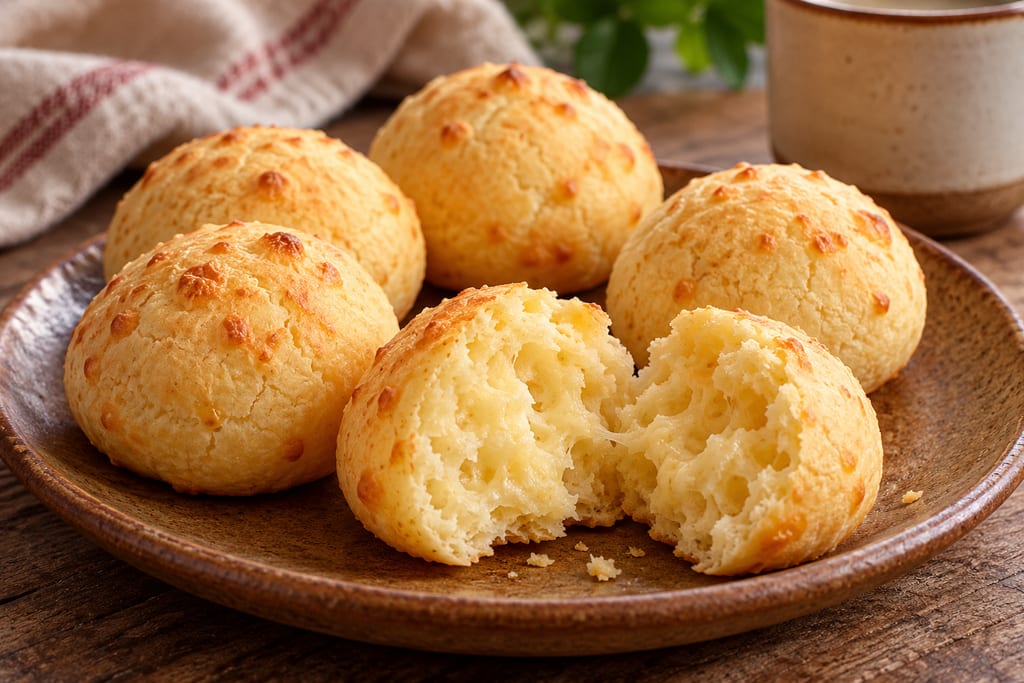
Small cassava-starch cheese breads mixed in a processor, chilled, baked and briefly browned under a broiler. This is Laylita's Ecuadorian-style formula.
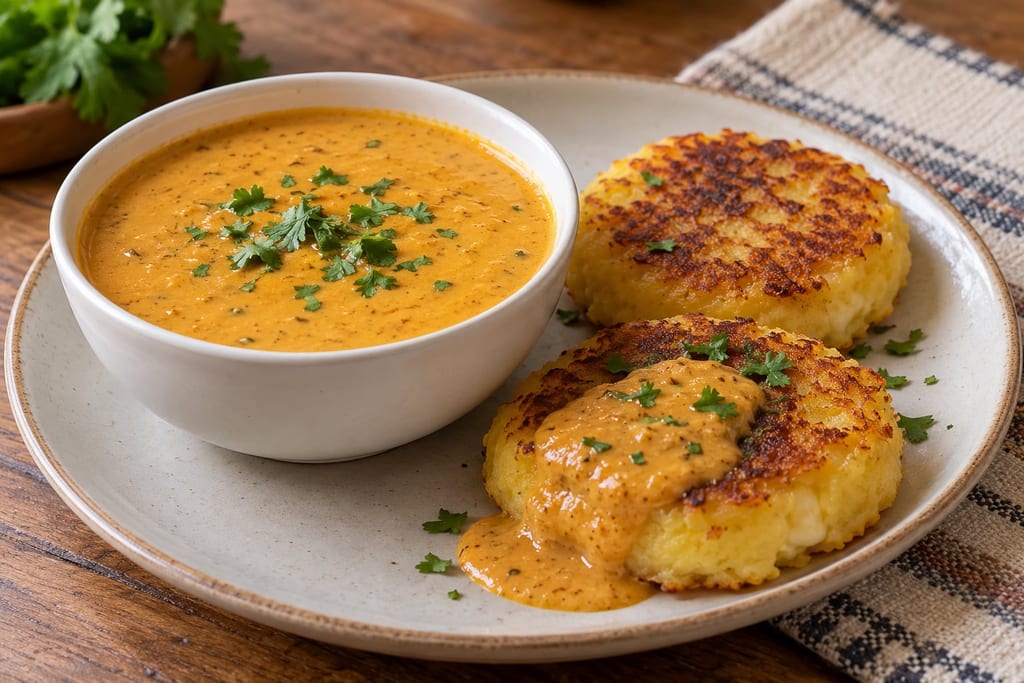
A warm, creamy peanut sauce thickened with milk and seasoned with onion, cumin and achiote, served over potatoes and llapingachos in Ecuador.
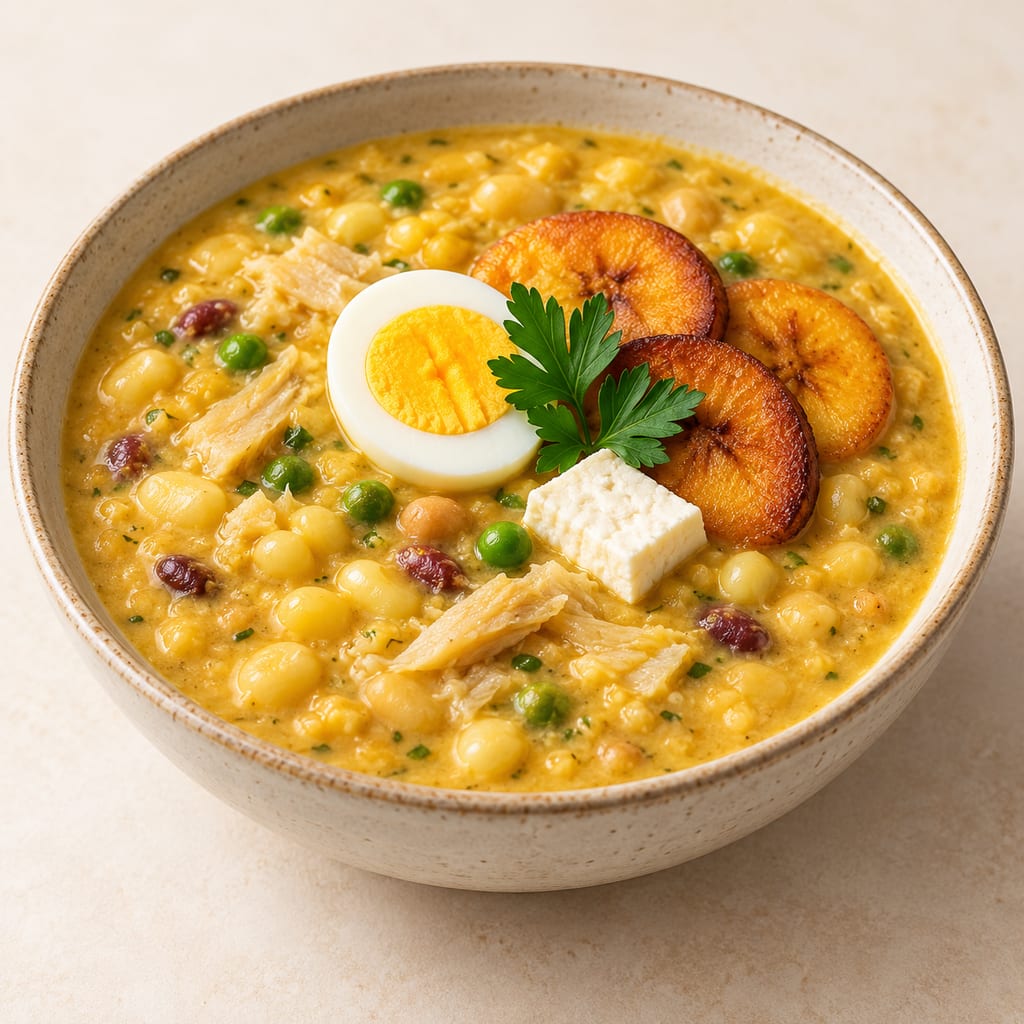
Ecuadorian Holy Week soup of tender grains and pulses, squash, milk and salted fish, thickened with peanut paste and served with contrasting garnishes.
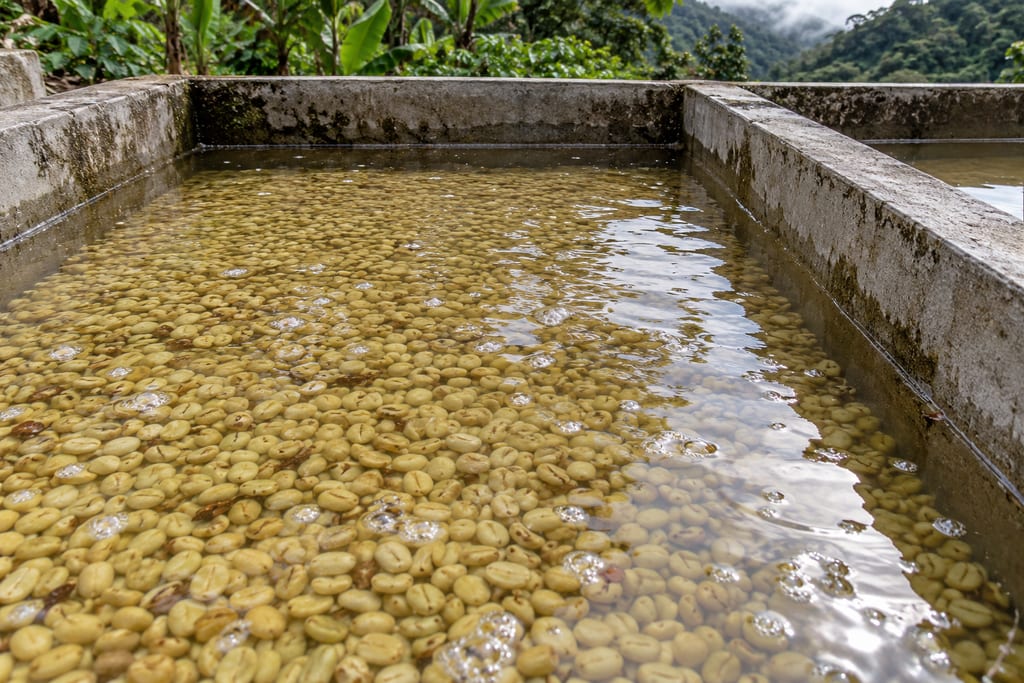
Washed Arabica coffee from Nanegal in Ecuador: depulped beans held under water while microbes and enzymes strip the mucilage, then washed, soaked and sun-dried to green coffee.
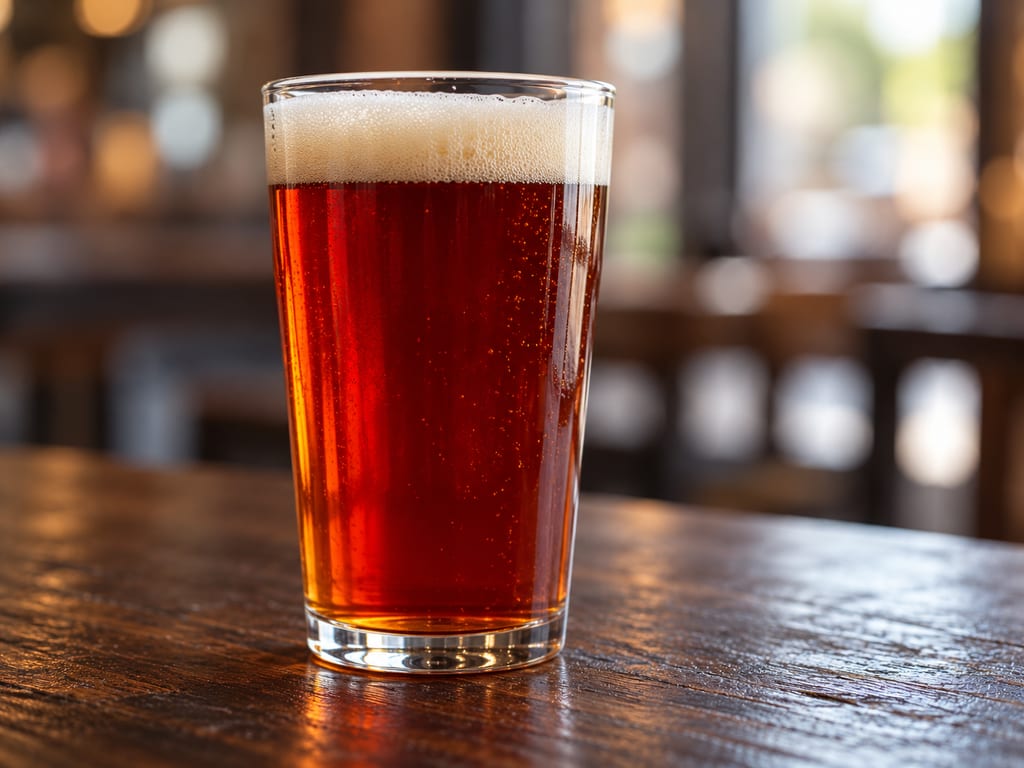
A deep amber-red American ale brewed from pale, Munich, CaraVienne and chocolate malts, bittered with Columbus hops and finished with Amarillo.
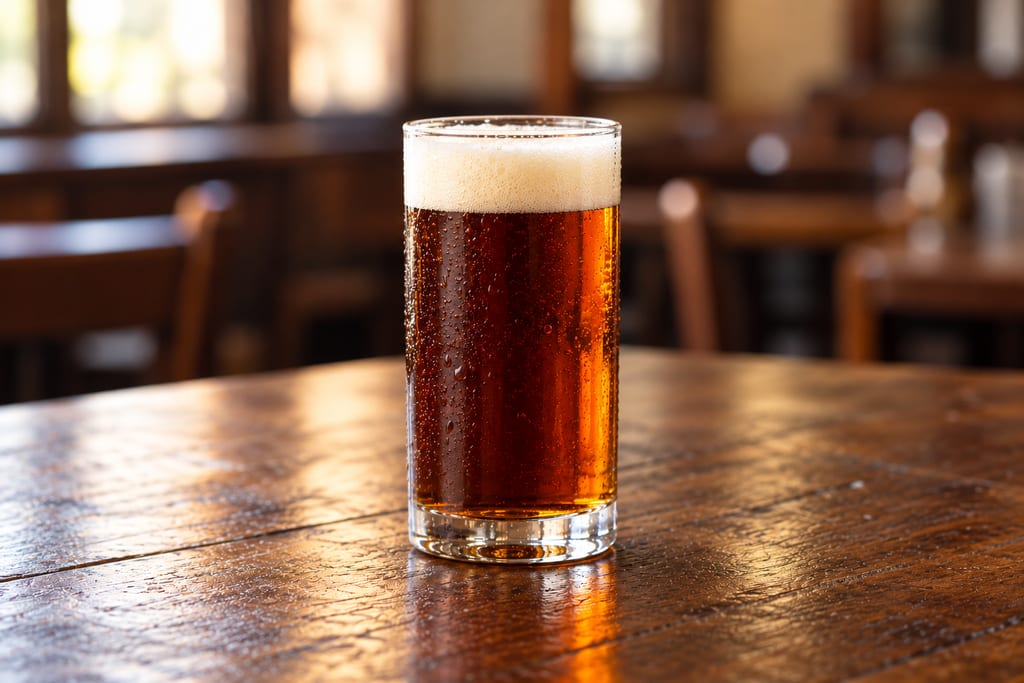
A source-specific modern extract adaptation of Düsseldorf Altbier, with specialty malts, two hop additions and an ale yeast. It is distinct from a brewery's commercial Altbier process and from Kölsch.
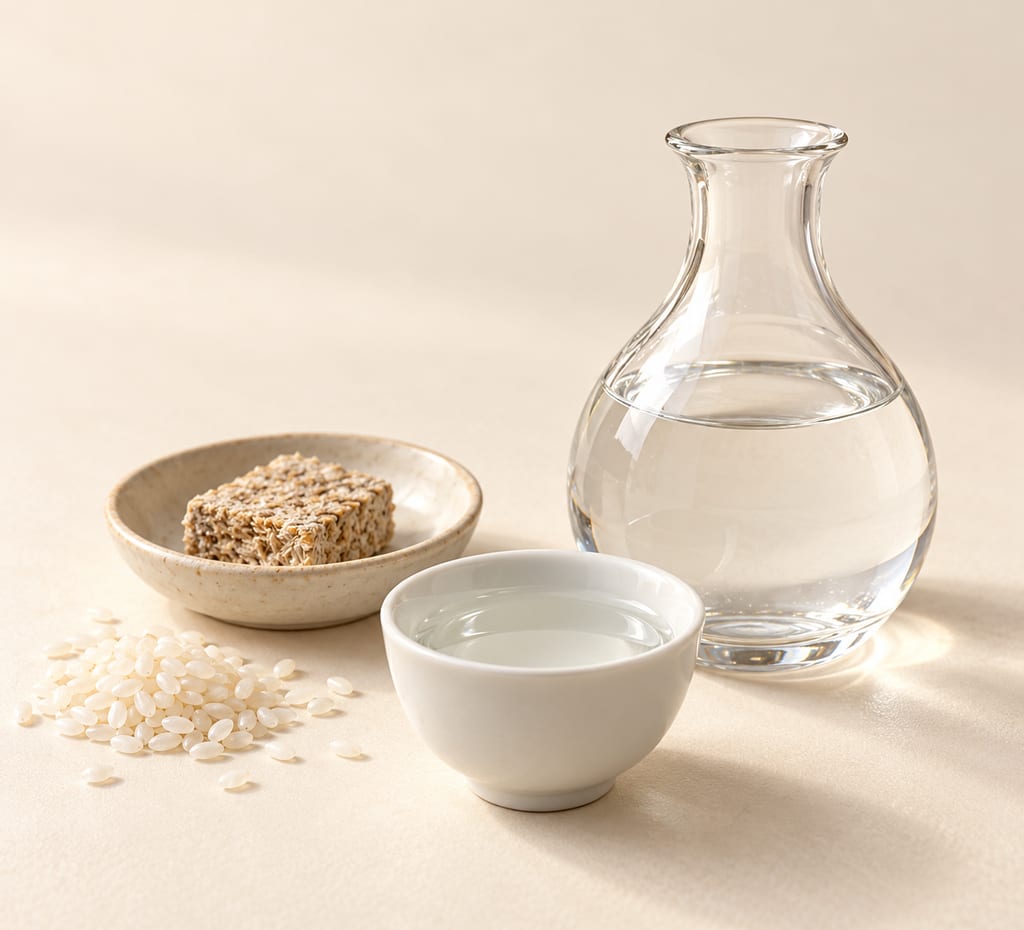
Andong soju is a rice spirit from North Gyeongsang, distilled from steamed rice and wheat nuruk. This method makes the starter before fermenting the rice mash in a jar.
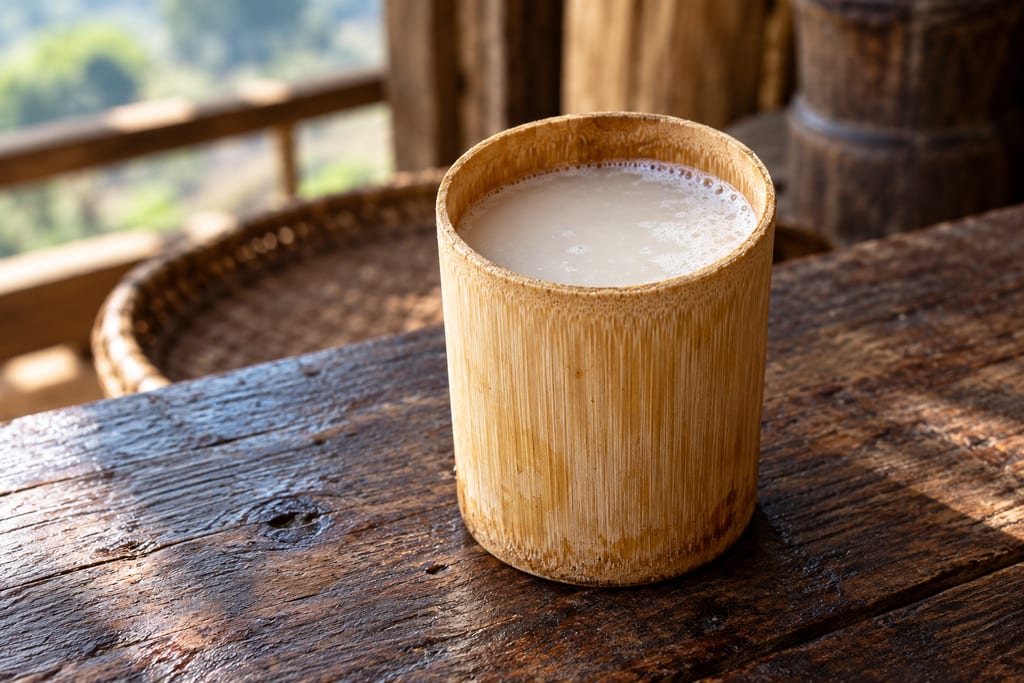
Angami rice beer from Nagaland. A surveyed method mixed cooked rice with piazu, fermented it for about four days in summer or a week in winter, then added water and filtered it. The starter ratio leaves the rice-weight basis unclear.
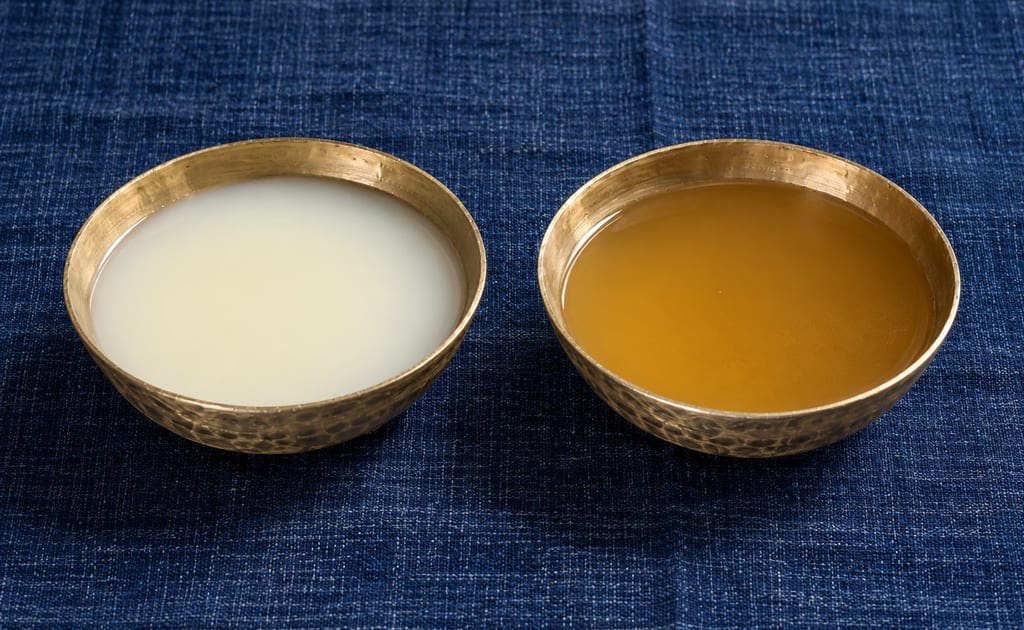
Apong names Mising rice beverages in Assam, including pale Nogin and ash-associated Po:ro. Sources describe distinct preparations and do not establish one unified household recipe or validated safety endpoint.
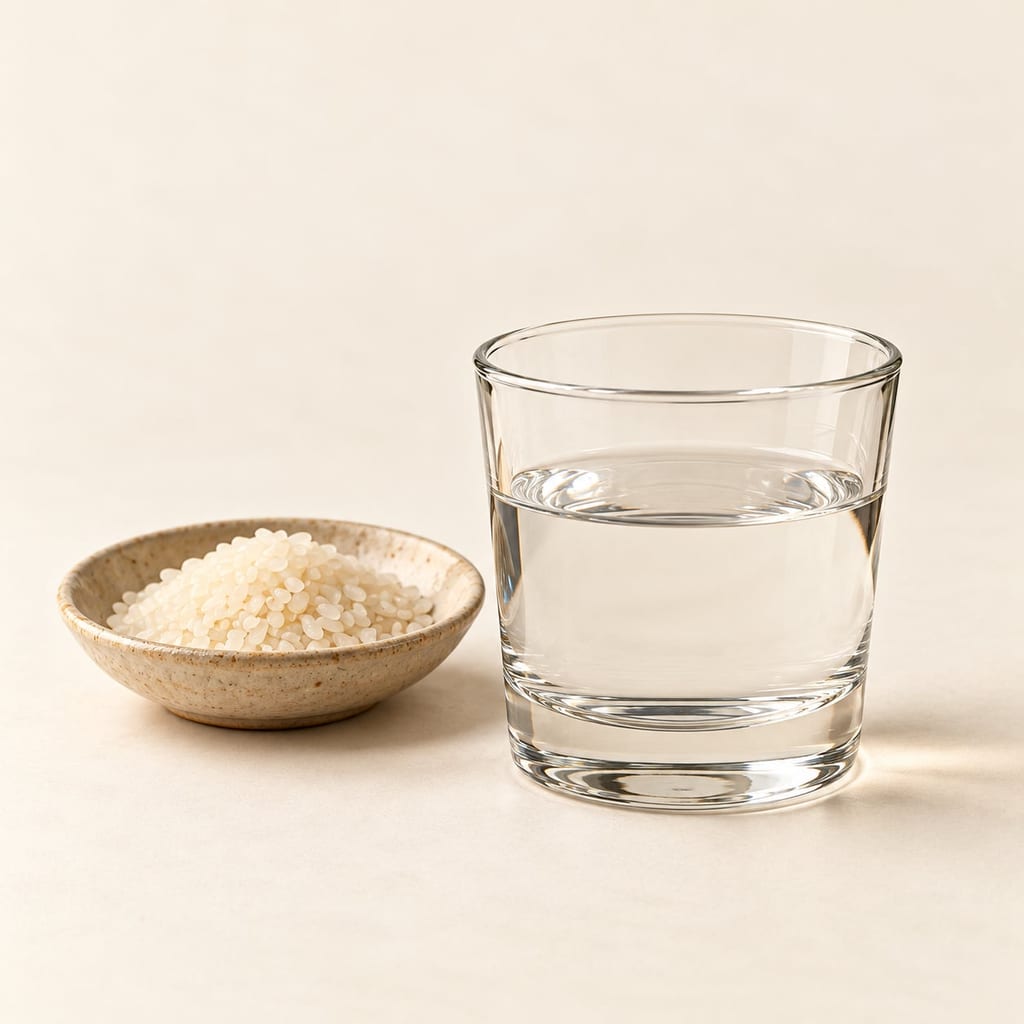
An Okinawan rice spirit made by turning all the rice into black koji, fermenting it with water and yeast, then pot-distilling and maturing the spirit.
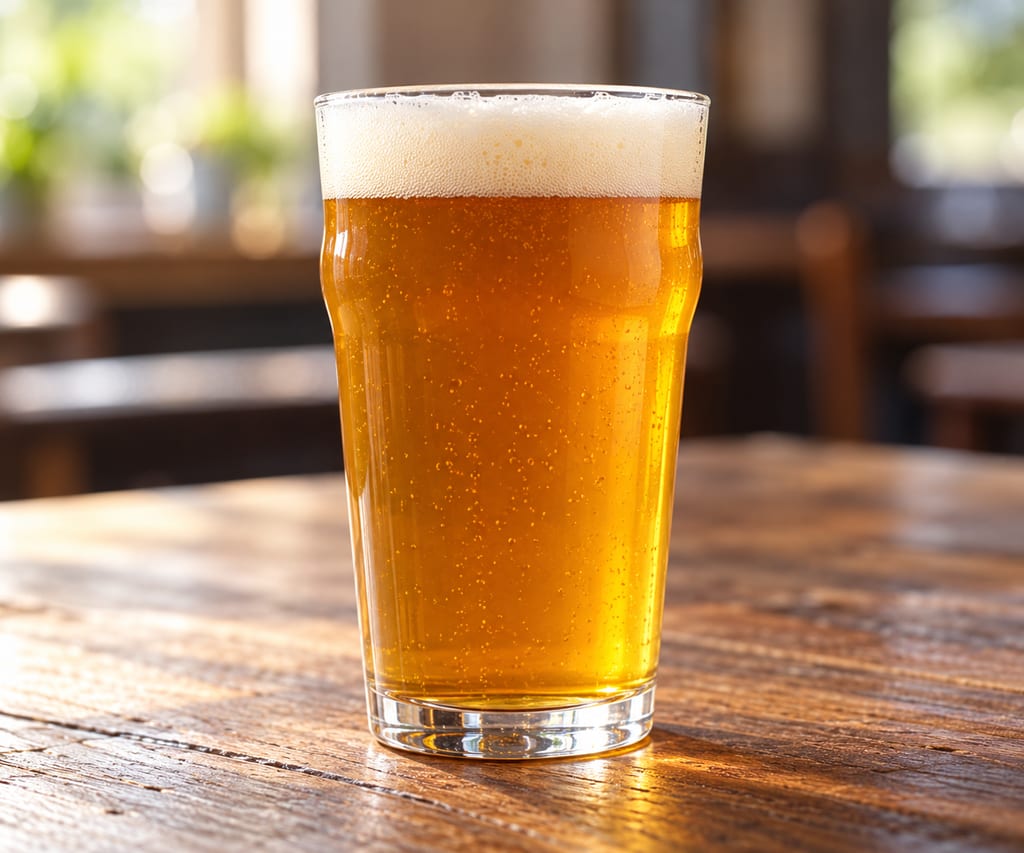
This is a process overview, not a complete batch recipe: key quantities, yield and packaging directions are absent. The AHA tutorial uses Hop Hammer Imperial IPA as an example; this page is not that full formulation.
A darker Ethiopian maize tella, brewed from maize baked into a hot, dry kita pancake and then fermented in three stages with barley malt, gesho and water.
No community contributions have been published for this entry yet.
Sign in to contribute. Published comments and photos are free to read.
Asociación de Chefs del EcuadorInspiration · Method · Culture · Location
Chicha de Jora2 tazas harina de jora, 2 tazas panela, 12 clavo de olor, 12 pimienta de dulce, 4 ramas canela, 3 ishpingos, ½ taza cáscaras de piña, 5 lt agua; hierba luisa named in step 1 but absent from the ingredient list
Four steps: boil the sweet spices and hierba luisa; thin jora flour with cold water and add; cook 2 hours stirring; cool, transfer to a cántaro, add chopped panela and pineapple peels; cover the neck and ferment 2 days, then strain, sweeten and serve
Yield 20 portions; origin Ecuador, Perú, Bolivia, provincia de Cañar; chicha described as emblematic of Cañar and prized across the Andean area; harina de jora defined as maíz malteado (germinado)
Publisher's classification: 'Técnicamente, la chicha de jora es una cerveza, ya que se prepara con grano malteado y luego fermentado'
Publisher's uncited historical claim of an Inca ritual drink consumed mainly at the Inti Raymi
Published 28 Mayo 2018 in the Recetario section, recipe attributed to chef Milton Sambonino
Cited in: A maize beer, not a punch; What the record actually supports; Sprouting the grain: where the sugar comes from; Two days in the cántaro: the fermentation; The ingredients, at the precision the source gives; Why each stage is there; Variation across valleys and altitudes
Food and Agriculture Organization of the United NationsMechanism · Variant · Safety · Culture
Fermented Cereals: A Global Perspective, Chapter 4: Chicha and other fermented maize beveragesChicha defined as a clear, yellowish, effervescent alcoholic maize beverage with a cider-like flavour, consumed by Andean peoples for centuries; alcohol stated as 2–12% v/v, colour red to purple with pigmented maize
Starch hydrolysis achieved either by salivary amylase (diastase) or by amylases generated during malting of maize kernels; the two are sometimes combined
Malting timings: soak 12–18 h, drain, keep dark and moist about three days until plumules reach 0.25–0.5 cm; then heap under burlap 1–2 days while the mass heats; sun-dry and grind fine in a stone mill
Germinated dried maize is called jora and the ground product pachucho; pachucho boiled about 3.5 h in earthenware, sometimes slow-cooked a further 24 h, hulls and starch separated by hand-rubbing, boiled a further 4 h, cooled and filtered
Filtrate collected in pots used exclusively for fermentation and therefore already inoculated; fermentation proceeds about 1 day; readiness judged by loss of sweetness and a semisharp flavour; if not drunk it sours and turns to vinegar
Brown sugar or molasses may be added at the second boiling to increase alcoholic content; the chapter never names panela or pineapple peel
Microflora: Saccharomyces cerevisiae and Lactobacillus primary in northern Argentina; Colombian chicha also lists yeasts, Leuconostoc, Acetobacter and moulds; a mixed chicha culture reached 13.4% v/v alcohol on a 30% starch/dextrin plus fermentable-sugar medium (laboratory result)
Fermentation vessel and froth practice: finished chicha transferred to narrow-mouth pots; froth skimmed by hand and reused as a starter for new batches
Altitude-dependent timing in the upi/misqui kheta/hanchi variant: about 6 days in the highlands against about 2 days in the hot lowlands
Yields: 40 lb pachucho about 7 gallons; 100 lb shelled maize 14–15 gallons; by-product sutu drained from sediment, reportedly stronger, about 1 L per 40 L
Named maize substrates Alazan, Viru and Maize Negro (purple-black, Arequipa)
Other germinated-maize drinks named alongside chicha: sora, napé, acupe and fubá, each defined by germination as substrate preparation
Safety: no reports describing toxic reactions from chicha consumption, but chicha made from maize contaminated with aflatoxin-producing moulds such as Aspergillus flavus would likely contain aflatoxin
In the maize-flour/salivation route water is heated to about 75 °C rather than boiling, because boiling gives an undesirable pasty consistency
Cited in: A maize beer, not a punch; What the record actually supports; Sprouting the grain: where the sugar comes from; Two days in the cántaro: the fermentation; The ingredients, at the precision the source gives; Why each stage is there; Variation across valleys and altitudes
British Columbia Centre for Disease ControlSafety · Mechanism
Fermented Foods Guideline, Section 1: IntroductionChicha named once as a South American corn beverage that is a combined fermentation containing lactic acid bacteria, acetic acid bacteria, moulds and yeasts
Definition of combined fermentation as one involving more than one type of microbial fermenting agent
Yeasts ferment sugars and carbohydrates into ethanol and carbon dioxide and prefer simple sugars over complex carbohydrates such as starch
Distinction between spontaneous fermentation and backslopping, with backslopping carrying a risk of carrying over contaminants and spoilage agents
Numeric microbiological limits and control recommendations are deferred to Section 2, which was not read, so Section 1 supplies no limit for a chicha-type beverage
The pH thresholds in this section concern alkaline ferments and are not transferable to chicha
Cited in: Two days in the cántaro: the fermentation; Why each stage is there
Food and Agriculture Organization of the United Nations, Regional Office for Latin America and the CaribbeanUnverified lead
Gastronomía Tradicional Altoandina: Allin Mikuy / Sumak MikuyAttempted four times on 2026-10-26 at several offsets; the reader returned no findings because the file exceeds 5 MB, so no claim on this page rests on it. The Guadalupe (San Juan) toasted-jora-and-barley variant first taken from it has been withdrawn from the text.
Retained as a lead for a later pass with a reader that can open large PDFs; it would document high-Andean regional variation in chicha de jora.