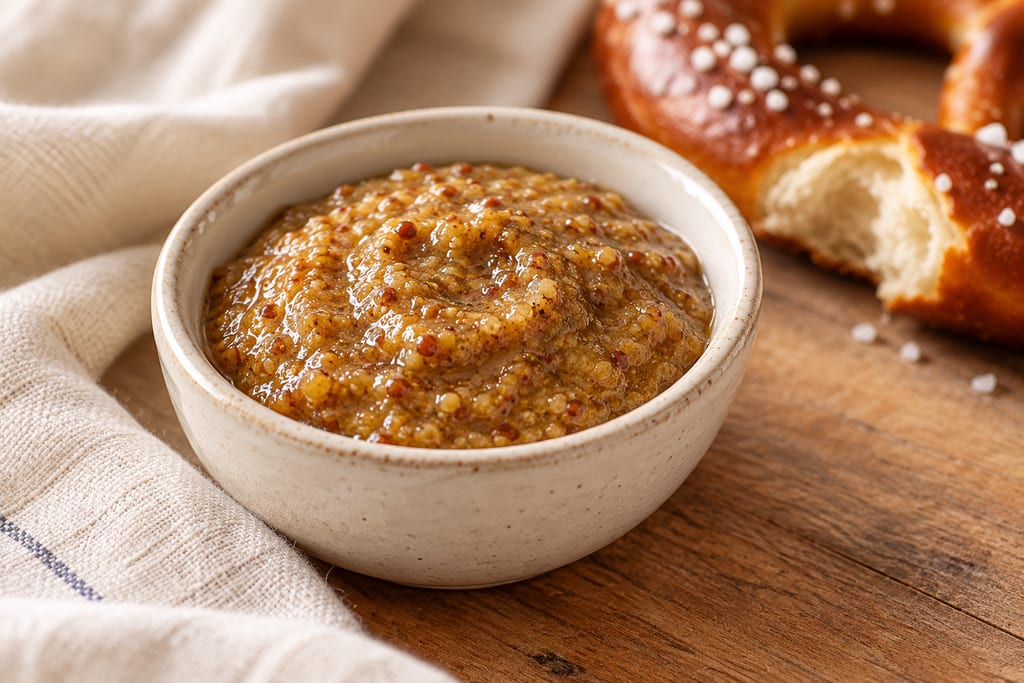
Bavarian sweet-inspired mustard
A coarse, sweet Bavarian-style mustard of yellow and brown seed in a cooked brown-sugar and vinegar base, made to eat with Weisswurst; an original refrigerated formula.
 FermenteaWhere food goes to change
Modern adaptation
Düsseldorf Altbier · Alt
A source-specific modern extract adaptation of Düsseldorf Altbier, with specialty malts, two hop additions and an ale yeast. It is distinct from a brewery's commercial Altbier process and from Kölsch.
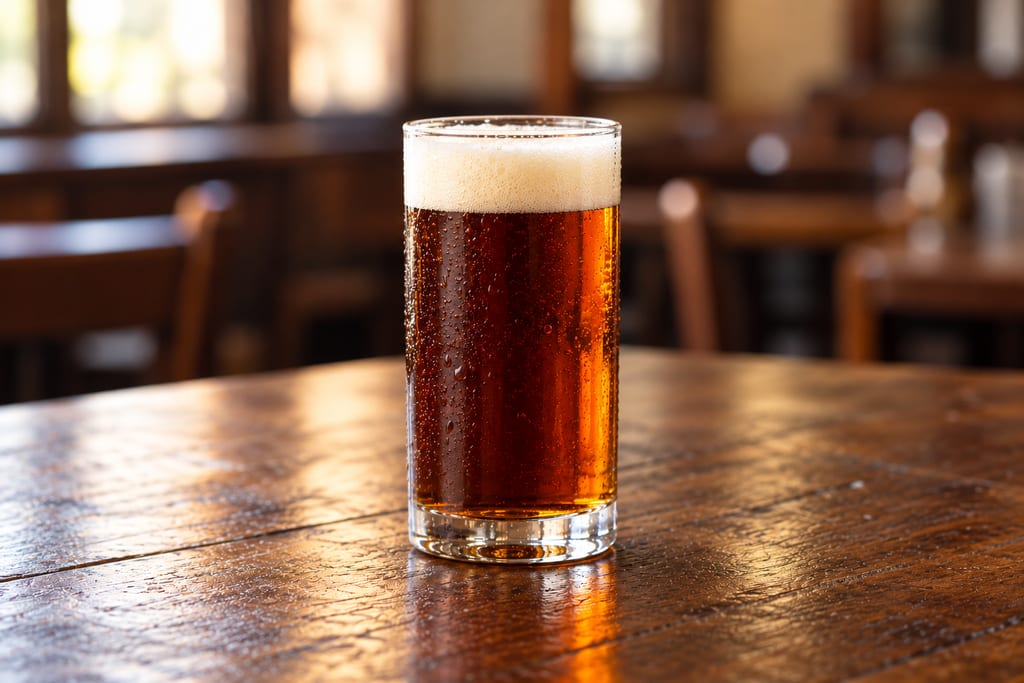
Altbier is a top-fermented German beer associated with Düsseldorf. The German Brewers Association locates its origin there and describes the style as hop-bitter, fresh and fruity, with caramel and light roast notes. Those broad style notes do not define a single recipe. The AHA homebrew batch below is a modern US extract adaptation, attributed to the July/August 2009 issue of Zymurgy; it is not a historical Düsseldorf household formula or the commercial process of a particular local brewery.
The AHA describes “Alt” as an older ale-yeast tradition in contrast with later bottom-fermenting beer, with fermentation at the cooler end of the ale range. The German association likewise classifies Altbier as top-fermented. This shared category helps distinguish Altbier from Kölsch and lager, but does not make their ingredients, yeast strains or production schedules interchangeable.
The AHA recipe yields 5.5 US gal (21 L). Its grain-derived ingredients are two cans of light malt extract, light liquid Munich malt extract, Special B, CaraMunich and Carafa malts. Perle hops supply the 45-minute bittering addition and Tettnang the final 15-minute addition; Irish moss is listed for that final portion as well. The source offers three German ale yeast choices or a sufficient starter. These are alternatives in one modern recipe, not evidence that Düsseldorf breweries use the same yeast.
The page lists OG 1.053, FG 1.012, 5.4% ABV and 42 IBU. These are recipe specifications, not measurements of every Altbier and not a statement about protected geographic identity. The stated fermentables and timings should stay tied to this five-and-a-half-gallon extract batch; this record has no tested scaling rule.
The directions begin with specialty grains in 2 US gal (7.6 L) of cool water, heated to 170°F (77°C), then strained. The extracts are stirred into the liquor, the kettle is brought to 3 US gal (11.4 L), and the wort boils for 60 minutes. Perle goes in with 45 minutes remaining, followed by Tettnang and rehydrated Irish moss for the final 15 minutes. The source then calls for cooling, topping the fermenter to 5.5 US gal with cold water, aerating and pitching at 65°F (18°C).
The AHA schedule is one week of fermentation at 65–68°F (18–20°C), or until complete, followed by one week of secondary aging at 65°F (18°C). The page does not give a stable-gravity measurement procedure or require a period of stable readings. It lists 1.5–2.5 volumes CO₂ but does not supply a complete packaging procedure. Those omissions remain visible here.
The recipe is useful as a source-specific modern homebrew example, but its directions do not establish that fermentation has ended or that a package is safe to carbonate. The Brewers Association identifies unintended refermentation in packages as a rupture and food-safety hazard. This record therefore does not turn the AHA one-week schedule or listed carbonation range into a pressure limit or safety test.
The named commercial Schumacher process and the AHA homebrew recipe are separate evidence. Brewery equipment, fermentation and cold-storage timings cannot be substituted for missing household controls in this extract method. A current, source-backed package procedure and completion test remain open.
Brauerei Schumacher publishes a process account for its own commercial Alt. It describes a roughly two-hour mash through temperature rests, lautering, sparging and a boil with aroma hops. The brewery says its wort enters the cellar at 20 °C and ferments with its own top-fermenting Saccharomyces cerevisiae yeast for three days. It then describes about four weeks in closed tanks at around 3 °C, followed by filtration. These values and steps belong to Schumacher's brewery process; they do not fill gaps in the AHA extract batch or define how Altbier is made across Düsseldorf.
The German Brewers Association locates Altbier's origin in Düsseldorf and describes it as top-fermented. The AHA recipe is a modern extract adaptation published in the July/August 2009 issue of Zymurgy. The producer-specific commercial process at Schumacher is separate.
Yield 5.5 gal · Scaling: source batch only
The recipe includes carbonation, but its page does not provide a complete package-pressure protocol. Unintended refermentation can rupture packages.
Hazard sourceThe one-week or until-complete wording is not accompanied by a stable-gravity endpoint. Do not use elapsed time, taste or visible activity alone to establish completion.
This record does not provide a validated package-pressure procedure or safe carbonation controls.
The German Brewers Association locates Altbier's origin in Düsseldorf. The recipe transcribed here is a modern American adaptation and is not a batch brewed in Düsseldorf.
A coarse, sweet Bavarian-style mustard of yellow and brown seed in a cooked brown-sugar and vinegar base, made to eat with Weisswurst; an original refrigerated formula.
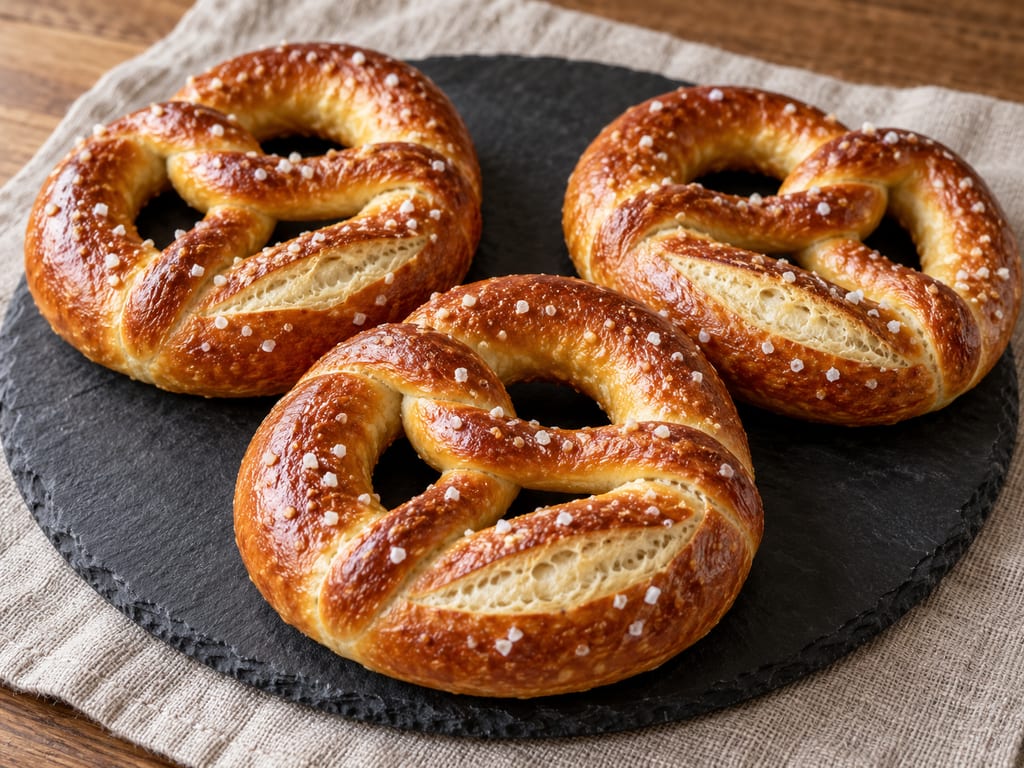
This German-style knot pretzel uses a firm yeast dough, a chilled shape, a one-minute baking-soda bath and a deep bake. The method follows Jeffrey Hamelman's home adaptation for King Arthur Baking.
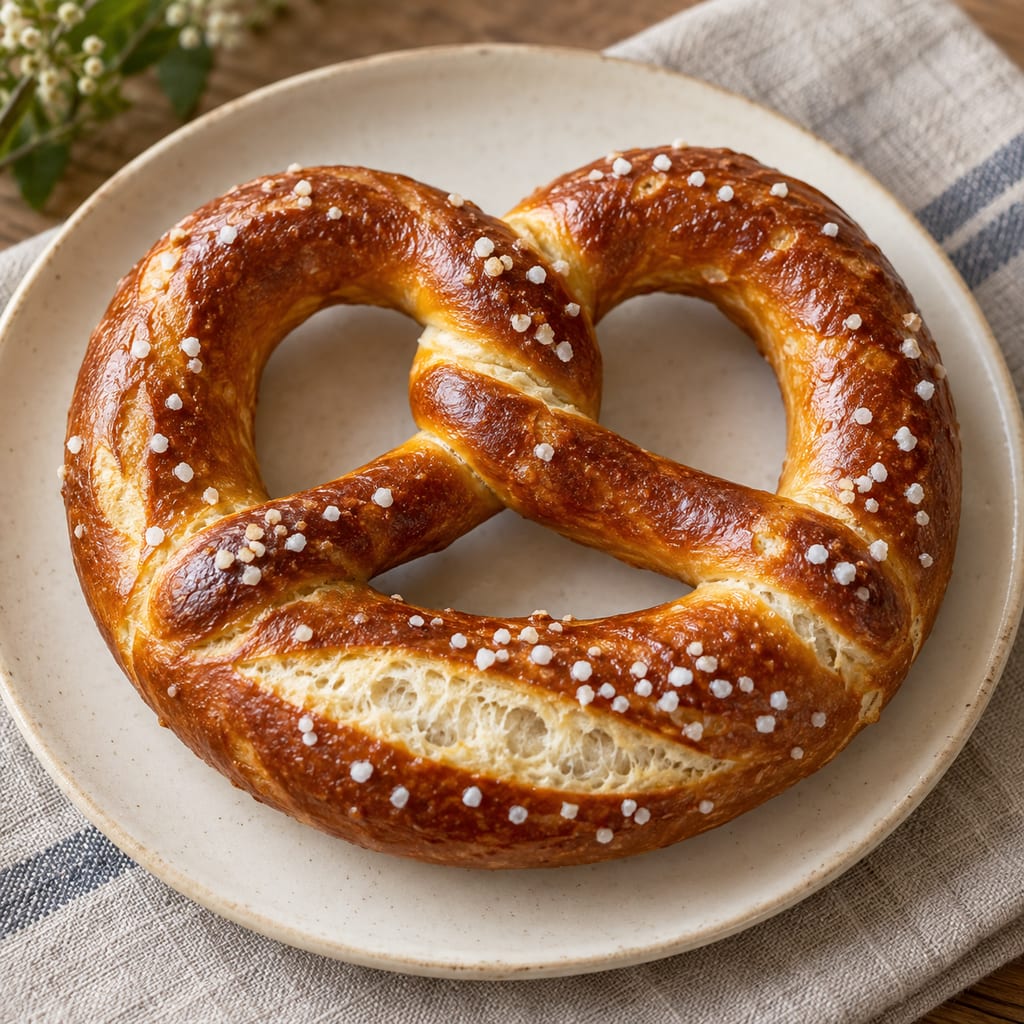
A German-style Brezel is a yeast-raised wheat dough shaped into a loop and dipped in an alkaline bath before baking. This home version uses baking soda; the original formula uses food-grade lye.
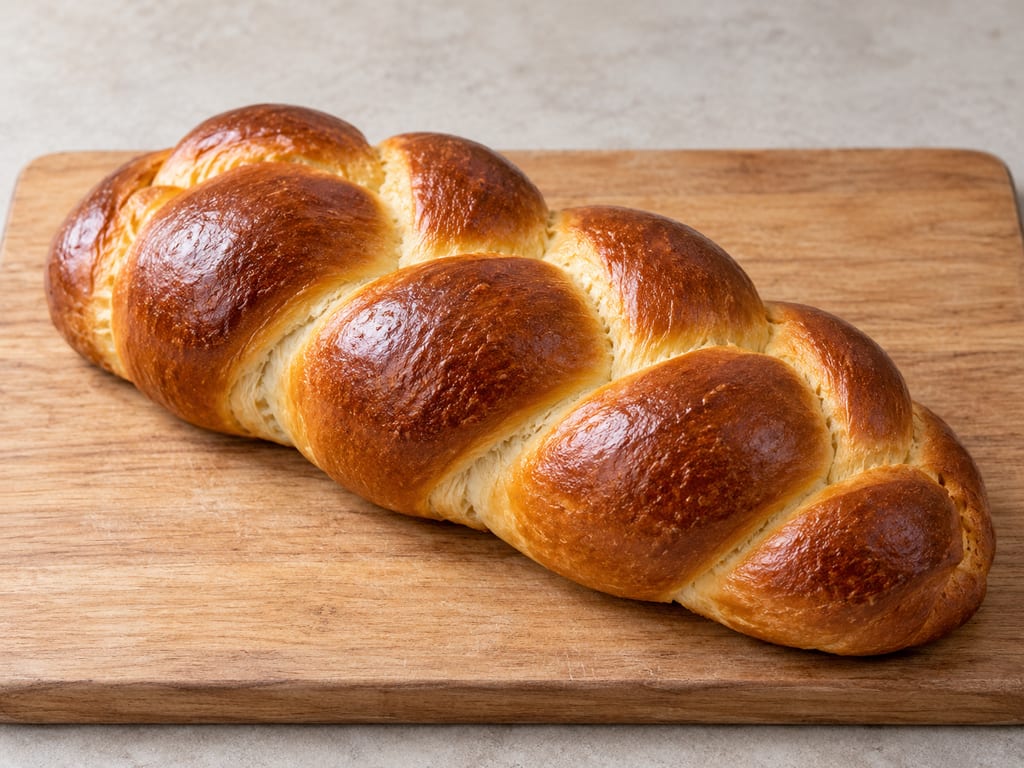
A three-strand yeast-raised challah with flour, salt, yeast, water, neutral oil, honey and egg, based on a Jewish Museum Vienna home recipe.
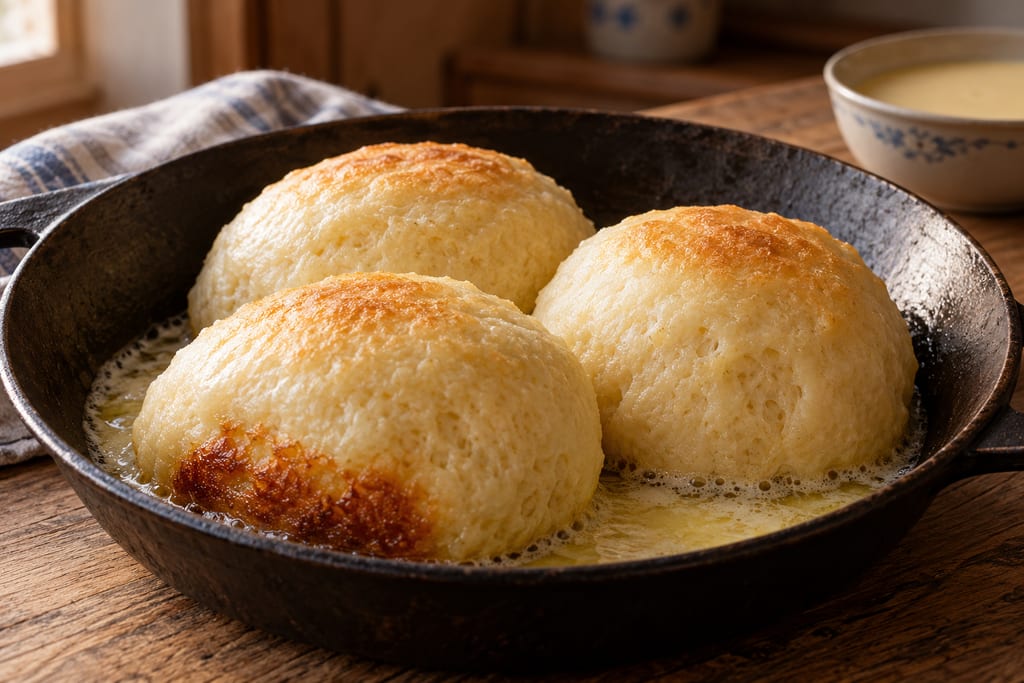
Allgäu Dampfnudeln are enriched wheat buns proofed in a covered casserole and cooked in milk and butter until the liquid nearly cooks away.
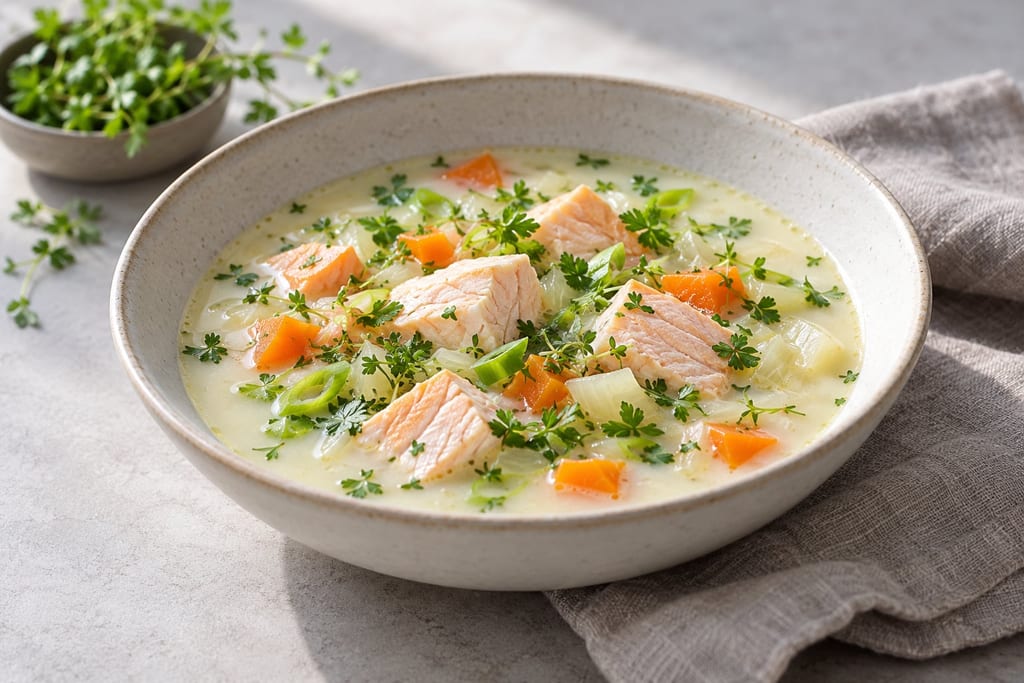
Trout or salmon poached at the end of a simmered broth of onion and root vegetables, a present-day reconstruction of coastal cooking built on excavated fish bones and a boiling pot.
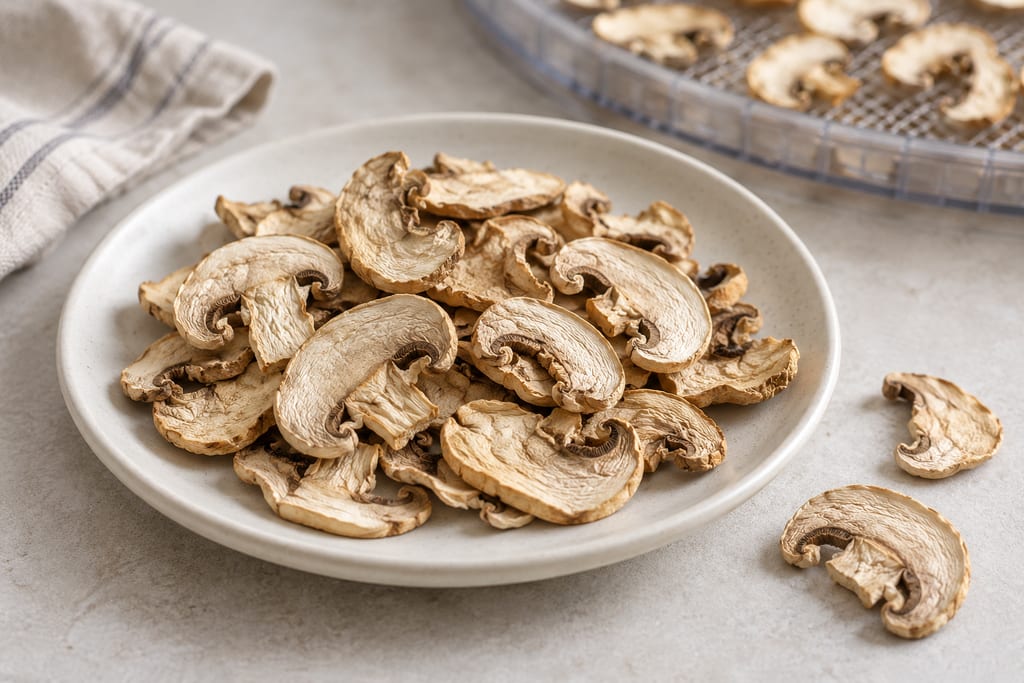
Hot-air dehydrated mushrooms are sliced mushrooms dried in a dehydrator or dryer with heated, moving air; a 2011 study dried button mushroom slices at 60 °C and compared them with microwave-vacuum and freeze-drying.
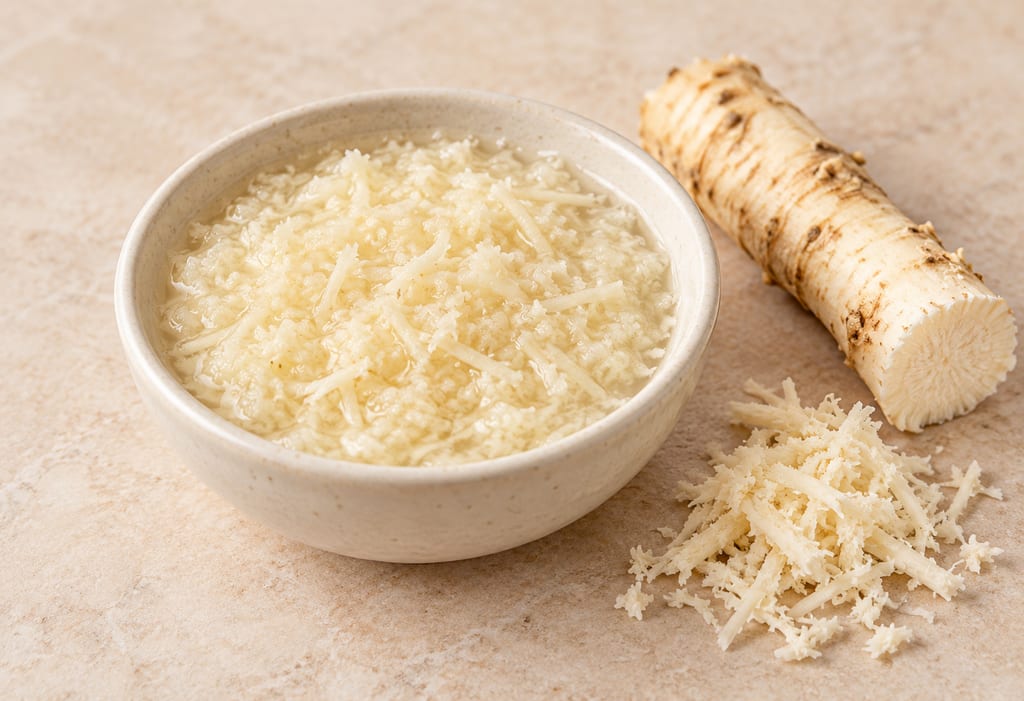
Prepared horseradish is freshly grated horseradish root mixed with vinegar and salt. This refrigerated relish holds the root’s sharp, nasal pungency in a spoonable form.
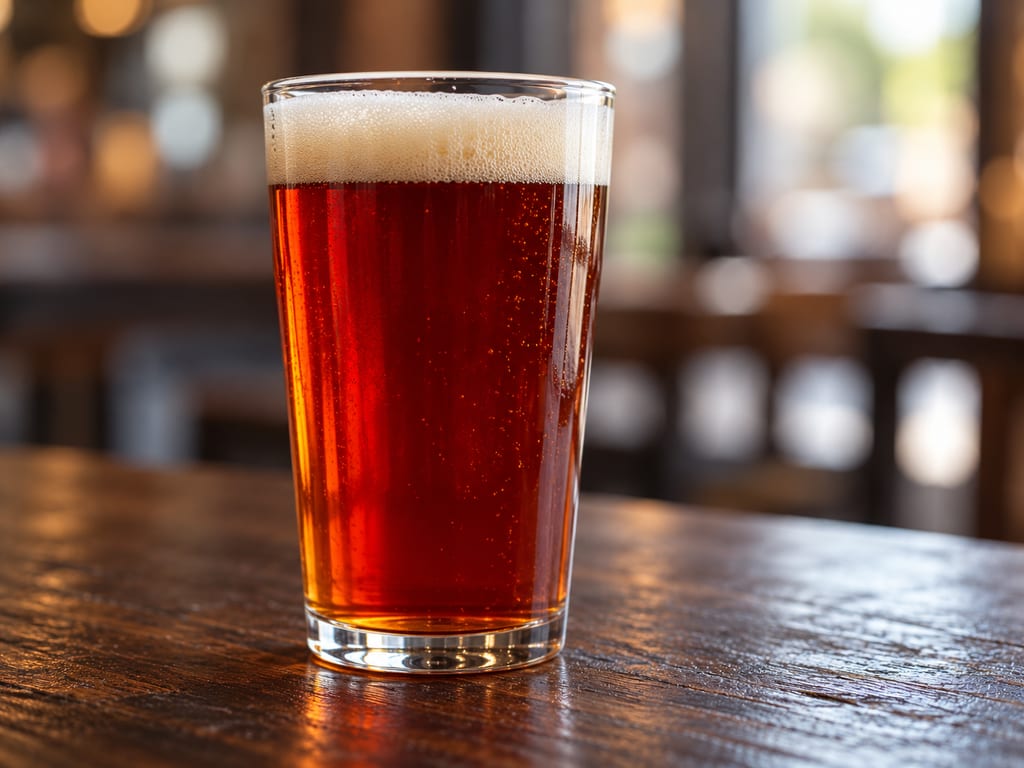
A deep amber-red American ale brewed from pale, Munich, CaraVienne and chocolate malts, bittered with Columbus hops and finished with Amarillo.
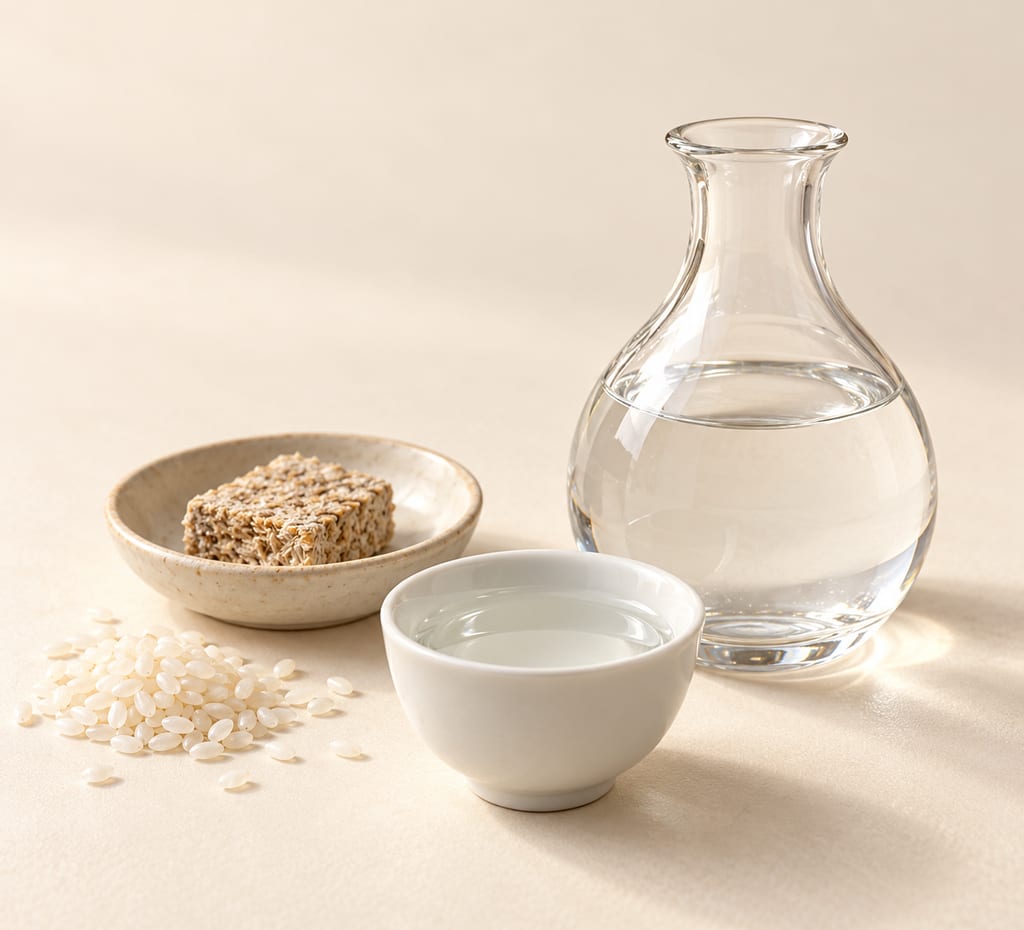
Andong soju is a rice spirit from North Gyeongsang, distilled from steamed rice and wheat nuruk. This method makes the starter before fermenting the rice mash in a jar.
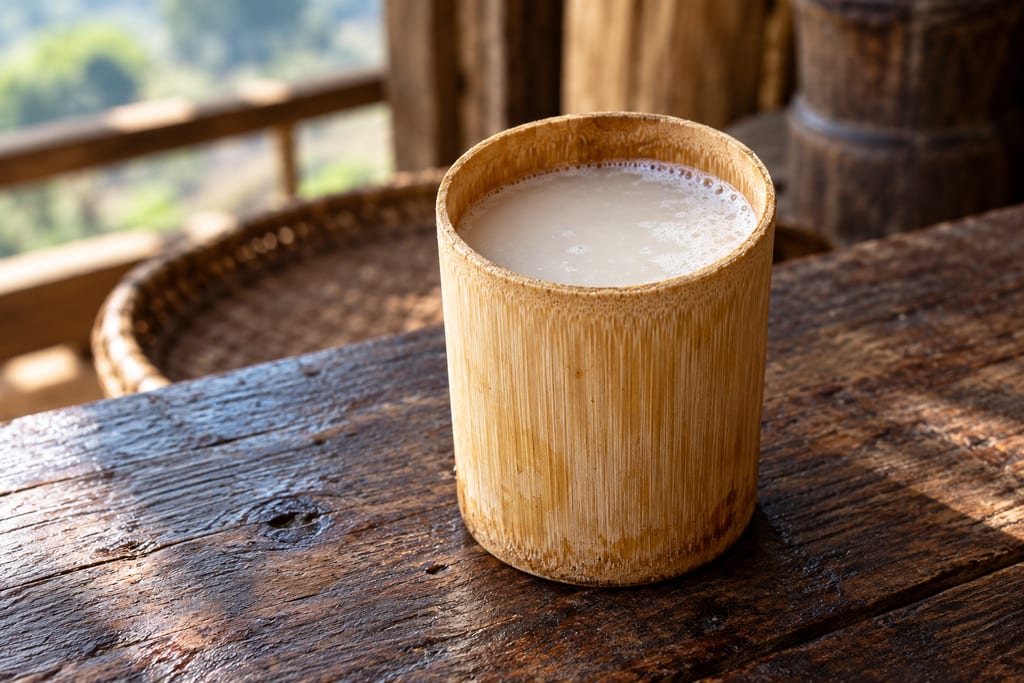
Angami rice beer from Nagaland. A surveyed method mixed cooked rice with piazu, fermented it for about four days in summer or a week in winter, then added water and filtered it. The starter ratio leaves the rice-weight basis unclear.
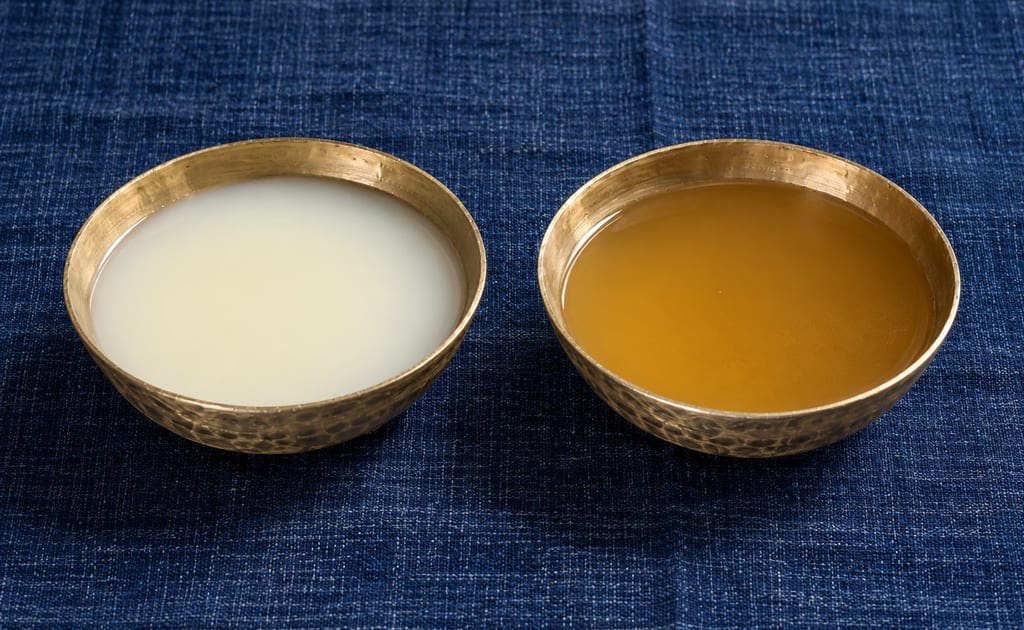
Apong names Mising rice beverages in Assam, including pale Nogin and ash-associated Po:ro. Sources describe distinct preparations and do not establish one unified household recipe or validated safety endpoint.
An Okinawan rice spirit made by turning all the rice into black koji, fermenting it with water and yeast, then pot-distilling and maturing the spirit.
This is a process overview, not a complete batch recipe: key quantities, yield and packaging directions are absent. The AHA tutorial uses Hop Hammer Imperial IPA as an example; this page is not that full formulation.
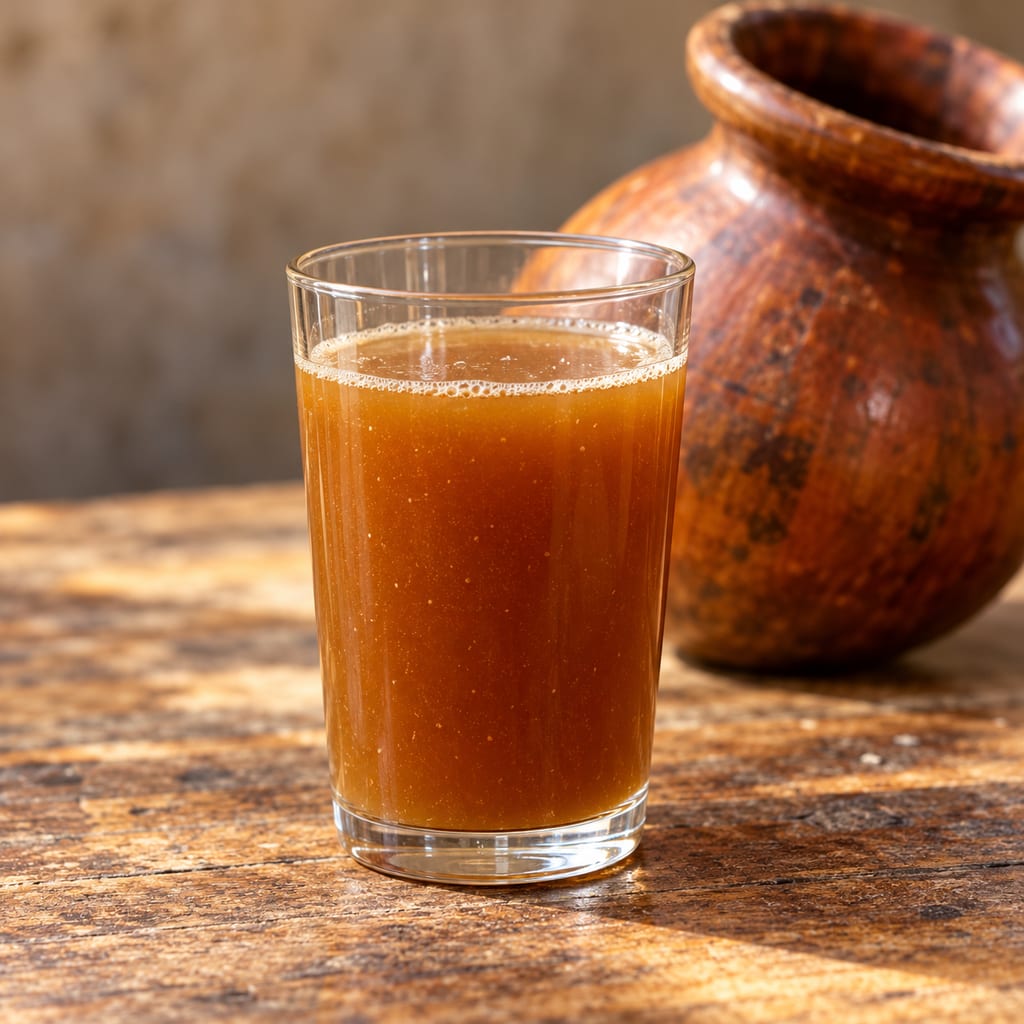
A darker Ethiopian maize tella, brewed from maize baked into a hot, dry kita pancake and then fermented in three stages with barley malt, gesho and water.
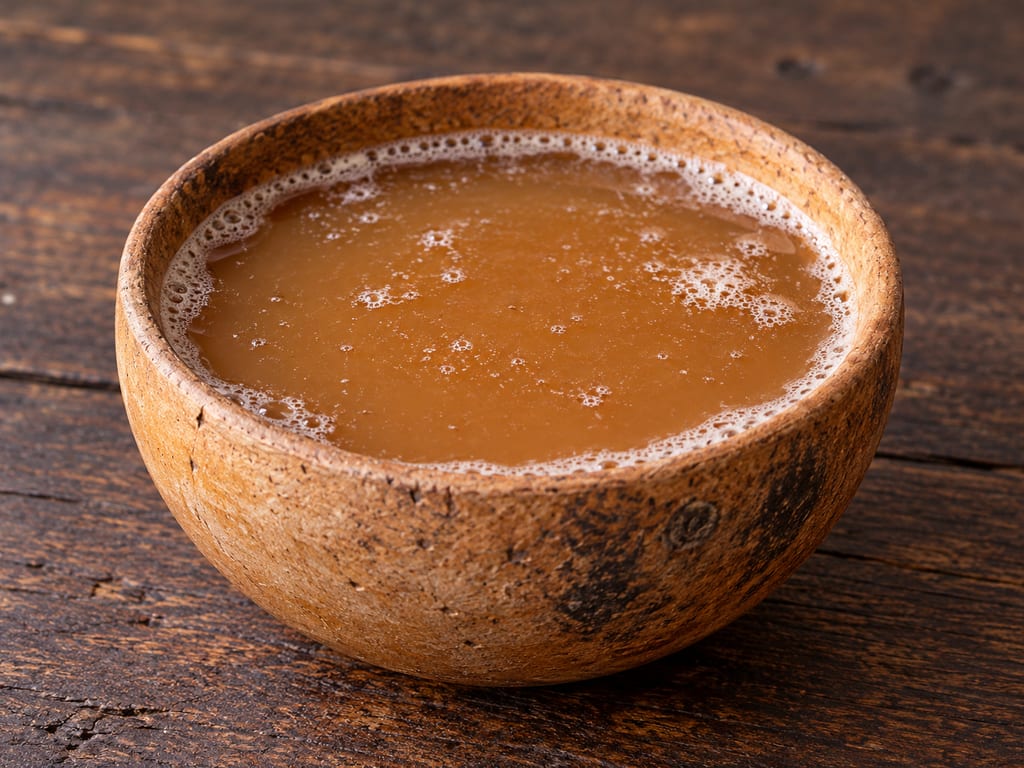
A Burkina Faso sorghum beer brewed from malted grain, soured by a spontaneous lactic stage and then fermented with a traditional yeast leaven.

Soft, spreadable Calabrian pork sausage made with a great deal of red chilli and fatty pork, stuffed into natural casings, sometimes smoked and matured while staying soft.

A way to add independent temperature logging to an existing food dehydrator without changing its built-in controls or protections. It is a monitoring method, not a rewiring plan.

Pleurotus cystidiosus is the abalone mushroom, a cultivated oyster-type fungus with dark brown caps that grows more slowly and is more demanding than other Pleurotus species.

A dark, balanced vinegar from Emilia-Romagna made by combining cooked or concentrated grape must with wine vinegar, then acetifying and refining it in wood under a protected specification.

A living dairy inoculum that starts controlled cream fermentation, developing acidity and aroma before sour cream or cultured butter is finished.

A small electric incubator holds jars at a selected temperature for yogurt and other documented warm food preparations. Controls, capacity and vessel arrangement vary by model.

Adygean salt is a seasoned table salt associated with Adygea and the wider North Caucasian culinary tradition. Salt is blended with garlic and a variable selection of herbs and spices; the exact mix depends on the named style and maker.

The African Caesar-group mushroom, Amanita masasiensis, is a wild ectomycorrhizal species of central and southern African woodlands, eaten locally. The genus contains deadly poisonous species, so identification needs care.
No community contributions have been published for this entry yet.
Sign in to contribute. Published comments and photos are free to read.
American Homebrewers AssociationMethod · Ingredients
Düsseldorf AltbierThe listed AHA extract recipe and quantities, yield and stages.
The recipe is attributed to the July/August 2009 issue of Zymurgy.
Cited in: A Düsseldorf style and a modern extract batch; The source batch and its ingredients; Stages in the AHA method; Limits and safety gaps
Deutscher Brauer-BundHistory · Geography · Style
AltThe association locates Altbier's origin in Düsseldorf and identifies it as top-fermented.
The association's style description is not a household formula.
Cited in: A Düsseldorf style and a modern extract batch
Brewers AssociationSafety
Preventing Package Over-PressurizationThe Brewers Association describes unintended refermentation in packages as a rupture and food-safety hazard.
Cited in: Limits and safety gaps
Brauerei Ferd. Schumacher GmbH & Co. KGMethod · Equipment · Commercial production
Der BrauprozessThe brewery describes its own commercial process: malt is mashed through temperature rests over about two hours, lautered, sparged and boiled with aroma hops.
Its wort is cooled and sent to the cellar at 20 °C, then fermented with its own top-fermenting Saccharomyces cerevisiae yeast; the stated main fermentation lasts three days at 20 °C.
The brewery describes a further roughly four-week maturation in closed tanks at about 3 °C, followed by filtration.
These are Schumacher's brewery-specific commercial methods and conditions, not a home recipe, not the AHA extract batch, and not a general Altbier standard.
Cited in: A separate commercial brewery account