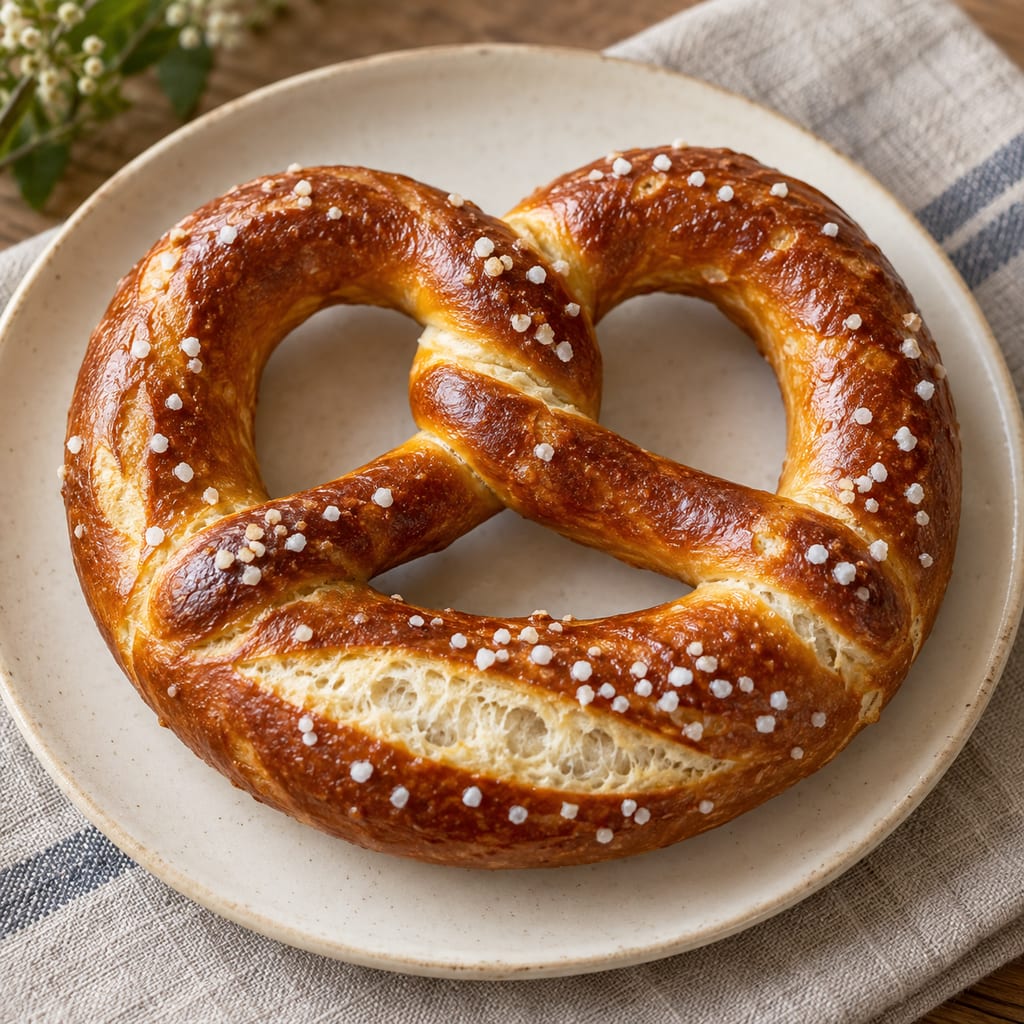
Brezel / pretzel, German-style
A German-style Brezel is a yeast-raised wheat dough shaped into a loop and dipped in an alkaline bath before baking. This home version uses baking soda; the original formula uses food-grade lye.
 FermenteaWhere food goes to change
Modern adaptation
pretzel · German-style pretzel
This German-style knot pretzel uses a firm yeast dough, a chilled shape, a one-minute baking-soda bath and a deep bake. The method follows Jeffrey Hamelman's home adaptation for King Arthur Baking.
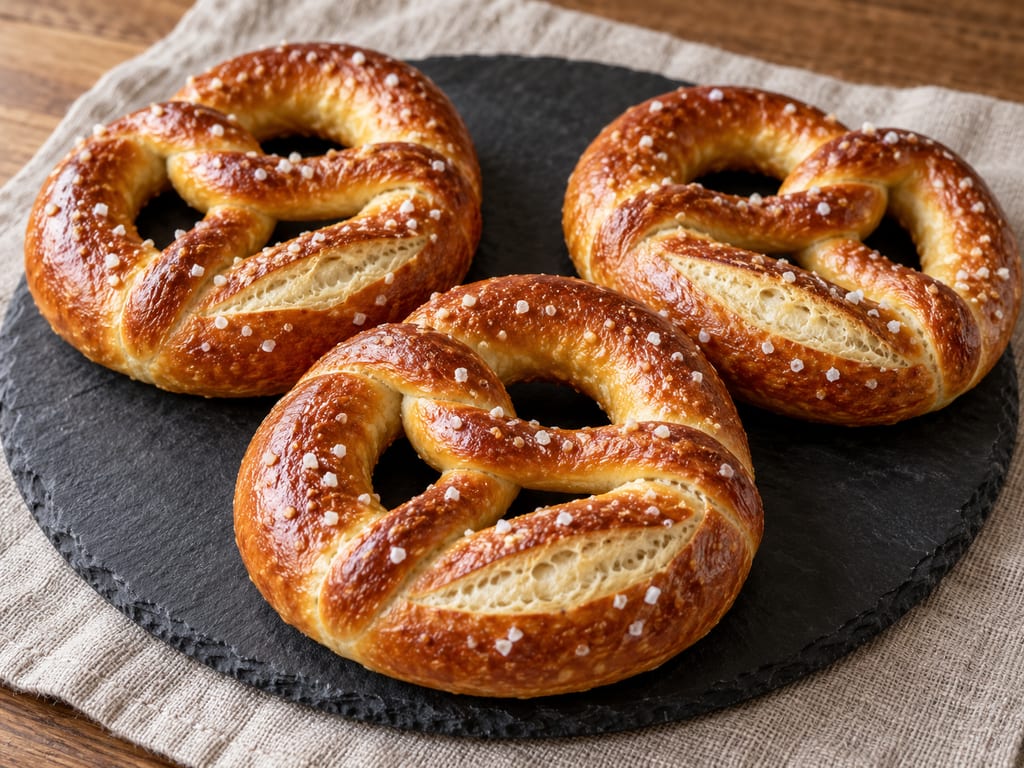
Jeffrey Hamelman describes this recipe as an adaptation of his German bakery apprenticeship. The King Arthur version replaces his original lye bath with baking soda for home baking. That identifies the method as German-style without claiming that the recipe is a regional standard or that all Brezel are made the same way.
This formula makes ten firm wheat-dough knots. It differs from the separately catalogued sourdough-discard pretzels, which use starter with commercial yeast, a sweet wash and a lower-temperature bake without an alkaline bath.
The dough is a lean wheat mixture of bread flour, water, salt and instant yeast, enriched with a small amount of soft butter. Diastatic malt powder is optional. Two covered 45-minute rises have a fold between them; after dividing, a 20-minute rest relaxes the ten portions before rolling them into long ropes.
The shaped knots are covered and chilled before the bath. When the kitchen is particularly warm, the source sends them directly to the refrigerator; otherwise it gives them about 30 minutes at room temperature first, followed by roughly an hour of chilling. The source gives no proof temperature.
Bring 6 cups water and 2 tablespoons baking soda to a boil in a wide pot. Work in groups of three or four, cook each group for one minute without turning, then lift the pretzels back to their trays. Slash each base horizontally, add salt if wanted, and bake at 450°F for 14–16 minutes until well browned.
The boiling bath and hot oven need steady handling. Use a skimmer or slotted spoon to move the cold dough into and out of the pot, leave space to work, and keep hands and face clear of splashes and steam. This home method uses baking soda; the separate lye bath requires its own recipe and handling instructions.
Flour is raw before baking. Do not taste the unbaked dough; bake the pretzels as directed and wash hands, bowls, tools and counters after handling flour and dough. Wrap leftover pretzels and keep them at room temperature for up to three days, or freeze them for longer storage.
The EU's Bavarian specification distinguishes regional lye pretzels by more than the knot. It describes Bavarian pretzels with thicker, higher arms and no deliberate cut across the thick middle, while the Swabian form has lower arms and a cut belly. It also places Bavarian pretzels beside Weisswurst and Leberkäse in light meals.
The Bayerische Breze name and its listed spelling variants were registered as a protected geographical indication in 2014. That registration does not cover every German-style pretzel. This recipe remains King Arthur's baking-soda adaptation, including its own slash and bath instructions; it is not presented as meeting the Bavarian specification. The registration date is not an origin date.
Jeffrey Hamelman says this home recipe draws on his apprenticeship at a German bakery. King Arthur Baking substitutes a baking-soda bath for the lye bath in his original method. This is a German-style home adaptation, not a documented regional standard or origin claim.
Yield 10 pretzels · Scaling: source batch only
Uncooked flour may carry germs; tasting the unbaked dough can cause illness.
Hazard sourceThe method requires a boiling liquid bath and a 450°F oven; splashing bath water or touching hot equipment can cause burns.
Hazard sourceDo not taste unbaked dough. Bake it following the recipe and wash hands, bowls, utensils and counters after handling flour and dough.
Control sourceUse a stable wide pot and a skimmer or slotted spoon to lower and lift the chilled pretzels; keep hands and face clear of the boiling bath and use heat protection when handling the pot and trays.
Control sourceContains wheat and butter. The optional diastatic malt powder and coarse topping salt are not required.
This is the baking-soda bath method. The separate food-grade-lye method is not part of this recipe.
The recipe is identified as German-style and its author says it comes from his apprenticeship at a German bakery. No German locality or single regional specification is named.
A German-style Brezel is a yeast-raised wheat dough shaped into a loop and dipped in an alkaline bath before baking. This home version uses baking soda; the original formula uses food-grade lye.
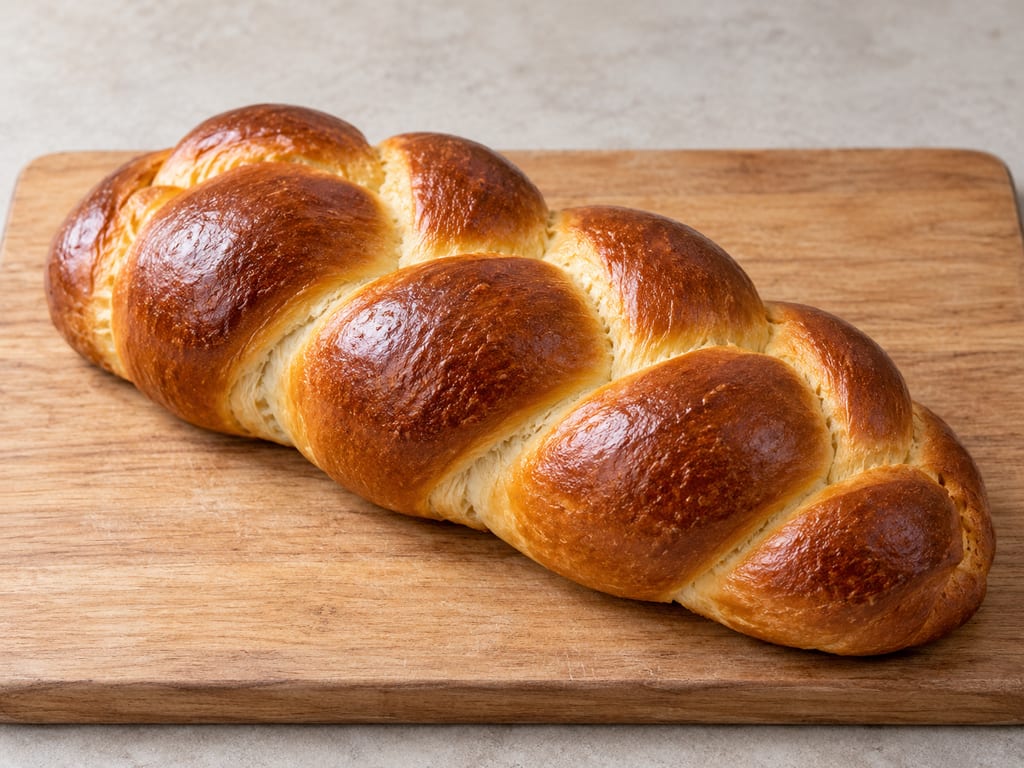
A three-strand yeast-raised challah with flour, salt, yeast, water, neutral oil, honey and egg, based on a Jewish Museum Vienna home recipe.
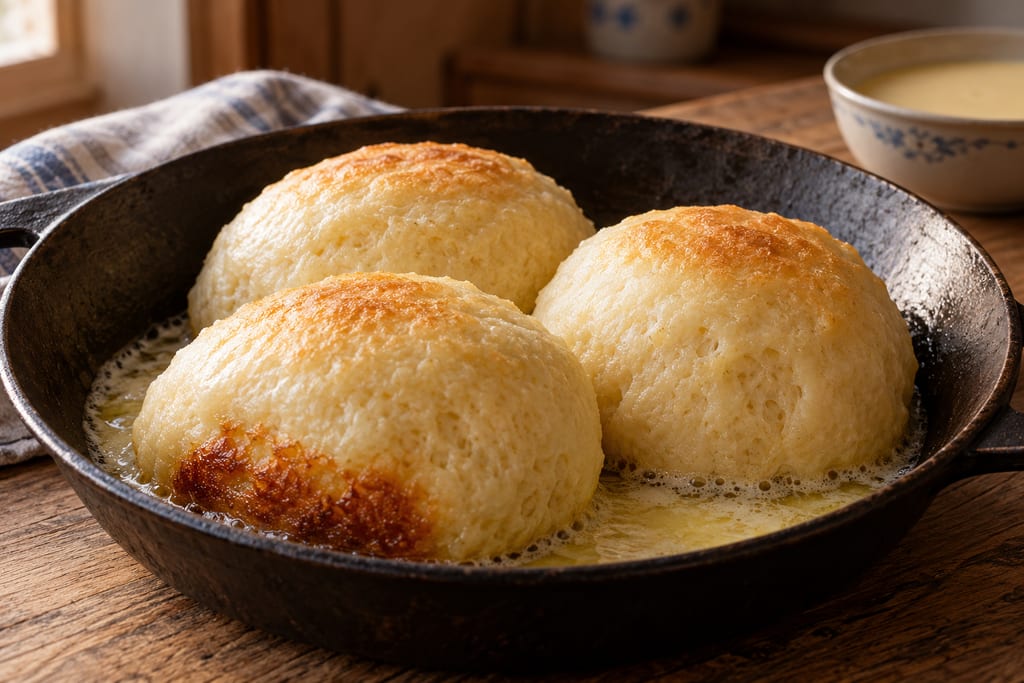
Allgäu Dampfnudeln are enriched wheat buns proofed in a covered casserole and cooked in milk and butter until the liquid nearly cooks away.
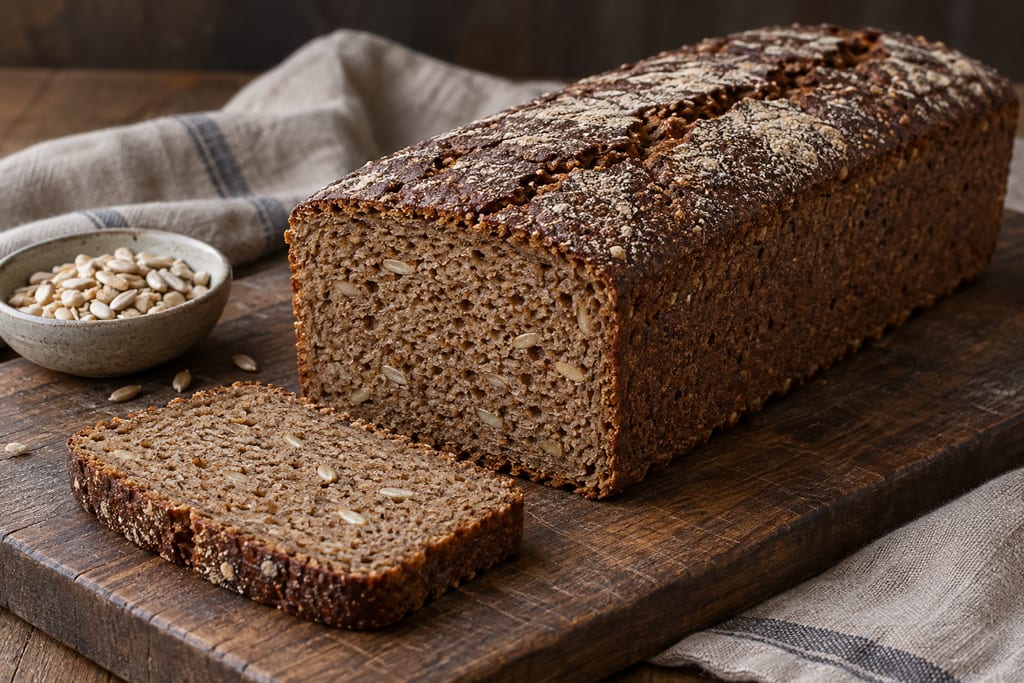
A dense whole-rye loaf with a sourdough preferment, soaked rye chops and sunflower seeds. It bakes in a long loaf pan and rests for 24–48 hours before slicing.
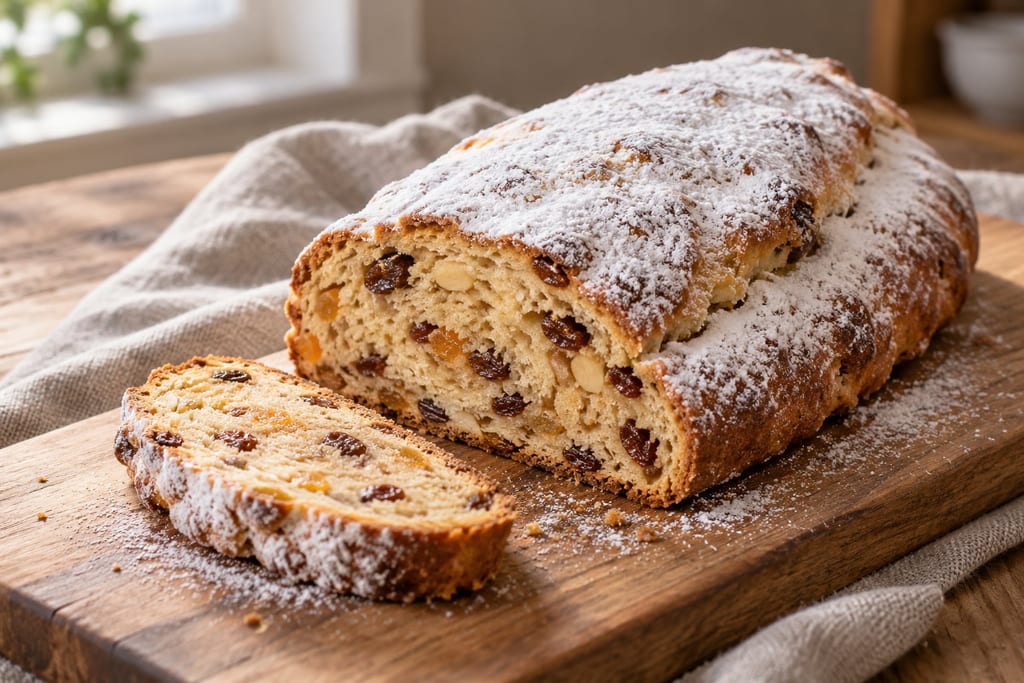
A four-loaf German family Christmas stollen with rum-soaked sultanas, almonds, candied citrus and marzipan, baked in two stages.
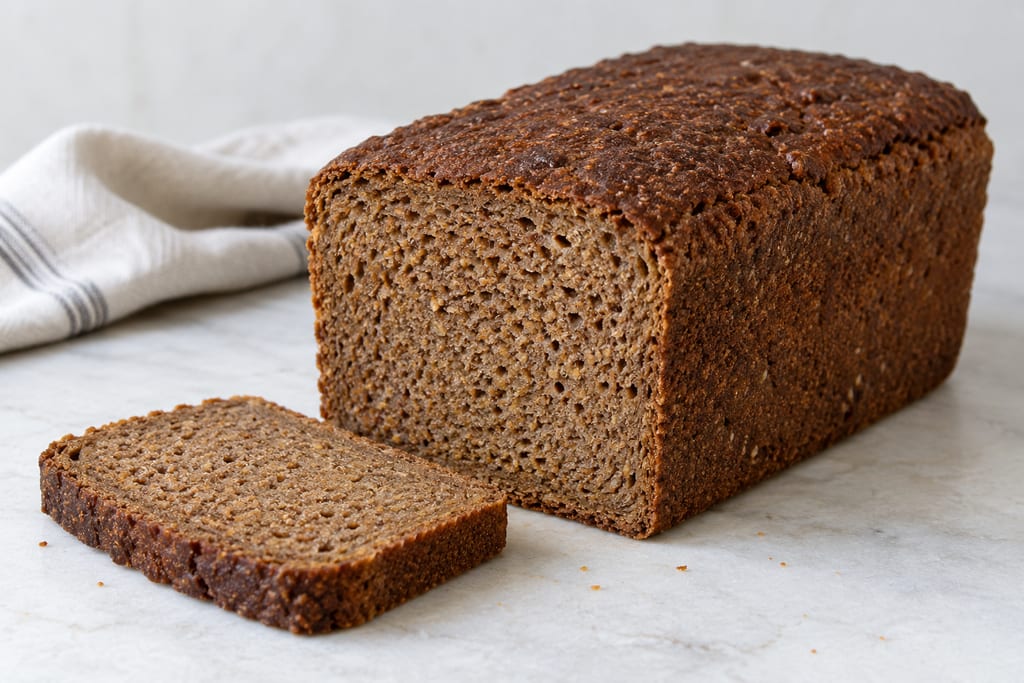
A dense, dark rye-and-wheat loaf with a warm rest and long covered bake. This home version uses a 5-hour oven bake and differs from the protected Westphalian product.
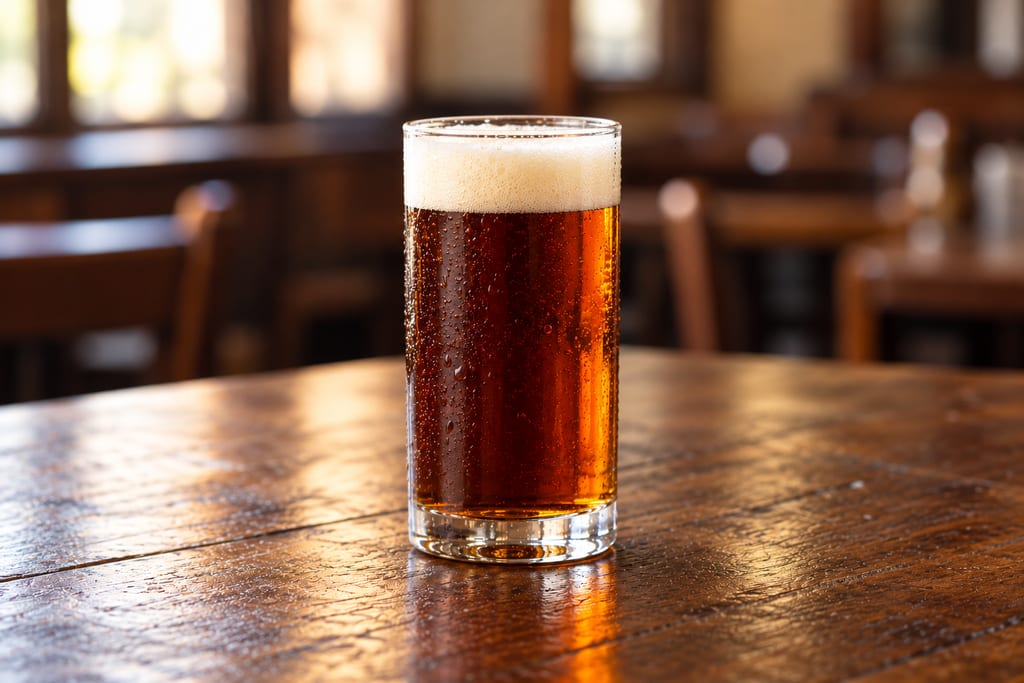
A source-specific modern extract adaptation of Düsseldorf Altbier, with specialty malts, two hop additions and an ale yeast. It is distinct from a brewery's commercial Altbier process and from Kölsch.
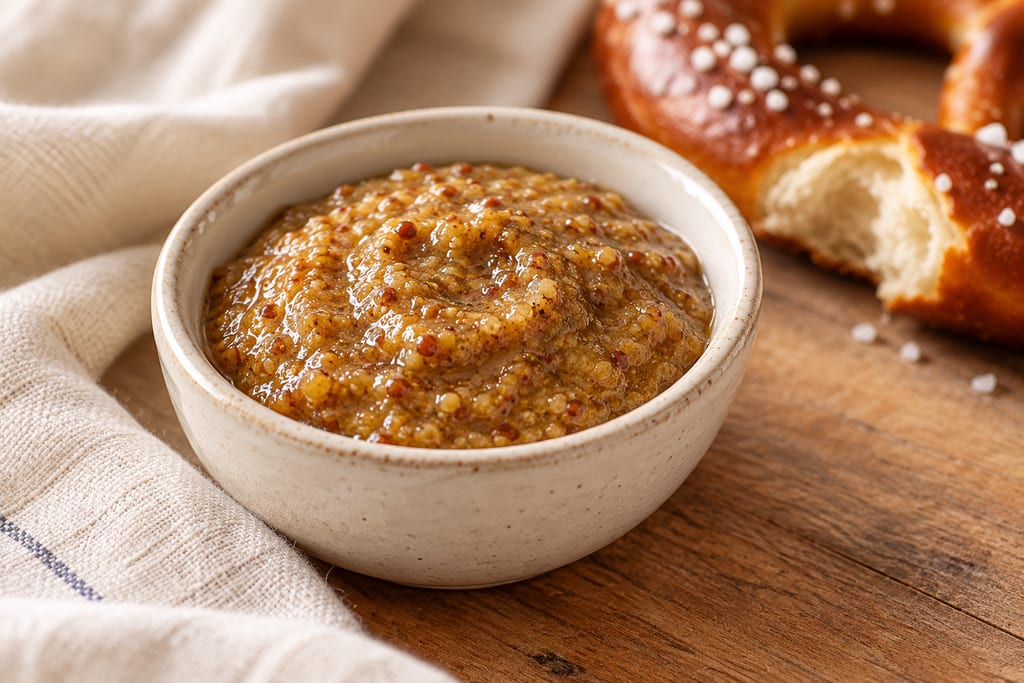
A coarse, sweet Bavarian-style mustard of yellow and brown seed in a cooked brown-sugar and vinegar base, made to eat with Weisswurst; an original refrigerated formula.
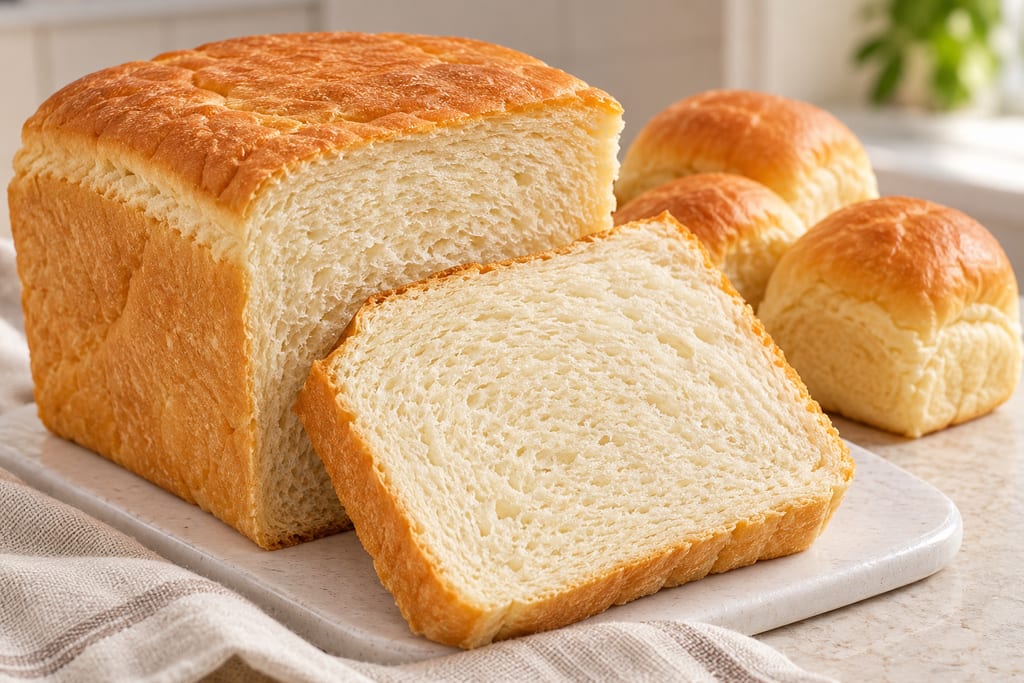
This softer home-style Agege bread uses a scalded flour paste, an enriched yeast dough and a 9×5-inch loaf pan, with rolls from the extra dough.
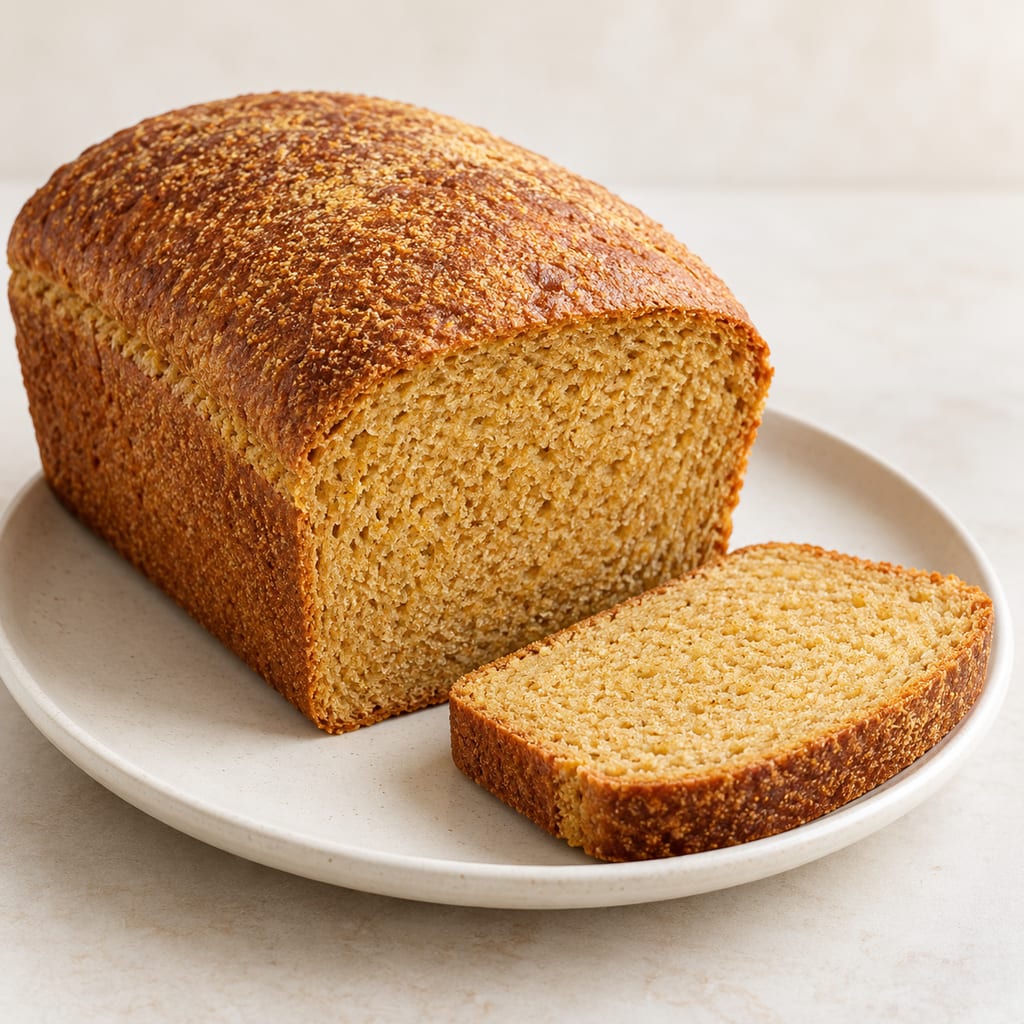
Anadama is a New England yeast loaf made with wheat flour, cornmeal and molasses. Scalded cornmeal enriches the dough, while molasses lends sweetness and a dark crust; it is especially good toasted or beside soup and baked beans.

A yeast-raised wheat ring shaped from a firm dough, briefly boiled and baked. This source-batch formula gives a gently malted crust and a chewy crumb.
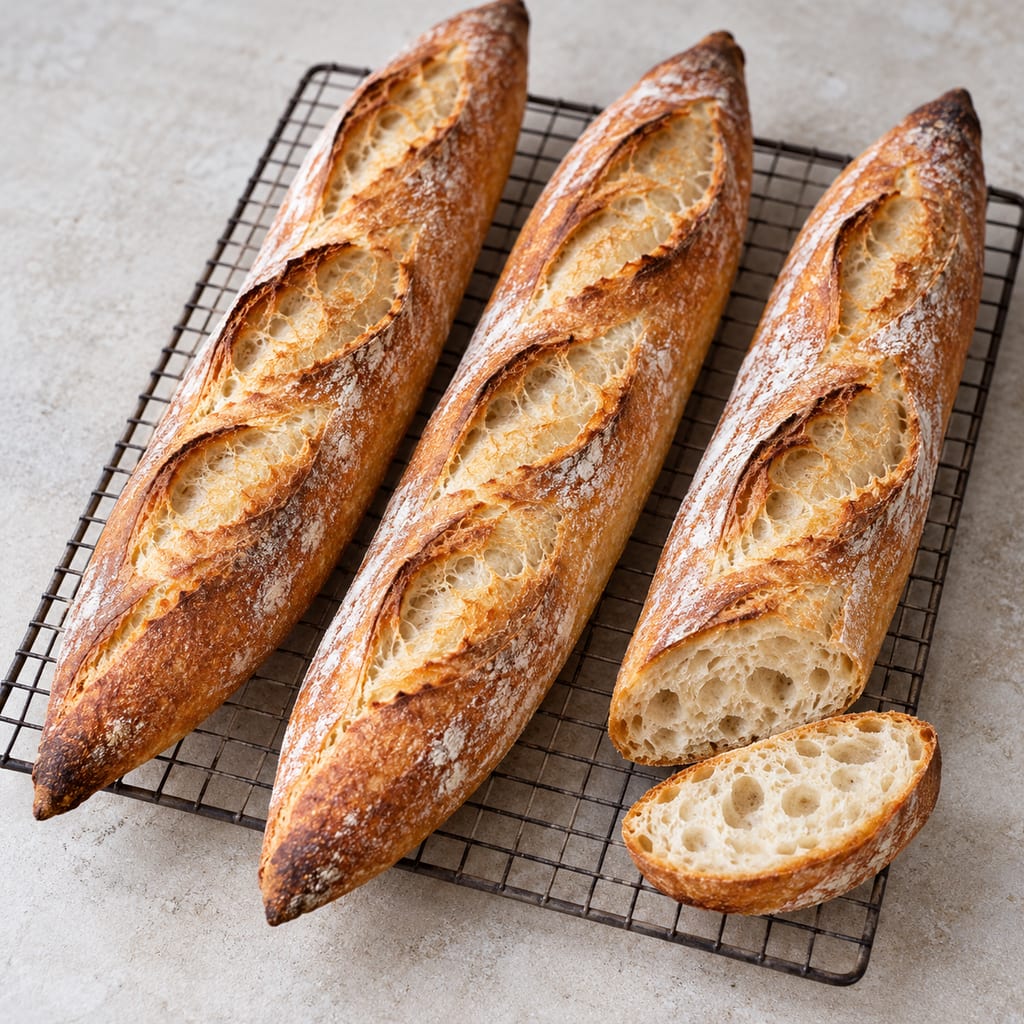
Three long, crusty wheat loaves made with an overnight yeast poolish, shaped by hand and baked with steam for a crisp crust.
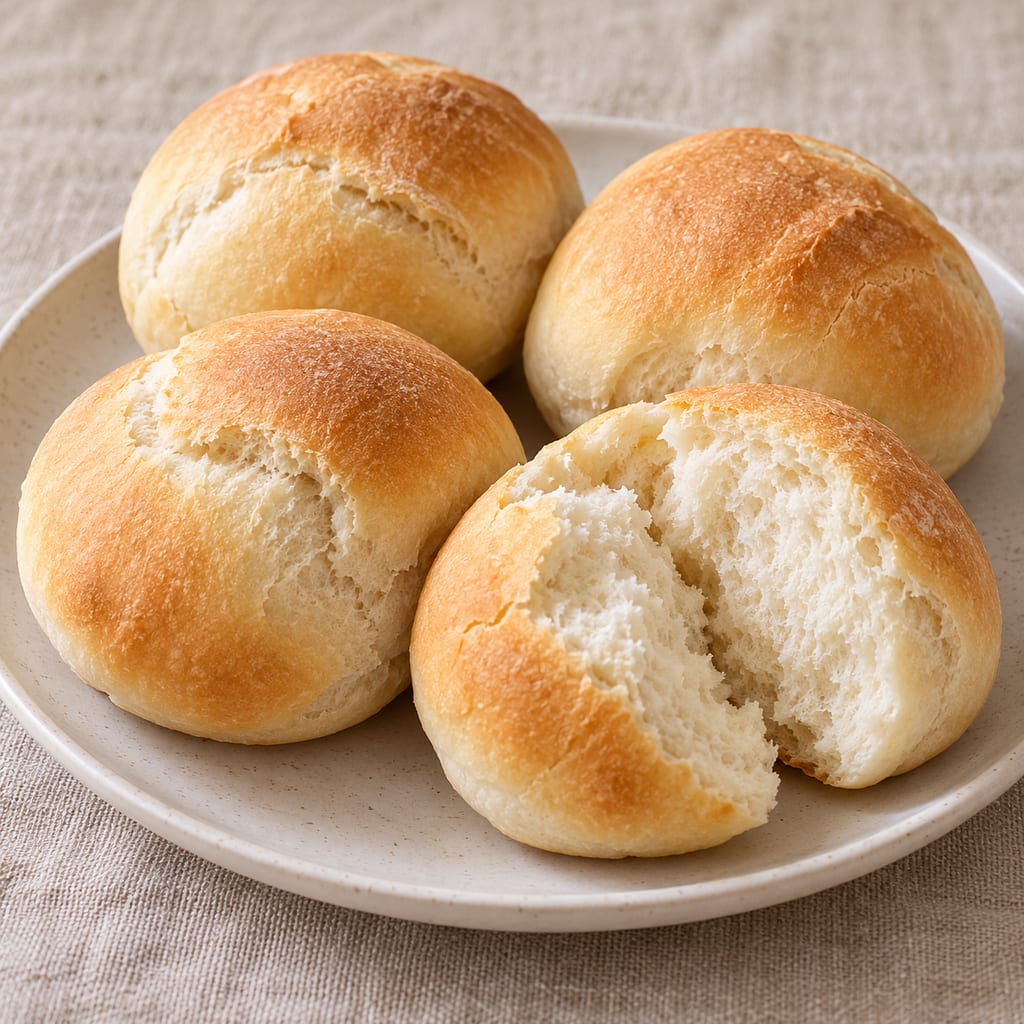
A lightly salted, yeast-raised Barbadian roll, baked in a dozen-roll home batch and often split for cutters.
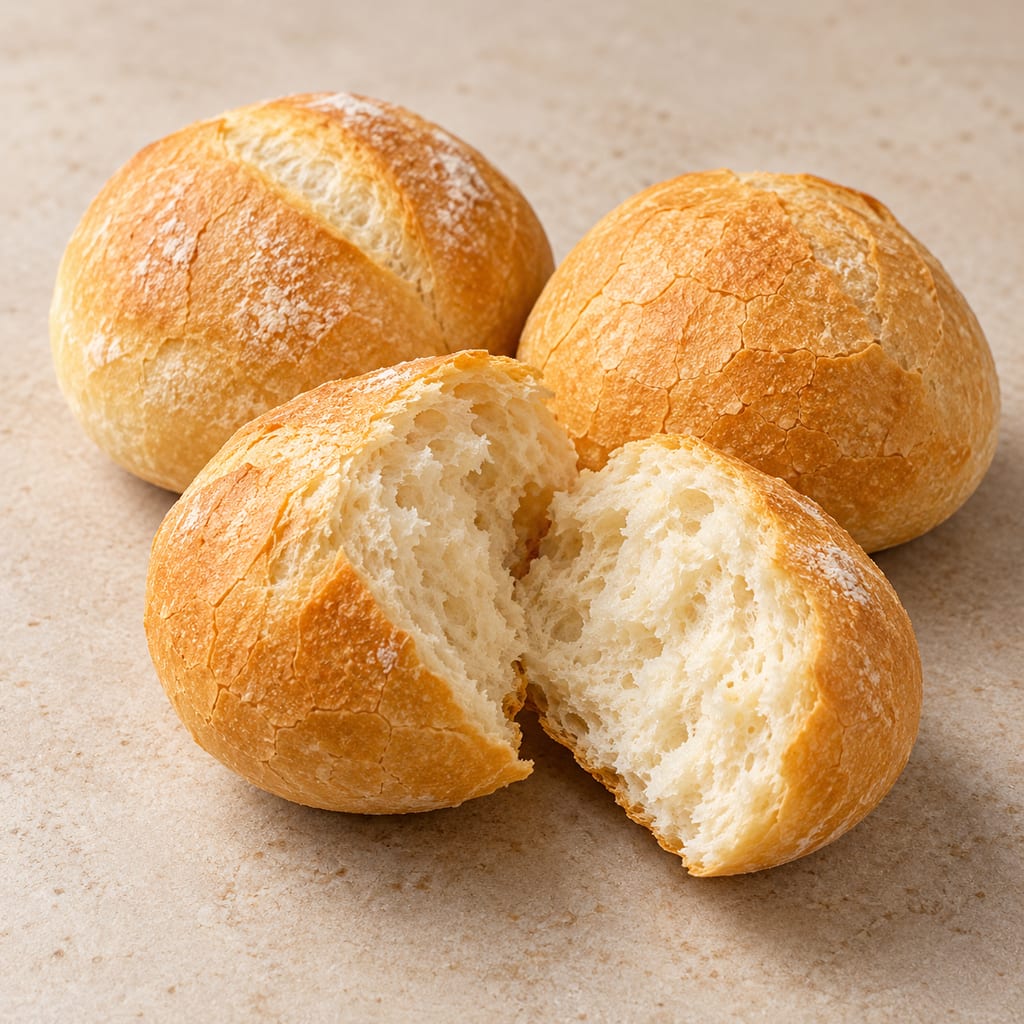
A crisp Belgian roll made from a supplier’s Croc-flour dough, mixed by hand or machine, proofed in rounds and baked with steam.
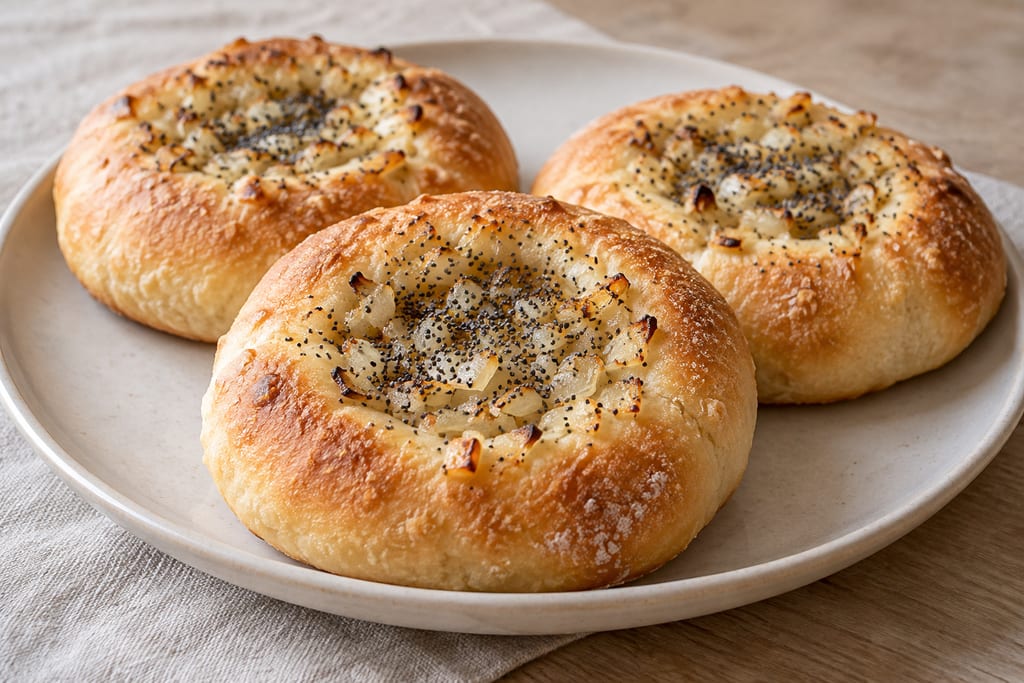
Bialys are soft, yeasted wheat rolls baked without boiling, each shaped with an onion-filled central depression instead of a hole.
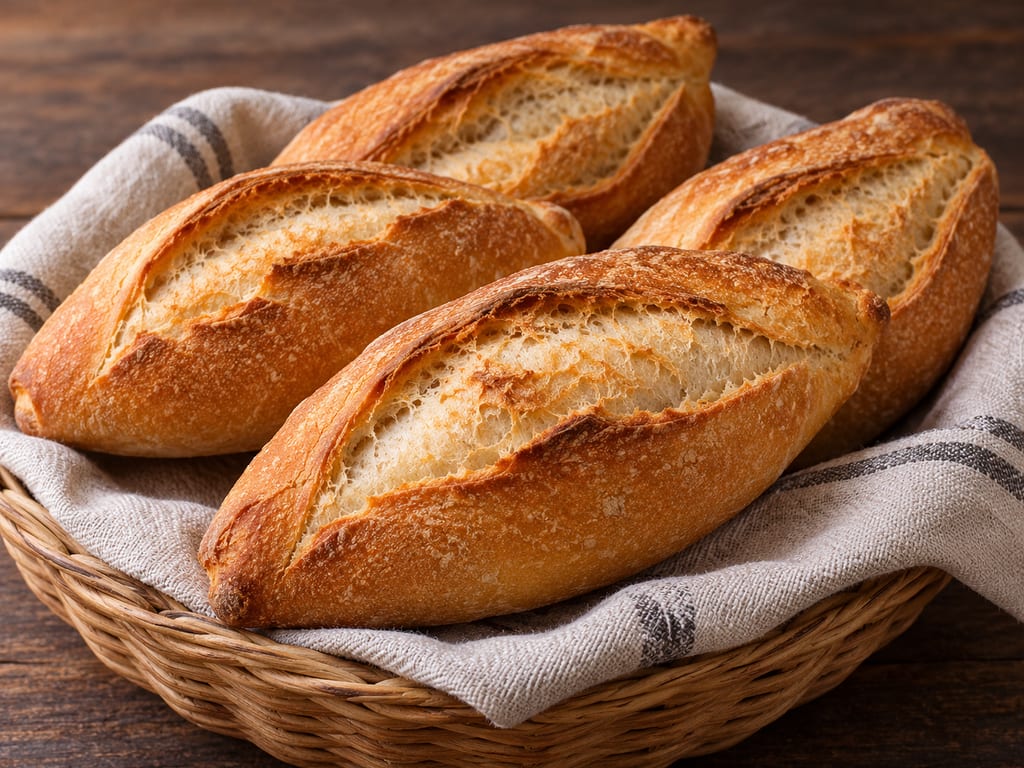
A measured, commercial-yeast home method for Guadalajara-style birote salado, with a six-hour preferment, shaped rolls and a two-temperature steam bake. This formula contains no egg.
No community contributions have been published for this entry yet.
Sign in to contribute. Published comments and photos are free to read.
King Arthur BakingRecipe · Method · Baking soda bath · Family context
German-Style PretzelsHamelman says this recipe comes from his experience apprenticing at a German bakery; King Arthur substitutes a baking-soda bath for his original lye bath.
The source batch makes 10 pretzels from 614 g bread flour, 333 g water, 12 g table salt, 1¼ teaspoons instant yeast, 28 g soft butter and optional ¼ teaspoon diastatic malt powder.
The bath uses 6 cups (1361 g) water and 2 tablespoons (36 g) baking soda; the source places 3 or 4 pretzels in the boiling bath for 1 minute without turning.
The dough receives two 45-minute rises with a fold between them, then is divided into 10 pieces of about 100 g, rested 20 minutes, shaped into 18–22-inch ropes and chilled before dipping.
The source sets a 450°F oven, bakes for 14–16 minutes until well browned and gives counter storage up to 3 days for well-wrapped leftovers; salt topping is optional.
Cited in: A German-style home pretzel; Develop and shape the dough; Use the baking-soda bath and bake; Food handling and storage; Regional shapes and a protected Bavarian name
Centers for Disease Control and PreventionFood safety
Raw Flour and DoughUncooked flour can carry germs; do not taste raw dough, bake it as directed, and wash hands, utensils, bowls and counters after handling raw flour or dough.
Cited in: Food handling and storage
Official Journal of the European UnionRegional context · Protected name specification
Bayerische Breze: published single document, 2013/C 262/07Specification describes a Bavarian lye pastry with thicker, higher arms and an uncut thicker middle, contrasting the thinner/lower arms and deliberate belly incision of Swabian pretzels.
Documents Bavarian light-meal pairings with Weisswurst and Leberkäse; geographic area is Bavaria. These facts do not certify the King Arthur soda-bath recipe or supply lye-handling instructions.
Cited in: Regional shapes and a protected Bavarian name
European Commission / Official Journal of the European UnionProtected name registration
Commission Implementing Regulation (EU) No 161/201418 February 2014 regulation registers Bayerische Breze/Bayerische Brezn/Bayerische Brez'n/Bayerische Brezel as a protected geographical indication (PGI), not PDO. This is a registration date, not the pretzel's origin.
Cited in: Regional shapes and a protected Bavarian name
Wikimedia CommonsImage rights research
Gründonnerstags-Brezel.jpgAnton Maienfeldt own-work image explicitly CC0, but source describes sweet cinnamon-sugar Maundy Thursday bread from Mühlhausen. Excluded as a different bread form from the soda-bath pretzel; no original downloaded or visual acceptance claimed.
Wikimedia CommonsImage rights research
Tysk brezel.jpgHchristophersen own-work photograph explicitly CC BY-SA 3.0, not PD/CC0; excluded.
Wikimedia CommonsImage rights research
Johanna Fosie still life, 1753, KKS6001-29Commons describes public-domain artwork and Statens Museum for Kunst CC0 digital image. Historical still-life lead only: exact bread form, primary museum rights and visual inspection pending; not counted or downloaded and not evidence for this modern soda-bath formula.