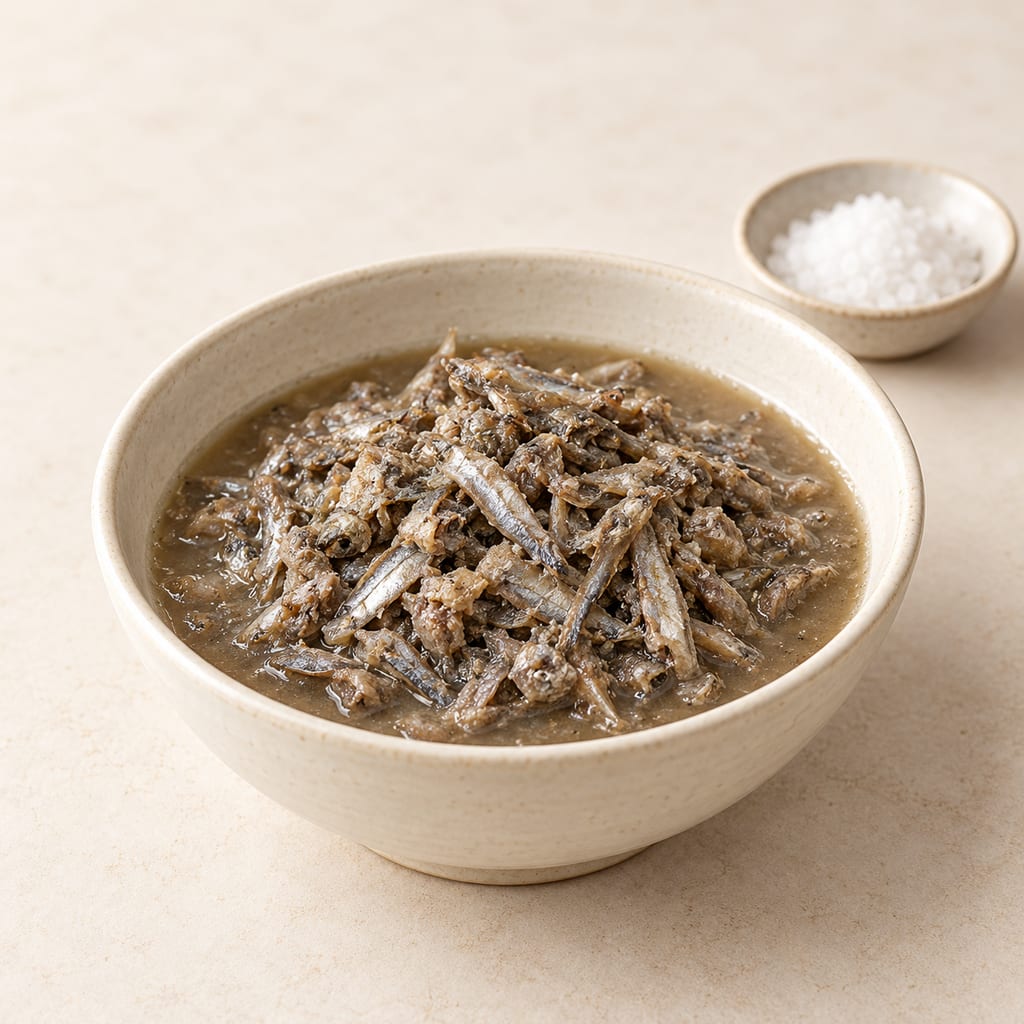
Myeolchi jeot
Salted anchovies mature in a covered jar with brine. The fish can be seasoned for a meal, while the expressed liquid seasons kimchi and other dishes.
 FermenteaWhere food goes to change
Salt
Coarse salt is food-grade salt in large grains, from sea, rock deposits or brine, used for curing, brining, pickling and packing fish.
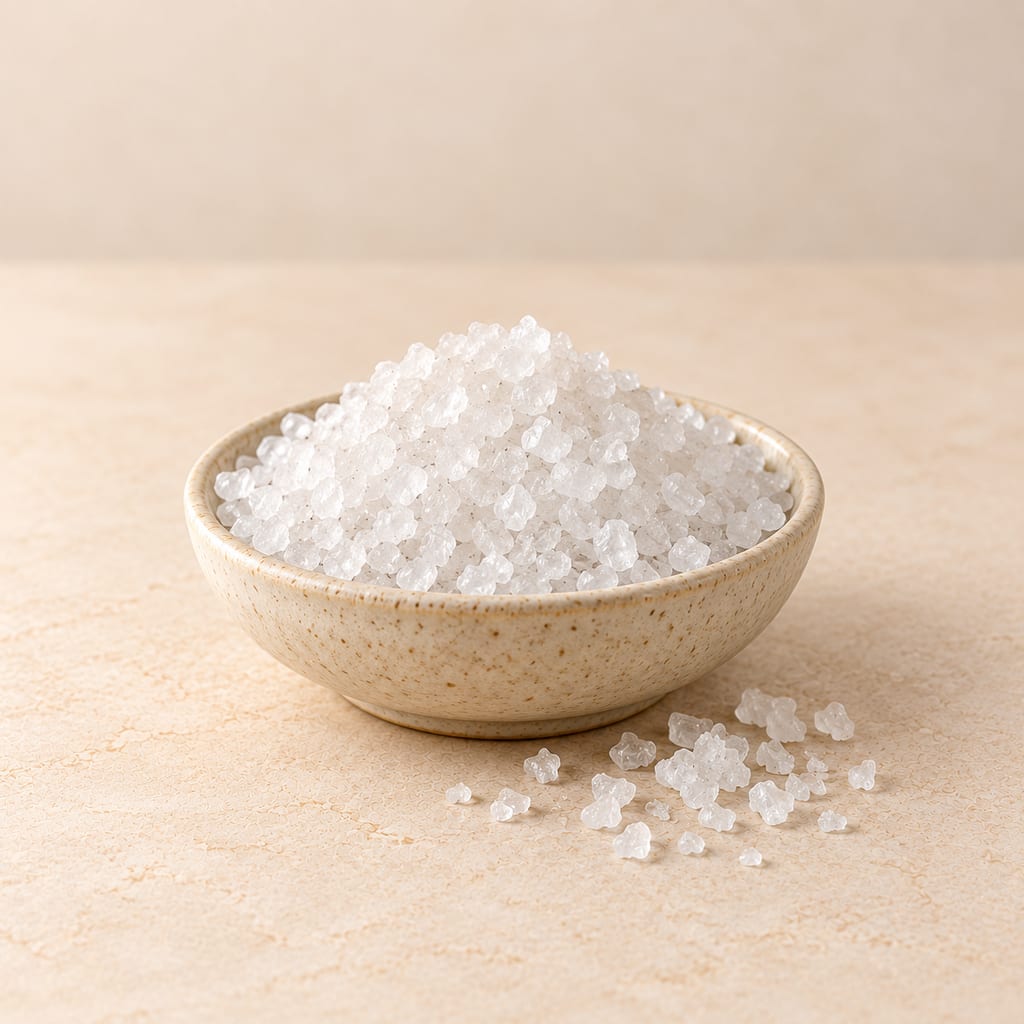
Coarse salt is food salt sold in large, visible grains. It is a description of the grain, not of a source: sea salt, rock salt and kitchen salt can all be coarse, and so can their fine versions. The Korean word is 굵은 소금, gulgeun sogeum, literally thick or coarse salt, and it is the salt that packs fish in a jar of salted anchovies. Korea's food code, which classifies food salt as solar salt, reprocessed salt, roasted or melted salt, refined salt, other salt and processed salt, treats coarse not as a type but as a size.
Whatever its grain, food salt is mostly sodium chloride. The international Codex standard defines food-grade salt as a crystalline product that consists predominantly of sodium chloride and comes from the sea, from underground rock salt deposits or from natural brine, with at least 97 per cent sodium chloride on a dry-matter basis, not counting additives. The rest is made of natural secondary products, mainly calcium, potassium and magnesium sulphates, carbonates and chlorides, in amounts that depend on the origin and the method of production. That is why two coarse salts can taste and behave slightly differently while both being salt. A cook who needs to know more than the grain has to read the packet for the origin, the method and the additions.
People were making salt long before they were writing about it. At Poiana Slatinei, in north-eastern Romania, a salt spring of about 160 g/l, roughly six times as salty as seawater, still flows beside a mound nearly 3 m high built of ash, charcoal and burnt soil. Excavators have dated the main early Neolithic exploitation to 6050 to 5500 BC. The people there boiled the brine over fires and left hard salt cakes in pottery vessels, a method known as briquetage, and the mound is the stack of their fireplaces. It is argued to be the earliest known salt production in Europe and probably in the world; how much salt was made, and what it was for, whether food, preserving, animals or exchange, remains open. The spring was used again in the Bronze Age, around 1750 to 1630 BC, when new fireplaces were lit, and it is still in use today.
Salt is heavy, necessary and easy to tax, and governments have long tried to control it. In Korea the Goryeo court issued a salt law in the second month of 1309, in the first year of King Chungseon. Salt pans held privately by palaces, temples and powerful families were to be surrendered to the state. A price was fixed: one geun of silver was worth 64 seok of salt, and a bolt of cloth two. Buyers were told to buy at the official salt stores, every county had to build a storehouse for salt, and anyone who set up a pan or traded salt illegally was to be severely punished. Counties conscripted commoners as salt households to make the salt, and the people found it very burdensome. The law counts 616 salt pans and 892 salt households across six provinces.
Salt here is a made good with a chain of production behind it: pans to make it, labour to work them, stores to hold it and officials to price and sell it. What reached a household had passed through all of that.
Salt comes from three kinds of source. Seawater is evaporated in shallow ponds by the sun to give solar salt. Underground deposits of rock salt are mined, or dissolved by water that is pumped down and then brought up as brine. Natural brine from springs and wells is evaporated as well. In the United States, which produced about 40 million tons in 2024, 42 per cent of the salt sold or used was in brine, 40 per cent was rock salt, 9 per cent was solar salt and 9 per cent was vacuum pan salt, made by evaporating brine in closed vessels. Reserves are large, and the oceans hold a virtually inexhaustible supply. Most of it never reaches a kitchen: about 41 per cent went to de-icing roads and 39 per cent to the chemical industry, and food processing took 4 per cent.
The route a salt takes decides more than its grain. Korea's food code separates solar salt from reprocessed salt, which is made by dissolving salt, filtering the liquid, recrystallising it and removing the water, and from roasted or melted salt, refined salt and processed salt. Food salt is also distinct from industrial salt, which is made for de-icing and for chemistry and is not covered by the food standard. The label may state the origin or the method of production, as the Codex standard permits, and that is the information that separates one coarse salt from another.
The names on supermarket shelves describe different things. Table salt is fine, and in many places it is iodized; the Codex standard calls for iodization of food-grade salt in iodine-deficient areas. Pickling or canning salt is pure sodium chloride with nothing added, which dissolves easily and keeps a brine clear. Kosher salt is a coarse salt with larger crystals. Sea salts and rock salts are named for their origin, and the flaky finishing salts for their shape.
Crystals come in different shapes and sizes, so salts are not interchangeable by volume. A third of a cup of kosher salt does not weigh the same as a third of a cup of pickling salt, and the safest way to follow a recipe is to weigh the salt. Iodine and the anti-caking agents added to table salt can cloud a brine and darken or discolour vegetables. A coarse salt that is additive-free works for pickling, but only if the quantity is measured by weight or the volume is corrected for the grain.
Salt changes food by dissolving in its water. Dissolved salt lowers the vapour pressure of water, and the comparison of a food's vapour pressure with that of pure water is its water activity. That is a different property from moisture content: a food can hold a lot of water and still have a low water activity if salt, sugar or other solutes hold the water. The low water activity of a salted food restricts the organisms that are sensitive to it, while others, the salt-tolerant ones, still grow.
Dry salt works in the same way on solid food. When gutted anchovies are layered with coarse salt in barrels, the salt dehydrates the flesh and seasons it, giving the fish its colour and flavour; the excess is rinsed off before the fillets are packed.
Coarse salt is the traditional choice where salt is packed in layers or rubbed on. In a Gyeonggi-do method for myeolchi-jeot, salted anchovies, a jar is lined with coarse salt, the fish are packed among more coarse salt, and a brine prepared separately is poured over them. The Italian anchovy sauce colatura is made by layering fish with sea salt in oak containers under a weighted wooden disc. Traditional Korean anchovy sauce uses about 25 per cent salt, and the fish ferment for months. In one laboratory trial of the sauce, 1 kg of whole anchovies went in with 270 g of solar salt and was covered with 400 ml of a 25 per cent solar salt solution; the mixture held about 24.7 per cent salt for the 473 days of the trial. In Cantabria, fresh anchovies are salted at once to firm them, then headed, washed and left in barrels with salt for at least nine months and, for some grades, up to three years, before they are de-salted, boned by hand and packed in oil.
Salt does not stop biology; it selects it. In salted anchovy and other seafood, salt-tolerant bacteria take over as fermentation advances, among them Tetragenococcus halophilus, which is prominent in anchovy samples, while the enzymes of the fish and of the microbes break the proteins into peptides and amino acids. Different seafood develop different communities: anchovy, cutlassfish offal and croaker jeotgal are not alike. Kimchi starts from salted cabbage, flavoured with red pepper, garlic, ginger, green onion and radish, and ferments spontaneously from microbes carried on its ingredients. For fermented pickles, salt is not optional: other canned vegetables can be made without salt, but brined pickles need it.
In vegetable fermentation salt is what sets the conditions. In sauerkraut, salt draws juice out of the cabbage, which together with the salt forms the brine, and it frees fermentable sugars from the cells. It inhibits unwanted yeasts, moulds and bacteria, while the lactic bacteria that do the fermenting tolerate higher salt, so it acts as a preservative as well. The usual guidance is to weigh the shredded cabbage and use 2 to 2.5 per cent salt by weight, about 3 tablespoons per 5 pounds, with a non-iodized salt that has no anti-caking agents, and to hold the crock at a steady 68 to 72 °F for about 7 to 14 days. Warm speeds the fermentation and cool slows it.
The amount is the point. Coarse salt, with its large grains, packs into a spoon differently from fine salt, so a recipe that gives tablespoons assumes a particular salt. Weigh it, and the type of crystal stops mattering.
Read the label. Under the Codex standard the product is named salt, with food-grade, cooking salt or table salt close by, and the term dendritic may be added only when a ferrocyanide salt was put in the brine during crystallisation. Food-grade status, iodine, anti-caking agents and origin are all printed on the packet, and a coarse grain tells you none of them. For curing, brining and pickling choose salt without additives; for seasoning, any food-grade coarse salt will do. Weigh it when a recipe gives grams. Iodized salt keeps its iodine best when it is protected from moisture, heat and sunlight.
Sodium chloride itself is a mineral and not an allergen, but a blend or flavoured salt can include other ingredients. The packet lists them, and the ingredient statement of any processed food says what it contains. Grain size says nothing about sodium content, and the claims sometimes made about minerals in unrefined salts need a measured composition, not a grain size.
Salt is also a matter of diet. The World Health Organization recommends that adults eat less than 5 g of salt a day, about a teaspoon, and puts the global average at about 11 g in 2021. The main health effect of a high-sodium diet is raised blood pressure. The same organisation advises that all salt consumed should be iodized, for the sake of brain development in the foetus and young child, which is why the Codex standard provides for iodization in iodine-deficient areas. A coarse salt chosen for curing and pickling is a tool for the kitchen, and what goes on the table or into everyday cooking is a separate decision for each household and its health advice.
Earliest known salt production, by boiling brine in pottery; it attests salt-making and does not describe a coarse grade.
Goryeo salt law of 1309 and the household use of coarse salt (gulgeun sogeum) in salted anchovies; not a statement about where any coarse salt is made.
Anchovies layered with sea salt to make colatura di alici; a use of salt, not a salt source.
Salted anchovies mature in a covered jar with brine. The fish can be seasoned for a meal, while the expressed liquid seasons kimchi and other dishes.
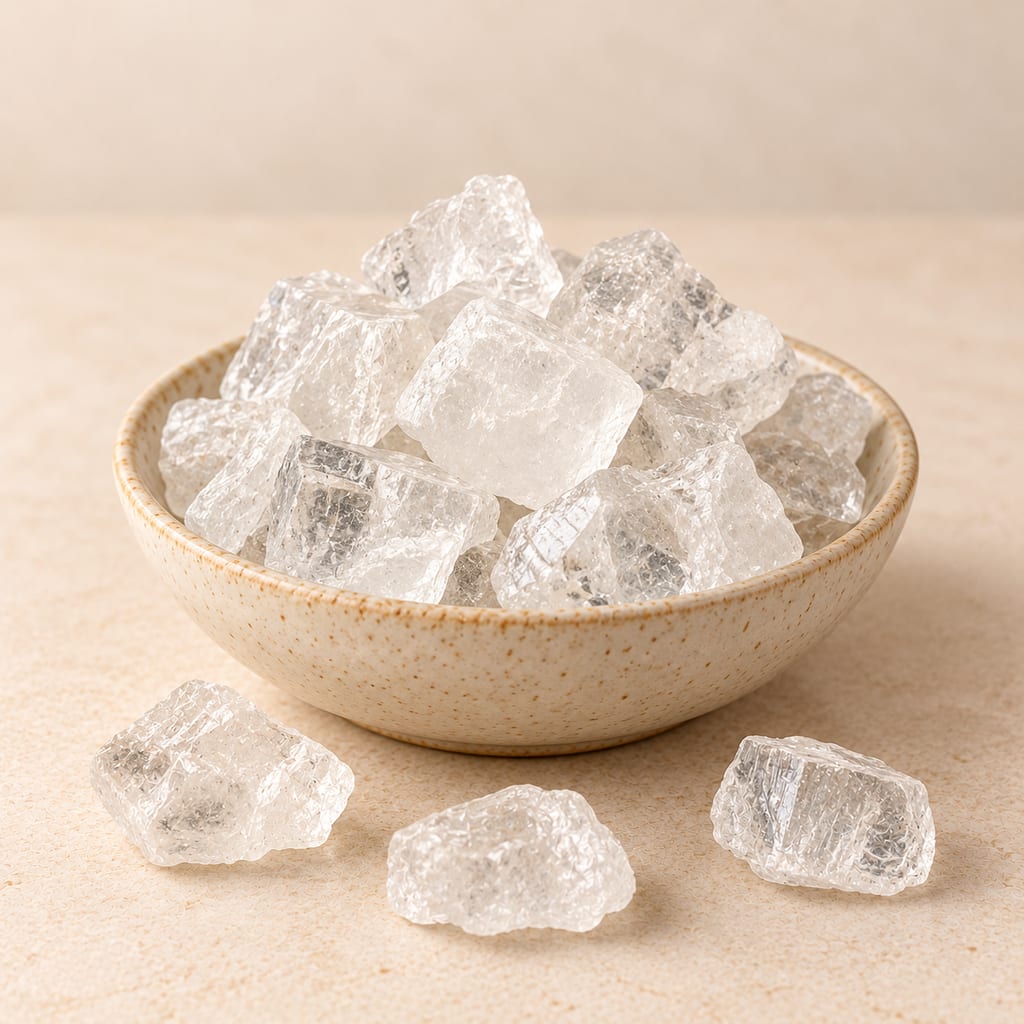
Rock salt is sodium chloride mined from ancient salt beds, sold from coarse grey chunks to pink Himalayan crystals and the fired black salt, kala namak, used in Indian cooking.
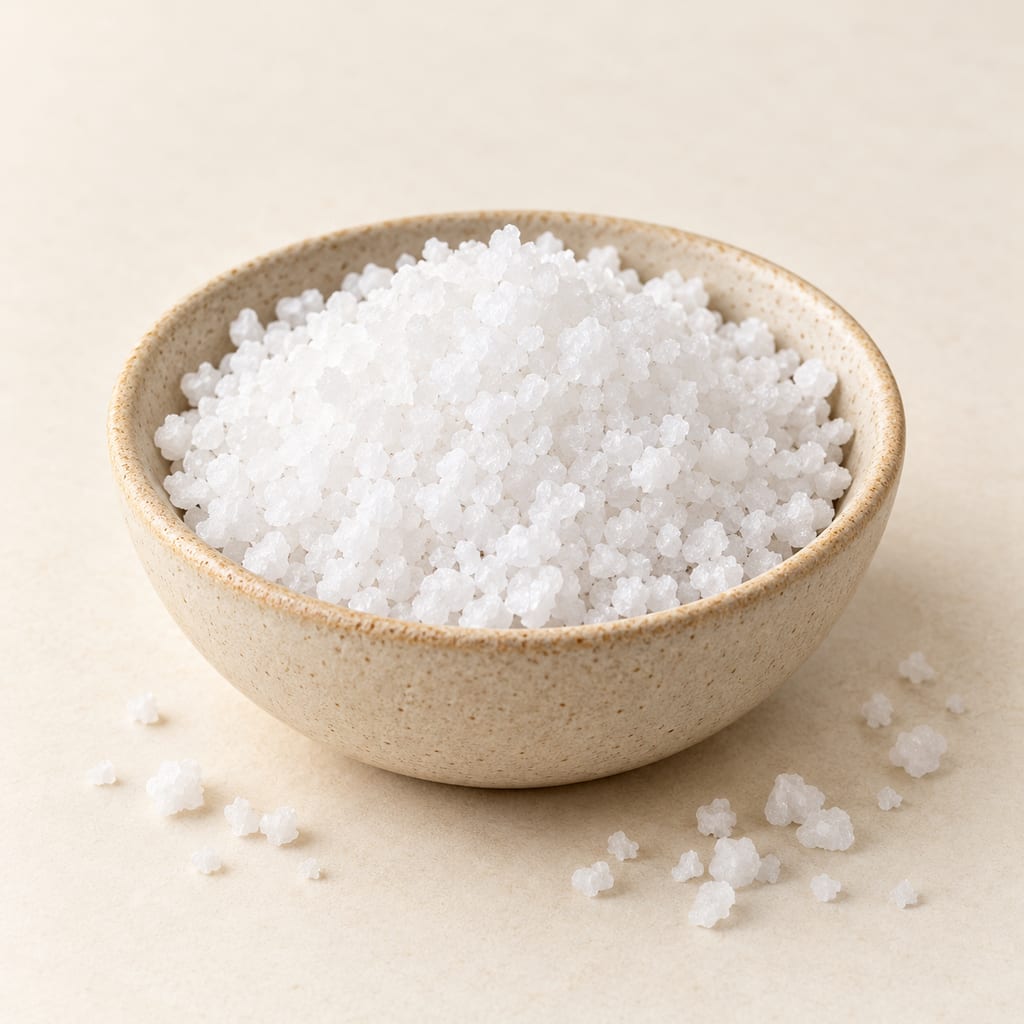
Food-grade sodium chloride seasons food and changes water movement in brines and cures; crystal size and the recipe's measurement method matter.
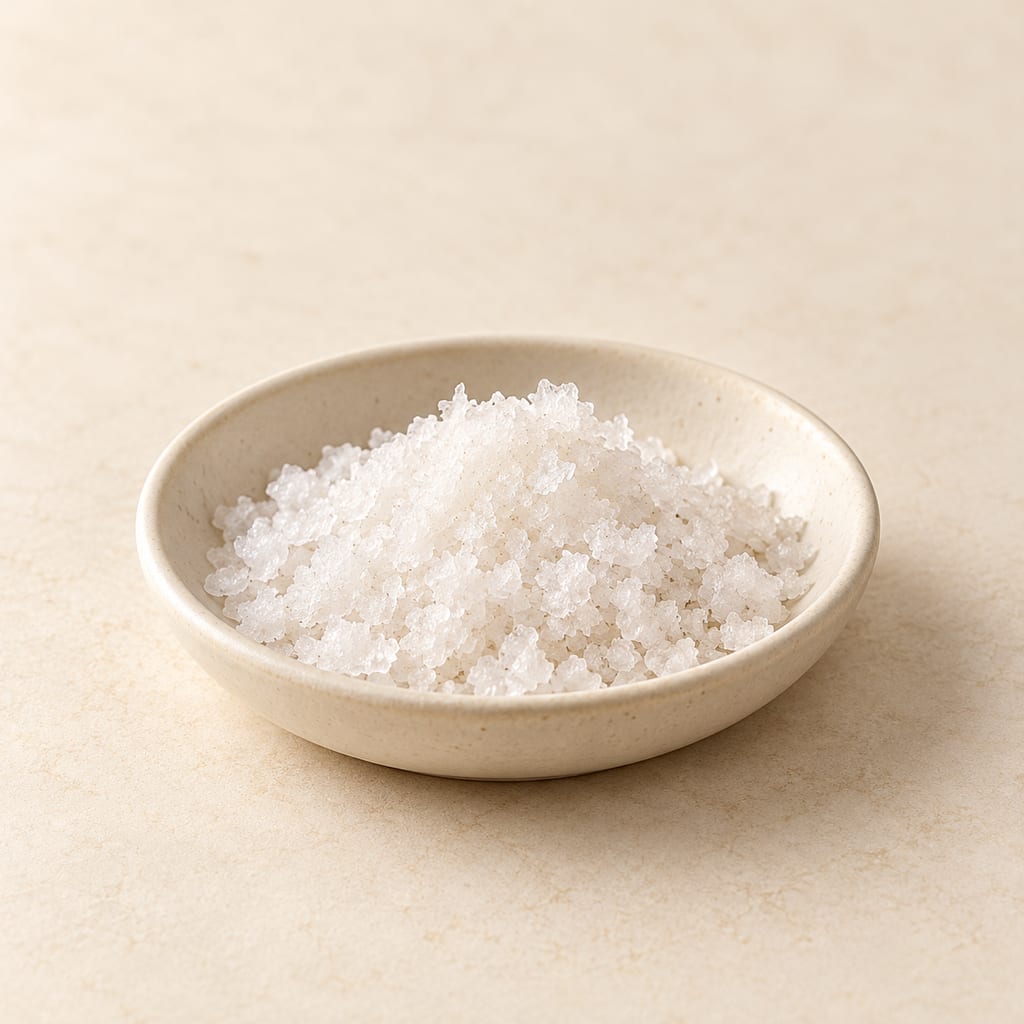
Salt recovered from seawater comes as fine grains, coarse crystals and delicate flakes. Its production, crystal form and measured use connect coastal saltworking with cooking and preservation.
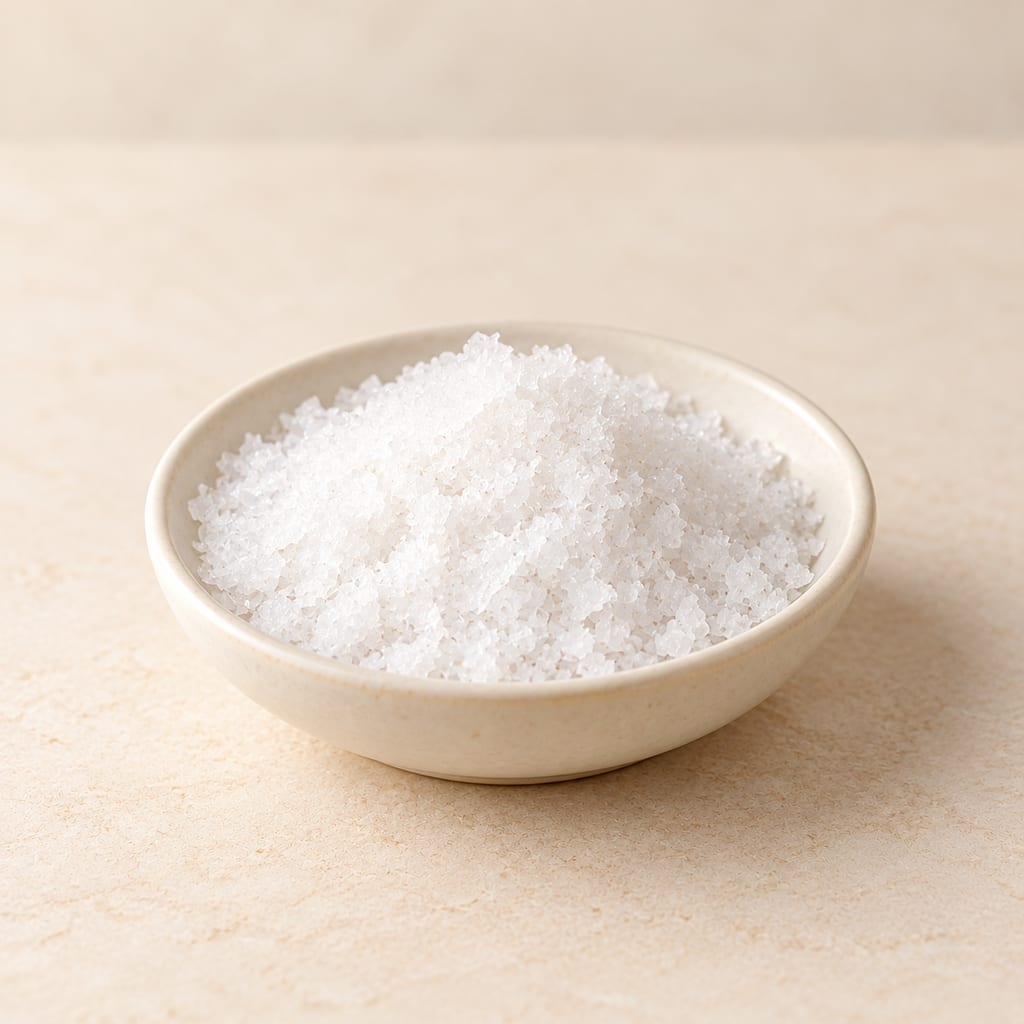
Coarse cooking salt named for its use in koshering meat. Its flakes vary by maker, so crystal shape, additives and the recipe’s unit all matter.
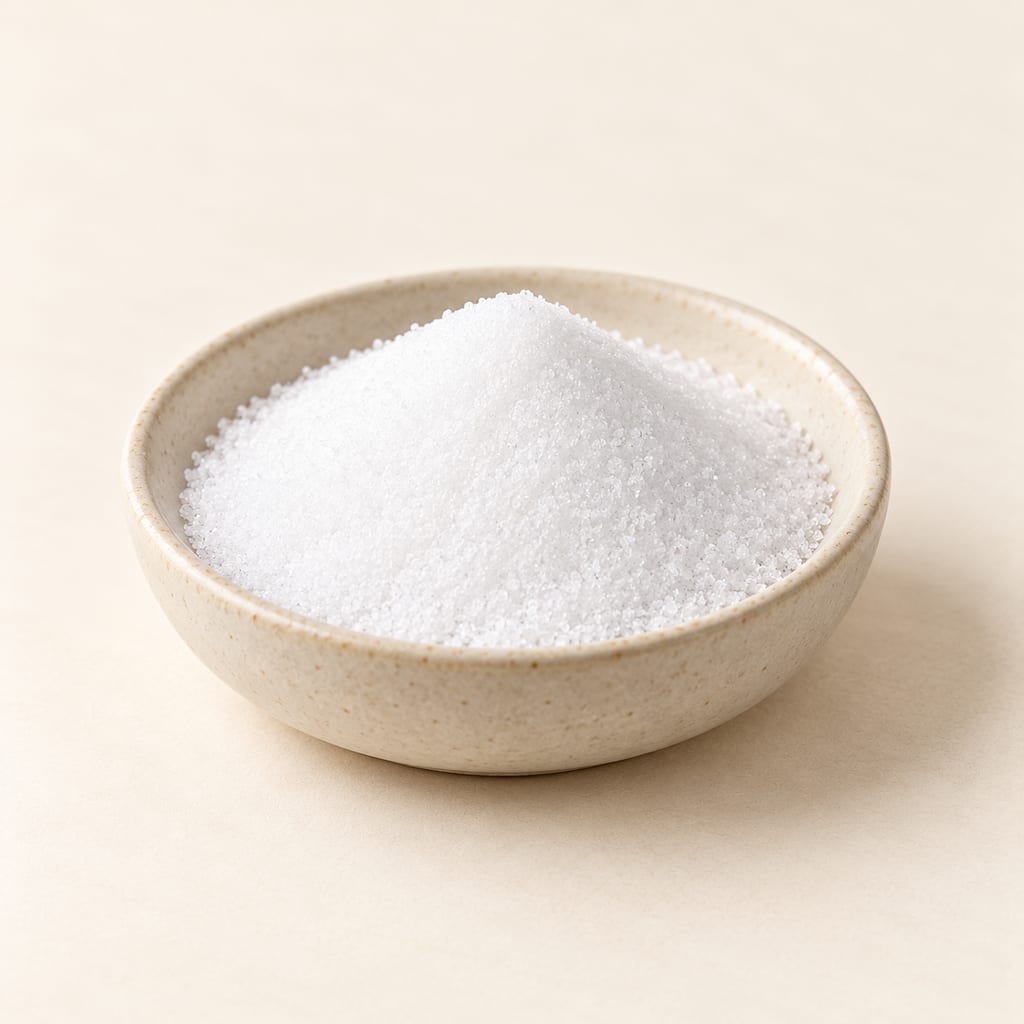
Table salt is fine-grained food-grade sodium chloride for everyday seasoning and measured cooking. Products may include iodine or an anti-caking agent.
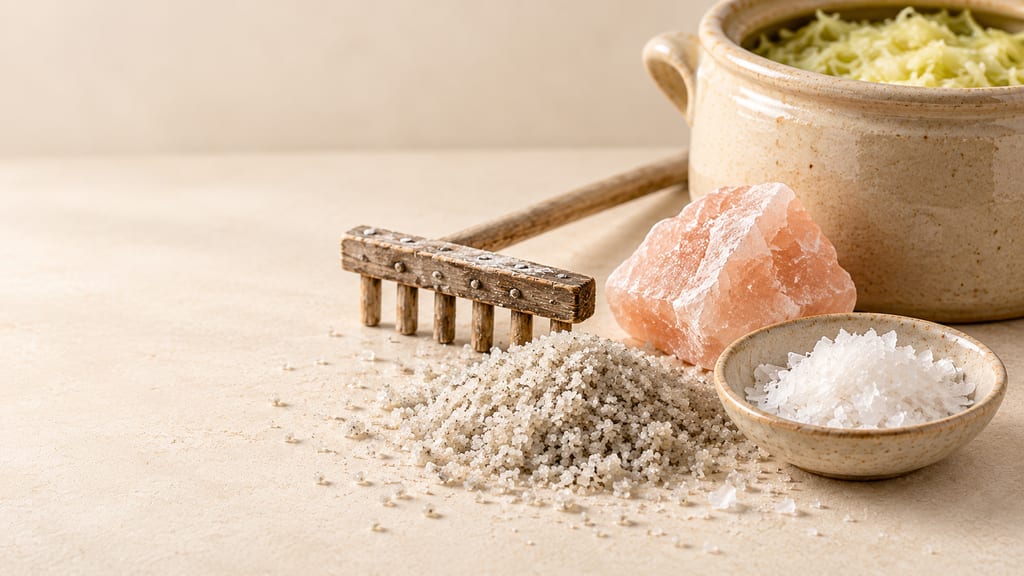
Salt seasons a meal, shapes fermentation and preserves food. Its history follows the people who mine, harvest, trade and transform it, and the choices hidden inside an ordinary packet.
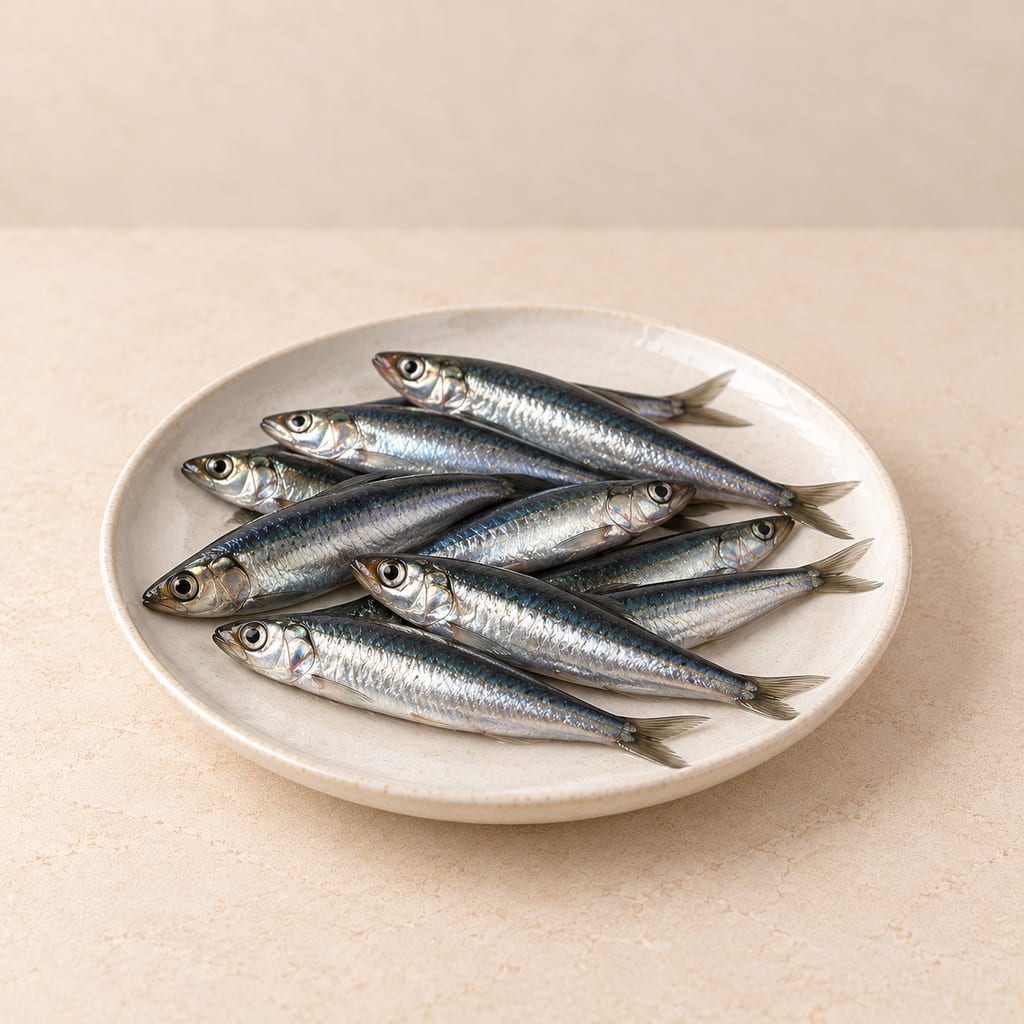
Anchovies are small schooling sea fish of the family Engraulidae, eaten fresh or dried and above all salted: as fillets in oil, whole salted fish or fish sauce.
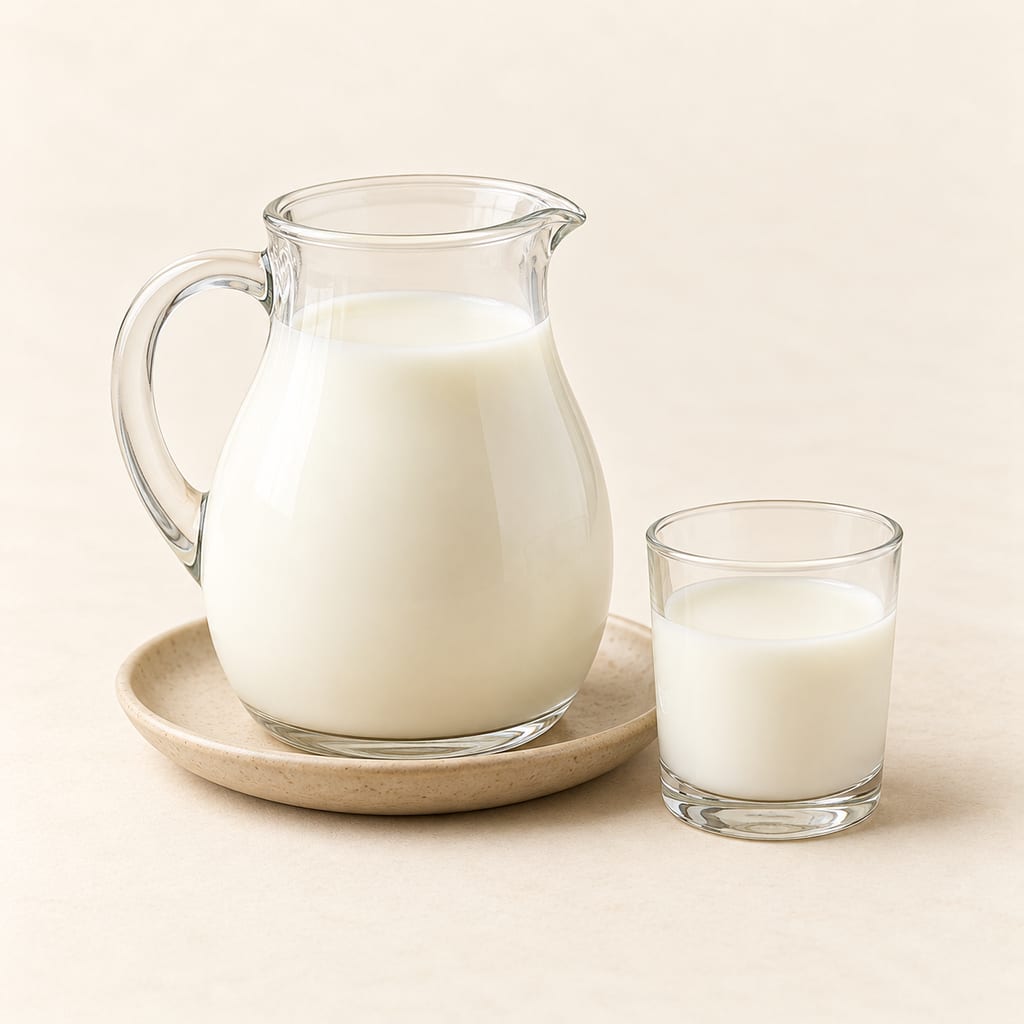
Water buffalo milk comes from Bubalus bubalis and appears in regional dairy traditions across Asia and beyond. Its richer average fat and casein profile affects processing, while composition and raw-milk risk depend on the actual supply.
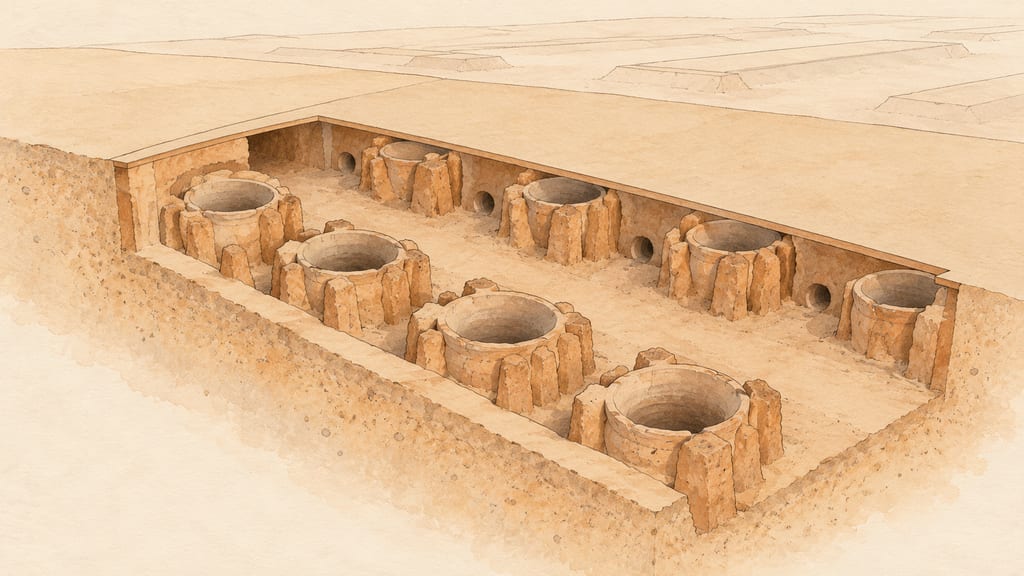
At North Abydos in Egypt, a fixed early Dynastic brewery comprised parallel semi-subterranean installations with rows of ceramic mash vats; excavation reports revise their number, scale and estimated batch capacity.
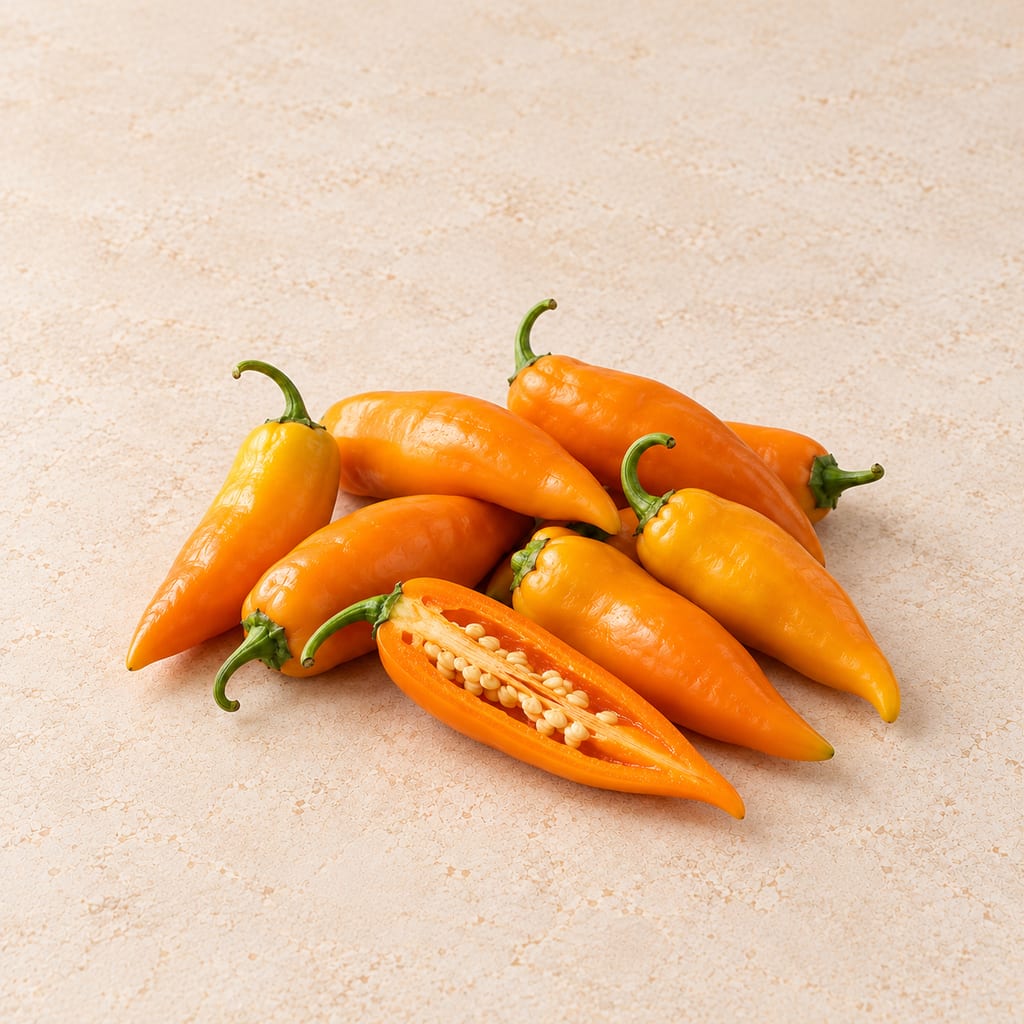
Ají amarillo is the orange-yellow Peruvian chilli cultivar group of Capsicum baccatum, used to colour and season huancaína sauce and ají de gallina. Published heat estimates do not establish one range for the named cultivar.

Toasted almonds are whole sweet almond kernels dry-roasted until golden to brown. Heat replaces their marzipan note with a roasted, nutty one; they thicken and flavour romesco.

Kodiak salmon, halibut and cod cut as seg'aq and hung on an initaq rack to become tamuuq, with kac'amaasaq and kupcuunaq named as different results.
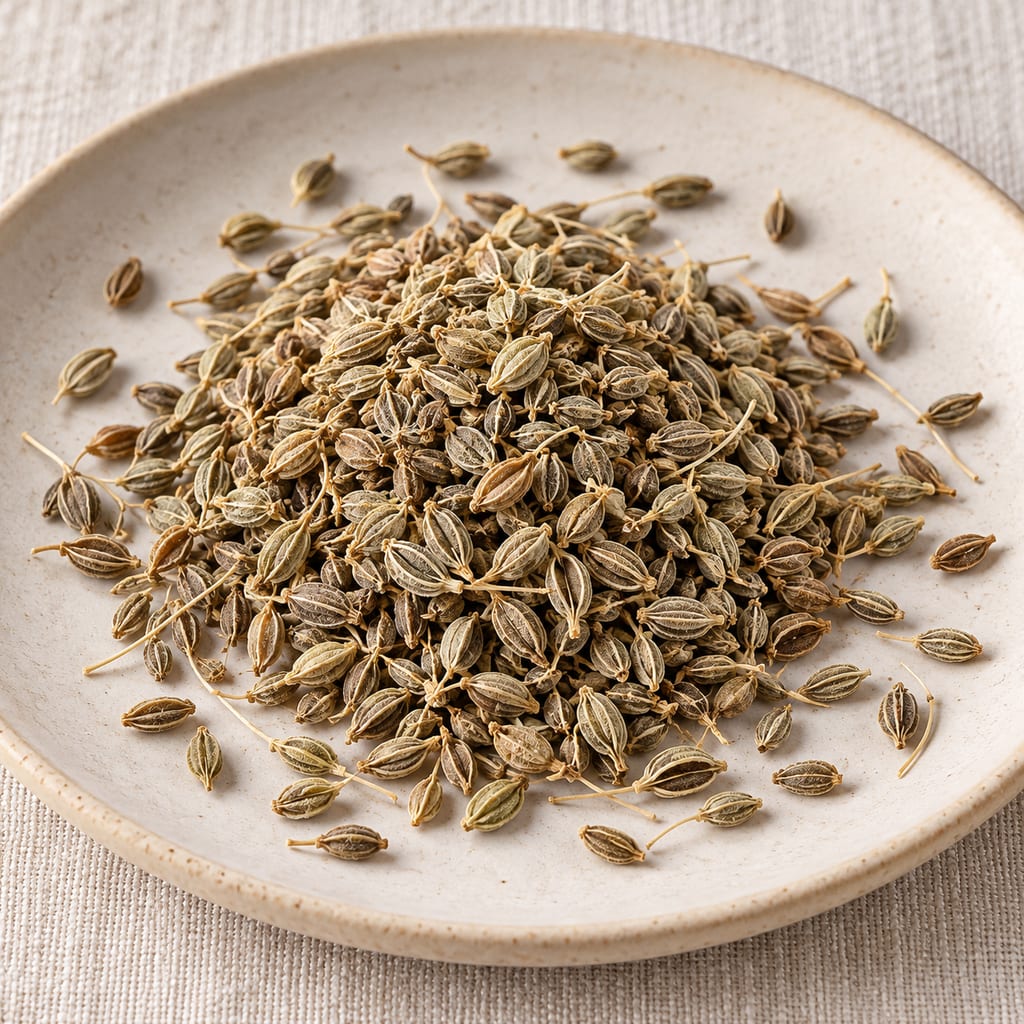
Aniseed is the dried ripe fruit of Pimpinella anisum, an aromatic Apiaceae spice commonly called a seed. It adds a sweet, warm aroma to breads such as Moroccan krachel and South African mosbolletjies, and is distinct from star anise.
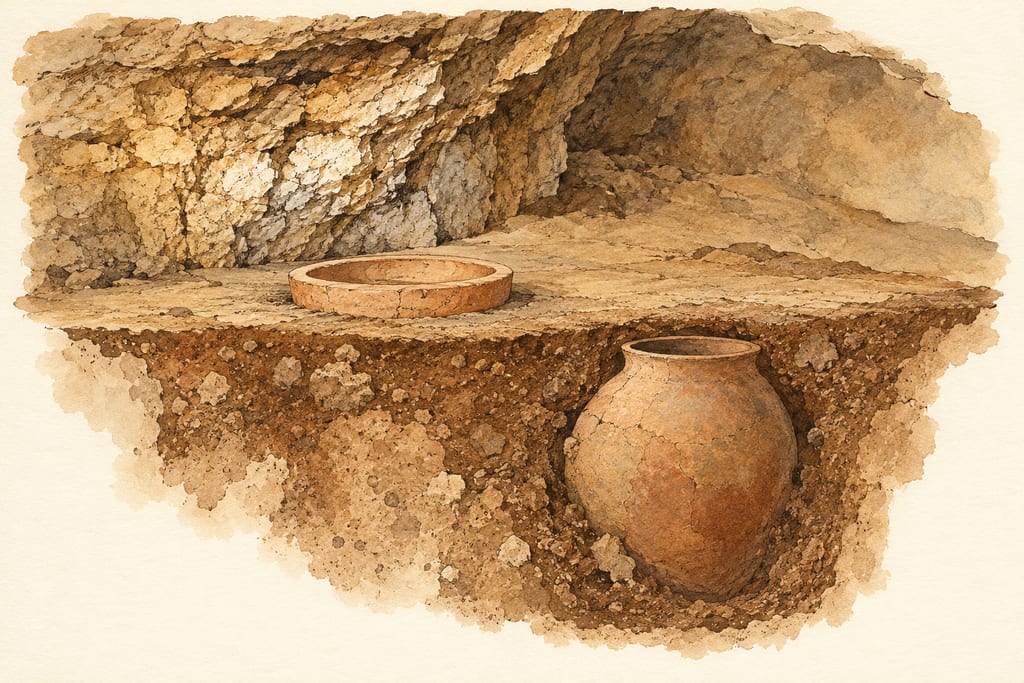
A fixed Late Chalcolithic installation in Areni-1 cave combined a shallow clay pressing basin with a large jar set into the cave floor and storage vessels nearby.

Ripe avocado flesh is the soft, buttery, fat-rich pulp of Persea americana, eaten raw. It is low in acid, so it is a fresh ingredient that needs care in chilled dishes.
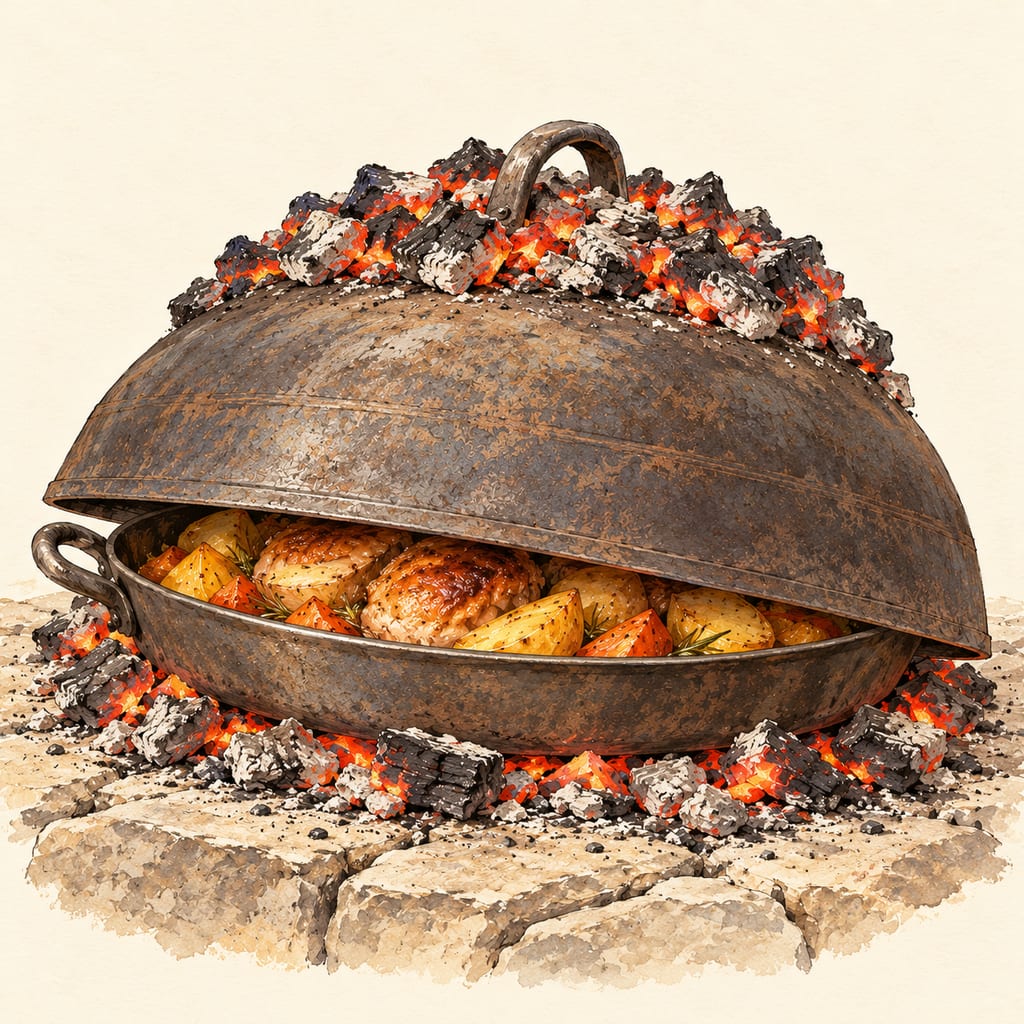
A portable dome and pan used over a hearth, with embers on the lid and heat from below. Regional peka and saç forms share this principle while differing in materials, pan shape and how the food is cooked.
No community contributions have been published for this entry yet.
Sign in to contribute. Published comments and photos are free to read.
Codex Alimentarius Commission, FAO/WHOIdentity · Labelling · Storage
Standard for Food-Grade Salt, CXS 150-1985 (2025 edition)Food-grade salt is a crystalline product consisting predominantly of sodium chloride, obtained from the sea, from underground rock salt deposits or from natural brine; NaCl at least 97 per cent on a dry matter basis, exclusive of additives; the remainder is natural secondary products such as calcium, potassium and magnesium sulphates, carbonates and chlorides; iodization in iodine-deficient areas; the label name is salt, with food-grade, cooking salt or table salt nearby, and may state the origin or method of production.
Cited in: Salt in large grains; Sea, rock and brine; Coarse, kosher and pickling salt; Choosing and keeping coarse salt
U.S. Geological SurveyTrade
Mineral Commodity Summaries 2025: SaltUS salt production about 40 million tons in 2024; by type, salt in brine 42 per cent, rock salt 40, solar salt 9, vacuum pan salt 9; highway deicing about 41 per cent of consumption, chemical industry 39, food processing 4.
Cited in: Sea, rock and brine
Antiquity project galleryHistory
The earliest salt production in the world: an early Neolithic exploitation in Poiana Slatinei-Lunca, RomaniaA stratified midden of ash, charcoal and burnt soil beside a spring of about 160 g/l salinity, about six times seawater; main early Neolithic exploitation dated 6050 to 5500 cal BC; brine evaporated over fire into hard salt cakes in pottery containers; argued to be the earliest known salt production in Europe and probably the world.
Cited in: The oldest manufacture
National Institute of Korean History, Our History NetHistory
Implementing the Goryeo salt monopoly (Goryeosa, Sikhwa 2, Yeombeop)In the second month of King Chungseon first year (1309) salt pans held by palaces, temples and powerful families were handed to the state; prices were set (64 seok of salt to one geun of silver), buyers were directed to official salt stores, counties set up salt storehouses, and commoners were conscripted as salt households; the totals recorded are 616 salt pans and 892 salt households; private salt-making and illegal trade were punished.
Cited in: Salt and the state
Korean Ministry of Food and Drug SafetyClassification
Food Standards and Specifications, MFDS Notice 2026-55Food salt is classified as solar salt, reprocessed salt, roasted or melted salt, refined salt, other salt and processed salt; coarse is not a separate type; food salt is distinct from industrial salt.
Cited in: Salt in large grains; Sea, rock and brine
University of Maine Cooperative ExtensionUse · Selection
The Best Salts for Canning & PicklingSalt crystals vary in shape and size, so salts are not interchangeable by volume; kosher salt has larger crystals and a different density from pickling salt, so weigh salt; iodine and anti-caking agents in table salt can cloud brine and darken vegetables; pickling salt is pure sodium chloride; salt is needed for fermented pickles, while other canned vegetables can be made without it.
Cited in: Coarse, kosher and pickling salt; Salt in vegetable ferments; Choosing and keeping coarse salt
Korean Traditional Knowledge Portal, Rural Development AdministrationUse
멸치젓 (Myeolchi jeot)In a Gyeonggi-do method, coarse salt (굵은 소금) packs the anchovies, and a separately prepared brine covers them.
Cited in: Coarse salt in curing and fermenting
PLOS ONE (via PubMed Central)Use · Science
Effects of Temperature on Bacterial Communities and Metabolites during Fermentation of Myeolchi-AekjeotTraditional Korean anchovy sauce uses about 25 per cent salt (w/v); anchovies packed with solar salt and covered with 25 per cent solar salt solution; salt-tolerant halophilic bacteria dominate later stages.
Cited in: Coarse salt in curing and fermenting
Italian Journal of Food SafetyUse
Assessment of environmental chemical contamination and histamine levels in the production of Colatura di Alici di CetaraAnchovies are layered with sea salt in oak terzigni under a weighted wooden disc.
Cited in: Coarse salt in curing and fermenting
Conservas La Rosita S.L.Use
ProductionGutted anchovies are layered with coarse salt in barrels, which dehydrates and seasons the flesh and gives colour and flavour; excess salt is rinsed off before the fillets are packed.
Cited in: What salt does to food
U.S. Food and Drug AdministrationScience
Water Activity (aw) in FoodsWater activity compares vapour pressure over a food with that of pure water; dissolved salt lowers it; it differs from moisture content.
Cited in: What salt does to food
ACS Omega (via PubMed Central)Science
Microbial Dynamics and Metabolite Profiles in Different Types of Salted Seafood (Jeotgal) During FermentationAnchovy, cutlassfish-offal and croaker jeotgal develop different microbial communities and metabolites; Tetragenococcus halophilus is prominent in the anchovy samples.
Cited in: Coarse salt in curing and fermenting
Food Chemistry: X (PubMed Central)Use
Impact of essential and optional ingredients on microbial and metabolic profiles of kimchiKimchi was made with salted kimchi cabbage as the primary vegetable.
Cited in: Coarse salt in curing and fermenting
Great British ChefsUse
Ingredient focus: Cantabrian anchovyFresh anchovies are salted immediately to firm them, headed and washed, then cured in barrels with salt for at least nine months, up to three years, before de-salting, hand boning and packing in oil.
Cited in: Coarse salt in curing and fermenting
Colorado State University ExtensionUse
Understanding and Making SauerkrautSalt draws juice from cabbage, helps form the brine, releases fermentable sugars, inhibits undesirable yeasts, moulds and bacteria while fermenting bacteria tolerate higher salt, and acts as a preservative; use 2 to 2.5 per cent salt by weight, about 3 tablespoons per 5 pounds of shredded cabbage; non-iodized salt without anti-caking agents; ferment at 68 to 72 F for about 7 to 14 days.
Cited in: Salt in vegetable ferments
World Health OrganizationDietary
Salt reduction (fact sheet)Adults should consume less than 5 g of salt (2,000 mg sodium) a day; the global mean adult intake was about 11 g of salt a day in 2021; the primary health effect of high-sodium diets is raised blood pressure; all salt consumed should be iodized.
Cited in: Choosing and keeping coarse salt
U.S. Food and Drug AdministrationAllergen
Food AllergiesFood allergies are immune reactions to proteins; the label of a processed food lists its ingredients.
Cited in: Choosing and keeping coarse salt