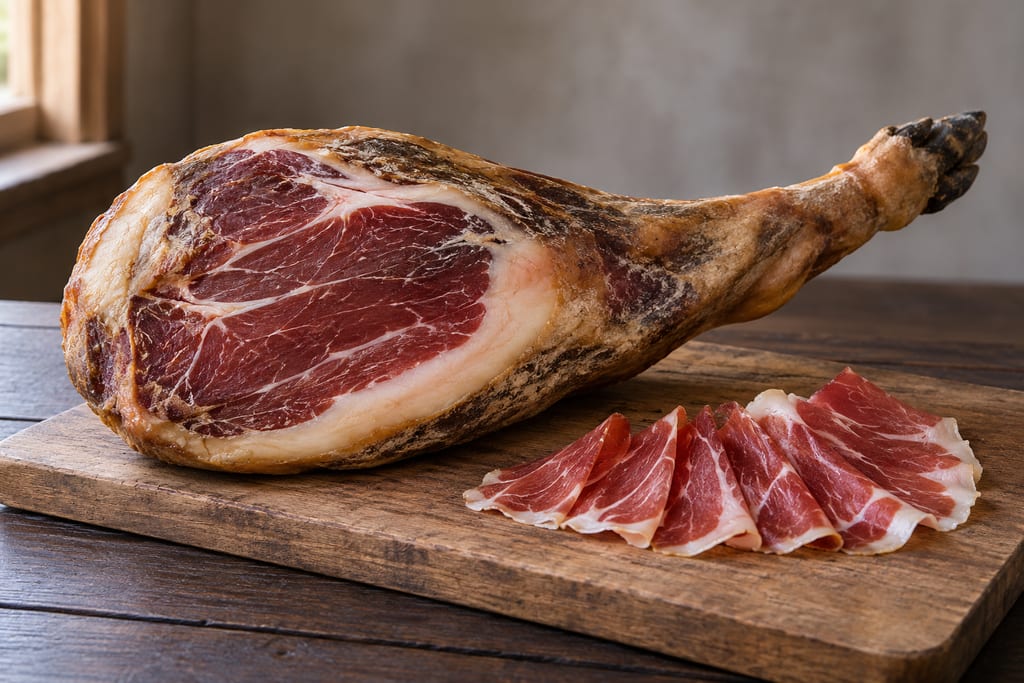
Presunto de Barroso
Smoked dry-cured pork ham of the Barroso highlands of northern Portugal: hand-salted, sometimes coated with olive oil and paprika, then smoked slowly over oak or broom in the cold mountain air.
 FermenteaWhere food goes to change
Traditional method
Lonzino stagionato · Lonzino di maiale · Lombo di maiale salato · Capolombo · Lonza stagionata
Documentary account of Italian regional cured-loin traditions, including Tuscan and Marche variations; no home-cure instructions are provided because the published professional methods lack validated safety controls.
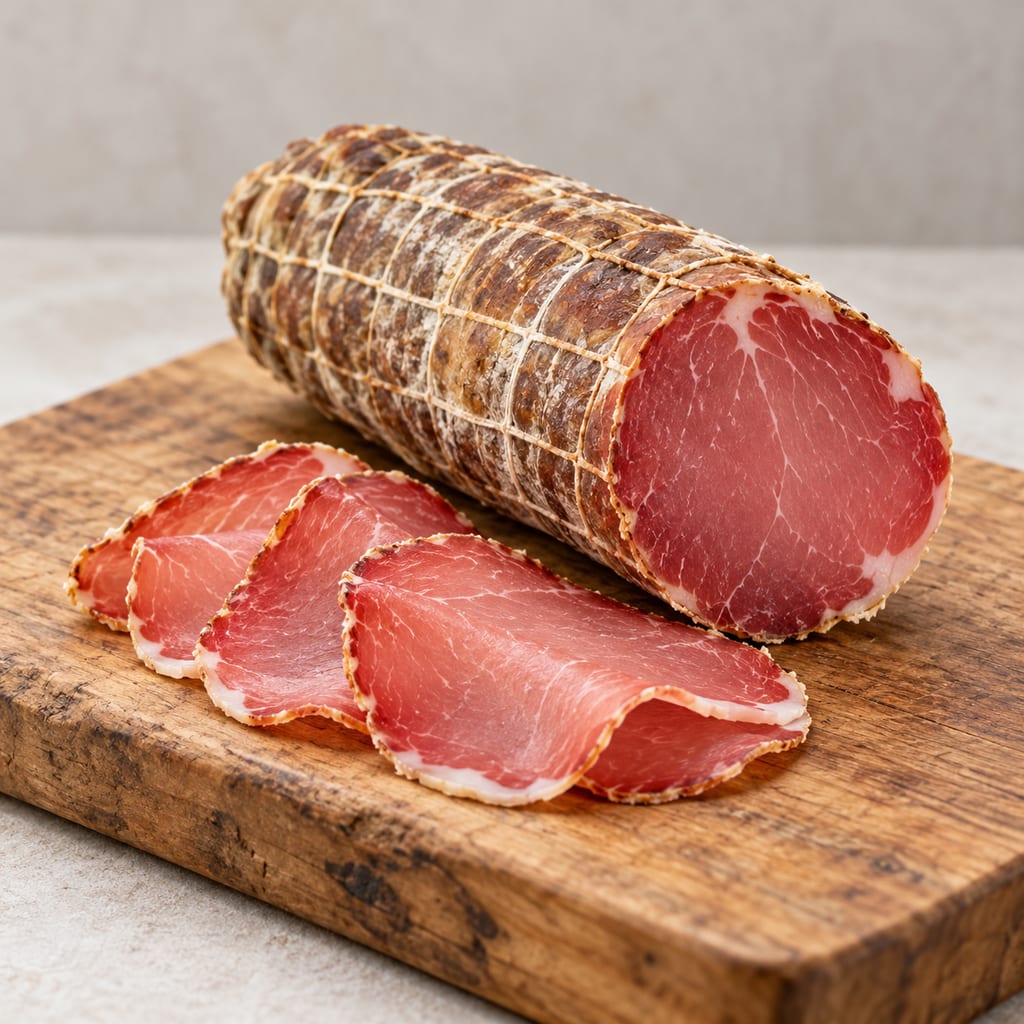
Lonzino is an Italian cured meat made from a whole piece of pork loin. The loin is trimmed, salted, seasoned and left to lose water slowly until it is firm enough to slice thinly. Unlike a salami, the muscle is not minced or mixed with fat, so each slice has a uniform centre of lean meat. It is eaten without cooking, which is why the way it is cured matters so much.
The defining cut is the loin from the pig's back. That sets it apart from capocollo and coppa, which come from the fattier neck and collar. Italian usage is not tidy: in parts of central Italy lonza names a neck-based cured meat. The Marche regional record separates lonzino from lonza by how fat and lean are arranged, and gives capolombo as a regional alternative name for lonzino.
The shape is cylindrical or slightly tapered. The centre is pink to red with little marbling, and some pieces keep a thin band of fat while others are trimmed almost fully lean. Depending on the maker the outside carries pepper or herbs, or is wrapped in a natural casing, a pork bladder, breathable paper or a net. The texture runs from firm and pliable to dry and dense. With so little fat to soften it, thin slices are better than thick ones.
Preservation rests on salt and drying and not on deliberate microbial fermentation. The meat's own enzymes keep working through maturation, changing texture and flavour. Some makers add permitted nitrite or nitrate, others declare recipes without. Smoking appears in some regional versions but not all.
No single specification covers every Italian lonzino. The name is used in Tuscany, Marche, Emilia-Romagna, Piedmont, Lombardy and Veneto, and the salting and ageing differ a good deal, so one region's method cannot stand for another's. The cured loin described here is also not the cooked lonzino arrosto, and in Marche lonzino di fico is an unrelated fig sweet shaped like a sausage. The record here is a non-fermented whole-muscle cure: enzymes act, but there is no controlled lactic fermentation and no universal starter.
Lonzino belongs to Italy's old habit of preserving pork by salting and drying whole cuts. The technique is older than the salumi industry, but the age of a technique is not the date of a product. No reliably dated ancient or medieval reference to lonzino in its present form exists, and its place and date of origin are unknown. Claims of Roman, Etruscan or medieval invention would need documents behind them.
The most specific account comes from Tuscany's official traditional-products archive, which ties lonzino, also called lombo di maiale salato, to San Miniato and Orentano in the province of Pisa. It says production around San Miniato had largely died out until the family of a local butcher recovered an older recipe, made with pork loin, Vin Santo and mild seasonings, followed by salting, resting and maturation. The archive calls the recipe old but gives no manuscript date or original producer. It also links the modern product to local butchers, restaurants, the San Miniato white-truffle festival and a food and wine event in Pisa.
That is evidence that a local tradition was remembered and revived commercially. It does not show that the same method ran unbroken for any number of centuries. A separate account appeared on 1 October 2018, when WeChianti interviewed Macelleria Francini in Sambuca, near Tavarnelle. The shop was founded by Ilvo Francini in 1968, and its butcher describes a salting period much shorter than the one used before, then garlic, pepper, wild fennel and hanging. The founding date belongs to the shop and not to lonzino.
Marche holds a second body of evidence. Regional records list lonzino, also called capolombo, among traditional meat preparations. A 2019 regional listing gives its ingredients, characteristics and production area, and the 2022 listing records salting, a red wine wash, casing, long maturation and optional juniper smoking. The descriptions speak of methods handed down through generations, without a first date.
The honest picture is regional. Tuscany shows a revived local recipe, Marche an established and technically different tradition, and producers in the north show how widely the name is now used.
Lonzino changes through salt diffusion, loss of water and biochemistry in the meat. Salt dissolves in moisture on the surface and moves slowly towards the centre. In a loin thick enough that the middle stays different from the outside for some time, that delay is important. Salt also alters muscle proteins and reduces the water available to microbes, which slows many forms of spoilage without removing pathogens.
The measure that matters is water activity, aw, and not water content alone. Two products with the same water content can have different water activities because of the salt and other solutes dissolved in them. Drying moves water outward and into the air, at a rate set by temperature, humidity, air movement, casing and the size of the piece. Drying the surface too fast forms a hard outer layer while the centre stays moist.
Enzymes contribute. Muscle proteases, including cathepsins, break proteins into peptides, and peptidases release free amino acids that add taste and feed aroma-forming reactions. A 2024 study of dry-cured pork loin found that samples with different degrees of proteolysis and lipid oxidation differed significantly in free amino acids, volatile compounds and texture. It concerns dry-cured loin in general and not an Italian lonzino maker.
Fat changes too. Lipases release fatty acids from muscle lipids, including phospholipids, and some unsaturated fatty acids oxidise into volatile compounds such as aldehydes. A moderate amount adds cured-meat aroma, and too much turns rancid. Spanish work on dry-cured loin has traced these changes in free fatty acids, phospholipids and oxidation products.
Where nitrite is used it yields nitric oxide, which reacts with myoglobin to fix the cured colour, and it has antimicrobial and antioxidant roles in a suitable curing system. Nitrate must first be reduced to nitrite by nitrate-reducing microbes. A label showing E250 or E252 does not say which microbes were present or whether the whole process works.
Lonzino needs no lactic starter. Salt-tolerant bacteria and surface fungi can take part in some curing rooms, but species such as Staphylococcus xylosus, S. carnosus or Penicillium should not be assigned to every lonzino without isolate data. The microbiology of dry-cured meat gives possible mechanisms, and it does not prove what is in a particular piece. The main challenge is controlling pathogens before the meat is eaten uncooked: Salmonella, Listeria monocytogenes, Staphylococcus aureus and pork parasites all need thought. Lower water activity can stop growth without killing what is already present, so drying and flavour development are not evidence that a cure is safe.
These accounts describe practices recorded by regional archives, named Tuscan butchers and commercial producers. They are documentary descriptions, not a household procedure. In particular, the published Francini account lacks a salt-to-meat ratio, temperature, humidity, water-activity endpoint and validated pathogen controls; its details are not presented here as instructions for making raw, ready-to-eat pork at home.
Production starts with fresh pork loin, trimmed of bone, damaged tissue and unwanted fat so that the piece is regular and cures evenly. The meat has to stay under good hygiene and temperature control before and during processing, since it will be eaten raw in effect.
Salt is the essential ingredient. It flavours, changes the behaviour of muscle proteins and lowers water availability. Pepper, rosemary, juniper, fennel and garlic are documented seasonings in different combinations. Vin Santo or red wine appear in regional methods. Wine adds flavour and acts on the surface, and it is no substitute for enough salt or for a process that has been shown to control pathogens.
Tuscany's archive describes a San Miniato method in which the loin is infused with Vin Santo, lightly seasoned without garlic, salted and left to drain for three days, then rested for about two weeks before a fairly short maturation. It gives no meat weight, salt quantity, maturation time, temperature, humidity or water activity.
Macelleria Francini describes a different Tuscan method. The trimmed, lean loin is covered with coarse salt, juniper berries and rosemary for 72 hours. The butcher contrasts this with a former practice of up to 15 days. The salt is removed and the loin is coated with crushed garlic, pepper and powdered wild fennel, wrapped in breathable material, covered with butcher's paper, tied and hung. It can begin to be eaten after about 30 days. No temperature, humidity or safety limit is given.
The Marche record describes salting for one or two days, washing with red wine, enclosing in natural casing and tying with split reeds for support. Maturation lasts at least four to five months and can reach ten months, at 8 to 12 degrees C and about 70 percent relative humidity. Those figures belong to that method and must not be moved into the shorter Tuscan ones.
Modern commercial methods differ again. Salumificio Verza describes about ten days of hand salting and seasoning, then eight days in brine, then casing and at least fifty days of maturation. Salumi Bassanelli states a minimum of forty-five days, AgriSalumeria Luiset about two months, Fratelli Grossi about two months in a pork bladder, and Salumificio di Franciacorta at least ninety days in the cellar. Some products carry dextrose, antioxidants and permitted nitrate or nitrite, and others publish shorter ingredient lists. The role of any additive has to come from the formulation and not from the product name.
Casing, wrapping, pressing, tying and netting hold the shape and influence how the loin dries. There is no universal weight-loss target or finished water activity. Combining durations and ingredients from different makers would not produce a verified safe recipe.
The San Miniato lonzino is marked by Vin Santo and restrained seasoning, and the archive says explicitly that it lacks garlic. The nearby Francini method uses garlic, rosemary, juniper, black pepper and wild fennel. Both are real Tuscan preparations and they are two versions, not one original recipe.
Marche keeps a longer-matured style. Its record describes a cylindrical, slightly tapered piece in natural casing and fairly firm, with a red wine wash after salting and in some traditional methods split reeds to hold it while hanging. It also describes optional smoking, especially around Ascoli, with burning juniper branches, which separates it from unsmoked lonzino.
The Marche documentation also shows why lonza cannot be treated as an exact synonym everywhere. Local usage may separate products by whether fat and lean are mixed or sit apart. Capolombo is given as an alternative name for the registered regional preparation.
Further north, commercial makers sell lonzino with other seasoning and ageing. In Veneto, Salumificio Verza makes Lonzino Valligiano from heavily trimmed loin, using both dry seasoning and a brine stage. In Piedmont, Luiset describes about two months of maturing. In Lombardy, Franciacorta specifies at least ninety days in the cellar. These are current commercial styles and not evidence of separate ancient origins.
Emilia-Romagna makers also sell cured loin as lonzino stagionato. Fratelli Grossi cures with salt and aromatics, encloses the meat in a pork bladder and matures it for about two months. Others use a natural casing or netting, and some versions keep more outer fat or rind, which changes drying and the look of the slice. Regional comparison is best kept to named producers and documented methods, since no uniform Italian formulation or single obligatory smoke or seasoning has been established.
Lonzino is eaten in thin slices. It is leaner than a collar salume and has a firmer bite, so slicing thickness makes a real difference, and producers recommend cutting it very thin on a slicer. Casing, wrapping and other inedible outer layers come off as the maker's instructions say, and the slices can stand alone or go on a board with other cured meats.
In Tuscany it is tied to local butchers, restaurants and food events, with tastings at the San Miniato white-truffle festival and at a Pisa food and wine event. These are settings and not proof that truffle is a traditional accompaniment.
Makers suggest it as an antipasto with bread. Bassanelli proposes olive oil and citrus, and Burlenghi a carpaccio-style plate with olive oil and peppercorns. Unlike raw fresh-meat carpaccio this is already cured and ready to eat, and the word describes the presentation. Salumificio Valmisa in Marche suggests pickled or cooked vegetables or a salad of fennel and oranges, which suits the salty, lean meat without hiding its seasoning.
It also goes into sandwiches, where thin slices bite easily. Cooking it is possible, but heat changes the texture and loses some of the aroma of maturation, and the usual role is as a sliced cured meat.
Storage cannot be inferred from the fact that the meat is dried. Bassanelli says to keep its vacuum-packed product at 0 to 4 degrees C and Fratelli Grossi gives 2 to 4 degrees C for its packaged lonzino, and Burlenghi gives separate advice for whole and cut pieces. These are product-specific directions. Follow the label, refrigerate what requires it, and prevent contamination after slicing.
A well-matured lonzino is firm and sliceable, pink to red in the centre, and smells of cured pork and its seasonings. The outside may be darker and drier than the inside. Appearance depends on the cut, fat cover, casing, curing agents and maturation, and no look can establish that the meat is safe to eat.
Uneven drying is the commonest technical problem. If the surface dries too fast it forms a dense, hard region while the centre stays wet, called crusting or case hardening. Work comparing crusted and non-crusted dry-cured loins measured differences in water-content profiles, water activity and texture. A hard exterior therefore does not show that the whole piece has reached a stable condition.
Salt has to reach the middle and not just the surface; a salted exterior can sit over an under-cured centre if the process was not designed around the size of the piece. Salt applied is not the same as salt measured in the finished meat, and weight loss shows drying progress without establishing equilibrium water activity or microbial safety.
Changes in colour, aroma and firmness can come from ordinary curing chemistry: protein breakdown, lipid oxidation, and nitrate or nitrite. A different shade of pink is not by itself evidence of success or spoilage.
One result matters more than the others. A 2017 study followed experimentally contaminated dry-cured pork loins through a 64-day cure. Salmonella Typhimurium and Campylobacter coli fell substantially, while Listeria innocua, a harmless stand-in, fell by only 0.84 log. Drying time alone is therefore not a dependable kill step for every pathogen.
USDA FSIS names Staphylococcus aureus, Clostridium botulinum and Clostridium perfringens among organisms whose growth must be controlled in ready-to-eat cured and dried products, with Salmonella, Listeria monocytogenes and parasites needing pathogen reduction. Staphylococcal enterotoxins are especially troublesome because later processing cannot reliably undo toxin already formed. A lack of bad smell, visible mould or odd colour does not exclude these hazards.
Surface mould is not automatically helpful. Some cured meats use managed fungal cultures, but no universal safe mould has been established for lonzino. Unidentified growth, slime, unexpected moisture, damaged packaging or off odours are reasons to reject the piece, and removing visible mould does not make the meat safe. Useful production records include traceable raw material, piece size, salt formulation, curing temperature, humidity, weight change, pH, measured water activity and microbiological verification. Nitrite and nitrate additions are governed by current law for the product category. A recipe with only salt, spices and hanging time is incomplete for ready-to-eat pork.
Tuscany's archive links lonzino to San Miniato and Orentano and says a local butcher's family recovered an older recipe, made with loin, Vin Santo and mild seasoning, after production had largely stopped. Marche lists it among traditional meat preparations as lonzino or capolombo, with a long matured, sometimes juniper-smoked method handed down through generations.
No document gives a first date. A 2018 interview with Macelleria Francini in the Chianti, a shop founded in 1968, records the butcher's method.
Raw pork can carry Salmonella and salting and drying do not guarantee its removal. USDA FSIS documents outbreaks linked to ready-to-eat Italian-style cured meats made by processes that were not validated.
Hazard sourceListeria can survive some dry-curing conditions and contaminate ready-to-eat meat at slicing. A 2017 pork-loin study found only a 0.84-log reduction of Listeria innocua in a 64-day cure.
Hazard sourcePoor control of temperature, salt distribution and available water allows growth and toxin formation, and later drying cannot remove toxin already made.
Hazard sourceBotulism is a hazard in poorly controlled cured meat, especially with reduced oxygen and too few antimicrobial barriers. The Francini description does not establish a validated control.
Hazard sourceParasites must be considered when choosing raw pork, particularly from outdoor-reared, feral or higher-risk animals, and traditional salting and drying times are not validated parasite treatments.
Hazard sourceSalt and moisture gradients can persist between the surface and the centre of a whole muscle, and a firm surface can form before the centre is ready.
Hazard sourceAdding curing agents without a validated formulation creates chemical and microbiological risk, and permitted levels depend on the jurisdiction and product category.
Hazard sourceUse inspected, traceable pork and apply a validated raw-material and parasite control programme.
Control sourceValidate salt formulation, distribution and curing conditions for the real size and composition of the loin.
Control sourceControl and record temperature, relative humidity, time and airflow through salting and maturation.
Control sourceEstablish scientifically supported pathogen reduction for ready-to-eat whole-muscle cured pork.
Control sourceMeasure final water activity and confirm stability and storage specifications. Weight loss or a hard surface is not enough.
Control sourcePrevent contamination after processing during handling, slicing and packaging.
Control sourceWhere nitrite or nitrate is used, verify the permitted additive, formulation and current legal limits for the product and jurisdiction.
Control sourceRaw pork cured by salt and 30 days of hanging can still carry Salmonella, Listeria, parasites and staphylococcal toxin. The reported 72 hours of salting and about 30 days of maturation do not establish safety; have a food-safety specialist validate salt level, temperature, humidity and water activity before eating a home cure.
Do not mix the Francini method with temperatures, salting times or additive amounts from other lonzino makers.
Garlic, rosemary, juniper, fennel and salt do not kill pathogens.
Do not rescue a piece with mould, slime, off odours or unexpected moisture by trimming, washing or drying it further; discard it.
Do not add nitrite or nitrate by guesswork; use is regulated and depends on the formulation.
Keep the finished meat refrigerated unless a validated process shows it is shelf-stable; commercial makers specify 0 to 4 or 2 to 4 degrees C for their packaged lonzino.
Tuscany's archive ties lonzino to San Miniato and records a recovered older recipe without dating it.
Named with San Miniato in the Tuscan archive.
The Francini butchery method documented in 2018.
A long-matured style, sometimes smoked, listed as a regional traditional product.
A current commercial producer.
A current commercial producer.
A current commercial producer.
A current commercial producer.
Smoked dry-cured pork ham of the Barroso highlands of northern Portugal: hand-salted, sometimes coated with olive oil and paprika, then smoked slowly over oak or broom in the cold mountain air.
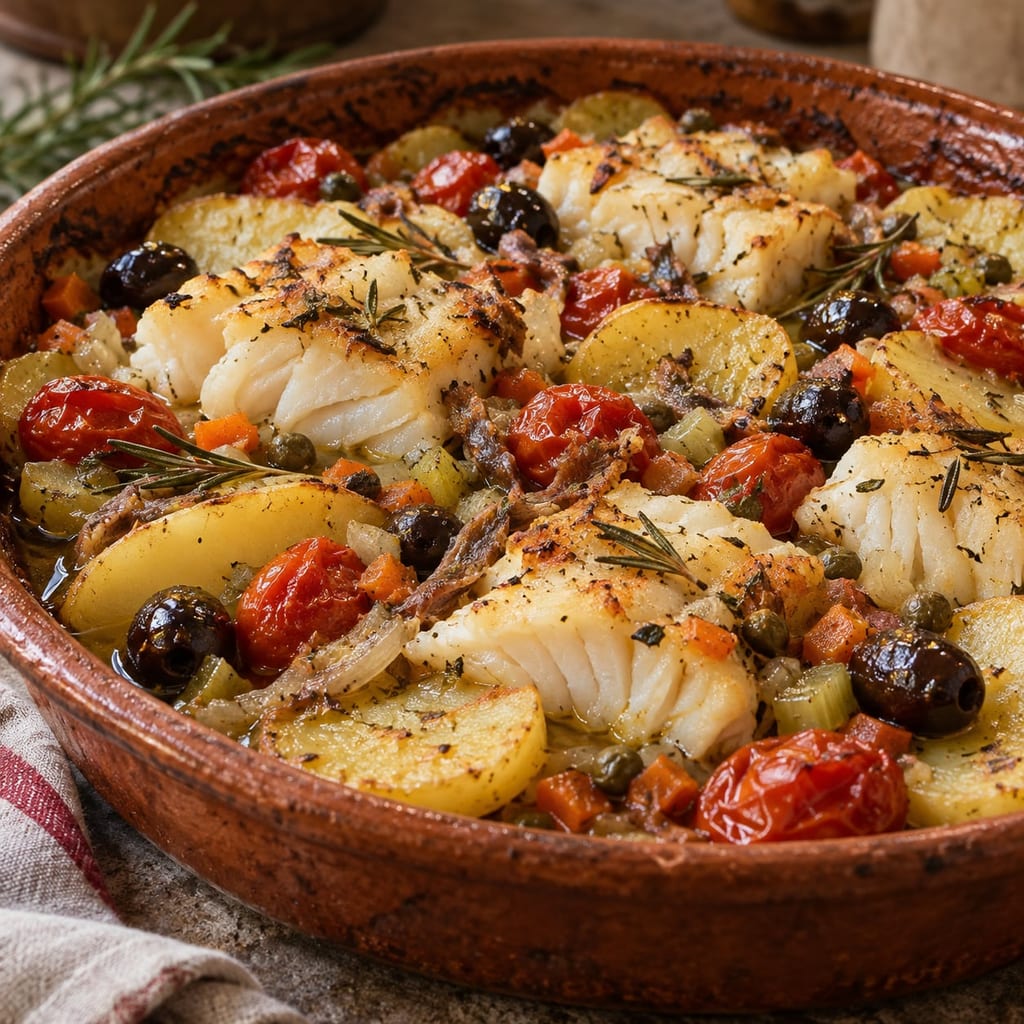
Ancona's baked stockfish: thick pieces layered with potatoes, tomatoes, olives, capers and anchovy under olive oil and white wine, cooked slowly in a covered dish.
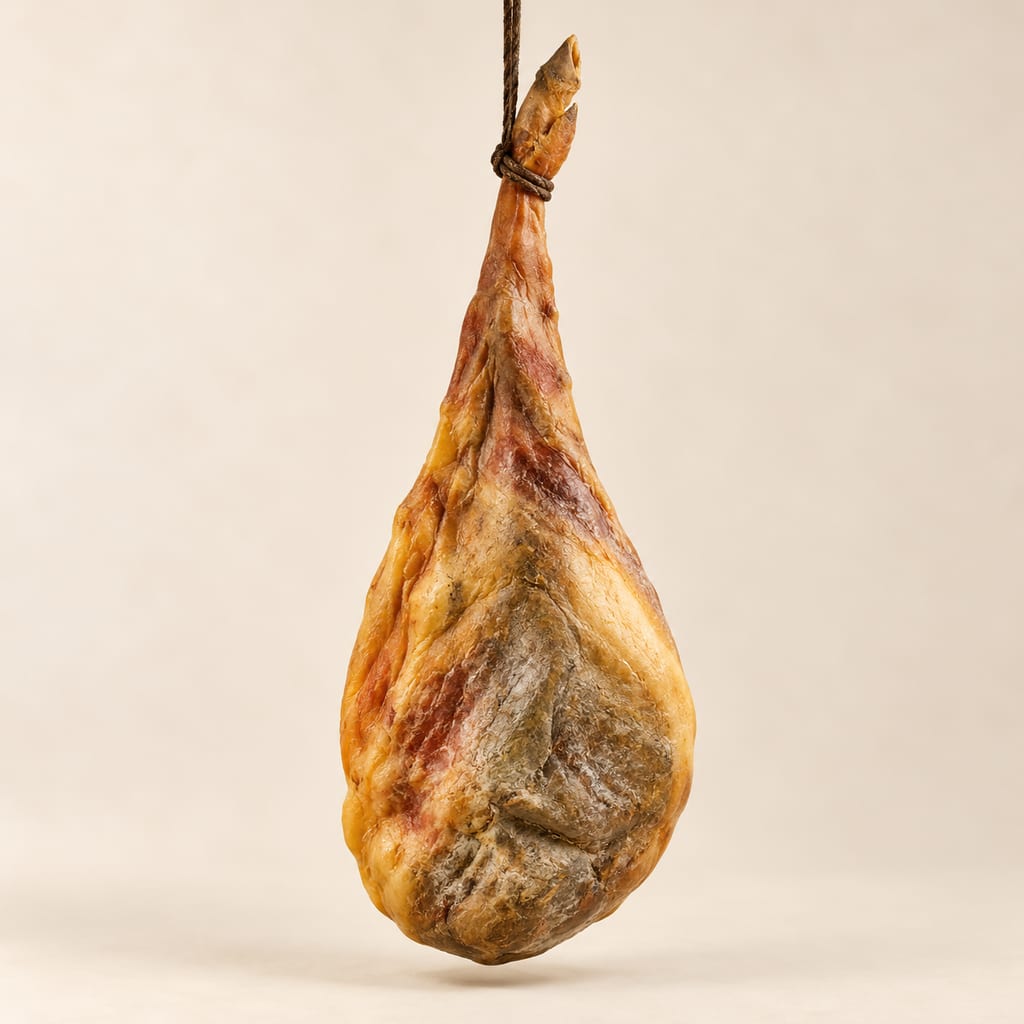
Cato the Elder records a second-century BCE sequence for salting, air-drying, and smoking ham. This historical account is not a validated modern curing protocol.
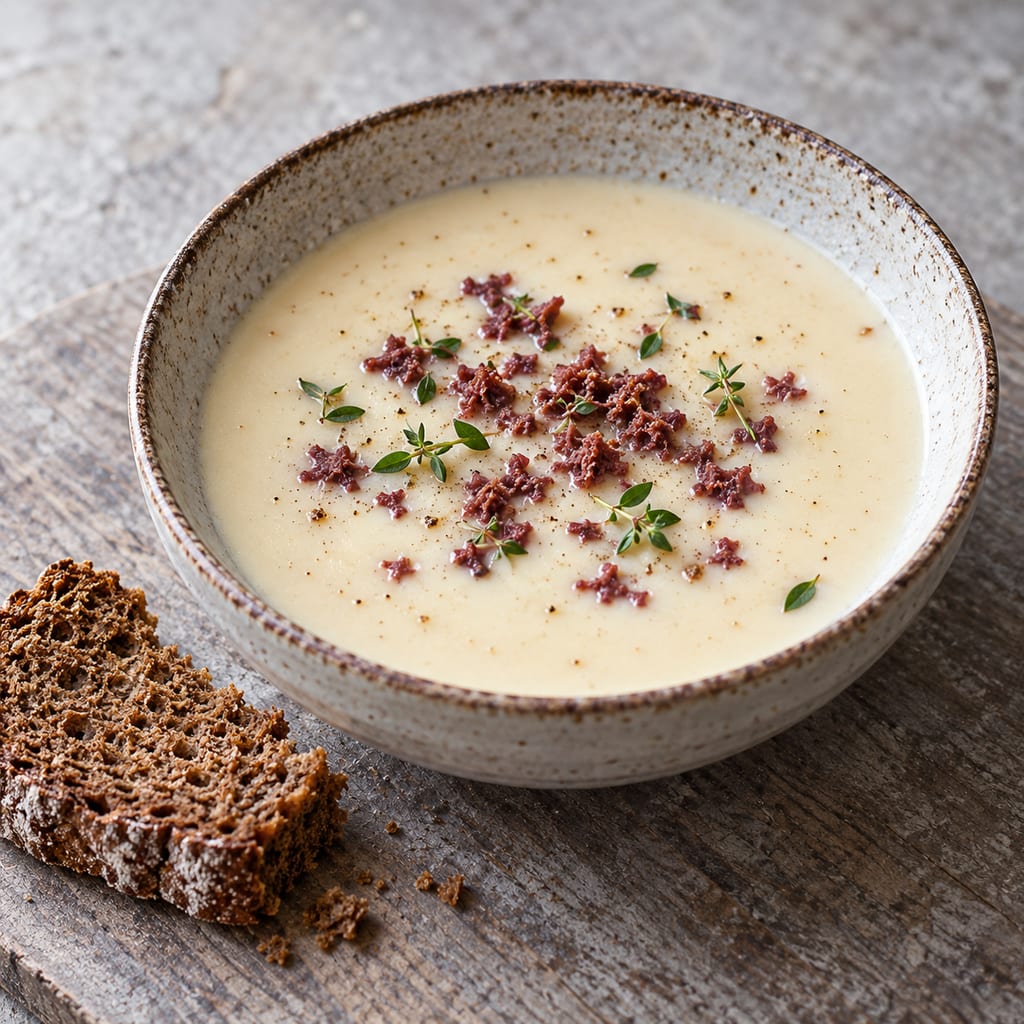
Kylmäsavuporokeitto is a creamy cold-smoked reindeer soup with onion, stock and cheese, served with bread.
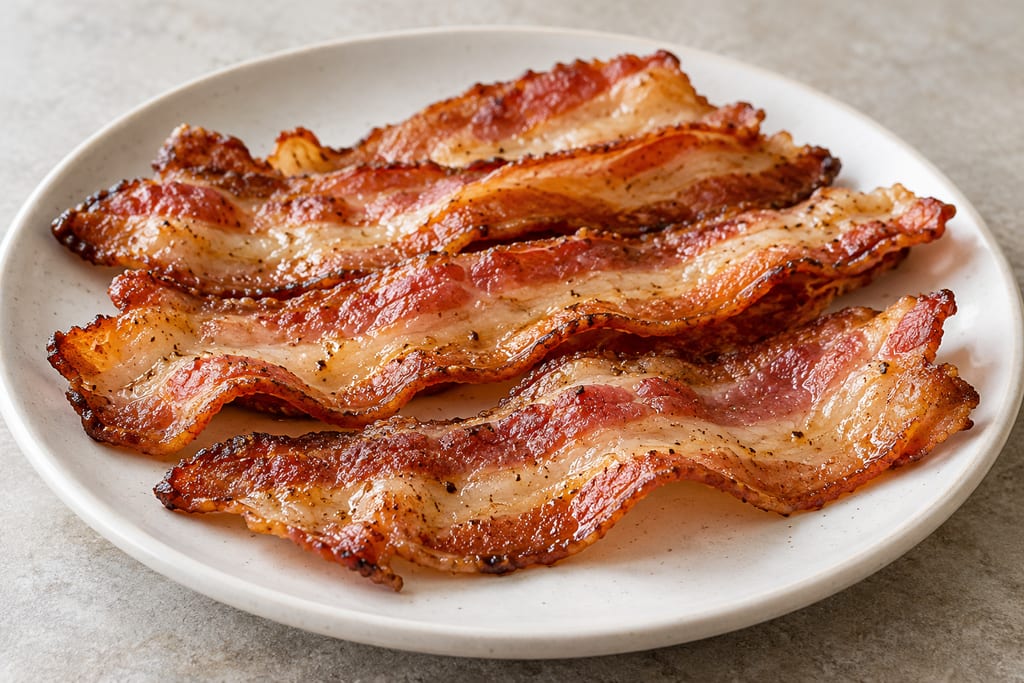
Pork belly receives a measured salt-and-sugar cure with coffee and spices, then is refrigerated before cooking or hot smoking.

Finnish pea soup simmers dried peas with palvikinkku or a vegetable alternative, then is served with mustard and chopped onion.
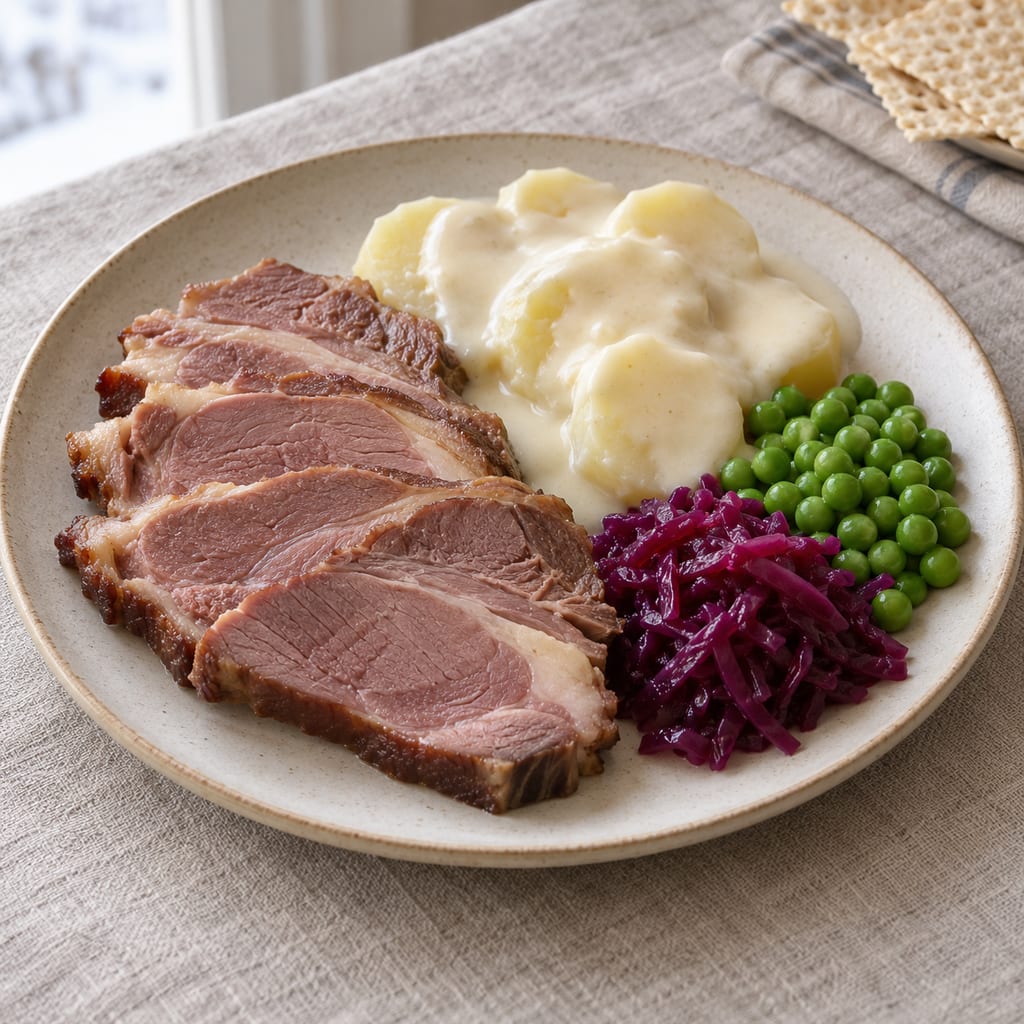
A six-person Icelandic Lamb serving recipe for deboned hangikjöt with potato bechamel, pickled cabbage, peas and laufabrauð. It cooks the product; it does not smoke or cure it.
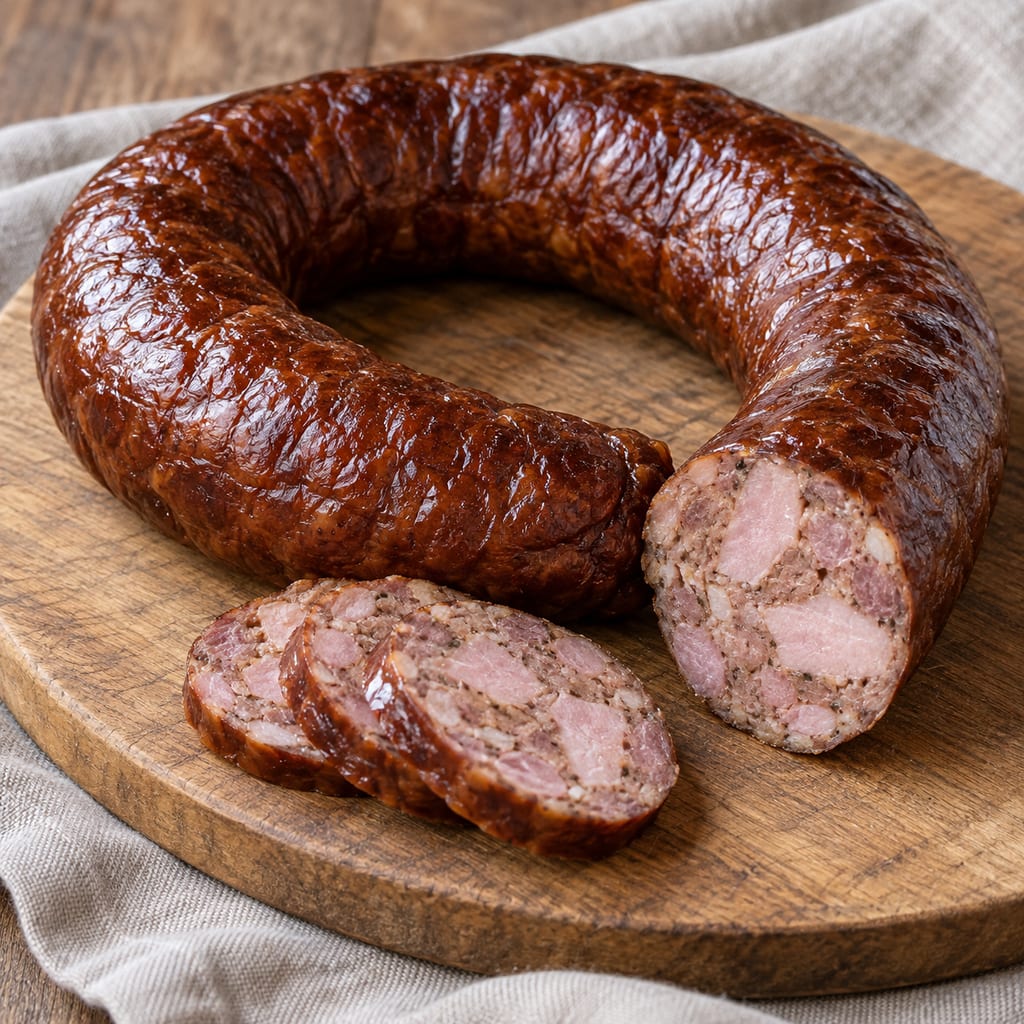
A protected pork sausage associated with Liszki and Czernichów; its application describes commercial curing and smoking, not a home batch.
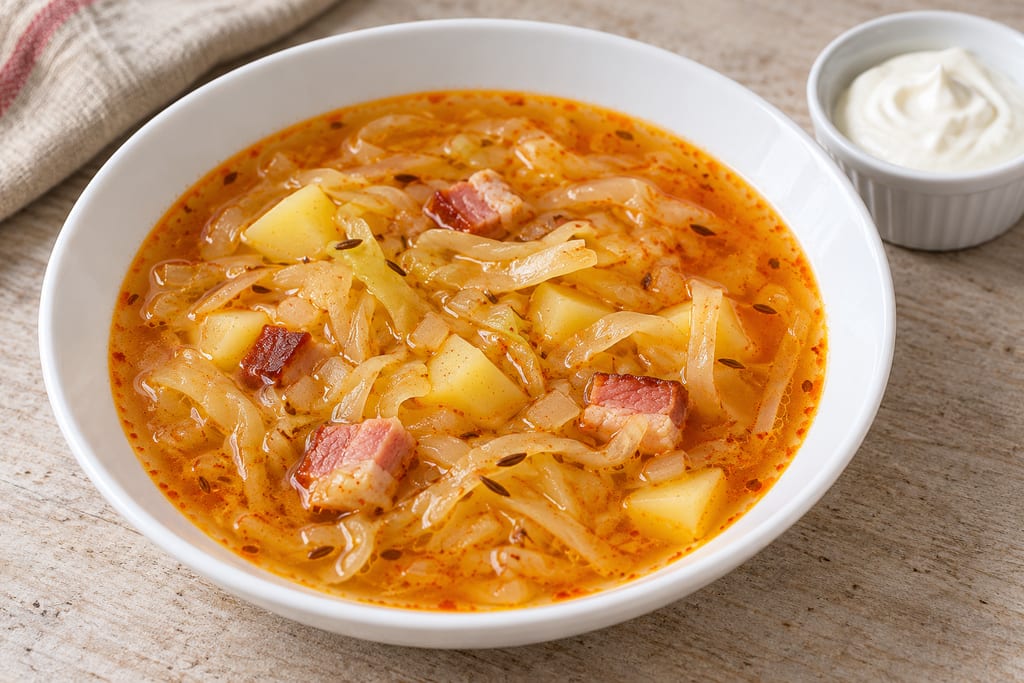
A two-portion cabbage soup with onion, potato and finished Geselchtes, served with garlic sour cream.
A refrigerated pork-belly brine combines beer and maple syrup with salt, garlic powder and measured Cure #1.

Soft, spreadable Calabrian pork sausage made with a great deal of red chilli and fatty pork, stuffed into natural casings, sometimes smoked and matured while staying soft.

A way to add independent temperature logging to an existing food dehydrator without changing its built-in controls or protections. It is a monitoring method, not a rewiring plan.

Pleurotus cystidiosus is the abalone mushroom, a cultivated oyster-type fungus with dark brown caps that grows more slowly and is more demanding than other Pleurotus species.

A dark, balanced vinegar from Emilia-Romagna made by combining cooked or concentrated grape must with wine vinegar, then acetifying and refining it in wood under a protected specification.

A living dairy inoculum that starts controlled cream fermentation, developing acidity and aroma before sour cream or cultured butter is finished.

A small electric incubator holds jars at a selected temperature for yogurt and other documented warm food preparations. Controls, capacity and vessel arrangement vary by model.

Adygean salt is a seasoned table salt associated with Adygea and the wider North Caucasian culinary tradition. Salt is blended with garlic and a variable selection of herbs and spices; the exact mix depends on the named style and maker.

The African Caesar-group mushroom, Amanita masasiensis, is a wild ectomycorrhizal species of central and southern African woodlands, eaten locally. The genus contains deadly poisonous species, so identification needs care.
No community contributions have been published for this entry yet.
Sign in to contribute. Published comments and photos are free to read.
Regione Toscana, Prodotti Tradizionali ToscaniHistory · Method
LonzinoSan Miniato and Orentano; Vin Santo method; revival of an older recipe
Cited in: What it is; History; Documented production methods and limits; Regional and historical variations
WeChiantiMethod · History
E' Tipico: il Lonzino parla chiantigiano nella macelleria di Massimo FranciniFrancini method, 72 hours of salting, about 30 days of hanging, 1968 founding
Cited in: History; Documented production methods and limits; Regional and historical variations
Regione MarcheMethod
Elenco completo dei prodotti tradizionali 2022Salting, red wine wash, casing, maturation and juniper smoking
Cited in: What it is; History; Documented production methods and limits; Regional and historical variations
Regione MarcheHistory
Prodotti tradizionali 2019, allegato BLonzino and capolombo in the regional list
Cited in: History
Salumificio VerzaMethod
Lonzino ValligianoAbout ten days of salting, eight days in brine, at least fifty days of maturation
Cited in: Documented production methods and limits; Regional and historical variations
Salumi BassanelliMethod · Use
LonzinoMinimum forty-five days; storage at 0 to 4 C
Cited in: What it is; Documented production methods and limits; How it is eaten and used
Fratelli GrossiMethod · Use
Lonzino stagionatoPork bladder, about two months; storage at 2 to 4 C
Cited in: What it is; Documented production methods and limits; Regional and historical variations; How it is eaten and used
Salumificio di FranciacortaMethod
Lonzino stagionatoAt least ninety days of cellar maturation
Cited in: Documented production methods and limits; Regional and historical variations; How it is eaten and used
AgriSalumeria LuisetMethod
Lonzino stagionatoAbout two months of maturation
Cited in: Documented production methods and limits; Regional and historical variations
Salumificio BurlenghiUse
Lonzino stagionatoCarpaccio-style serving; storage advice
Cited in: Documented production methods and limits; How it is eaten and used
Fratelli GrossiIdentity
Lonzino arrostoThe cooked lonzino arrosto is a different product
Cited in: What it is; How it is eaten and used
International Journal of Food MicrobiologySafety
Survival of selected foodborne pathogens on dry cured pork loins64-day cure; Listeria innocua reduced only 0.84 log
Cited in: How it works: salt, water and enzymes; Reading results and problems
Meat ScienceChemistry
Profiles of water content, water activity and texture in crusted dry-cured loin and in non-crusted dry-cured loinCase hardening and water activity profiles
Cited in: How it works: salt, water and enzymes; Reading results and problems
Meat ScienceChemistry
Lipolytic and oxidative changes in two Spanish pork loin products: dry-cured loin and pickled-cured loinFree fatty acids, phospholipids and oxidation
Cited in: How it works: salt, water and enzymes
Food Science of Animal ResourcesChemistry
Comparing physicochemical properties, fatty acid profiles, amino acid composition, and volatile compounds in dry-cured loinProteolysis and lipid oxidation effects
Cited in: How it works: salt, water and enzymes; Reading results and problems
USDA Food Safety and Inspection ServiceSafety
FSIS ready-to-eat fermented, salt-cured, and dried products guidelineOrganisms to control in cured and dried products
Cited in: How it works: salt, water and enzymes; Documented production methods and limits; Reading results and problems
USDA Food Safety and Inspection ServiceSafety
Availability of FSIS ready-to-eat fermented, salt-cured, and dried products guidelineOutbreaks linked to inadequately validated Italian-style cured meats
Cited in: Reading results and problems
Canadian Food Inspection AgencySafety
United States of America: export requirements for meat and poultry productsTrichinella and parasite control
European Food Safety AuthoritySafety
EFSA confirms safe levels for nitrites and nitrates added to foodNitrite and nitrate in cured meat
Cited in: How it works: salt, water and enzymes; Reading results and problems
Official Journal of the European UnionSafety
Commission Regulation (EU) 2023/2108 amending provisions concerning nitrites and nitratesLegal limits for nitrite and nitrate additions
Cited in: Reading results and problems