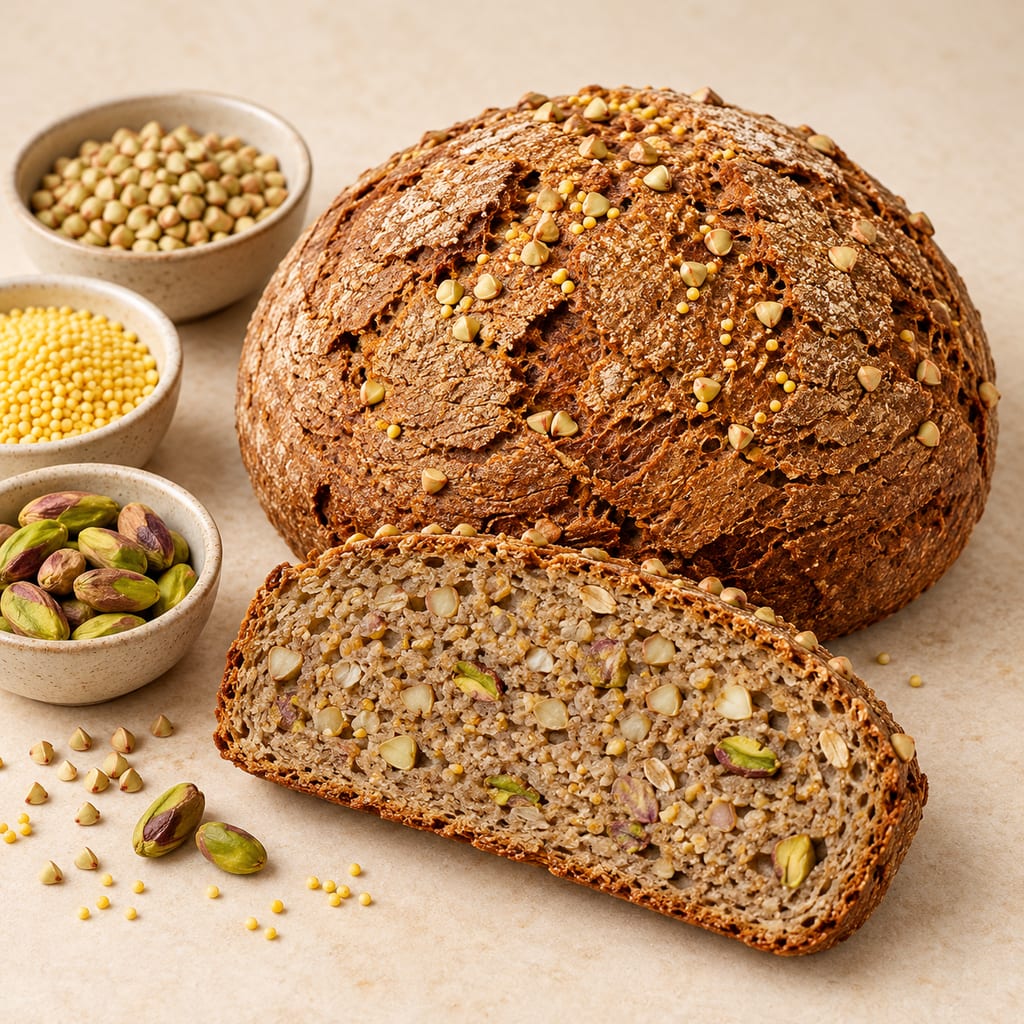
Gluten-free sourdough loaf with whole buckwheat groats
A gluten-free sourdough loaf of about 1 kg. A buckwheat and quinoa starter leavens a dough with cooked whole buckwheat groats, millet and a dark gluten-free bread mix, baked in a lidded pot.
 FermenteaWhere food goes to change
Modern method
Krautsuppe · Kraut-Suppe
A two-portion cabbage soup with onion, potato and finished Geselchtes, served with garlic sour cream.
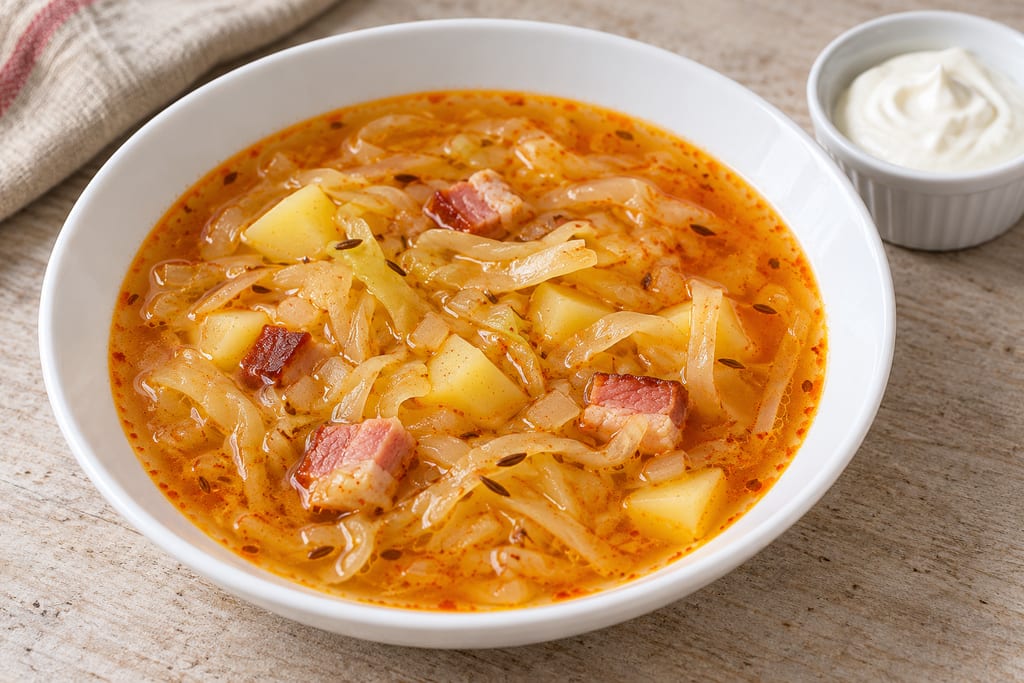
Krautsuppe is an Austrian cabbage soup. The word Kraut in this context refers to cabbage, while Suppe means soup.
The measured recipe uses fresh white cabbage, onion, potato, a small quantity of Geselchtes and a savoury cooking liquid. It is seasoned with sweet paprika and caraway, then served with garlic-flavoured sour cream.
Geselchtes, also called Selchfleisch, is an Austrian family of salted and smoked pork products.
The recorded preparation appears on Austria's official public-health portal, which credits the cookbook Kochen mit Gemüse: Saisonal – Regional – Frisch, published through Fonds Gesundes Österreich.
It is a relatively light vegetable-focused dish rather than a large meat stew. Just 20 g smoked pork is included in the two-portion formulation.
The smoked meat provides flavour, while the cabbage and potatoes form the substance of the soup.
This is a cooking recipe using already prepared smoked pork. It is not a procedure for producing Geselchtes.
Cabbage has been an important vegetable in central European agriculture for centuries.
Its suitability for cool climates, storage and preservation helped establish it in everyday food culture.
Cabbage can be cooked fresh, dried in certain preparations or fermented into sauerkraut.
These processes have different culinary consequences.
Fresh cabbage produces a relatively mild, sweet vegetal flavour when cooked.
Fermented cabbage contributes acidity from lactic fermentation and a more assertive flavour.
The present recipe explicitly uses fresh cabbage rather than sauerkraut.
Austrian cuisine contains many cabbage soups and stews, some based on fresh cabbage and others on fermented cabbage.
The precise ingredients vary by region and household.
Austrian food history also includes a broad tradition of salted and smoked pork.
Smoked pork was particularly useful in environments where meat needed to be stored beyond immediate slaughter.
The name Geselchtes refers to a family of pork preparations rather than one precisely defined cut.
An Austrian traditional-food register records multiple forms, including shoulder, neck, belly and leg products.
The combination of cabbage and smoked pork is therefore grounded in well-established regional ingredients.
However, the exact quantities in the public-health recipe are contemporary. No earliest historical date is supplied for this particular 20 g smoked-meat formulation.
Austrian cured and smoked pork production developed through several overlapping technologies.
Salting changes the meat's water balance and influences microbial growth.
Smoking contributes aroma and additional preservation effects.
Some products are cooked before sale, while others require cooking by the purchaser.
The German-language expression selchen is connected with traditional terminology for drying or smoking.
Austrian records identify the term as especially associated with Austria and parts of Bavaria.
The family of products includes Selchroller, Selchschopf, Selchkarree, smoked shoulder, belly and other preparations.
Historically, beechwood has been particularly important in Austrian smoking.
However, the original cabbage-soup recipe does not identify the cut, smoke wood or cooking status of the 20 g of purchased Geselchtes.
Those properties must be obtained from the actual product.
The traditional-food register provides historical examples of smoked pork in cookbooks from the eighteenth and nineteenth centuries, but this establishes the broader food tradition rather than dating the modern soup recipe.
TWO-PERSON OFFICIAL FORMULATION
Ingredient — Quantity
White cabbage — 200 g
Onion — 40 g
Potato — 40 g
Geselchtes, finished smoked pork — 20 g
Oil — 10 g
Soup stock or water — 400 mL
Sweet paprika powder — Unspecified
Caraway — Unspecified
Salt — Unspecified
Sour cream — Unspecified
Garlic — Unspecified
The 400 mL liquid is either stock or water, not both.
The original recipe provides no quantities for the paprika, caraway, salt, sour cream or garlic.
It also does not specify a cooking time, finished temperature or storage duration.
The two-portion yield is explicit.
White cabbage, Brassica oleracea Capitata Group, provides the principal vegetable component.
It contains water, fibre, carbohydrates and compounds associated with the characteristic taste of brassicas.
Onion, Allium cepa, develops a sweeter aroma when heated in oil and contributes savoury flavour.
Potato, Solanum tuberosum, supplies starch and additional body.
Geselchtes, made from pork, contributes smoked flavour and salt. Its cured character means that a small amount can strongly influence the broth.
Oil provides the frying medium for the onion.
Stock adds savoury compounds from its existing ingredients. Water produces a simpler version in which the smoked pork, vegetables and spices provide the main flavour.
Sweet paprika supplies colour and mild pepper flavour. It is made from dried peppers of the genus Capsicum.
Caraway, Carum carvi, has a distinctive aromatic character and is strongly associated with central European cabbage dishes.
Salt adjusts flavour, but the amount needed depends partly on the smoked meat and stock.
Sour cream supplies acidity and dairy richness.
Garlic, Allium sativum, adds pungency to the separately served sour-cream accompaniment.
A cooking pot and spoon are required.
A knife and cutting board are needed for the cabbage, onion, potato and meat.
A small mixing bowl is used for the garlic sour cream.
The process requires no blender, smoker or oven.
The original source does not give a total preparation time.
Stage 1 — Prepare the cabbage
Cut 200 g white cabbage into fine strips.
The source does not specify a strip width.
Stage 2 — Prepare the onion
Slice 40 g onion.
The recipe describes the onion as sliced rather than finely minced.
Stage 3 — Prepare the potato
Dice 40 g potato.
The exact cube size is not specified.
Stage 4 — Prepare the smoked pork
Dice 20 g purchased Geselchtes.
The recipe does not identify the original cut or whether the product is supplied fully cooked.
Stage 5 — Heat the oil
Place 10 g oil in a saucepan and heat.
No numerical frying temperature is provided.
Stage 6 — Brown the onion
Add the sliced onion and cook until lightly browned.
This creates a savoury base for the soup.
The source does not give a number of minutes.
Stage 7 — Add the meat
Add the diced Geselchtes.
Stir it into the onion and oil.
Stage 8 — Add vegetables
Add the shredded cabbage and diced potato.
Mix to distribute the ingredients.
Stage 9 — Season
Add sweet paprika, caraway and salt.
The exact quantities are unspecified.
Stage 10 — Add cooking liquid
Pour in 400 mL stock or water.
Stir to combine.
Stage 11 — Cook until tender
Cook the mixture until the cabbage and potato are soft.
The source does not provide a numerical cooking duration or temperature.
Stage 12 — Adjust seasoning
Taste and adjust salt or other seasoning as needed.
Stage 13 — Prepare sour cream
Mix sour cream with garlic and salt.
No exact quantities are given.
Stage 14 — Serve
Serve the garlic sour cream separately alongside the cabbage soup.
The original does not require incorporating the sour cream into the pot.
Several chemical and physical changes occur.
Heating the onion in oil releases water and transforms flavour compounds.
As the onion softens, its cell structure changes and some of its sharper raw character diminishes.
The cabbage also softens through heat.
Plant cell walls lose structural integrity, and water movement changes the texture of the leaves.
The potato undergoes starch gelatinisation when heated in sufficient water.
Its contribution to soup thickness depends on cube size, cooking duration and whether the potato breaks apart.
The Geselchtes releases some flavour compounds into the cooking liquid.
Its salt and smoke-derived compounds can influence the broth disproportionately to its relatively small weight.
The oil helps carry fat-soluble aromatic compounds from paprika and other ingredients.
Caraway contains aromatic compounds, notably carvone, which contribute a distinctive herbal, slightly sharp flavour.
The sour cream adds a separate acidic contrast during eating.
The cabbage in the measured recipe is fresh.
It is not described as sauerkraut and does not undergo fermentation during the cooking method.
The sour cream is a fermented dairy product if made by conventional cultured-sour-cream methods, but it is already prepared before being mixed with garlic.
The smoked pork may have experienced curing and other microbial or biochemical changes during manufacture, but those are not performed in the soup recipe.
This is therefore best classified as a cooked dish with smoked and potentially fermented manufactured ingredients, rather than as a new fermentation process.
Austrian cabbage soups vary widely.
Some are based on sauerkraut instead of fresh cabbage.
Others use paprika, potatoes and substantial quantities of smoked meat.
Burgenland recipes can display stronger paprika influence, reflecting broader regional culinary connections.
Some recipes include beans, sausage or other vegetables.
The present official formulation uses only 20 g smoked pork and focuses heavily on vegetables.
It therefore should not be rewritten as a rich sauerkraut-and-sausage soup.
The type of Geselchtes can affect the flavour, but the source does not prescribe a particular cut.
Using stock rather than water is the principal explicitly documented liquid variation.
The sour cream may be served beside the soup, as here, rather than stirred into it.
This soup is suitable as a light meal or starter.
The original recipe states two portions.
The cabbage and potatoes provide the vegetable body, while the smoked pork gives concentrated savouriness.
The garlic sour cream can be added at the table according to preference.
The soup may be served with bread in broader Austrian meal traditions, but bread is not an ingredient or specified accompaniment in the measured recipe.
The dish is not tied to one documented festival or ceremonial occasion.
The cabbage should be tender but not necessarily completely dissolved.
The potato should be cooked through.
The smoked-meat flavour should be noticeable without requiring a large meat portion.
Paprika should contribute mild flavour and colour.
The sour cream should remain smooth.
Scorched onions can introduce bitter flavours.
Undercooked potato may remain firm, while prolonged cooking can cause small cubes to disintegrate.
Excess salt can come from the meat, stock and added seasoning.
The original gives no measured final viscosity, serving temperature or pH.
Purchased Geselchtes may belong to different cooking-status categories.
Austrian product guidance notes that some smoked pork is sold requiring thorough cooking before consumption.
The source soup recipe gives no measured internal meat-temperature endpoint.
The actual product label should therefore determine handling and cooking requirements.
Perishable stock, dairy and meat require appropriate temperature control.
The garlic sour cream should be kept hygienically separate until serving.
The original provides no leftover storage duration or commercial holding specification.
The portal gives a cooking recipe for Krautsuppe using Geselchtes. The ministry register separately identifies the broad product family; neither establishes an earliest date for this soup.
Yield 2 portions · Scaling: source batch only
EFSA consumer guidance describes contamination of ready-to-eat food after cooking or through contact with raw food, and identifies Listeria as able to grow at refrigerator temperatures. This does not indicate contamination of the soup or its purchased ingredient.
Hazard sourceUse purchased Geselchtes according to its package storage and use-by directions; the recipe gives no package or leftover storage period. The Austrian ministry’s opened-package guidance is category-specific and is not treated as a universal interval here.
Control sourceEFSA consumer advice includes separating raw and ready-to-eat foods, clean utensils, handwashing and refrigeration below 5°C for perishable foods. The recipe’s “cook until soft” describes texture and is not a measured safety endpoint.
Control sourceThe source’s “cook until soft” is a vegetable-texture cue, not a measured safety endpoint. The recipe gives no package status or leftover storage guidance.
No maturation stage is part of this cooking recipe.
The portal provides a cooking recipe; the register describes Geselchtes as a broad product family.
A gluten-free sourdough loaf of about 1 kg. A buckwheat and quinoa starter leavens a dough with cooked whole buckwheat groats, millet and a dark gluten-free bread mix, baked in a lidded pot.
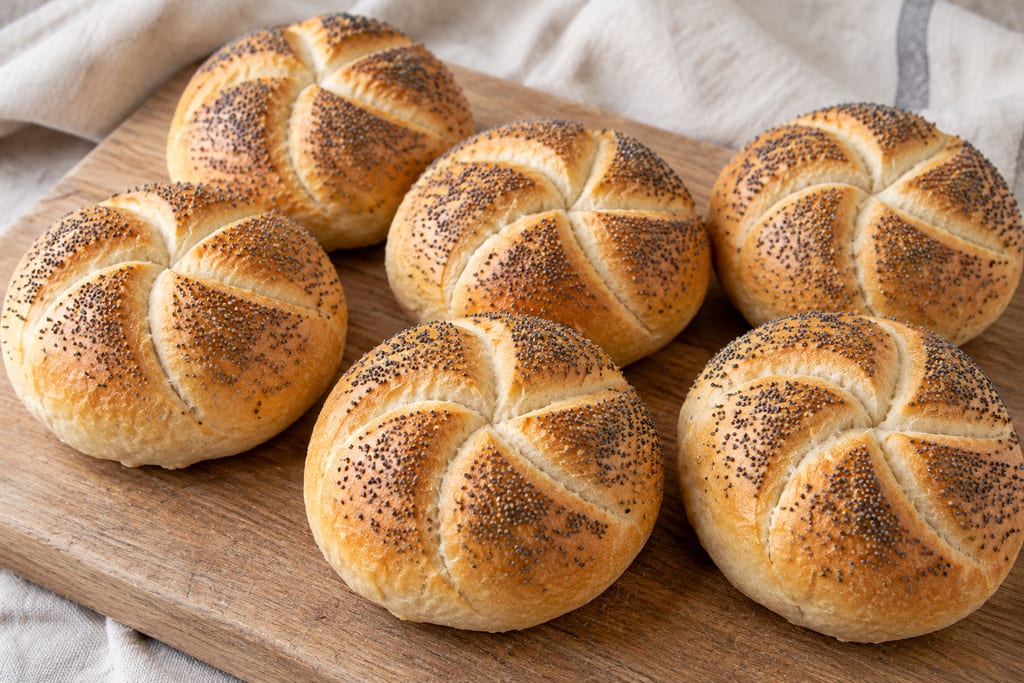
Six stamped yeast rolls with a star-shaped top, brushed with milk and finished with seeds.
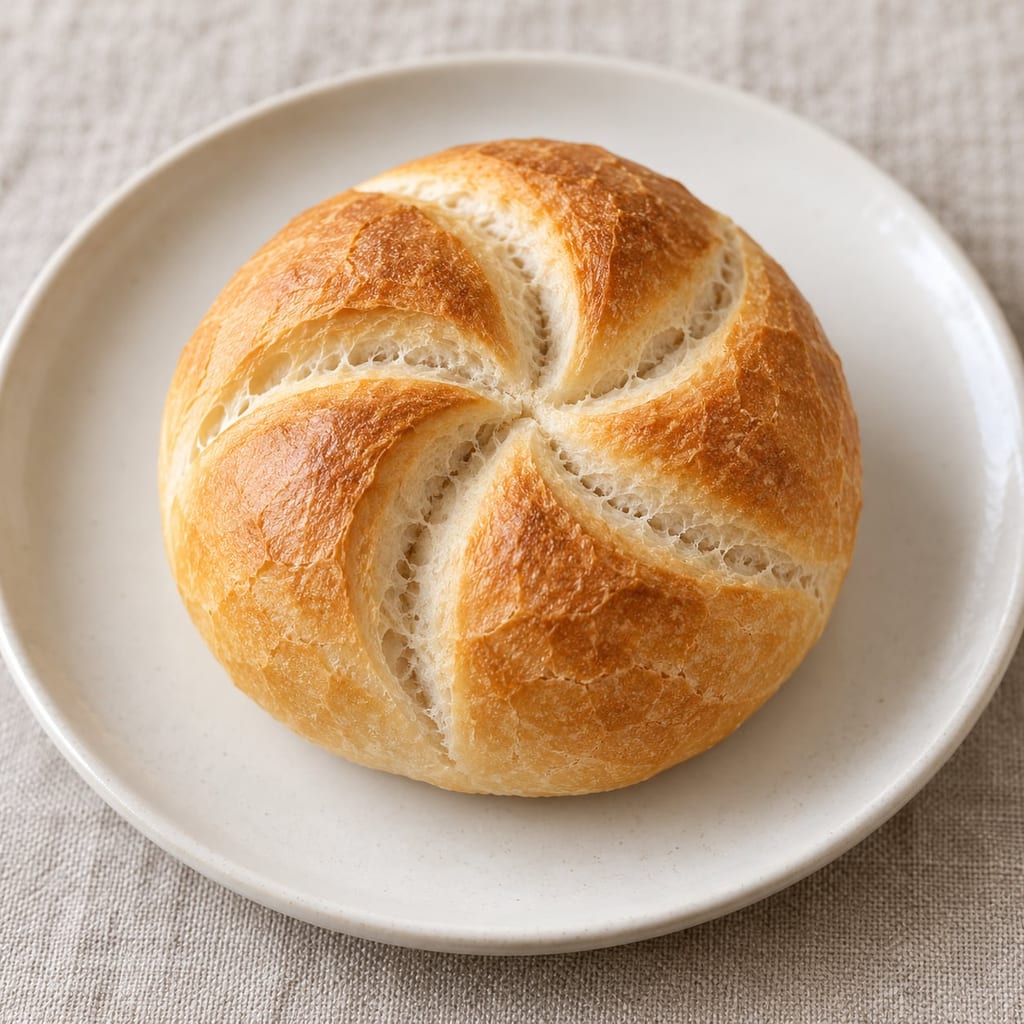
The Kaisersemmel is an Austrian wheat roll with a five-part star, associated with Vienna and the Viennese breakfast. The formula below is a technical bakery batch of 30 rolls from the Austrian ministry.
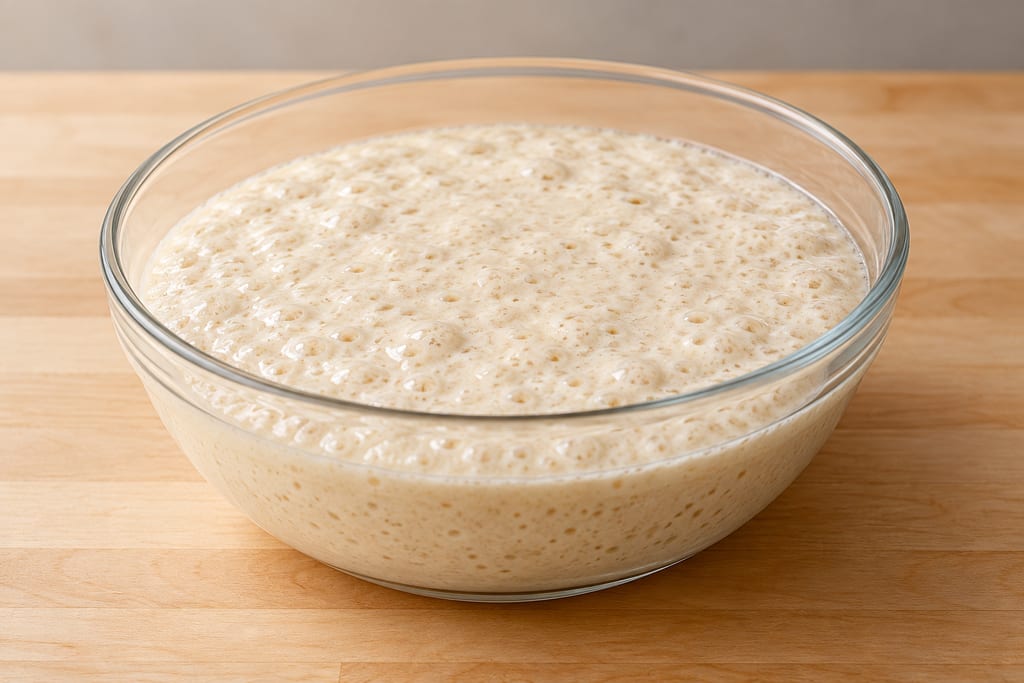
Poolish is a loose, unsalted bread preferment of roughly equal weights of wheat flour and water with a pinch of baker's yeast, left to ripen before it goes into the final dough.
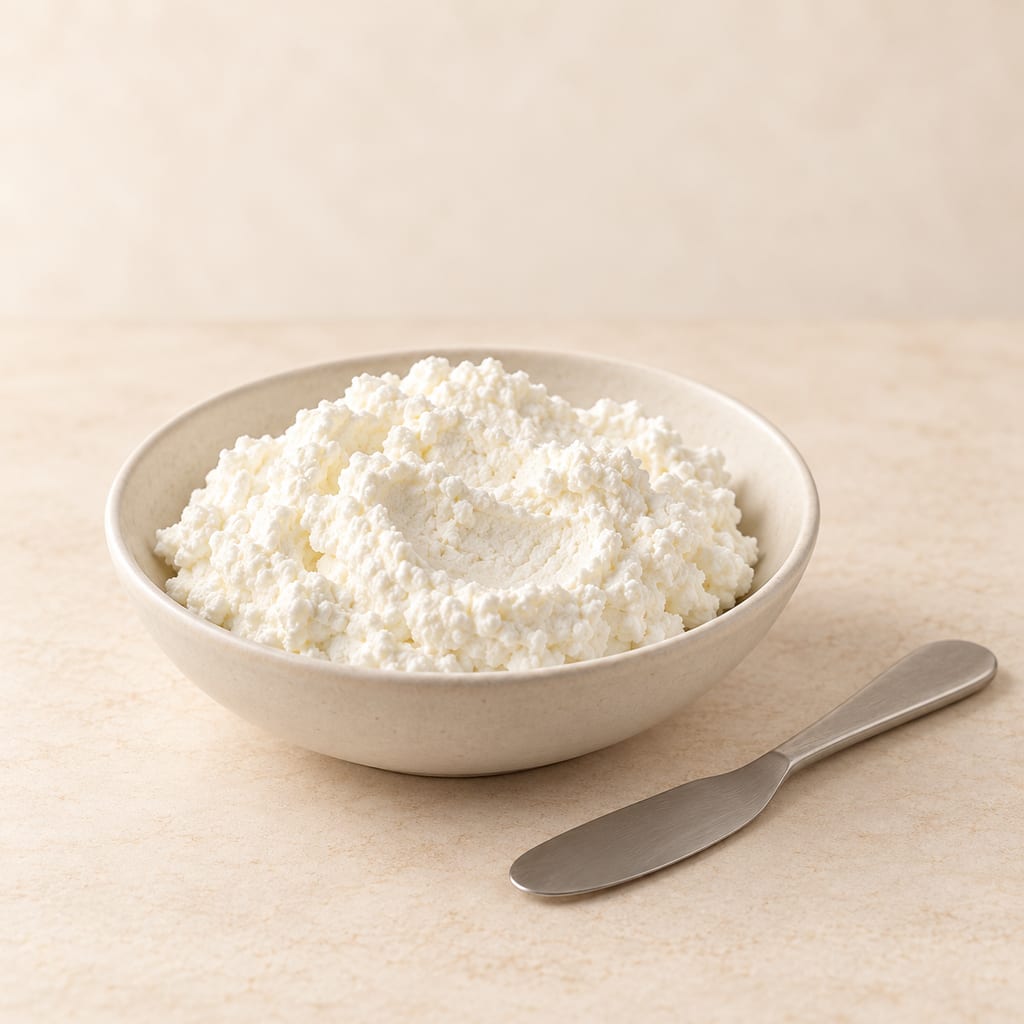
Quark is a soft, fresh curd cheese used in spreads and desserts. This small home batch sets milk with mesophilic culture and rennet before refrigerated drainage.
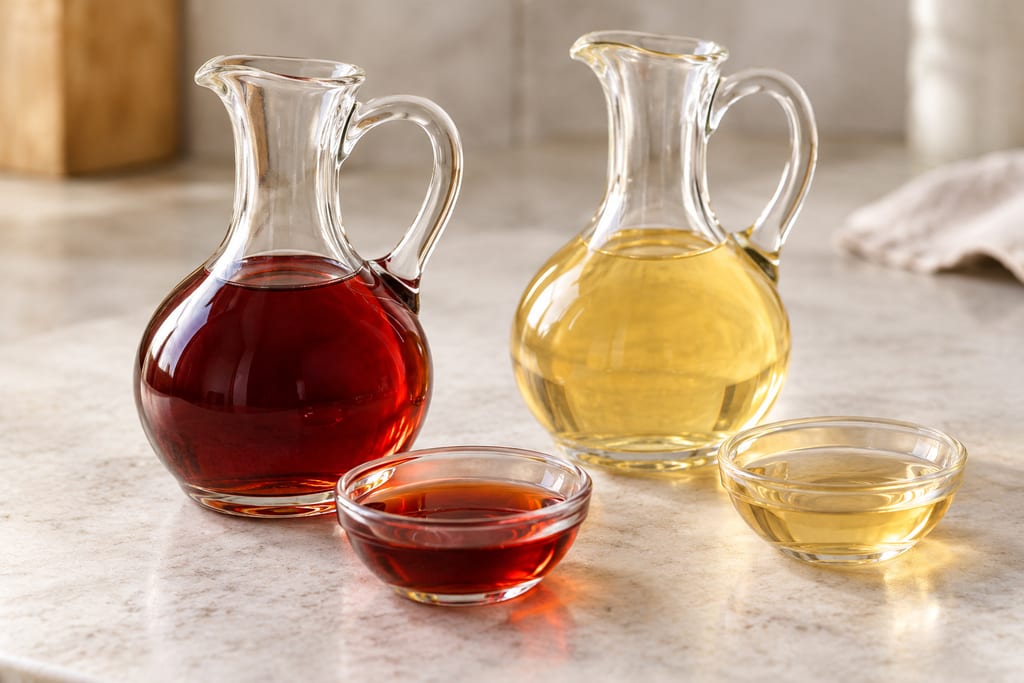
Wine vinegar is made by the aerobic oxidation of wine's alcohol into acetic acid by bacteria, producing a sour, wine-derived condiment used in dressings, sauces, marinades and preserved foods.
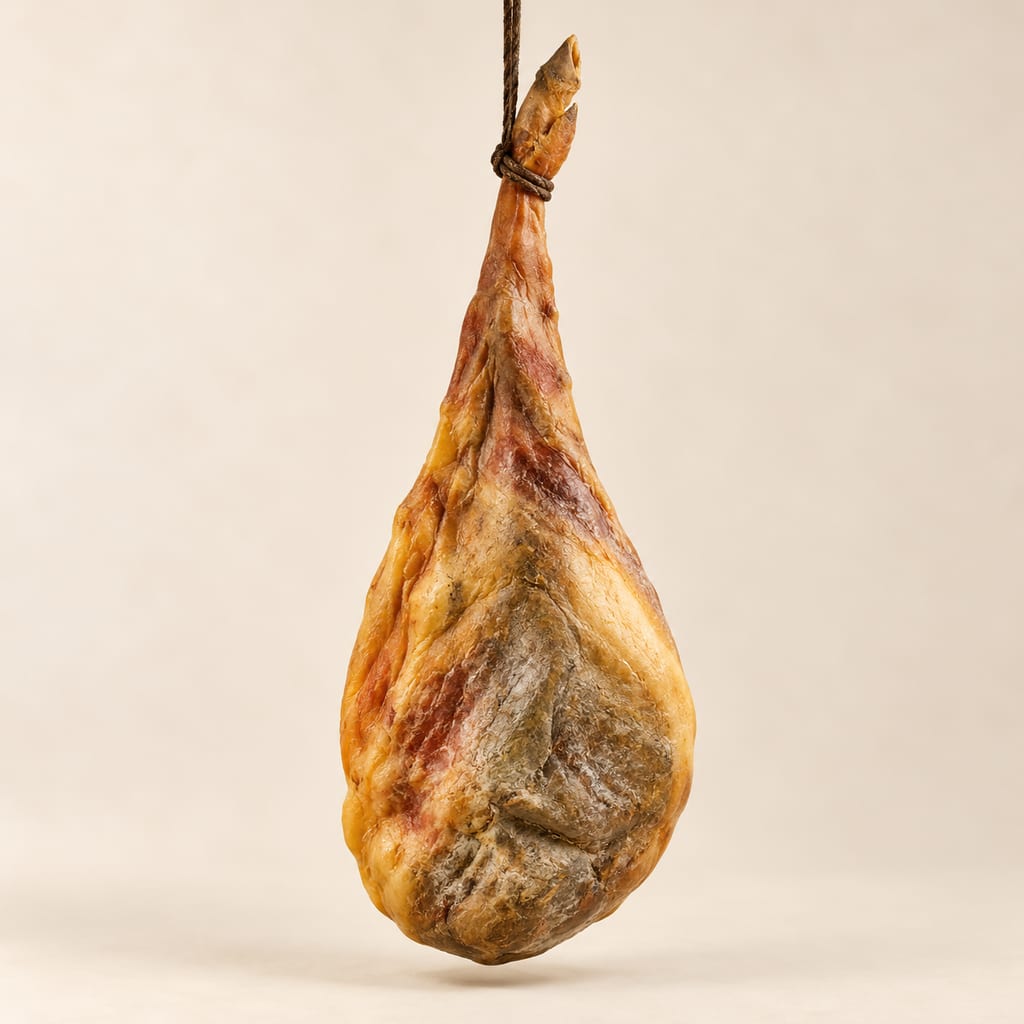
Cato the Elder records a second-century BCE sequence for salting, air-drying, and smoking ham. This historical account is not a validated modern curing protocol.
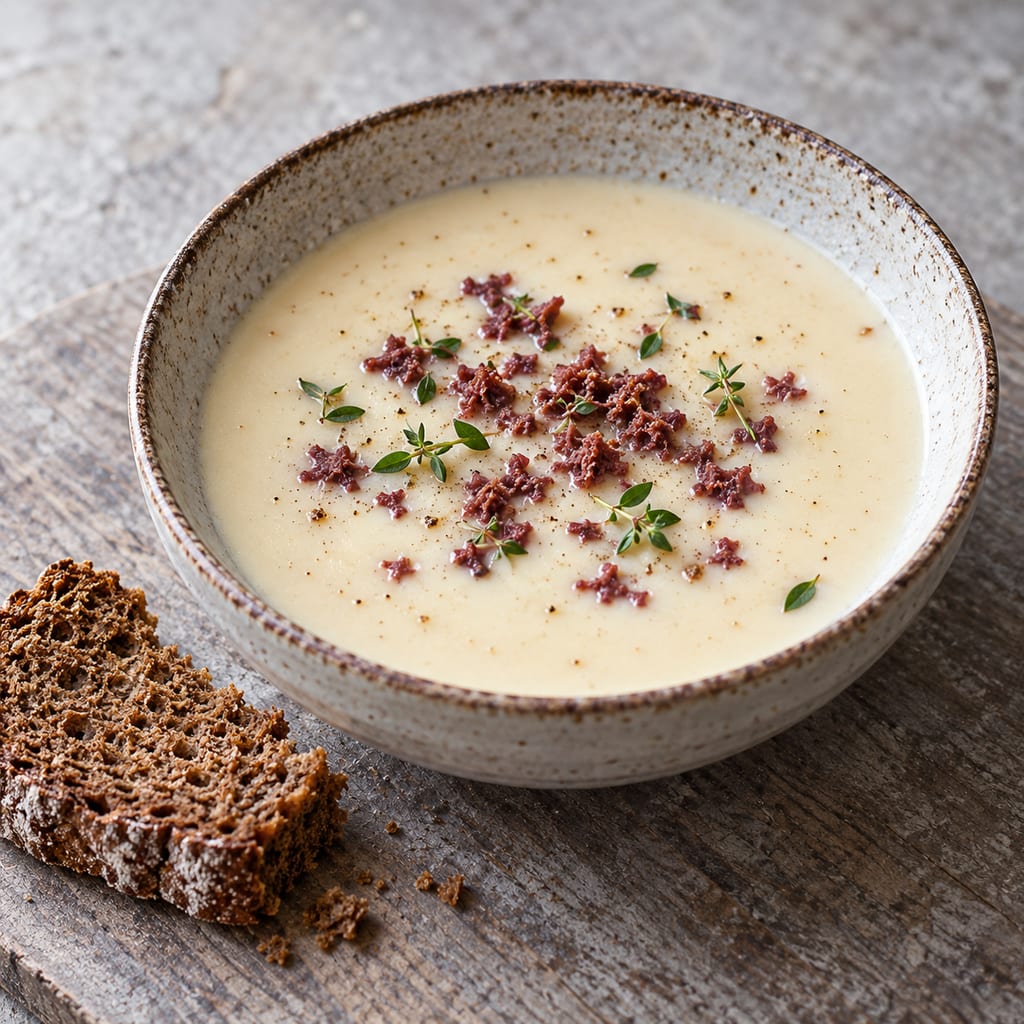
Kylmäsavuporokeitto is a creamy cold-smoked reindeer soup with onion, stock and cheese, served with bread.
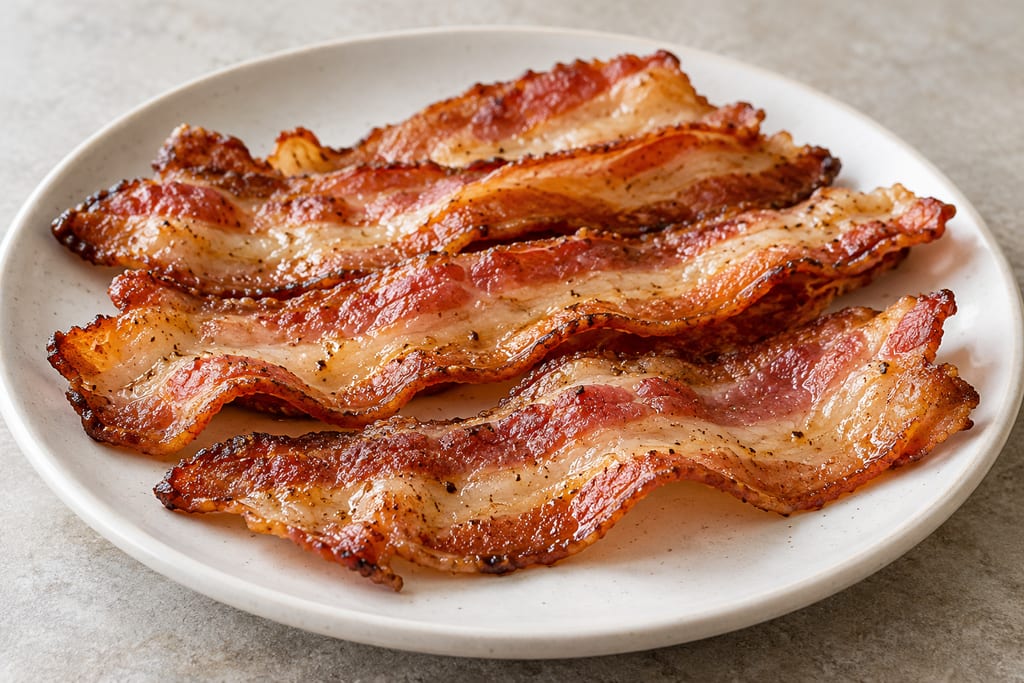
Pork belly receives a measured salt-and-sugar cure with coffee and spices, then is refrigerated before cooking or hot smoking.

Finnish pea soup simmers dried peas with palvikinkku or a vegetable alternative, then is served with mustard and chopped onion.
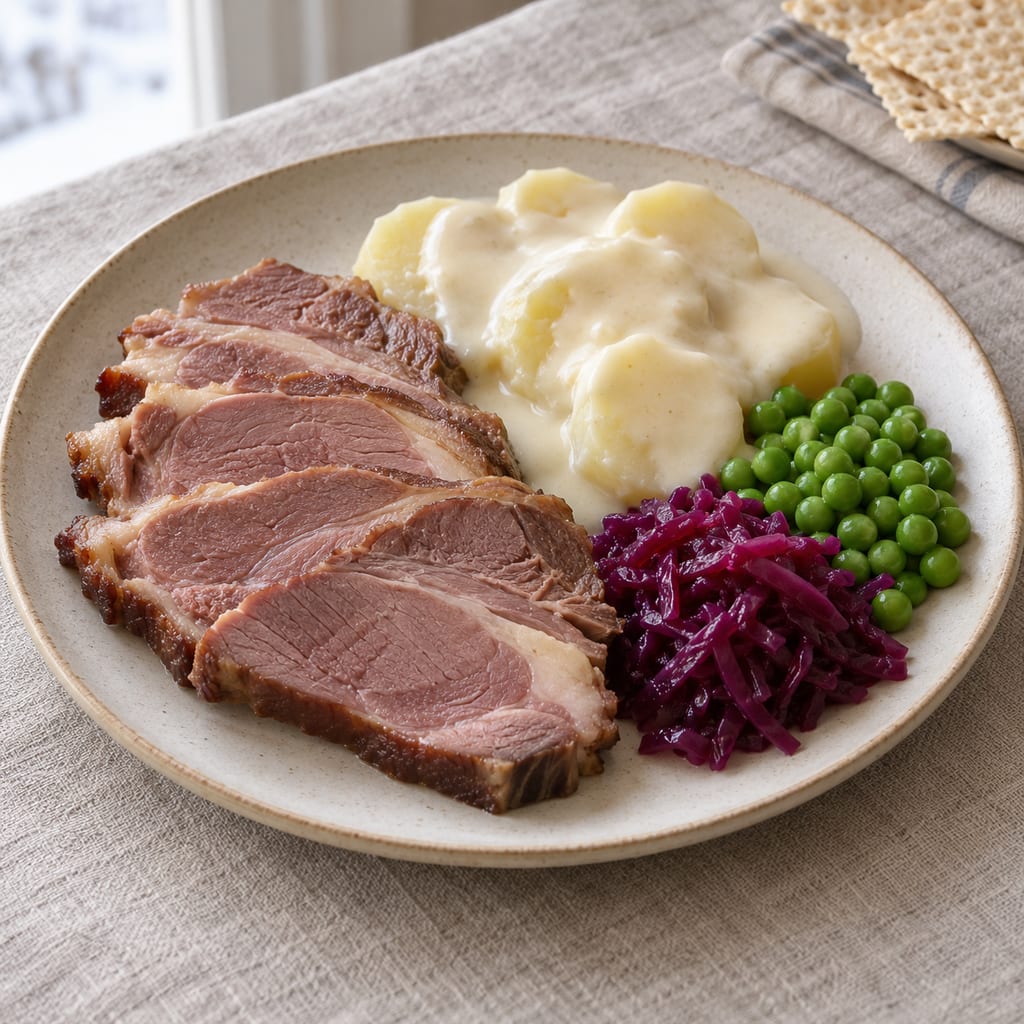
A six-person Icelandic Lamb serving recipe for deboned hangikjöt with potato bechamel, pickled cabbage, peas and laufabrauð. It cooks the product; it does not smoke or cure it.
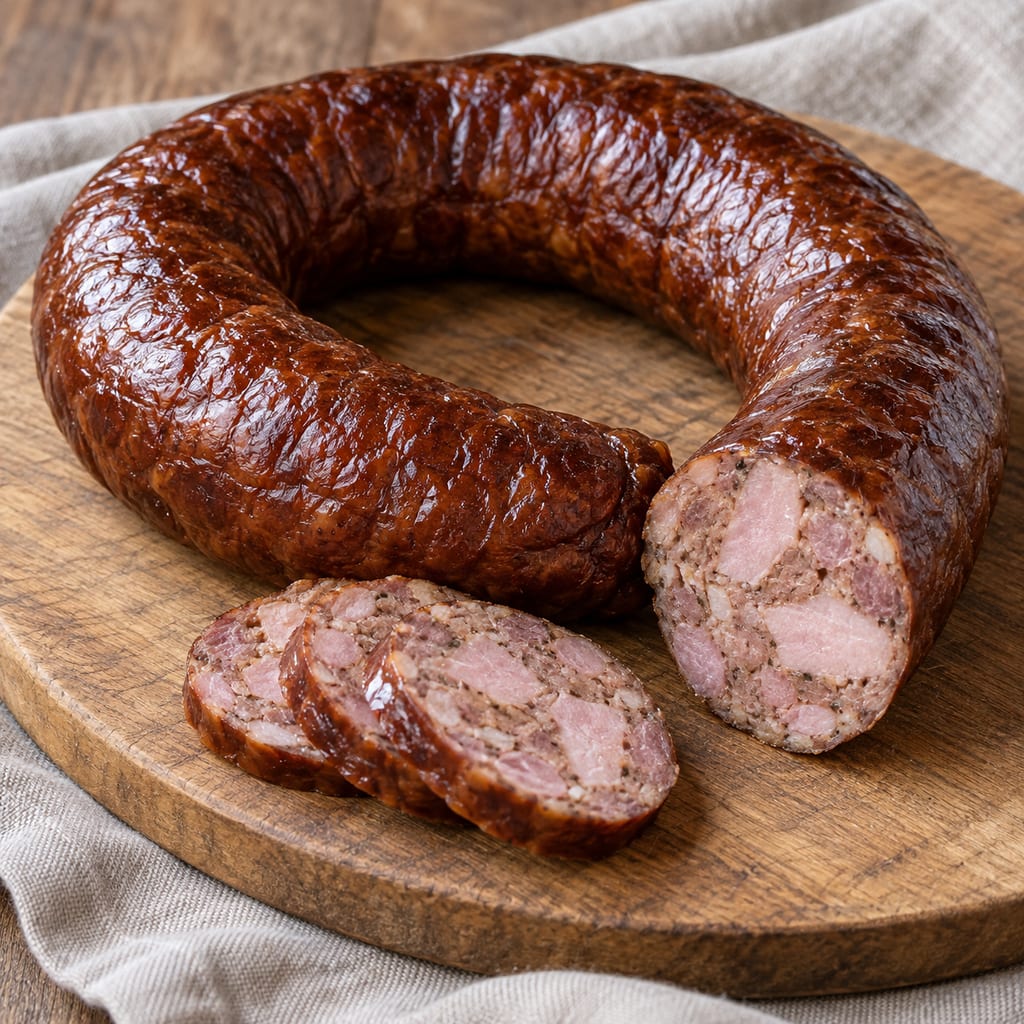
A protected pork sausage associated with Liszki and Czernichów; its application describes commercial curing and smoking, not a home batch.
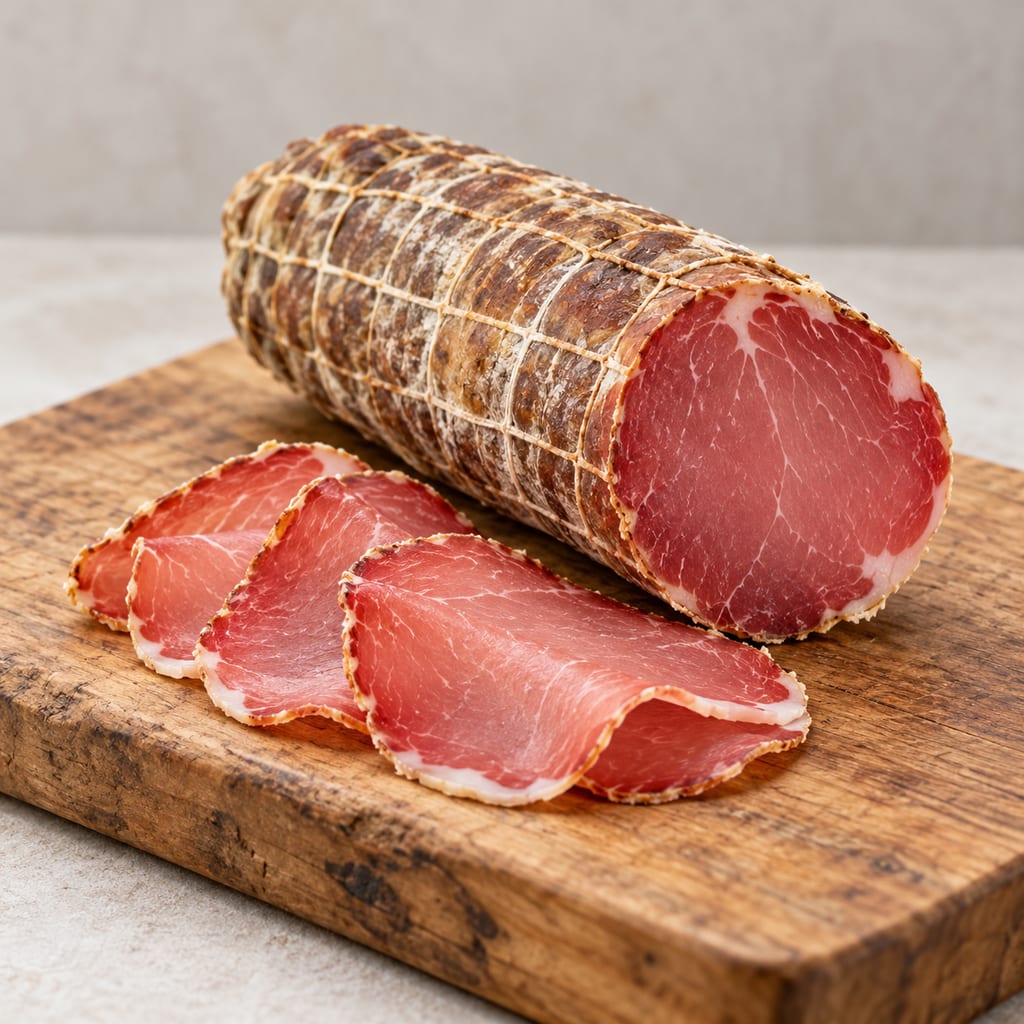
Documentary account of Italian regional cured-loin traditions, including Tuscan and Marche variations; no home-cure instructions are provided because the published professional methods lack validated safety controls.
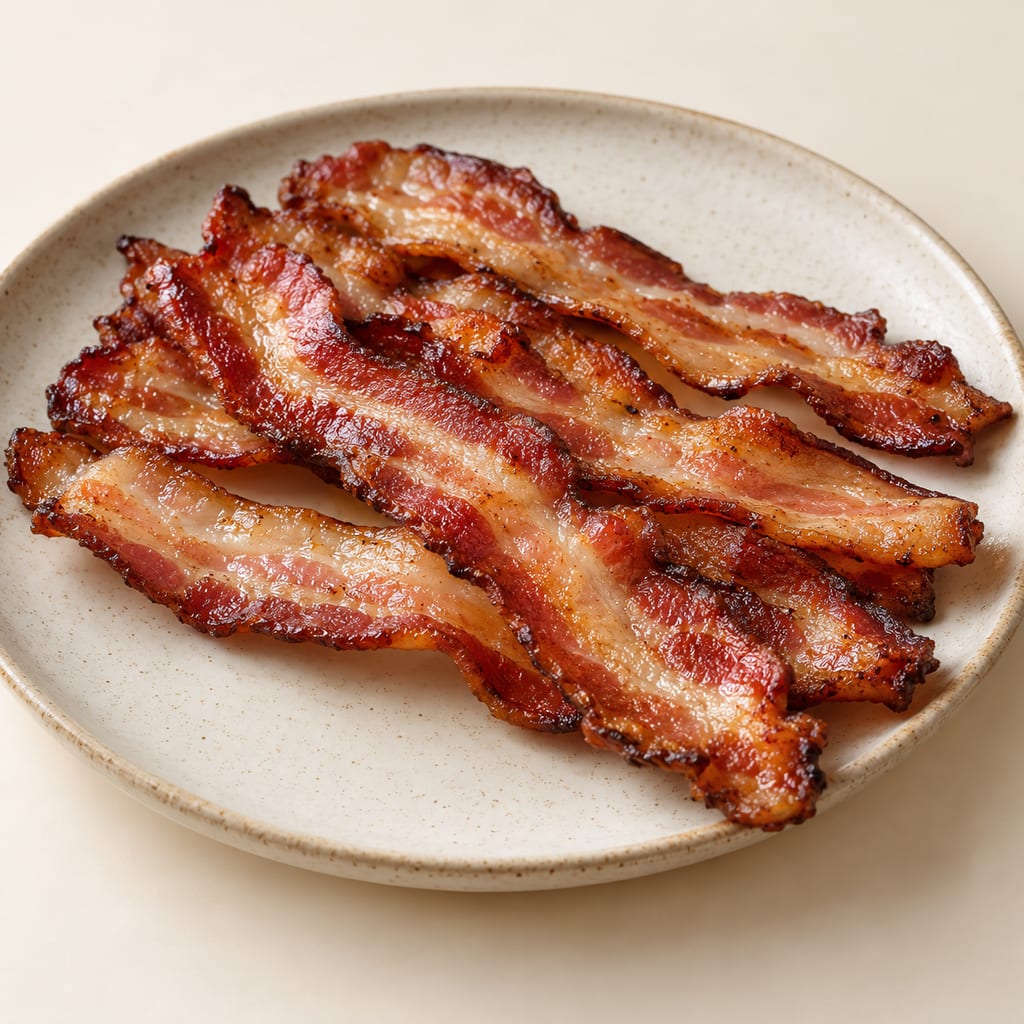
A refrigerated pork-belly brine combines beer and maple syrup with salt, garlic powder and measured Cure #1.
No community contributions have been published for this entry yet.
Sign in to contribute. Published comments and photos are free to read.
Österreichisches Gesundheitsportal; recipe page credits Kochen mit Gemüse: Saisonal – Regional – Frisch, Fonds Gesundes ÖsterreichSource recipe
KrautsuppeTwo-portion yield, complete ingredient list and cooking method; source is a cooking-use recipe, not a smoking method.
Cited in: What it is; Cabbage soup and Austrian food history; Ingredients; Ingredient functions; Equipment; Method; What happens during cooking; Is this a fermented dish?; Regional variations; How it is eaten; Signs of a good result
Bundesministerium für Land- und Forstwirtschaft, Klima- und Umweltschutz, Regionen und Wasserwirtschaft; named information provider DI Wolfgang WernertIngredient context
GeselchtesMeaning and broad product context for the finished ingredient; inherited selected register inspection from W06 HG, not independently re-opened here.
Cited in: Cabbage soup and Austrian food history; The history of Geselchtes; Ingredient functions; Is this a fermented dish?; Regional variations
European Food Safety Authority (EFSA)Consumer food safety guidance
Food poisoningThe Listeria section identifies cold cuts, smoked fish and ready-to-eat meals as example categories; states that contamination may occur after cooking and that Listeria can grow at refrigerator temperatures; recommends consumer hygiene, separation, refrigeration below 5°C, prompt consumption and respecting use-by dates. This is general advice, not an assessment of any W06 product or recipe batch.
Cited in: Food safety
Bundesministerium für Land- und Forstwirtschaft, Klima- und Umweltschutz, Regionen und WasserwirtschaftConsumer storage guidance
Lagerung von sonstigen LebensmittelThe “Fisch, Fleisch und Wurstwaren” section says to observe the stated use-by date for packaged meat and sausage goods and advises use within 3–4 days after opening for that broad packaged category. The time is not assigned to the W06 products because package form and exact product classification are not established.
Cited in: Food safety