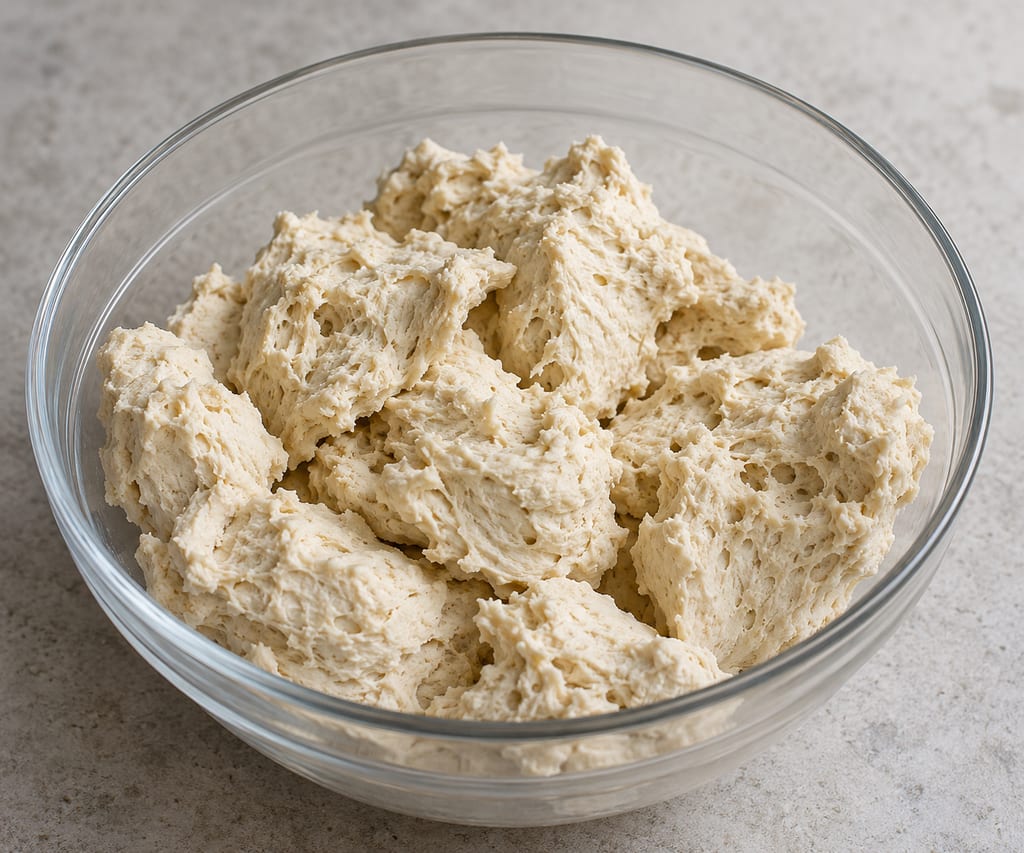
Biga
Biga is an Italian bread preferment of flour, water and a little yeast, usually a stiff unsalted mass of about 45 per cent water, fermented ahead and then mixed into the final dough.
 FermenteaWhere food goes to change
Modern method
poolish · pouliche · poolisch · polisch · pohlisch · pollisch
Poolish is a loose, unsalted bread preferment of roughly equal weights of wheat flour and water with a pinch of baker's yeast, left to ripen before it goes into the final dough.
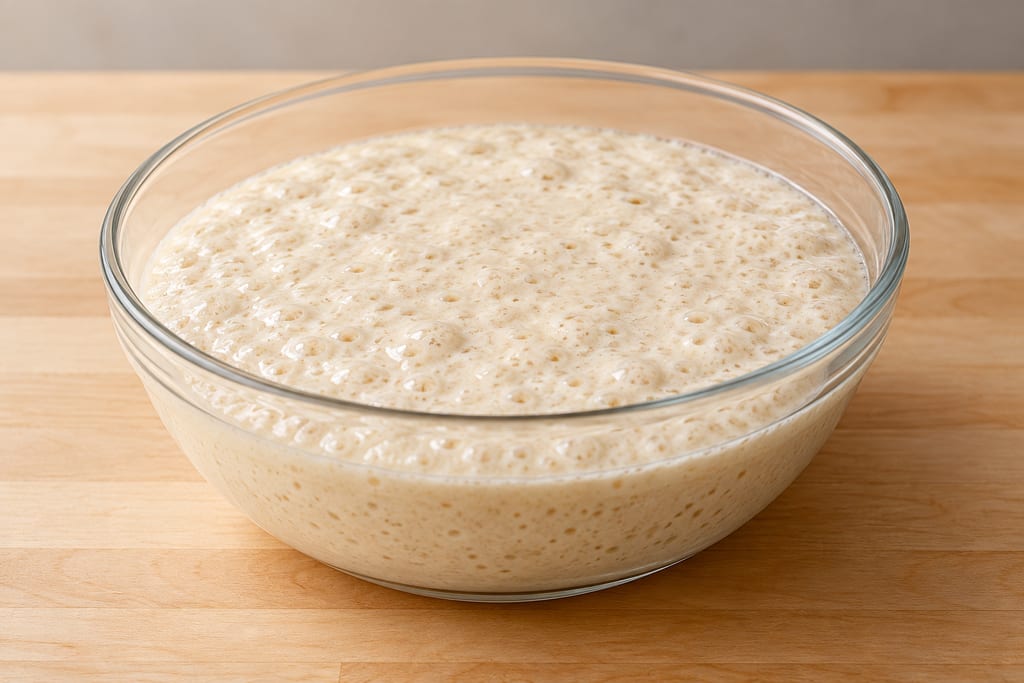
Poolish is a batter. A baker stirs together flour and water in equal weights, adds a very small amount of baker's yeast, leaves the bowl covered overnight, and the next morning has a bubbling, sharply fragrant, wet mass that is folded into the real bread dough. It belongs to the family of preferments, portions of a bread formula that ferment on their own before the rest of the ingredients join them. Mixing all the flour, water, yeast and salt at once is the direct method. A preferment splits the job: part of the flour gets a long, unhurried start, and the finished dough inherits its yeast, its dissolved flavour compounds and its softened flour.
In baker's percentages, which express every ingredient as a share of the flour weight, a classic poolish is 100% flour and 100% water, which is to say 100% hydration. Salt is left out. Without it the mixture is easy to stir with a spoon or a whisk and needs none of the kneading that builds gluten in a finished dough. It looks more like thick pancake batter than like anything one could shape.
The name says how it is seeded, not how wet it is. A conventional poolish is inoculated with commercial yeast, Saccharomyces cerevisiae, and made fresh for the bake. A sourdough starter is a maintained community of yeasts and lactic acid bacteria that is fed again and again, and a runny sourdough may look like poolish without being the same thing. Pâte fermentée is a lump of earlier bread dough that already contains salt. Biga is the Italian preferment, usually stiffer. Poolish is the liquid, unsalted, yeast-driven member of the group.
Nobody eats poolish. It is a stage in making bread, used in baguettes, bâtards and rolls, and in some pizza doughs. A ripe poolish is aerated and aromatic, but it is raw flour, and it is never tasted from the bowl.
Most baking books say poolish is Polish. The story goes that bakers in Poland worked out the method in the 1840s, that Viennese bakers took it up, and that it reached France from Vienna. Raymond Calvel, the French baking teacher whose writing shaped much of modern artisan bread, told it this way, and King Arthur and the American Society of Baking repeat it. Repetition is not evidence, though, and no contemporary Polish document has turned up to show that anyone invented the method there.
What can be dated is the word. The linguist Matthew Baerman of the University of Surrey traced two printed uses from 1865: Leopold Wimmer, writing in Vienna about pressed yeast, spelled it Pohlisch, and Ignaz Reich, publishing in Pest, spelled it pollisch. Both authors set it against Dampfl, a stiffer preferment that ferments faster and was known in Austrian and southern German baking. So by 1865 central European bakers had a name for a liquid preferment and could tell it from its rival. That proves the vocabulary, not the birthplace.
The spellings muddy things further. Polisch, pohlisch, pollisch and poolisch all turn up, each resembling the German word for Polish. French trade writing also has pouliche, which in ordinary French means a young mare. A resemblance to a place name does not show where a method began, and the history site Forking Around with History, in its piece Is Poolish Polish?, lays out several competing explanations, none settled.
A second popular story credits August Zang, the Austrian who ran a well-known Viennese bakery in Paris around 1840, with bringing poolish to the city. Zang's bakery did exist and did sell yeast-raised Viennese goods. That is not the same as showing it used poolish, still less that he introduced it, and the claim stays unproven.
Firmer ground comes from Steven Laurence Kaplan's history of French bread, which treats poolish, or pouliche, as an established method in French bakeries before the First World War. After that, direct-dough mixing, with everything in at once and a shorter day, spread through commercial baking and indirect methods lost some of their ground. Poolish did not disappear. It became a choice a baker makes for the sake of flavour and dough behaviour rather than a default.
Yeast does the visible work. Saccharomyces cerevisiae takes in fermentable sugars and breaks them down by glycolysis to pyruvate. An enzyme, pyruvate decarboxylase, strips carbon dioxide from the pyruvate to leave acetaldehyde, and alcohol dehydrogenase then reduces that to ethanol, which also regenerates the cofactor the yeast needs to keep glycolysis running. The carbon dioxide is what makes the bubbles. In a bread dough the gas inflates a gluten network; in a poolish, with no network to speak of, it simply aerates the batter and drives its rise.
The sugars have to come from somewhere. Flour holds only a little free sugar, so most of the fuel is made on the spot. Wheat's own amylases attack damaged and accessible starch and release smaller carbohydrates, chiefly maltose. Baker's yeast strains are good at using maltose: they import it and split it with maltase into glucose. They also tend to burn through simple sugars first and switch on the genes for maltose only afterwards, which shapes how the fermentation proceeds hour by hour. A poolish is therefore a slow relay in which flour enzymes feed the yeast, not yeast eating starch directly.
The protein side changes as well. Gliadins and glutenins, the wheat proteins that give dough its stretch and spring, are hydrated by the water. Proteases that the flour carries gradually cut some of that protein while the mixture stands, and gas expansion, acidity and yeast metabolites alter how the mass flows. Research on yeast and the starch-gluten system shows that these effects depend on the strain and the conditions, so they are not one lever. The American Society of Baking names proteolytic softening as one of the real benefits of poolish and warns in the same breath that an overripe one goes slack and weakens the dough it joins.
Besides carbon dioxide and ethanol, yeast produces glycerol, some organic acids and a range of aroma compounds. Amino acids and reducing sugars that survive into the loaf take part in the browning reactions of the crust. Flour also carries wild microbes, but the species and numbers in any one batch cannot be assumed, and a conventional poolish should not be described as a lactic ferment. Acidity alone does not show lactic fermentation either. The intended process is alcoholic, with enzymatic and chemical changes running alongside it.
Flour is substrate and structure at once: starch to be broken into sugar, a little free sugar, enzymes, and the gluten proteins that will matter later. Water makes all of that reachable. At 100% hydration it is fluid enough that moisture, enzymes and yeast spread evenly, and the baker needs no mixing force at all. Baker's yeast gives a known, vigorous population at day one instead of leaving the outcome to whatever the flour happens to carry.
Salt is absent on purpose. It slows yeast, and holding it back until the final mix lets the preferment ferment freely. This is one reason a poolish and a pâte fermentée behave so differently: one is salt-free, the other brings salt along.
The yeast dose is the baker's clock. The American Society of Baking gives different compressed-yeast percentages for different ripening times at given temperatures, and King Arthur explains that an overnight poolish takes much less yeast than a short one. More yeast means more gas sooner; less yeast stretches the same process across a longer stretch. No single dose suits every flour, room and timetable, which is why published formulas disagree. The three variables, yeast, time and temperature, are chosen as a set, and changing one means changing another.
The stages are plain. Flour, water and yeast are stirred until no dry flour is left. Kneading is pointless because the whole preferment will be mixed again. Arla Pro dissolves the yeast in the water first, then adds flour and whisks to a smooth batter. The batter goes into a container with room to rise, covered to keep the surface from skinning over and to keep out contaminants while letting pressure ease. It ripens at room temperature. Then the baker adds the entire poolish to the final dough, counting its flour, water and yeast in the total formula, adds salt and the remaining ingredients, and carries on with kneading or folding, bulk fermentation, shaping, proofing and baking.
King Arthur's professional French bread with poolish gives a feel for a bakery scale: 3.3 kg of flour, 3.3 kg of water and 0.007 kg of yeast in the preferment, inside a larger formula. Those figures belong to that formula. They are not a minimum batch or a standard recipe.
The recipe here comes from King Arthur Baking School's Baguette Baking 101 workbook, where it is the first stage of poolish baguettes: 138 g of unbleached all-purpose flour, 138 g of cool water and one sixteenth of a teaspoon of instant yeast, mixed in a medium bowl or a one-quart container until no dry flour remains, covered, and left at 68 to 72 F (about 20 to 22 C) for roughly 15 hours. The workbook describes it as something to make the night before and says a ripe poolish is very bubbly and fragrant.
Other published formulas are close but not identical. King Arthur's online Classic Baguettes recipe uses 120 g of flour, 113 g of cool water and the same pinch of yeast for about 14 hours, which is slightly under 100% hydration. Arla Pro, writing for pizza, gives a schedule of 12 to 16 hours at 20 C. None is the standard poolish. They are the same technique tuned to different loaves, and they should not be read as regional rivals or as older and newer forms of one recipe.
The yeast is specified only by volume, a pinch, with no gram equivalent, so none is given here. The finished weight of the poolish, an active mixing time and the water's starting temperature are not reported either.
The reason to bother is time and flavour. Part of the flour gets a long fermentation, while the final dough, which also holds the salt, goes through its own shorter stages. A baker can mix the preferment in the evening and the dough in the morning, and the schedule stays manageable. Professional references describe gains in aroma, in the way the dough handles and in some aspects of keeping quality. Those are potential gains under suitable conditions and not guarantees for every flour or formula.
French bread is the classic home. King Arthur's French Bread with Poolish folds the preferment into a dough that is mixed, fermented, divided, shaped, proofed and baked. The thin crust and open wheat crumb that result come from the whole formula and the bake as much as from the poolish.
Modern bakers use it elsewhere too. Pizza dough made with poolish is stretched and baked like any other, and Arla Pro publishes such a method. Since the preferment is only a share of the total flour, the salt, hydration, crust and crumb of the loaf cannot be worked out from the poolish alone.
A new poolish is a smooth batter with few bubbles. As it works, bubbles form inside, then crowd the surface, and the whole mass rises. Near its peak the surface is thick with small bubbles and the middle may begin to flatten or sink back. King Arthur and the American Society of Baking both treat these signs as the readout, with the clock as a rough guide only, since yeast dose, flour and temperature all move the pace.
If it stays dense and quiet, suspect old yeast, too little time, a cold room or too small a dose. Check the conditions against the formula before calling it a failure, because a young poolish is supposed to be quiet. If it ripens ahead of the baking schedule, the yeast was too generous or the room too warm, and the next batch needs less of one or the other, not necessarily more time. An overripe poolish rises, collapses and goes slack, which can weaken the dough. Looseness is not itself the fault, since batter is the intended texture. The fault is a mass that has gone well past its peak.
Aroma helps, since a ripe poolish smells fermented and pleasant, but smell and appearance are no safety test. Raw flour can carry pathogenic Escherichia coli and Salmonella, and the CDC and FDA both say raw dough and batter must not be tasted or eaten. Nothing in the fermentation changes that: bubbles do not show that contamination is gone, and the time and temperature in this formula are conditions for the bread, not validated pathogen limits.
So: do not taste the poolish. Wash hands, bowls, spoons and counters after handling flour and dough, and keep raw flour away from food that is eaten uncooked. Throw out any batch with visible mould or odd discolouration, and do not scoop off the surface and carry on. No validated storage life, pH, water activity or microbial limit has been established for a home poolish. It contains wheat gluten, so it is unsuitable for anyone avoiding wheat or gluten.
The word poolish is printed in Vienna and Pest in 1865. Where and by whom the method was invented is unresolved.
Flour is a raw agricultural product and can carry pathogenic E. coli; fermentation activity does not show it has been removed.
Hazard sourceRaw flour can carry Salmonella, and raw dough and batter should not be eaten before baking.
Hazard sourceFlour dust, utensils, hands and surfaces can carry microorganisms to other foods.
Hazard sourceDo not taste or eat raw poolish; mix it into a dough that will be baked thoroughly.
Control sourceWash hands, utensils, bowls and surfaces after handling raw flour or dough, and keep flour away from ready-to-eat food.
Control sourceUse clean containers and equipment for the poolish.
Control sourceKeep the documented yeast amount, time and temperature together instead of changing one alone.
Control sourceThe 15 hours and 20 to 22.2 C are recipe conditions, not validated pathogen-control limits.
Bubbles, rise and a fermented smell do not show that raw dough is safe to eat.
Contains wheat gluten.
Overlong fermentation softens the dough excessively and builds acidity and alcohol.
Discard any batch with visible mould or obvious contamination; do not remove only the affected surface.
No validated storage life, water-activity limit or pH limit is established for a home poolish.
The word Pohlisch is printed here in 1865; this does not say the method began here.
The word pollisch is printed here in 1865.
French bakeries used it before the First World War; no date of arrival is established.
Established in French bread baking; a country-level statement.
Documented in current American baking formulas.
A pizza-dough use is published for the UK.
Biga is an Italian bread preferment of flour, water and a little yeast, usually a stiff unsalted mass of about 45 per cent water, fermented ahead and then mixed into the final dough.
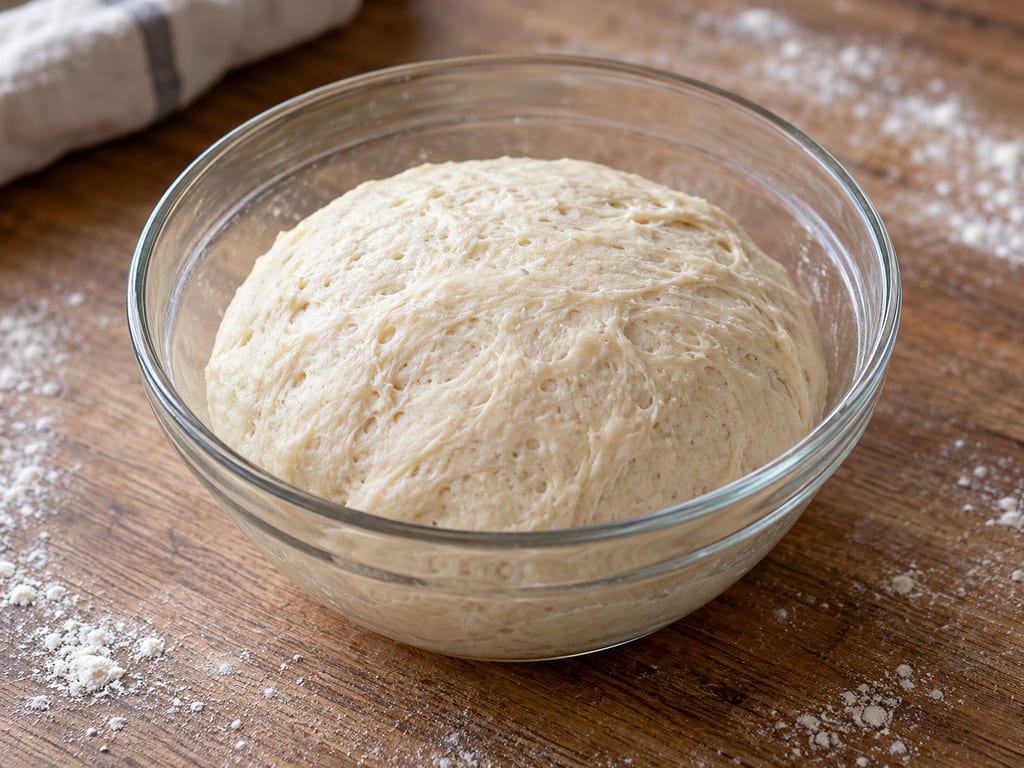
Pâte fermentée is a bread preferment made from salted, yeasted dough set aside to ferment and mixed into a later batch, carrying developed dough and fermentation products with it.
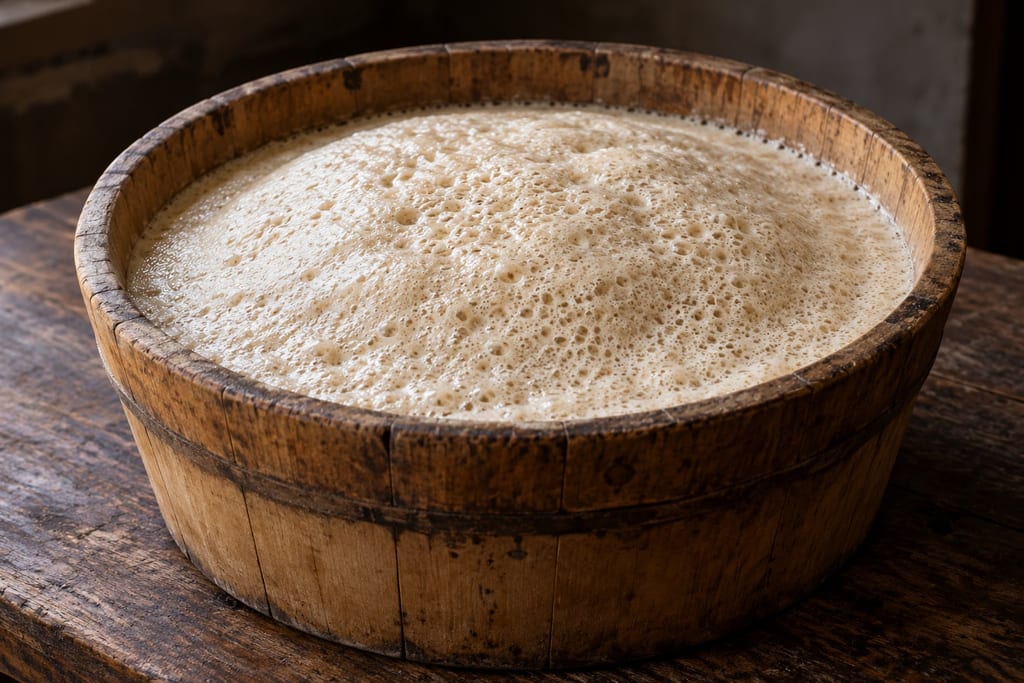
Scotch barm is a Scottish bakery ferment grown in a malt-and-scalded-flour medium and renewed with mature barm from the last batch to leaven successive bread sponges.
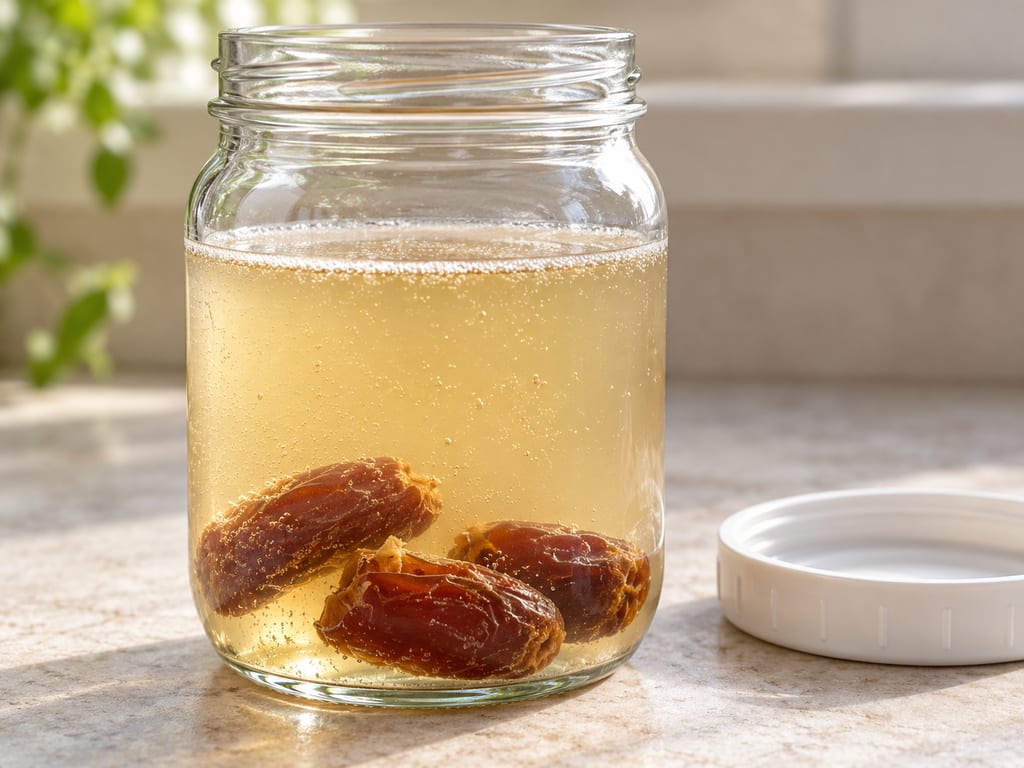
Fruit yeast water is a spontaneously fermented liquid made by soaking fruit in water, with or without sugar, to grow yeast for starting bread dough or a separate flour starter.
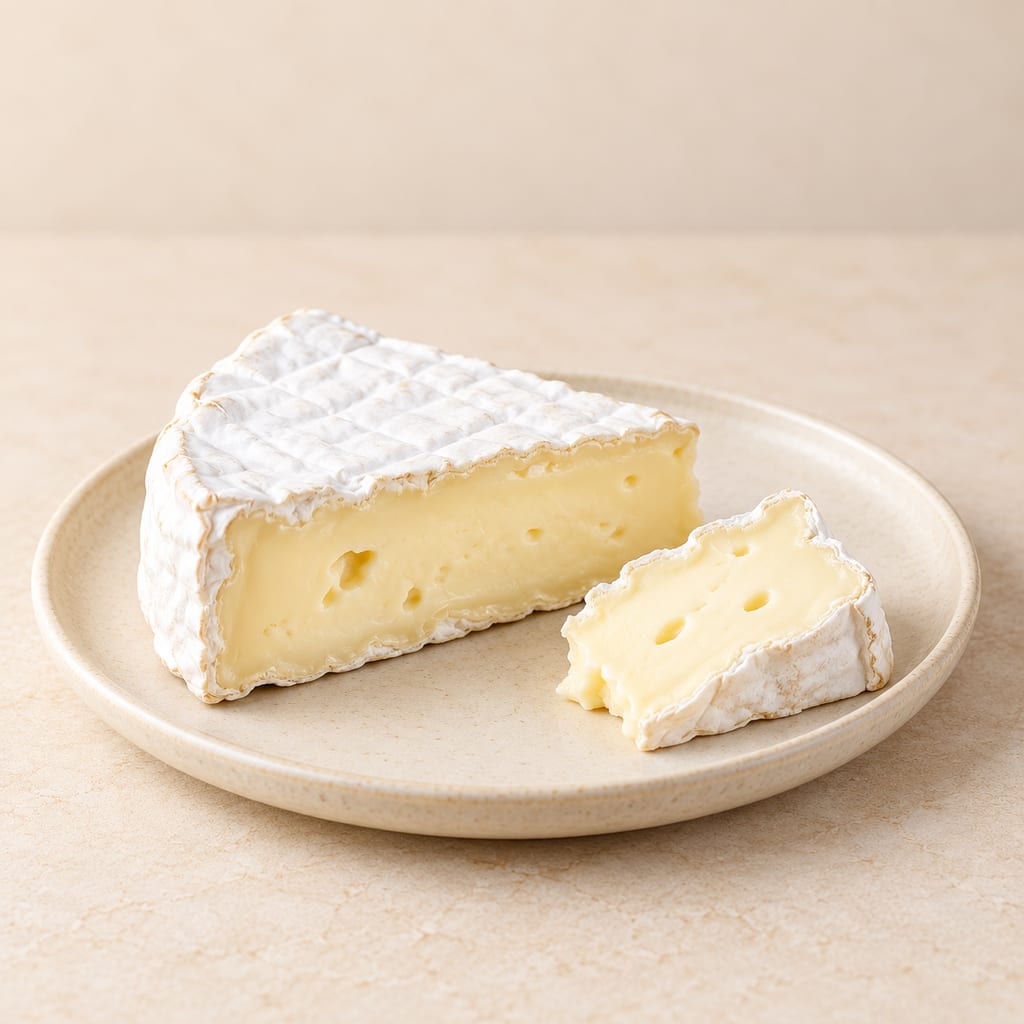
A cream-enriched Brie with a white bloomy rind and a softening center, made from pasteurized milk with lactic and surface cultures.
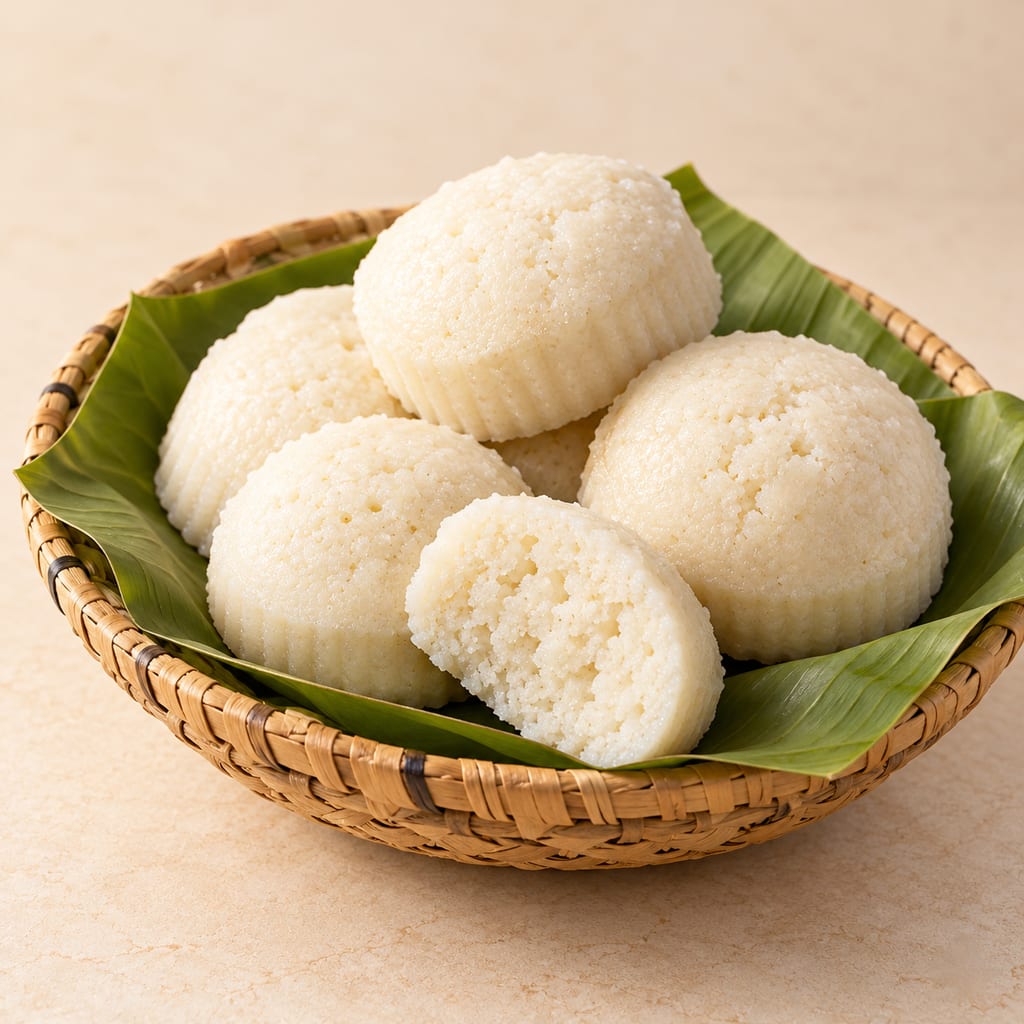
Soft, lightly tangy steamed cereal bread documented across Benin and Togo. This page gives one measured rice-flour research method; maize-based Ablo and mixed-grain versions remain distinct traditions.
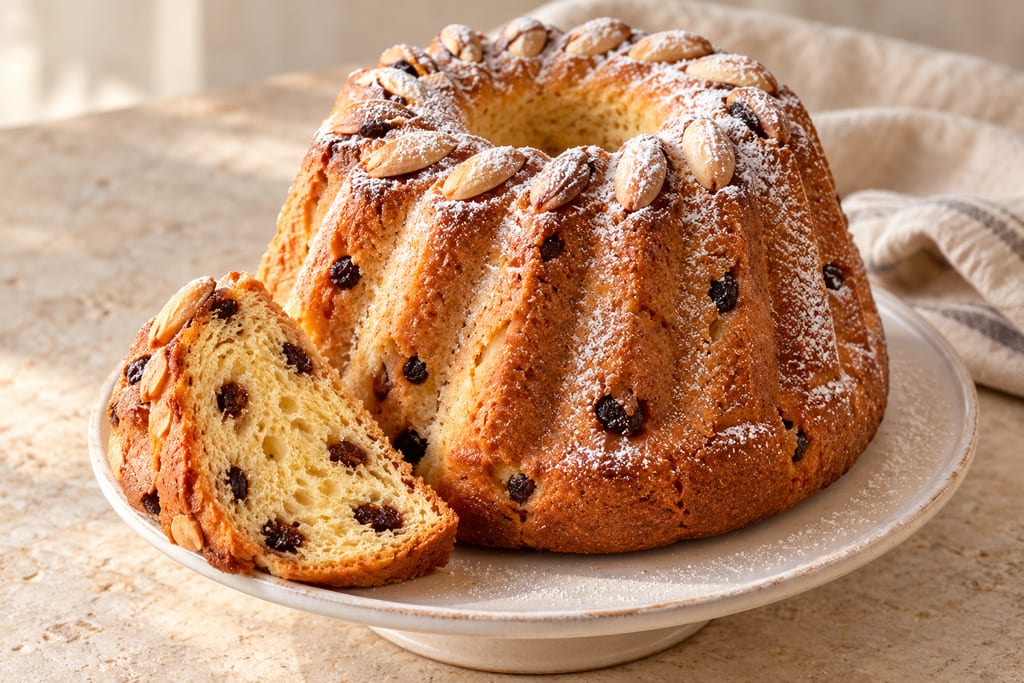
An enriched Alsatian yeast ring with raisins and almonds, kneaded with butter, proofed in a fluted mould and baked until browned.
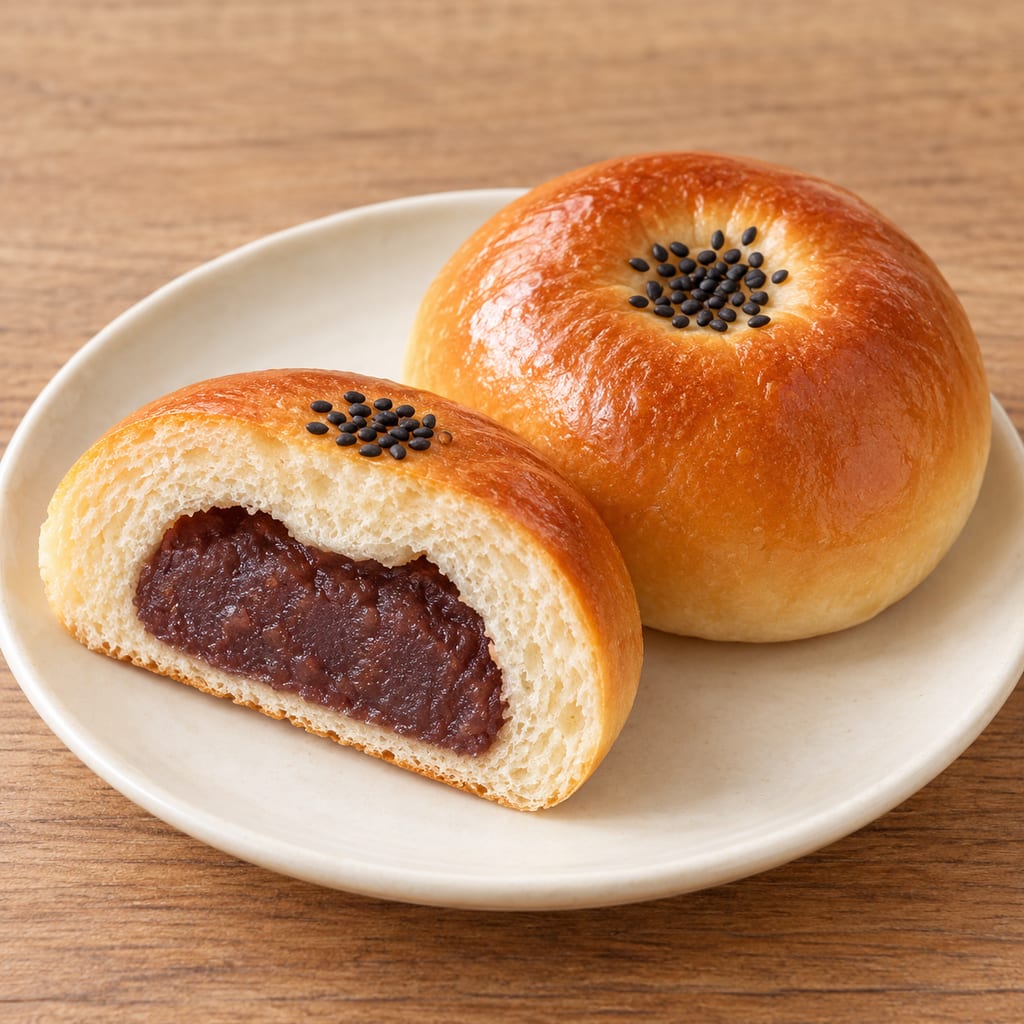
Anpan is a soft wheat bun filled with sweet red-bean paste and finished with egg wash and black sesame. This dough rises with commercial instant yeast.
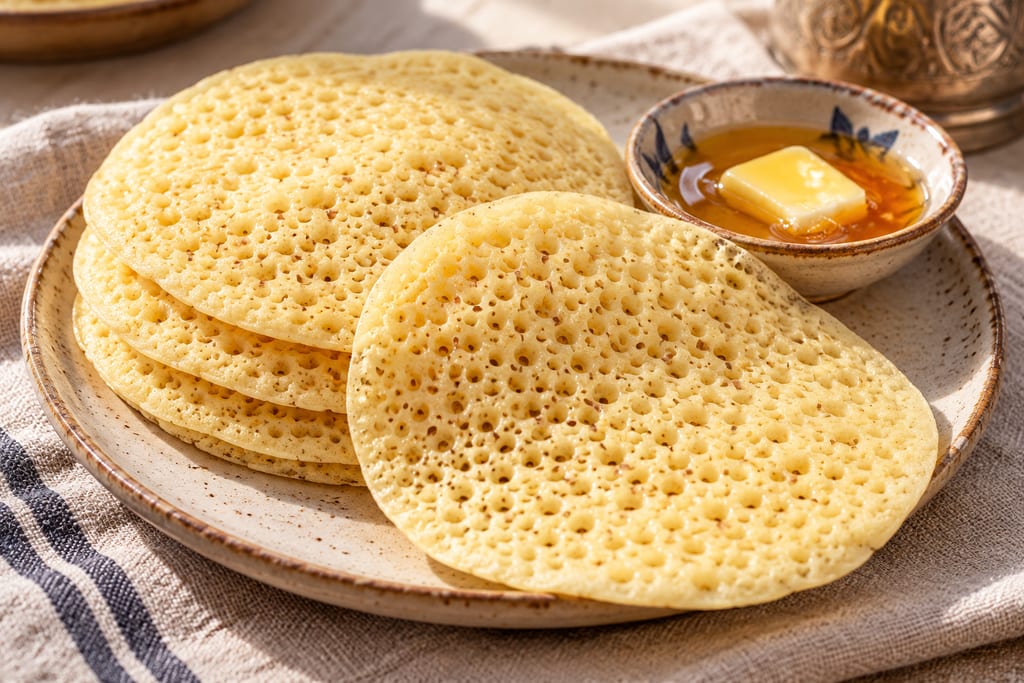
Moroccan semolina pancakes made from a thin yeast batter, rested until foamy and cooked on one side until the surface sets with a honeycomb of holes. This source-specific batch makes sixteen 5-inch pancakes.
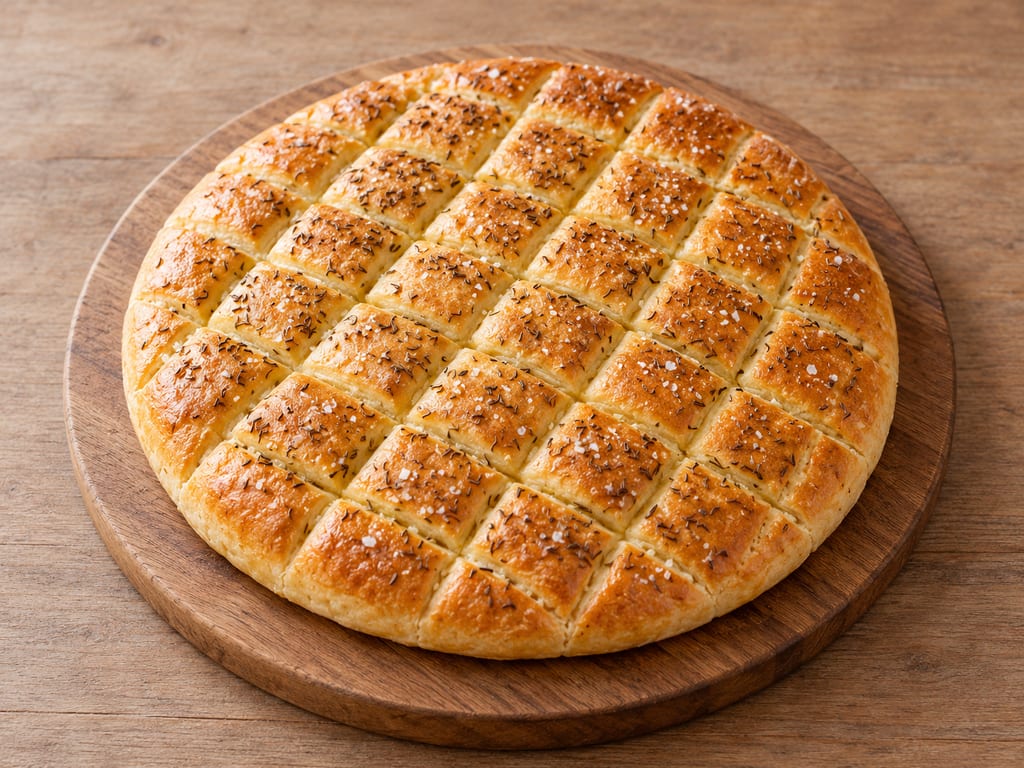
A round Slovenian flatbread scored in a grid and topped with caraway and coarse salt.
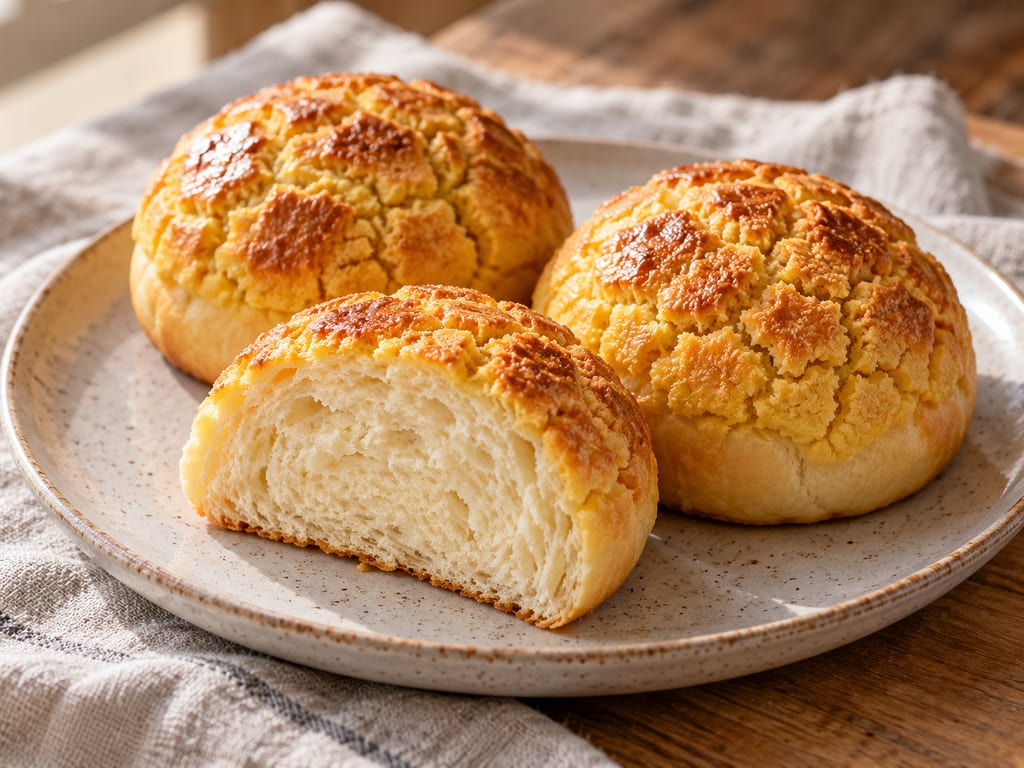
Hong Kong-style pineapple buns have soft yeast dough beneath a crisp, sweet pastry topping.
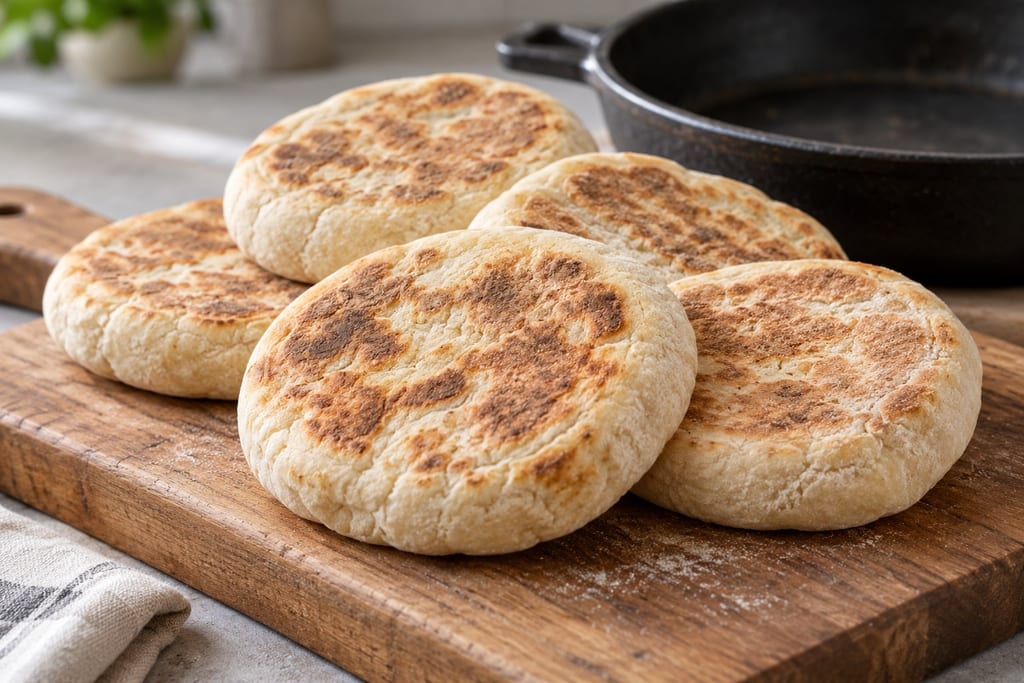
Sweet-potato wheat breads with fresh yeast, browned in a pan and finished in the oven. This is the bread component of Teleculinária's scrambled-egg dish.
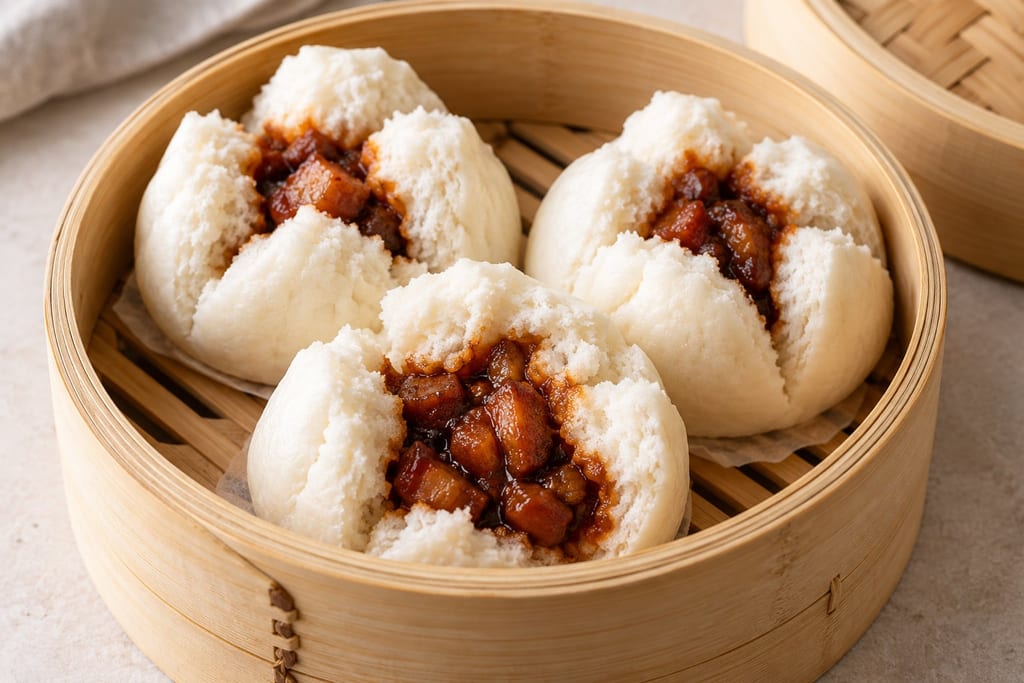
Fourteen fluffy steamed buns filled with cooked char siu and a thickened oyster-soy sauce.

A Cap-Pelé boucanière is an Acadian herring-smoking building. The documented Willie Niles example is a one-storey wood-frame structure with a ridge smoke vent and interior bays for hanging fish-bearing cannes.

Achcharu is a family of Sri Lankan vinegar pickles made with mixed vegetables or seasonal fruit and a piquant spice dressing. This version is a quick, refrigerated, non-fermented mixed-vegetable pickle.

The acocote is a long, hollowed and dried gourd used to draw aguamiel from a mature maguey. It is a harvesting tool: the sap is transferred to a separate vessel before it ferments into pulque.

Adrak murabba preserves young ginger in sugar syrup, a sweet South Asian preparation recorded in Indian cookery and food-processing sources.

Parkia biglobosa seeds are fermented into regional West African seasonings, including nététou, iru, dawadawa and soumbala. The yellow fruit pulp is a separate food, and names and methods vary by place.

Japanese reddish-brown vinegar from sake lees matured about three years, turned to vinegar by acetic bacteria; the vinegar of Handa and Edomae sushi rice.

A refined common-wheat flour blended for a broad range of baking; its protein and behavior vary with wheat, milling and market.

The almond mushroom, Agaricus subrufescens, was cultivated in eastern North America in the 1800s, lost its market, and returned as a cultivated mushroom from Brazil, where it is grown under several names.
No community contributions have been published for this entry yet.
Sign in to contribute. Published comments and photos are free to read.
King Arthur Baking SchoolMethod
Baguette Baking 101: Poolish Baguettes138 g flour, 138 g cool water and 1/16 tsp instant yeast
about 15 hours at 68 to 72 F
ripe poolish very bubbly and fragrant
the whole poolish goes into the dough; the full formula makes three baguettes
Cited in: The documented home formula
King Arthur BakingDefinition · History
Prefermenta preferment is a portion of the formula fermented before final mixing
poolish is a loose preferment of about equal flour and water weights, made with commercial yeast
how poolish differs from biga and pâte fermentée
yeast dose depends on the schedule
Cited in: What poolish is; A name with a disputed past; Why each ingredient and stage is there; What it does for the bread; Reading the bowl and handling it safely
King Arthur BakingMethod
French Bread with Poolishprofessional poolish of 3.3 kg flour, 3.3 kg water and 0.007 kg yeast at 100% hydration
covered and held at room temperature until ripe
added to a final dough with more flour, water, yeast and salt
Cited in: What poolish is; Why each ingredient and stage is there; What it does for the bread
King Arthur BakingMethod
Classic Baguettes120 g flour, 113 g cool water and 1/16 tsp yeast for about 14 hours
a ripe poolish expands and turns bubbly
makes three baguettes
Cited in: Why each ingredient and stage is there; The documented home formula; What it does for the bread; Reading the bowl and handling it safely
King Arthur BakingMethod
Classic Baguettes Bakealongovernight poolish of cool water, flour and a little yeast
about 14 hours at room temperature
visual signs of readiness
Cited in: The documented home formula
American Society of BakingDefinition · Method · Science
Poolishtypical 100% hydration
yeast dose sets the fermentation time
a ripe poolish peaks and can recede
proteolytic softening and the risk of excessive breakdown, acidity and alcohol
hygiene of fermentation containers
Cited in: What poolish is; A name with a disputed past; What happens in the bowl; Why each ingredient and stage is there; Reading the bowl and handling it safely
King Arthur BakingDefinition
Baker's Percentagepercentages are relative to flour weight
equal flour and water in a preferment is 100% hydration
preferment flour and water count toward the whole formula
Cited in: What poolish is
Arla ProMethod · Variation
Poolish Doughpoolish used in pizza dough
yeast dissolved in water, flour whisked to a smooth batter
covered with an escape for gas
12 to 16 hours at 20 C
Cited in: Why each ingredient and stage is there; The documented home formula; What it does for the bread
MORPH, University of SurreyHistory
PoolishPohlisch in Wimmer, Vienna, 1865 and pollisch in Reich, Pest, 1865
contrast with Dampfl
spelling variants
Calvel's Polish origin account examined and not established
Cited in: A name with a disputed past
Forking Around with HistoryHistory
Is Poolish Polish?competing explanations for the origin
the Zang story questioned
origin remains disputed
Cited in: A name with a disputed past
Duke University PressHistory
Good Bread Is Back: A Contemporary History of French Bread (preview)poolish or pouliche as an established French method before the First World War
direct-dough production changed the role of indirect fermentation
Cited in: A name with a disputed past
Frontiers in GeneticsScience
History and Domestication of Saccharomyces cerevisiae in Bread Bakingbaker's yeast fermentation and maltose use
Cited in: What happens in the bowl
FoodsScience
Sugar Levels Determine Fermentation Dynamics during Yeast Pastry Making and Its Impact on Dough and Product Characteristicsyeast uses simple sugars first and maltose later
Cited in: What happens in the bowl
MicroorganismsScience
Impact of Leavening Agent and Wheat Variety on Bread Organoleptic and Nutritional Qualityeffects of leavening and flour on fermentation products and quality
Cited in: What happens in the bowl
PolymersScience
The Self-Enforcing Starch-Gluten System: Strain-Dependent Effects of Yeast Metabolites on the Polymeric Matrixyeast metabolites alter the starch-gluten matrix in a strain-dependent way
Cited in: What happens in the bowl; Reading the bowl and handling it safely
Centers for Disease Control and PreventionSafety
Raw Flour and Doughraw flour can carry E. coli and Salmonella
do not taste or eat raw dough or batter
clean hands and surfaces after handling
Cited in: What poolish is; Reading the bowl and handling it safely
U.S. Food and Drug AdministrationSafety
Handling Flour Safely: What You Need to Knowmilling does not reliably remove harmful bacteria
keep flour away from ready-to-eat food
clean surfaces and equipment
Cited in: Reading the bowl and handling it safely