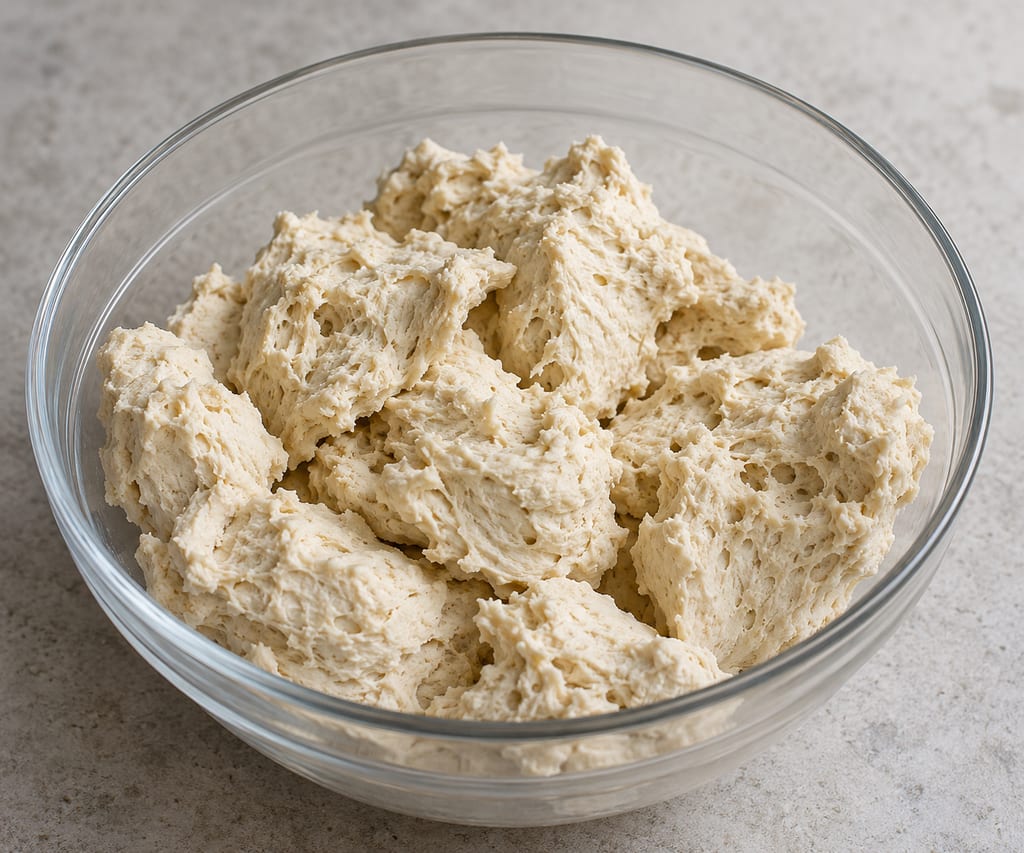
Biga
Biga is an Italian bread preferment of flour, water and a little yeast, usually a stiff unsalted mass of about 45 per cent water, fermented ahead and then mixed into the final dough.
 FermenteaWhere food goes to change
Modern method
pâte fermentée · vieille pâte · pâte de la veille · levain de pâte · old dough · pre-fermented dough · fermented dough
Pâte fermentée is a bread preferment made from salted, yeasted dough set aside to ferment and mixed into a later batch, carrying developed dough and fermentation products with it.
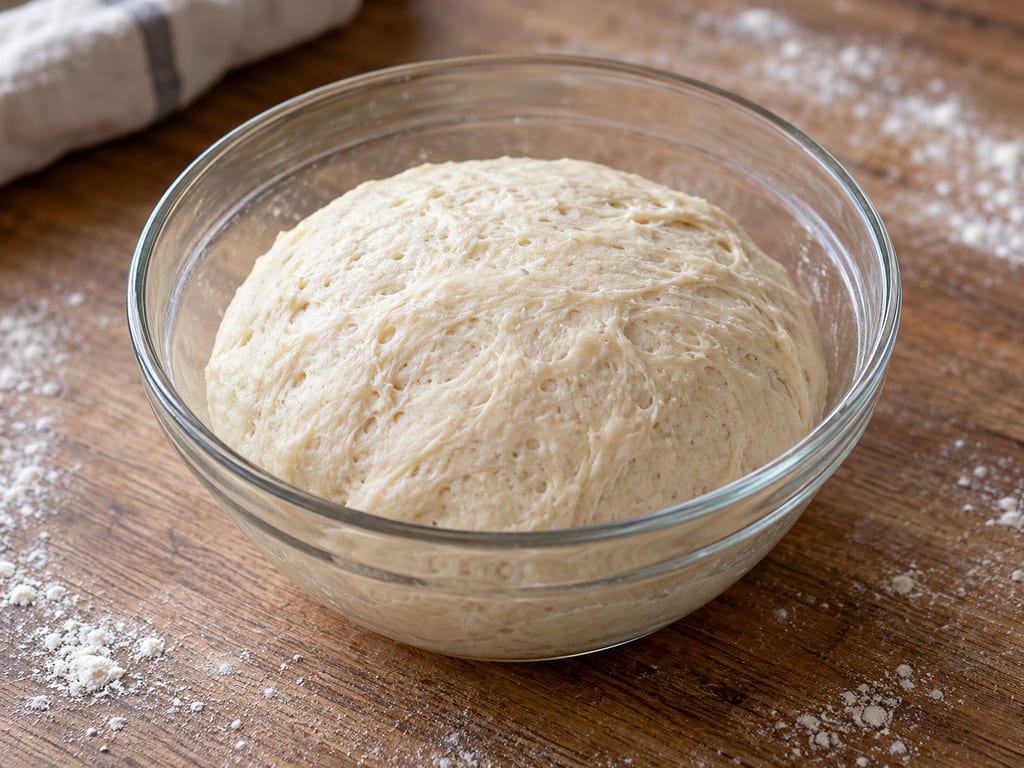
Pâte fermentée is French for fermented dough, and in a bakery today it means a piece of fully mixed bread dough set aside to go into a later batch. Instead of stirring up a separate paste of flour, water and yeast, the baker keeps some of the ordinary dough that is already being made, lets it go on fermenting, and works it into fresh ingredients. English calls it old dough, which describes the method well. It counts as a preferment because part of the flour has fermented before the final dough is assembled.
What sets it apart is that it is a finished dough. It holds the flour, water, salt and commercial baker's yeast of the parent bread, and the salt matters because poolish and conventional biga are normally made without any. It has usually been mixed and had some gluten developed, unlike a loosely stirred poolish or a briefly mixed biga. Its hydration comes from the bread it was taken from, not from the name, so a white French dough, a wholemeal dough and other lean mixtures give different pâtes fermentées.
The organism is usually Saccharomyces cerevisiae, supplied as baker's yeast, which ferments the sugars in the dough into carbon dioxide, ethanol and other metabolites. Pâte fermentée is not automatically sourdough. A maintained starter carries a community of yeasts and lactic acid bacteria shaped by repeated feeding, and a scrap of commercial-yeast dough does not take on that identity by being carried into another batch. What lives in it depends on the original dough and how it was handled.
There are two ways to get it. A baker can save some of the batch already being made, or mix a small piece of complete dough the day before. King Arthur describes taking dough after mixing and using it the next day, and Ciril Hitz describes saving it after bulk fermentation and chilling it overnight. Both let part of the formula mature before the final mix, starting from dough at different stages of development. Nobody eats it by itself; it goes into bread, rolls and other baked doughs.
Saving fermented dough from one baking for the next is an old way to make bread, but when it began cannot be established. It is tempting to call pâte fermentée an ancient invention, since keeping dough and natural leavening both have long histories. That blurs a real difference. Earlier bakers generally kept dough carrying an established mixed culture, while today's pâte fermentée usually means salted dough made with commercial yeast. The two share a physical method and need not share organisms, ingredients or purpose.
A useful primary text is the 1765 Encyclopédie of Diderot and d'Alembert. Its entry for levain defines the baker's leaven as a piece of dough from a previous baking, left to sour and then spread through the next day's dough. It adds that salt and brewer's yeast were sometimes put in when there was not time for the dough to turn acid by itself. That is direct eighteenth-century evidence for saved fermented dough and for occasional added yeast. It does not show that bakers used the modern term or today's commercial-yeast method.
The 1844 Maison rustique du XIXe siècle gives a fuller picture of French bakery practice. Its chapter on breadmaking separates levain de pâte from brewer's yeast and describes several stages of refreshing an established levain-chef: Parisian bakers kept a piece of dough and built it up through successive preparations before using it in bread. It separates young from old leavens and warns that an over-matured leaven can damage the bread. This shows how established dough was managed in nineteenth-century bakeries, but a multi-stage levain should not be rewritten as a modern overnight pâte fermentée.
Modern baking books make the commercial-yeast sense clear. Jeffrey Hamelman's Bread, published in 2004, describes pâte fermentée as previously mixed white bread dough containing salt and kept for the next batch. Ciril Hitz's Baking Artisan Bread, published in 2008, likewise treats it as finished dough stored overnight, and the French term levain de pâte is distinguished from levain naturel in a scientific and technical glossary from Éditions Quæ. When the present usage became standard has not been settled.
Conventional pâte fermentée is an alcoholic fermentation by baker's yeast. The yeast takes energy from fermentable carbohydrate: glycolysis turns glucose into pyruvate with ATP and reduced NADH, pyruvate decarboxylase converts pyruvate into acetaldehyde and carbon dioxide, and alcohol dehydrogenase reduces acetaldehyde to ethanol while regenerating the NAD+ glycolysis needs. Carbon dioxide collects in the hydrated gluten network and swells the gas cells introduced in mixing. Ethanol and other yeast metabolites stay in the dough until baking changes or drives them off.
Flour supplies starch, a little soluble sugar, proteins, minerals and its own enzymes. Alpha- and beta-amylase break accessible starch into smaller carbohydrates, maltose among them, and baker's yeast has the transport and maltase systems to use it. These reactions go on through the fermentation at rates set by the flour, the temperature, the water and how reachable the starch is. Other enzymes work on proteins and lipids, giving peptides and amino acids and compounds that later feed bread aroma and crust browning.
Salt is what separates pâte fermentée chemically from a salt-free preferment. Sodium chloride alters ionic interactions in the dough, changes gluten properties and puts osmotic stress on the yeast; King Arthur describes it as retarding yeast and improving the handling of wheat dough. In a normal bread formula it moderates fermentation and does not stop it, so a salted old dough does ferment, and its salt does not make it microbiologically preserved. The exact effect depends on the amount of salt, the hydration, the yeast strain and the conditions.
Time also changes the dough's mechanics. Gluten is a hydrated protein network whose elasticity and extensibility depend on mixing, protein composition and later biochemical change. The saved dough has already had some gluten development and fermentation, and continued enzyme action and accumulating fermentation products can make it more extensible, though too much maturation weakens it. Mixed into fresh dough it brings hydrated flour, living yeast and earlier metabolites, and what they do depends on how much old dough goes in and how the whole formula is handled.
A natural sourdough is different. It normally holds lactic acid bacteria alongside yeasts, shaped by repeated refreshment and acidification, and those bacteria make lactic acid, acetic acid and other metabolites depending on the organisms and substrates. They cannot be assigned to an ordinary commercial-yeast pâte fermentée. Acidity may build during storage, but a sour flavour alone does not show where it came from. The process is alcoholic because commercial yeast is the intended leavening.
The simplest method starts from a batch of lean bread dough. Flour, water, salt and yeast are mixed to the parent formula, and a portion is set aside either right after mixing or after some bulk fermentation. King Arthur describes saving mixed French bread dough for the following day, and Hitz lets the dough finish bulk fermentation first. The portion goes into a covered container and usually into the refrigerator until the next mix. No separate flour-and-water mother is needed.
When there is no earlier dough, a separate batch can be made. The Hot Bread Kitchen Cookbook, by Jessamyn Waldman Rodriguez and Julia Turshen, gives a home-scale formula of 180 g bread flour, 120 g lukewarm water, 2/3 teaspoon active dry yeast and 1 teaspoon kosher salt. It is mixed on low speed for two minutes into a shaggy dough, rested covered at room temperature for 30 minutes and refrigerated for 8 to 24 hours; the book says it need not return to room temperature before use, and it yields about 300 g. The water is called lukewarm with no number, and the salt is given by volume, so neither is converted to a figure here.
Each ingredient has a job. Flour supplies starch, enzymes and structural protein, water hydrates them and allows enzyme and yeast activity, yeast is the fermenting population, and salt gives flavour, affects gluten and moderates fermentation. Because the salt is already in the old dough, the baker has to count it in the finished recipe, and the flour and water in the old dough count toward total hydration and flour. Otherwise adding old dough as an extra ingredient quietly shifts the proportions of the bread.
Mixing spreads the ingredients and starts gluten development. A cover limits surface drying and contamination. Fermentation lets yeast and enzymes work, and refrigeration slows them and makes the schedule easier, though it does not stop them. When it is ready, the dough is cut into small pieces so it spreads through the fresh ingredients: the Hot Bread Kitchen rustic bâtard cuts its 105 g of pâte fermentée into walnut-sized pieces before the final mix, and its bialy dough takes 150 g.
No maturation time or storage life holds for every recipe. Hamelman advises that refrigerated old dough has a limited period of useful leavening and puts it at no more than about 48 hours for his method, while the Hot Bread Kitchen formula gives 8 to 24 hours for its separately mixed dough. Each schedule belongs to its formula. In the final dough the baker still develops structure, ferments, shapes, proofs and bakes to the full recipe, and the preferment replaces none of those steps.
The French name is widely used in professional baking, and related words exist. Vieille pâte and pâte de la veille both mean old or previous-day dough. Levain de pâte appears in French technical writing for a piece of salted bakery dough kept for another batch. The words overlap without being perfectly interchangeable in every period, and levain-chef can mean a maintained sourdough mother, whereas modern pâte fermentée is usually seeded with commercial yeast and meant for short reuse.
The 1765 Encyclopédie describes dough from the preceding baking left to sour, sometimes helped with brewer's yeast and salt, and the 1844 Maison rustique describes Parisian bakers keeping a chef and building it up through successive levains. Those are not the same as chilling a piece of finished commercial-yeast dough overnight. They record a related tradition of dough continuity, not an identical recipe with the same cultures or storage.
French-style pâte fermentée is mostly tied to lean wheat doughs, baguette and country-bread formulas among them. Hamelman presents the saved-dough method as useful wherever bread is made often enough to carry dough from one mix to the next, and Hitz stresses the convenience for bakeries on a regular schedule and the difficulty for home bakers who bake only now and then. The method can also be reproduced by mixing a separate small dough ahead, which needs no daily baking.
It is used internationally. The Real Bread Campaign in the United Kingdom lists old dough as its own category of preferment while noting that some bakers question whether it is a true preferment, since it comes from finished dough and is not built separately. American baking books use it in French-style loaves and other breads, Hot Bread Kitchen in New York City uses a separately mixed version in lean and enriched doughs, and Quebec teaching material gives formulas under the French name.
No regional hydration, yeast level or proportion of old dough is fixed. It depends on the parent bread and the baker's formula. White wheat, mixed-grain or enriched doughs can all be kept, but they are not automatically interchangeable, and salt, sugar, fat and other ingredients carried into the new batch have to be counted. For useful comparison a note should say what the parent dough contained and whether the piece was taken before or after bulk fermentation.
Pâte fermentée goes into a new bread dough. The baker adds the matured dough to fresh flour and water along with the salt, yeast and other ingredients of the full formula. It is there for leavening support, flavour and dough handling, and because it carries hydrated flour, developed gluten and fermentation products, it behaves differently from the same weight of freshly mixed flour and water. How much it contributes depends on the proportion used and the condition of the old dough.
Traditional-looking French wheat breads are the usual use. Old dough goes into baguettes, bâtards, boules and other lean loaves. The Real Bread Campaign describes the method as one of several ways to raise fermentation-derived flavour, and Hamelman presents it as a convenient way to carry some fermented dough into later production. These are possible gains in aroma and handling, but the texture and crust of the loaf also depend on flour strength, hydration, mixing, proofing and baking.
A documented modern example is the Hot Bread Kitchen rustic bâtard, which combines 105 g of pâte fermentée with fresh bread flour, whole wheat flour, water, salt and yeast. The saved dough is cut small so it disperses. The same book uses pâte fermentée in a bialy dough and in enriched breads, showing that something started from plain lean dough can go into a more complex final preparation provided its flour, water and salt are counted.
For a bakery making similar breads daily, keeping a piece of dough avoids building a separate preferment and uses fermented material that might otherwise be thrown away. For someone baking irregularly, mixing a small amount on purpose the day before may be more practical. The aims are similar and the schedules differ. The baked breads are eaten fresh, as sandwiches, rolls or with meals.
The preferment itself is raw dough and must not be tasted, however pleasant it smells or fully risen it looks. The final product has to be baked as its recipe says. Pâte fermentée does not make wheat bread gluten-free, and ordinary commercial-yeast fermentation does not give it the microbiology or acidity of a natural sourdough.
A developing pâte fermentée shows ordinary bread-dough fermentation. Depending on when it was set aside, it expands, develops internal gas pockets and softens or becomes more extensible, and its smell strengthens as yeast metabolites accumulate. Unlike poolish it is not a liquid batter, and it keeps the general consistency of its parent dough, though continued fermentation changes how it handles. How far it expands depends on flour, hydration, mixing, yeast activity, temperature and container, so no doubling is required.
An old dough that stays dense and inactive may have weak yeast, too little maturation or cold storage that has slowed things greatly. The parent dough may also have been taken before much gas had formed. Dough that has finished bulk fermentation looks different from dough saved straight after mixing, so judge it against its own method and not against a poolish or sourdough.
An over-matured old dough loses gas-holding ability, goes slack or smells strongly fermented. Continued fermentation and enzyme action alter gluten structure and performance. Hamelman warns that refrigerated pâte fermentée has a limited period of useful leavening and treats about 48 hours as the practical upper limit for his method; that is advice on baking performance and not a validated food-safety limit. The Hot Bread Kitchen formula gives 8 to 24 hours of refrigerated maturation for its separate mix, and the two schedules should not be blended into an invented general rule.
Wrong accounting causes another common fault. Pâte fermentée already contains salt, so adding it to a new dough without adjusting the formula can raise the total salt, and the same goes for flour and water. Baker's percentages should use the full flour in both the old and fresh parts, and old dough from a different parent recipe needs its composition known before it is counted. The weight of old dough is not the same as the share of flour that has been prefermented.
Safety cannot be judged from rise, acidity or smell. The CDC names raw flour as a possible source of pathogenic E. coli and Salmonella and advises against tasting raw dough, and ordinary fermentation is no substitute for baking. Use clean utensils, food-safe containers and potable water, keep raw flour away from food that is eaten uncooked, and throw out dough with visible mould or obvious contamination. Refrigeration slows fermentation and does not sterilise. No published pH, water-activity value or storage period establishes the safety of every pâte fermentée.
Saving commercial-yeast dough again and again does not guarantee a stable sourdough ecosystem. A natural levain needs microbial selection and refreshment, and without testing the presence of lactic acid bacteria cannot be known. If a kept dough turns strongly sour, changes colour or smells unexpected, the cause should not be assumed to be benign. Old dough is best understood as a short-term bakery preferment whose quality depends on controlled preparation, proper storage and timely use in fresh dough.
Saved-dough leavening is documented in 1765; the modern commercial-yeast usage is described from 2004.
Yield 300 g
Flour is a raw agricultural product; fermentation does not show contamination has gone.
Hazard sourceRaw flour can carry Salmonella and raw dough must not be tasted or eaten.
Hazard sourceFlour dust, hands, utensils and surfaces can carry microbes to other foods.
Hazard sourceDo not taste or eat raw pâte fermentée; bake the dough it goes into.
Control sourceWash hands, utensils, bowls and surfaces after handling raw flour or dough, and keep flour away from ready-to-eat food.
Control sourceKeep the refrigerated stage to the formula's 8 to 24 hours and keep the dough refrigerated.
Control sourceThe refrigerated period belongs to a baking formula and is not a validated pathogen-reduction process.
The recipe gives no numeric fermentation temperature; refrigerator safety advice is not the recipe's fermentation specification.
The yeast is active dry yeast with no gram weight; other yeast types in the same volume are not validated.
Kosher salt varies in density by brand; weigh the salt actually used before assigning a percentage.
Do not taste raw dough; fermentation does not remove the risk of uncooked flour.
Discard dough with visible mould, odd colour or contamination; do not scrape off the surface.
A fermented smell or risen volume does not establish safety.
Contains wheat gluten; fermentation does not make it suitable for coeliac disease.
Carrying commercial-yeast dough forward does not produce a characterised sourdough culture.
No pH limit, water-activity threshold or extended storage life is established.
Count the preferment's salt, flour and water once in the total final-dough formula.
The 300 g yield is the cookbook's approximate figure.
The Encyclopédie records saved dough used as leaven; a country-level statement.
Describes Parisian levain management, not the modern preferment.
Used in French-style lean breads; a country-level statement.
Hot Bread Kitchen cookbook formula.
Used in American professional baking texts.
Real Bread Campaign article on preferments.
Teaching material under the French name.
Biga is an Italian bread preferment of flour, water and a little yeast, usually a stiff unsalted mass of about 45 per cent water, fermented ahead and then mixed into the final dough.
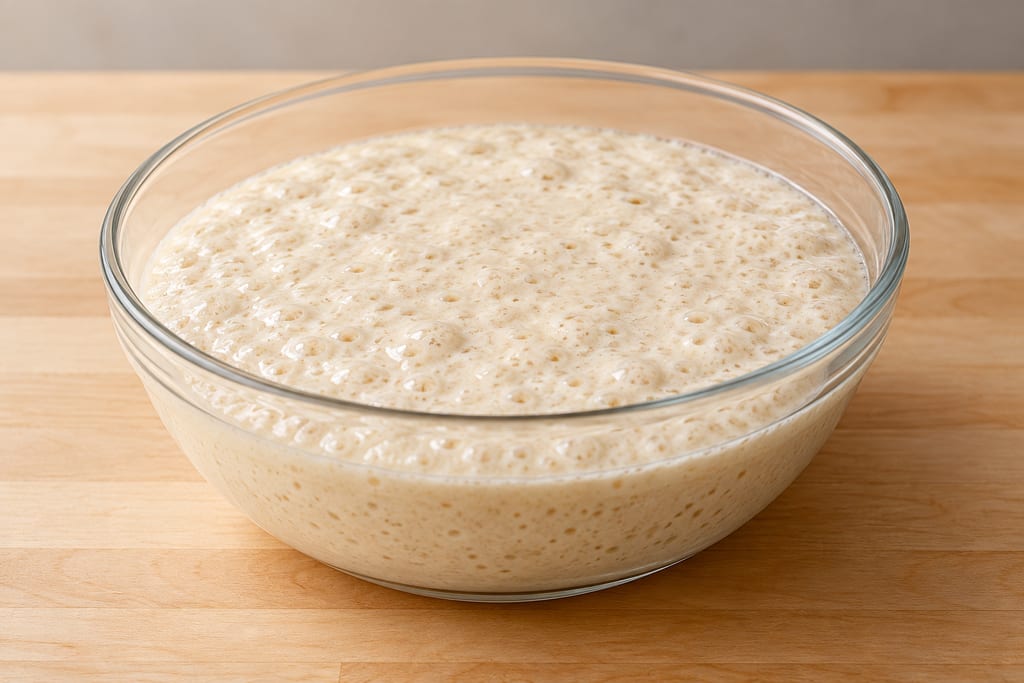
Poolish is a loose, unsalted bread preferment of roughly equal weights of wheat flour and water with a pinch of baker's yeast, left to ripen before it goes into the final dough.
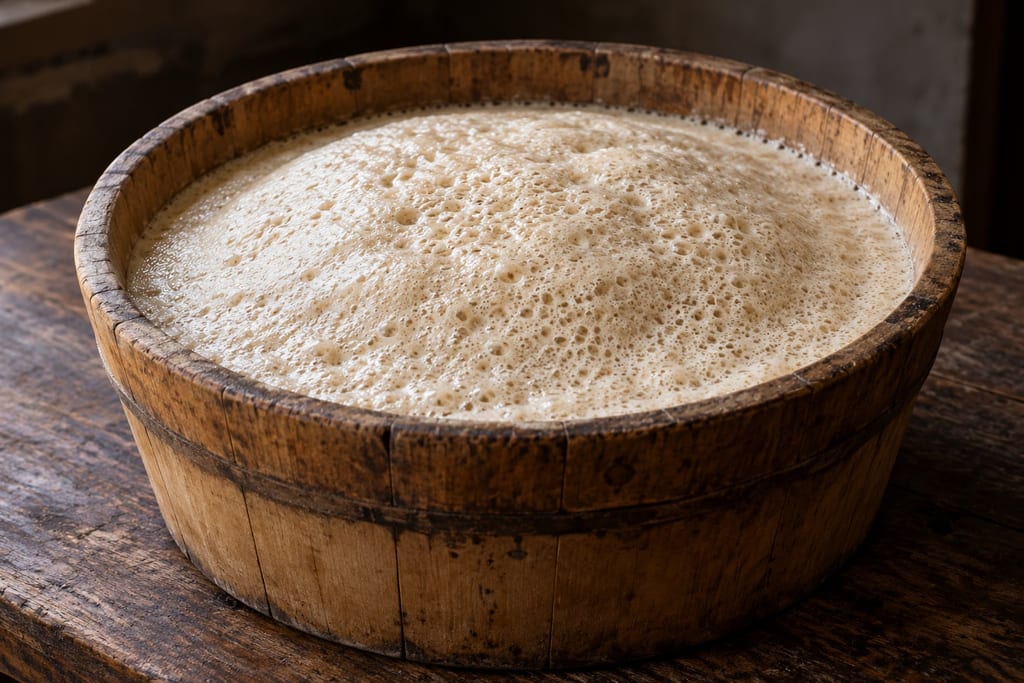
Scotch barm is a Scottish bakery ferment grown in a malt-and-scalded-flour medium and renewed with mature barm from the last batch to leaven successive bread sponges.
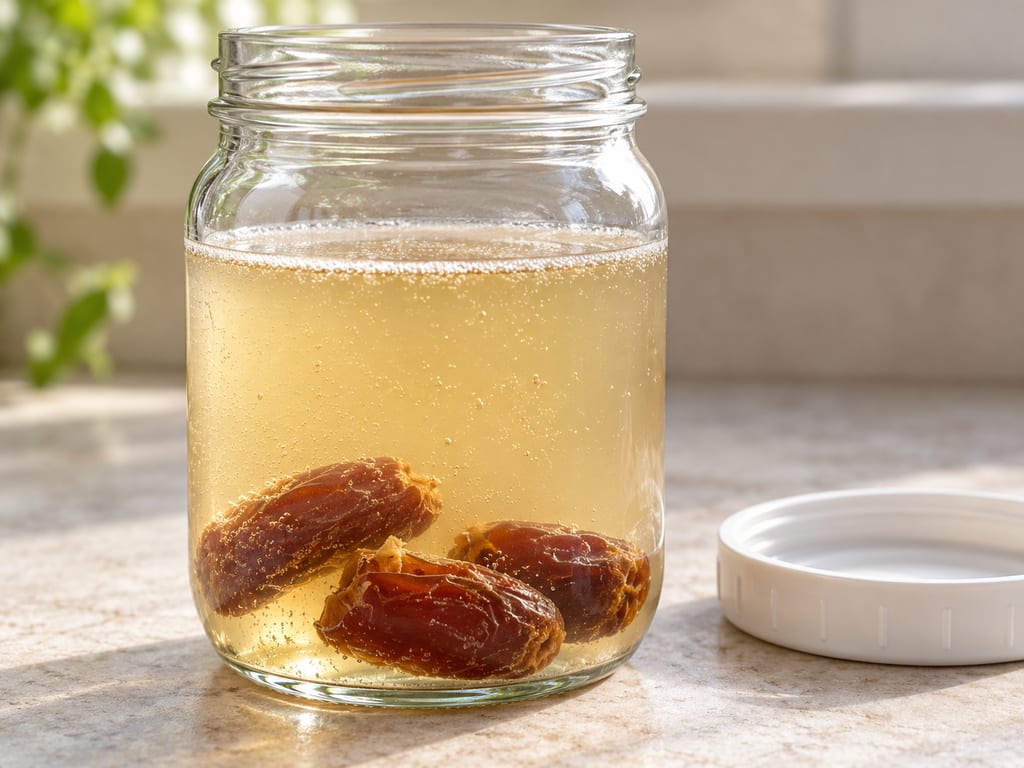
Fruit yeast water is a spontaneously fermented liquid made by soaking fruit in water, with or without sugar, to grow yeast for starting bread dough or a separate flour starter.
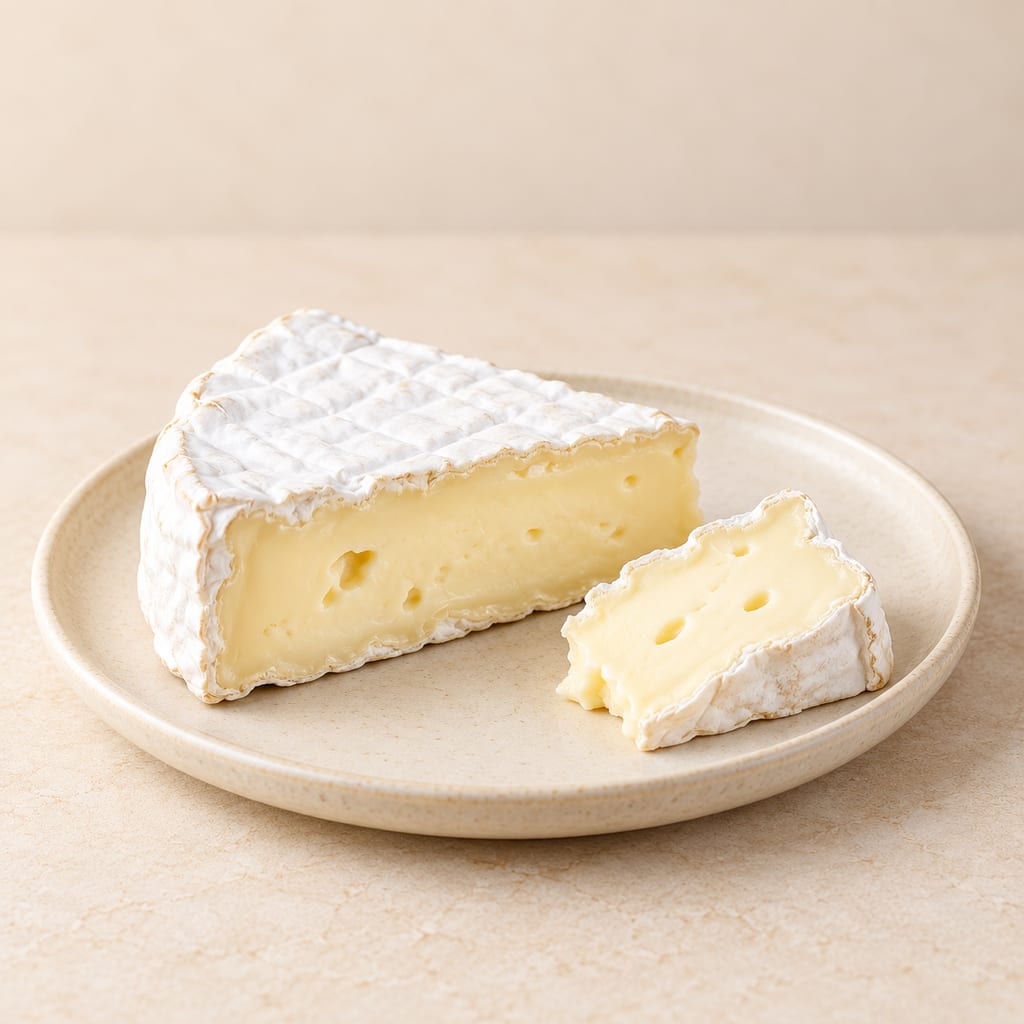
A cream-enriched Brie with a white bloomy rind and a softening center, made from pasteurized milk with lactic and surface cultures.
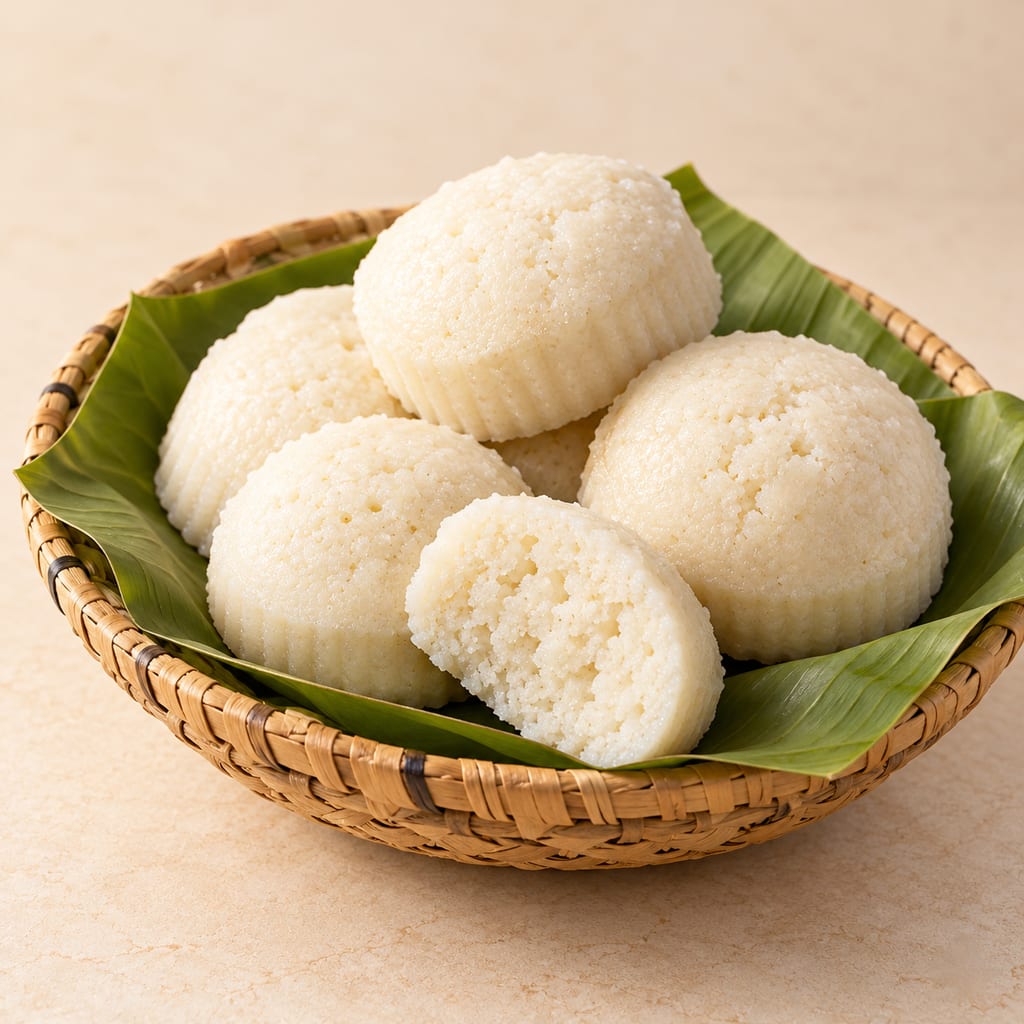
Soft, lightly tangy steamed cereal bread documented across Benin and Togo. This page gives one measured rice-flour research method; maize-based Ablo and mixed-grain versions remain distinct traditions.
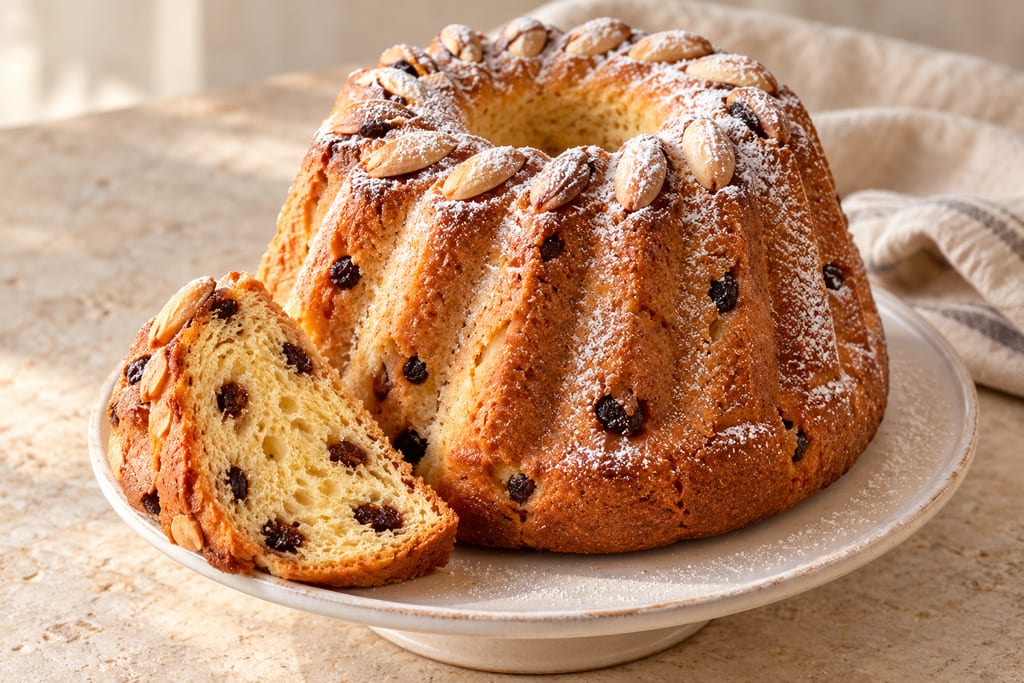
An enriched Alsatian yeast ring with raisins and almonds, kneaded with butter, proofed in a fluted mould and baked until browned.
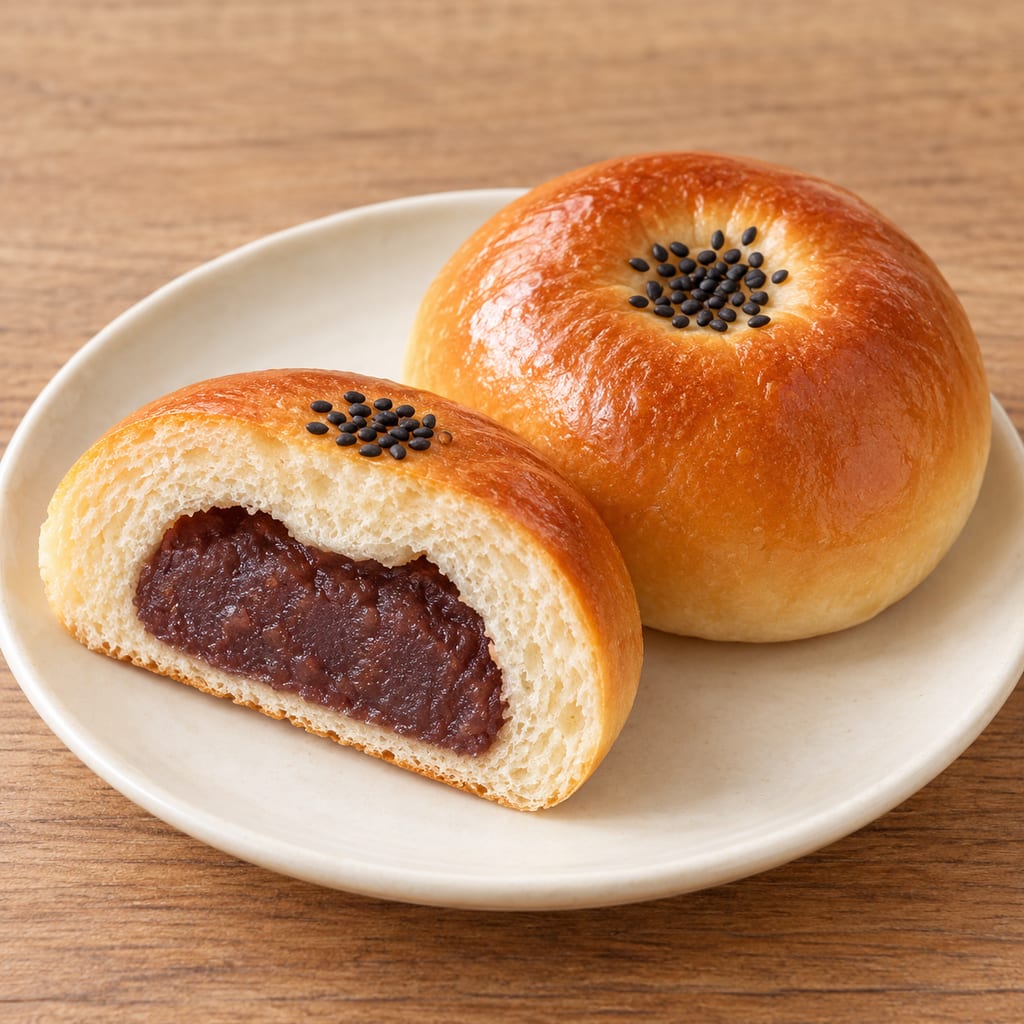
Anpan is a soft wheat bun filled with sweet red-bean paste and finished with egg wash and black sesame. This dough rises with commercial instant yeast.
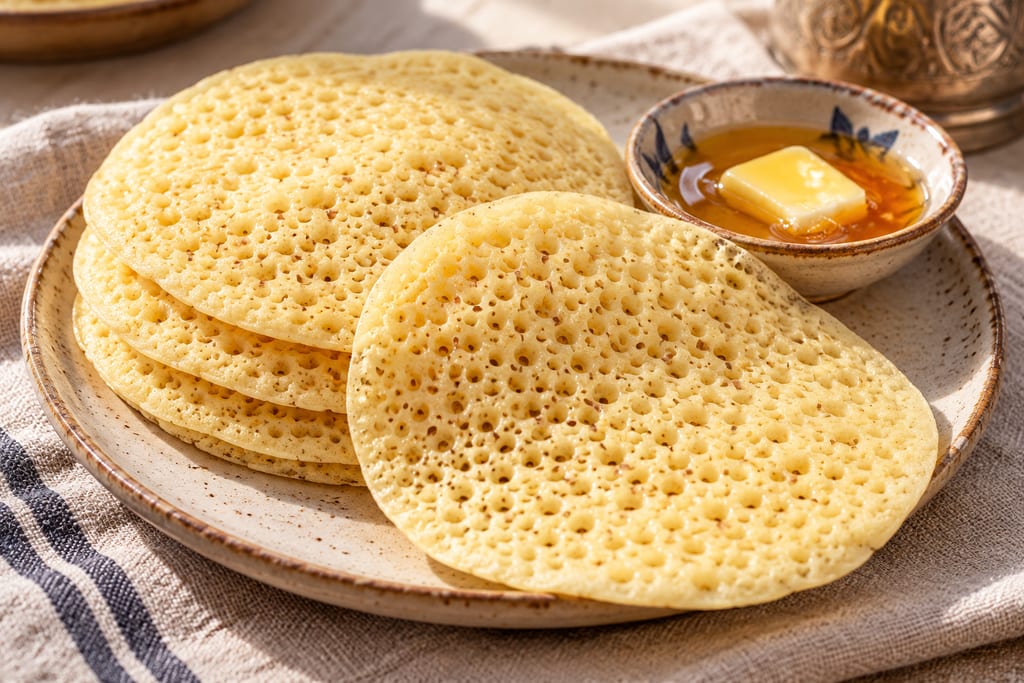
Moroccan semolina pancakes made from a thin yeast batter, rested until foamy and cooked on one side until the surface sets with a honeycomb of holes. This source-specific batch makes sixteen 5-inch pancakes.
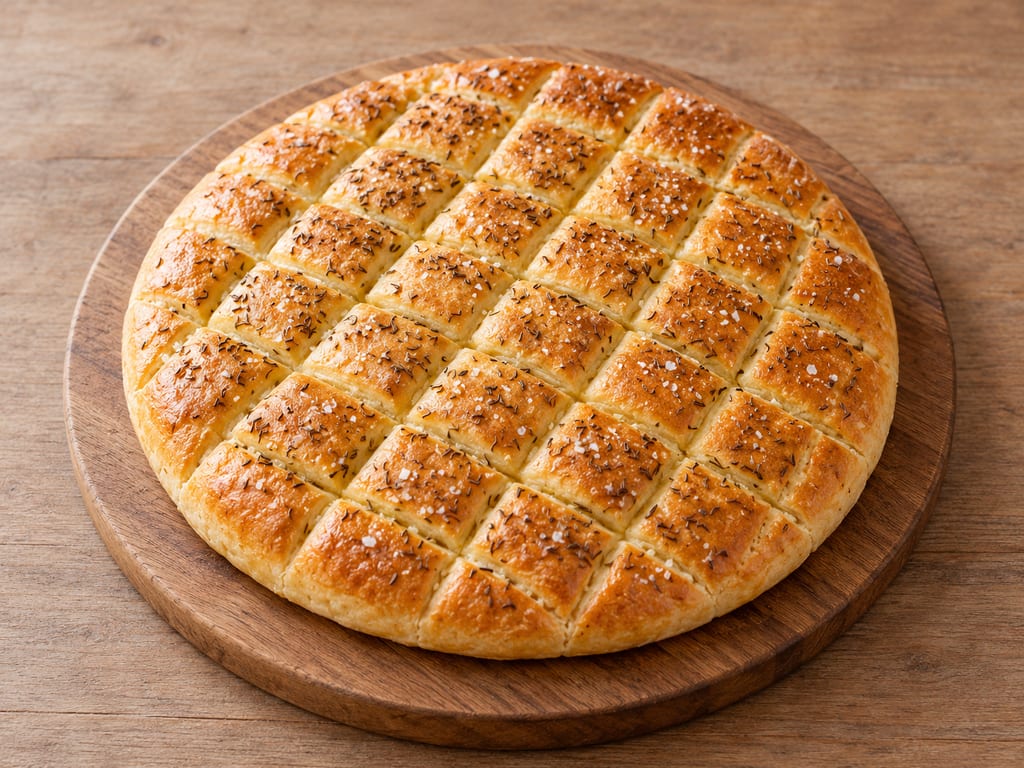
A round Slovenian flatbread scored in a grid and topped with caraway and coarse salt.
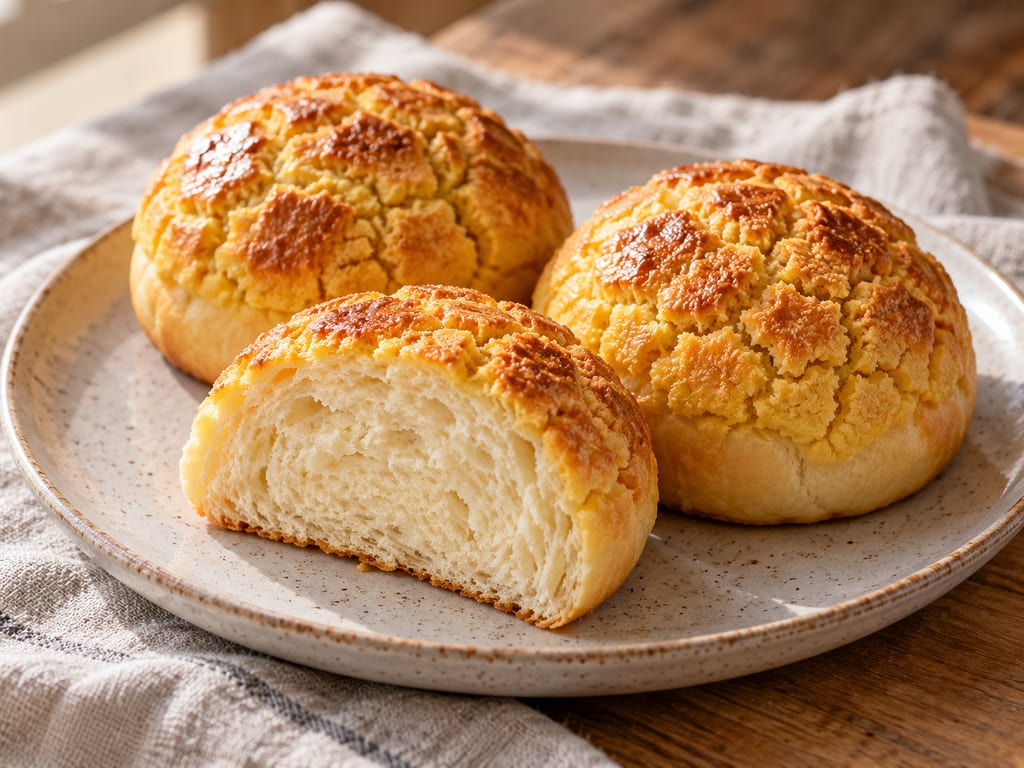
Hong Kong-style pineapple buns have soft yeast dough beneath a crisp, sweet pastry topping.
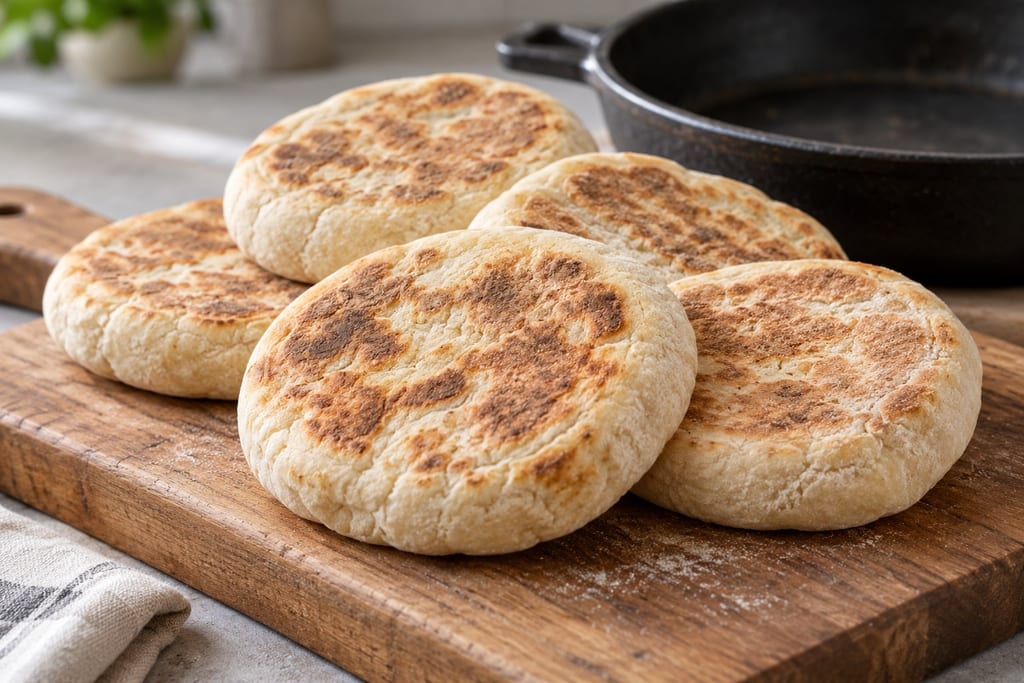
Sweet-potato wheat breads with fresh yeast, browned in a pan and finished in the oven. This is the bread component of Teleculinária's scrambled-egg dish.
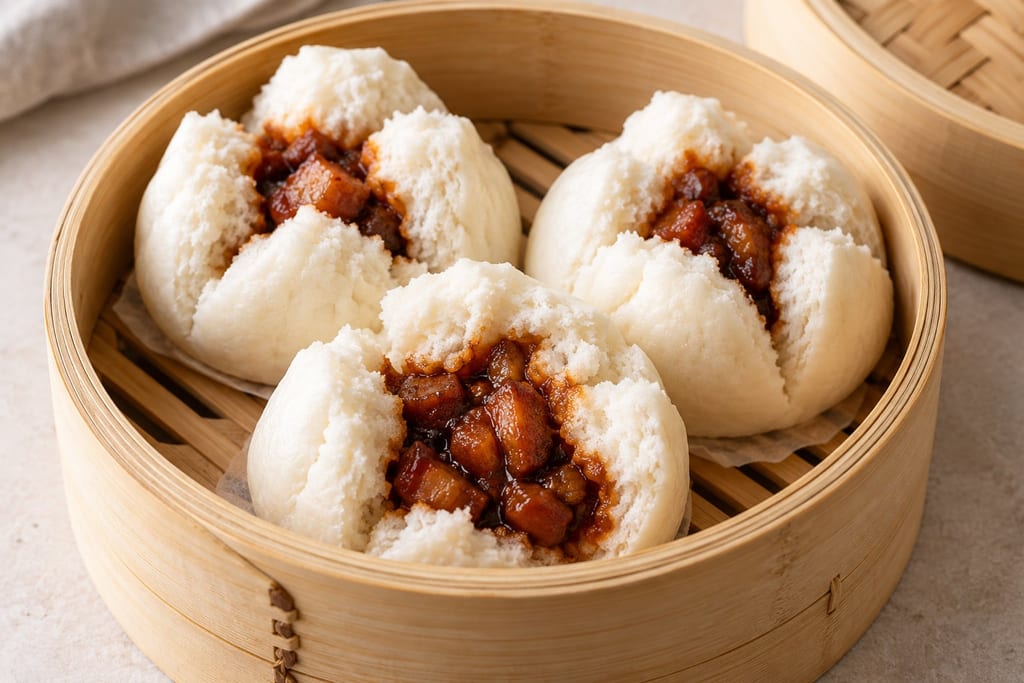
Fourteen fluffy steamed buns filled with cooked char siu and a thickened oyster-soy sauce.

A gelling polysaccharide extracted from red seaweeds, sold as kanten strips or powder; it sets firm at a low concentration and stays solid until about 85 °C.

A Dominican table and seasoning condiment of sour orange juice, mixed with lime and salt and bottled raw; garlic, oregano or a hot pepper may be added for meat or a spicier bottle.

Cicerbita alpina is an alpine perennial whose tender shoots and leaves have been eaten raw or cooked. Sámi milk preparations and modern Carnian dishes are distinct uses, with serious identification and preservation limits.

Japanese skipjack tuna cooked, then repeatedly smoked and dried over a wood fire by the hand-fired tebiyama method into a hard block for shaving into dashi: the first stage of katsuobushi.

A Swedish-style spirit vinegar made by fermenting neutral alcohol with live vinegar bacteria, with a separate guide to commercial ättika strengths.

A yeast-raised wheat ring shaped from a firm dough, briefly boiled and baked. This source-batch formula gives a gently malted crust and a chewy crumb.

A warm dip of garlic, anchovy and olive oil, often enriched with butter, that Piedmont serves over a flame with raw and cooked vegetables and bread.

Bechamel is a white sauce of milk thickened with a butter and flour roux, one of the French mother sauces, and the base from which Mornay and other cheese and cream sauces are made.
No community contributions have been published for this entry yet.
Sign in to contribute. Published comments and photos are free to read.
Hot Bread Kitchen / Clarkson PotterMethod · Use
The Hot Bread Kitchen Cookbook: Pâte Fermentée (p. 126)180 g flour, 120 g lukewarm water, 2/3 tsp active dry yeast, 1 tsp kosher salt
2 minutes on low speed, 30 minutes at room temperature, 8 to 24 hours refrigerated; yield about 300 g
rustic bâtard uses 105 g, bialy dough 150 g
Cited in: How it is made and why each step is there; Names and variations; In the finished bread; Reading results and problems
King Arthur BakingDefinition
Prefermentold dough as saved mixed dough used the next day
difference from poolish and biga
Cited in: What pâte fermentée is; How it is made and why each step is there; Names and variations; In the finished bread; Reading results and problems
ckbkDefinition · Method · History
Pâte fermentée, from Bread: A Baker's Book of Techniques and Recipespreviously mixed white dough with salt, saved for the next batch
about 48 hours as the practical limit for refrigerated old dough
Cited in: What pâte fermentée is; An old practice and a modern term; How it is made and why each step is there; Names and variations; In the finished bread; Reading results and problems
Quarry Books, excerpt hosted by ckbkDefinition · Method
Pâte Fermentée (Old Dough), from Baking Artisan Breaddough saved after bulk fermentation and refrigerated overnight
Cited in: What pâte fermentée is; An old practice and a modern term; How it is made and why each step is there; Names and variations; In the finished bread
Real Bread Campaign (True Loaf)Variation · Use
Afore ye doughold dough as a category of preferment; debate over whether it is a true preferment
Cited in: What pâte fermentée is; How it is made and why each step is there; Names and variations; In the finished bread
Muséum national d'Histoire naturelleScience
Quelle est la différence entre levure et levain ?yeast and levain are different cultures
Cited in: What pâte fermentée is; An old practice and a modern term; What the yeast, the salt and the flour do; Reading results and problems
Éditions QuæDefinition · Variation
Open-access technical glossary of bread termslevain de pâte distinguished from levain naturel
Cited in: What pâte fermentée is; An old practice and a modern term; What the yeast, the salt and the flour do; Names and variations; Reading results and problems
WikisourceHistory
LEVAIN, L'Encyclopédie, 1re édition (1765)leaven as a piece of dough from a previous baking, soured and used the next day
salt and brewer's yeast sometimes added
Cited in: An old practice and a modern term; Names and variations
WikisourceHistory
Maison rustique du XIXe siècle, éd. 1844, livre 4, ch. 24levain de pâte versus brewer's yeast; staged refreshing of a levain-chef in Paris
Cited in: An old practice and a modern term; Names and variations
King Arthur BakingMethod
What is baker's math and how can I use it in my everyday bread baking?counting preferment flour and water in the total formula
Cited in: How it is made and why each step is there; In the finished bread; Reading results and problems
King Arthur BakingScience
Saltsalt retards yeast and improves wheat dough handling
Cited in: What the yeast, the salt and the flour do; How it is made and why each step is there; Reading results and problems
Boulangerie QC teaching materialVariation
Pâte fermentée (recette)formula under the French name in Quebec
Cited in: Names and variations
Comprehensive Reviews in Food Science and Food SafetyScience
Bread Dough and Baker's Yeast: An Uplifting Synergyyeast fermentation and maltose use in dough
Cited in: What the yeast, the salt and the flour do
Critical Reviews in Food Science and NutritionScience
Impact of Saccharomyces cerevisiae metabolites produced during fermentation on bread quality parameters: A reviewyeast metabolites and bread quality
Cited in: What the yeast, the salt and the flour do
Food MicrobiologyScience
Enzymatic and bacterial conversions during sourdough fermentationsourdough lactic acid bacteria and enzyme conversions
Cited in: What the yeast, the salt and the flour do
Centers for Disease Control and PreventionSafety
Raw Flour and Doughraw flour can carry E. coli and Salmonella
do not taste raw dough
Cited in: In the finished bread; Reading results and problems
U.S. Food and Drug AdministrationSafety
Handling Flour Safely: What You Need to Knowkeep flour away from ready-to-eat food
refrigerated dough at 40 F or below
Cited in: Reading results and problems