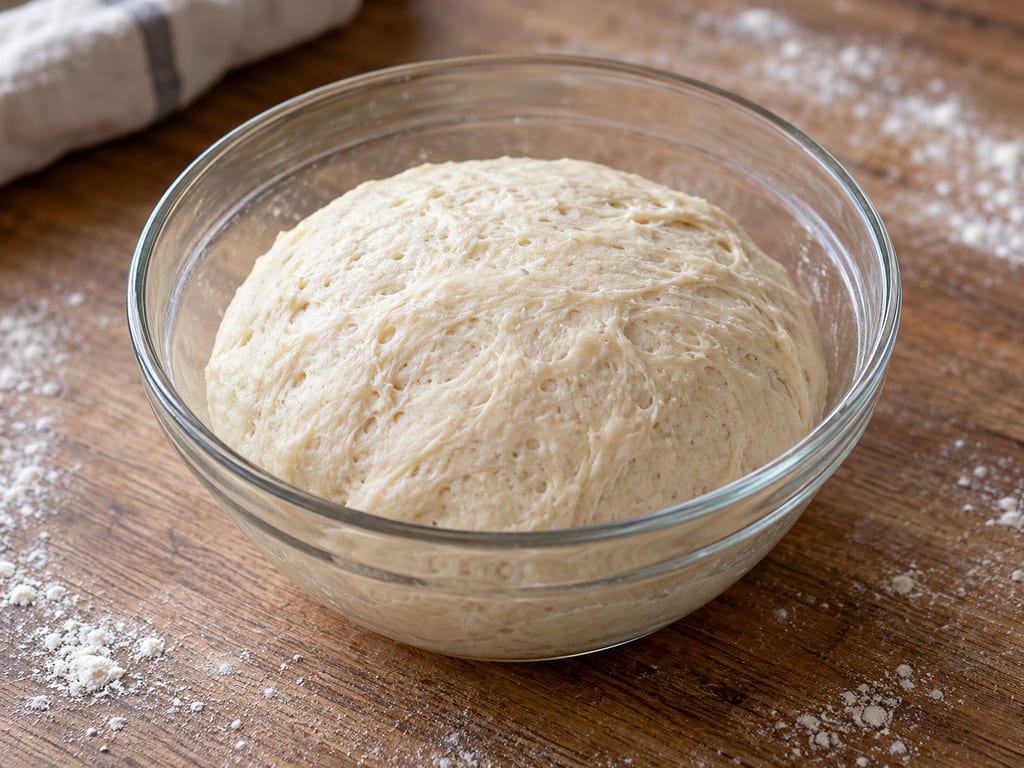
Pâte fermentée
Pâte fermentée is a bread preferment made from salted, yeasted dough set aside to ferment and mixed into a later batch, carrying developed dough and fermentation products with it.
 FermenteaWhere food goes to change
Modern method
fruit yeast water · yeast water · wild yeast water · fruit yeast starter · fruit-fermented yeast water · raisin yeast water · raisin water · grape yeast water · date yeast water · apple yeast water · fruit yeast liquid · 自家製酵母液 · 果実酵母液 · フルーツ酵母液 · レーズン酵母液 · りんご酵母液 · 液種
Fruit yeast water is a spontaneously fermented liquid made by soaking fruit in water, with or without sugar, to grow yeast for starting bread dough or a separate flour starter.
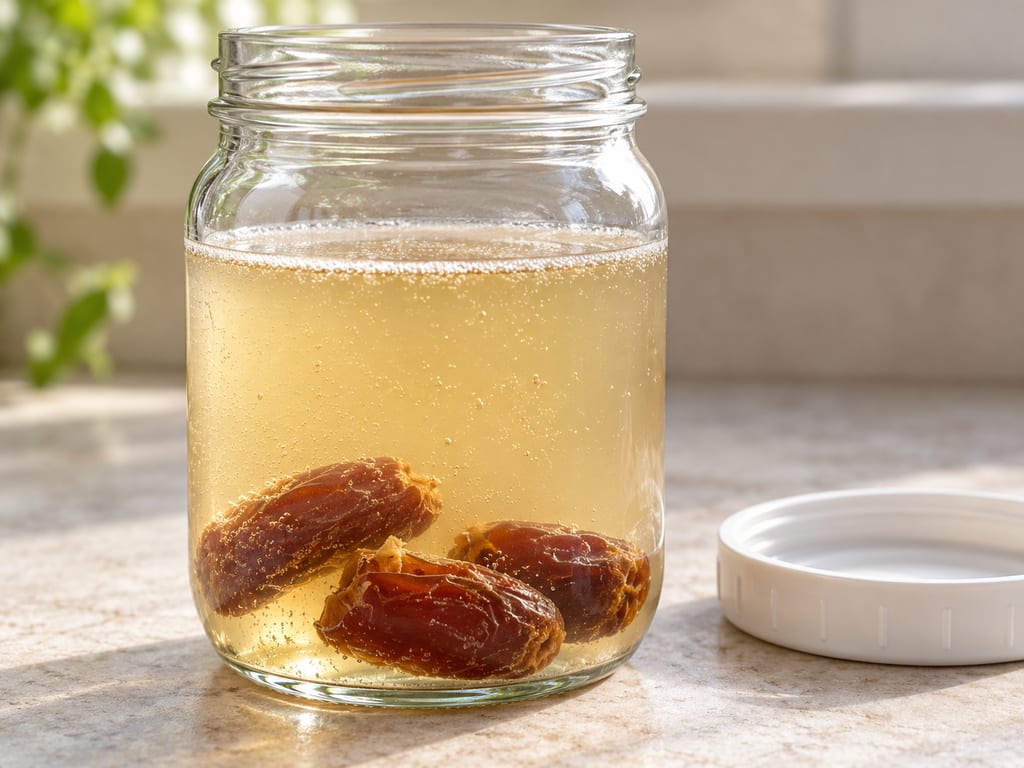
Fruit yeast water is fruit left in water until it ferments, then used to start bread. Dried raisins and dates are the usual fruit; grapes, apples, pears and others appear too. Some versions add sugar and some rely on what the fruit gives up. The liquid turns cloudy, fizzy and fruity, and bakers use it as the starting culture for a dough or for a separate flour starter, not as a drink.
It differs from a flour starter in having no flour. Its sugars come from the fruit and any added sugar. Once the liquid meets flour, the environment changes: there is starch, gluten proteins, flour enzymes and more microbes. Japanese baking separates the liquid, 酵母液 or 液種, from the flour starter built on it, 元種, and King Arthur likewise ferments dates in water first and then mixes the liquid with flour.
No fixed culture lives in it. Raisins carry Saccharomyces cerevisiae and other fermentative yeasts, fresh fruit carries different ones, and bacteria may be present; how much of each depends on the fruit, its drying, the sugar, the water and the conditions. Studies find some raisin waters strongly yeast-dominated with few bacteria, so not every fruit yeast water is a balanced yeast and lactic-acid-bacteria ferment. It is also not sourdough, bakers' yeast in water, fruit vinegar or fruit wine. The fermentation is chiefly alcoholic, and neither using it directly nor feeding it flour automatically gives a stable sourdough.
Using fruit microbes to ferment sugar is an old principle of winemaking and other alcoholic drinks. That is a different thing from making a fruit-infused yeast water to raise bread, and no securely dated ancient or medieval recipe for the latter is known. That people fermented grapes or raisins does not show they used a fruit water to inoculate wheat dough.
Dated Japanese recipes show current practice. A raisin-yeast recipe published on cotta in August 2012 puts untreated raisins in water, watches the fermentation and combines the liquid with flour, and a second recipe from December 2012 draws the same line between raisin liquid and the flour starter. Japanese apple-yeast recipes followed in 2014 and 2018. English-language accounts begin with Bread and Words in 2017, a jar of raisins or dates in water, then Make It Dough's grape method in 2019 and PJ Hamel's King Arthur post of 24 February 2020 on the date-and-sugar method of baker Pablo Giet, which records the first fruit-water stage, a later refreshment and the flour starter.
Laboratory work clarifies the biology. Watanabe and Hashimoto's 2023 Scientific Reports paper compared the microbes of raisins and fresh grape skins, finding that drying and colonisation can favour fermentative yeasts, and Hio and colleagues' paper of 25 November 2025 showed spontaneous alcoholic fermentation of raisin water and changes in its yeast population. Both mention raisin water in breadmaking and its bearing on ancient raisin wine. Their experiments show what the microbes can do under modern conditions, not that an ancient bread-starter recipe continued, so this is a documented contemporary method with earlier lineage unresolved.
Fruit yeast water starts when soluble sugars move into the water. Grapes and raisins hold glucose and fructose; dates, apples and pears give different mixes of those and sometimes sucrose; added sugar adds more. The liquid has no real cereal starch needing amylase first. Yeasts take the sugars through glycolysis to pyruvate, pyruvate decarboxylase gives acetaldehyde and carbon dioxide, and alcohol dehydrogenase makes ethanol and regenerates NAD+. The carbon dioxide forms bubbles, lifts the fruit and builds pressure in a covered container.
Different yeasts take over at different stages. The 2023 study found Saccharomycetaceae, including Saccharomyces, on commercial raisins, with Hanseniaspora uvarum among the early populations, and the incubated raisin waters became dominated by fermentative yeasts, although one sample did not ferment as expected. The 2025 study found Saccharomyces cerevisiae predominant in some incubated waters, Schizosaccharomyces and Zygosaccharomyces in others, and Piskurozyma capsuligena early on. These are what particular experiments saw, not a standard species list.
The 2025 work measured real alcoholic fermentation in raisin water, with yeast growing strongly while bacteria stayed few, and found that how the raisins were prepared and dried affected which yeasts colonised them and whether fermentation succeeded. That is more precise than the familiar claim that all fruit carries plenty of baker's yeast: sound fresh grapes can carry very little detectable S. cerevisiae, and drying changes the community by altering water activity and letting environmental microbes settle.
Bacteria can contribute, but how much varies. Fruit may carry lactic and acetic acid bacteria and some yeasts make organic acids, and the fruit's own acid has to be told apart from acid made in fermentation. Sourness does not show lactic bacteria dominate. Added to flour, the system changes: amylases release maltose, and repeated flour feedings can select a different community from the fruit liquid. A 2014 study of grape-, apple- and yoghurt-associated sourdoughs found lactic bacteria growing and Saccharomyces-group yeasts dominating ripe doughs, which concerns flour fermentation and not counts in fruit water.
The recipe here is PJ Hamel's King Arthur account of Pablo Giet's date yeast water. Day one: 500 g water, 50 g granulated sugar and two dried dates in a clean jar of at least 32 US fluid ounces, preferably about 34. The cap goes on briefly and the jar is shaken until the sugar dissolves, then the cap is loosened half a turn and the jar is kept somewhere warm, about 78.8 F (26 C) as Giet prefers. For four days it is shaken twice daily, with the cap opened first to release gas. A few bubbles appear at about 24 hours and the surface is frothy by day four.
On day five the liquid is refreshed with one more date, 5 g salt, 20 g sugar and 400 g water; Hamel actually added 360 g because the bottle was nearly full, and the point is not to overfill. After another four days of twice-daily shaking, about eight days in all, the yeast water is bubbly and ready for a flour starter. In King Arthur's trial that meant equal weights, 227 g each of yeast water and all-purpose flour, fermented about 16 hours. A maintenance method keeps 200 g of mature yeast water and adds 700 g water, 35 g sugar, 3.5 g salt and two dates, shaken twice daily for two to three days before the dates are removed and the liquid is refrigerated. Both belong to later stages, not the first batch.
The fruit supplies sugar and a possible source of microbes, which also come from the fruit surface, the drying environment, the equipment and the other ingredients. Added sugar raises the fermentable carbohydrate but also changes the osmotic conditions, and the 2023 work notes that dilution in water lets sugar-tolerant yeasts on dry fruit become active again. More sugar is not necessarily faster or safer. Headspace and a loose cap matter because carbon dioxide builds up; the 2025 study shook bottles daily to limit surface fungal growth, which is not a guarantee against mould.
Other bakers use a loose cover or gauze, other fruit amounts and other renewal and storage advice, and these are practical accounts, not interchangeable preservation standards. A fruit-water culture has no validated shelf life merely because it still bubbles. Useful records name the fruit, quantities, source of the inoculum, conditions, refreshment and whether the liquid was used directly or turned into a flour starter.
Japanese home baking has many fruit-based yeast liquids under 自家製酵母, homemade yeast. Raisin yeast, レーズン酵母, is the best represented, usually dried raisins and water to give the liquid that starts a 元種 fed with more flour. Apple yeast, りんご酵母, is another: a 2018 cotta recipe uses apple flesh and core with sugar and water, and other sources use peel and core. They differ in sugar, acid, microbes and fruit contact.
Raisins vary by treatment. Japanese recipes often call for raisins without an oil coating, and research shows origin and drying shape the microbial populations. It is not justified to say every untreated or organic raisin has a useful yeast or every treated one fails; the 2023 study found different outcomes among commercial samples. Success with one batch or supplier is evidence for that preparation only.
Fresh grape versions appear in English-language baking. Make It Dough cuts grapes and ferments them in water, checking acidity with pH strips, but its endpoint is recipe guidance and not a validated pathogen-control criterion. Because drying changes microbial ecology so much, fresh-grape water and raisin water stay separate variations.
Date yeast water is the Giet method, with measured sugar and a little salt at the refresh, and King Arthur got enough activity to leaven bread after building a flour preferment, though the dough rose slowly. That is one tested preparation, and it does not show that dates carry raisin's yeasts or that salt is always needed. Pear and berry versions are reported in modern homemade practice with much weaker evidence on their microbes; sourdough studies that add pear or orange to flour cultures describe flour fermentations and cannot be applied to a pear-only liquid.
Fruit yeast water is an intermediate. It can replace some or all of the water in a bread formula, bringing a living population and dissolved fruit sugars into the dough, or it can be mixed with flour first to build a preferment. They are different applications, because flour fermentation changes the substrate, the dough structure and the microbial selection.
King Arthur's test shows the flour route: equal weights of liquid and flour fermented before the final dough. The loaf tasted mildly sour compared with one from an established sourdough, and the initial rise was slower than expected, which shows a visibly active fruit liquid can leaven bread without behaving like a mature flour-fed starter. Japanese recipes build the 元種 in several stages, repeatedly adding flour and liquid. The fruit water itself will not double in volume, since it has no gluten network to hold gas.
The result is naturally leavened wheat loaves, rolls and other breads, and some bakers use it in sweet or enriched doughs, where sugar and fat change fermentation. Any liquid added counts toward the dough's hydration. The fruit aroma is not guaranteed to survive, as baking removes many volatiles. Raw fruit yeast water can hold considerable ethanol, so it should not be called non-alcoholic or served as a drink. It lets a baker start without bought yeast or an existing starter, but that does not make it more predictable, safer or stronger, and a flour starter built from it is its own preparation.
A developing fruit yeast water shows small bubbles on the fruit, cloudiness, floating fruit and surface foam. In the 2025 study bubbles appeared in the first several days and raisins floated as fermentation developed, and the 2023 experiments recorded cloudy, bubbling liquid in most but not all raisin samples. These signs show activity, not which organisms are present or whether it can leaven.
If nothing starts, the fruit, its treatment, the sugar or the incubation may be the cause. Watanabe and Hashimoto found a commercial raisin sample that did not ferment despite containing detectable S. cerevisiae, so failure cannot simply be put down to missing yeast, and more sugar will not make a failed culture succeed or safe. A liquid can also ferment hard without making a reliable starter, as in King Arthur's trial, where the liquid was very active and the dough rose slowly. The real test is how the flour mix or the dough behaves, not how fizzy the jar is.
Contamination is the more serious problem. Raisins can carry filamentous fungi, and both studies found Aspergillus-related organisms among the first fungi. In 2025 the diversity of fungi and the share of filamentous fungi fell as fermentative yeasts took over, which does not show that all harmful spores or toxins were eliminated. Fuzzy growth, odd colour or obvious spoilage mean discard the batch, not stir the growth in or try to save it.
Gas pressure needs managing. Carbon dioxide can build up in a closed jar, King Arthur releases the pressure before shaking, and a rigid container sealed through an active ferment can become dangerous. A pleasant fruity or alcoholic smell fits yeast fermentation and is no safety test, and no pH endpoint is validated for every spontaneous fruit yeast water.
Once the liquid is combined with flour, raw-dough precautions apply: the CDC and FDA warn that untreated flour may carry pathogenic E. coli or Salmonella and must not be eaten uncooked. Use clean equipment, sound fruit and potable water, and do not infer safety from bubbles, sourness, a rising dough or repeated successful refreshments. The organisms in any one culture stay unidentified without testing.
Documented as a baking method from 2012; earlier lineage unresolved.
The liquid is seeded by microbes on the fruit and in the surroundings, not a characterised starter; different raisin samples give different yeasts and outcomes.
Hazard sourceRaisins can carry filamentous fungi alongside fermentative yeasts, and visibly mouldy preparations must be discarded.
Hazard sourceAlcoholic fermentation releases gas that can build up in closed jars or bottles, especially when shaken.
Hazard sourceSpontaneous raisin-water fermentation can make measurable ethanol; the liquid should not be assumed alcohol-free.
Hazard sourceBubbles, fruit aroma or apparent yeast dominance do not show harmful microbes are absent, and no validated reduction conditions exist.
Hazard sourceA flour starter made from the liquid can bring in E. coli or Salmonella from raw flour.
Hazard sourceUse sound edible fruit, potable water and clean equipment, and reject spoiled or mouldy fruit.
Control sourceLeave headspace, release gas before shaking and do not keep an active ferment in a pressure-tight vessel.
Control sourceFollow the twice-daily shaking and gas release, knowing shaking is not a validated mould or pathogen control.
Control sourceDiscard mouldy or obviously contaminated batches instead of stirring, skimming or adding sugar.
Control sourceDo not drink the liquid on the assumption that it is non-alcoholic or safe; use it to make bread.
Control sourceApply raw-flour hygiene when making a flour starter, and bake the dough thoroughly.
Control sourceThis is a documented spontaneous fruit-water preparation, not a validated food-safety procedure.
The formula uses dried dates; raisins, grapes, apples and pears are not automatically interchangeable.
Two four-day stages are the author's schedule; real growth depends on fruit, temperature and contamination.
26 C is a preferred target in one baking method, not a safety limit.
No pH, acidity, ethanol, sugar, water activity or pathogen count is available for the batch.
Bubbles, fruit smell, foam or floating fruit do not show safety.
Pressure can build in sealed vessels; release gas carefully and do not overfill.
Visible mould means discard; continued fermentation does not remove toxins or contamination.
The liquid can contain alcohol and should not be called non-alcoholic.
The flour starter built on it is a separate fermentation with different ingredients and microbes.
Fruit yeast water does not automatically contain sourdough-type lactic acid bacteria.
The renewal method is not a validated maintenance schedule or shelf life.
No finished yield or microorganism concentration is reported.
No bubbles does not prove the fruit had no yeast, and bubbles do not prove a usable leaven.
Country-level; recipes on cotta and elsewhere.
Research activity, not evidence of where the raisins were grown.
Baker Pablo Giet's method as documented by King Arthur.
Make It Dough and King Arthur methods.
Bread and Words account.
Pâte fermentée is a bread preferment made from salted, yeasted dough set aside to ferment and mixed into a later batch, carrying developed dough and fermentation products with it.
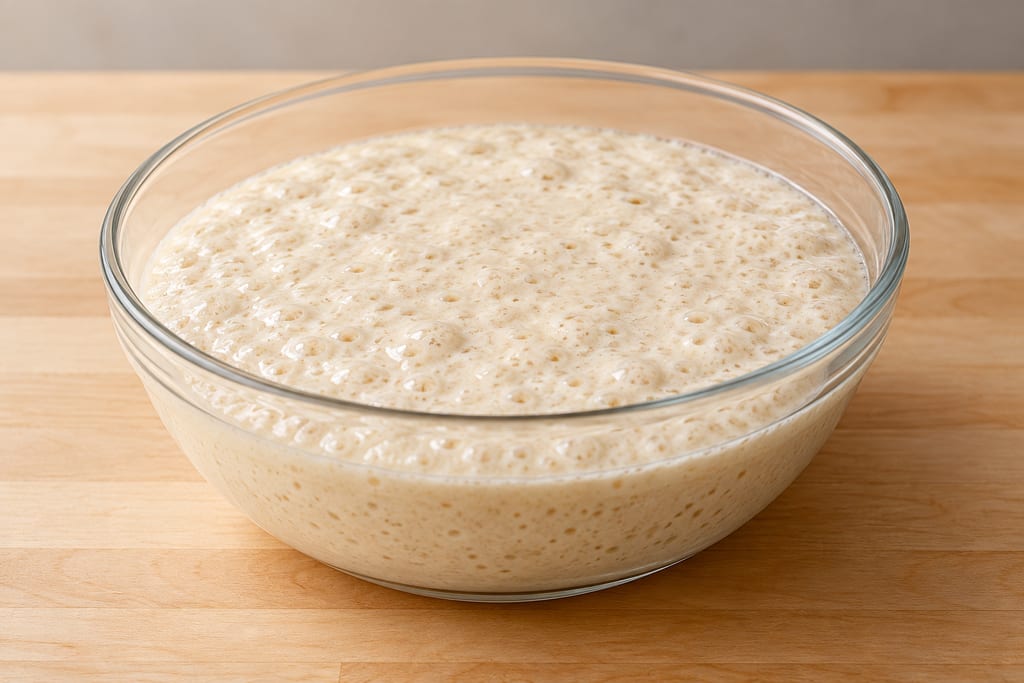
Poolish is a loose, unsalted bread preferment of roughly equal weights of wheat flour and water with a pinch of baker's yeast, left to ripen before it goes into the final dough.
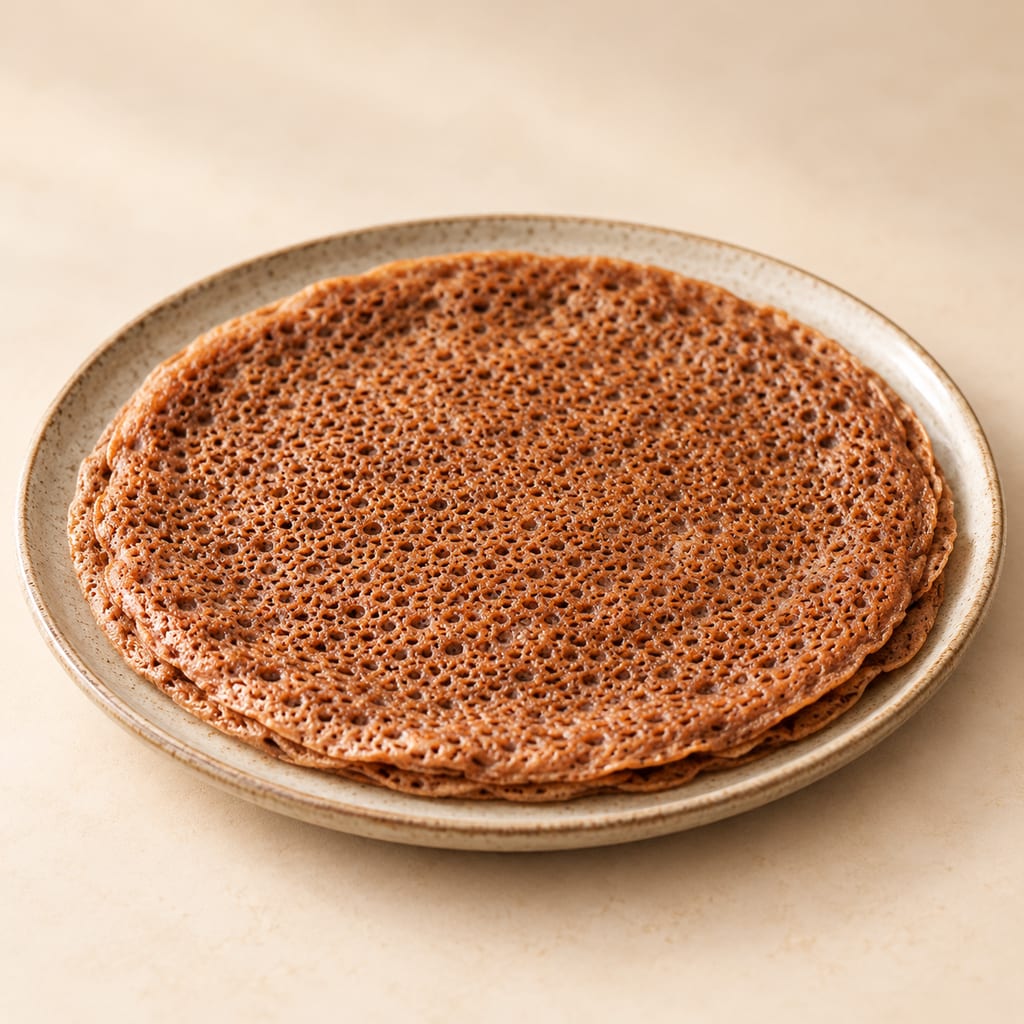
A modern home adaptation of Ethiopian injera using a 24-hour fermentation window. This method balances traditional souring with accessible ingredients like baking powder or starter cultures to achieve the characteristic porous texture.

Wewish is a Cahuilla preparation of finely ground, leached acorn meal cooked with water into a thick mush that can also be cooled and sliced.
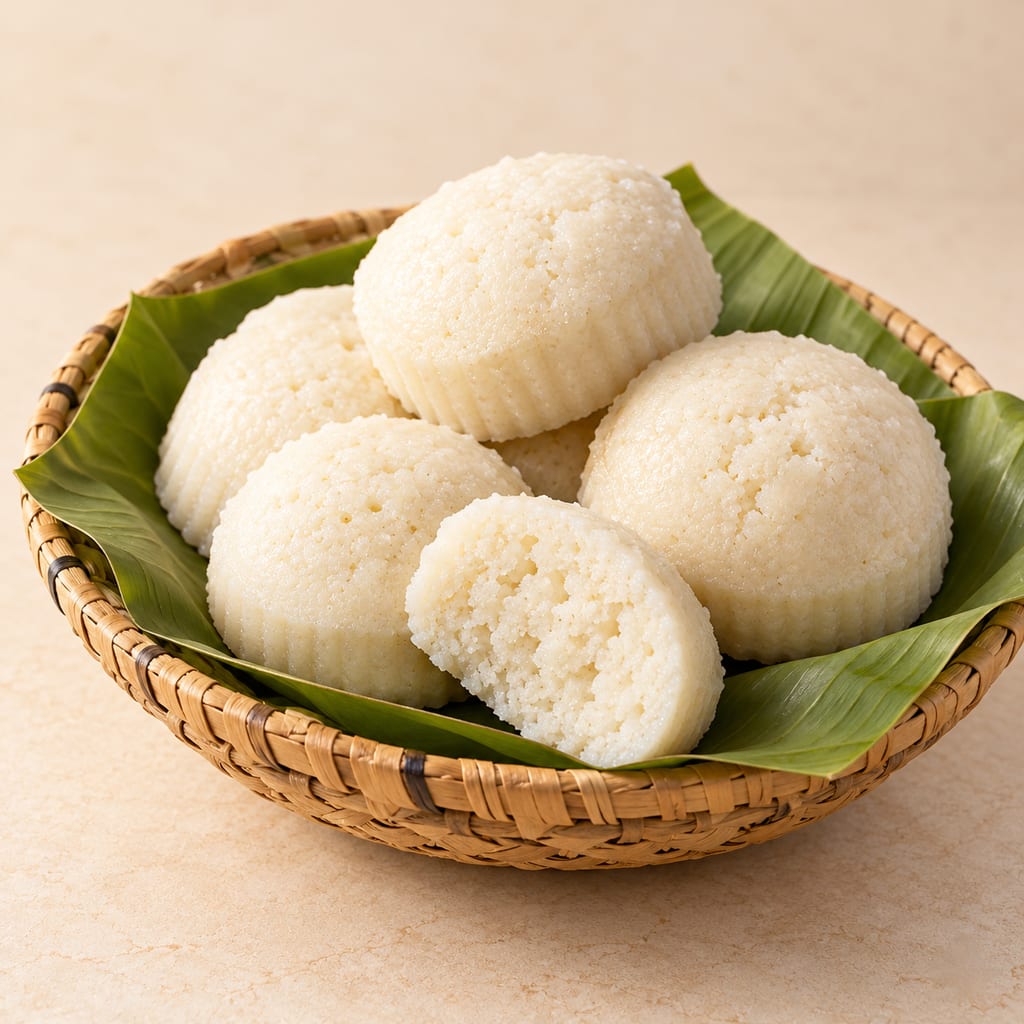
Soft, lightly tangy steamed cereal bread documented across Benin and Togo. This page gives one measured rice-flour research method; maize-based Ablo and mixed-grain versions remain distinct traditions.
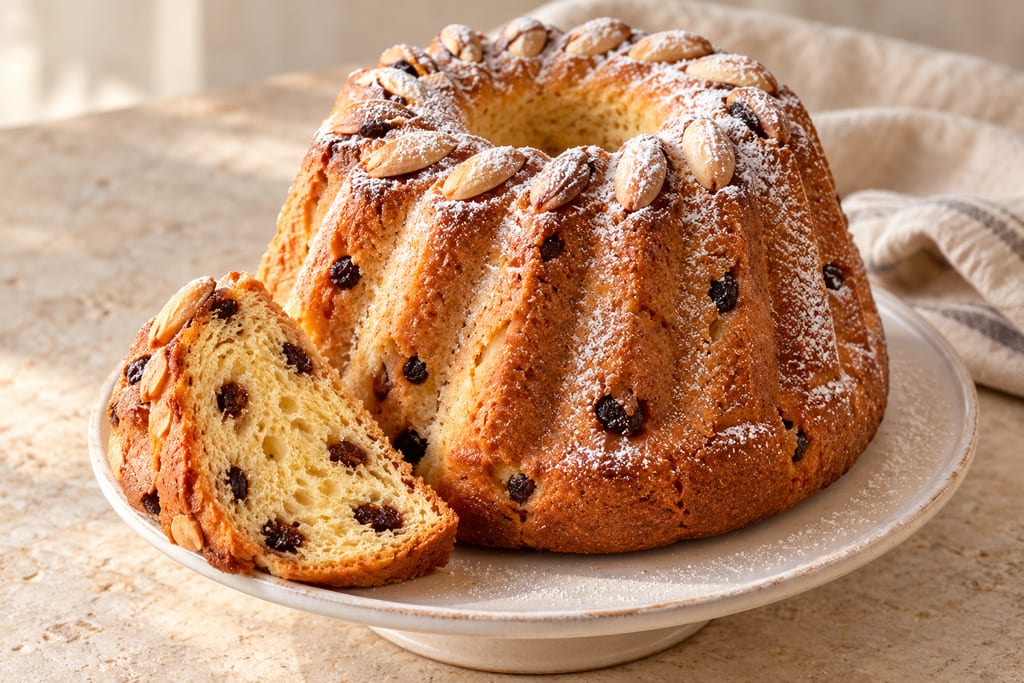
An enriched Alsatian yeast ring with raisins and almonds, kneaded with butter, proofed in a fluted mould and baked until browned.
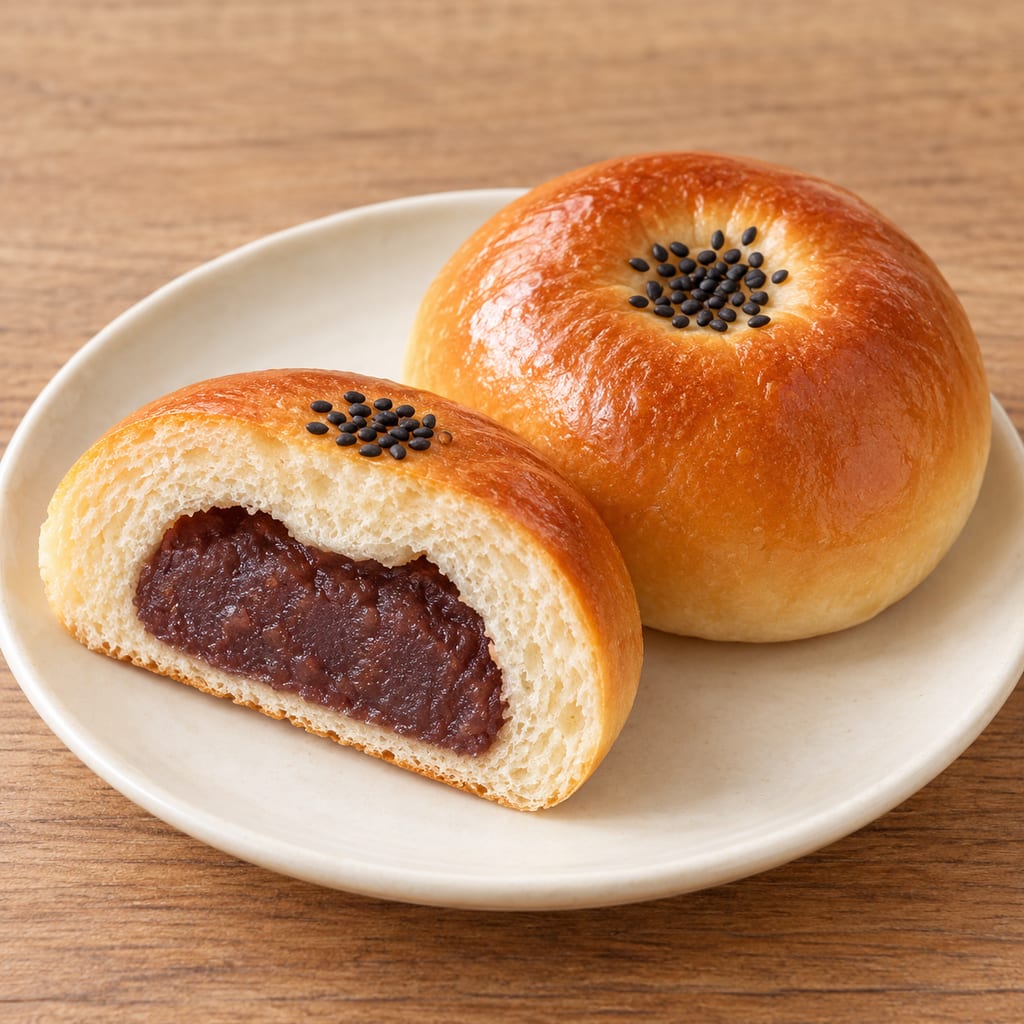
Anpan is a soft wheat bun filled with sweet red-bean paste and finished with egg wash and black sesame. This dough rises with commercial instant yeast.
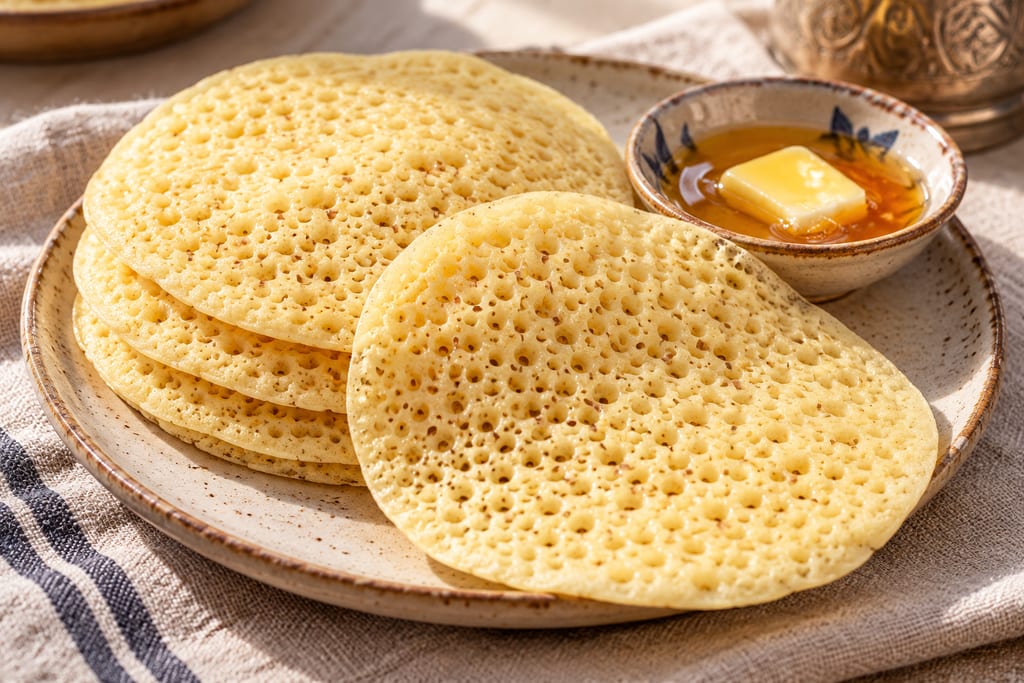
Moroccan semolina pancakes made from a thin yeast batter, rested until foamy and cooked on one side until the surface sets with a honeycomb of holes. This source-specific batch makes sixteen 5-inch pancakes.
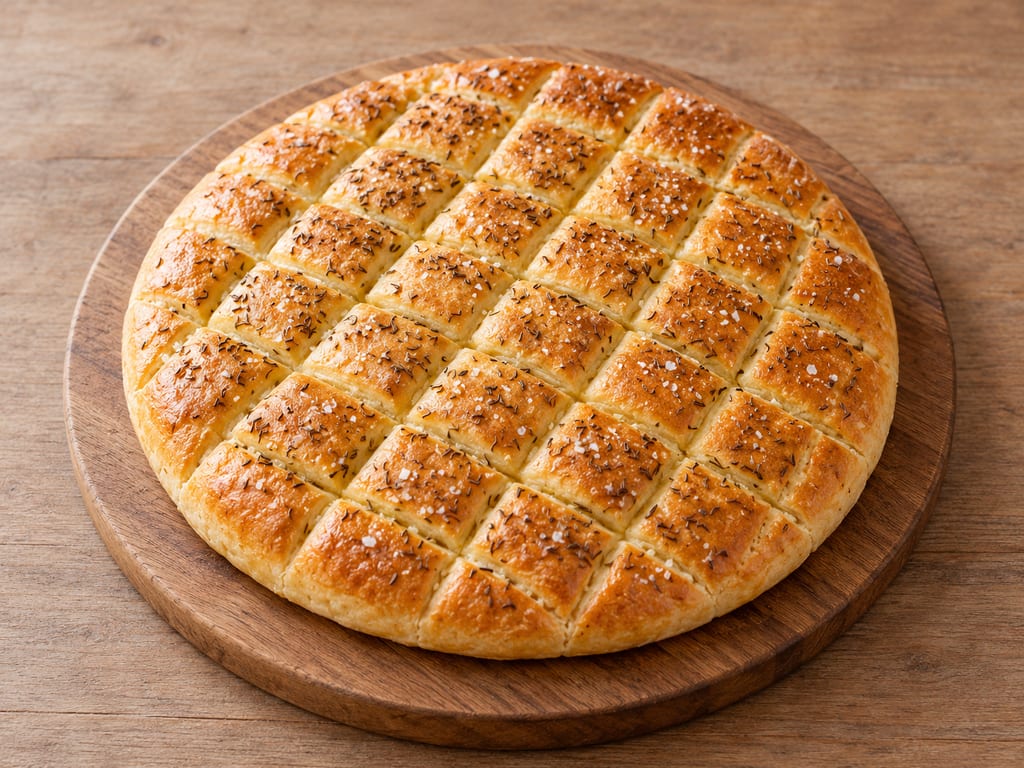
A round Slovenian flatbread scored in a grid and topped with caraway and coarse salt.
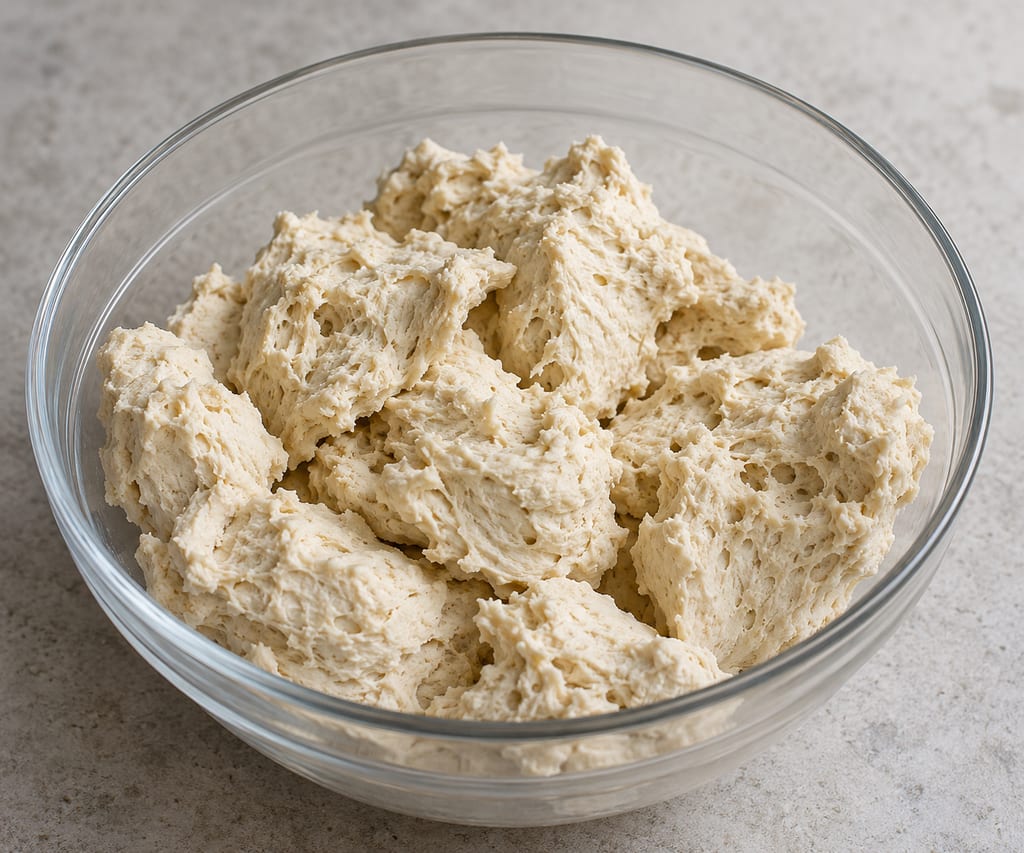
Biga is an Italian bread preferment of flour, water and a little yeast, usually a stiff unsalted mass of about 45 per cent water, fermented ahead and then mixed into the final dough.
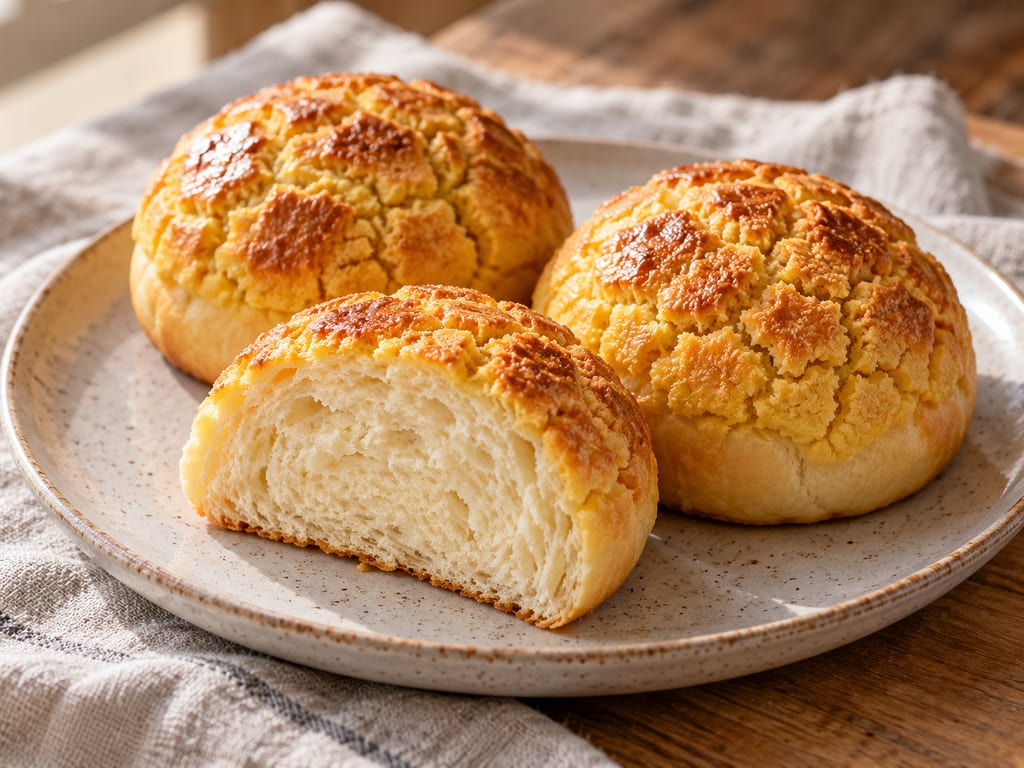
Hong Kong-style pineapple buns have soft yeast dough beneath a crisp, sweet pastry topping.
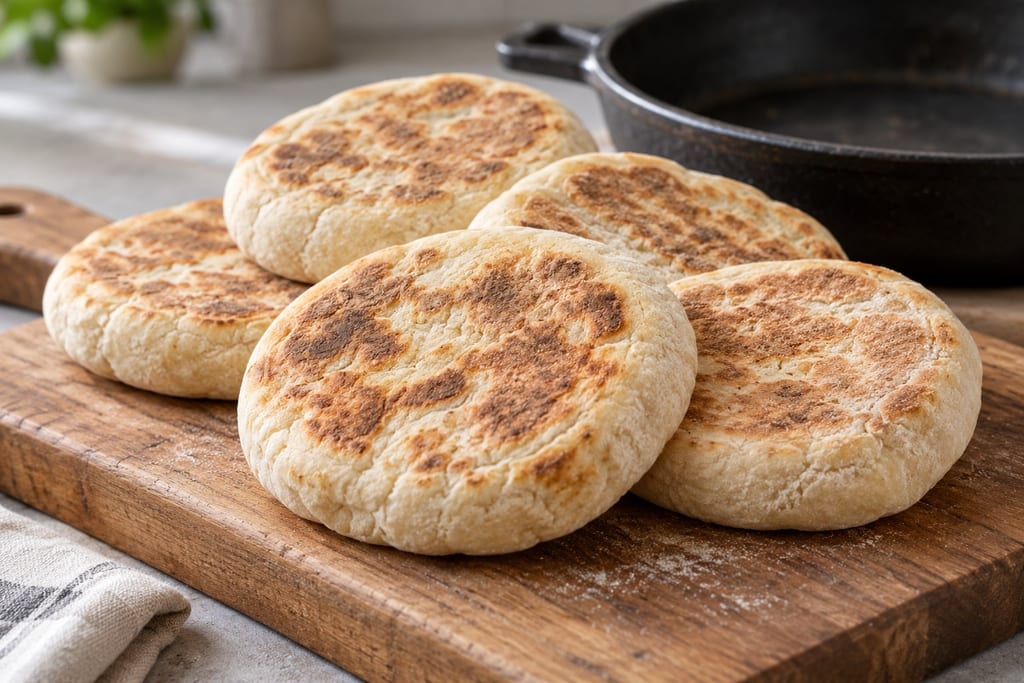
Sweet-potato wheat breads with fresh yeast, browned in a pan and finished in the oven. This is the bread component of Teleculinária's scrambled-egg dish.

Soft, spreadable Calabrian pork sausage made with a great deal of red chilli and fatty pork, stuffed into natural casings, sometimes smoked and matured while staying soft.

A way to add independent temperature logging to an existing food dehydrator without changing its built-in controls or protections. It is a monitoring method, not a rewiring plan.

Pleurotus cystidiosus is the abalone mushroom, a cultivated oyster-type fungus with dark brown caps that grows more slowly and is more demanding than other Pleurotus species.

A dark, balanced vinegar from Emilia-Romagna made by combining cooked or concentrated grape must with wine vinegar, then acetifying and refining it in wood under a protected specification.

A living dairy inoculum that starts controlled cream fermentation, developing acidity and aroma before sour cream or cultured butter is finished.

A small electric incubator holds jars at a selected temperature for yogurt and other documented warm food preparations. Controls, capacity and vessel arrangement vary by model.

Adygean salt is a seasoned table salt associated with Adygea and the wider North Caucasian culinary tradition. Salt is blended with garlic and a variable selection of herbs and spices; the exact mix depends on the named style and maker.

The African Caesar-group mushroom, Amanita masasiensis, is a wild ectomycorrhizal species of central and southern African woodlands, eaten locally. The genus contains deadly poisonous species, so identification needs care.
No community contributions have been published for this entry yet.
Sign in to contribute. Published comments and photos are free to read.
King Arthur BakingMethod · History · Use
Baking bread with a yeast water starter500 g water, 50 g sugar, two dates; day-5 refresh with a date, 5 g salt, 20 g sugar and 400 g water
about 26 C, twice-daily shaking, about eight days; 227 g yeast water with 227 g flour for about 16 hours
maintenance method; slow rise and mild flavour in the test loaf
Cited in: What fruit yeast water is; A modern baking method with older roots; What ferments, and what it ferments; The documented method and why it works; Fruits and places; Using it in bread; Reading results and problems
Scientific ReportsScience
Spontaneous fermentation of raisin water to form winespontaneous alcoholic fermentation of raisin water
S. cerevisiae predominant in some waters; Schizosaccharomyces and Zygosaccharomyces in others; fewer filamentous fungi over time
Cited in: What fruit yeast water is; A modern baking method with older roots; What ferments, and what it ferments; The documented method and why it works; Using it in bread; Reading results and problems
Scientific Reports / PubMed CentralScience · Safety
Spontaneous fermentation of raisin water to form wine (PubMed Central copy)alcohol production and fungal groups in raisin water
Cited in: What ferments, and what it ferments; Reading results and problems
Scientific ReportsScience
Adaptation of yeast Saccharomyces cerevisiae to grape-skin environmentraisins versus fresh grape skins; drying favours fermentative yeasts
one commercial raisin sample failed to ferment
Cited in: What fruit yeast water is; A modern baking method with older roots; What ferments, and what it ferments; The documented method and why it works; Fruits and places; Reading results and problems
Rosemary MarkMethod · Safety
How to Bake Artisan Bread with Raisin-Date Yeast Waterdiscard mouldy preparations; sound fruit and clean equipment
Cited in: The documented method and why it works; Reading results and problems
Make It DoughMethod · Variation
Creating Fruit Yeast Water Starterfresh grape version with pH strip guidance
Cited in: A modern baking method with older roots; Fruits and places
Bread and WordsHistory
Fruit Yeast Water Breadraisin or date yeast water for bread, 2017
Cited in: A modern baking method with older roots
cottaHistory · Method
レーズン酵母(元種)raisin yeast liquid followed by a flour starter, August 2012
Cited in: What fruit yeast water is; A modern baking method with older roots; Fruits and places
cottaHistory · Variation
自家製りんご酵母homemade apple yeast; flour stage separate from the liquid
Cited in: A modern baking method with older roots; Fruits and places; Using it in bread
The Fresh LoafMethod
Raisin/Date Yeast Water...Day by day, step by stepraisin and date yeast water, daily steps
Cited in: The documented method and why it works; Using it in bread
Centers for Disease Control and PreventionSafety
Raw Flour and Doughraw flour can carry E. coli and Salmonella
Cited in: Reading results and problems
U.S. Food and Drug AdministrationSafety
Handling Flour Safely: What You Need to Knowkeep flour away from ready-to-eat food
Cited in: Reading results and problems