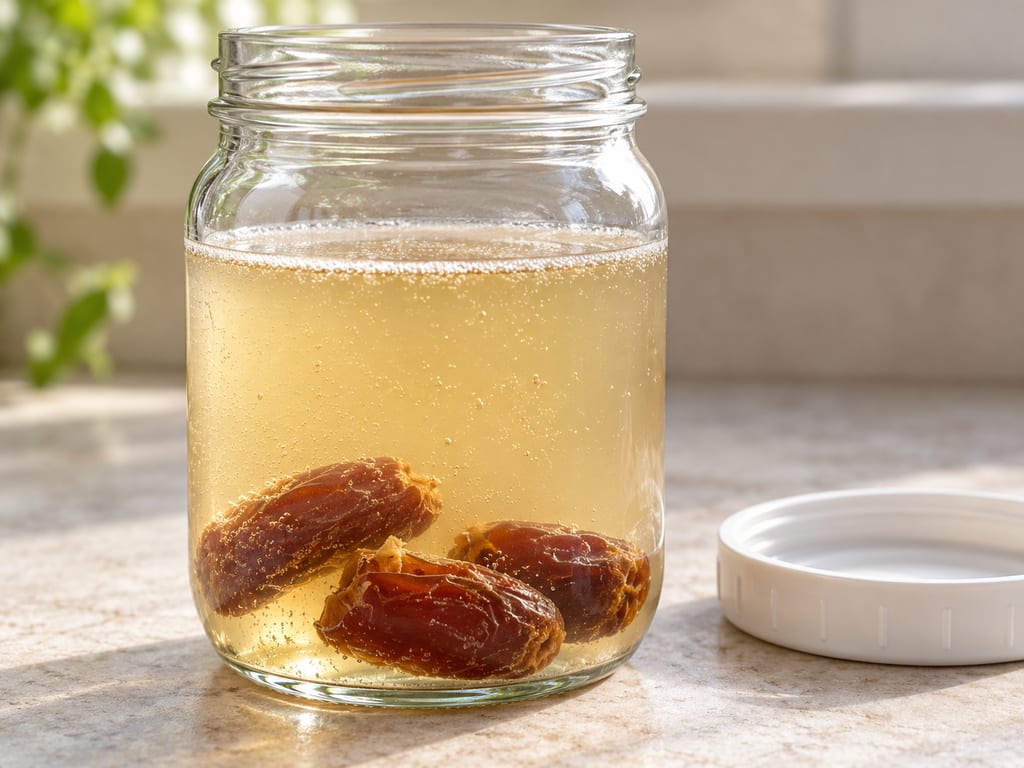
Fruit yeast water
Fruit yeast water is a spontaneously fermented liquid made by soaking fruit in water, with or without sugar, to grow yeast for starting bread dough or a separate flour starter.
 FermenteaWhere food goes to change
Wewish is a Cahuilla preparation of finely ground, leached acorn meal cooked with water into a thick mush that can also be cooled and sliced.
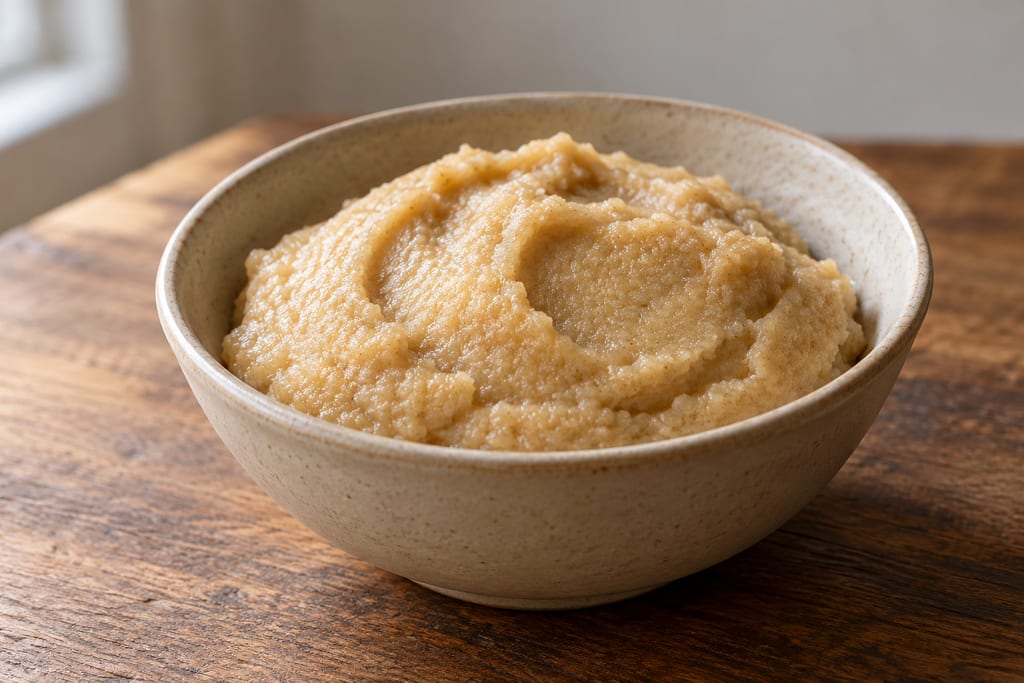
The National Park Service reproduces a Cahuilla recipe from Malki Museum’s Native Food Tasting Experiences, fourth edition (2003). It attributes the account to elder Katherine Saubel, who described her mother’s method using black oak acorns. The source page titles it “Wewish – Acorn Bread” and describes a cooked, polenta-like mass that sets when cooled. This record follows the supplied research card’s narrower modern adaptation: it starts with food-grade meal that has already been leached and gives a home-kitchen cooking method. It does not present the full traditional process or claim to represent all Cahuilla methods.
The adapted quantities—one cup of meal and three cups of water—are not the source’s ratio. The supplied card says the published method measures water by depth; the NPS excerpt begins with water one and a half inches deep and adds meal and water alternately until the batter reaches a polenta-like consistency. The three-cup starting amount and slurry step are explicitly modern kitchen choices.
Acorn meal must be already properly leached before this cooking adaptation begins. Although the reproduced account describes bitterness as its traditional cue for adequate leaching, it gives no measured residual-tannin limit, validated home detoxification procedure, quantitative leaching ratio, duration or temperature. That sensory description is historical method evidence, not a validated safety endpoint. This page is not guidance for identifying or processing wild acorns.
The National Park Service reproduces Katherine Saubel's account of her mother's Cahuilla method, published through Malki Museum. The supplied card adapts the cooking stage for already leached commercial meal and does not represent a complete traditional leaching process.
Scaling: source batch only
This cooking method assumes food-grade acorn meal has already been properly leached. It does not describe how to identify or leach wild acorns.
The NPS-reproduced account uses loss of bitterness as its traditional leaching cue; this is not a validated toxin measurement or safety endpoint. This page supplies no tested residual-tannin threshold or validated home detoxification process.
The supplied atlas associates Cahuilla wewish with California; this regional row does not assert a locality or exclusive origin.
Fruit yeast water is a spontaneously fermented liquid made by soaking fruit in water, with or without sugar, to grow yeast for starting bread dough or a separate flour starter.
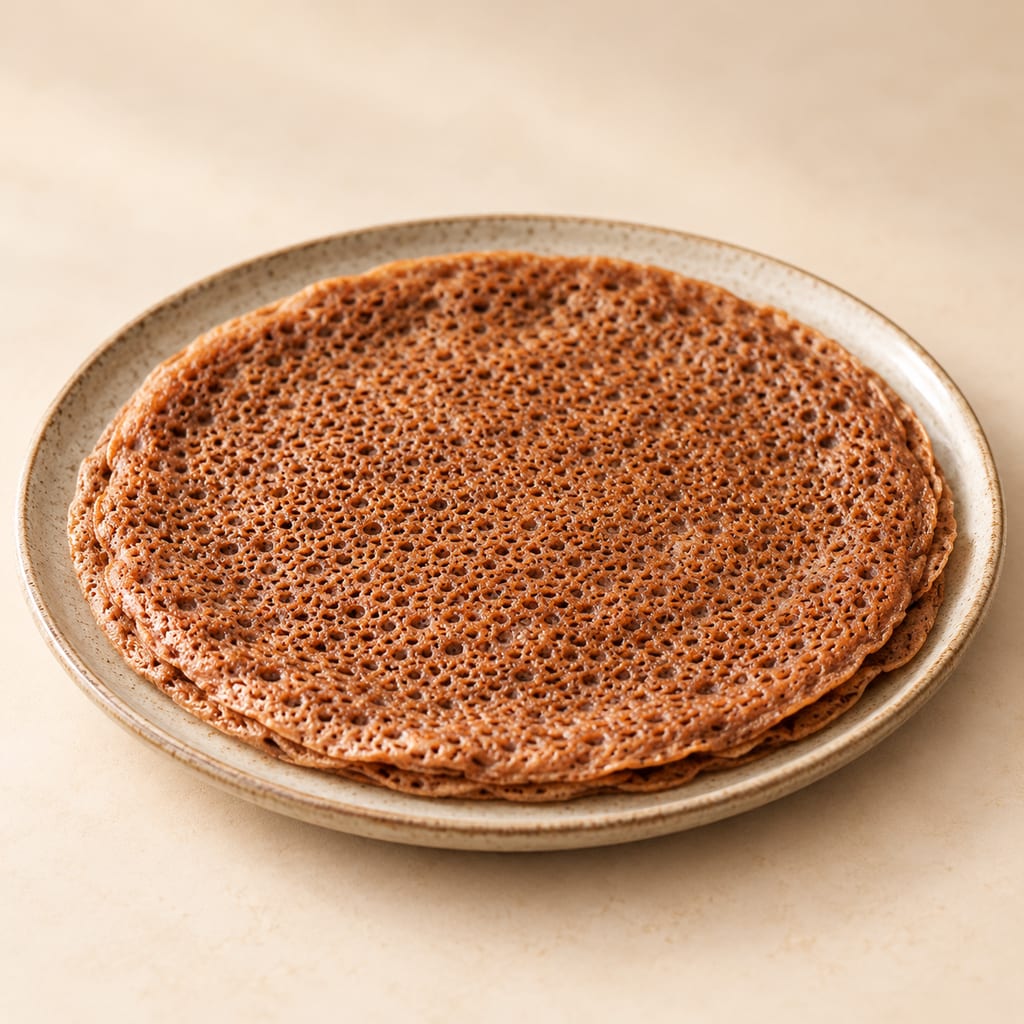
A modern home adaptation of Ethiopian injera using a 24-hour fermentation window. This method balances traditional souring with accessible ingredients like baking powder or starter cultures to achieve the characteristic porous texture.
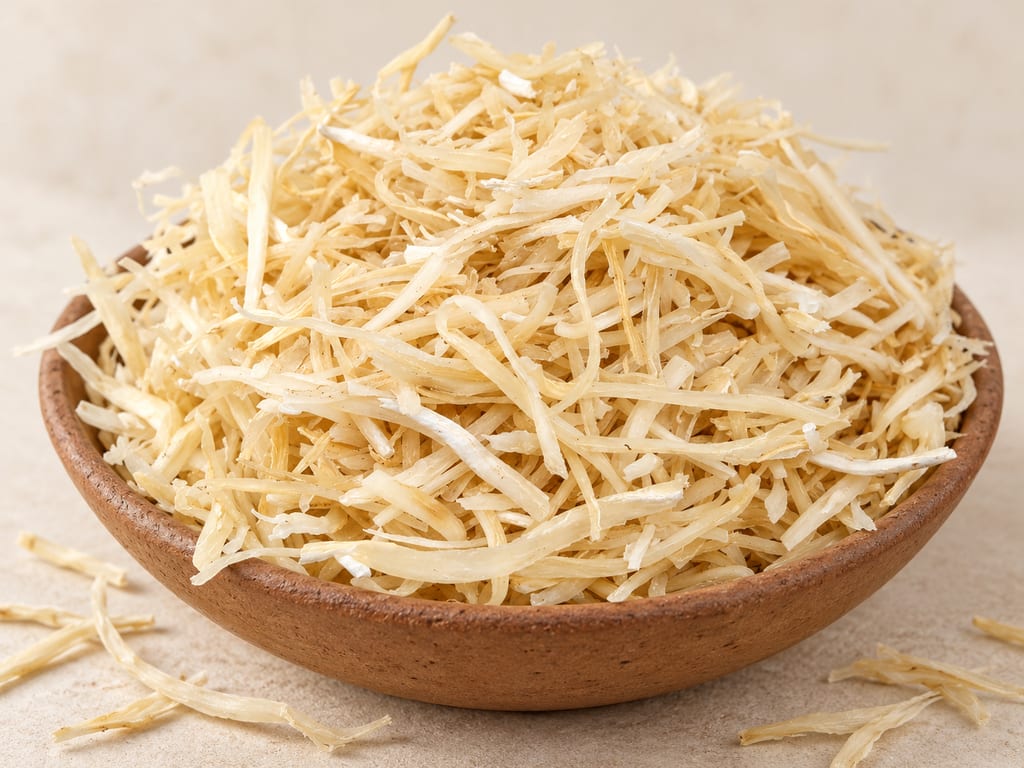
Abacha is a fermented cassava-strip preparation from southeastern Nigeria, sold wet or dried and later rehydrated for meals such as African salad.
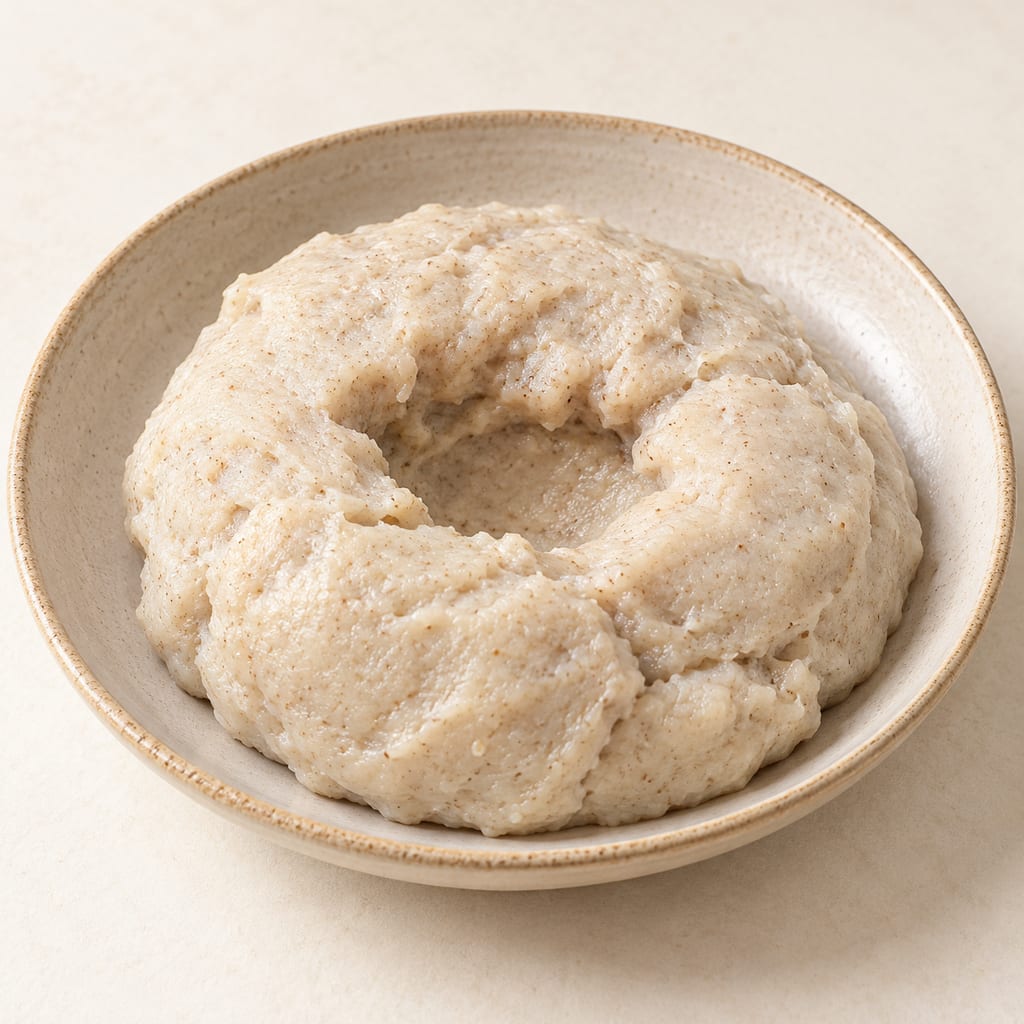
Aceda is Sudan’s firm cereal porridge, commonly made from sorghum and shaped into a smooth mound. Some versions use fermented dough; fermentation is not universal.
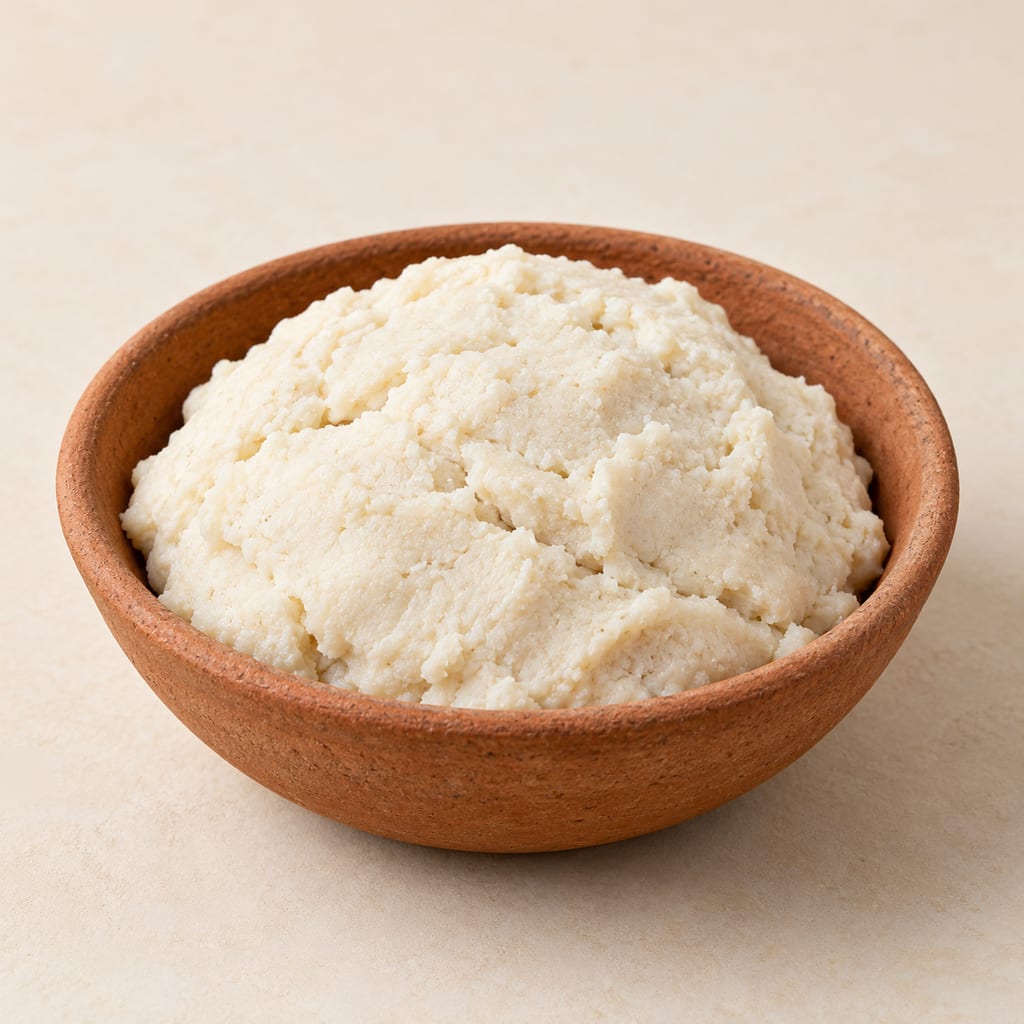
Ghanaian sour cassava dough fermented with traditional inoculum and drained during fermentation. It is used as a base for cooked foods such as banku and akple; process variants and safety outcomes differ.

Appam, or hoppers, are South Indian and Sri Lankan rice pancakes made from a fermented coconut-and-rice batter and cooked in a curved pan to a crisp lacy rim and a soft, spongy centre.
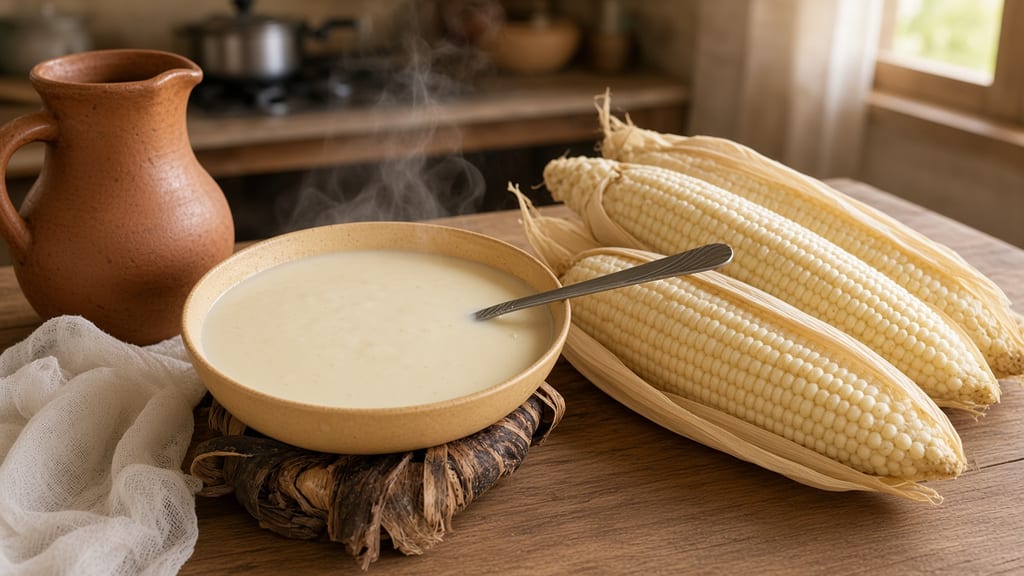
A hot, sour maize drink from Tabasco made from maize that is not lime-cooked. The ground grain sours for half a day, then makers strain it and boil it until thick.
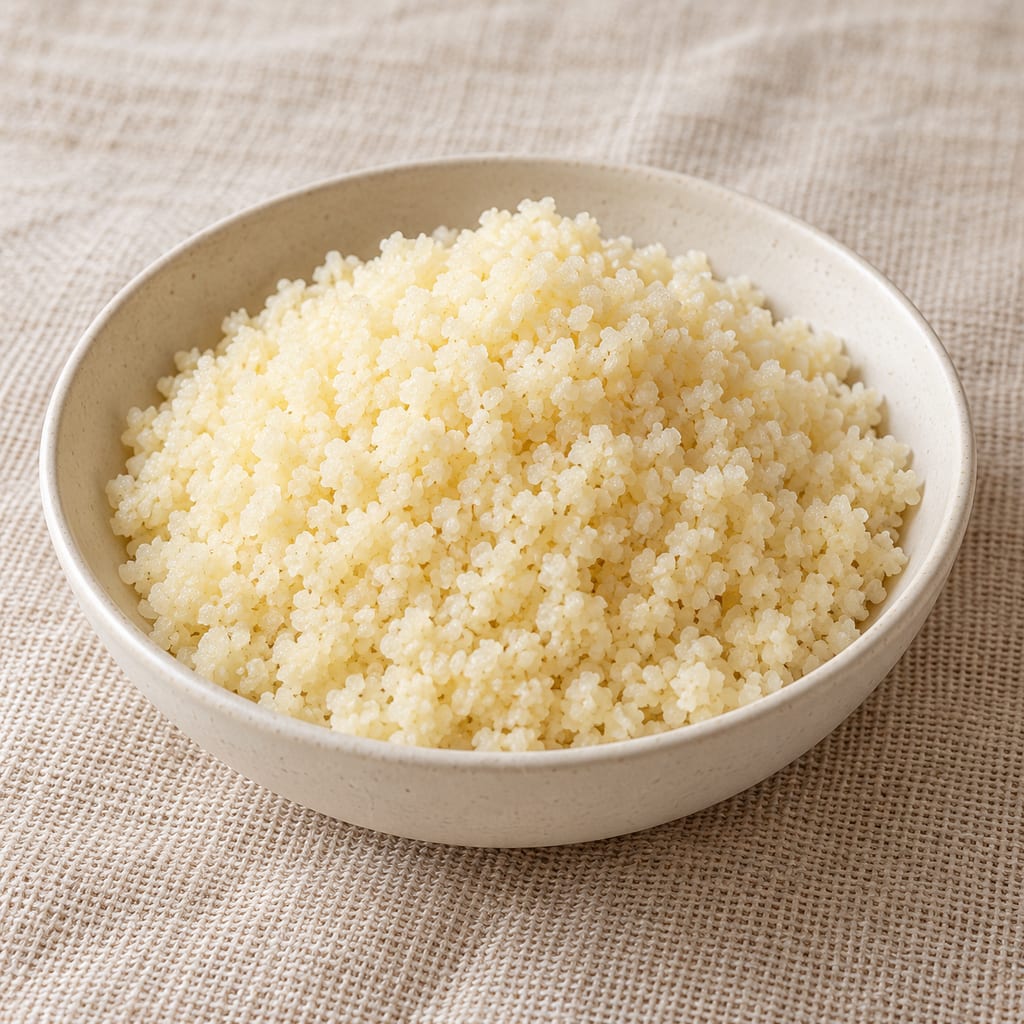
Ivorian cassava semolina: grated cassava is fermented overnight with a traditional inoculum, pressed, sieved into granules, dried and steamed. Documented in a 2006 field study; no sole original process is established.
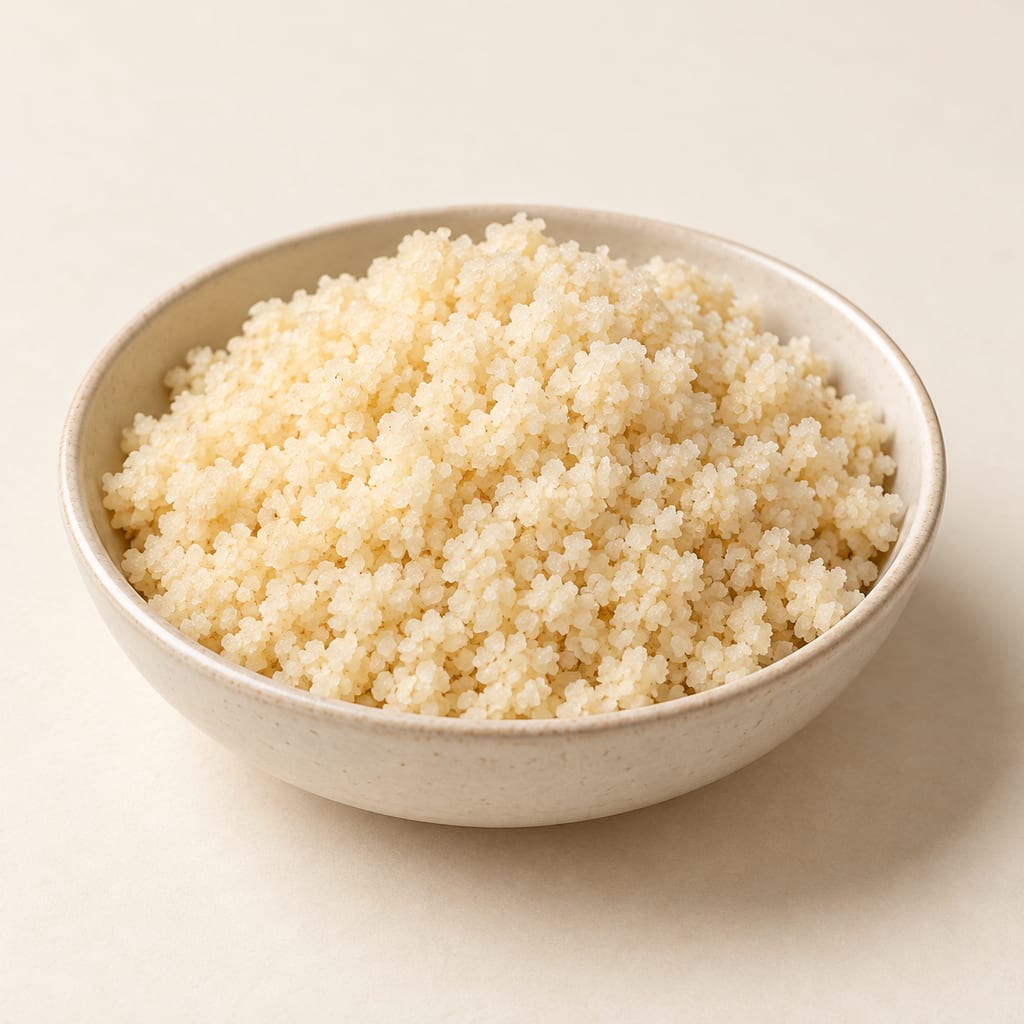
Attiéké is an Ivorian staple of grated cassava fermented with a traditional inoculum, then pressed, sieved, granulated, dried and steamed into fine couscous-like grains.

Crushed or milled barley cooked in water until the starch softens and the mixture thickens, the plainest way a northern household turned stored grain into a meal, here with apple and hazelnut.

Soft, spreadable Calabrian pork sausage made with a great deal of red chilli and fatty pork, stuffed into natural casings, sometimes smoked and matured while staying soft.

A way to add independent temperature logging to an existing food dehydrator without changing its built-in controls or protections. It is a monitoring method, not a rewiring plan.

Pleurotus cystidiosus is the abalone mushroom, a cultivated oyster-type fungus with dark brown caps that grows more slowly and is more demanding than other Pleurotus species.

A dark, balanced vinegar from Emilia-Romagna made by combining cooked or concentrated grape must with wine vinegar, then acetifying and refining it in wood under a protected specification.

A living dairy inoculum that starts controlled cream fermentation, developing acidity and aroma before sour cream or cultured butter is finished.

A small electric incubator holds jars at a selected temperature for yogurt and other documented warm food preparations. Controls, capacity and vessel arrangement vary by model.

Adygean salt is a seasoned table salt associated with Adygea and the wider North Caucasian culinary tradition. Salt is blended with garlic and a variable selection of herbs and spices; the exact mix depends on the named style and maker.

The African Caesar-group mushroom, Amanita masasiensis, is a wild ectomycorrhizal species of central and southern African woodlands, eaten locally. The genus contains deadly poisonous species, so identification needs care.
No community contributions have been published for this entry yet.
Sign in to contribute. Published comments and photos are free to read.
National Park Service; excerpt reproduced courtesy of Malki MuseumMethod · History
RecipesThe page identifies the excerpt as a Cahuilla recipe from Malki Museum’s Native Food Tasting Experiences, 4th edition (2003), and attributes the account to Katherine Saubel describing her mother’s method.
The account describes grinding black oak acorns, leaching meal, cooking it with water to a polenta-like batter, and cooling it to slice; the page title calls it acorn bread.
The source account says bitterness no longer remains as the traditional cue for adequate leaching; it gives no quantitative toxin endpoint or validated home process.
Cited in: A documented Cahuilla account and a modern kitchen adaptation