African fermented foods, drinks and preservation
From sour breads and milk to savoury seeds, cassava staples and living beers, African fermentation follows the crop, the community and the work of transformation.
 FermenteaWhere food goes to change
Aseeda · Asida
Aceda is Sudan’s firm cereal porridge, commonly made from sorghum and shaped into a smooth mound. Some versions use fermented dough; fermentation is not universal.
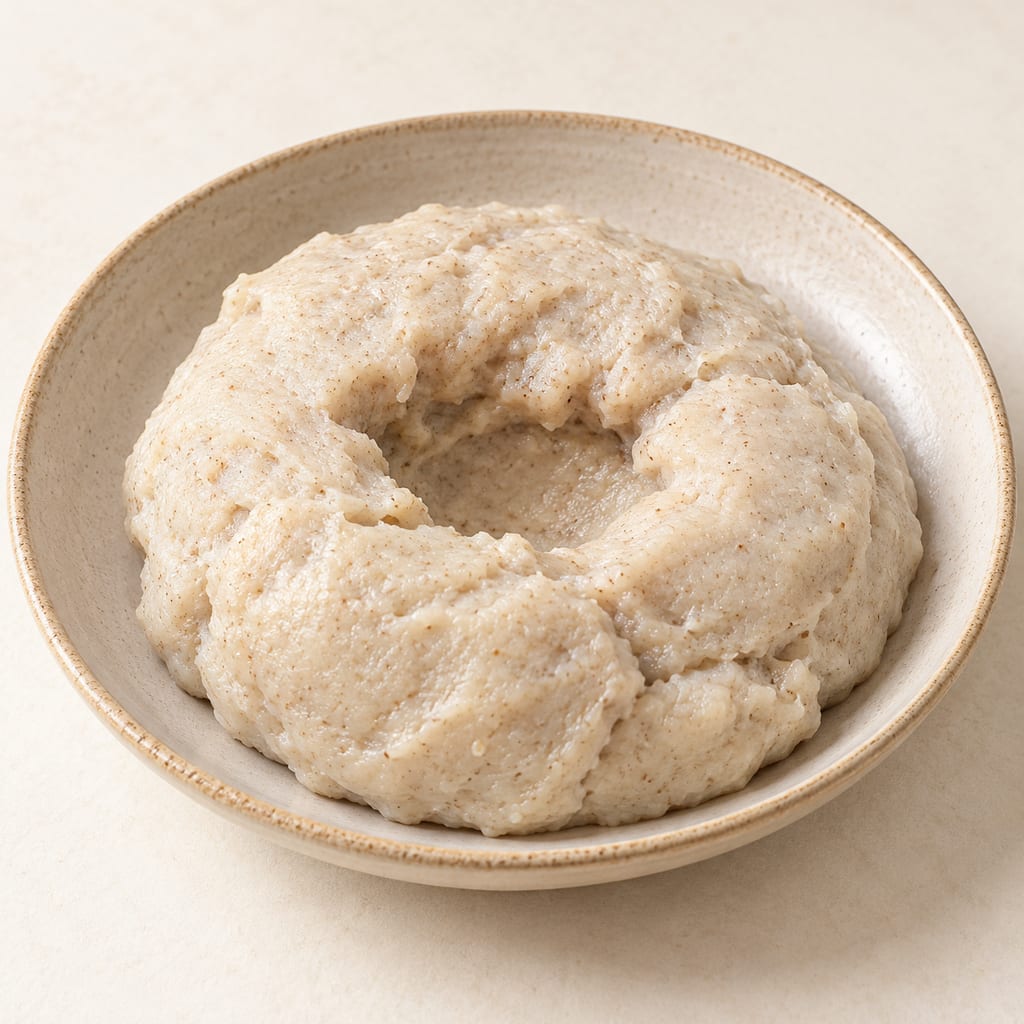
Aceda (also written aseeda or asida) is a stiff cereal porridge cooked into a smooth, cohesive mound. Sudanese accounts most often associate it with sorghum, though wheat, millet and cassava also appear in descriptions of this wider preparation family. The finished mass is pale and glossy, firm enough to hold a molded shape yet soft enough to tear, scoop or cut. Its taste is mild when made without fermentation; a sourdough version carries the tang of its starter.
The name does not designate one fixed formula. Aceda may be made from fermented or unfermented flour, and accounts describe regional procedures rather than a single national standard. This page follows one study protocol for fermented sorghum Aceda; it does not imply that every Aceda is fermented or that this protocol represents every household. A useful distinction is kisra, the thin fermented batter spread and cooked as a flexible sheet, versus Aceda, stirred to a much thicker mass. Thin cereal gruels such as nasha remain pourable, while Aceda is shaped and served as a substantial staple.
Sorghum is a major staple in Sudan, and a recent Aceda study describes traditional preparations using Feterita-type sorghum. Sorghum flour becomes dense and cohesive when cooked with water, and the grain also underlies other Sudanese foods. The sources support Aceda’s Sudanese association but do not establish a precise origin point or first historical date.
A single crop can become several distinct foods through milling, fermentation, heating and shaping. Sorghum flour can become porridge, fermented dough, thin pancakes or beverages; these should not be collapsed into a generic category of sorghum fermentation. Research in South Sudan describes sorghum and millet as important grains and flour porridges called asida alongside pancakes and couscous-like forms. That is regional context, not proof that Sudanese and South Sudanese methods are identical.
Modern crop research adds a recent chapter without changing the food’s origin story. A 2025 study compared Aceda from Wad Ahmed, Dabar and Dahab sorghum, including blends. Dahab is a biofortified cultivar released in Sudan in 2022, developed from Parbhani Shakti, first released in India in 2018. This is a contemporary agricultural development, distinct from the longer history of Aceda.
Historical descriptions should be read carefully because the name travels across languages and neighboring food traditions. The contemporary sources use spellings such as Aceda, aseeda and asida, and they describe related cereal porridges in more than one country. A shared word or similar shape is evidence of a regional food family, not proof of a single origin or an unchanging recipe. For that reason, the place attached here is country-level Sudan, while the South Sudanese report remains comparative context.
In the fermented version, ajin is dough that has already fermented and is carried forward as a starter. A starter seeds fresh flour and water with a microbial community, while cereal flour supplies starch and other grain nutrients. Fermentation can acidify cereal mixtures and alter flavor, but a review of African sorghum foods lists the microorganisms associated with Aceda as unknown in the surveyed literature. A universal species or culture cannot responsibly be assigned.
Fermentation is only one part of this method. The porridge is boiled; heat gelatinizes cereal starch as starch granules take up water and swell, transforming a loose mixture into a thick paste. Continuous stirring distributes flour through hot liquid and limits dry pockets. The study’s five-minute boil is a reported experimental cooking step, not a universal household limit or a control for making ajin.
The 2025 paper describes a sensory protocol, not a validated home fermentation process. It begins with already-prepared ajin but does not specify its fermentation time, temperature, acidity target or household storage. This recipe therefore does not invent those controls. Use a separately documented, controlled starter process; do not infer safety from sourness, aroma or bubbles.
The review’s uncertainty about named microorganisms matters in practice. Sourness is not itself an organism identification, and a starter can contain a changing community. A cook should not assume the same microbial process from one household, flour or region to another. Aceda also includes unfermented preparations, so its thick texture cannot be used as evidence that fermentation occurred. The only firm account of microbial carryover in this recipe is the study’s use of pre-fermented dough.
The study starts by cleaning sorghum grain, milling it into wholegrain flour and using it within a week while stored cool and dry. That is the researchers’ handling procedure, not a general shelf-life claim. Freshness and grind affect how readily flour disperses and how much water the paste takes up.
The experimental method adds ajin to boiling water at a 1:10 starter-to-water ratio by volume, then gradually incorporates flour at a 1:2 weight-to-volume flour-and-water ratio. A wooden spatula keeps the mixture moving as it thickens. The study boils it for five minutes with continuous stirring until it reaches a stiff consistency. The paper does not give a household batch size.
A smooth finish takes patient incorporation. Flour added all at once can trap dry centers in lumps; gradual addition gives water time to reach the particles. As the porridge thickens, stirring becomes harder, so a sturdy spatula helps. The sources do not specify a single ideal vessel or make molding compulsory. Contemporary Sudanese serving accounts show a molded mound with a well for sauce, while the experimental paper portions samples for sensory tests.
The reported ratios belong to one experimental protocol and are retained as ratios because no household yield is stated. Flour-to-water is reported by weight and volume, while the starter-to-water proportion is by volume; those are different measurements and should not be silently treated as interchangeable. The practical sequence is therefore clearer than a fabricated fixed-size ingredient list: establish the source’s proportion, introduce flour gradually and keep stirring through the brief boil. The research portions were made for controlled sensory assessment, not as a family serving recommendation.
Sorghum is the best-supported flour for this study-based version. Broader descriptions include millet, wheat and cassava flour, but they are not exact substitutes: differences in starch and particle size change hydration, color and firmness. The sources do not provide a universal conversion ratio for every flour.
Fermented and unfermented Aceda are both documented. An unfermented version has a plainer grain flavor and omits ajin. In the sour method, the carried-over starter contributes tang and continuity. A contemporary Sudanese recipe page describes yogurt or saved dough as a home souring approach; it does not establish a universal historical method or validated fermentation conditions, so it is presented as a documented variation rather than a safety recommendation.
The grain variety can change the bowl. The 2025 sensory study compared three cultivars and two equal-weight blends. Among 28 semi-trained assessors, Dahab and the Dahab–Wad Ahmed blend received the strongest overall liking, though the two preference groups differed. Color, firmness and mouthfeel helped distinguish samples. This small study shows that cultivar matters to sensory character; it does not establish a universal ranking among Sudanese eaters.
A switch from sorghum to wheat, millet or cassava changes more than the name on the bag. Each flour has a different composition and grind, so water uptake and the way the cooked mass sets can shift. The chapter’s list of possible flours documents variety, but it does not provide equivalent formulas. For cooks interested in reproducing this particular research preparation, sorghum is the defensible choice; other flours belong to their own documented versions rather than an improvised substitution.
Aceda is a mild base for more strongly flavored accompaniments. Sudanese descriptions pair it with mullah, a family of stews and sauces, arranged around the mound or in its central hollow. A portion of the cohesive porridge can be scooped with sauce, joining soft starch with the salt, spice, vegetables or meat in the accompaniment. The mound is not merely decoration: its texture provides a vehicle for flavorful liquid and solid morsels.
Sweet presentations also appear in food accounts, including pairings with dates, honey or ghee. Savory versions accompany meat or vegetable mullah. Which is served depends on local practice and occasion; the sources do not identify one definitive pairing. Aceda’s gentle flavor makes it flexible alongside a stew rather than a dish with one mandatory topping.
Serving customs vary too. Some accounts emphasize sharing from a central dish; others show molded portions. Recipe pages illustrate a mound surrounded by sauce, while the research paper concentrates on texture and sensory qualities, not ritual. The evidence supports Aceda as a filling staple and flexible partner to strongly seasoned foods, not a universal serving ceremony.
A mound with a center well makes the sauce easy to share across the porridge, while a flatter serving spreads the sauce through more of each portion. The ring form visible in contemporary presentations is a shaping choice, not a special fermentation outcome. Aceda can be served hot and freshly cooked as a meal base; the study’s small, covered portions were prepared for a sensory panel, so they should not be read as instructions for household cooling or storage.
Aceda should become cohesive and stiff rather than remain a thin gruel. Lumps suggest flour entered too quickly or was not stirred thoroughly; a mass too soft to hold shape may reflect a different flour or a different flour-to-water balance. These are texture observations, not tests for the safety of fermented dough.
Color and firmness vary with sorghum cultivar. The sensory study found visual and mouthfeel characteristics important to preferences, helping explain why the same general preparation can look and feel different. It gives no sensory safety test. A sour flavor or appealing aroma cannot confirm that a ferment is safe.
This method is deliberately bounded by its evidence: it reports the study’s flour handling, starter ratio, flour ratio and cooking time, but leaves the ajin schedule unspecified. No storage duration is stated. Keeping those limits visible is more useful than supplying an invented fermentation time, temperature or shelf life.
The safest way to read a research recipe is to separate what its authors measured from what they left open. Here, the cooking sequence and sensory comparison are described, but starter preparation is not. The paper’s sample cooling and warm holding were part of the panel setup, not consumer storage directions. This page does not turn those experimental conditions into preservation advice. It also does not use appearance, flavor or aroma to establish fermentation quality or safety.
The sensory research is valuable for understanding texture, but its participants do not stand for every region or household. Twenty-eight semi-trained assessors compared a limited set of cultivar samples under controlled conditions. They were asked to rate appearance, color, aroma, cohesiveness, firmness, taste, mouthfeel and texture; color, firmness and mouthfeel emerged as attributes that helped distinguish preferences. Those findings describe that panel’s responses, not a universal standard for how Aceda ought to taste. A cook should therefore aim for the documented cohesive texture and choose a locally familiar grain where available, rather than treating the paper’s preference scores as a quality rule.
Aceda is described as historically prevalent in Sudan, but the sources do not establish a first date or birthplace.
The study uses previously fermented dough without validating home fermentation controls.
Hazard sourceUse only a starter made by a documented, controlled process; this recipe does not invent a spontaneous starter method.
Control sourceThe ajin fermentation schedule is not established here; sensory cues do not establish safety.
Country-level evidence for Aceda as a Sudanese food; no precise birthplace or single national method is claimed.
From sour breads and milk to savoury seeds, cassava staples and living beers, African fermentation follows the crop, the community and the work of transformation.
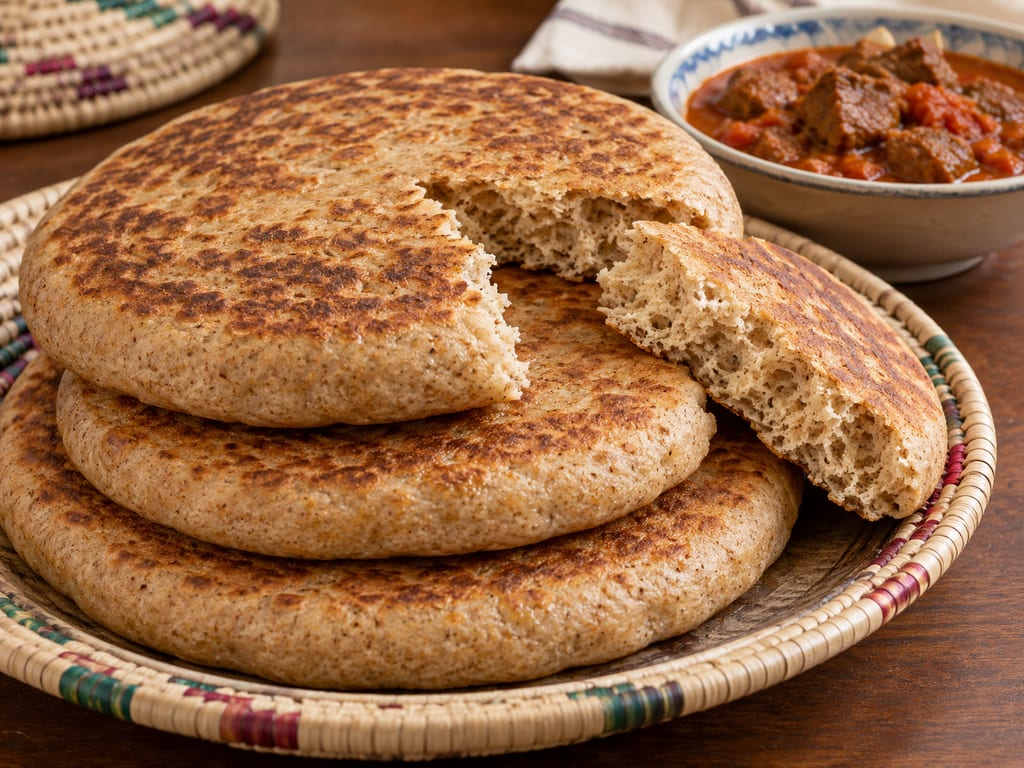
A northern Sudanese wholemeal wheat batter bread, rested with instant yeast and poured in thick rounds onto a lightly oiled pan or saaj.
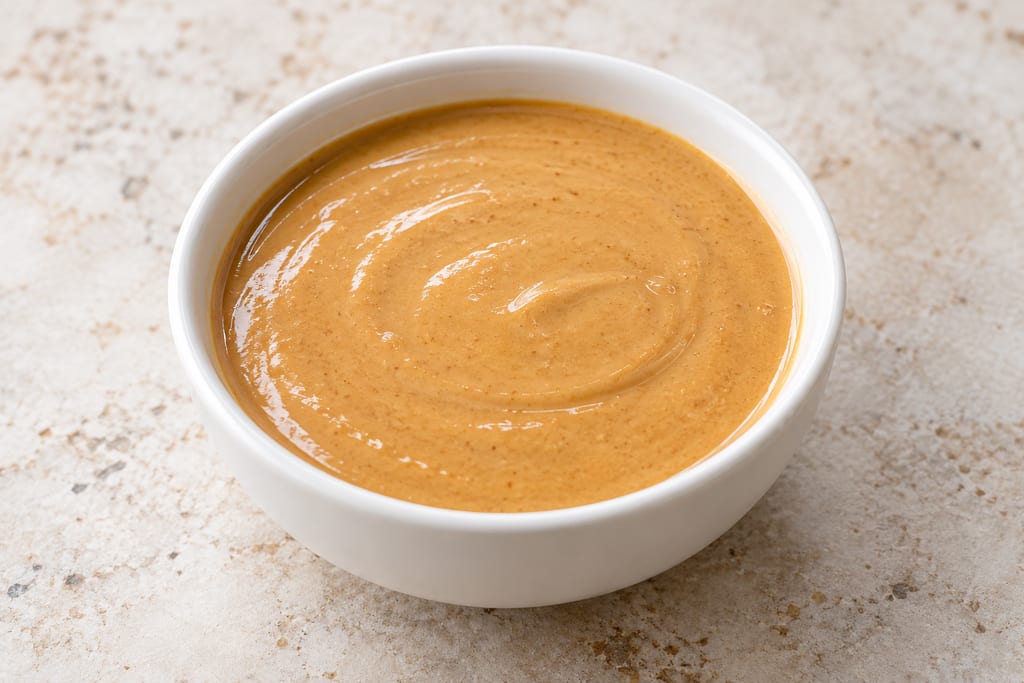
A smooth dressing of peanut butter, oil and lime, tossed into a Sudanese-style tomato salad and served at once.

Sudanese opaque sorghum beer made from soured, toasted, cooked and malted grain through three linked fermentations, drunk fresh while still fermenting.
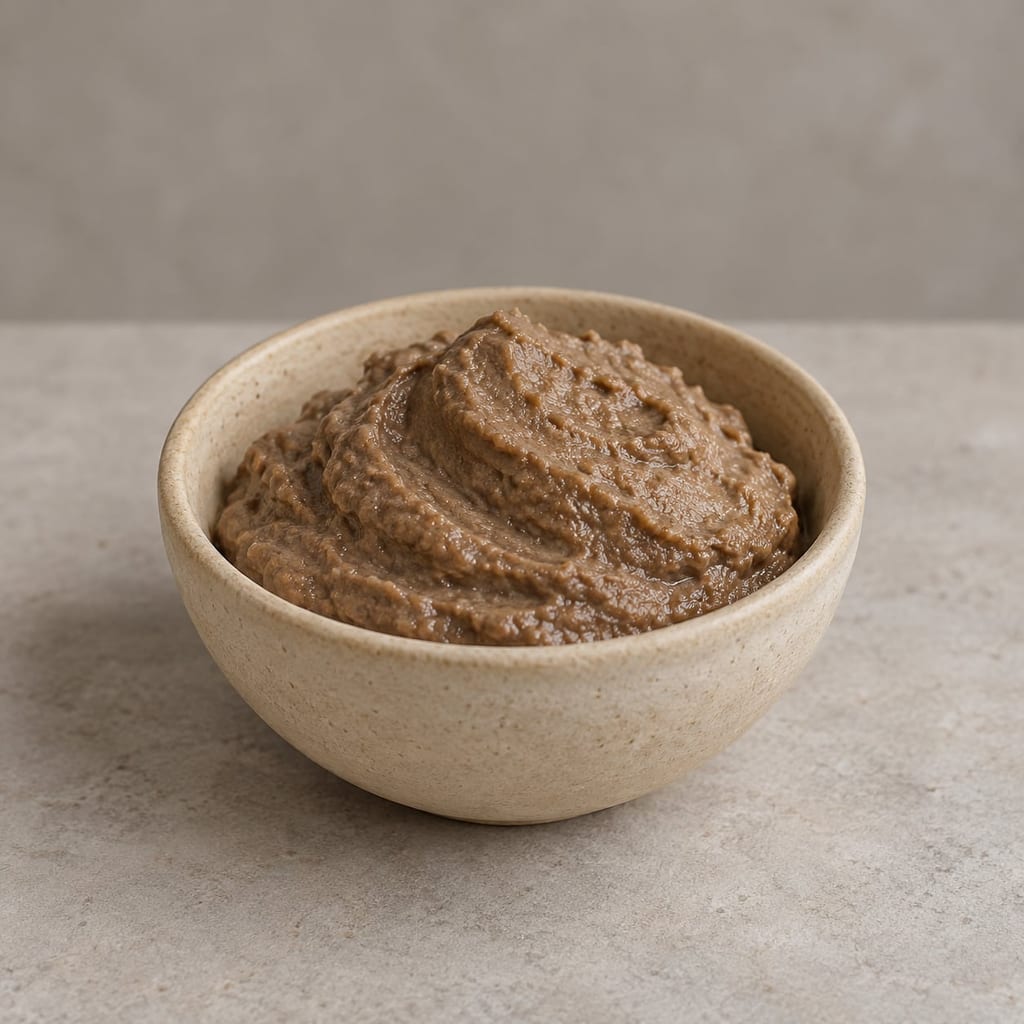
Mindeshi (also Mendeshi) is a Sudanese fermented paste made from small fish, pounded and sometimes dried. Sources disagree about how it relates to Terkin and do not establish one validated process or safety control.
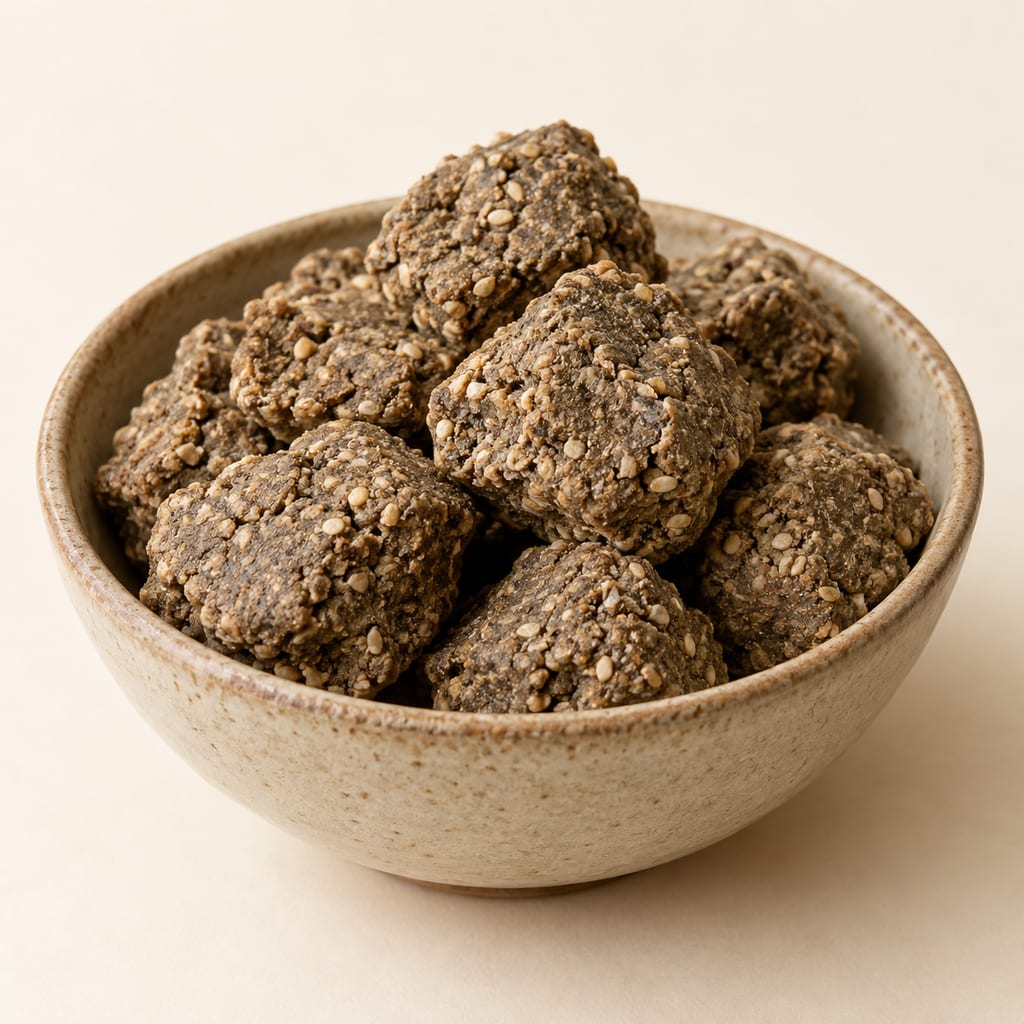
A Sudanese preparation made by fermenting sesame oilseed cake, shaping it into balls and sun-drying. Published accounts describe different processes and do not give a complete household batch.

Sudanese braided cheese: curd ladled, salted, cut into strips and braided, then salted in brine and packed into tins filled with brine. A staple kept in brine rather than dried.
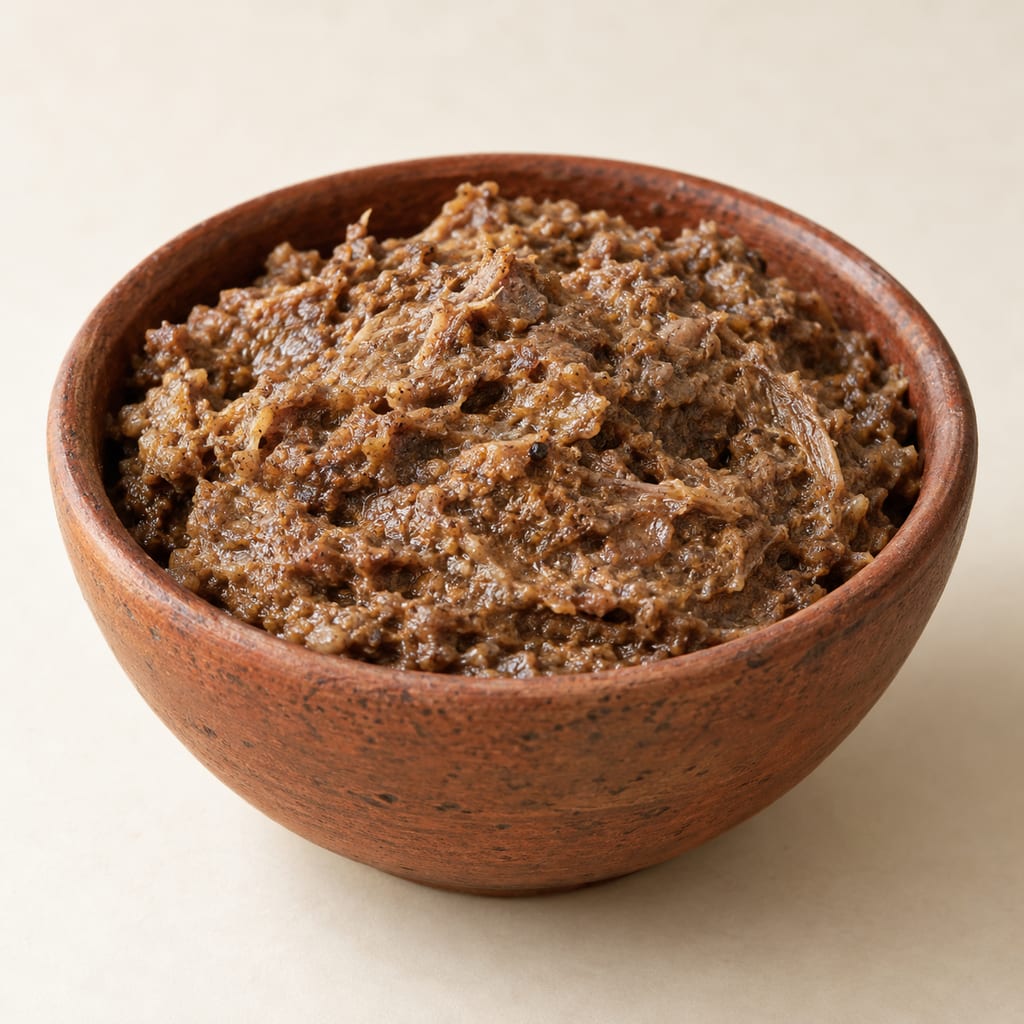
Terkin, also called meluha, is a Sudanese fermented fish paste or sauce. Sources describe raw and cooked forms and different processing methods; none establishes validated safety controls.
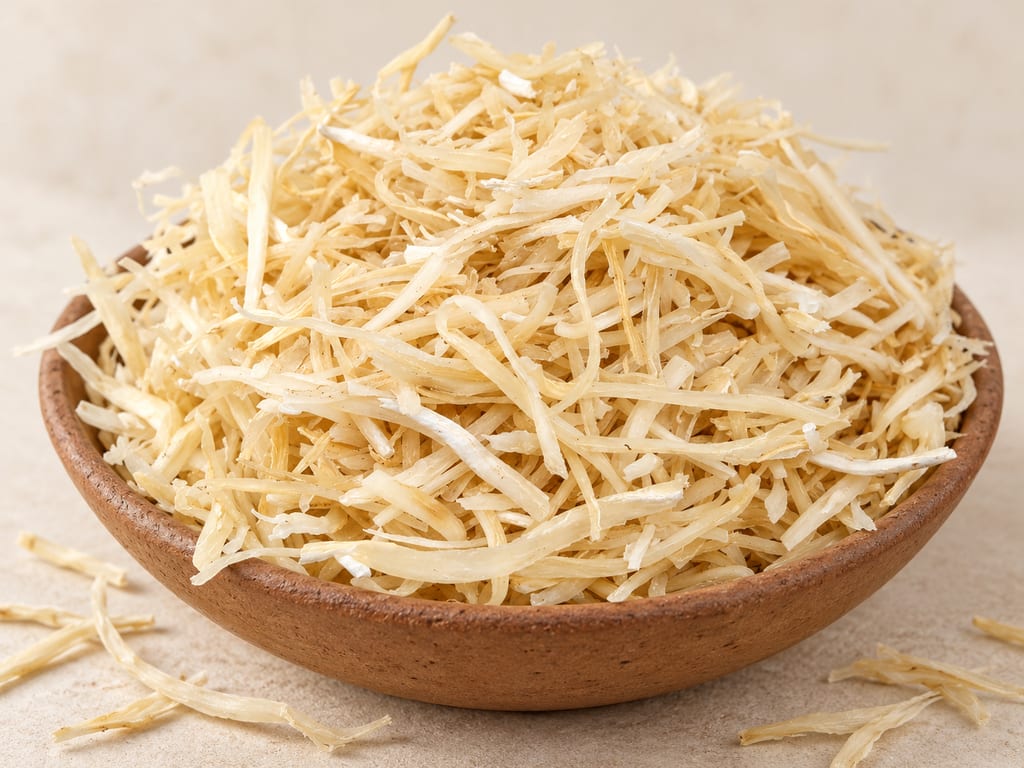
Abacha is a fermented cassava-strip preparation from southeastern Nigeria, sold wet or dried and later rehydrated for meals such as African salad.
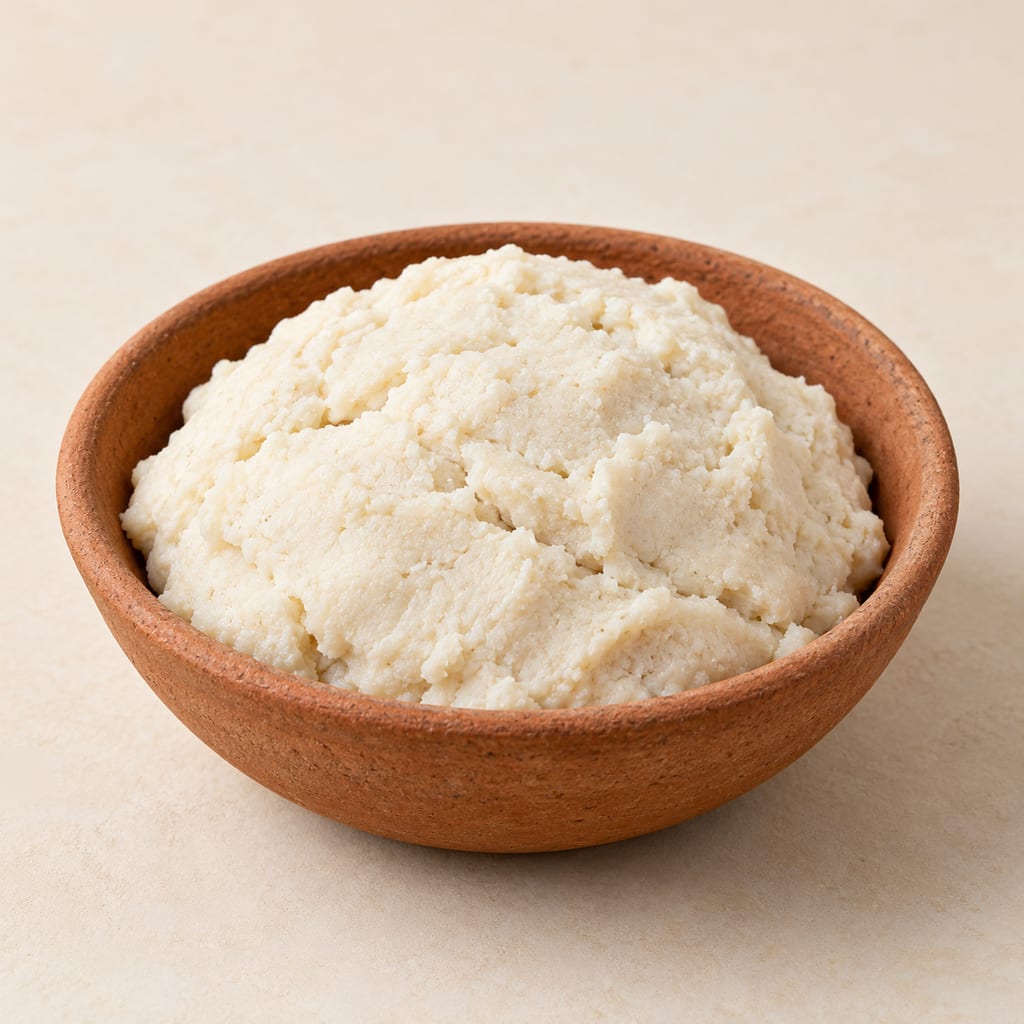
Ghanaian sour cassava dough fermented with traditional inoculum and drained during fermentation. It is used as a base for cooked foods such as banku and akple; process variants and safety outcomes differ.

Appam, or hoppers, are South Indian and Sri Lankan rice pancakes made from a fermented coconut-and-rice batter and cooked in a curved pan to a crisp lacy rim and a soft, spongy centre.
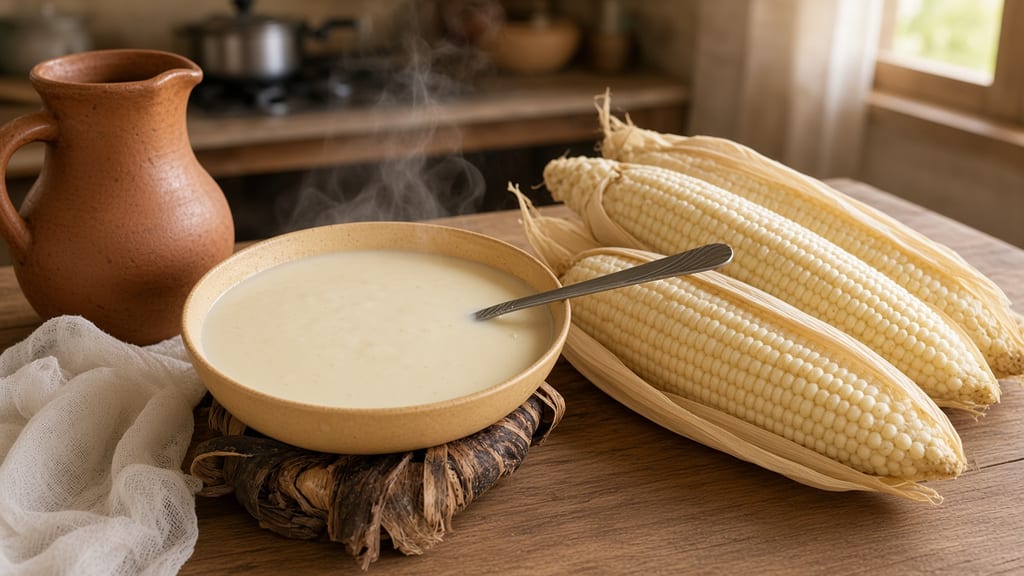
A hot, sour maize drink from Tabasco made from maize that is not lime-cooked. The ground grain sours for half a day, then makers strain it and boil it until thick.
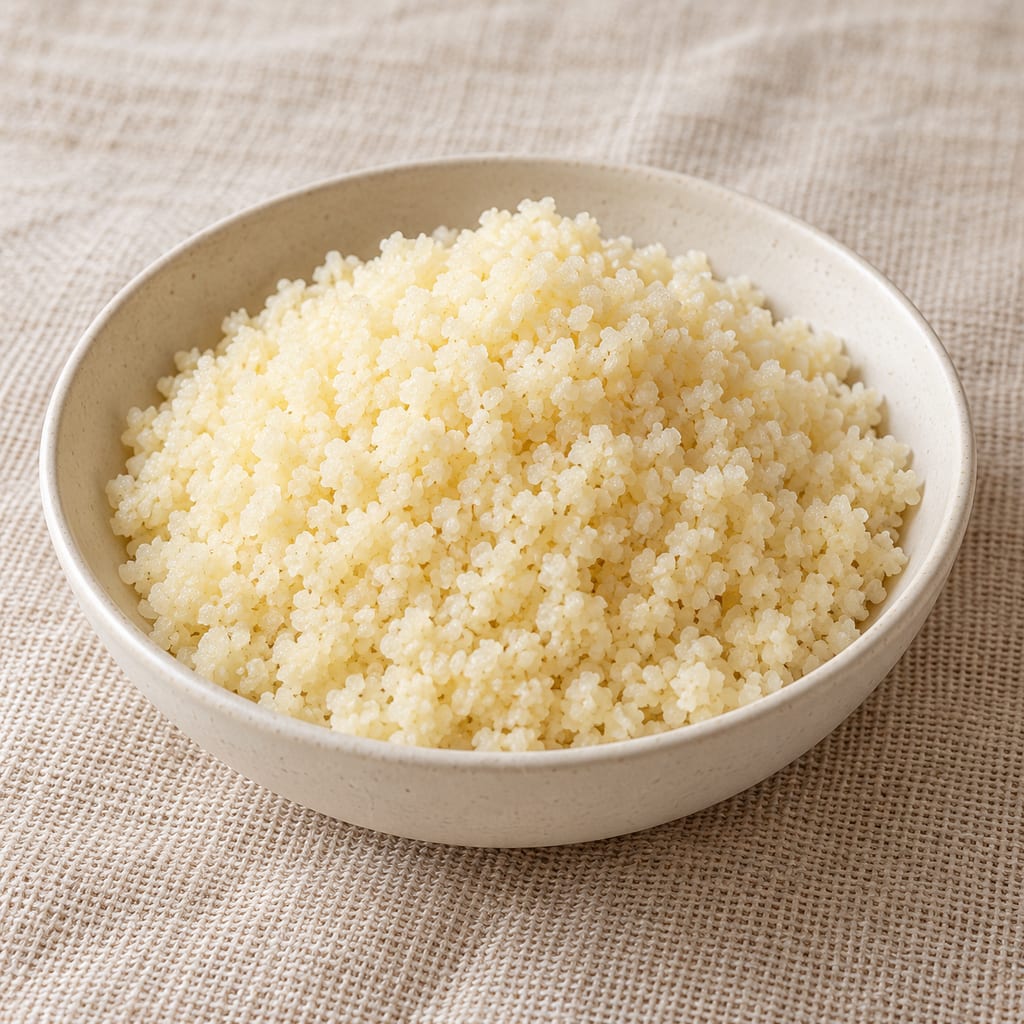
Ivorian cassava semolina: grated cassava is fermented overnight with a traditional inoculum, pressed, sieved into granules, dried and steamed. Documented in a 2006 field study; no sole original process is established.
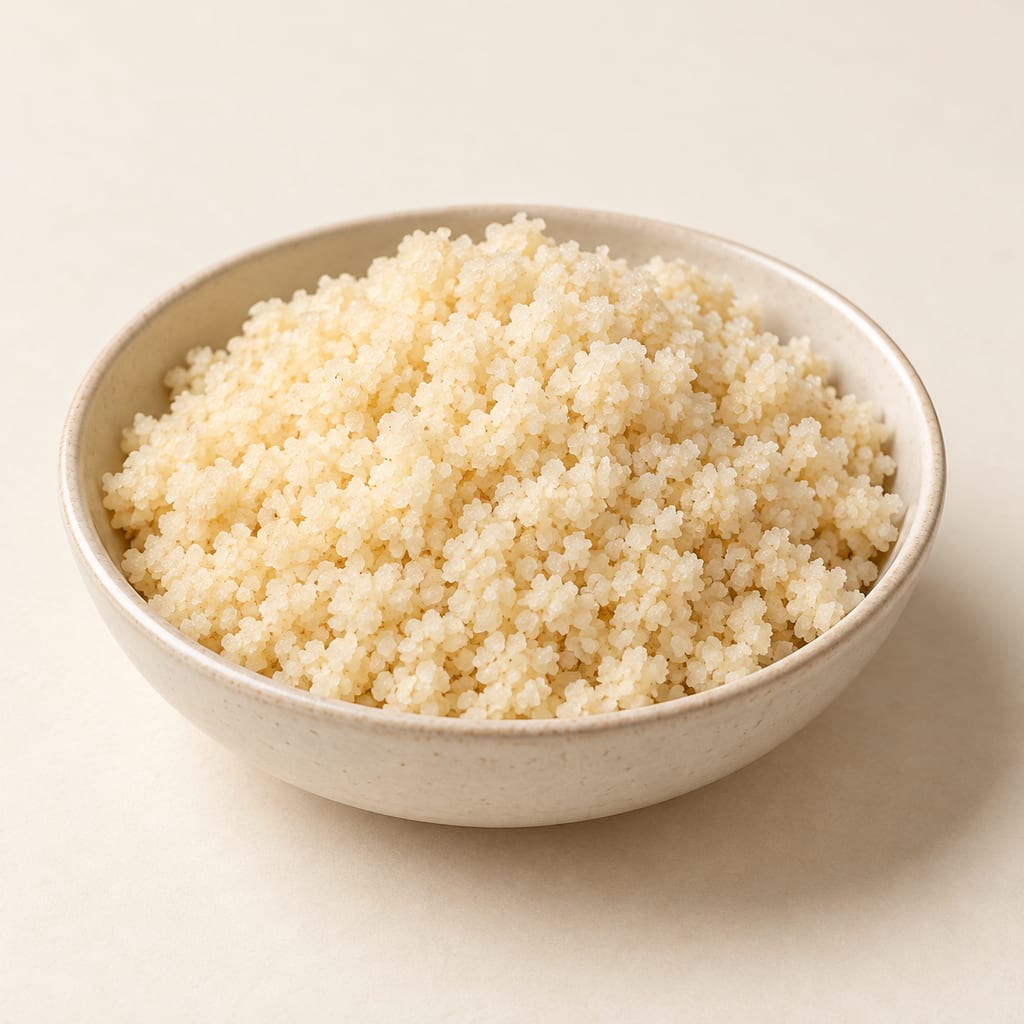
Attiéké is an Ivorian staple of grated cassava fermented with a traditional inoculum, then pressed, sieved, granulated, dried and steamed into fine couscous-like grains.

Crushed or milled barley cooked in water until the starch softens and the mixture thickens, the plainest way a northern household turned stored grain into a meal, here with apple and hazelnut.

A fermented pearl-millet gruel documented in Ouagadougou, Burkina Faso. Whole grain is soaked, wet-milled and sieved; the settled paste ferments again before it is cooked with its liquid.
No community contributions have been published for this entry yet.
Sign in to contribute. Published comments and photos are free to read.
Cambridge Scholars PublishingHistory · Method · Variations
Aceda: A fermented stiff porridgeDescribes Aceda as a hemispherical gelatinized block made from fermented or unfermented wheat, sorghum, millet or cassava flour cooked in hot water; regional procedures and serving practices vary.
Cited in: A Sudanese staple with more than one method; Grain, place and documented history; From flour to a smooth mound; Flours, starters and cultivar variation; At the table
Frontiers in Sustainable Food SystemsMethod · Science · Variations
Sensory profiling of traditional Sorghum porridge (Aceda): advancing nutritious and culturally accepted biofortified productsStudy protocol: cleaned and milled wholegrain sorghum flour; ajin mixed into boiling water at 1:10 by volume; flour incorporated at 1:2 weight/volume; boil five minutes while stirring.
Study compares Wad Ahmed, Dabar and Dahab with 28 semi-trained assessors; it does not validate a household starter fermentation process.
Cited in: A Sudanese staple with more than one method; Grain, place and documented history; What fermentation contributes; From flour to a smooth mound; Flours, starters and cultivar variation; Reading the result
Rift Valley InstituteHistory · Geography · Use
South Sudan’s Changing Tastes: Conflict, displacement and food importsDescribes South Sudanese sorghum and millet staples, including flour porridge called asida; used as regional context, not proof that cross-border methods are identical.
Cited in: Grain, place and documented history; At the table
NutrientsScience · History
African Sorghum-Based Fermented Foods: Past, Current and Future ProspectsReview lists Aceda in Sudan as sorghum-based porridge and reports associated microorganisms as unknown in surveyed literature.
Cited in: What fermentation contributes
Sudanese KitchenMethod · Uses · Variations
AsidaContemporary Sudanese recipe describes thick sorghum or millet flour porridge served with mullah; gives a sourdough variation using yogurt or saved dough, treated here as a documented modern variant only.
Cited in: From flour to a smooth mound; Flours, starters and cultivar variation; At the table; Reading the result