
African fermented foods, drinks and preservation
From sour breads and milk to savoury seeds, cassava staples and living beers, African fermentation follows the crop, the community and the work of transformation.
 FermenteaWhere food goes to change
Traditional method
Sigda · sigda
A Sudanese preparation made by fermenting sesame oilseed cake, shaping it into balls and sun-drying. Published accounts describe different processes and do not give a complete household batch.
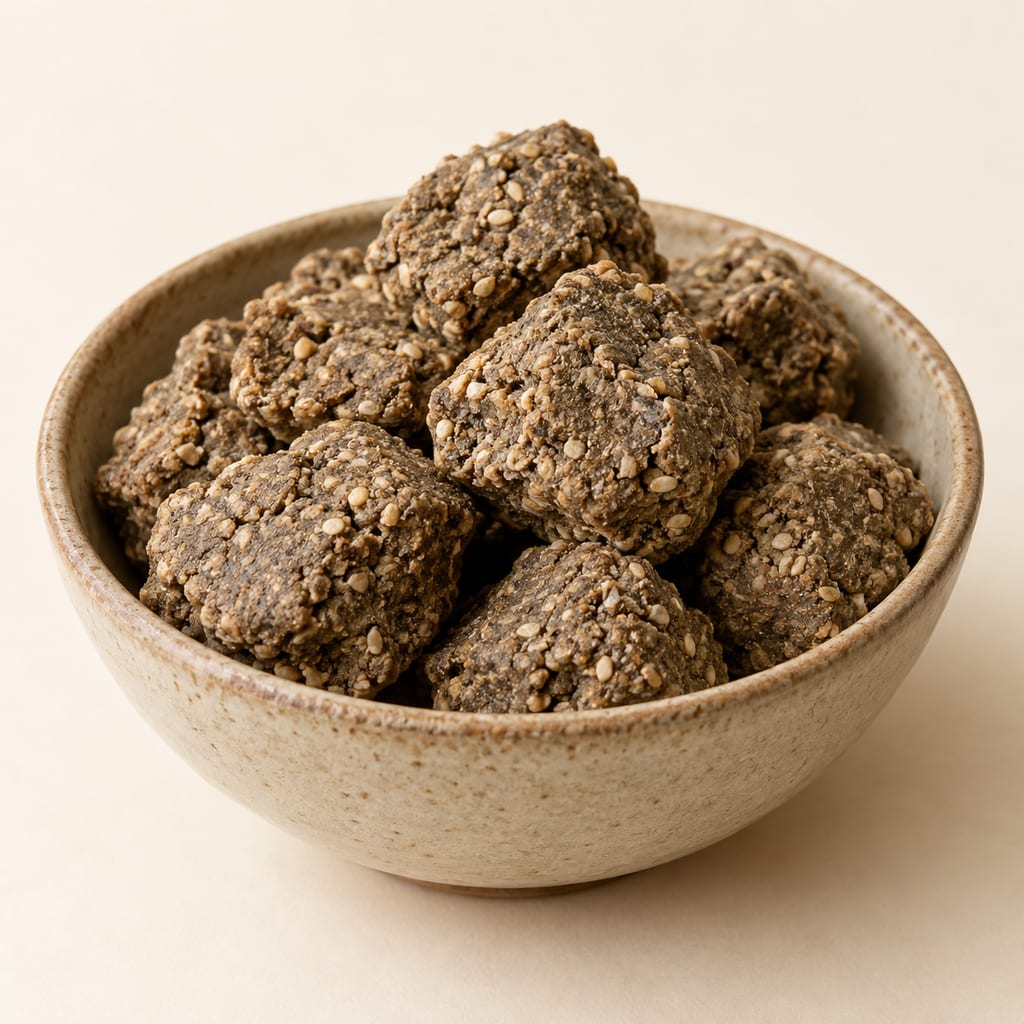
Sigda is documented in Sudan as a fermented food made from sesame oilseed press cake. The National Academies account describes the cake left after oil extraction as the raw material. It distinguishes bitter, indigestible cake made from nondecorticated seed, which is often used as animal feed. That warning means the phrase “sesame cake” does not identify a suitable ingredient by itself; the account does not provide a specification that a modern reader can use to verify a batch of cake.
Sigda is not kawal, which is made from Cassia obtusifolia leaves, and it is not furundu, which is made from roselle seeds. The 1991 study explicitly compares their different fermentation characteristics. Nor should sigda be conflated with West African fermented oilseed condiments: the same study reports different dominant organisms and fermentation products.
One process account grinds sesame oilseed cake with warm water to make a paste. Kambo, a local potash made from sorghum-stem ash leachate, is often added but not always; the account shows a range of 3–20 g/kg. It packs the paste into earthenware, covered with cotton cloth and a close-fitting lid to limit air. Fermentation is described as lasting 3–7 days at about 30°C, with occasional remixing, water added if needed, and resealing. The paste is then shaped into small balls and sun-dried.
A separate technical account describes a different process: sesame paste is prepared by hand-kneading, with combu slurry used to help separate oil and solids, then fermented spontaneously in an earthenware jar for 14 days, mixed, and fermented for two more days. It reports sigda samples from western Sudan. The sources do not establish that these durations describe one interchangeable method or the same product standard, so this draft keeps the shorter account as the listed method and records the longer account as a documented alternative rather than merging them.
No full batch mass, cake-to-water ratio, kambo denominator, vessel dimensions, ball size, sun-drying time, final moisture content or validated storage period is given. The approximate 30°C and the laboratory pH observation are descriptions, not household controls or proof of safety.
Elfaki and colleagues studied biochemical and microbial changes during sigda fermentation. They report Candida and Saccharomyces yeasts early in fermentation and a homofermentative Streptococcus species as dominant; lactic acid was the main fermentation product. In the studied mixture, acid accumulation brought pH to 4.0 after three days. Those findings describe the samples and study conditions, not a universal microbial succession, target or endpoint for household batches.
The same paper says sigda differs from kawal and traditional West African oilseed fermentations. A 1992 National Academies chapter describes the 3–7-day warm-water method, while the earlier UNIDO technical account gives a longer 16-day sequence. Variation across publications is material: no single duration or fermentation endpoint should be inferred from their combination.
The National Academies chapter places sigda among foodways of Western Sudan. The earlier technical report describes samples collected in western Sudan. These sources support a Western Sudan association, not an exclusive origin claim or a precise locality.
The regional chapter says sigda is commonly eaten in vegetable stew. Another Sudanese food survey groups sigda among meat substitutes. This records a reported culinary role; it does not show that every household uses it in the same dish or that the product replaces meat in every setting.
The 1991 paper calls sigda a traditional Sudanese food and reports biochemical and microbiological investigation of it. The National Academies volume published in 1992 includes a detailed preparation account. These publications establish documentation by the late twentieth century. The sources reviewed here do not date the beginning of the practice.
Sesame is a major food allergen; keep it clearly identified and prevent cross-contact for people with sesame allergy. The FDA source is a United States allergen reference, not Sudanese labelling law.
The described process is spontaneous, and the published accounts do not validate a household safety endpoint, drying target, or storage duration. They also do not specify a tested method for determining that the dried balls are stable. A familiar smell, taste, or appearance cannot fill those gaps. The source's approximate temperature and reported pH observation should not be treated as safety limits.
The optional potash is a locally prepared alkaline material in the account. Its description does not justify substituting an unidentified ash or commercial alkali, and the mass basis for its reported dose is unclear. More evidence is needed before publishing a complete home-scale method.
Locate the full 1991 article methods to establish whether its measured fermentation procedure is reproducible from the abstract and chapter description.
Identify what seed preparation and oil extraction yield the food-grade cake used in sigda, and determine whether the local kambo quantity refers to dry cake, wet paste, or another basis.
Find an attributed household-scale batch with measured quantities, water adjustment, vessel capacity, fermentation observations, shaping and drying details.
Find evidence for safe final drying, moisture or water activity, storage conditions and shelf life before presenting the process as a validated preservation method.
Sigda is documented as a Sudanese fermented sesame oilseed-cake food by a 1991 biochemical and microbiological study and a National Academies chapter on Western Sudan foodways. These attestations do not establish a date of origin.
Scaling: source batch only
Sigda is made from sesame cake; sesame is a major food allergen.
Hazard sourceIdentify sesame clearly and prevent cross-contact for people with sesame allergy.
Control sourceThe available descriptions are historical and technical accounts, not a validated home-preservation procedure. They do not establish a safe fermentation endpoint, drying endpoint, or storage duration.
Do not treat a reported temperature, pH result, smell, or appearance as proof that a home batch is safe.
Use of sesame cake from nondecorticated seed is not interchangeable with the cake described for food: the source shows that material bitter and indigestible and says it is often used as animal feed.
These sources associate the described sesame-cake sigda with Western Sudan; they do not establish a precise place of origin.
From sour breads and milk to savoury seeds, cassava staples and living beers, African fermentation follows the crop, the community and the work of transformation.
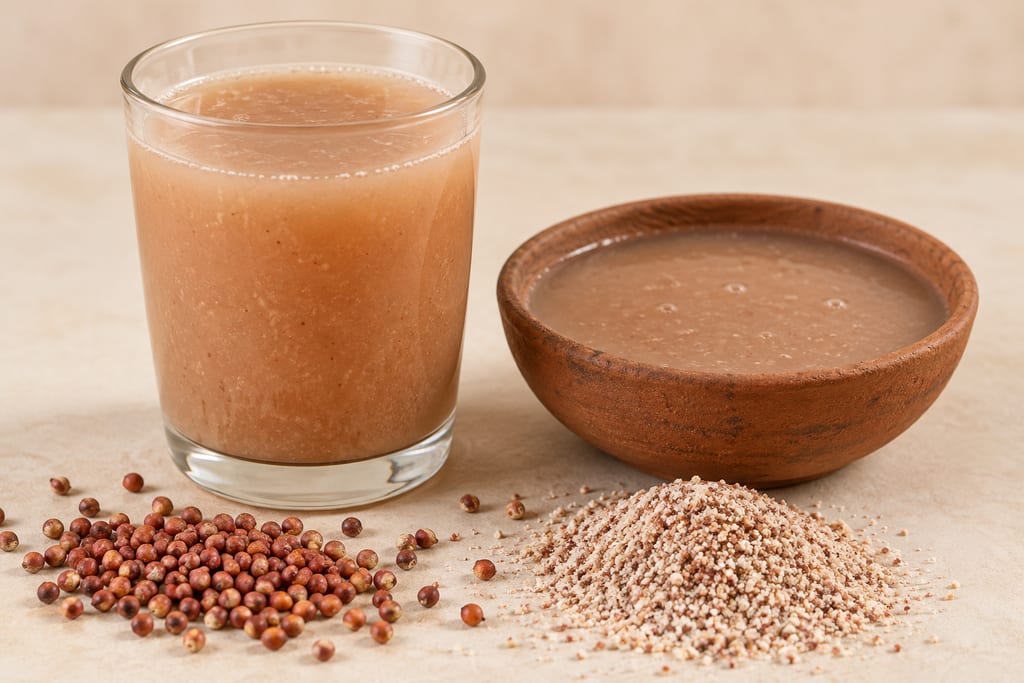
Sudanese opaque sorghum beer made from soured, toasted, cooked and malted grain through three linked fermentations, drunk fresh while still fermenting.
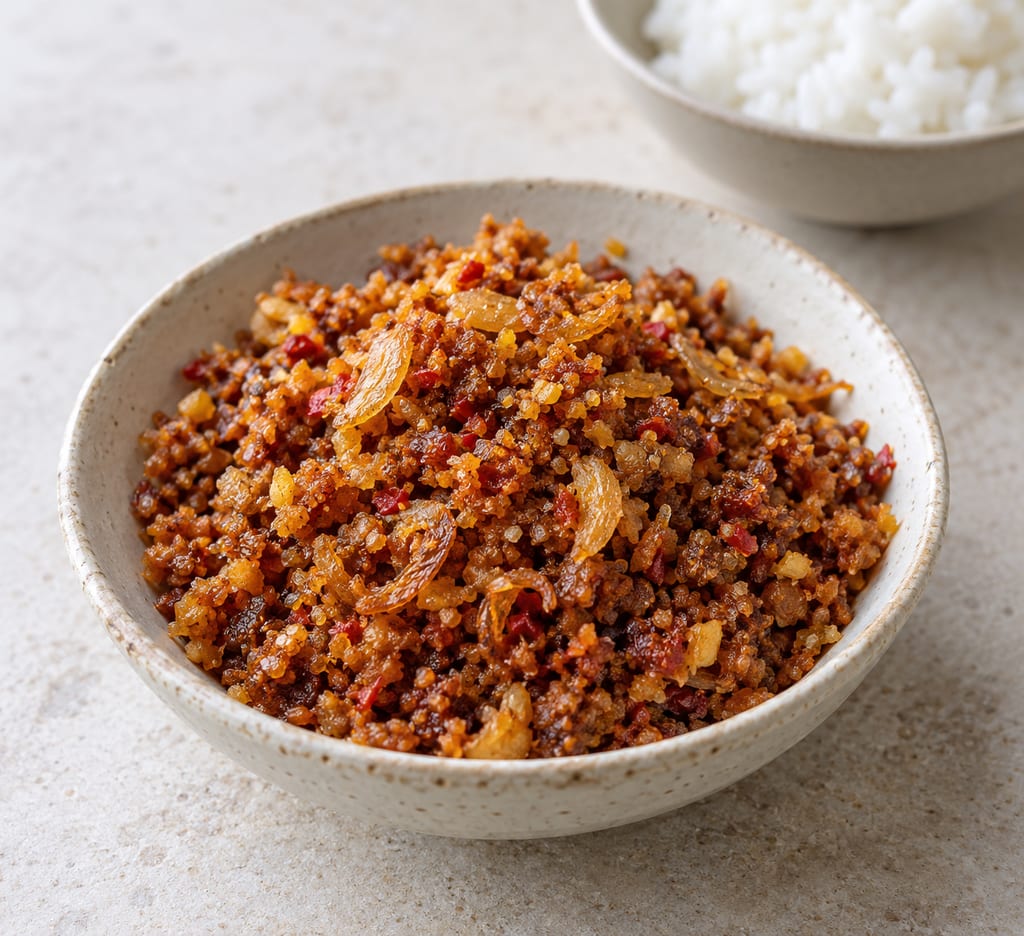
A Myanmar relish of dried shrimp, fried eschalot and garlic, chilli, turmeric, tamarind and ngapi. Naomi Duguid’s published recipe makes about 1 cup; it contains crustacean shellfish.
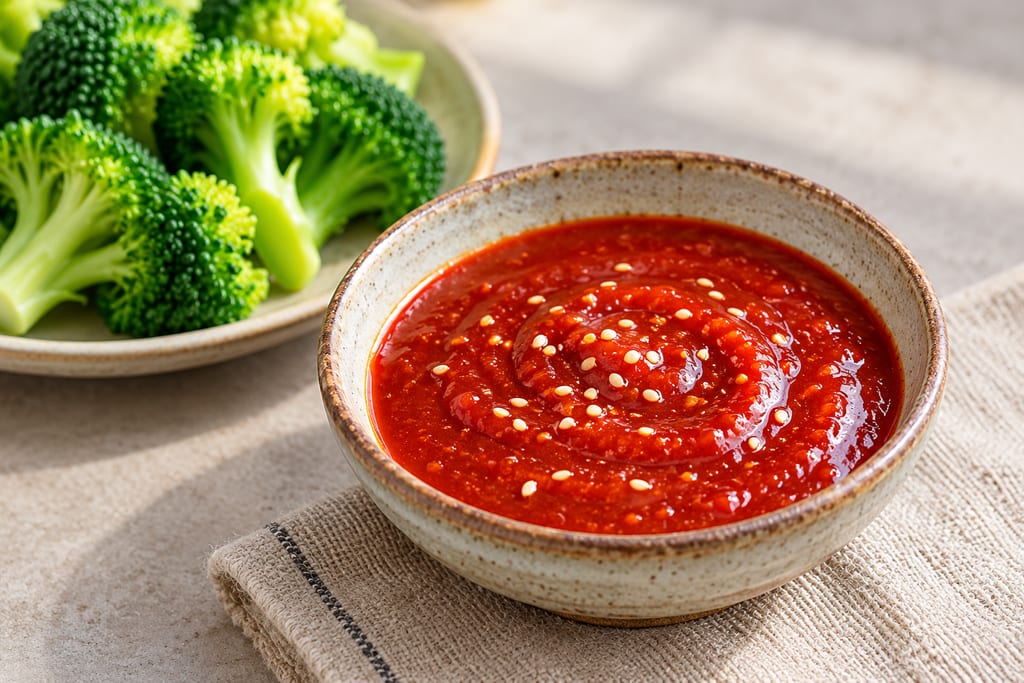
Chogochujang is a Korean sweet-sour sauce made by seasoning gochujang with vinegar and sugar. This development batch adds water and toasted sesame seeds, with optional garlic for the portion being served.
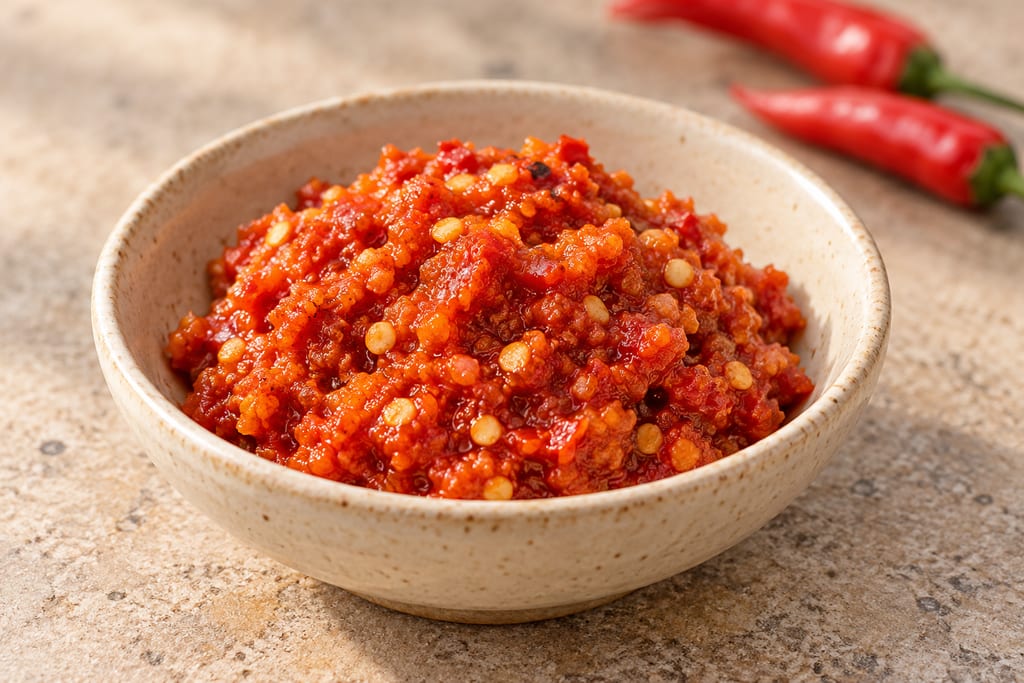
Dinanche, or donne' dinanche, is a Chamorro hot pepper paste of crushed chillies that Guam cooks use on its own or stir into fina'denne'. Its versions range from pepper alone to ones with eggplant, miso or coconut milk.
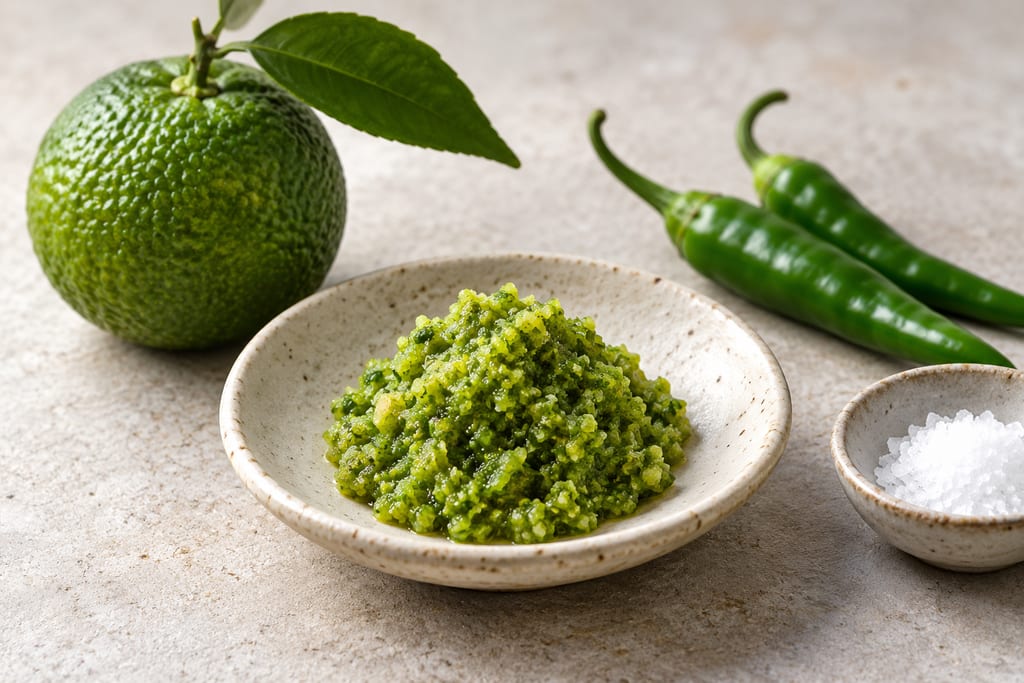
A fresh, uncooked yuzu and green chilli paste inspired by Kyushu’s yuzu kosho, made here as an untested small-batch seasoning rather than a preservation formula.
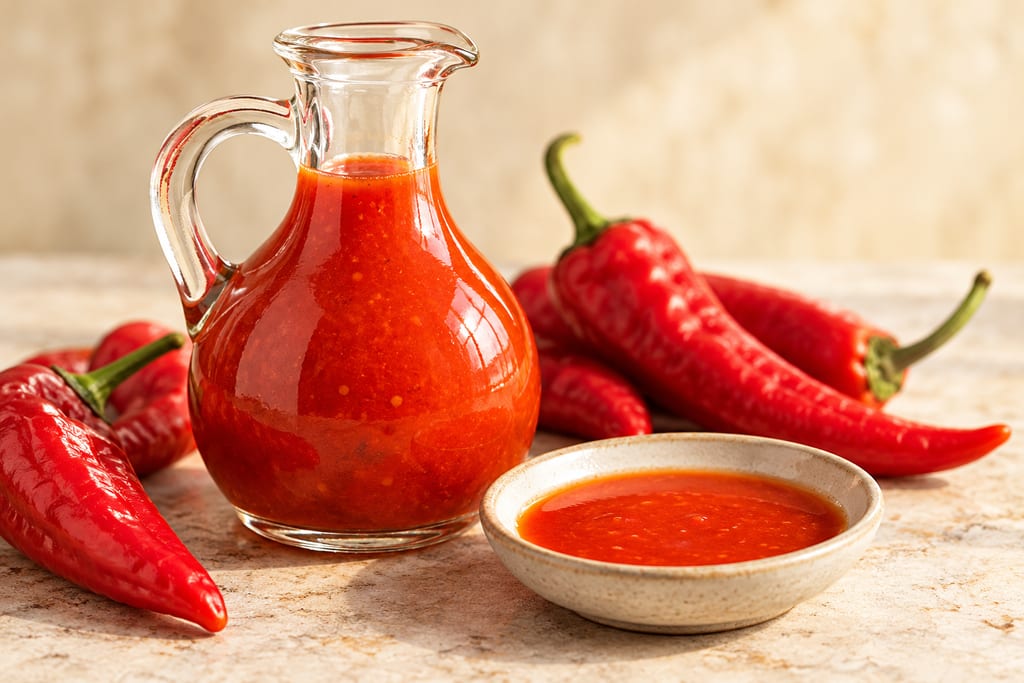
Fresh hot peppers ferment beneath a measured salt brine, then become a bright, tangy sauce blended from the peppers and their liquor.
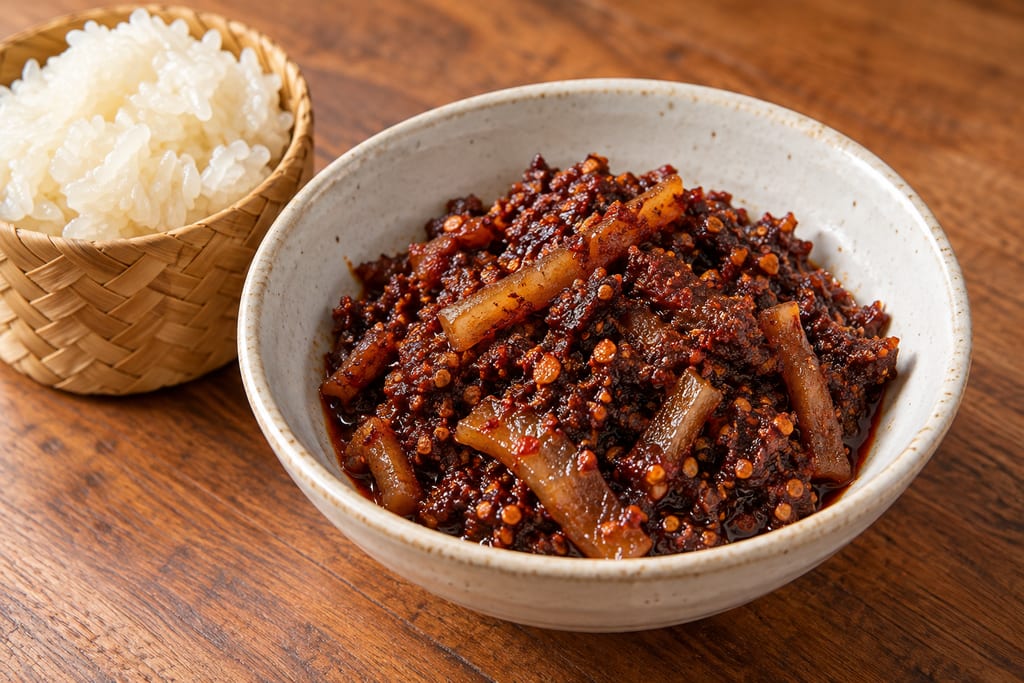
Jeow bong is a Lao paste of dried chilli, shallot, garlic and galangal cooked with buffalo or cow skin, a Luang Prabang specialty eaten with sticky rice and grilled meat.
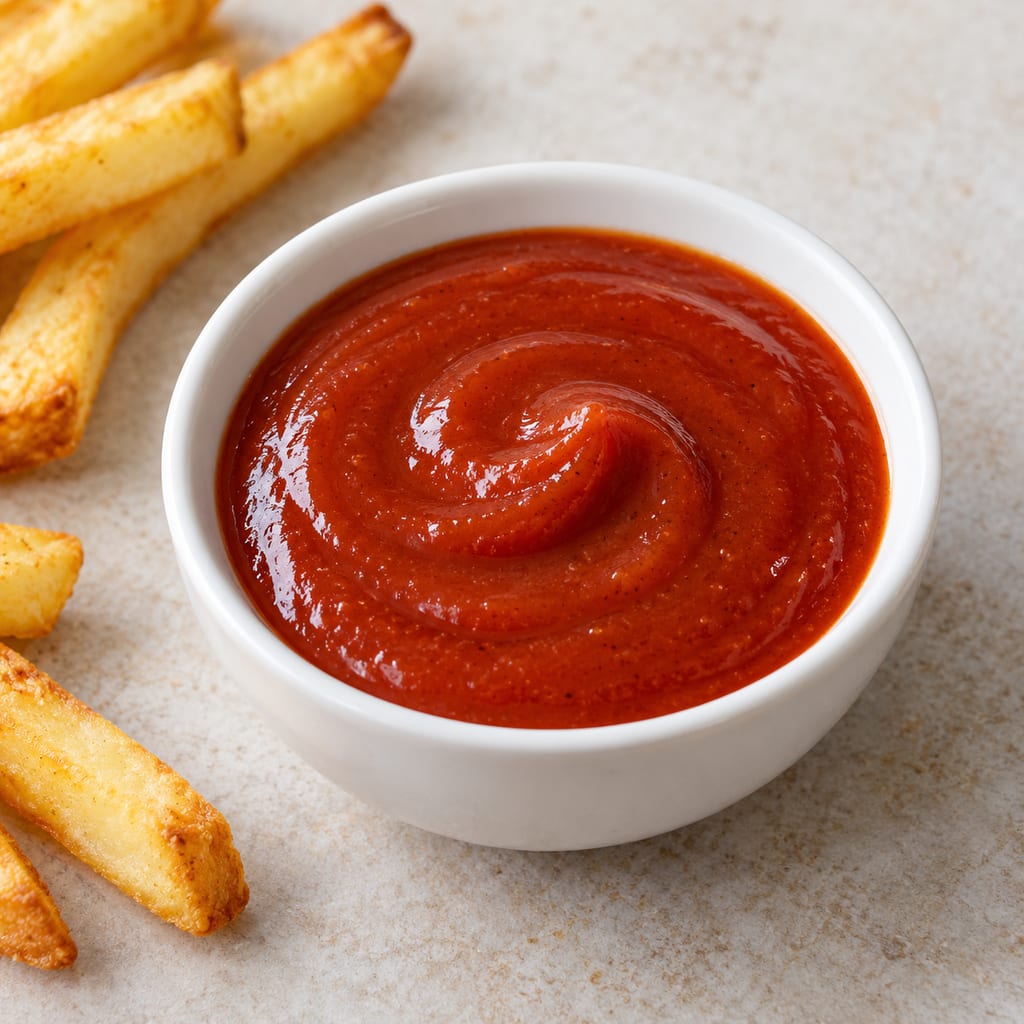
A modern tomato condiment sharpened with the spicy, savoury tang associated with kimchi; this measured version whisk-mixes prepared ketchup and commercial kimchi seasoning.
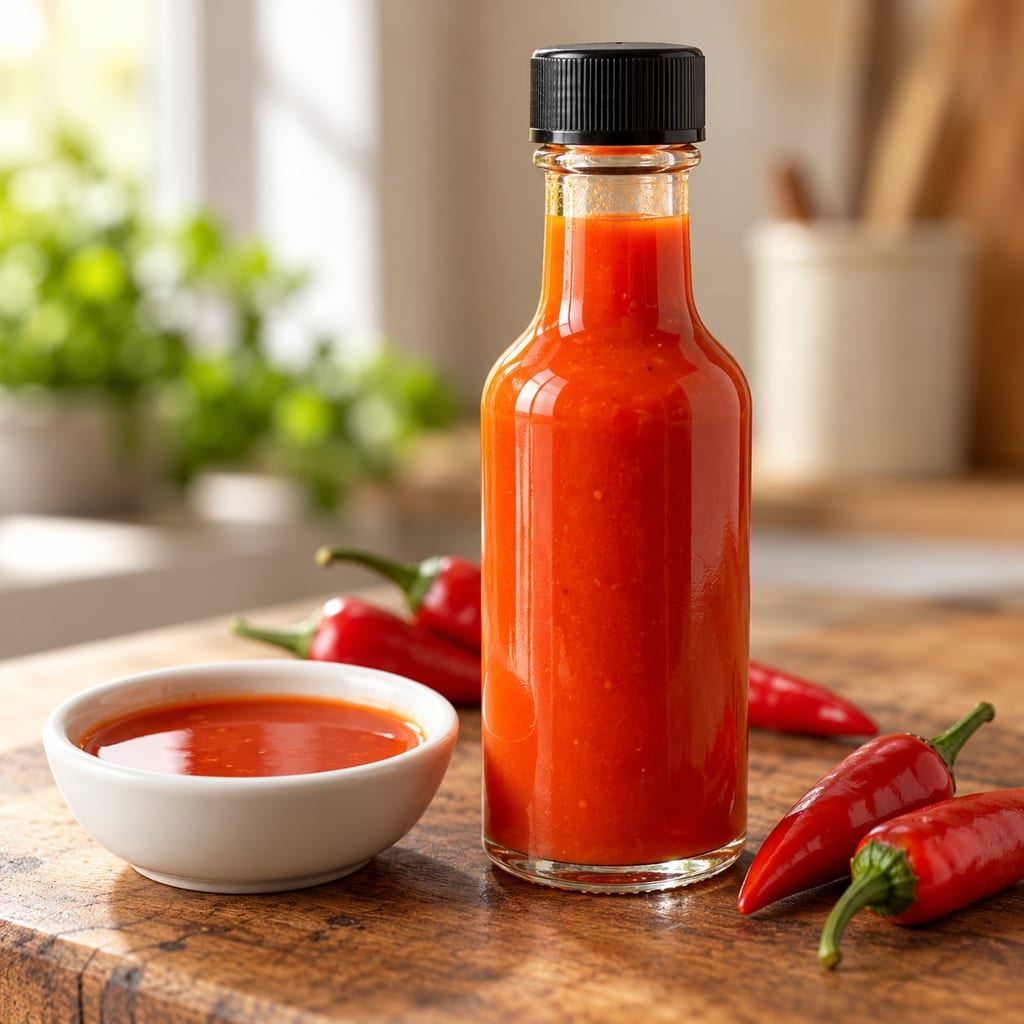
Documentary account of Louisiana pepper sauces, using TABASCO's published barrel-aged commercial process as one specific example; the source does not provide a validated home recipe.

Soft, spreadable Calabrian pork sausage made with a great deal of red chilli and fatty pork, stuffed into natural casings, sometimes smoked and matured while staying soft.

A way to add independent temperature logging to an existing food dehydrator without changing its built-in controls or protections. It is a monitoring method, not a rewiring plan.

Pleurotus cystidiosus is the abalone mushroom, a cultivated oyster-type fungus with dark brown caps that grows more slowly and is more demanding than other Pleurotus species.

A dark, balanced vinegar from Emilia-Romagna made by combining cooked or concentrated grape must with wine vinegar, then acetifying and refining it in wood under a protected specification.

A living dairy inoculum that starts controlled cream fermentation, developing acidity and aroma before sour cream or cultured butter is finished.

A small electric incubator holds jars at a selected temperature for yogurt and other documented warm food preparations. Controls, capacity and vessel arrangement vary by model.

Adygean salt is a seasoned table salt associated with Adygea and the wider North Caucasian culinary tradition. Salt is blended with garlic and a variable selection of herbs and spices; the exact mix depends on the named style and maker.

The African Caesar-group mushroom, Amanita masasiensis, is a wild ectomycorrhizal species of central and southern African woodlands, eaten locally. The genus contains deadly poisonous species, so identification needs care.
No community contributions have been published for this entry yet.
Sign in to contribute. Published comments and photos are free to read.
National Research Council, Applications of Biotechnology to Fermented FoodsRecipe · Process · Geography
Leaf and Seed Fermentations of Western SudanCited in: Identity and ingredient; Recorded method and its limits; Fermentation evidence; Geography and food use; History; Safety and preparation gaps; Research still needed
Journal of the Science of Food and AgricultureIngredient research · History · Process
Biochemical and microbiological investigations of sigda—a Sudanese fermented food derived from sesame oilseed cakeCited in: Identity and ingredient; Fermentation evidence; History; Safety and preparation gaps; Research still needed
United Nations Industrial Development OrganizationRecipe · Process · Geography
Applications of Biotechnology to Food Processing in AfricaCited in: Recorded method and its limits; Fermentation evidence; Geography and food use; Research still needed