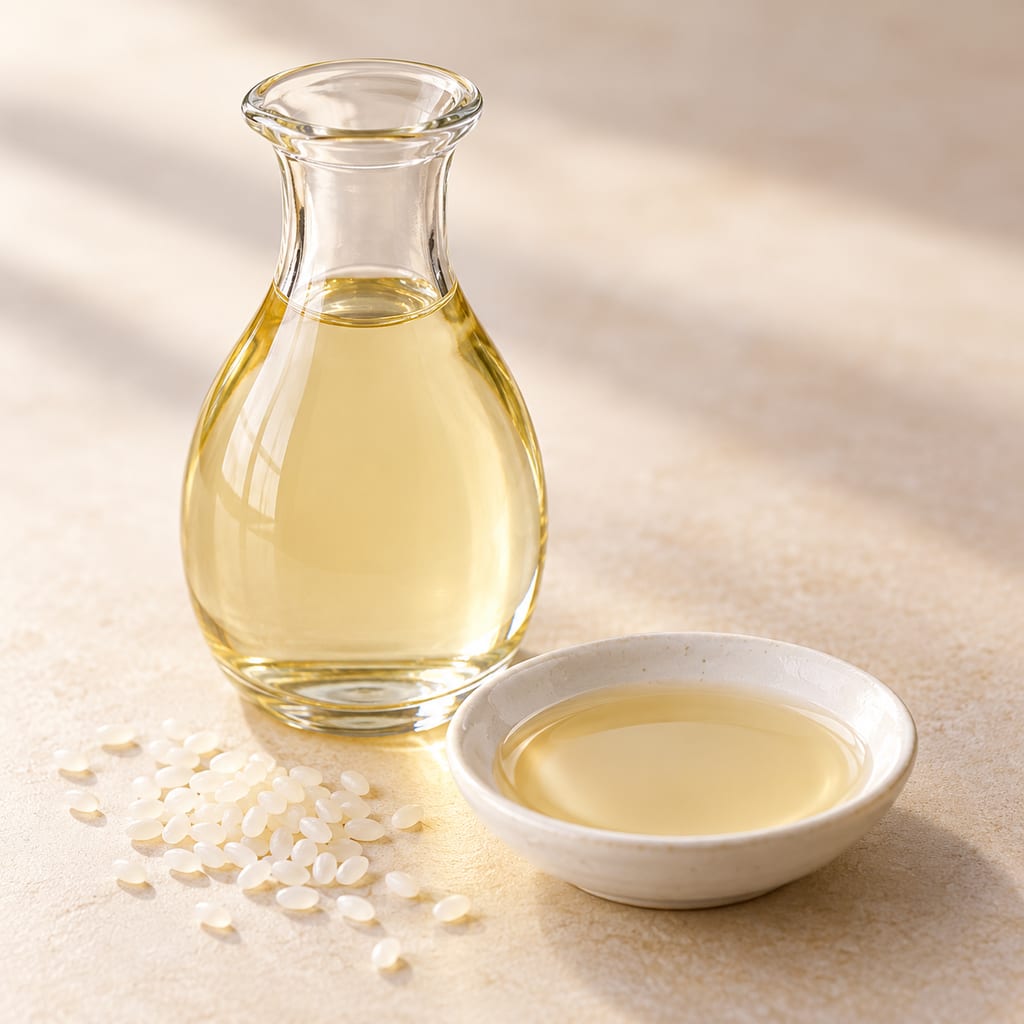
Unseasoned rice vinegar
Japanese komezu is a pale, unseasoned rice vinegar made through alcoholic and acetic fermentation; rice, water, koji and yeast shape its character.
 FermenteaWhere food goes to change
초고추장 · Cho-gochujang · Vinegared red chilli pepper paste dip
Chogochujang is a Korean sweet-sour sauce made by seasoning gochujang with vinegar and sugar. This development batch adds water and toasted sesame seeds, with optional garlic for the portion being served.
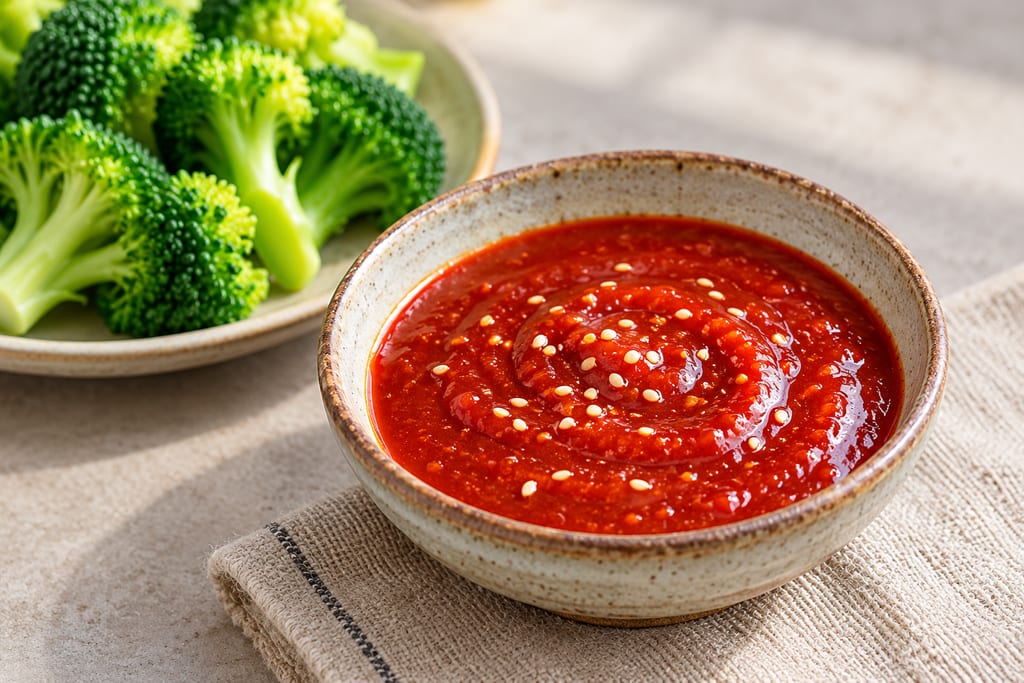
Chogochujang, also called cho-gochujang, is made by seasoning gochujang with vinegar and sweetener. The word cho refers to vinegar in Korean cooking. The base paste already brings chilli heat, salt, fermented savouriness and its own sweetness; vinegar adds a sharper edge, while sugar or syrup softens it. The balance changes with the paste and the cook, so a single fixed ratio does not describe every bowl.
This recipe records one small development batch. It is mixed rather than fermented: no culture, maturation or fermentation step is added after the purchased gochujang is opened. Water thins the sauce and changes its composition. It should be treated as a fresh mixture rather than as the original paste.
Korean food references describe cho-gochujang as a sweet and sour sauce for seafood, vegetables and some noodle or salad preparations. It can be served at the side for dipping or mixed into a dressed dish. A Korean Traditional Knowledge Portal entry places chogochujang in its Korean local-food collection and identifies Gyeonggi-do. The same database record names Chosunyorijebub, dated 1942, and Chosunmusangsinsikyorijebub, dated 1943, as original documents. It does not point to a passage in either book or confirm that the formula below appears there.
Those records support a Korean association and a bibliographic lead, not a precise birthplace or an exact historical recipe. Contemporary versions vary in the amount of vinegar and sweetener, and some include garlic or sesame. The current batch keeps a separate identity as a modern development formulation.
The development batch uses 100 g gochujang, 35 g unseasoned rice vinegar, 20 g sugar, 20 g water and 5 g toasted sesame seeds, for a stated yield of 180 g. Optional grated garlic has no stated amount and is added only to the portion being served. These are the supplied formulation's quantities, not a conversion of a published traditional recipe.
The Rural Development Administration database's separate formula lists red chilli paste, vinegar, sugar and water in different amounts and does not list sesame or garlic. Korean Bapsang's asparagus sauce includes garlic and sesame oil as well as sesame seeds: it uses 2 tablespoons each of gochujang and vinegar and 1 tablespoon of sugar, and dresses 1 pound of asparagus blanched for 1 to 3 minutes and chilled in ice water. Sempio publishes a different four-serving batch with 2/3 cup (125 g) of vinegar as printed on its page, and recommends a one-day rest in the refrigerator for flavour. Keeping those versions distinct prevents one recipe's proportions or ingredients from being presented as universal.
Stir the measured gochujang, vinegar, sugar, water and toasted sesame seeds until the mixture is even. Cover it and rest in the refrigerator for 15 minutes so the sugar dissolves. Because commercial gochujang varies, check the balance of this particular paste before adding any extra sweetness.
Serve the dip with cooked seafood or vegetables. Chogochujang is also used with raw seafood in Korean dining, but that use does not validate the handling of raw fish or make this development batch a preservation method. If garlic is wanted, grate it into only the portion being served. The mixed sauce has no tested shelf life in this formulation; the storage directions for the original gochujang do not establish a storage period for a diluted mixture.
A cooking-reference site transcribes an instruction from the 1936 expanded edition of the cookbook Joseon mussang sinsik yori jebeop to stir vinegar and sugar into gochujang, without quantities. Reference entries from the National Folk Museum of Korea identify 1924 as the book's first publication and 1936 as an expanded edition. The evidence is therefore a later transcription attributed to an edition, not a claim that the sauce first appears in 1936, and no original scan was inspected. It does not date the sauce.
A Rural Development Administration of Korea database record classifies chogochujang as a Korean local food, lists Gyeonggi-do, and names cookbooks dated 1942 and 1943 as source documents. It does not establish that either book contains this exact formula. The 180 g batch here is a separate development recipe.
Yield 180 g · Scaling: source batch only
This mixed dip has no measured finished storage life. Do not transfer the gochujang package's storage life to the diluted mixture; no room-temperature storage or home-canning process is established.
The Korean Traditional Knowledge Portal lists chogochujang among local foods for Gyeonggi-do; this is not a claim of exact origin.
Korean Bapsang describes cho-gochujang as a Korean sweet-sour sauce and dip; this supports a country-level association only.
Japanese komezu is a pale, unseasoned rice vinegar made through alcoholic and acetic fermentation; rice, water, koji and yeast shape its character.
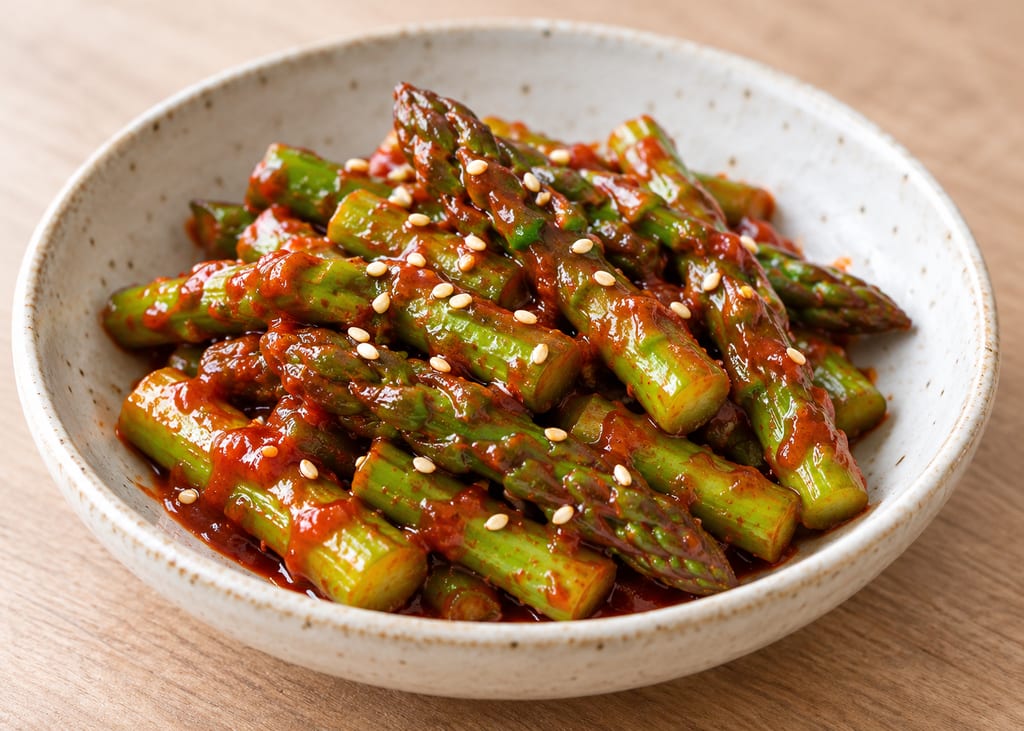
A Korean banchan of blanched asparagus dressed with a sweet-sour cho-gochujang sauce; Hyosun's version cools the spears in ice water before tossing.
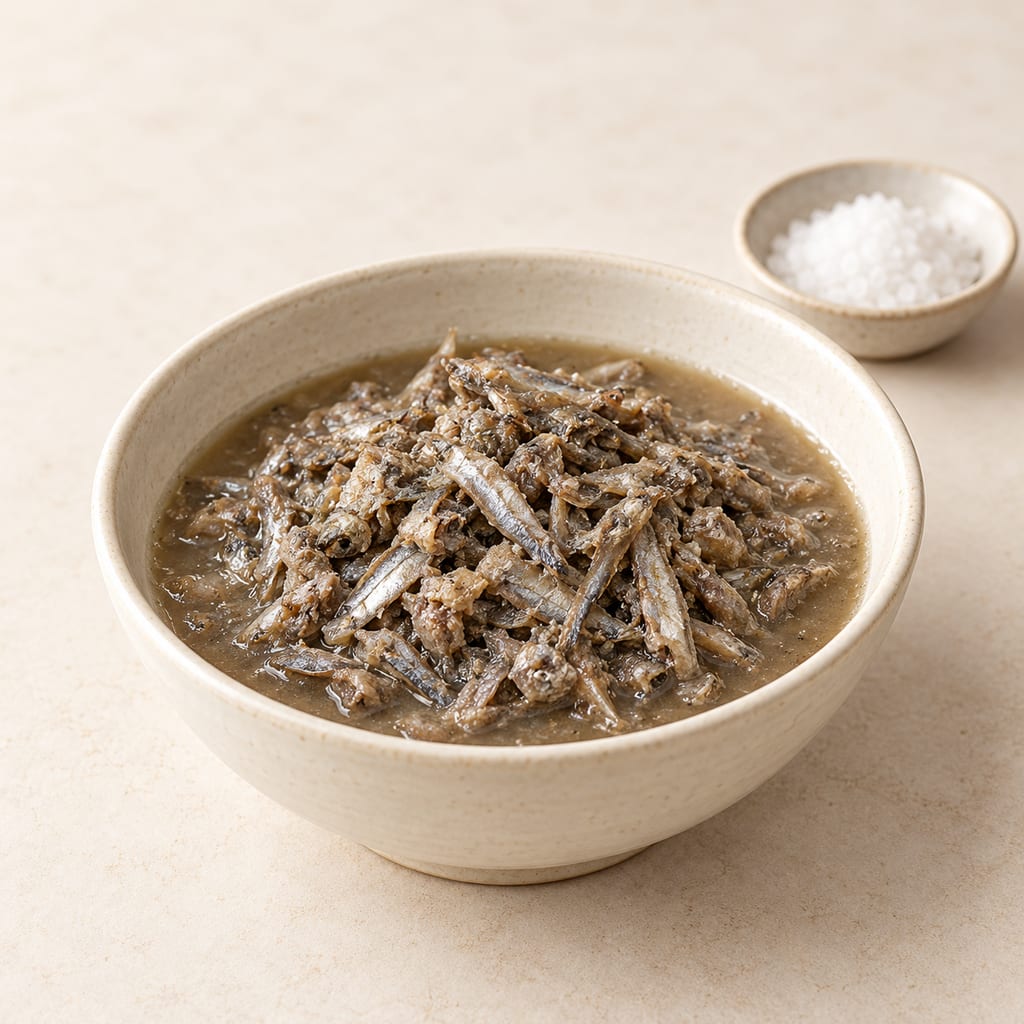
Salted anchovies mature in a covered jar with brine. The fish can be seasoned for a meal, while the expressed liquid seasons kimchi and other dishes.
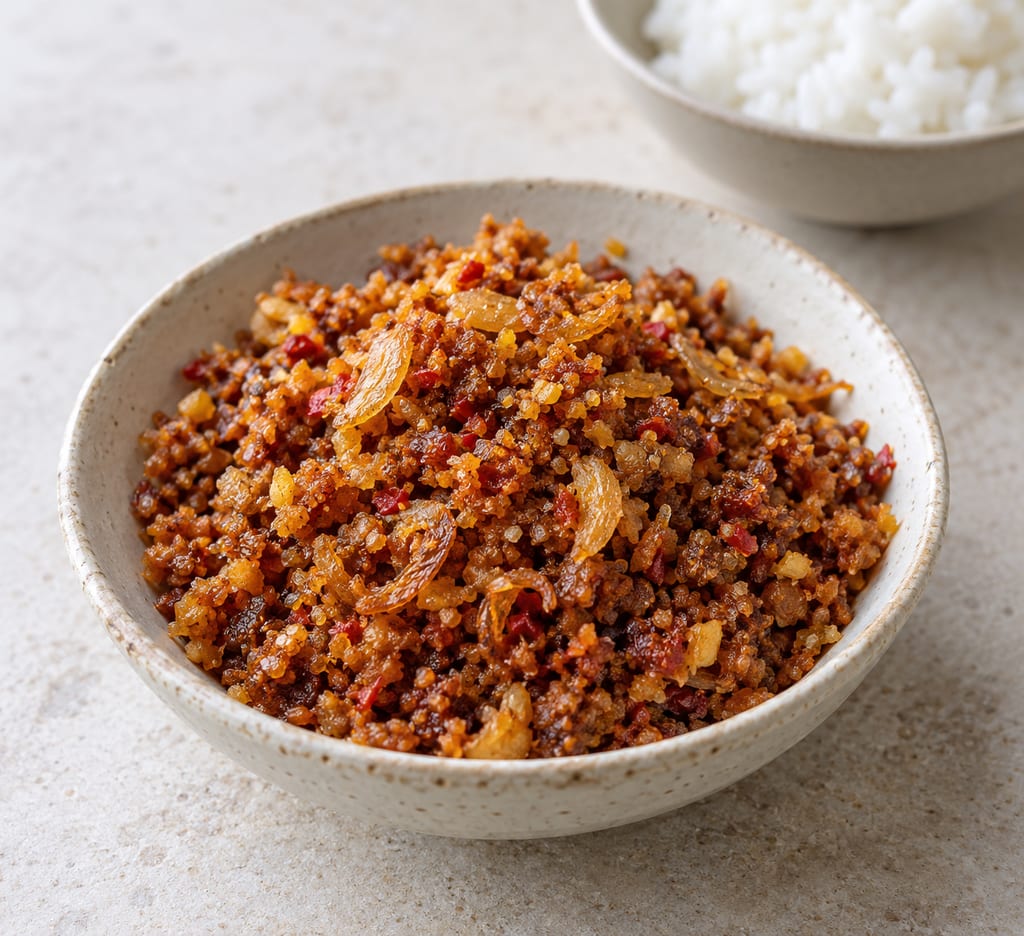
A Myanmar relish of dried shrimp, fried eschalot and garlic, chilli, turmeric, tamarind and ngapi. Naomi Duguid’s published recipe makes about 1 cup; it contains crustacean shellfish.
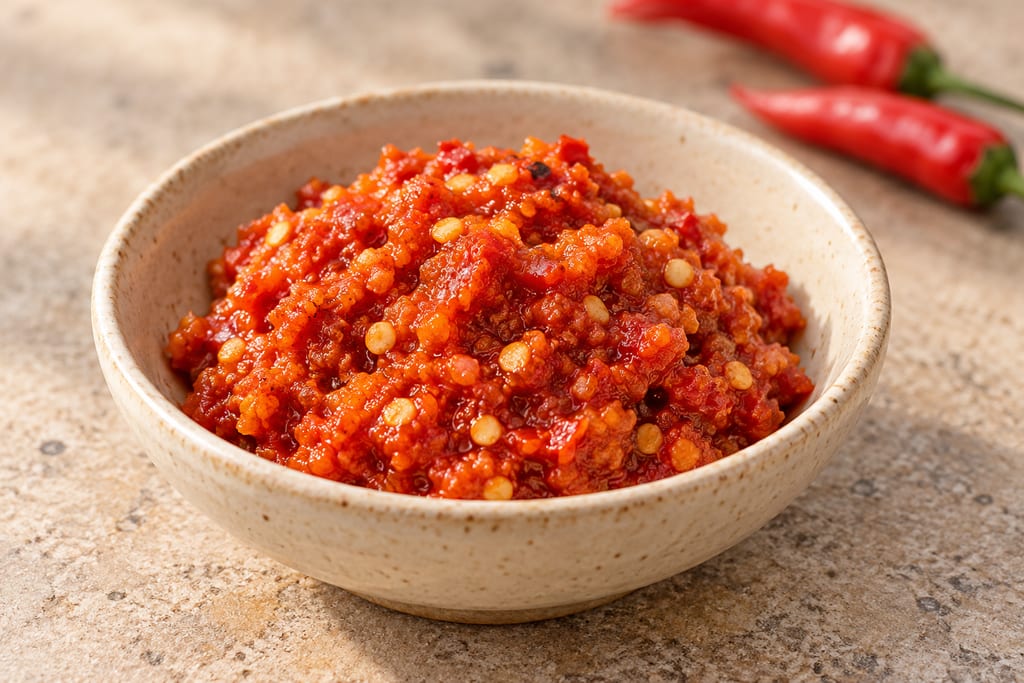
Dinanche, or donne' dinanche, is a Chamorro hot pepper paste of crushed chillies that Guam cooks use on its own or stir into fina'denne'. Its versions range from pepper alone to ones with eggplant, miso or coconut milk.
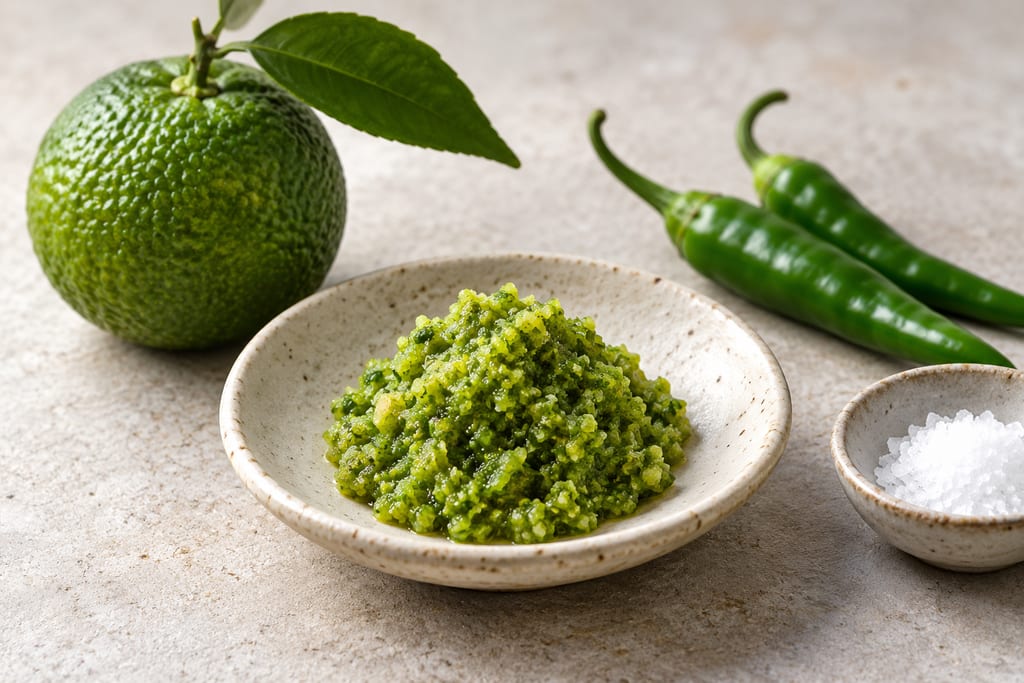
A fresh, uncooked yuzu and green chilli paste inspired by Kyushu’s yuzu kosho, made here as an untested small-batch seasoning rather than a preservation formula.
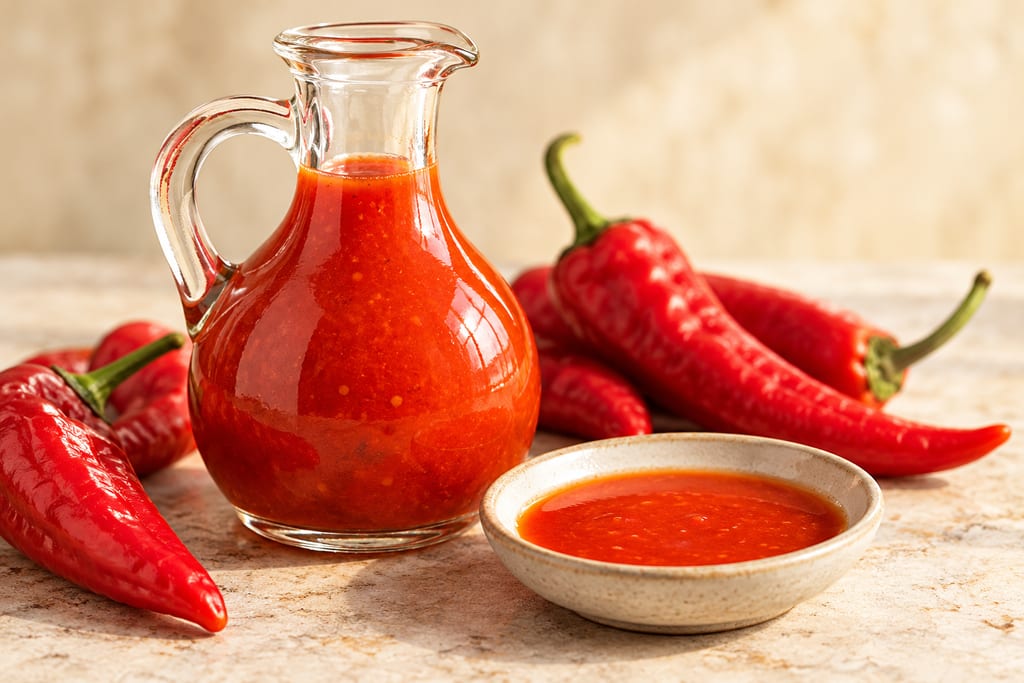
Fresh hot peppers ferment beneath a measured salt brine, then become a bright, tangy sauce blended from the peppers and their liquor.
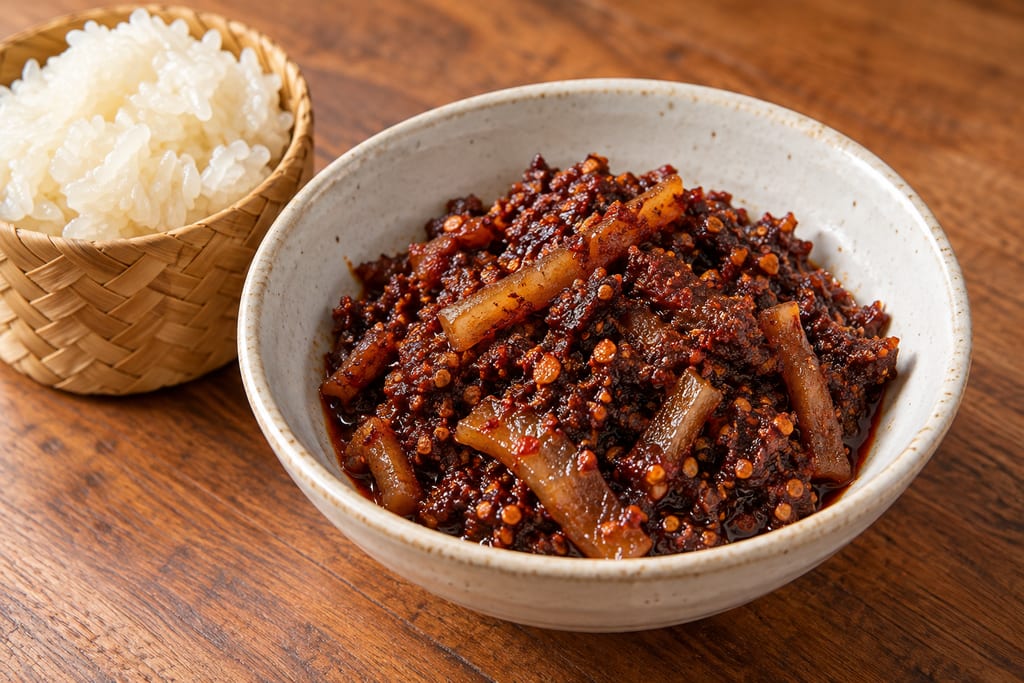
Jeow bong is a Lao paste of dried chilli, shallot, garlic and galangal cooked with buffalo or cow skin, a Luang Prabang specialty eaten with sticky rice and grilled meat.
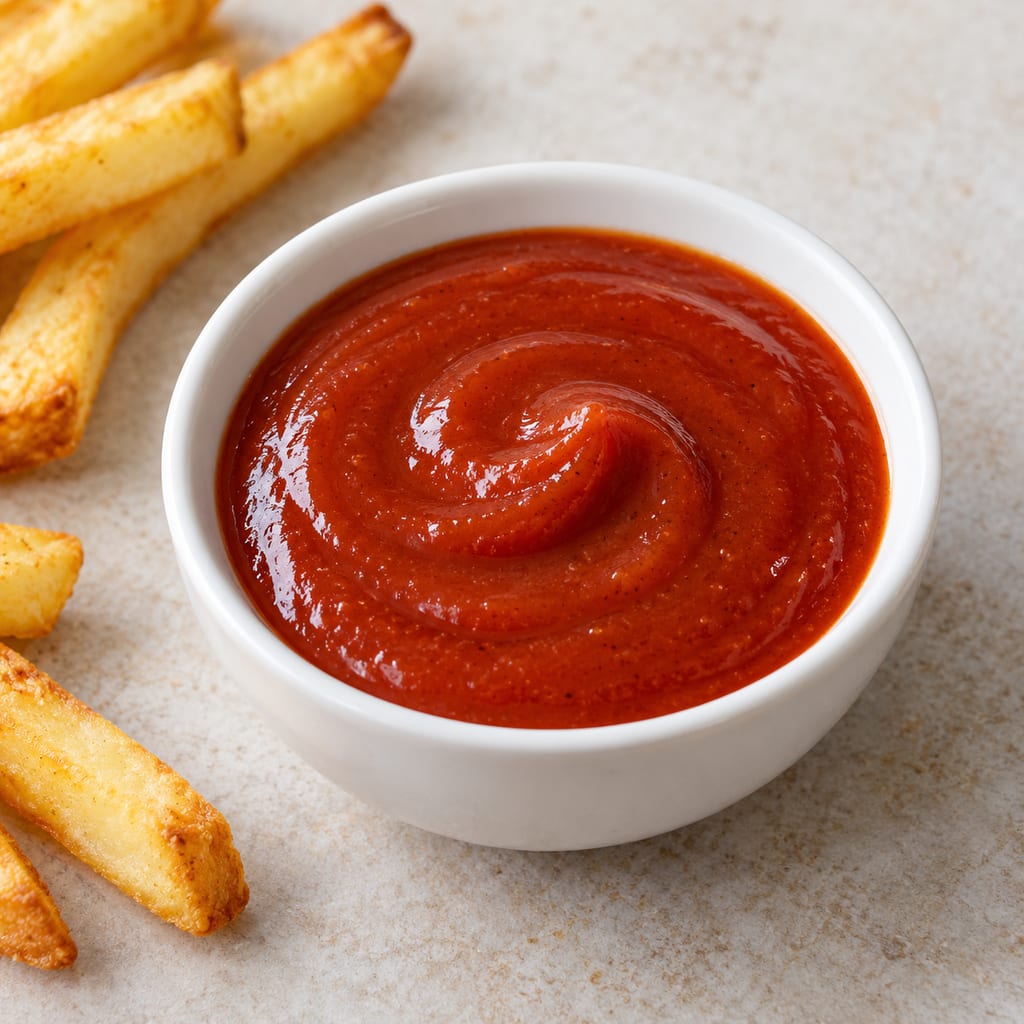
A modern tomato condiment sharpened with the spicy, savoury tang associated with kimchi; this measured version whisk-mixes prepared ketchup and commercial kimchi seasoning.
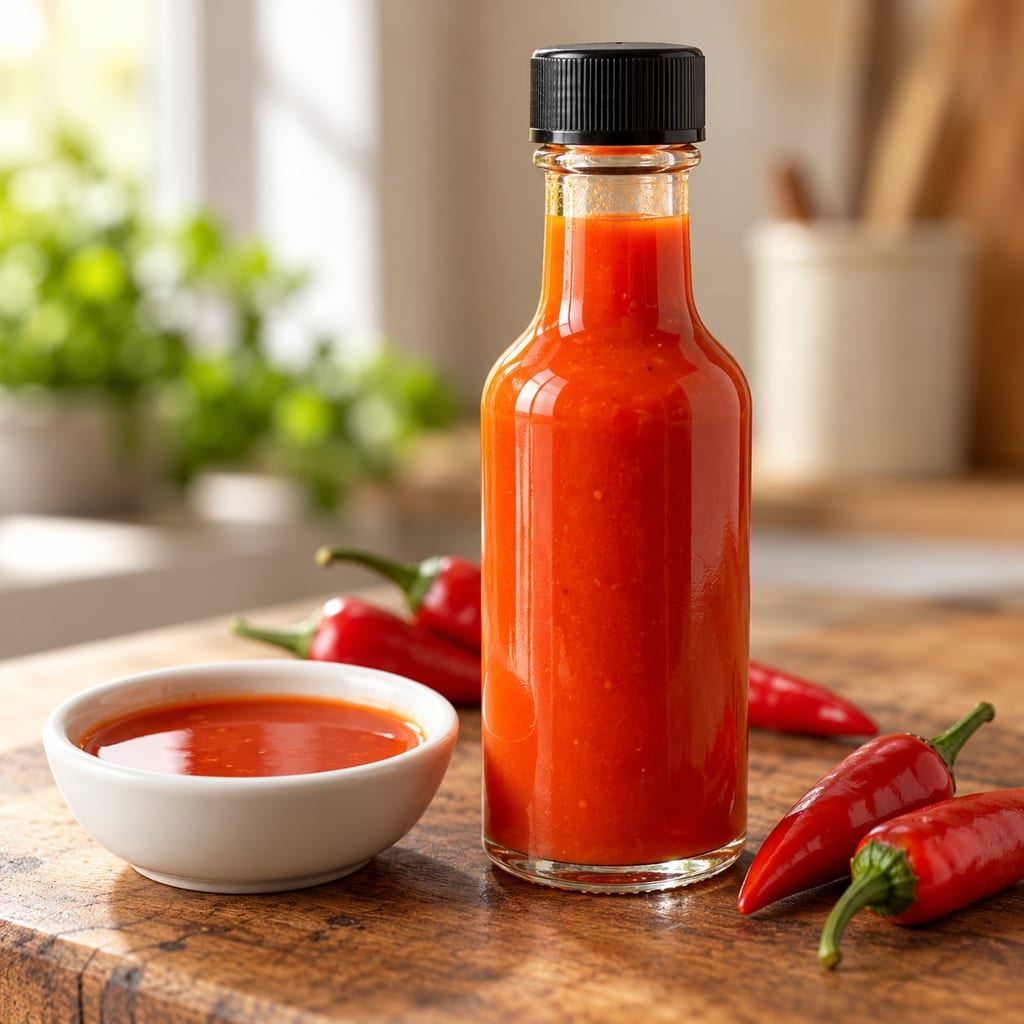
Documentary account of Louisiana pepper sauces, using TABASCO's published barrel-aged commercial process as one specific example; the source does not provide a validated home recipe.
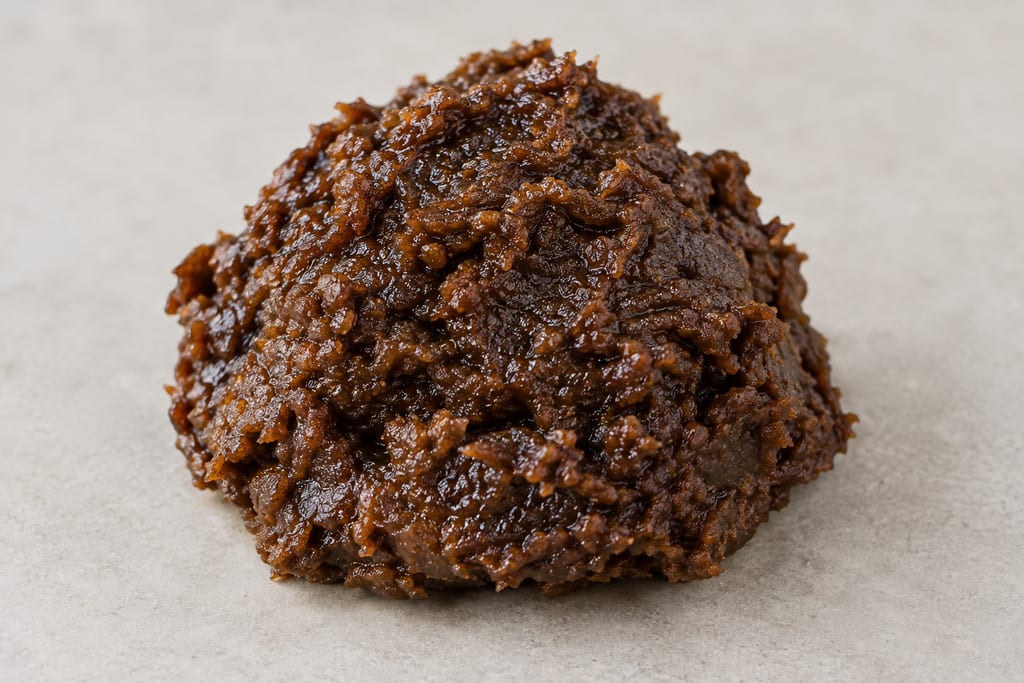
Maari is a Burkinabè baobab-seed condiment documented in producer studies. This is a non-instructional account, not a home recipe: sources vary, omit key process details and establish no validated safety control.
No community contributions have been published for this entry yet.
Sign in to contribute. Published comments and photos are free to read.
Korean Traditional Knowledge Portal; data supplied by the Rural Development Administration of KoreaIdentity · History · Method · Geography · Use
Chogochujang (vinegared red chilli pepper paste dip)The portal classifies chogochujang among Korean local foods and lists Gyeonggi-do as the area.
Its database formula uses red chilli pepper paste, vinegar, sugar and water, mixed without heating; its quantities differ from this 180 g development batch.
The record lists Chosunyorijebub (1942) and Chosunmusangsinsikyorijebub (1943) as original documents, without identifying a passage for the formulation here.
Cited in: A sour-sweet seasoning made from gochujang; A documented Korean condiment; How this batch differs; Mix, rest and serve
Korean BapsangIdentity · Method · Use · Variation
Asparagus with Gochujang SauceCho-gochujang is a sweet, vinegary gochujang sauce; cooks vary the balance of gochujang, vinegar and sugar.
The page serves the sauce as a dip with blanched or steamed vegetables and describes use with seafood.
Its asparagus banchan sauce uses gochujang, vinegar, sugar, garlic, sesame oil and sesame seeds; this item's formula differs and has no sesame oil.
Cited in: A sour-sweet seasoning made from gochujang; A documented Korean condiment; How this batch differs; Mix, rest and serve
Sempio recipe labVariation · Use
초고추장A separate four-serving batch lists vinegar at 2/3 cup (125 g) as printed and recommends a one-day refrigerator rest for flavour; it names seafood, noodles and mixed-rice dishes as uses.
Cited in: How this batch differs
LampCookHistory
초고추장 recipe transcription from Joseon-mussang-sinsik-yori-jebeopTranscribes an instruction attributed to the 1936 expanded edition of the cookbook to stir vinegar and sugar into gochujang, without quantities.
Cited in: An early cookbook instruction
National Folk Museum of Korea, Encyclopedia of Korean Folk CultureHistory
Joseon-mussang-sinsik-yori-jebeop (조선무쌍신식요리제법)Reference entry identifying 1924 as the first publication of the cookbook and 1936 as an expanded edition.
Cited in: An early cookbook instruction