
African fermented foods, drinks and preservation
From sour breads and milk to savoury seeds, cassava staples and living beers, African fermentation follows the crop, the community and the work of transformation.
 FermenteaWhere food goes to change
Traditional method
Maari
Maari is a Burkinabè baobab-seed condiment documented in producer studies. This is a non-instructional account, not a home recipe: sources vary, omit key process details and establish no validated safety control.
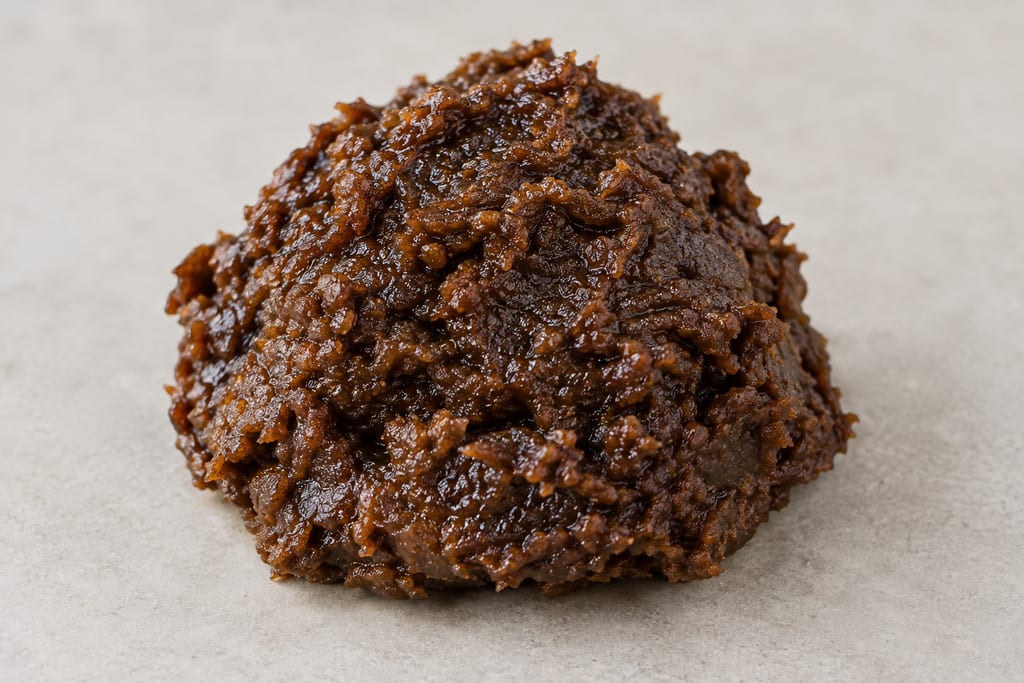
Maari is a condiment made by cooking and spontaneously fermenting baobab seeds (Adansonia digitata L.). It is a seed preparation. The sweet-acidic fruit pulp, the seed kernels, baobab leaf dishes, roasted seeds, and baobab seed oil are different foods or ingredients. Maari is distinct from other baobab foods such as fruit-pulp drinks and the separately documented eastern Burkina Faso condiment Otonpienou.
The existing baobab-seeds ingredient record documents Maari as one use of the seed. Other West African names are reported for related products, but names do not establish identical methods. This record keeps the documented Burkina Faso Maari process distinct and does not import details from other seed condiments.
Parkouda and colleagues report observing three producers in Pousghuin, a village in Zorgho, Burkina Faso. Their procedures included cleaning and boiling seeds for about 36 hours. Ash lye solution was added after 24 hours as a softening agent. The cooked seeds were drained into a basket for a first spontaneous fermentation of 72 hours at reported room temperature of 30–35°C.
After that stage, the mash was pounded and moulded with additional alkaline ash lye. It underwent a second spontaneous fermentation for about 24 hours. The post-fermentation sequence included steam cooking before drying. The product was dark brown, sticky and strongly aromatic; the paper also says some producers slightly roast Maari. These descriptions belong to those producers and are not a single standardized recipe.
The paper does not give seed batch weight, water volume, ash source, lye concentration or quantity, vessel size, yield, pound size, steam-cooking duration, drying time or storage conditions. These omissions make a home-scale reconstruction incomplete. The listed steps report the study's observed sequence without adding estimates.
Published descriptions give different schedules. The process observed from three producers in Pousghuin is one account, not a standard that covers all producers. The wider food literature also records variation by production site and season. This entry keeps the observed procedure separate from other preparations and does not combine timings or drying observations from differently documented products.
Baobab seed condiments with other local names and products should not be merged into one recipe solely because the same seed is used. For example, Otonpienou is described separately from Maari, with its own location and process. This recipe remains scoped to the Maari process documented by the cited Burkina Faso studies.
Maari is a spontaneous alkaline seed fermentation. In a four-site Burkina Faso study, early aerobic bacteria included Bacillus subtilis and Staphylococcus sciuri; Enterococcus faecium appeared later. Retail samples contained broad, variable bacterial communities and differed in counts and composition. This research describes sampled foods and does not show that an expected species profile guarantees safety.
A separate study reports that Bacillus cereus can occur during Maari production and in final products. Tests of selected B. subtilis strains found antimicrobial activity depended on the test substrate; the researchers did not demonstrate that fermentation reliably suppresses the pathogen in a home seed batch. A later study also examined B. cereus isolated from raw materials and Maari at multiple stages. These are specific reasons not to assume that alkaline fermentation or a familiar product appearance controls the hazard.
The reviewed accounts do not specify a validated kill step, internal temperature, minimum fermentation condition, drying endpoint, storage limit, or a household method for verifying product safety. They also do not set an ash-lye dose or concentration. A procedure with these omissions should remain a research record rather than a safety-validated home recipe.
The U.S. FDA describes cereulide as a pre-formed toxin produced by some B. cereus strains and notes that it resists heat and acid. This is general hazard context only: the Maari studies cited here report B. cereus isolates but do not establish cereulide in Maari samples. It is not evidence that any particular batch contained the toxin.
The microbiology study sampled Maari from Mansila, Toulfé, Ouagadougou and Gorgadji in Burkina Faso. The producer process paper followed three producers in Pousghuin, Zorgho. These locations provide documented production evidence across Burkina Faso; they do not identify the place where the practice began.
The scientific literature identifies Maari as a traditional Burkina Faso food by 2010. No reviewed source dates the origin of the practice. Product descriptions say Maari is used to flavour sauces and other cooked dishes; the exact serving context varies across sources and communities.
The producer account names a basket for the first fermentation and pounding of the seed mash before the second stage. Boiling, ash-lye cooking and steam cooking are also described, but it does not specify pot or steamer dimensions, materials, capacity, fuel, or design. The equipment listed in this record is limited to the vessel functions explicitly required by the steps; no specialized traditional pot form is inferred.
No source reviewed here gives a measured amount of seeds, water or ash lye. For the reported 36-hour boil, first 72-hour fermentation and second approximately 24-hour fermentation, the time and temperature values are source observations; they are not process controls. The data do not support a reliable yield or scaling formula.
Find an attributed household recipe with measured baobab seed, water and ash-lye amounts, including the ash source and lye-strength basis.
Verify the procedure for cleaning, boiling, draining, vessel hygiene, lye addition, fermentation conditions, pounding, second fermentation, steam cooking, drying and storage across named producers.
Find validated food-safety controls for Bacillus cereus and other variable organisms in the whole-seed alkaline ferment, including the effect of cooking and drying.
Document the local distinction among Maari and related named seed condiments without assuming they share one recipe or history.
Scientific studies document maari as a traditional fermented baobab-seed condiment by 2010 and describe producers in Burkina Faso. The sources reviewed here do not date its origin.
Scaling: source batch only
A study of maari reports that B. cereus, an opportunistic human pathogen, can occur during spontaneous fermentation and in sampled products. Its presence is not reliably ruled out by the usual process description.
Hazard sourceThe cited producer procedure is a research description, not a validated household preservation process. It does not establish a tested control for B. cereus, safe fermentation endpoints, steam-cooking conditions, drying endpoint, or storage stability.
Do not assume that spontaneous fermentation, an alkaline process, a 30–35°C observation, a familiar aroma, or a dark colour proves safety.
Ash lye strength and quantity are not given. Its composition can vary with ash and preparation; the cited account does not provide a measurement-based home dose.
Do not treat the distinctive fruit pulp, roasted baobab seeds, or other seed condiments as interchangeable with maari.
The FDA notes that some Bacillus cereus strains can produce pre-formed cereulide, which resists heat and acid. Maari studies report B. cereus in production stages and samples, but the cited Maari studies here do not establish cereulide in any sample; the general toxin property is not evidence that a particular Maari batch contained it.
The literature documents production samples from Mansila, Toulfé, Ouagadougou and Gorgadji and a producer procedure in Pousghuin, Zorgho. The country-level row does not claim the practice originated there.
From sour breads and milk to savoury seeds, cassava staples and living beers, African fermentation follows the crop, the community and the work of transformation.
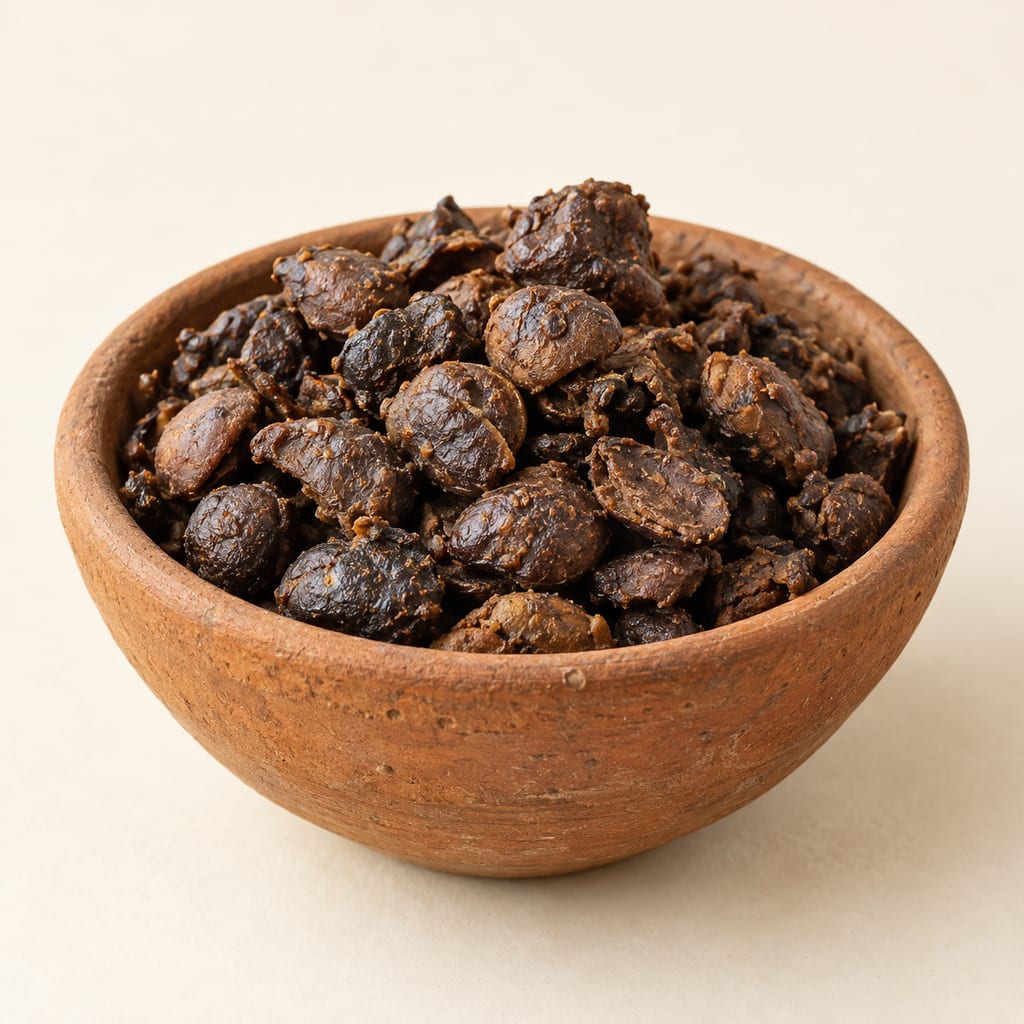
A Burkina Faso alkaline fermentation of African locust bean seeds (Parkia biglobosa), used to season sauces and cooked grain dishes. Local process details vary, and the sources do not give a measured household batch.
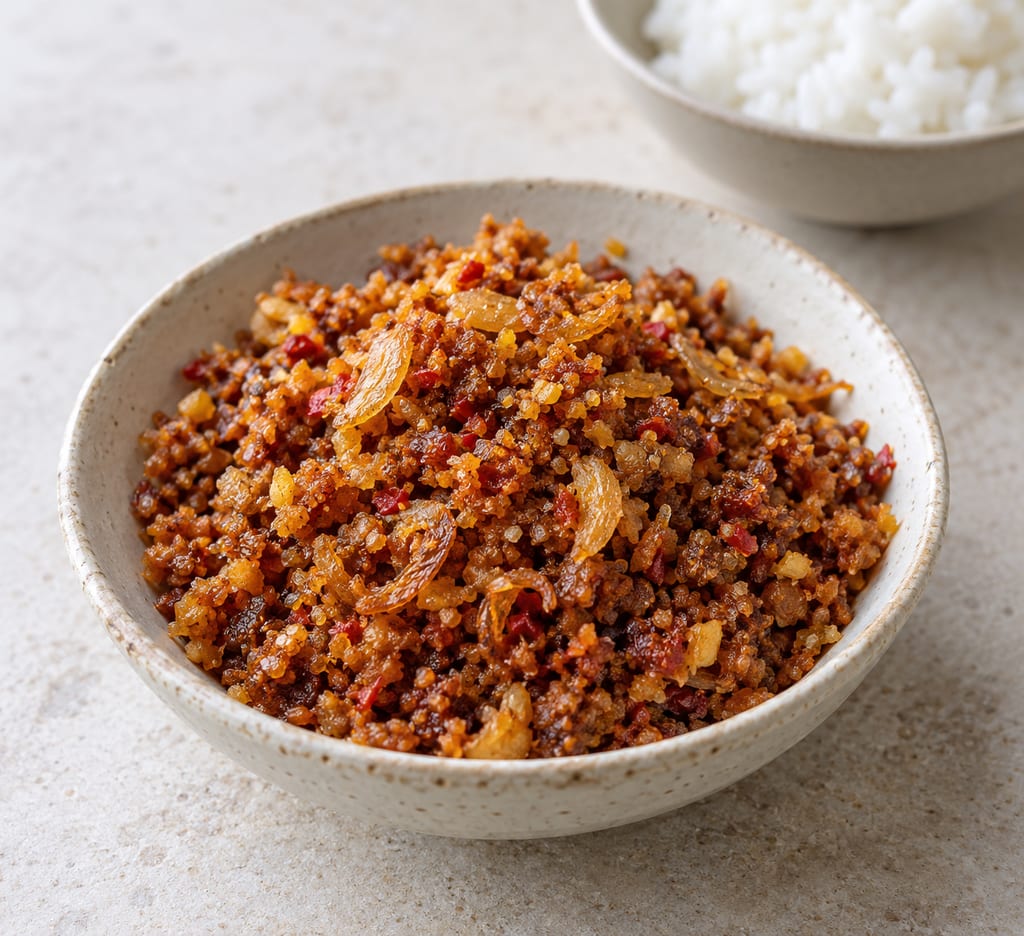
A Myanmar relish of dried shrimp, fried eschalot and garlic, chilli, turmeric, tamarind and ngapi. Naomi Duguid’s published recipe makes about 1 cup; it contains crustacean shellfish.
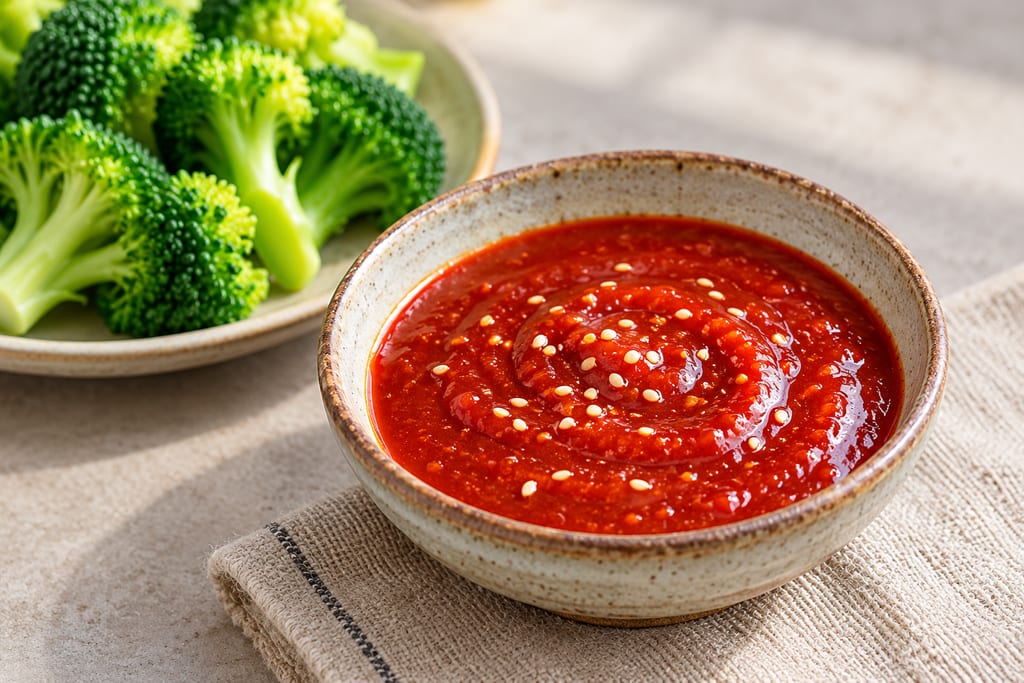
Chogochujang is a Korean sweet-sour sauce made by seasoning gochujang with vinegar and sugar. This development batch adds water and toasted sesame seeds, with optional garlic for the portion being served.
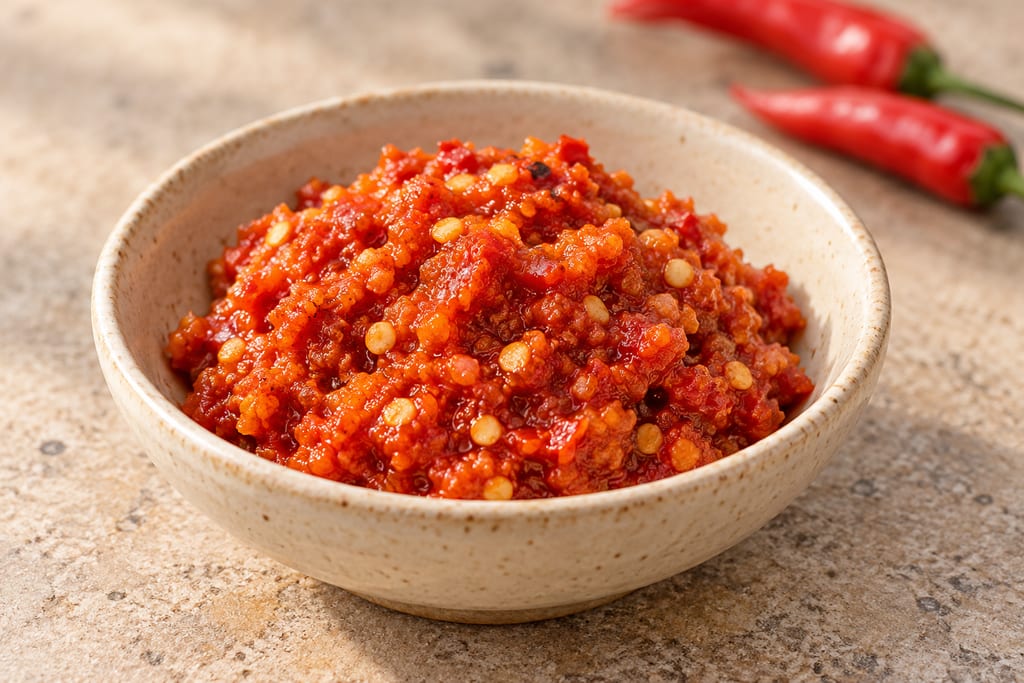
Dinanche, or donne' dinanche, is a Chamorro hot pepper paste of crushed chillies that Guam cooks use on its own or stir into fina'denne'. Its versions range from pepper alone to ones with eggplant, miso or coconut milk.
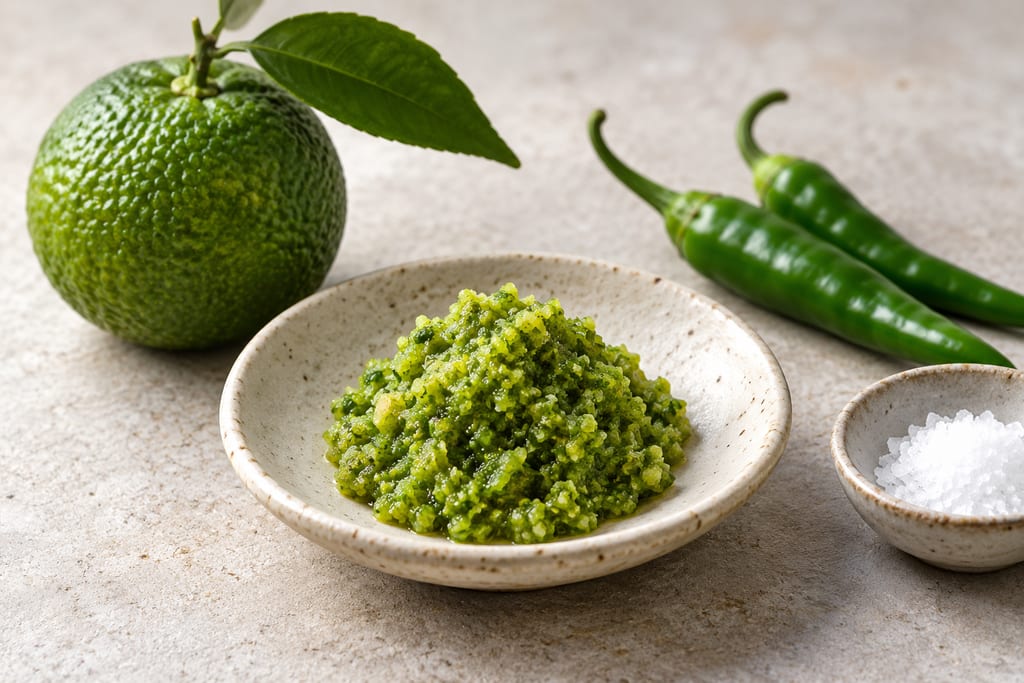
A fresh, uncooked yuzu and green chilli paste inspired by Kyushu’s yuzu kosho, made here as an untested small-batch seasoning rather than a preservation formula.
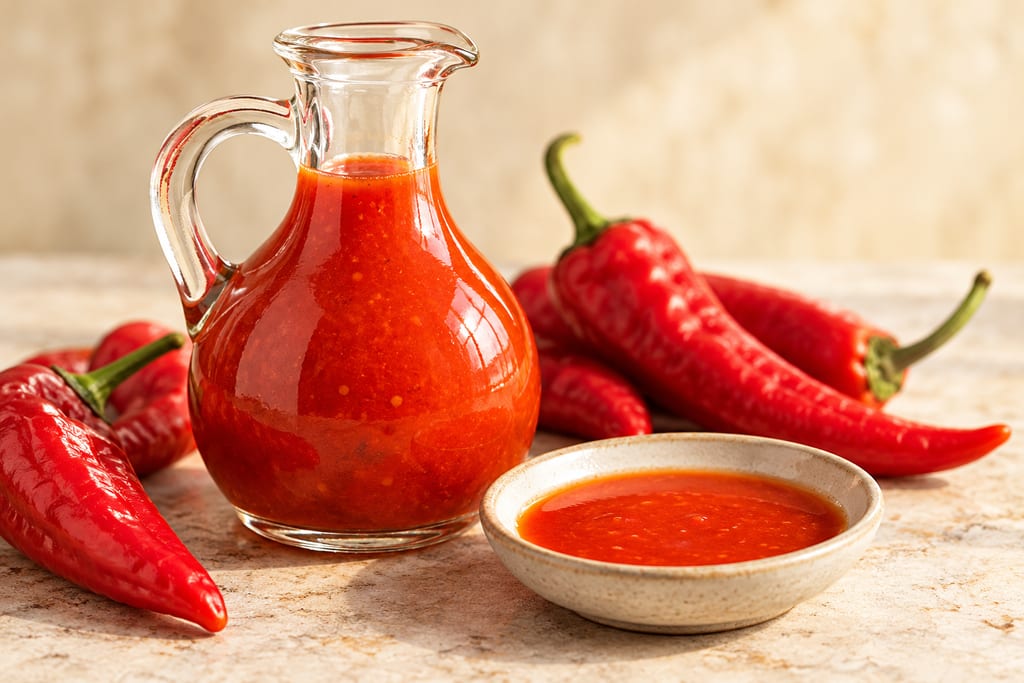
Fresh hot peppers ferment beneath a measured salt brine, then become a bright, tangy sauce blended from the peppers and their liquor.
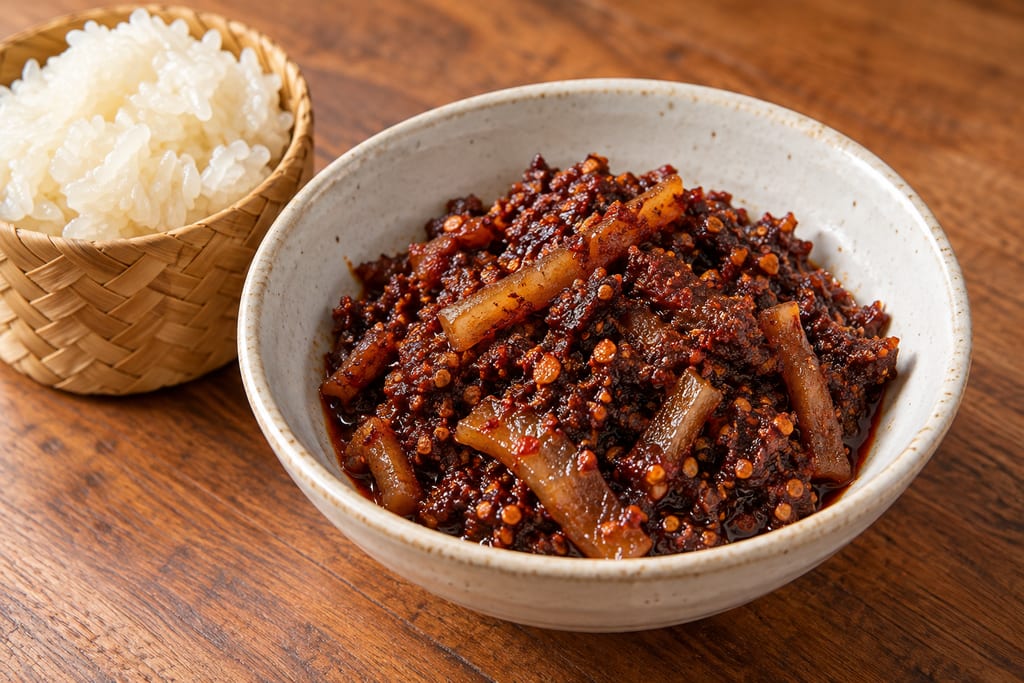
Jeow bong is a Lao paste of dried chilli, shallot, garlic and galangal cooked with buffalo or cow skin, a Luang Prabang specialty eaten with sticky rice and grilled meat.
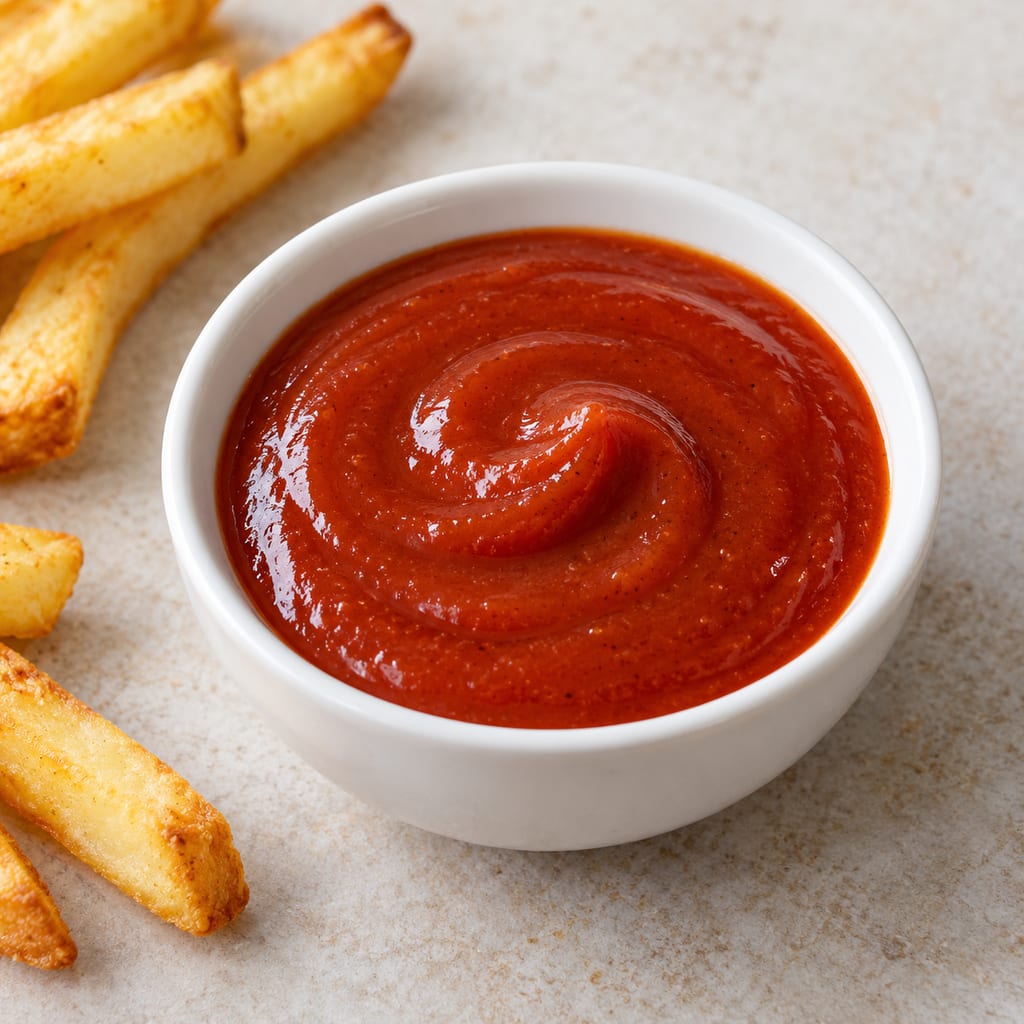
A modern tomato condiment sharpened with the spicy, savoury tang associated with kimchi; this measured version whisk-mixes prepared ketchup and commercial kimchi seasoning.
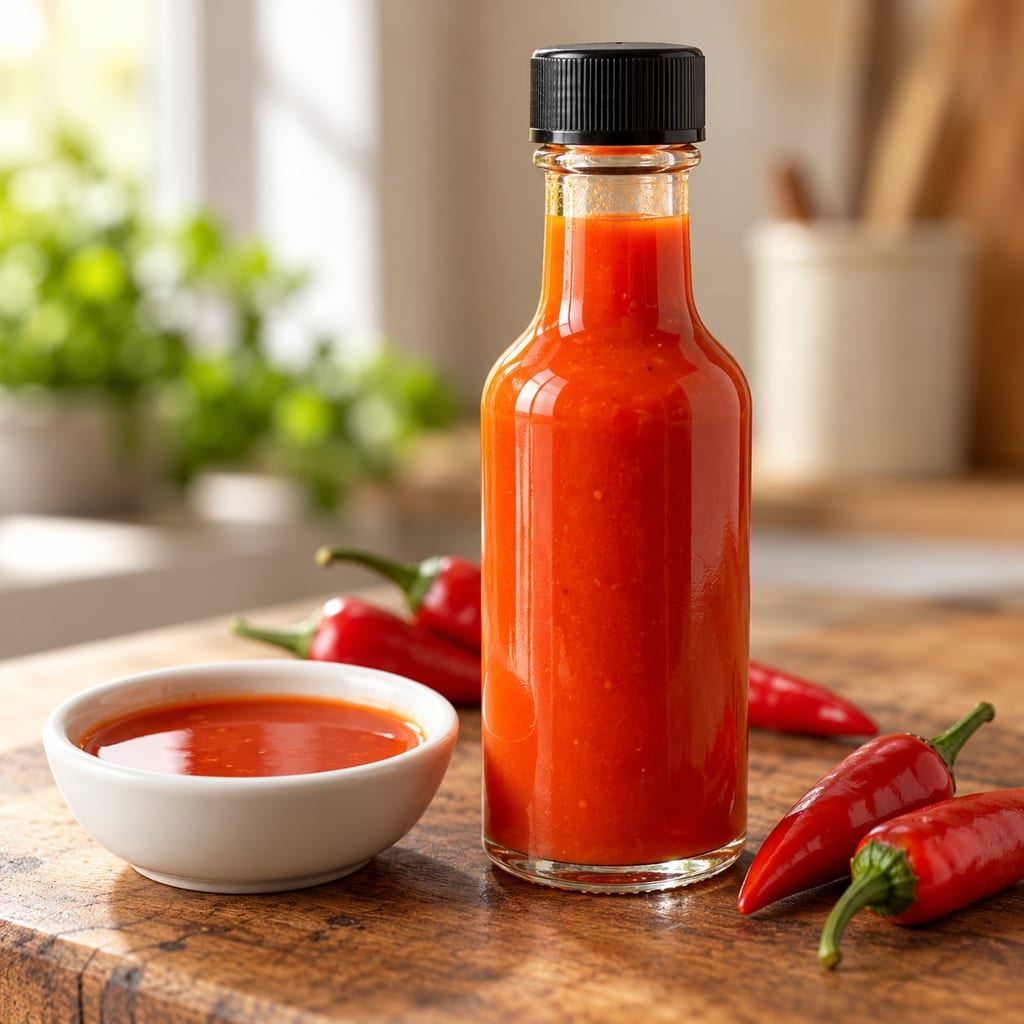
Documentary account of Louisiana pepper sauces, using TABASCO's published barrel-aged commercial process as one specific example; the source does not provide a validated home recipe.

Soft, spreadable Calabrian pork sausage made with a great deal of red chilli and fatty pork, stuffed into natural casings, sometimes smoked and matured while staying soft.

A way to add independent temperature logging to an existing food dehydrator without changing its built-in controls or protections. It is a monitoring method, not a rewiring plan.

Pleurotus cystidiosus is the abalone mushroom, a cultivated oyster-type fungus with dark brown caps that grows more slowly and is more demanding than other Pleurotus species.

A dark, balanced vinegar from Emilia-Romagna made by combining cooked or concentrated grape must with wine vinegar, then acetifying and refining it in wood under a protected specification.

A living dairy inoculum that starts controlled cream fermentation, developing acidity and aroma before sour cream or cultured butter is finished.

A small electric incubator holds jars at a selected temperature for yogurt and other documented warm food preparations. Controls, capacity and vessel arrangement vary by model.

Adygean salt is a seasoned table salt associated with Adygea and the wider North Caucasian culinary tradition. Salt is blended with garlic and a variable selection of herbs and spices; the exact mix depends on the named style and maker.

The African Caesar-group mushroom, Amanita masasiensis, is a wild ectomycorrhizal species of central and southern African woodlands, eaten locally. The genus contains deadly poisonous species, so identification needs care.
No community contributions have been published for this entry yet.
Sign in to contribute. Published comments and photos are free to read.
African Journal of BiotechnologyRecipe · Process · Geography
Volatile compounds of maari, a fermented product from baobab (Adansonia digitata L.) seedsThree producers in Pousghuin, Zorgho, Burkina Faso used their own procedure; seeds boiled about 36 h, ash lye added after 24 h, first fermentation 72 h at 30–35°C in a basket, mash pounded and moulded with more lye, second fermentation about 24 h, then a drying sequence including initial steam cooking; final product dark brown, sticky and strongly aromatic.
Cited in: What Maari is; The documented producer process; Process variation; Geography, history and use; Equipment and quantities; Research gaps
International Journal of Food Microbiology / PubMedHistory · Microbiology · Geography
Microorganisms associated with Maari, a Baobab seed fermented productStudy sampled four Burkina Faso sites; microbial populations changed during fermentation and varied in retail products.
Cited in: What Maari is; Process variation; Microbiology and safety; Geography, history and use; Equipment and quantities; Research gaps
International Journal of Food Microbiology / PubMedFood safety · Microbiology
Inhibition of Bacillus cereus growth by bacteriocin producing Bacillus subtilis isolated from fermented baobab seeds (maari) is substrate dependentAuthors report that B. cereus occasionally occurs in spontaneous maari fermentations; antimicrobial activity of tested B. subtilis strains was substrate-dependent and not detected in whole cooked or 10% ground baobab seeds in tested conditions. This does not establish a safe household control.
Cited in: Microbiology and safety; Geography, history and use; Research gaps
International Journal of Food Microbiology / PubMedFood safety
Characteristics and phylogeny of Bacillus cereus strains isolated from Maari, a traditional West African food condimentB. cereus was isolated from raw materials, seed mash at stages during fermentation, and final product; supports a specific hazard and need not assume fermentation alone controls it.
FAO AGRISProcess · Fermentation research
Biochemical changes associated with the fermentation of baobab seeds in Maari: An alkaline fermented seeds condiment from western Africa2015 study reports changing free amino-acid concentrations during fermentation and variation across production sites; it does not provide a validated home endpoint.
Cited in: Microbiology and safety; Research gaps
Slow Food Foundation for BiodiversityDistinction
OtonpienouOtonpienou is a distinct baobab-seed condiment associated with Eastern Burkina Faso; its separately described process and location are not assigned to Maari.
Cited in: What Maari is; Process variation; Research gaps
U.S. Food and Drug AdministrationFood safety
BAM: Quantitative Analysis for Cereulide in Food ProductsFDA states that cereulide is a pre-formed toxin produced by some Bacillus cereus strains and is resistant to heat and acid. This is general hazard context; it does not establish cereulide in Maari samples or a Maari-specific safety outcome.
Cited in: Microbiology and safety