
Barmbrack
An Irish fruit-studded yeast loaf, associated in a contemporary cultural account with Halloween and often served fresh or toasted with butter.
 FermenteaWhere food goes to change
Modern adaptation
A modern tomato condiment sharpened with the spicy, savoury tang associated with kimchi; this measured version whisk-mixes prepared ketchup and commercial kimchi seasoning.
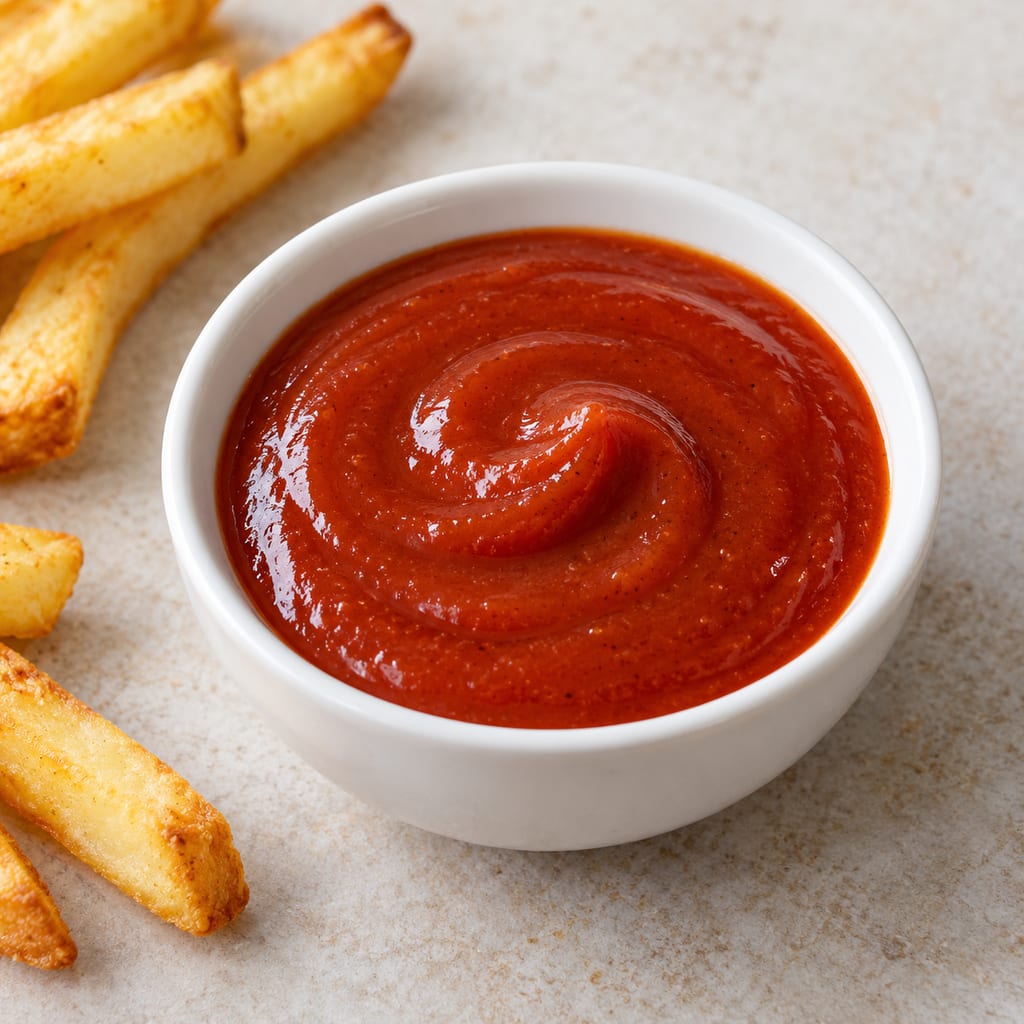
The word ketchup covers a family of sauces that changed as it travelled. Earlier Asian sauces traded under names such as ke-tsiap were fish-based and savoury; British cooks adapted the idea with local ingredients, including mushrooms and walnuts. Tomato ketchup became a later branch of that family. Its familiar sweetness and smooth tomato body grew through nineteenth-century American domestic recipes and industrial bottling, rather than arriving as an unchanged ancient formula.
By the early twentieth century ketchup was no longer just a household preserve. Food factories, canneries, sanitation campaigns and debates about spoilage shaped what went into bottles and what consumers expected from the sauce. The Library of Congress account of the Bittings’ investigations into ketchup manufacture shows that industrial consistency and food handling became part of ketchup’s story as much as its ingredients. These histories matter here because kimchi ketchup adds a new seasoning direction to an already adaptable condiment; it does not replace one fixed, timeless recipe.
No historical source consulted identifies the first kimchi ketchup or gives the category a birthplace. The available examples are modern branded sauces and a foodservice mixing formula, so the fairest account begins with those documented forms rather than attaching the sauce to an older Korean or American tradition.
A sauce sold as ketchup therefore carries a history of adaptation rather than one universal formula. Before tomatoes became its familiar base, cooks and traders used fish, mushrooms, walnuts and other ingredients to make savoury bottled sauces. Tomato ketchup later joined this repertoire as tomato growing, home preserving and factory bottling expanded. The change in base altered the sauce’s color and texture as well as its flavour, while later industrial production made sweetness, acidity and consistency more predictable. Kimchi ketchup fits this long pattern of reinterpretation, but its modern branding alone cannot tell us where or when the first example appeared.
Kimchi, 김치, is a Korean family of seasoned preserved vegetables, not a single cabbage formula. Historical Korean word forms include older names that developed into the modern word; the history of the word is not proof of one exact first recipe. Kimchi preparations have varied by vegetable, seasoning and place, and today’s familiar forms sit within a much broader tradition.
UNESCO’s record of kimjang describes the late-autumn practice of making and sharing enough kimchi to carry households through winter. It records seasonal preparation, differences between regions and the passing of household methods between generations. The practice joins food preservation to cooperation and exchange. Kimchi ketchup uses the flavour vocabulary of this living food tradition, but a squeeze-bottle sauce is not itself kimjang and should not be mistaken for a traditional Korean kimchi preparation.
The distinction is useful when reading product labels. One sauce may contain fermented kimchi; another may use a prepared kimchi-style seasoning or borrow the sharp heat of gochugaru, spring onion, garlic and ginger. They can all be sold as kimchi ketchup while making different claims about what is actually in the bottle.
The UNESCO record also makes clear that kimjang was not a single recipe day. Households gathered different ingredients across seasons, coordinated the work around autumn weather and shared the finished kimchi with relatives, neighbours and people in need. Its social work is part of its meaning. That context helps separate the older preserved vegetable tradition from a contemporary sauce that borrows kimchi’s flavour for sandwiches and fried foods. The newer condiment can invite people to taste a familiar fermented seasoning in a different setting without standing in for the dishes and communal practice from which its name draws inspiration.
In kimchi, lactic-acid bacteria use available sugars and produce organic acids and other metabolites. That activity changes acidity and flavour over time, while the microbial community shifts as conditions change. A 2024 study comparing kimchi at 4°C and 10–15°C found different bacterial and metabolite profiles, including more lactic and succinic acid and greater sugar consumption in the warmer experimental samples. Those figures describe that study; they are not a suggested household fermentation schedule.
The measured foodservice formula in this entry does not ask the cook to ferment anything. It combines prepared ketchup with a commercial product called Kimchi Prep and stops when the two are evenly whisked together. The fermentative history belongs to whichever ingredient or seasoning was fermented before it was sold. The final mixing step is physical blending, not a new microbial process.
That difference affects both technique and interpretation. A jar labelled live-cultured or naturally fermented may continue to be handled as its maker directs, but such a claim cannot be transferred to every kimchi ketchup. The Goodlok description names fermented kimchi as part of its product story, while other published products list flavouring ingredients without naming fermented cabbage. Their labels and processes must be read separately.
Ketchup supplies a smooth tomato base with the familiar sweet-sour balance of commercial versions. Its thickness helps the mixed sauce cling to fries, a burger or a sandwich rather than running off like a thin dressing. Brands differ in sweetness, acidity and texture, so the measured formula is tied to the source’s West Creek ketchup rather than a promise that every bottle tastes identical.
Kimchi Prep is the named seasoning in the foodservice formula. Its published recipe gives no ingredient panel, so this page does not guess whether it is a fermented paste, dried blend or another prepared condiment. Its role in the formula is to add the kimchi-associated sharp, savoury, spicy character. Because its composition is not disclosed in that recipe, replacing it with chopped cabbage kimchi, kimchi brine, gochujang or another sauce would change the formula rather than reproduce it.
Other makers show how wide the category can be. Chimac’s Dublin-made sauce lists tomato purée, syrup, vinegar, spring onion, gochugaru, anchovy fish sauce, onion powder, garlic and ginger; that label does not list fermented cabbage. Oh Na Mi instead describes a combination of its kimchi sauce and traditional ketchup, and its panel lists cabbage, radish, kimchi brine, tomato purée, sesame oil and soy sauce among a longer set of ingredients. These are distinct commercial approaches, not interchangeable ingredient lists for the whisked version.
The published formula is deliberately spare: 1 cup West Creek ketchup and 2 tablespoons Passport Global Flavors by Custom Culinary Kimchi Prep. Whisk the two ingredients until evenly combined. No chopping, heat, resting period or fermentation vessel appears in the method. The source gives no yield, storage duration or batch-scaling instruction, so the ratio is preserved as written.
The separate burger direction in the same source says to glaze each patty with 2 tablespoons of Korean BBQ sauce while it cooks. That is a burger service instruction, not an extra ingredient in the two-product kimchi-ketchup blend. Keeping those steps distinct prevents a reader from confusing the sauce recipe with a burger glaze or assuming the kimchi ketchup itself has to be cooked.
For a home kitchen, use the exact commercial products named if the aim is to reproduce that source’s formula. A different ketchup or a different kimchi-flavoured product may work as a personal variation, but it cannot be represented as the same measured batch when the seasoning’s formula and the substitute’s concentration are unknown.
In practice, whisking is the only operation this measured version needs. Put the ketchup and the commercial Kimchi Prep into a bowl and whisk until the seasoning is dispersed and no streaks remain. The source does not call for a blender, a simmer or a resting period, so none is added here. Its instruction is about combining two finished commercial foods, not developing body through cooking or waiting for microbial activity. The sauce is ready for the table once the mixture is even.
The formula is tied to its named supplier products because the seasoning’s strength and composition are not printed with the recipe. A different ketchup may be thinner, sweeter or more acidic, and another kimchi base may carry more brine, salt or heat. These differences can shift the finished balance even if the same spoon measures are used. The recipe therefore preserves one documented ratio and describes alternatives as separate products rather than offering a universal substitution rule.
Some products start from tomato ketchup and add a kimchi-prep base. Some mix ketchup with a separate kimchi sauce. Others build the sauce from tomato purée, vinegar, sweetener, chilli, aromatics and fish sauce, presenting kimchi through the seasoning profile rather than a named kimchi ingredient. The Goodlok product page describes tomato and fermented kimchi but gives no formula; its soybean allergen declaration is specific to that product.
These differences affect texture, sweetness, heat, saltiness, allergens and whether a maker claims live fermentation. They also change what a cook can substitute. A spoonable commercial ketchup base will not behave like a loose kimchi brine, and spring-onion seasoning will not taste exactly like napa-cabbage kimchi. When a product makes a live-culture claim or gives a storage instruction, follow its own label instead of applying that direction to another brand.
Kimchi ketchup is also a natural variation on the older ketchup habit of changing its main seasoning. Historically, the sauce family included several bases; modern makers likewise use a standard tomato condiment as a carrier for regional or restaurant-inspired flavours. That resemblance is about culinary adaptability, not an unbroken historical lineage.
One retailer traces Chimac to two Dubliners who visited Seoul in 2016, fell in love with Korean fried chicken and later developed a line of small-batch sauces. That story explains the inspiration behind one Dublin product; it is not evidence that the brand created kimchi ketchup first or that the sauce is a Korean traditional preparation. In this case the location belongs to the documented manufacturer's story, while Korea is the stated culinary inspiration.
Product pages also use different language to make the category legible. Goodlok foregrounds tomato flavour and fermented kimchi; Chimac foregrounds spring onion and Korean inspiration; Oh Na Mi describes its own kimchi sauce blended with ketchup; Vadasz emphasizes live culture and fermentation. Each description tells a reader something about that maker’s formulation, but none supplies enough evidence to reconstruct every other bottle. Compare the ingredient panel, storage instructions and actual use directions on the bottle you have, especially when you want the sauce for a cooked glaze rather than as a table condiment.
Vadasz gives a contrasting example: the maker calls its own kimchi ketchup naturally fermented and live cultured, and says it is made with the same natural ingredients as its kimchi. That producer claim belongs to that bottle and its process. It does not establish a fermentation step for the quick whisked formula here or for products whose pages describe seasoning and mixing instead.
The sauce’s sweet tomato base and sharp, savoury heat make it an easy dip for fries and a spread for burgers or sandwiches. Goodlok also suggests grilled meats and eggs, while Chimac highlights burgers and skin-on chips. The Oh Na Mi product page extends the idea to hot dogs, stir-fries, fried rice and noodles. These are makers’ suggested uses, not a single traditional pairing list.
Use a small amount first when adding it to a dish already seasoned with salt, chilli or fermented sauces. As a table condiment, serve it cold or at the temperature specified on the package; as a glaze, use a recipe that gives a cooking direction for the exact product. The foodservice source’s Korean BBQ glaze is a separate operation and should not be read as a heating instruction for every bottled kimchi ketchup.
The difference between a dip, spread and cooking sauce is practical. A thick ketchup-based version stays on a crisp surface; a more fluid kimchi-sauce blend can disperse through rice or noodles. Stirring it into a dish changes how broadly the heat and acidity are distributed, so adding it gradually is easier to control than pouring in a full serving at once.
The source examples also show how this sauce can cross from a table condiment into a cooking ingredient. A burger counter may brush a separately named barbecue sauce onto a patty while it cooks; a home cook may fold a kimchi-ketchup product through fried rice or noodles. These uses call for different amounts and timing, but the source pages do not supply one common formula for them. Keep the measured base as a dip or spread, and follow each product's published cooking use when taking it further.
The best first comparison is to taste the sauce beside, rather than hidden inside, the food it seasons. A dip leaves the ketchup’s tomato sweetness and the kimchi-derived pungency concentrated in one bite; a spread gives a thinner layer across bread or a burger; a spoon stirred through rice carries the flavour into more of the dish. These serving forms are useful ways to understand a product’s texture, not a claim that one particular consistency is traditional. The source maker suggestions support all of these uses across different commercial variants.
Commercial examples are not allergen-equivalent. Goodlok declares soybeans; Chimac’s listed fish sauce contains anchovy and its rice-wine vinegar includes wheat; the Oh Na Mi list includes soy sauce made with soybeans and wheat. Check the package in hand, particularly when serving guests with allergies or dietary restrictions. Do not infer a product’s full ingredients from its name or from another maker’s version.
The foodservice formula does not provide a storage period for the mixed sauce. The Oh Na Mi page gives its own handling directions and says the opened product has a limited shelf life without naming a duration. Those instructions belong to that product. This entry therefore gives no universal storage limit and no home fermentation or preservation advice.
Kimchi ketchup is a contemporary condiment category joining tomato ketchup with kimchi, kimchi-derived seasoning or kimchi-style flavours. The sources do not identify its first maker, date or birthplace.
Scaling: source batch only
Goodlok declares soybeans in its own product. Commercial kimchi condiments differ; check the ingredient and allergen labels of the specific products used.
A retailer identifies Chimac's version as made in Dublin; this is one documented commercial variant, not the origin of the whole category.
An Irish fruit-studded yeast loaf, associated in a contemporary cultural account with Halloween and often served fresh or toasted with butter.
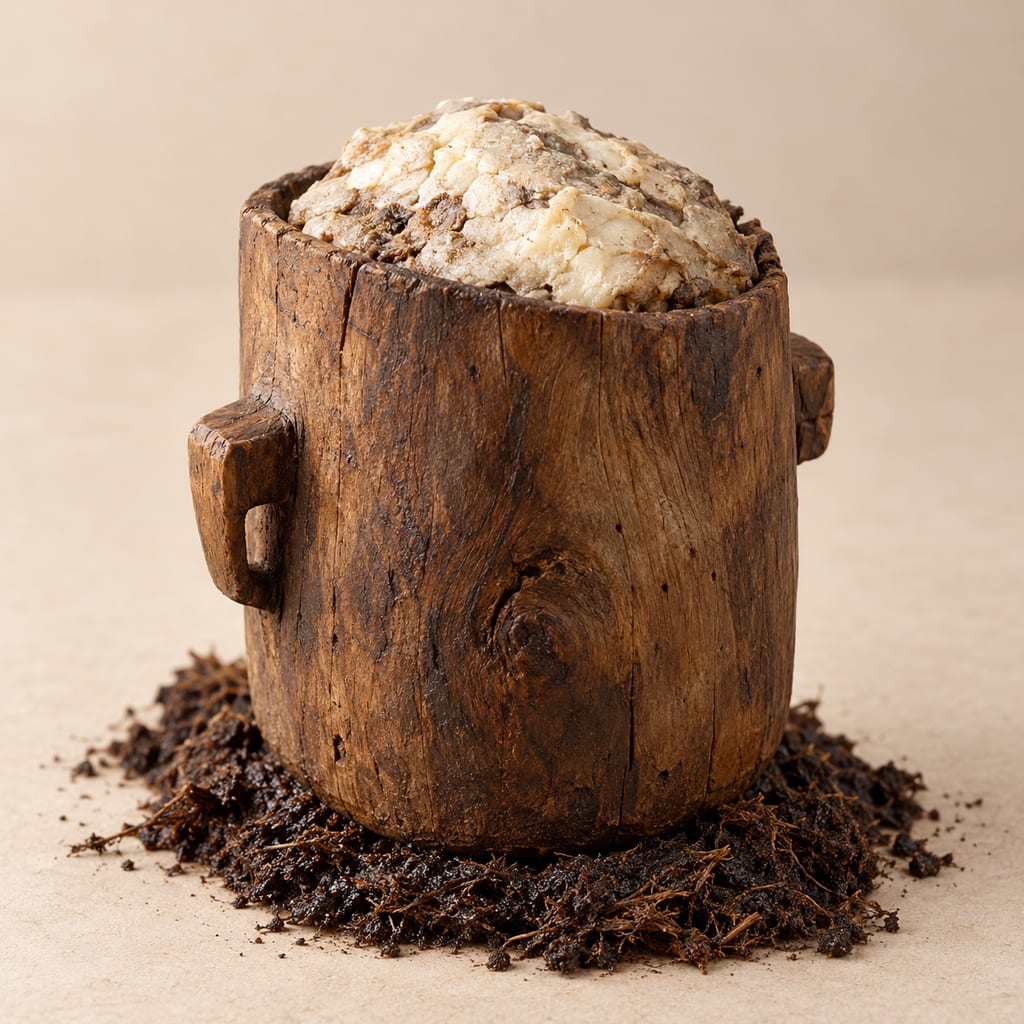
Butter packed into wooden containers and buried in cool, wet peat in Ireland and Scotland, a practice known from finds that may reflect storage, concealment or ritual.
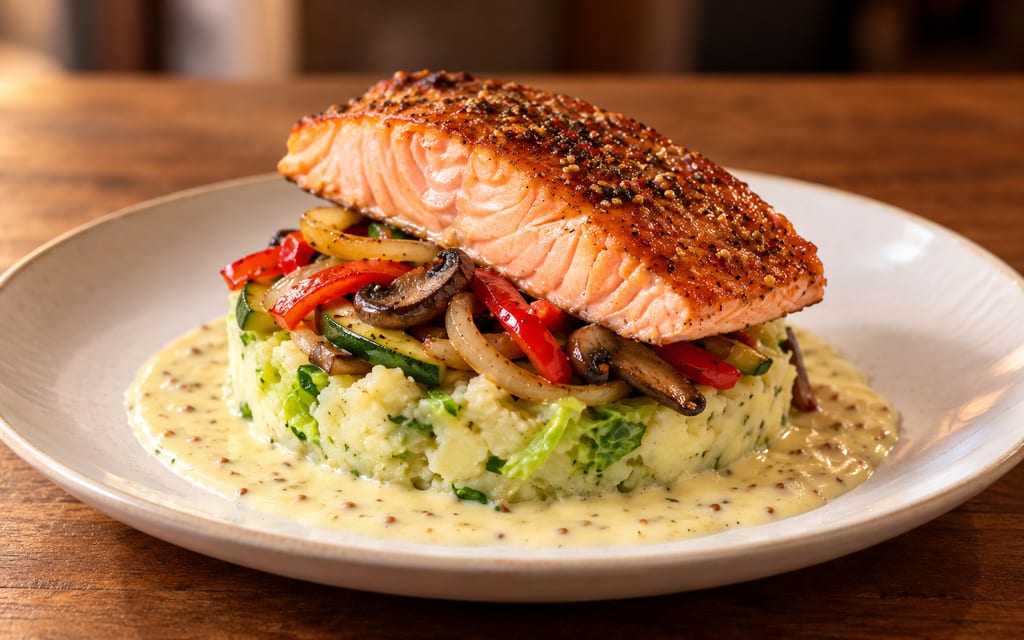
Burren Smokehouse’s colcannon dish serves hot-smoked salmon with mashed potatoes, cabbage, stir-fried vegetables and mustard cream.

A source-specific Irish quick loaf of plain flour, bicarbonate of soda, buttermilk, egg and butter, mixed briefly and baked as a cross-marked round.
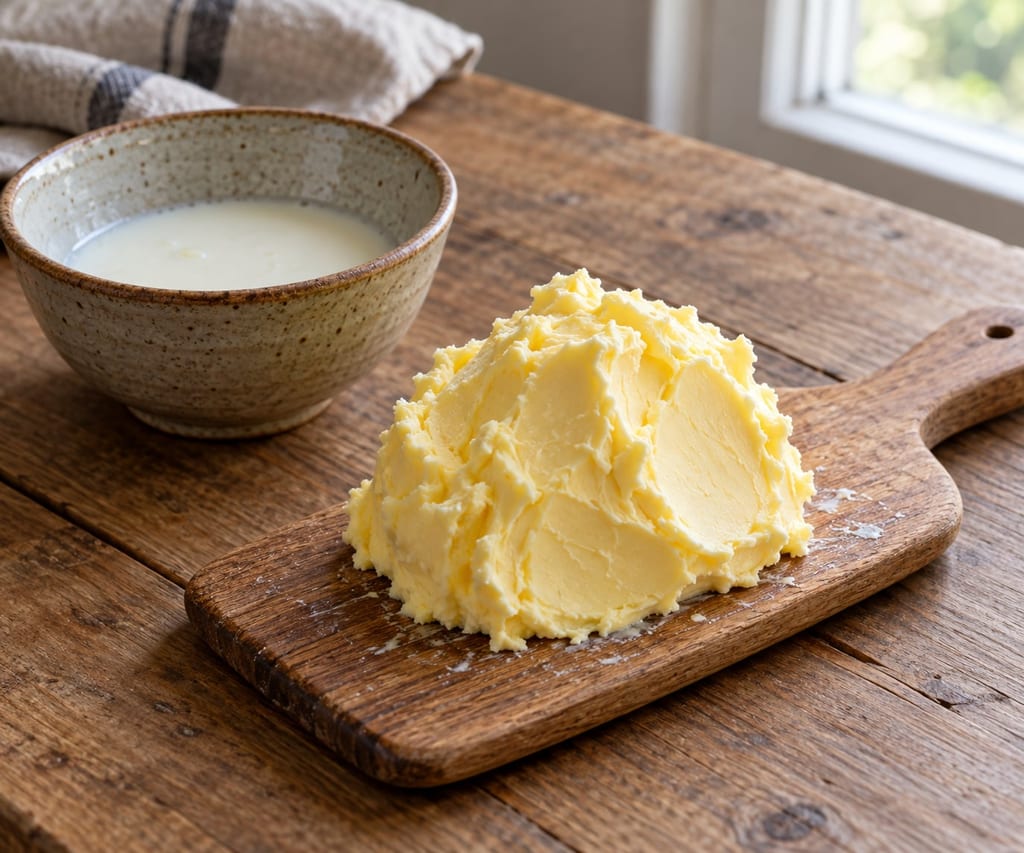
Cream agitated until its fat globules join into a solid mass and release buttermilk, the dairy fat a northern household could concentrate, salt and keep when milk itself would not last.

A home adaptation of a measured blaa recipe attributed to Waterford baker Dermot Walsh: plain yeast dough, rounded portions flattened on a tray, generously dusted with flour and baked. Home baking does not confer Waterford Blaa PGI status.
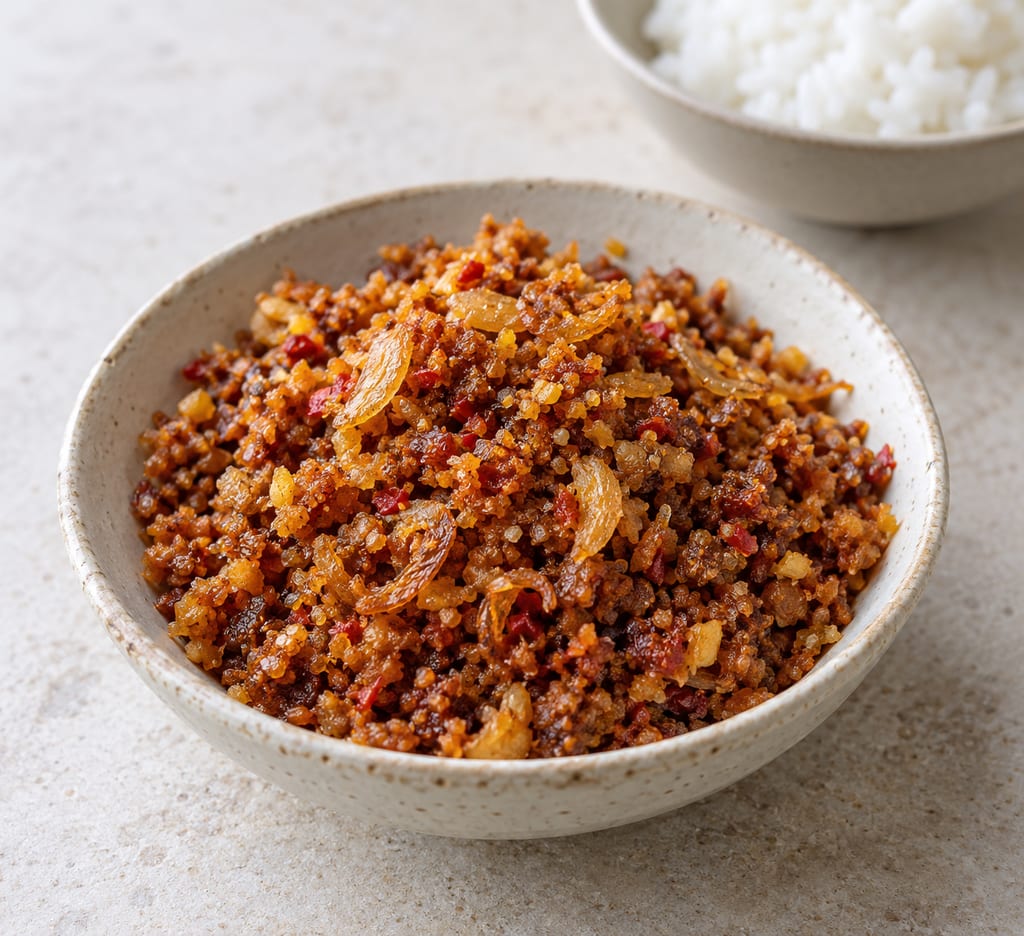
A Myanmar relish of dried shrimp, fried eschalot and garlic, chilli, turmeric, tamarind and ngapi. Naomi Duguid’s published recipe makes about 1 cup; it contains crustacean shellfish.
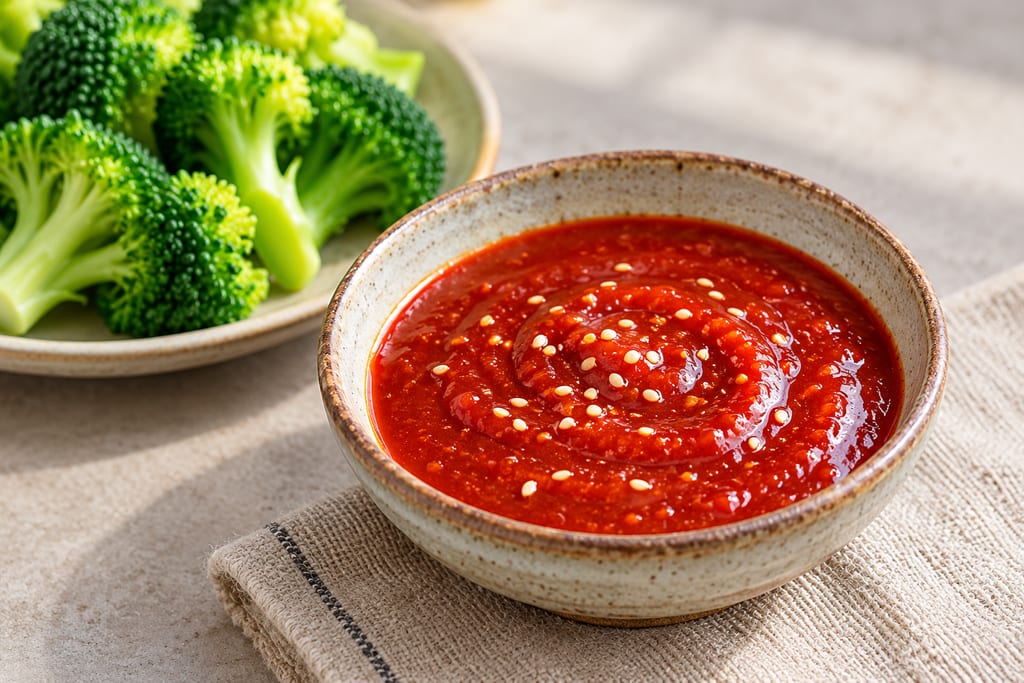
Chogochujang is a Korean sweet-sour sauce made by seasoning gochujang with vinegar and sugar. This development batch adds water and toasted sesame seeds, with optional garlic for the portion being served.
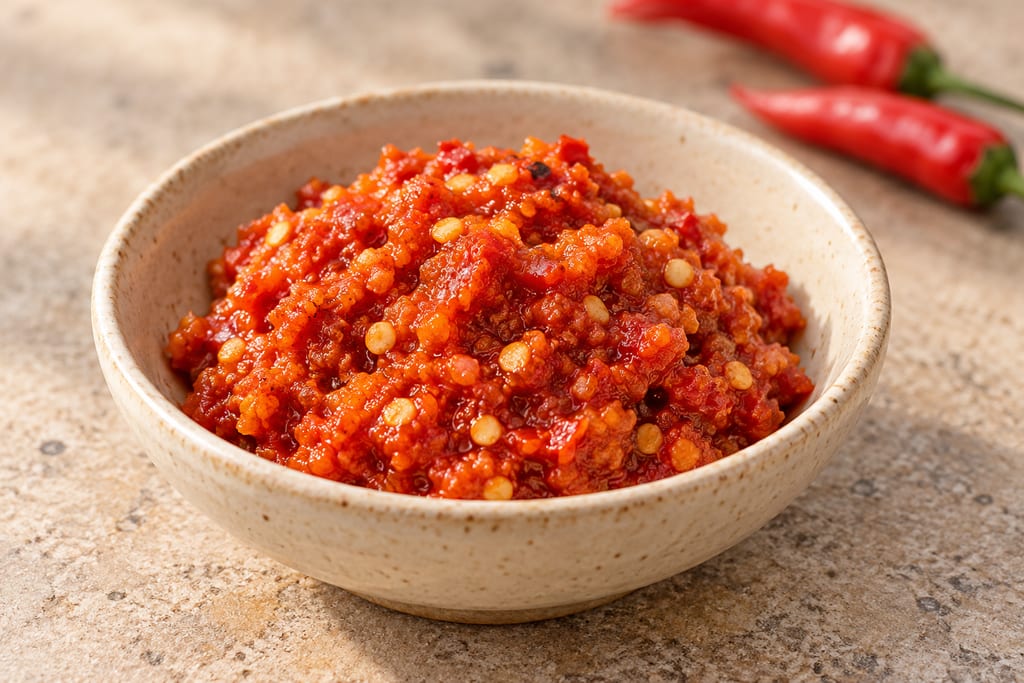
Dinanche, or donne' dinanche, is a Chamorro hot pepper paste of crushed chillies that Guam cooks use on its own or stir into fina'denne'. Its versions range from pepper alone to ones with eggplant, miso or coconut milk.
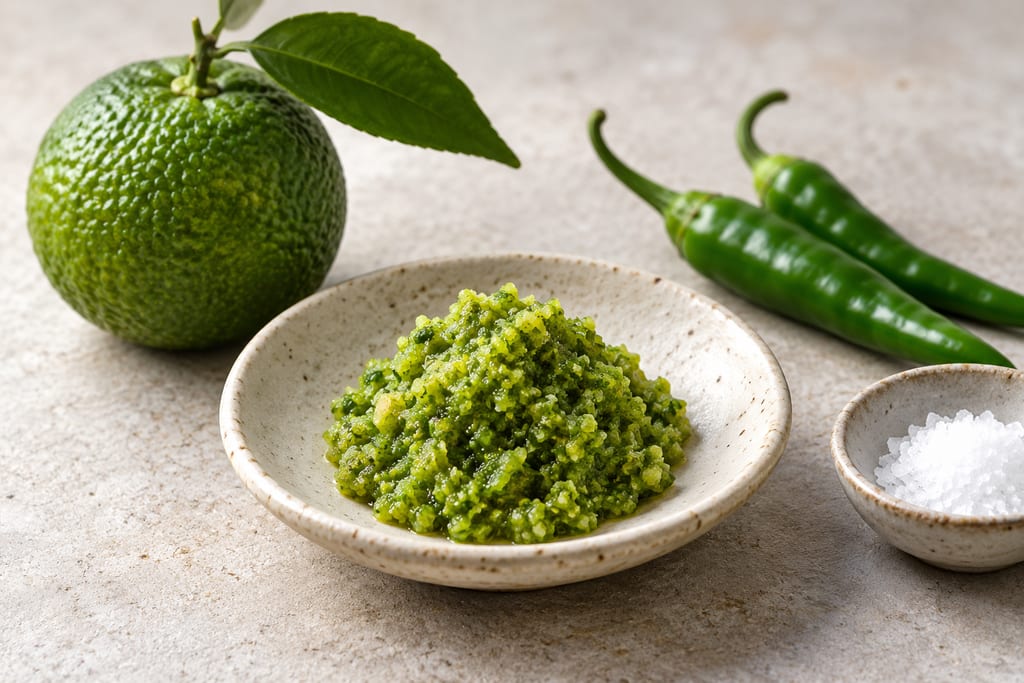
A fresh, uncooked yuzu and green chilli paste inspired by Kyushu’s yuzu kosho, made here as an untested small-batch seasoning rather than a preservation formula.
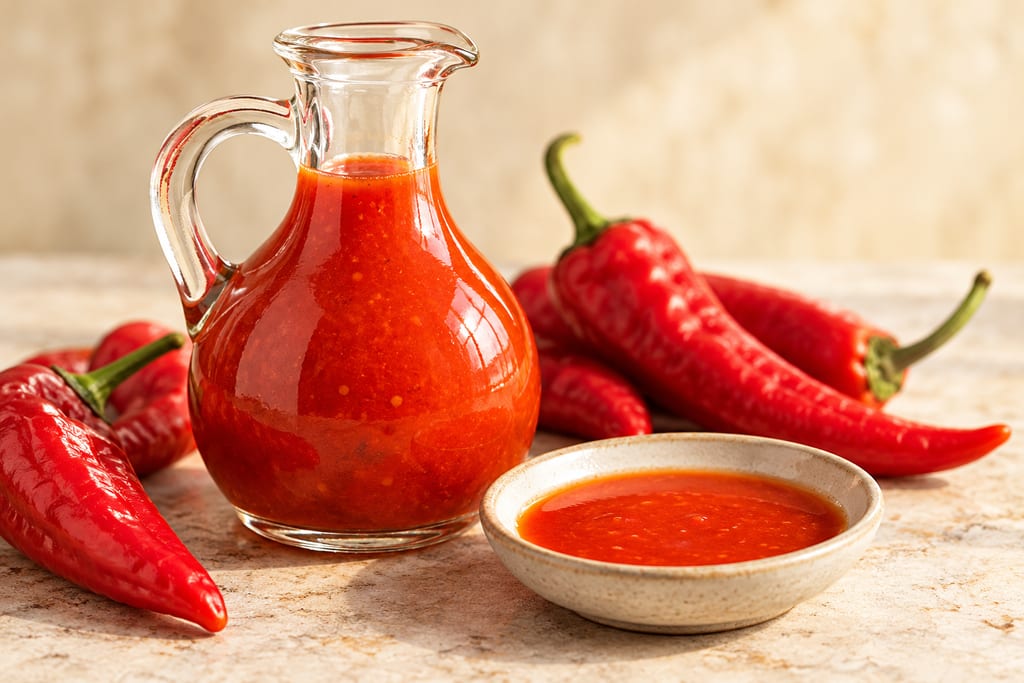
Fresh hot peppers ferment beneath a measured salt brine, then become a bright, tangy sauce blended from the peppers and their liquor.
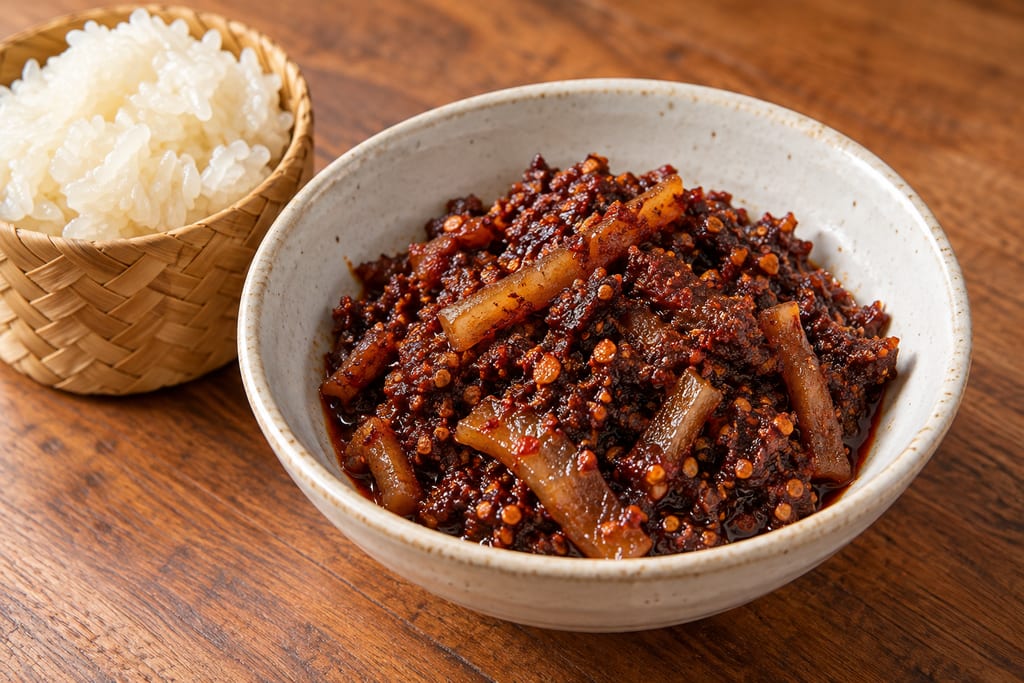
Jeow bong is a Lao paste of dried chilli, shallot, garlic and galangal cooked with buffalo or cow skin, a Luang Prabang specialty eaten with sticky rice and grilled meat.
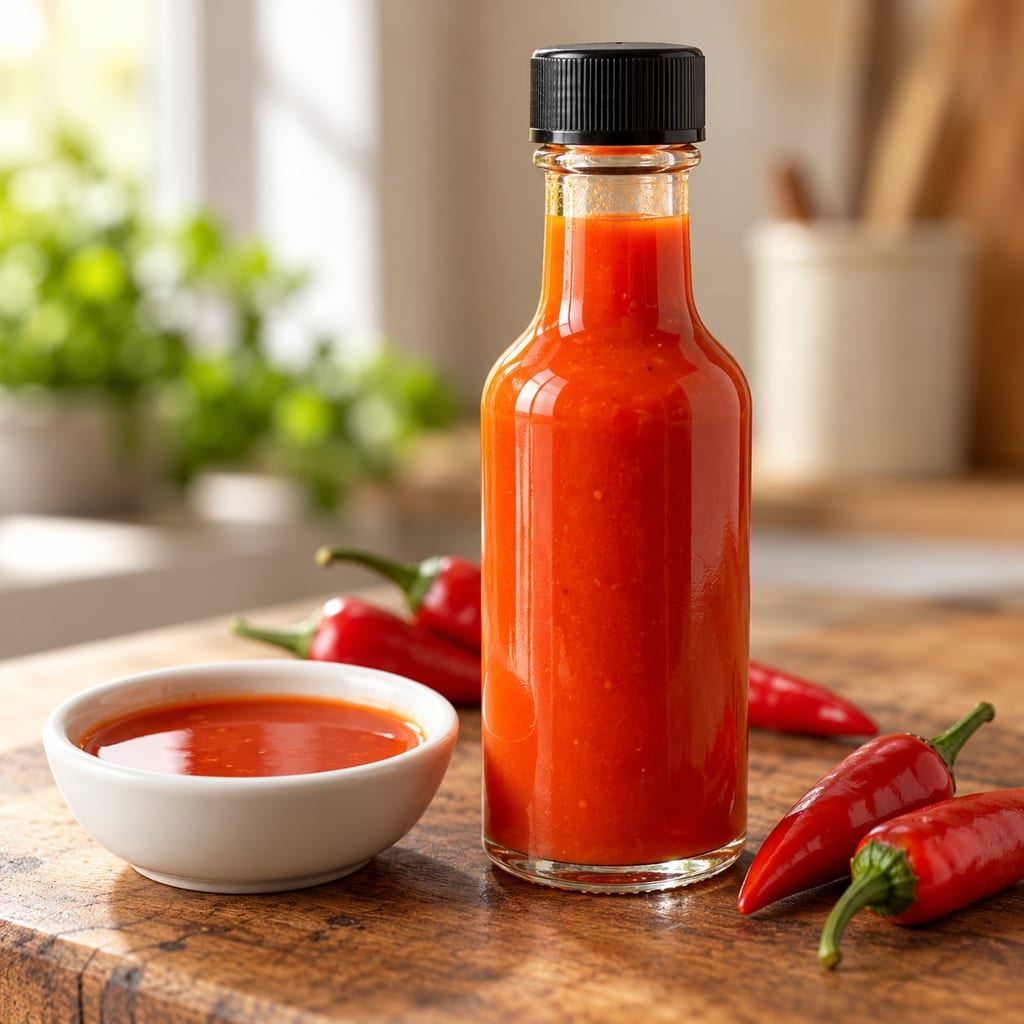
Documentary account of Louisiana pepper sauces, using TABASCO's published barrel-aged commercial process as one specific example; the source does not provide a validated home recipe.
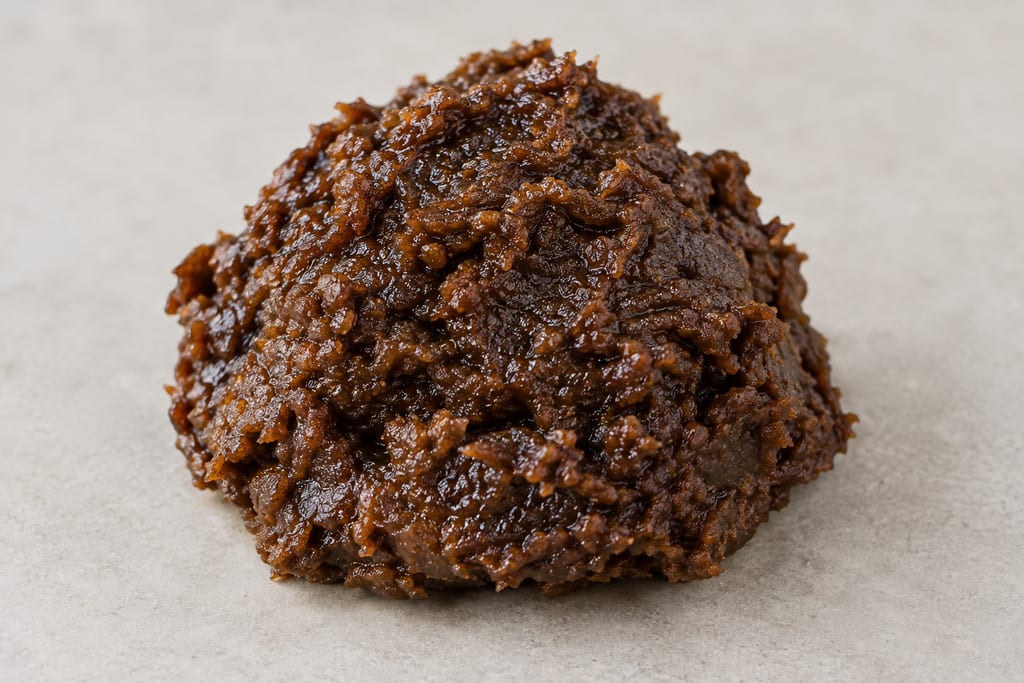
Maari is a Burkinabè baobab-seed condiment documented in producer studies. This is a non-instructional account, not a home recipe: sources vary, omit key process details and establish no validated safety control.
No community contributions have been published for this entry yet.
Sign in to contribute. Published comments and photos are free to read.
Goodlok PlayProduct description · Uses · Allergen
Kimchi ketchupThe producer describes a tomato condiment with fermented kimchi, tomato flavour and a spicy, tangy profile.
The page suggests burgers, fries, sandwiches, grilled meats, eggs, dips, sauces and marinades.
The maker's page declares soybean allergen 6.
The page does not disclose a formula, further fermentation stage, storage direction or production location.
Cited in: Two long condiment histories meet; Kimchi brings its own Korean history; Fermentation happens before the sauce is mixed; Different bottles, different versions; How to serve it; Labels and limits
Performance FoodserviceMethod · Ingredients · Uses
Kimchi KetchupThe published formula uses 1 cup West Creek ketchup and 2 tablespoons Passport Global Flavors by Custom Culinary Kimchi Prep.
The instruction is to whisk both ingredients until evenly combined.
The recipe separately directs users to glaze burger patties with Korean BBQ sauce while they cook; this is not part of the two-ingredient condiment formula.
Cited in: Two long condiment histories meet; Kimchi brings its own Korean history; Fermentation happens before the sauce is mixed; Why the two ingredients work; A measured foodservice version; Different bottles, different versions; How to serve it; Labels and limits
UNESCO Intangible Cultural HeritageHistory · Geography · Culture
Kimjang, making and sharing kimchi in the Republic of KoreaKimjang was inscribed in 2013.
The nomination describes an annual cycle of gathering seasonal ingredients and making and sharing large quantities of kimchi in late autumn.
It records regional differences and household transmission of methods, and identifies kimchi as a Korean preserved-vegetable food.
This source documents kimchi and kimjang, not kimchi ketchup.
Cited in: Kimchi brings its own Korean history
Journal of the Korean Society of Food CultureHistory · Language
Etymology of Kimchi: Philological Approach and Historical PerspectiveThe philological study traces Korean word forms including dihi, dimchΛi and thimchΛi in historical texts.
It distinguishes the history of the word from claims about a single first recipe.
Cited in: Kimchi brings its own Korean history
Smithsonian MagazineHistory
How Ketchup Revolutionized How Food Is Grown, Processed and RegulatedKetchup has a longer history than tomato ketchup, with Asian fish-sauce antecedents and later British adaptations using other bases.
Tomato ketchup became associated with American domestic and industrial production, and industrialization shaped its sweet-sour profile.
This account does not document a first kimchi-ketchup recipe.
Cited in: Two long condiment histories meet; Different bottles, different versions
Library of Congress, Inside AdamsHistory · Technique
Playing Ketchup: A Condiment and the Pure Food MovementThe Bittings studied commercial ketchup production and spoilage for the U.S. Bureau of Chemistry.
The article describes early industrial sanitation and preservation issues and refers to the Bittings' 1909 USDA Bulletin 119.
This is ketchup context, not evidence for kimchi ketchup's origin or process.
Cited in: Two long condiment histories meet
Heliyon / PubMedScience
Temperature impact on microbial and metabolic profiles in kimchi fermentationA 2024 study compared kimchi samples fermented at 4°C with samples at 10–15°C.
The study observed differences in lactic-acid-bacteria composition and metabolites, including increased lactic and succinic acids and sugar consumption at the higher temperatures tested.
The experimental temperatures are not instructions for this sauce and do not validate a household kimchi process.
Cited in: Fermentation happens before the sauce is mixed
Burford Garden CompanyVariation · Ingredients · Geography · Uses
Kimchi KetchupThe retailer says Chimac's sauce is inspired by Korea and made in Dublin.
Its listed formulation includes tomato purée, golden syrup, rice-wine vinegar, spring onion, gochugaru, anchovy fish sauce, onion powder, garlic and ginger.
It is recommended for burgers and chips and is not suitable for vegetarians because it contains fish sauce.
The ingredient list does not name fermented cabbage kimchi.
Cited in: Kimchi brings its own Korean history; Fermentation happens before the sauce is mixed; Why the two ingredients work; Different bottles, different versions; How to serve it; Labels and limits
Oh Na Mi Korean KitchenVariation · Ingredients · Uses
Oh Na Mi Kimchi KetchupThe maker describes a blend of its kimchi sauce and traditional ketchup.
The product ingredient list includes Chinese cabbage, chili pepper, radish, garlic, ginger, leek, kimchi brine, vinegar, salt, tomato purée, sesame oil, soy sauce, white pepper, sugar, modified corn starch and rice flour.
The maker suggests burgers, hot dogs, fries, stir-fries, fried rice and noodles.
The page says to shake before use and keep in a cool, dry place; after opening it says shelf life is limited without giving a duration.
Cited in: Kimchi brings its own Korean history; Fermentation happens before the sauce is mixed; Why the two ingredients work; Different bottles, different versions; How to serve it; Labels and limits
VadaszVariation · Fermentation claim · Uses
Kimchi KetchupVadasz describes its own kimchi ketchup as naturally fermented and live cultured.
The maker says it uses the same natural ingredients as its Vadasz kimchi and recommends it for burgers, hot dogs and other foods.
The page gives no home fermentation formula or fermentation time and temperature.
Cited in: Different bottles, different versions