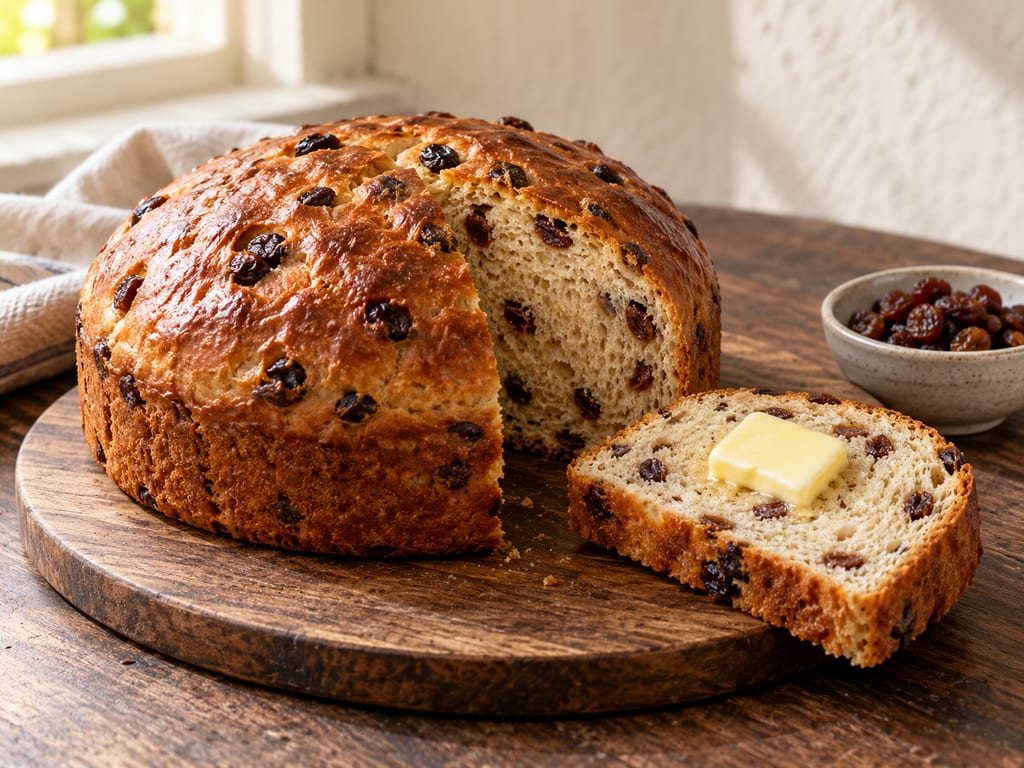
Barmbrack
An Irish fruit-studded yeast loaf, associated in a contemporary cultural account with Halloween and often served fresh or toasted with butter.
 FermenteaWhere food goes to change
Waterford Blaa · Blaa (Waterford baker’s home adaptation)
A home adaptation of a measured blaa recipe attributed to Waterford baker Dermot Walsh: plain yeast dough, rounded portions flattened on a tray, generously dusted with flour and baked. Home baking does not confer Waterford Blaa PGI status.
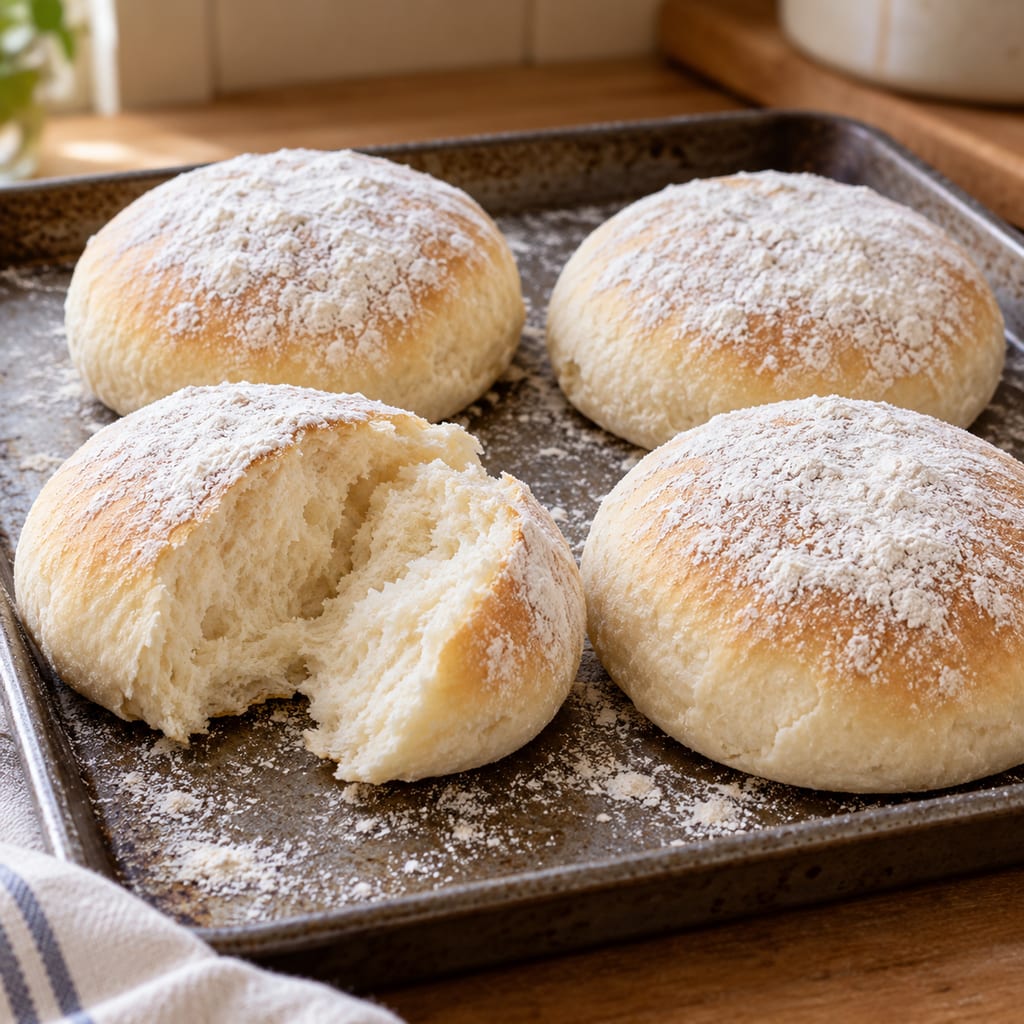
Waterford Blaa/Blaa is a registered Protected Geographical Indication (PGI). The official specification describes a soft white roll with a heavily flour-dusted top and round or square forms. The dough is handled and floured at several stages; rolls are flattened by hand, grouped on trays so they expand together, and baked without steam. The defined production area is County Waterford and two adjoining electoral divisions in South County Kilkenny. These features, and the requirement that production take place within the area under the PGI specification, distinguish the protected product from generic white rolls.
This page gives a separate home adaptation attributed by The Irish Times to Waterford baker Dermot Walsh. It retains the measured formula and home method published there; it is not the full PGI process. Walsh's version uses a 3-ounce portion, while the specification lists 40–65 g rolls, and its ingredient list does not include the dough conditioner listed in the PGI specification. A home-made roll from this recipe is not Waterford Blaa PGI-certified. The recipe is useful as a source-specific home adaptation, not as a certification guide.
The name's history is less certain than the product's current regional definition. Reports repeat a Huguenot association and competing French-word explanations for the name, but the origin is not established by the protected specification. This entry leaves the period unknown rather than treating those accounts as proof.
The exact age and origin of the blaa are not established here. The EU specification protects the Waterford Blaa/Blaa name and defines the product, ingredients and production area. Claims about Huguenot introduction and the exact origin of the name vary by account and are not presented as settled history.
Scaling: source batch only
Flour can carry harmful bacteria; do not taste raw dough.
Hazard sourceKeep raw flour and dough away from ready-to-eat food, wash hands and utensils after handling, and bake flour-containing dough before eating.
Control sourceThis recipe is a home adaptation attributed to Waterford baker Dermot Walsh. Home baking does not establish Waterford Blaa PGI certification or compliance with its production specification.
Proofing uses the source's volume cues; it gives no dough temperature or timed first and final proof. The bake time and temperature are approximate, not a validated internal endpoint.
Area associated with Waterford Blaa PGI; this home adaptation does not establish a certified PGI product.
These adjoining areas are included in the defined Waterford Blaa PGI production geography; the home adaptation is not PGI certified.
An Irish fruit-studded yeast loaf, associated in a contemporary cultural account with Halloween and often served fresh or toasted with butter.
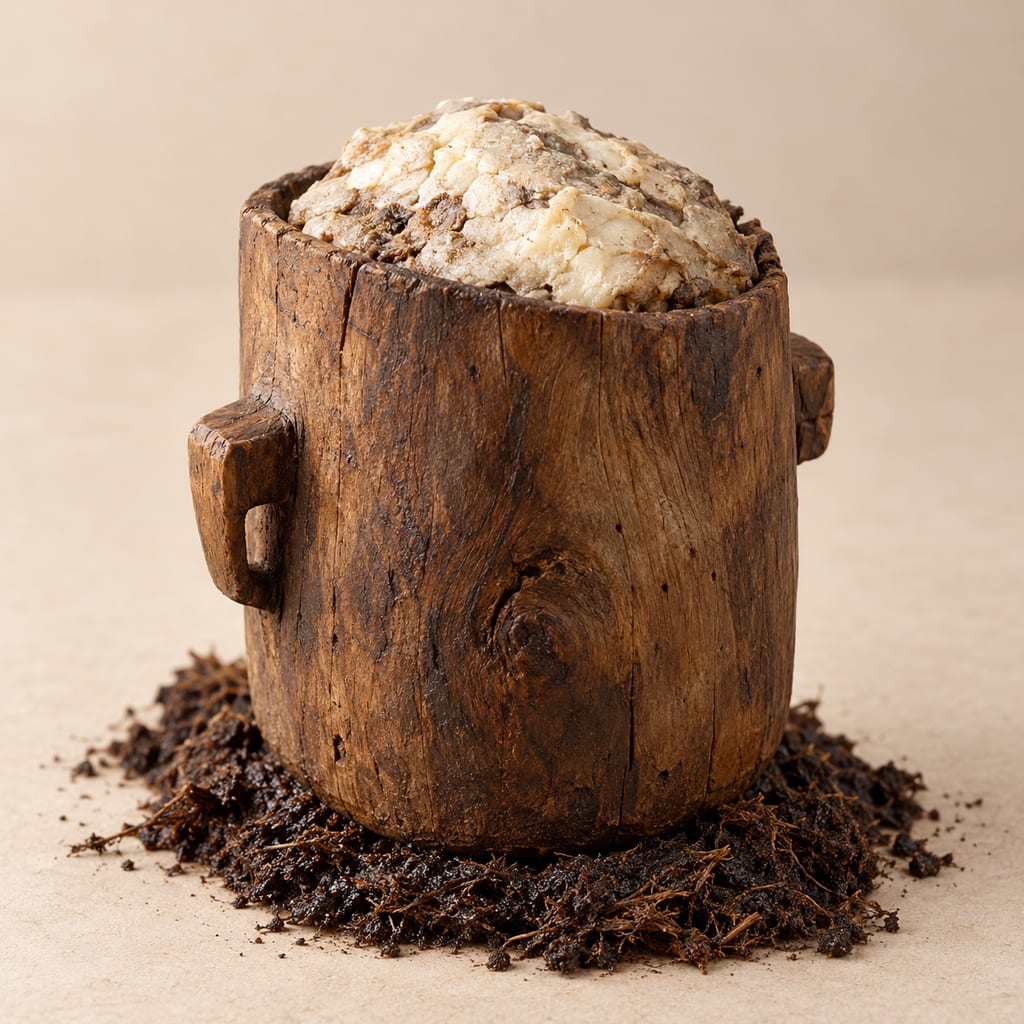
Butter packed into wooden containers and buried in cool, wet peat in Ireland and Scotland, a practice known from finds that may reflect storage, concealment or ritual.
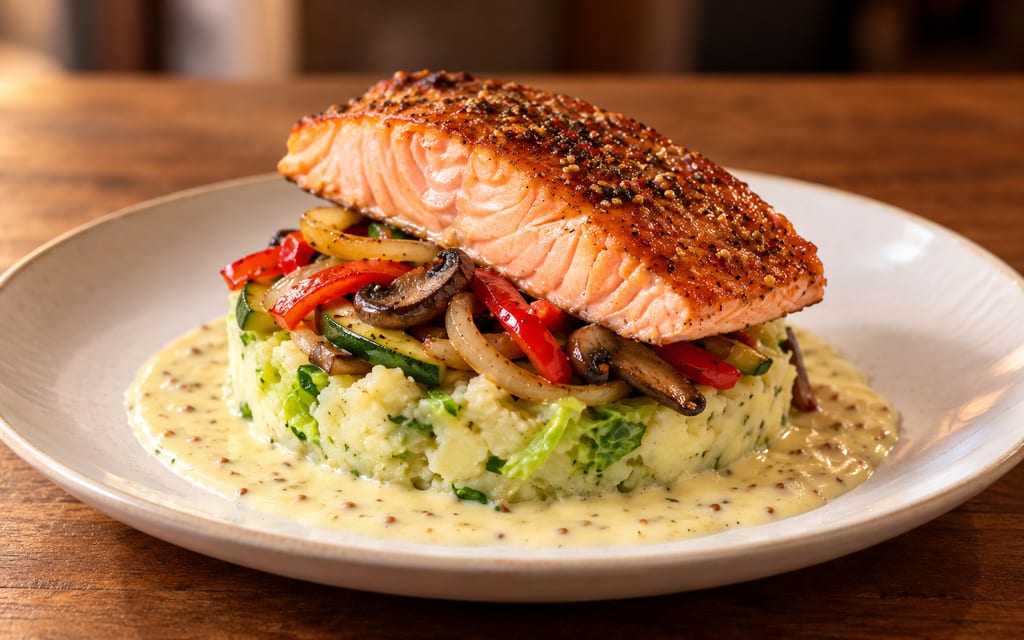
Burren Smokehouse’s colcannon dish serves hot-smoked salmon with mashed potatoes, cabbage, stir-fried vegetables and mustard cream.
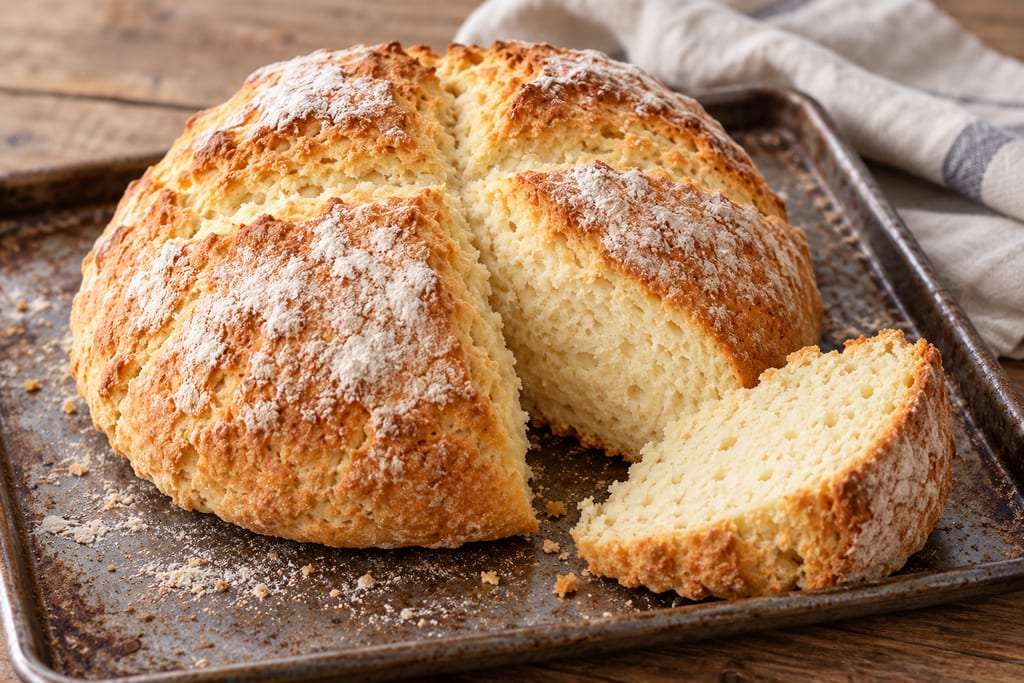
A source-specific Irish quick loaf of plain flour, bicarbonate of soda, buttermilk, egg and butter, mixed briefly and baked as a cross-marked round.
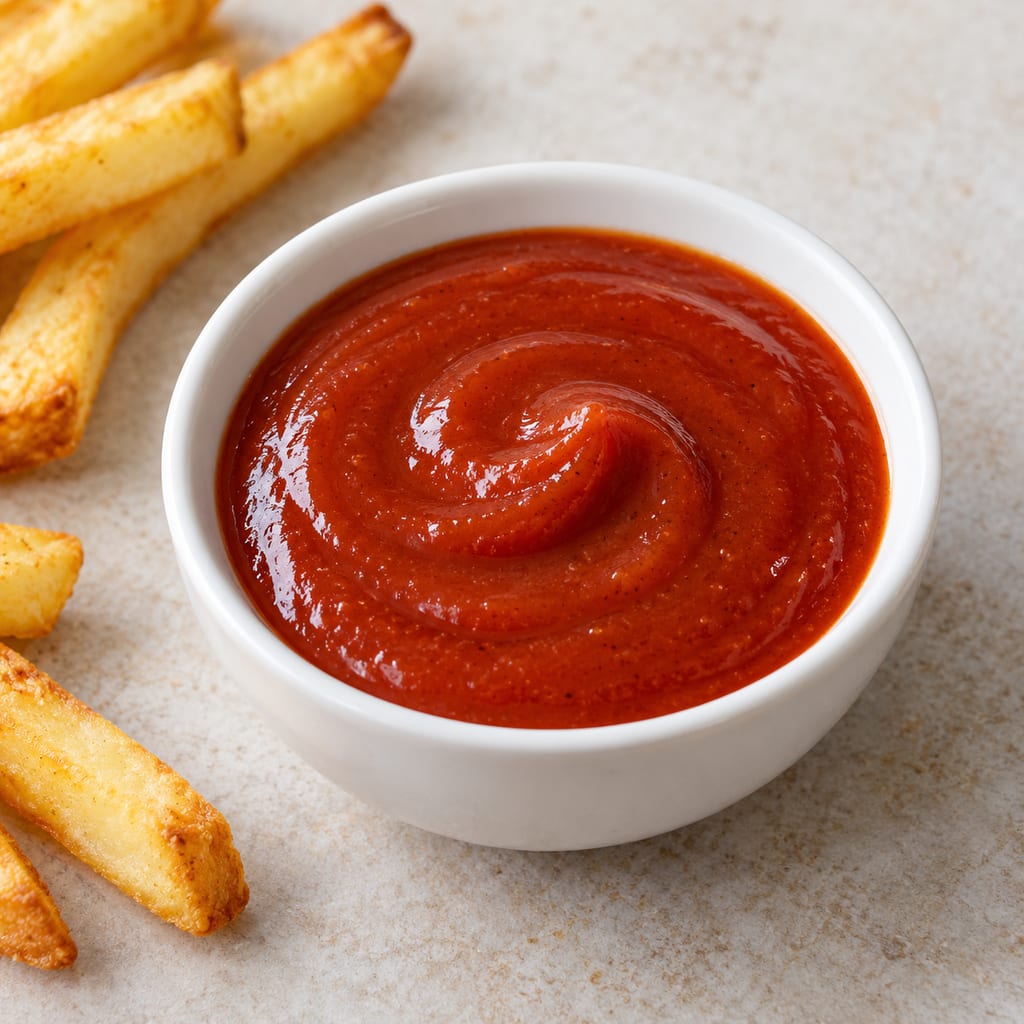
A modern tomato condiment sharpened with the spicy, savoury tang associated with kimchi; this measured version whisk-mixes prepared ketchup and commercial kimchi seasoning.
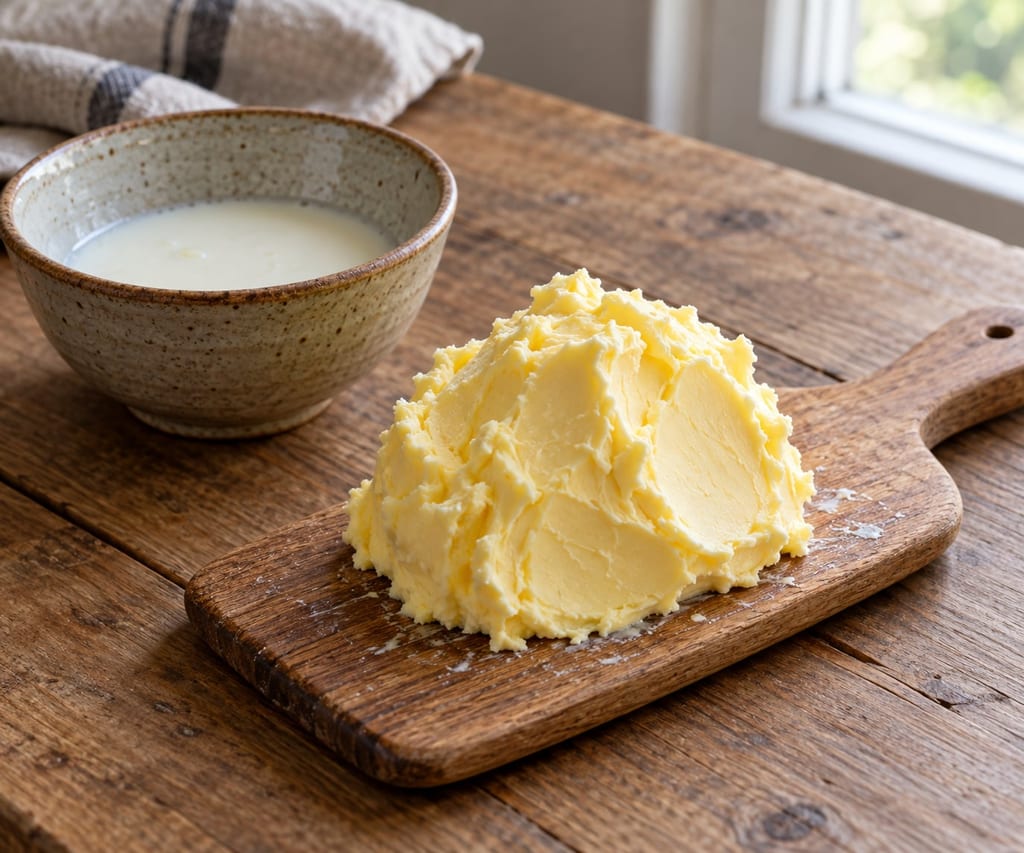
Cream agitated until its fat globules join into a solid mass and release buttermilk, the dairy fat a northern household could concentrate, salt and keep when milk itself would not last.
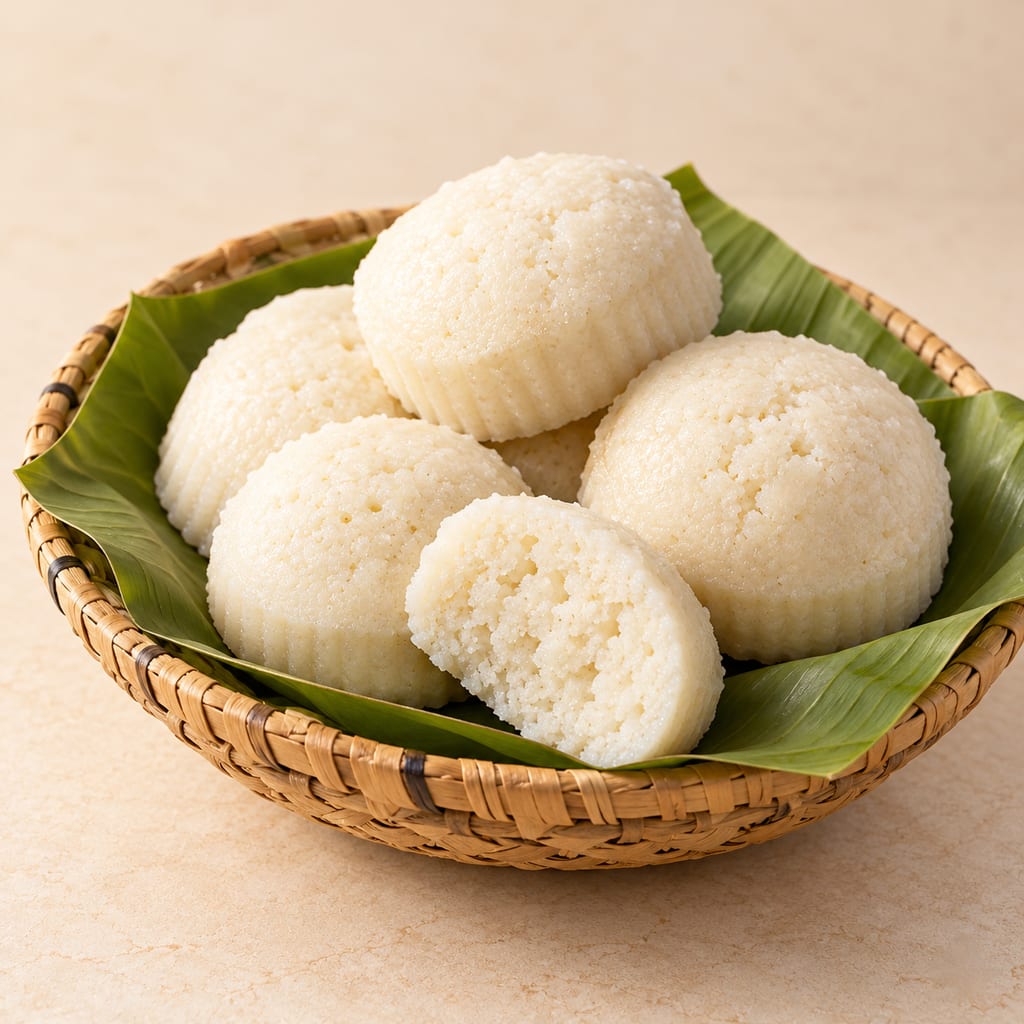
Soft, lightly tangy steamed cereal bread documented across Benin and Togo. This page gives one measured rice-flour research method; maize-based Ablo and mixed-grain versions remain distinct traditions.
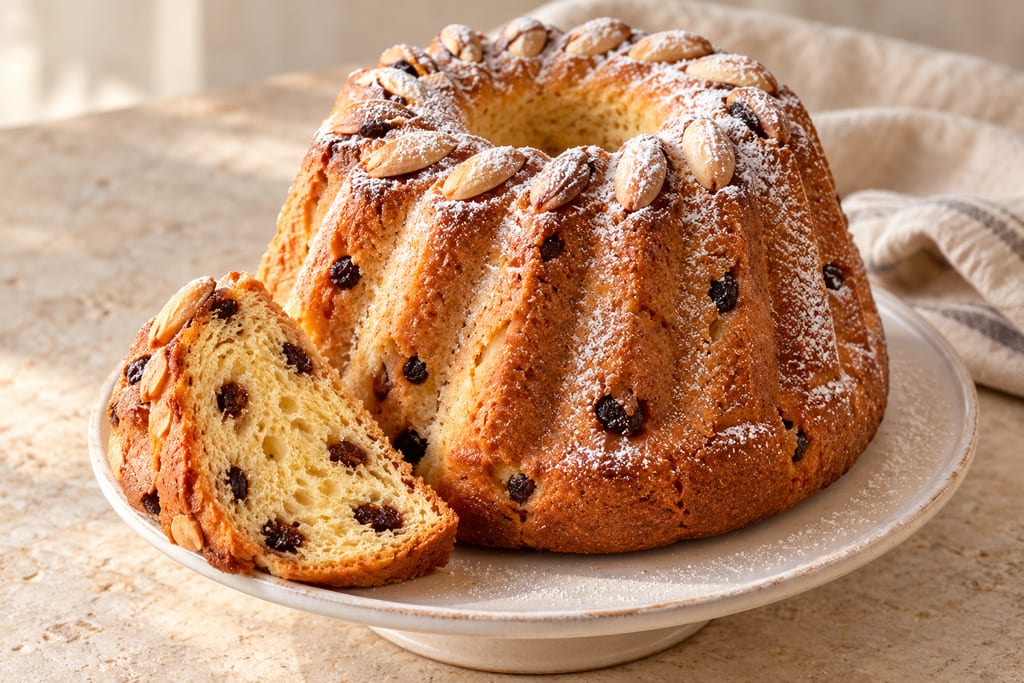
An enriched Alsatian yeast ring with raisins and almonds, kneaded with butter, proofed in a fluted mould and baked until browned.

Anpan is a soft wheat bun filled with sweet red-bean paste and finished with egg wash and black sesame. This dough rises with commercial instant yeast.
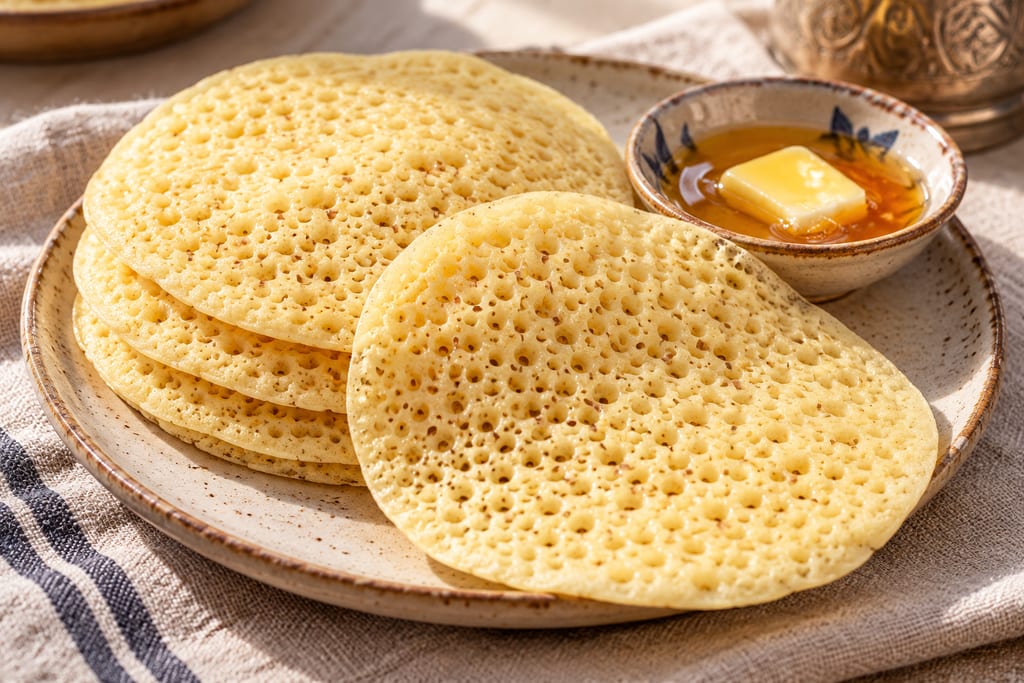
Moroccan semolina pancakes made from a thin yeast batter, rested until foamy and cooked on one side until the surface sets with a honeycomb of holes. This source-specific batch makes sixteen 5-inch pancakes.
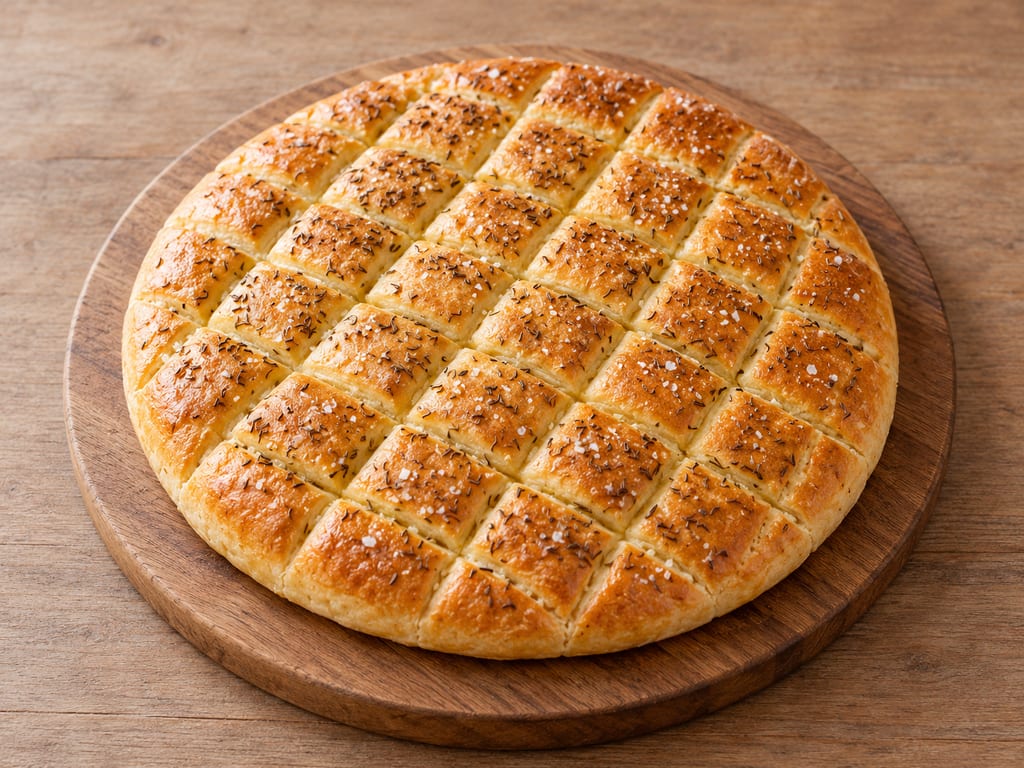
A round Slovenian flatbread scored in a grid and topped with caraway and coarse salt.
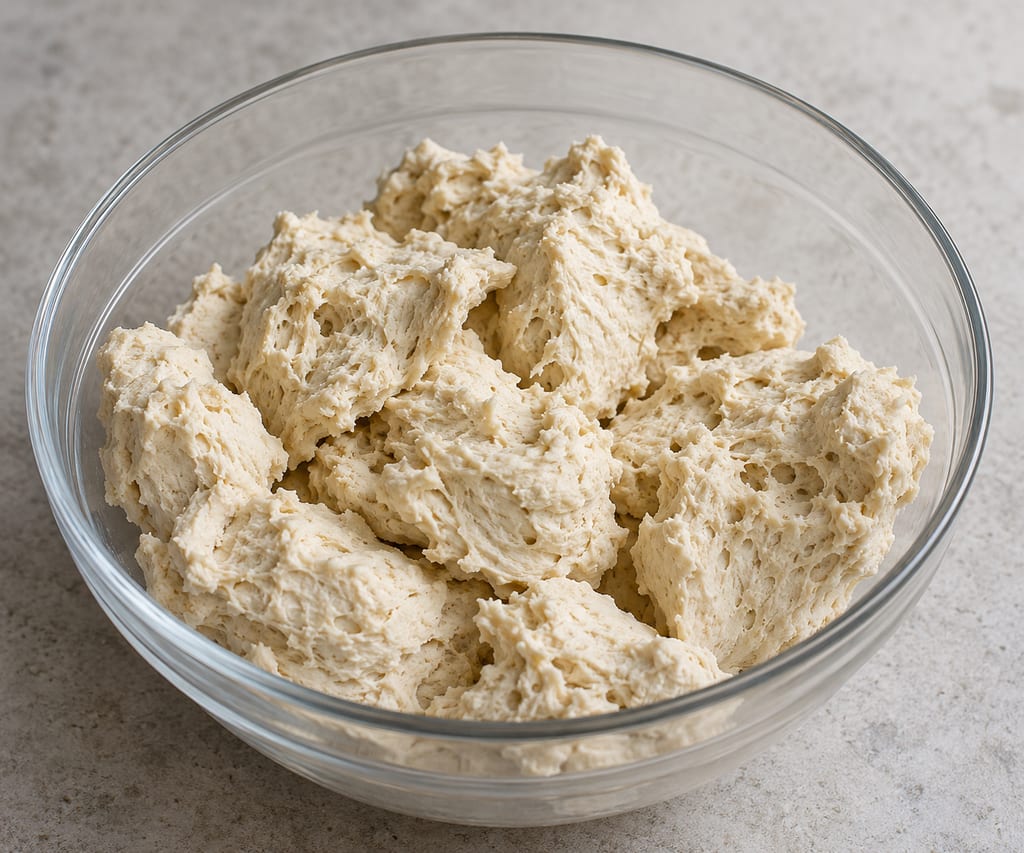
Biga is an Italian bread preferment of flour, water and a little yeast, usually a stiff unsalted mass of about 45 per cent water, fermented ahead and then mixed into the final dough.
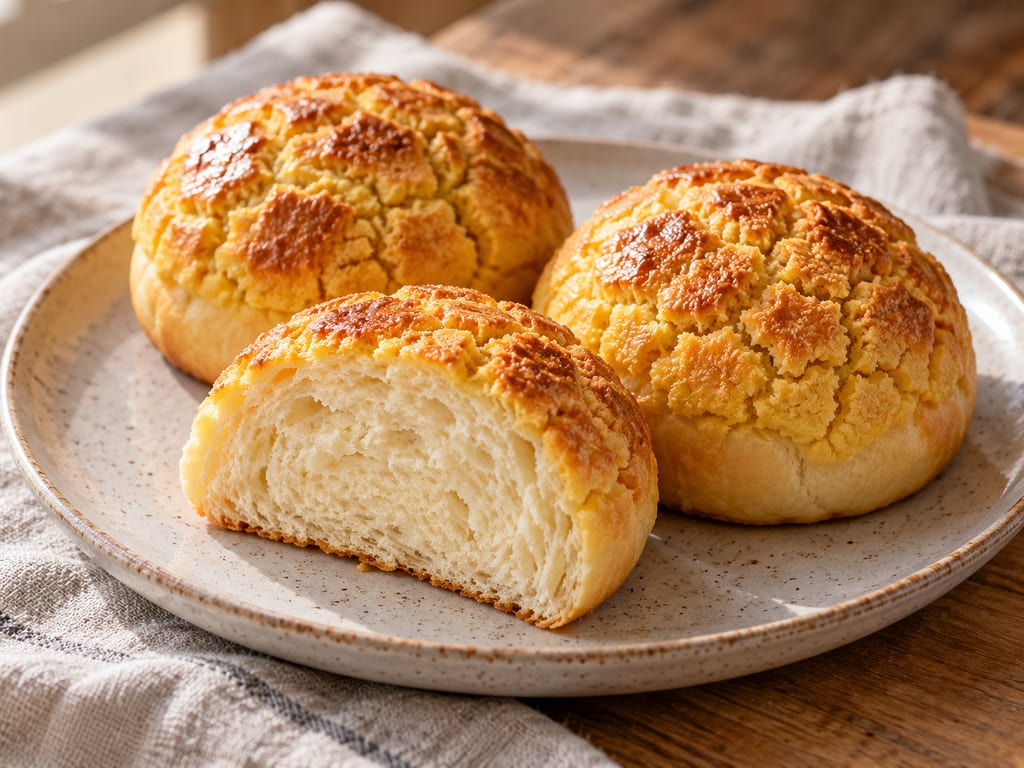
Hong Kong-style pineapple buns have soft yeast dough beneath a crisp, sweet pastry topping.
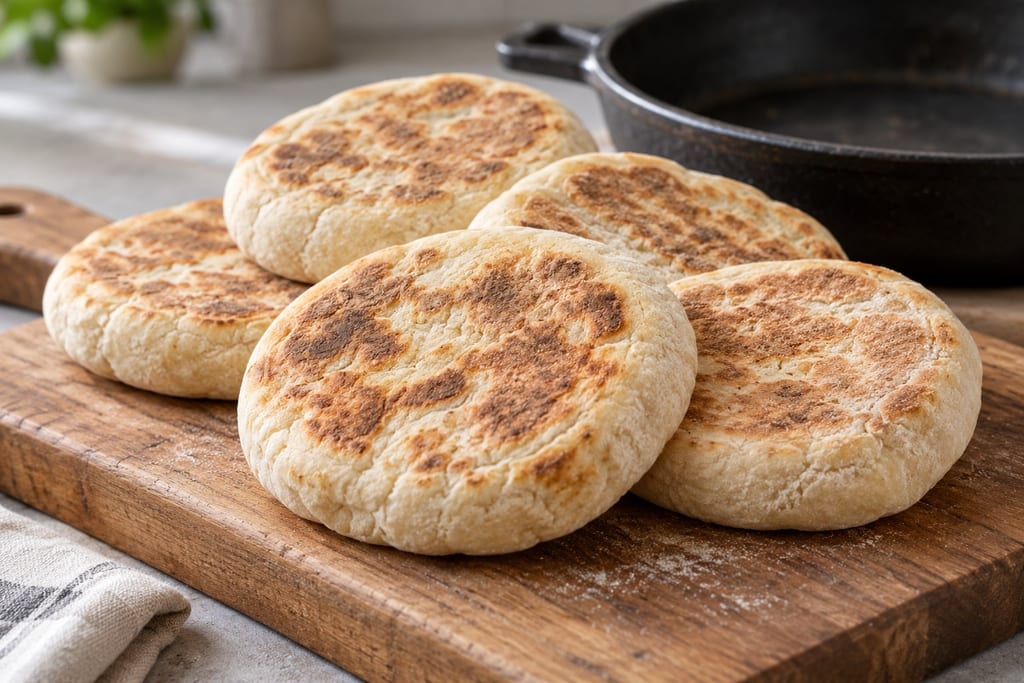
Sweet-potato wheat breads with fresh yeast, browned in a pan and finished in the oven. This is the bread component of Teleculinária's scrambled-egg dish.
No community contributions have been published for this entry yet.
Sign in to contribute. Published comments and photos are free to read.
The Irish TimesHome adaptation from Waterford baker Dermot Walsh
Blaa to rank among best things since sliced breadPublishes a home formula explicitly attributed to Waterford baker Dermot Walsh: 2 lb strong flour, 1 oz salt, 2 oz fresh yeast and just under 1 pint water.
Gives method cues and timings: knead until silky, first rise to double, knead briefly, divide into 3 oz portions, round, rest about half an hour, flatten and flour generously, rise to double, then bake about 20–25 minutes at 220°C.
The recipe is a baker-attributed home method; it does not establish that a home-made roll is a certified Waterford Blaa PGI product.
Cited in: A Waterford bread with defined regional production
Official Journal of the European Union, EUR-LexOfficial PGI specification and product identity
Publication of an application for registration of a name pursuant to Article 6(2) of Regulation (EC) No 510/2006: Waterford Blaa/BlaaDefines the protected Waterford Blaa/Blaa product as a soft, doughy white roll with a floury top, round or square and typically pulled apart after baking in a batch.
Lists preservative-free strong baker's flour, table salt, compressed yeast, dough conditioner and water as PGI raw materials; the home formula published by Walsh is not identical because it omits dough conditioner.
Defines the PGI area as County Waterford plus Ullid and Dunkitt electoral divisions in South County Kilkenny.
Specifies the production stages and distinctive repeated flour addition, hand flattening and baking without steam; the home formula is presented separately and is not claimed to meet the complete PGI specification.
Cited in: A Waterford bread with defined regional production
FoodsStudy of production stages used by authorized producers
Using Cross-Cultural Consumer Liking Data to Explore Acceptability of PGI Bread—Waterford BlaaDescribes three authorized artisanal producers using a ten-stage process: mixing, 10–20-minute rest, pinning, subdivision and flour addition, flattening/rolling and flour additions, proofing, bake at 220–230°C for 25–30 minutes, assessment, one-hour cooling and packing.
This is a production observation for authorized producers, not an ingredient formula or instruction to merge its schedule into Walsh's separately sourced home method.
U.S. Food and Drug AdministrationFood safety
Handling Flour Safely: What You Need to KnowRaw flour can carry harmful bacteria; do not taste raw dough and bake flour-containing foods before eating.