← Recipes

Traditional method

Barmbrack

Loading ratings…

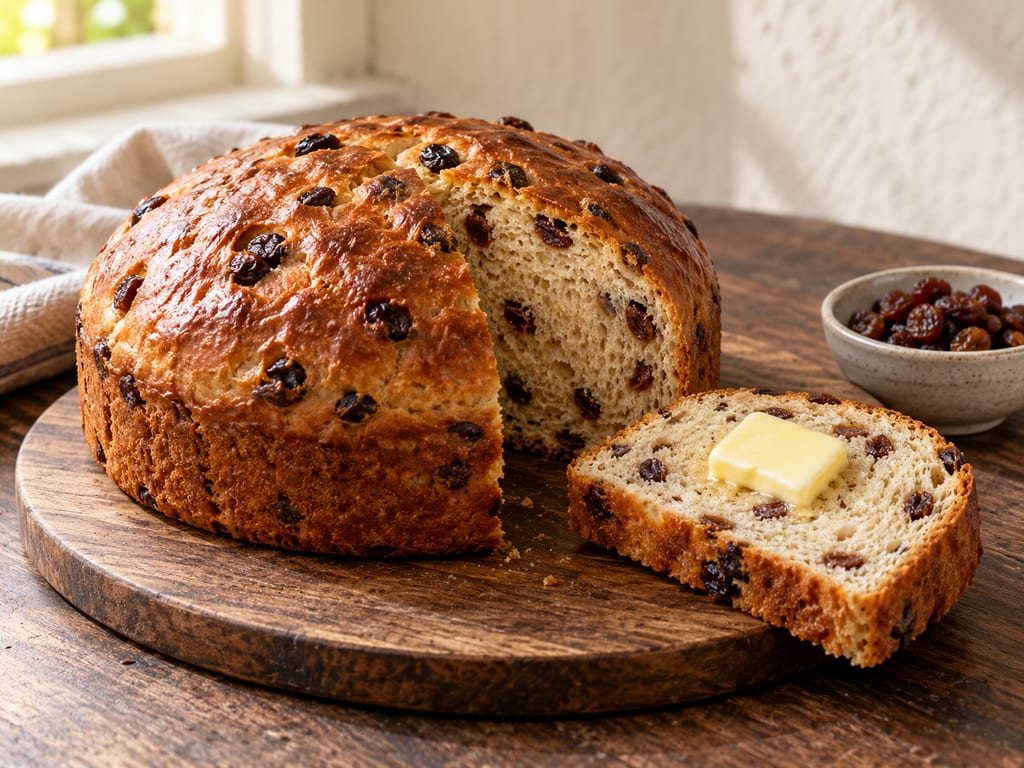
An Irish fruit-studded yeast loaf, associated in a contemporary cultural account with Halloween and often served fresh or toasted with butter.

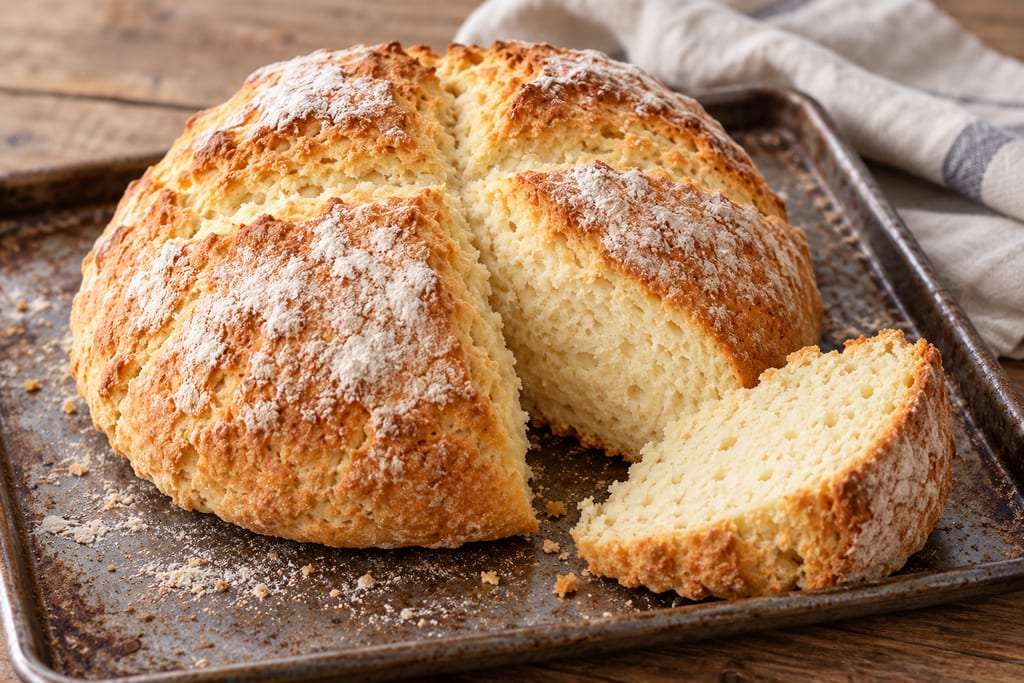
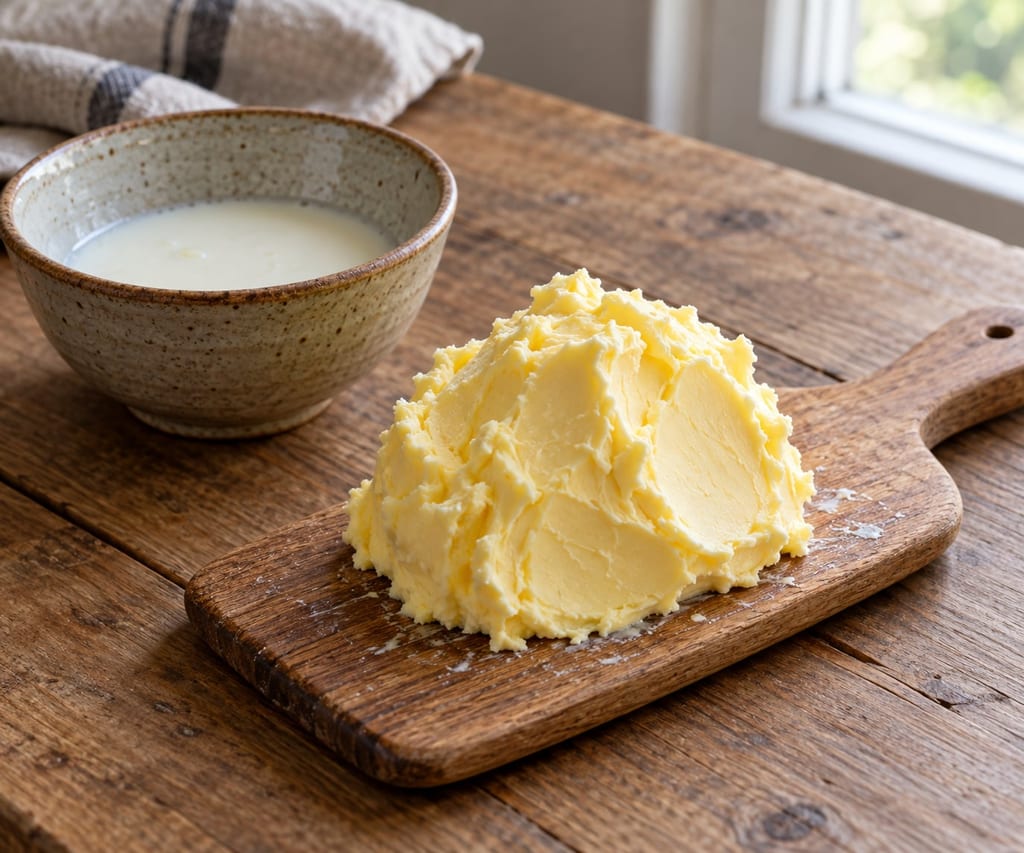
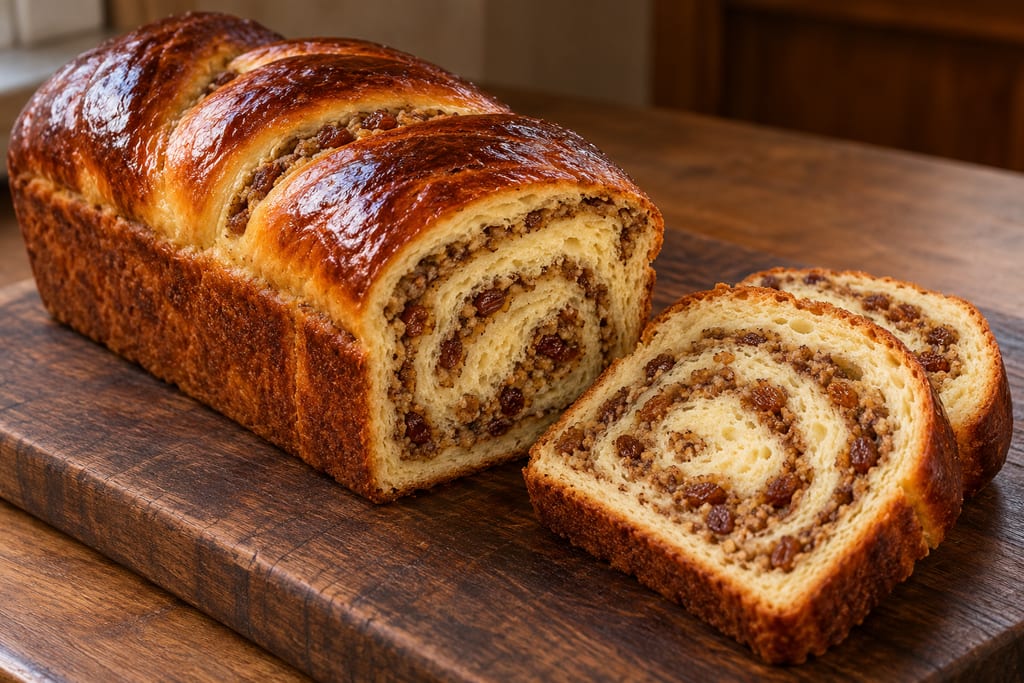
A round Barmbrack fruit loaf with a cut slice showing sultanas, beside a small bowl of sultanas and butter.

A fruit-speckled yeast loaf

Barmbrack is a sweetened yeast bread with dried fruit distributed through the crumb. This Tourism Ireland recipe uses sultanas soaked in whiskey, warm tea and lemon juice, then works the drained fruit into an enriched dough made with strong bread flour, milk, butter, sugar and egg. It bakes the loaf in a round cake tin and finishes the hot crust with butter mixed with cinnamon and mixed spice.

The method makes one loaf, but neither loaf weight nor serving count is given. It is a particular contemporary recipe, not a universal formula for every barmbrack. The ingredient list includes lemon zest, while the method mentions only lemon juice, so the zest's use is not stated.

Sources for this section

Halloween association and cultural account

Tourism Ireland presents barmbrack as an Irish Halloween treat and describes its role in seasonal fortune-telling customs. The article explains the name through “breac,” glossed as speckled, and “barm,” which it connects with foam from fermenting ale. These are claims made by that contemporary cultural source; they do not establish an earliest date, inventor or exact place of origin. The Ireland association is therefore recorded at country level, and the period remains unknown.

The cultural article describes charms hidden in some loaves. The measured recipe does not list or instruct the baker to add charms. It supplies no safe object specification, handling method or warning system for a loaf containing hidden objects. This recipe should be made without them; its cultural note is not a procedure for inserting objects into food.

Sources for this section

Soaking the fruit

Measure the sultanas and whiskey into a bowl, add enough warm tea to cover the fruit, and add the lemon juice. The source leaves the tea amount to the covering depth rather than giving a fixed volume. Soak for 30–45 minutes and drain before mixing the fruit into the dough. The recipe does not specify a tea variety or whether the soaking liquid is reused, so neither is prescribed here.

The whiskey belongs to this recipe's fruit soak. The source does not say how much alcohol remains after baking, so no alcohol-free claim is made. The recipe also lists lemon zest without explaining its use; it is not needed to follow the described method.

Sources for this section

Mixing and two rises

Combine the strong bread flour, a pinch of salt, dried yeast, room-temperature milk, softened butter, sugar and beaten egg. Bring the mixture together with a wooden spoon, then knead on a floured work surface for five minutes. The measured ingredient amount covers the dough; the source does not quantify the extra flour used for kneading.

Cover the dough with a damp tea towel and leave it for about one hour, until it has risen and fills the bowl. Knead again while working in the drained sultanas. Set the dough in a buttered 20–23 cm cake tin, cover it and leave it in a warm place for about 20 minutes, until it rises to the top of the tin. The source uses visible dough cues, not a numerical proof temperature. Room warmth is not a measured process control.

Sources for this section

Baking and spiced-butter finish

Preheat the oven to 200°C (392°F). Bake the loaf in its tin for 50 minutes. The method gives no internal-temperature target or alternate doneness test, so the source's oven setting and time are retained without treating crust colour or appearance as a validated safety endpoint. Use oven gloves when handling the tin and place it on a heat-safe surface.

Mix one tablespoon of butter with the ground cinnamon and mixed spice. Spread this over the loaf as soon as it comes out of the oven, then let the loaf cool. The source also says to butter the cake tin but does not give a separate quantity for that task. The topping amount and tin butter therefore remain distinct uses, not a single precisely divided portion.

Sources for this section

Equipment, timing and limits

This method uses a bowl for soaking fruit, a second mixing bowl, a wooden spoon, a work surface for kneading, a damp tea towel, a 20–23 cm cake tin and a household oven. A kitchen scale helps measure the listed weights. No special fermenter or temperature controller is called for. The source's “warm place” instruction is qualitative and should not be mistaken for a recorded temperature.

The recipe gives separate stage times: soak the fruit for 30–45 minutes, rise the dough for about one hour, proof in the tin for about 20 minutes, and bake for 50 minutes. Some work can overlap, but the author provides no total duration. It gives no scale-up, finished loaf weight, cooling duration or storage limit. The difficulty rating reflects hand kneading, two visual rise cues and adding fruit after the first rise; it does not imply a validated preservation process.

Sources for this section

Serving and food handling

Tourism Ireland suggests serving barmbrack fresh or toasted with butter. Its page does not give a storage duration or a tested reheating temperature. Follow current local guidance for storing baked goods; this recipe does not establish a shelf-life claim.

This formula contains wheat, milk and egg. It also includes whiskey in the fruit soak. The source does not assess dietary substitutions or alcohol retention after baking. Keep charms and other non-food objects out of this version: no safe insertion or serving protocol is provided.

Uncooked flour and raw egg can carry germs. CDC advises baking dough before eating, keeping raw flour and dough away from ready-to-eat foods, and washing hands, bowls, utensils and work surfaces after handling. This method retains Tourism Ireland’s bake instruction and adds no unreported internal-temperature endpoint.

Sources for this section

History

Tourism Ireland describes barmbrack as a fruit-sweetened yeast bread linked with Halloween, seasonal fortune-telling charms and serving fresh or toasted with butter. Its etymology and custom account have not been independently corroborated here, and the page does not establish a first recipe or date.

Ingredients

Scaling: source batch only

Bushmills whiskey
50 mL
TeaWarm
Amount not stated
enough to cover the sultanas
LemonJuiced and zested; the source method mentions the juice but does not specify use of the zest
1
Strong bread flour450 g for dough; the method also calls for a floured kneading surface but does not quantify additional flour
450 g
a pinch
MilkAt room temperature
280 mL
ButterSoftened; for dough
50 g
50 g
EggBeaten
1
ButterFor topping after baking; a separate unquantified amount is used to butter the cake tin
15 mL1 tbsp as recorded
1 tbsp for topping; the method does not separately quantify butter used to butter the cake tin
Ground cinnamonFor topping
4.9 mL1 tsp as recorded
Mixed spiceGround; for topping
2.5 mL½ tsp as recorded
ButterFor buttering the 20–23 cm cake tin
source gives no quantity

Method

Risks and precautions · Standard risk
Raw flour and egg dough

Uncooked flour and raw eggs can carry germs that cause food poisoning; the dough must be baked before eating.

Hazard source

Do not taste or eat the raw dough. Keep flour and dough away from ready-to-eat foods, wash hands, bowls, utensils and work surfaces after handling, and bake the dough according to the recipe.

Control source

The cultural article mentions hidden charms, but this measured recipe gives no method for putting objects in a loaf; make this version without them.

Contains wheat, milk and egg. The source does not assess alcohol remaining after the whiskey-soaked fruit is baked.

The source gives no storage duration or validated food-safety endpoint.

Do not taste or eat the unbaked dough; it contains raw flour and egg. Keep it separate from ready-to-eat food and clean hands and surfaces after handling.

  1. Soak the sultanas with the whiskey, warm tea and lemon juice for 30-45 minutes, then drain them. The source does not quantify the tea.
  2. Combine the flour, pinch of salt, dried yeast, room-temperature milk, softened dough butter, sugar and beaten egg in a bowl. Bring the mixture together with a wooden spoon, then knead on a floured surface for 5 minutes.
  3. Cover the dough with a damp tea towel and leave it for about 1 hour, until risen and filling the bowl. Knead again, working the drained fruit through the dough.
  4. Set the dough in a buttered 20–23 cm cake tin, cover it, and leave it in a warm place for about 20 minutes until it rises to the top of the tin. The method gives no step for the lemon zest listed in the ingredients.
  5. Preheat the oven to 200°C (392°F) and bake for 50 minutes. Mix the topping butter with cinnamon and mixed spice, spread it over the loaf straight from the oven, and leave the loaf to cool.

Places

Ireland

Traditional preparation · Country evidence

Tourism Ireland's current account describes barmbrack as an Irish Halloween favourite. This is a contemporary cultural account, not a dated first attestation.

Related

Community

No community contributions have been published for this entry yet.

Share what you made

Sign in to contribute. Published comments and photos are free to read.

Sources