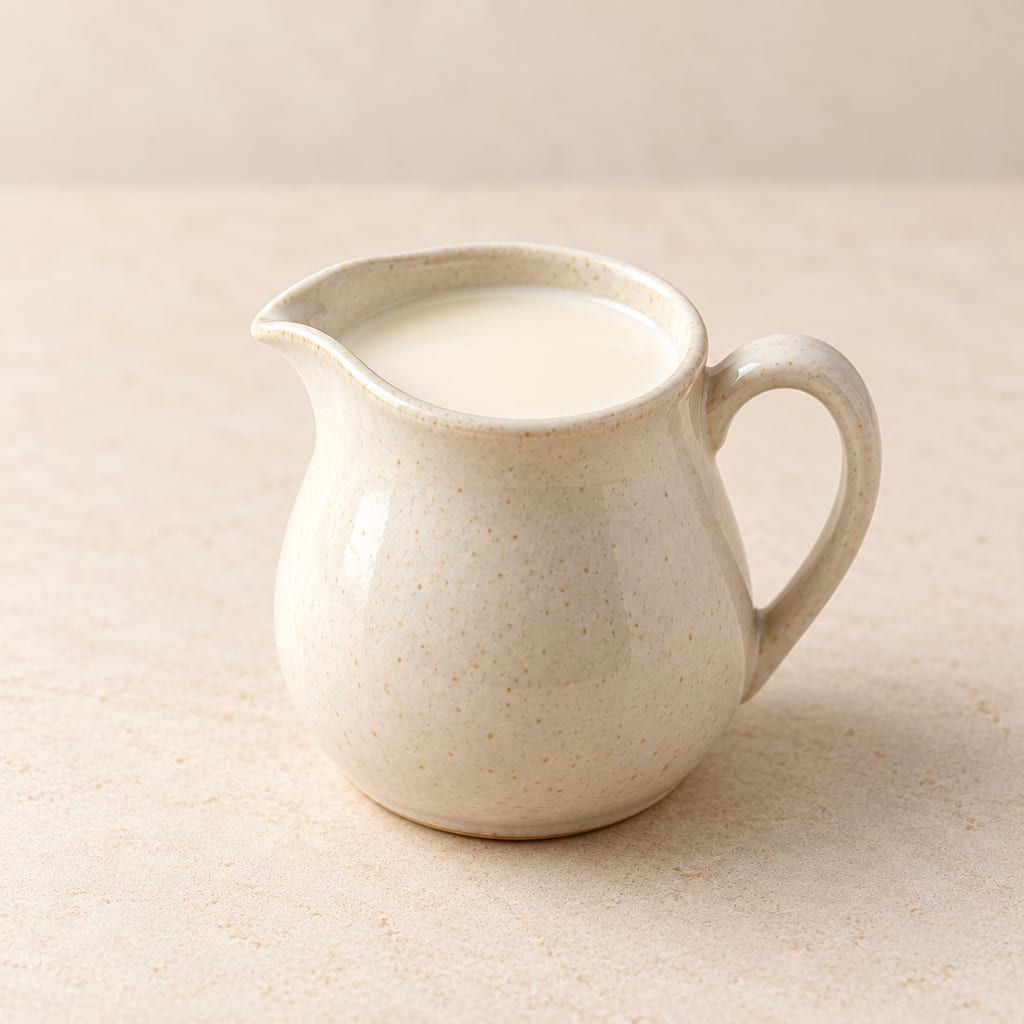
Cream
The fat-rich fraction of milk, used as a pouring ingredient, a whipped foam, a cultured dairy substrate or the starting material for butter.
 FermenteaWhere food goes to change
Modern method
Smjor · Churned butter · Smjor · Smjör · Smør · Smör
Cream agitated until its fat globules join into a solid mass and release buttermilk, the dairy fat a northern household could concentrate, salt and keep when milk itself would not last.
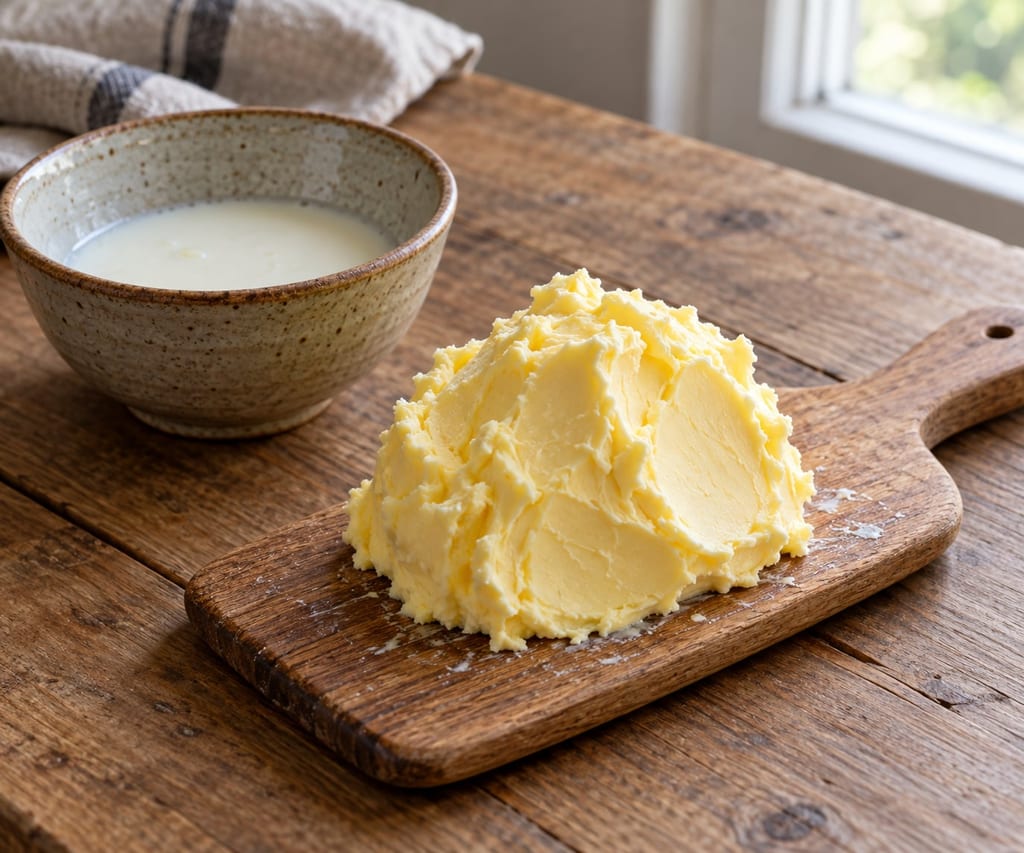
Butter is a concentrated dairy-fat product made by destabilising cream so that its fat globules combine into a continuous mass.
In ordinary cream, droplets of milk fat are dispersed through a water-rich liquid.
Churning changes that arrangement.
As the cream is agitated, fat globules collide, their protective membranes are disrupted and the fat begins to join together.
Eventually, visible butter grains separate from a liquid phase commonly called buttermilk.
The grains can then be collected and worked into a cohesive mass.
This is a physical transformation of milk fat rather than a fermentation process in itself.
However, butter may be produced from either fresh sweet cream or cream that has first undergone microbial souring.
That distinction matters when discussing historical butter.
The reconstruction below uses modern pasteurised double cream. It produces sweet-cream butter and does not reproduce any particular Viking Age cultured-butter procedure.
Butter has no separate scientific species name. Its biological source is milk, most commonly from domestic cattle, Bos taurus, although other dairy animals can also supply fat suitable for butter-making.
Old Norse — Smjor
Icelandic — Smjör
Norwegian — Smør
Danish — Smør
Swedish — Smör
English — Butter
Icelandic — Áfir — buttermilk
A particularly valuable archaeological object was discovered in Viking Dublin: a wooden churn dash.
The National Museum of Ireland identifies this object among the material recovered from excavations in the town.
A churn dash is a tool used to agitate cream or other dairy liquid within a container.
Its survival directly supports the practice of butter-making in Viking Dublin.
This is stronger evidence than simply inferring butter production from the presence of cattle.
It identifies an implement associated with the transformation of dairy.
Dublin was an important Viking Age urban centre with agricultural land supporting the settlement.
The presence of a churn therefore also illustrates the relationship between town and countryside.
Urban residents depended on food produced by farms, and agricultural products could undergo further processing within the town.
Nevertheless, one surviving churn dash does not reveal how much butter was produced, how long cream was stored before churning or whether the specific batch was cultured.
Those aspects are not preserved in the wooden object.
Cattle and other dairy animals contributed substantially to the farming economy.
Milk could be consumed fresh, soured or processed.
Butter concentrated part of the milk's energy into a smaller, fat-rich product.
This made it useful both as food and as an ingredient.
Butter could be spread on bread, melted over vegetables, incorporated into cooked dishes or stored for later use.
The National Museum of Denmark describes butter being heavily salted as a preservation practice.
However, the historical overview does not supply a universal salt-to-butter ratio, a specified water content or a validated shelf life.
It would be incorrect to invent such numbers and present them as Viking Age preservation standards.
Milk fat exists principally as globules surrounded by membranes composed of proteins, phospholipids and other components.
In cream, these globules remain distributed through the aqueous phase.
Cream is therefore usually described as an oil-in-water emulsion.
The surrounding water contains lactose, proteins and minerals.
The fat globules are comparatively stable under ordinary conditions, partly because their membranes reduce their tendency to fuse.
Churning supplies repeated mechanical collisions and changes the arrangement of the fat.
As the globules become destabilised, some fat joins together.
Butter grains appear.
The separation becomes obvious when the previously thick, whipped mixture suddenly looks granular and releases liquid.
The continuous phase of the resulting butter is predominantly fat, within which small water droplets are dispersed.
This is often described as an inversion from an oil-in-water emulsion towards a water-in-oil structure.
The transformation explains why finished butter feels different from whipped cream despite originating from the same ingredient.
Cream contains a greater proportion of fat than whole milk.
Starting with cream reduces the amount of liquid that must be processed to produce butter.
Commercial double cream is a practical choice for the modern recipe because its high fat content makes the separation relatively straightforward.
It should not be assumed that Viking households had a product labelled or standardised as British double cream.
Historically, cream could be collected from milk after fat globules rose towards the surface.
Separation efficiency depended on milk handling and equipment.
Modern centrifugal separators produce cream by a different, much more controlled method.
The difference in technology can affect yield, fat concentration and the liquid remaining in the butter.
Fresh sweet cream can be churned directly.
Cultured butter requires an additional stage in which selected microorganisms transform components of the cream.
Lactic acid bacteria produce acidity and flavour compounds.
Diacetyl is particularly associated with the buttery aroma of certain cultured dairy products.
The microbial stage changes the starting material before churning.
That can influence flavour, acidity and behaviour during processing.
The existence of historic sour-milk cultures makes cultured cream a plausible aspect of northern dairy traditions.
However, we cannot assign one modern culture species or fermentation temperature to every Viking Age butter.
Nor should a recipe that uses fresh pasteurised double cream be described as an authentic cultured-butter reconstruction.
The dossier's recipe provides a simple demonstration based on modern cream and a contemporary butter-making technique.
1. Prepare equipment.
Clean a deep mixing bowl, beaters or churn and all utensils that will contact the butter.
Keep the cream refrigerated until preparation.
2. Agitate the cream.
Pour the 300 ml cream into the bowl.
Beat it continuously.
Initially, the cream thickens as air becomes incorporated.
3. Continue beyond whipped cream.
Keep beating.
The thick whipped structure eventually begins to break down.
Visible yellowish butter particles form.
4. Separate the liquid.
Continue until the butter grains are clearly separated from the thinner liquid.
Pour the mixture into a clean sieve or cloth to collect the grains.
The liquid is sweet buttermilk.
5. Wash the butter.
Transfer the grains to a clean bowl and work them gently in cold drinking water.
Discard the cloudy washing liquid.
Replace the water as needed until it remains mostly clear.
6. Work out retained liquid.
Press the butter with clean spoons or suitable utensils.
The aim is to expel visible pockets of water or buttermilk.
7. Season if desired.
Mix in a small pinch of salt.
The amount is optional and does not constitute a tested preserving concentration.
8. Refrigerate.
Cover and place the butter in the refrigerator immediately.
The liquid remaining after churning contains water and water-soluble milk components.
If substantial pockets remain in the butter, they can contribute to uneven texture and deterioration.
Working the butter distributes any remaining moisture into smaller droplets.
Washing can remove some buttermilk residues.
These steps improve the product's physical quality.
They do not sterilise the butter.
Nor do they make it safe to store at room temperature for an unspecified period.
Modern commercial butter-making uses controlled processing and hygiene standards that cannot be reproduced merely by rinsing homemade butter until the water looks clear.
A simple dash churn uses a container and a movable wooden tool.
The dash is pushed or moved through the cream, creating mechanical agitation.
A later barrel churn rotates a container to achieve a similar purpose.
Both methods encourage the fat globules to collide.
A modern electric mixer performs the same broad mechanical operation with different equipment.
The churn's shape matters because it influences how liquid circulates and how effectively energy is transferred.
Wooden equipment also introduces cleaning challenges.
Its surfaces and joints can retain residues unless carefully maintained.
A modern home recipe is better prepared using thoroughly clean food-safe equipment than with an unverified antique churn.
A historical artefact may be valuable for interpretation without being appropriate for food preparation.
Large deposits of butter-like material have been recovered from peat bogs in Ireland and Scotland.
These finds are often described as bog butter.
They should not be confused with freshly churned butter placed in an ordinary storage container.
Chemical and isotopic research published in 2019 confirmed dairy-fat origins for the great majority of the Irish bog-butter samples examined.
The dated material spans a very long period, beginning in the Early Bronze Age around 1700 BCE and extending into the seventeenth century CE.
This means bog butter is not exclusively a Viking Age phenomenon.
Some examples belong to periods before or after the Viking Age.
The motives for depositing butter in bogs are also uncertain.
Storage, deliberate ageing, concealment or ritual deposition have all been considered.
There is no reason to assume that every bog deposit had one identical purpose.
Peat conditions can allow unusual organic material to survive, but archaeological preservation does not demonstrate that such material is safe to eat today.
Reconstructing bog butter by burying fresh dairy in garden soil would be an uncontrolled experiment, not a tested preservation method.
Butter complements coarse breads, including barley and rye preparations.
It can be spread directly onto a flatbread or melted into warm porridge.
Adding butter to cooked roots contributes energy and improves texture.
In soups and stews it can carry aromatic compounds from herbs and vegetables.
Butter can also be used as a cooking fat, although prolonged exposure to intense heat may cause its milk solids to brown or burn.
Different kinds of butter behave differently.
A cultured butter may have a tangy aroma, while fresh sweet-cream butter has a milder flavour.
Salted butter introduces additional seasoning.
The degree of saltiness in a historical butter cannot be reconstructed without a specific formulation.
Continue agitation.
The mixture may not yet have reached the butter-grain stage.
More liquid may need to be pressed out.
This is particularly noticeable when droplets emerge during working.
The fat may have become too warm.
Chilling the product can make it easier to work.
That may be an expected characteristic of intentionally cultured cream, but unexplained sourness in a sweet-cream batch is not proof of a successful traditional fermentation.
Discard the product.
Fat deterioration and microbial spoilage can both affect quality.
Use pasteurised cream from a reliable supplier.
Do not leave cream unrefrigerated in an attempt to create a historical culture.
Uncontrolled souring is not equivalent to intentional fermentation using a known starter.
Wash utensils thoroughly and use clean drinking water during butter-working.
Keep finished homemade butter refrigerated.
The supplied recipe does not provide a validated room-temperature shelf life.
Butter may be frozen in portions for longer storage, although product quality can change over time.
People with milk allergy must avoid the product. Butter contains comparatively little lactose, but it is not necessarily free of milk proteins.
The wooden churn dash from Viking Dublin provides direct evidence that butter-making took place there.
Dairy farming and butter consumption are also supported more broadly.
What survives far less clearly is the exact microbiology, churning duration and salt concentration of specific Viking Age batches.
Modern sweet-cream butter therefore offers a useful physical demonstration, not a complete reproduction of ancient dairying.
The most important insight is the transformation itself: a perishable liquid food could be separated into products with very different compositions and uses, allowing farming households to obtain more value from the milk supplied by their animals.
Butter earns its place in a northern farming economy by arithmetic: cattle and other dairy animals contributed substantially to the household, milk could be drunk fresh, soured or processed, and churning concentrated part of the milk's energy into a smaller, fat-rich product that could be spread on bread, melted over vegetables, cooked into dishes or stored. The archaeology supports the practice at two very different scales. In Viking Dublin, an important urban centre fed by the agricultural land around it, a wooden churn dash survives, which is stronger evidence than cattle bones because it identifies the tool of the transformation itself. In Ireland and Scotland, large deposits of butter-like material have come out of peat bogs, and the 2019 analysis confirmed dairy-fat origins for most of the Irish samples examined while dating them across nearly three and a half millennia, so bog butter belongs to a long tradition that brackets the Viking Age rather than defining it; whether a given deposit was storage, deliberate ageing, concealment or ritual is unresolved. What the record does not preserve is the detail a cook would want. The National Museum of Denmark describes butter being heavily salted as preservation but supplies no ratio, no water content and no shelf life, and one churn dash cannot say how long cream was kept before churning or whether it had soured first. Cultured butter remains a plausible part of northern dairying, since sour-milk cultures existed, but no modern culture species or fermentation temperature can be assigned to it.
Scaling: source batch only
Leaving cream unrefrigerated to imitate a historical culture is not the same as fermenting it with a known starter: cultured butter depends on selected microorganisms working on the cream, and an uncontrolled sour is simply unmanaged microbial growth in a dairy product.
Hazard sourceSubstantial pockets of liquid left in the butter contribute to uneven texture and deterioration, which is why the grains are washed and the mass worked; those steps improve physical quality and do not sterilise anything.
Hazard sourceRinsing homemade butter until the water looks clear does not reproduce the controlled processing and hygiene standards of commercial manufacture, and the method gives no validated room-temperature shelf life.
Hazard sourcePeat conditions can preserve unusual organic material, but archaeological survival does not show that such material is safe to eat, and burying fresh dairy in garden soil would be an uncontrolled experiment rather than a tested preservation method.
Hazard sourceWooden surfaces and joints can retain residues unless carefully maintained, so a historical artefact may be valuable for interpretation while being unsuitable for preparing food.
Hazard sourceButter contains comparatively little lactose but is not necessarily free of milk proteins, so people with milk allergy must avoid it.
Hazard sourceUse pasteurised cream from a reliable supplier and keep it refrigerated until preparation
Control sourceUse thoroughly clean food-safe equipment and clean drinking water for washing the grains
Control sourceWork out visible pockets of water or buttermilk, then refrigerate the finished butter immediately
Control sourceThis is sweet-cream butter made from modern pasteurised double cream, and it is not a reconstruction of any particular Viking Age cultured-butter procedure.
Heavily salted butter is described as a historical preservation practice without a salt-to-butter ratio, a water content or a shelf life, so the optional pinch of salt here preserves nothing and no period figure can be supplied.
Do not leave cream unrefrigerated in an attempt to create a historical culture: uncontrolled souring is not fermentation with a known starter.
Washing butter until the water runs clear does not sterilise it or make it safe to keep at room temperature for an unspecified period.
Bog butter is not a method to copy: burying fresh dairy in soil is an uncontrolled experiment, and material that survived in peat is not thereby edible.
One wooden churn dash shows that butter was made in Viking Dublin and nothing about how much, how long the cream was kept, or whether that batch was cultured.
Sourness in a sweet-cream batch is not evidence of a successful traditional fermentation; with mould or a rancid smell, discard the butter.
People with milk allergy must avoid butter, which contains little lactose but is not necessarily free of milk proteins.
The strongest single piece of evidence on this page: a wooden churn dash recovered from excavations in Viking Dublin, which identifies an implement for transforming dairy rather than inferring butter from the presence of cattle. It says nothing about quantities, storage before churning, or whether the cream was cultured.
A country-level association for the bog-butter deposits, whose dairy-fat origins were confirmed for the great majority of the Irish samples examined in 2019. Similar finds come from Scotland. The span of the dated material is the point: this tradition is neither exclusively nor characteristically Viking Age.
A country-level association for butter in the Scandinavian farming economy, including the practice of salting it heavily for preservation, described without any of the numbers that would make it reproducible.
The fat-rich fraction of milk, used as a pouring ingredient, a whipped foam, a cultured dairy substrate or the starting material for butter.
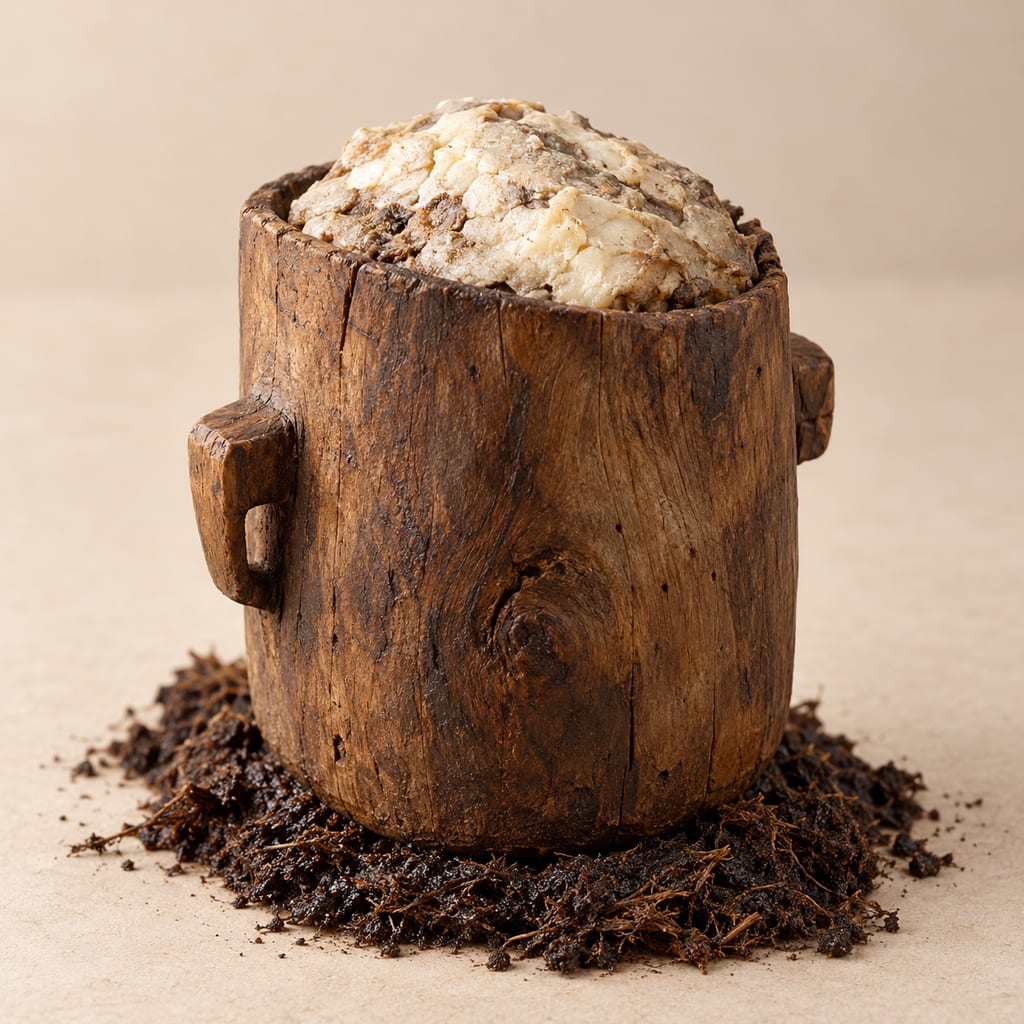
Butter packed into wooden containers and buried in cool, wet peat in Ireland and Scotland, a practice known from finds that may reflect storage, concealment or ritual.
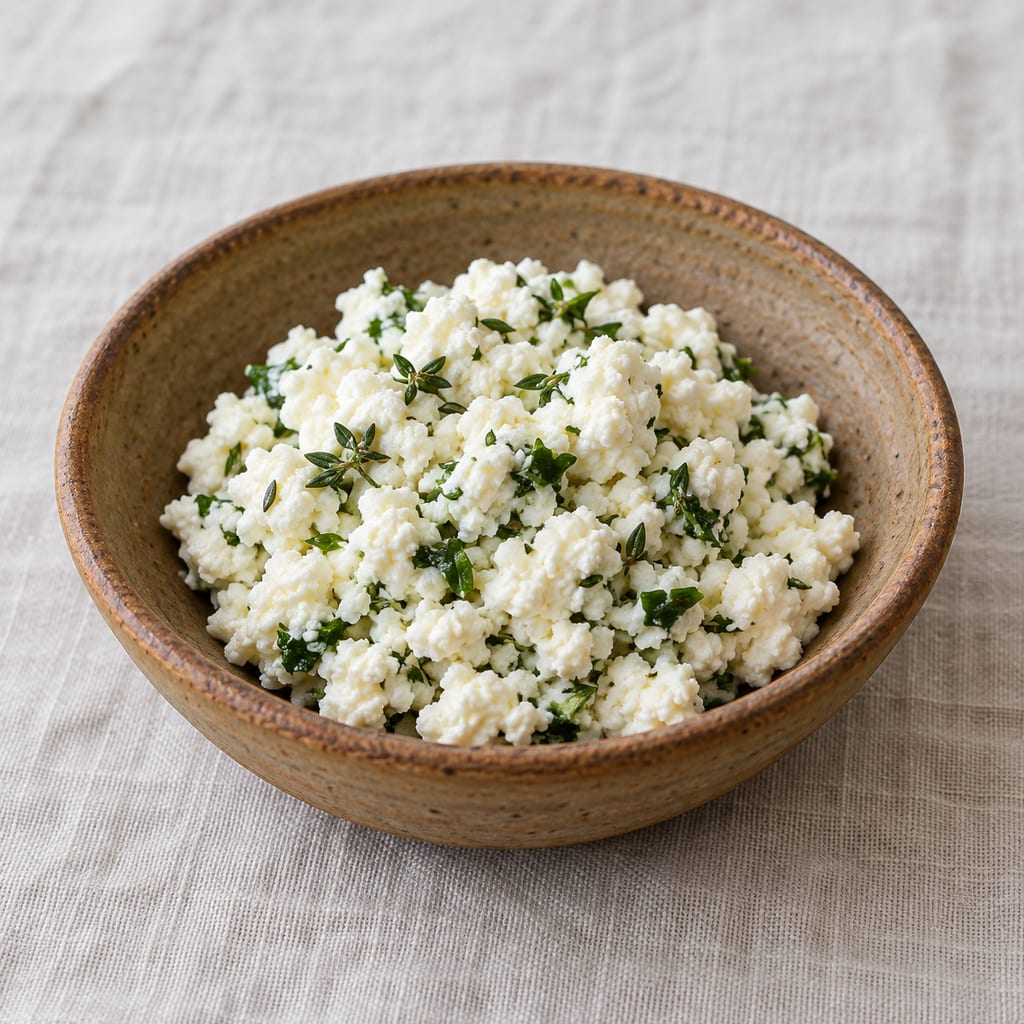
Soft fresh curd made by draining whey from milk already thickened by bacterial acidification, the simplest point in a northern dairy tradition that also produced skyr, ymer and whey itself.

Crushed or milled barley cooked in water until the starch softens and the mixture thickens, the plainest way a northern household turned stored grain into a meal, here with apple and hazelnut.
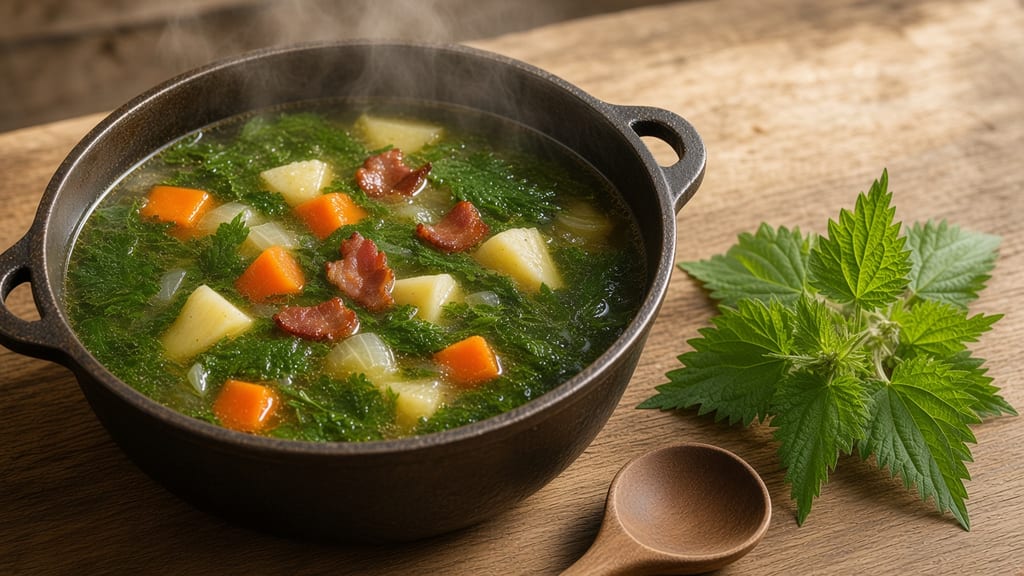
Young stinging nettle shoots cooked with bacon, onion, garlic and three roots into a thick spring soup, from a Danish Viking museum's recipe, with a meat-broth variation and ember-baked turnips.
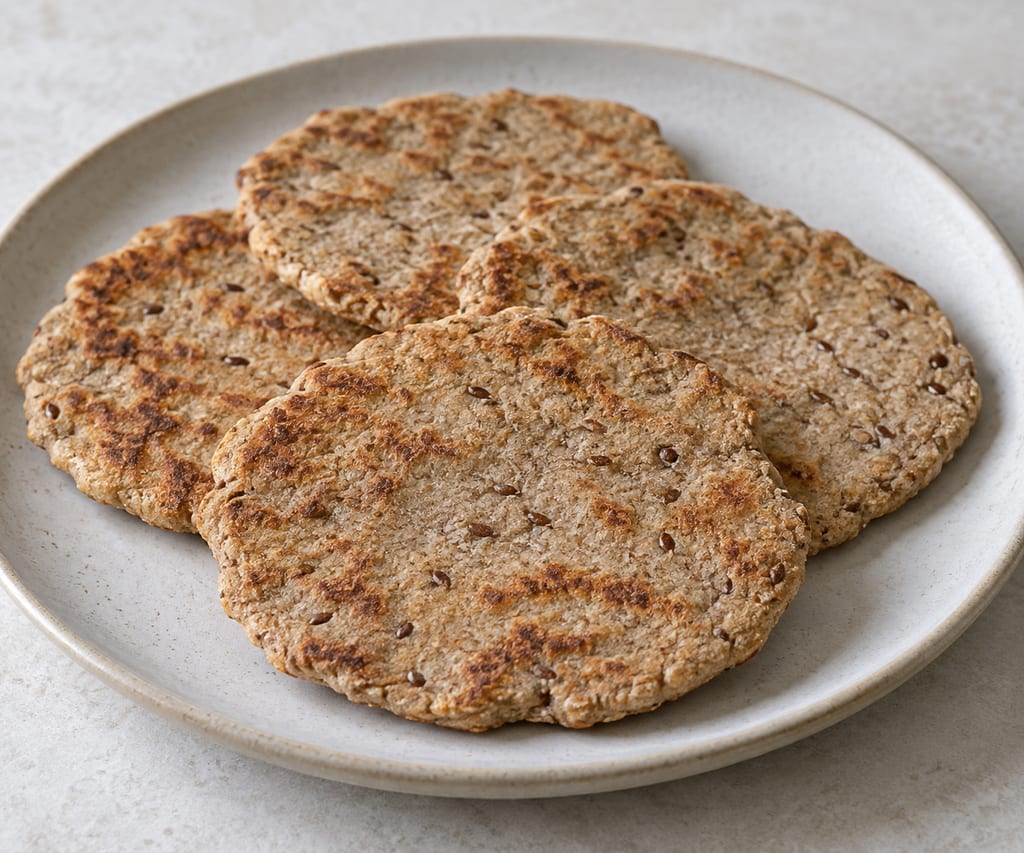
A small, dense cake of ground barley mixed with liquid and cooked against a hot surface, the form a low-gluten northern cereal takes when a household turns stored grain into bread.
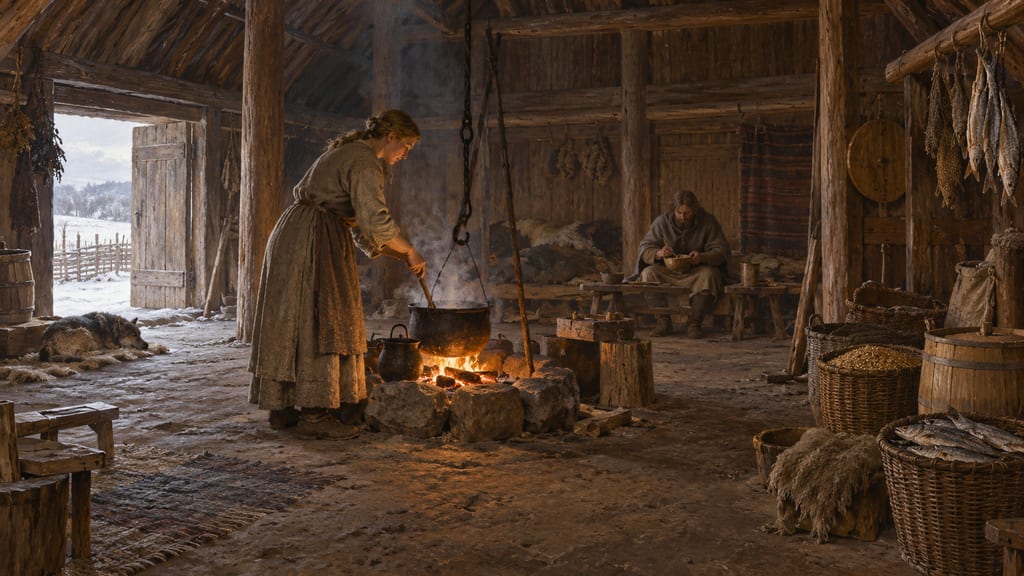
How ordinary Viking-Age households grew, dried, smoked, salted and cooked their food through the northern year, and how to cook their dishes today with supermarket ingredients.
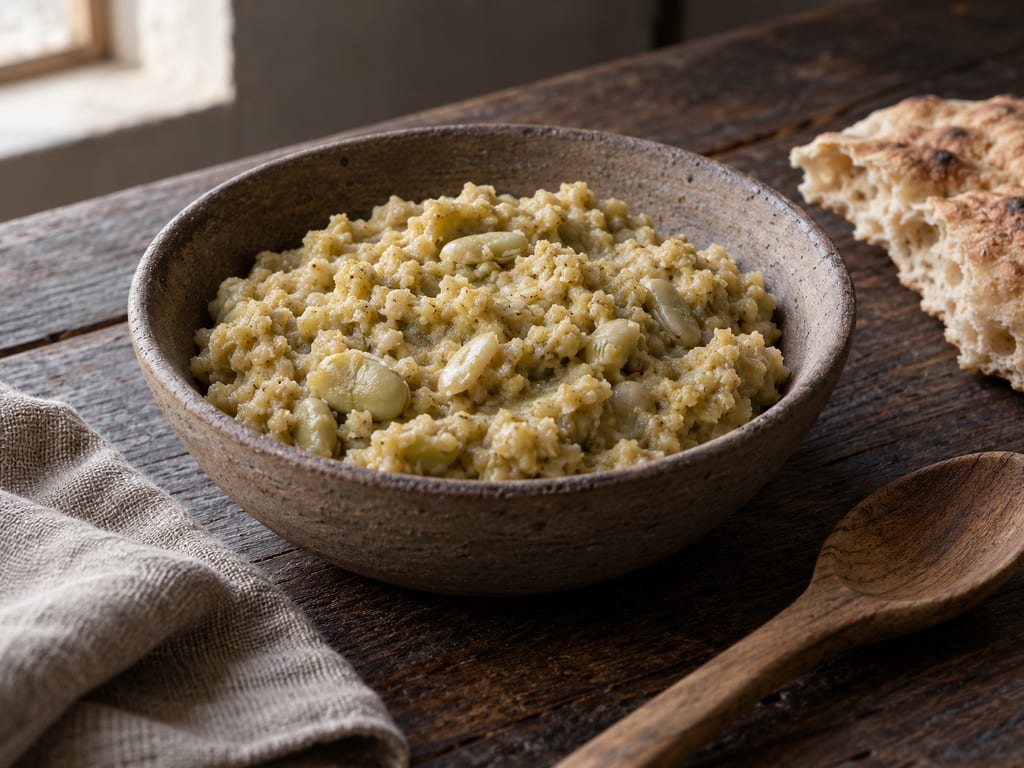
Cooked broad beans crushed to a thick paste with garlic and salt, a museum preparation built on the one European pulse that was already old when the Viking Age began.
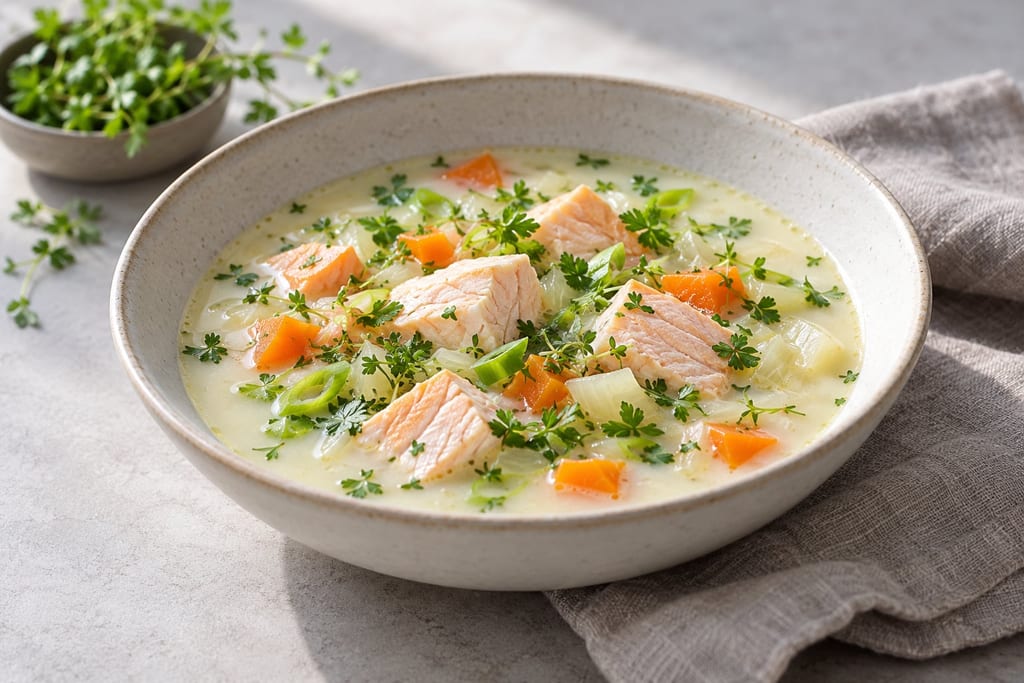
Trout or salmon poached at the end of a simmered broth of onion and root vegetables, a present-day reconstruction of coastal cooking built on excavated fish bones and a boiling pot.
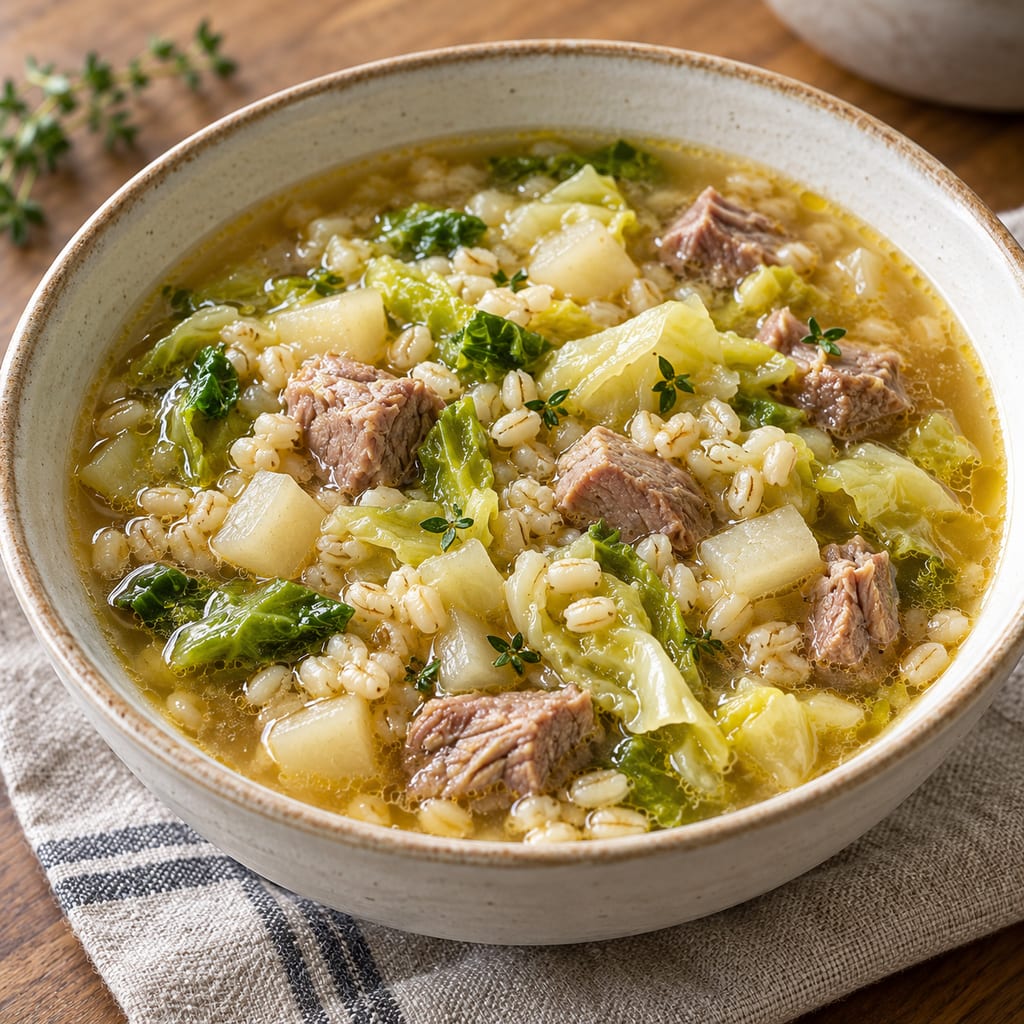
Lamb shoulder simmered with pearl barley, turnip and leafy cabbage in one pot, a present-day reconstruction built from the animals, grains and vegetables of northern European farming.
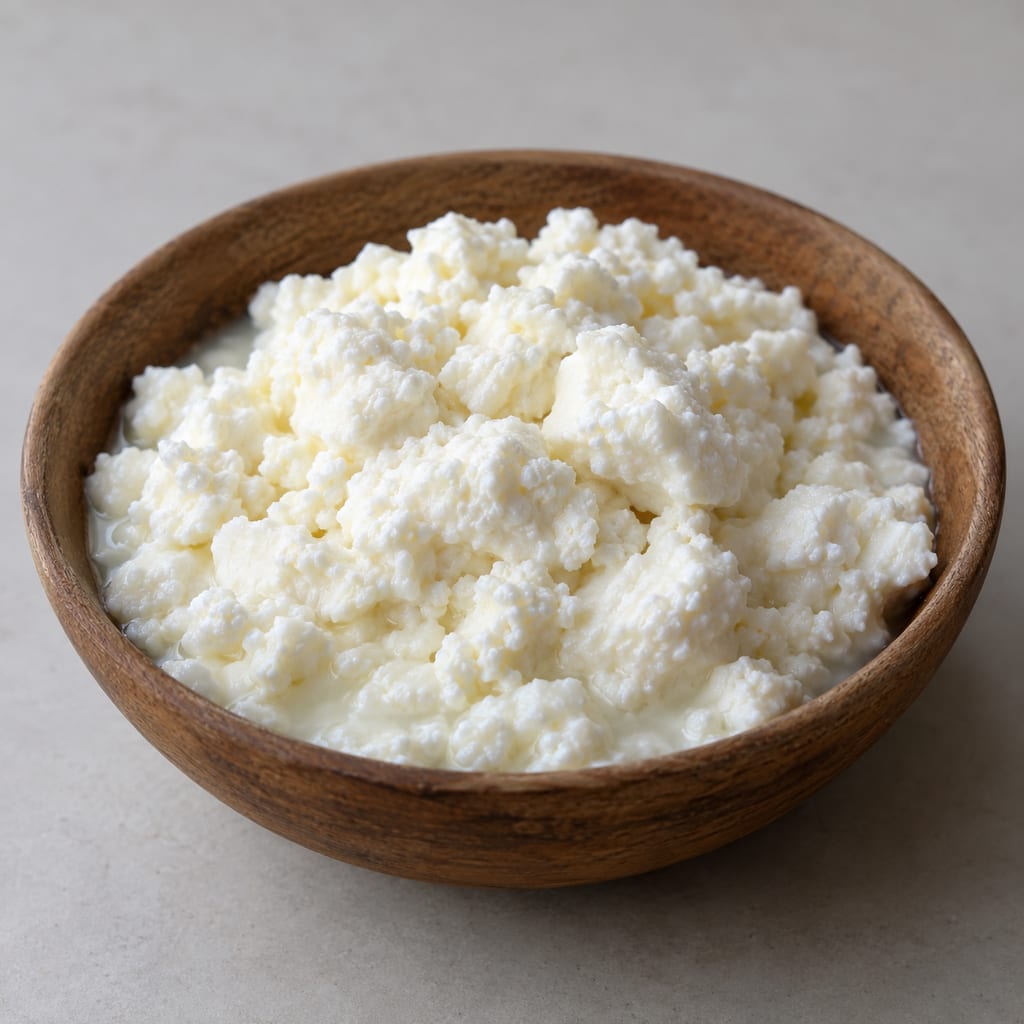
Aarts is a soft Mongolian curd made by draining boiled fermented yogurt; it remains wet, unlike aaruul, which is dried.
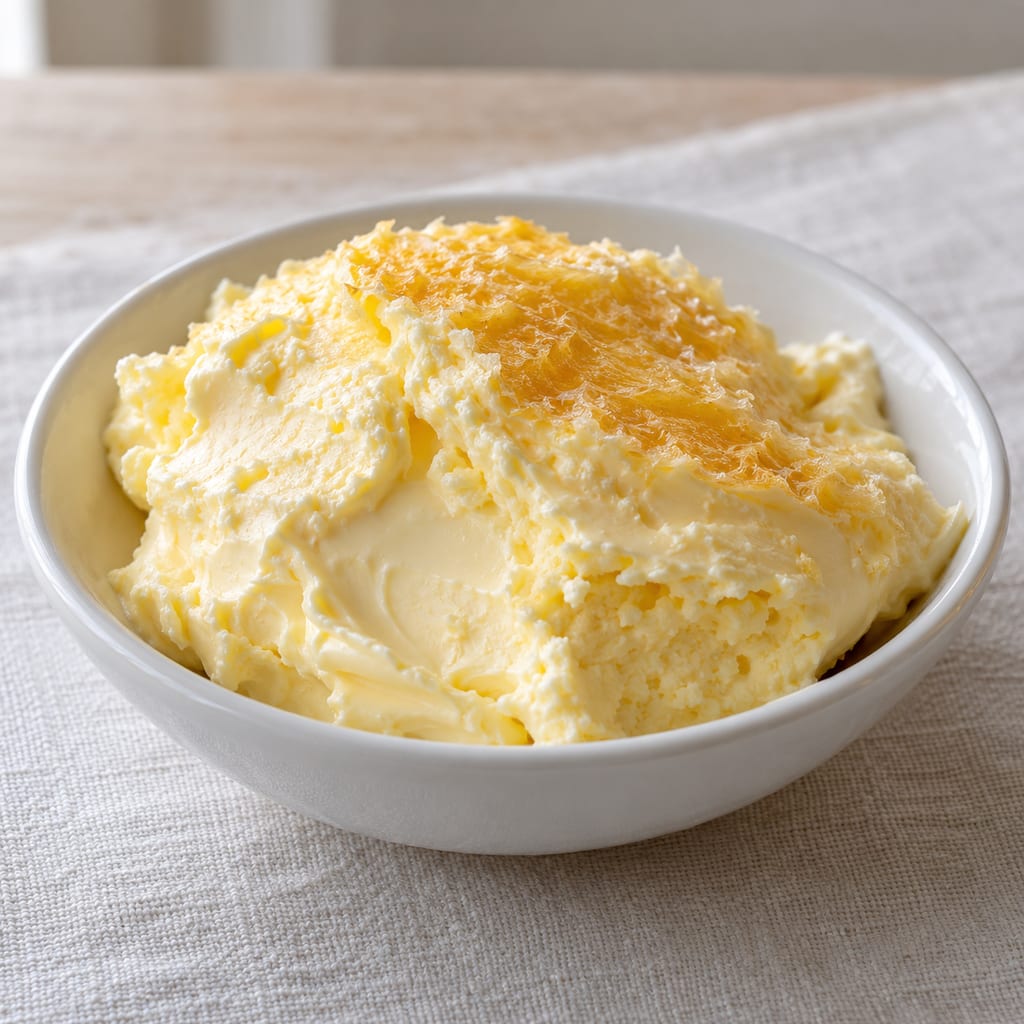
High-fat cream scalded below boiling for at least an hour until a thick crust forms, then cooled hard so the crust sets and the cream beneath thickens.
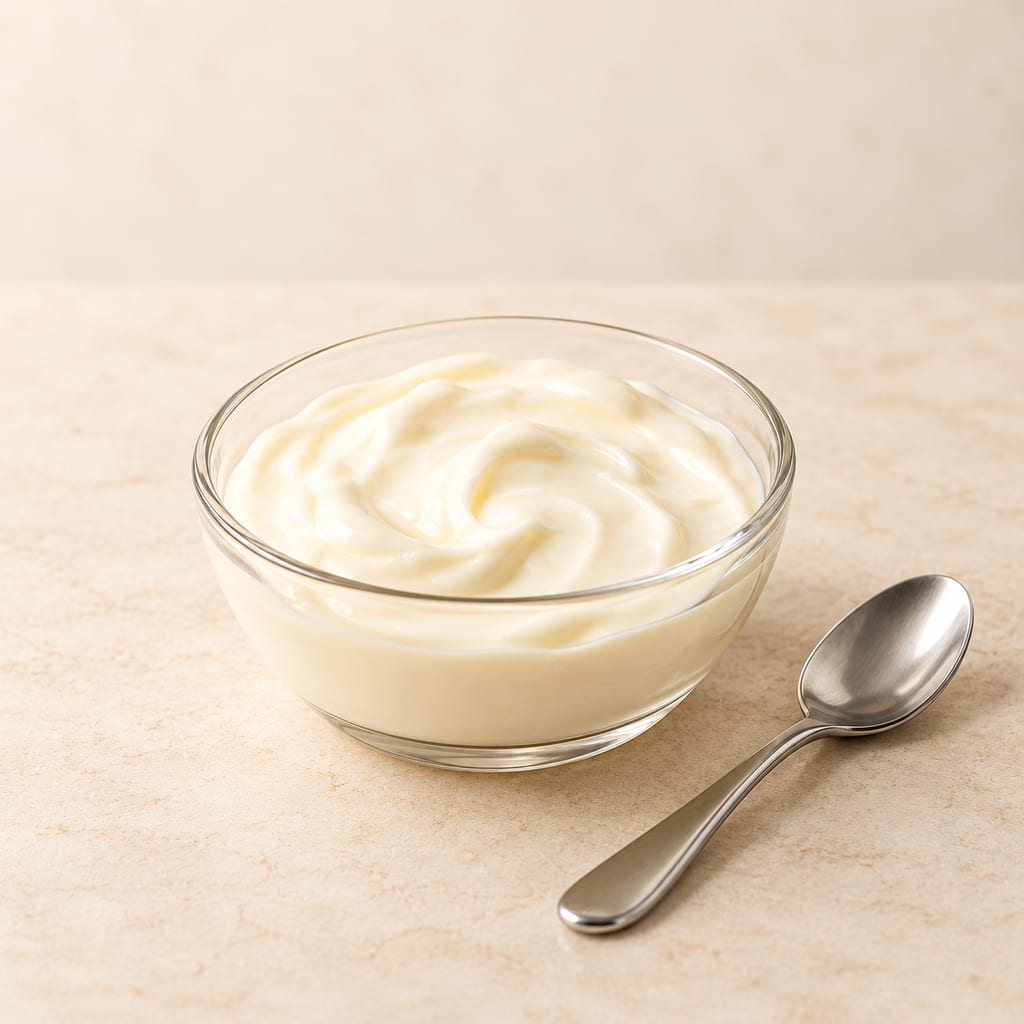
Crème fraîche is cream soured by lactic cultures into a thick, mild topping. It suits fruit and desserts as well as soups, sauces and other savoury dishes.
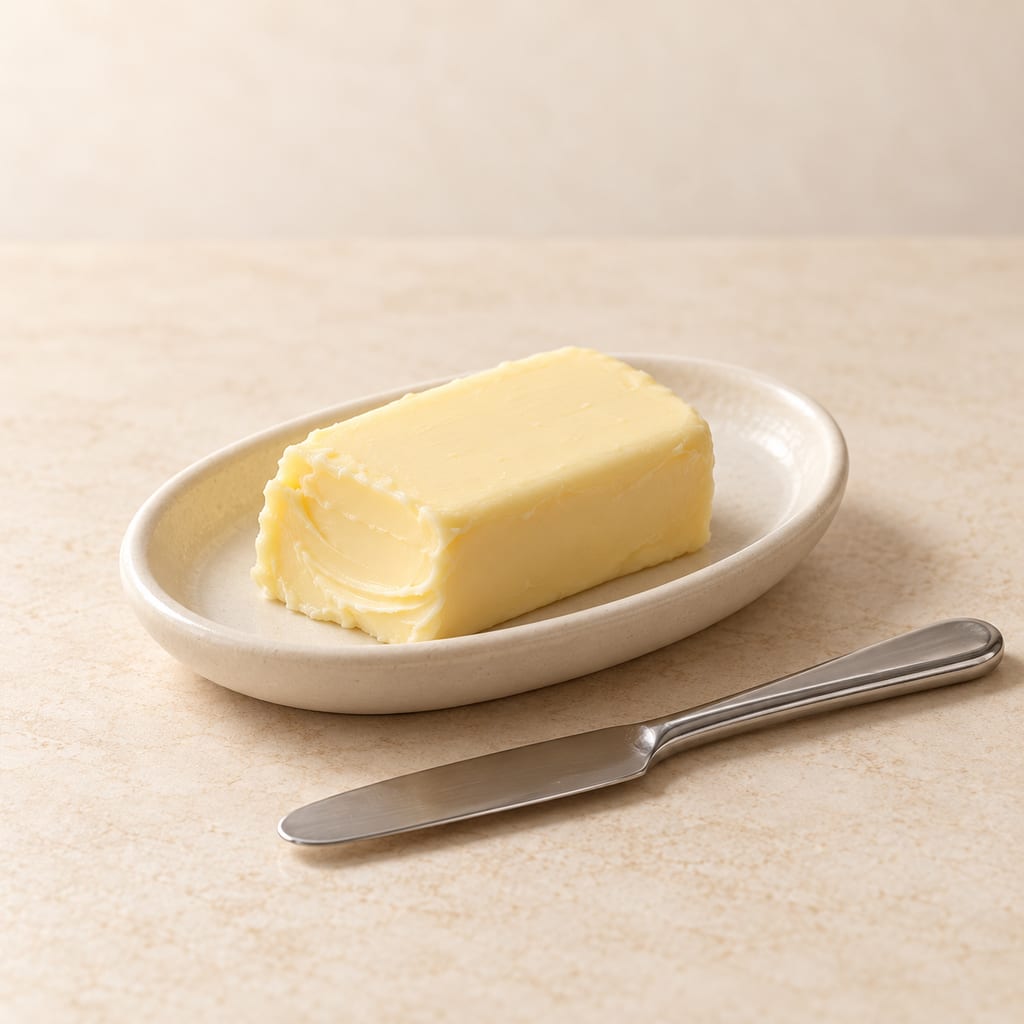
Cultured butter is churned from cream soured with lactic cultures. Its lightly tart flavour comes from the cultured cream, which separates into butter grains and buttermilk.
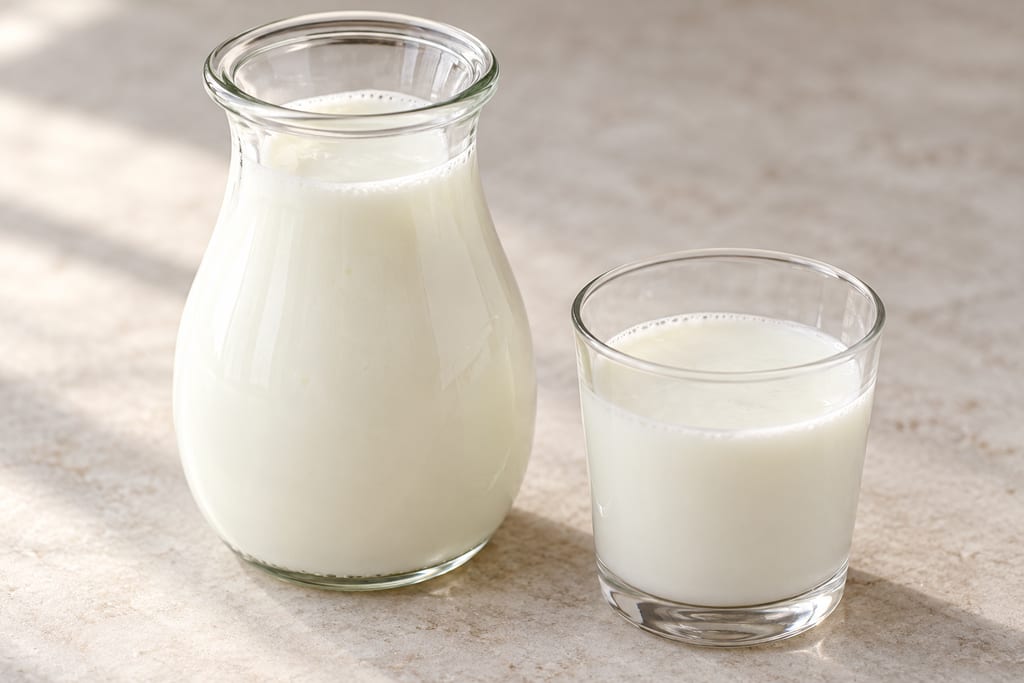
Cultured buttermilk is skim milk soured with a lactic starter into a tangy drink. This Canadian home method sets the milk without churning cream.
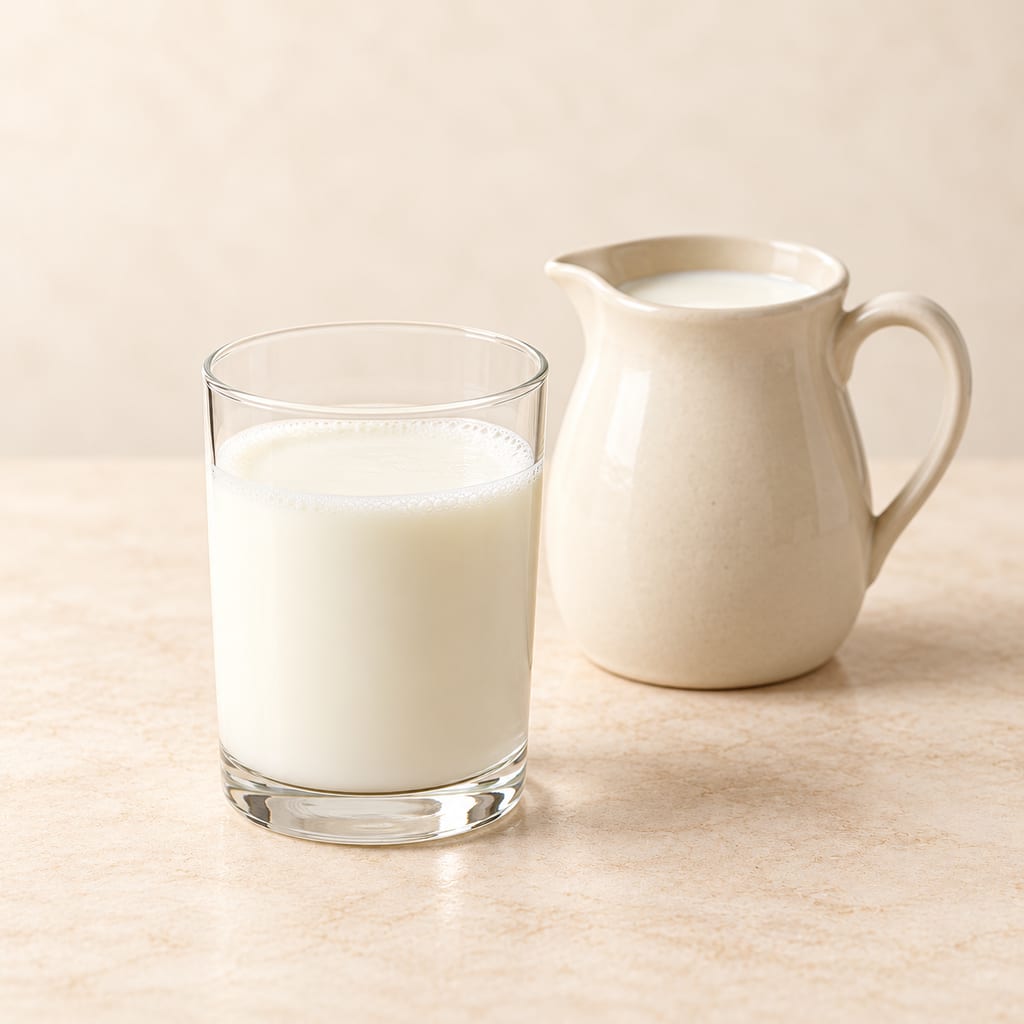
Milk thickened with a packet of buttermilk culture makes a tangy drink and a baking ingredient. This warm-incubated version uses whole milk.
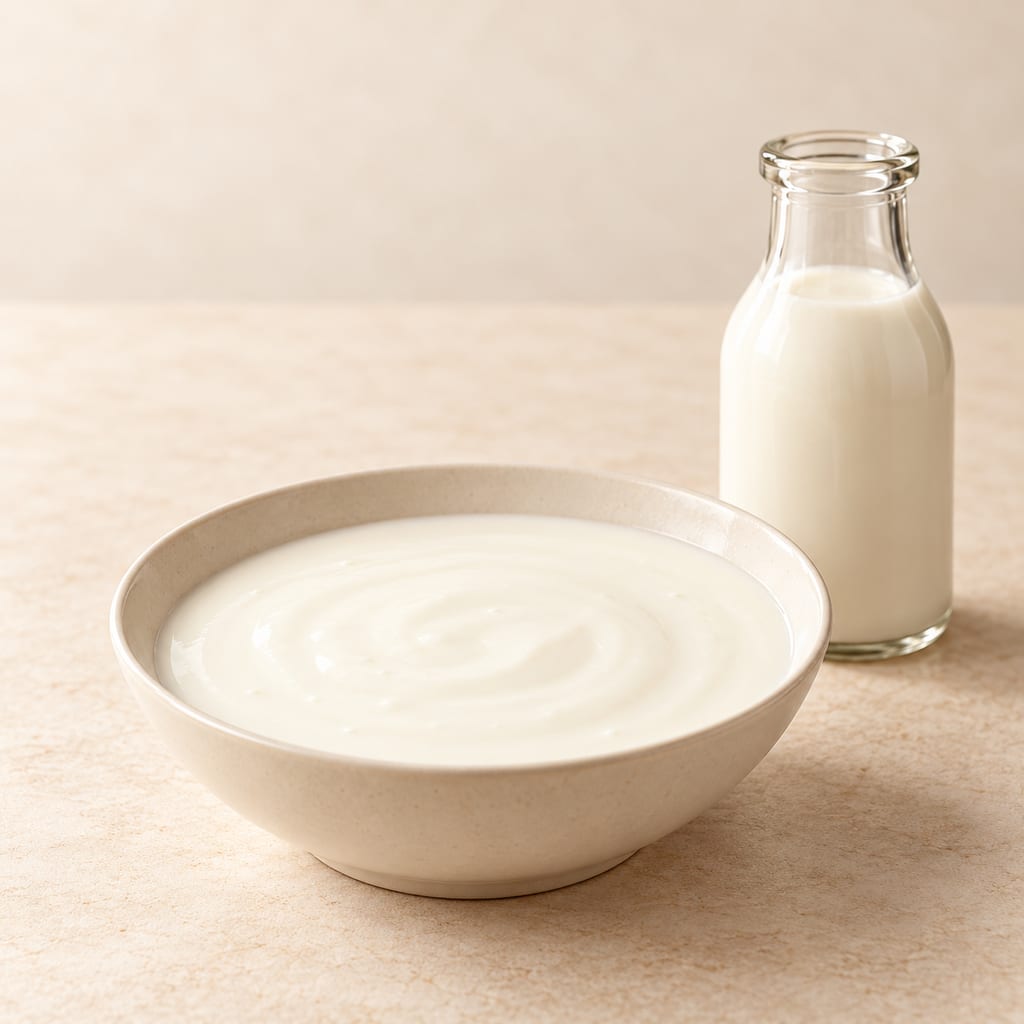
Filmjölk is a Swedish cultured milk with mild acidity and a spoonable body. This recurring batch uses filmjölk from the previous batch to culture fresh milk.
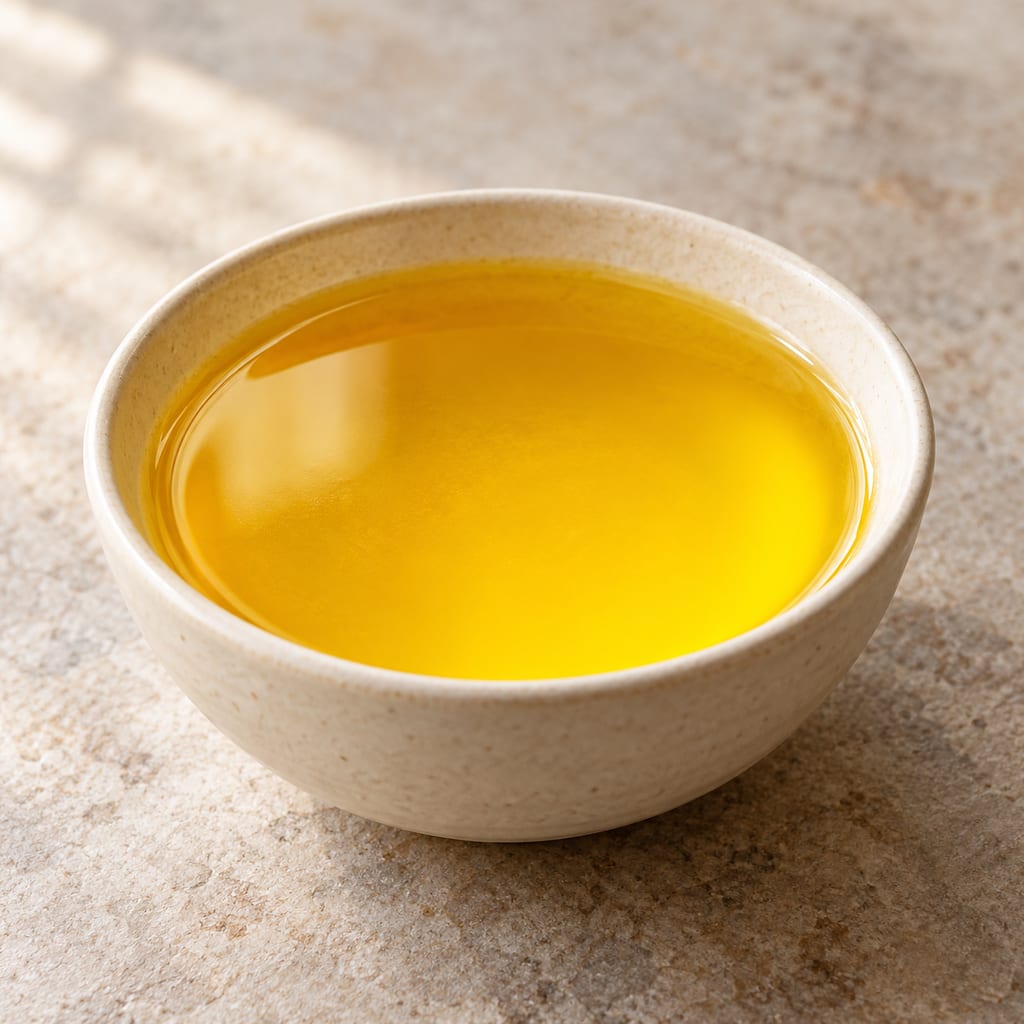
Butter heated until most water leaves and the milk solids separate, giving a fat that keeps far longer than butter. Rendering applies the same heat to animal tissue to make lard and tallow.

At North Abydos in Egypt, a fixed early Dynastic brewery comprised parallel semi-subterranean installations with rows of ceramic mash vats; excavation reports revise their number, scale and estimated batch capacity.

Ají amarillo is the orange-yellow Peruvian chilli cultivar group of Capsicum baccatum, used to colour and season huancaína sauce and ají de gallina. Published heat estimates do not establish one range for the named cultivar.

Toasted almonds are whole sweet almond kernels dry-roasted until golden to brown. Heat replaces their marzipan note with a roasted, nutty one; they thicken and flavour romesco.

Kodiak salmon, halibut and cod cut as seg'aq and hung on an initaq rack to become tamuuq, with kac'amaasaq and kupcuunaq named as different results.

Aniseed is the dried ripe fruit of Pimpinella anisum, an aromatic Apiaceae spice commonly called a seed. It adds a sweet, warm aroma to breads such as Moroccan krachel and South African mosbolletjies, and is distinct from star anise.

A fixed Late Chalcolithic installation in Areni-1 cave combined a shallow clay pressing basin with a large jar set into the cave floor and storage vessels nearby.

Ripe avocado flesh is the soft, buttery, fat-rich pulp of Persea americana, eaten raw. It is low in acid, so it is a fresh ingredient that needs care in chilled dishes.

A portable dome and pan used over a hearth, with embers on the lid and heat from below. Regional peka and saç forms share this principle while differing in materials, pan shape and how the food is cooked.
No community contributions have been published for this entry yet.
Sign in to contribute. Published comments and photos are free to read.
National Museum of IrelandHistory
National Museum of Ireland — Viking DublinA wooden churn dash among the material recovered from excavations in Viking Dublin: a tool used to agitate cream or other dairy liquid in a container, which directly supports butter-making in the town rather than inferring it from the presence of cattle.
Dublin was an important Viking Age urban centre with agricultural land supporting the settlement, so the churn also illustrates the relationship between town and countryside.
One surviving churn dash does not reveal how much butter was produced, how long cream was stored before churning, or whether a particular batch was cultured.
Cited in: Evidence from Viking Age Ireland; Traditional wooden churns; Historical limits
National Museum of DenmarkHistory
National Museum of Denmark — Meat and fishButter heavily salted as a preservation practice, described without a universal salt-to-butter ratio, a specified water content or a validated shelf life.
Cattle and other dairy animals as a substantial part of the farming economy, with milk consumed fresh, soured or processed.
Cited in: Names and terminology; Butter in Scandinavian households; Cultured butter versus sweet-cream butter; How butter was eaten; Historical limits
Viking Ship Museum, RoskildeHistory · Method
Viking Ship Museum — Food in Viking TimesButter and dairy demonstrations in the museum's historical cooking material, including butter's use spread on bread, melted over vegetables, cooked into dishes or stored for later.
Cited in: Butter in Scandinavian households; How butter was eaten
Scientific ReportsScience · History
Smyth and colleagues, 2019 — Four millennia of dairy surplus and depositionChemical and isotopic research published in 2019 confirmed dairy-fat origins for the great majority of the Irish bog-butter samples examined.
The dated material spans a very long period, beginning in the Early Bronze Age around 1700 BCE and extending into the seventeenth century CE, so bog butter is not exclusively a Viking Age phenomenon.
The motives for depositing butter in bogs remain uncertain: storage, deliberate ageing, concealment and ritual deposition have all been considered, and no single purpose should be assumed.
Cited in: Bog butter: a related archaeological tradition
Exeter CathedralMethod · Safety
Exeter Cathedral — Homemade ButterA contemporary butter-making method: 300 ml of pasteurised double cream, not extra-thick, beaten continuously past the whipped stage until yellowish butter grains separate from the thinner liquid, which is sweet buttermilk.
Collect the grains in a sieve or cloth, work them gently in cold drinking water and replace the water until it stays mostly clear, press out visible pockets of water or buttermilk, mix in an optional small pinch of salt and refrigerate immediately.
The method gives no guaranteed butter yield, since that depends on the cream's fat concentration and the efficiency of separation, and no validated room-temperature shelf life.
Cited in: What is churned butter?; The chemistry of cream; Why the fat content matters; Cultured butter versus sweet-cream butter; Reconstructed recipe: freshly churned butter; Method; Why washing and working matter; Cream becomes whipped but does not separate; Butter feels excessively wet; Butter becomes greasy or difficult to handle; Butter tastes sour; Mould or an unusual rancid smell develops; Safety and storage