Nettle
A source-linked account of common stinging nettle as a food plant and spreading perennial, with regional cooking reports, handling cautions and cultivation limits.
 FermenteaWhere food goes to change
Modern adaptation
Brændenældesuppe · Nettle pottage · Nettle soup · Brændenældesuppe · Nässelsoppa
Young stinging nettle shoots cooked with bacon, onion, garlic and three roots into a thick spring soup, from a Danish Viking museum's recipe, with a meat-broth variation and ember-baked turnips.
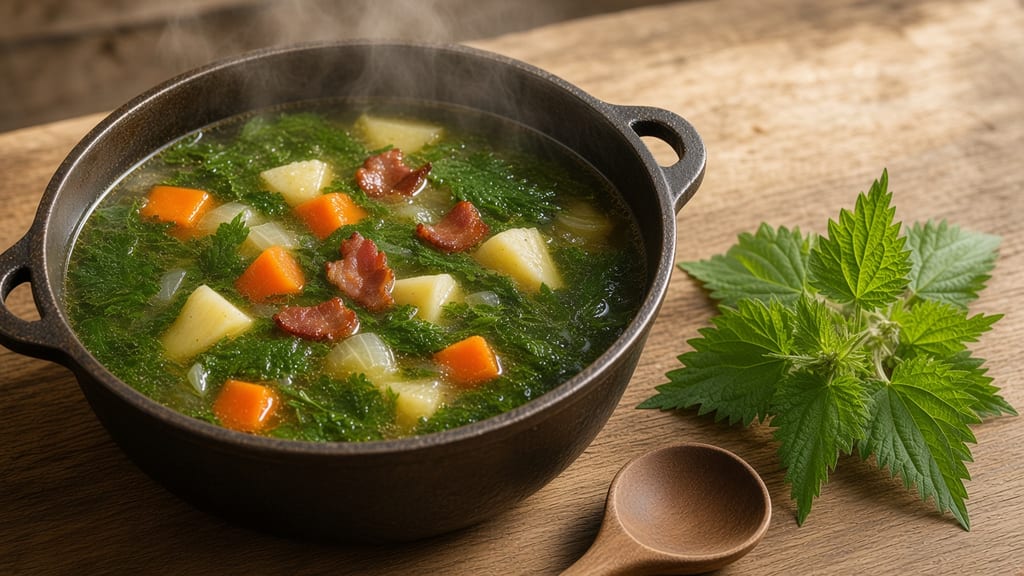
Nettle pottage is a thick soup of young stinging nettle shoots cooked with roots, onion and a little fat. The version here comes from Ribe VikingeCenter, an open-air museum in southwest Jutland that rebuilds a Viking Age town and cooks over open fires. The recipe serves four.
The pot holds diced bacon, onion, garlic, parsnip, carrot and half a celeriac, with thyme, a handful of wild garlic and a full litre of chopped nettle shoots. Water or stock goes in after the vegetables have sweated under a lid. Three quarters of an hour later the roots are soft and the nettles have collapsed into dark green threads through the broth.
It is a museum recipe, not an excavated one. Ribe writes all its recipes so they can be made on a stove as well as a fire, and this one works in any kitchen with a heavy pot.
The Danish name is brændenældesuppe, burning-nettle soup. The plant is common stinging nettle, Urtica dioica, a perennial native to Britain and Ireland as well as Scandinavia.
The RHS describes it as a plant that thrives in nitrogen-rich, moist soil and self-seeds freely. Anyone with a neglected corner of garden, or a compost heap, has probably grown it without trying.
No recipe for nettle soup survives from the Viking Age. What survives is a picture of how ordinary households ate. The Viking Ship Museum in Roskilde, drawing on archaeological finds and written accounts, describes everyday food as porridge of barley or oats, bread with butter or cheese, and hot meals that were mostly soups and stews of meat, fish and vegetables.
The same museum lists the plants known in Viking times. From the garden came peas, beans, cabbage, onions, garlic and leeks. From the forest came the roots, stems and leaves of angelica. Thyme, yarrow, bog myrtle and juniper are named among wild herbs. Nettles do not appear on the list.
That gap matters. A nettle soup fits the period's ingredients and its cooking, and museums cook it for that reason. It does not show that Viking Age households ate nettles in spring. Readers should take the dish as a careful modern guess.
Soup also turns up in the poetry. The Viking Ship Museum quotes Rígsþula, Rig's journey, a poem that probably dates from around the 10th century. The god Heimdal, travelling as Rig, visits a thrall's house, a farmer's and a chieftain's. At the thrall's table, Edda brings out food rich in chaff and a bowl of soup.
At the chieftain's house the table is laid with bleached linen, white wheat bread, pork, roast fowl and wine. The poem uses food to rank people. A pot of roots and greens belongs at the lower end of that scale, which is where most people ate.
The museum describes a year built around saving food. Much of the summer harvest from field and garden was kept for winter. Grain, vegetables, fruit and berries were dried in summer and autumn, in the sun when it shone and otherwise by the heat of indoor hearths.
Later in autumn, when livestock were slaughtered, the meat was dried, smoked or salted. Salt was hard to come by, since Viking lands had no natural deposits; it was made by boiling down seawater or imported from the Baltic. Dried fish was widely eaten.
After a winter of stored food, anything fresh and green would have been welcome. That is the reasoning behind the museum soups. It is a reasonable inference from how the year worked, not a recorded custom.
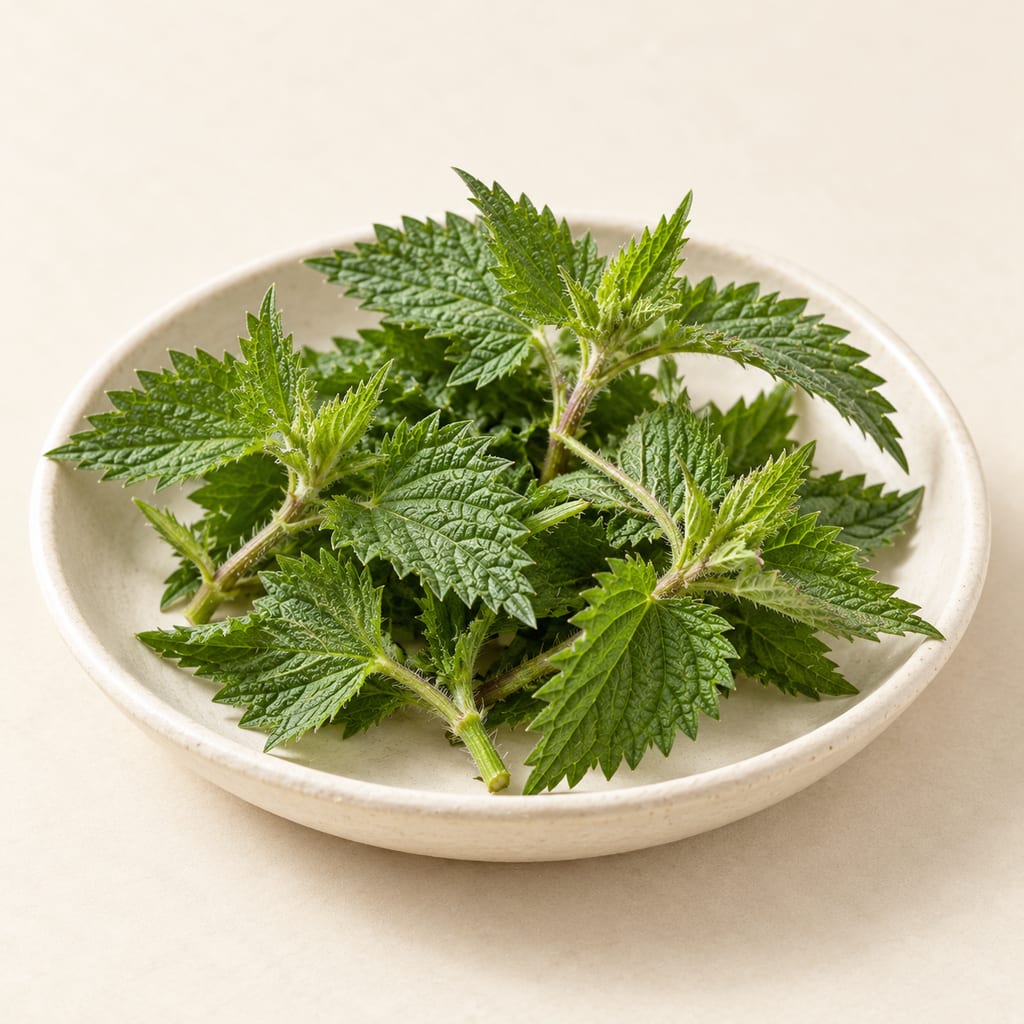
The Woodland Trust describes nettle as a perennial that grows upright to 2 m tall. Its soft, serrated leaves sit in opposite pairs on the stem, and tiny greenish-white flowers cluster towards the top.
It lists leaves, stems, shoots, flowers and seeds as edible, and names tea, beer and soup among the uses. For this soup, only the young leafy tops matter.
The museum's advice is short. Pick with a cloth or a glove, go for new small shoots because they taste best, wash the leaves thoroughly and chop them finely.
The Woodland Trust adds detail. The whole plant is covered in stinging and non-stinging hairs. The tender tips give the best flavour, which it compares to spinach. It also gives the rule that covers every wild plant in this pot: never eat anything you are not completely sure of, and never pick from ground that has been sprayed.
Late in the season the stems turn fibrous and the leaves coarse. A soup made from them is stringy and bitter, and longer cooking does not save it. Spring shoots, or the fresh regrowth on plants cut back in summer, are the useful harvest.
The museum puts it simply: the nettles burn, but only until they are cooked. The RHS lists the living plant as a skin irritant and advises gloves when handling it. Raw chopped nettles on the board still sting, so keep the gloves on until they are in the pot.
Heat also shrinks the leaves. A full litre of chopped shoots cooks down to a small mass of soft greens spread through the broth. Long simmering turns them from bright green to a darker, duller colour. That change affects looks, not safety.
Finds of kitchen equipment show what a Viking household cooked with. The museum lists roasting spits, boiling vessels of wood, leather and clay, pans of soapstone and iron plate, sieves, ladles, bowls and knives. Food was boiled or roasted over an open fire or in an oven.
Wooden and leather vessels could not go on the fire. Cooks heated stones in the hearth and dropped them into the liquid instead. The museum calls these potboilers and warns modern cooks never to use flint, which can shatter when heated.
For boiling, the museum advises a blazing fire. For roasting or baking, it advises good embers. A large fire can do both: boil at one end and rake embers to the other for the turnips. Its pot should be iron, steel or aluminium, without plastic or Bakelite handles, hung from a tripod or set on three stones.
Fry a good handful of diced bacon in a heavy-based pot. When it starts to colour, add one or two finely chopped onions and one or two cloves of garlic, and cook until the onions turn clear.
Add the diced roots, the chopped thyme and wild garlic, and the nettles, and stir well. Put the lid on and let everything sweat for about 10 minutes, stirring now and then. Pour in 1.5 litres of water or stock and bring it to the boil.
Simmer under a lid for about 45 minutes, until the roots are tender. Taste, salt, and serve the soup very hot.
The museum notes that the soup works without bacon. Soften the onion and vegetables in a little butter or oil instead and carry on as before.
Wild garlic is only around for a few months in spring. The museum says it can be left out or replaced with dried wild garlic. Leaving it out is also the right choice for anyone unsure of their identification.
The Viking Ship Museum publishes a heavier soup for about four people. It uses 1–1½ litres of water, half a kilo of meat, three parsnips, two large onions, about three cups of nettle top shoots, herbs and optional salt. The meat can be pork, beef, lamb or mutton, chicken or fish.
The meat goes into cold water, comes to the boil and simmers for about an hour, with the scum skimmed off. After about half an hour of that time, the onions, parsnips and coarsely chopped nettles go in with the herbs. When the meat is tender it comes out, is cut into cubes and goes back into the pot before seasoning.
This is a different dish from the Ribe soup. Here the nettles season a meat broth. In the Ribe pot they are the main ingredient.
Ribe VikingeCenter pairs its green dishes with roots baked in the fire. The museum notes that turnips were grown in Viking kitchen gardens, and that turnips, cabbage, beans, peas and grain made up a large part of the everyday diet.
Bury four medium turnips in the embers, not the flames, and turn them often so they bake on all sides. The skins blacken, and only the inside is eaten. Depending on size they take 45–90 minutes; push in a knife to check. Split them, season with salt and herbs such as thyme, and serve with butter.
The museum suggests celeriac and other hard vegetables cooked the same way. Ember-baking cooks a root. It does not preserve it for winter.
The Viking Ship Museum prints its nettle soup beside a barley porridge and a bean stew. The porridge is coarse barley flour scattered into a litre of boiling water, simmered for 5 minutes with two apples and a few hazelnuts, then left by the fire for half an hour to an hour.
The bean stew uses 400 ml of horse beans, soaked overnight in three times their volume of water and boiled for 1–1½ hours, then finished with onions and cooking apples fried in butter, soured cream, thyme and crushed mustard seed. The museum warns that the beans must never be eaten raw. Together the three dishes show the range the museum builds from the same short list of plants.
Everything in the Ribe pot except the nettles and wild garlic is sold in any supermarket. Bacon lardons, onions, garlic, parsnips, carrots, celeriac and fresh thyme are standard stock.
For anyone without nettles, young spinach gives a similar flavour, which is how the Woodland Trust describes nettle leaves. That makes a different soup and should be called one. Dried wild garlic, which the museum allows, stands in when the fresh leaves are out of season.
The museum says only to serve the soup steaming hot. Barley flatbread, porridge or plain bread all suit it. The museum gives no garnish.
If the cooked leaves still sting, they went in too late or were too coarse to soften. Simmer for longer.
If the soup is stringy or bitter, the nettles were old. Next time pick only the top few leaves of young shoots.
If the roots are still hard at 45 minutes, keep simmering. Size and variety set the time.
If the colour has gone olive, the soup has simply cooked a long time. Colour is not a safety signal.
Cook bacon and meat through. The UK Food Standards Agency's check is 70 °C at the centre of the food for 2 minutes.
For soup made on a stove, cool leftovers and put them in the fridge within two hours, then eat them within 48 hours or freeze them. The Viking Ship Museum is stricter about fire cooking: it advises never keeping campfire food until the next day, even in a refrigerator.
Salt and herbs do not make the soup keep. If a pot left out starts to bubble, sour or grow mould, throw it away.
No Viking Age recipe for nettle soup survives. The Viking Ship Museum's list of foods known in Viking times names garden peas, beans, cabbage, onions, garlic and leeks, angelica gathered in the forest, and thyme among wild herbs, but it does not list nettles. Its everyday hot meals were soups and stews of meat, fish and vegetables. Ribe VikingeCenter and the Viking Ship Museum each publish a nettle soup as modern cooking for visitors, made from plants and methods that suit the period.
Scaling: source batch only
Wild garlic leaves can be mistaken for lily of the valley, which is poisonous, when the plants are not in flower.
Hazard sourceGarden weeds should not be eaten from ground that has been sprayed with chemicals, and nothing should be eaten unless its identity is certain.
Hazard sourceThe whole nettle plant carries stinging and non-stinging hairs, and the RHS lists it as a skin irritant. The sting lasts only until the nettles are cooked.
Hazard sourceThe museum soup starts with bacon and the variation is built on simmered meat, so both need cooking through.
Hazard sourceA moist cooked soup is perishable. The Viking Ship Museum advises never keeping food cooked over a campfire until the next day, even in a fridge.
Hazard sourceWear gloves or use a cloth when picking and preparing nettles, and choose young shoots
Control sourceIdentify every wild plant with certainty and pick only from unsprayed ground
Control sourceCook bacon and meat through in the meat versions
Control sourceCool and refrigerate stove-cooked leftovers promptly
Control sourceDo not keep soup cooked over an open fire for the next day
Control sourceNettles still sting until they are cooked.
Wild garlic can be confused with poisonous lily of the valley; leave it out if you are not certain.
Salt and herbs do not make this soup keep.
Ember-baking a root cooks it. It does not preserve it for winter.
Ribe VikingeCenter publishes both the nettle soup and the ember-baked roots. Neither is an excavated recipe. The museum writes both for an outdoor fire or a home stove.
The Viking Ship Museum publishes the meat, parsnip and nettle-top variation in its educational sheet on food in Viking times. Its quantities are modern choices.
A source-linked account of common stinging nettle as a food plant and spreading perennial, with regional cooking reports, handling cautions and cultivation limits.
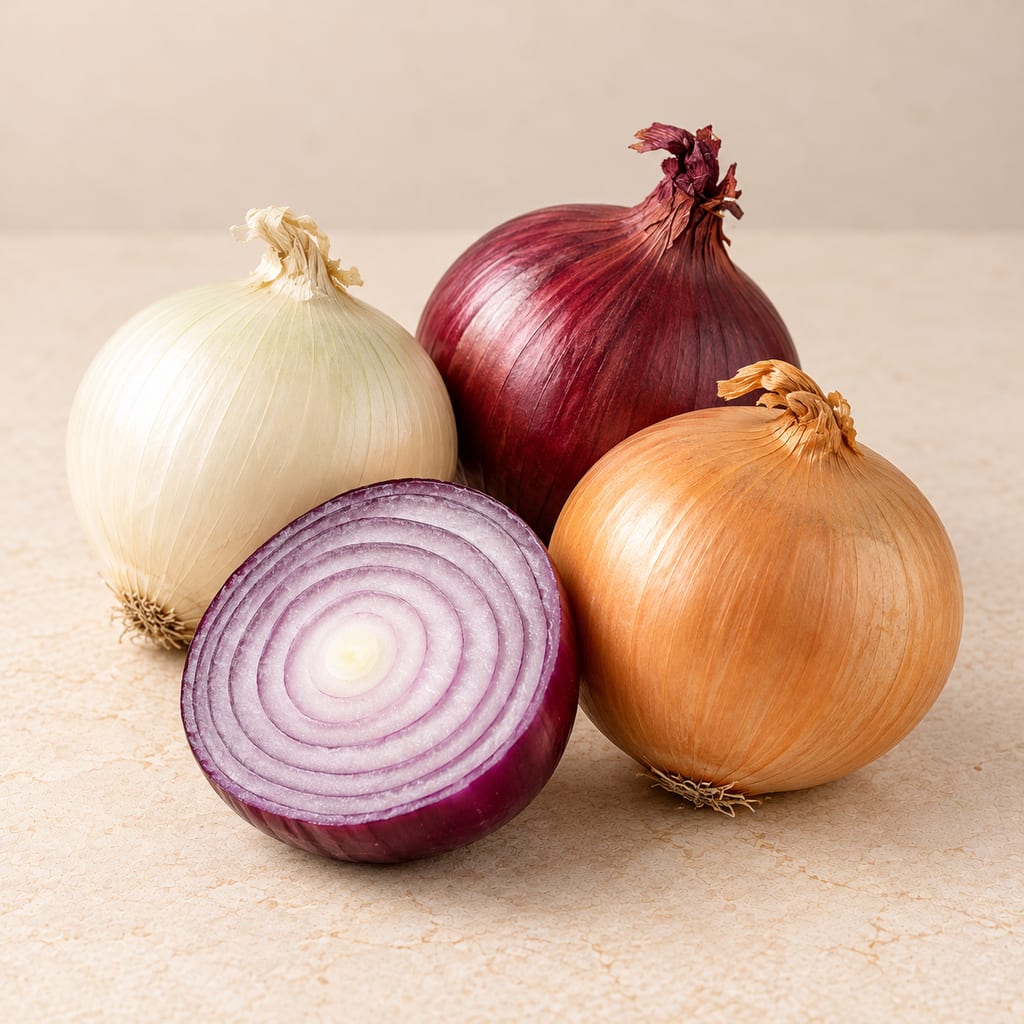
The onion is the bulb of Allium cepa, built from swollen leaf bases, and is eaten raw, cooked, pickled and as a seasoning in ferments. It is known only from cultivation and probably began in Central Asia.
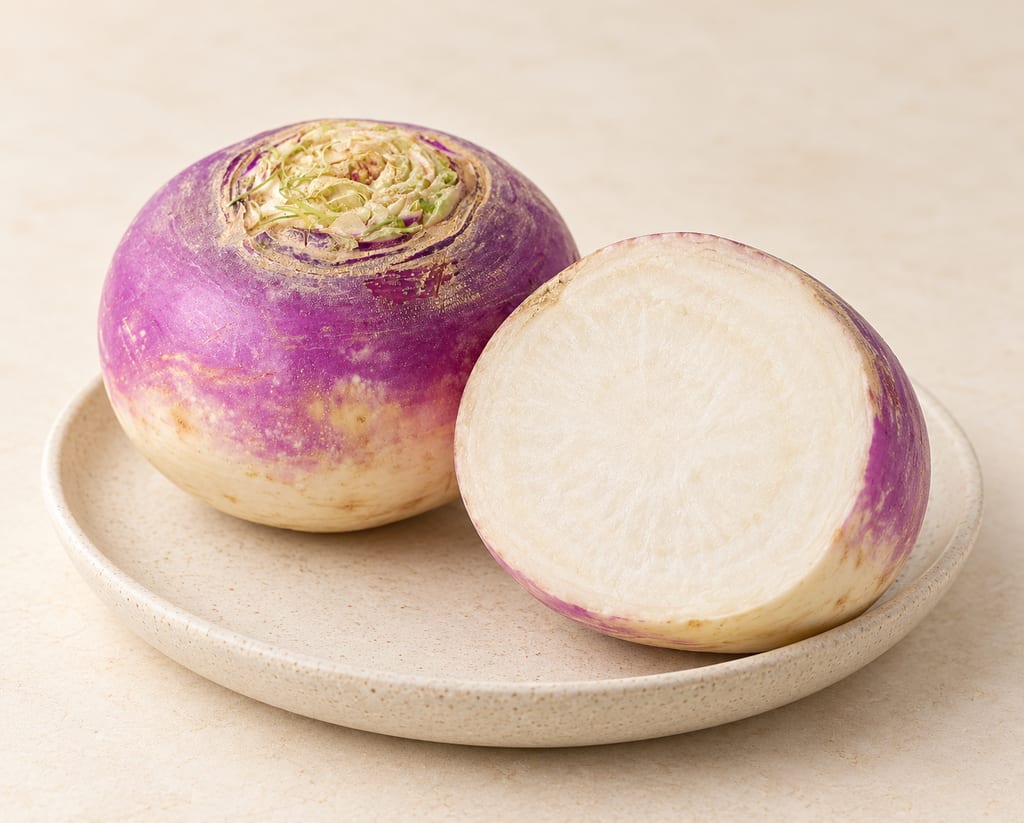
The turnip, a brassica crop whose roots and leaves are eaten. The source record names the species Brassica rapa, but its wild and naturalised forms are not assessed here.
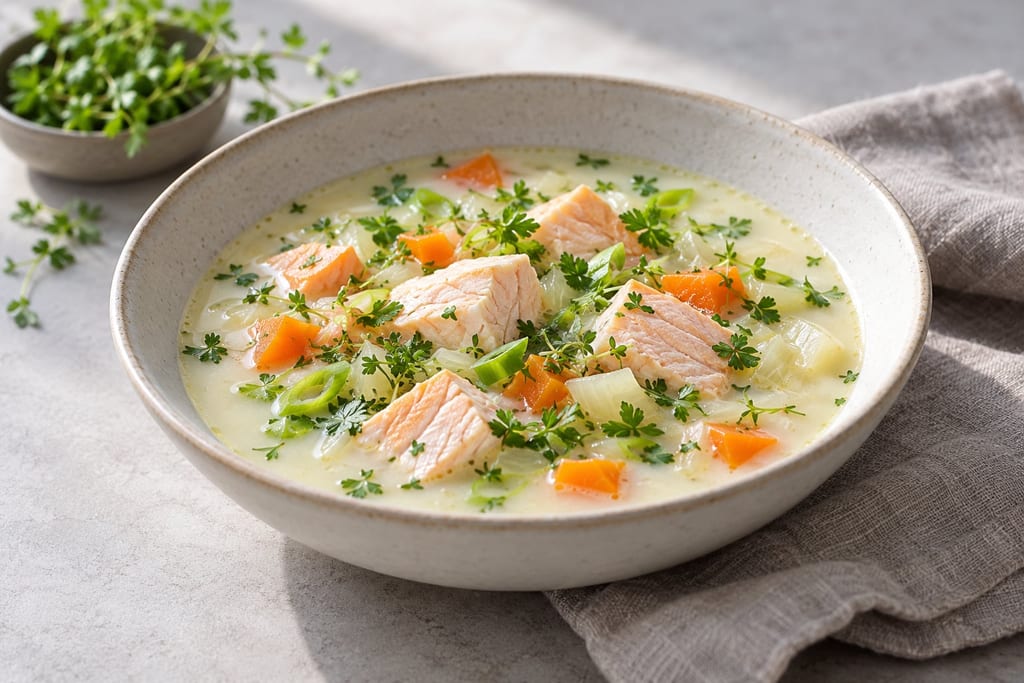
Trout or salmon poached at the end of a simmered broth of onion and root vegetables, a present-day reconstruction of coastal cooking built on excavated fish bones and a boiling pot.
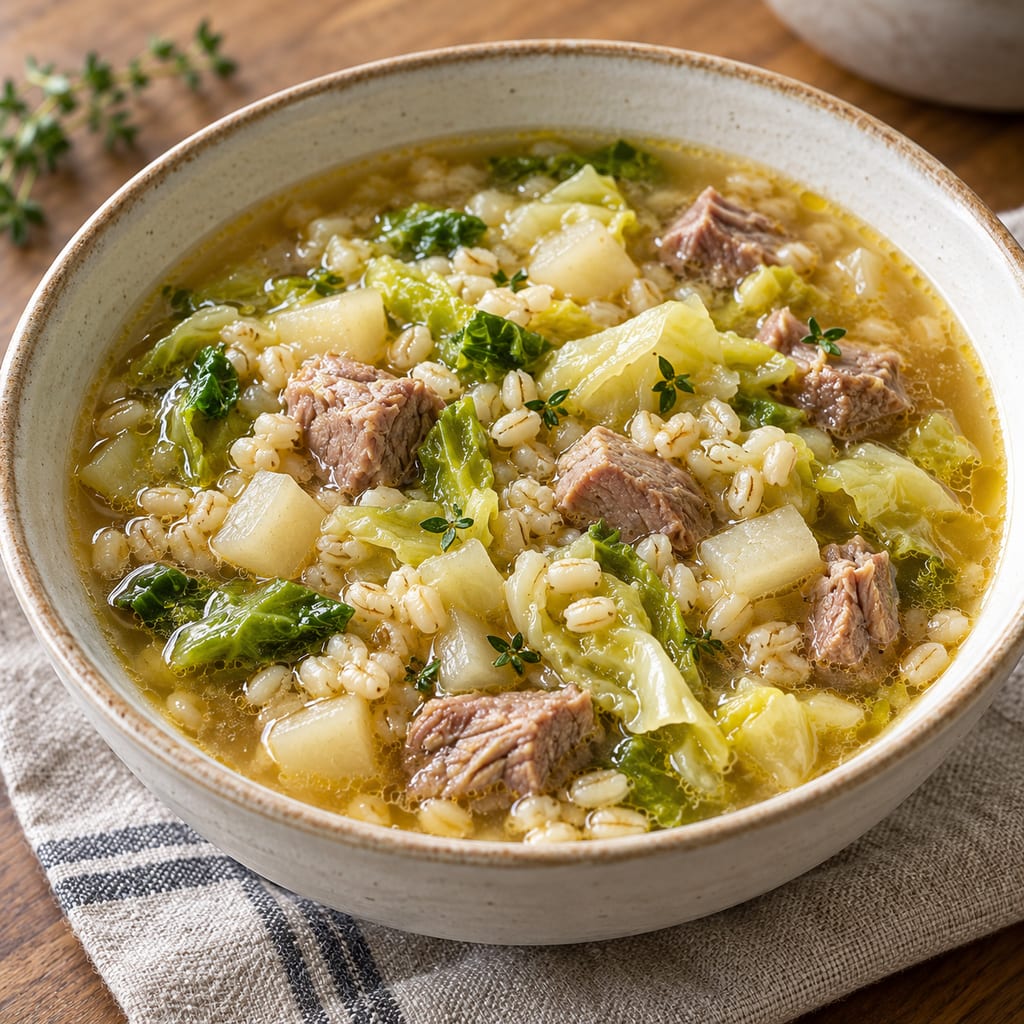
Lamb shoulder simmered with pearl barley, turnip and leafy cabbage in one pot, a present-day reconstruction built from the animals, grains and vegetables of northern European farming.
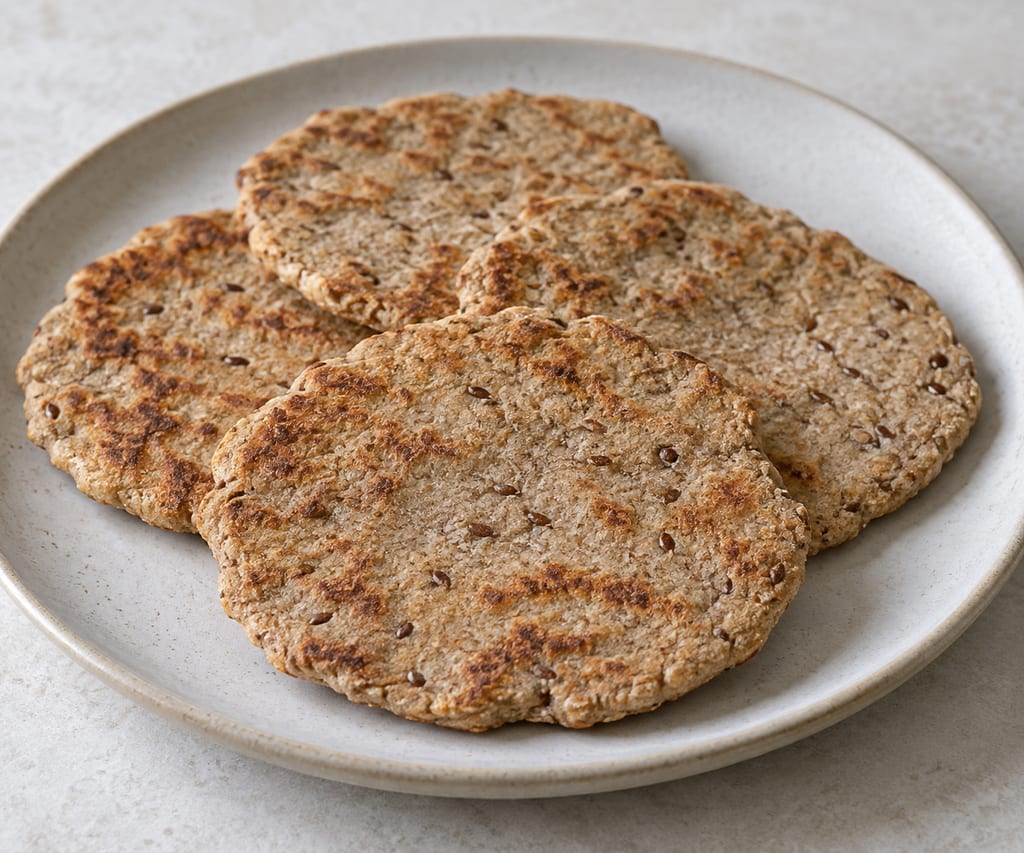
A small, dense cake of ground barley mixed with liquid and cooked against a hot surface, the form a low-gluten northern cereal takes when a household turns stored grain into bread.
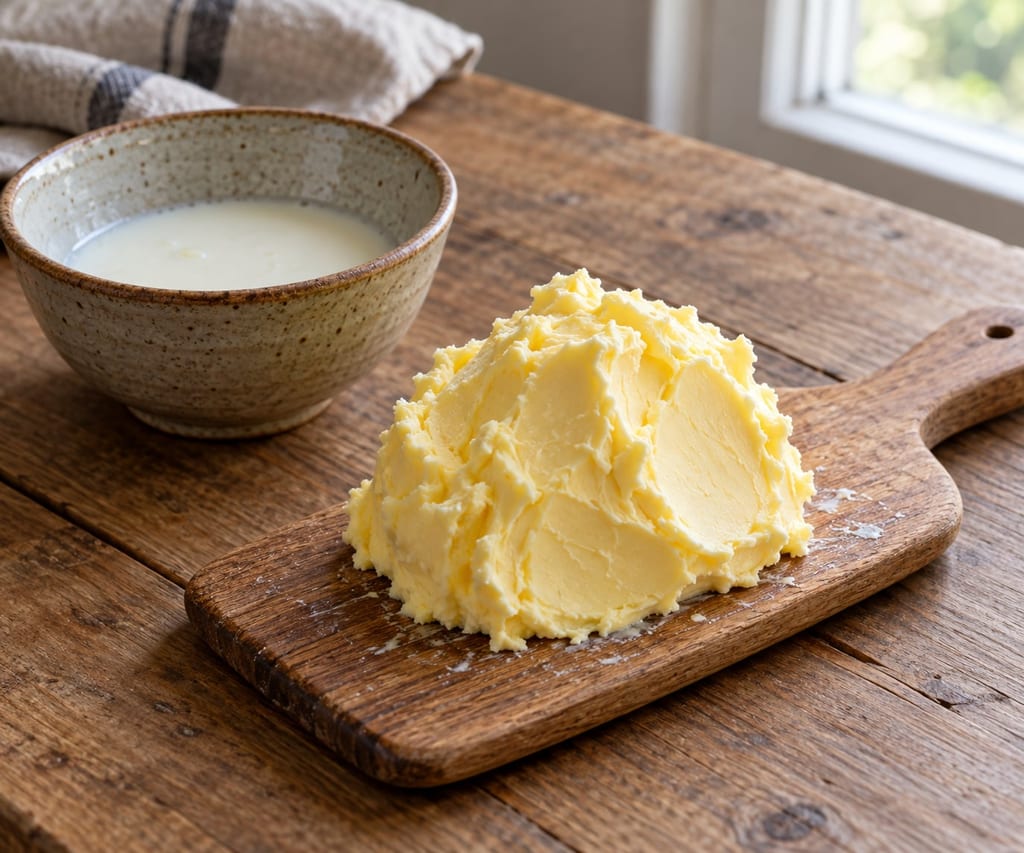
Cream agitated until its fat globules join into a solid mass and release buttermilk, the dairy fat a northern household could concentrate, salt and keep when milk itself would not last.
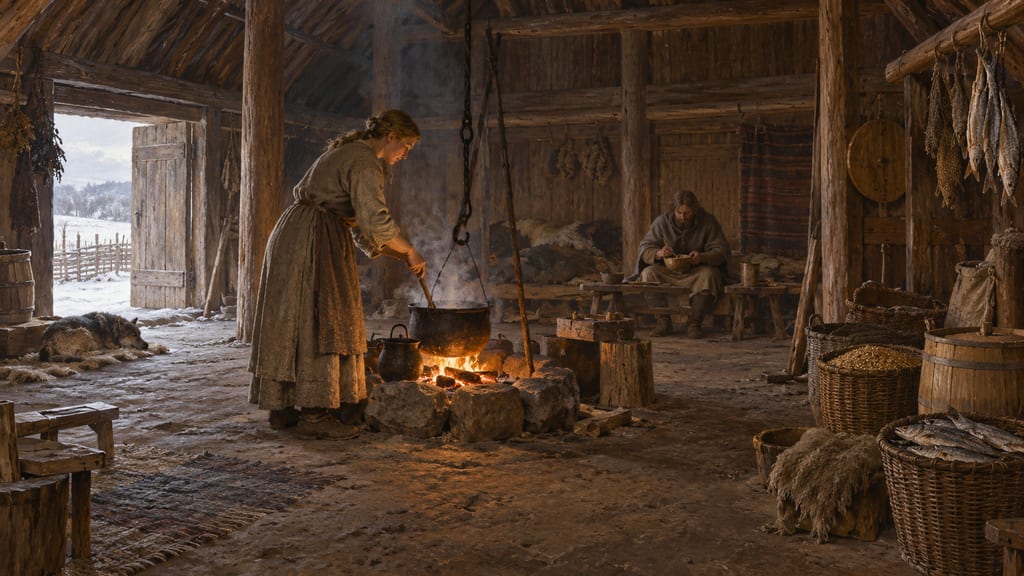
How ordinary Viking-Age households grew, dried, smoked, salted and cooked their food through the northern year, and how to cook their dishes today with supermarket ingredients.

Crushed or milled barley cooked in water until the starch softens and the mixture thickens, the plainest way a northern household turned stored grain into a meal, here with apple and hazelnut.
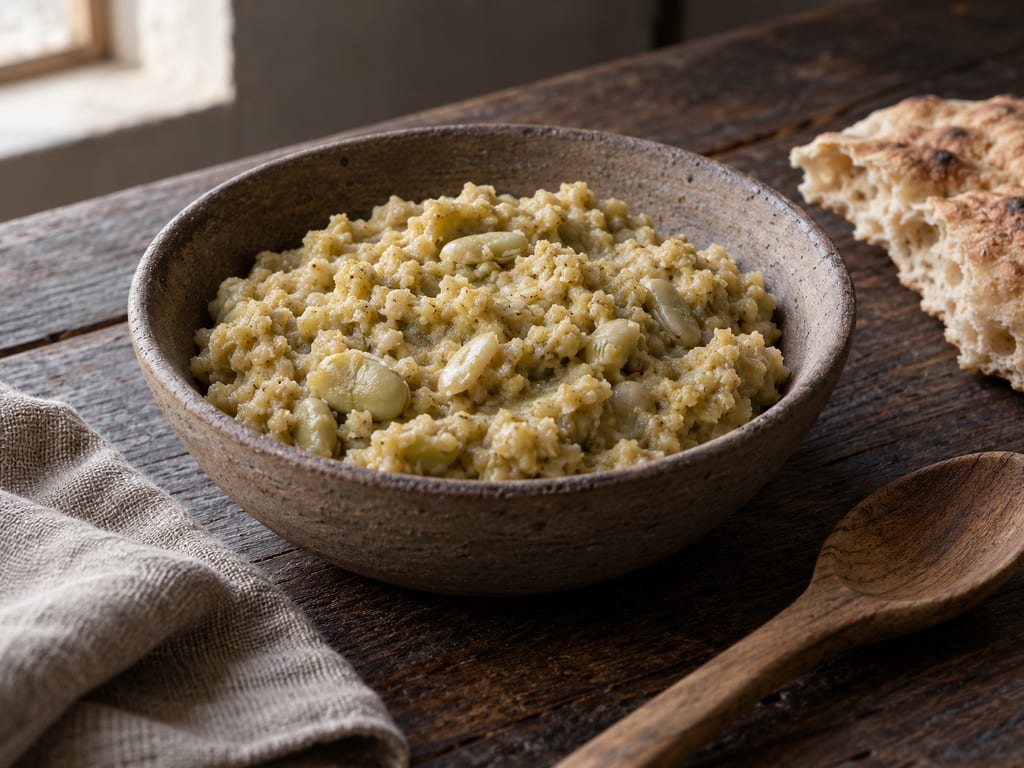
Cooked broad beans crushed to a thick paste with garlic and salt, a museum preparation built on the one European pulse that was already old when the Viking Age began.
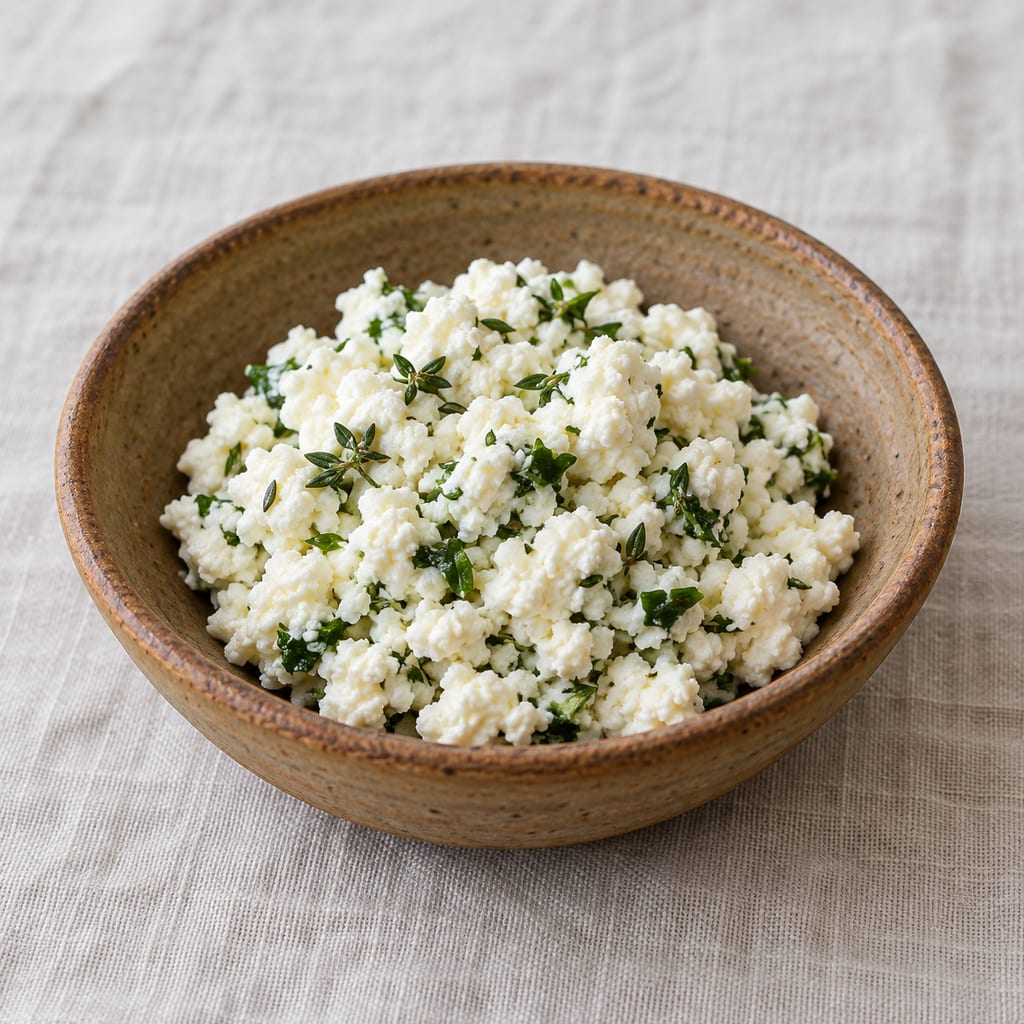
Soft fresh curd made by draining whey from milk already thickened by bacterial acidification, the simplest point in a northern dairy tradition that also produced skyr, ymer and whey itself.
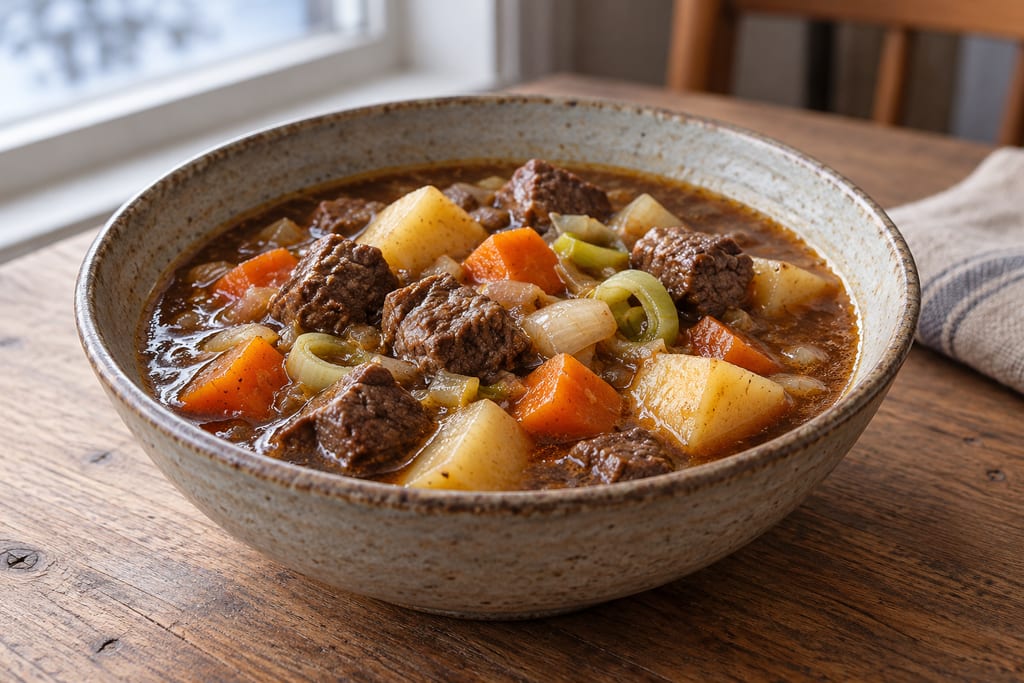
Ann-Kristine Bongo's four-serving bidus from Sami Siida in Alta is a contemporary, festive reindeer stew simmered with onion, carrots and potatoes.

A four-serving cep ohaw recipe from the former Ainu Museum café in Shiraoi, documented in 2015.
No community contributions have been published for this entry yet.
Sign in to contribute. Published comments and photos are free to read.
Ribe VikingeCenterMethod · Safety
BrændenældesuppeSoup for four: a good handful of diced bacon, 1–2 onions, 1–2 garlic cloves, 1 parsnip, 1 carrot, half a celeriac, a handful of wild garlic, 4 sprigs of thyme, 1 litre of chopped young nettle shoots, 1.5 litres of water or stock, salt.
Fry the bacon, soften onion and garlic, add roots, herbs and nettles, cover for about 10 minutes, add liquid, bring to the boil, simmer under a lid about 45 minutes.
Pick with a cloth or glove, choose young shoots, wash well and chop finely; the nettles sting only until cooked.
Vegetarian version with butter or oil; wild garlic is seasonal and can be omitted or replaced with dried.
Cited in: What is nettle pottage?; Names and identity; Picking nettles; Why the sting goes; Cooking the Ribe soup; A meat-free pot; In a modern kitchen; Serving; Troubleshooting
Viking Ship Museum, RoskildeMethod · History · Safety
Food in Viking timesNettle soup with meat for about four: 1–1½ litres water, ½ kg meat, 3 parsnips, 2 large onions, about 3 cups of nettle top shoots, herbs, salt.
Meat simmered about an hour; vegetables and nettles added after about half an hour.
Everyday hot meals were soups and stews; list of known vegetables and herbs.
Never keep campfire food until the next day, not even in a refrigerator.
Cited in: Where the recipe sits in the Viking evidence; Soup at the bottom of the table; Winter stores and the first green food; Pots, fires and hot stones; The Viking Ship Museum variation with meat; Other pots from the same museum sheet; Safety and storage
Ribe VikingeCenterMethod
Glødebagte roerFour medium turnips baked in the embers, not flames, turned often, 45–90 minutes by size; the skins blacken and only the inside is eaten; served with salt, herbs such as thyme, and butter.
Turnips were grown in Viking kitchen gardens.
Cited in: Ember-baked turnips on the side
Food Standards AgencySafety
Cooking your foodCentre of the food at 70 °C for 2 minutes.
Leftovers into the fridge within two hours; eat within 48 hours or freeze.
Cited in: Safety and storage
Woodland TrustSafety
Seven edible weeds: foraging in your gardenNever eat anything you are not 100% sure of; make sure the garden has not been sprayed.
Nettle is covered in stinging and non-stinging hairs; pick the tender tips; gloves avoid stings; flavour similar to spinach.
Cited in: The plant itself; Picking nettles; In a modern kitchen; Troubleshooting
Woodland TrustSafety
Wild garlic (Allium ursinum)Not to be confused with lily of the valley, which is poisonous.
Royal Horticultural SocietyIdentity · Safety
Urtica dioica, common stinging nettleThrives in nitrogen-rich, moist but well-drained soil; self-seeds freely.
Skin irritant; wear gloves when handling.
Cited in: Names and identity; Why the sting goes