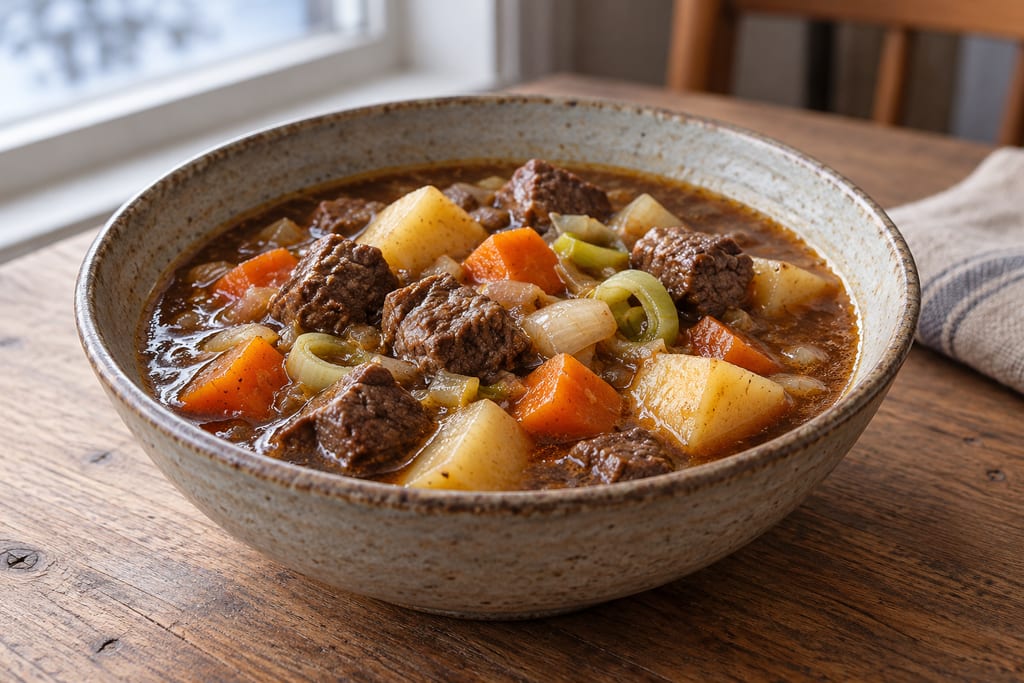
Bidus (Sámi reindeer stew)
Ann-Kristine Bongo's four-serving bidus from Sami Siida in Alta is a contemporary, festive reindeer stew simmered with onion, carrots and potatoes.
 FermenteaWhere food goes to change
cep ohaw · cepohaw
A four-serving cep ohaw recipe from the former Ainu Museum café in Shiraoi, documented in 2015.

This entry records one Shiraoi version of cep ohaw: the former Ainu Museum café recipe supplied to Hokkaido Museum in 2015. It does not describe one canonical Ainu soup or a preserved-fish method.
The Hokkaido Digital Museum describes Ainu soups made with fish or meat, vegetables and seaweeds, with regional food differences and continuing cultural change. A separate Biratori Ainu Culture Preservation Association recipe uses a different set of ingredients. These sources support keeping local versions distinct.
The Shiraoi PDF supplies a four-serving method and a roughly ten-minute salmon simmer, but it does not quantify water, salt, oil or onion. It gives no temperature for the soup and no internal fish temperature. Salting fresh salmon is described as a way to firm the flesh, not as a measured cure.
FDA general seafood guidance recommends a finfish internal temperature of 145°F (63°C) and careful separation of raw seafood. The method needs a thermometer-based fish check before it is suitable as a complete home recipe; the source's time and vegetable cues do not establish that endpoint.
The Hokkaido Museum says the former Ainu Museum café in Shiraoi served cep ohaw as a popular menu item and that the café supplied the recipe text and photographs in 2015. The recipe PDF says it was prepared while the Ainu Museum was open; the museum closed in 2018. This documents one museum-café recipe and its publication history, not the origin of ohaw or one formula used by all Ainu communities.
Yield 4 servings · Scaling: source batch only
CDC notes that raw or undercooked fish can cause anisakiasis. The recipe cooks the fish in soup but gives no internal temperature; its ten-minute cue is not a measured endpoint.
Hazard sourceHandling raw fish can transfer bacteria to ready-to-eat foods, utensils and surfaces.
Hazard sourceAs general finfish guidance, cook to an internal temperature of at least 145°F (63°C); this is not stated in the museum recipe.
Control sourceKeep raw seafood separate from ready-to-eat foods and wash hands, utensils and surfaces after handling it.
Control sourceThe source's instruction to salt fresh salmon before cooking gives no amount or duration. It describes preparation, not a validated preservation or parasite-control step.
The source's approximate 10-minute simmer is not a measured fish safety endpoint. No leftover storage duration is supplied.
No source in this record establishes a place.
Ann-Kristine Bongo's four-serving bidus from Sami Siida in Alta is a contemporary, festive reindeer stew simmered with onion, carrots and potatoes.
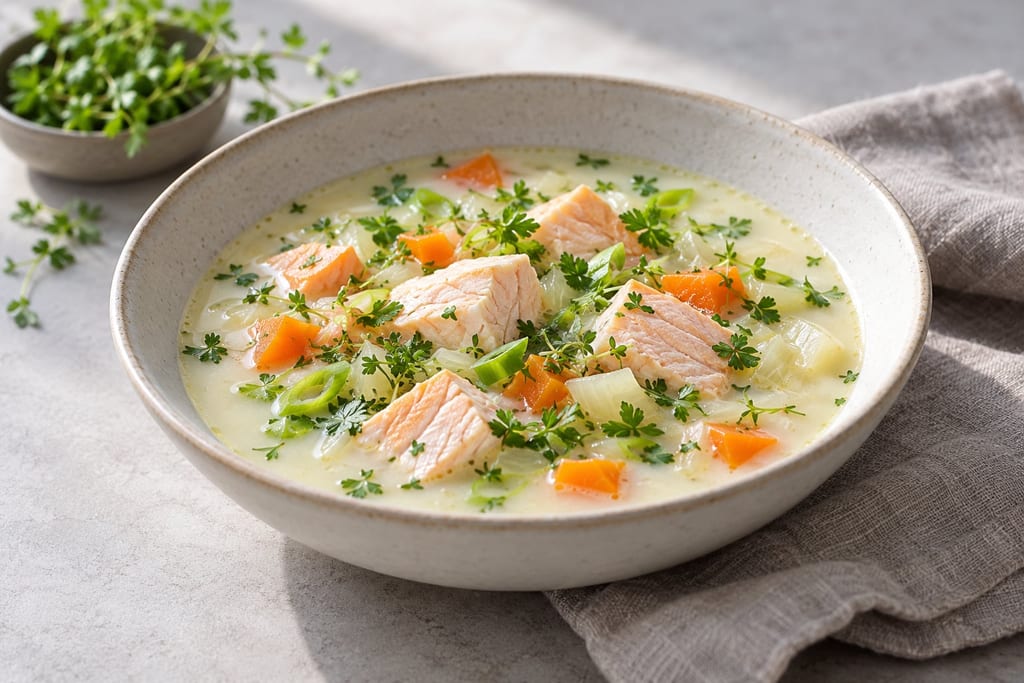
Trout or salmon poached at the end of a simmered broth of onion and root vegetables, a present-day reconstruction of coastal cooking built on excavated fish bones and a boiling pot.
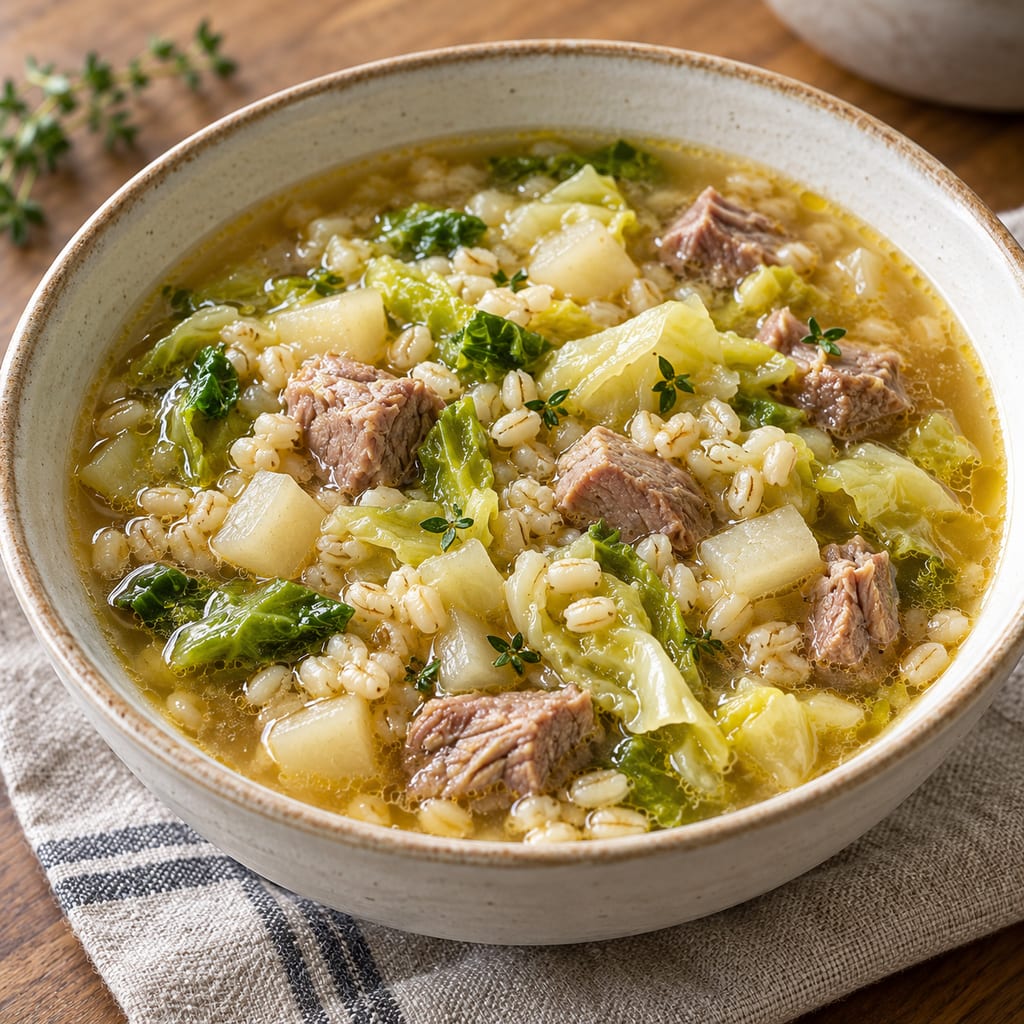
Lamb shoulder simmered with pearl barley, turnip and leafy cabbage in one pot, a present-day reconstruction built from the animals, grains and vegetables of northern European farming.
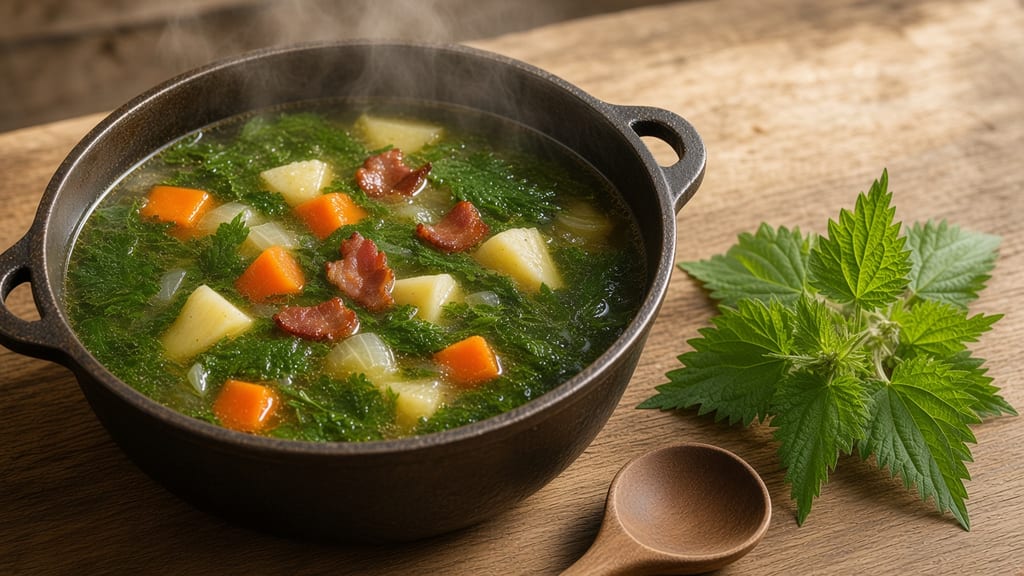
Young stinging nettle shoots cooked with bacon, onion, garlic and three roots into a thick spring soup, from a Danish Viking museum's recipe, with a meat-broth variation and ember-baked turnips.

Soft, spreadable Calabrian pork sausage made with a great deal of red chilli and fatty pork, stuffed into natural casings, sometimes smoked and matured while staying soft.

A way to add independent temperature logging to an existing food dehydrator without changing its built-in controls or protections. It is a monitoring method, not a rewiring plan.

Pleurotus cystidiosus is the abalone mushroom, a cultivated oyster-type fungus with dark brown caps that grows more slowly and is more demanding than other Pleurotus species.

A dark, balanced vinegar from Emilia-Romagna made by combining cooked or concentrated grape must with wine vinegar, then acetifying and refining it in wood under a protected specification.

A living dairy inoculum that starts controlled cream fermentation, developing acidity and aroma before sour cream or cultured butter is finished.

A small electric incubator holds jars at a selected temperature for yogurt and other documented warm food preparations. Controls, capacity and vessel arrangement vary by model.

Adygean salt is a seasoned table salt associated with Adygea and the wider North Caucasian culinary tradition. Salt is blended with garlic and a variable selection of herbs and spices; the exact mix depends on the named style and maker.

The African Caesar-group mushroom, Amanita masasiensis, is a wild ectomycorrhizal species of central and southern African woodlands, eaten locally. The genus contains deadly poisonous species, so identification needs care.
No community contributions have been published for this entry yet.
Sign in to contribute. Published comments and photos are free to read.
Hokkaido MuseumHistory · Context
第10弾 おうちでアイヌの伝統料理を作ろう!The page says the former Ainu Museum café Rimse in Shiraoi served cep ohaw as a popular menu item; the museum says the recipe text and photographs were provided in April 2015. The café closed on 31 March 2018.
Cited in: Scope of this record
Hokkaido MuseumProcess · Ingredients
Ainu traditional cuisine: simple recipe — Shiraoi Ainu Museum's cep ohawOne-page recipe PDF, all printed lines: four-serving ingredient quantities, the fish-preparation options, ordered soup method, about ten minutes for the salmon stage, vegetable doneness cues and optional stock/seasonal additions. Water and several seasoning amounts are unspecified.
Cited in: Scope of this record; Method and safety limits
Hokkaido Digital MuseumContext · Geography
Traditional Livelihood – Food / Clothing / HousingThe museum notes regional differences in Ainu foodways, describes soups using fish or meat, vegetables or seaweeds, and explains that contemporary Ainu cooking can combine traditional ingredients with newer styles and seasonings. This is cultural context, not a method source for the Shiraoi café recipe.
Cited in: Scope of this record
Japan House LondonComparison
Cepohaw – Ohaw Soup with SalmonSeparate contemporary Saru River/Biratori version, credited to the Biratori Ainu Culture Preservation Association and Ainu Cultural Environment Conservation Research Office. Its ingredients differ from the Shiraoi recipe; it is retained as comparison, not merged into this formula.
Cited in: Scope of this record
U.S. Food and Drug AdministrationSafety
Selecting and Serving Fresh and Frozen Seafood SafelyPrepare Safely: FDA general finfish guidance gives an internal temperature of 145°F and advises separating raw seafood from ready-to-eat foods and cleaning hands, utensils and surfaces. This does not validate the museum recipe.
Cited in: Method and safety limits
U.S. Centers for Disease Control and PreventionSafety
About AnisakiasisPrevention and food precautions: raw or undercooked fish can cause anisakiasis; CDC cites FDA seafood cooking guidance.
Cited in: Method and safety limits