Reindeer meat
Reindeer meat is the flesh of Rangifer tarandus, used fresh and preserved across northern foodways; animal populations, cuts, and regional practices differ, and no single culinary origin is established.
 FermenteaWhere food goes to change
Traditional method
Bidus · biđus · bidos
Ann-Kristine Bongo's four-serving bidus from Sami Siida in Alta is a contemporary, festive reindeer stew simmered with onion, carrots and potatoes.
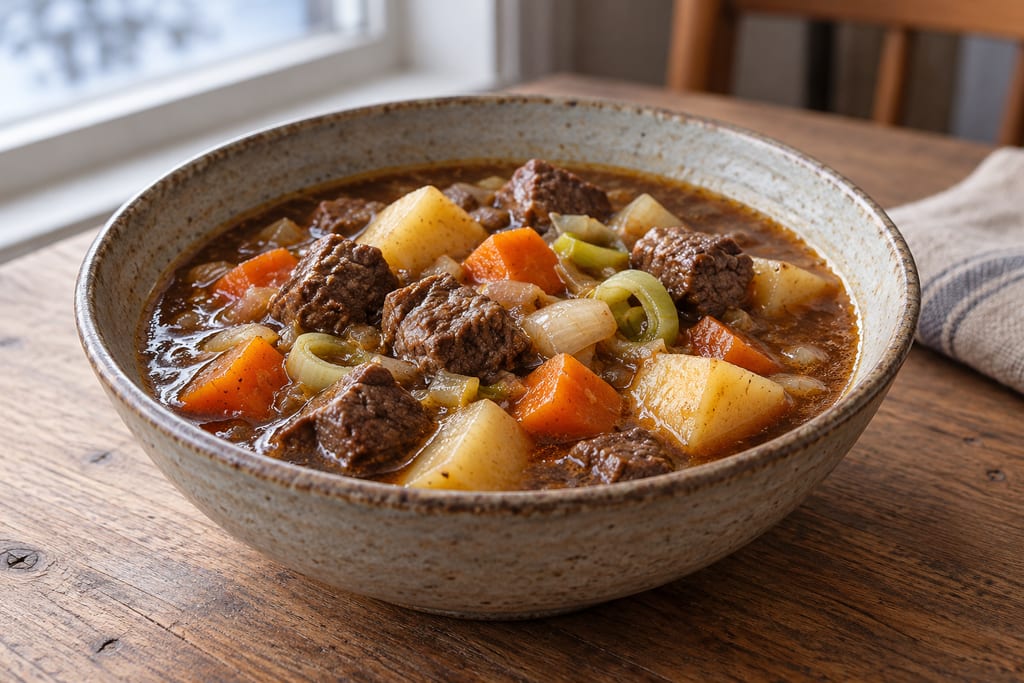
Visit Norway presents bidus as a traditional dish of the Sámi people, commonly served at confirmations, weddings and other festive occasions. Its featured recipe comes from Ann-Kristine Bongo at Restaurant Sami Siida in Alta. Bongo notes that the dish changes with the person cooking and the day it is made. The page does not identify a more specific Sámi community or claim that this single recipe represents every Sámi household.
This record follows the published four-serving preparation. Its potatoes and margarine are part of this contemporary version; they are not evidence for an undated ancient recipe. The source does not give the dish's earliest attestation.
The source uses reindeer meat cut into 3 cm cubes, browned with margarine and flour, then simmered with water, salt and chopped onion. Carrots go in after 20 minutes and potatoes after a further 15 minutes. The potatoes simmer for another 15 minutes or until tender. The sequence gives a practical cooking time, while the tenderness cue remains the only product-specific endpoint in the recipe.
A flour-and-cold-water mixture can thicken the stew: shake it smooth in a closed jar and add it to adjust consistency. Caramel colouring adds colour. Leeks, brown sugar and dried reindeer fat or meat are optional flavourings. Sweet bread with raisins is a documented accompaniment.
The source recipe does not give a measured temperature for the meat, a refrigerator duration or leftover storage time. Norway's Food Safety Authority gives general home-kitchen advice to keep raw meat separate from cooked food, wash hands and utensils, and heat food above 70°C for several minutes; the authority says most bacteria die at that condition. It advises keeping held hot food above 60°C, or cooling food rapidly and refrigerating it at 4°C or below.
Those are general food-handling recommendations, not validation of this bidus method. The recipe's simmer schedule and potato-tenderness test do not establish a measured internal endpoint for the meat.
This contemporary published recipe is attributed to Ann-Kristine Bongo at Restaurant Sami Siida in Alta. The page describes bidus as a traditional Sámi festive dish served at confirmations, weddings and other occasions, but does not date the tradition or name a more specific Sámi community. Potatoes and margarine belong to this recorded present-day recipe and should not be projected into an undated earlier form.
Yield 4 servings · Scaling: source batch only
The Norwegian Food Safety Authority advises separating raw and cooked foods and washing or changing utensils between tasks to reduce transfer of harmful bacteria.
Hazard sourceThe Norwegian Food Safety Authority identifies inadequate heating and slow cooling as common causes of foodborne illness.
Hazard sourceWash hands and utensils, keep raw meat separate from cooked food, and clean knives and boards between tasks.
Control sourceThe authority's general guidance is to heat food above 70°C for several minutes; it says most bacteria are killed at that condition. This is general kitchen guidance, not a bidus-specific validation.
Control sourceServe steaming hot; if holding hot, keep above 60°C. If serving later, cool rapidly and refrigerate at 4°C or below.
Control sourceThe recipe gives simmer times and a potato-tenderness cue but no measured internal cooking endpoint for the reindeer meat, refrigerator storage duration, or leftover-use time. Do not treat the source timing as a validated process endpoint.
Visit Norway attributes this published recipe to Ann-Kristine Bongo at Restaurant Sami Siida in Alta and describes bidus as a traditional Sámi festive dish. The page does not identify a more specific Sámi community or an exclusive place of origin.
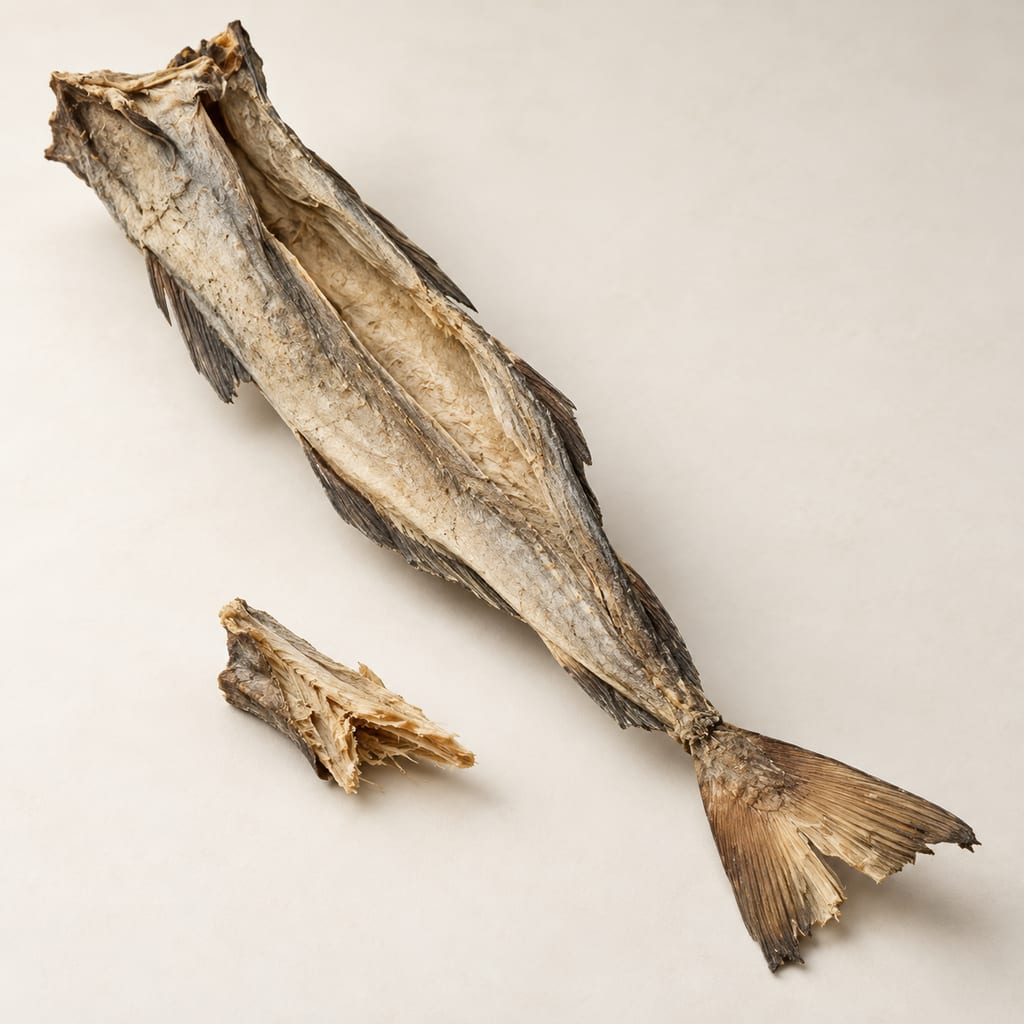
Cod hung on open racks in cold northern air until most of its water has gone, leaving a hard, light, unsalted fish that keeps and travels and must be soaked for days before cooking.
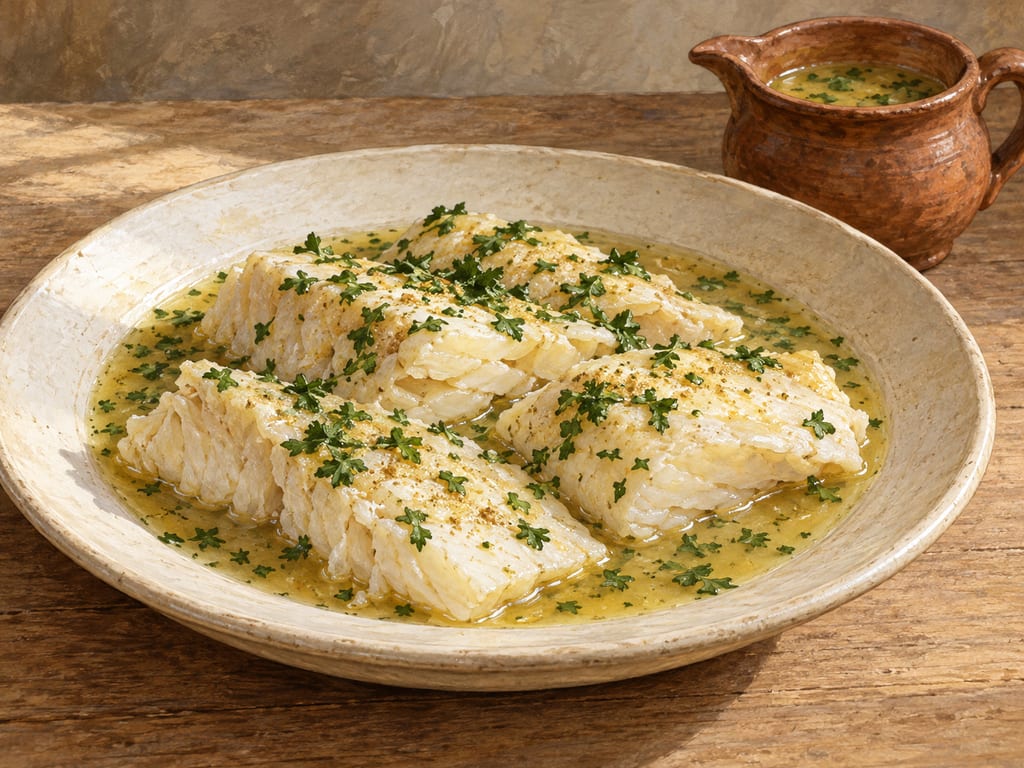
A fifteenth-century English way to serve cooked stockfish: strained fish broth boiled with chopped parsley, powdered ginger and a little verjuice, then poured hot over the fish.
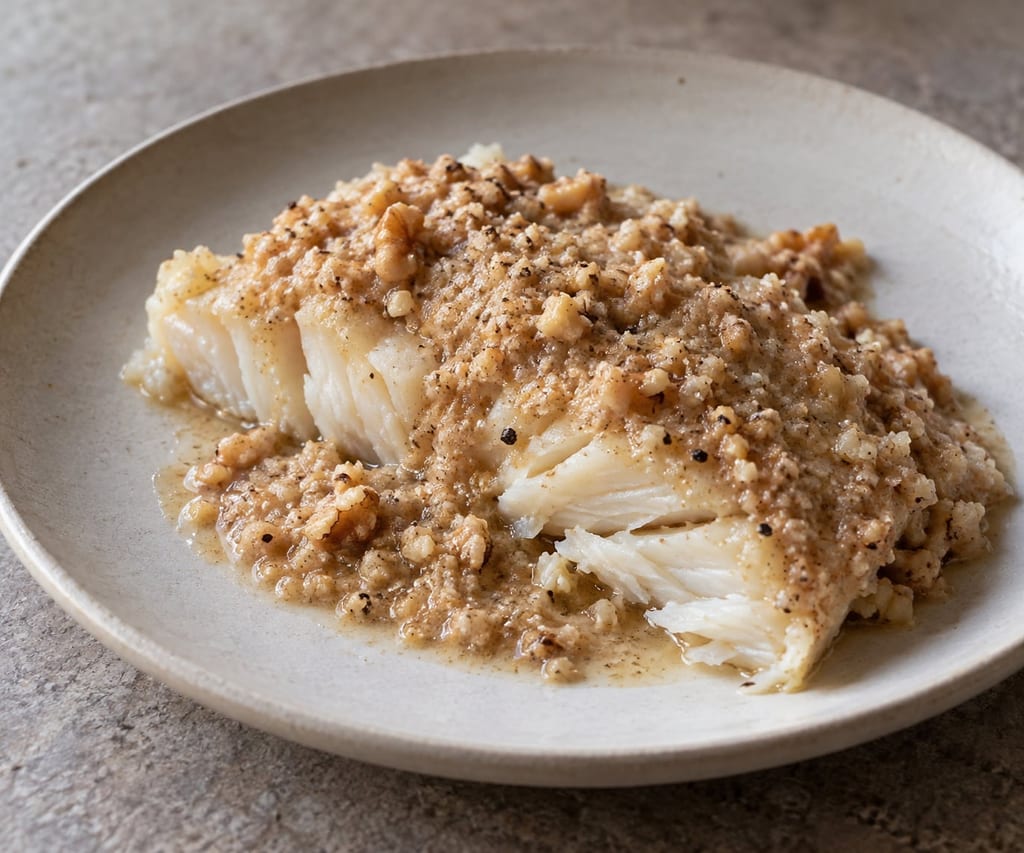
The second stockfish sauce from a fifteenth-century English manuscript: walnuts, garlic, bread, pepper and salt ground in a mortar and loosened with the fish's own broth.
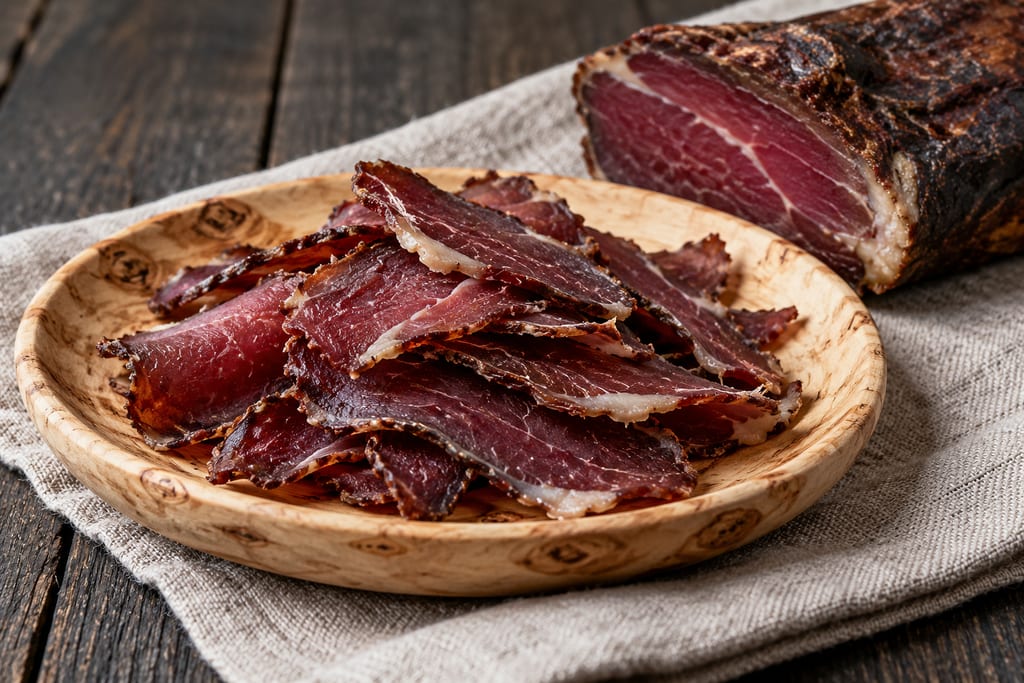
Salted reindeer meat hung in the smoke of a lávvu fire over willow, birch or juniper, then cooled and in some Sámi communities dried outdoors into travelling provisions.
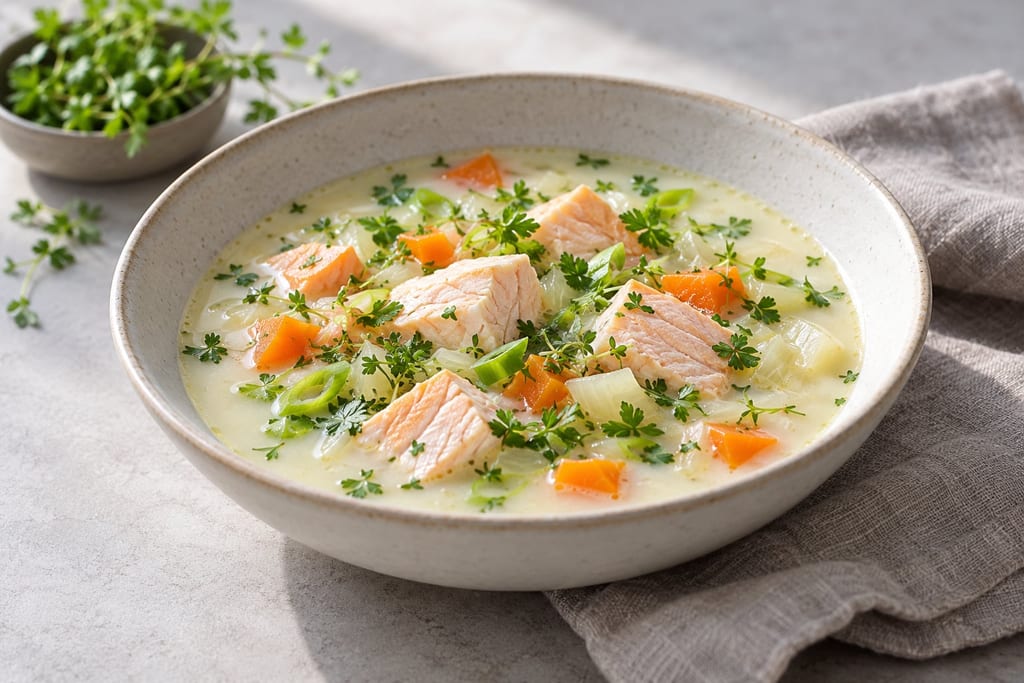
Trout or salmon poached at the end of a simmered broth of onion and root vegetables, a present-day reconstruction of coastal cooking built on excavated fish bones and a boiling pot.
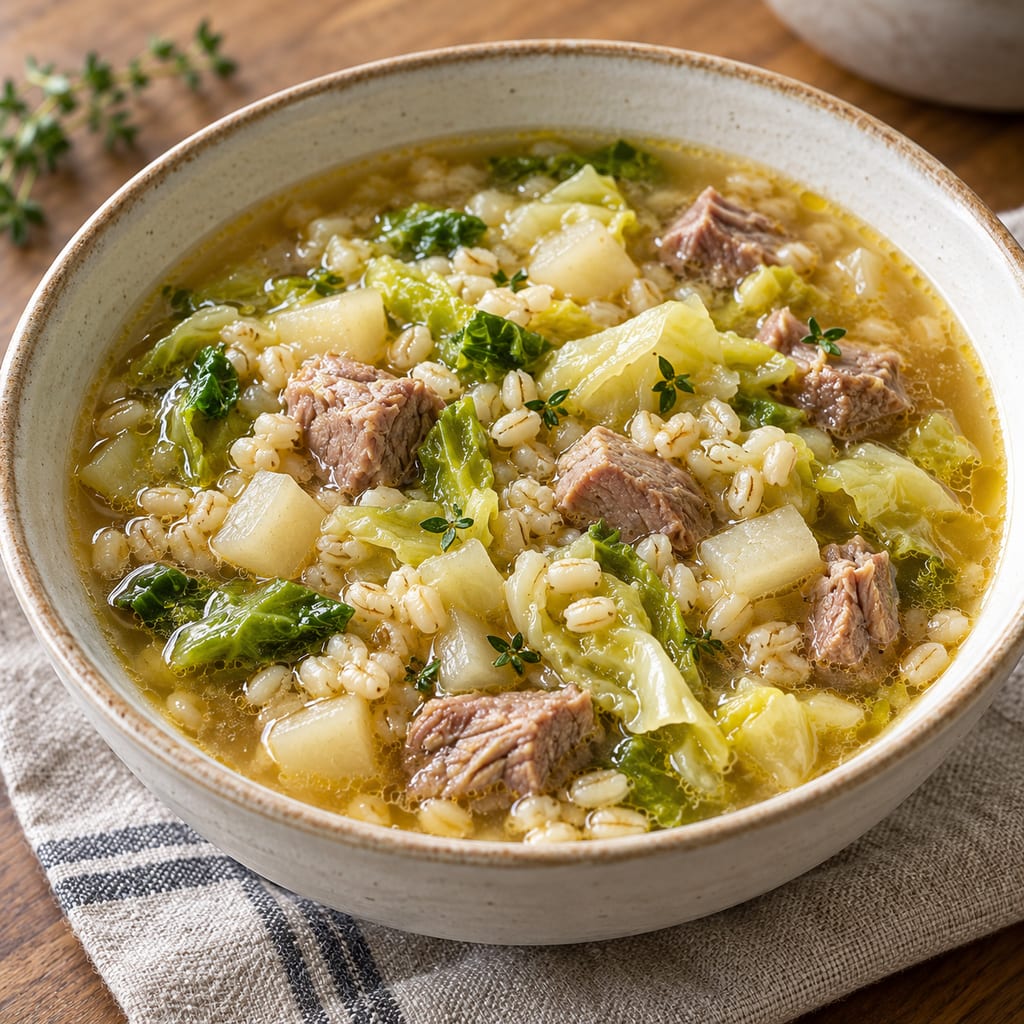
Lamb shoulder simmered with pearl barley, turnip and leafy cabbage in one pot, a present-day reconstruction built from the animals, grains and vegetables of northern European farming.

A four-serving cep ohaw recipe from the former Ainu Museum café in Shiraoi, documented in 2015.
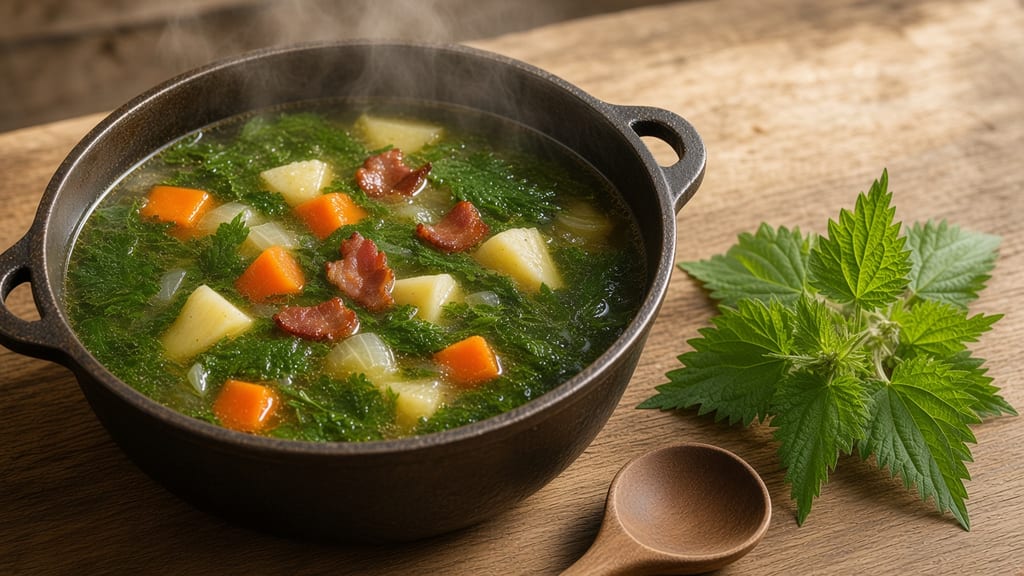
Young stinging nettle shoots cooked with bacon, onion, garlic and three roots into a thick spring soup, from a Danish Viking museum's recipe, with a meat-broth variation and ember-baked turnips.
No community contributions have been published for this entry yet.
Sign in to contribute. Published comments and photos are free to read.
Visit NorwayProcess · Ingredients · Community · Use
Recipe: Bidus | Traditional Sami dish | The Norwegian CookbookThe page attributes the recipe to Ann-Kristine Bongo at Restaurant Sami Siida in Alta and describes bidus as a Sámi festive dish; it says flavour varies with the cook and the day.
Exact four-serving ingredient list and method, including caramel colouring, optional thickener and optional additions; served with sweet bread with raisins.
Cited in: A contemporary Sámi festive preparation; The four-serving method
Mattilsynet (Norwegian Food Safety Authority)Safety
KjøkkenhygieneGeneral advice to wash hands and utensils, separate raw and prepared foods, heat food above 70°C for several minutes, keep hot food steaming (about 60°C), refrigerate at 4°C or below, and cool rapidly if holding hot is not practical.
Cited in: Handling and limits
Mattilsynet (Norwegian Food Safety Authority)Safety
Varm mat skal være rykende varmGeneral advice that most bacteria die at 70–80°C; food should be heated above 70°C and held above 60°C if held for service. This is not a bidus-specific process validation.
Cited in: Handling and limits