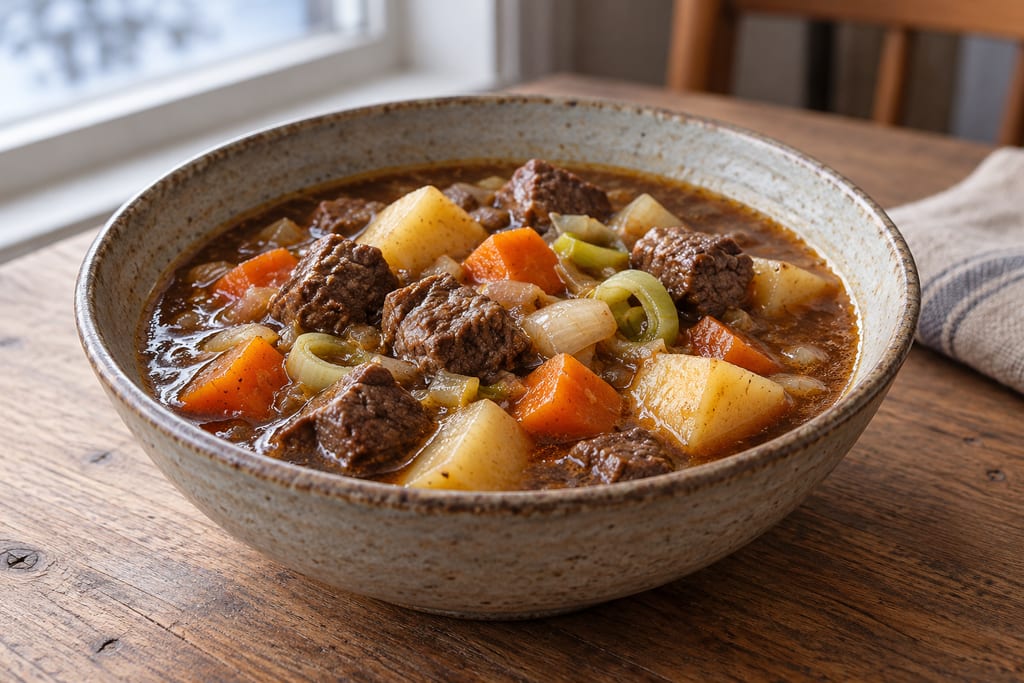
Bidus (Sámi reindeer stew)
Ann-Kristine Bongo's four-serving bidus from Sami Siida in Alta is a contemporary, festive reindeer stew simmered with onion, carrots and potatoes.
 FermenteaWhere food goes to change
Substrates
Reindeer meat is the flesh of Rangifer tarandus, used fresh and preserved across northern foodways; animal populations, cuts, and regional practices differ, and no single culinary origin is established.
Reindeer meat is the skeletal muscle of Rangifer tarandus, the only living species in the genus Rangifer. In North America the common name is usually caribou; in Eurasia it is usually reindeer. These common names point to one species, but they do not erase the different populations, subspecies, management systems and foodways that give the meat its meaning. The U.S. National Park Service describes caribou as wild and reindeer as wild, semi-domesticated or domesticated. Reindeer meat is therefore not one uniform commercial material, and a source saying “caribou” may be describing a hunted animal rather than a herded one.
This page concerns meat as a raw ingredient. It does not combine muscle with every edible part of the animal. Reindeer stomach, intestines, blood, heart, tongue, liver, kidneys, hide and fat each have their own uses and may need separate ingredient or preparation records. Reindeer herders make decisions about the animal and cut together: the age and sex of the animal, season, condition and intended use affect what is selected. A 2026 review of reindeer meat classification discusses how rearing, environment, age, sex and muscle affect carcass and meat quality; it also warns that whole-carcass grading can conceal differences between individual cuts.
Finnish sources use the word poronliha for reindeer meat. In Northern Sámi writing, bohccobiergu names reindeer meat. A language term does not by itself identify a cut or processing method. The same species may appear in accounts of fresh meat, frozen slices, dried meat, smoked cuts, soup or other foods. Each finished preparation needs its own description and evidence.
A butcher’s cut is not interchangeable with a whole carcass. Studies and Sámi herders’ accounts name legs, shoulders, ribs, sirloins, neck and some organs. The visible fat, bone and connective tissue vary by muscle, animal and cut. A photograph may document a particular form, but cannot reveal breed, age, exact muscle, inspection status or safety.
Reindeer meat is important in several northern food systems, but there is no single circumpolar cuisine. Sámi reindeer husbandry links animals, people and seasonal pasture across Sápmi. In Northern Norway, a study built with herders records how meat and smoking knowledge are carried within families and communities. The authors describe lávvu smoking as one practice within a wider Sámi knowledge system, not a standard method shared by every herder. They also document differences in wood, plant parts and cut selection between nearby groups.
The 2020 Siberian Arctic dietary study describes distinct relationships with reindeer across western Siberia. A study of Nenets, Khanty and Selkup communities discusses the seasonal use of reindeer and fish. Historical accounts cited there distinguish wild reindeer hunted for food from domestic animals, which in some Nenets settings were valued mainly for transport and hides. That distinction matters: the word “reindeer” can name the same species whether the animal was hunted or herded, while the social, ecological and culinary context differs.
In Finland, reindeer meat also enters inspected commercial production. The Finnish Food Authority has a specific guide for establishments making traditionally air-dried reindeer meat in the reindeer husbandry area. The guide covers inspected raw material, hygienic handling, protection from contamination and suitable drying conditions. Those establishment requirements describe a regulated production context; they do not turn the page into a universal home-drying instruction.
The item’s archive links also connect reindeer meat to specific preparations and regional records, including Sámi smoked and dried foods and dishes from Nenets, Enets and Nganasan sources. These links keep their own names and methods. A shared raw ingredient does not make their recipes interchangeable or establish one point of origin.
Two open image records document meat outside the Fennoscandian herding context. A 1916 photograph identifies Hieyaq, a Copper Inuk woman at Bernard Harbour in Nunavut, cutting caribou meat for drying; a 2006 photo page identifies meat from a reindeer hunt in Greenland. These images support narrow place associations only. They do not stand for every Inuit, Greenlandic, Sámi or Siberian community.
Reindeer meat can be sold as intact cuts, minced meat, or a preserved product. The cut names in a Sámi smoking study include legs, shoulders, ribs and sirloins, with neck, heart and tongue also mentioned in some accounts. Finnish production guidance refers to inspected meat being handled and dried in establishments. These sources describe different scales of use: household knowledge and regulated production. They do not provide a single cut chart for every population or market.
The animal’s muscle and fat distribution do not match a beef carcass. A recent review notes that EUROP grading was designed for cattle and sheep, and that its broad conformation and fat classes have limited discriminatory power when applied to reindeer. The review also summarizes evidence that animal age, sex, management and environment affect the carcass and meat. A grade or general description such as “lean” cannot predict the eating quality or composition of every muscle.
Some studies summarized in the recent review report low subcutaneous fat on many Fennoscandian reindeer carcasses. That pattern cannot be assigned to every animal, season or muscle, and it says nothing about the fat in a particular retail pack. The review notes that cattle-based fat classes offer little separation for many reindeer carcasses. A broad grade therefore cannot tell a cook how one named muscle will behave, or whether a preserved product followed a suitable process.
For a reader choosing an ingredient, the useful questions are concrete: does the label identify reindeer or caribou; is the meat a whole cut or mince; has it been frozen, smoked, dried or otherwise processed; and what region or inspection system does the seller document? The same name can cover visibly different products, so a page or photograph should not claim an exact cut unless its source does.
A fresh cut and a dried strip are different states of the meat. Salting, drying, smoking, freezing and cooking change the product.
Fresh reindeer meat is a raw ingredient; air-dried meat, cold-smoked cuts, sausages and cooked dishes are made foods. The distinction is useful because drying and smoking are not automatically fermentation. Fermentation needs evidence for microbial or acid-forming activity, and a name or smell is not enough to infer it. Several atlas entries linked from this item describe meat that is dried, smoked or otherwise preserved without calling the raw meat itself a ferment.
Sámi suovas is a word associated with smoked reindeer meat, while suovasbiergu refers to smoked reindeer meat in the cited research. The Sámi smoking study documents named cuts and a body of knowledge about preparing and arranging meat in a lávvu. Its interviews show how herders account for the meat, smoke, wood and season. The study is valuable as a record of practice, but its participants’ descriptions are not a validated safety protocol and should not be converted into a one-size-fits-all recipe.
Historical references add a longer view. A review in Polar Record traces accounts of smoked reindeer meat to 1600 and cites later descriptions by Carl Linnæus in 1732 and Knud Leem in 1767. Those dates attach to written evidence for preservation practices, not to the first time people ate reindeer meat. Nor do they prove that one community invented all later forms. The history of an ingredient spans more time and more regions than any single named dish.
Drying also appears in modern Finnish food production. The Finnish Food Authority’s guide requires inspected meat, hygienic handling before and after drying, protection from birds and vermin, suitable air circulation and adequate operator checks. Its examples show that bad weather or slow drying can impair safety. The guide applies to the establishment and production area it names; it supplies no transferable home process for an unknown cut or climate.
The image gallery separates these states. It includes raw meat from a hunt, a butchered platform scene and a person cutting caribou meat, as well as photographs explicitly identified as drying or already dried meat. The preserved examples are labeled as such and should not be read as photographs of fresh raw cuts.
A product’s country and inspection status matter alongside its name. The Finland-specific authority guide concerns inspected reindeer meat entering a regulated establishment for drying; a photograph of meat from a hunt or a market label does not prove the same controls. For retail meat, use the information supplied by the seller and the relevant local food authority. Do not infer the animal’s origin, inspection, freezing or storage history from color, visible fat or a photograph.
Reindeer and caribou meat should be kept distinct from the foods made from it. A vacuum-packed, smoked or dried product has its own ingredients and labeling; added salt, seasonings, casings or other ingredients may change the allergen statement. Plain muscle is not itself evidence that a finished product has no added allergens. The page’s ingredient scope does not replace a product label.
General meat handling still applies. The Finnish Food Authority’s broad food-use table says meat should be appropriately cooked and that utensils used for uncooked and cooked products should not be shared. The same authority calls out uncooked dried reindeer meat among unheated meat products pregnant women should avoid. It cites toxoplasmosis risk and also references listeriosis. This is targeted official advice for a defined group, not a claim that every meat product carries the same level of risk.
No reliable safety judgment can be made from smell, taste, appearance, bubbling or a home measurement alone. The ingredient record has no verified universal salt level, acidity, drying time, water activity, cooking temperature or storage period for all reindeer meat and its many preparations. Each preparation requires its own sourced controls; a tradition, label or historical description does not fill those gaps.
Reindeer meat has a long history across the circumpolar north, but the available sources do not establish one origin or a first date of use. Some written accounts document particular Sámi preservation practices; others describe wild reindeer hunting or seasonal Nenets food systems. Archaeological, historical, ethnographic and current market evidence answer different questions. They should not be combined into a single origin story.
The clearest dated attestation found for this page is a 1600 reference to smoked reindeer meat cited by a literature review. It does not date raw meat eating, identify the first reindeer-meat dish, or claim the same process was used everywhere. The 1732 and 1767 accounts belong to later written records. They are evidence about described practices at those times, not a universal measure of how families prepared meat.
There is also an important difference between the animal’s history and the food’s history. Taxonomy places reindeer and caribou in one species, while their regional populations and relations with herding vary. The item therefore keeps the circumpolar species context while preserving country, people, cut and preparation distinctions in its sources and linked pages.
The cited studies document Sámi herders' meat use and smoking practices in Northern Norway; they do not represent every Sámi community.
Finnish Food Authority guidance covers dried reindeer meat in inspected establishments within the reindeer husbandry area; this is not a claim that all Finnish meat follows one process.
The literature review records Swedish Sámi foodways and smoked meat; the association is regional, not nationwide.
Research describes wild and domestic reindeer meat in Nenets foodways, with distinct roles and seasonal supply; it does not generalize to all Siberian peoples.
The Canadian Museum of History photographs identify caribou meat and locations in Nunavut. Caribou is the North American common name for the same species; these photographs document specific Inuit food work, not a universal reindeer-herding tradition.
The photograph identifies meat from a hunt in Greenland; it documents one example and does not establish a broader tradition or a locality more precise than the file page.
Ann-Kristine Bongo's four-serving bidus from Sami Siida in Alta is a contemporary, festive reindeer stew simmered with onion, carrots and potatoes.
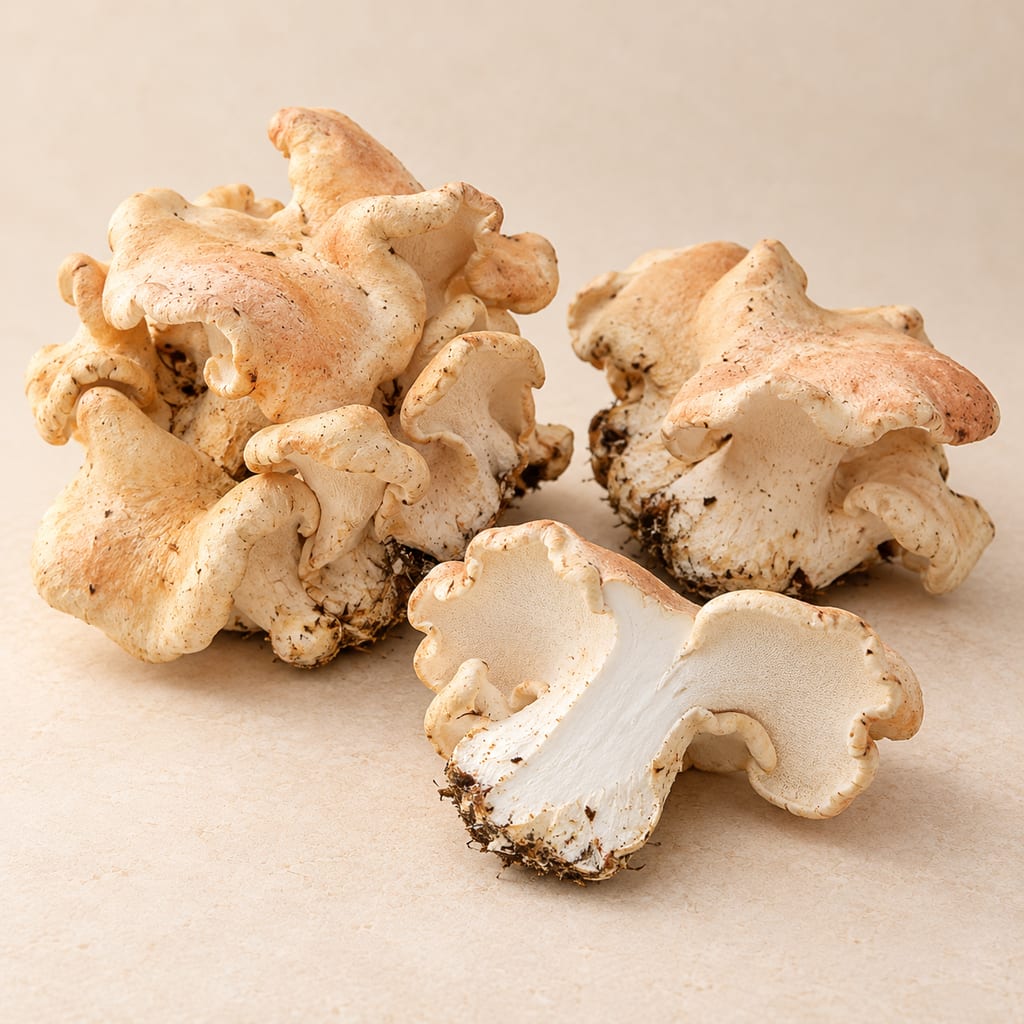
Albatrellus confluens is a ground-growing polypore with fused buff-orange caps. Sources document Chinese market use and regional edibility, but others reject it as too bitter; taxonomy also varies between Albatrellus and Albatrellopsis.
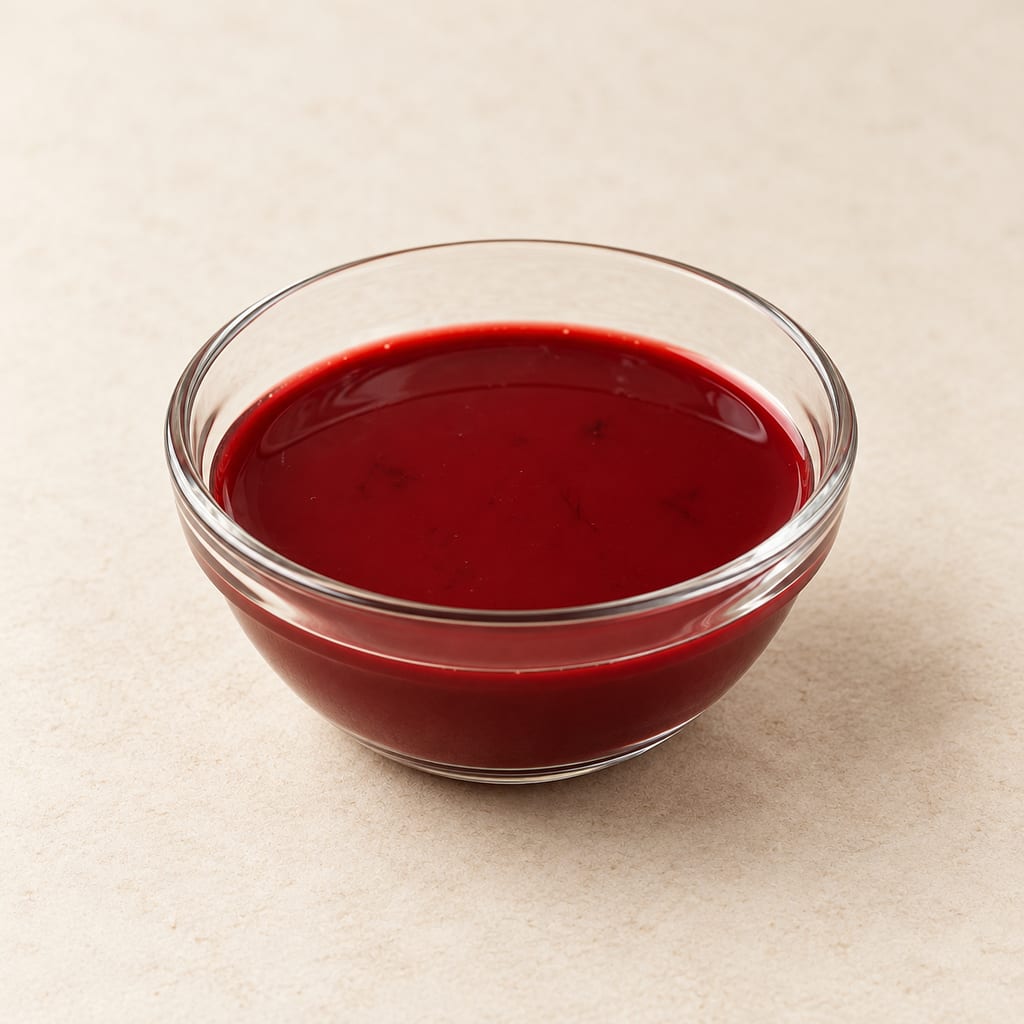
Animal blood is a perishable food material used fresh, coagulated, cooked, dried or processed into ingredients. Its uses range from grain-filled puddings to functional protein ingredients, each with distinct history and handling needs.
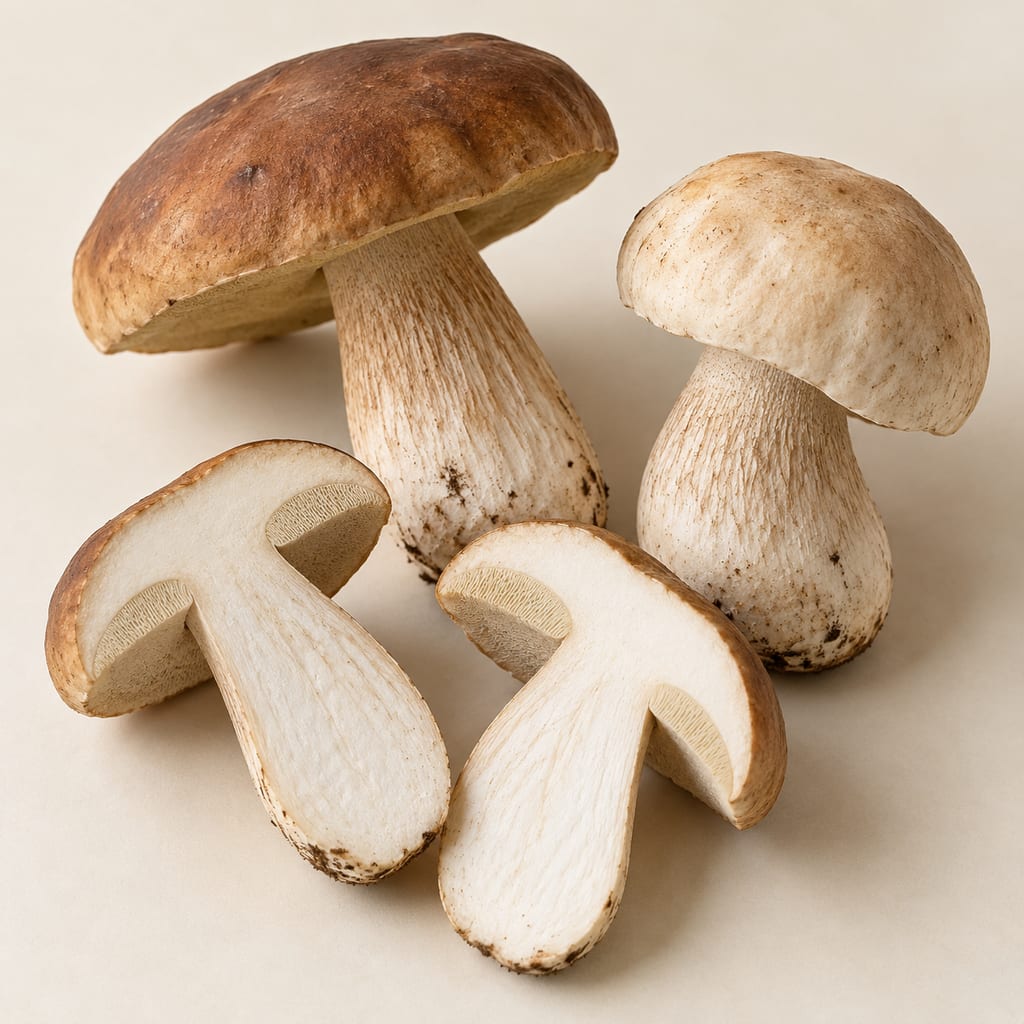
Boletus betulicola is a slender, birch-associated bolete of the penny bun group, kept as its own species by Finnish mycologists and treated by others as a form of Boletus edulis.
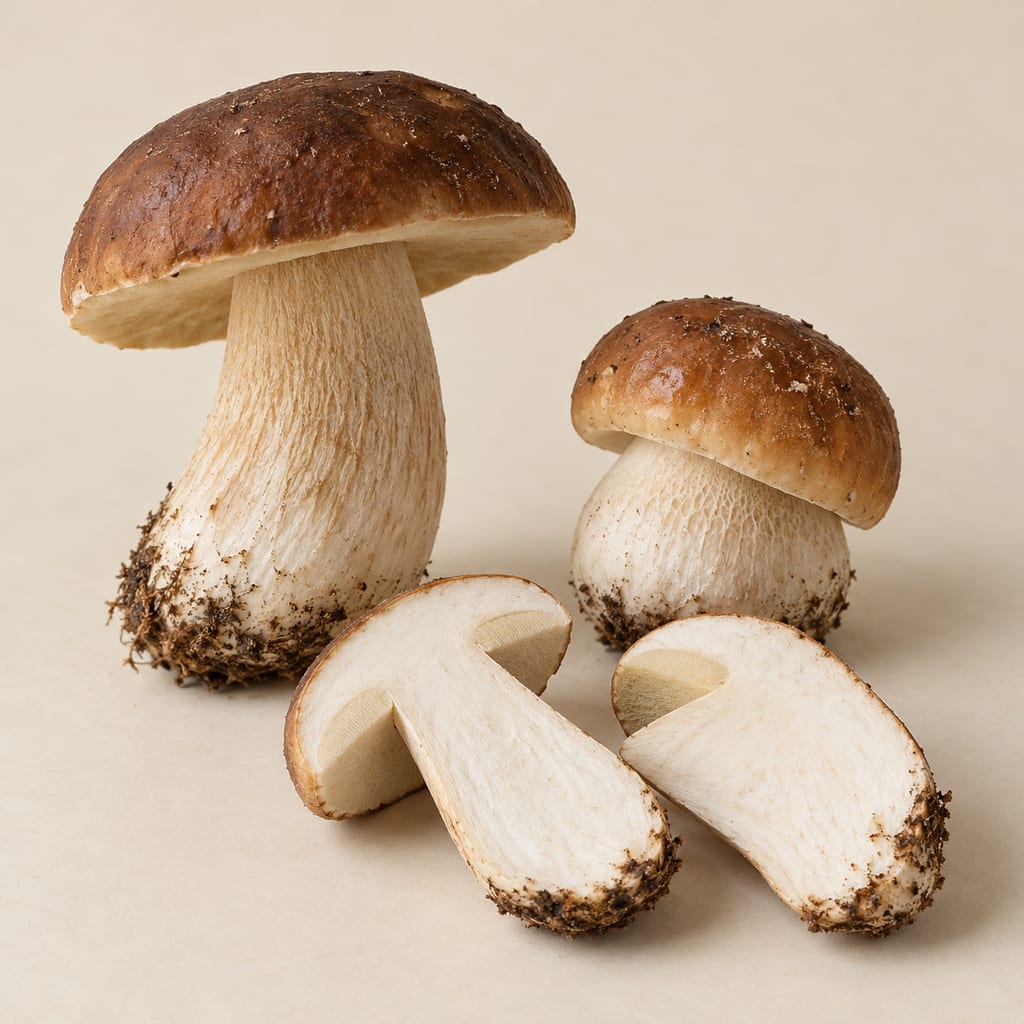
Boletus pinetorum is a greyish-brown penny bun relative that grows with Scots pine on dry sandy heaths in Fennoscandia and Estonia, described as a new species in 2009.
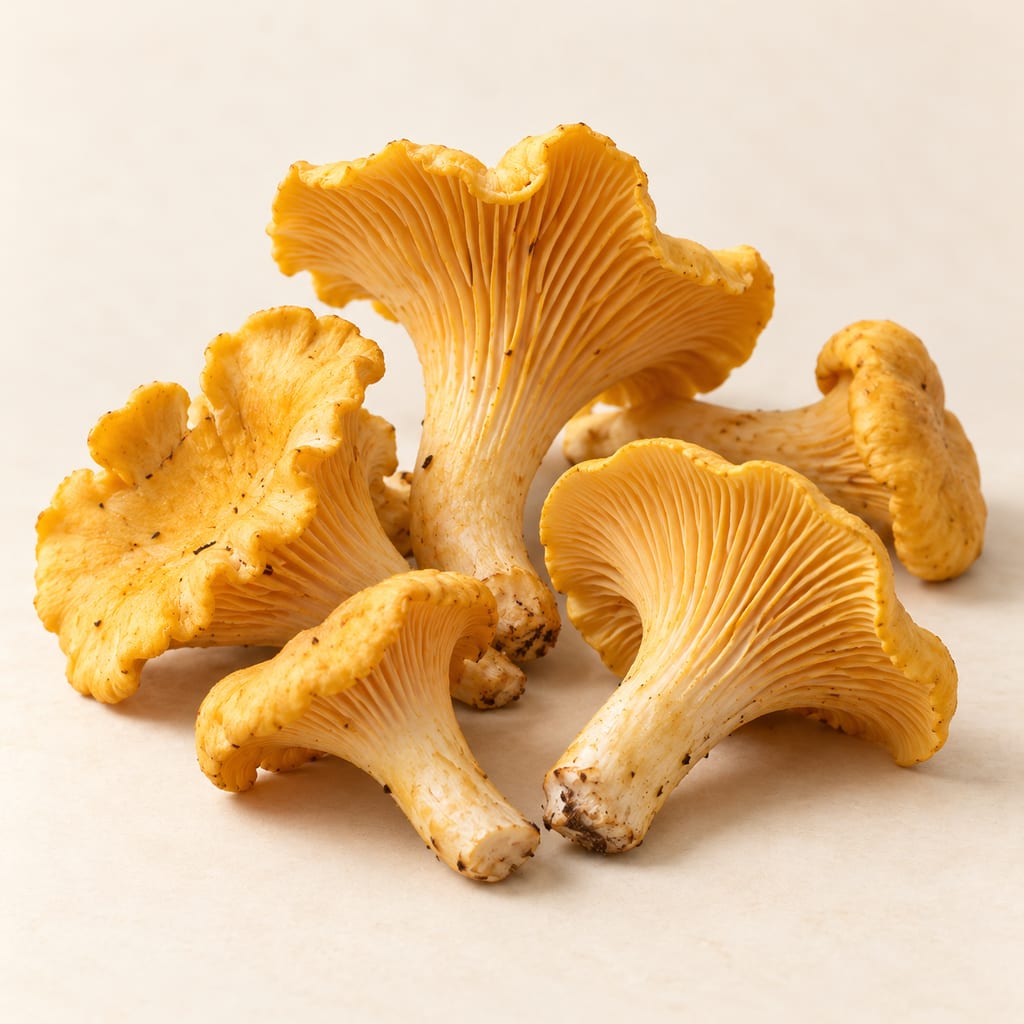
Chanterelles are wild, tree-associated edible mushrooms, particularly the European golden chanterelle Cantharellus cibarius, prized for their firm flesh, fruity aroma and use fresh, frozen, dried or pickled.
Kveik is a name for traditional Norwegian farm-brewing yeast cultures, especially associated with western Norway. It refers to locally maintained cultures rather than one uniform strain or starter product.
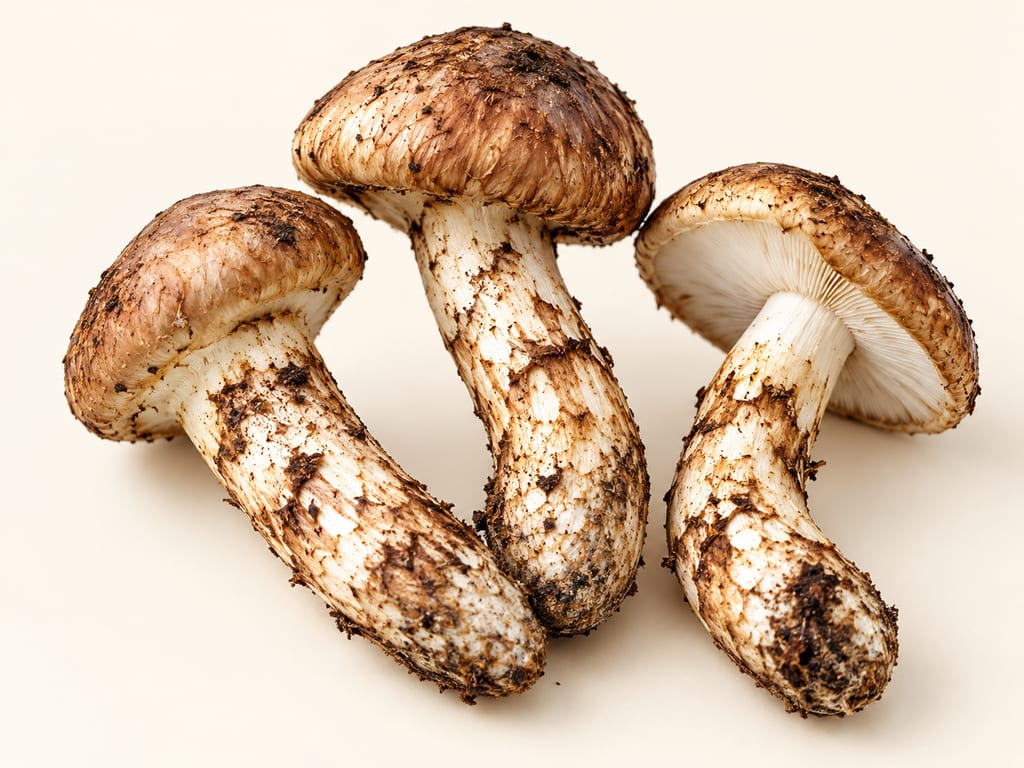
Matsutake is a prized wild ectomycorrhizal mushroom associated with pine and other forest trees, valued especially in Japan, Korea and China for its distinctive spicy aroma, firm texture and seasonal rarity.
Oat flour is milled oats, from fine whole-groat powder to flour with some bran removed; its low gluten-forming capacity changes how it behaves in dough.
No community contributions have been published for this entry yet.
Sign in to contribute. Published comments and photos are free to read.
U.S. National Park ServiceTaxonomy · Common names · Animal management
Caribou vs. ReindeerThe National Park Service identifies caribou and reindeer as common names for Rangifer tarandus and describes wild and managed populations.
Cited in: Reindeer meat and the animal it comes from; What the history can and cannot tell us
Frontiers in Animal ScienceMeat quality · Production context · Research review
Reindeer meat classification and quality assessment: traditional and emerging technologiesThe review describes reindeer meat production in Fennoscandia, the use of cattle-derived carcass grading frameworks, and the limits of inferring meat quality from whole-carcass classes.
The review reports that animal age, sex, management and environment relate to meat composition and quality; this does not make a nutrition or safety claim about every cut.
Cited in: Reindeer meat and the animal it comes from; Cuts, texture and market forms
Food Ethics, Springer NatureEthnography · Sámi food knowledge · Smoking
Sámi Traditional Knowledge of Reindeer Meat SmokingThe study used workshops, interviews, participatory observations and co-analysis with Sámi reindeer herders in Northern Norway.
It documents named cuts and the variation in wood and plant parts used in Sámi lávvu meat smoking; its practices are not a universal process specification.
Cited in: Reindeer meat and the animal it comes from; Different northern foodways; Cuts, texture and market forms; Fresh meat, drying and smoke
Polar Record, Cambridge University PressHistory · Sámi foodways · Literature review
The knowledge that went up in smoke: Reindeer herders’ traditional knowledge of smoked reindeer meat in literatureThe review cites smoked reindeer meat as documented as early as 1600 and summarizes later written descriptions, including Linnæus in 1732 and Leem in 1767.
It discusses regional differences in Sámi foodways and distinguishes historical reports from one universal recipe.
Cited in: Fresh meat, drying and smoke; What the history can and cannot tell us
AmbioNenets foodways · Regional history · Seasonality
Changing diets and traditional lifestyle of Siberian Arctic Indigenous Peoples and effects on health and well-beingThe paper describes wild reindeer meat as part of the diet among Siberian Arctic Indigenous Peoples and distinguishes it from the comparatively limited slaughter of domestic reindeer in some historical Nenets accounts.
It describes seasonal acquisition, migration and supply; those findings concern the studied Western Siberian communities.
Cited in: Different northern foodways; What the history can and cannot tell us
Finnish Food AuthorityFood production guidance · Dried reindeer meat
08 Specific Requirements for Food ProductionSection 8.7 covers traditional outdoor air-drying in meat-product establishments in the Finnish reindeer husbandry area.
The guide requires inspected reindeer meat and describes hygienic handling and controls against contamination; it warns that unsuitable conditions can impair safety.
Cited in: Different northern foodways; Cuts, texture and market forms; Fresh meat, drying and smoke; Buying and handling the raw material
Finnish Food AuthorityFood safety · At risk groups
General instructions on safe use of foodstuffsThe guidance includes uncooked dried reindeer meat among unheated meat products pregnant women should avoid and identifies toxoplasmosis risk; it also refers to listeriosis.
Its general meat guidance says meat should be appropriately cooked and utensils for uncooked and cooked products kept separate.
Cited in: Buying and handling the raw material
Wikimedia CommonsImage · Greenland documentation
File:Reindeer meat from hunt, Greenland 2006.jpgThe file page identifies reindeer meat from a hunt in Greenland, photographed in October 2006, and records CC BY-SA 2.5.
Cited in: Different northern foodways
Wikimedia Commons; source credited to U.S. Fish and Wildlife ServiceImage · Butchering context
File:Raised platform with butchered caribou or reindeer.jpgThe source title identifies butchered caribou or reindeer on a raised platform; the file page identifies U.S. Fish and Wildlife Service authorship and public-domain status.
Wikimedia Commons; Canadian Museum of HistoryImage · Nunavut documentation
File:Hieyaq cutting meat (36979).jpgThe file identifies Hieyaq, a Copper Inuk woman, cutting caribou meat for drying at Bernard Harbour, Nunavut, on 21 May 1916; licensed CC BY-SA 4.0.
Cited in: Different northern foodways
Wikimedia Commons; Canadian Museum of HistoryImage · Meat preservation
File:Caribou meat drying at a camp (37035).jpgThe file page identifies caribou meat drying on lines at a camp near Lake Numichoin, Victoria Island, Nunavut; licensed CC BY-SA 4.0.
Cited in: Fresh meat, drying and smoke
Wikimedia CommonsImage · Finnish dried meat
File:Finnish dried reindeer meat.jpgThe file page identifies Finnish dried reindeer meat and records CC BY-SA 2.0.
Cited in: Fresh meat, drying and smoke