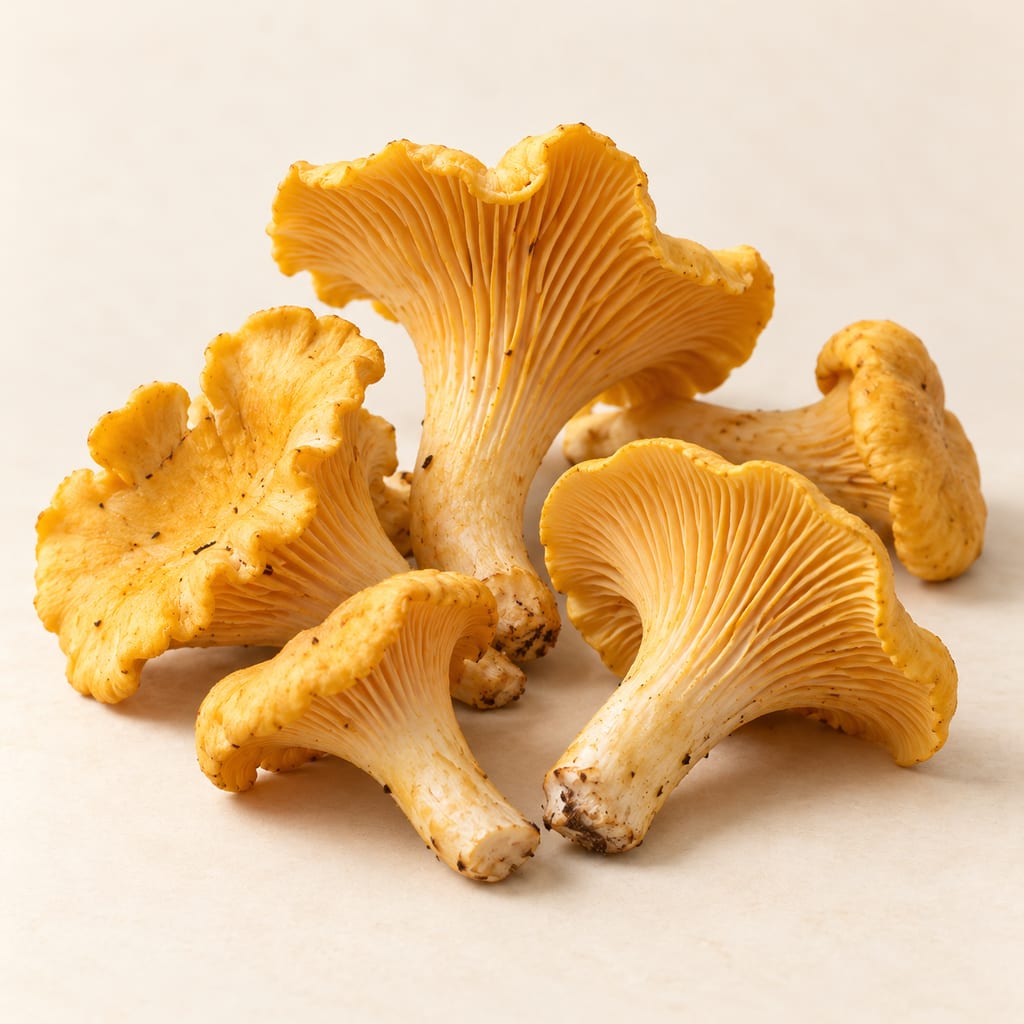
Chanterelles
Chanterelles are wild, tree-associated edible mushrooms, particularly the European golden chanterelle Cantharellus cibarius, prized for their firm flesh, fruity aroma and use fresh, frozen, dried or pickled.
 FermenteaWhere food goes to change
Mushrooms
Matsutake is a prized wild ectomycorrhizal mushroom associated with pine and other forest trees, valued especially in Japan, Korea and China for its distinctive spicy aroma, firm texture and seasonal rarity.
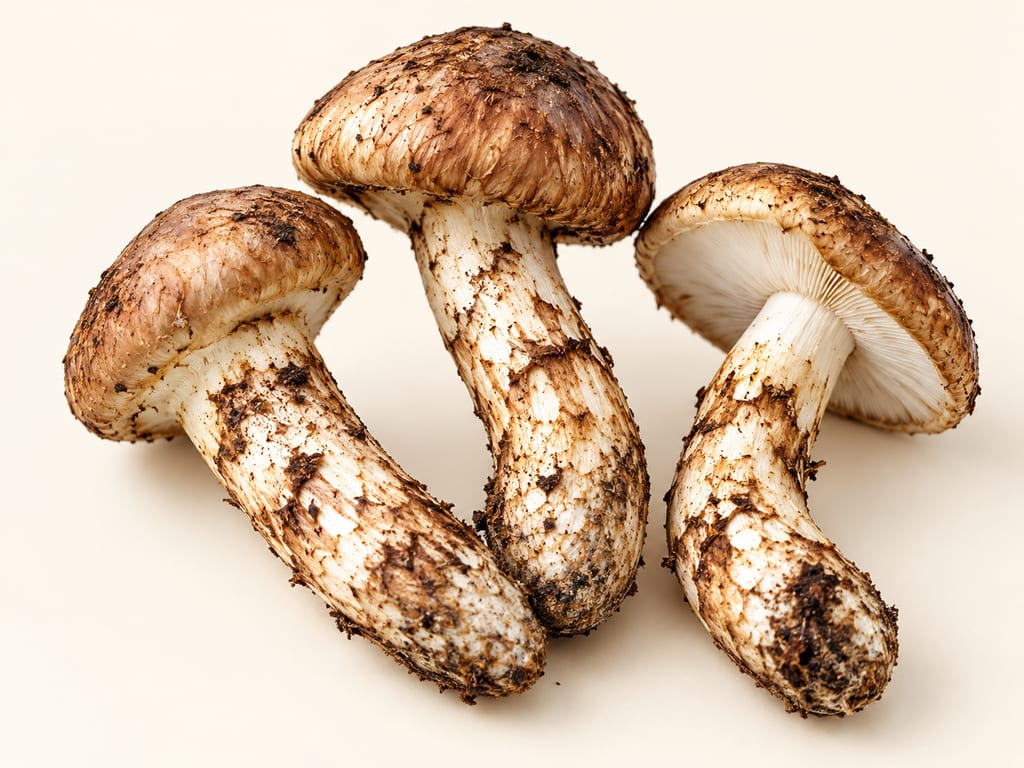
Matsutake is a prized edible woodland mushroom, principally identified as Tricholoma matsutake in the family Tricholomataceae. The Japanese name combines matsu, meaning pine, and take, meaning mushroom. In Korean it is called songi or songi-beoseot, and in Chinese songrong. It matters in Japanese, Korean and Chinese food cultures, where it is the mushroom of autumn, prized for a pungent, spicy, sometimes cinnamon-like aroma. It is also found in northern Europe, where common names include Swedish goliatmusseron, Finnish tuoksuvalmuska and Norwegian kransmusserong. These names describe the same species under the principal taxonomic treatment used here.
A typical matsutake has a thick white or pale stem, a cap covered with brownish fibres or scales, whitish gills and a partial veil that leaves a ring-like zone on the stem. Young fruiting bodies often have a rounded or nearly closed cap, protecting the gills. As the mushroom matures, the cap expands and the gills become more exposed. The stem may extend deeply into sandy forest soil, so part of the mushroom is sometimes hidden beneath leaf litter. The flesh is firm and white, and the characteristic aroma can be noticeable when the specimen is fresh.
The scientific names require particular care. Japanese researchers described the species as Armillaria matsutake in 1925, and Rolf Singer transferred it to Tricholoma in 1943. A Scandinavian fungus previously called Armillaria nauseosa and later Tricholoma nauseosum was shown by genetic research around 2000 to belong to the same species as Japanese matsutake. Species Fungorum and NCBI currently treat Tricholoma nauseosum as a synonym of Tricholoma matsutake. Because the older Scandinavian name has nomenclatural priority, researchers have discussed whether it should take precedence. The familiar name Tricholoma matsutake remains widely used in food, conservation and scientific literature.
Matsutake is an ectomycorrhizal fungus, meaning it depends on a living relationship with tree roots. Its fruiting bodies are gathered from forests rather than produced routinely on indoor mushroom compost. The wider matsutake trade includes related species such as Tricholoma magnivelare, T. murrillianum, T. anatolicum and T. bakamatsutake. Fresh matsutake is a non-fermented ingredient. Drying, freezing, cooking and pickling alter its properties, but none automatically constitutes microbial fermentation.
The eighth-century Man'yōshū includes a poem describing an autumn mushroom scent, which later commentators associate with matsutake. Japan's National Diet Library names the Shūi Wakashū, compiled around 1005 CE, as the earliest known use of the word matsutake. Nobody knows when people first found it edible. During the Heian period, aristocrats gathered mushrooms in pine forests near the capital and ate them grilled or in soup.
Matsutake gathering continued through later Japanese periods. The National Diet Library describes aristocratic mushroom excursions during the Heian era, mushroom hunting by feudal lords during the Edo period, and popular autumn outings among townspeople in the late Edo period. Illustrated accounts document mushroom markets in Kyoto and Osaka. Fresh mushrooms were not equally available everywhere: the library records that matsutake sent to the Tokugawa shogunal household could be salted rather than fresh. These records show the development of trade and preservation around a seasonal forest product, not one fixed recipe maintained without change.
Korean historical sources provide an independent tradition. The Academy of Korean Studies points to the Goryeo-period Pahanjip by Yi In-ro, which uses the term songji for a pine mushroom. Statements about its medicinal value in such texts are historical beliefs, not demonstrated health benefits. Later writers, including Yi Saek and Kim Si-seup, also referred to songi. Joseon-period works such as Dongui Bogam, Sallim Gyeongje and Jeungbo Sallim Gyeongje describe or praise the mushroom and its culinary use. Some historical recipes combine it with pheasant, seasonings or rice.
Modern scientific and commercial history adds a wider geography. Matsutake was formally described in Japan in 1925 and placed in Tricholoma in 1943. Genetic studies published in 2000 showed the close identity of Scandinavian material previously called T. nauseosum. During the late twentieth century, exports from China, Bhutan, Korea and North America expanded to meet Japanese demand. A 2022 study confirmed the species from Ukraine using multilocus genetic analysis. The IUCN published a global Vulnerable assessment in 2020, based on a 2019 evaluation, recognising declining populations and habitat threats. Commercial importance has therefore expanded alongside concern for the forests that sustain the mushroom.
Matsutake grows through an ectomycorrhizal partnership with living forest trees. In Japan its best-known host is Japanese red pine, Pinus densiflora. In northern Europe it is principally associated with Scots pine, Pinus sylvestris, while some Asian populations occur with other conifers and, in certain forests, broadleaved trees. The fungal hyphae colonise fine roots, forming a mantle and an intercellular network through which nutrients are exchanged. The tree supplies carbon originating from photosynthesis, and the fungus contributes to the acquisition of soil nutrients and water. This biological dependence explains why successful growth of matsutake mycelium in a laboratory does not automatically produce edible mushrooms.
The fungus forms dense underground colonies, called shiro in Japanese. A shiro consists of matsutake mycelium, colonised roots and closely associated soil material. Productive colonies can form expanding rings or horseshoe-shaped areas, with fruiting bodies appearing near the active growing edge. Japanese research describes radial expansion of productive shiro at approximately 10–20 centimetres per year in certain sites. The visible mushrooms emerge from the soil and develop caps, stems and spore-producing gills. Soil temperature, moisture, litter depth, competing vegetation and the health of host trees affect whether fruiting occurs.
Commercial matsutake is overwhelmingly wild-harvested. Collectors locate mushrooms in suitable forests, sometimes finding young fruiting bodies partly hidden beneath soil or leaf litter. Closed, firm specimens fetch the most in parts of the Japanese market, so careful collection and grading pay. Harvesters remove soil and debris and separate specimens depending on maturity, appearance, damage and quality. The supply chain may include local collectors, village buyers, wholesalers, exporters and retailers. Research on the Yunnan trade names harvesting, transport, grading, packaging and sales as the main stages. Rough raking or excessive disturbance of the forest floor can damage productive shiro and surrounding habitat.
Attempts to increase production have focused largely on managing forest conditions rather than growing mushrooms on compost. Traditional and experimental Japanese methods include thinning competing vegetation, maintaining suitable pine stands and controlling the depth of accumulated litter. A 2024 study followed two plots in a Nagano pine forest for 41 years. Matsutake fruiting remained comparatively stable in the managed plot but declined in the unmanaged control, while productive shiro increased under management. A separate Yunnan experiment found that covering shiro with plastic or additional litter did not necessarily improve yields. The effectiveness of management is site-dependent. Routine, predictable commercial cultivation of Tricholoma matsutake fruiting bodies has not been established.
Matsutake's aroma comes mainly from methyl cinnamate and a group of eight-carbon volatile compounds. Methyl cinnamate contributes sweet, balsamic and somewhat spicy notes, while 1-octen-3-ol, sometimes called matsutake alcohol or matsutakeol, contributes a familiar fungal odour. Other key compounds are 1-octen-3-one, 3-octanone, methional, phenylacetaldehyde and various aldehydes and esters. The perceived aroma results from the mixture and from each compound's odour threshold. A 2006 gas chromatography-olfactometry study found that 1-octen-3-one had the highest flavour dilution factor among the compounds examined in raw matsutake.
The fungus makes some of its aroma compounds through known metabolic pathways. Research published in 2016 traced the synthesis of methyl cinnamate from the amino acid phenylalanine through cinnamate, using isotopically labelled precursor compounds. Eight-carbon fungal volatiles are associated with fatty-acid metabolism, especially the breakdown of unsaturated fatty acids. These molecules are produced by the living fungus and can change when tissue is damaged or cooked. A 2008 study found that the cap and stem had different volatile profiles: methyl cinnamate was especially abundant in the cap, while 1-octen-3-ol was particularly abundant in the stem.
Age, geographical origin and handling strongly affect aroma. A 2016 study comparing matsutake from different Chinese collecting areas found differences in volatile compounds, amino acids and minerals. Methyl cinnamate and 1-octen-3-ol concentrations generally declined as the specimens matured. A Japanese study published in 1984 compared freshly harvested Japanese and Korean matsutake and investigated changes after storage. It found much greater aroma deterioration during room-temperature storage than during cold storage under the tested conditions. Cooking changes the mixture again: the 2006 study identified additional cooked-potato-like, roasted, buttery and floral compounds after heating, reflecting thermal reactions involving amino acids and other constituents.
A 2025 study of matsutake soup detected 51 volatile compounds and identified 1-octen-3-ol, 1-octanol, methyl cinnamate and 2-pentylfuran as important aroma contributors. Shorter cooking treatments preserved the characteristic mushroom aroma more effectively in that experiment. Research comparing hot-air drying and vacuum freeze-drying also found substantial differences in volatile composition. These results help explain why fresh matsutake is often cooked relatively gently and why dried matsutake is a different flavour ingredient. None of these transformations requires microbial fermentation. The mushroom also contains proteins, amino acids, carbohydrates and fungal polysaccharides; tests on isolated extracts do not show clinical benefits from eating it.
Fresh matsutake is usually selected for its aroma, firmness, maturity and condition. Young mushrooms with a closed cap and intact veil grade highest in Japan; more open ones suit slicing and rice dishes. The mushroom should have firm flesh, a characteristic spicy fungal smell and no obvious signs of decomposition. Freshly harvested stems frequently carry soil because the fruiting bodies develop partly below ground.
Matsutake deteriorates after harvest, especially in aroma and tissue. A Japanese study published in 1984 compared flavour concentrates from Japanese and Korean mushrooms and investigated storage for 66 hours. In a Korean test, the sample kept at room temperature lost much of its aroma compounds, while the cold-stored sample lost far less. This provides evidence for prompt cooling and avoiding unnecessary warm storage. Handle fresh mushrooms hygienically, protect them from crushing and moisture, and refrigerate them as the supplier says.
Cleaning is usually kept as restrained as practical because the outer surface and stem can retain considerable forest soil, while prolonged soaking may change the texture and release water-soluble substances. Soil can be removed with a clean brush or by carefully trimming the dirty base, followed by appropriate washing when necessary. Check for insects and decay before cooking. Drying and freezing are also used commercially. A 2024 study comparing hot-air and vacuum freeze-drying detected 99 volatile compounds and found that each process changed the composition differently. Keep dried mushrooms dry and frozen ones frozen.
Related Tricholoma species vary in edibility, and some poisonous woodland mushrooms can resemble young matsutake. The University of British Columbia specifically warns that North American pine mushrooms may be confused with poisonous Amanita smithiana, although this warning concerns a different geographical and taxonomic setting from Japanese T. matsutake. Rare but serious allergic reactions to matsutake are on record. Japanese medical case reports describe anaphylaxis after eating matsutake, including a confirmed case involving an eight-year-old child. Forest provenance and conservation matter as well: the global IUCN assessment classifies T. matsutake as Vulnerable, and collectors should follow regional harvesting regulations and avoid damaging productive habitat.
Japanese matsutake is strongly associated with red-pine forests, especially in regions including Nagano and Kyoto. Kyoto's Tanba and Yamashiro production areas are recognised for aromatic mushrooms used in seasonal cooking. Tanba matsutake is a regional product name rather than a separate species. Japan's Ministry of Agriculture, Forestry and Fisheries describes young, intermediate and mature commercial forms, locally called koro, wan and hiraki. Closed young mushrooms are prized in parts of the market, but the more open hiraki form is thought best for some rice dishes because of its aroma. These distinctions reflect maturity, handling and regional trade conventions.
Korean songi belongs to the same principal biological species under the currently used taxonomic treatment. Its main gathering areas include forests along the Taebaek and Sobaek mountain ranges, especially where Korean red pine grows. Bonghwa in Gyeongsangbuk-do maintains a prominent pine-mushroom festival and trade associated with autumn harvesting. Korean historical sources distinguish fresh mushrooms, dried products and older salted preparations. Songi may be used in rice, soup, grilling and other preparations.
China supplies a large share of the international matsutake market. Yunnan, including the Shangri-La area of Diqing, is the main source, and Sichuan and other mountainous regions also produce edible matsutake. Research in Yunnan documents networks of local harvesters, village traders, wholesalers, transport companies and buyers in domestic and international markets. The ecological settings include high-elevation forests with different host-tree communities, and flavour chemistry can vary by collecting area. A 2025 study combining interviews with long-term field observations found declining matsutake yields in major Chinese producing areas. The authors name forest density, disturbance of productive shiro and changing conditions as the factors to watch.
Northern European matsutake was historically recorded as Tricholoma nauseosum, but molecular evidence established its close identity with Japanese T. matsutake. In Sweden it is called goliatmusseron and occurs particularly in northern pine forests; in Finland it is tuoksuvalmuska, with commercial harvesting documented from 2007. Norway also has populations associated with Scots pine. These European habitats often involve sandy, nutrient-poor soils and relatively open or lichen-rich forest floors. The wider matsutake trade includes distinct related species: T. anatolicum in the Mediterranean region, T. magnivelare in eastern North America, T. murrillianum in western North America and T. mesoamericanum farther south. East Asian relatives include T. bakamatsutake and T. fulvocastaneum. Each should retain a separate taxonomic identity even when traded under the shared culinary name matsutake.
Matsutake is best in cooking that keeps and shows off its aroma. Japanese preparations include matsutake gohan, rice cooked with sliced matsutake and a lightly seasoned stock; dobin mushi, a clear broth served in a small teapot; grilled matsutake; clear soups; and seasonal hot-pot dishes. The Japanese Ministry of Agriculture, Forestry and Fisheries documents Kyoto's matsutake rice tradition, in which sliced mushrooms are cooked with rice and kombu stock. The mushroom is generally used as a prominent aromatic ingredient rather than hidden beneath strongly flavoured sauces. Its texture also matters: the flesh remains pleasantly firm when correctly prepared.
Japanese culinary practices use different stages of maturity for different dishes. Young, compact mushrooms are often prized for appearance and firmness, while a more open cap can release a stronger aroma into rice or broth. Matsutake may be grilled over charcoal, cooked in a clear soup or combined with other seasonal ingredients. The intention is usually to retain the recognisable mushroom fragrance. A 2025 experimental study found that shorter cooking times preserved characteristic aroma compounds more effectively than longer treatments in its soup preparations.
Korean cooking also treats songi as a prized seasonal ingredient. Songi-bap combines the mushroom with rice, while other preparations include grilled mushrooms, soups and dishes containing meat or vegetables. The Academy of Korean Studies describes historical recipes in which songi was combined with pheasant, and records older methods involving seasoning, grilling and preservation. Strong garlic, chilli or other dominant flavours are sometimes used sparingly when the mushroom's fragrance is intended to remain central. These are culinary preferences rather than scientific requirements. In China, fresh matsutake is sold for soup, hot-pot and other cooked dishes, while dried and processed mushrooms are also traded.
Preserved matsutake has a separate history from fresh preparation. Japan's National Diet Library records dried, pickled and salted mushrooms in historical markets, including salted matsutake sent as gifts during the Edo period. The Korean historical literature also documents salted mushroom storage and later use in cooking. Modern drying and freezing can extend availability beyond the short fresh season, but they alter the characteristic volatile profile. Dried matsutake cannot always stand in for fresh without changing the dish. Although matsutake may be used in foods containing fermented seasonings such as soy sauce, miso or rice wine, the mushroom itself does not necessarily ferment. Plain matsutake remains a non-fermented ingredient; deliberately fermented or acid-preserved mushroom products would require their own process and safety records.
Chanterelles are wild, tree-associated edible mushrooms, particularly the European golden chanterelle Cantharellus cibarius, prized for their firm flesh, fruity aroma and use fresh, frozen, dried or pickled.
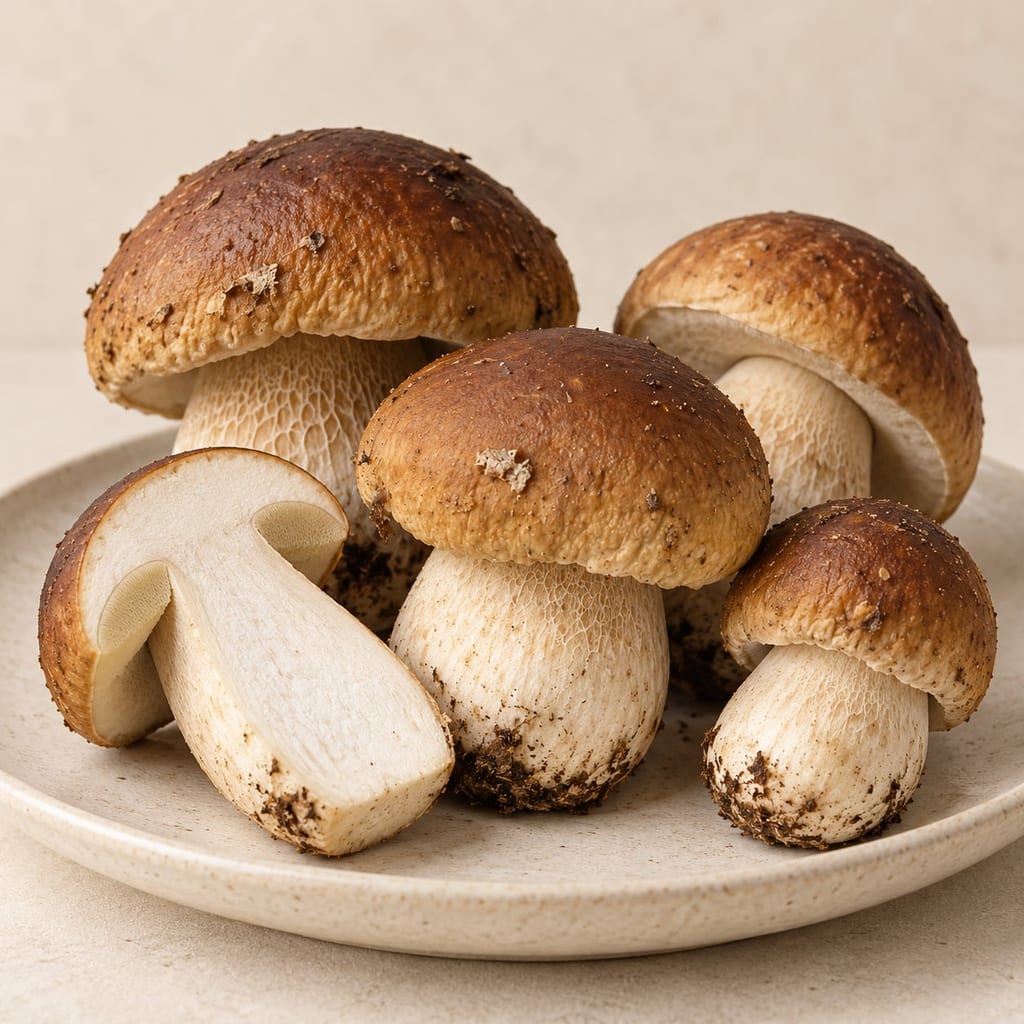
Porcini are prized wild ectomycorrhizal mushrooms from several closely related Boletus species, harvested chiefly from forests and sold fresh, dried or frozen for their firm texture and concentrated savoury aroma.
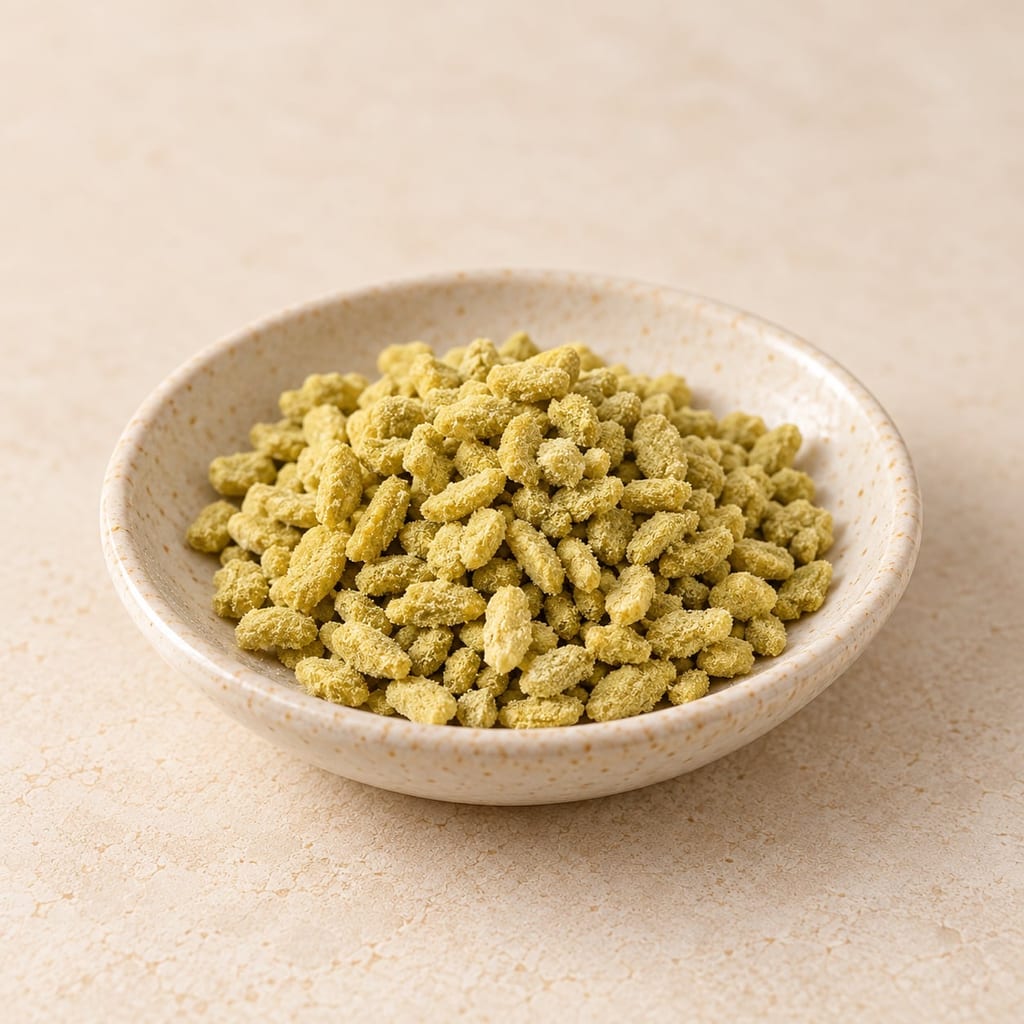
Yellow-koji starter is the spore inoculum of the yellow koji mold — Aspergillus oryzae and the related A. sojae — sold by specialist tane-kōji houses to grow koji for sake, miso and soy sauce.

Protected Italian vinegar made only from cooked grape must, fermented and aged in a battery of wooden barrels for at least 12 years: sweet, sharp and syrupy.

Airag is Mongolia’s fermented mare’s-milk drink, traditionally churned with saved starter in a reusable cowhide khokhuur.

Appam, or hoppers, are South Indian and Sri Lankan rice pancakes made from a fermented coconut-and-rice batter and cooked in a curved pan to a crisp lacy rim and a soft, spongy centre.
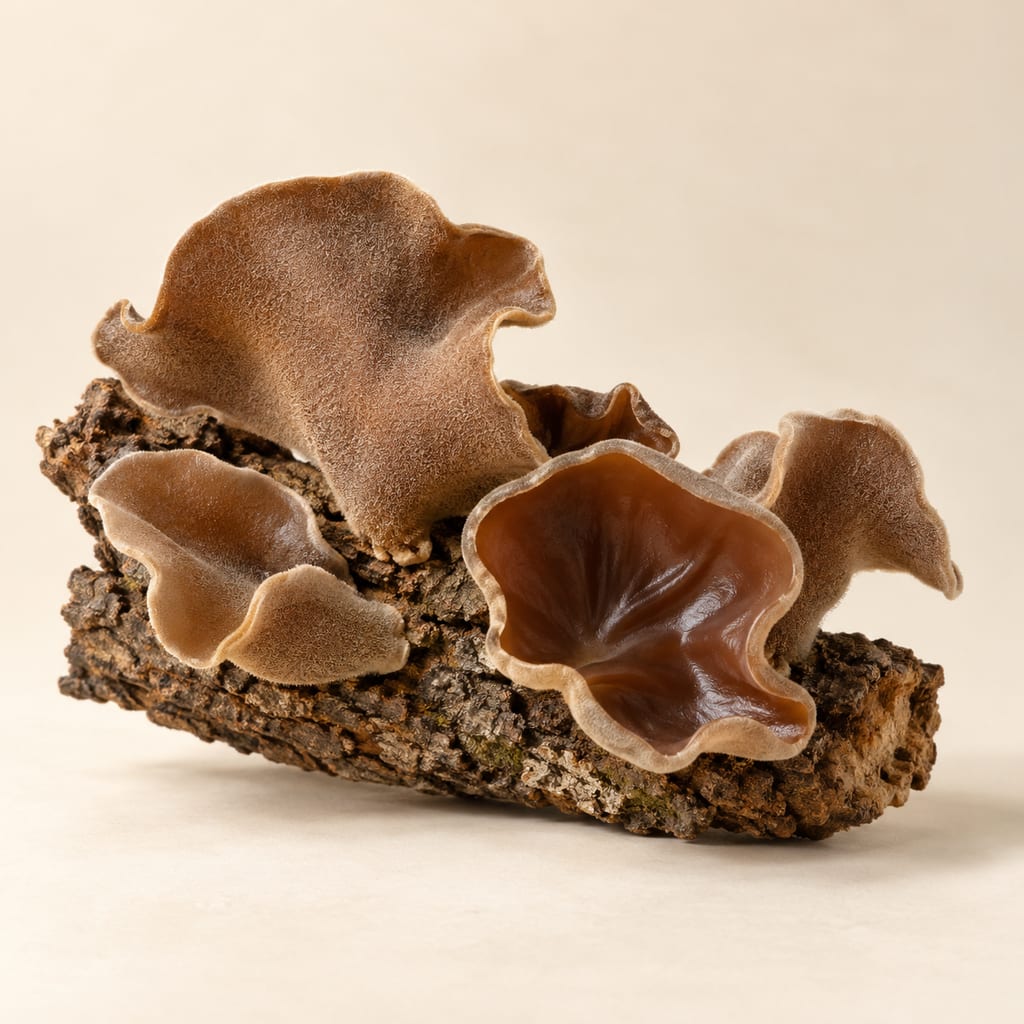
Auricularia tremellosa is a wood ear fungus of the genus that supplies most dried wood ear sold in China; its own food record is thin, and the culinary practice described here comes from the closely related wood ear species.

Ayran is Turkey’s cold, savoury yogurt drink: plain yogurt is loosened with water and lightly salted, then whisked smooth or aerated into a soft cap of foam.
A thin stone griddle used over an open hearth. Norwegian archaeology documents the established tradition from the early Middle Ages; a Viking-period origin is only a cautious suggestion linked to Shetland.

Crushed or milled barley cooked in water until the starch softens and the mixture thickens, the plainest way a northern household turned stored grain into a meal, here with apple and hazelnut.
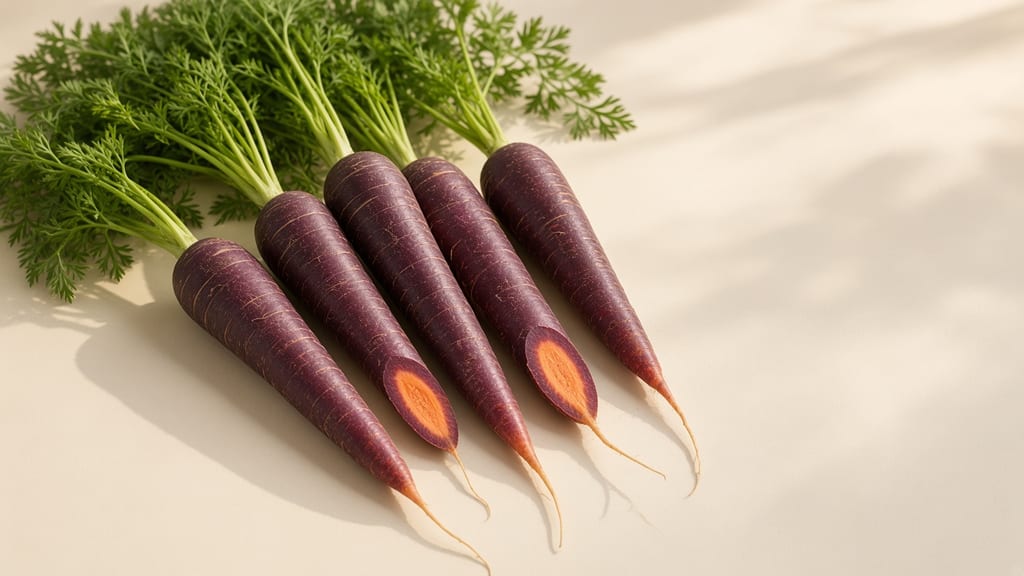
Black carrot is the anthocyanin-pigmented Eastern carrot (Daucus carota var. atrorubens), the purple root that preceded orange types and still colours kanji and şalgam.
No community contributions have been published for this entry yet.
Sign in to contribute. Published comments and photos are free to read.
Species Fungorum, Royal Botanic Gardens, KewReference
Tricholoma matsutake — Species Fungorum SynonymyAccepted scientific name Tricholoma matsutake (S. Ito & S. Imai) Singer
Original description as Armillaria matsutake in 1925
Transfer to Tricholoma by Rolf Singer in 1943
Treatment of Tricholoma nauseosum as a heterotypic synonym
Historical name Armillaria nauseosa A. Blytt
Historical combination Tricholoma caligatum var. nauseosum
Taxonomic placement in Tricholomataceae, Agaricales and Basidiomycota
Distinction between accepted taxonomic names and nomenclatural priority
Cited in: What it is; Where it comes from and its history; Regional variations and kinds
National Center for Biotechnology Information, National Library of MedicineReference
Tricholoma matsutake — NCBI TaxonomyNCBI Taxonomy ID 40145
Accepted scientific name Tricholoma matsutake
Armillaria matsutake as the basionym
Tricholoma nauseosum as a heterotypic synonym
Scientific-name authorities and publication dates
Epitype specimen TNS-F 82226
Placement within the genus Tricholoma and family Tricholomataceae
Distinction between synonymous names and separate species
Cited in: What it is
Mycoscience, Mycological Society of JapanReference
New Findings on the Fungal Species Tricholoma matsutake from Ukraine, and Revision of Its Taxonomy and Biogeography Based on Multilocus Phylogenetic AnalysesMolecular confirmation of Tricholoma matsutake in Ukraine
Collection of a Ukrainian specimen in 2020
Association of the Ukrainian specimen with fir trees
Multilocus comparison of Japanese, Korean, Chinese, Bhutanese, Scandinavian and Ukrainian specimens
Epitypification using a specimen collected in Nagano Prefecture, Japan
Epitype designation TNS-F 82226
Historical scientific description in 1925
Nomenclatural priority dispute involving Tricholoma nauseosum
Genetic evidence that Scandinavian T. nauseosum and Japanese T. matsutake represent the same species under the adopted treatment
Genetic distinction between Eurasian matsutake and several North American relatives
Recognition of Tricholoma magnivelare, T. murrillianum and T. mesoamericanum as separate species
Recognition of Tricholoma anatolicum, T. bakamatsutake and T. fulvocastaneum as related but distinct taxa
Evidence of geographical population differentiation within T. matsutake
Limitations of single-locus identification
Historical confusion involving the name Cortinellus edodes and the unrelated shiitake mushroom
Importance of preserving specimen-based taxonomy when recording commercial matsutake
Cited in: What it is; Where it comes from and its history; Regional variations and kinds
National Diet Library, JapanReference
Mushroom Hunting and MatsutakeHistorical importance of matsutake in Japanese autumn food culture
The Man'yōshū poem describing an autumn mushroom fragrance
Early explicit use of the name matsutake in the Shūi Wakashū
Aristocratic mushroom-gathering excursions during the Heian period
Use of gathered matsutake in grilled dishes and soups
Mushroom hunting by feudal lords during the Edo period
Expansion of recreational mushroom gathering among townspeople
Historical matsutake markets in Kyoto and Osaka
Dried and pickled mushrooms sold in Kyoto markets
Salted matsutake sent to the Tokugawa shogunal household
Seasonal festival offerings and literary references
Historical use of illustrated Japanese documents to reconstruct trade and culinary practices
Cited in: Where it comes from and its history; How it is eaten and used
Encyclopedia of Korean Culture, Academy of Korean StudiesReference
송이버섯 (Songi Beoseot)Traditional Korean names for matsutake
Association with Korean red pine
Description of cap, stem, gills and aromatic compounds
Occurrence in the Taebaek and Sobaek mountain regions
Presence of matsutake in Goryeo literary works
References associated with Yi In-ro, Yi Saek and Kim Si-seup
Later descriptions in Dongui Bogam and other Joseon-period writings
Traditional methods of cooking and preserving songi
Descriptions of soup prepared with pheasant
Historical preference for the mushroom's aroma and texture
Relationship between forest condition and historical mushroom availability
Need to distinguish historical medicinal claims from scientifically established health effects
Cited in: What it is; Where it comes from and its history; Regional variations and kinds; How it is eaten and used
Ministry of Agriculture, Forestry and Fisheries, JapanReference
松茸ごはん (Matsutake Gohan) — Kyoto PrefectureRegional association of matsutake rice with Kyoto
Importance of Tanba and Yamashiro matsutake
Seasonal use of wild matsutake in autumn
Commercial maturity categories koro, wan and hiraki
Traditional preference for the aroma of mature specimens in rice dishes
Use of rice, kombu stock and sliced matsutake
Historical importance of matsutake in Kyoto food culture
Documented preparation of matsutake gohan
Distinction between regional culinary preference and botanical species identity
Cited in: How it is chosen and stored; Regional variations and kinds; How it is eaten and used
Ministry of Agriculture, Forestry and Fisheries, JapanReference
詳しく知って楽しく食べよう!おいしいきのこ図鑑 (Guide to Edible Mushrooms)Official Japanese description of matsutake as an edible wild mushroom
Association with pine forests
Distinctive aroma and firm texture
Autumn seasonality
Importance of matsutake in Japanese cooking
Difference between wild matsutake production and routinely cultivated mushrooms
Cited in: What it is; How it is eaten and used
International Union for Conservation of Nature (IUCN)Reference
Tricholoma matsutake — The IUCN Red List of Threatened SpeciesGlobal assessment dated 29 March 2019
Publication of the assessment in 2020
Global conservation status Vulnerable
Assessment criteria A2cde+3cde+4cde
Decreasing global population trend
Threats from habitat deterioration and forest management changes
Impacts of pine decline and other forest disturbances
Importance of mycorrhizal host trees
Conservation importance of productive forest habitats
Need to distinguish the assessment's reported geographic range from newer species-level taxonomic revisions
Cited in: Where it comes from and its history; How it is chosen and stored
Swedish University of Agricultural Sciences (SLU)Reference
Exklusiv och eftersökt — forskare söker svaren om den hemlighetsfulla goliatmusseronenSwedish name goliatmusseron
Occurrence particularly in Norrbotten and Västerbotten
Association with pine forests and comparatively old forest stands
Commercial interest in Nordic matsutake
Difficulties establishing new fungal populations after clear-felling
Announcement of a research project beginning in 2026
Ongoing uncertainty about fungal establishment and mycelial lifespan
A poor northern Swedish matsutake season reported in 2026
Distinction between current scientific research and established cultivation methods
Cited in: How it is grown, harvested or made; Regional variations and kinds
Mycoscience, Mycological Society of JapanReference
Long-Term Effects of Forest Management on the Dynamics of Tricholoma matsutake Harvest over 41 Years in a Pinus densiflora Forest in Nagano Prefecture, JapanLong-term monitoring of matsutake fruiting in Toyooka, Nagano
Establishment of experimental forest plots in 1980
Comparison of managed and unmanaged pine-forest plots
Removal of competing trees, pine thinning and litter reduction in the managed plot
Annual recording of fruiting bodies over 41 years
Relatively stable production in the managed plot
Significant decline in the unmanaged control plot
Increased number of productive shiro in the managed plot
Measured differences in cumulative fruiting-body counts and harvested mass
Importance of pine-root condition and accumulated humus
Year-to-year changes associated with weather
Limitations of transferring results from one Japanese forest to all matsutake habitats
Cited in: How it is grown, harvested or made
Applied and Environmental Microbiology, American Society for MicrobiologyReference
Tricholoma matsutake Dominates Diverse Microbial Communities in Different Forest SoilsInvestigation of matsutake-associated soil microbial communities
Presence of matsutake mycelium in productive forest-soil zones
Ecological relationship between matsutake and surrounding bacteria and fungi
Importance of soil properties and host-tree associations
Differences between microbial communities inside and outside matsutake-dominated soil
Relationship between productive shiro and other soil organisms
Scientific distinction between natural forest microbial communities and food-fermentation starters
Cited in: How it is grown, harvested or made
Journal of Environmental Management, ElsevierReference
Large-Scale Interviews and Plot-Based Data Reveal Declining Yields of the Prized Matsutake Mushrooms in the Major Producing Areas of ChinaChinese matsutake yield trends studied through interviews and field monitoring
Comparison with 26 years of plot-based observations across four villages
Extension of interviews to twenty villages
Reported perception of decline among 94.64% of collectors in the comparison sample
Reported perception of decline among 86.28% of collectors in the wider survey
Reported threats including forest density, shiro disturbance and changing climate
Differences between common-access and private-access forests
Importance of community-based management and forest conditions
Distinction between collector perceptions and directly monitored yield changes
Cited in: Regional variations and kinds
Trees, Forests and People, ElsevierReference
Commodity Chain as a Negotiated Process: Empirical Analysis of Benefit Allocation, Governance, and Powers of Upstream and Downstream Actors in Matsutake Mushroom Trade in Shangri-La, Yunnan ProvinceEthnographic and economic investigation of the matsutake trade in Shangri-La
Wild collection in Diqing Tibetan Autonomous Prefecture
Importance of the Baima Snow Mountain area
Five principal commodity-chain stages: harvesting, transportation, grading, packaging and sales
Participation of collectors, village traders, wholesalers, retailers and exporters
Relationship between forest access rights and collection practices
Different grading practices at village and retail levels
Commercial price variation by grade and market
Increasing importance of Chinese domestic consumers alongside exports
Importance of separating historical market data from current prices
Economic significance of matsutake for rural communities
Cited in: How it is grown, harvested or made; Regional variations and kinds; How it is eaten and used
Food and Agriculture Organization of the United Nations (FAO)Reference
Wild Edible Fungi: A Global Overview of Their Use and Importance to People — Chapter 3: ManagementImportance of ectomycorrhizal fungi as non-wood forest products
Relationship between wild-mushroom harvesting, host trees and forest management
Commercial importance of matsutake in Asia and North America
Need to balance collection with ecosystem conservation
Risks from poor forest management and habitat degradation
Management of access rights and harvesting pressure
Importance of maintaining productive forest ecosystems rather than attempting to cultivate mushrooms independently of trees
Role of local collectors and rural livelihoods
Cited in: Where it comes from and its history; How it is grown, harvested or made
Food and Agriculture Organization of the United Nations (FAO)Reference
Wild Edible Fungi: A Global Overview of Their Use and Importance to People — Chapter 4: Importance to PeopleEconomic importance of wild edible mushrooms
International trade in matsutake and related pine mushrooms
Collection in Himalayan and East Asian production regions
Commercial harvesting and export as sources of rural income
Relationship between collectors, traders and international markets
Distinction between species consumed locally and species traded for luxury markets
Historical commercial context rather than current export statistics
Taxonomic uncertainty in historical international matsutake trade records
Finnish Food Authority, RuokavirastoReference
Suositeltavat ruokasienet (Recommended Edible Mushrooms)Recognition of tuoksuvalmuska as Tricholoma matsutake
Inclusion on Finland's advisory list of recommended edible mushrooms
Scientific identity of the commercially recognised Finnish mushroom
Difference between the current advisory list and the former regulated commercial-mushroom list
Responsibility of food businesses to sell correctly identified, safe mushrooms
Cited in: What it is; How it is chosen and stored
Beaty Biodiversity Museum, University of British ColumbiaReference
Tricholoma murrillianum — Western Pine Mushroom, Western MatsutakeWestern North American commercial matsutake as Tricholoma murrillianum
Scientific distinction from eastern North American T. magnivelare
Scientific distinction from Mesoamerican T. mesoamericanum
Historical application of the name T. magnivelare to several species
Spicy and cinnamon-like aroma of western pine mushrooms
Association with coniferous forest hosts
Dangerous confusion with Amanita smithiana
Risk of severe kidney damage from the poisonous lookalike
Importance of expert mushroom identification
Why North American market photographs should not automatically be labelled T. matsutake
Cited in: What it is; How it is chosen and stored; Regional variations and kinds
Food Science and Biotechnology, Springer NatureReference
Chemical Compositions and Volatile Compounds of Tricholoma matsutake from Different Geographical Areas at Different Stages of MaturityChemical comparison of matsutake collected from different geographical areas
Differences in volatile aroma compounds with maturity
Identification of methyl cinnamate, 1-octen-3-ol and other important volatiles
Decline of methyl cinnamate and 1-octen-3-ol levels as specimens mature in the tested samples
Analysis of amino acid and mineral composition
Identification of glutamate among important free amino acids
Potassium as the most abundant measured mineral element
Use of chemical profiles to investigate geographical origin and maturity
Limitations of assigning one chemical composition to every matsutake specimen
Cited in: What it does in fermentation and cooking; How it is chosen and stored; Regional variations and kinds
Journal of Agricultural and Food Chemistry, American Chemical SocietyReference
Characterization of Aroma-Active Compounds in Raw and Cooked Pine-Mushrooms (Tricholoma matsutake Sing.)Gas chromatography-olfactometry of raw and cooked matsutake
Use of aroma extract dilution analysis
Importance of 1-octen-3-one in raw mushroom aroma
Contributions of linalool, methional, 1-octen-3-ol and 3-octanol
Formation or increased importance of cooked-potato-like, roasted, buttery and floral notes after heating
Identification of 2-acetylthiazole and phenylacetaldehyde among cooked aroma contributors
Distinction between volatile abundance and odour activity
Chemical explanation of changes in aroma during cooking
Cited in: What it does in fermentation and cooking; How it is eaten and used
Food Chemistry, ElsevierReference
Volatiles and Key Odorants in the Pileus and Stipe of Pine-Mushroom (Tricholoma matsutake Sing.)Comparison of the cap and stem of matsutake
Detection of 24 volatile components in the cap and 21 in the stem
Greater abundance of methyl cinnamate in the cap
Greater abundance of 1-octen-3-ol in the stem
Importance of C8 volatile compounds in the stem
Strong sensory contribution of 1-octen-3-one in both parts
Differences between mushroom-like, floral, citrus and other aroma notes
Distinction between tissue-specific chemical measurements and universal concentrations
Cited in: What it does in fermentation and cooking
Mycoscience, ElsevierReference
A Biosynthetic Pathway for (E)-Methyl Cinnamate Formation in the Ectomycorrhizal Fungus Tricholoma matsutakeExperimental investigation of methyl cinnamate biosynthesis
Use of carbon-13- and deuterium-labelled precursors
Conversion of phenylalanine to cinnamate
Formation of methyl cinnamate from cinnamate
Preservation of the carbon skeleton during the investigated transformations
Biochemical basis of an important matsutake aroma compound
Distinction between synthesis by the living fungus and compounds generated by cooking
Cited in: What it does in fermentation and cooking
Nippon Shokuhin Kogyo Gakkaishi, Japanese Society for Food Science and TechnologyReference
Flavor Components in Japanese and Korean Matsutake — Tricholoma matsutake — and Their Change During StorageComparison of flavour concentrates from Japanese and Korean matsutake
Identification of 1-octen-3-ol, cis-2-octenol and methyl cinnamate
Differences in methyl cinnamate between the sampled origins
Experimental storage for 66 hours
Loss of recoverable flavour concentrate during room-temperature storage
Much smaller changes under cold storage
Importance of prompt cooling after harvest
Limitations of applying one short-term experiment as a universal storage shelf-life standard
Cited in: What it does in fermentation and cooking; How it is chosen and stored
Foods, MDPIReference
Flavor Variations in Precious Tricholoma matsutake under Different Drying Processes as Detected with HS-SPME-GC-MSComparison of fresh, hot-air-dried and vacuum-freeze-dried matsutake
Use of fruiting bodies collected in Diqing, Yunnan
Detection of 99 volatile compounds across the investigated samples
Identification of thirty volatile markers associated with processing method
Differences in alcohols, aldehydes, ketones, esters and other volatile classes
Greater preservation of some fresh-mushroom volatile characteristics by vacuum freeze-drying
Experimental hot-air drying conditions of four hours at 60–70°C followed by two hours at 70–100°C
Experimental freezing at -80°C followed by vacuum drying at -40 to -50°C
Changes in methyl cinnamate and C8 aroma compounds after drying
Distinction between experimental analytical processing and a validated home-drying recipe
Cited in: What it does in fermentation and cooking; How it is chosen and stored; How it is eaten and used
Foods, MDPIReference
Comprehensive Characterization and Comparison of Aroma Profiles of Tricholoma matsutake Soup During the Cooking Process by HS-GC-IMS and HS-SPME-GC-MSExperimental analysis of matsutake soup during cooking
Detection of 51 volatile compounds in the tested samples
Application of electronic nose and two chromatographic methods
Identification of 1-octen-3-ol, 1-octanol, methyl cinnamate and 2-pentylfuran as important aroma contributors
Measured changes in aroma profiles with different cooking durations
Finding that shorter cooking treatments retained characteristic mushroom aroma more effectively
Distinction between optimising sensory quality and establishing a food-safety cooking temperature
Research relevance to commercial soup production
Cited in: What it does in fermentation and cooking; How it is eaten and used
Allergology International, Japanese Society of AllergologyReference
A Pediatric Case of Anaphylaxis Caused by Matsutake Mushroom (Tricholoma matsutake) IngestionDocumented case of anaphylaxis in an eight-year-old child after eating matsutake
Evidence from skin testing and specific IgE antibody analysis
Evidence of immune activation during the reported reaction
Recognition of matsutake as a possible food allergen
Distinction between rare documented allergy and toxicity of correctly identified ordinary edible mushrooms
Cited in: How it is chosen and stored
encykorea.aks.ac.krReference
Web page E0031004Cited in: Where it comes from and its history; How it is eaten and used
Publisher via DOIReference
Journal article (DOI) mycosci.2024.09.003Cited in: How it is grown, harvested or made
tandfonline.comReference
Web page 02827581.2015.1006246Cited in: How it is grown, harvested or made; Regional variations and kinds