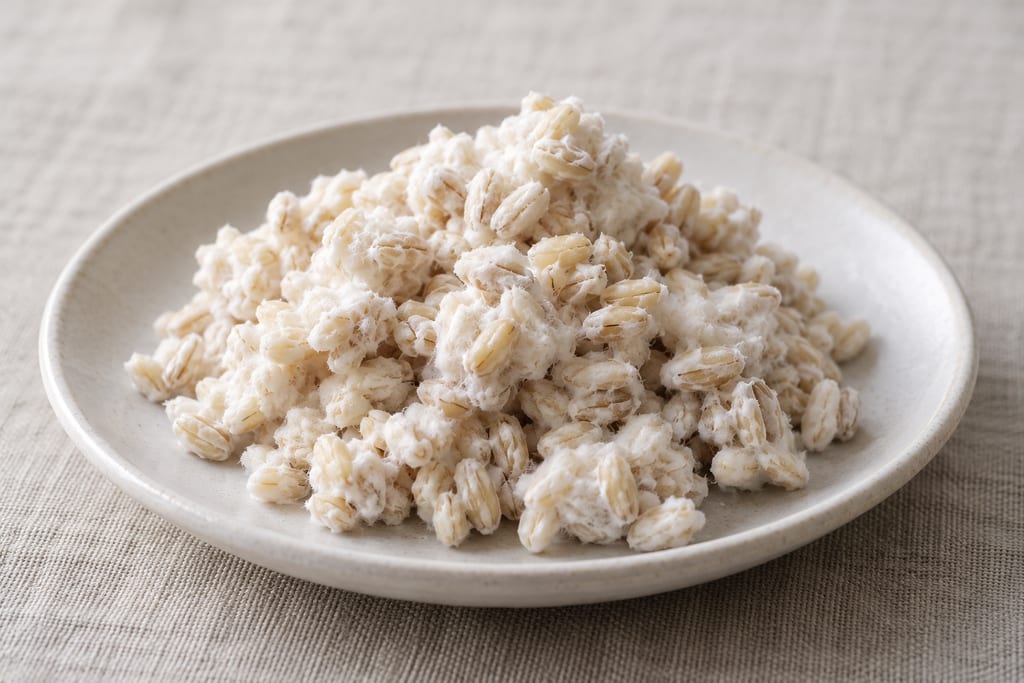
Barley koji
Steamed pearled barley grown into a white koji cake with Aspergillus oryzae over about 36 hours in a 30 °C chamber, turned three times under a damp cloth.
 FermenteaWhere food goes to change
Cultures
Yellow-koji starter is the spore inoculum of the yellow koji mold — Aspergillus oryzae and the related A. sojae — sold by specialist tane-kōji houses to grow koji for sake, miso and soy sauce.
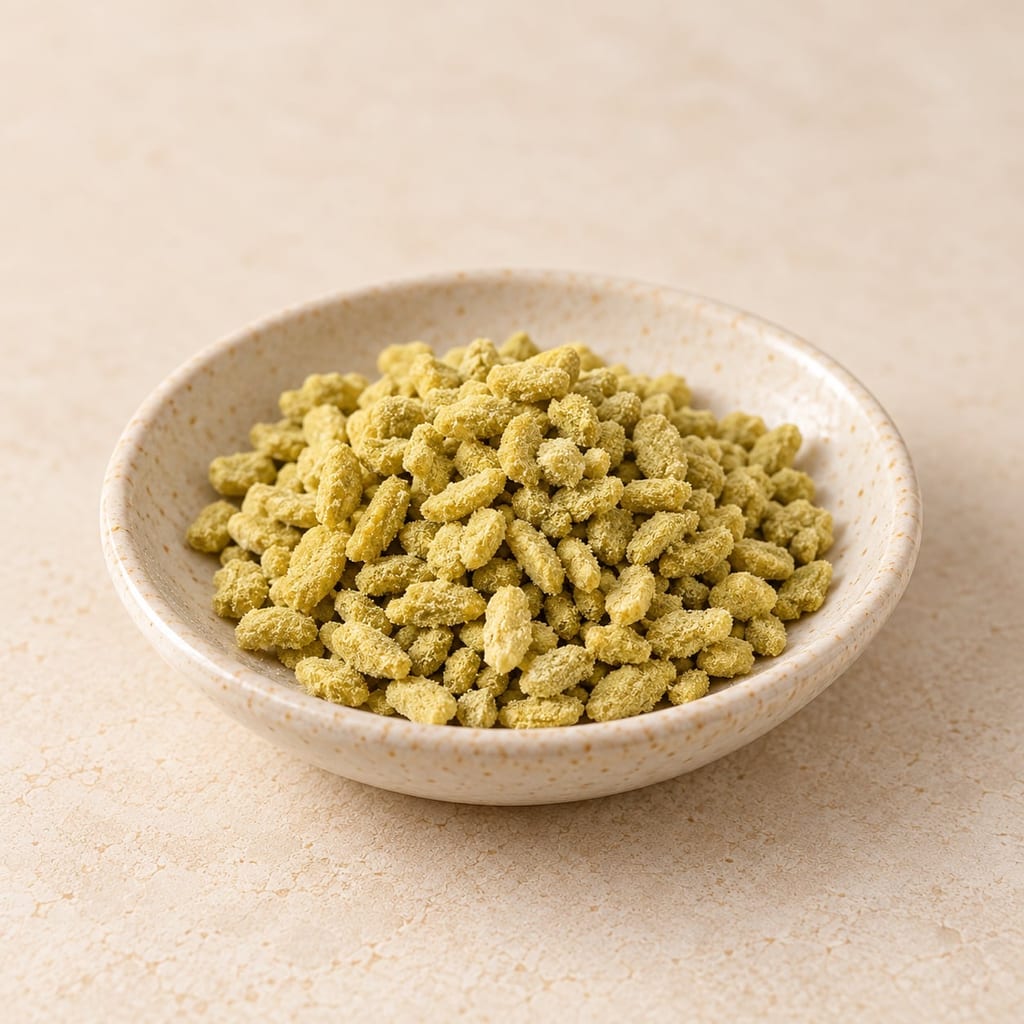
Yellow-koji starter is seed in the most literal brewing sense: the spores of the yellow koji mold, grown out on cereal and then harvested, dried and bagged so that a brewer or a home cook can plant them on steamed rice and start again. Japanese specialist suppliers have sold it for centuries under the name tane-kōji, 種麹 or 種麴, and older trade usage also called it moyashi, もやし, or tane-moyashi, 種もやし. The National Research Institute of Brewing's English glossary lists the same word under four headwords — koji spores, seed koji, starter koji and spores of koji mold — and keeps it well clear of shubo or moto, the sake starter culture, which is a yeast-and-bacteria mash rather than a mold inoculum. It is not the same thing as koji either. Koji is grain with the mold actively growing on it, alive and full of enzymes; the starter is the inoculum that makes koji, and the two have different jobs, different cultivation times and different shelf lives.
The word "yellow" does the work of a species label. Japanese brewing taxonomy sorts the koji molds by the colour of the spores each one produces, and the yellow group covers Aspergillus oryzae, the species behind sake, and Aspergillus sojae, the species favoured for soy sauce, along with albino mutants of both. Those spores read yellow-green to green, with the shade shifting according to the medium they were grown on and how long they were left to sporulate. The colour is literally the name: the institute notes that the black in black koji mold and the yellow in yellow koji mold come from the spore colour itself. The other branches of the family are excluded here — Aspergillus luchuensis, including var. awamori and mut. kawachii, which carries awamori and most shochu, and A. niger, which brewing does not use at all.
A starter packet is therefore a small, dry, deliberately boring object: pale powder or pale grains, faintly earthy, with no sweetness or savoury punch of its own. Everything interesting happens downstream. A. oryzae and A. sojae were designated part of Japan's national fungus, kokukin, by the Brewing Society of Japan in 2006, a designation given to the collective koji-kin rather than to any one packet, and the mold's identity has a documented Western paper trail too: Hermann Ahlburg, a foreign advisor in Meiji Japan, isolated it from rice koji in 1876 and named it Eurotium oryzae before it was renamed A. oryzae. The collective term koji-kin itself only came into general use in the Showa era.
Three things are easy to confuse and worth separating before going further. The first is the mold, a living fungus. The second is the starter, the harvested spores sold to inoculate grain. The third is koji, the grain product those spores make. A fourth entry, the grown koji sold in packets for home miso or amazake, is a preparation rather than an ingredient, and it is not this page. This record covers the yellow-koji inoculum as bought or kept: the granular and powdered spores that a rice-koji recipe calls its seed.
Before there was starter, there was luck. The oldest way to make koji was to wait for mold to arrive on steamed grain, or to carry a little of a good batch into the next one. Both were unreliable, and the carrying method left a measurable trace: when researchers examined the in-house starters that breweries still kept under the tomo-dane practice, Penicillium turned up in five of seven companies' products, bacterial and yeast counts ran from 8,000 to 300 million per gram, and the ratio of bacteria to spores sat between 0.23 and 2 percent. The eighth- to tenth-century Engishiki prescribes inoculating with about a tenth of the koji weight, roughly a hundred times the dose a modern brewer uses, which says less about old recipes than about how weak the inoculum was.
The turn came with ash. Practitioner accounts date the mixing of wood ash into a koji culture to around six hundred years ago, in the Muromachi period, and describe it as the discovery that made seed koji possible: ash raises the alkalinity of the substrate, keeps the mass open so oxygen reaches the mycelium, and supplies minerals that push the mold to form durable, dispersible spores rather than just spreading vegetatively. The ash was not swept from a hearth but made to order, steamed and roasted from the branch tips and leaves of camellia and oak, and the starter houses bought it from specialist ash producers, the hai-ya. A related account places the wood-ash technique in the Muromachi period as well and treats it as the start of tane-koji as a distinct product.
Once spores could be kept, they could be sold. Kōjiya Sanzabemon, founded in Kyoto in the Muromachi period, was granted permission to sell seed koji by the Ashikaga shogun Yoshiteru, who ruled from 1546 to 1565 — a licence to trade a microorganism, six centuries before the phrase "culture supplier" existed. The same firm still makes starter today; it moved to Toyohashi in Aichi in 1965 and set up a research company, B'ioc, in 1992. By the middle of the Edo period seed koji had become a separate craft with its own cultivation methods, distinct from koji making, and the manuscript of one Kyoto house records customers ordering specific characters — a "strong moyashi", a "white koji" — and the house testing rice varieties for how well they carried seed koji. Kyoto dealers named in the records include Kōjiya Sanzabemon, Omiya Kichizaemon and Hishiya Rokuzaemon, with Osaka houses behind them, and buyers came from Michinoku in the north to Hizen in the south. An older account of the koji trade adds that koji-making specialists, the koji-za, had monopolised the craft before the Bun'an koji disturbance broke their hold, after which two tane-koji dealers are recorded in early Edo Kyoto.
The modern commercial shape dates from much later. If "for sale" is written into the definition, the history of koji starter as a product begins in the Meiji era, 1868 to 1912, sold as a naturally dried granular product made mostly of grain; records of it being used for miso follow in the 1900s. Sake competition spread the habit of buying starter to miso and soy sauce houses, and the number of makers grew — around ten from Meiji, still fifteen in the Showa era by one 1984 count — before consolidating again. The National Koji Starter Association had 43 member companies in 1949; today twelve remain, of which only six sell nationwide, a figure the head of one starter house gives as six national makers plus two serving local customers only. Manufacturing and selling a microbial seed, rather than the fermented food itself, has been described as an industry unique to Japan, and as the first biotechnology industry there: it produces the microorganism separately from the product.
Purity arrived in stages. The importance of using pure original strains was proposed in 1895 and a method for culturing them and making starter from them was reported in 1911, but it became mainstream only after the Showa era began; large soy sauce makers led the shift to pure isolation from the late Meiji through the Taisho era, and designing a starter around a strain's known characteristics became general practice only after the Second World War. In 1907 three strains were first isolated from sake koji starter, and in 1926 it was proved that starter contributes koji mold alone, not the bacteria that had been riding along with it. The hygiene gains are legible in the numbers: bacterial counts in starter ran from one million to one hundred million per gram in the early 1900s, fell sharply after about 1960, and by the 1990s most powdered products sat under a thousand per gram. A brewer's decision to buy rather than propagate starter is now near universal, and the reason offered is practical rather than romantic: koji mold grows only under conditions that are hard to create and hold.
Starter making is an extension of koji making, but the aim is inverted. Brewing koji is grown for enzymes: the mold is encouraged to penetrate the grain and load it with amylases and proteases, and the job is finished in 40 to 45 hours. Starter is grown for spores, with as few bacteria as possible and enough durability to sit on a shelf, and that takes four to six days, about three times as long, depending on the strain. The same open-room craft therefore splits into two different calendars, and the difference is visible in every step.
The substrate is treated differently from brewing rice. Starter grain is polished only lightly, 2 to 3 percent for rice and 10 to 20 percent for barley, leaving the bran rather than stripping it, and the material is brought to around 40 percent moisture. Wood ash, 0.1 to 0.5 percent, is dusted on as the steamed grain cools, or at inoculation — the single step that most clearly separates starter work from brewing work. The pure strain is then sprayed on at a grain temperature of about 30 to 32 °C, in a room kept near saturation so the substrate does not dry out, while the mold's own growth optimum sits higher at 35 to 38 °C. The mass is turned once, at the teire stage around 20 to 24 hours in, and then deliberately left alone: no further stirring means the mold stops spreading through the grain and starts throwing up conidia on the surface. Late in the culture the temperature is held near 30 °C. Grain temperature across the whole run typically sits between 30 and 35 °C, with the pattern and the peak varying by strain.
Harvest is a sorting operation. The grown grain is sieved through 100 to 300 mesh to release the spores, and each batch is checked for appearance and enzyme activity to confirm the strain has not drifted during production. Then it is dried, below 40 °C, to 10 percent moisture or less; a food-safety guideline puts the industrial drying at 40 to 42 °C in dehumidified air, with the dried spores held at 5 to 15 °C afterwards. That drying step is what turns a perishable mold culture into a tradeable good, and it is the modern descendant of the oldest storage trick in the trade: at the end of the brewing season, lime and wood ash mixed in equal parts were placed in wooden boxes with the starter, sealed and kept dry for the next season, a practice that carried on until the late 1800s.
Two products come out of this. Granular starter, 粒状, is the dried grain bagged as it is, spores still sitting on the rice or barley it was grown on; it is what handmade koji uses, and shochu makers still buy a high proportion of it. Powdered starter, 粉状, has the spores sieved off the carrier and the count standardised with alphalised starch as a bulking agent; it suits mechanical inoculation devices, and it now makes up about 90 percent of what is sold. Nearly all miso and soy sauce brewing uses powder, as do most large sake breweries; the granular form survives where the work is done by hand.
The spores themselves are about five micrometers across, and a gram of finished starter carries anywhere from five to thirty billion of them depending on the strain. That range is why inoculation is quoted as a proportion rather than a fixed weight: roughly one part in a thousand of the material for granular starter, and one part in three to six thousand for powder, which works out to something like 5,000 to 10,000 spores landing on each grain of steamed rice. The British Columbia guideline that treats koji making as a controlled process asks for a certificate of assurance on purchased Aspergillus strains, with spore counts above about one billion per gram and aerobic contaminants under 1,000 CFU per gram — a floor well below the commercial norm, and a reminder that the useful measure of a starter is not only how many spores it has but how little else came along with them.
Only three Aspergillus species are used in Japanese brewing — A. oryzae, A. sojae and A. luchuensis — but around forty strains circulate among starter makers, and many commercial starters are blends, put together to soften one strain's excesses or to combine two strains' strengths. A starter is thus closer to a seed-catalogue variety than to a single organism: the species tells you the family, the strain tells you what the koji will do.
The trade sorts its catalogue three ways at once. By use: starters for sake, subdivided into daiginjo work, moromi work, aromatic strains and liquefying mashes; for miso, split by rice, barley and soybean miso and further by red, white and Saikyō styles; for soy sauce, with koikuchi, usukuchi, soya and white soy sauce strains; for shochu, rice, barley and awamori; and for other work such as amazake and the sale of fresh koji. By form: granular or powder. By colour: yellow, white and black. The colour axis is where the yellow-koji category has an interesting wrinkle, because albino mutants of A. oryzae and A. sojae are still yellow-koji molds in the taxonomic sense even though their colonies read white. A record from the Bunka years, 1804 to 1818, already notices the shift, remarking that koji "has always produced yellow flowers" — meaning spores — but that white koji without spores had recently come to be considered superior. The white mutant of black koji, isolated in 1918, is the famous case in shochu; the white mutants of A. oryzae are the quiet ones, widely used in miso and increasingly sold to home makers because they keep amazake and white miso pale.
Enzyme balance is the real choice. The National Research Institute of Brewing explains that koji supplies the enzymes that break down starch and protein along with the flavour and aroma compounds of the finished food, and because each product wants a different balance, dedicated strains are used — a sake koji mold, a miso koji mold. A European culture vendor selling nine strains puts the same idea in practical terms: a light rice strain with strong starch-splitting power for short, sweet miso, amazake and sake; a red rice strain bred for long, saltier rice miso with more protein breakdown and less saccharification; a barley strain for barley miso; a soy strain for all-soy miso; and a soy sauce strain bred to leave sugars behind for the yeasts while working hard on protein. The vendor treats the miso strains as broadly interchangeable but insists on a proper soy sauce strain, and notes that a rice strain will grow on soybeans, just less well than on the substrate it was bred for. That guidance is a supplier's, not an institution's, and its species labels are inconsistent, so it is worth using for the logic of strain selection rather than for taxonomy.
Where the yellow molds stop matters too. Sake is made overwhelmingly with yellow koji mold, with red koji mold and Rhizopus as the documented exceptions. Shochu and awamori run on black or white koji mold, and the difference is chemical, not cosmetic: koji made with black or white molds carries large amounts of citric acid and supplies an acid-tolerant amylase, which acidifies the moto and the moromi and blocks harmful contamination. Yellow koji does not bring that acid shield, which is one reason sake brewing has evolved its own acidification steps. Some rice shochu, and breweries recreating Meiji-era methods, do use yellow koji mold, so the boundary is a documented tendency rather than a wall.
Yellow-koji starter is the input to every koji that carries the yellow mold, and those koji are the engine of a large part of Japanese cooking. Rice koji, the most familiar, is steamed rice planted with these spores and cultured for a day and a half; it is the saccharifying agent in sake, the starch source in amazake, the starter culture in shio koji and the grain component of rice miso. Barley koji does the same job for barley miso and barley shochu; soybean koji carries the mold into soybean miso; and the wheat-and-soy koji of soy sauce brewing is one of the largest single markets for powdered starter in the country. By volume the starter trade runs soy sauce first, then miso, then shochu, then sake — a ranking that surprises nobody who has priced a bottle of supermarket shoyu against a bottle of ginjo.
What the mold contributes is enzymatic, and the starter decides how much of each enzyme arrives. A. oryzae and A. sojae send glucoamylase and other amylases into the grain to free sugars from starch, and proteases to free amino acids from protein. Sake needs sugar for yeast to turn into alcohol, so its koji is bred and grown for saccharifying power. Miso needs both sugar, which feeds the lactic acid bacteria and yeasts that sweeten and perfume it, and amino acids, which supply savoury depth over months of aging; a long-aged, saltier miso rewards a strain with more proteolytic reach. Soy sauce needs protein above all, and needs the sugars left unspent so that the yeasts and the salt-tolerant bacteria can build its aroma. This is why a starter sold "for soy sauce" behaves differently from one sold "for amazake" even though both are yellow koji mold, and why a home cook who substitutes one for the other gets a workable but lopsided result rather than a failure.
The same spores also reach the home kitchen in a form that has almost no historical precedent. A Japanese supplier sells a home starter as a pure white strain named Yukikomachi, described as widely used for amazake, miso and processing, in a 70 g bag reckoned to cover 200 kg of raw rice; its worked example uses 1 to 2 g of starter per kilogram of steamed rice, sprinkled on once the rice has cooled to around 45 °C. That is a household instruction, not a validated safety process, but the arithmetic matches the industry's own dosing logic: a gram of powder holding billions of spores needs only a pinch per kilogram of grain to reach thousands of spores per grain. A European vendor sells the same class of product as spores with a separate note on diluting them before use, which is the practical way to spread a sub-gram dose evenly through a kilo of rice.
Choose by form first. If the koji will be made by hand, in trays or a small box, granular starter is the natural match: the spores come already sitting on grain, it is easy to see and easy to spread, and the traditional dosing figure of about one part in a thousand of the material assumes that form. If the koji will be made in a machine, or if the work is done at home in small batches where an even distribution matters more than tradition, powder is the better buy, dosed at one part in three to six thousand and best diluted with a little flour or starch before sprinkling. Read the label for the species and the intended use, since a packet sold for soy sauce or for long-aged miso is bred for a different enzyme balance than one sold for amazake.
Dosing is a numbers game that rewards a rough approach. With a finished starter carrying five to thirty billion spores per gram, the industry's own targets of 5,000 to 10,000 spores per grain of steamed rice are met by weights measured in grams per kilogram, not by cups. A home example of 1 to 2 g per kilogram of rice sits in the same order of magnitude as the granular one-in-a-thousand rule. Too little starter leaves bare grains that wild molds and bacteria can colonise; too much does no great harm but wastes a scarce product and can push the mass to overgrow.
Keeping the starter dry is the whole of keeping it. The industrial pattern is drying to 10 percent moisture or less at under 40 °C, then storage between 5 and 15 °C, and the published result of that drying is a product that keeps at room temperature for six months or more as long as it does not pick up moisture again. Starter houses themselves keep their dried starter around 15 °C at 50 percent relative humidity, hold stocks in more than one place, and re-culture as little as possible so the strain does not drift. A home packet is best kept sealed, dry and cool; the sources read give no home shelf life beyond the six-months-or-more figure for properly dried starter, and no basis exists for inventing one. A refrigerated or frozen packet of fresh, wet koji — grown koji rather than dried spores — is treated by the safety guideline as good for about a month, or freezable, with slightly reduced activity acceptable as long as it has been protected from contamination.
Safety sits on both sides of this product. The mold itself is about as well-established a food microorganism as exists: safety was argued first from centuries of use in sake and miso, then demonstrated scientifically from the 1960s onward. After turkey deaths in England in 1960 were traced to aflatoxin in peanut meal contaminated by A. flavus, Japanese national and private bodies inspected the brewing molds thoroughly and confirmed that none of them produces aflatoxin; genome work in 2005 separated A. oryzae from A. flavus, and analysis of the aflatoxin gene cluster placed every starter strain examined in the non-aflatoxigenic groups. Japan's National Institute for Infectious Diseases classifies koji mold at biosafety level 1, meaning it is not expected to cause disease in healthy people, and the US FDA lists it on the GRAS list. The relationship to A. flavus is real, and it is the reason for the one rule that a home maker should not bend: the safety guideline advises against back-slopping, that is, against using one's own koji to produce a new batch of starter, because the risk of amplifying wild Aspergillus strains that do produce aflatoxins goes up sharply. Buying the spores and not trying to propagate them at home is the documented position.
The other hazard is not the mold but the ones that arrive uninvited. Koji is made in an open system, and the common intruders are Micrococcus, coliforms introduced by hands, and Bacillus, whose heat-resistant spores multiply quickly once the grain runs above 35 °C and survive even high salt. That is why both brewing koji and starter work begin at a cool grain temperature, why the BC guideline asks for cooked rice to be cooled to 35 °C within two hours of its internal temperature falling below 60 °C before spores go on, and why incubation is held around 30 °C and never allowed past 40 °C. Koji workers, the literature notes, traditionally avoid eating natto before a shift, since it is a dose of exactly the bacterium they are trying to keep out of their trays.
The dating of the trade depends on how strictly the word "sold" is read. The head of a Kyoto starter house dates the wood-ash technique and his own firm's licensed sale to the sixteenth century; the Journal of Fungi review grants that in-house starters, including the tomo-dane method, existed long before and places the history of starter "for sale" in the Meiji era. Both are recorded here, and the period on this page marks the earliest dated commercial attestation rather than an origin.
Whether A. oryzae was domesticated by humans or simply selected during koji making is still argued; the split from A. flavus is reported at around 1000 BC, roughly when rice cultivation reached Japan. No claim about domestication is made here.
Home-scale storage figures are thin. The published numbers are industrial — drying at 40 to 42 °C to 10 percent moisture, storage at 5 to 15 °C, and six months or more at room temperature for starter dried to 10 percent moisture or less — and no retail shelf life appears in the sources read. Carrier allergens come from the packet label: the granular form is grown on rice or barley, and powder grades are bulked with starch.
The European vendor's species labels conflict with Japanese brewing taxonomy in places, notably in calling a black-koji strain A. awamori where the brewing literature now uses A. luchuensis. Its strain advice is used here only for the logic of choosing by intended product.
The starter is spores harvested from a cereal carrier, usually rice, with starch added to powder grades; a barley carrier is possible in other koji products, so the carrier and any declared allergen come from the packet label rather than from the mold., No allergen or dietary restriction is recorded for the yellow-koji starter itself in the sources read.
The country where tane-kōji is documented as a separate trade: the seminar report records seed koji purchased from Michinoku in the north to Hizen in the south since the Edo Period, the brewing literature describes the specialist starter houses that supply brewers, and the safety guideline treats commercial Aspergillus starter as the approved source for koji making.
Kyoto is where the earliest documented seed-koji dealers worked: Kōjiya Sanzabemon, Omiya Kichizaemon and Hishiya Rokuzaemon are named as Edo-period Kyoto producers, and two tane-koji shops are recorded there in the early Edo period. This locates the trade, not the origin of the mold.
The Kyoto seed-koji house Kōjiya Sanzabemon moved to Toyohashi in 1965 and set up the research company B'ioc in 1992; the town is a present seat of one starter maker, not a place where the starter is used differently.
A contrast row rather than a use row: awamori and most shochu are made with black or white koji mold, not yellow koji, so this is where the yellow-koji category stops. Some rice shochu and brewing that recreates Meiji-era methods do use yellow koji mold.
Steamed pearled barley grown into a white koji cake with Aspergillus oryzae over about 36 hours in a 30 °C chamber, turned three times under a damp cloth.
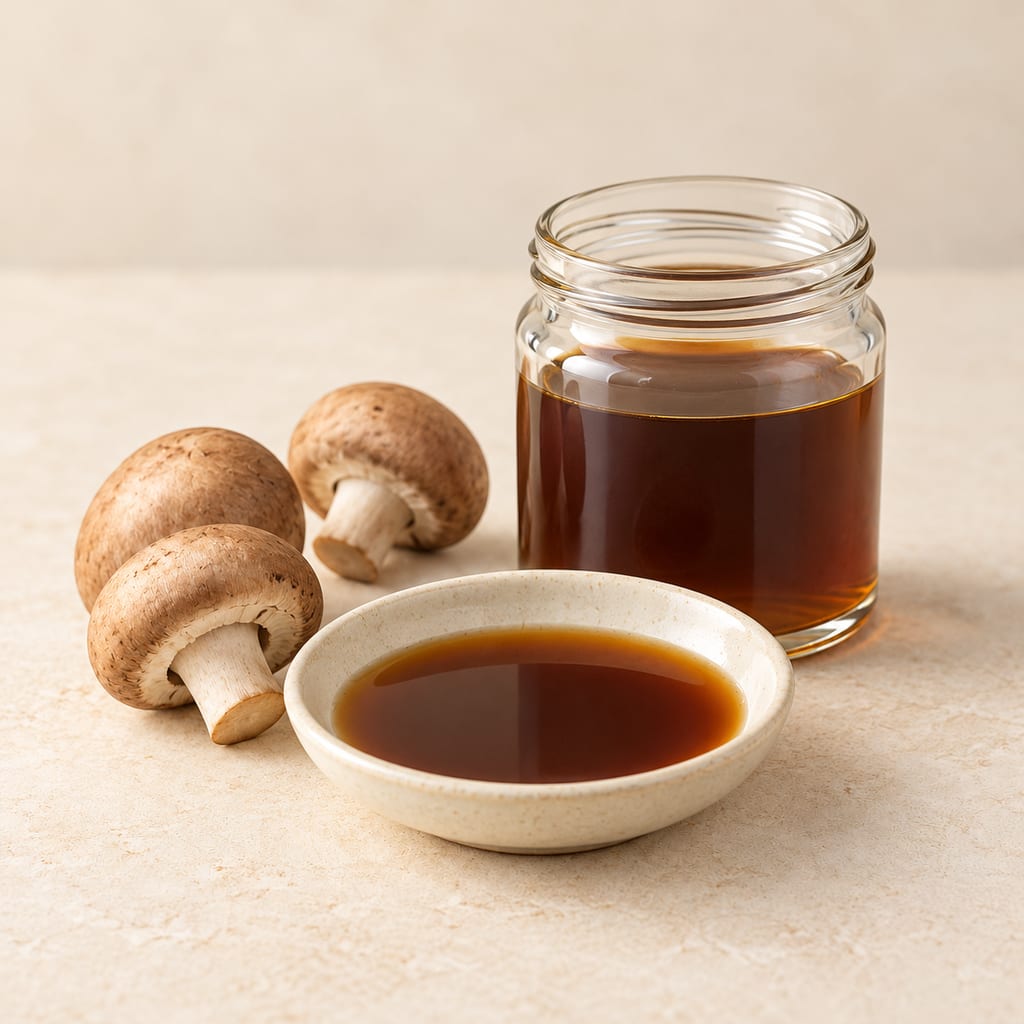
Mushroom garum turns mushrooms, rice koji, salt and water into a dark savoury seasoning. A sustained warm hold lets koji enzymes break down the mixture before straining.

Rice koji is steamed white rice through which koji mold has grown. It carries the enzymes that turn rice starch into sugar, and it is the starting point of sake, sweet miso, amazake and shio koji.
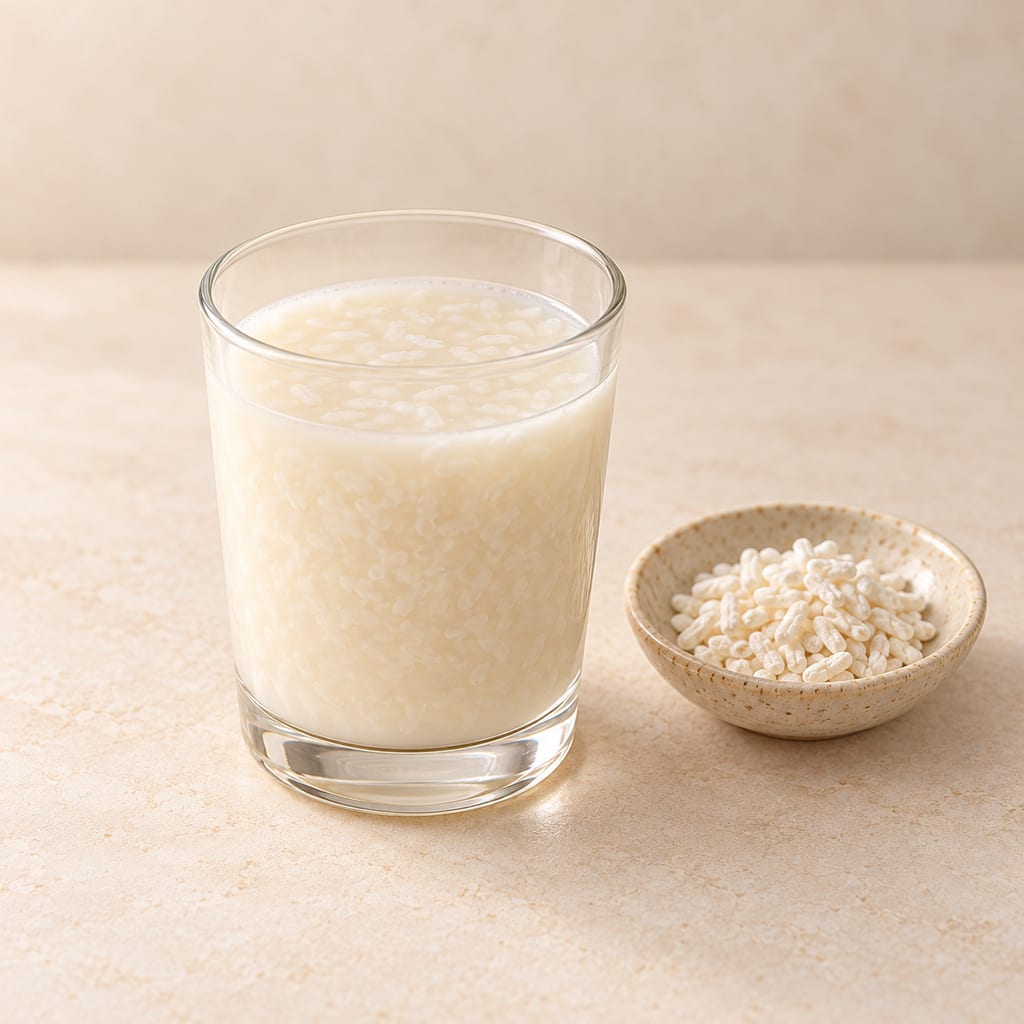
Cooked rice, rice koji and water are held warm for hours so koji enzymes turn the rice starch to sugars, giving a naturally sweet Japanese drink with no added sugar and no second fermentation.
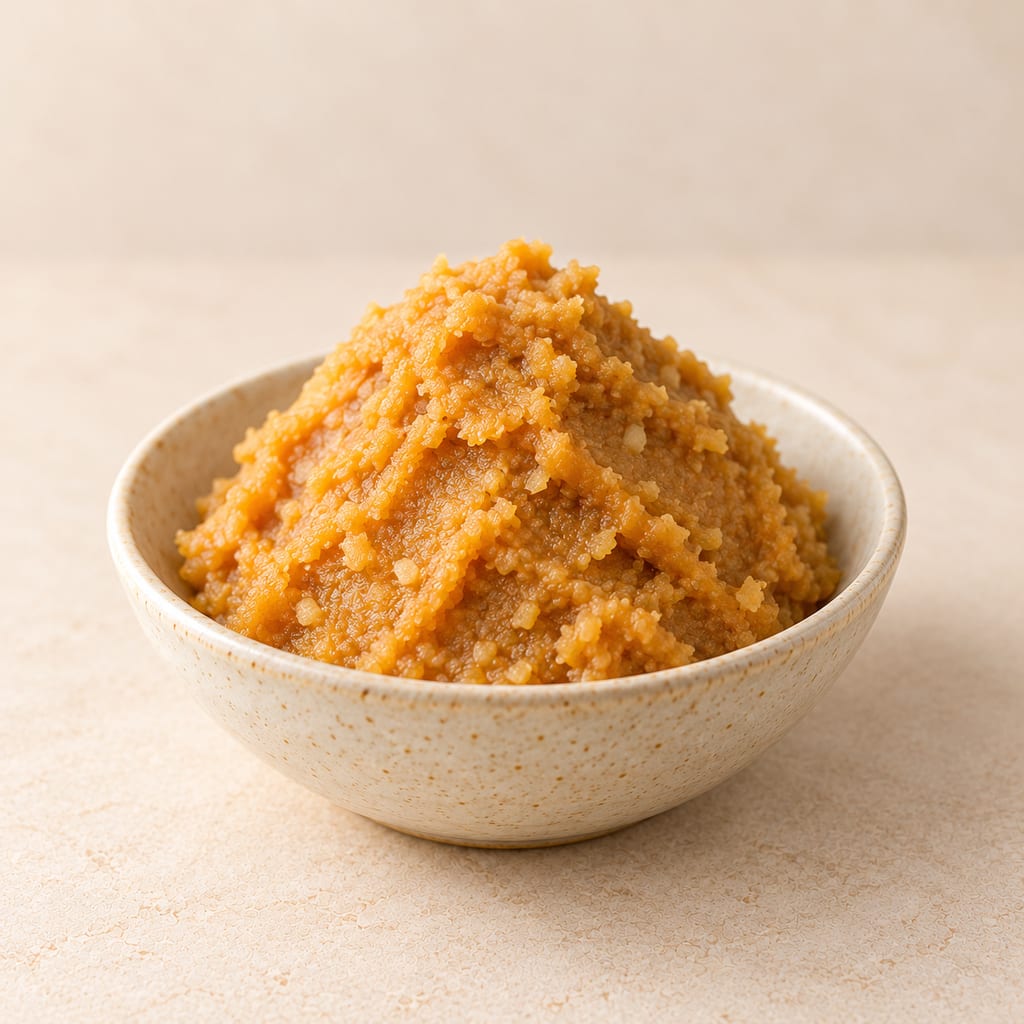
A traditional Japanese fermented paste made by mixing cooked soybeans with rice koji and salt. This guide details the ratio, the long enzymatic breakdown, and the months-long maturation required for depth.
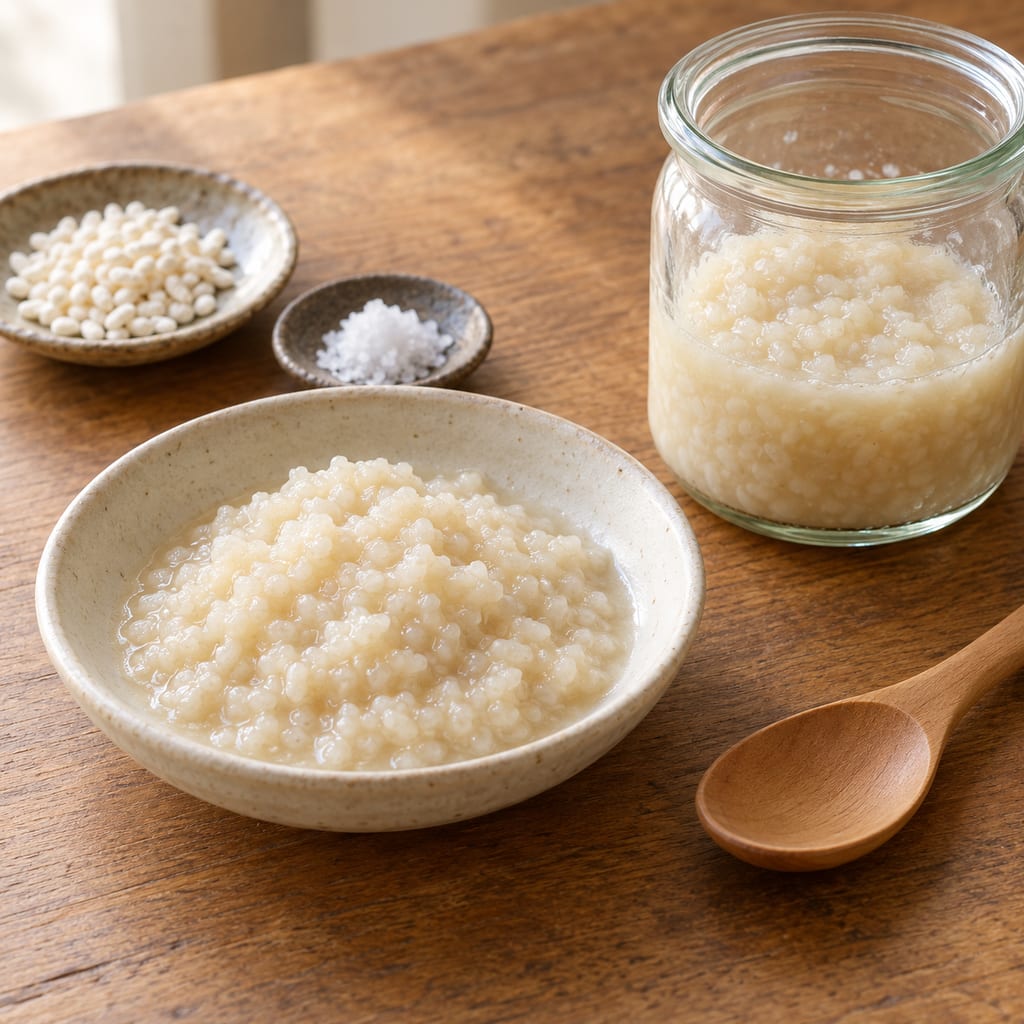
A Japanese seasoning of rice koji, salt and water, left at room temperature until the koji's enzymes and its microbes turn it into a savoury, salty paste for marinades and dressings.

Yellow-pea koji garum is a dark liquid seasoning made by holding cooked split peas with rice koji, salt and water while the koji enzymes break down the mash.
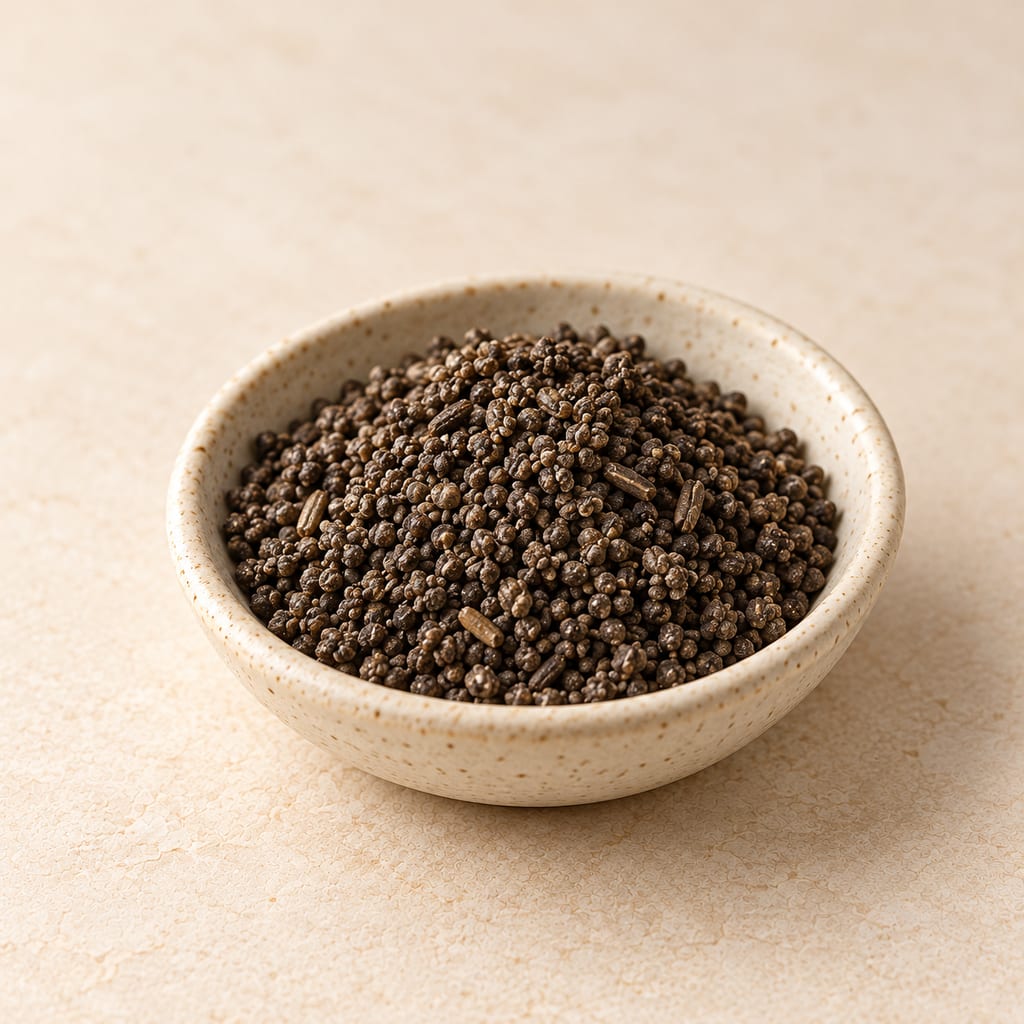
Tane-koji is the mold inoculum Sakimoto plants on steamed rice to make rice koji for Yonaguni awamori; its exact strain and supplier are unpublished.
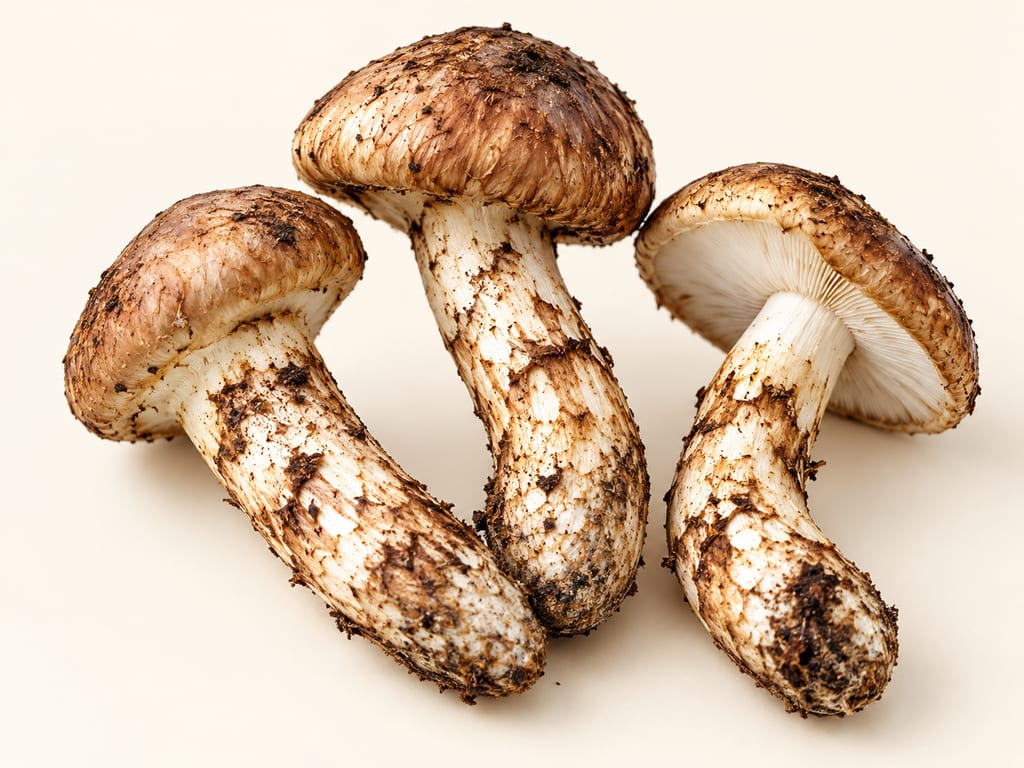
Matsutake is a prized wild ectomycorrhizal mushroom associated with pine and other forest trees, valued especially in Japan, Korea and China for its distinctive spicy aroma, firm texture and seasonal rarity.

A gelling polysaccharide extracted from red seaweeds, sold as kanten strips or powder; it sets firm at a low concentration and stays solid until about 85 °C.

A Dominican table and seasoning condiment of sour orange juice, mixed with lime and salt and bottled raw; garlic, oregano or a hot pepper may be added for meat or a spicier bottle.

Cicerbita alpina is an alpine perennial whose tender shoots and leaves have been eaten raw or cooked. Sámi milk preparations and modern Carnian dishes are distinct uses, with serious identification and preservation limits.

Japanese skipjack tuna cooked, then repeatedly smoked and dried over a wood fire by the hand-fired tebiyama method into a hard block for shaving into dashi: the first stage of katsuobushi.

A Swedish-style spirit vinegar made by fermenting neutral alcohol with live vinegar bacteria, with a separate guide to commercial ättika strengths.

A yeast-raised wheat ring shaped from a firm dough, briefly boiled and baked. This source-batch formula gives a gently malted crust and a chewy crumb.

A warm dip of garlic, anchovy and olive oil, often enriched with butter, that Piedmont serves over a flame with raw and cooked vegetables and bread.

Bechamel is a white sauce of milk thickened with a butter and flour roux, one of the French mother sauces, and the base from which Mornay and other cheese and cream sauces are made.
No community contributions have been published for this entry yet.
Sign in to contribute. Published comments and photos are free to read.
Journal of Fungi (PubMed Central full text)Identity · Science · History · Process · Safety
Koji Starter and Koji World in JapanKoji starter (tane koji or moyashi) is the conidia of koji mold formed on grains such as rice or barley, or spores harvested from it; koji is the product made by inoculating a steamed cereal with it
The national fungi follow Japanese brewing taxonomy: A. oryzae (kikōji-kin), A. sojae of the A. oryzae group plus albino mutants, both forming yellow-green spores, and the black group A. luchuensis including var. awamori and mut. kawachii; A. niger excluded
A. oryzae and A. sojae spores are yellow-green to green, the shade shifting with medium and culture time; white mutant strains increasingly used for koji sales and for whitening miso and amazake
Starter making is an extension of koji making with a different aim: many spores, few bacteria, long storability; 4-6 days of culture against 40-45 hours for brewing koji
Starter substrate is lightly polished (2-3% for rice, 10-20% for barley), material moisture about 40%, wood ash 0.1-0.5% on cooling, aseptic strain inoculated at 30-32 degrees C, teire mixing at 20-24 hours then no stirring so spores form, near 30 degrees C late
Two product forms: granular with a medium such as rice, and powder of spores plus starch, powder about 90% of products because it suits inoculation devices
Spores about 5 micrometers; dried spore counts 5 to 30 billion per gram depending on strain; typical inoculation 1/1000 granular and 1/3000 to 1/6000 powder, roughly 5000-10,000 spores per steamed rice grain
Only three species are used in brewing and about 40 strains in starter production; many starters are blends of strains to soften or combine characteristics
History: breweries once made their own starter including the tomo-dane method; adding 'for sale' to the definition, the history begins in the Meiji era (1868-1912), sold as a naturally dried granular product mainly containing grain; miso use recorded in the 1900s
Tomo-dane starter was heavily contaminated: Penicillium in 5 of 7 companies, 8000 to 300 million bacteria and yeast per gram, bacteria-to-spore ratio 0.23-2%; the Engishiki dose of 10% of koji weight is about 100 times the current starter amount
Pure strains: importance proposed 1895, a culture and starter production method reported 1911, mainstream after the Showa era; in 1926 starter was proved to be a source of koji mold only; three strains first isolated from sake koji starter in 1907
At the end of the brewing season lime and wood ash were mixed equally, placed in sealed wooden boxes and stored dry for the next season, as in modern practice; the practice continued until the late 1800s
Industry concentration: 43 member companies of the National Koji Starter Association in 1949, now 12, only six selling nationwide; year-round manufacture, volume highest for soy sauce, then miso, shochu and sake
Hygiene history: 1 million to 100 million bacteria per gram in the early 1900s, falling sharply after about 1960, most powdery products under 1000 per gram by the 1990s
Safety: after the 1960 UK turkey deaths from aflatoxin in peanut meal, national and private inspection confirmed all brewing koji molds non-productive of aflatoxin; 2005 genome work separated A. oryzae from A. flavus, and AFHC analysis placed all starter strains examined for koji starter in non-aflatoxigenic groups 1-3
Strain keeping: drying, liquid paraffin, glycerol or freezing at -20 degrees C; dried starter usually stored at 15 degrees C and 50% humidity, held in several places, subculturing minimised to avoid mutation; harvested koji sieved at 100-300 mesh and checked for appearance and enzyme activity
Contamination pressure in open koji work: Micrococcus, coliforms from hand work, and Bacillus whose heat-resistant spores rise quickly above 35 degrees C and survive high salt, so cultivation must start cool; koji workers avoid eating natto
Cited in: What the starter is; From wood ash to a national trade; How a starter is made, and why it is not just long koji; Strains, colours and what each one is bred for; What the starter brings to the foods that need it; Buying, dosing and keeping it; Notes and open questions
Journal for the Integrated Study of Dietary Habits, 31(4): 217-220Identity · History · Process · Variation · Safety
Tane-koji (koji-starter) and koji-mold [種麹,麹菌について]Koji-kin defined as the collective name for the strains used to make koji for brewed foods: Aspergillus oryzae, Aspergillus sojae and Aspergillus luchuensis (A. awamori, A. kawachii); designated Japan's national fungus by the Brewing Society of Japan in 2006
The koji mold is distributed as tane-koji from tane-koji manufacturers to each brewer; tane-koji history goes back to the 15th century, beginning with the technology of mixing wood ash while culturing the mold
Starter culture takes about a week, roughly three times brewing koji, to grow spores well; wood ash added at cooling or inoculation is the defining difference from brewing koji; stock strains (gen'kin) managed in flasks
Culture at about 30-35 degrees C grain temperature with patterns varying by strain, room humidity near saturation; after culture dried below 40 degrees C to 10% moisture or less, giving room-temperature storage of six months or more unless moisture returns
Granular tane-koji is the dried product bagged as is, used mainly for handmade koji; powder tane-koji has spores separated by sieve and adjusted with alphalized starch, used mainly for machine koji making; nearly 100% of miso and soy sauce brewing uses powder, as do most large sake makers, while shochu uses a high proportion of granular
Wood ash prevents microbial contamination by shifting the substrate alkaline, promotes spore formation and durability through its minerals, and disperses the steamed rice; artificial ash based mainly on potassium phosphate is now used as needed
Inoculation history: natural inoculation, then the toshu/tane method of reusing good koji; in the Muromachi period the discovery of storing seed koji with wood ash to improve conidial durability marked the start of tane-koji manufacture; before that koji-za specialists monopolized koji, collapsing after the Bun'an koji disturbance; two tane-koji dealers in Kyoto in early Edo and several more by its end
In the Meiji era sake competition spread purchased tane-koji to miso and soy sauce and the number of makers grew, but the industry has consolidated to about six companies; manufacturing and selling a microbial seed is described as unique to Japan
Classification by use (sake including daiginjo and moromi types, miso by rice, barley and soybean, soy sauce including koikuchi and usukuchi, shochu including rice, barley and awamori, amazake and commercial koji), by form (granular, powder) and by color (yellow koji, white koji, black koji)
A. oryzae was isolated from rice koji and named Eurotium oryzae in 1876 by Hermann Ahlburg, a foreign advisor in Japan; the collective term koji-kin came into use in the Showa era
Pure-culture isolation was pioneered by large soy sauce makers from the late Meiji to the Taisho era; designing tane-koji around strain characteristics became general only after the Second World War; the biggest change was the shift from tomikoji back-slopping to single-strain pure culture
Shochu white koji, isolated from black koji in 1918, has been used for nearly a century; white mutant strains of A. oryzae are widely used for miso making
Safety: recognized BSL-1 by Japan's National Institute for Infectious Diseases, listed on the US FDA GRAS list, and non-production of aflatoxin proven by molecular methods for A. oryzae and A. sojae
Cited in: What the starter is; From wood ash to a national trade; How a starter is made, and why it is not just long koji; Strains, colours and what each one is bred for; What the starter brings to the foods that need it; Buying, dosing and keeping it; Notes and open questions
Journal of Sakeology (Brewing Society of Japan), seminar reportIdentity · History · Variation · Geography · Safety
Past, Present and Future of Koji and Seed KojiSeed koji defined as the conidia of koji mold used to make koji; the lecturer is the 29th head of Kojiya Sanzaemon, a family firm producing it for over 600 years
Kojiya Sanzaemon founded in Kyoto in the Muromachi Period (1336-1573) and granted permission to sell seed koji by Ashikaga Yoshiteru, 13th Ashikaga shogun, who ruled 1546-1565; moved to Toyohashi, Aichi in 1965 and set up the research company B'ioc in 1992
Koji mold species designated national fungi: A. oryzae as yellow koji; A. sojae classified as yellow koji of the oryzae group, plus the white mutant strain of yellow koji; A. luchuensis as black koji and A. luchuensis mut. kawachii as white koji
Yellow koji is used for miso, soy sauce and sake; black and white for awamori and shochu
Before manufactured seed koji, inoculation was spontaneous or batch-to-batch from good koji, both unreliable; mixing wood ash into koji about 600 years ago led to the discovery of seed koji by raising alkalinity, ensuring airflow and oxygen and supplying nutrients
The wood ash came from steamed and roasted branch tips and leaves of camellia and oak; seed-koji producers (tane-koji-ya) bought it from specialist ash producers (hai-ya); seed-koji production is called Japan's first biotechnology industry because it produces the microorganism separately from the fermented food
By the middle of the Edo Period seed koji, also called moyashi, was distinct from koji with separate cultivation methods; the Geppou Densyo manuscript of the Kyoto Akaban Moyashi house (Omiya Kichizaemon family, closed 1960) records selecting koji to customer requirement, such as strong moyashi and white koji, and testing rice varieties suited to seed koji
A Bunka Period (1804-1818) record notes that koji has always produced yellow flowers, meaning spores, but that recently white koji without spores is considered superior
Seed koji was purchased from all over Japan, from Michinoku in the north to Hizen in the south; documents confirm Kojiya Sanzaemon, Omiya Kichizaemon and Hishiya Rokuzaemon operating in Edo-period Kyoto, with Higuchi Moyashi and possibly Ueda Moyashi in Osaka
Maker counts: about 10 from the Meiji Period, still 15 in the Showa Period per Koizumi (1984), currently six operating nationally plus two serving only local customers; large soy sauce producers moved seed-koji work in-house
Seed koji is essentially always purchased rather than made in house, attributed to the difficult conditions koji mold needs; nationwide sale of seed koji since the Edo Period is argued against microbial terroir
A. oryzae and A. flavus are reported to have differentiated around 1000 BC when rice cultivation was introduced to Japan; whether A. oryzae is a domesticated mold or was selected during koji making is still debated; koji mold is recognized as safe in Japan and the US and does not produce aflatoxin despite the relationship to A. flavus
Multiple strains have been used since the Edo Period, collected from across Japan and developed by induced mutation in one generation, while the firm now prefers to keep strains as they are
Cited in: What the starter is; From wood ash to a national trade; Strains, colours and what each one is bred for; Notes and open questions
National Research Institute of Brewing, JapanIdentity · Variation · Science
製造全般: 麹とは何ですか? [General production: What is koji?]Koji is steamed grain such as rice or barley, or steamed sweet potato, with koji mold grown on it, used widely in sake, shochu, miso, soy sauce and vinegar
Koji supplies the enzymes that break down starch and protein and the flavor and aroma components of the product; because different foods need different enzymes and flavor compounds, dedicated strains are used, such as sake koji mold and miso koji mold
Yellow koji mold is most often used in sake, black and white koji mold in shochu; some sake uses red koji mold or Rhizopus, and some rice shochu and Meiji-recreation brewing uses yellow koji mold
The color in black koji mold and yellow koji mold comes from the color of the spores each mold produces
Shochu koji made with black or white koji mold holds large amounts of citric acid and supplies a strongly acid-tolerant amylase, acidifying the moto and moromi to prevent harmful microbial contamination
Cited in: What the starter is; Strains, colours and what each one is bred for; What the starter brings to the foods that need it; Notes and open questions
National Research Institute of Brewing, JapanTerminology · Identity
Brewing Terms | Japanese Sake EssentialsThe glossary lists the Japanese term 種麴, tane-koji, under four English headwords: koji spores, seed koji, starter koji and spores of koji mold; the entries carry no definition text
Related koji entries place tane-koji in the process: tokomomi, mixing of koji rice, is done after inoculation of koji spores to spread them evenly onto the rice; kirikaeshi re-breaks up the pile 10-12 hours after inoculation of koji spores to keep the temperature even
The glossary keeps tane-koji separate from shubo/moto, which it renders as seed mash, starter, starter culture and yeast starter, noting that shubo means mother of sake
Cited in: What the starter is
British Columbia Centre for Disease ControlSafety · Identity · Process
Fermented Foods Guideline 3.10: Koji and MisoThree Aspergillus species developed and used in koji molds: A. oryzae used in most fermented foods, A. sojae in soy sauce and A. luchuensis for shochu
Commercial starter quality: contaminant bacteria around 1000 CFU per gram against mold spores in excess of 5 to 30 billion per gram
Control point: commercially purchased Aspergillus strains recommended to carry a certificate of assurance verifying spore counts above about one billion per gram with aerobic contaminants under 1000 CFU per gram
Industrial drying of spores to 10% moisture at 40-42 degrees C in dehumidified air, with dried koji spores stored at 5 to 15 degrees C
Back-slopping is not recommended: operators are advised not to use the koji starter to make a new batch of starter because the risk of growing wild Aspergillus strains that produce aflatoxins is amplified
Rice koji practice: cooked rice cooled to 35 degrees C within two hours of its internal temperature falling below 60 degrees C before Aspergillus spores are added, then incubated around 30 degrees C and never above 40 degrees C
Fresh wet koji starter may be kept refrigerated about one month, or frozen, with slightly reduced activity acceptable if protected from contamination
Cited in: How a starter is made, and why it is not just long koji; Buying, dosing and keeping it; Notes and open questions
Akita Konno StoreHome practice · Variation · Sourcing
Koji starter for amazake and rice koji (for home use)A Japanese supplier sells a home-use koji starter as a pure white koji mold strain named Yukikomachi, described as widely used for amazake, miso and processing, with a starter that is itself pure white; no species name is given on the page
Pack size 70 g per bag with an estimated coverage of 200 kg of raw rice, priced at 4200 yen on an undated page
The supplier's home rice-koji example uses one kg of rice with 1 to 2 g of koji starter, sprinkled after cooling the steamed rice to around 45 degrees C
Finished home rice koji is loosened, sealed and refrigerated with about two weeks' open date
Cited in: What the starter brings to the foods that need it; Buying, dosing and keeping it
fermentationculture.euHome practice · Variation · Sourcing
Which koji should I buy?A European culture vendor offers nine strains and advises choosing by the intended product: light rice koji for short-term sweet miso, amazake and sake with strong amylatic power; red rice koji for long-term higher-salt rice miso with stronger proteatic power; barley koji for barley miso; soy koji for all-soy miso; a dedicated soy sauce koji bred for low sugar consumption and high proteatic power
The vendor sells the cultures as spores and links a separate guide on diluting spores rather than giving a dose on the page
Strains are described as broadly interchangeable within miso but not for soy sauce, where a soy sauce strain is strongly advised; a rice strain will grow on soybeans but less well than on its intended substrate
The vendor's black koji is described as A. awamori rather than A. oryzae, distinguished by citric acid production, and is not offered for sale because the supplier restricts public sale; the vendor's species labels are inconsistent between the article and its comments
Cited in: Strains, colours and what each one is bred for; What the starter brings to the foods that need it; Notes and open questions