Yonaguni awamori
A Yonaguni rice spirit made with two-day koji, a nineteen-day moromi stage and direct-fire pot distillation, followed by filtration and tank maturation.
 FermenteaWhere food goes to change
Cultures
Tane-koji is the mold inoculum Sakimoto plants on steamed rice to make rice koji for Yonaguni awamori; its exact strain and supplier are unpublished.
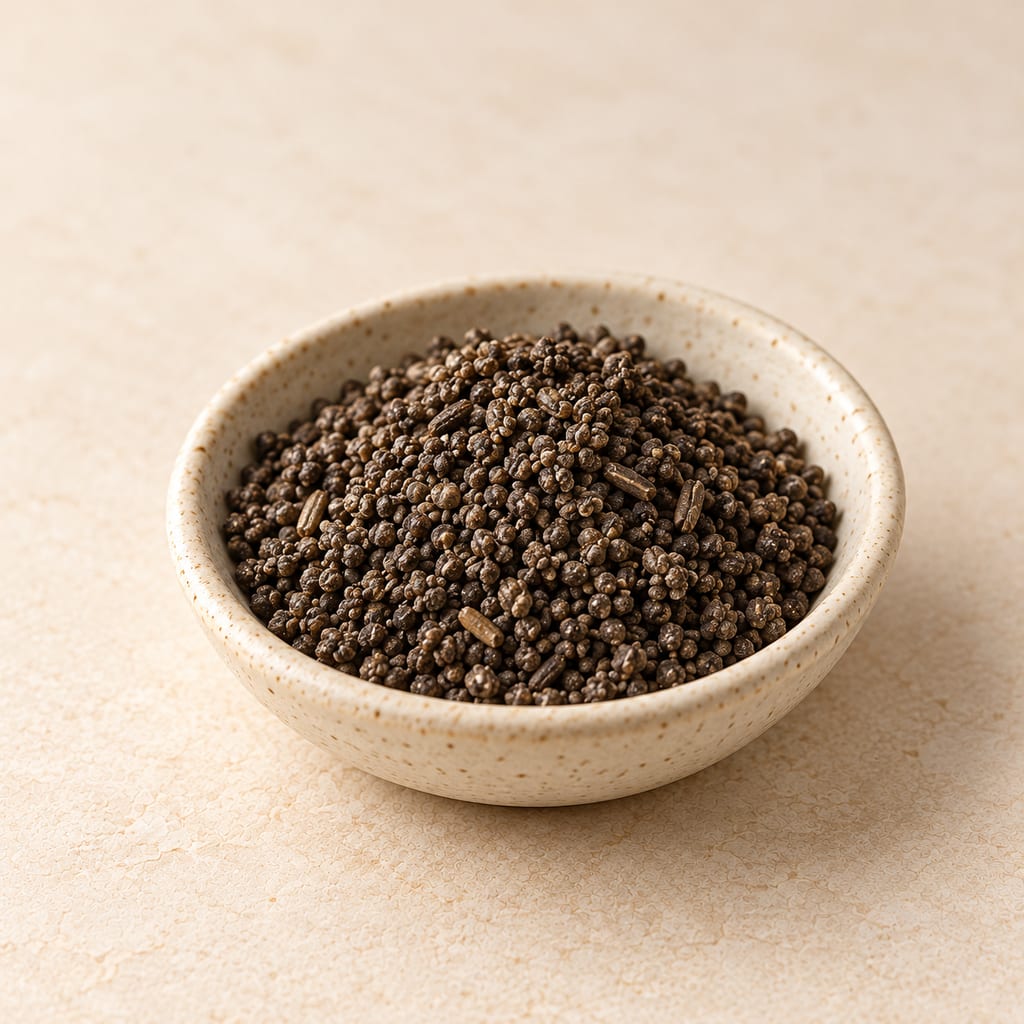
Seed koji, or tane-koji, is the inoculum used to grow koji on another food. On Yonaguni, Sakimoto Shuzo plants it on steamed rice; after the mold grows, that cultivated rice is koji. Three materials take part in that short sequence. Plain steamed rice is the food and growth surface. Seed koji introduces the chosen mold. Rice koji is the material after the mold has grown on the rice. Calling all three simply “koji” would hide the work that takes place between them, and might make a reader think the small starter addition is the entire mass of cultured rice used in fermentation.
The Japanese production account uses the phrase tane-koji, 種麹, and says the distillery inoculates steamed rice to make koji. The National Research Institute of Brewing's brewing glossary carries the same term in the older kanji form 種麴 and renders it three ways in English: “spores of koji mold”, “seed koji” and “starter koji”. Japanese brewing research also uses tane-moyashi, 種もやし, for seed culture; “moyashi” in this brewing term does not mean the bean sprouts sold as a vegetable. Seed-koji maker Yuichiro Murai calls the functional material conidia, the reproductive spores of koji mold. In awamori, the Okinawa Industrial Technology Center describes seed koji as carrying abundant black-koji spores, used to propagate that mold on steamed rice. The spores make the starter active, while Sakimoto does not identify its carrier, strain, supplier or dose.
The starter has a precise role although its commercial specification is incomplete. It is a chosen culture for Sakimoto's rice, rather than any dark mold or a recipe for propagating one. The distillery describes a two-day koji-making stage, with attention to temperature and moisture of the rice. Only after that stage does it describe adding water and awamori yeast to the rice koji for a 19-day moromi. The seed is the beginning of the cultivated-rice stage; it is not the yeast that makes the alcohol and not the finished spirit.
Sakimoto begins with indica rice brought from Thailand, then washes out the bran, soaks the grain and steams it. Its Japanese process page next names seed koji as the material planted on the rice. The same page gives two days for making koji, and specifically mentions careful attention to the rice's temperature and water content. It gives no inoculation rate and no temperature schedule for this starter. The documented use is at an awamori distillery on Yonaguni, one of the Yaeyama islands; that location identifies this use rather than the birthplace of the starter culture.
The seed matters because yeast cannot simply turn the rice's starch directly into alcohol. Growing black-koji mold produces enzymes that break rice starch into sugars and rice protein into amino acids. The National Research Institute of Brewing puts the same point on the physical side of the process: rice is steamed so that its starch will be easily decomposed by koji enzymes. The Okinawa center adds that the mold's enzymes support the yeast's work, while its citric acid keeps the moromi hostile to other microorganisms so that only yeast multiplies and a sound alcohol fermentation follows. The starter thus initiates a chain of work shared by mold, rice and yeast. It is misleading to credit seed koji alone with the taste of the bottled awamori, just as it would be misleading to leave it out of the account because only a comparatively small culture input begins the stage.
That citric acid is a property of the cultivated mold as it grows and of the fermenting mash, not proof that a sealed starter packet already holds the acid or the enzymes in the amounts found later. It also does not make the process independent of hygiene or careful production control. Sakimoto's attention to moisture and grain temperature reflects the fact that a living mold has to establish itself on prepared rice before its useful transformations can support fermentation.
“Black koji” can name the mold, the cultivated rice, or a broad ingredient in a short process description. The Japanese process description gives the more useful order for this particular ingredient: first tane-koji on steamed rice, then rice koji, then rice koji with water and yeast. Keeping that order visible lets a reader understand why a culture input and a starch-bearing grain are listed separately in the linked production account.
Awamori makers have not always obtained starter in the same way. The Okinawa Industrial Technology Center records that makers formerly kept their own seed, the tomodane or “companion seed”, and that buying commercial seed koji allowed fresh starter to be used, which made the koji-making stage more stable. In the same account, many awamori distilleries buy seed koji from one maker inside the prefecture and two outside it; the bulletin names only the in-prefecture firm and gives no census of how many distilleries buy from whom. That is a picture of supply at the time of writing, not a current count or an identification of Sakimoto's supplier. The distinction between saved koji and specialist seed culture matters more here than treating “traditional” and “commercial” as opposing qualities: both are ways of carrying a desired mold into the next cultivation, but they place preparation and selection in different hands.
Specialist seed-koji making is a craft in its own right. Yuichiro Murai, head of a family seed-koji firm, explains the product through mold conidia and the methods used to prepare a dependable inoculum; the journal's report of his lecture says his family company has produced seed koji for more than 600 years. That is an account of one particular Japanese firm, and it cannot date the invention of Sakimoto's black starter or prove a continuous Yonaguni supply line. The inoculum has a history before it reaches the distillery: someone cultivates and prepares a reliable culture before another producer can use it to make rice koji. That earlier work is normally hidden when a recipe starts with a line saying only “koji”.
Okinawa has its own documented commercial production. Ishikawa Shukokiten, founded in April 1956, describes itself as the only firm in the prefecture manufacturing and selling black koji mold for awamori, and says its seed koji is now used by 38 of the 47 awamori makers; the page puts no date on that figure. It also records building a new production factory at its current site in October 2007, after awamori demand rose sharply from around 2000 and awamori bodies pressed for the spread of locally produced black koji. Its timeline places the founding with Hideo Ishikawa in 1956, a factory move in 1981 from Shuri in Naha to Chatan, and Midori Tokashiki becoming representative in 1992. These company figures show how selected black-koji cultures became a maintained local industry. Sakimoto does not say which supplier it uses.
The seed's history should also be kept separate from awamori's wider origin story. Likewise, the historical practice of saving tomodane is a documented prior method, not a recommendation to save an arbitrary piece of mold-covered food at home. Selected cultures have to be maintained and transferred between producers.
Koji making is a biological preparation of an ordinary agricultural food. Steaming changes rice from a dry grain into a moist surface on which the inoculated mold can grow, and the National Research Institute of Brewing's glossary states the purpose plainly: the rice is steamed so its starch can be easily decomposed by koji enzymes. Sakimoto explicitly watches grain temperature and moisture across the two days it takes to make koji. The Okinawa center's own trials with the prefecture's seed koji found that the condition of the steamed rice mattered a great deal: rice steamed so the outside stayed firm and the inside softened, or steamed slightly softer still, gave good mold growth together with high outgoing-koji acidity and high enzyme production. A starter grows in response to its substrate, not in isolation. Those trial findings are the center's measurements on one local product, not Sakimoto's undisclosed production settings.
As black koji grows, its enzymes help turn large rice molecules into smaller materials useful to yeast. The starch-to-sugar and protein-to-amino-acid transformations are central to koji, and the Okinawa center singles out an acid-stable alpha-amylase that breaks down starch; in its trials the degree to which the mold had penetrated the grain tracked that enzyme's activity closely enough that growth state could be used to predict enzyme output. In practical terms, the rice supplies the starch; the mold develops the means of accessing it; yeast uses the resulting sugars to make alcohol. This division of labor explains why replacing a starter with yeast alone would not reproduce the documented process. It also explains why cultivated rice koji, once made, has properties plain steamed rice lacks.
Citric acid has a second role beyond sugar release. The Okinawa center explains that black koji's citric acid production suppresses the growth of other microorganisms in the moromi, so that only yeast multiplies and the alcohol fermentation proceeds soundly. Ishikawa Shukokiten describes the same feature as the reason awamori can be made through a warm Okinawan year rather than only in a cold season, and contrasts it with yellow-koji brewing, where lactic acid does the protective work and hygiene is tightened instead. Both are industry accounts rather than measured safety limits, and neither is a claim that a glass of awamori tastes sharply acidic: the acid does its work in the mash. It is sound to explain the organism's established function while leaving its precise strain and performance in one distillery unmeasured.
The sequence also sets a limit on what appearance can tell us. Dark or fuzzy growth on a random food is not identified black-koji starter. A culture selected for food production is identified by its supplier and intended use, not by a reader's visual comparison with a photograph. The Okinawa genome list printed alongside its awamori work includes ordinary black molds such as Aspergillus niger among comparison strains, a reminder that “black mold” is a colour, not a food grade. The sensible choice is an identified food-grade seed culture for the documented process, with its maker's own handling guidance. Sakimoto does not publish storage life, dosage or packet instructions for its starter, so this account cannot responsibly supply them.
“Black koji” names a functional group in food making, but it does not identify every starter as the same organism. A 2021 Okinawa list of cultures sequenced under a project on the uniqueness of awamori black koji carries several different species labels. Two cultures supplied by Ishikawa Shukokiten are labelled A. awamori and A. saitoi, both noted as used by many breweries in the prefecture; the A. awamori entry is annotated as coming from a brewery on Yonaguni island. It is a collection record, not an assay of what Sakimoto uses today. A separate archival isolate from an awamori brewing site in Shuri carries the label A. usamii. A shared regional name, an island of origin or an archival relationship cannot bridge the gap between a specimen in a list and the working culture of a particular distillery.
Naming also shifts as classification improves. The same Okinawa list annotates one strain with the note that its name was changed from A. awamori to A. luchuensis, and lists several strains already labelled A. luchuensis, including one described as the first strain ever isolated from awamori koji and another isolated from the seed koji of an Osaka seed-koji firm. The seed-koji maker's own history page gives a starting point for the awamori mold's scientific story: in 1904 the researchers Inui and Usami surveyed awamori production and published the black mold they found under the names Usami-kin and Inui-kin. That page uses no Latin binomial at all. Neither the naming history nor the producer's Japanese process identifies Sakimoto's unreported strain; the producer names the starter by its job, seed koji. The reader can follow the process without a speculative species name.
Starter choice can nevertheless change the resulting koji. In a 1993 study in the Journal of the Brewing Society of Japan, researchers ran koji-making tests with twelve seed-koji starters on polished rice of three cultivars. Two common cultivars gave lower enzyme activity and a lower ratio of glucoamylase to acid carboxypeptidase than Gohyakumangoku, but the size of that penalty depended on which starter was used, so the authors thought a suitable starter could still give good koji from ordinary rice. Mycelial penetration into the grain differed by starter and by rice, while total fungal mass did not differ much, which pointed to penetration as the driver of enzyme activity and enzyme balance. Koji colour differed too, and so did crude fat, fatty-acid and amino-acid composition, which the authors expected to show up later in aroma esters and taste. Those were sake-brewing tests on those particular rice and starter products; they show why selection matters without predicting the output of Sakimoto's unreported culture. The Okinawa center's later work similarly tied one local starter's growth and output to the condition of the steamed rice in its own trials.
In the shop, seed cultures are sold by what they are bred to do. A European culture supplier sells its strains as spores rather than as inoculated grain, keeps a separate guide to diluting them, and explains that Japanese breeders have selected strains for high amylase output, high protease output, fast growth or tolerance of difficult substrates; its black-koji strain is labelled A. awamori and singled out for making citric acid, unlike the ordinary green koji it sells for miso. That vendor's own species labels are inconsistent between its article and its comments, so the useful lesson is the range of named strains and the reason they differ, not a reliable taxonomy. A labelled black-koji seed sold for awamori or shochu is a meaningful category; a random black mold, a packet of finished rice koji and an unspecified “koji” powder are not automatically equivalent.
Seed koji is a production ingredient rather than a bowlful of food served on its own. Its immediate use is to make rice koji; the cultivated rice then becomes part of awamori's moromi with water and yeast. In Sakimoto's published sequence that stage lasts 19 days before distillation in a single pot still, with the first run called hana-zake. The spirit can carry the consequences of the fermentation, but there is no separate serving stage in which a consumer eats or drinks the seed culture itself. Tasting notes for a spirit or for cooked koji cannot be transferred to the dry or carrier-bound seed culture.
Its place in a food book is the small but decisive transition it begins. A reader of the linked Yonaguni awamori account can see why steamed rice, seed koji and yeast each have a line and a different purpose. The seed introduces a cultivated mold; rice gives it material to work on; awamori yeast takes advantage of what the mold later makes accessible. The producer's two-day rice-koji stage is the bridge between the starter and the 19-day mash. The two-day and nineteen-day intervals describe different jobs, so collapsing them into one number would hide the work of each ingredient.
Outside this distillery, specialist producers make different seed cultures for different fermentation aims, and published research shows their behaviour can vary. That is context for identifying a culture by purpose, not permission to substitute one product into Sakimoto's process or to improvise an inoculation schedule. The production sequence can still be exact about the culture's place between steamed rice and the fermenting moromi.
No allergen or dietary restriction is recorded for this ingredient in the sources read. The documented awamori use is in a distilled spirit, and the culture itself is not eaten as a separate serving.
This locates the documented Sakimoto use, not the origin of the exact culture or an identified supplier.
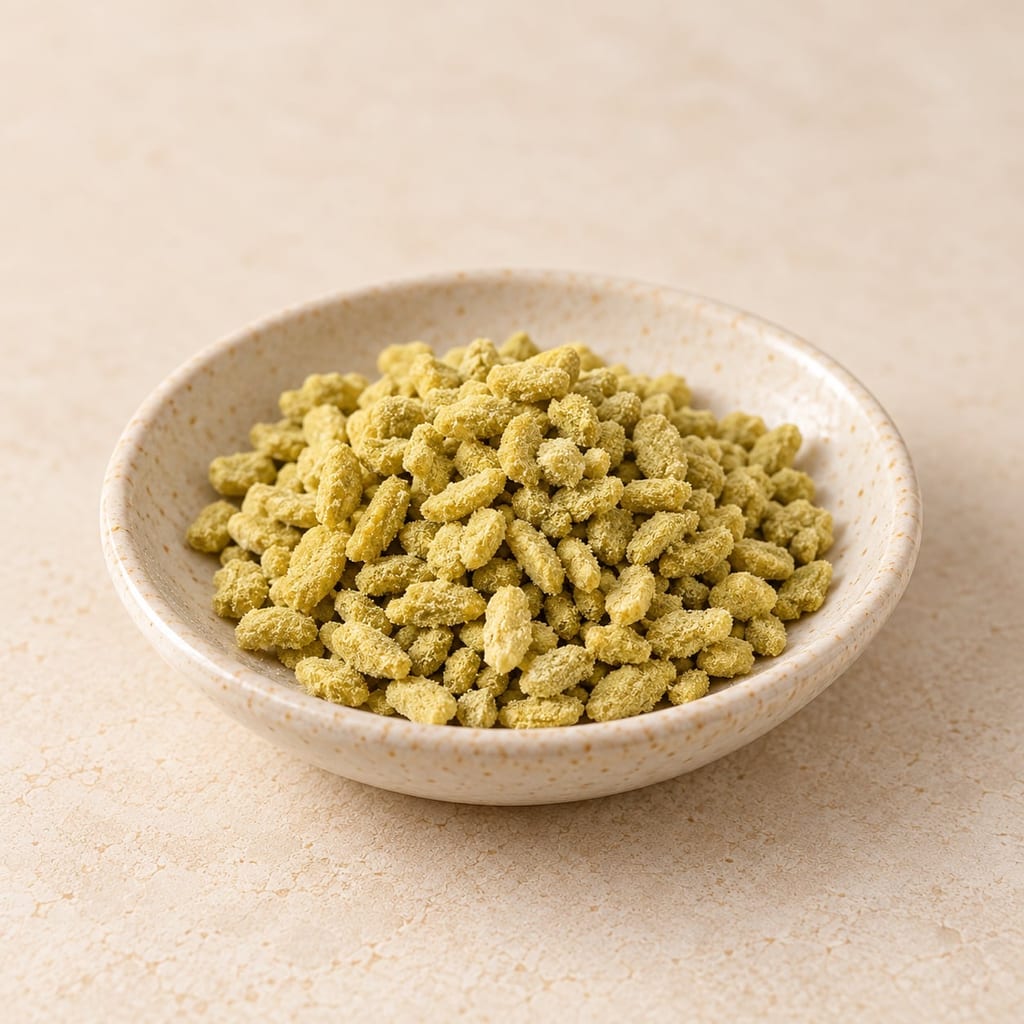
Yellow-koji starter is the spore inoculum of the yellow koji mold — Aspergillus oryzae and the related A. sojae — sold by specialist tane-kōji houses to grow koji for sake, miso and soy sauce.
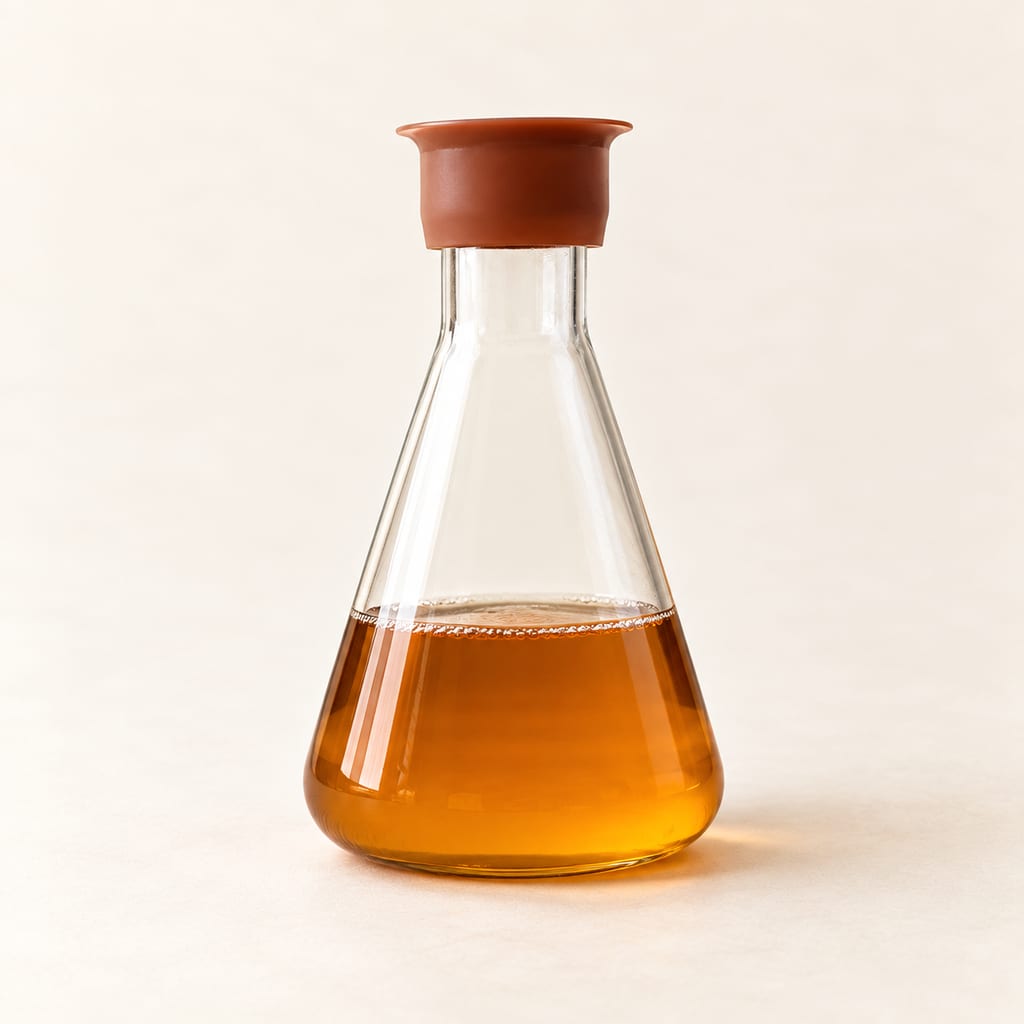
Awamori yeast ferments sugar released from rice koji in the Okinawan spirit’s mash. Sakimoto names the ingredient but gives no strain, form, supplier or dose.
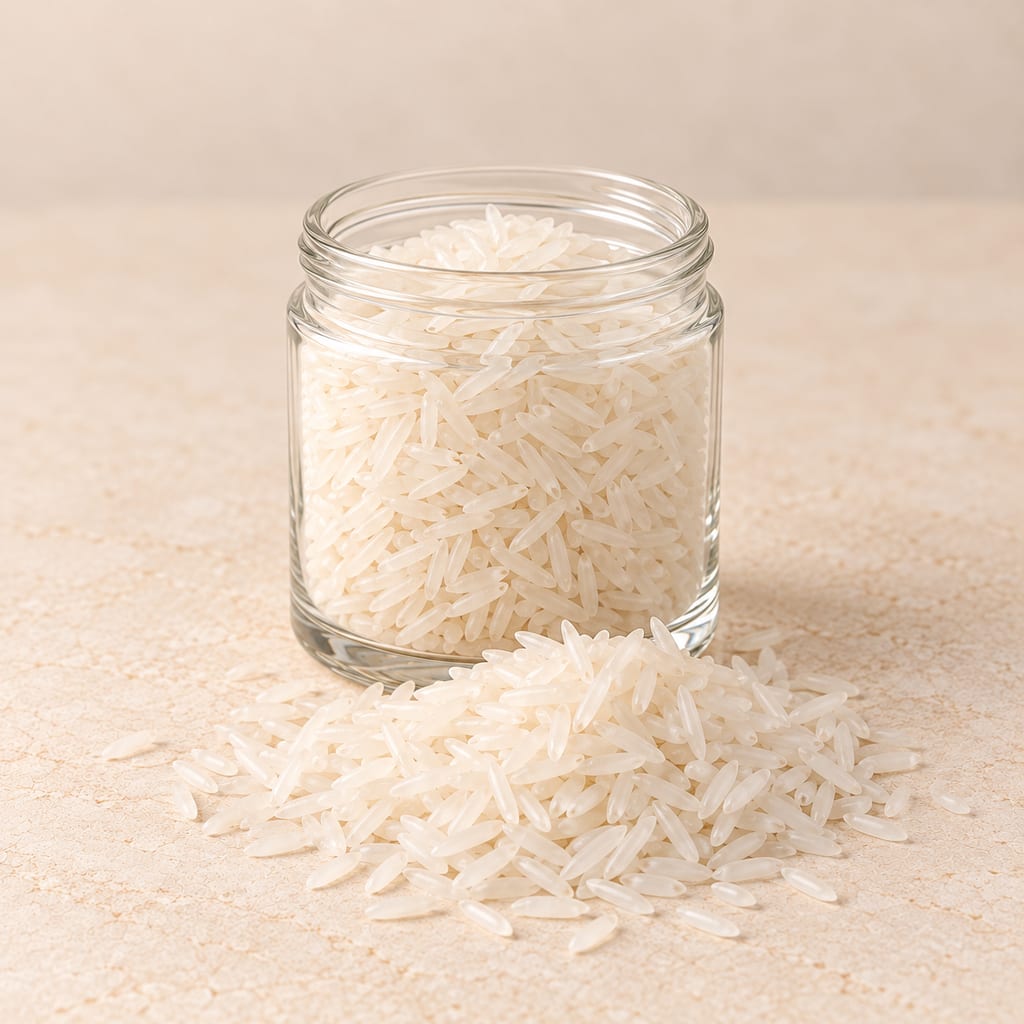
Thai indica rice is the starch-bearing grain Sakimoto steams for Yonaguni awamori koji. The producer names its origin and rice group, but no cultivar, lot or grain grade.
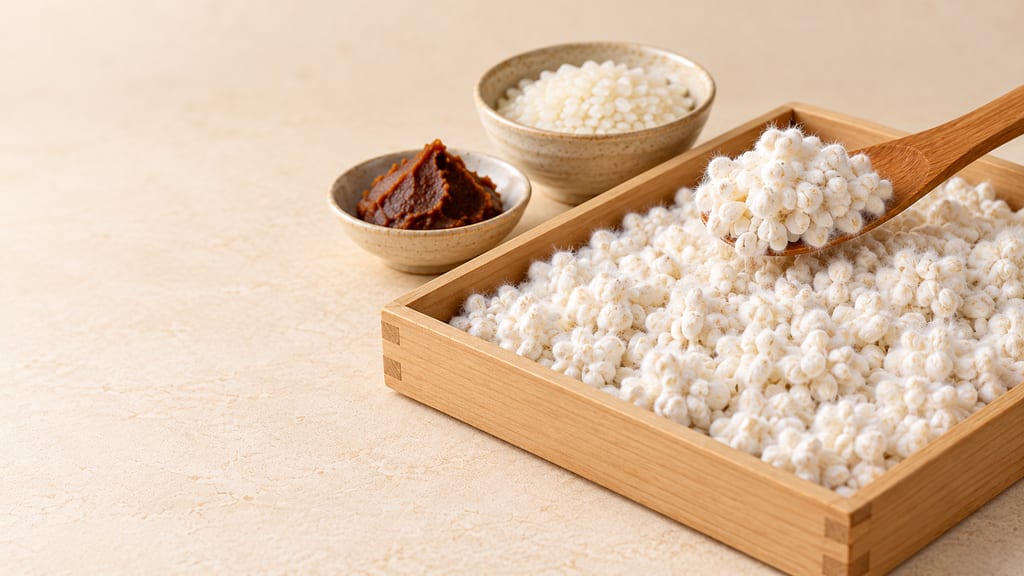
Koji is grain or beans grown with a mould whose enzymes break food down. This guide separates the mould, the starter and the finished koji, and follows them into sake, amazake, miso, soy sauce and shio-koji.
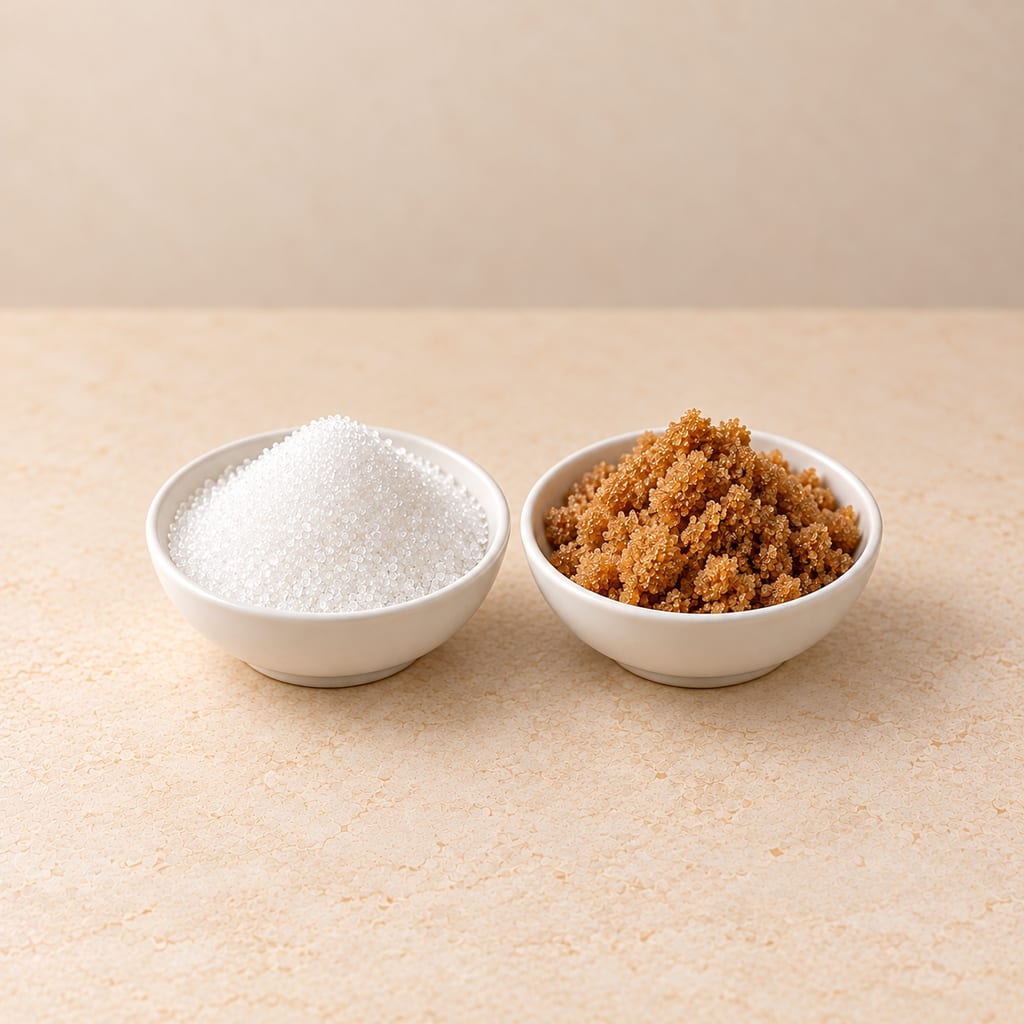
White sugar is refined sucrose, almost pure; brown sugar is sucrose with molasses, left in or added back. Molasses makes brown sugar moister, darker and more strongly flavoured.
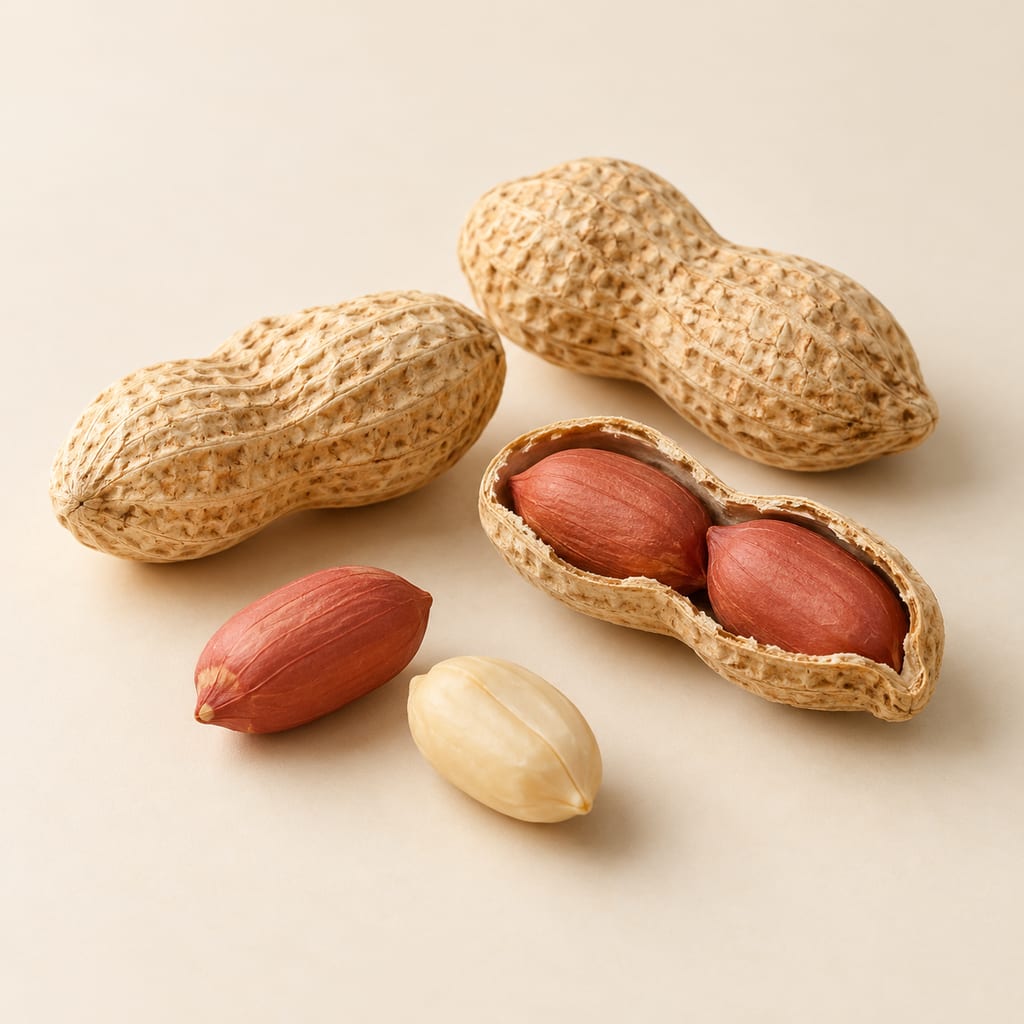
Peanuts are the edible seeds of Arachis hypogaea, a cultivated legume. They are eaten whole, roasted and ground, and peanut oil-press cake is a separate byproduct used in some fermentations.
No community contributions have been published for this entry yet.
Sign in to contribute. Published comments and photos are free to read.
Sakimoto ShuzoIngredient · Process
泡盛 製造行程 [Awamori production process]Thai indica rice; seed koji (種麹) inoculates steamed rice; two-day koji stage with attention to rice temperature and moisture; water, rice koji and awamori yeast in a 19-day moromi; single pot still, first run called hana-zake; no strain, supplier or dose given.
Cited in: The culture before the koji; The Yonaguni sequence and why the seed matters; Enzymes, acid and the rice beneath them; Names and strains that should stay distinct; Where the ingredient appears in food
Okinawa Prefectural Industrial Technology CenterIngredient · Science · History
沖縄県産種麹の利用について [Use of Okinawa-produced seed koji], Okinawa Prefectural Industrial Technology Center Technical News Vol. 16 No. 2Seed koji contains many black-koji spores and is used to propagate the mold on steamed rice; formerly makers saved tomodane (友種); commercial seed koji made koji making more stable; many distilleries buy from one in-prefecture and two out-of-prefecture makers; Ishikawa Shukokiten is the prefecture's only seed-koji maker; trial measured koji mold biomass, acidity as citric acid and enzyme productivity; properly steamed rice (outside hard, inside soft, or slightly softer) gave good growth and high outgoing acidity and enzymes; early-stage koji set at 36-38 C with humidity retained until 18 h before outgoing koji; growth state correlated with acid-stable alpha-amylase activity; black-koji citric acid suppresses other microbes in moromi so only yeast propagates.
Cited in: The culture before the koji; The Yonaguni sequence and why the seed matters; A maintained culture, not an accidental growth; Enzymes, acid and the rice beneath them; Names and strains that should stay distinct; Where the ingredient appears in food
Journal of SakeologyIdentity · History
Past, Present and Future of Koji and Seed KojiAbstract defines seed koji as the conidia of koji mold used to make koji; a family-run company has produced it for over 600 years; the lecture covered definitions, roles, types, history, production methods and international spread.
Cited in: The culture before the koji; A maintained culture, not an accidental growth
National Research Institute of BrewingIdentity
Brewing Terms | Japanese Sake EssentialsGlossary rows render 種麴 / tane-koji as 'spores of koji mold', 'seed koji' and 'starter koji'; rice is steamed so that the rice starch will be easily decomposed by koji enzymes.
Cited in: The culture before the koji; The Yonaguni sequence and why the seed matters; Enzymes, acid and the rice beneath them; Where the ingredient appears in food
Ishikawa ShukokitenHistory · Culture
会社案内 [Company profile]Founded April 1956; only firm in Okinawa manufacturing and selling black koji mold for awamori; seed koji used by 38 of 47 awamori makers, figure undated; new production factory built at the current site in October 2007 after awamori demand rose from around 2000; history timeline: founded 1956 by Hideo Ishikawa, factory moved 1981 from Shuri, Naha to Chatan-cho, Midori Tokashiki became representative 1992, incorporated 1998.
Cited in: A maintained culture, not an accidental growth
Ishikawa ShukokitenHistory · Science
黒麹の歴史 [History of black koji]Awamori's defining feature is traditional use of black koji mold, and Okinawa is said to be the only place that brewed with black koji alone; black koji makes large amounts of citric acid, raising moromi acidity and suppressing spoilage; strong starch-saccharifying enzyme activity; 1904 survey by Inui and Usami named the awamori black koji Usami-kin and Inui-kin; late-Meiji Kagoshima shochu makers switched to rot-resistant black koji, and the white koji mutant later spread to shochu north of Kyushu; the company says present black koji descends from stock collected on Yonaguni after wartime losses. Hedged producer history, not cited research.
Cited in: Enzymes, acid and the rice beneath them; Names and strains that should stay distinct
Okinawa Prefectural Industrial Technology CenterIdentity · Science
泡盛黒麹菌類ゲノム配列解析菌株一覧 [List of sequenced awamori black-koji strains]2021 list of strains sequenced under a project on the uniqueness of awamori black koji: Ishikawa Shukokiten strains ISH1 labelled A. awamori (noted as from a Yonaguni island brewery) and ISH2 labelled A. saitoi, both used by many breweries in the prefecture; NBRC4116 labelled A. luchuensis Inui with the note that the name was changed from A. awamori to A. luchuensis; NBRC4281 noted as the first strain isolated from awamori koji; NBRC6086 isolated from seed koji of Higuchi Matsunosuke Shoten in Osaka; the Shuri Sakumoto brewery isolate JCM2262 is labelled A. usamii; comparison strains include A. niger van Tieghem and A. tubingensis.
Cited in: Enzymes, acid and the rice beneath them; Names and strains that should stay distinct
Journal of the Brewing Society of JapanScience
製麹における種もやしの差異 [Differences among seed-koji starters in koji making], Effects of various conditions in koji making, part 21993 study, vol 88 no 7: koji-making tests with 12 seed-koji starters on polished rice of three cultivars (Gohyakumangoku, Nihonbare, Tsukushihomare); common cultivars gave lower enzyme activity and a lower glucoamylase/acid-carboxypeptidase ratio, but starter choice made the difference; mycelial penetration into the grain differed by starter and cultivar while biomass did not differ much, suggesting penetration drives enzyme activity and balance; koji color and sensory quality differed; crude fat, fatty acid and amino acid composition differed, expected to affect aroma esters and taste.
Cited in: Names and strains that should stay distinct
Fermentation CultureForms · Sourcing
Which koji should I buy?Commercial home-scale seed cultures are sold as spores rather than inoculated grain, with a separate guide on diluting spores; strains are bred for particular applications (amylase or protease output, growth speed, difficult substrates); the vendor labels its black-koji strain A. awamori and notes it produces citric acid, unlike regular koji; the vendor's own species labels are inconsistent between article and comments. Vendor guidance, not institutional evidence.
Cited in: Names and strains that should stay distinct
National Research Institute of BrewingScience · Safety
The Story of Shochu, No. 2Koji enzymes, acidification and black-mold identity context; booklet includes awamori in shochu scope.