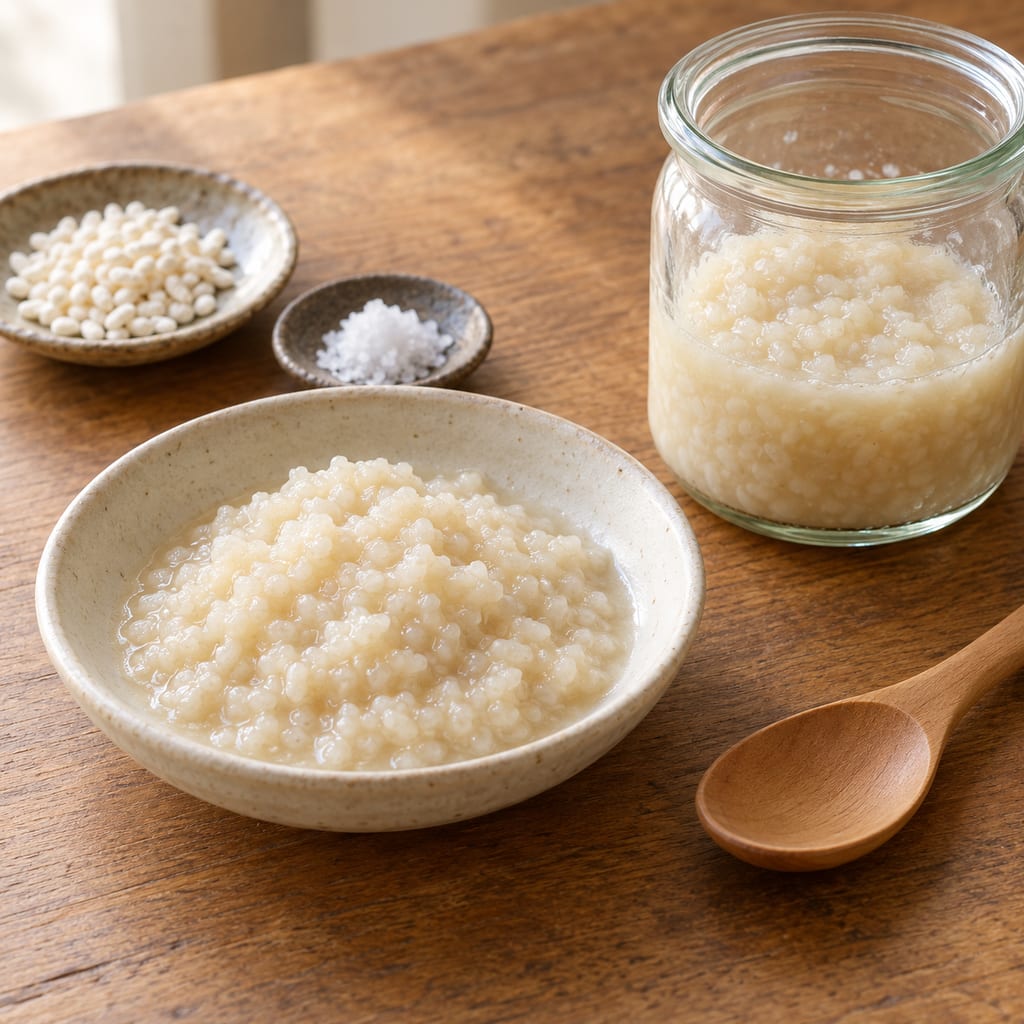
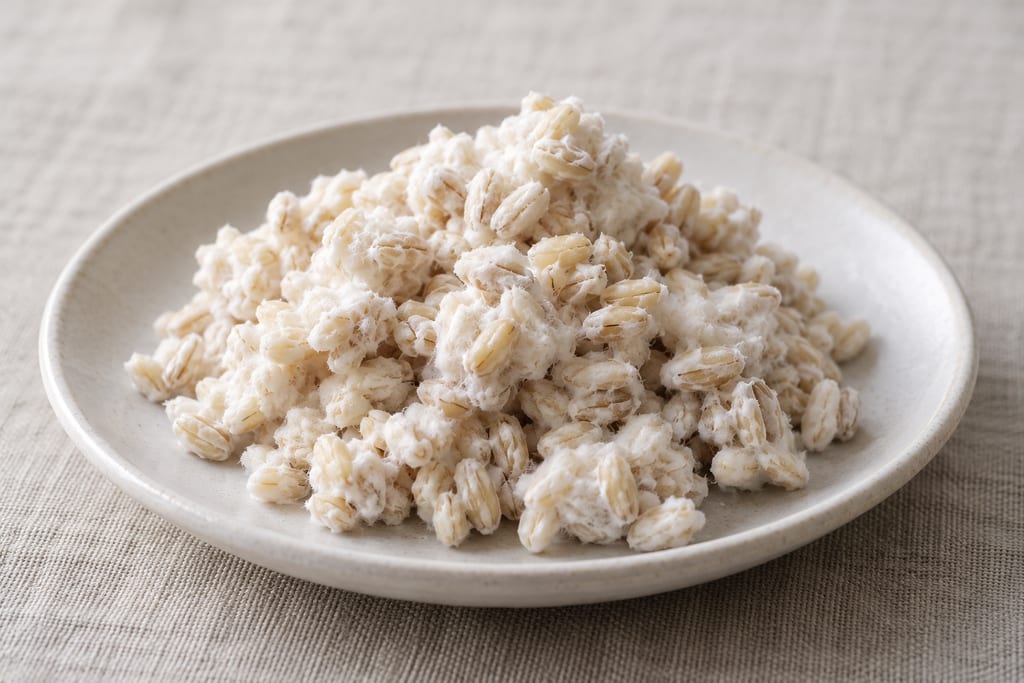
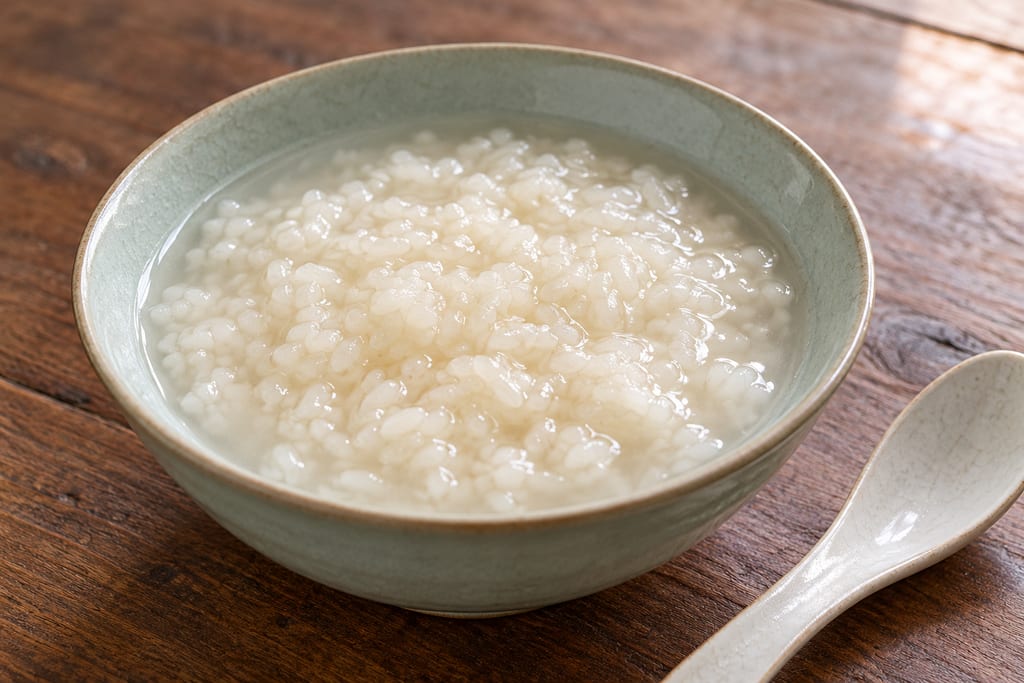
A Japanese seasoning of rice koji, salt and water, left at room temperature until the koji's enzymes and its microbes turn it into a savoury, salty paste for marinades and dressings.
Shio koji is a Japanese seasoning made by combining rice koji, salt and water, then allowing the mixture to mature.
The finished condiment is usually pale, thick and slightly granular, with a taste that combines saltiness, sweetness and umami.
Its versatility comes from the active enzymes originally produced while rice koji was cultivated.
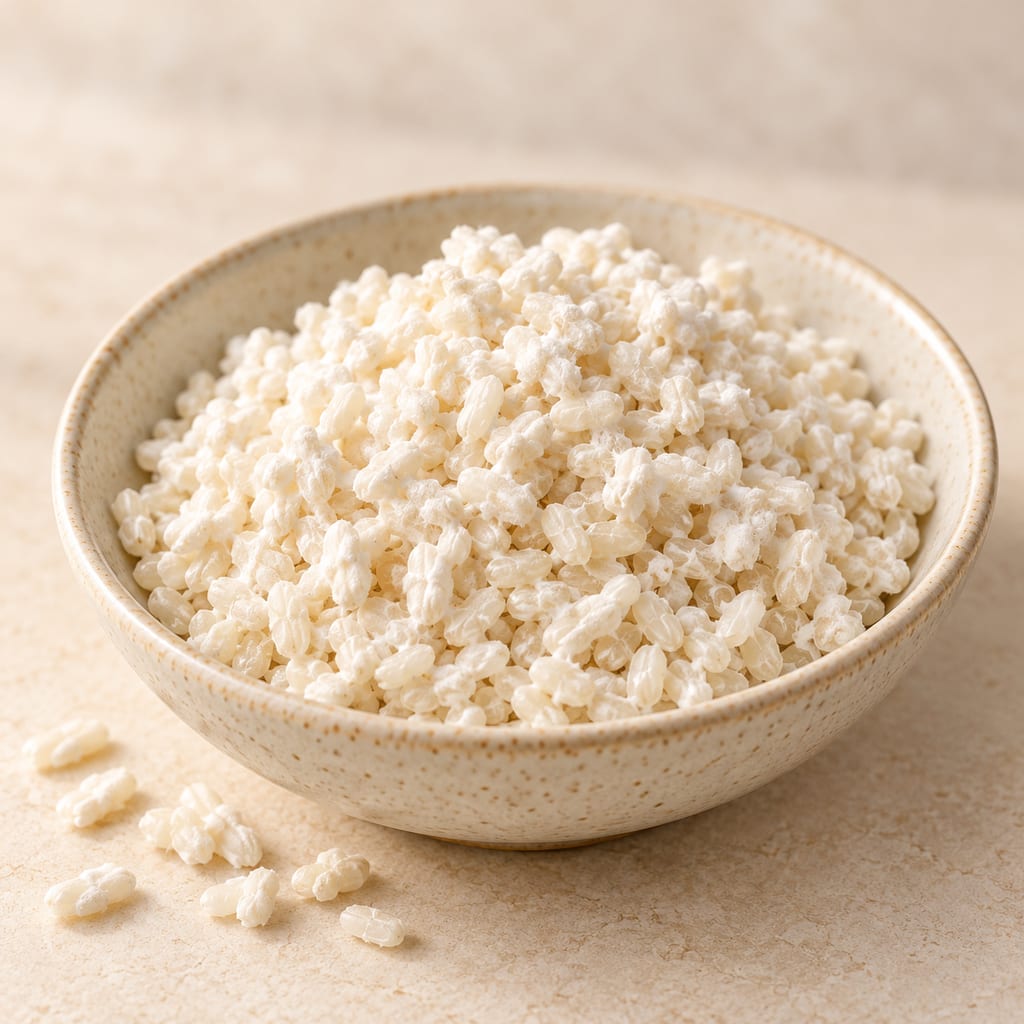
Rice koji is cooked rice inoculated with an edible culture of Aspergillus oryzae, a domesticated food-production mould. During koji cultivation, the organism produces enzymes that break down starch and protein.
Those enzymes remain active under suitable conditions after the rice is mixed with salt and water.
Shio koji can therefore be used both as a seasoning and as a treatment for ingredients before cooking.
It can tenderize meat, change the surface of fish, soften vegetables and increase savoury flavour.
Unlike a bottle of ordinary saltwater, it contains rice solids and enzymatic products that contribute sweetness and body.
The mixture should not automatically be described as a probiotic food. Enzyme activity and the presence of live beneficial microorganisms are different things, and the latter requires specific evidence.
Maturation — Approximately 1 week in summer or 2 weeks in winter
Stirring — Once daily
Temperature — Room temperature; no numeric value supplied
Yield — Approximately 2 jars; final weight not stated
Storage — Refrigerated after maturation
Safety status — Household recipe; no independently validated storage-life endpoint supplied
The original recipe uses volumetric measures for salt and water. Converting four tablespoons of salt into an exact mass without specifying the salt's density and crystal structure would create false precision.
Koji fermentation is deeply embedded in Japanese food culture.
Rice, barley and soy-based koji are used in the manufacture of products including miso, soy sauce, sake, shochu, amazake and other seasonings.
The cultivation of Aspergillus oryzae for food has a long documented history in Japan.
However, that does not prove that today's familiar bottled shio koji recipe has been continuously prepared in precisely its modern form for the same length of time.
Contemporary shio koji became especially fashionable during a revival of interest in traditional fermented foods in the early twenty-first century.
Japanese producers and cookery writers popularized the seasoning's use as a convenient marinade and substitute for plain salt.
By 2012, English-language newspaper recipes were already describing its preparation, and household cookery publications presented it as a versatile everyday ingredient.
The historical distinction is important: the fermentation culture underlying shio koji is old, while its current widespread presentation as an all-purpose bottled seasoning has a more specific modern history.
Japan's Ministry of Agriculture, Forestry and Fisheries identifies shio koji as a Japanese seasoning made from rice koji, salt and water.
It also places the food within the wider group of koji-based fermented products.
The base recipe contains no chilli, garlic, soy sauce, citrus or herbs.
Those can appear in cooking applications or separate koji-based seasonings.
Replacing water with soy sauce produces shoyu koji, a related condiment rather than an ordinary variation of the same three-ingredient shio koji recipe.
Mix thoroughly, rubbing the salt through the rice grains.
The salt should be distributed throughout the koji rather than collecting in one area.
Uniform mixing helps the mixture develop consistently.
The original recipe does not give a numerical duration for this action.
A separate published Marukome formula specifies rubbing koji and salt together for at least three minutes, but that belongs to its own recipe and should not be silently inserted into this one.
The original recipe suggests refrigerated storage for up to six months.
That is a published household storage recommendation, not an independently validated shelf-life specification applicable to every product, salt concentration and refrigerator.
A different Japanese manufacturer recommends considerably shorter periods.
Use the applicable manufacturer's instructions or a validated process when producing shio koji commercially.
The rice koji itself has already undergone mould cultivation before the salt seasoning is assembled.
During the later maturation, enzymes remain active and microorganisms may also contribute to changes.
The significance of each process can vary.
It is misleading to claim that Aspergillus oryzae necessarily grows vigorously throughout the salty liquid exactly as it did on the original steamed rice.
The principal culinary value of the finished seasoning is strongly connected to enzymatic conversion.
The Ministry of Agriculture, Forestry and Fisheries of Japan describes shio-koji as a salty seasoning made from rice koji, water and salt. This recipe follows a contemporary household method.
Ingredients
Yield 2 jars; final weight not stated · Scaling: source batch only
Sea saltsource also states a broad 10–30% range by koji weight; this formula's 4 Tbsp measure is preserved
59 mL4 tbsp as recorded
Wateradd enough to keep the koji covered; source allows more if needed
237 mL1 cup as recorded
Method
Risks and precautions · Elevated risk
Unspecified koji handling and room-temperature maturation
The product relies on pre-cultured rice koji and room-temperature maturation; the source does not provide process-validation evidence or a numeric ambient temperature.
Hazard source
Use food-grade, identified rice koji; follow the product's instructions. Keep the process separate from any assumption that unidentified mold growth is safe.
Control source
This recipe is not professionally validated. The source does not specify numeric room temperature or a validated storage interval; do not use smell or taste as safety tests.
Break the rice koji apart into individual grains.
Mix the koji with sea salt, then add 1 US cup water and rub the liquid into the grains. If the grains are not submerged, add water as the source directs; no additional exact volume is specified.
Transfer to sterilized jars, keeping the mixture covered by liquid. Ferment at room temperature and stir once daily with the lid open during mixing.
The source uses about 1 week in summer and 2 weeks in winter, then refrigerates the finished seasoning. The source's storage-life statement is not a safety validation.
Conditions
Yield2 jars; final weight not stated
Active time20 min
Fermentation7–14 days
Temperature controlAmbient, monitored
Places
Japan
Documented preparation · Country evidence
The Japan MAFF booklet identifies shio-koji as a Japanese fermented seasoning; the recipe page supplies a contemporary household formula.
Koji is steamed grain — rice, barley, soybean or wheat — grown out with a food-grade Aspergillus mold until the kernels carry working enzymes. It is bought or cultivated, and it converts starch and protein for the foods that follow.
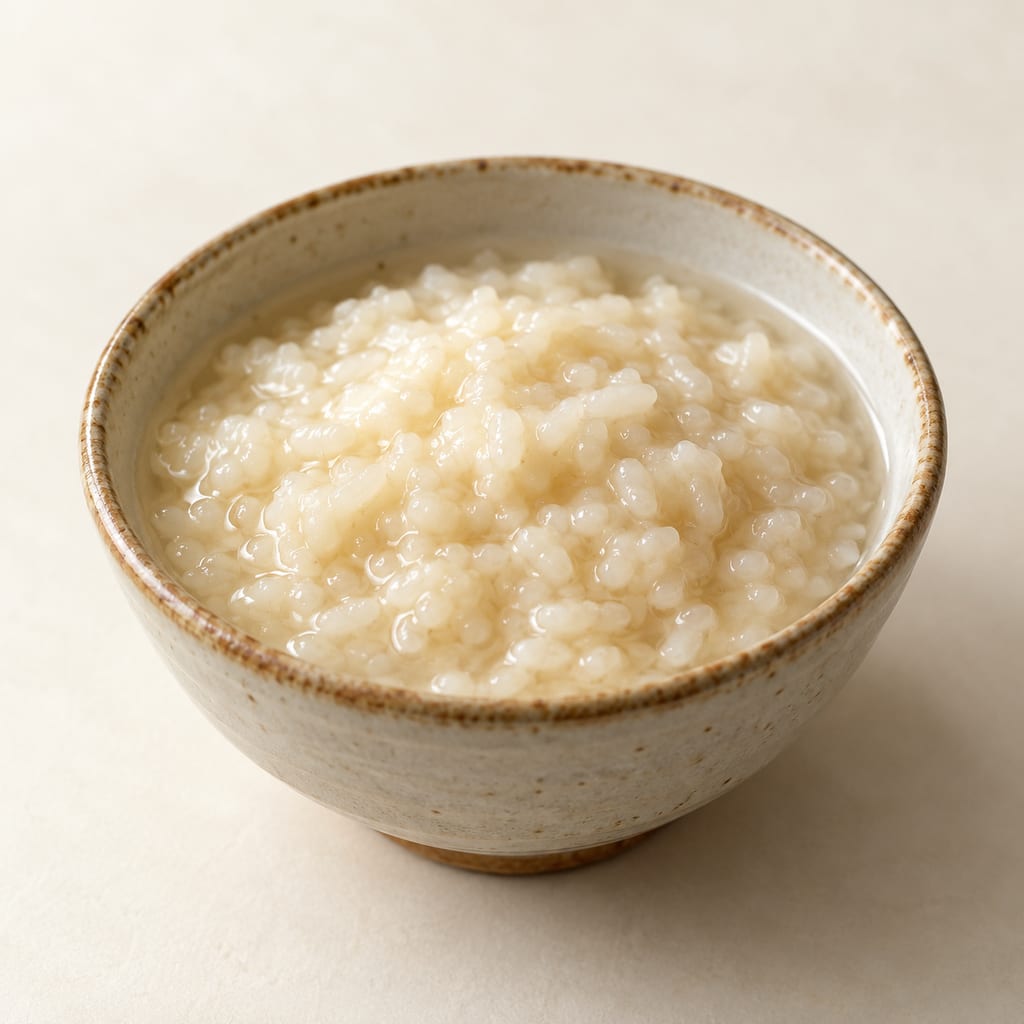
Rice koji is steamed white rice through which koji mold has grown. It carries the enzymes that turn rice starch into sugar, and it is the starting point of sake, sweet miso, amazake and shio koji.
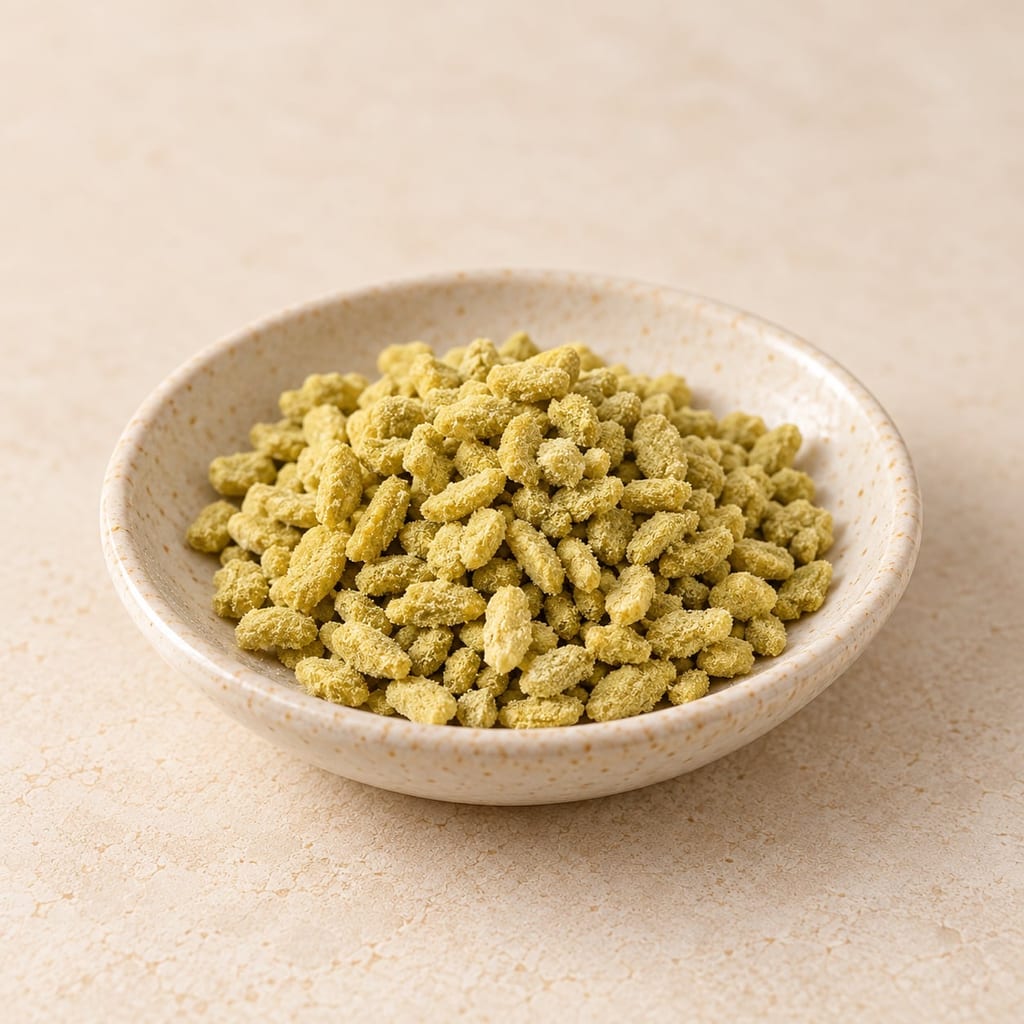
Yellow-koji starter is the spore inoculum of the yellow koji mold — Aspergillus oryzae and the related A. sojae — sold by specialist tane-kōji houses to grow koji for sake, miso and soy sauce.
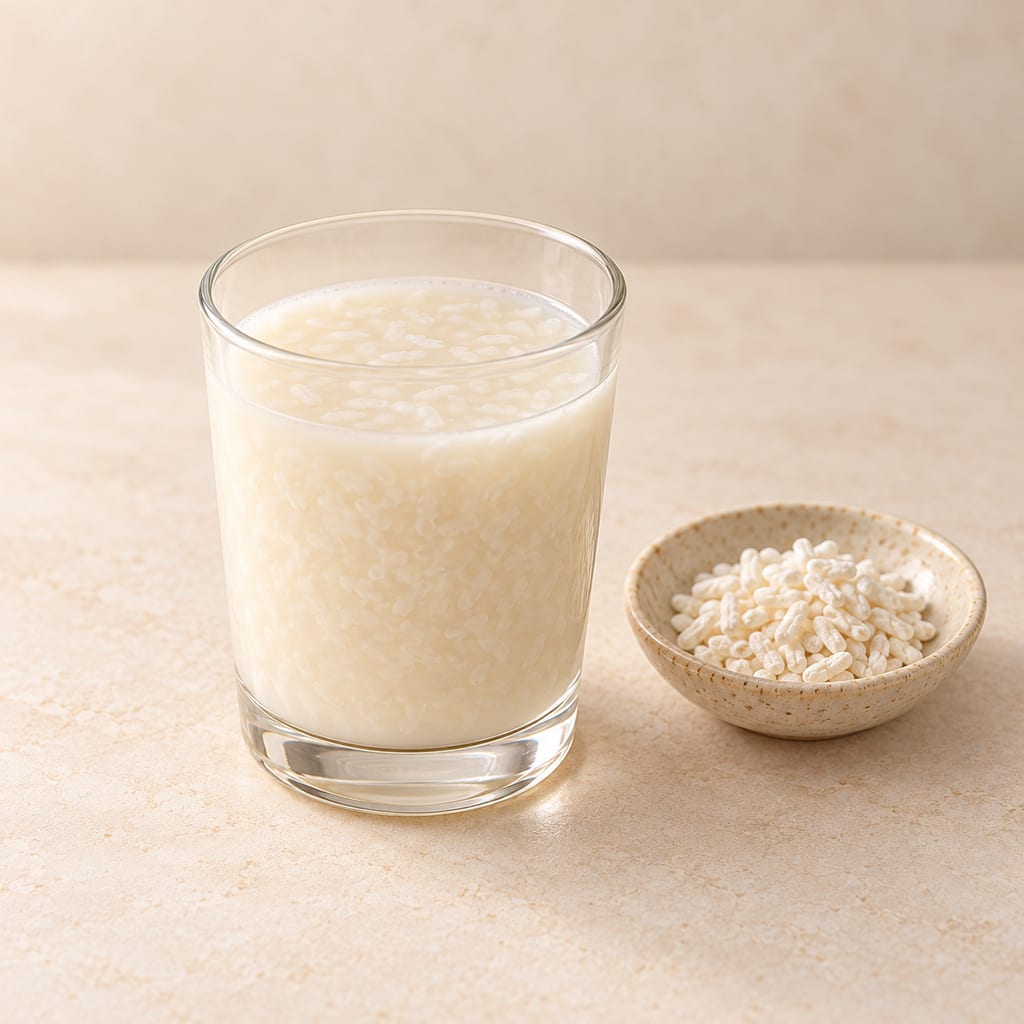
A thick, naturally sweet rice-and-koji preparation used to add body and sweetness to marinades, dressings and sauces. This method follows a published Marukome home recipe and is an enzyme-conversion hold, not a way to grow koji mould.
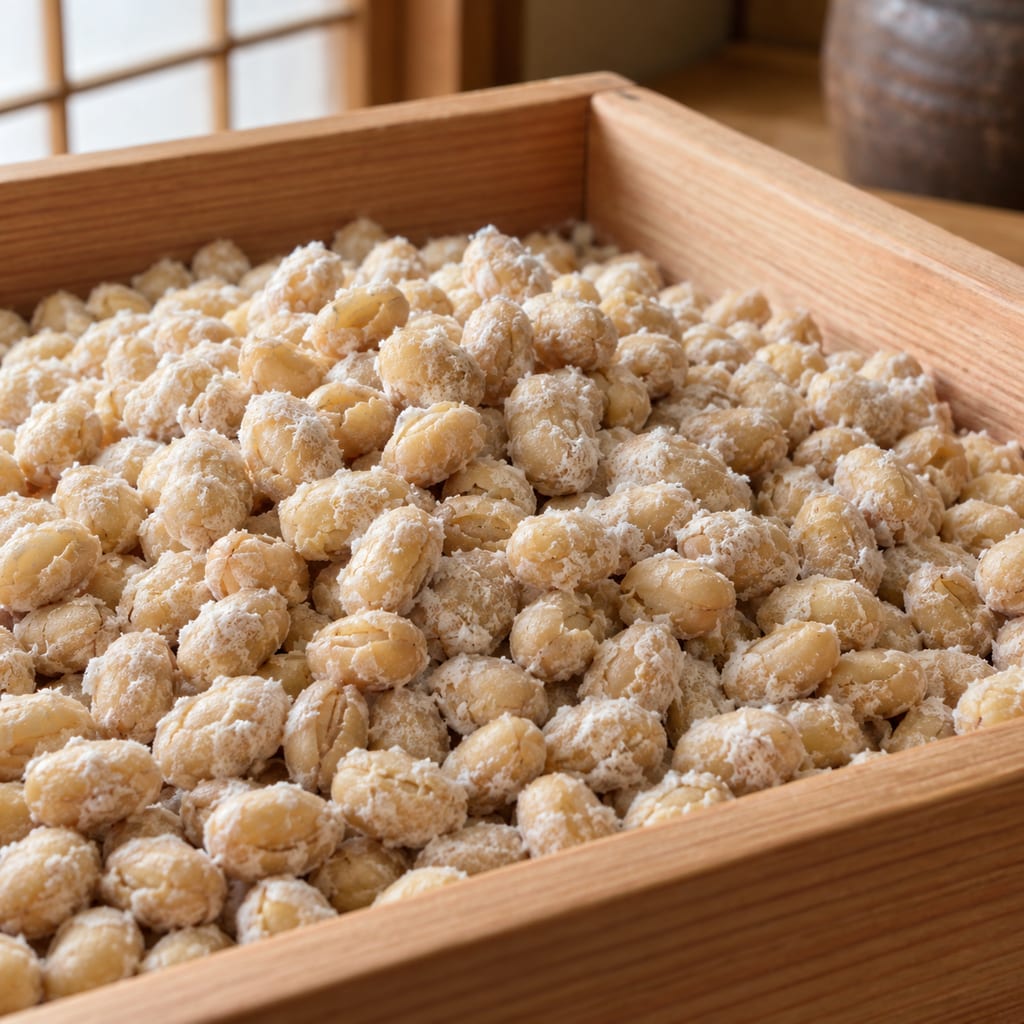
Japanese soybean koji: steamed soybeans, loose or formed into balls, grown over with Aspergillus mould to make the enzymes for mame-miso, tamari and regional soybean condiments.
Cooked rice, rice koji and water are held warm for hours so koji enzymes turn the rice starch to sugars, giving a naturally sweet Japanese drink with no added sugar and no second fermentation.
Shio-koji is a Japanese seasoning of rice koji, salt and water, left at room temperature until the grains soften and turn sweet and the mixture thickens.
An Okinawan fermented tofu: dried tofu cubes matured in rice koji, awamori and salt, traditionally with red Monascus koji, until the curd turns smooth and intensely savoury.
Japanese reddish-brown vinegar from sake lees matured about three years, turned to vinegar by acetic bacteria; the vinegar of Handa and Edomae sushi rice.
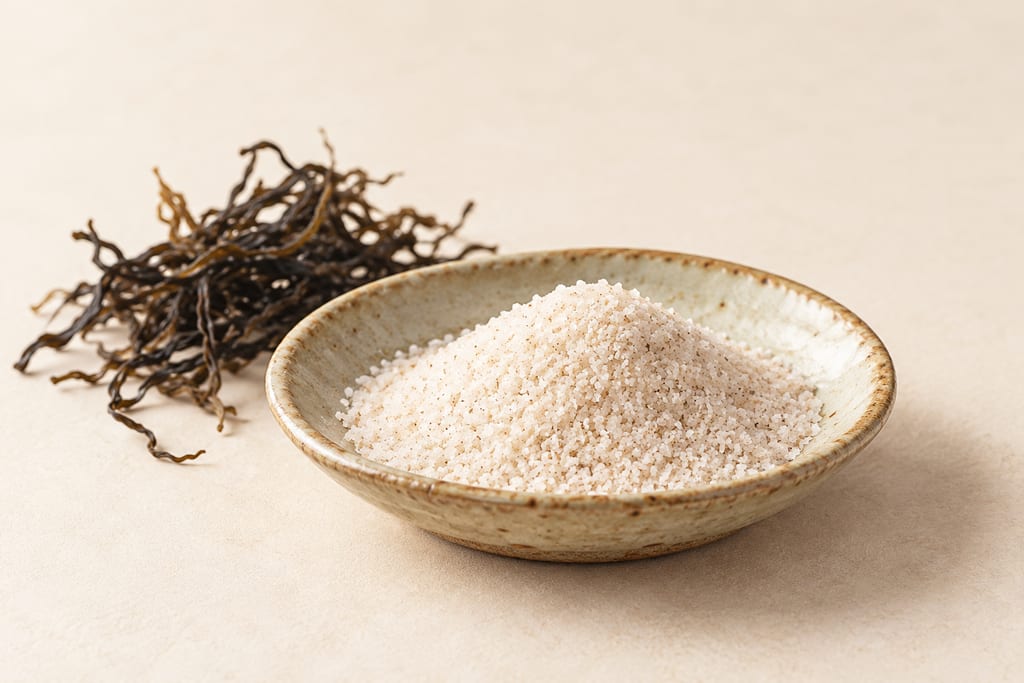
Amabito no Moshio is a modern, pale beige Japanese seaweed salt made from Seto Inland Sea water and hondawara seaweed. Its documented factory method concentrates filtered brine in kettles, then separates and dries the salt.
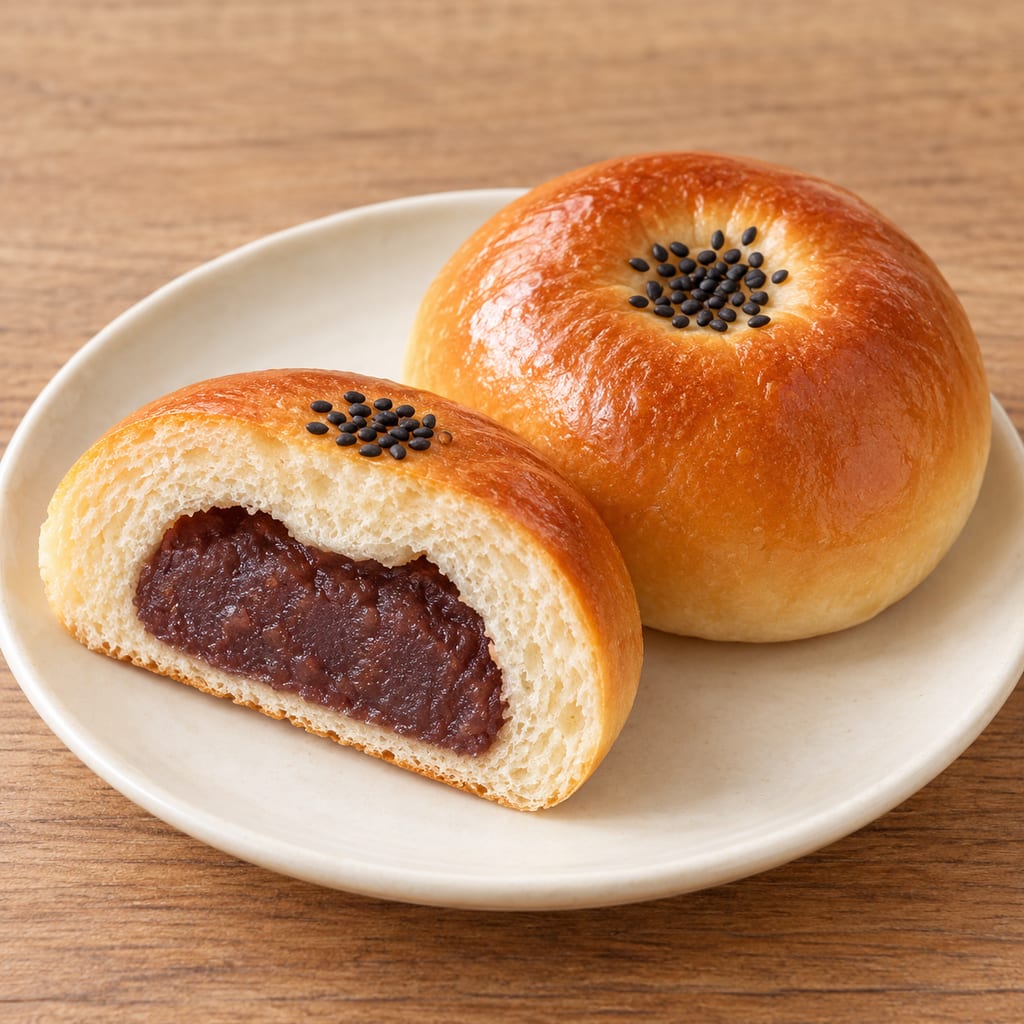
Anpan is a soft wheat bun filled with sweet red-bean paste and finished with egg wash and black sesame. This dough rises with commercial instant yeast.
Steamed pearled barley grown into a white koji cake with Aspergillus oryzae over about 36 hours in a 30 °C chamber, turned three times under a damp cloth.
Chinese sweet fermented glutinous rice: steamed rice and a mixed jiuqu starter, where mould enzymes release sugar and yeast makes a little alcohol, eaten with its sweet liquid.
An ethnographic record of marcha (murcha), a dry starter cake used in Eastern Himalayan cereal fermentations. This page documents source-specific community knowledge and is not a recipe for making or storing starter.
Community
No community contributions have been published for this entry yet.
Share what you made
Sign in to contribute. Published comments and photos are free to read.
200 g rice koji, 4 tablespoons sea salt, 1 cup water, daily mixing, seasonal 1–2 week fermentation and two-jar batch
Cited in: What is shio koji?; Recipe at a glance; Rice koji — 200 g; Sea salt — 4 tablespoons; Water — 1 US cup; Optional additions; Equipment; Stage 1 — Separate the grains; Stage 2 — Add salt; Stage 3 — Add water; Stage 4 — Transfer to jars; Stage 5 — Mature at room temperature; Stage 6 — Observe the changes; Stage 7 — Refrigerate; What actually happens during maturation?; Amylases break down rice starch; Proteases and peptidases; Is it really fermentation?; Variants and different published formulas; How to cook with shio koji; Fish; Chicken; Vegetables; Soups, sauces and dressings; The grains are still hard; The mixture seems too salty; The mixture dries at the surface; Unexpected mould appears; Gas develops; Why shio koji deserves its own recipe
Accessed 2026-10-25
Ministry of Agriculture, Forestry and Fisheries, JapanHistory · Geography
Identified food-grade koji and process-specific safety guidance; does not validate this recipe
Cited in: Recipe at a glance; Equipment; Stage 1 — Separate the grains; Stage 2 — Add salt; Stage 3 — Add water; Stage 4 — Transfer to jars; Stage 5 — Mature at room temperature; Stage 6 — Observe the changes; Stage 7 — Refrigerate; Variants and different published formulas; Food safety; Why shio koji deserves its own recipe
Cited in: Recipe at a glance; Equipment; Stage 1 — Separate the grains; Stage 2 — Add salt; Stage 3 — Add water; Stage 4 — Transfer to jars; Stage 5 — Mature at room temperature; Stage 6 — Observe the changes; Stage 7 — Refrigerate; Variants and different published formulas; Why shio koji deserves its own recipe
Cited in: Recipe at a glance; History; Equipment; Stage 1 — Separate the grains; Stage 2 — Add salt; Stage 3 — Add water; Stage 4 — Transfer to jars; Stage 5 — Mature at room temperature; Stage 6 — Observe the changes; Stage 7 — Refrigerate; Salt influences enzyme activity; Variants and different published formulas; Food safety; Why shio koji deserves its own recipe