Awamori
An Okinawan rice spirit made by turning all the rice into black koji, fermenting it with water and yeast, then pot-distilling and maturing the spirit.
 FermenteaWhere food goes to change
Enzyme sources
Koji is steamed grain — rice, barley, soybean or wheat — grown out with a food-grade Aspergillus mold until the kernels carry working enzymes. It is bought or cultivated, and it converts starch and protein for the foods that follow.
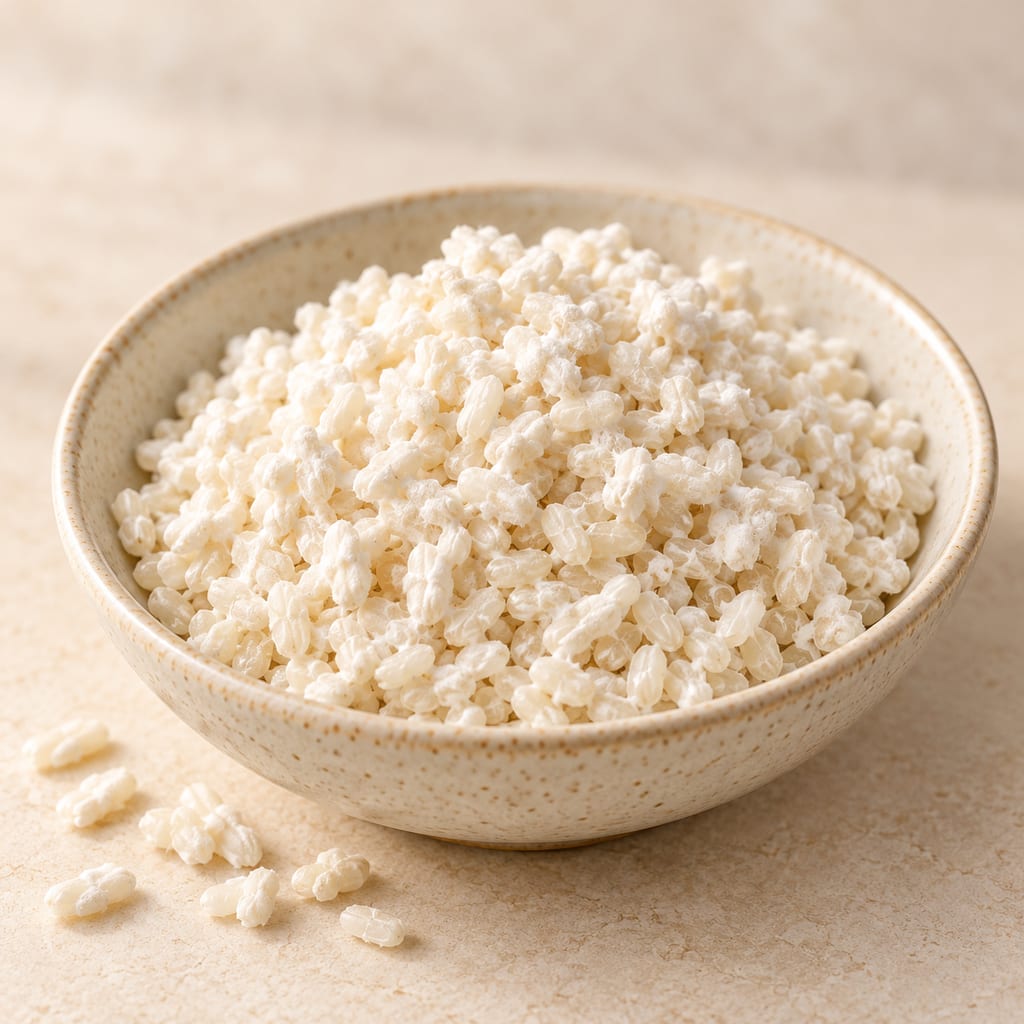
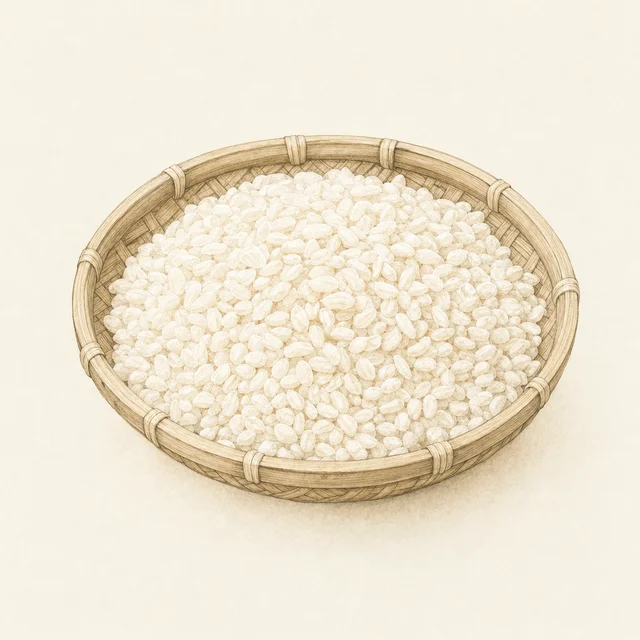
Most of what goes wrong with kōji in an English-language kitchen comes from a translation problem rather than a cooking problem. The Japanese language keeps three things apart that English runs together, and a reader who does not know the split will buy the wrong packet. The organism is kōji-kin, the mold of the genus Aspergillus. The seed culture — the dried, sporulated grain kept in order to inoculate a fresh batch — is tane-kōji, also called moyashi. The cultivated grain that goes into the food is simply kōji, with the cereal named in front of it: rice kōji, barley kōji. British Columbia's public-health guideline sets out all three definitions in one passage, and the distinction is the frame for everything that follows.
The cultivated grain is what this record is about. It is grain that has been steamed, inoculated and grown out until the kernels carry a working load of enzymes, and it is used as an enzyme source. The seed culture is a separate subject with its own record, and the two are not interchangeable. A recipe that asks for rice kōji wants the grown product; a recipe that asks for seed kōji wants an inoculum and is describing the start of a growing operation. Substituting one for the other does not produce a slightly different result — it starts a different process at a different stage.
The guideline's own naming rule is worth quoting because it settles the vocabulary question: kōji starter culture contains mold and mold spores of Aspergillus species including A. oryzae, A. sojae and A. luchuensis, and when grown on rice, barley or wheat the starter is named rice kōji or barley kōji and so on. The same source adds the supply rule that matters most in practice: starter culture must be purchased from commercial sources to ensure purity.
Everything else on this page fills in what that framework implies — what the mold is asked to produce, why the substrate changes the answer, how the craft was organised historically, how the grain is grown and what it does once it reaches a pot, a brine or a mash.
A shopper faced with a packet labelled koji needs to answer three questions in order, and the packet usually answers two of them. What was it grown on? Is this the seed culture or the cultivated grain? And what is it intended to make? The first determines allergens and flavor. The second determines whether the recipe can proceed at all. The third determines whether the enzymes in the packet are tuned to the job in front of them.
The last question is the one home recipes most often skip, and the sake institute states why it matters: different fermented foods require different enzymes and different flavor components, so dedicated strains are used — a kōji mold bred for sake, a kōji mold bred for miso. A packet sold as a general-purpose rice kōji is a compromise. It will sweeten a pot of amazake, because that is the amylase-heavy end of the range, and the guideline's temperature guidance shows how deliberately that end is aimed at: amazake kōji is incubated at 35 to 40°C while miso rice kōji is held at 27 to 30°C. A maker who wants a savoury, protein-rich miso is asking a culture tuned toward sugar to do a different job.
Dried kōji is the form a home cook will meet, sold as loose grains with a pale dry coating. It keeps its grains separate rather than fusing into a block, which is a sign the product has been handled well; a clumped, damp or musty packet has not. Crumbling it before use is not a stylistic choice. Enzymes work where they contact starch and protein, so a lump of grains treats only the outside of the lump. The amazake method asks for the kōji to be crumbled and stirred until thoroughly distributed, and that instruction is doing real work.
For anyone keeping kōji rather than using it immediately, the guideline's figures are the only ones available: 10 to 15°C at 50% humidity for a year, or frozen or refrigerated, with a kept starter good for roughly a month refrigerated or longer frozen, accepting some loss of activity provided contamination stays out. Those are storage conditions for a starter culture, not a shelf life for an opened bag on a shelf, and no source read here gives one. The safe inference is cold and dry, used sooner rather than later.
And the rule that overrides all of it: buy from a supplier who identifies what they are selling. The guideline's insistence that starter come from commercial sources to ensure purity, and its refusal to recommend that small operators make their own spores, are not bureaucratic caution. They rest on the one hazard that makes home mold work genuinely different from home lacto-fermentation — wild Aspergillus strains carrying aflatoxin, which nothing in a kitchen can be relied on to detect.
Cultivated kōji earns its place in a pantry because it does work that no other household ingredient does. It converts starch to sugar without yeast, alcohol or added sugar, which is why a pot of rice, water and rice kōji held warm overnight becomes a sweet drink with nothing sweet added to it. It dismantles protein into amino acids in a brine strong enough to stop most organisms, which is why soy sauce and long-aged miso exist at all. And it does both slowly enough that the products have months or years to develop color, aroma and depth around the conversion.
For a reader deciding whether to keep it, the practical comparison is with the other fermented staples. Miso and soy sauce are finished products; you use them as seasoning and they keep. Kōji is a raw material with a deadline: it is active, it loses activity, and it needs cold storage. It asks more of a cook than a jar of paste does, and it gives back a category of food that cannot be made any other way. Amazake is the easiest entry point, because the method is one long warm hold and the only real skill is keeping the temperature steady. Sake and soy sauce are brewery-scale commitments. A middle step is the family of modern enzyme-seasonings that put kōji to work on other ingredients, where the recipe is short but the outcome depends entirely on whether the kōji in the packet is fresh enough and aimed at the right job.
The products on this site that depend on it are listed alongside this page, and they are the honest measure of what kōji is for: a sweet rice drink made by enzyme alone, garums built on rice or barley kōji instead of on malted grain, and a home rice ferment that leans on kōji for its sugar. Each of them is a case of a brewer or a cook borrowing enzymes rather than growing them at the table. That borrowing is normal, and it is how the craft has worked for centuries — the guideline's account of commercial starter with contaminant bacteria near 1,000 colony-forming units per gram against mold spores in the tens of billions describes a specialist industry doing what households once did less reliably.
What kōji does not do is make a ferment safe on its own. It is not a preservative, it does not acidify a general-purpose mash the way black-koji mold acidifies a shōchū mash, and it does not rescue a batch of rice that cooled too slowly. It is a precise biological tool with a narrow set of jobs, and the pleasure of using it comes from getting the job right rather than from treating it as magic dust.
Kōji (麹) is grain on which a food-grade mold has been grown until the kernels are loaded with enzymes. Japan's National Research Institute of Brewing gives the plain definition: steamed grains such as rice or barley, or steamed sweet potato, with koji mold propagated on them. The grain is the body of the thing and the mold is what makes it worth having. A bowl of finished kōji looks like a bowl of cooked grain gone strange — the kernels hold their shape but are bound together by a fine white felt of growth, and the surface takes on the pale green or grey of spores as the culture ages. It smells clean and sweet, somewhere between chestnut and fresh bread, and it is not slimy. What you are holding is not a seasoning and not quite an ingredient in the ordinary sense. It is a package of living machinery that gets pointed at something else.
The word carries three meanings in Japanese, and keeping them apart is the single most useful thing a reader can do with this page. The mold itself — the Aspergillus — is kōji-kin. The dried starter culture grown onto cereal and kept to inoculate more cereal is tane-kōji or moyashi, seed kōji. And kōji on its own means the cultivated grain that goes into the food: rice kōji, barley kōji, and so on, named for whatever cereal the mold was grown on. English usage collapses all three into "koji," which is how a beginner ends up buying spores when they needed grain, or adding grain when a recipe wanted an inoculum. The distinction is not pedantry. It decides what you buy, what you add, and what stage of a process you are actually standing in.
This page is about the third of those three: cultivated grain, bought or grown, used as an enzyme source. The seed culture is a different subject with its own record, and the difference is worth stating before anything else. Seed kōji exists to make kōji. It is sprinkled onto a fresh batch of steamed grain in a small amount and its job is to grow. Cultivated kōji exists to be used. It goes into brine, into a mash, into a pot of cooked rice with water, and its job is to convert. A recipe that asks for rice kōji is asking for the grown product, and substituting a packet of spores would start a different process entirely.
The organism is a mold, not a bacterium and not a yeast, and it is not one species. British Columbia's public-health guideline on koji and miso names three Aspergillus species developed for this work: Aspergillus oryzae in most fermented foods, Aspergillus sojae in soy sauce, and Aspergillus luchuensis in shōchū. Japanese brewers sort the same territory by color instead. The sake institute describes yellow kōji mold as the usual choice for sake and black or white kōji mold as the usual choice for shōchū, and notes that the color names come from the spores each mold produces rather than from anything visible in the grain at the start. Some sake is made with red kōji mold or with Rhizopus, and some rice shōchū, along with brews that recreate Meiji-era methods, uses yellow mold. Kōji is a family of related molds doing related work, chosen deliberately one at a time.
Two confusions are worth closing off immediately. Kōji is not a name for any fuzzy growth on food, and a mold that resembles it in a photograph is not a substitute for it. Identity comes from a culture prepared and labeled for food use, not from appearance. And kōji is not interchangeable across ferments. The sake institute states the reason directly: different fermented foods need different enzymes and different flavor compounds, so dedicated strains are used — a sake kōji mold, a miso kōji mold. The same mold on the same grain, held at a different temperature, is tuned toward a different job. Treating kōji as a generic "fermentation starter" produces a lot of failed miso and a lot of flat garum.
Finally, kōji is not the finished food in any of the products it makes. In soy sauce, miso, sake and amazake it is the first stage, and it is spent by the time the product is worth eating. It supplies enzymes and, in some traditions, acid. Everything that happens afterwards — the months of brine, the long aging of paste, the alcohol in a mash — is carried by those enzymes, or by yeasts and bacteria that come later. Understanding kōji means understanding a stage that is over before the interesting part begins.
Where kōji began is genuinely contested, and the honest version of the story starts there. The technique of propagating molds by solid-state cultivation on rice grains, soybeans and wheat bran is thought to have originated in China, but scholars divide on whether China or Japan first put Aspergillus oryzae to work in food production. One school says China, the other Japan. A lecture report published by the Brewing Society of Japan adds a biological twist to the argument: the split between A. oryzae and A. flavus is placed at roughly 1000 BC, which is also when rice farming reached Japan, and whether the kōji mold was domesticated by human hands or simply favoured by the conditions of kōji making remains an open question. The origin debate is unsettled.
What can be dated is the Japanese craft, and the dates are older and more specific than the public-health guideline's single eighth-century claim suggests. According to that seminar report, the earliest surviving mention of kōji being used to make an alcoholic drink comes from the year 717, in a provincial report to the emperor describing the customs of Harima. Three centuries on, a dictionary called the Wamyo Ruijusho entered the word as kamutachi, and the Engishiki of 967 set out how fifteen different alcoholic drinks were produced. So by the eighth century the practice was established enough to be worth reporting to the throne, and by the tenth it was being catalogued. The writing tells a similar story. Nara-period scribes wrote kōji with the character 糵, read getsu or yone-no-moyashi; the familiar modern character 糀, which pairs the signs for rice and flower, turns up in Edo-period woodblock prints and is thought to have been coined around that time.
Japan's Ministry of Agriculture, Forestry and Fisheries frames the surrounding food world through law rather than legend. Its account of traditional seasonings notes that the Yoro Code of 701 AD placed people in charge of making sake, amazake, vinegar and other products in government posts. That is a striking piece of evidence for a food historian: by the early eighth century, the production of these fermented goods was organised enough to have officials attached to it. The ministry's classification tables and regional data are drawn from a named reference work, the Encyclopedia of Traditional Japanese Food published by Asakura, so this is documented institutional history rather than folklore.
There is a parallel record about amazake that bears on kōji's history without settling it. The ministry notes several origin theories for that sweet rice drink and names the best-known one: the Nara-period Nihon Shoki describes a drink read ama no tamuzake, which the ministry presents as a sweet, low-alcohol rice-kōji drink closer to amazake than to modern sake. Presented as one theory among several, it is not a dated first attestation. What it does show is that by the Nara period a rice-and-kōji sweet drink was recognisable enough to be written down, and that the boundary between brewing and non-brewing kōji uses was still soft.
The method itself is what makes the Japanese tradition distinctive, and the difference is geographic. Japanese brewers grew A. oryzae on rice that had been steamed and then separated into loose grains. Across China, the Philippines, Korea and Thailand the molds most often used instead came from the genera Rhizopus and Mucor, and they were grown on a brick-like mass made by mixing ground grain with water and kneading it into a solid shape. The explanation offered is dietary: steamed rice as a staple gave Japan a kitchen already equipped for a mold that grows on loose individual grains, which is why sake brewing came to rest on A. oryzae alone. That is a case of a food culture selecting a microorganism, not the other way round. It also explains why Korean makgeolli, which the sake institute notes uses kōji made from rice or barley and therefore resembles sake brewing in outline, still tastes different: the microbial species, the kōji-making method, the rice polishing ratio, the mashing method and the fermentation temperatures all diverge.
Kōji making takes skill, and skill gets specialised. The seminar report describes kōji makers splitting off from breweries to form kōji-ya, kōji shops, which banded into local trade associations called koji-za to protect their interests once breweries multiplied at the end of the Kamakura period; there are records from Kyoto in 1234. The government authorised that monopoly in 1419 and abolished it in 1444 after the Enryaku-ji temple complex petitioned against it, and the Bun'an Kōji Riot — brewers barricading themselves in Kitano Shrine and being forcibly evicted — began the associations' decline. This is the licensing history that usually reaches English readers as vague talk of guild privileges. Here it has dates, a named temple and a named riot.
Seed kōji, the inoculum rather than the cultivated grain, has its own origin story, and it is a story about an accident with a good outcome. The report puts the practice of working wood ash into kōji at roughly six hundred years ago, and credits it with revealing that a portion of the batch could be kept as starter. Ash does three useful things at once: it lifts the pH, it keeps the mass open so air reaches the mold, and it contributes minerals, and together those effects made the mold far easier to raise reliably. Ash became a commodity in its own right, supplied by specialist producers called hai-ya, who burned the steamed or roasted tips and leaves of camellia, oak and evergreen oak. Raising seed kōji is a different job from raising kōji: its purpose is to yield spores rather than enzymes, so the culture runs longer, six to seven days, on rice that is barely polished at all, in air kept very damp, and it is sold as grains or as a powder to be scattered over steamed rice.
By the middle of the Edo period the two trades had properly separated. The report states that moyashi, seed kōji, had become distinct from kōji, with different cultivation methods used for each, and that strain selection and rice sourcing by origin were already being handled deliberately. The evidence is a manuscript, the Geppou Densyo of the Kyoto firm Akaban Moyashi, run by the Omiya Kichizaemon family, which closed in 1960 and donated its papers to the Kyoto Prefectural Library. In that period Kōjiya Sanzaemon, Omiya Kichizaemon and Hishiya Rokuzaemon were operating in Kyoto, with Higuchi Moyashi in Osaka thought to date from the Edo period and Ueda Moyashi possibly too, though few records survive for the latter. Seed kōji was already a national trade: it was bought from Michinoku in the north of Honshu to Hizen in the south of Kyushu. The lecturer draws a sharp conclusion from that distribution — a culture shipped across the whole country for three centuries sits awkwardly with any idea of microbial terroir.
The number of firms doing this work has been small and shrinking for over a century. From the Meiji period onward, fewer breweries inoculated from batch to batch and the number of seed kōji producers rose to around ten. A 1984 survey by Koizumi counted fifteen still working in the Showa period. Today six operate nationally and two more serve only local customers. That is a narrower base than the public-health guideline's figure of about twelve major kōji mold manufacturers suggests, and the two counts are measuring slightly different trades — one counts suppliers of kōji mold to the whole brewing and food industry, the other counts seed kōji houses. Okinawa's industrial technology center gives the same picture at prefectural scale: many awamori distilleries buy seed kōji from three suppliers in total, one inside the prefecture and two outside it, and producers once saved part of a prepared kōji as tomodane for the next round before commercially purchased seed kōji made the step steadier.
One claim that circulates widely in English with a date attached can now be stated properly, and one part of it still cannot. The brewing body that names national fungi is the Scientific Conference of the Brewing Society of Japan, and the molds it has designated are Aspergillus oryzae, the yellow kōji mold; Aspergillus sojae, a yellow mold of the oryzae group, together with the white mutant strain of yellow kōji; Aspergillus luchuensis, the black kōji mold; and A. luchuensis mut. kawachii, the white kōji mold. That is the designation, and it belongs to a brewing body rather than to a botanical one. The report gives no year for it, so no year appears here. The frequently repeated 1957 date and the attribution to a botanical society are not supported by anything read for this page.
Japan's own institutional sources are worth noting for what they refuse to do. The ministry's regional data is sourced to a named encyclopedia with page numbers. The sake institute's definition of kōji is a single plain sentence. The National Tax Agency's teaching sheet on kōji making lists operations and their purposes without dating any of them. These are sources that describe practice carefully and speculate rarely, which is why the history above leans on a seminar report by a practitioner whose family firm has made seed kōji for centuries — a source with a point of view, and one that should be read as such. The report's account of Kōjiya Sanzaemon being founded in Kyoto in the Muromachi period and granted permission to sell seed kōji by the shogun Ashikaga Yoshiteru, who ruled from 1546 to 1565, before moving to Toyohashi in 1965, is company tradition told by the twenty-ninth head of that company. It is consistent with the dated koji-za record, but it has not been checked against an independent document here.
The practical lesson is that kōji's history is a history of technique, trade and supply rather than of a founding moment. Nobody knows who first grew mold on steamed rice on purpose. What is documented is that the craft was organised enough to be reported to the emperor in 717, that specialisation and monopoly politics shaped it from the thirteenth century, that its inoculum trade is roughly six hundred years old and national in reach, and that the culture a modern maker buys comes from a handful of firms rather than from a household.
The point of growing a mold on grain is not the mold. It is what the mold leaves behind. The sake institute puts the role plainly: kōji supplies enzymes that break down starch and protein, and it supplies the flavor and aroma components of the finished product. British Columbia's guideline names the two most important enzyme groups being produced — amylases and proteases — and gives the cultivation phase in which they appear its own Japanese name, kusumoto. The craft divides in two accordingly. First the mold grows. Then conditions are changed so that the mold makes enzymes. A grower who only does the first part has produced a pile of grain with a fungus on it.
That second phase is steered by temperature, and the numbers are unusually specific in the guideline. After initial mold growth, temperatures are lowered slightly to promote enzyme development. For a sweet-style miso, holding two to five degrees above a baseline of 30°C increases amylase production. For a salt-style miso, keeping the rice between 27 and 30°C develops protease instead. And temperatures must never go above 40°C, or enzyme development halts. So the same mold on the same grain, kept a few degrees warmer or cooler, comes out of the room tuned toward sugar-making or toward protein-making. Kōji raised for a sweet drink and kōji raised for a salty paste are not the same object in different packaging; they are different outcomes of a decision made days earlier.
The two enzyme families do different jobs on different parts of the raw material, and this is where kōji stops being mysterious. Amylases cut starch into sugars. Proteases cut protein into amino acids and smaller fragments. Rice is mostly starch, so rice kōji working on rice is largely an amylase story. Soybeans are mostly protein, so a kōji working on soybean needs protease. A soy sauce koji works on both at once, because the recipe pairs steamed soybeans with toasted wheat, and the wheat is there to be eaten by amylase.
The Japan Soy Sauce and Miso Makers Association describes that pairing exactly. Its recipe for the soy sauce kōji stage combines roughly equal parts of soybean that has been steamed, or soybean with the oil pressed out, and wheat that has been roasted rather than boiled, then introduces the mold's spores to the mixture. The association then spells out which enzyme does what. Soybeans are largely protein, and it is the mold's protease that cuts that protein apart, freeing the amino acids that give soy sauce its savory backbone. The wheat starch is turned into glucose by amylase. Defatted soybeans are used because they keep the proteins the process needs while the unnecessary fats have been removed beforehand. Every ingredient choice in that recipe is a statement about which enzyme it feeds.
For starch the enzyme detail matters, because two different amylases behave differently. In the literature on A. oryzae, alpha-amylase and glucoamylase are named as the key enzymes in producing sugars from starch. Alpha-amylase snips long chains internally into shorter pieces; glucoamylase works from the ends and releases glucose. A koji with a lot of glucoamylase floods the system with glucose quickly. That is exactly what a sweet drink wants and exactly what a maturing brine does not. The soy sauce literature makes the point sharply: too rapid a release of glucose from starch at the beginning of fermentation inhibits the growth of the microorganisms in the soy sauce maturation phase, which makes slower digestion beneficial to taste. Enzyme balance is a flavor decision, not a yield decision.
Protein breakdown reaches further than "umami." Among the enzymes A. oryzae secretes are peptidases, including leucine aminopeptidase, which cleave amino acids from proteins and polypeptides, releasing glutamic acid — the amino acid behind the characteristic savory taste of fermented soybean products. Pectinase is credited with helping starch become accessible by dissolving the pectin that holds plant cell walls together, so the material opens up and the other enzymes can reach inside it. Some strains also carry salt-tolerant alkaline proteases, suited to the high-sodium conditions of a brine. That last detail is not incidental: a soy sauce moromi sits in enough salt to stop most things, and a protease that keeps working in salt is precisely what a fermentation designed around salt needs.
Acid is a separate output, and it belongs to particular molds rather than to kōji in general. The sake institute singles out shōchū koji made with black or white kōji mold: compared with sake koji made with yellow mold, it contains large amounts of citric acid and supplies an acid-tolerant amylase. The citric acid acidifies the yeast starter and the main mash, which the institute describes as preventing harmful microbial contamination and making a safe fermentation possible. That is a functional difference with a geographic cause. Shōchū is made in warm, humid parts of Japan, where a mash left near neutral pH is an invitation to something unwanted, and a mold that acidifies the mash from the inside out solves the problem before any yeast arrives.
Yellow-koji sake koji does not do this, and that is one reason sake brewing has to build acidity a different way, through the yeast starter. It is also why the guideline is careful about pH in kōji foods generally. This is not an acidic fermentation, it says. The final pH of kōji and other kōji products sits above 4.6. During fermentation the pH of rice kōji and miso drops from roughly 6.0 to roughly 5.0, but not to acidic conditions of pH 4.6 or lower. A kōji-based food is therefore a near-neutral food, and it behaves like one.
One more distinction, because it is the most commonly muddled thing about kōji. Not everything kōji does is fermentation. Where kōji is used to convert starch to sugar in a warm pot of rice and water, the guideline calls the stage saccharification and declines to call it fermentation at all, because the work is done by enzymes rather than by living cells acting on the food at that moment. The mold that made those enzymes stayed upstream, in the kōji room. Amazake is the clearest case: a sweet drink produced by enzyme chemistry, with no yeast involved and no alcohol to speak of. Elsewhere — in miso, in soy sauce, in sake — enzymatic conversion and microbial fermentation run on, sometimes side by side. Saying "kōji ferments the food" skips the mechanism, and the mechanism is the interesting part.
Kōji is named for whatever it was grown on, and the substrate changes what the finished product can do. The guideline states the naming rule directly: when the Aspergillus starter is grown on rice, barley or wheat, it is called rice kōji or barley kōji and so on. It also records that kōji molds are made on polished rice, barley, wheat or mixed cereal materials, and that polishing is done to expose nutrients on the surface layer and to promote mold growth. Polishing is therefore not only a flavor decision; it is a decision about whether the mold can get into the grain at all.
Rice kōji (米麹, kome-kōji) is the reference case, and the one a home cook is most likely to buy. Rice is nearly all starch, so rice kōji is the amylase workhorse. It is what makes amazake sweet, what saccharifies the mash in sake, and what supplies the sweetness side of rice miso. The ministry's classification of miso puts rice miso in its own category and subdivides it further by the amount of kōji and the amount of salt into ama-miso, amakuchi-miso and karakuchi-miso — sweet, sweet-sweet and salt-sweet. In other words, the quantity of kōji in the recipe is one of the two axes on which a whole family of Japanese pastes is organised. More kōji means more enzyme and, in practice, more sugar from the rice starch.
Barley kōji (麦麹, mugi-kōji) is the base of barley miso, and it is what the Czech producer Goodlok lists on its garum labels as koji z ječných krup — koji made from barley groats. Barley carries starch and protein in a different balance from polished rice, and it brings a different flavor to whatever it is used for. The ministry classifies barley miso alongside rice miso and soybean miso as one of the categories of ordinary miso, and states that regional character in miso and soy sauce arises from the raw materials, the type of kōji, the aging period and local taste. Barley kōji is not a substitute for rice kōji; it is the reason a whole regional style exists.
Soybean kōji is the third miso category, and it is the odd one out because the substrate is a legume rather than a cereal. Hakku miso, the mature soybean paste of central Japan, is built on it. A kōji grown on soybeans is working on its own substrate's protein, which suits a paste made with little or no grain and aged for a long time.
Soy sauce kōji is a different construction again, and it is the clearest example of substrate chosen for an enzyme job. Steamed or defatted soybeans are paired with toasted wheat in roughly equal proportions before the mold goes on. The wheat is the starch supply for amylase; the soybean is the protein supply for protease; toasting the wheat rather than steaming it is a deliberate difference from every other kōji on this page. The association notes that the honjozo or regular fermenting method, which uses this kōji, accounts for approximately 80% of production, and that five types of soy sauce are made in Japan with different methods, so even this well-defined kōji is not universal.
Wheat also appears as a kōji substrate in shōchū traditions, and the sake institute notes that kōji for makgeolli is made from rice or barley. Two other molds turn up in the same role: the institute records that some sake is brewed using red kōji mold or Rhizopus instead of the usual yellow Aspergillus, and that some rice shōchū, along with brews recreating Meiji-era methods, goes back to yellow mold. Red kōji is worth naming mainly to keep it outside this page's scope. It is a different organism from the Aspergillus kōji discussed here, and the institute gives it only its Japanese name, 紅麹菌, without a Latin one, so no species is claimed for it on this page. What matters for a reader is that kōji names a role — grain plus cultivated mold — and more than one mold can fill it.
A reader comparing these forms should hold on to one point. The substrate determines what the enzymes have to work on, and the mold determines which enzymes are made. Change either and the downstream product changes. That is why a garum recipe that specifies rice kōji and a miso recipe that specifies barley kōji are not describing the same ingredient loosely, and why a catalogue that treats "koji" as one undifferentiated item will mislead anyone trying to cook from it.
Growing kōji is a series of physical operations performed on a bed of grain that is heating up from inside. The National Tax Agency and the National Research Institute of Brewing publish the sake brewery sequence as a teaching sheet, and it is the best-documented account available of what the work involves. It gives no temperatures and no clock times, and none should be invented for it. What it gives is the operations and the reason for each one.
Steamed rice is cooled and brought into the kōji room, then spread out on a long table while its temperature and moisture are adjusted to suit the mold. The spores are then distributed through the grain. The wrapped rice is next broken apart and loosened, then wrapped again — an operation called kirikaeshi — specifically to adjust temperature, moisture and airflow for optimal mold growth. The grain is portioned into shallow wooden trays, the koji-buta of the traditional method, which the brewing glossary describes as rectangular stackable trays typically filled with about 1.5 kg of kōji each. From there the work continues in the trays.
Two operations handle the fact that a bed of growing grain is not uniform. Tsumikae is the rearrangement of the trays themselves: because temperature and mold growth vary with the position of the tray and how the stack is arranged, the brewer reads the growth of each tray and periodically moves them to even out the differences. Naka-shigoto, the middle work, handles variation inside a single tray, where conditions in the middle of the pile differ from those at the surface: the kōji is mixed once and then reshaped into a pile. Later, as the kōji temperature rises, comes shimai-shigoto, the final work, in which the grain is mixed and spread thinly on trays with grooves cut into the surface to help it cool. Tsumikae continues after that. The finished kōji is then carried out of the room, to be used in the yeast starter and the main mash.
Read as a whole, this is a story about heat the mold makes itself. A growing bed of grain warms from within, unevenly, and the entire operation is a way of chasing that heat around — loosening, dividing, moving trays, mixing, spreading thin, cutting grooves. The brewing glossary dates the first of these operations, kirikaeshi, at 10 to 12 hours after the spores are inoculated, and describes a second mixing five to seven hours after the middle work, both for temperature control. The sheet also explains why sake brewers polish their rice to leave a loose white core in the grain: that structure makes it easy for kōji to grow into the kernel.
The industrial version of the same process, described in the safety guideline, is more numerate. Cooked rice is cooled to 35°C within two hours before Aspergillus spores are added; the mixture goes into a culture room onto wood, is covered with a food-safe cloth and incubated at roughly 30°C. Heat develops from about ten hours. The mass is mixed by hand at 16 to 18 hours and again at about 26 hours. Room humidity starts at 98% and falls as the process goes on, and the finished kōji should reach a water activity of 0.80 when the process completes in 42 to 48 hours. Completion is judged by spore development, and the length of time varies with the Aspergillus strain chosen. For a sweet drink the guideline records incubation at 35 to 40°C rather than the 27 to 30°C used for miso kōji, because the higher range favors amylase.
Two details in that account are worth pausing on. The first is that high humidity is only half the story. Near-100% humidity allows mold growth, but once enough growth is achieved, the guideline describes air-drying at 10 to 15% humidity to optimize spore formation, and notes that this is an aerobic process. A kōji that never sees dry air makes growth without spores. The second is that the endpoint is a quality judgment rather than a timer. It is not desirable, the guideline says, for spores to age and turn black, because that discolors the miso the kōji goes into. Finished kōji is read, not clocked.
A home kitchen can imitate some of this and none of the control. The operations are simple in principle — spread, cover, mix, move, thin out — but they exist to manage a bed of grain whose temperature changes by the hour, in a room whose humidity is deliberately shifted partway through. Brewery practice and industrial process parameters are the reference; no validated household programme exists, and that gap is not an invitation to improvise. Anyone who wants cultivated kōji without growing it can buy it.
Making the seed culture is a separate matter, and the guideline is blunt about it: small-scale operators should not manufacture Aspergillus spores. The reason is given in terms of risk rather than difficulty — a high chance of contaminating the culture with wild Aspergillus strains and producing aflatoxin, along with the bacteria that come with it, the complexity of the process and the controlled environment spore production requires. The quality the industry achieves is a useful measure of the gap. The guideline reports commercial starter with total contaminant bacterial counts around 1,000 colony-forming units per gram against mold spores in excess of 5 to 30 billion per gram, and recommends buying directly from manufacturers who can verify spore counts and purity.
In sake, kōji is the load-bearing ingredient and the most delicate step. The National Tax Agency's teaching sheet states that kōji is made by growing kōji mold on grains such as rice, that it converts the starches in the grain into sugars which serve as the basis for alcoholic fermentation, and that making kōji is regarded as the most crucial step determining the flavor of sake. The glossary reinforces the point from the other direction: pure-rice sake is defined as sake made only from rice and kōji, without added brewer's alcohol, and rice is steamed specifically so that its starch will be easily decomposed by kōji enzymes. Sake is also unusual in that the two jobs run at once. Unlike beer brewing, where saccharification and fermentation happen one after the other, sake integrates them in a single parallel process — the enzymes keep making sugar while the yeast keeps turning it into alcohol. Kōji is not a starter in the yeast sense. It is a standing sugar supply.
In soy sauce, kōji is followed by brine rather than by a sugar-hungry yeast. The kōji described above — soybean and toasted wheat — is moved into a tank with salt water and becomes moromi, then sits for six to eight months while it is stirred over and over. During that time the mold, wild yeasts and lactobacilli keep breaking the material down, and further maturation builds the color, flavor and fragrance. Salt is what makes that sequence orderly: dissolved and added at the blending stage, it gives the salty taste and, in the association's words, has an important role in suppressing putrefactive bacteria and other destructive organisms, leaving the valuable microorganisms — kōji mold, lactic acid bacteria and yeast — free to work. The kōji's enzymes then have months to dismantle protein and starch in a solution most other organisms cannot tolerate.
In miso, kōji is mixed with cooked soybeans and salt and left. The ministry's classification treats the type of kōji as one of the primary axes of the product, and the guideline's temperature guidance shows why the kōji itself is designed differently for a sweet miso than for a salty one. The enzyme balance set in the kōji room determines how much of the soybean protein and grain starch becomes amino acids and sugars over the aging period. This is also where the guideline's warning about over-aged spores bites: black spores discolor the paste.
In amazake, kōji is the whole process. Rice kōji is diluted with cooked rice and water and held warm, and the amylase in the kōji converts rice starch to glucose. The guideline treats this as saccharification rather than fermentation, and notes that at least twelve oligosaccharides appear alongside the glucose, their proportions varying with the temperature across a range from 45 to 70°C. No yeast is involved, and the drink holds little or no alcohol. Japan's ministry describes the process as cooked rice with water and kōji stirred well, covered and held at 55 to 60°C overnight, with stirring partway through promoting the process. It is the simplest use of kōji in the repertoire and the one that most clearly shows the enzyme mechanism, because nothing else is happening.
In shio kōji and in the newer wave of enzyme-based seasonings, kōji is used directly on other foods. The guideline notes that the term shio kōji names a final flavoring product rather than a stage. The same protease and amylase that dismantle a mash will dismantle the surface of a piece of fish or a cut of meat, which is the logic behind the modern garum-style preparations that use kōji on animal and vegetable ingredients rather than on grain and brine. Those recipes are recent, and the sources read here describe the enzyme mechanism rather than endorsing any particular outcome.
Across all of these, one pattern holds. Kōji is a stage that is finished before the product is. It is designed in a room, spent in a tank or a pot, and invisible in the finished food. The reason it repays understanding is that almost every variable in the products it makes — sweetness, savoriness, how long an aging takes, whether a mash is safe while it ages — was partly decided before the kōji left the trays.
Cultivated kōji is bought, not foraged. A home cook can find it dried in Japanese grocery stores and online, usually as rice kōji, and the recipe sources treat it as a purchased supply rather than something to be made. Dried kōji comes as separate grains coated in a fine pale growth, and it clumps; the amazake method asks for it to be crumbled before use, which matters because enzymes act where they touch. Breaking the clumps apart spreads the activity through the whole batch.
Storage is where the sources are more specific than most home recipes. The guideline gives a storage figure for kōji starter: 10 to 15°C at 50% humidity for one year, or frozen or refrigerated. Elsewhere it records that a kept starter may be refrigerated for about one month, or frozen, with some loss of activity acceptable as long as contamination is kept out. Those two figures describe different products at different stages, and neither is a shelf life for an opened packet sitting in a cupboard. The honest reading is that kōji keeps best cold and dry, that activity falls off with time, and that no source consulted here gives a reliable home storage duration for a packet once it has been opened.
The safety record of the mold itself is better than the warnings around it suggest, and the reason is the identity of the culture. The seminar report states plainly that kōji mold is recognised as safe in Japan and the United States, and that it is scientifically proven not to produce aflatoxin despite its relationship to Aspergillus flavus — the species that does. That matters because A. oryzae and A. flavus are close enough that the relationship worries people; the report dates their differentiation to around 1000 BC. British Columbia's public-health guideline reaches the same practical conclusion from a different direction: aflatoxin is not a concern when a commercially sourced Aspergillus starter is used, because those cultures do not contain Aspergillus species that produce aflatoxin. It also reports that no outbreaks were found in CDC and other databases for these products. All of that is a statement about identified, commercially produced cultures, and it does not extend to anything else.
The risks the guideline identifies all come from losing control of what is actually growing, which is why the warning about aflatoxin belongs to home propagation rather than to the culture on the shelf. Culture re-use, or backslopping, is not recommended in these ferments, because wild Aspergillus strains that carry toxins may be introduced; the risk is amplified when one batch of starter is used to raise the next. This is the single most important practical rule on the page, and it applies directly to the tempting home shortcut of saving a handful of last batch's kōji to inoculate the next. Small-scale spore production is discouraged for the same reason, with aflatoxin named as the hazard alongside contaminating bacteria, the complexity of the process and the controlled environment spore production needs. The Okinawan practice of saving tomodane from one batch for the next, recorded by the prefectural laboratory, is exactly the habit the guideline is arguing against, and that laboratory also reported that moving to purchased seed kōji made the kōji-making step more stable.
The other hazard is bacterial and comes from the grain rather than the mold. Bacillus spores may germinate and produce toxin if the cooling step after cooking rice, barley or other cereal is not controlled, and the guideline notes the risk is lessened when cooking happens under pressure. It also requires that any soak running past four hours take place under refrigerated or acidified conditions, because heat-stable toxins such as the cereulide associated with Bacillus cereus survive boiling. A bowl of rice that has been standing in water at room temperature overnight can therefore carry a toxin that no later cooking removes. The guideline records a Canadian recall for Bacillus cereus in a noodle miso soup in 2020 and a recall in Denmark, while finding no outbreaks in the outbreak databases it searched.
Temperature limits do double duty as both quality and safety guidance. Aspergillus is killed at 50°C and above, according to the guideline, which is why the kōji must be stirred for even distribution and cooling and kept below 40°C during growth. Optimal mold growth sits at 35 to 38°C, and inoculation happens at or below 35°C. Those numbers come from the process, not from a preservation plan, and it is worth being clear that kōji is not a self-preserving food. The guideline is explicit that this is not an acidic fermentation and that the final pH of kōji and kōji products stays above 4.6. What protects downstream products is salt and reduced water activity: miso and salt kōji should sit below 0.85 water activity, finished miso is typically around 0.80, and salt at 4% or higher — normally 6 to 16% — gives a final water activity that is protective against Bacillus cereus and toxin formation by Staphylococcus aureus. Plain rice kōji without salt may or may not reach protective levels on its own.
That last point has a direct consequence for anyone using kōji at home. A salted, aged paste is a different kind of product from a pot of sweet rice and kōji held warm for twelve hours, even though both start from the same grain. The second is near-neutral, sugar-rich and warm for hours, which is exactly the situation the guideline's pH warning is about: products above pH 4.6 need refrigeration. There is one instructive exception, and it belongs to a different mold. The sake institute singles out shōchū kōji made with black or white kōji mold, which contains large amounts of citric acid and acidifies the yeast starter and the main mash, preventing harmful microbial contamination and making a safe fermentation possible. A yellow-koji rice kōji does not do that. Anyone comparing a shōchū-style process with a sake-style one is comparing two different safety designs, not two brands of the same thing. No source read here supplies a validated process limit for a home kōji product, and a published household method is not a validated safety process.
Allergens follow the substrate rather than the mold. A barley kōji contains gluten-bearing barley, and the Czech garum labels quoted on this page say so, printing koji z ječných krup with the allergen declaration lepek — gluten — alongside it. A soy sauce koji made on soybean and wheat carries both. Rice kōji made on polished rice carries neither, though anyone with a rice sensitivity should read the label of the actual packet. Nothing in the sources supports treating kōji as allergen-free in general; the question is always what the mold was grown on.
And a warning that costs repeating once: the color of a mold is not an identification. The sake institute notes that the names black kōji and yellow kōji come from the color of the spores each mold makes, and the brewing society's list of national fungi sorts the same molds by those color groups. That means color describes a category of cultivated culture, not a test that can be run at home. A dark or pale growth on forgotten food is not kōji that failed to look like kōji. It is an unidentified organism, and the only route to usable kōji is a culture prepared and labeled for food use, handled according to its own instructions.
Japan's regional differences in kōji-based foods are documented at the level of the kōji itself, which is unusual and useful. The ministry states that various types of miso and soy sauce are produced according to the types of raw materials and kōji, the aging period and local taste preference. Kōji choice is listed as one of the drivers of regional character, alongside grain and time. Barley kōji belongs to barley-growing regions and gives barley miso its style; rice kōji dominates the miso of most of the country; soybean kōji underlies the long-aged soybean pastes of central Japan. The same logic runs through drinks: the ministry notes that koji amazake is associated with regions where deep kōji culture takes root, such as miso and soy sauce country, while sake-lees amazake belongs to brewing regions. Kōji traditions distribute themselves along the lines of what a place already makes.
The sake institute's comparison with Korea makes the same point at a national scale. Makgeolli uses kōji made from rice or barley, and in that respect resembles sake brewing, but the microbial species, the kōji-making method, the rice polishing ratio, the mashing method, the fermentation temperature and the number of fermentation days all differ, so the flavor differs. A shared technique and a shared organism do not produce a shared product. The kōji is where the traditions look alike; everything around the kōji is where they part.
A prefectural laboratory account from Okinawa shows the same principle operating at the level of a single supplier. Okinawa's industrial technology center reported that many awamori distilleries bought seed kōji from three makers — one inside the prefecture and two outside it — and that the in-prefecture maker was a single firm, Ishikawa Kojiki-ten. Distilleries wanted to use the local culture both to diversify the character of the spirit and to build a regional brand, but the center notes that little scientific knowledge existed on that culture's quality characteristics, so each distillery was still experimenting. Regional identity in a kōji product, in other words, can be a deliberate project rather than an inheritance, and it depends on knowing what the local culture actually does. There is a counterweight to that idea in the historical record: seed kōji has been bought and shipped across the whole of Japan since the Edo period, from Michinoku in the north to Hizen in the south, and the lecturer who traced that trade argues that a culture moved nationally for three centuries runs counter to any concept of microbial terroir.
The names are worth collecting, because they are how a reader will meet this ingredient in a shop or on a label. In Japanese: 麹 (kōji) for the cultivated grain; 麹菌 (kōji-kin) for the mold; 種麹 (tane-kōji) for the seed starter, which the brewing glossary equates with the spores of the kōji mold; 米麹 (kome-kōji) for rice kōji; 麦麹 (mugi-kōji) for barley kōji. The historical sources add two older words that explain the modern one: 糵, read getsu or yone-no-moyashi, was the character used for kōji in the Nara period, and moyashi survives today as the word for seed kōji. The character 糀, the one a modern shopper sees on packets, appears in woodblock prints only from the middle of the Edo period and was probably invented then. The brewing glossary adds the working vocabulary: 麴米 (koji-mai), rice set aside for making kōji; 麴蓋 (koji-buta), the shallow wooden tray; 製麴する (seikiku-suru), to propagate kōji mold; and the named operations 切り返し (kirikaeshi), 仲仕事 (naka-shigoto) and 仕舞仕事 (shimai-shigoto). A reader who recognises these words can read a Japanese recipe without guessing which of the three meanings of "koji" is meant.
The brewing glossary is precise about kome-kōji in particular: it identifies rice kōji, 米麴, romanised kome-koji, as mold grown on rice, while noting that koji in general may be made on rice or barley. Its comprehensive sake guide defines kome-koji as polished rice colonized by koji fungi. So the word is not a general synonym for kōji; it names the rice form specifically. That matters when the word turns up outside Japan. A Czech producer's garum webpages use komekoji as an ingredient name, which in Japanese terminology would mean rice kōji, while the producer's own packaging photographs have been read as declaring koji made from barley groats. The producer's public webpage text names koji generically and leaves its allergens field blank, so nothing published online reconciles the two. This page records the discrepancy rather than resolving it: the meaning of the Japanese word is settled, and what was in those particular batches is not.
Two other names deserve a note for what they are not. Shio kōji, salt kōji, is a seasoned product made with kōji rather than a form of kōji itself; the guideline lists it as a final flavoring product. And kōji is not a translation of "mold" in general. In Japanese the mold is kōji-kin, a specific food culture, and the word does not extend to whatever is growing on the back of a refrigerator.
For anyone reading recipes across languages, the practical rule is short: identify the substrate, identify whether the recipe wants the seed culture or the cultivated grain, and identify the product the kōji is meant to make. Those three answers are in the Japanese names, and they are usually what an English translation has flattened away.
A few points in this account rest on secondary reporting or could not be verified, and they belong in one place rather than scattered through the text. The earliest dates for kōji in Japan — the report to the emperor of 717, the Wamyo Ruijusho entry, the Engishiki of 967 — reach this page through a seminar report published by the Brewing Society of Japan and supported by the Japanese Society for the History of Brewing, not through an inspected primary text. The public-health guideline's separate claim that kōji mold was developed in the sake-brewing industry in the eighth century rests on a 2021 reference. Both point to the same century, and neither has been checked against the original documents here.
The supplier counts disagree in an instructive way. The guideline reports about twelve major manufacturers of kōji mold supplying the brewing and food industry, while the seminar report counts six seed kōji makers operating nationally today plus two serving local customers only. The two figures are not measuring the same trade, and neither comes with a list of names. The seminar report's account of Kōjiya Sanzaemon — founded in Kyoto in the Muromachi period, granted seed kōji selling permission by Ashikaga Yoshiteru, who ruled 1546 to 1565 — is a family firm telling its own history, consistent with the dated koji-za record but not independently verified here.
One widely repeated claim still has no date. The designation of the koji molds as Japan's national fungi is attributed by the seminar report to the Scientific Conference of the Brewing Society of Japan, and the molds named are Aspergillus oryzae, Aspergillus sojae with the white mutant strain of yellow kōji, Aspergillus luchuensis and A. luchuensis mut. kawachii. The report gives no year for the designation, so none appears on this page; the 1957 date and the attribution to a botanical society that circulate in English are unsupported by anything read here.
On the technical side, the sources name the enzyme families and explain what they do, but they do not give enzyme activity levels for any particular kōji, and they offer no way for a reader to measure what a packet contains. The guideline is explicit that process times vary with the Aspergillus strain chosen, and no single validated time-and-temperature programme is offered for any kōji across all strains. The brewery teaching sheet describes operations without a single number. That means the practical guidance on this page is about what the operations are for, not about what settings to use.
The Goodlok materials conflict. Their webpages name komekoji, which in Japanese terminology means rice kōji, while the inspected product labels declare koji made from barley groats with gluten declared alongside. Nothing published reconciles them, so no producer formula, organism or method is inferred from either.
Finally, no source consulted here supplies a validated household process for growing kōji, nor a validated shelf life for an opened packet of cultivated kōji, nor a validated safety limit for a home kōji product used on other foods. The Okinawan bulletin that describes the shift from home-saved tomodane to purchased seed kōji is undated on its face and refers internally to years in the Heisei era, so it is treated here as a snapshot of a shift rather than as a dated record of when it happened. Those gaps are stated rather than filled, because the alternative would be inventing a number.
Barley koji contains gluten: the Czech garum packaging, read from photographs of the printed ingredient label, declares koji made from barley groats together with the allergen lepek (gluten), Soy sauce koji carries both soybean and wheat, Rice koji carries neither; the allergen follows the substrate, not the mold
The country where the koji craft is documented as an organised practice: the Brewing Society of Japan seminar report dates the oldest record of koji used to brew alcohol to 717 (a report to the Emperor on Harima province customs), the BC CDC guideline dates koji mould to 8th-century sake brewing, MAFF documents rice, barley and soybean koji as the basis of miso and soy sauce classification, and the sake institute and tax agency publish the cultivation operations. This is not a claim of origin; scholarly opinion divides on China versus Japan.
The sake institute records that makgeolli uses koji made from rice or barley, so the technique is shared, while microbial species, koji-making method, polishing ratio, mashing method and fermentation conditions differ from sake.
Solid-state cultivation on rice, soybeans and wheat bran to propagate molds for food is thought to have originated in China, and one scholarly school holds that China first used A. oryzae in food production. No date is given, and the rival Japanese claim is recorded under Japan.
Contemporary enzyme-based garum from this producer is sold in Czechia. Its public webpage text names koji without naming the grain, while the ingredient label printed on the packaging has been read from photographs as declaring koji made from barley groats with gluten. The two accounts conflict; the conflict is recorded, and no Czech origin or method is claimed.
An Okinawan rice spirit made by turning all the rice into black koji, fermenting it with water and yeast, then pot-distilling and maturing the spirit.
Chef Alex Perry makes this modern shrimp garum from Gulf white shrimp heads and shells, koji, water and salt. He holds the mash at 60°C for two months, then strains the liquid for use as a seasoning.
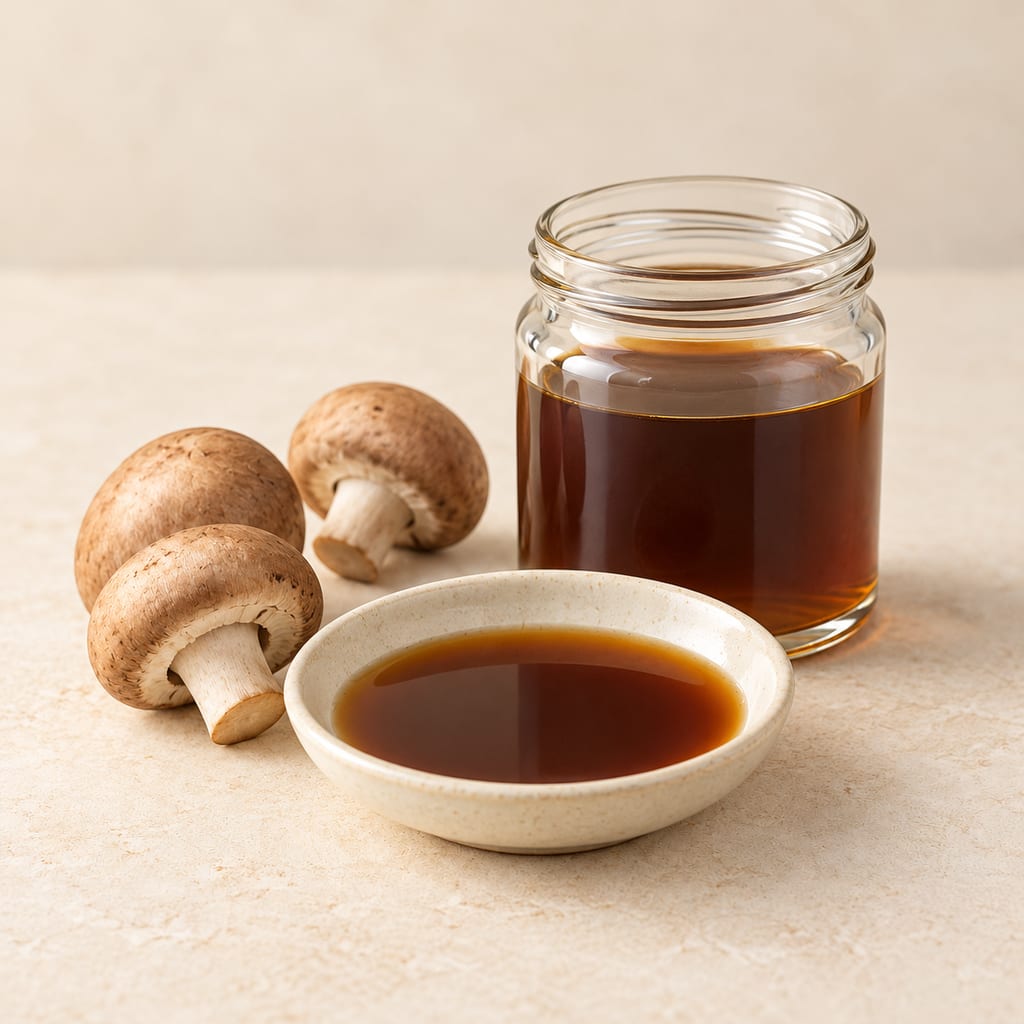
Mushroom garum turns mushrooms, rice koji, salt and water into a dark savoury seasoning. A sustained warm hold lets koji enzymes break down the mixture before straining.
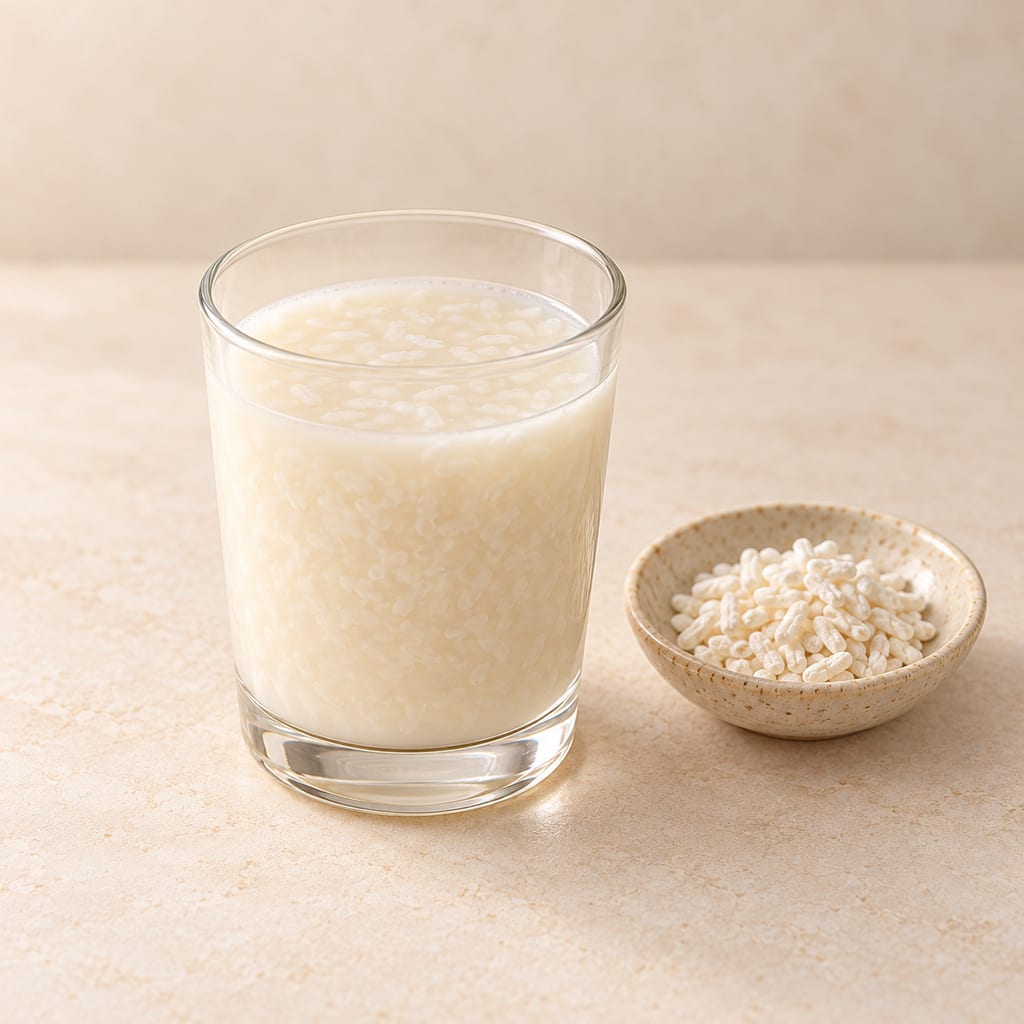
Cooked rice, rice koji and water are held warm for hours so koji enzymes turn the rice starch to sugars, giving a naturally sweet Japanese drink with no added sugar and no second fermentation.
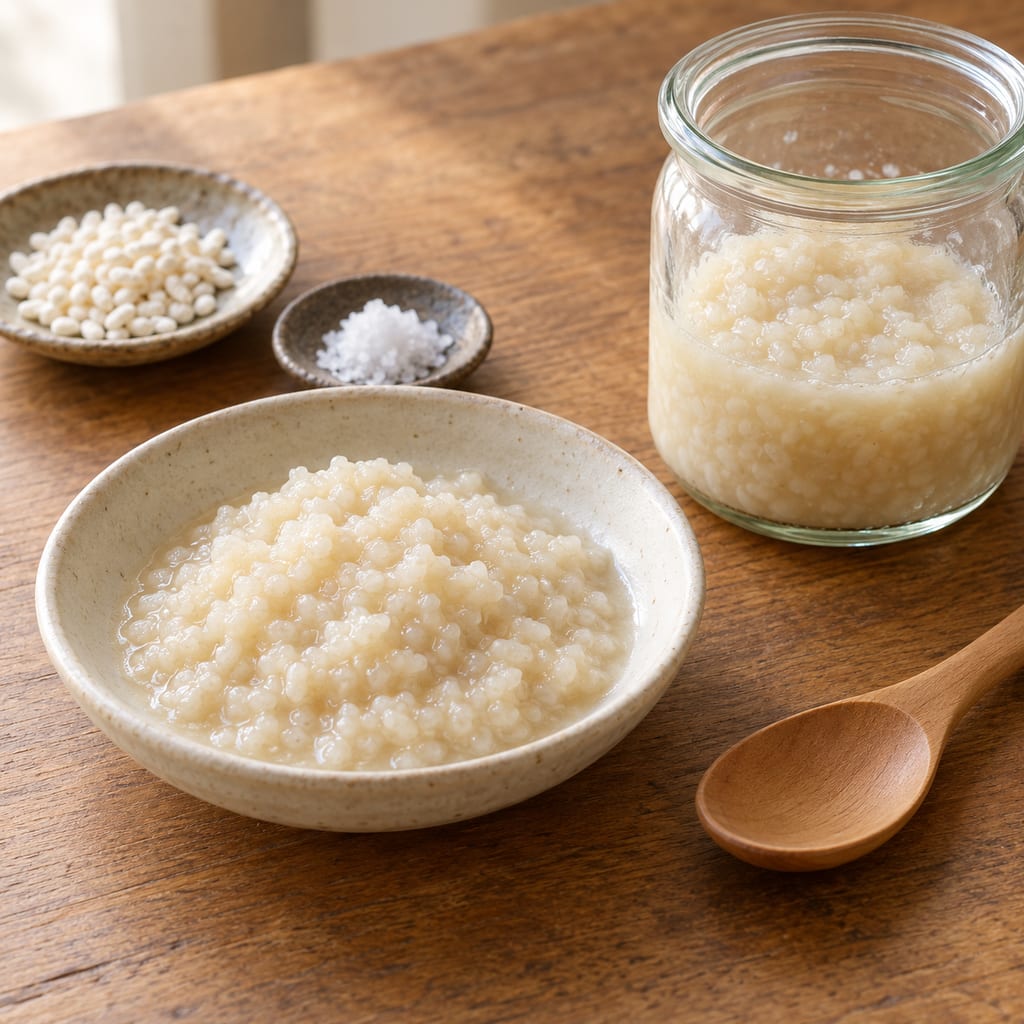
A Japanese seasoning of rice koji, salt and water, left at room temperature until the koji's enzymes and its microbes turn it into a savoury, salty paste for marinades and dressings.
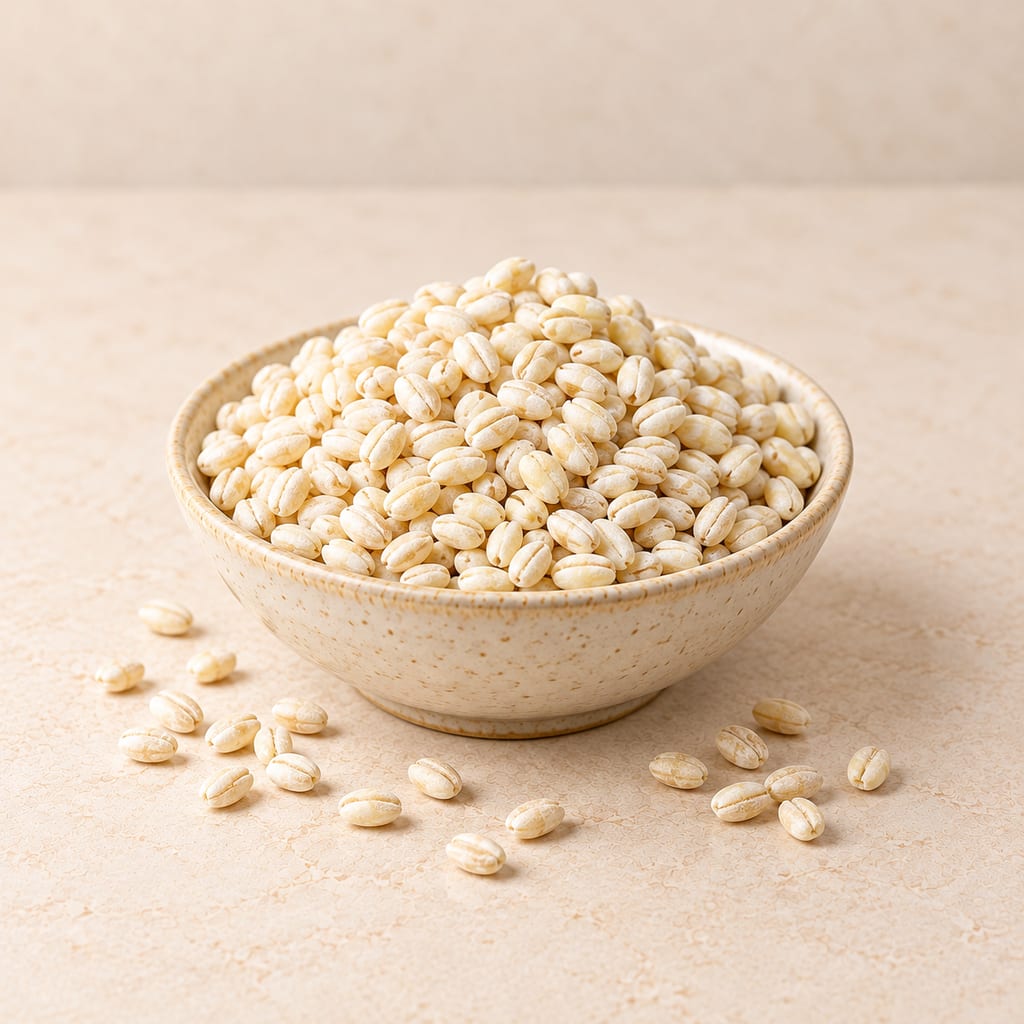
Barley is a hardy cereal, domesticated in the Middle East over 10,000 years ago, eaten whole, pearled or milled, malted for brewing, and grown with koji mold for barley miso.
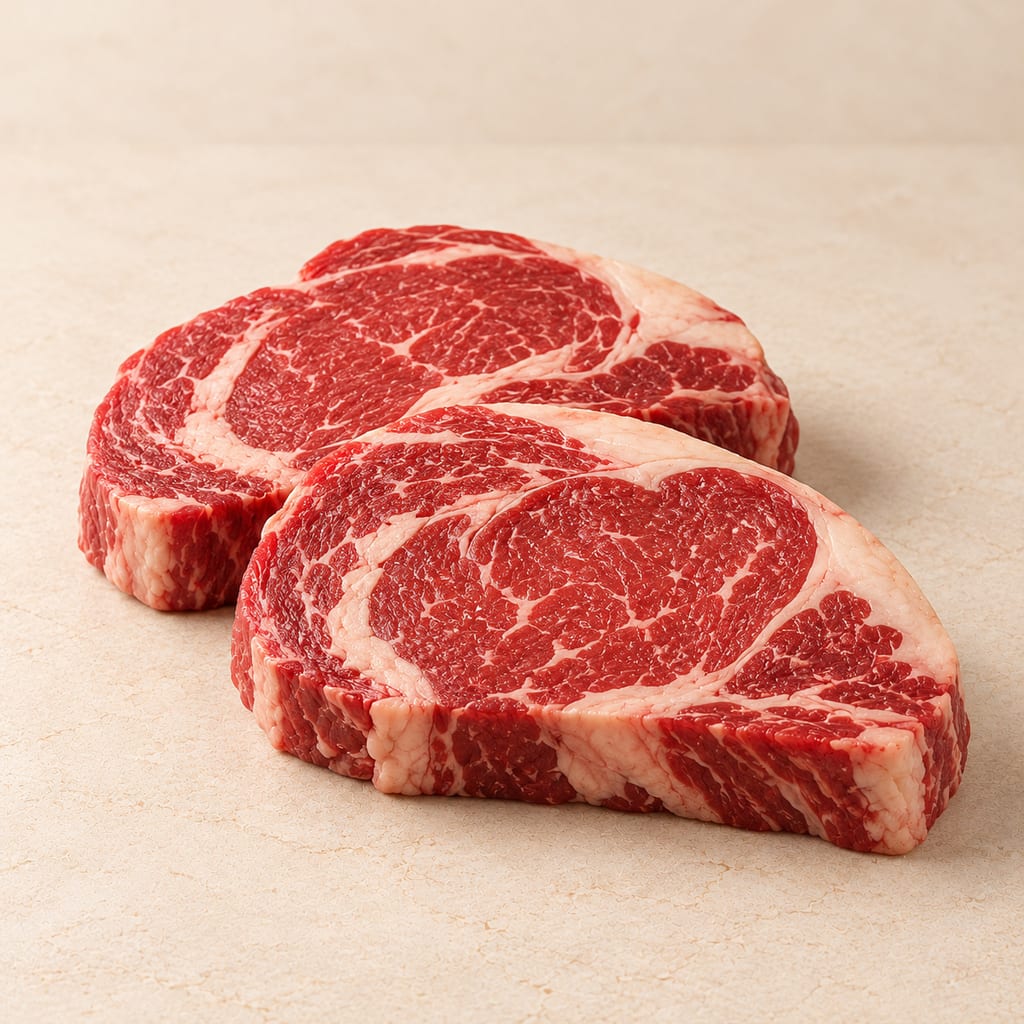
Beef is the meat of domestic cattle, Bos taurus and Bos indicus, sold as steaks, roasts, ground meat and cured products, and used in broths, salami and koji seasonings.
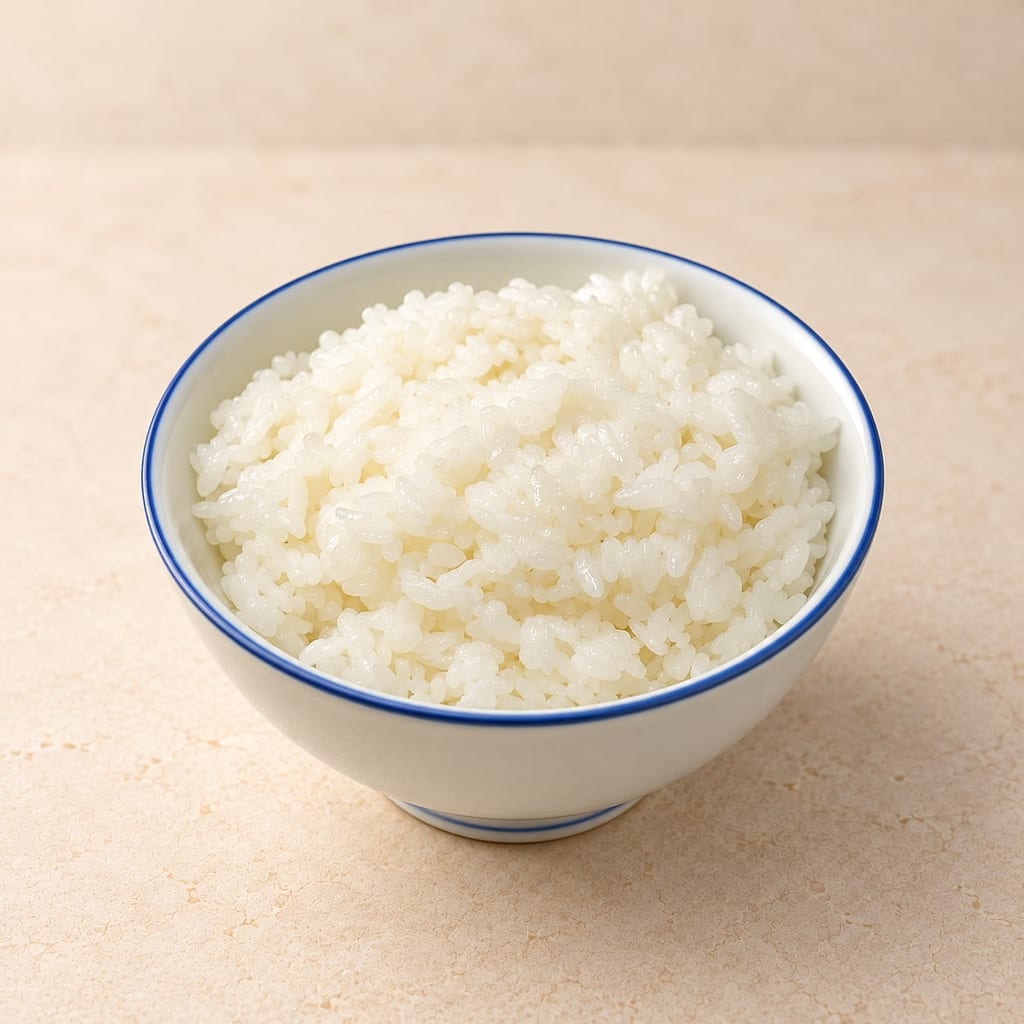
Cooked rice is rice grain heated in water until its starch gelatinizes; in Thai sour sausage it feeds the bacteria that acidify the meat.
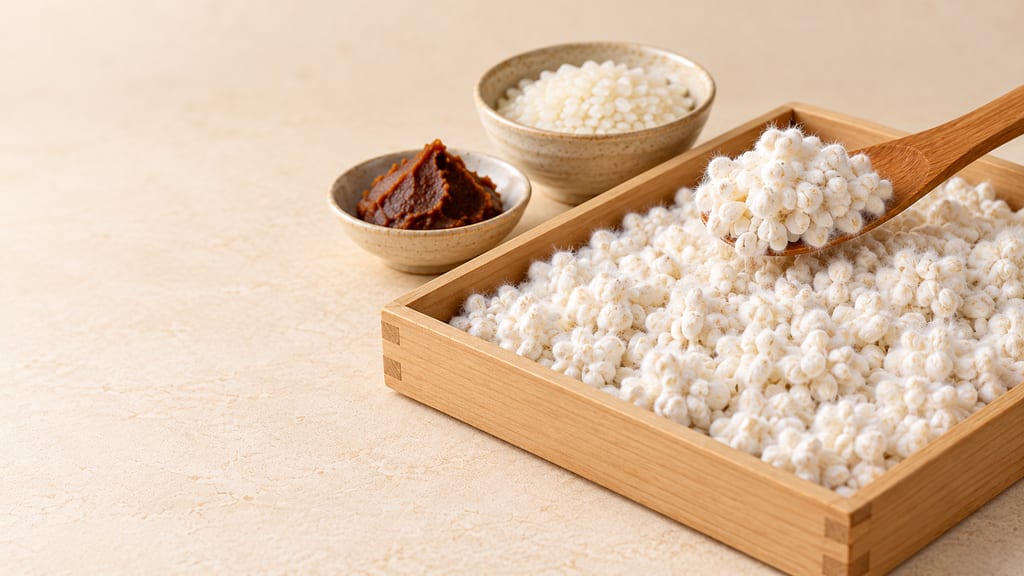
Koji is grain or beans grown with a mould whose enzymes break food down. This guide separates the mould, the starter and the finished koji, and follows them into sake, amazake, miso, soy sauce and shio-koji.

A gelling polysaccharide extracted from red seaweeds, sold as kanten strips or powder; it sets firm at a low concentration and stays solid until about 85 °C.

Akahatsu, Lactarius akahatsu, is a wild milkcap of East Asian pine and mixed forests that is sold in Yunnan markets, with its edibility and identity still needing species-level review.

The almond mushroom, Agaricus subrufescens, was cultivated in eastern North America in the 1800s, lost its market, and returned as a cultivated mushroom from Brazil, where it is grown under several names.
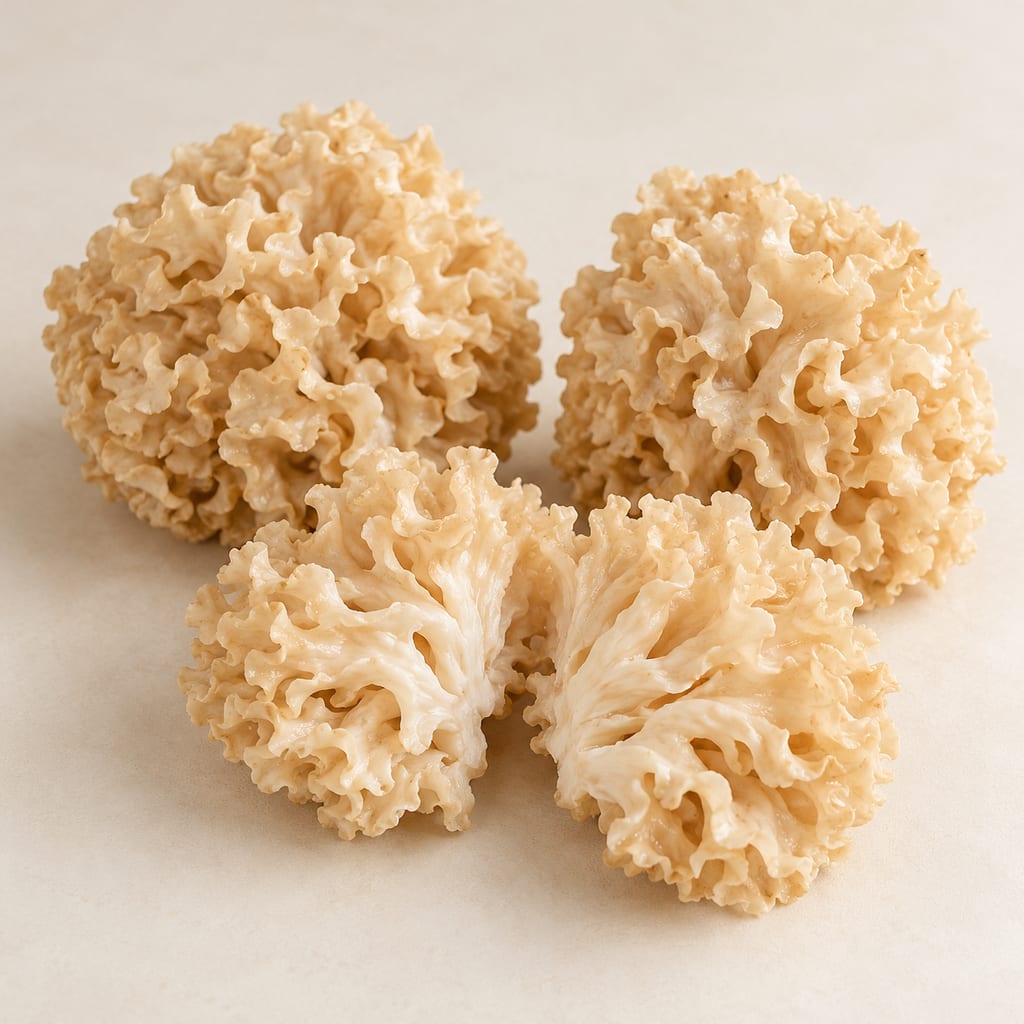
The Asian cauliflower mushroom, Sparassis latifolia, is a cultivated fungus with a frilled, fronded form that is eaten in China, Japan and Korea. Many Asian records under the name Sparassis crispa refer to this species.
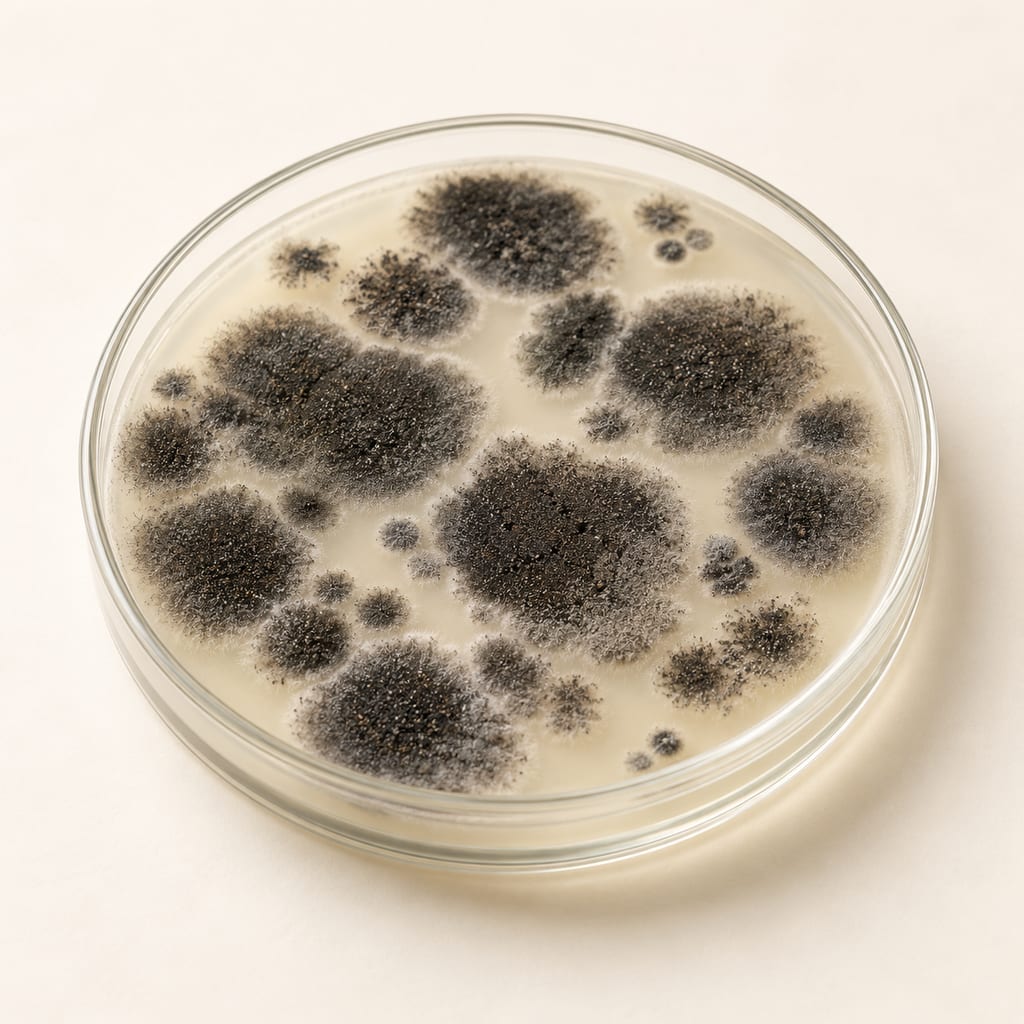
Aspergillus luchuensis is the black koji mould used in Japanese shochu and awamori, valued for the citric acid it makes alongside the starch-converting enzymes of koji.
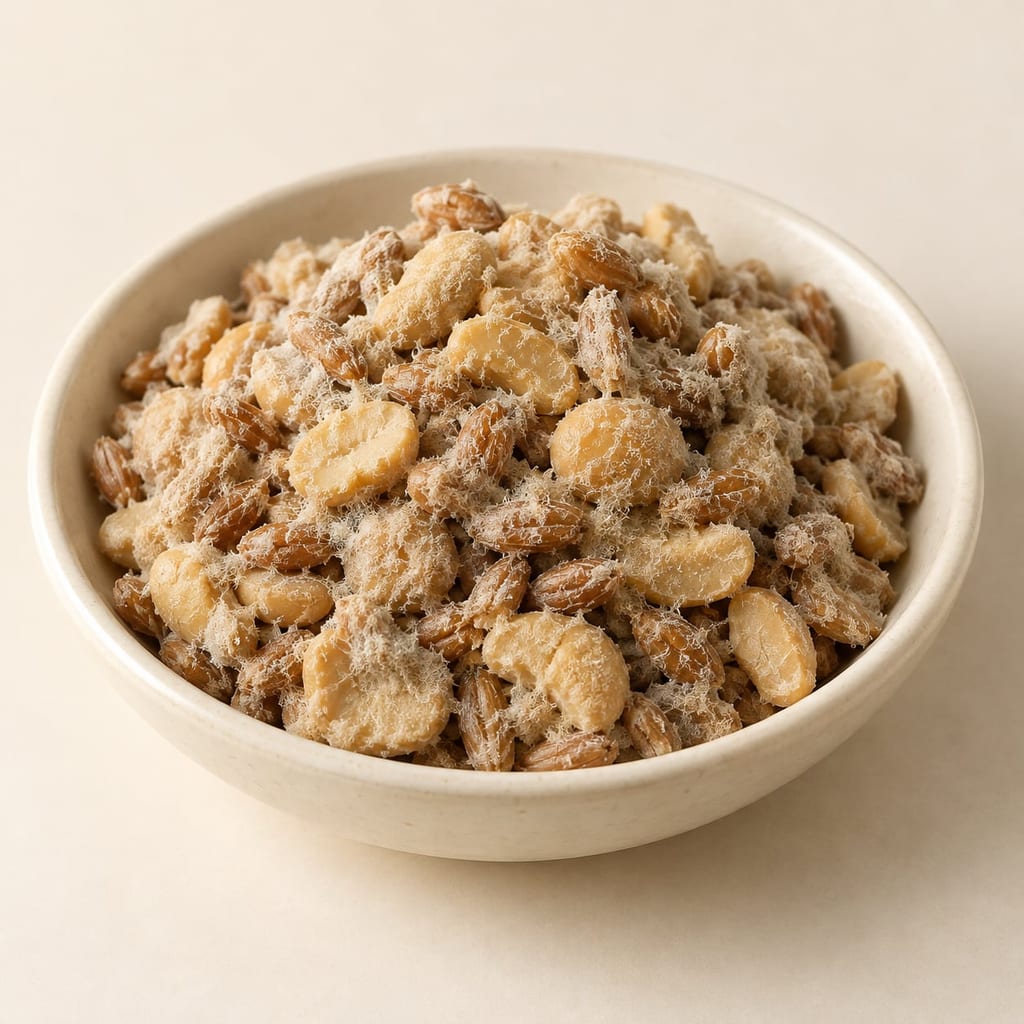
Aspergillus sojae is a koji mould of the Aspergillus flavus group, closely related to A. oryzae, used as a starter in soybean fermentations such as Korean meju, doenjang and ganjang.
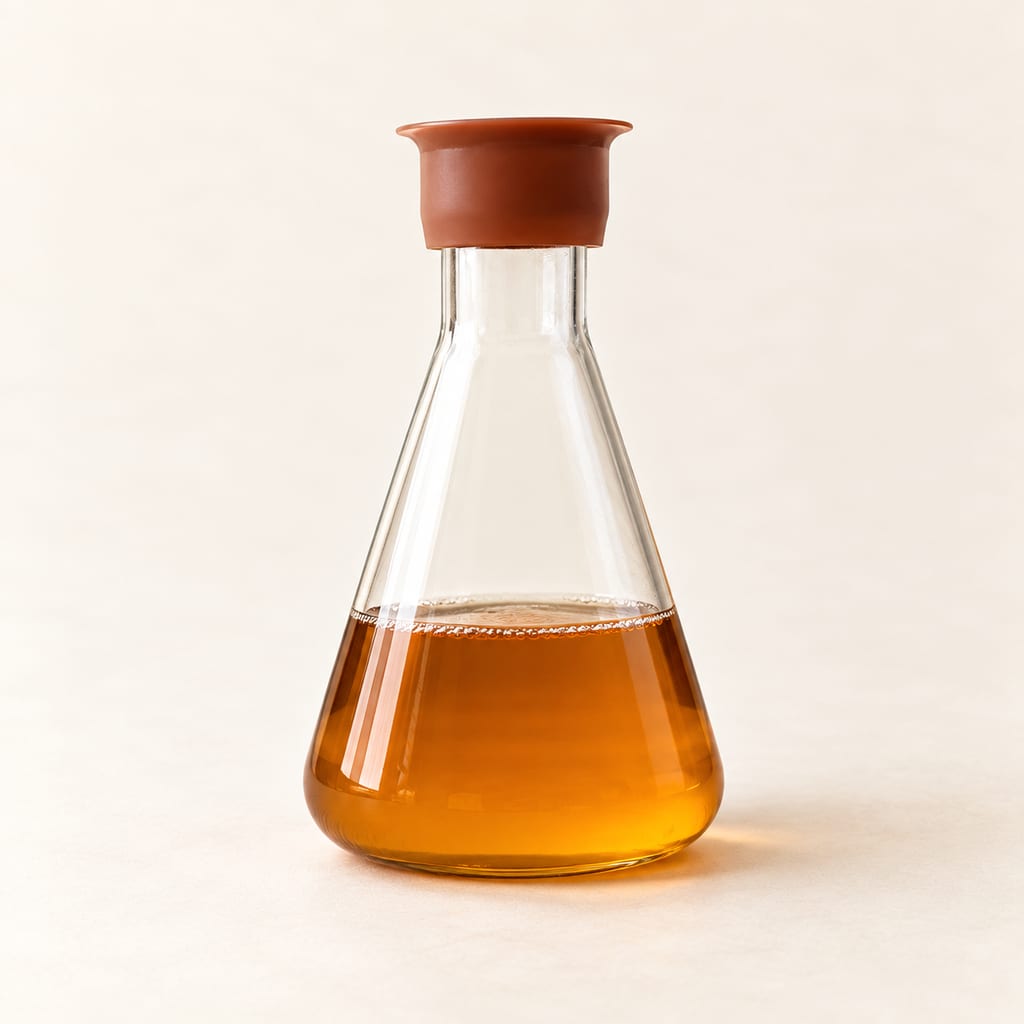
Awamori yeast ferments sugar released from rice koji in the Okinawan spirit’s mash. Sakimoto names the ingredient but gives no strain, form, supplier or dose.
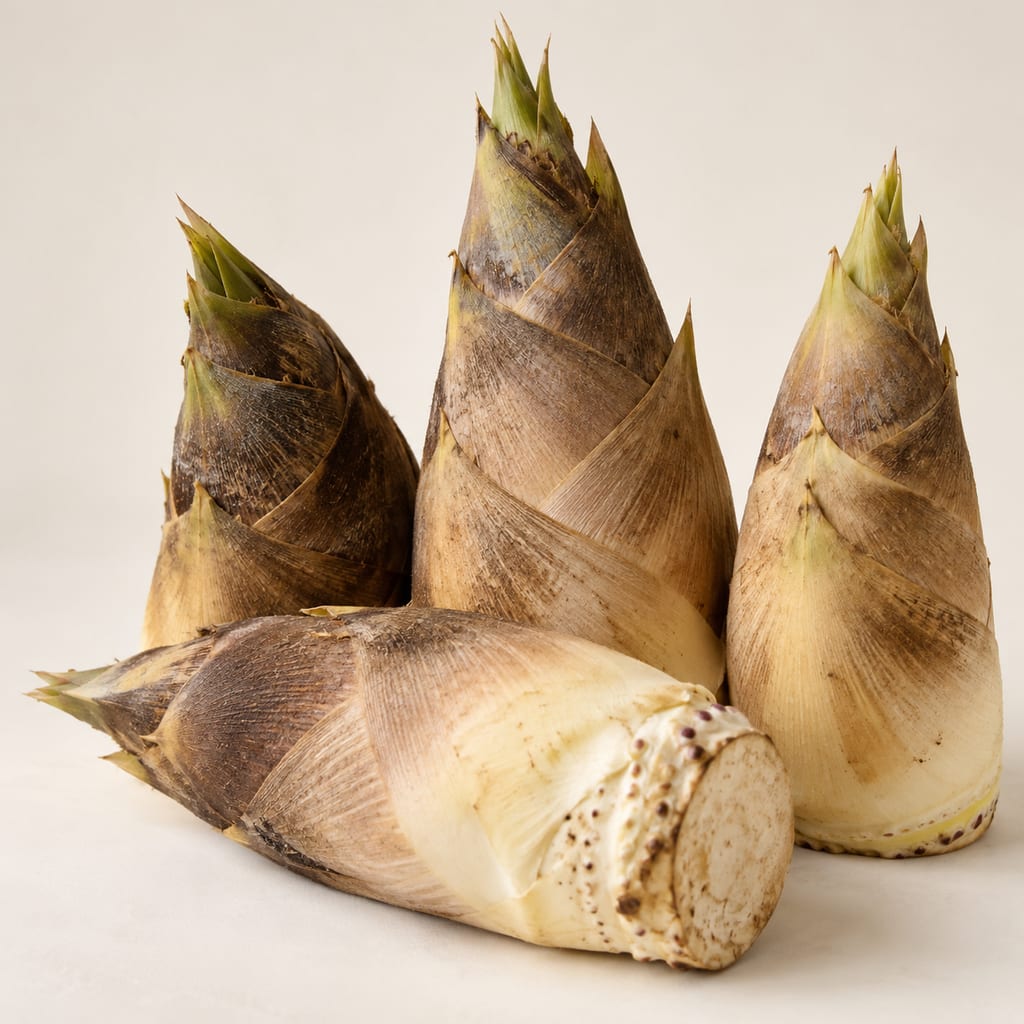
Bamboo shoots are the young culms of many bamboo species, eaten after boiling or leaching in Asia, and fermented into sour and preserved foods in the Himalayas, northeast India and Burma.

Protected Italian vinegar made only from cooked grape must, fermented and aged in a battery of wooden barrels for at least 12 years: sweet, sharp and syrupy.

Airag is Mongolia’s fermented mare’s-milk drink, traditionally churned with saved starter in a reusable cowhide khokhuur.

Appam, or hoppers, are South Indian and Sri Lankan rice pancakes made from a fermented coconut-and-rice batter and cooked in a curved pan to a crisp lacy rim and a soft, spongy centre.

Auricularia tremellosa is a wood ear fungus of the genus that supplies most dried wood ear sold in China; its own food record is thin, and the culinary practice described here comes from the closely related wood ear species.

Ayran is Turkey’s cold, savoury yogurt drink: plain yogurt is loosened with water and lightly salted, then whisked smooth or aerated into a soft cap of foam.
A thin stone griddle used over an open hearth. Norwegian archaeology documents the established tradition from the early Middle Ages; a Viking-period origin is only a cautious suggestion linked to Shetland.

Crushed or milled barley cooked in water until the starch softens and the mixture thickens, the plainest way a northern household turned stored grain into a meal, here with apple and hazelnut.

Black carrot is the anthocyanin-pigmented Eastern carrot (Daucus carota var. atrorubens), the purple root that preceded orange types and still colours kanji and şalgam.
No community contributions have been published for this entry yet.
Sign in to contribute. Published comments and photos are free to read.
British Columbia Centre for Disease ControlIdentity · Science · Process · Safety · History
Fermented Foods Guideline 3.10: Koji and Misokoji-kin, tane-koji/moyashi and koji defined as three separate terms; starter named for the cereal it is grown on
Aspergillus oryzae, A. sojae and A. luchuensis named as the koji species, assigned to most fermented foods, soy sauce and shochu
koji mould developed in the sake brewing industry in 8th-century Japan; about twelve major manufacturers supply it (citing Yamashita 2021)
commercial starter quality: contaminant bacteria around 1000 CFU/g against mould spores above 5 to 30 billion per gram; small operators advised not to make spores
rice koji cultivation: cool cooked rice to 35C within two hours, incubate near 30C, heat from about 10 h, hand mixing at 16-18 h and about 26 h, room humidity 98% falling, final water activity 0.80 at 42-48 h
enzyme phase named kusumoto; amylases and proteases the two most important enzymes; 2-5C above a 30C baseline raises amylase, 27-30C develops protease, never above 40C or enzyme development halts
amazake koji incubated at 35-40C against 27-30C for miso rice koji; amazake stage called saccharification, not fermentation; at least 12 oligosaccharides, proportions varying across 45-70C
not an acidic fermentation: koji and koji products finish above pH 4.6, rice koji and miso falling from about 6.0 to about 5.0
aflatoxin not a concern with commercially sourced starter; backslopping not recommended because wild toxin-producing Aspergillus may be introduced
Bacillus spores may germinate if the cereal cooling step is uncontrolled; pressure cooking lessens the risk; soaking past four hours refrigerated or acidified because heat-stable cereulide survives boiling
Aspergillus killed at 50C and above; optimal growth 35-38C; near-100% humidity for growth then 10-15% air drying for spore formation, aerobic
storage 10-15C at 50% humidity for one year, or frozen or refrigerated; kept starter refrigerated about one month or frozen
miso and salt koji below 0.85 water activity, finished miso about 0.80; salt 4% or higher, normally 6-16%, protective against B. cereus and S. aureus toxin
shio koji named as a final flavouring product rather than a stage
aged black spores undesirable because they discolour miso
no outbreaks found in CDC and other databases; Canadian recall for Bacillus cereus in noodle miso soup 2020 and a Denmark recall
Cited in: Three words, one ingredient; Reading a kōji label; Where it sits in the kitchen; Grain that has been made into a tool; A craft with a long paper trail and an unsettled beginning; What the mold is asked to make; Rice, barley, soybean and wheat: the named forms; How it is grown, and why the work never stops; What kōji does in each product; Buying it, keeping it, and what can go wrong; Regional styles, and the names that carry them; What remains open
National Research Institute of Brewing, JapanIdentity · Science · Variation
製造全般: 麹とは何ですか? [General production: What is koji?]koji defined as steamed grains such as rice or barley, or steamed sweet potato, with koji mold propagated on it, widely used in sake, shochu, miso, soy sauce and vinegar
koji supplies starch- and protein-decomposing enzymes and the flavor and aroma components of the product; dedicated strains are used because different foods need different enzymes and flavor compounds (sake koji mold, miso koji mold)
yellow koji mold most often used for sake, black and white for shochu; some sake uses red koji mold or Rhizopus; some rice shochu and Meiji-recreation brewing uses yellow mold
color names come from the color of the spores each mold produces
black- and white-koji shochu koji contains large amounts of citric acid and supplies a strong acid-tolerant amylase, acidifying the moto and moromi to prevent harmful microbial contamination and enable safe fermentation
makgeolli uses koji made from rice or barley, resembling sake brewing, but differs in microbial species, koji-making method, polishing ratio, mashing method, fermentation temperature and days
Cited in: Reading a kōji label; Where it sits in the kitchen; Grain that has been made into a tool; A craft with a long paper trail and an unsettled beginning; What the mold is asked to make; Rice, barley, soybean and wheat: the named forms; Buying it, keeping it, and what can go wrong; Regional styles, and the names that carry them
National Research Institute of Brewing, JapanIdentity · Process · Names
Brewing Terms | Japanese Sake Essentialsrice koji, kome-koji, identified as mold grown on rice; generic koji may use rice or barley
seikiku-suru, to propagate koji mold; spores of koji mold equated with tane-koji, seed koji
koji-mai, rice for making koji; koji-buai, ratio of koji rice to total rice
rice is steamed so the starch will be easily decomposed by koji enzymes; starter liquid is full of released enzyme from koji and pouring it enhances saccharification
shimpaku, the loose white core in a rice grain that makes it easy for koji to grow into it
junmai-shu defined as sake made only from rice and koji, without added brewer's alcohol
kirikaeshi carried out 10-12 hours after inoculation of koji spores to keep temperature even; tsumikae, restacking of koji trays, controls koji temperatures
koji-buta, traditional shallow wooden stackable tray typically filled with about 1.5 kg of koji; second mixing 5-7 hours after middle work
sandan-shikomi: koji, steamed rice and water divided into three portions over four days, effective in preventing microbial contamination
Cited in: How it is grown, and why the work never stops; What kōji does in each product; Regional styles, and the names that carry them
Japan National Tax Agency; National Research Institute of BrewingProcess · Identity
Koji Making: How to Make Kojikoji is made by growing koji mold on grains such as rice; it converts grain starches into sugars that serve as the basis for alcoholic fermentation; making koji is regarded as the most crucial step determining the flavor of sake
hikikomi: steamed rice cooled, brought into the koji room and spread on a long table while temperature and moisture are adjusted for the mold
kirikaeshi: the wrapped rice is broken apart and loosened, then wrapped again, to adjust temperature, moisture and airflow for optimal mold growth
mori: the rice is portioned into koji-buta and koji-bako
tsumikae: temperature and mold growth vary with tray position, so trays are periodically rearranged
naka-shigoto: conditions inside the pile and on the surface differ within the same tray, so the koji is mixed and reshaped into a pile
shimai-shigoto: as koji temperature rises it is mixed and spread thinly on trays with grooves made in the surface to help it cooling
dekoji: the finished koji leaves the koji room for shubo and moromi
the sheet gives no temperatures and no clock times
Cited in: Grain that has been made into a tool; How it is grown, and why the work never stops; What kōji does in each product; What remains open
Ministry of Agriculture, Forestry and Fisheries, JapanHistory · Classification · Regional use
Soy sauce, miso, other seasonings | Traditional Foods in Japansoybean, rice, barley and other grains as raw materials; koji and salt water added to the steamed grains; umami produced by Aspergillus oryzae before lactic acid bacteria and yeast produce the aroma
miso classified into rice miso, barley miso, soybean miso and blended miso as ordinary miso; rice miso subdivided by amount of koji and salt into ama-miso, amakuchi-miso and karakuchi-miso
regional character of miso and soy sauce arises from raw materials, type of koji, aging period and local taste
the Yoro Code (701 AD) placed persons (mikinotsukasa) in charge of making sake, amazake and vinegar in government posts
classification table sourced to Nihon no Dento Shokuhin Jiten (Encyclopedia of Traditional Japanese Food), Asakura Publishing, p.249
Cited in: Grain that has been made into a tool; A craft with a long paper trail and an unsettled beginning; Rice, barley, soybean and wheat: the named forms; What kōji does in each product; Regional styles, and the names that carry them
Japan Soy Sauce and Miso Makers AssociationProcess · Science
Manufacturing processsteamed soybeans or defatted soybeans and toasted wheat mixed in roughly equal proportions, with koji mold spores added to create koji
defatted soybeans retain the proteins essential to the process with unnecessary fats removed in advance
protease from the koji mold breaks down soybean protein into the amino acids that are the umami constituents; amylase converts wheat starch to glucose
salt dissolved in water and added at the shikomi blending stage, suppressing putrefactive bacteria so koji mold, lactic acid bacteria and yeast are free to work
koji placed in a tank with brine to create moromi, rested around six to eight months with repeated stirring; breakdown and fermentation by koji mold, natural yeast and lactobacillus
honjozo, the regular fermenting method, accounts for approximately 80% of production; five soy sauce types with different methods
Cited in: Where it sits in the kitchen; What the mold is asked to make; Rice, barley, soybean and wheat: the named forms; What kōji does in each product
Ministry of Agriculture, Forestry and Fisheries, JapanProcess · History · Context
Beverages | Traditional Foods in Japankoji amazake sweetness comes from Aspergillus oryzae-derived enzymes acting on rice starch
cooked rice plus water and koji stirred, covered and left overnight at 55 to 60C, with stirring promoting the process
koji amazake associated with regions of deep koji culture such as miso and soy sauce country; sake-lees amazake with brewing regions
several origin theories, including the Nara-era Nihon Shoki account of amanotamuzake, a sweet low-alcohol rice-koji drink closer to amazake than to modern sake
Cited in: Reading a kōji label; Where it sits in the kitchen; A craft with a long paper trail and an unsettled beginning; What kōji does in each product; Buying it, keeping it, and what can go wrong; What remains open
WikipediaIdentity · History · Science
Aspergillus oryzaebarley koji and rice koji made by fermenting the grains with A. oryzae hyphae
solid-state cultivation on rice grains, soybeans and wheat bran to propagate fungi for fermented foods thought to have originated in China, with two scholarly theories on whether China or Japan first employed A. oryzae in food production
in Japan A. oryzae was cultivated on steamed and loosened rice for brewing, while in China, the Philippines, Korea and Thailand Rhizopus and Mucor were more common, grown on a brick-like mass of ground grain and water
pectinase breaks down pectin in plant cell walls, enabling starch hydrolysis; peptidases such as leucine aminopeptidase cleave amino acids from proteins and polypeptides, releasing glutamic acid, the umami amino acid; salt-tolerant alkaline proteases suited to high-sodium conditions
Cited in: A craft with a long paper trail and an unsettled beginning; What the mold is asked to make
WikipediaScience · Context
Koji (food)yellow, black and white types of koji in use
too rapid a release of glucose from starch at the beginning of fermentation inhibits the growth of the microorganisms in the soy sauce maturation phase, making slower digestion beneficial to taste
in sake production koji converts rice starch into fermentable sugars, and unlike beer brewing sake integrates saccharification and fermentation in a parallel process
soy sauce koji cultivated on roasted wheat and soybeans, mixed with salt water into a moromi brine fermenting for months
Cited in: What the mold is asked to make; What kōji does in each product
Okinawa Industrial Technology CenterHistory
沖縄県産種麹の利用について [On the use of Okinawa-produced seed koji]producers once saved part of prepared koji as tomodane for the next round of cultivation; commercially purchased fresh seed koji made koji production more stable; one prefectural and two outside seed-koji suppliers serving many distilleries at the time of the 2013 bulletin
Cited in: A craft with a long paper trail and an unsettled beginning; Buying it, keeping it, and what can go wrong; Regional styles, and the names that carry them; What remains open
Goodlok PlayVariation · Label evidence
Duck garum (product page and ingredient label)inspected product label declares koji z ječných krup (lepek), koji made from barley groats with gluten declared; the corresponding webpage instead names komekoji; the conflict is unresolved and no method or organism is inferred
Cited in: Rice, barley, soybean and wheat: the named forms; Buying it, keeping it, and what can go wrong; Regional styles, and the names that carry them; What remains open
Goodlok PlayVariation · Label evidence
Beef garum (product page and ingredient label)inspected product label declares koji z ječmenných krup, koji made from barley groats; the webpage names komekoji; the conflict is unresolved
Cited in: Rice, barley, soybean and wheat: the named forms; What remains open
Okinawa Prefectural Distillery CooperativeContext
君知るや名酒泡盛 [Do you know the famous liquor awamori?]black-koji mold sprinkled on steamed rice, about 40 hours of koji making, then rice koji with water and yeast; the form and identity of the inoculum are not reported
MDPI (Journal of Fungi)Attempted source
Ingredients, Functionality, and Safety of the Japanese Sweet Drink AmazakeRetrieved twice and blocked with HTTP 403; no claim on this page rests on it. A peer-reviewed review of koji amazake, kept as a lead for later research.
PubMed CentralAttempted source
Ingredients, Functionality, and Safety of the Japanese Sweet Drink Amazake (PMC mirror)Returned empty or blocked; no claim on this page rests on it.
Journal of Sakeology, Brewing Society of Japan; seminar supported by the Japanese Society for the History of BrewingHistory · Names · Safety · Process
Past, Present and Future of Koji and Seed Koji (seminar report: Murai Yuichiro, 29th head of Kojiya Sanzaemon; reported by Nami Goto)oldest dated record of koji used to brew alcohol is 717, in a report to the Emperor on the customs of Harima province; koji (kamutachi) also appears in the 10th-century Wamyo Ruijusho; the 967 Engishiki lists methods for 15 alcoholic drinks
the character 糵, read getsu or yone-no-moyashi, was used in the Nara Period to refer to koji; 糀 appears in woodblock prints from the middle of the Edo Period and was probably created then
koji makers split off from breweries to form koji-ya shops with local trade associations (koji-za) after breweries multiplied at the end of the Kamakura Period, with Kyoto records from 1234; the monopoly was authorized in 1419 and abolished in 1444 after a petition by Enryaku-ji; the Bun'an Koji Riot began the koji-za decline
the technique of mixing wood ash into koji was developed around 600 years ago and led to the discovery of seed koji; ash raises alkalinity, ensures airflow and supplies nutrients, and was bought from specialist ash producers (hai-ya) from camellia, oak and evergreen oak
by the middle of the Edo Period seed koji (moyashi) had become distinct from koji with different cultivation methods for each, evidenced by the Geppou Densyo manuscript of the Kyoto Akaban Moyashi house (Omiya Kichizaemon family), closed 1960, records at the Kyoto Prefectural Library
seed koji supplies conidia rather than enzymes, so its production differs from koji: 6-7 days of cultivation, virtually unpolished rice, extremely humid environment, grain and powder forms
seed koji has been sold to and used all over Japan since the Edo Period, from Michinoku in the north to Hizen in the south, which the lecturer argues runs counter to any concept of microbial terroir
from the Meiji Period onward fewer breweries used batch-to-batch inoculation and seed koji producers rose to about 10; Koizumi (1984) records 15 in the Showa Period; currently 6 operate nationally and 2 serve local customers only
the koji molds designated Japan's national fungi by the Scientific Conference of the Brewing Society of Japan are Aspergillus oryzae, Aspergillus sojae plus the white mutant strain of yellow koji, Aspergillus luchuensis and A. luchuensis mut. kawachii; no designation year is given
A. oryzae and A. flavus are reported to have differentiated around 1000 BC, when rice cultivation was introduced to Japan; whether A. oryzae is a domesticated mold strain or was selected during koji making is still debated; koji mold is recognized as safe in Japan and the US and is scientifically proven not to produce aflatoxin despite its relationship to A. flavus
Kojiya Sanzaemon was founded in Kyoto in the Muromachi Period and granted permission to sell seed koji by Ashikaga Yoshiteru, who ruled 1546-1565; the firm moved to Toyohashi in 1965 (practitioner tradition, not independently cited)
Cited in: A craft with a long paper trail and an unsettled beginning; Buying it, keeping it, and what can go wrong; Regional styles, and the names that carry them; What remains open