
Rice koji
Rice koji is steamed white rice through which koji mold has grown. It carries the enzymes that turn rice starch into sugar, and it is the starting point of sake, sweet miso, amazake and shio koji.
 FermenteaWhere food goes to change
Substrates
Cooked rice is rice grain heated in water until its starch gelatinizes; in Thai sour sausage it feeds the bacteria that acidify the meat.
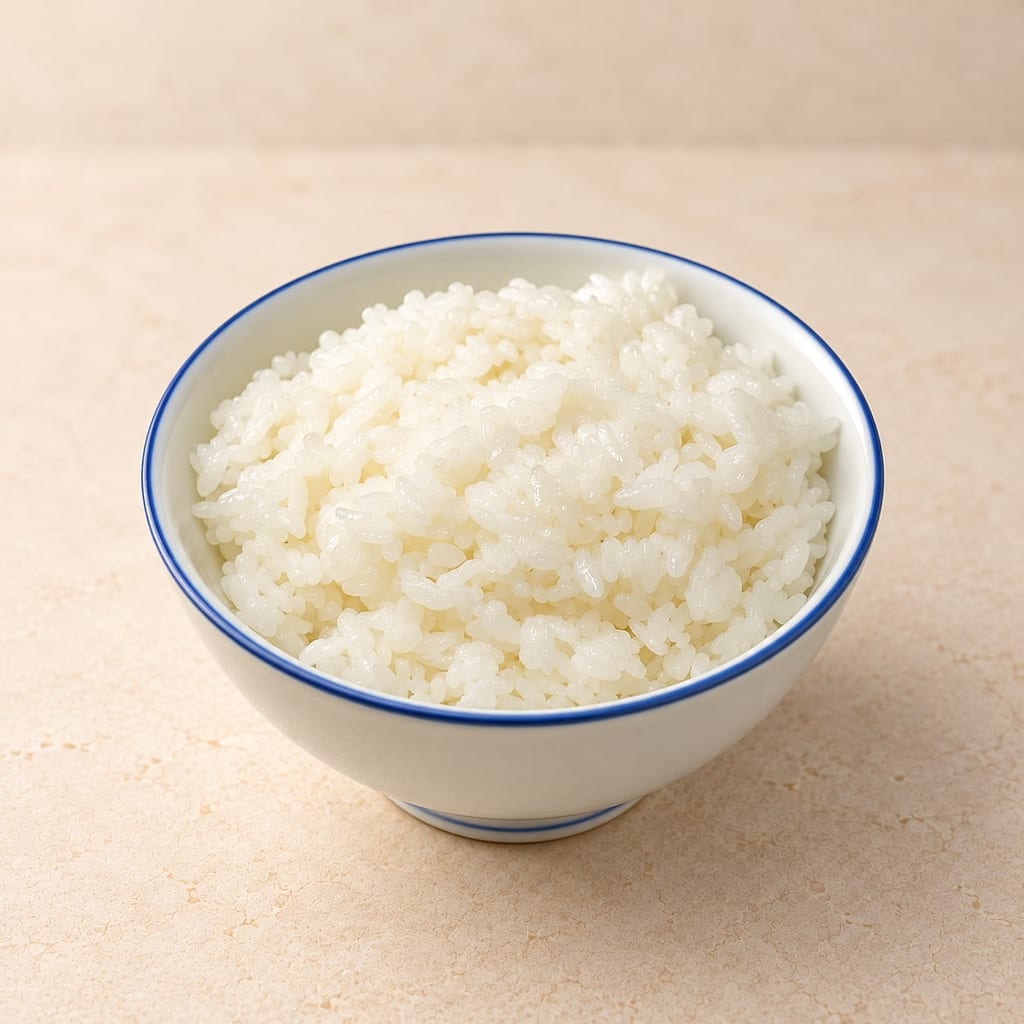
Cooked rice is the whole or milled grain of Asian rice, Oryza sativa, heated in water until its starch has taken up water and swollen and the grains are soft enough to eat. Rice is about 79 per cent carbohydrate, 7 per cent protein and 2 per cent fat, and its pH is close to neutral. Cooked, it is a moist, mild, starchy food that stays tender while hot and, depending on the rice, firms up as it cools. Almost everything about how cooked rice looks and eats comes from its starch.
That starch is a mixture of two molecules, amylose and amylopectin, and their ratio sorts rice into classes. Waxy or glutinous rice has apparent amylose of 0 to 2 per cent: it cooks to a sticky, translucent mass in which the grains cling together. Rices with low amylose, roughly 10 to 19 per cent, cook soft and rather sticky; intermediate rices, roughly 20 to 25 per cent, cook firmer and less sticky; high-amylose rices cook dry and separate. Authors draw the boundaries in different places, so the percentages are guides, not standards. “Glutinous” describes the glue-like stickiness, not the protein gluten, which the National Institute of Diabetes and Digestive and Kidney Diseases places in wheat, barley and rye.
Eating habits follow the starch. Thai consumers in the north and northeast prefer rice that is sticky or quite soft and sticky, while those of the Central Plains prefer a firmer, less sticky rice. Across Thailand and the Philippines, rice that hardens when it cools is rated low quality. Aged rice expands more in the pot, a trait Thai buyers rate as premium. The temperature at which a rice’s starch gelatinizes is used as a rough guide to how long it will take to cook.
Rice is the second most-consumed food crop in the world, after wheat. Its domestication is traced to the lower Yangtze River region of China, one of the places where the crop was brought under cultivation. Archaeobotanists there study phytoliths, charred seed and the bases of spikelets from eight Neolithic sites spanning roughly 10,000 to 2,000 years ago. The share of domesticated-type remains grows step by step, from the Shangshan culture, through the Kuahuqiao culture of 8,000 to 7,000 years ago, to the early Hemudu culture, which indicates a slow process rather than a single event.
Two lineages of Asian rice are recognised: japonica in East Asia and indica in South Asia, thought to descend from two different wild progenitors, Oryza rufipogon and O. nivara, although the story is complicated by genes that cross between them. Rice was probably gathered from the wild by seed foragers for millennia before it was cultivated, and there is evidence of more targeted foraging by 8,000 years ago along the lower Yangtze. At Tianluoshan and Hemudu, some of the earliest evidence for cultivation, rice was still a minor part of a broader foraging economy. Cultivation reached the Sichuan Plains more than 4,000 years ago, and the Han historian Sima Qian, writing between 109 and 91 BC, reports that the envoy Zhang Qian found rice grown in Dayuan, usually identified with Ferghana in Central Asia.
From East Asia, rice spread west along two parallel routes: overland along the Silk Road through the southern mountains and the dry heart of Central Asia, and by sea, along the Indian Ocean trade to the Red Sea and the Mediterranean. Rice is a thirsty crop, and its arrival in western Asia has been linked with investment in irrigation.
Buyers judge rice before it is cooked. Grain length and the ratio of length to width sort rice into classes, though the classification systems use different ranges, so no single scale applies everywhere. Chalkiness, the opaque patch in a grain caused by tiny air spaces in the starchy endosperm, is a defect in most markets. Head rice, grains that are at least three-quarters intact after milling, measures how well the rice was milled; broken grains lower the price, particularly for affluent buyers. Whiteness can mean two things, translucency or how fully the bran was removed in milling.
Taste differs by region. In Southeast Asia, premium rice is described as soft, shiny and aromatic. In South Asia, buyers look for long, slender, fragrant grains that cook non-sticky. After cooking, the three measurements breeders use to describe the eating quality of a rice variety are apparent amylose content, which predicts hardness, gel consistency, a measure of how soft the cooked rice is, and gelatinization temperature, the guide to cooking time. Two rices in the same class on all three tests can still taste different, because these tests do not capture aroma, sweetness or the other flavors a person notices.
Cooked rice is a deliberate ingredient of sai krok Isan, the sour pork sausage of northeastern Thailand, also known as sai krok prew or by the Thai name for sour sausage, ไส้กรอกเปรี้ยว. The sausage is minced pork and fat mixed with garlic, salt, seasonings and cooked rice, stuffed into casing and fermented for two to three days at room temperature under restricted oxygen. In a published formulation the rice made up 15 per cent of the mix, beside 55 per cent pork and 30 per cent backfat. The recipe used on this site lists 200 g of cooked rice for 700 g of lean pork and 300 g of back fat, with the rice worked into a paste of garlic, salt and curing salt before it is mixed into the ground meat.
The rice gives the lactic acid bacteria something to eat. In the closely related nham glucose and fructose from the cooked rice and the garlic were reported as the main carbohydrate that the bacteria used for lactic acid. In the study of sai krok E-san, lactic acid bacteria climbed from about 3 or 4 log CFU/g at the start to 9.4 to 11.4 log CFU/g after three days, titratable acidity rose to 1.0 to 1.3 per cent as lactic acid, and the pH fell to about 4.4 to 4.9. Yeasts and other organisms are listed too: the Thai fermented-food database names Candida krusei, Debaryomyces, Lactobacillus and Streptococcus faecalis. The acid sours the sausage. In the study Staphylococcus aureus, present at 1 to 2 log CFU/g at the start, was undetectable by day three, and Salmonella was not detected.
Neither the Thai database entry nor the recipe on this site says which kind of rice is meant. The recipe does not say whether the rice is sticky or jasmine, or whether it is cooled before mixing, and it gives two fermentation schedules: about 24 hours at 80 to 90 °F (27 to 32 °C) with a starter culture and 72 to 96 hours at room temperature without one. The northeastern sausage is stuffed into natural hog casing and hung so that some water drains out, and the finished product has at least 12 per cent protein and no more than 30 per cent fat; nham, its relative, is made from lean meat with pork rind, packed tightly into plastic casing, and has at least 20 per cent protein and no more than 8 per cent fat. The sausage is eaten roasted, with cooked rice or steamed glutinous rice, ginger, chilli and cabbage, so rice appears on both sides of the plate, in the sausage and under it.
Cooked rice is also the bed on which koji is grown. Spores of Aspergillus oryzae are added to boiled and cooled rice, or to barley or another grain, and the mold grows through the grains, secreting amylases that break starch into sugars and proteases that break protein into amino acids and peptides. The result is rice koji, the starter of miso, sake and amazake, a sweet non-alcoholic rice drink. These are made products, each with its own preparation record; the rice in them is a substrate that is cooked first so that the mold and its enzymes can reach the starch.
The common feature in all of these uses is that cooking makes rice a food for microbes as well as for people. Heated in water, starch granules swell and lose their order, a change called gelatinization, and the temperature at which a rice does this is used as a guide to its cooking time. Cooking also brings the grain to a water activity at which Bacillus cereus can grow, which is why cooked rice needs the care described below.
Cooked rice carries a specific hazard. Bacillus cereus, a spore-forming soil bacterium, is found on raw rice. Its spores survive cooking: boiling rice for about 20 minutes cuts the number of spores by only two to three decimal reductions, a hundred- to thousand-fold, which is not enough to make the rice safe. Cooking brings the grain to a water activity at which they can grow, so spores that survive can germinate in warm cooked rice and multiply. In cooked rice held at 26 to 32 °C the bacterium has reached 10 million to a billion cells per gram within 24 hours. While growing it makes cereulide, an emetic toxin that withstands heating, so reheating does not make rice safe once the toxin has formed. About 95 per cent of the emetic form of B. cereus illness is linked to rice.
The control is cooling and cold. Rice should be cooled quickly and stored below 4 °C; cooked rice kept at 8 °C still reached 10,000 to 100 million cells per gram in ten days. B. cereus grows between pH 4.5 and 9.5 and from 4 to 48 °C. For rice that goes into a fermented sausage this matters. The sausage is held at 27 to 32 °C for a day or more, and in the sai krok study the pH reached 4.4 to 4.9 within three days, so the early part of the fermentation, before the pH has dropped, is when a rice-borne hazard has room to grow. The sources reviewed report no B. cereus counts for sai krok, so this page makes no claim about how large the risk is; it only notes that the cooling and cold-storage advice above applies to the rice.
Choose the rice for the dish. Waxy rice cooks sticky, low-amylose rice soft and slightly sticky, and intermediate rice firmer and less sticky. For a fermented sausage the recipe leaves the choice open, and a cook should record which rice was used. The cooked rice should be cooled quickly and used promptly, and leftover rice carries the risk described above unless it was cooled fast and kept below 4 °C.
The glutinous label can mislead: it describes stickiness, and the gluten that triggers celiac disease is a protein of wheat, barley and rye, grains the National Institute of Diabetes and Digestive and Kidney Diseases names and rice is not among.
The cited recipe and the Thai database give no rice variety, no cooling step and no water ratio, and no source reviewed describes the traditional preparation of the cooked rice used in sai krok. The history of rice in sausage making is not documented in the sources used here.
Region considered a center of rice domestication; it does not locate where rice was first cooked.
Where sai krok Isan, a fermented sausage with cooked rice, originated; the sources give no date.
Rice koji is steamed white rice through which koji mold has grown. It carries the enzymes that turn rice starch into sugar, and it is the starting point of sake, sweet miso, amazake and shio koji.
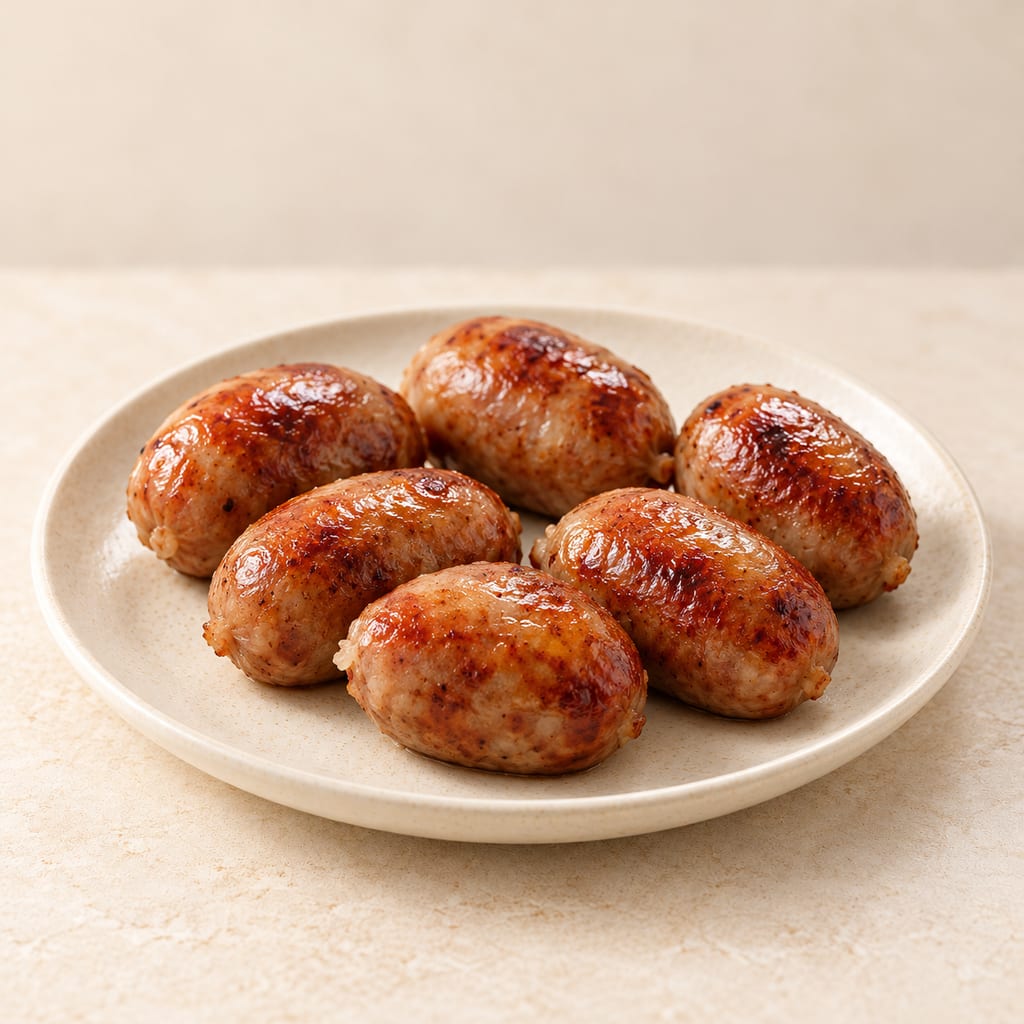
Sai krok Isan is a sour pork-and-rice sausage from northeastern Thailand. This garlic-rich version uses LHP-Dry starter and is cooked after fermentation.
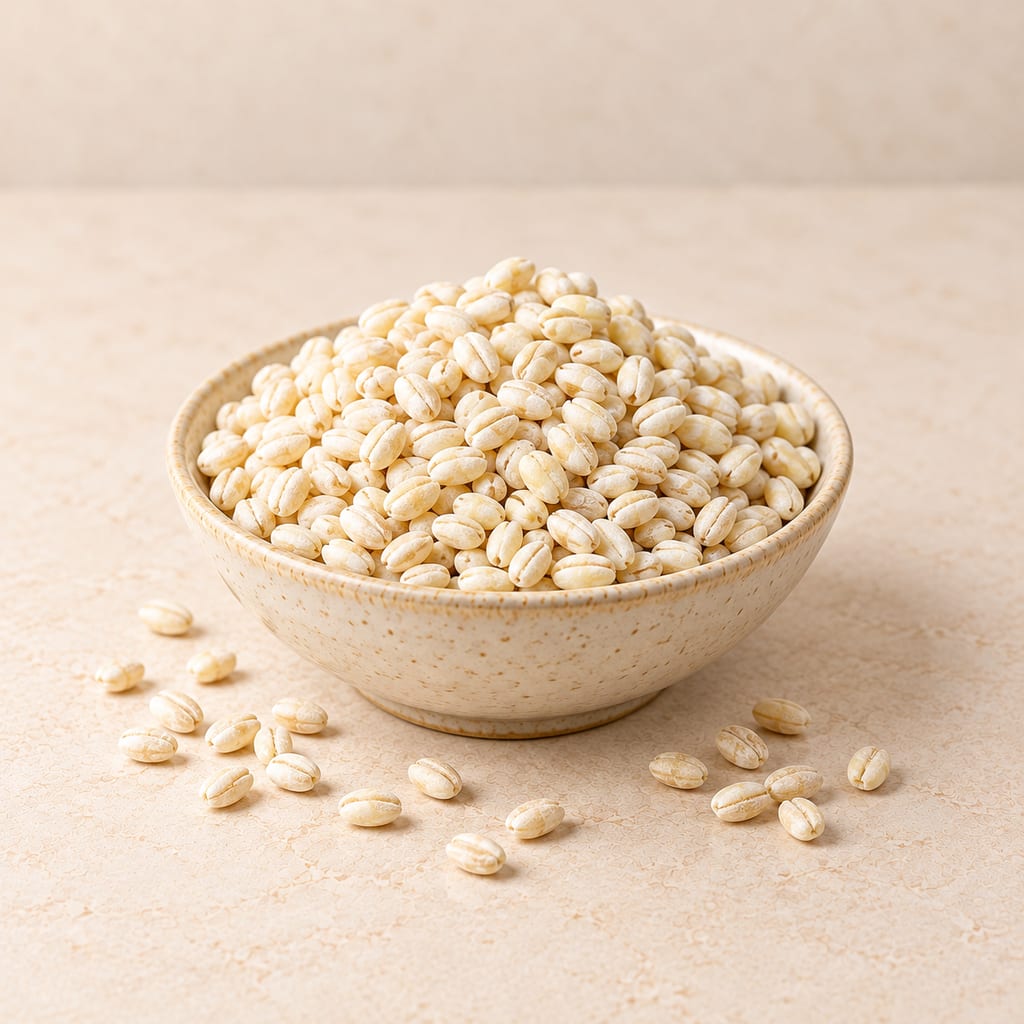
Barley is a hardy cereal, domesticated in the Middle East over 10,000 years ago, eaten whole, pearled or milled, malted for brewing, and grown with koji mold for barley miso.
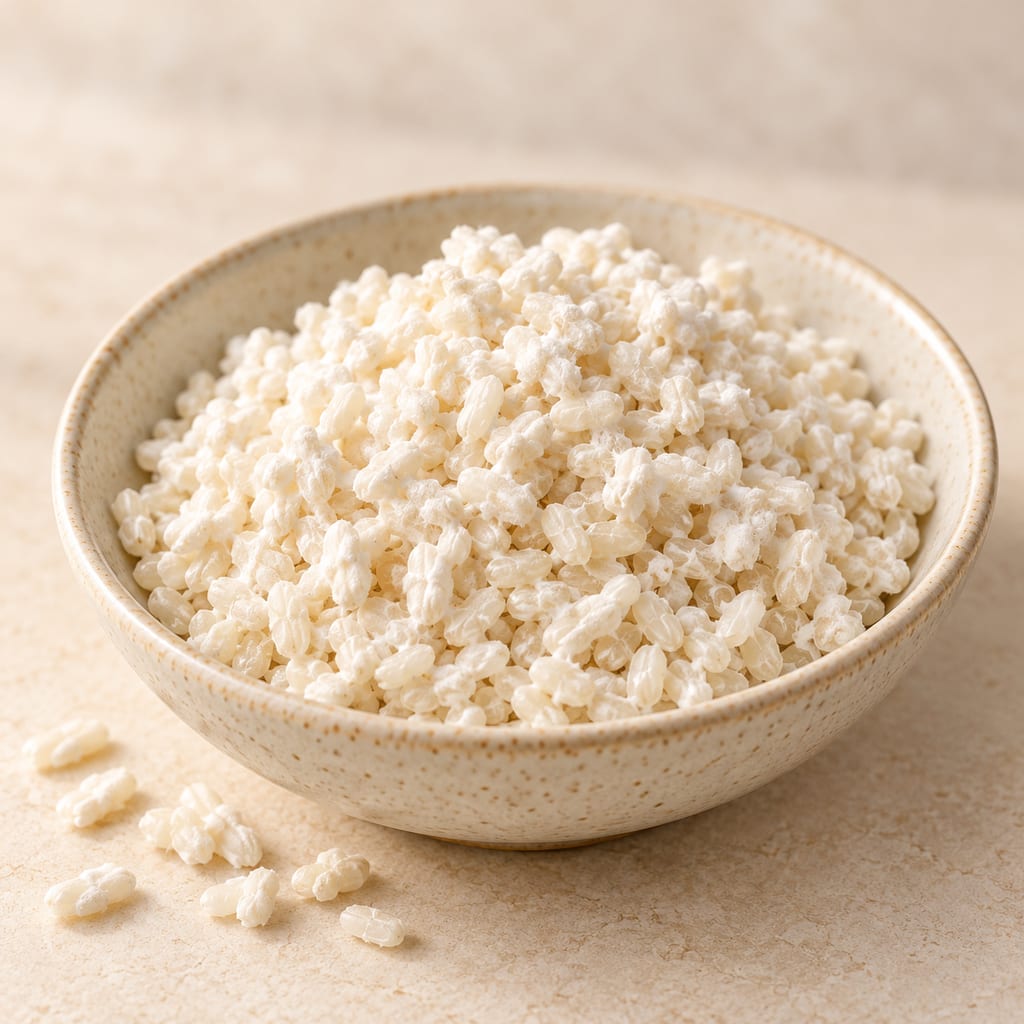
Koji is steamed grain — rice, barley, soybean or wheat — grown out with a food-grade Aspergillus mold until the kernels carry working enzymes. It is bought or cultivated, and it converts starch and protein for the foods that follow.
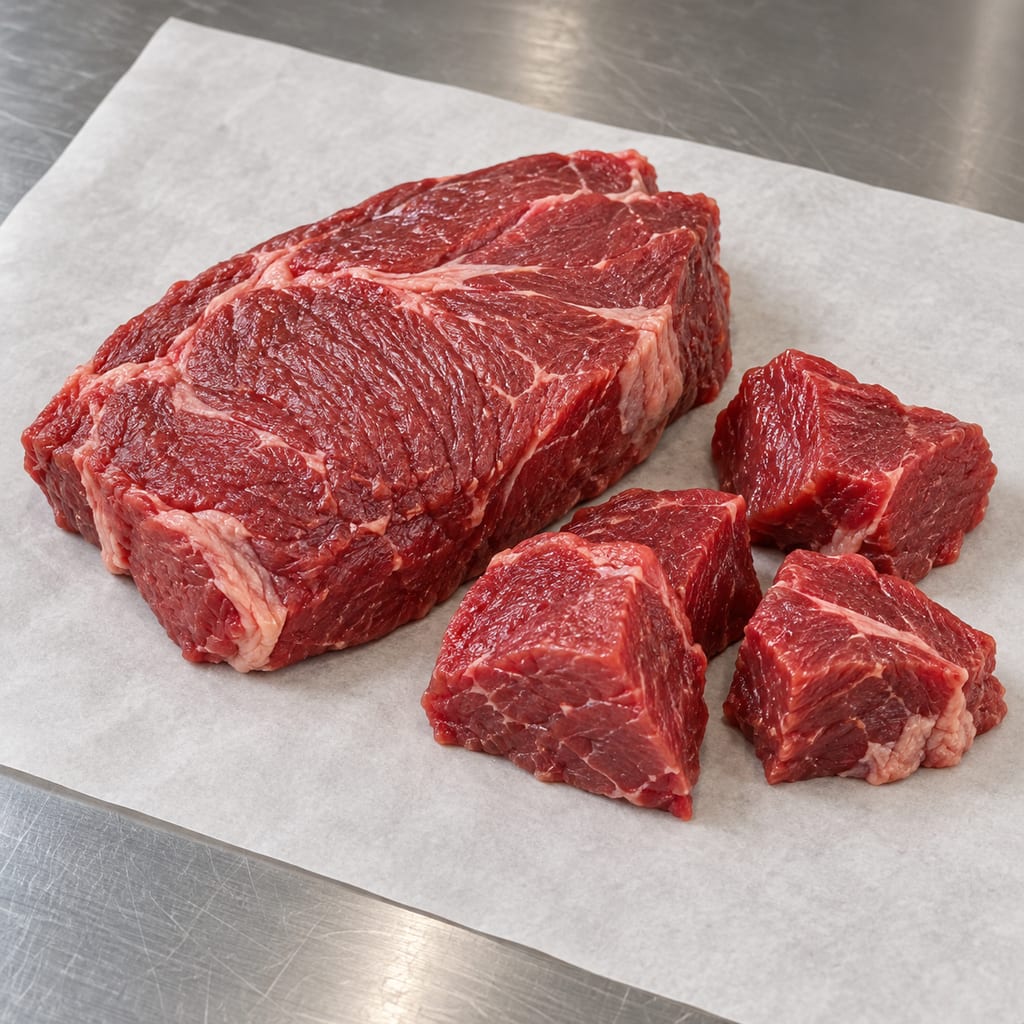
Water-buffalo meat, often called carabeef, is the flesh of Bubalus bubalis; its colour, texture and fat vary with animal, cut and production system. “Buffalo” can also mean bison or African buffalo in other contexts.
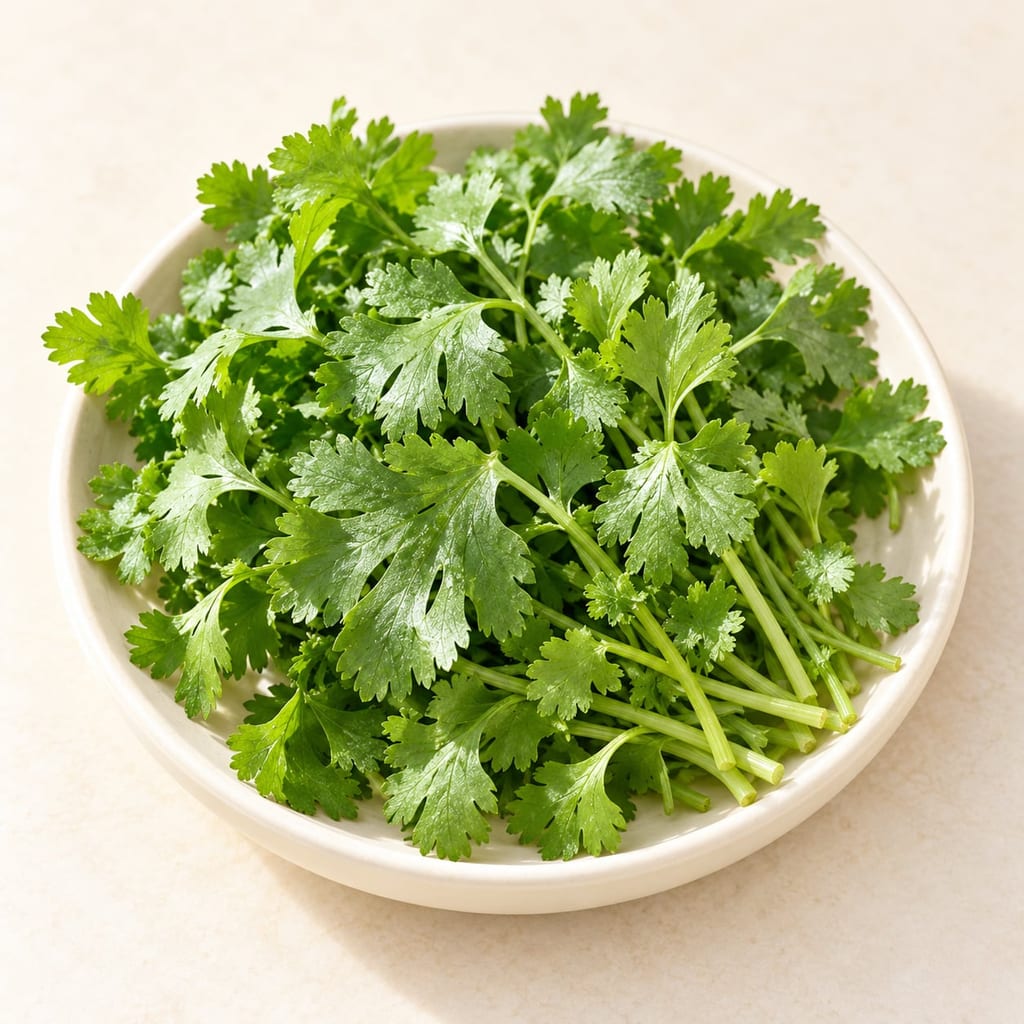
Cilantro is the fresh leafy herb of Coriandrum sativum, the same annual plant that produces coriander spice. Its green, aromatic leaves and fine stems bring a vivid herbal note to foods such as sai krok Isan.

At North Abydos in Egypt, a fixed early Dynastic brewery comprised parallel semi-subterranean installations with rows of ceramic mash vats; excavation reports revise their number, scale and estimated batch capacity.

Ají amarillo is the orange-yellow Peruvian chilli cultivar group of Capsicum baccatum, used to colour and season huancaína sauce and ají de gallina. Published heat estimates do not establish one range for the named cultivar.

Toasted almonds are whole sweet almond kernels dry-roasted until golden to brown. Heat replaces their marzipan note with a roasted, nutty one; they thicken and flavour romesco.

Kodiak salmon, halibut and cod cut as seg'aq and hung on an initaq rack to become tamuuq, with kac'amaasaq and kupcuunaq named as different results.

Aniseed is the dried ripe fruit of Pimpinella anisum, an aromatic Apiaceae spice commonly called a seed. It adds a sweet, warm aroma to breads such as Moroccan krachel and South African mosbolletjies, and is distinct from star anise.

A fixed Late Chalcolithic installation in Areni-1 cave combined a shallow clay pressing basin with a large jar set into the cave floor and storage vessels nearby.

Ripe avocado flesh is the soft, buttery, fat-rich pulp of Persea americana, eaten raw. It is low in acid, so it is a fresh ingredient that needs care in chilled dishes.

A portable dome and pan used over a hearth, with embers on the lid and heat from below. Regional peka and saç forms share this principle while differing in materials, pan shape and how the food is cooked.
No community contributions have been published for this entry yet.
Sign in to contribute. Published comments and photos are free to read.
Foods (MDPI)Safety
Risk of Bacillus cereus in Relation to Rice and DerivativesAbout 95% of emetic Bacillus cereus illness is linked to rice; the spores survive normal cooking (around 20 minutes at 100 °C gives only 2–3 decimal reductions) and grow to 10^7–10^9 CFU/g within 24 hours at 26 to 32 °C in cooked rice.
The emetic toxin cereulide forms in the food and is heat-stable, so reheating does not remove it; B. cereus grows between pH 4.5 and 9.5 and 4 to 48 °C; rapid cooling and storage below 4 °C control it; cooked rice stored at 8 °C reached 10^4 to 10^8 in ten days.
Rice is about 79% carbohydrate, 7% protein and 2% fat, with a pH close to 7.
Cited in: Rice that has been cooked; Safety: cooked rice and Bacillus cereus; Choosing, making and keeping it
Trends in Food Science & TechnologyGrain types · Texture
Rice quality: How is it defined by consumers, industry, food scientists, and geneticists?Apparent amylose content is a major predictor of cooked-rice hardness and stickiness; waxy or glutinous rice is 0–2% amylose, and published class boundaries for low, intermediate and high amylose differ between authors.
Thai consumers in the Northern and Northeastern regions prefer sticky (0–2% amylose) to quite soft and sticky (10–19%) rice, and those in the Central Plains firmer, less sticky rice (20–25%); rice that hardens on cooling is rated low quality in Thailand and the Philippines; high volume expansion, a feature of aged rice, is a premium trait in Thailand.
Gelatinization temperature is used as an indicator of cooking time.
Cited in: Rice that has been cooked; What a buyer looks at; Choosing, making and keeping it
Asian-Australasian Journal of Animal SciencesRecipe use · Fermentation
Partial replacement of pork backfat with konjac gel in Northeastern Thai fermented sausage (Sai Krok E-san)Sai krok E-san, also called sai krok prew for its sourness, comes from northeastern Thailand and is roasted and eaten with cooked rice or steamed glutinous rice, ginger, chilli and cabbage; it and the similar nham are made from minced pork, cooked rice, garlic, curing and seasoning ingredients, fermented under restricted oxygen for 2 to 3 days at room temperature.
The studied formulation was 55% ground pork, 30% backfat and 15% cooked rice with garlic, curing salt, sugar and pepper; lactic acid bacteria rose from 2.9–4.1 to 9.4–11.4 log CFU/g in 3 days, titratable acidity reached 1.02–1.29% and pH fell to about 4.4–4.9; glucose and fructose mainly from cooked rice and garlic were reported as the carbohydrate source for the bacteria in nham.
Cited in: Cooked rice as a fermentation ingredient: sai krok; Safety: cooked rice and Bacillus cereus
Japan International Research Center for Agricultural Sciences (JIRCAS), Database of Fermented Foods of ThailandRecipe use
Sai-krork-prieo (ไส้กรอกเปรี้ยว)Sour fermented pork sausage from Thailand made from pork meat, fat and rind with cooked rice, salt, sugar, pepper and spices, packed into intestine, fermented 2–3 days and stored for 1 week; microorganisms listed include Candida krusei, Debaryomyces, Lactobacillus and Streptococcus faecalis.
Cited in: Cooked rice as a fermentation ingredient: sai krok; What the sources leave open
Two Guys and a CoolerRecipe use
Thailand’s Sai Krok IssanThe recipe lists 200 g of cooked rice for 700 g lean pork and 300 g back fat, mixed to a paste with garlic and salt before grinding, without saying whether the rice is sticky or jasmine or whether it is cooled; with a starter culture it ferments 24 hours at 80–90 °F, and without one 72–96 hours at room temperature.
Cited in: Cooked rice as a fermentation ingredient: sai krok; What the sources leave open
PLoS ONEOrigin
Multiple indicators of rice remains and the process of rice domestication: A case study in the lower Yangtze River region, ChinaThe lower Yangtze River region is considered a center of rice domestication; samples from eight Neolithic sites span about 10,000 to 2,000 years ago, and the share of domesticated-type phytoliths rises step by step from the Shangshan culture through Kuahuqiao (8,000–7,000 years ago) and early Hemudu, so domestication was gradual.
Cited in: Where rice comes from
RiceSpread
A Journey to the West: The Ancient Dispersal of Rice Out of East AsiaAsian rice is the second most-consumed food crop after wheat; its dispersal out of East Asia ran along the Silk Road through southern mountains and Central Asia and along maritime routes across the Indian Ocean to the Red Sea and Mediterranean.
Cited in: Where rice comes from
British Columbia Centre for Disease ControlKoji
Fermented Foods Guideline 3.10: Koji and MisoKoji is Aspergillus oryzae spores added to boiled and cooled rice, barley or other grain; rice koji is used in miso, sake and amazake, a sweet non-alcoholic rice drink made with koji; the mold secretes amylases that make sugars and proteases that make amino acids.
Cited in: Cooked rice in koji and rice ferments
PLoS ONEGrain quality
Rice Grain Quality and Consumer Preferences: A Case Study of Two Rural Towns in the PhilippinesCooking and eating quality are gauged by apparent amylose content, gel consistency and gelatinization temperature; cooked rice grows harder as amylose rises; head rice is the share of grains at least 75% intact after milling; only high-income buyers significantly discounted broken grains.
Cited in: What a buyer looks at
U.S. National Institute of Diabetes and Digestive and Kidney DiseasesDietary context
Definition & Facts for Celiac DiseaseGluten, which triggers celiac disease, is a protein in wheat, barley and rye.
Cited in: Choosing, making and keeping it