
Rice koji
Rice koji is steamed white rice through which koji mold has grown. It carries the enzymes that turn rice starch into sugar, and it is the starting point of sake, sweet miso, amazake and shio koji.
 FermenteaWhere food goes to change
Traditional method
三五八漬け(さごはちづけ) · Sagohachizuke · Sago-hachi zuke · Sagohachi · Sango-hachi-zuke · 三五八漬 · 三五八 · 三・五・八漬け · 三五八漬け · さごはち漬け · さごはち漬 · さごはちづけ · 三五八床(さごはちどこ, sagohachi-doko) · 三五八の素(さごはちのもと, sagohachi no moto) · Koji rice-bed pickle · Rice-koji pickle
A traditional Japanese koji pickle from the Tohoku region: vegetables pickled in a matured bed of cooked rice, rice koji and salt, where koji enzymes bring sweetness alongside the salt.
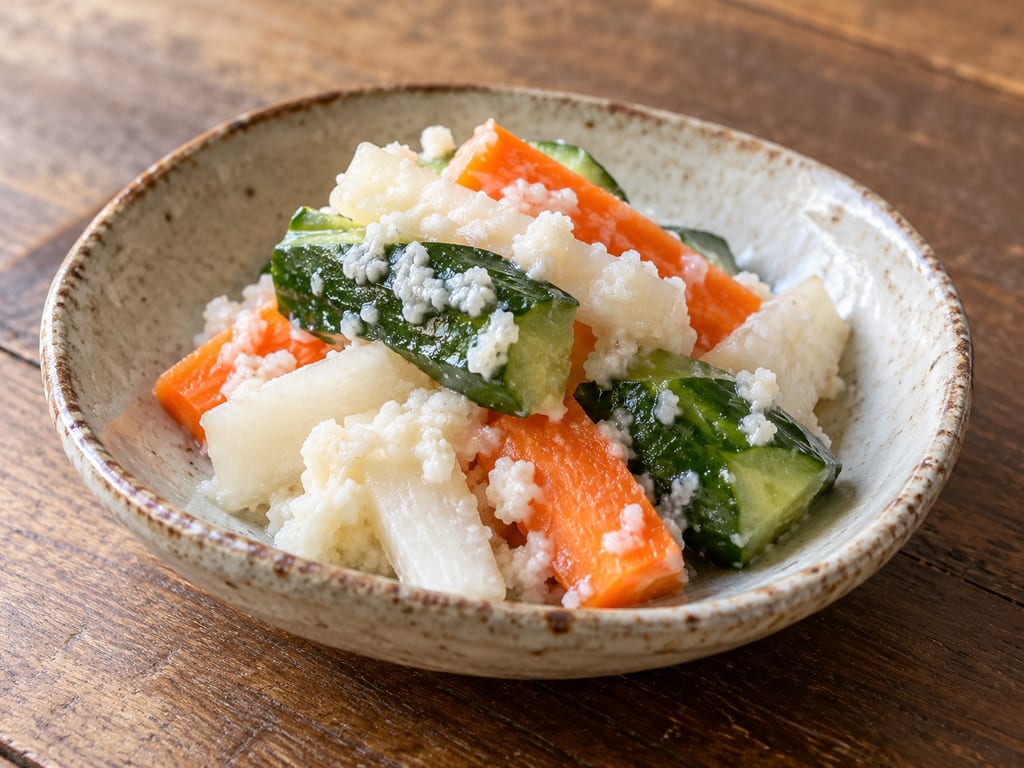
Sagohachi-zuke is a Japanese pickle made by placing vegetables in a thick seasoning bed of cooked rice, rice koji and salt. The prepared mixture is called sagohachi-doko, 三五八床, or simply sagohachi. Its flavour combines saltiness with the gentle sweetness of rice that has been broken down by koji enzymes. Cucumbers, aubergines, carrots, turnips and daikon are common ingredients. The vegetables generally retain some crispness, while the coating adds a mild fermented-grain aroma. The pickle is particularly associated with Fukushima Prefecture and neighbouring parts of northeastern Japan.
The Japanese characters 三五八 mean three, five and eight. These numbers are conventionally explained as proportions of salt, rice koji and cooked rice in the pickling bed. However, accounts disagree about which ingredient corresponds to each number. MAFF describes salt three, koji five and rice eight, while the Nipponica encyclopaedia gives salt three, rice five and koji eight. MAFF also records a tradition that the original ingredients were combined in equal proportions. The name is therefore not sufficient to reconstruct a historical recipe, and modern ingredient quantities must come from a particular documented method.
The most important ingredient is prepared rice koji, 米麹 or 米糀. It consists of cooked rice on which selected koji mould, ordinarily Aspergillus oryzae, has previously been cultivated. The rice koji contains enzymes produced during that cultivation. Additional cooked rice supplies starch and gives the bed its substantial, grainy texture. Salt seasons the food, draws moisture from vegetables and restricts some microorganisms. No soybeans or sake lees are required in the basic preparation.
Sagohachi is consequently distinct from miso-zuke and kasu-zuke. Miso-zuke uses fermented miso paste as its pickling medium, ordinarily introducing soybean-derived proteins and the characteristic flavours of miso. Kasu-zuke uses sake lees, which may contain residual alcohol, yeast material and other products of sake fermentation. Sagohachi relies instead on rice, koji and salt. It is also different from nukazuke, whose bed is based on rice bran, and from shio-koji, which generally combines rice koji, salt and water without a separate substantial addition of cooked rice.
The term can describe either the seasoning bed or vegetables prepared in that bed. Commercial sagohachi no moto is a ready-made base that may be moistened and used immediately. Traditional household beds may be matured for weeks or months before vegetables are added. These differences affect sweetness, moisture, acidity and microbial activity. Sagohachi is primarily an enzyme-rich koji pickle, although aged beds may also undergo bacterial or yeast fermentation. The mixed classification reflects this variability rather than identifying one required microbial community.
Sagohachi-zuke developed within the rice-growing and household-preservation traditions of northeastern Japan. Fukushima is its best-established cultural association, particularly the Aizu region and the agricultural districts around Nihonmatsu. MAFF describes the pickle as part of a regional tradition reaching back to the Edo period, from 1603 to 1868. The account explains its usefulness for preserving vegetables and supplying everyday side dishes during busy periods of agricultural work. This is evidence of a documented local tradition, but the cited account does not identify a surviving Edo-period manuscript containing the recipe.
The agricultural calendar helps explain the method. MAFF records that households commonly prepared the sagohachi bed during winter, then used it for vegetables harvested in warmer months. The prepared bed could be stored until vegetables became available, reducing waste and supplying pickles for meals during the busy rice-planting season. The use of cooked rice and koji meant that a household needed access to grain, salt and an established koji-making tradition. The exact availability and proportions of these ingredients would have varied according to local circumstances.
The earliest firmly dated documents identified in the consulted bibliographical research are much later than the proposed Edo-period origin. In 2020, Akita Prefectural Library answered a historical reference enquiry by identifying numerous printed sources. It located sagohachi-related material in issues of Gendai Nogyo from October and December 1985 and March 1987. It also identified a 1985 book, Inaka no Shokutaku: Akita Dayori, describing a preparation called kan-koji and associating it with san-go-hachi-zuke. The library's report provides bibliographic evidence, although the complete original passages would need direct examination before treating every detail as a primary quotation.
The same library identifies the 1986 Nipponica encyclopaedia as explicitly describing sagohachi-zuke as a Fukushima specialty associated with Aizu. A 1996 culinary encyclopaedia identifies Aizu and Yonezawa as areas where the preparation is traditional and repeats the Edo-period origin claim. A regional household-food collection published in 2012 includes historical and contemporary preparations from Nagai in Yamagata and Suwa in Nagano. These accounts show that sagohachi was recognised across several communities rather than being confined to one village.
The documented history of the name is particularly unsettled. Some sources use salt, koji and rice in the order three, five and eight. Others put rice before koji. An Akita household account uses another arrangement for a related kan-koji preparation. There is no reason to assume that all these records describe identical beds, especially when some quantities are measured by volume and others by weight. The numerical name appears to have accommodated regional variation rather than operating as a rigorously standardised formula.
Modern commercial production has widened access to the pickle. Fukushima producers sell ready-made sagohachi bases, including versions with chilli, added sugar or seasonings. Other producers supply matured beds that can be used repeatedly. These products support year-round preparation, whereas traditional household practice was closely connected to the seasonal availability of rice, koji and vegetables. The historical priorities are still to locate and transcribe older household manuscripts, brewery records or agricultural accounts that describe sagohachi before the twentieth century.
Sagohachi-zuke works through enzymatic starch breakdown, movement of salt and water between vegetables and the pickling bed, and sometimes additional microbial fermentation. The principal biochemical activity begins before the vegetables are added. During rice-koji manufacture, Aspergillus oryzae grows on steamed rice and secretes enzymes into the grain. When the resulting koji is mixed with ordinary cooked rice, these enzymes gain access to another supply of gelatinised starch. Much of the bed's characteristic sweetness develops through this conversion rather than through added sugar.
Two important enzymes are alpha-amylase, EC 3.2.1.1, and glucoamylase, EC 3.2.1.3. Alpha-amylase cuts internal alpha-1,4 glycosidic bonds in starch molecules, producing smaller dextrins and oligosaccharides. Glucoamylase releases glucose from the ends of starch-derived chains. The resulting sugars create sweetness and provide substrates that yeasts or bacteria may metabolise if conditions permit. Koji also contains proteases and peptidases that can break proteins into smaller peptides and amino acids. Their effects on rice and vegetable proteins bear on flavour, but these compounds have not been measured in this recipe.
The role of salt is different from that of the enzymes. Sodium chloride dissolves in moisture present in the rice and vegetables, creating an osmotic gradient. Water moves out of vegetable tissue while salt and soluble flavour compounds move into it. This changes the vegetable's firmness and allows the koji seasoning to penetrate. The amount of water released depends on the vegetable, its size, cut surfaces, initial moisture and the bed's composition. Repeated pickling therefore increases the bed's water content and can reduce its effective salt concentration.
Salt also changes which microorganisms can grow. It inhibits many competing bacteria and affects enzyme activity, but does not sterilise the bed. Japanese producer Kohsei Foods describes excessive bubbling and sourness as signs that an older bed may be undergoing vigorous fermentation because of warmer conditions and dilution by vegetable water. The producer associates bubbling with carbon dioxide and alcoholic fermentation, while Marukawa Miso warns that standing at room temperature can produce unwanted lactic-acid sourness. These are observations of changing beds, not evidence that every sagohachi preparation must undergo both fermentations.
When lactic-acid bacteria grow, they can metabolise sugars to produce lactic acid and lower pH. Yeasts can convert sugars into ethanol and carbon dioxide. However, no species-level microbial succession was established for the sagohachi recipes reviewed here. Lactiplantibacillus plantarum and other bacteria have been identified in studies of Japanese rice-bran pickles, but those studies concern nukadoko, which is a different substrate with different preparation and handling. Their species lists and measured pH changes must not be transferred to sagohachi.
The relative importance of these processes depends on the method. A government recipe that holds rice and koji warm before adding salt favours initial saccharification. Another recipe combines salt with the rice and koji immediately, then matures the mixture for months. A commercial ready-made bed may be used as soon as it is hydrated. These produce different initial sugar concentrations and opportunities for microbial development. Sagohachi is therefore best understood as a koji-enzyme-based pickle whose longer-matured versions may develop additional lactic-acid and alcoholic fermentation, rather than a product defined by one required microorganism or acid concentration.
The traditional method begins with three ingredients: cooked rice, rice koji and salt. MAFF's Fukushima recipe specifies two Japanese cups of cooked rice, one cup of koji and half a cup of salt, with enough cucumber, carrot, aubergine or turnip for the intended pickles. The rice is cooked normally, cooled to approximately body temperature, mixed thoroughly with loosened koji grains, then mixed with salt. The mixture is placed in a suitable container and left for at least one month before use. MAFF does not give a numerical maturation temperature, container volume or exact vegetable weight.
The rice supplies starch, water and the bulk of the pickling medium. Cooking gelatinises much of the starch, making it more accessible to koji enzymes. Cooling before adding the koji helps preserve enzyme activity. The koji contributes enzymes already manufactured by Aspergillus oryzae during its earlier cultivation. Salt distributes through the moist rice and changes the conditions for both enzymes and microorganisms. Thorough mixing matters because pockets of insufficient salt or poorly hydrated rice will not behave like the surrounding material.
Other documented preparations separate saccharification from salt addition. Kochi Prefecture's agricultural information service published a recipe on 21 November 2012 using three cups of salt, five cups of rice koji and eight cups of rice, reducing the salt measure to two cups in winter. Its first method cools freshly cooked rice to approximately 60°C, mixes in loosened koji and keeps the mixture warm for about ten to twelve hours before adding salt. Its second method combines cooled, more firmly cooked rice, koji and salt immediately, then rests the mixture for two to three months. These are alternative methods, not consecutive stages of one recipe.
The Kochi guide also documents different vegetable preparation methods. Vegetables may be lightly pre-salted using approximately 2% salt, air-dried for two to three days, or placed in the bed while still fresh. Such preparation changes moisture content and therefore the amount of water subsequently transferred into the bed. A vegetable that has already lost moisture cannot be expected to season or soften at the same rate as a freshly cut cucumber.
Commercial premixed bases provide another process. Kohsei Foods specifies 400 g of its prepared sagohachi product, 90 g cooked rice and 260 ml water for establishing a bed. It gives cucumber pickling times of eight to twelve hours in spring and autumn, and ten to fourteen hours in winter or under summer refrigeration. Its instructions differ for aubergine, radish, carrot and turnip. These quantities apply to that manufacturer's prepared product, which already contains salt and koji. They must not be copied into a homemade bed assembled from separate ingredients.
Once vegetables enter the bed, their moisture gradually dilutes the surrounding rice mixture. A thin coating may be sufficient for rapid pickling, while layered vegetables in a crock may receive a light weight to improve contact. Some producers recommend removing excess liquid and replenishing the bed with prepared base, rice koji or salt. The long-term balance of ingredients matters because repeated additions change the formula. A well-matured bed can be reused, but its age alone does not establish microbiological safety.
The finished vegetables are removed, excess koji may be wiped or briefly rinsed off, and the pickle is usually served cold. For a modern household method, follow one complete set of instructions without substituting a shorter maturation time, a different salt ratio or unrestricted room-temperature storage from another recipe.
The strongest regional associations are Fukushima and neighbouring parts of Tohoku. MAFF identifies Nihonmatsu as a principal transmission area, while culinary encyclopaedias describe sagohachi as a specialty of Aizu. Its adoption in rice-growing rural communities is consistent with its ingredients and seasonal preparation. Aizu producer Ishibashi Kojiya describes a family method using salt three, rice five and koji eight, increasing the koji proportion compared with the commonly cited salt-three, koji-five, rice-eight formula. The producer reports maturing its own bed for approximately one year, with the duration adjusted according to the season.
Yamagata also has a documented tradition. A 1996 culinary encyclopaedia refers to the Yonezawa region, and a household-food collection listed by Akita Prefectural Library describes preparation in Nagai. Modern Yamagata cooking instructions include aubergine pickled with prepared sagohachi, sugar, seasoning and alum for colour retention. One dated recipe published in 2013 uses 500 g aubergine and 100 g prepared sagohachi, plus measured additional ingredients. The extra seasoning means it is a specific modern variation rather than evidence for the original three-ingredient bed.
Akita provides an important related tradition involving kan-koji, 寒こうじ, a seasoning prepared with rice, koji and salt during the cold season. A 1985 Akita household-food account listed by the prefectural library describes kan-koji and uses the name san-go-hachi-zuke for pickles made with it. Its proportions differ from some better-known Fukushima accounts. The relationship is real, but kan-koji is also used more broadly as a seasoning and is not an exact synonym for every sagohachi product.
Other household-food records describe sagohachi in Suwa, Nagano Prefecture, demonstrating that the preparation was not confined to the modern Fukushima–Yamagata administrative boundary. Tochigi's Otawara City Agricultural Corporation currently markets a related bed made with locally grown Koshihikari rice and matured for approximately one year. Its vegetable instructions recommend coating the produce with about one-tenth its weight in prepared bed. This is evidence of contemporary production in Tochigi, not a verified Edo-period origin there.
The commercial market has introduced further distinctions. Fukushima manufacturer Horaiya sells conventional sagohachi, a red-chilli version and a mixture intended for takuan-style pickling. Its regular commercial formulation contains rice koji, rice and salt, but also sugar, hydrolysed protein, seasonings, an acidulant and a sweetener. The added ingredients affect flavour and potentially microbial behaviour. Kohsei Foods, by contrast, markets a product made from rice, rice koji and salt alone. The label sagohachi therefore does not guarantee an identical formulation.
Modern salt-reduced products and faster pickle preparations are also common. MAFF notes a tendency to decrease salt proportions, while some producers use warm saccharification to increase sweetness before storing the bed cold. These variations differ in ingredients, preparation time and storage method. Historical ratio accounts, traditional matured beds and commercial instant mixes belong to one culinary family but are not interchangeable recipes.
Sagohachi-zuke is most commonly eaten as a small side dish of seasoned vegetables. Cucumbers, aubergines, carrots, turnips and daikon are frequent choices. After the vegetables have spent the prescribed time in the rice-koji bed, they are removed and sliced or cut into convenient pieces. The resulting pickle usually has a mild sweetness, noticeable saltiness and a grain-derived aroma. Its texture depends on the vegetable and how long it has been pickled. A cucumber may remain crisp, while a thinly cut radish or aubergine becomes more pliable.
MAFF describes preparing a sagohachi bed during winter and using it with summer vegetables, particularly cucumbers and aubergines. This helped households use seasonal produce and provide side dishes during agricultural work. The finished vegetables were eaten with rice as part of an ordinary meal. Commercial prepared beds now permit production throughout the year. In modern kitchens the pickle may accompany breakfast, a rice-based lunch or a larger evening meal with several small dishes.
The amount of coating left on the vegetables varies. Kohsei Foods recommends briefly rinsing vegetables prepared in its sagohachi bed, while other recipes use only a small quantity of seasoning and serve the vegetables directly. Otawara City Agricultural Corporation describes coating vegetables with prepared bed at approximately one-tenth of their weight. Cucumbers, turnips and udo are ready after roughly half a day in its instructions, while daikon and carrots are left overnight. These are producer-specific serving and preparation methods.
Sagohachi is also used to season animal products before cooking. MAFF notes growing use with meat and seafood, and Otawara's agricultural corporation documents squid marinated in sagohachi for approximately half a day before being rinsed and grilled. Its guidance suggests similar use with fish fillets and meat. The bed contributes salt, sugars and flavour compounds, and residual enzymes may affect accessible proteins. The marinade does not make the animal products safe to eat raw or preserve them automatically. They should be handled under refrigeration and cooked appropriately.
Related uses include dried herring, salmon and other fish in regional cooking accounts. Kohsei Foods specifically advises cooking herring marinated in sagohachi and removing excess rice-koji paste before grilling. The carbohydrates in the coating can brown or scorch during cooking, so thick accumulations are commonly removed. This is a seasoning and cooking application, distinct from the raw vegetable pickle.
Prepared sagohachi may also be incorporated into other seasonings, including mustard-based aubergine pickles or dishes that would otherwise use shio-koji. The producer Kohsei Foods provides a formula for combining sagohachi with sugar, soy sauce, mirin and mustard. However, a manufacturer's recipe for turning sagohachi into a sweeter bettara-style pickle is a new preparation, not proof that sagohachi and bettara-zuke are identical.
The pickling bed can be reused for vegetables if it remains in appropriate condition, but repeated use changes its salt and water balance. Use with raw meat or fish should be kept separate from beds used for ready-to-eat vegetables. The finished pickle is principally valued for its flavour and texture. Neither the presence of koji nor the description fermented establishes a specific probiotic benefit.
The strongest evidence for sagohachi-zuke comes from Japanese regional-food documentation, agricultural extension guidance, household-food literature and specialist koji producers. These sources establish its ingredients, regional distribution and several authentic methods of preparing the pickling bed. They also expose substantial variation in ingredient ratios, maturation periods and storage instructions. The principal limitation is the absence of a directly established microbiological profile for the specific traditional sagohachi preparations reviewed here. The enzymes of rice koji are well understood; the exact organisms in every matured pickling bed are not.
The 3:5:8 name is a source of confusion. MAFF's regional account gives one ingredient order, Nipponica another, and an Aizu producer uses yet another family formula; MAFF also reports a possible equal-parts origin. A ratio in cups cannot be converted into the same ratio by weight, because cooked rice, rice koji and salt differ in bulk density and water content. Each formulation therefore keeps its own units, and the disputed etymology is part of the history, not a universal recipe specification.
Maturation presents another difficulty. MAFF's Fukushima recipe matures the salted bed for at least one month. Kochi Prefecture documents both a short warm saccharification stage followed by salt addition and a longer two-to-three-month method. Commercial prepared bases may be hydrated and used immediately. These methods differ in how much starch has been hydrolysed before vegetables enter the bed, and in how much time microorganisms have had to grow. No comparative chemical analysis was established showing that the methods produce equivalent glucose, lactic acid, ethanol or amino-acid concentrations.
Studies of nukadoko, the rice-bran bed, give context but not direct results for sagohachi. A 2024 investigation found that repeated vegetable pickling changed the microbial communities of rice-bran beds and that Lactiplantibacillus plantarum was prominent in matured beds, with changes in salt, organic acids and amino acids. Another study of commercial rice-bran pickles found that environmental conditions influenced the microorganisms and metabolites. Nukadoko contains rice bran and is prepared differently, so its bacterial species, pH changes and salt measurements cannot be assigned to sagohachi without direct testing.
Salt and moisture balance create a practical safety problem. Fresh vegetables release water into the bed while absorbing salt. Kohsei Foods warns that repeated use can lower the effective salt concentration, encouraging excessive fermentation, sourness and unwanted mould. Marukawa Miso recommends refrigerating its bed and warns that room-temperature storage can lead to lactic-acid souring. These changes may affect flavour, but they can also change the microbial conditions. Neither a pleasant smell nor a visible absence of mould proves that a low-salt bed is safe.
Tokyo's public-health authority provides a more specific warning about domestic pickles. It states that enterohaemorrhagic Escherichia coli can grow in an environment containing 4% salt, and that modern low-salt pickles commonly contain less salt than older preservation methods. It recommends thoroughly washing vegetables, cleaning and disinfecting equipment, refrigerating lightly pickled products and consuming them promptly. This is general pickle safety guidance, not a validated sagohachi recipe. Nevertheless, it demonstrates why the historical reputation of a salted bed cannot replace measurements of its final conditions.
Animal-product use requires additional controls. Kohsei Foods recommends keeping beds used with meat or fish separate from those used for vegetables, and expressly advises cooking sagohachi-marinated herring. From a food-safety perspective, a bed that has contacted raw animal products should not subsequently be used to prepare ready-to-eat vegetables. Salt, koji enzymes and brief marination do not establish pathogen destruction. Storage times for commercial packaged bases also cannot be copied to rehydrated, repeatedly used household beds.
Sagohachi is best described as a rice-koji pickle with substantial enzymatic activity and variable secondary fermentation. Its pH, water activity, salt, glucose, maltose, free amino nitrogen, lactic acid, ethanol and microbial counts have not been measured in defined preparations, and no dated recipe earlier than the retrospective Edo-period accounts has been found.
MAFF describes sagohachi-zuke as an Edo-period koji-food tradition around Nihonmatsu, Fukushima, and a 1996 food encyclopaedia reports an Edo-period tradition in Aizu and Yonezawa. These are retrospective accounts, not surviving Edo-period recipes. Dated descriptions begin in 1985, so the preparation is documented by the twentieth century, but its invention date is unknown.
Yield 4 servings · Scaling: source batch only
The primary MAFF recipe specifies at least one month of bed maturation without providing a controlled temperature, starting or final pH, water activity, salt concentration or microbiological endpoint. The source documents a traditional method but does not independently validate its safety under arbitrary household conditions.
Hazard sourceSalt is measured by volume and the cooked rice and koji are not weighed. The resulting sodium chloride percentage cannot be calculated reliably. The bed also gains water and loses some salt during repeated vegetable pickling.
Hazard sourceReady-to-eat vegetables may carry pathogenic microorganisms from soil, irrigation water, manure, animals and handling. Lightly salted pickling does not reliably eliminate these organisms. Tokyo's public-health authority warns that enterohaemorrhagic Escherichia coli can grow even in an environment containing 4% salt.
Hazard sourceVegetables release water into the bed while absorbing salt. Kohsei Foods warns that repeated use can lower the effective salt concentration, permit excessive fermentation and increase the risk of unwanted microorganisms.
Hazard sourceA producer documents bubbling, alcoholic odour and loss of sweetness in over-fermented sagohachi beds. This can occur when the bed is warm or has become diluted. Bubbling is not a reliable indication of a safe or correctly controlled fermentation.
Hazard sourceMould appearing on the surface of a stored bed cannot be assumed to be the food-grade Aspergillus previously used to manufacture the rice koji. Reduced salt and altered moisture can permit unwanted fungal growth. Visual identification does not establish the absence of harmful metabolites.
Hazard sourceUsing the same pickling bed for raw meat or fish and subsequently for vegetables eaten without cooking creates a cross-contamination risk. Fermentation and salt exposure are not validated pathogen-killing treatments for raw animal products.
Hazard sourceLightly pickled vegetables may remain microbiologically perishable. Cold storage slows microbial growth but does not sterilise food. Food Standards Scotland recommends maintaining domestic refrigerators between 0°C and 5°C.
Hazard sourceUnclean hands, knives, containers and other food-contact equipment can introduce microorganisms into a preparation that may subsequently be held for an extended period. Japanese public-health guidance identifies careful vegetable washing and equipment cleaning as essential controls.
Hazard sourceThe primary recipe does not provide a maximum age for the mature bed, a validated number of reuses or a finished-pickle shelf life. Commercial unopened product dates and storage claims are specific to those products and do not establish the stability of a homemade bed.
Hazard sourceUse only prepared, food-grade rice koji. Do not replace it with raw rice inoculated by unidentified environmental moulds.
Control sourceRetain the complete ingredient proportions of the selected MAFF recipe without arbitrarily reducing salt or adding water.
Control sourceWash hands before preparation and thoroughly wash vegetables under clean running water.
Control sourceClean and appropriately sanitise jars, bags, utensils and other food-contact equipment before use.
Control sourceTreat the one-month maturation period as a documented traditional duration, not a validated safety endpoint. A controlled process would require product-specific temperature, salt, acidity and microbiological verification.
Control sourceFor domestic ready-to-eat vegetable pickling and subsequent storage, use a properly operating refrigerator and verify its temperature with a thermometer.
Control sourceUse clean utensils when removing bed material or finished vegetables and minimise handling contamination.
Control sourceMonitor dilution caused by vegetable water. Do not assume that a reused bed retains the salt concentration of its original formulation.
Control sourceDiscard a bed showing unidentified mould, unusual spoilage odours or significant unexpected deterioration rather than attempting to identify or correct it solely by sight or taste.
Control sourceKeep beds used for marinating raw meat or fish separate from those used for ready-to-eat vegetables.
Control sourceThis is a historically documented rice-koji pickling method, not a laboratory-validated home-fermentation protocol.
The original MAFF recipe gives ingredients by volume. Do not invent gram equivalents or a finished salt percentage.
The recipe does not provide a controlled temperature for the one-month maturation stage.
No final pH, water activity, sodium chloride concentration or pathogen-reduction endpoint is established.
The name 3:5:8 cannot be used to replace the actual recipe quantities. Historical and contemporary sources disagree about the order of the ingredients and their proportions.
Do not copy the temperatures, salt ratios, maturation periods or storage claims from other sagohachi formulations into this recipe.
The appearance of sweetness or a familiar koji aroma demonstrates neither microbial safety nor a specific probiotic population.
Unexpected bubbling can indicate additional yeast activity and dilution rather than successful preservation.
The selected Aspergillus used in prepared rice koji is distinct from unidentified mould growing on the stored pickle.
Salt concentration changes when vegetables release water into a reusable bed.
Do not treat commercial unopened shelf life as evidence for the shelf life of an opened or rehydrated homemade bed.
Do not reuse bed exposed to raw meat, poultry or fish for vegetables intended to be eaten without cooking.
The refrigerated shelf life of the finished vegetables is not established.
The original recipe's traditional maturation method should not be offered as a guaranteed safe room-temperature process without additional validation.
Rice koji is steamed white rice through which koji mold has grown. It carries the enzymes that turn rice starch into sugar, and it is the starting point of sake, sweet miso, amazake and shio koji.
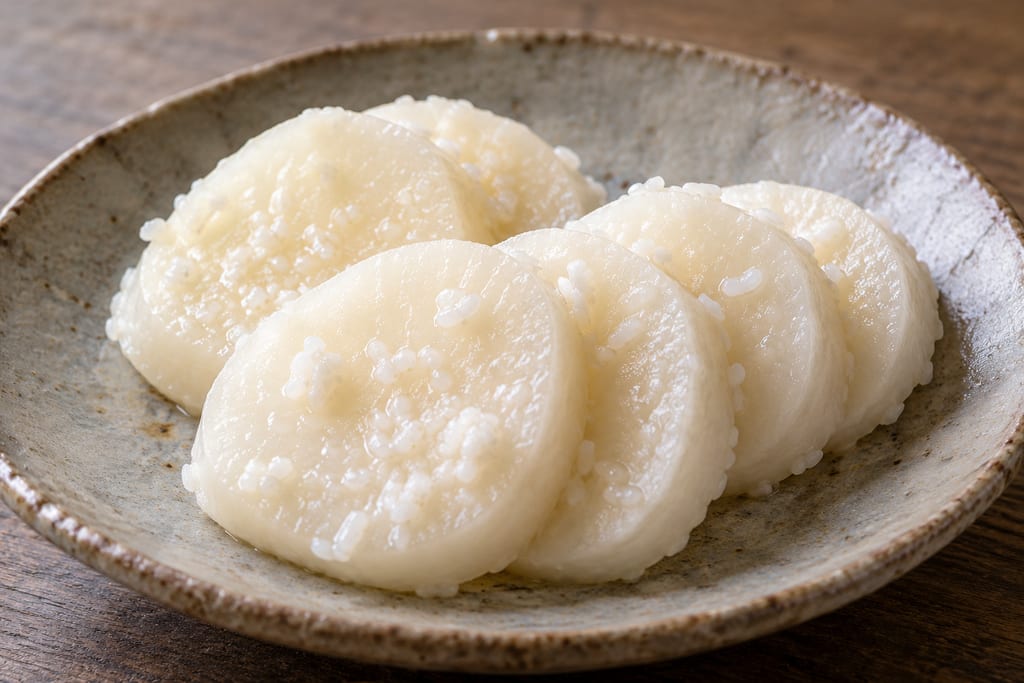
A sweet, crisp Japanese daikon pickle from Tokyo's Nihonbashi district, made by salting fresh radish and dressing it in rice koji, sugar or koji amazake without the heavy drying used for takuan.
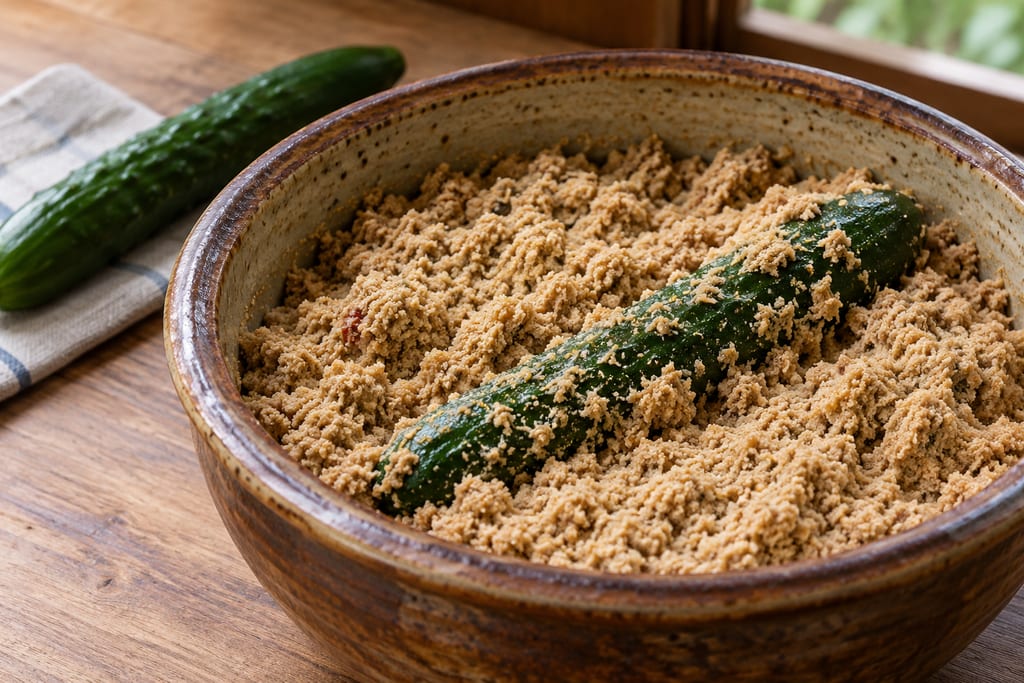
Cucumber ferments in a maintained rice-bran bed seeded through repeated vegetable scrap picklings; the record includes the starter-bed method.
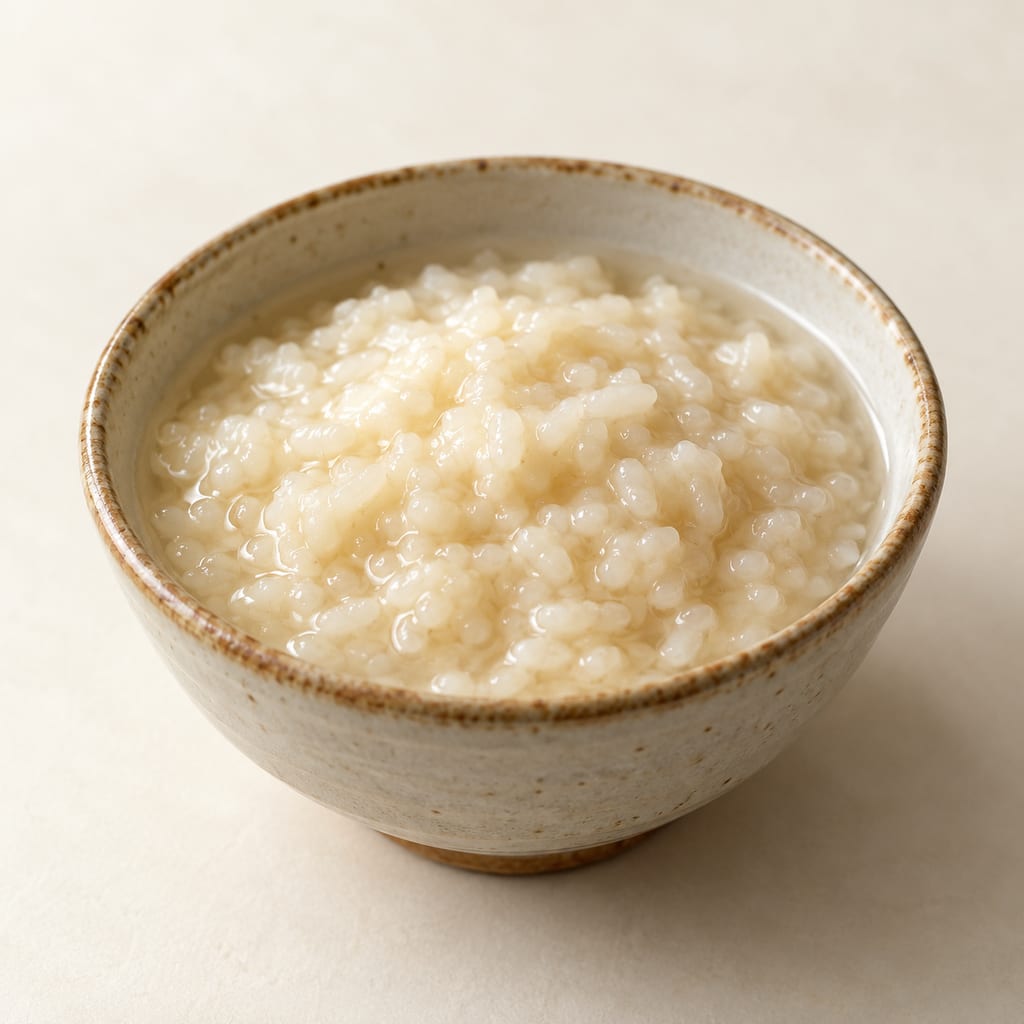
Shio-koji is a Japanese seasoning of rice koji, salt and water, left at room temperature until the grains soften and turn sweet and the mixture thickens.
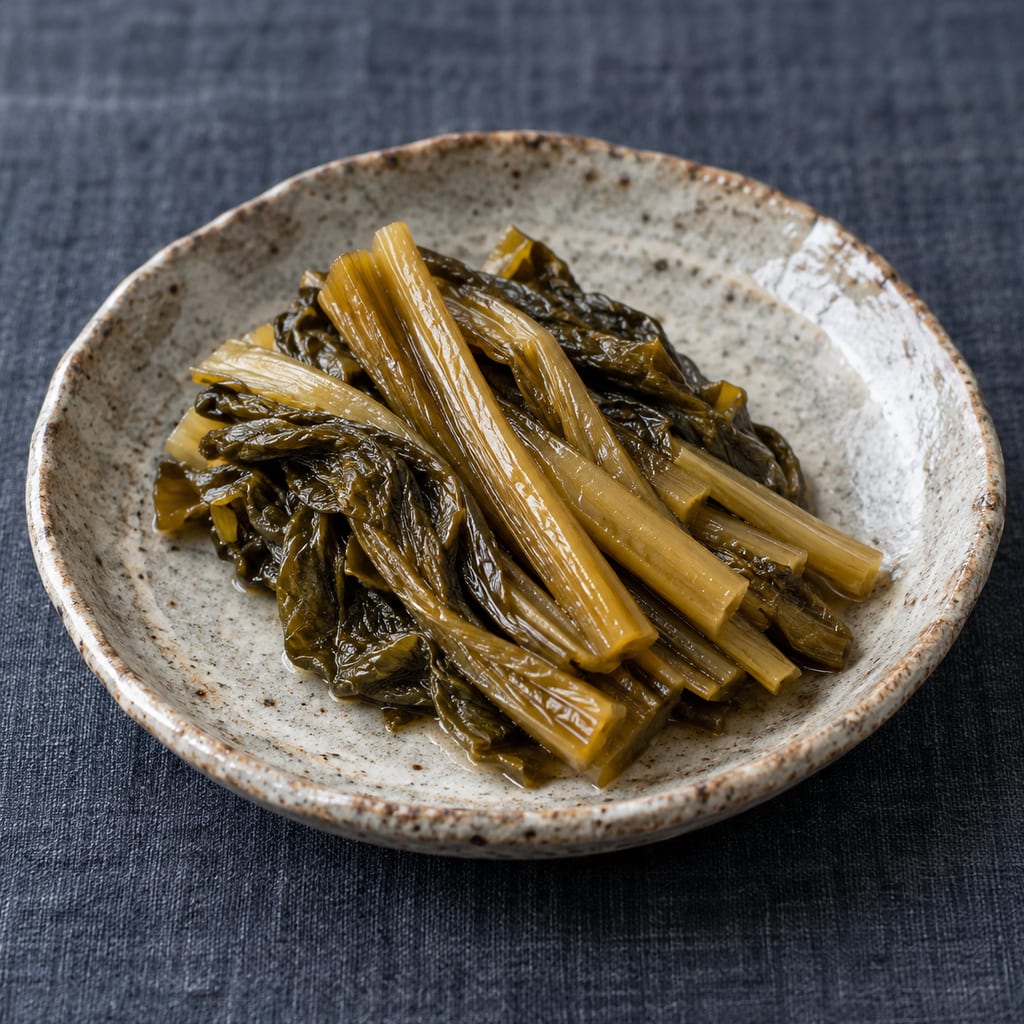
Takana mustard greens from Aso in Kumamoto are salted and pressed into a fresh spring pickle, or aged into a sour furuzuke that is fried and mixed into takana rice.
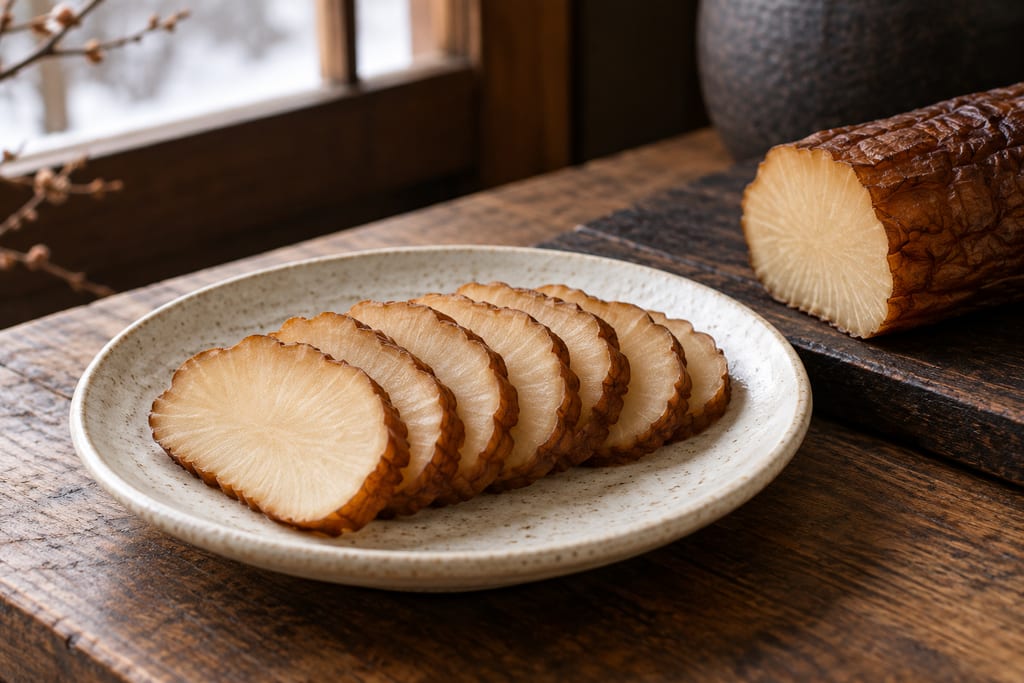
Iburigakko is Akita pickled daikon dried with smoke before it is fermented in rice bran.

A Morinaga snack pairs thin ribbons of iburigakko with cream cheese, then chills the roll before cutting it into portions.
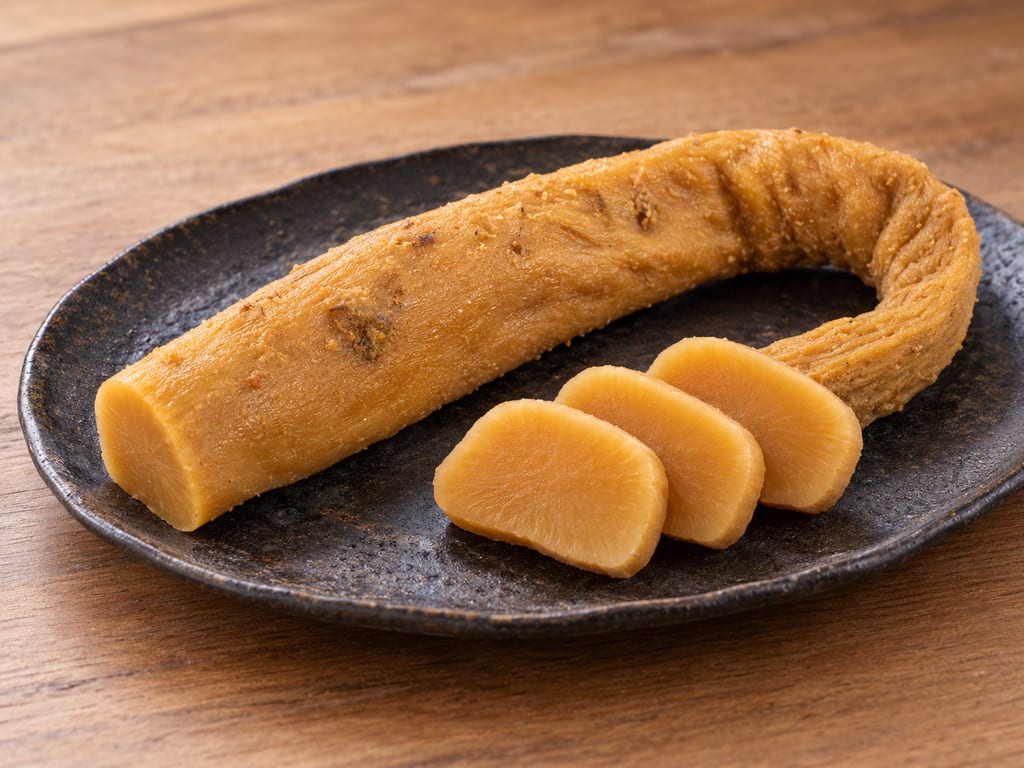
Regional takuan from Ise City, Mie, made with Misono daikon dried on a rack, then matured in a weighted barrel of rice bran and salt for months to years.
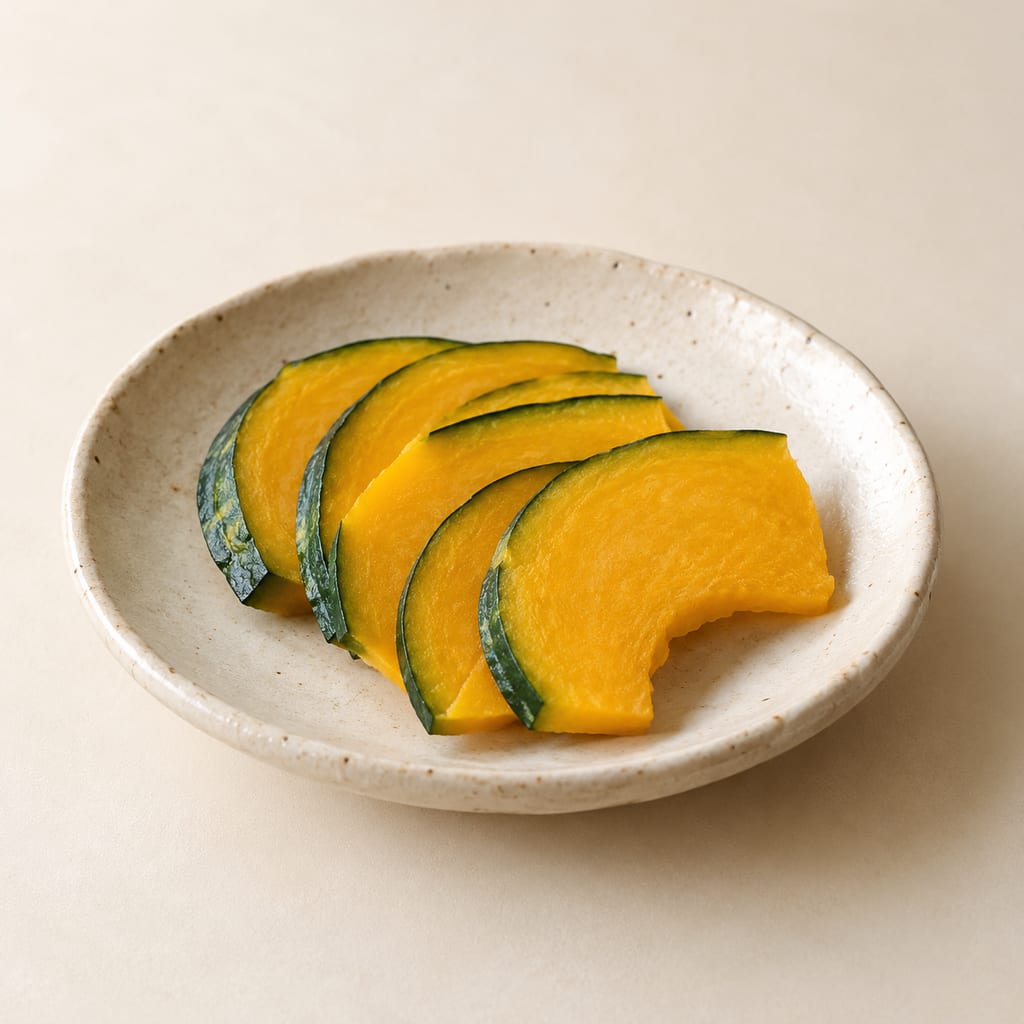
Kabocha no nukazuke: Refrigerated commercial fermented bed; use removed portions the same day.

Foods embedded in salty fermented miso paste, which transfers salt and fermentation products into them; misozuke uses an already transformed medium rather than a fresh vegetable brine.
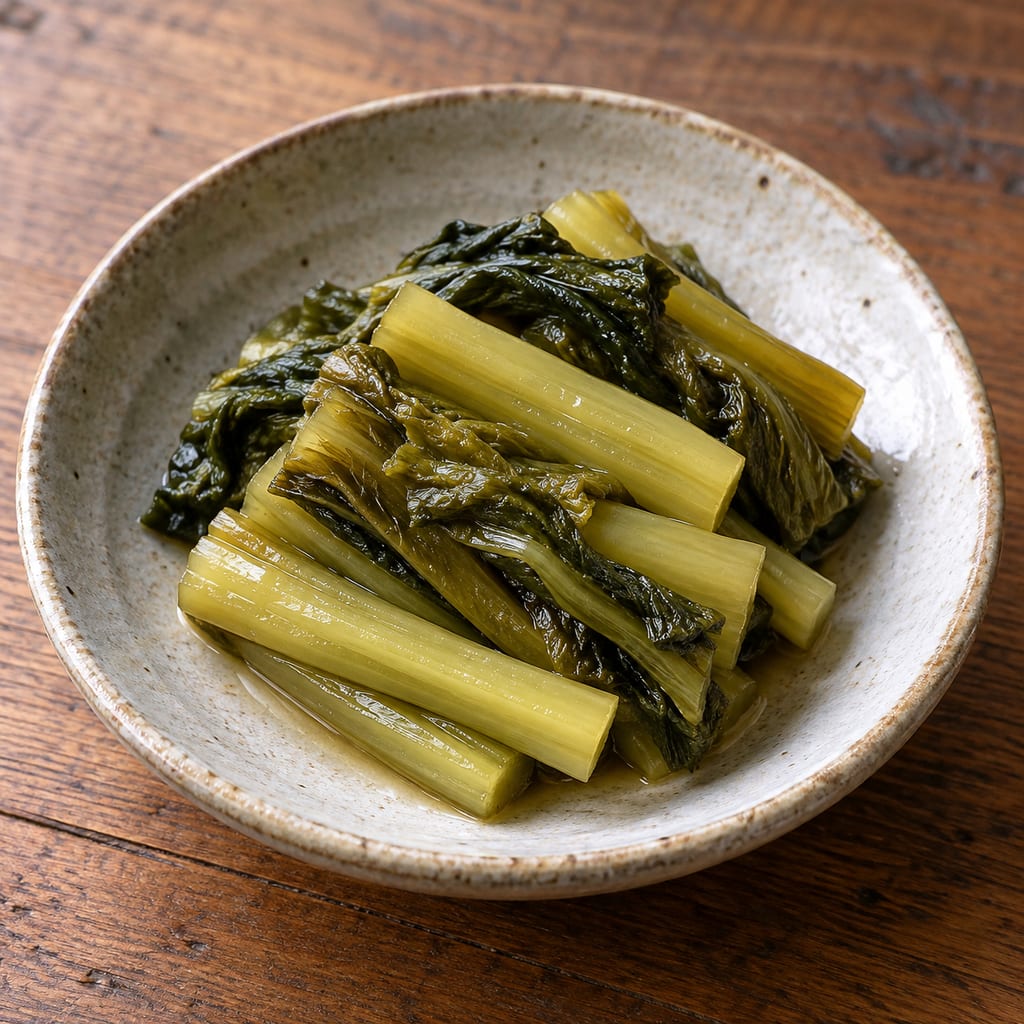
Nozawana greens salted in a barrel and weighted overnight, a Nagano household pickle sampled after about two weeks and soured by a month.
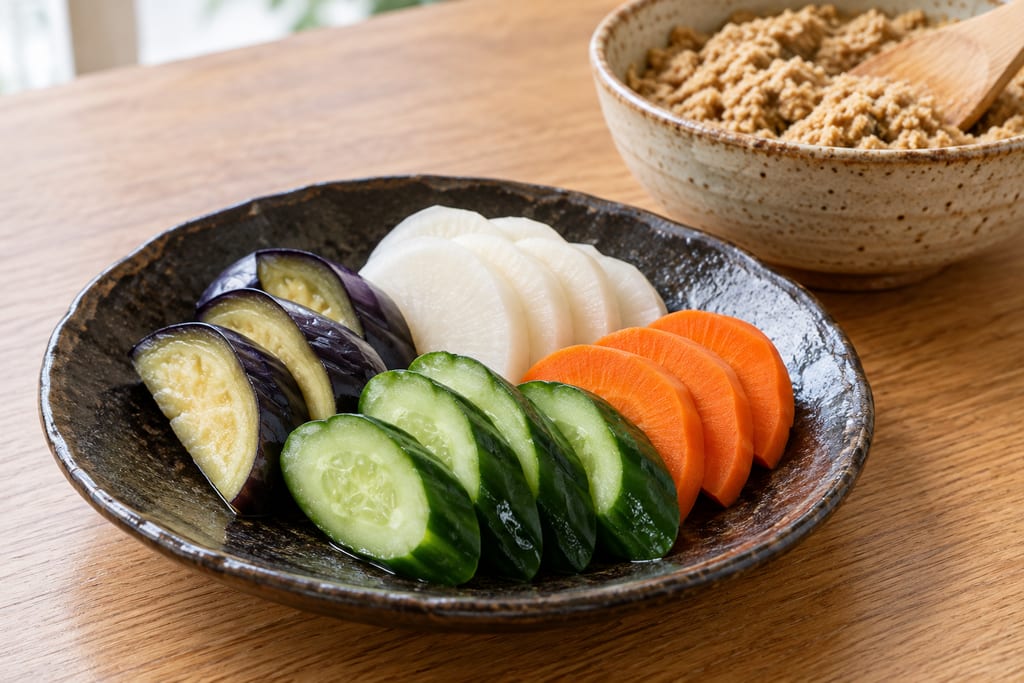
Japanese pickles made by burying vegetables in nukadoko, a reusable bed of rice bran, salt and water that is turned daily and ripened by lactic and yeast fermentation.
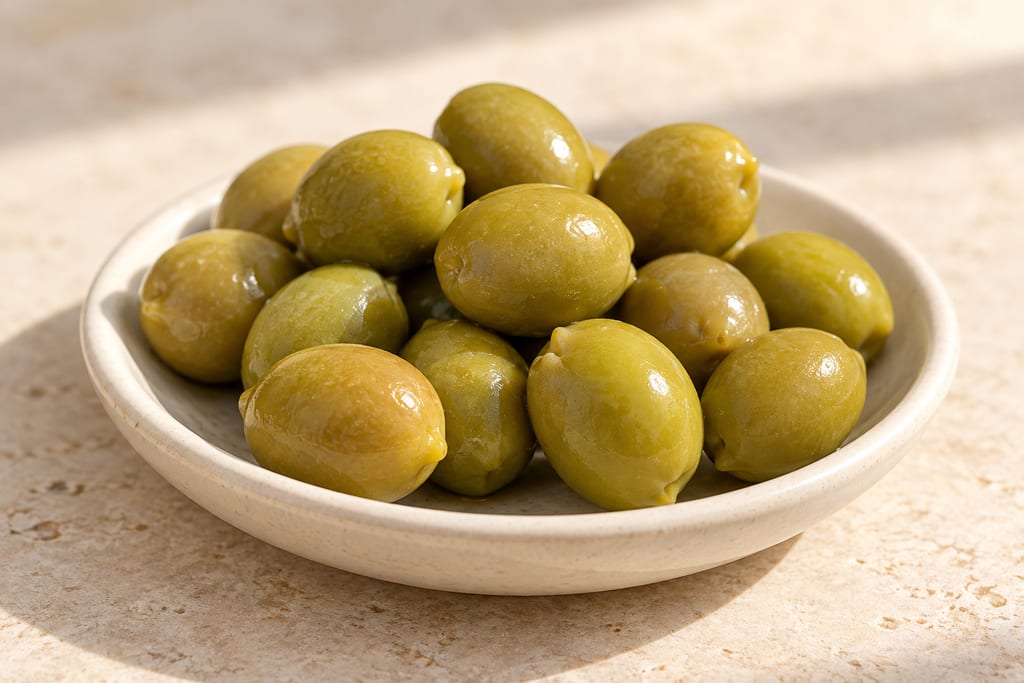
A Portuguese table-olive product from the Negrinha cultivar in northeastern Portugal, sold in three commercial styles, two of them brined fermentations and one oxidised to black.
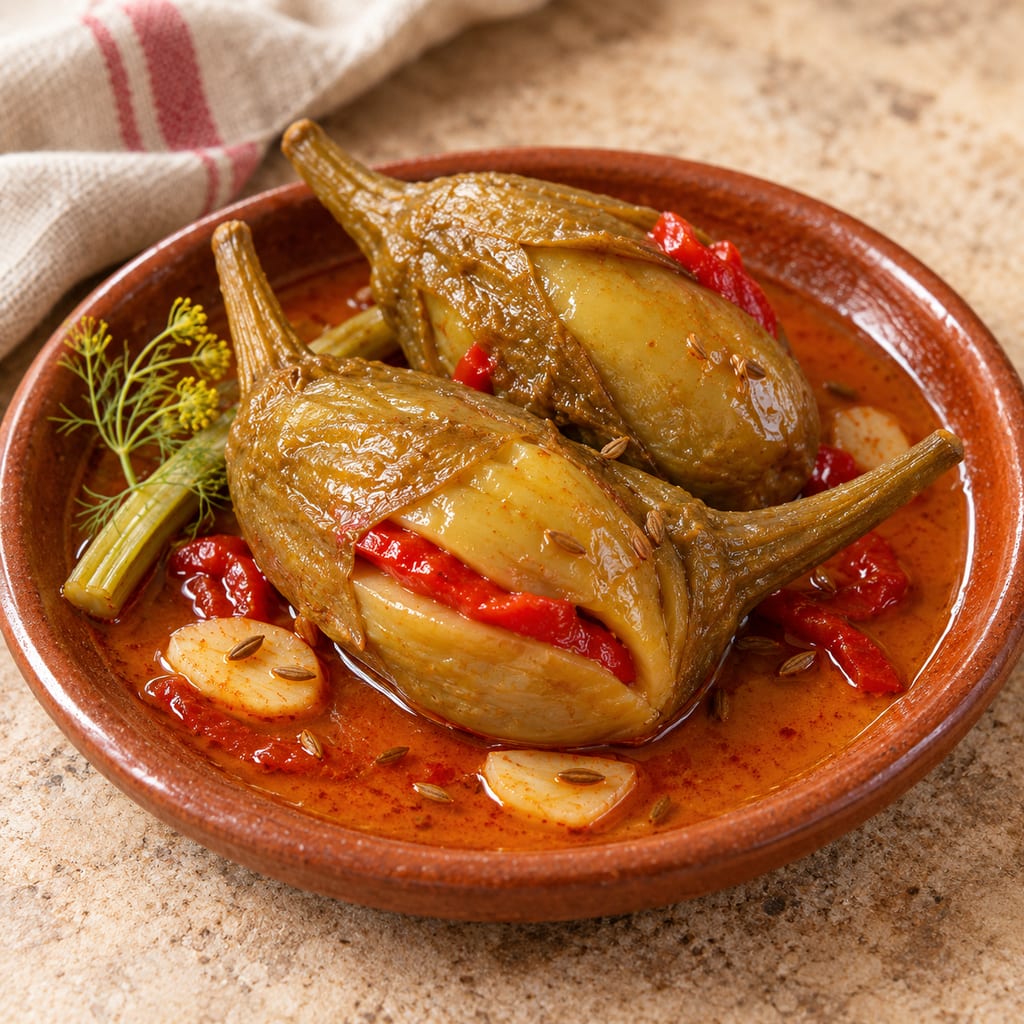
A protected aubergine preserve from Ciudad Real in Spain: tender fruit of the local Dealmagro variety, cooked briefly and then fermented in a vinegared, paprika-seasoned dressing.
Source-specific Brovada DOP producer method for Friuli Venezia Giulia turnips and red-grape marc. This records a regulated producer process; it is not a validated home-scale recipe.
An industrial fermentation patio places factory-made fiberglass-reinforced polyester olive tanks below floor level, with drainage and transfer infrastructure arranged around the buried vessels.
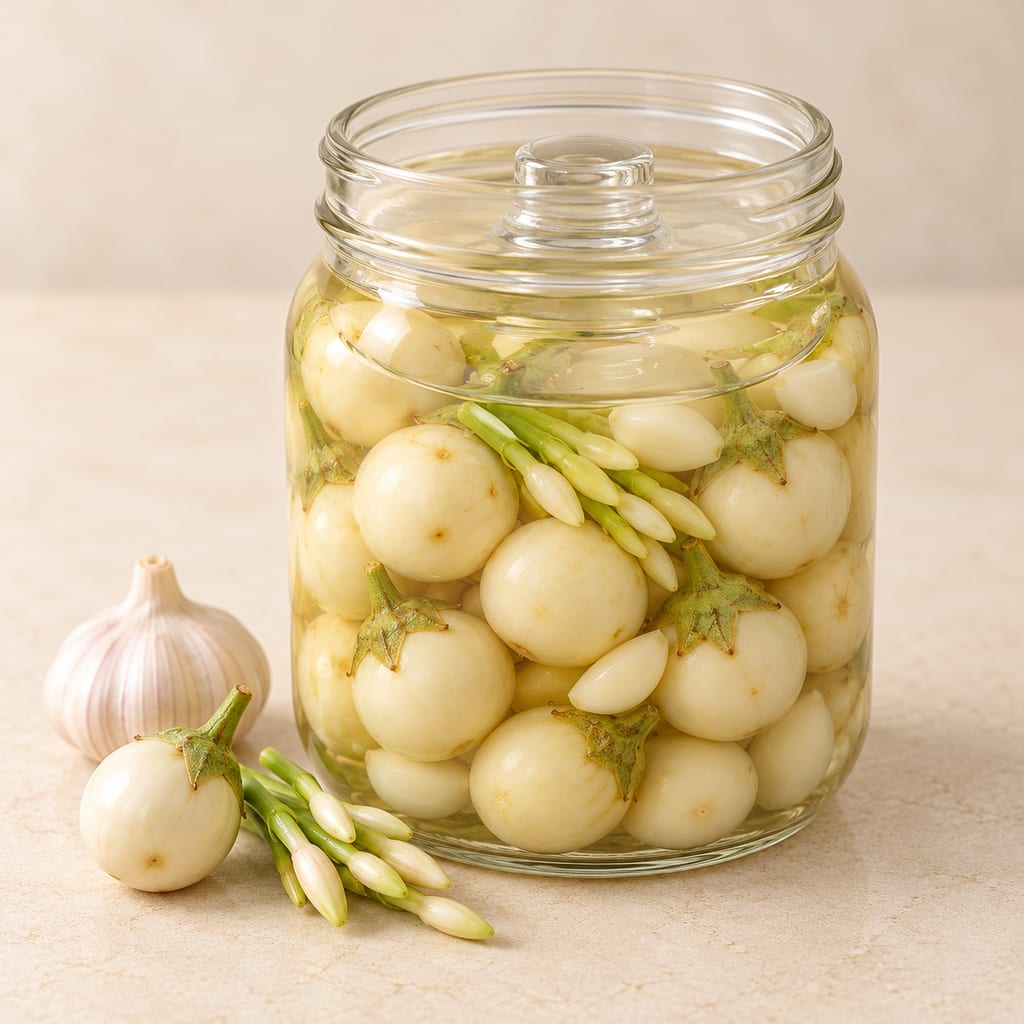
Vietnamese salted and fermented small eggplant, dried on the day of purchase, then held submerged in warm salty water with garlic and galingale flower for a week or longer.
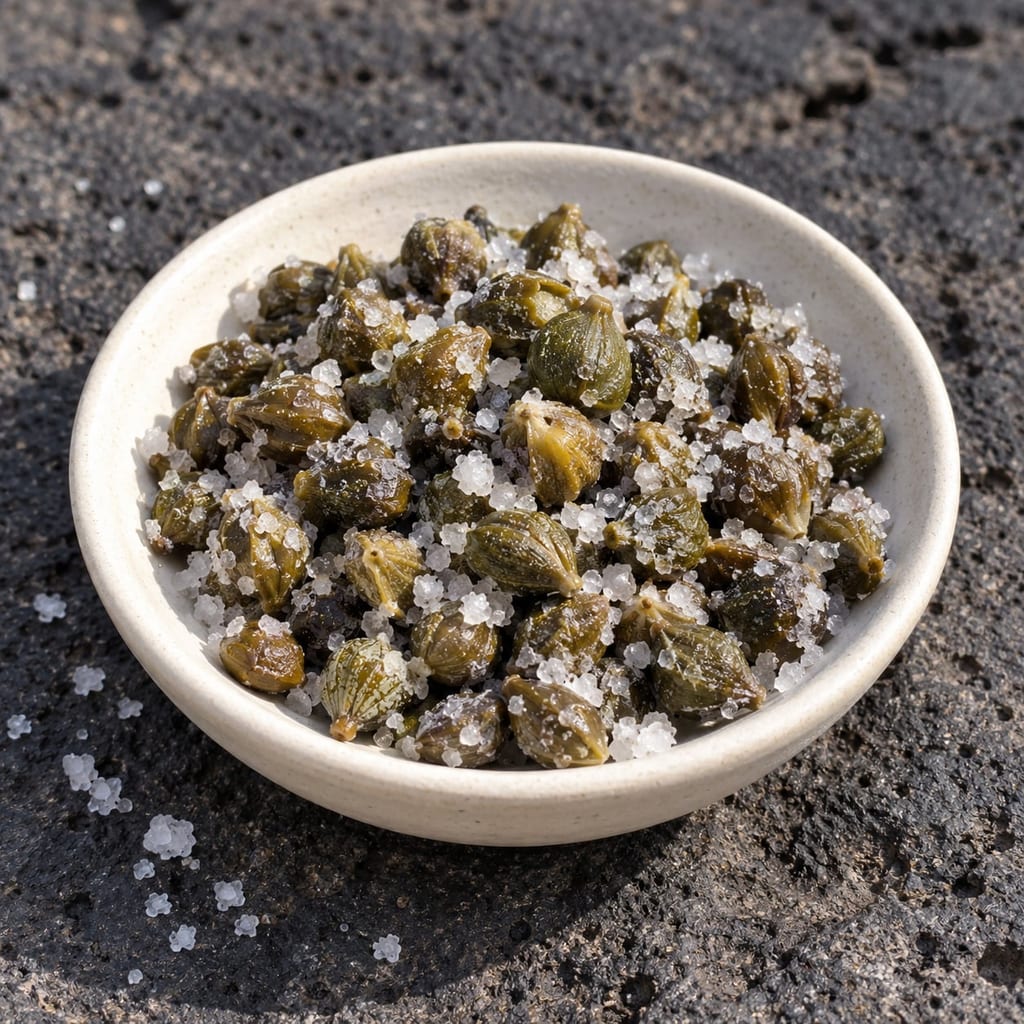
A protected Sicilian product: unopened caper buds from the island of Pantelleria, dry-salted with sea salt in a two-stage process that encourages lactic fermentation.
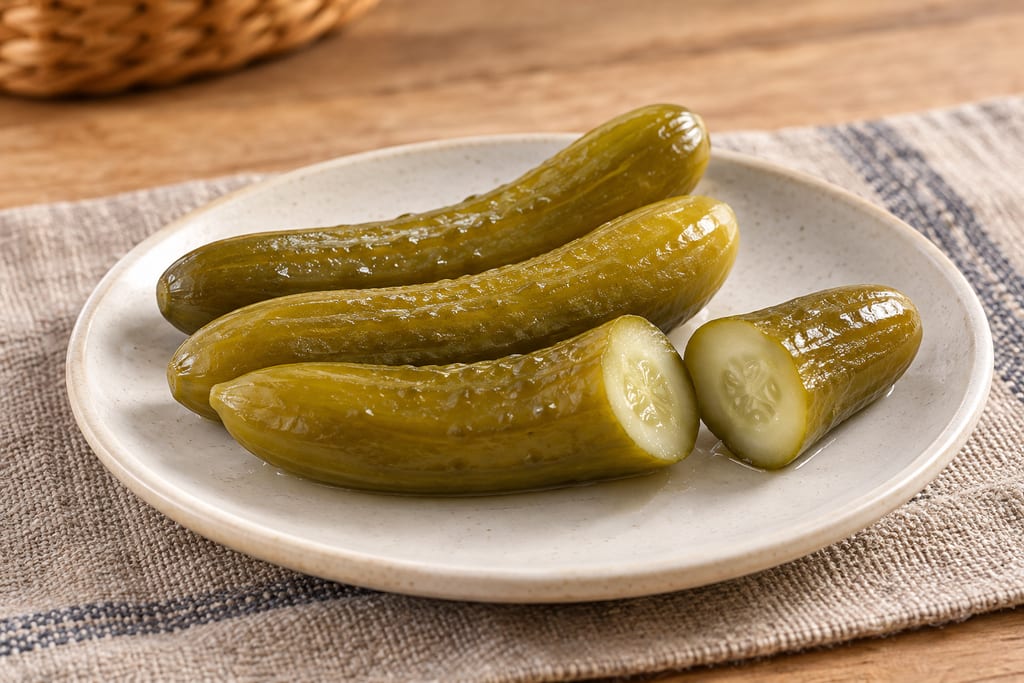
Çubuk turşusu is a registered pickle from Çubuk district in Ankara. Its cucumber variant is sold as Salatalık Turşusu, and a commercial specification sets its brine and room-temperature period.
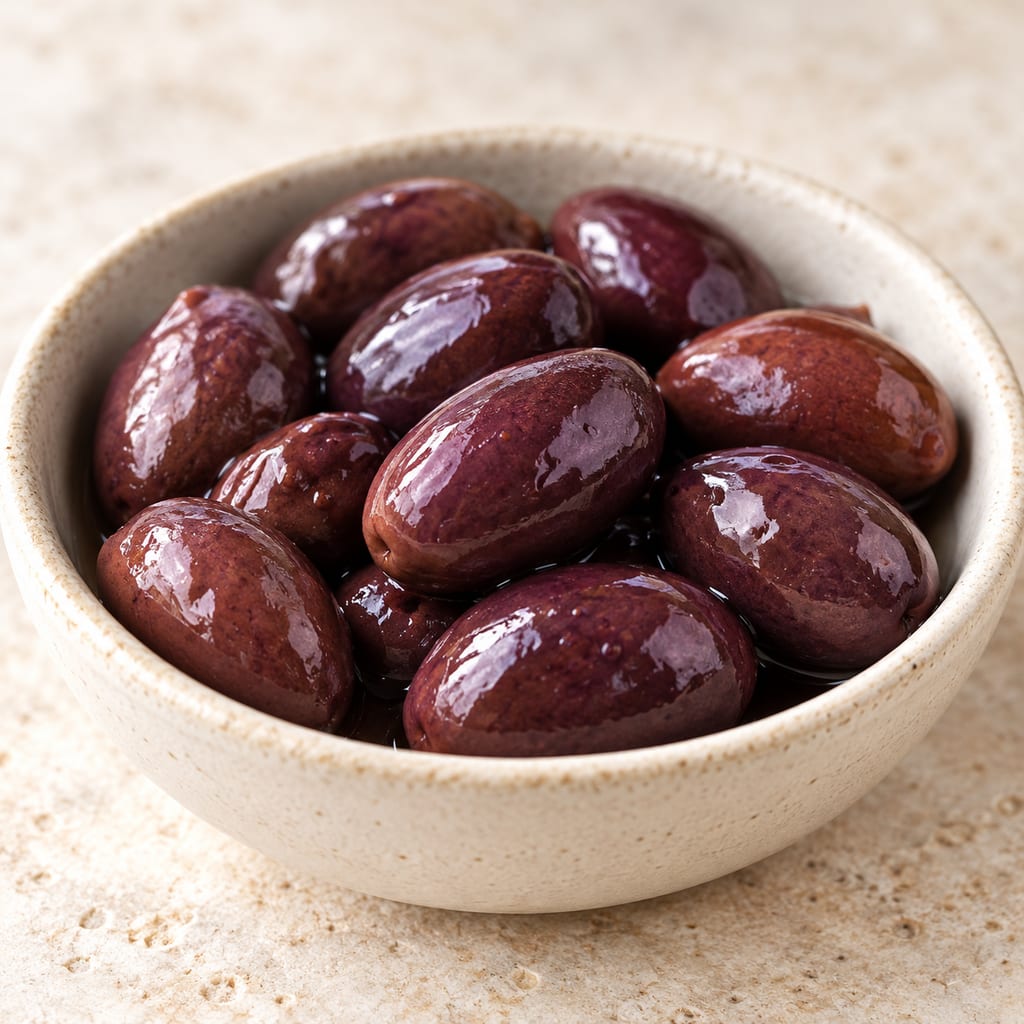
Elia Kalamatas is a Messinia table olive of the Kalamon variety, picked before full ripeness and fermented in brine for six to nine months; it is a PDO product, not a generic black olive.

Soft, spreadable Calabrian pork sausage made with a great deal of red chilli and fatty pork, stuffed into natural casings, sometimes smoked and matured while staying soft.

A way to add independent temperature logging to an existing food dehydrator without changing its built-in controls or protections. It is a monitoring method, not a rewiring plan.

Pleurotus cystidiosus is the abalone mushroom, a cultivated oyster-type fungus with dark brown caps that grows more slowly and is more demanding than other Pleurotus species.

A dark, balanced vinegar from Emilia-Romagna made by combining cooked or concentrated grape must with wine vinegar, then acetifying and refining it in wood under a protected specification.

A living dairy inoculum that starts controlled cream fermentation, developing acidity and aroma before sour cream or cultured butter is finished.

A small electric incubator holds jars at a selected temperature for yogurt and other documented warm food preparations. Controls, capacity and vessel arrangement vary by model.

Adygean salt is a seasoned table salt associated with Adygea and the wider North Caucasian culinary tradition. Salt is blended with garlic and a variable selection of herbs and spices; the exact mix depends on the named style and maker.

The African Caesar-group mushroom, Amanita masasiensis, is a wild ectomycorrhizal species of central and southern African woodlands, eaten locally. The genus contains deadly poisonous species, so identification needs care.
No community contributions have been published for this entry yet.
Sign in to contribute. Published comments and photos are free to read.
Ministry of Agriculture, Forestry and Fisheries of JapanMethod · History · Use
三五八漬け 福島県Primary traditional sagohachi-zuke recipe
2 cups cooked rice, 1 cup rice koji and half a cup salt
Cucumber, carrot, aubergine and turnip as recommended vegetables
Cooling cooked rice to approximately body temperature
Mixing rice, koji and salt
Maturing the bed for at least one month
Coating vegetables and pickling overnight
Alternative use of a pickling tub and light weight
Four-serving recipe designation
Nihonmatsu as a principal region
Edo-period origin described as regional tradition
Historical preparation of the bed in winter for vegetables harvested later
Disagreement concerning the historical 3:5:8 ratio
Two photographs of sagohachi-zuke
Cited in: What it is; History; How it works; How it is made and why each ingredient and step matters; Regional and historical variations; How it is eaten and used; Reading results and problems
Ministry of Agriculture, Forestry and Fisheries of JapanMethod · History
Sagohachi-zuke — Our Regional CuisinesEnglish-language presentation of the Fukushima regional tradition
Traditional rice, koji and salt pickling bed
Regional association with Nihonmatsu
Seasonal preparation and consumption
Traditional overnight vegetable pickling
English terminology for the food and its ingredients
Cited in: What it is
Pal System Consumers' Co-operative Union, Daidoko LogMethod · Variation
三五八漬け(さごはちづけ)Independent measured modern sagohachi recipe
200 g rice koji, 1 go raw rice and 50 g salt
One go rice producing approximately 300–350 g cooked rice
Rice-cooker saccharification for approximately two to three hours
Approximately 60°C identified as favourable for koji saccharification
Alternative dried-koji formulation using 200 g dried koji, 50 ml warm water and 60 g salt
Rehydration of dried koji for approximately 30 minutes
Refrigerated bed maturation for two to three days
Refrigerated vegetable pickling for one to two days
Rinsing or wiping coating before serving
Instructions for separate meat and fish marination
Refrigerated maintenance and replacement of a bed that becomes sour
Five photographs documenting preparation and finished pickles
Kochi Prefectural Agricultural Information Service, Kochi Nogyo NetVariation
三五八漬の床Published agricultural recipe dated 21 November 2012
Volume formulation of 3 cups salt, 5 cups rice koji and 8 cups rice
Winter variation using 2 cups salt
Preference for glutinous rice when greater sweetness is wanted
Warm saccharification method with cooked rice cooled to approximately 60°C
Approximately ten to twelve hours of warm holding before salt addition
Alternative immediate-salt method with two to three months of maturation
Optional vegetable pre-salting at approximately 2%
Optional air-drying of vegetables for two to three days
Reuse and replenishment of the bed
Evidence that sagohachi has several distinct traditional formulations
Cited in: History; How it works; How it is made and why each ingredient and step matters; Regional and historical variations; Reading results and problems
Kohsei Foods, Tsukeru.comVariation · Safety
三五八Commercial sagohachi product made with rice, rice koji and salt
600 g packaged quantity
Product salt equivalent of 11.9 g per 100 g before rehydration
Prepared-bed formula using 400 g commercial base, 90 g cooked rice and 260 ml water
Eight-to-twelve-hour cucumber pickling guidance for spring and autumn
Ten-to-fourteen-hour cucumber pickling guidance for summer refrigeration and winter
Different pickling durations for aubergine, daikon, carrot and turnip
Water accumulation after repeated vegetable pickling
Warnings about reduced salt concentration, colour changes and unwanted odours
Commercial product shelf life distinguished from the prepared bed
Kohsei FoodsSafety · Method
【Q&A】三五八漬についてProducer guidance for sagohachi-bed maintenance
Recommendation to refrigerate opened sagohachi products
Excess bubbling associated with high temperatures and reduced salt concentration
Carbon dioxide and alcoholic fermentation as possible causes of bubbling
Loss of sweetness and development of alcohol-like odours
Increased spoilage risk after excessive dilution
Water movement from vegetables into the bed
Need for replenishment of salt or prepared base
Possible mould growth and excess acidity
Recommendation to keep animal-product and vegetable beds separate
Horaiya HontenVariation · History
三五八漬けのご案内Modern Fukushima commercial sagohachi products
Traditional ingredient ratio described as salt, steamed rice and koji
Overnight vegetable pickling using the prepared product
Commercial standard, chilli and takuan-style varieties
Use of additional sugar, hydrolysed protein and seasonings in some commercial products
Distinction between basic traditional ingredients and modern commercial formulations
Commercial storage periods not transferable to homemade beds
Cited in: History; How it is made and why each ingredient and step matters; Regional and historical variations; How it is eaten and used
Ise SouMethod
みやここうじのご利用法Alternative sagohachi preparation using concentrated koji amazake
500 g concentrated amazake and 40 g salt
Producer's use of salt equal to 8% of amazake weight
Vegetable pickling using bed equal to approximately 40% of vegetable weight
Refrigerated use with vegetables, fish and meat
Reported pickling periods of approximately 6–19 hours depending on the ingredient
Recommendation to remove portions of bed rather than repeatedly placing ingredients into the main container
Evidence that amazake-based sagohachi is a distinct modern formulation
Koizumi Takeo Food MagazineMethod · Use
正統派の麹漬!「三五八(さごはち)漬け」手作りレシピRecipe article dated 8 January 2026
Alternative measured formulation using 200 g rice koji, approximately 300 g cooked rice and 40 g salt
Rice-cooker sweetening stage lasting approximately two to three hours
Refrigerated bed maturation for two to three days
Overnight refrigerated vegetable pickling
Recommendation to wipe off rather than fully wash away the koji coating
Keeping bed used for raw animal products separate
Photographs of vegetables, the ingredients and preparation stages
Otawara City Agricultural CorporationVariation · Use
レシピ~与一の郷ごころ便Contemporary one-year-matured sagohachi product from Tochigi
Use of locally produced Koshihikari rice
Recommendation to coat vegetables with approximately 10% of their weight in prepared bed
Cucumber, turnip and udo pickling for approximately half a day
Daikon and carrot pickling overnight
Separate cooked squid and fish applications
Evidence of modern preparation outside Fukushima
Producer-specific pickling guidance that cannot be applied directly to the MAFF recipe
Cited in: History; How it is made and why each ingredient and step matters; Regional and historical variations; How it is eaten and used
National Diet Library Reference Cooperative DatabaseHistory
伝統食の三五八について書かれた資料を探しているBibliographical investigation dated 2020
Identification of twentieth-century encyclopaedia references to sagohachi
1985 Gendai Nogyo articles describing related preparations
1986 Nipponica encyclopaedia description
1996 culinary encyclopaedia account of Aizu and Yonezawa traditions
Regional references to kan-koji and sagohachi
Evidence that the claimed Edo-period origin remains retrospective rather than directly attested by a verified early primary recipe
Cited in: History; Regional and historical variations; Reading results and problems
National Research Institute of Brewing, JapanScience · Safety
製造全般Definition of prepared koji as steamed grain or other substrates cultivated with selected koji mould
Role of koji enzymes in starch and protein hydrolysis
Distinction between selected koji microorganisms and the prepared food-grade koji material
Differences between koji strains selected for different fermentation applications
Tokyo Metropolitan Bureau of Public HealthSafety
自家製の漬物をつくるときに気を付けることはありますか?Household pickle hygiene guidance
Washing hands and vegetables thoroughly
Cleaning and sanitising preparation equipment
Enterohaemorrhagic Escherichia coli capable of growing at 4% salt
Reduced-salt modern pickles potentially supporting pathogenic growth
Refrigeration and prompt consumption of lightly pickled vegetables
Cited in: Reading results and problems
Ministry of Health, Labour and Welfare of JapanSafety
漬物の衛生規範の改正等についてOfficial Japanese hygiene guidance for commercial pickle production
Foodborne hazards associated with lightly pickled vegetables
Commercial temperature controls at 10°C or below
Requirements for cleaning, disinfection and protection against contamination
Importance of cold-chain management
Distinction between industrial hygiene standards and a documented household recipe
Limits of relying on salt, pH or water activity without process validation
Food Standards ScotlandSafety
ChillingGeneral domestic refrigeration recommendation of 0–5°C
Recommendation to verify refrigerator temperature using a thermometer
Refrigeration slowing microbial growth without sterilising food
Application to ready-to-eat refrigerated products
General safety control rather than a validated sagohachi-specific fermentation temperature
Ministry of Agriculture, Forestry and Fisheries of JapanContext
リンクについて・著作権Public Data License 1.0 generally applies to eligible ministry-owned website material
Attribution requirements for reused content
Requirement to identify modifications
Warning that photographs may have third-party rights
Need to distinguish individual image-download permissions from general reuse of any photograph on the website
コトバンクHistory
三五八漬け(さごはちづけ)Dictionary entry for sagohachi-zuke and its name
Cited in: What it is; History; Reading results and problems
D&DEPARTMENTHistory · Variation
福島定食ができるまで(5)石橋糀屋A Fukushima koji maker's account of sagohachi
Cited in: History; Regional and historical variations
コトバンクHistory
三五八漬(さごはちづけ)Dictionary entry placing sagohachi-zuke in Aizu
Cited in: What it is; History
Nippon Traditional Foods Encyclopedia, Ministry of Agriculture, Forestry and Fisheries of JapanContext
漬物Place of koji pickles among Japanese tsukemono
Cited in: What it is; How it is eaten and used
Kohsei FoodsVariation
三五八Commercial instant sagohachi mix
Cited in: What it is; How it is made and why each ingredient and step matters; Regional and historical variations; How it is eaten and used; Reading results and problems
Kohsei Foods, Tsukeru.comHistory · Variation
三五八漬けって何?What sagohachi-zuke is and how its name is explained
Cited in: What it is; Regional and historical variations
Kohsei Foods, Tsukeru.comVariation · Safety
三五八漬けに関するQ&A集Questions and answers on sagohachi beds
Cited in: How it works; How it is made and why each ingredient and step matters; How it is eaten and used; Reading results and problems
Marukawa MisoMethod · Variation
三五八漬けProducer recipe for sagohachi
Cited in: How it works; How it is made and why each ingredient and step matters; How it is eaten and used; Reading results and problems
Shimamasu HonpoMethod · Variation
三五八漬けProducer recipe for sagohachi
Cited in: How it is made and why each ingredient and step matters
新関さとみの田舎ごはんMethod · Variation
三五八漬けHome recipe for sagohachi
Cited in: Regional and historical variations; How it is eaten and used
Ministry of Agriculture, Forestry and Fisheries of JapanSafety
これで解決!食中毒予防のポイントHome food-poisoning prevention, including clean utensils
Journal of Fungi, MDPI, via PubMed CentralScience
Japanese Traditional Miso and Koji MakingKoji mould and the enzymes it makes
Cited in: How it works
Food Science & Nutrition, via PubMed CentralScience
Research advances on sake rice, koji, and sake yeast: A reviewRice koji enzymes acting on rice starch and protein
Cited in: How it works
Bioscience of Microbiota, Food and Health, via PubMed CentralScience
Impact of vegetables on the microbiota of the rice bran pickling bed NukadokoRepeated vegetable pickling changes the microbial community of a rice-bran bed
Cited in: How it works; Reading results and problems
Scientific Reports, via PubMed CentralScience
The relationships between microbiota and the amino acids and organic acids in commercial vegetable pickle fermented in rice-bran bedsEnvironmental conditions influence microorganisms and metabolites in rice-bran pickles
Cited in: How it works; Reading results and problems
Journal of Food Safety, Wiley, 2023Safety · Science
Food safety considerations in the production of traditional fermented products: Japanese rice koji and misoFood-safety considerations for rice koji
Cited in: How it works; Reading results and problems