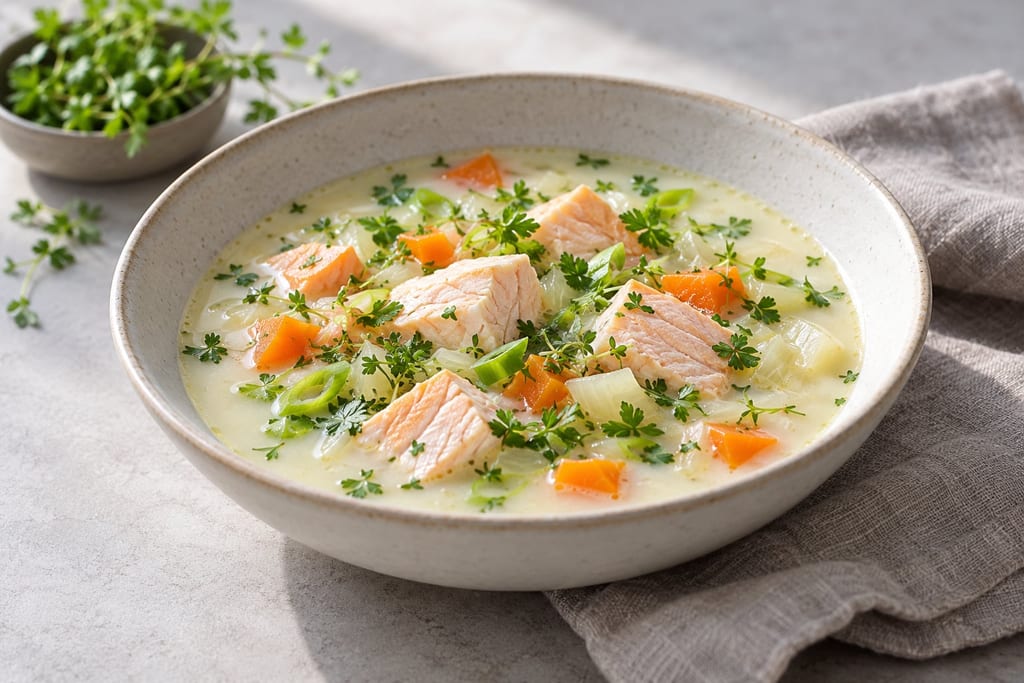
Fish and onion soup (modern reconstruction)
Trout or salmon poached at the end of a simmered broth of onion and root vegetables, a present-day reconstruction of coastal cooking built on excavated fish bones and a boiling pot.
 FermenteaWhere food goes to change
Substrates
The turnip, a brassica crop whose roots and leaves are eaten. The source record names the species Brassica rapa, but its wild and naturalised forms are not assessed here.
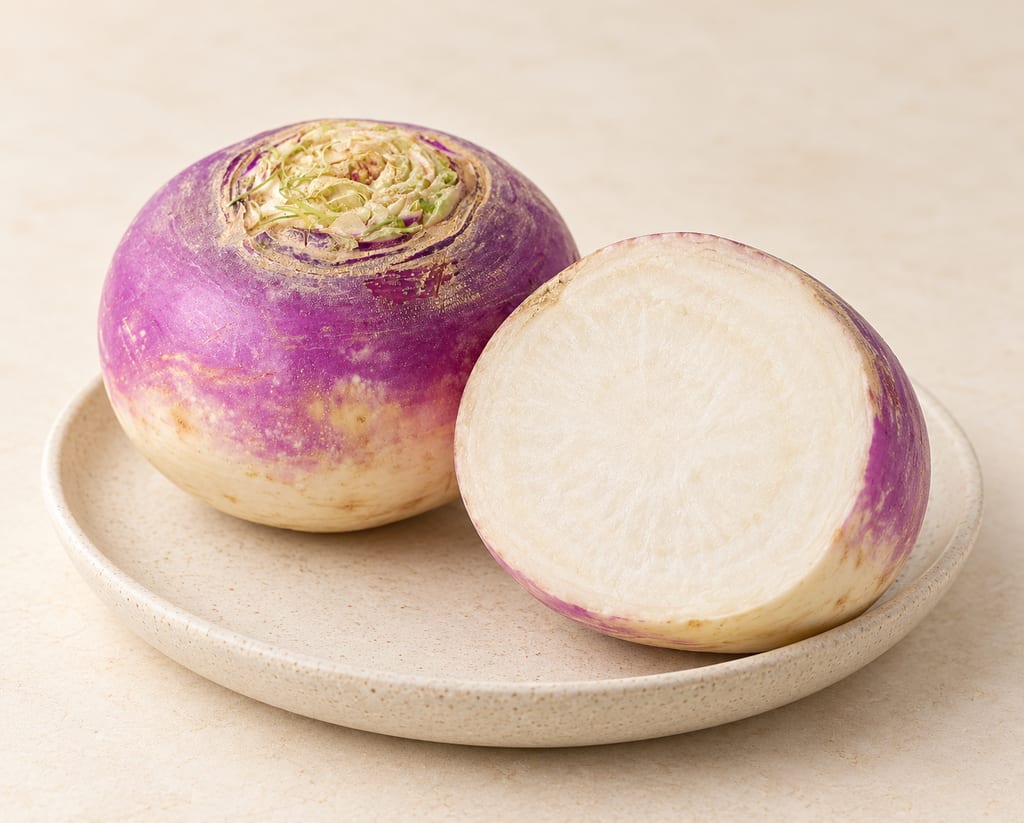
The source record names the species Brassica rapa L. with the English name field mustard, described there as cultivated and naturalised worldwide. The RHS guide describes turnips as members of the brassica family and does not give a botanical name.
The link between the record's species and the turnip crop is therefore an inference to be checked against a taxonomic source. The record itself is a discovery name and not a completed report.
The RHS guide gives the roots and the leaves as the edible parts. Leaves can be eaten like spinach, and young leaves are also eaten raw. Young roots are eaten raw in salads, roasted, or added to stews. Sweeter salad varieties suit stir-fries.
The RHS recommends a sunny, cool spot and fertile, moisture-retentive soil. Small batches are sown every few weeks from spring to late summer. Early varieties are sown March to June and maincrops July to mid-August. Watering in dry spells prevents woody or split roots, and roots are harvested while small because larger ones turn woody and bitter.
Reference and research only. Fermenta cannot identify a gathered specimen or guarantee that it is safe to eat. Competent local identification is needed before eating any wild plant.
The inspected sources do not assess wild or naturalised Brassica rapa plants, their lookalikes or their collection rules. The RHS guide gives cultivation advice only, and a cultivated-crop description is not an identification of a gathered plant.
No regional names, wild occurrence, season for gathering or preparation-specific safety review is established by the sources used here. The field mustard name for the wild or naturalised form needs its own source before it is used on this page.
The RHS growing guide does not place the crop in one region. The source record gives cultivated and naturalised occurrence worldwide without a locality.
Trout or salmon poached at the end of a simmered broth of onion and root vegetables, a present-day reconstruction of coastal cooking built on excavated fish bones and a boiling pot.
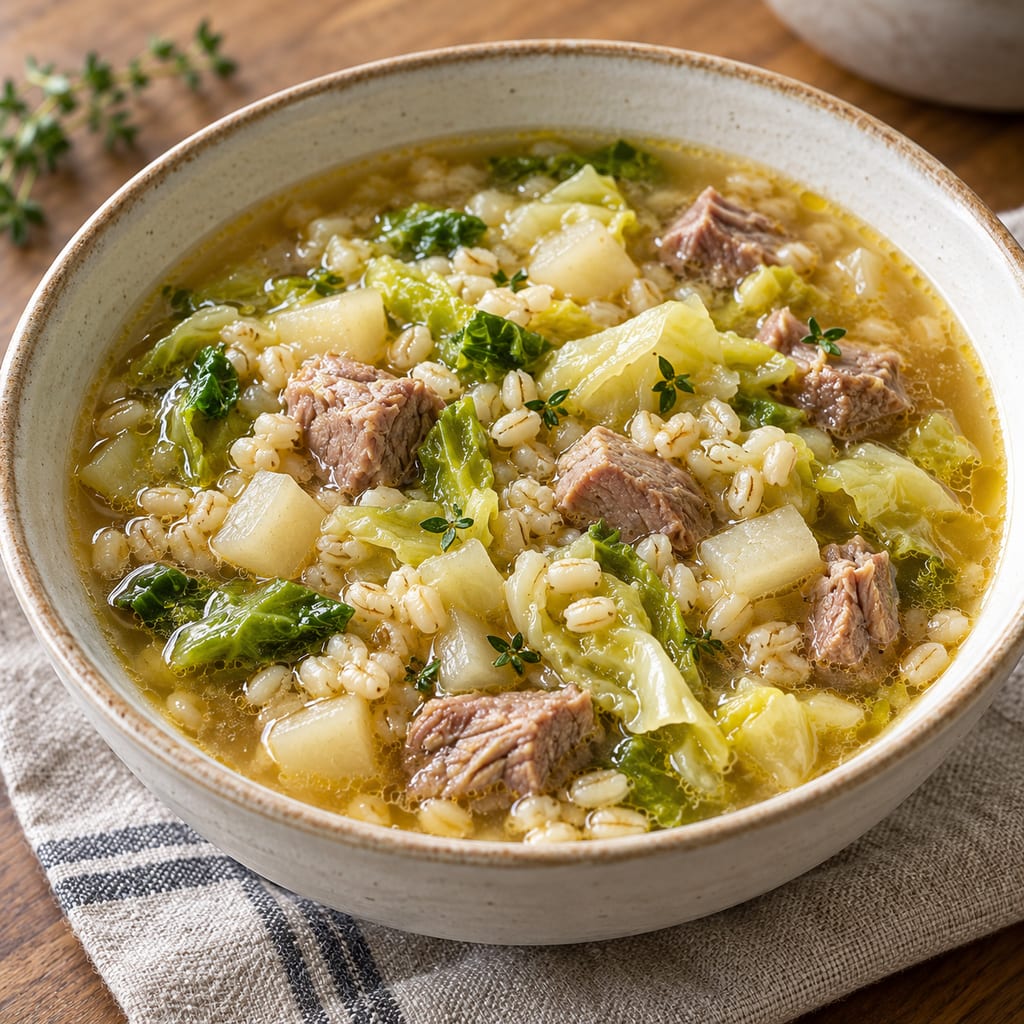
Lamb shoulder simmered with pearl barley, turnip and leafy cabbage in one pot, a present-day reconstruction built from the animals, grains and vegetables of northern European farming.
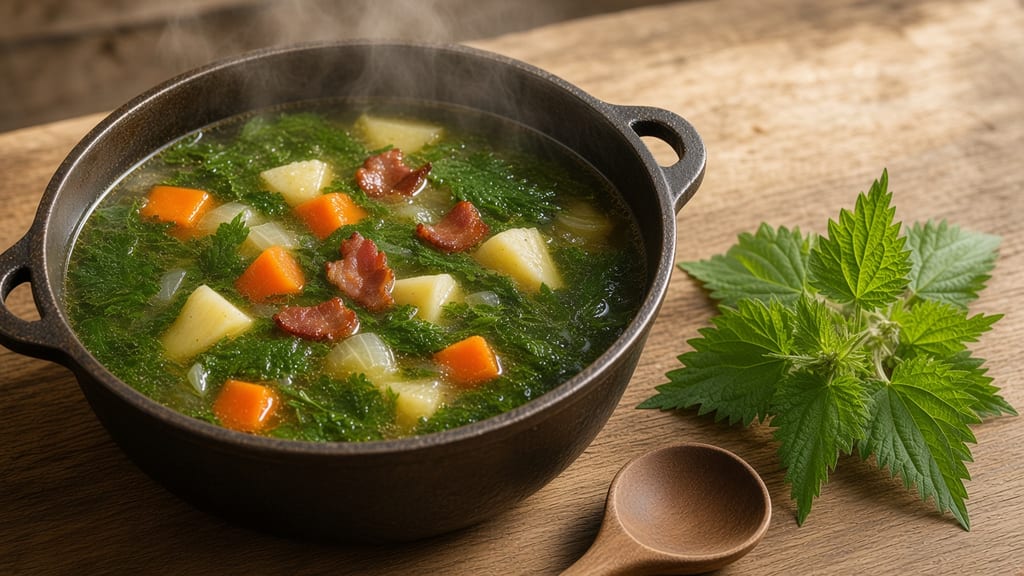
Young stinging nettle shoots cooked with bacon, onion, garlic and three roots into a thick spring soup, from a Danish Viking museum's recipe, with a meat-broth variation and ember-baked turnips.
No community contributions have been published for this entry yet.
Sign in to contribute. Published comments and photos are free to read.
Royal Horticultural SocietyCulinary use · Growing
How to grow turnipsRoots and leaves edible
Young leaves raw or like spinach
Roots raw in salads, roasted or in stews
Sowing windows and harvesting while small
Cited in: What the plant is; Edible parts and use; Growing notes; Identification and safety limits
Royal Botanic Gardens, Kew (POWO)Accepted name
POWO name lookup for Brassica rapaName lookup for Brassica rapa L.
Cited in: What the plant is; Identification and safety limits; Research gaps