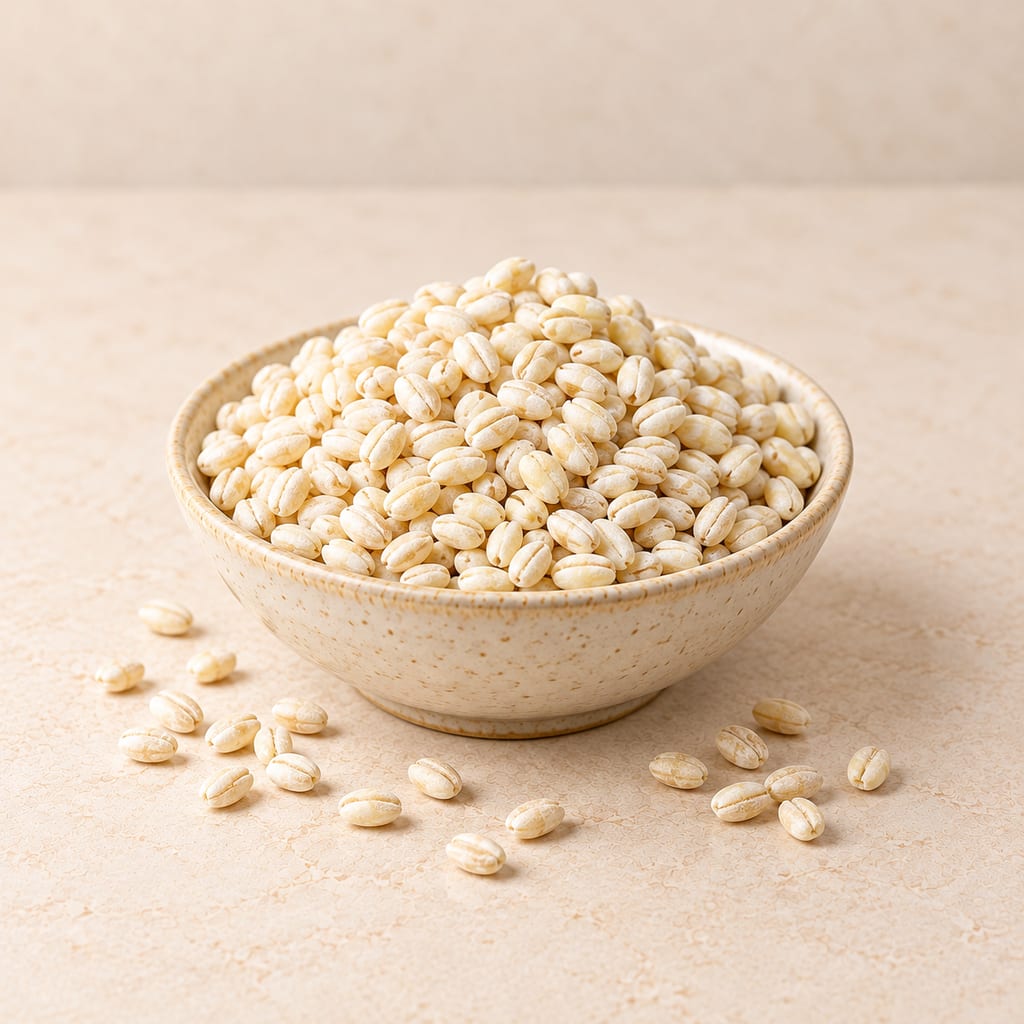
Barley
Barley is a hardy cereal, domesticated in the Middle East over 10,000 years ago, eaten whole, pearled or milled, malted for brewing, and grown with koji mold for barley miso.
 FermenteaWhere food goes to change
Modern method
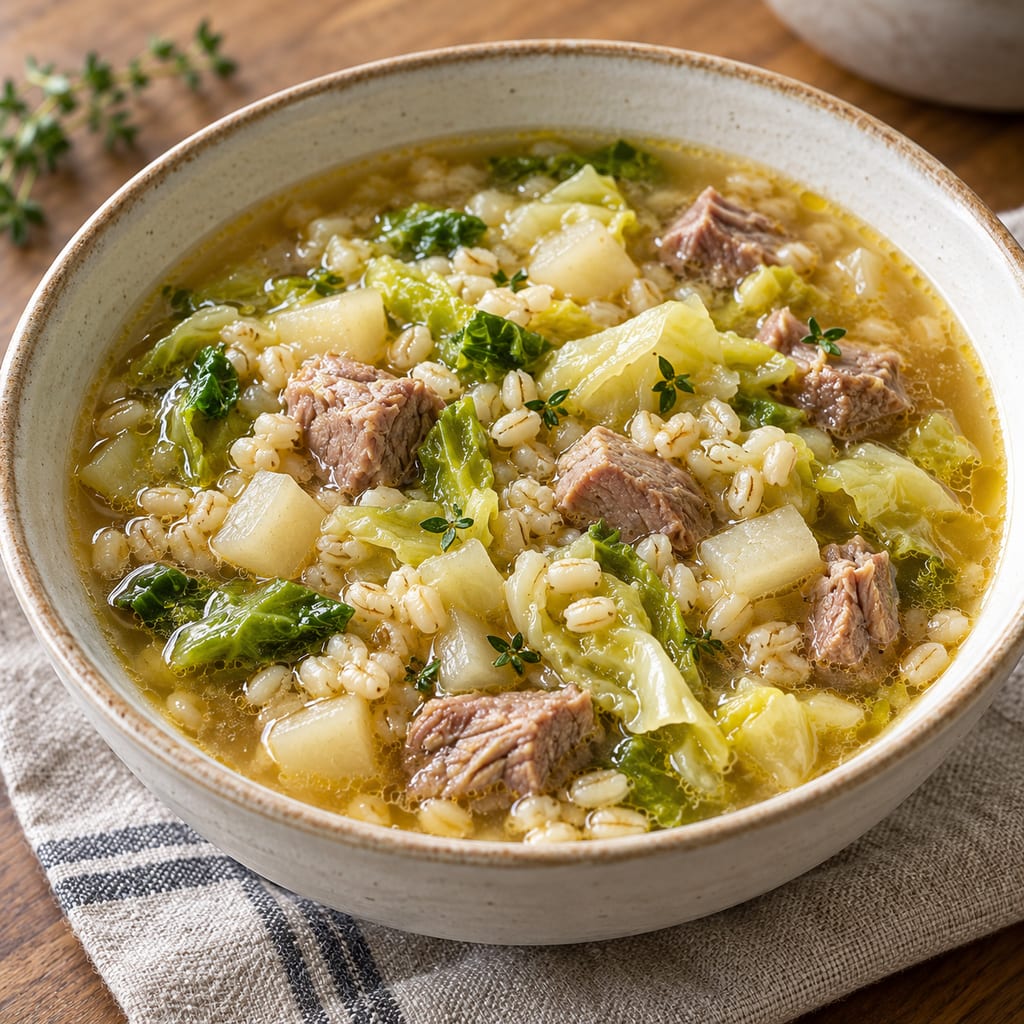
Lamb and barley pottage · Kjötsúpa · Kjøttsuppe · Kødsuppe
Lamb shoulder simmered with pearl barley, turnip and leafy cabbage in one pot, a present-day reconstruction built from the animals, grains and vegetables of northern European farming.
Pottage is a broad English term for food cooked slowly in a pot, usually combining liquid with grains, vegetables, pulses or meat.
The word is useful when describing Viking Age cooking, but it is not the name of a single standardised Viking dish.
A thick pottage might resemble modern stew. A thinner version might be closer to soup. The distinction depends on the relative quantities of liquid and solid ingredients.
Lamb, barley and cabbage make a plausible combination because sheep husbandry, cereal agriculture and leafy vegetables all belonged to northern European farming systems.
Nevertheless, no surviving archaeological document establishes the particular recipe presented below. It is a modern reconstruction designed to explore a historically possible meal.
The value of the reconstruction is in its ingredients and cooking principles rather than any claim that it reproduces a lost recipe word for word.
These are related terms, not necessarily historically identical dishes.
The principal ingredients are lamb or mutton from domestic sheep, Ovis aries; barley, Hordeum vulgare; and cabbage or kale from cultivated forms of Brassica oleracea.
Turnips, Brassica rapa, can provide a suitable root vegetable.
Old Norse — súpa — soup
Old Norse — grautr — porridge or thick preparation
Norwegian — kjøttsuppe, gryte
Danish — kødsuppe, gryderet
Swedish — köttsoppa, gryta
Icelandic — kjötsúpa
Animal bones are among the most informative archaeological remains from Viking settlements.
Different skeletal elements, butchery marks and age profiles can reveal which animals were raised, slaughtered and consumed.
Sheep and cattle contributed meat, milk, hides and other materials to the farming economy.
Their economic role was not restricted to meat production.
A sheep might produce wool over several seasons before eventually being slaughtered. A cow could provide milk and calves, making the timing of slaughter an important household decision.
The age of the animal affects the meat. Young lamb is relatively tender, while meat from older sheep contains more developed connective tissue and generally benefits from slow cooking.
Archaeological discoveries confirm sheep husbandry, but they do not establish the proportion of young lamb versus older mutton used in a particular stew.
Cereals provide a second evidence category.
Barley was widely cultivated, and evidence for the preparation of cereal dishes is substantial.
Cabbage-family plants and other vegetables also belonged to the wider northern European food economy, though distinguishing specific ancient cultivars from modern varieties can be difficult.
The existence of these ingredients does not prove that they were always cooked together.
What makes pottage plausible is the combination of available ingredients with well-established boiling technology.
Viking Age cooks had several types of vessel available.
Iron cauldrons could be suspended over a fire. Soapstone containers and pottery were also used.
The Roskilde Viking Ship Museum documents boiling vessels, roasting equipment, querns and other cooking implements as part of its interpretation of Viking food preparation.
Boiling has practical advantages.
It transfers heat through water, reducing the risk of burning food directly against flames. It also allows tough meat to soften while retaining the juices released during cooking.
A pot can accommodate ingredients introduced at different stages.
Meat may require extended simmering, while leafy vegetables need much less time.
This staged cooking is central to the reconstructed recipe.
In some settings, hot stones could be placed into liquid to transfer heat. Such cooking should not be assumed for this specific dish without evidence.
For a modern reconstruction, a heavy saucepan or cast-iron pot provides a useful equivalent cooking environment.
Meat consists of muscle fibres embedded in connective tissues, alongside fat and water.
The main structural proteins behave differently under heat.
Myosin begins to change as meat heats, causing muscle proteins to denature. Continued heating alters additional proteins, and muscle fibres contract, expelling some of their retained water.
Collagen is particularly important in tougher cuts.
Collagen forms part of connective tissue surrounding and supporting muscles. With sufficient moisture, heat and time, it gradually softens and can contribute gelatin to the cooking liquid.
This is one reason shoulder and other hard-working cuts are suitable for slow cooking.
A brief exposure to high heat may produce a cooked surface without giving connective tissues enough time to soften.
Extended gentle cooking changes both the meat and the broth.
Water-soluble flavour compounds move into the liquid. Fat may collect on the surface, while gelatin contributes body.
Skimming surface foam changes the appearance of the broth but is not a complete food-safety treatment.
Barley turns a relatively thin meat broth into a more substantial dish.
As its starch hydrates, it thickens the liquid. Beta-glucan fibres also influence viscosity.
Whole grains contribute a different texture from flour.
Pearl barley, used in the modern reconstruction, has undergone processing that removes part of the grain's outer layers.
It is convenient and generally cooks more readily than minimally processed hulled barley.
However, pearl barley should not be described as an exact reproduction of the barley preparation used in a Viking household.
The degree of historical grain processing varied.
Using barley flour would create an altogether different dish: the broth would thicken more quickly and become closer to a cereal gruel.
Coarse cracked grain produces an intermediate texture.
These variations demonstrate how changing the physical form of one ingredient can alter the entire meal.
Cabbage leaves contribute flavour, fibre and vegetable matter, but they do not require the same cooking time as lamb shoulder.
Extended boiling softens their cell walls and can cause the leaves to lose structure.
It also changes their colour and aroma.
Members of the cabbage family contain glucosinolates, compounds that can be transformed during cutting and cooking into substances contributing characteristic brassica flavours.
Turnips behave differently.
Their roots contain substantial water and structural carbohydrates. Cooking softens their tissues and reduces firmness.
Turnip is especially useful in a pottage because its pieces can contribute substance without overwhelming the grain.
The reconstructed recipe also uses onion, Allium cepa, and a little thyme, Thymus species.
The precise historical availability and use of particular herbs depended on place and period. A modern cultivated herb should not automatically be treated as archaeologically demonstrated seasoning.
This formulation comes from the supplied research dossier. Its ingredients are compatible with Viking Age food resources, but the combination and measurements were devised for a modern kitchen.
1. Prepare the ingredients.
Trim any unwanted material from the meat and cut it into reasonably even pieces.
Wash the vegetables and prepare them separately.
Keep the leafy cabbage aside, since it will be added later.
2. Start the broth.
Put the lamb, onion and water in a heavy pot.
Bring the liquid to the boil, skim if necessary and reduce to a gentle simmer.
3. Simmer the meat.
Cook for approximately one hour.
The meat begins to release flavour into the water while connective tissues gradually soften.
4. Add the barley and turnip.
Stir in the pearl barley and diced turnip.
Continue simmering for approximately 40–50 minutes.
Add additional water if the mixture becomes too thick.
5. Add the cabbage.
Introduce the cabbage or kale for the final 10–15 minutes.
This prevents it from undergoing the entire extended cooking process.
6. Finish and serve.
Check that the barley is tender and the meat thoroughly cooked.
Season and serve hot.
The published timings belong to the modern reconstruction. They are not archaeological measurements.
Every ingredient is on a UK supermarket shelf. Buy boneless lamb shoulder or diced lamb from the meat counter, pearl barley from the rice and pulses aisle, and an onion, a turnip and a savoy cabbage or bag of kale from the vegetable section.
Pearl barley and modern cultivated vegetables approximate the crops of the period and do not copy them. Kale works in place of leafy cabbage.
A heavy saucepan with a lid does the work of a hearth pot. Keep it at a gentle simmer, and add water when the barley absorbs it.
For a cheaper or less meaty pot, use less lamb and more barley and vegetables. The research treats that version as an inference from the ingredients rather than a recovered recipe.
A household with limited access to meat could use a higher proportion of grain and vegetables.
This is an inference from the economic properties of the ingredients, not evidence for an excavated poverty recipe.
A richer preparation might contain more fat or meat.
Older mutton would behave differently from lamb shoulder. Its stronger flavour and connective tissue may justify different cooking times, but no exact duration can be established from the historical material.
A grain-free version would resemble a meat-and-vegetable soup.
A version thickened with barley flour would produce a much more uniform texture than one containing whole grains.
The same underlying technique could therefore create markedly different meals.
Regional ingredients would also matter.
A coastal household might use fish rather than meat. A northern settlement might have a different seasonal supply of vegetables from one in southern Denmark.
These differences should not be collapsed into one fictional universal Viking recipe.
One of the most important characteristics of historic cooking was the uneven availability of ingredients.
Fresh leafy vegetables were linked to growing seasons.
Root crops and stored grain could provide food beyond harvest.
Domestic animals could be slaughtered when necessary, but killing productive livestock also removed future sources of milk, wool or offspring.
Preserving meat through drying, smoking or salting was therefore relevant to winter provisioning.
The Viking Ship Museum describes these preservation methods but does not give a validated universal Viking recipe for dried or salted mutton.
The present pottage uses fresh refrigerated meat, not experimentally preserved historical meat.
Substituting home-dried meat without an established safe process would create unnecessary risk.
A bowl of thick pottage can provide grain, vegetables, fat and meat in one preparation.
Flatbread is a natural modern accompaniment because it absorbs broth effectively.
Fresh cheese or butter can be served separately.
For an ordinary meal, a simple wooden spoon would be sufficient to consume most of the contents.
However, the shape of the pot and the availability of spoons do not establish the precise dining arrangement of a particular household.
Literary descriptions of feasts, poorer households and high-status dining indicate substantial social differences.
A reconstructed farmhouse pottage should not be presented as representative of every social class.
Tough meat after prolonged cooking may simply need additional gentle cooking.
Grain that remains hard may be insufficiently hydrated, particularly if a less processed barley has been substituted.
Scorching at the bottom of the pot usually indicates insufficient liquid, excessive heat or inadequate stirring after the barley has begun thickening the broth.
A greasy surface can be skimmed if a lighter broth is desired.
Vegetables that disintegrate may have been added too early.
An unpleasant smell, visible mould or unexpected fermentation after storage indicates that the meal should be discarded.
Food safety cannot be established by tasting a suspicious sample.
Lamb shoulder prepared as a slow-cooked stew should be thoroughly cooked and handled hygienically.
For a conservative household cooking check, UK Food Standards Agency guidance specifies a centre temperature of 70°C for two minutes, or an equivalent time-temperature combination.
The guidance also lists 75°C for 30 seconds as an alternative.
These figures are modern safety standards, not temperatures recorded by Viking cooks.
Keep raw meat separate from ready-to-eat foods.
Wash preparation equipment thoroughly and avoid allowing cooked food to contact surfaces contaminated by raw meat.
After cooking, divide large quantities into smaller containers if necessary to accelerate cooling.
Refrigerate promptly and consume leftovers within 48 hours or freeze them.
A pot sitting warm on a hearth is not automatically safe for consumption the following day.
The barley in this dish also contains gluten.
The central uncertainty is not whether Viking Age people knew lamb, barley or cabbage.
It is whether a specific combination of these ingredients was prepared using the quantities and sequence presented here.
No archaeological residue currently establishes this precise formulation.
Nevertheless, this reconstruction illustrates an important cooking principle: the same vessel could extract flavour from meat, soften grain and prepare vegetables while making efficient use of available fuel.
It demonstrates the relationship between farming, storage and cooking without pretending to recover an undocumented original recipe.
What the archaeology supports here is a cooking logic rather than a recipe. Animal bones are among the most informative remains from Viking settlements, since skeletal elements, butchery marks and age profiles show which animals were kept and killed; and because sheep and cattle supplied wool, milk, hides and calves as well as meat, the timing of slaughter was a household decision with a cost attached. Age shows in the meat itself: young lamb is relatively tender, while an older sheep carries more developed connective tissue and repays slow cooking. Boiling made that possible without burning food against flames, in iron cauldrons hung over a fire or in soapstone and pottery vessels, and a single pot could take ingredients at different stages, meat early and leaves late. Barley turned a thin broth into a meal as its starch hydrated and its beta-glucans thickened the liquid. All of this sits inside a seasonal economy in which fresh leaves were tied to the growing season while stored grain and roots carried a household past harvest, and in which meat was also dried, smoked or salted for winter. The reconstruction on this page uses fresh refrigerated meat and modern pearl barley; its value is in showing how farming, storage and one pot fit together, not in recovering a lost formulation.
Scaling: source batch only
A stew cooked in stages can leave larger pieces of meat short of a thorough centre, and appearance in a broth is a poor guide to it.
Hazard sourceRaw lamb is prepared alongside vegetables that go into the same pot, and cooked food can be recontaminated by surfaces or equipment that handled the raw meat.
Hazard sourceA substantial volume of thick, meat-and-grain stew cools slowly in one container, and a pot left standing warm is not safe the following day because it simmered the night before.
Hazard sourceDrying, smoking and salting are documented as period preservation methods, but no validated recipe for dried or salted mutton is given, so swapping home-preserved meat into this dish adds a risk the reconstruction does not cover.
Hazard sourceCook the lamb thoroughly and check the centre rather than the surface
Control sourceKeep raw meat separate from ready-to-eat food and wash preparation equipment before cooked food touches it
Control sourceDivide a large quantity into smaller containers to accelerate cooling, then refrigerate promptly
Control sourceA pot sitting warm on a hearth is not safe to eat the next day on the strength of having simmered for an hour the night before.
The 500 g lamb, 150 g pearl barley, 1.5 litres of water and the staged timings belong to a modern reconstruction; no archaeological residue establishes this formulation.
Pearl barley is a processed modern grain, and substituting hulled barley or barley flour changes both the dish and the time it needs.
Do not substitute home-dried or home-salted meat for the fresh refrigerated lamb: no safe process for it is established here.
An unpleasant smell, visible mould or unexpected fermentation after storage means the meal goes in the bin, and tasting a suspicious sample settles nothing.
The barley in this dish contains gluten.
A country-level association for the ingredients and the farming economy behind them: sheep husbandry, cereal cultivation and cabbage-family vegetables. It is not an attestation of this dish, which no cited evidence documents.
A country-level association from the museum's animal and cereal evidence and its account of social differences in eating. No locality is claimed.
The museum documents the boiling vessels, roasting equipment and querns on which this reconstruction's cooking logic rests. The formulation itself is from the supplied research dossier rather than from the museum.
Barley is a hardy cereal, domesticated in the Middle East over 10,000 years ago, eaten whole, pearled or milled, malted for brewing, and grown with koji mold for barley miso.
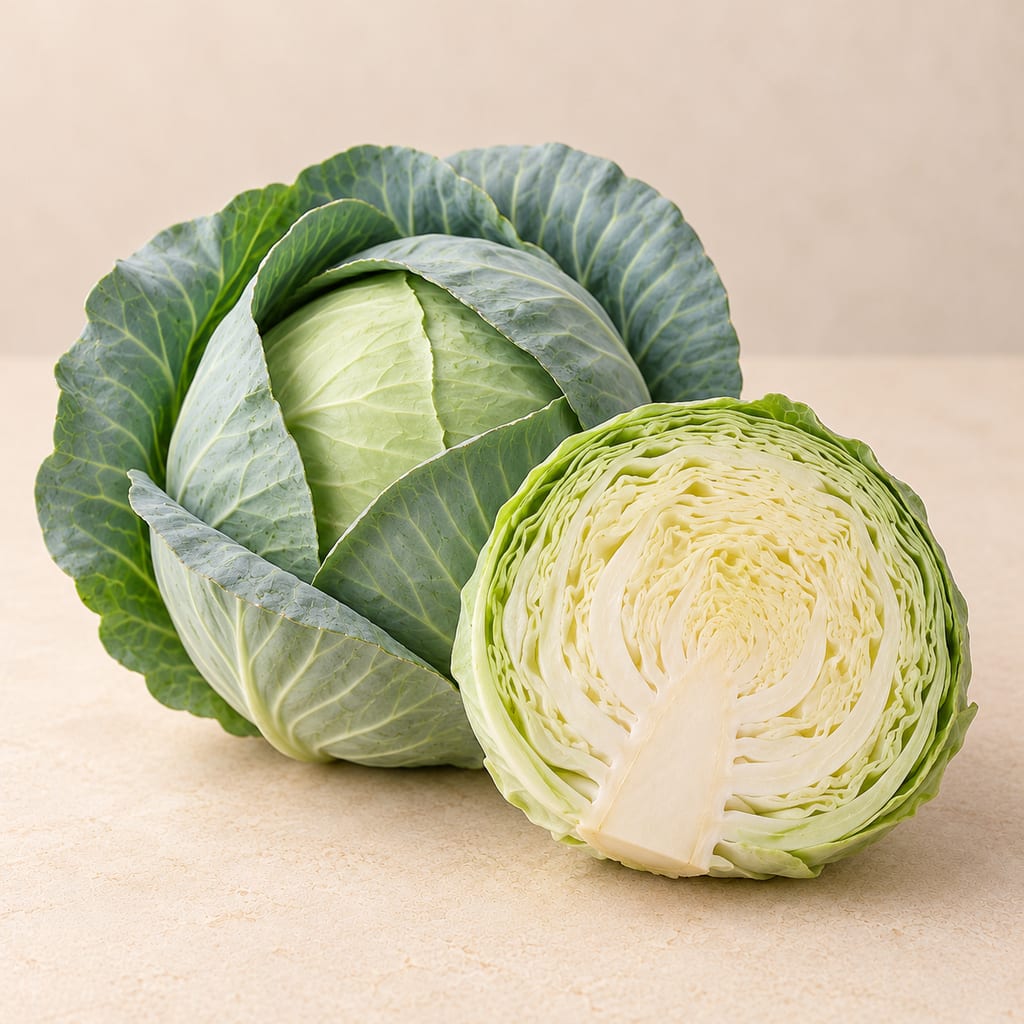
Cabbage is the dense leafy head of Brassica oleracea, a European vegetable that keeps for months and is the classic raw material for sauerkraut, with napa cabbage the base of kimchi.
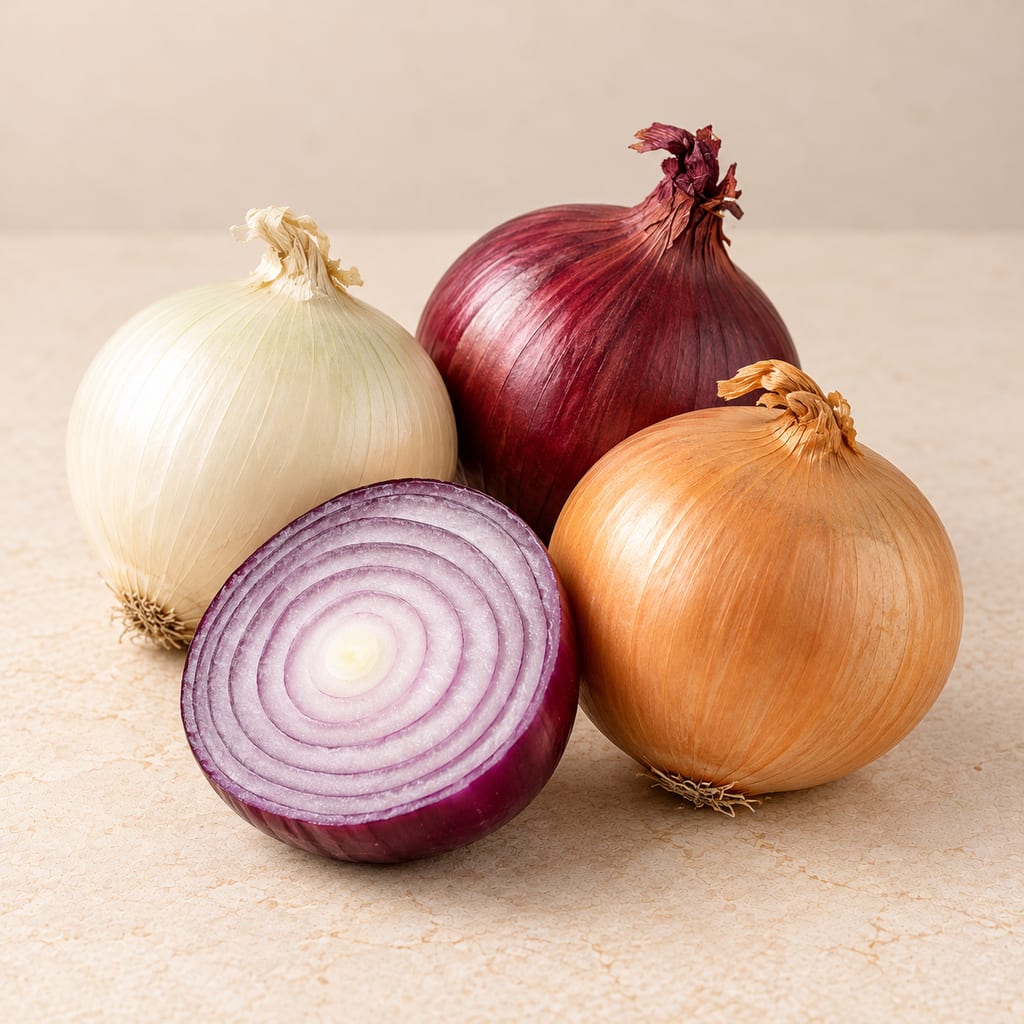
The onion is the bulb of Allium cepa, built from swollen leaf bases, and is eaten raw, cooked, pickled and as a seasoning in ferments. It is known only from cultivation and probably began in Central Asia.
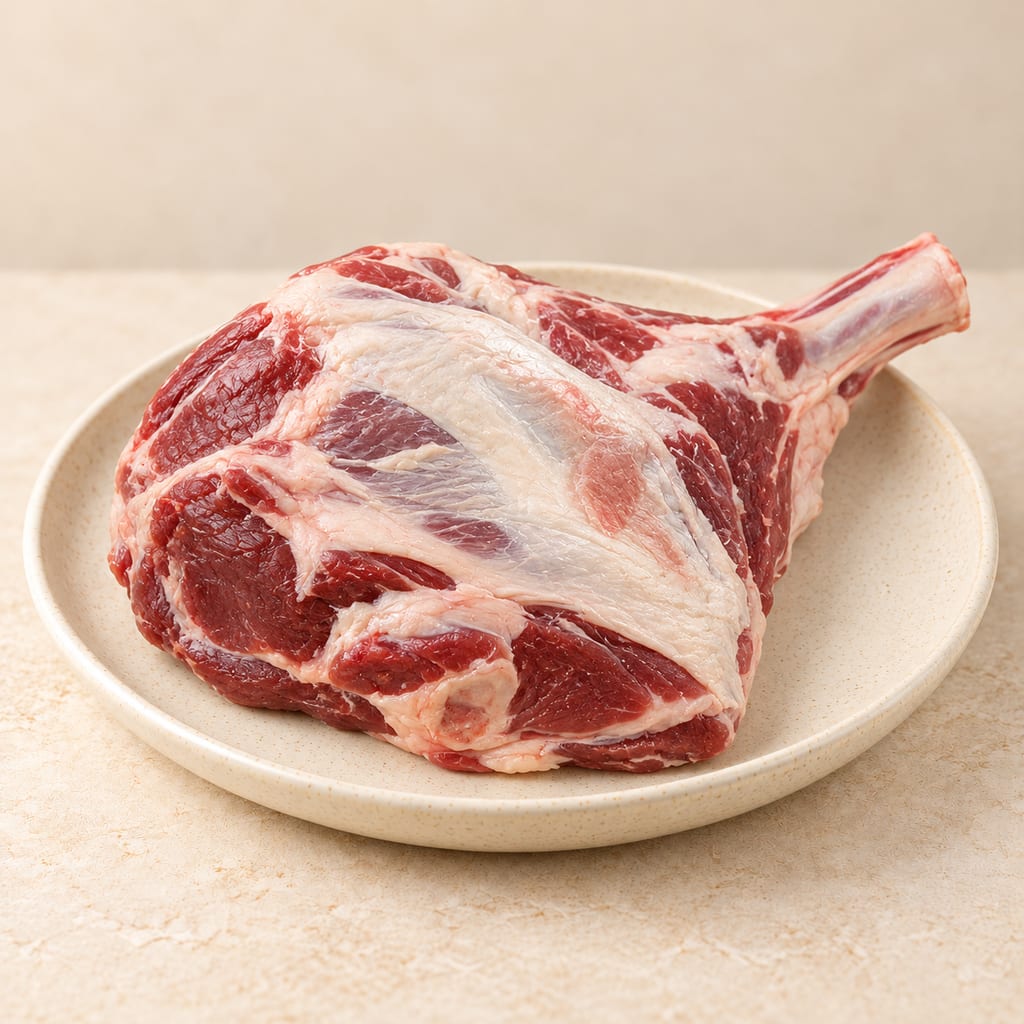
Sheep meat spans lamb from younger animals and mutton from mature sheep; age, breed, diet, cut and fat cover shape its texture and how it behaves in curing and fermentation.
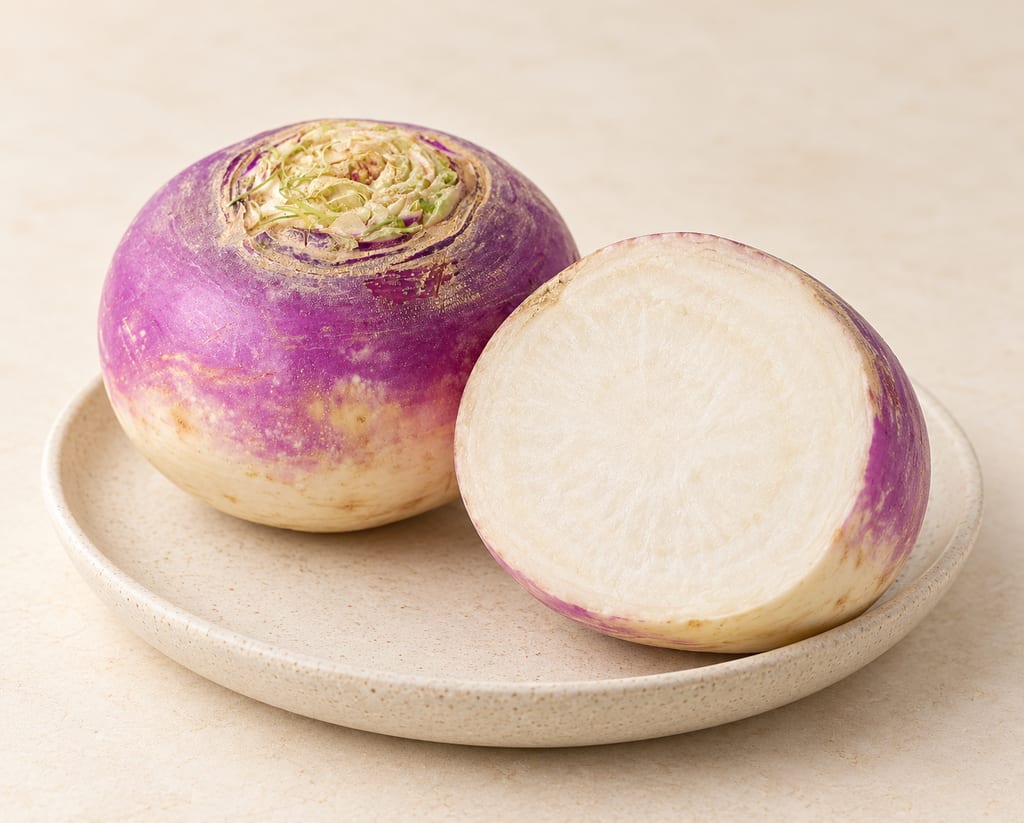
The turnip, a brassica crop whose roots and leaves are eaten. The source record names the species Brassica rapa, but its wild and naturalised forms are not assessed here.
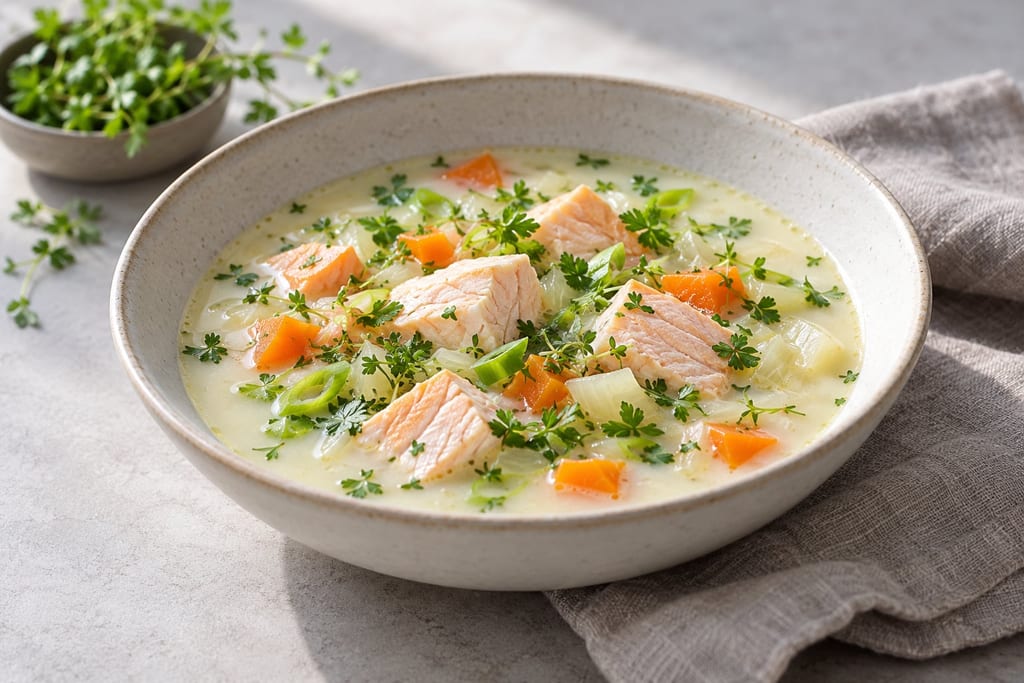
Trout or salmon poached at the end of a simmered broth of onion and root vegetables, a present-day reconstruction of coastal cooking built on excavated fish bones and a boiling pot.
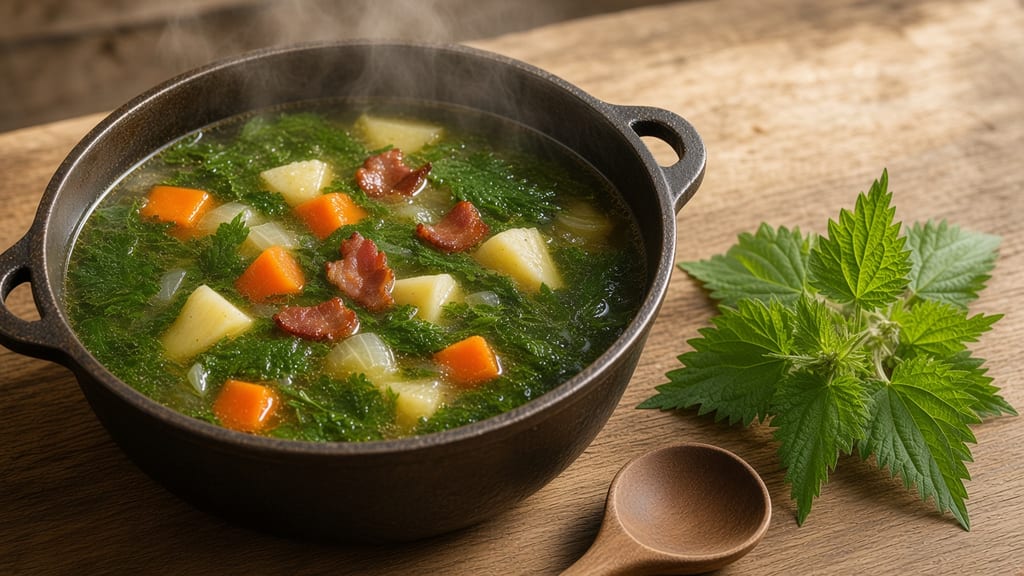
Young stinging nettle shoots cooked with bacon, onion, garlic and three roots into a thick spring soup, from a Danish Viking museum's recipe, with a meat-broth variation and ember-baked turnips.

Crushed or milled barley cooked in water until the starch softens and the mixture thickens, the plainest way a northern household turned stored grain into a meal, here with apple and hazelnut.
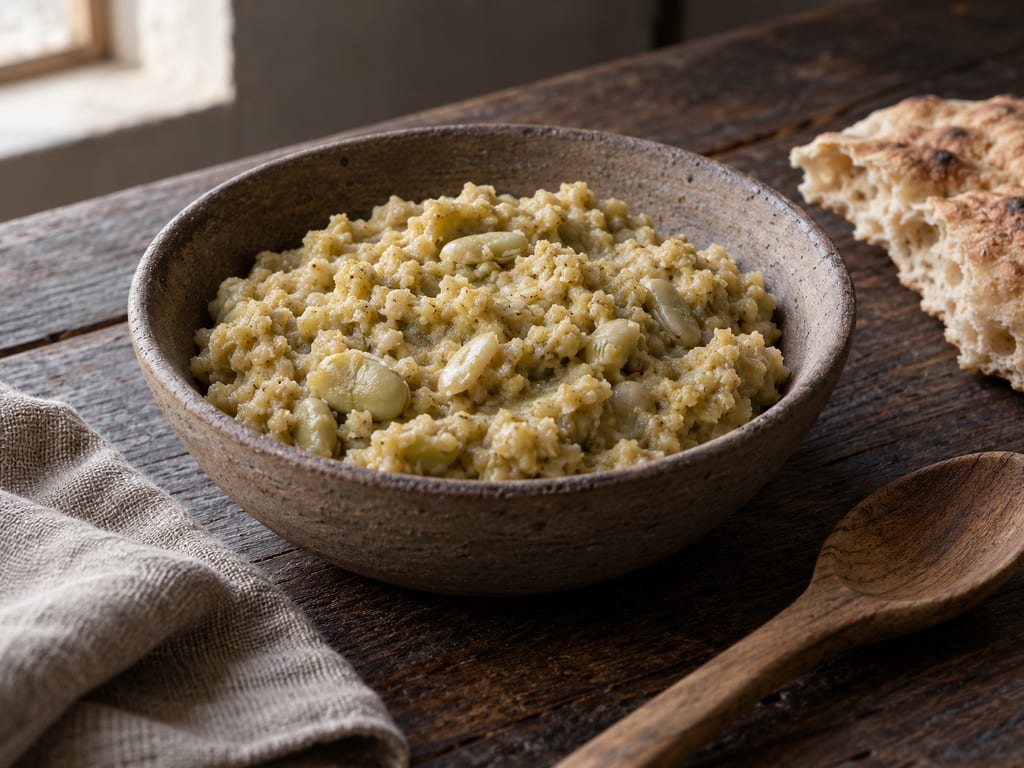
Cooked broad beans crushed to a thick paste with garlic and salt, a museum preparation built on the one European pulse that was already old when the Viking Age began.
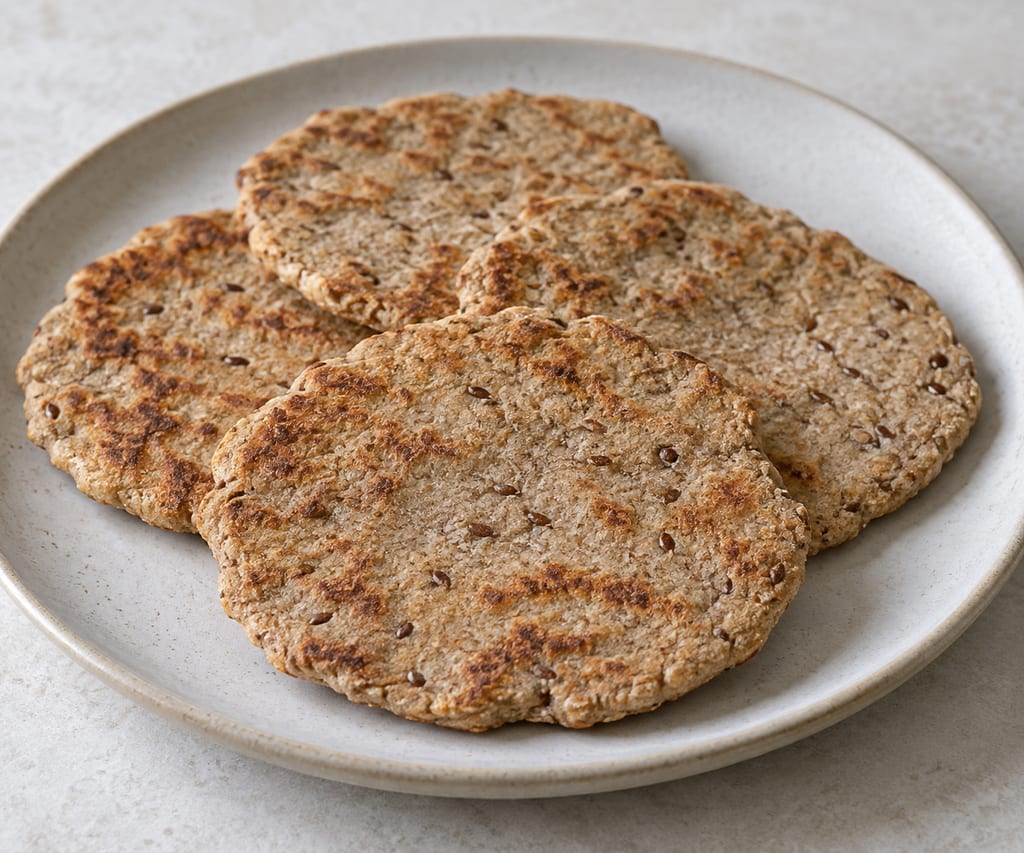
A small, dense cake of ground barley mixed with liquid and cooked against a hot surface, the form a low-gluten northern cereal takes when a household turns stored grain into bread.
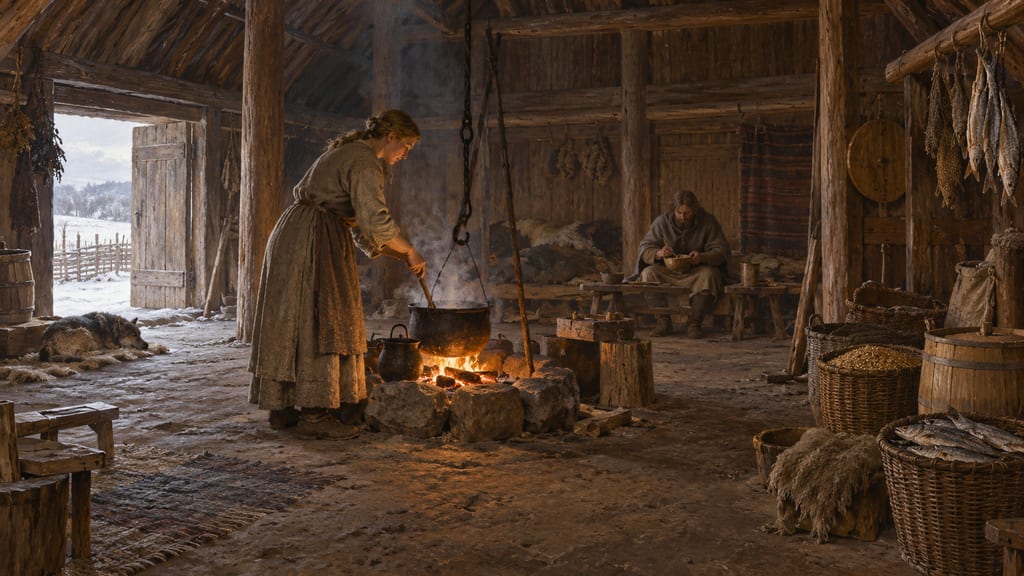
How ordinary Viking-Age households grew, dried, smoked, salted and cooked their food through the northern year, and how to cook their dishes today with supermarket ingredients.
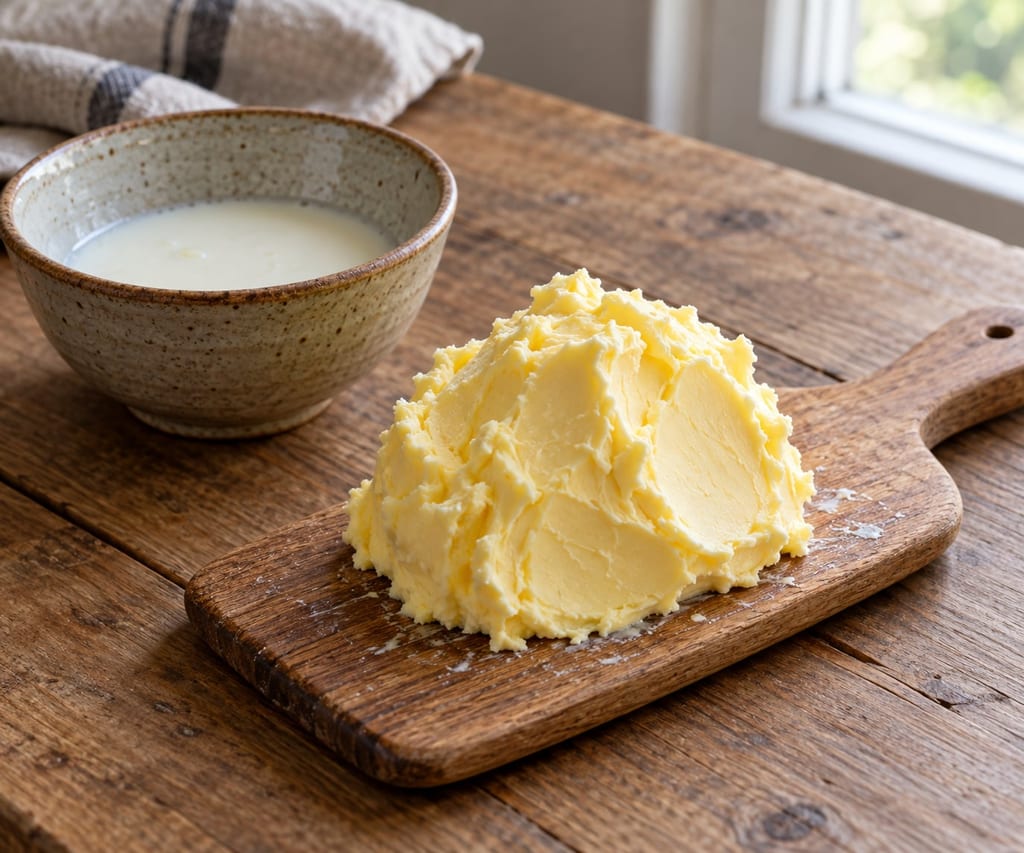
Cream agitated until its fat globules join into a solid mass and release buttermilk, the dairy fat a northern household could concentrate, salt and keep when milk itself would not last.
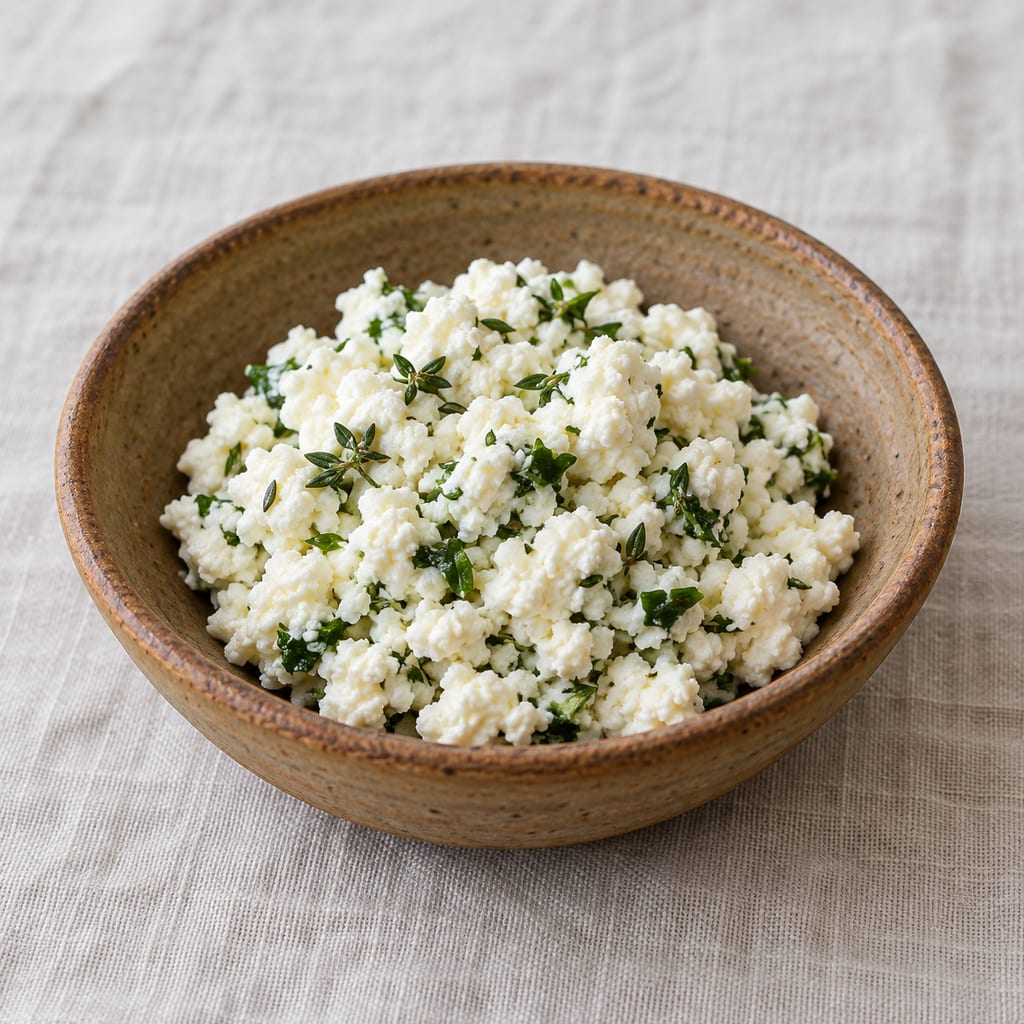
Soft fresh curd made by draining whey from milk already thickened by bacterial acidification, the simplest point in a northern dairy tradition that also produced skyr, ymer and whey itself.
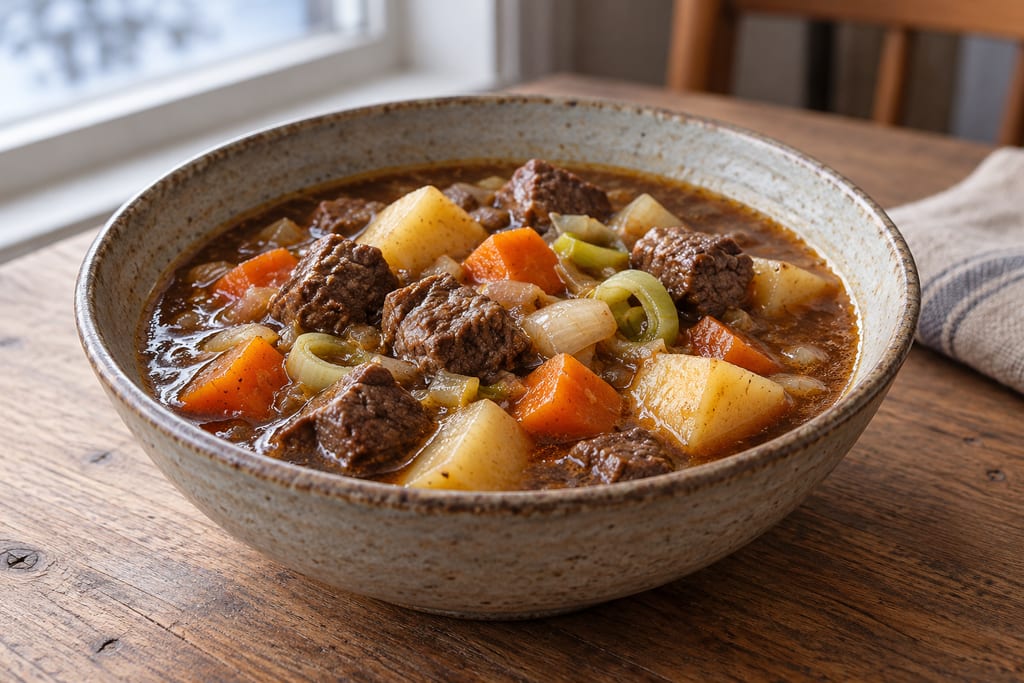
Ann-Kristine Bongo's four-serving bidus from Sami Siida in Alta is a contemporary, festive reindeer stew simmered with onion, carrots and potatoes.

A four-serving cep ohaw recipe from the former Ainu Museum café in Shiraoi, documented in 2015.
No community contributions have been published for this entry yet.
Sign in to contribute. Published comments and photos are free to read.
National Museum of DenmarkHistory
National Museum of Denmark — Viking foodFood resources and archaeological evidence for the Viking Age diet, including the cultivated plants and cabbage-family vegetables that belonged to the northern European food economy, and the difficulty of distinguishing ancient cultivars from modern varieties.
Cited in: What is pottage?; Names and ingredients; Cabbage and root vegetables; Cooking it from a supermarket; What remains uncertain
National Museum of DenmarkHistory
National Museum of Denmark — Meat and fishDomestic animals and their place in the farming economy: sheep and cattle supplying meat, milk, hides and other materials, so that the timing of slaughter was a household decision rather than a simple meat choice.
Preservation of meat by drying, smoking and salting as part of winter provisioning.
Cited in: Names and ingredients; Evidence for meat-and-grain meals; How slow cooking transforms meat; Alternative preparations; Seasonal food supplies
Viking Ship Museum, RoskildeHistory · Method
Viking Ship Museum — Food in Viking TimesCooking equipment documented for the period: iron cauldrons suspended over a fire, soapstone containers, pottery, querns and roasting equipment, with boiling transferring heat through water rather than against flames.
Heated stones placed into liquid as a way of transferring stored heat, which the research declines to assume for this particular dish.
The museum describes drying, smoking and salting as preservation methods without giving a validated recipe for dried or salted mutton.
Cited in: Cooking equipment; Reconstruction recipe: lamb and barley pottage; Method; Seasonal food supplies; Problems and quality indicators
Swedish History MuseumHistory
Swedish History Museum — Food for the poor and the richAnimal and cereal evidence, and literary descriptions of feasts, poorer households and high-status dining that indicate substantial social differences in what was eaten.
Cited in: Evidence for meat-and-grain meals; What barley contributes; Alternative preparations; Serving and eating; What remains uncertain
Food Standards AgencySafety
Food Standards Agency — Cooking your foodA conservative household cooking check of 70°C at the centre for two minutes, or an equivalent time-temperature combination, with 75°C for 30 seconds listed as an alternative.
Keeping raw meat separate from ready-to-eat foods, cooling in smaller containers, refrigerating promptly and eating leftovers within 48 hours or freezing them.
Cited in: Problems and quality indicators; Food safety