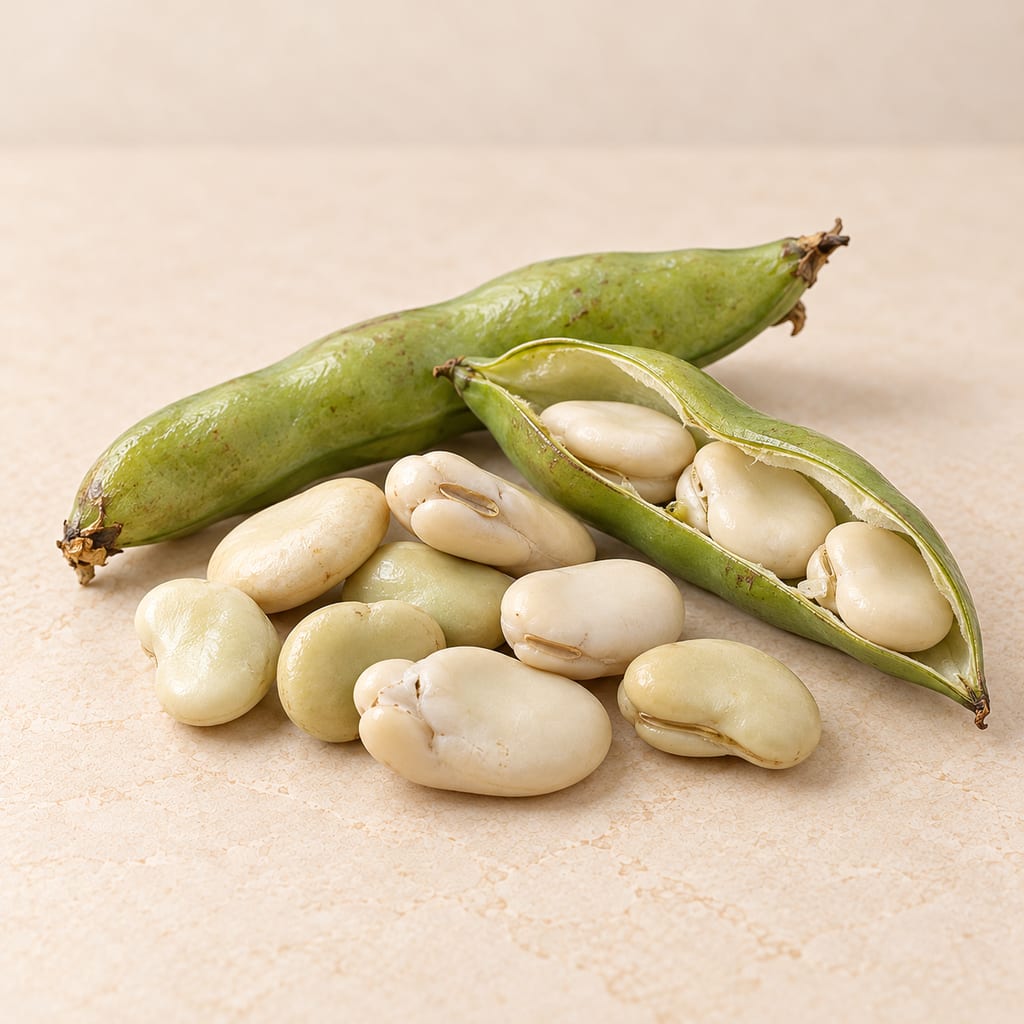
Faba beans
Faba beans are the seeds and edible pods of the cultivated legume Vicia faba L., also sold as broad beans or fava beans. They are eaten fresh or dried and provide the bean flour used in Ethiopian siljo, a sour fermented condiment.
 FermenteaWhere food goes to change
Modern adaptation
Mos af hestebønner med hvidløg · Broad-bean mash with garlic · Fava bean mash · Hestebønnemos
Cooked broad beans crushed to a thick paste with garlic and salt, a museum preparation built on the one European pulse that was already old when the Viking Age began.
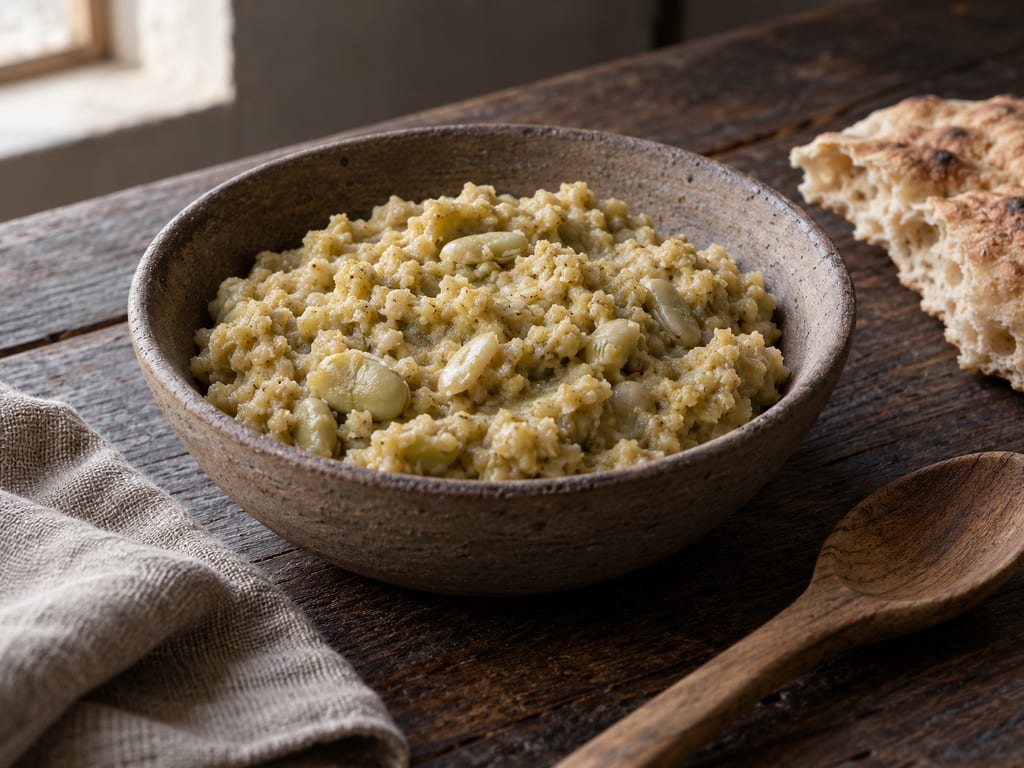
Broad-bean mash is a thick preparation made by cooking broad beans until tender and crushing them into a paste. It can be eaten with bread, served alongside meat or vegetables, or loosened into a softer purée.
The bean is Vicia faba, a cultivated pulse also known as the fava bean, field bean, horse bean or faba bean. Unlike kidney beans, pinto beans and many familiar modern varieties, Vicia faba was cultivated in Europe long before the Viking Age.
This distinction is important when reconstructing historical recipes. The common bean, Phaseolus vulgaris, originated in the Americas. Kidney beans and pinto beans therefore cannot be substituted into a Viking reconstruction without changing its historical interpretation.
Broad-bean mash offers an unusually straightforward way to explore Viking Age ingredients. The underlying plant is archaeologically plausible, the cooking equipment is simple, and there is a modern museum recipe using only cooked beans, garlic and salt.
However, the specific mash is not a recovered Viking Age recipe. Its existence in a museum's historical cooking programme does not mean that archaeologists have identified a pot containing exactly this preparation.
The Danish name of the reconstructed dish is mos af hestebønner med hvidløg, meaning broad-bean mash with garlic.
No securely identified Old Norse name for this precise mashed preparation can be supplied.
Latin botanical name — Vicia faba L.
Danish — Hestebønne, hestebønner
Norwegian — Åkerbønne, bondebønne
Swedish — Bondböna, bondbönor
Icelandic — Baunir — beans, a general term
German — Ackerbohne, Saubohne
English — Broad bean, fava bean, field bean, horse bean
Broad beans were domesticated in the ancient Near East and became part of agricultural systems across parts of Europe during prehistoric periods.
Their importance lies partly in their botanical relationship with nitrogen-fixing bacteria.
Like other legumes, the broad bean can form a symbiosis with rhizobia associated with nodules on its roots. Under suitable conditions, these microorganisms convert atmospheric nitrogen into biologically usable compounds.
This does not mean the plant grows without nutrients or that every field automatically receives the same benefit. Nitrogen fixation depends on soil conditions and the presence of compatible microorganisms.
Nonetheless, legumes offer farming communities a valuable nutritional and agricultural resource.
Broad beans provide protein, starch and dietary fibre. Their seeds can be dried, stored and later cooked, making them particularly useful where fresh food supplies are seasonal.
Archaeological legume finds are reported from northern European sites, although preservation conditions strongly influence how many survive.
Ribe VikingeCenter identifies broad beans and grey peas among the pulses known from archaeological excavations relevant to Viking Age food.
The presence of broad beans in a settlement demonstrates familiarity with the crop. It does not reveal precisely how often they were eaten, whether they were mashed, or which seasonings were added.
Ribe, in southwest Jutland, developed into an important trading settlement from the eighth century.
Its food supply drew on the surrounding agricultural landscape as well as exchange with other regions.
A pulse grown on a farm could be consumed fresh when young, dried for storage or cooked later in the year.
Drying the seeds dramatically changes their usefulness.
Fresh broad beans contain substantial water and deteriorate relatively quickly. Properly dried seeds have much less available moisture and can be stored more conveniently.
The exact storage life of Viking Age broad beans is unknown.
It depended on how thoroughly they were dried, their exposure to moisture, insect infestation and the conditions of the storage structure.
Pulses could complement a grain-heavy diet, but we should avoid projecting modern ideas of vegetarian protein balancing onto every ancient household.
A household might serve beans with barley bread simply because both were available, filling and easy to prepare.
A dried broad bean is a living seed in a dormant state.
Its interior contains stored nutrients that would support germination, including starch, proteins and various carbohydrates.
Drying substantially reduces the water available within the seed.
When soaked, the bean absorbs water. Its tissues expand, and the rigid seed coat becomes more hydrated.
Cooking then softens the cotyledons, the principal storage tissues inside the seed.
Heat changes proteins and starch. Cell-wall substances also change, allowing the bean to break apart under pressure.
The result is a tender cooked seed that can be crushed into mash.
Soaking hydrates the bean before cooking and can reduce the time needed for its centre to soften.
The necessary soaking period depends on the bean's size, age and processing history.
Very old dried beans may remain relatively hard even after substantial cooking.
Soaking water is often discarded before cooking. The Viking Ship Museum's modern broad-bean preparation explicitly uses this approach.
It should not be interpreted as proof that Viking households universally discarded soaking water.
Crushing the cooked beans breaks their internal structure and releases hydrated starch and proteins into the surrounding liquid.
A coarse mash retains recognisable pieces of beans.
A smooth purée distributes those components more uniformly, giving it a creamier texture.
Adding liquid changes the concentration of the suspended solids and therefore the thickness.
Adding fat, such as butter, changes lubrication and flavour, but fat is not required for the mash to hold together.
Garlic contributes sulfur-containing flavour compounds that become noticeable when its cells are crushed.
This simple recipe is published by Ribe VikingeCenter as part of its collection of Viking-inspired food.
1. Obtain thoroughly cooked broad beans.
Fresh, frozen or dried beans require different preliminary treatment.
For dried beans, follow the package's soaking and cooking instructions. Do not assume that a brief simmer is adequate.
2. Crush the beans.
Put the warm cooked beans in a suitable bowl.
Mash them with the back of a spoon or in a mortar.
A modern blender can produce a smoother texture but is not an historical technique.
3. Add garlic.
Crush the garlic and mix it through the beans.
Distributing the garlic evenly prevents individual mouthfuls from containing an excessive concentration.
4. Season.
Add the specified salt and mix well.
The salt is part of the modern museum formulation. It is not a preservation level or evidence for historical salting.
5. Adjust texture.
If the mash is too firm, add a little water.
The museum provides no exact volume, so there is no historically justified numerical quantity to specify.
6. Serve.
Eat warm as a spread or side dish.
The museum particularly suggests serving it with flatbread.
The Viking Ship Museum's cooking material includes a bean stew made from dried horse beans.
That recipe begins with 400 ml dried beans, soaked overnight in three times their volume of water.
The soaking water is discarded, and the beans are then cooked for approximately one hour, the upper bound being a fraction that did not survive the handover of this research.
These numbers belong to that separate museum recipe.
They do not establish a universal safe cooking time for every kind of broad bean, nor do they mean that precisely the same procedure must be applied to frozen or fresh beans.
The principal lesson is that dried beans require substantial hydration and cooking before becoming ready to eat.
A modern cook should prioritise the instructions supplied for the particular beans being used.
The supplied research also offers a larger modern formulation:
- 500 g thoroughly cooked broad beans - 1 small crushed garlic clove - 50–100 ml warm water or bean-cooking liquid - Salt - Optional 20 g butter and chopped herbs
This version is softer and potentially richer than the museum formulation.
It also produces a larger quantity of mash.
The 50–100 ml water measure and optional butter are modern recipe-development choices, not measurements recovered from archaeology.
They are useful when making the mash for a present-day table, but should be labelled correctly.
Broad beans were not exclusive to Scandinavia.
They occur across European and Mediterranean food traditions, from boiled beans eaten whole to thick purées and soups.
Modern British broad beans, Italian fave and Scandinavian field beans belong to the same botanical species, although cultivars and preferred maturity differ.
In some regions, young green seeds are eaten. In others, fully mature dried beans are more important.
The seed coat can be relatively tough, particularly in older or larger beans.
Removing it after cooking produces a smoother paste, but that additional processing is not documented as part of the specific Ribe recipe.
Peas offer a related but distinct pulse tradition. The museum identifies grey peas as historically relevant, yet substituting chickpeas or New World beans into this dish changes the historical reconstruction.
There is insufficient evidence to divide Viking Age broad-bean mash into named Danish, Norwegian and Icelandic regional recipe schools.
Such a classification would give modern reconstructions an authority they do not possess.
The modern mash is particularly effective as an accompaniment to barley flatbread.
Its soft texture offsets the density of an unleavened cereal cake.
It can also accompany cooked roots or vegetables.
Adding it to a meat-and-vegetable meal creates another source of protein and starch.
A thicker mash works as a spread; a thinner one can be eaten from a bowl with a spoon.
Its flavour is relatively mild until seasoned.
Garlic provides pungency, while butter can make the mixture feel smoother and richer.
Chopped culinary herbs offer another modern variation.
The evidence does not establish exactly which herbs, if any, were regularly added to Viking Age broad-bean preparations.
The beans should be thoroughly cooked and tender before mashing.
A coarse texture is not a defect if intentionally produced.
However, hard, chalky fragments indicate insufficient cooking or hydration.
If the mixture is excessively dry, adding a little clean warm liquid can make it easier to spread.
A watery mash can occur if too much liquid is added. In this case the preparation behaves more like a thick soup.
The flavour should reflect the beans, garlic and any intentional seasonings.
Unexpected sourness, gas production, visible mould or an unusual smell after storage is not evidence of desirable bean fermentation.
Discard a mash showing such spoilage signs.
Broad beans require a specific warning that many historical recipe reconstructions overlook.
People with glucose-6-phosphate dehydrogenase deficiency, usually abbreviated G6PD deficiency, can experience haemolysis after eating fava beans.
This reaction is known as favism.
It occurs because compounds associated with broad beans can trigger oxidative stress in susceptible red blood cells.
Cooking the beans does not reliably remove this risk.
People with G6PD deficiency should follow their medical advice and avoid broad beans where instructed. Substituting another suitable ingredient may be necessary.
This warning is unrelated to whether the beans are historically authentic or correctly cooked.
Broad beans are also unsuitable for people who have a relevant legume allergy.
Freshly made bean mash is a cooked, moist food rather than a shelf-stable preserve.
Its water content remains high.
Neither the historical evidence nor the Ribe recipe gives a validated room-temperature shelf life.
Do not leave a large bowl unrefrigerated for an extended period.
Use clean utensils, cool leftovers promptly and refrigerate within two hours.
Keep refrigerated food at 0–5°C and eat within 48 hours or freeze, following the UK household guidance cited below.
An oil layer on top of mash does not convert it into a tested preserved food.
Likewise, garlic and salt at ordinary seasoning levels should not be treated as an antimicrobial preservation system.
The archaeological evidence is strongest for the presence and use of legumes, not the survival of precise recipes.
The museum's garlic mash is an accessible way to cook with a historically relevant bean.
Its simplicity should not obscure the remaining uncertainties.
We do not know whether Viking households typically removed broad-bean skins, added garlic to mashed beans or consumed the preparation warm rather than cold.
What can be said with confidence is that broad beans provided a storable, protein-rich food resource that could be cooked using the pots and utensils available at the time.
That makes the mash a defensible culinary reconstruction, provided it is not presented as a recovered Viking original.
The reason broad-bean mash is a defensible reconstruction at all is botanical. Vicia faba was cultivated in Europe long before the Viking Age, while the common bean, Phaseolus vulgaris, came from the Americas, so kidney and pinto beans cannot be dropped into a Viking dish without quietly changing its date. The pulse earned its place in farming systems twice over: it provides protein, starch and dietary fibre, and like other legumes it can form a symbiosis with rhizobia in root nodules that convert atmospheric nitrogen into usable compounds, though that depends on soil conditions and compatible microorganisms rather than happening automatically in every field. Its seeds also dry well, and drying is what changes their usefulness, since fresh beans hold a great deal of water and deteriorate relatively quickly while properly dried seeds keep. How long they kept in the Viking Age is unknown and depended on how thoroughly they were dried, on moisture, on insects and on the storage structure. Ribe, which publishes the mash, grew into an important trading settlement from the eighth century and drew on the farming landscape around it as well as on exchange. What the archaeology supports is the presence and use of legumes; the garlic, the salt and the mashing are modern choices, and the broader European tradition of boiled beans, purées and soups shows how many other directions the same pulse takes.
Scaling: source batch only
People with glucose-6-phosphate dehydrogenase deficiency can experience haemolysis after eating fava beans, because compounds associated with the bean can trigger oxidative stress in susceptible red blood cells. Cooking does not reliably remove this risk, and it has nothing to do with whether the beans are historically authentic or correctly prepared.
Hazard sourceBroad beans are unsuitable for anyone with a relevant legume allergy, and the mash concentrates them into a dish with no other principal ingredient.
Hazard sourceA dried bean is a dormant seed whose cotyledons only break apart under pressure once heat has changed its proteins, starch and cell-wall substances. A brief simmer is not enough, and old beans may stay hard regardless.
Hazard sourceFreshly made bean mash is a cooked, high-moisture food with no validated room-temperature shelf life in either the historical evidence or the museum recipe, and neither an oil layer on top nor garlic and salt at seasoning levels make it one.
Hazard sourceFollow the soaking and cooking instructions supplied for the particular beans in use, and cook until genuinely tender before mashing
Control sourceWhere medical advice instructs avoidance of broad beans, substitute another suitable ingredient rather than reducing the quantity
Control sourceUse clean utensils, do not leave a bowl standing unrefrigerated, and cool leftovers promptly
Control sourcePeople with G6PD deficiency can develop haemolysis after eating fava beans, and cooking does not reliably remove that risk: follow medical advice and substitute another ingredient where avoidance is instructed.
The museum's 250 g is cooked beans, not dried ones, and the two weights are not interchangeable.
Kidney and pinto beans belong to the American species Phaseolus vulgaris and cannot stand in for Vicia faba here without changing what the dish represents.
Garlic and salt at seasoning levels are not an antimicrobial preservation system, and an oil layer on the surface does not turn the mash into a tested preserve.
Unexpected sourness, gas production, visible mould or an unusual smell after storage is spoilage and not a desirable bean fermentation; discard the mash.
The cooking time in the separate dried-bean method lost its upper bound in the handover of this research, so it must not be read as a precise or safe duration.
Ribe appears as the place that publishes the mash and identifies broad beans and grey peas among the pulses known from relevant excavations. The recipe is a present-day museum preparation; no excavated pot of this mash has been identified.
A country-level association for the agricultural setting in which a pulse could be eaten fresh when young, dried for storage or cooked later in the year. Archaeological legume finds are reported from northern European sites, with preservation conditions strongly affecting how many survive.
Faba beans are the seeds and edible pods of the cultivated legume Vicia faba L., also sold as broad beans or fava beans. They are eaten fresh or dried and provide the bean flour used in Ethiopian siljo, a sour fermented condiment.
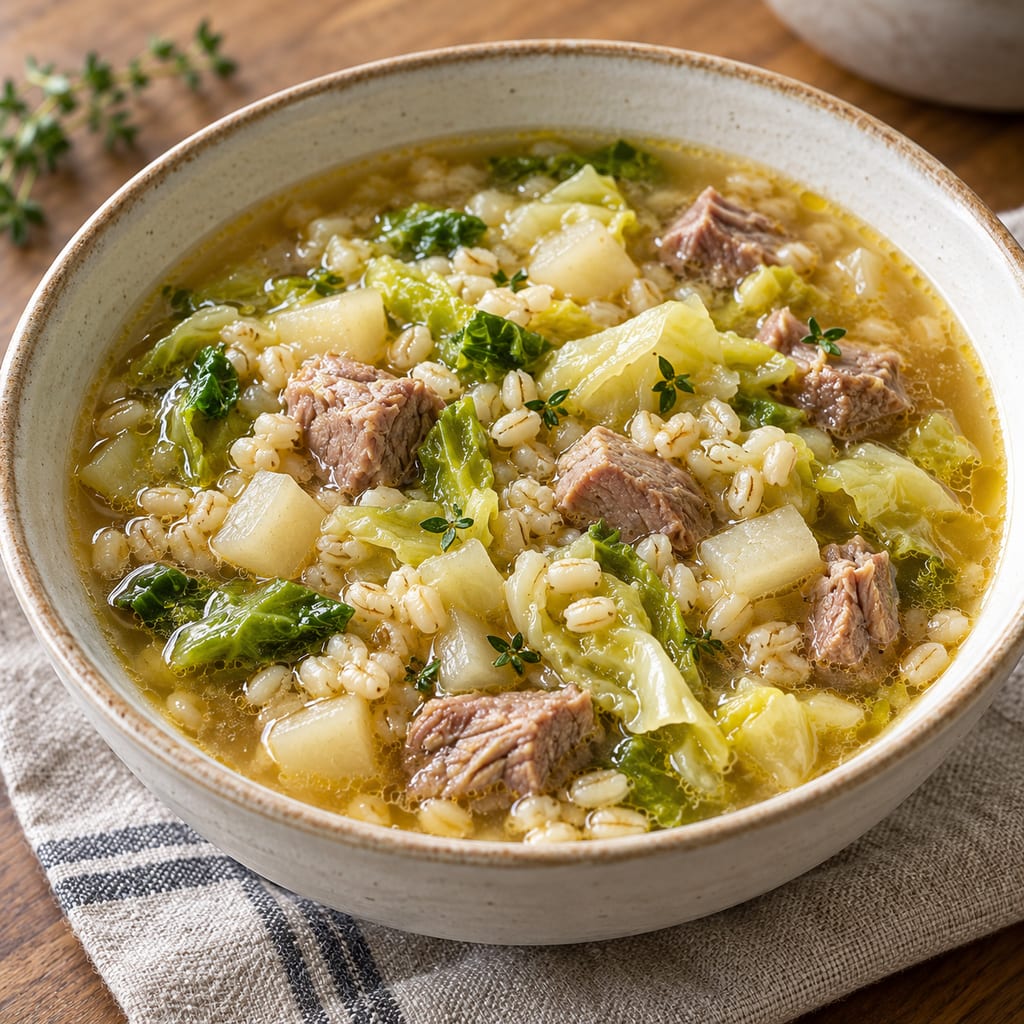
Lamb shoulder simmered with pearl barley, turnip and leafy cabbage in one pot, a present-day reconstruction built from the animals, grains and vegetables of northern European farming.
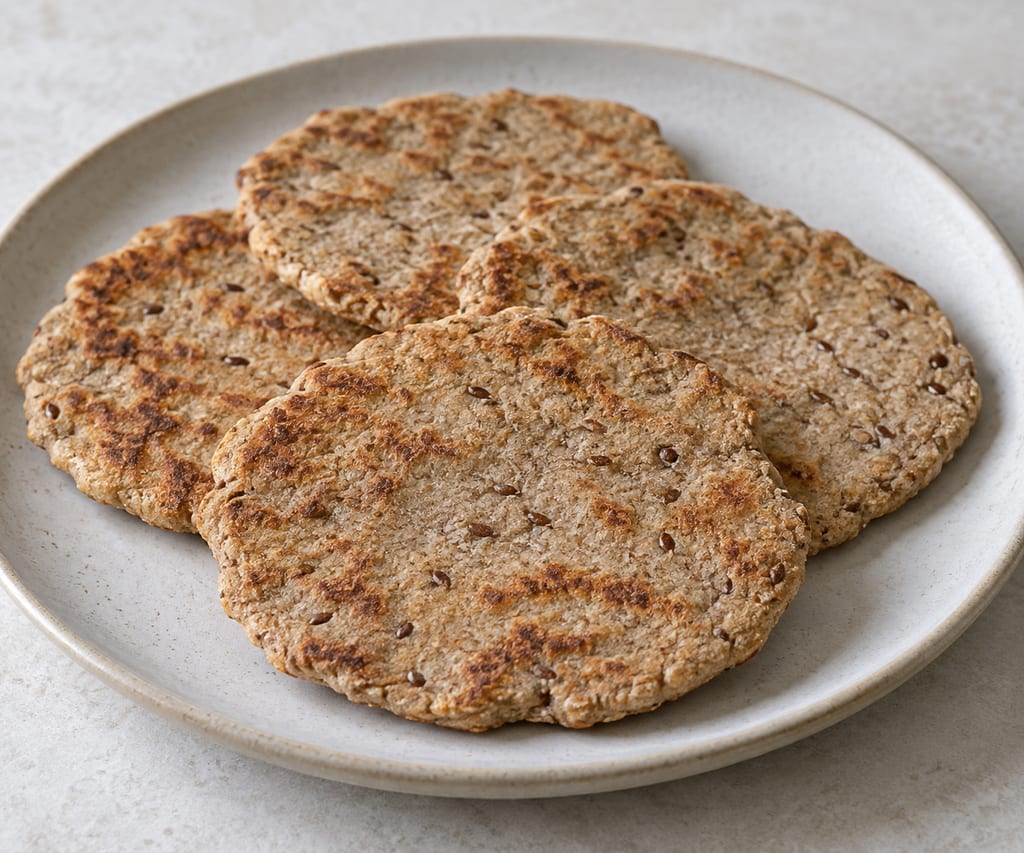
A small, dense cake of ground barley mixed with liquid and cooked against a hot surface, the form a low-gluten northern cereal takes when a household turns stored grain into bread.
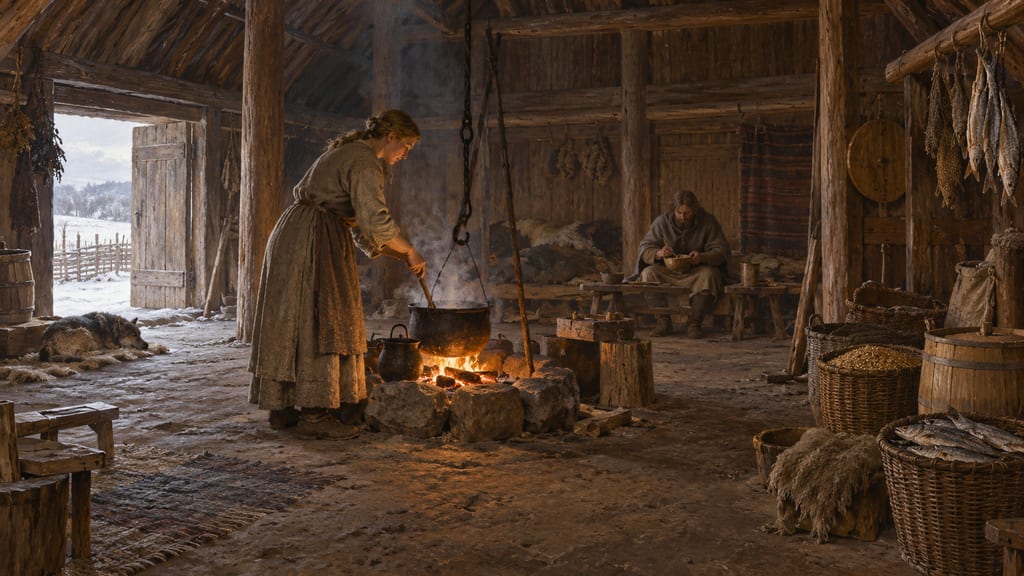
How ordinary Viking-Age households grew, dried, smoked, salted and cooked their food through the northern year, and how to cook their dishes today with supermarket ingredients.

Crushed or milled barley cooked in water until the starch softens and the mixture thickens, the plainest way a northern household turned stored grain into a meal, here with apple and hazelnut.
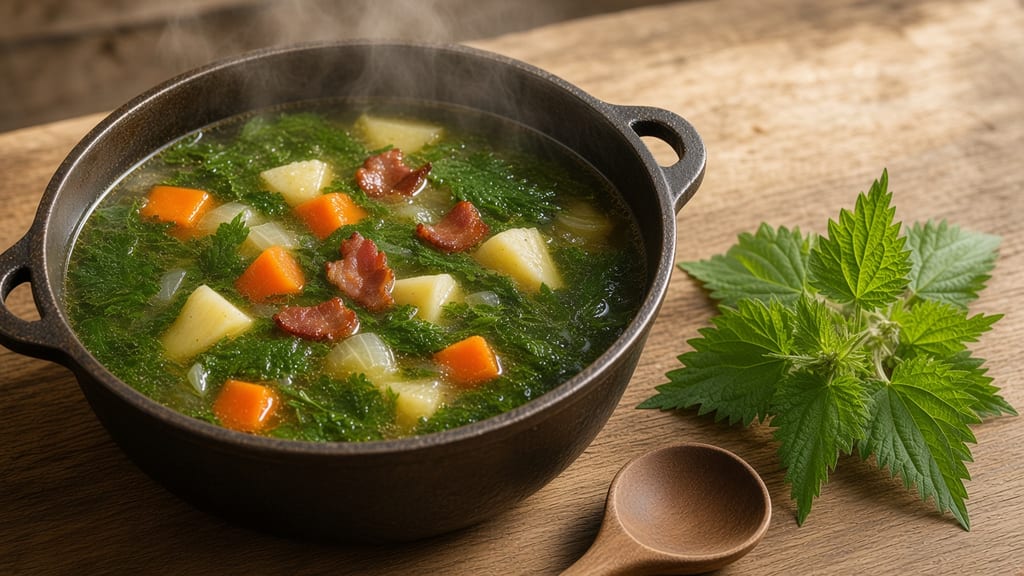
Young stinging nettle shoots cooked with bacon, onion, garlic and three roots into a thick spring soup, from a Danish Viking museum's recipe, with a meat-broth variation and ember-baked turnips.
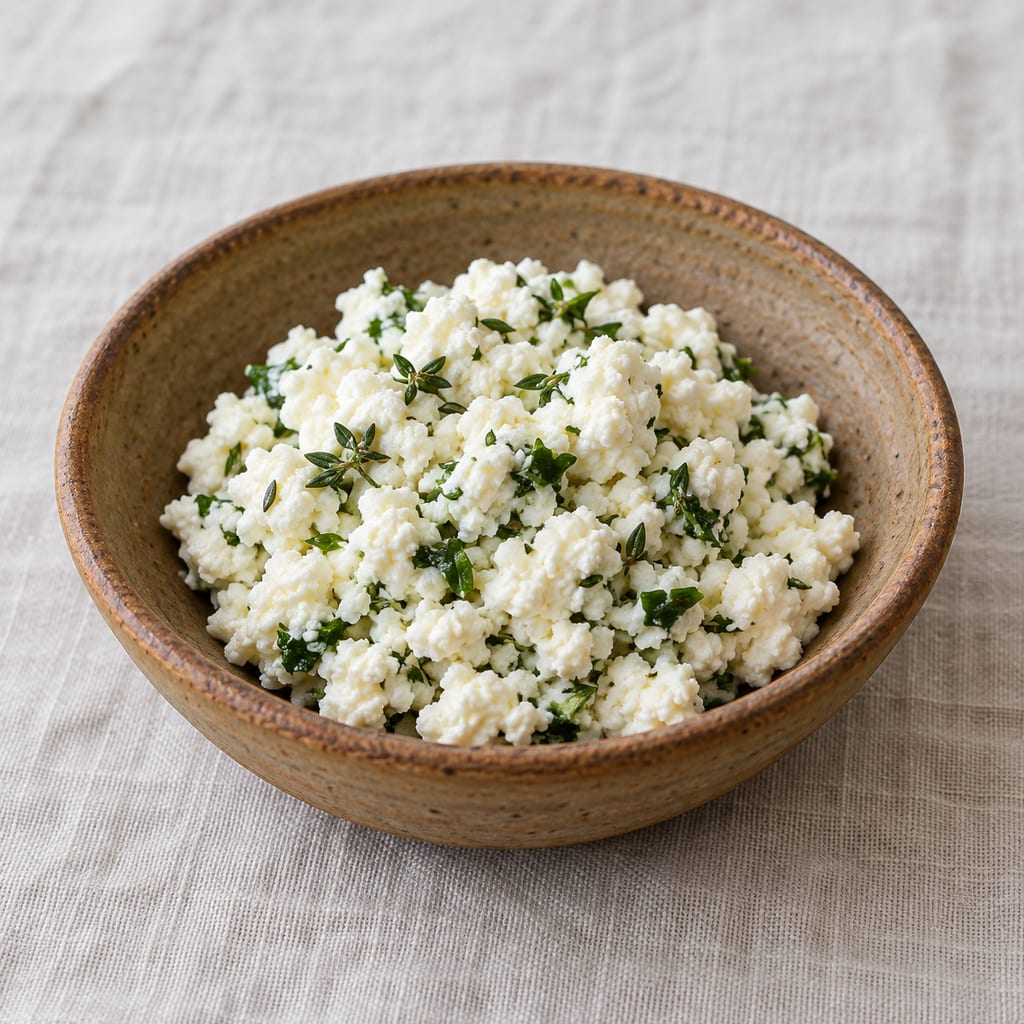
Soft fresh curd made by draining whey from milk already thickened by bacterial acidification, the simplest point in a northern dairy tradition that also produced skyr, ymer and whey itself.
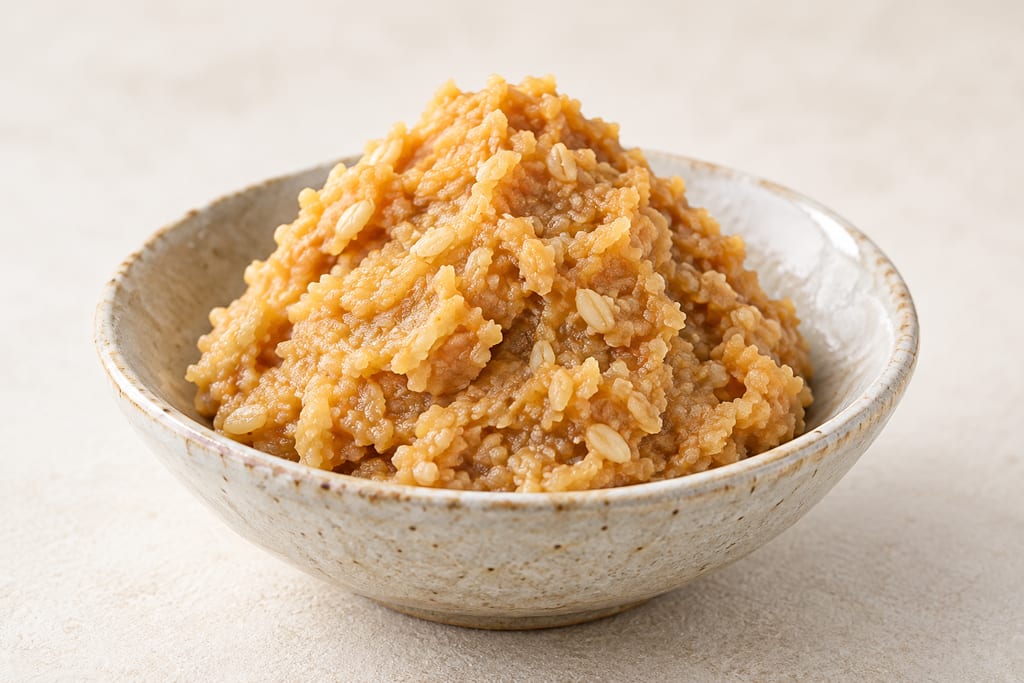
A Japanese soybean paste fermented with barley koji and salt, made mostly in Kyushu, Shikoku and western Japan. It is sweet, savoury and grainy.
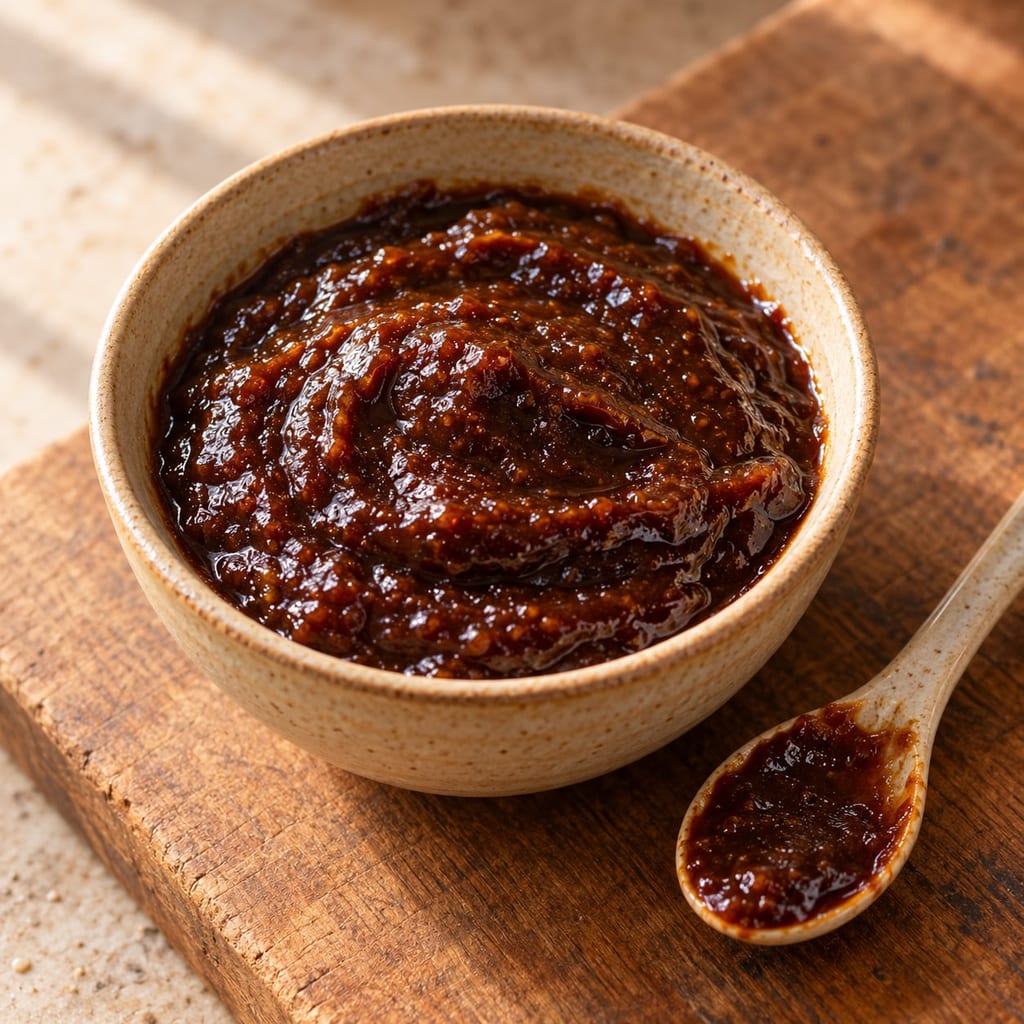
Chu hou is a sweet, savoury Cantonese paste of fermented soybeans, fermented bean curd, garlic, ginger and sesame, used mainly to braise meat.
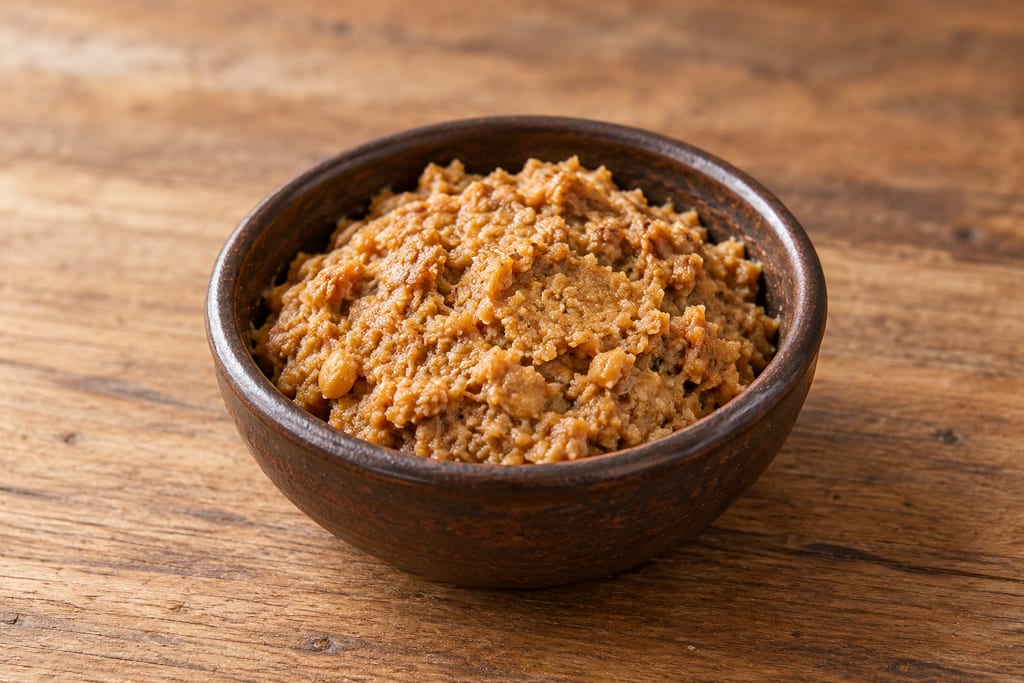
Doenjang (된장) is a Korean fermented soybean paste made by brining meju, separating ganjang, then mashing and aging the solids. This recipe follows one documented Sunchang processing study.
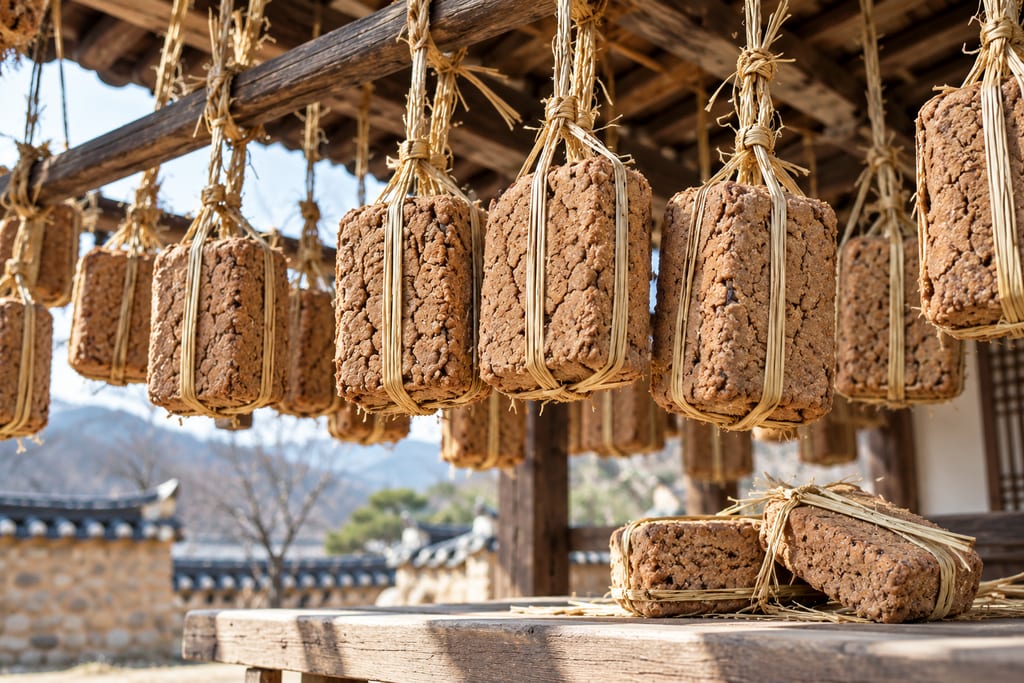
A cooked soybean brick, shaped and dried, that is fermented as a solid and later brined to make the Korean soy paste doenjang and the soy sauce ganjang.
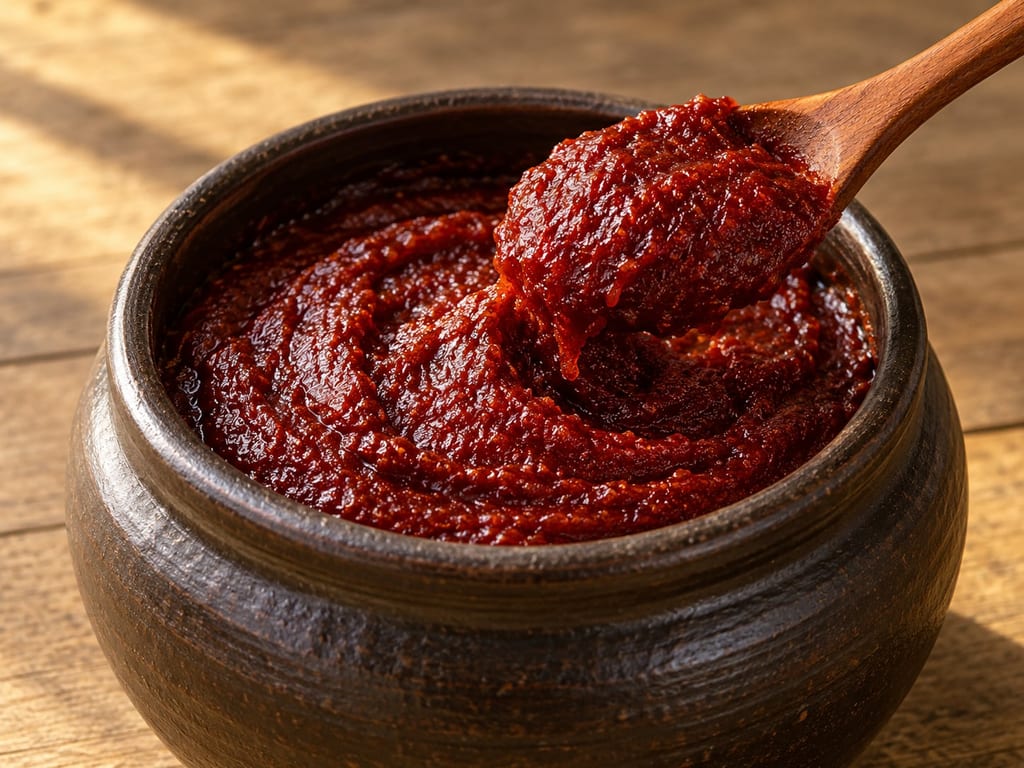
Korea’s sweet, savoury and fiery red paste of glutinous rice, barley-malt enzymes, fermented soybean meju powder and chilli powder, matured in earthenware.
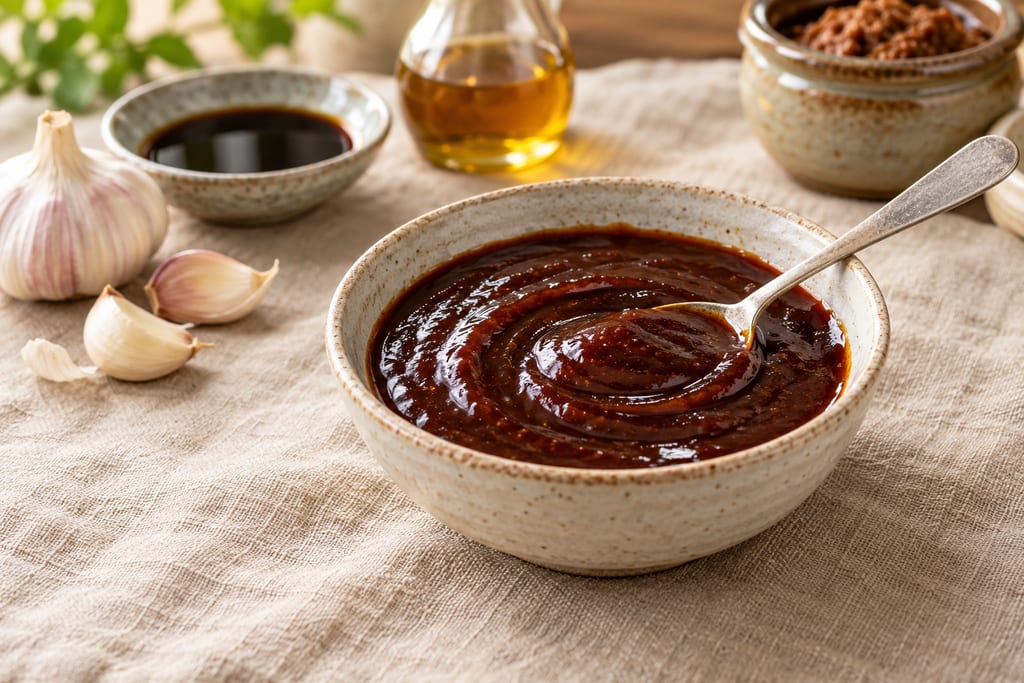
A thick, dark, sweet-salty Chinese condiment built on fermented soybean paste. This page gives one quick home version and records how commercial formulas differ.
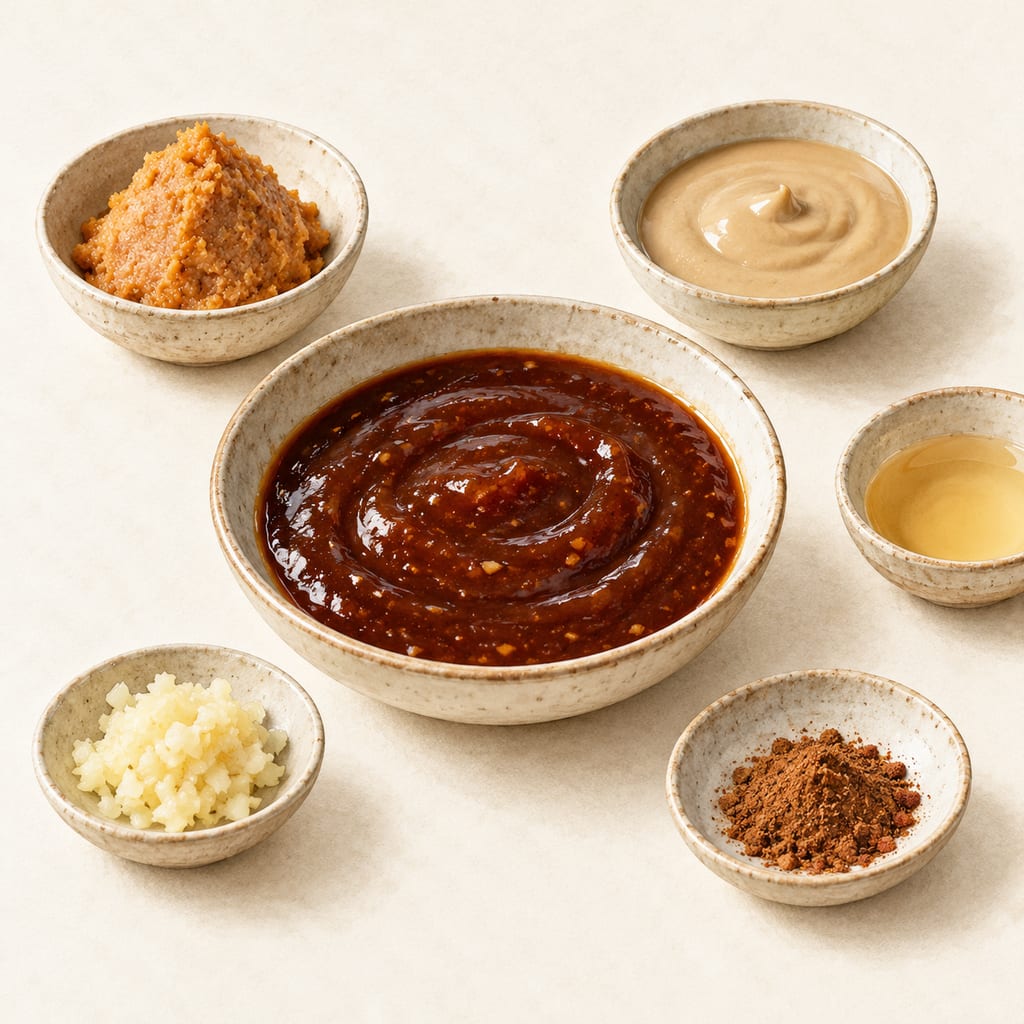
An untested modern miso-based sauce inspired by hoisin's sweet, savory profile; this prototype is not traditional hoisin or a copy of a commercial brand.
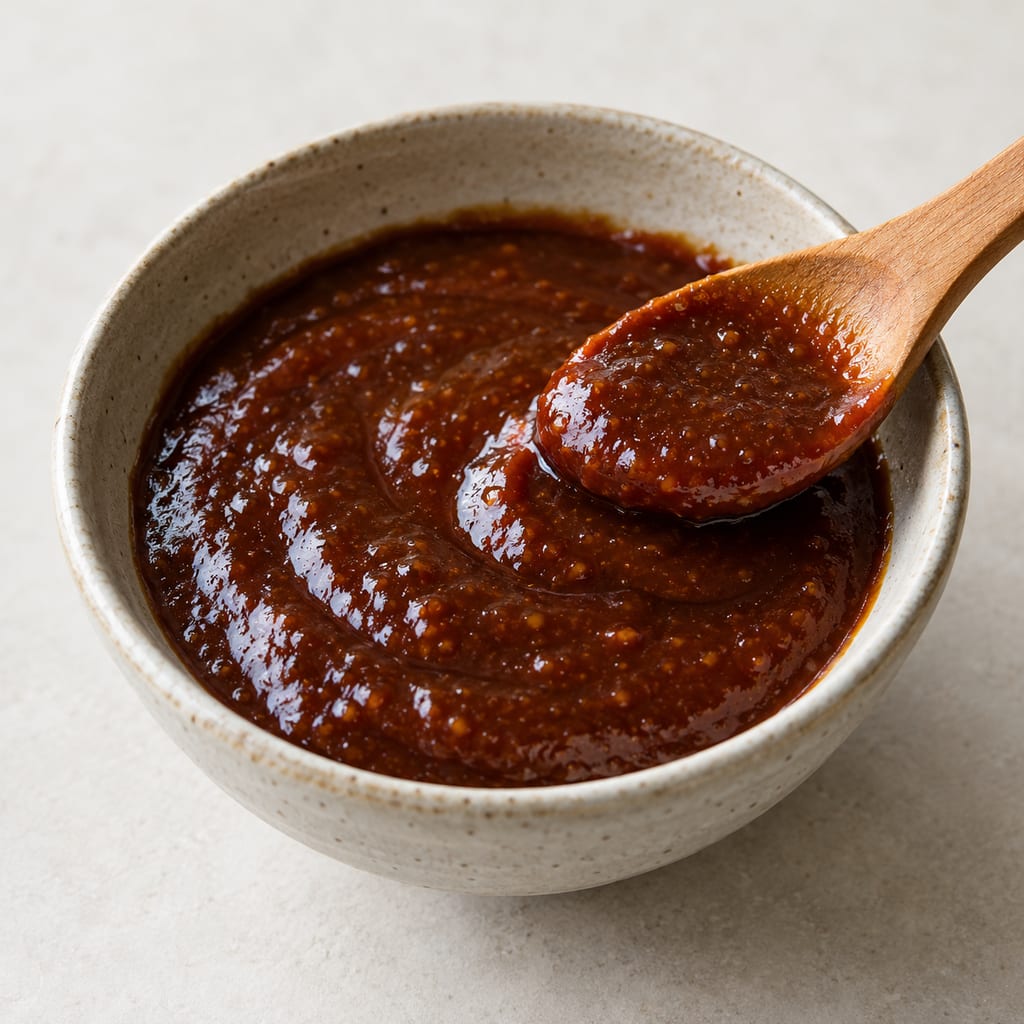
A sweet-salty Japanese glaze of miso, mirin, sake and sugar, warmed until thick and spread on grilled tofu, eggplant, daikon or konnyaku. Regional versions in Aichi use red miso and dashi.
No community contributions have been published for this entry yet.
Sign in to contribute. Published comments and photos are free to read.
Ribe VikingeCenterMethod · History
Ribe VikingeCenter — Mos af hestebønner med hvidløgThe museum recipe for four servings: 250 g warm cooked broad beans, 1 crushed garlic clove, 1 teaspoon salt and a little water if necessary, mashed with the back of a spoon or in a mortar and served warm, particularly with flatbread.
The 250 g refers to beans that are already cooked rather than to dried beans, and the museum gives no volume for the water used to loosen the mash.
The Danish name of the dish is mos af hestebønner med hvidløg, and the museum identifies broad beans and grey peas among the pulses known from archaeological excavations relevant to Viking Age food.
Cited in: What is broad-bean mash?; Names and identification; A pulse with a long European history; The Viking Age farming context; Why mashing changes flavour and texture; The museum recipe: broad-bean mash with garlic; Method; An alternative mash from the research dossier; Regional and historical variations; How it was — and can be — eaten; Signs of successful preparation; What remains unknown
Viking Ship Museum, RoskildeMethod
Viking Ship Museum — Food in Viking TimesA separate bean stew from dried horse beans: 400 ml dried beans soaked overnight in three times their volume of water, the soaking water discarded, and the beans then cooked for roughly an hour, the upper bound of that figure having been lost upstream.
Those numbers belong to that preparation alone and do not establish a universal cooking time for broad beans or apply unchanged to fresh or frozen ones.
Cited in: What happens when broad beans cook?; Why soaking matters; Preparing dried beans: a separate museum method
National Museum of DenmarkHistory
National Museum of Denmark — Viking foodFood and agriculture of the Viking Age, used here for the farming context of Ribe and the place of pulses alongside a grain-heavy diet.
Cited in: A pulse with a long European history; The Viking Age farming context; Regional and historical variations; What remains unknown
University College London HospitalsSafety
University College London Hospitals — G6PD deficiencyGlucose-6-phosphate dehydrogenase deficiency and fava beans: people with G6PD deficiency can experience haemolysis after eating them, a reaction known as favism, and cooking the beans does not reliably remove the risk.
Affected people should follow their medical advice and avoid broad beans where instructed.
Cited in: An important safety issue: G6PD deficiency
Food Standards ScotlandSafety
Food Standards Scotland — Cooking and leftoversHousehold guidance used for this moist cooked food: use clean utensils, cool leftovers promptly and refrigerate within two hours, keep refrigerated food at 0-5°C and eat within 48 hours or freeze.
Cited in: Signs of successful preparation; Hygiene and storage