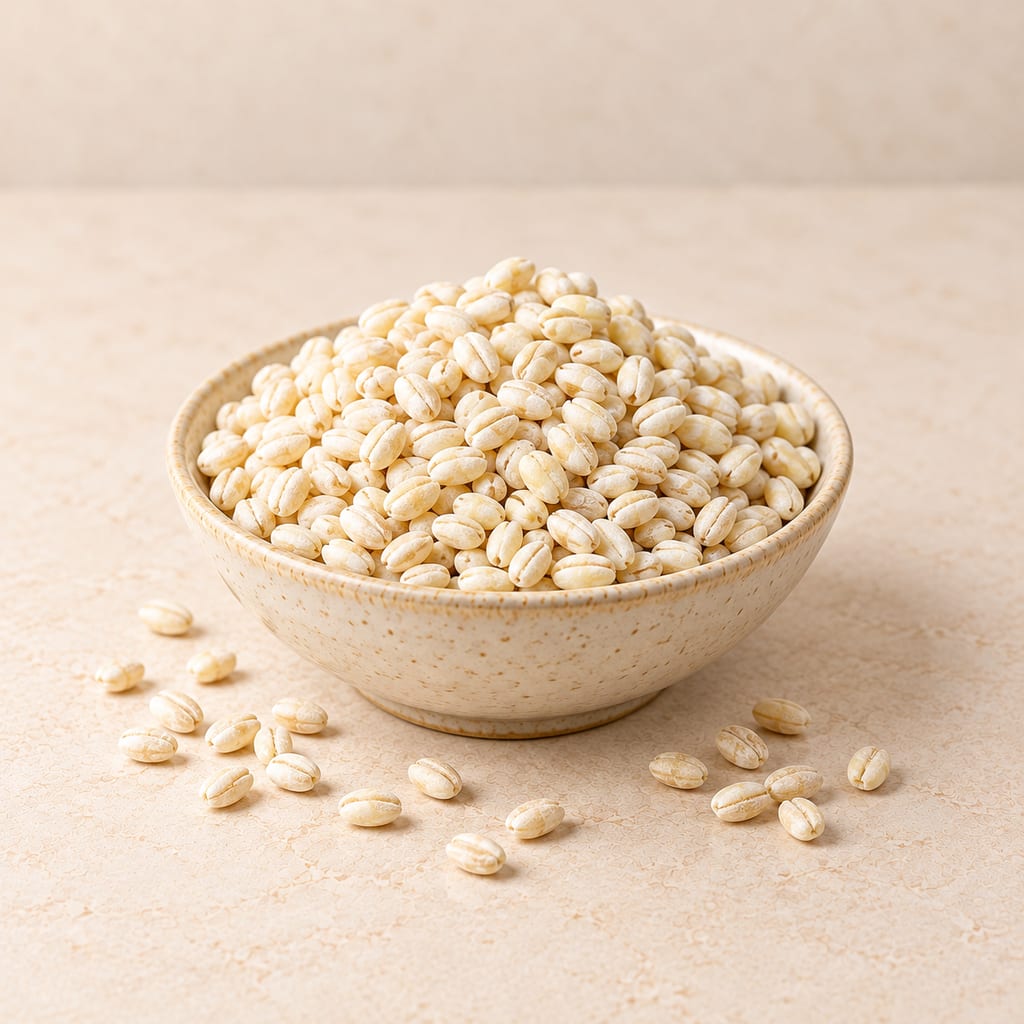
Barley
Barley is a hardy cereal, domesticated in the Middle East over 10,000 years ago, eaten whole, pearled or milled, malted for brewing, and grown with koji mold for barley miso.
 FermenteaWhere food goes to change
Modern adaptation
Braud · Barley flatbread · Birka-inspired barley cakes · Braud
A small, dense cake of ground barley mixed with liquid and cooked against a hot surface, the form a low-gluten northern cereal takes when a household turns stored grain into bread.
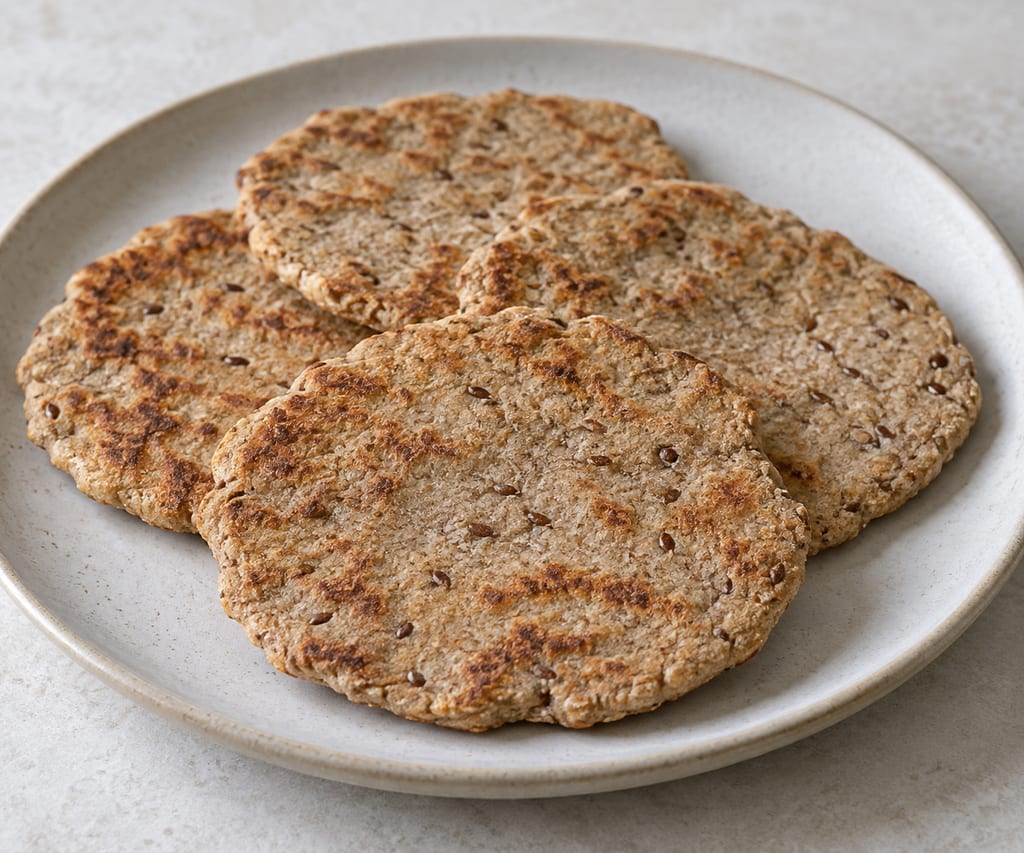
Barley flatbread is a simple bread made from ground cereal mixed with liquid, shaped into small cakes and cooked against a hot surface. Its defining characteristic is not a particular shape or seasoning, but its adaptability to grains that were readily available in northern Europe.
The most important of these was barley, Hordeum vulgare. Unlike wheat, barley contains relatively little of the gluten-forming protein structure needed to make an elastic, airy loaf. Barley dough therefore lends itself particularly well to flat cakes, griddle breads, dense loaves and other preparations in which considerable rising is unnecessary.
In the Viking Age, bread was not a single uniform product. Archaeological remains indicate that people made breads from different combinations of cereals and other plant ingredients. Some were small and compact; others were larger or deliberately shaped. There is also evidence of cereal-based food placed in graves, which complicates the distinction between ordinary bread and food prepared for ritual purposes.
The modern terms describe related bread traditions. They should not be treated as proof that every modern flatbread was made in the same way during the Viking Age.
Old Norse — braud — Bread
Icelandic — braud, flatbraud — Bread, flatbread
Norwegian — brød, flatbrød — Bread, flatbread
Danish — brød, fladbrød — Bread, flatbread
Swedish — bröd, tunnbröd — Bread, thin bread
Faroese — breyd — Bread
One of the most important sources for understanding Viking Age bread is the settlement and burial ground of Birka, situated on Björkö in Lake Mälaren, Sweden.
Birka developed as a trading centre during the eighth century and remained occupied into the tenth century. Its cemeteries have yielded numerous small, carbonised bread remains.
These remains are unusually valuable because bread normally decomposes. When exposed to sufficiently intense heat, however, organic material can become carbonised. Much of its original water and volatile material disappears, while a carbon-rich structure survives.
This transformation preserves evidence that might otherwise vanish entirely.
The Birka material has been studied through archaeological botany, microscopy and analysis of the structure and composition of charred food.
Researchers can sometimes recognise cereal tissues, seed fragments and other botanical components. Such observations help distinguish bread from undifferentiated charcoal and other burnt organic matter.
Barley occurs prominently in the bread evidence, alongside other cereals and plant ingredients.
The broader Swedish archaeological record also contains evidence of bread-like cakes and prepared grain foods from periods preceding the Viking Age. Bread production was therefore not introduced suddenly during the period associated with Scandinavian seafaring.
The surviving fragments do not establish the exact sequence of everyday baking operations. In particular, they cannot tell us how much water a particular cook added, how long every dough rested, or precisely how the finished bread was served.
The location of many finds inside cremation burials also matters. Bread selected for burial may have had symbolic significance and need not represent a statistically typical everyday loaf.
Northern European farming conditions affected the kinds of bread households could make.
Barley was particularly well suited to cultivation in cooler northern environments. Its relatively short growing season made it useful in regions where frost and limited summer warmth restricted other crops.
Rye, Secale cereale, was also important, particularly in parts of Denmark and southern Scandinavia.
Oats, Avena sativa, provided another cereal resource, while wheat could be cultivated or obtained through exchange.
These cereals differed in both agricultural requirements and culinary properties.
Barley was useful for porridge, brewing and compact breads. Rye could produce dense loaves and was suited to sourdough fermentation. Wheat had stronger bread-making properties, but its availability and social significance differed from those of barley.
Descriptions of white wheat bread in later-recorded Old Norse poetry associate it with high-status dining.
This suggests that bread made from refined wheat could carry cultural meaning beyond its immediate nutritional value.
A small cake of barley bread, however, should not automatically be interpreted as evidence of poverty. Ingredients, local harvests, household preferences and the purpose of a meal all influenced what people ate.
Bread also provided an efficient way of converting stored cereals into food.
Whole grain could be kept relatively dry and ground as needed. Rather than requiring a daily supply of fresh vegetables or meat, breadmaking could draw on food harvested months earlier.
Breadmaking involves several physical and chemical transformations.
The first occurs during grinding.
Cereal grains contain starch stored in compact granules, surrounded by proteins and other components of the seed.
Grinding breaks apart the grain and exposes these materials to water.
When water is added, flour particles hydrate. Some proteins absorb moisture, while starch granules become surrounded by water.
In wheat dough, gluten-forming proteins can create a flexible network when hydrated and worked. This network captures gases and permits substantial rising.
Barley behaves differently.
Its proteins do not produce the same elastic gluten network. Consequently, a dough containing a high proportion of barley often feels less stretchy and breaks more readily when handled.
Barley also contains soluble fibres, notably beta-glucans, which influence water absorption and the viscosity of the dough.
During cooking, heat causes starch granules to absorb water and gelatinise. Their internal structure changes, creating the firm but edible body of the bread.
At the same time, proteins denature and moisture gradually escapes.
Where the surface becomes sufficiently hot and dry, browning reactions produce roasted flavours. Some involve reducing sugars reacting with amino compounds through the Maillard reaction.
Because a dense barley cake has limited internal air spaces, it can remain moist at the centre even after its outside has browned.
Thickness is therefore critical.
A thin cake allows heat to penetrate relatively quickly. A thick one may scorch before its interior has cooked.
Not necessarily.
The Birka-inspired recipe presented below is unleavened. It does not require yeast, sourdough or a separate fermentation stage.
Other Viking Age breads may have undergone fermentation, and rye sourdough traditions existed in northern Europe. But the presence of flour and water in a reconstruction is not evidence that a particular ancient loaf was fermented.
It is important not to confuse dough resting with fermentation.
Resting can improve hydration and handling even when no fermentative culture has been added.
Modern barley flour is generally produced in a controlled mill.
A Viking Age household might instead use a rotary quern to grind cleaned grain.
The essential steps are straightforward.
First, harvested grain must be separated from stalks and other plant material. Depending on the cereal and variety, additional processing may be needed to remove tightly adhering hulls.
The grain must then be sufficiently dry for storage and grinding.
Grinding crushes the grain between stone surfaces, producing flour or coarse meal.
The resulting material can be sifted to separate coarser fragments, although the degree of sifting would depend on equipment and intended use.
The fineness of the flour changes the finished bread.
Finely ground meal generally produces a more uniform texture. Coarse fragments absorb water less evenly and can give the bread a noticeably grainy bite.
Wholemeal flour retains more of the grain's outer layers and germ. This contributes flavour and nutrients but can also affect storage because the germ contains oils susceptible to oxidation.
For present-day reconstructions, freshly purchased flour provides a practical starting point.
This formulation is based on the bread-making activity published by National Museums Scotland.
It is a museum reconstruction derived from archaeological bread analysis, not a verbatim Viking Age recipe.
Approximately 6 small cakes
Pan or oven
1. Mix the dry ingredients.
Combine the barley flour, wheat flour, flaxseed and salt.
Distribute the flaxseed evenly so that it does not form concentrated patches within the dough.
2. Add the liquid and fat.
Add the water and butter or lard.
Work the ingredients together until they form a cohesive dough.
If the mixture feels too dry to hold together, add a little more water. If excessively wet, add a little flour.
The precise additional amount is not specified.
3. Knead.
Work the dough until it becomes reasonably uniform.
Do not expect it to develop the elasticity of a conventional wheat bread dough.
4. Rest the dough.
Cover and leave in a cool place for at least one hour, preferably longer.
For a modern food-safe preparation, the refrigerator is an appropriate place to rest it.
During this period, moisture distributes through the flour and the dough becomes easier to shape.
5. Shape the cakes.
Divide into small portions and flatten to approximately 5 mm thickness.
A roughly circular shape makes handling convenient, but the surviving archaeological evidence does not establish that every household produced identical rounds.
6. Cook.
Use a dry cast-iron pan over medium heat, cooking for several minutes on each side.
The museum also gives an oven alternative of 150°C for 10–13 minutes.
Turn the bread as needed and continue until the centre is cooked.
7. Serve.
Serve warm with butter, pottage or another moist accompaniment.
The bread can also be used to collect liquid from a stew.
A different interpretation is presented by Ribe VikingeCenter in Denmark.
Its flatbread combines rye, barley and wheat or graham flour, and uses cultured dairy, beer or whey as the liquid.
For four people, the published formulation uses 2 dl each of rye flour, barley flour and wheat or graham flour, together with 2 dl yoghurt, ymer, beer or whey, 2 teaspoons salt and water as required.
The dough is rested for 30 minutes and formed into cakes approximately 1 cm thick before cooking on a medium-hot pan.
This produces a different texture and flavour from the Birka-inspired cakes.
The rye contributes its own flavour and water-binding behaviour. Wheat improves the dough's cohesion, while cultured dairy introduces acidity and additional milk components.
Beer can also affect flavour, although its inclusion does not automatically create a leavened bread.
Ribe presents several possible seasonings, including honey and thyme or wild garlic and savory.
These are modern variations. The museum also suggests dried cranberries, which should not be interpreted as a Viking Age Scandinavian ingredient: modern commercial cranberries generally derive from North American plants.
There is no reason to choose one reconstruction as the universally correct Viking bread. Both explore plausible methods using different combinations of historically relevant ingredients.
Bread could accompany foods containing more moisture than the bread itself.
A compact barley cake works particularly well with soup, bean mash, cooked vegetables and meat broth.
The dry surface readily absorbs liquid, making it useful for eating dishes prepared in a pot.
Butter or soft cheese changes the eating experience. Fat lubricates the bread during chewing and carries flavour, offsetting the grain's sometimes coarse texture.
Honey can provide sweetness, although its presence in an archaeological setting does not prove that it was routinely spread on bread.
A prepared bread may also be easier to carry than an equivalent quantity of wet porridge. This does not mean that Viking travellers necessarily carried the particular reconstructed cakes described here.
High-barley dough does not stretch readily.
If it crumbles, insufficient hydration or overly coarse flour may be responsible.
Allow additional time for moisture absorption before deciding that the recipe needs more water.
The pan may be too hot, the cakes too thick, or both.
Reduce the heat and use the published thickness as a guide.
A partially cooked centre can feel pasty because the flour has hydrated without being fully cooked.
Continue cooking more gently.
Flatbread loses moisture as it cools. An unleavened cake made from coarse flour will not have the softness of modern raised sandwich bread.
Serving it with a moist dish can make it more pleasant to eat.
Visible mould means the bread must be discarded.
Cutting away a visibly affected patch does not establish that the remainder is safe.
Freshly cooked barley bread is not equivalent to a validated shelf-stable crispbread.
Its remaining moisture, ingredients and storage conditions all affect spoilage.
The museum reconstruction supplies cooking instructions, but it does not provide a measured water activity or microbiological shelf-life assessment.
Consequently, it should not be given a historical storage duration based on appearance alone.
For the modern preparation, keep equipment clean and use food-safe ingredients. Refrigerate perishable prepared food promptly.
UK Food Standards Agency guidance specifies that cooked leftovers should be refrigerated within two hours and consumed within 48 hours or frozen. Food Standards Scotland recommends a refrigerator temperature between 0°C and 5°C.
These are modern household safety recommendations, not historical Viking storage specifications.
Barley and wheat both contain gluten-related proteins and are unsuitable for people requiring a strictly gluten-free diet.
No surviving Viking cookbook tells us that a household in Birka used precisely 150 g of barley flour, 50 g of wheat flour and 100 ml water.
Those quantities belong to the modern reconstruction.
We cannot establish the universal thickness of Viking flatbreads or the proportion of households regularly using flaxseed.
Nor do the surviving charred loaves demonstrate that every Viking Age bread was unleavened.
What is well established is more significant than any single recipe: cereals were processed into prepared foods, several grain species were available, and bread could be made using relatively simple equipment.
The flatbread tradition illustrates how a northern household could turn its stored grain harvest into food with modest ingredients, a grinding tool and a source of heat.
Bread normally decomposes, so what survives from Birka survives by accident of heat: exposed to a cremation fire, the loaves lost their water and volatile material and left a carbon-rich structure that archaeobotany can still read. Microscopy and analysis of charred food can recognise cereal tissues and seed fragments, which is how such a fragment is distinguished from undifferentiated charcoal. Barley dominates because it dominated the fields: it tolerated the short, cool northern growing season, while rye mattered particularly in Denmark and southern Scandinavia, oats supplied a further resource, and wheat was cultivated or obtained through exchange and carried a different social weight, white wheat bread being associated with high-status dining in later-recorded Old Norse poetry. Two limits run through the whole record. The fragments cannot say how much water a cook added, how long a dough rested or how a loaf was served; and because many of them were selected for burial, they need not represent a statistically typical everyday loaf. A small barley cake is therefore not evidence of poverty, and the reconstructions on this page are modern interpretations rather than recovered recipes.
Yield 6 small cakes · Scaling: source batch only
A freshly cooked barley cake retains moisture and is not a shelf-stable crispbread. Visible mould means the bread must be discarded, and cutting away an affected patch does not establish that the rest of the cake is sound.
Hazard sourceA dense barley cake has few internal air spaces, so browning reactions can finish on the outside while the interior is still hydrated flour rather than cooked bread.
Hazard sourceThe formulation combines barley and wheat, both of which carry gluten-related proteins, so the bread is unsuitable for anyone who needs a strictly gluten-free diet.
Hazard sourceKeep the cakes at the published thickness and cook until the centre is done rather than until the surface colours
Control sourceTreat the cooked bread as perishable prepared food and refrigerate it promptly
Control sourceRest the dough in a refrigerator rather than a warm room for a modern preparation
Control sourceA freshly cooked barley cake is not a validated shelf-stable crispbread: no water activity or shelf-life assessment supports giving it a storage duration, least of all a historical one.
The 150 g barley flour, 50 g wheat flour and 100 ml water belong to a modern museum reconstruction. No Viking Age household recipe gives those quantities.
Resting this dough is hydration, not fermentation; a rested barley dough has not been leavened, and the reconstruction adds no yeast or sourdough.
Dried cranberries, suggested as a seasoning in the second reconstruction, are a modern ingredient in a Scandinavian context: commercial cranberries generally derive from North American plants.
Barley and wheat both carry gluten-related proteins, so this bread is unsuitable for anyone requiring a strictly gluten-free diet.
The locality is claimed only for the evidence: numerous small carbonised bread remains came from Birka's cemeteries, with barley prominent among the cereals. Many of those finds sat in cremation burials, so they attest breadmaking at this settlement without establishing a typical everyday loaf.
Ribe appears here as the place that publishes the second reconstruction, a mixed-grain flatbread made with cultured dairy, beer or whey. It is a present-day museum interpretation and not an excavated Ribe recipe.
A country-level association for the cereal economy behind the bread, with rye important in Denmark and southern Scandinavia alongside barley. It is not a claim that any particular Danish loaf matched either reconstruction.
Barley is a hardy cereal, domesticated in the Middle East over 10,000 years ago, eaten whole, pearled or milled, malted for brewing, and grown with koji mold for barley miso.
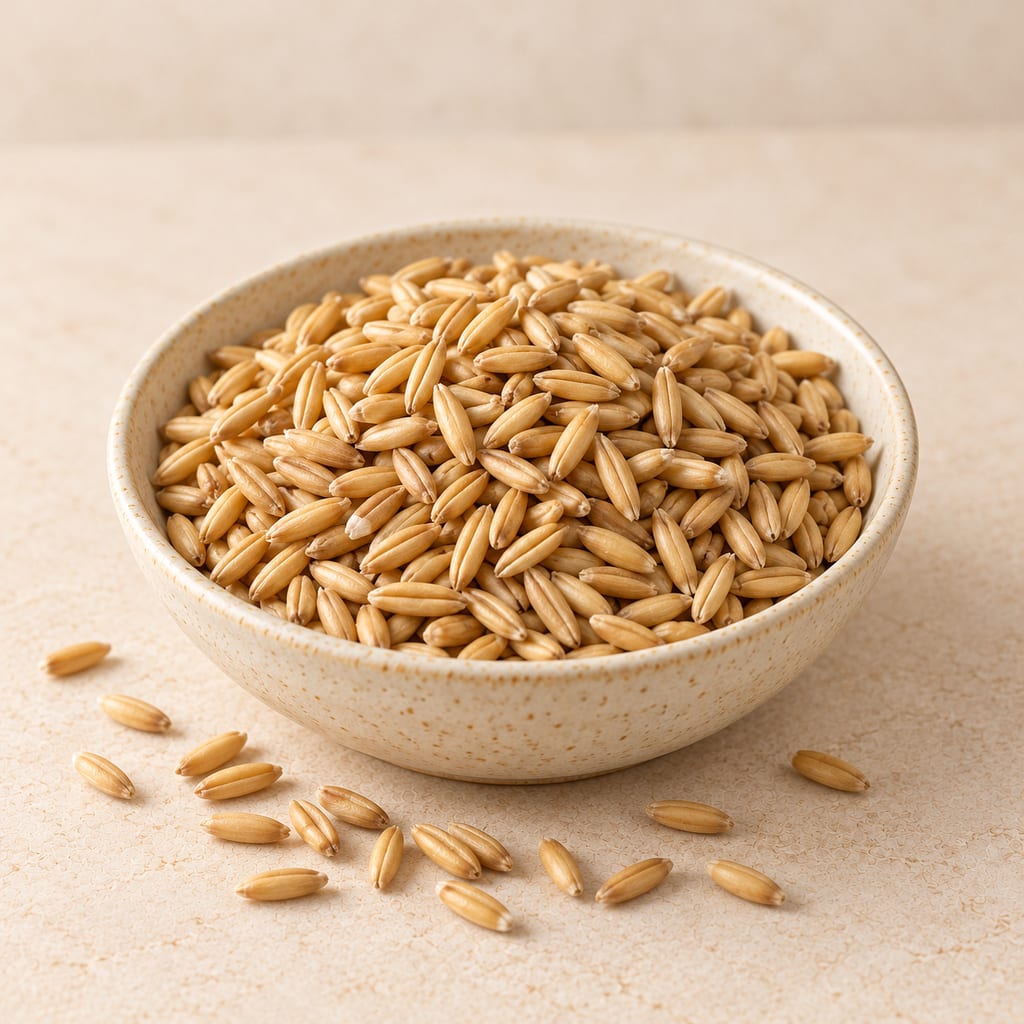
A cereal grain sold as groats, cut pieces, flakes, flour and malt. Oats shape porridge, bread and brewing differently as processing changes hydration, texture, starch, beta-glucan, protein and oil.
Wheat is the edible seed of grasses in the Triticum genus, a diverse family of grain crops used whole, cracked and milled. The page covers the raw grain; flour grades and blends have separate pages.
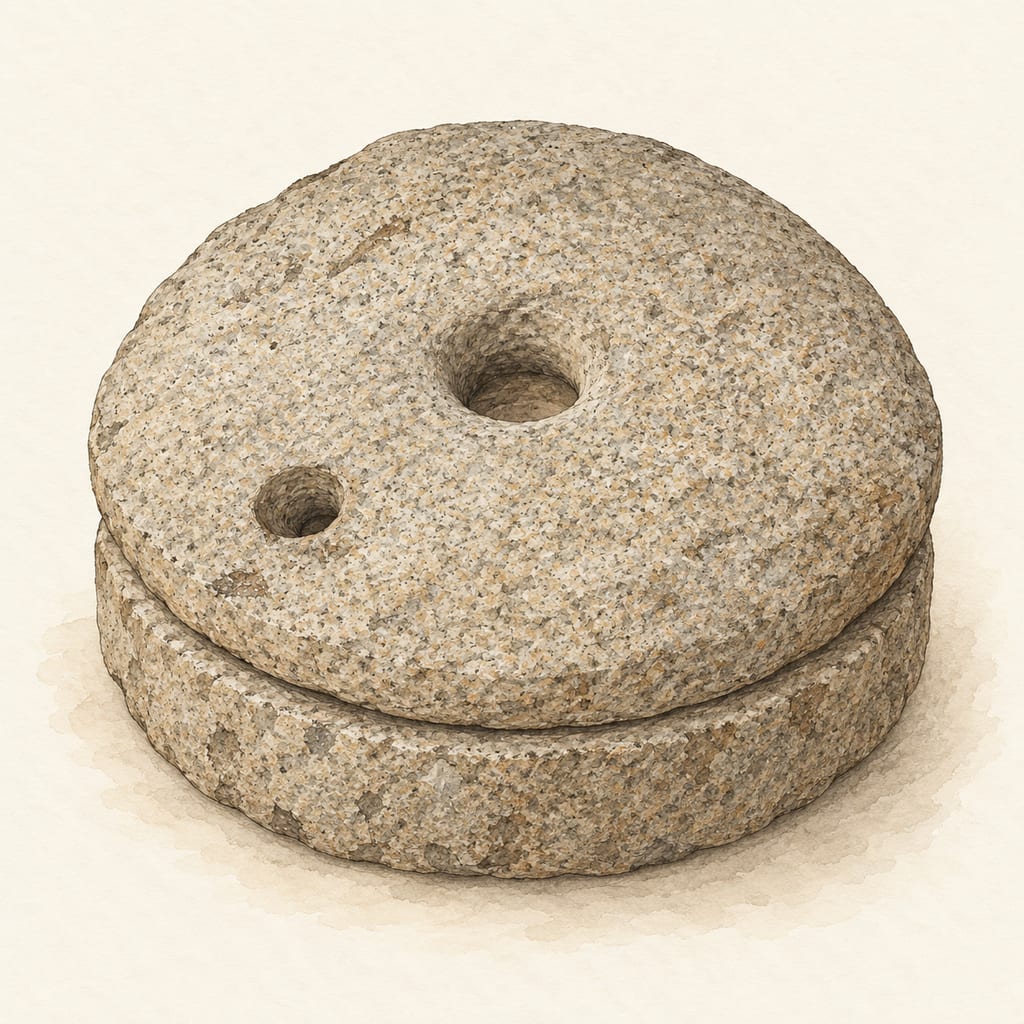
A rotary quern is a hand-operated mill with a runner turning over a fixed bedstone to grind grain. Scandinavian household use of rotary querns increased around the beginning of the Viking Age.

Crushed or milled barley cooked in water until the starch softens and the mixture thickens, the plainest way a northern household turned stored grain into a meal, here with apple and hazelnut.
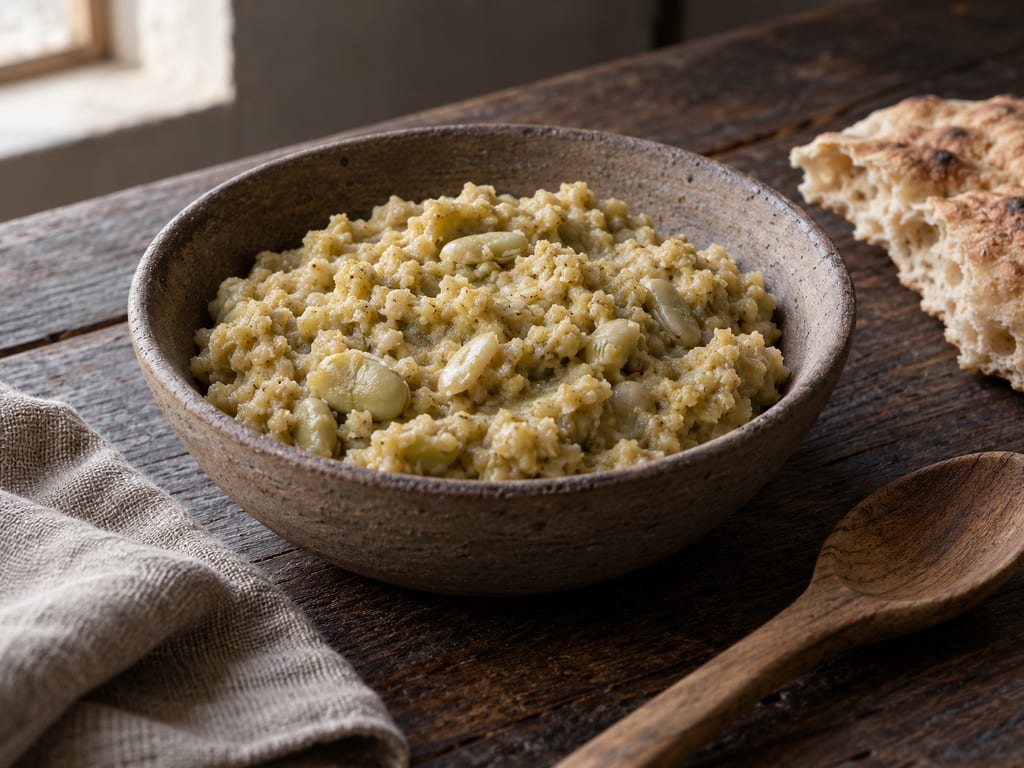
Cooked broad beans crushed to a thick paste with garlic and salt, a museum preparation built on the one European pulse that was already old when the Viking Age began.
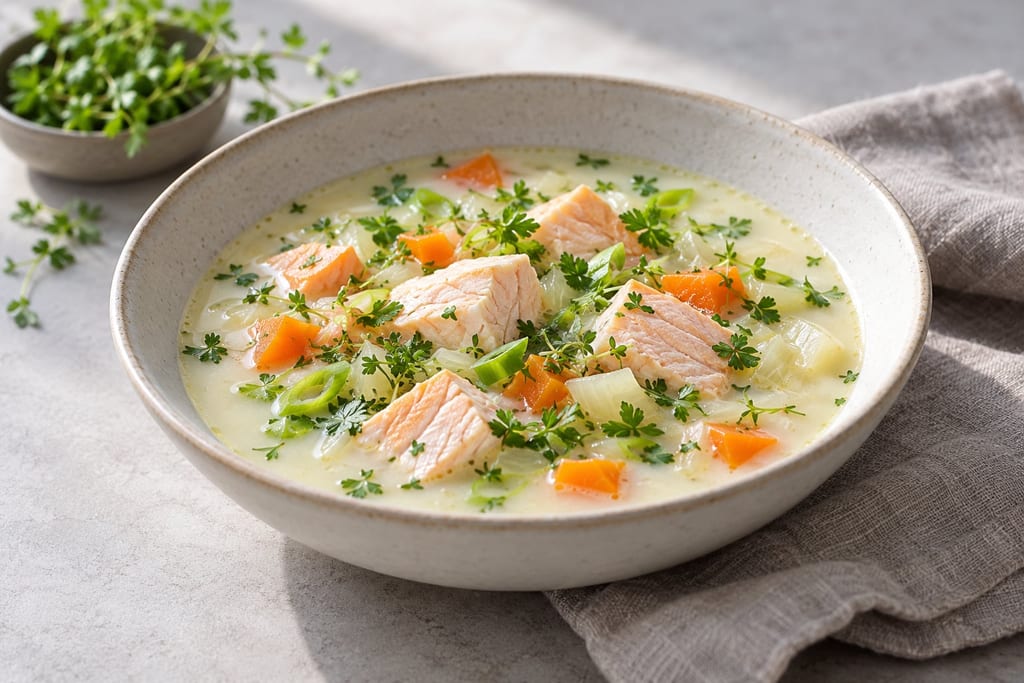
Trout or salmon poached at the end of a simmered broth of onion and root vegetables, a present-day reconstruction of coastal cooking built on excavated fish bones and a boiling pot.
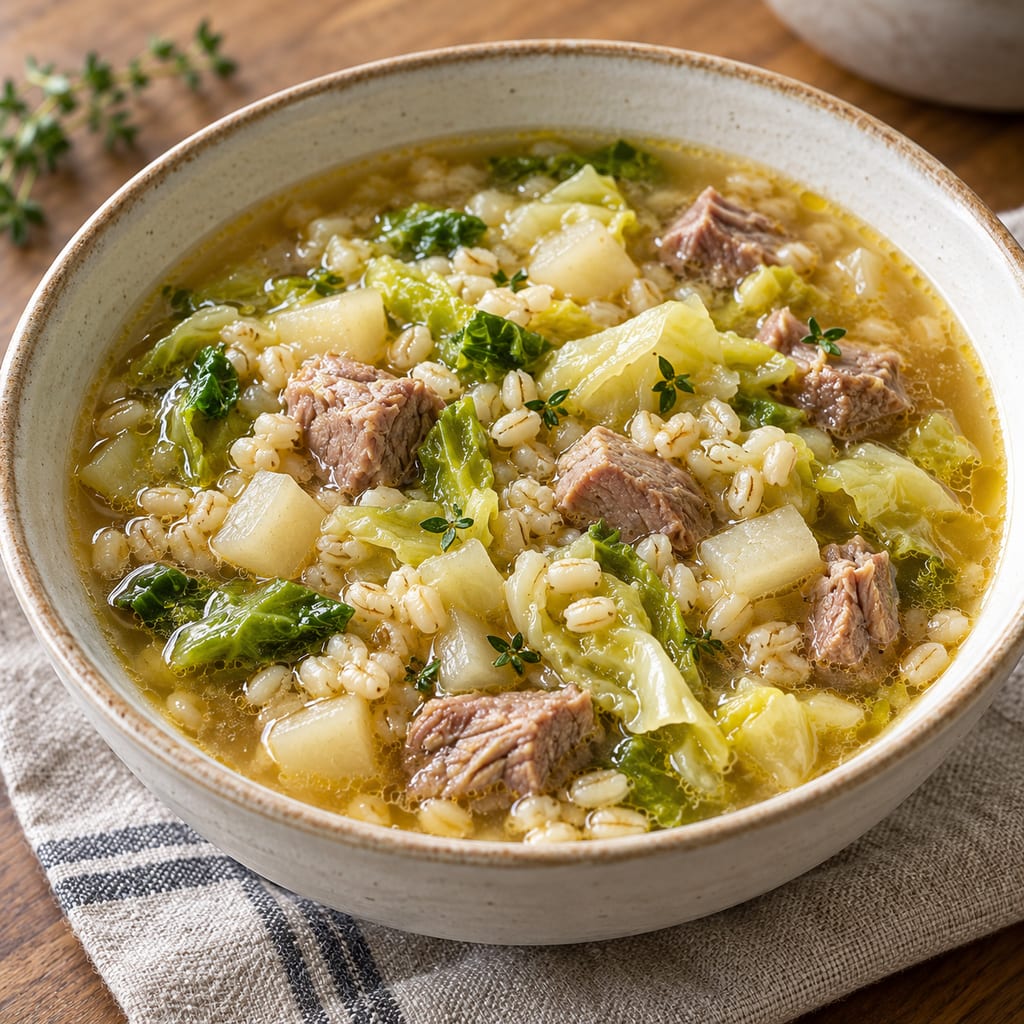
Lamb shoulder simmered with pearl barley, turnip and leafy cabbage in one pot, a present-day reconstruction built from the animals, grains and vegetables of northern European farming.
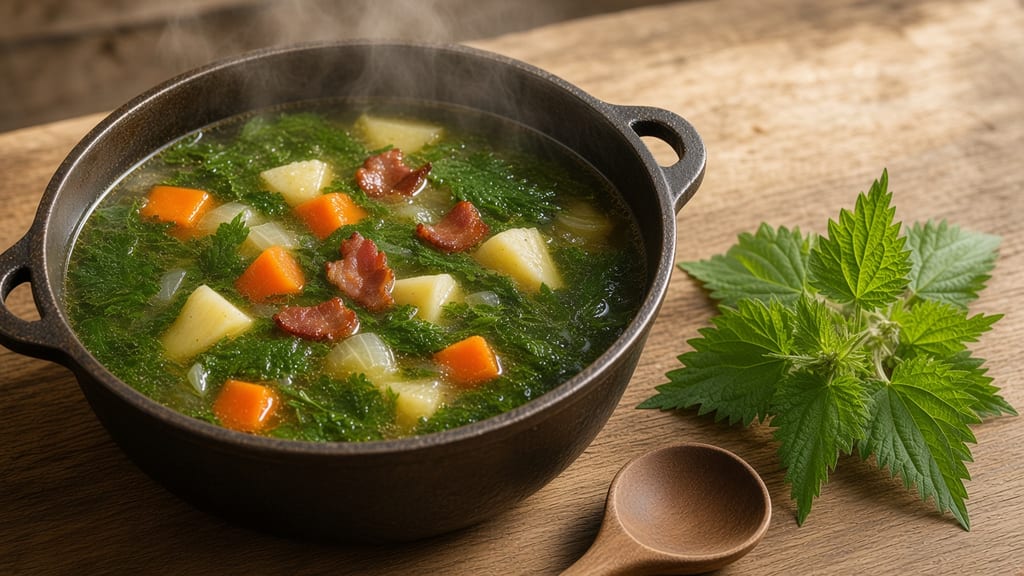
Young stinging nettle shoots cooked with bacon, onion, garlic and three roots into a thick spring soup, from a Danish Viking museum's recipe, with a meat-broth variation and ember-baked turnips.
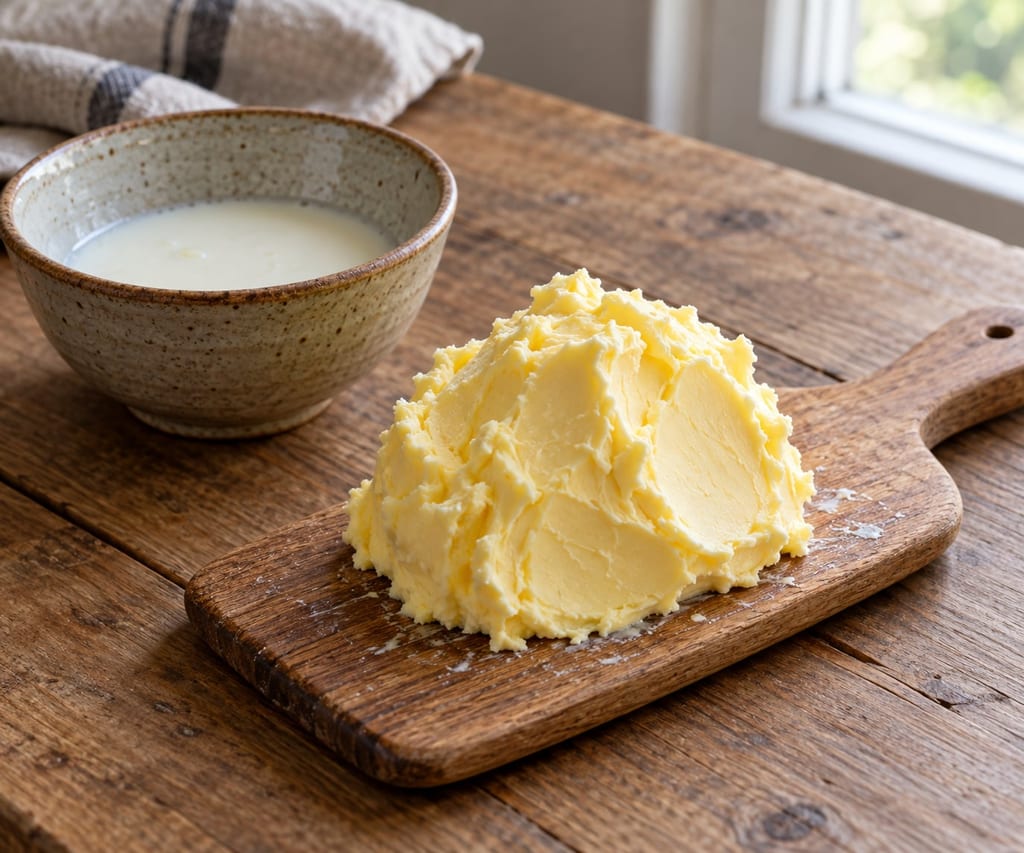
Cream agitated until its fat globules join into a solid mass and release buttermilk, the dairy fat a northern household could concentrate, salt and keep when milk itself would not last.
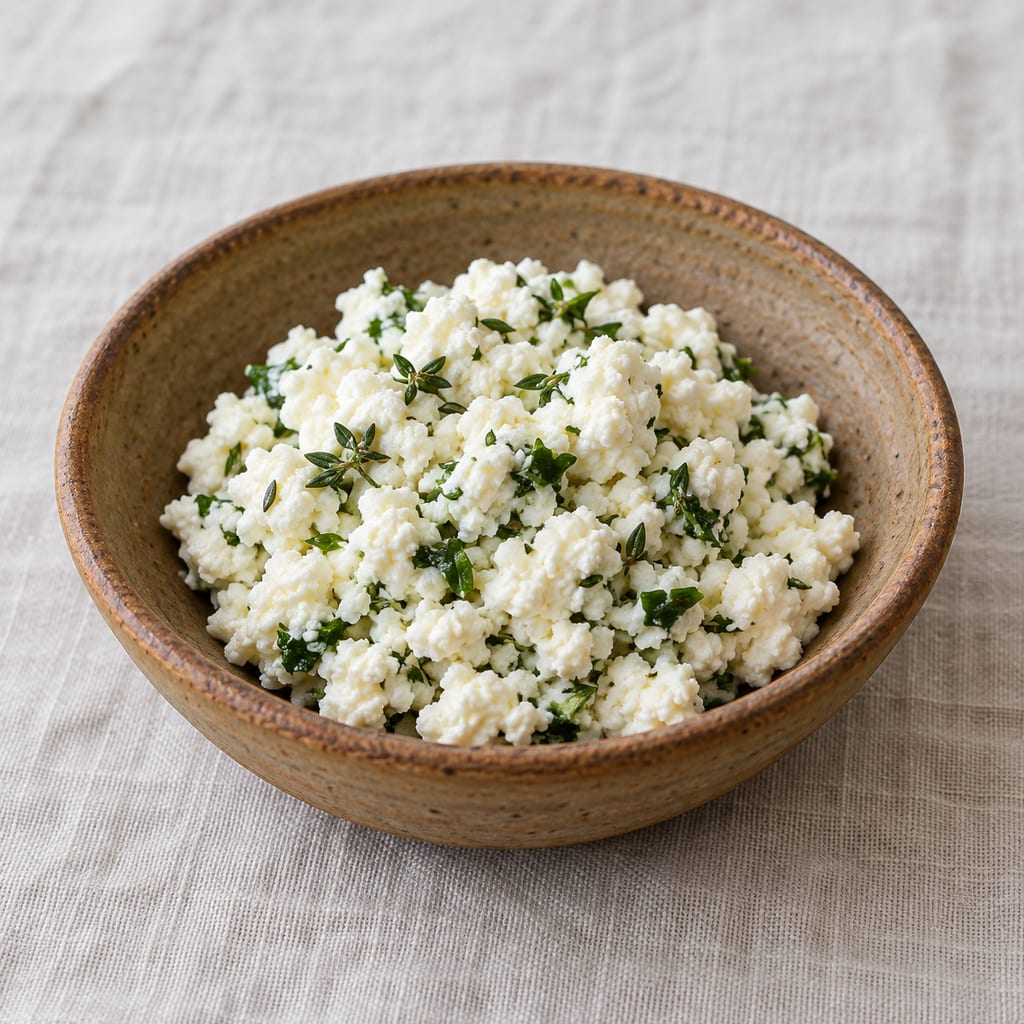
Soft fresh curd made by draining whey from milk already thickened by bacterial acidification, the simplest point in a northern dairy tradition that also produced skyr, ymer and whey itself.
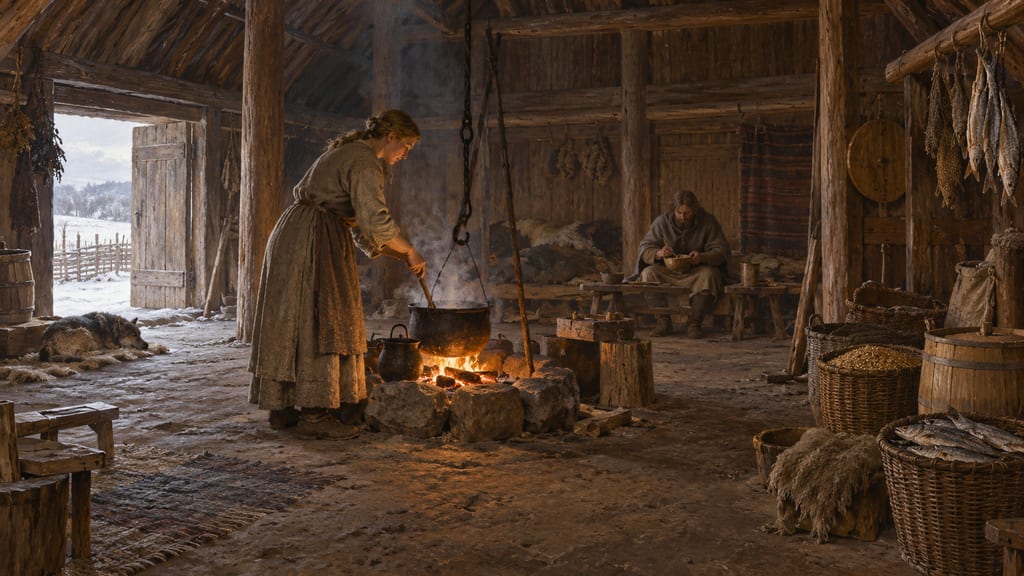
How ordinary Viking-Age households grew, dried, smoked, salted and cooked their food through the northern year, and how to cook their dishes today with supermarket ingredients.
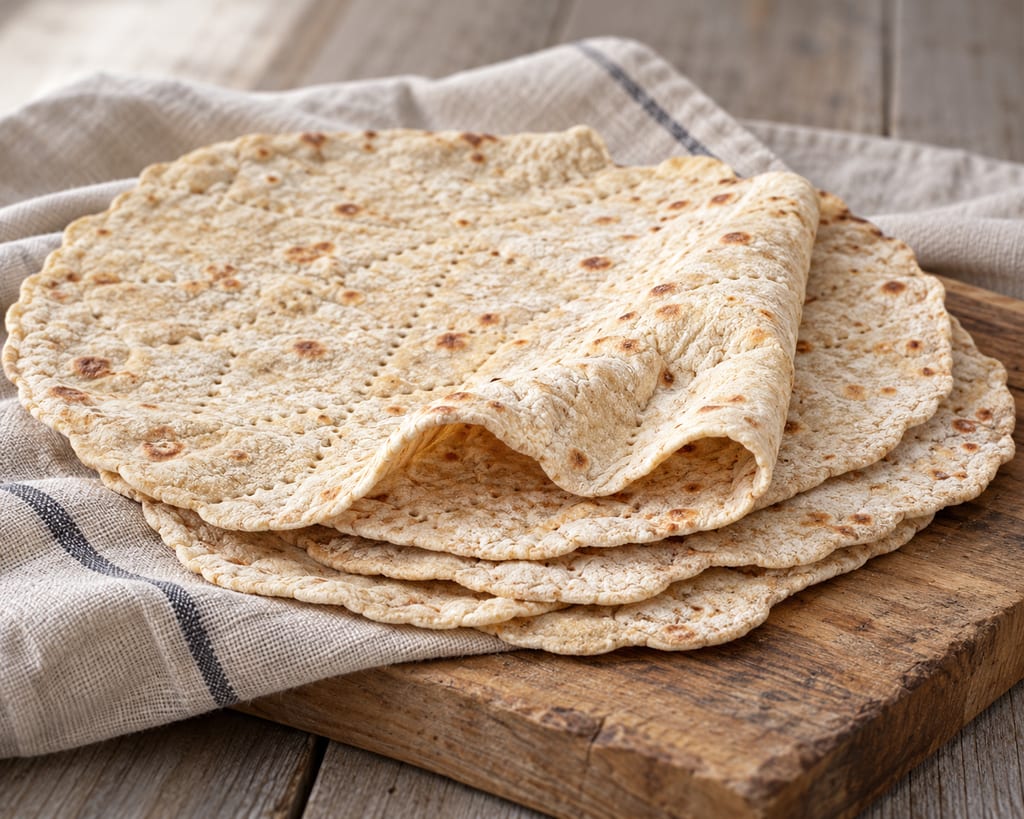
Tunnbröd is Sweden’s family of thin, docked flatbreads, baked soft for immediate meals or dried crisp for the pantry. This home recipe follows a northern Swedish soft rye-and-wheat version scented with anise and fennel.
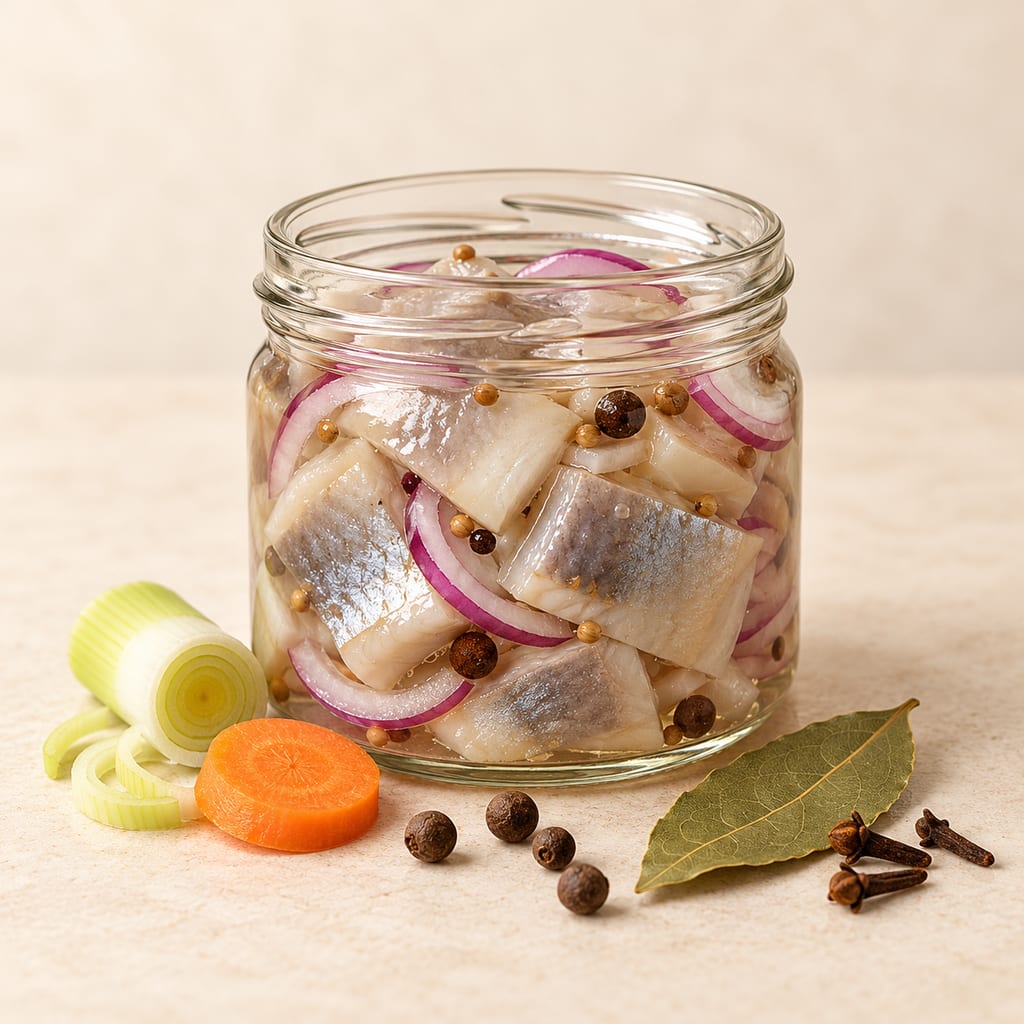
A Swedish ready-to-dress herring preparation: add the classic sliced aromatics and spices to already prepared herring, then serve or chill for fuller flavour.
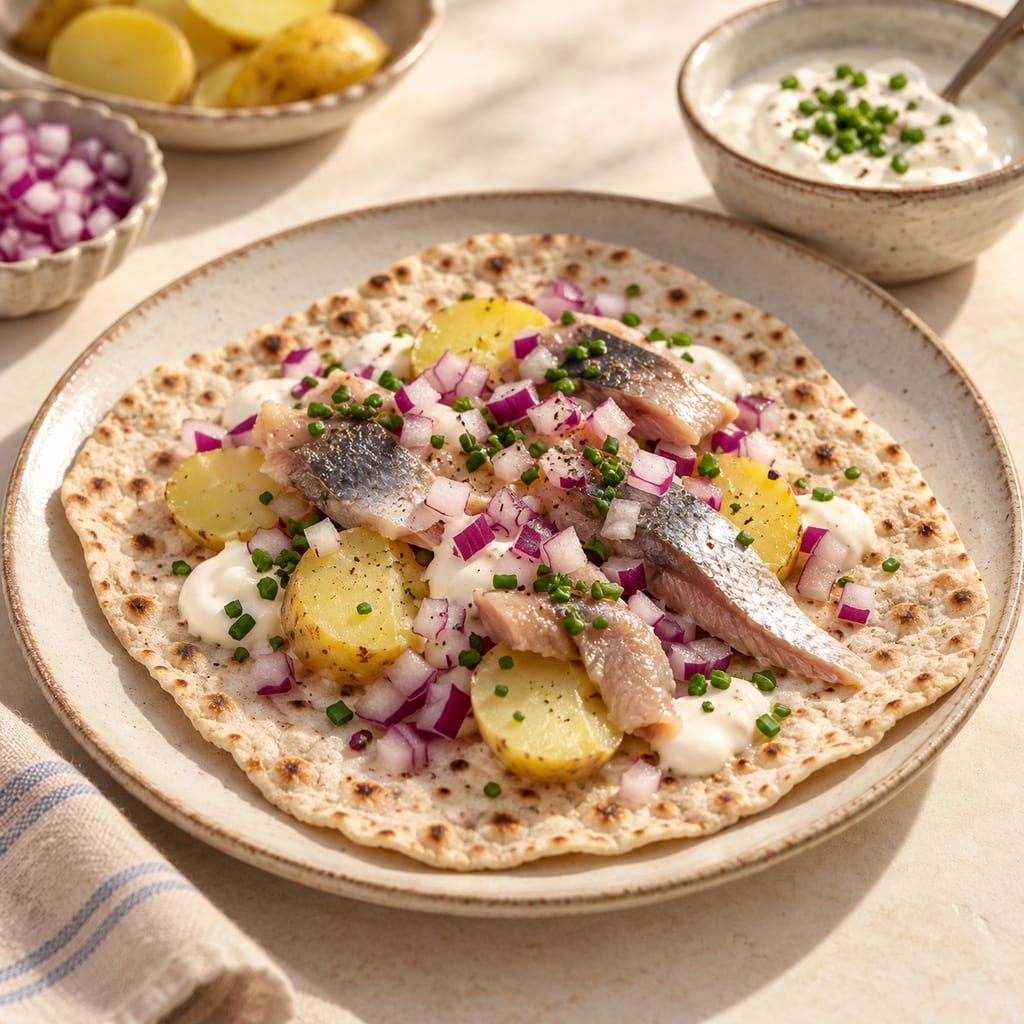
A Swedish late-summer meal of commercially prepared surströmming, tunnbröd, potatoes, onion and cultured cream. This is a serving preparation; the specialist fish fermentation is not made at home here.

A Swedish-style spirit vinegar made by fermenting neutral alcohol with live vinegar bacteria, with a separate guide to commercial ättika strengths.
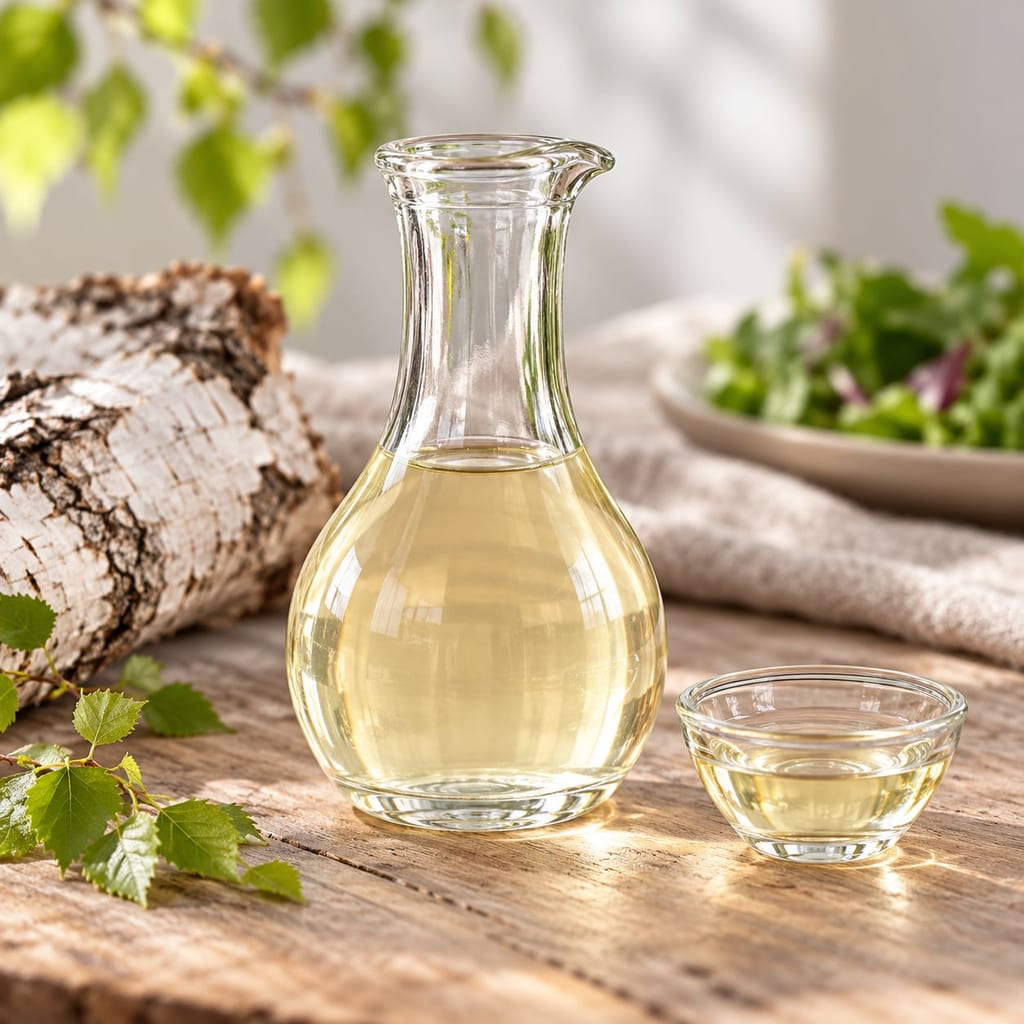
Vinegar from spring birch sap fermented to alcohol and then acetic acid, usually with added sugar or honey because the sap is so dilute; made in Sweden and described in older eastern European accounts.
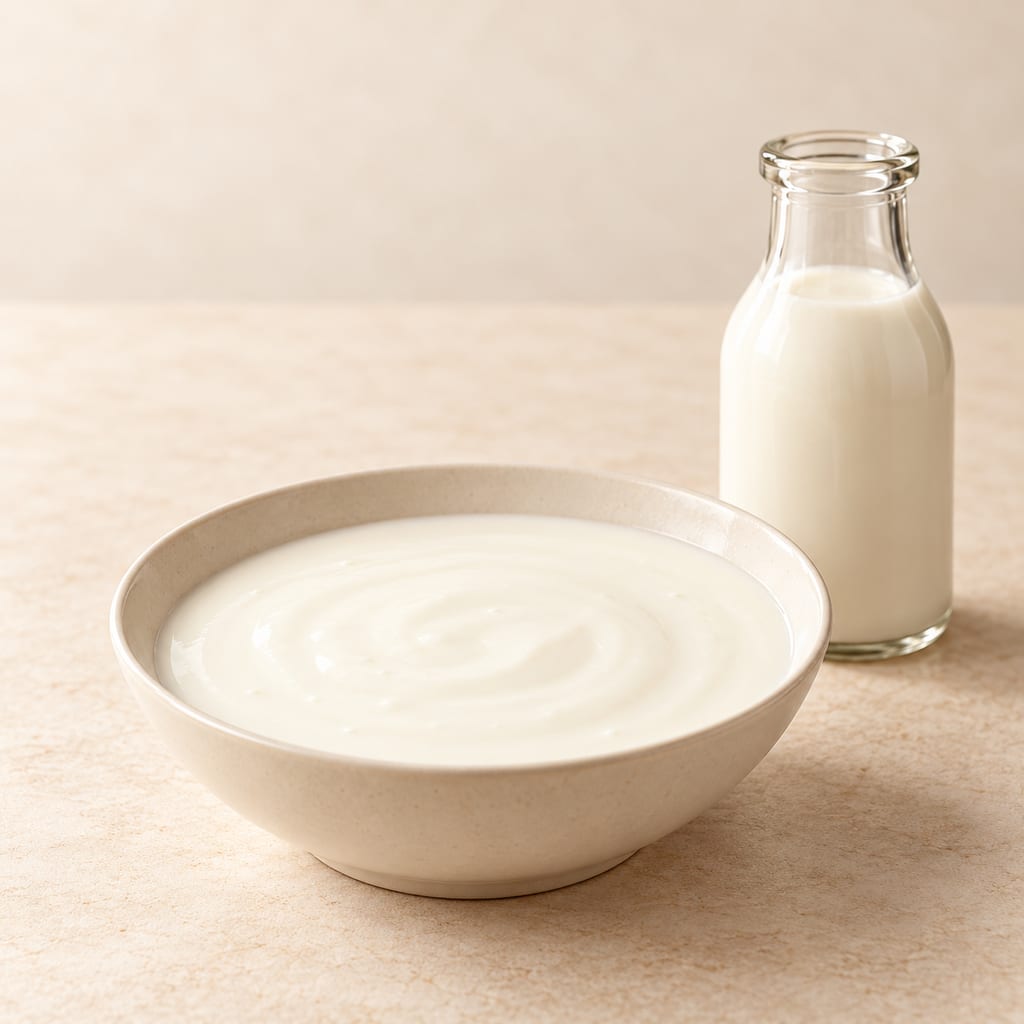
Filmjölk is a Swedish cultured milk with mild acidity and a spoonable body. This recurring batch uses filmjölk from the previous batch to culture fresh milk.
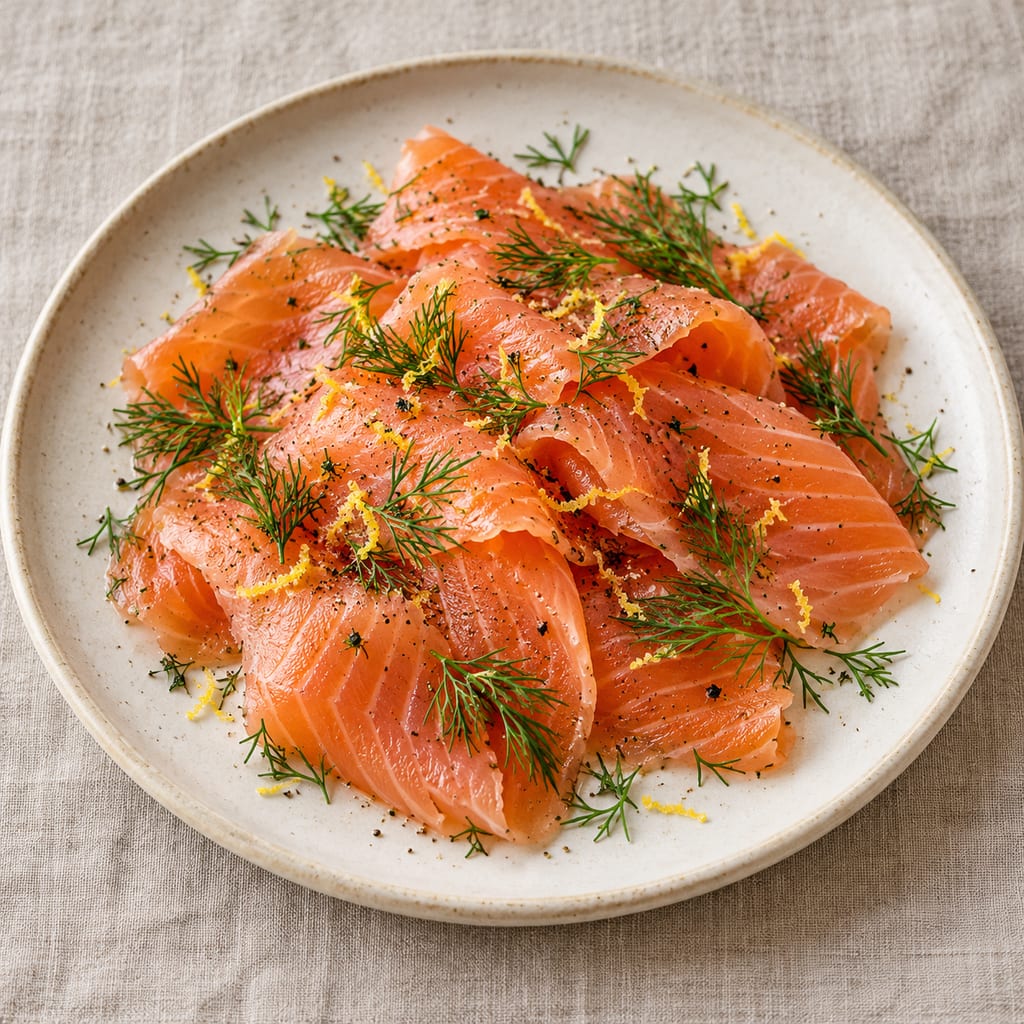
Salmon is cured with salt, sugar, pepper, dill and lemon zest under refrigeration.
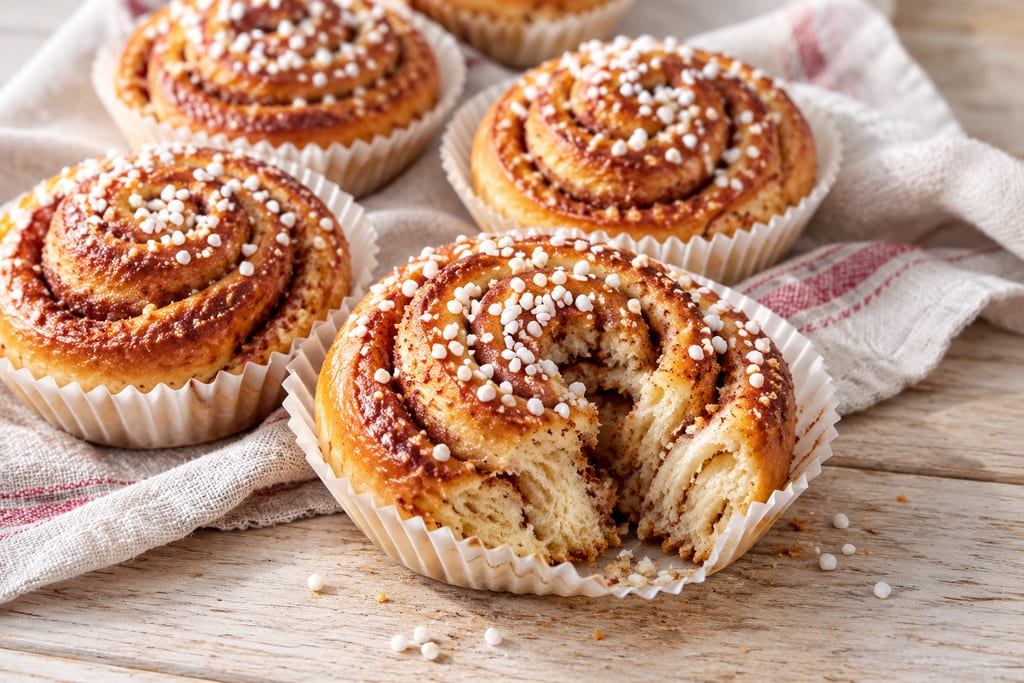
Soft Swedish wheat buns filled with butter, sugar and cinnamon. This 20-bun home batch uses fresh yeast, two short proofs and pearl sugar.
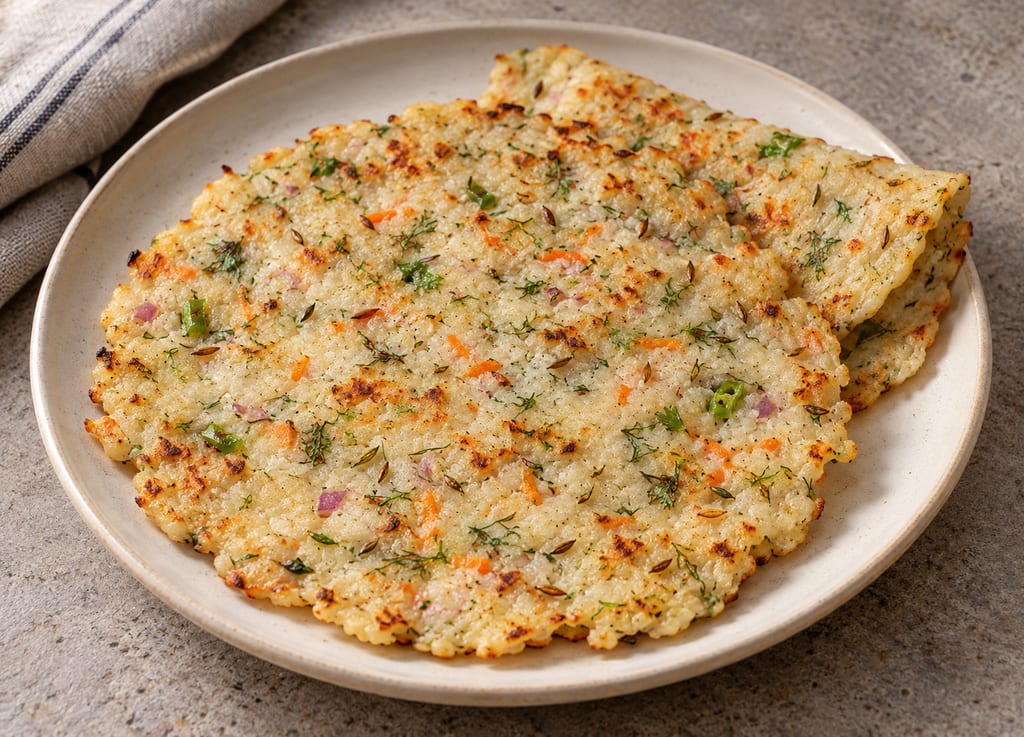
This Karnataka-style akki rotti mixes fine rice flour with vegetables, coconut, herbs and spices, then hand-pats and griddle-cooks the dough.
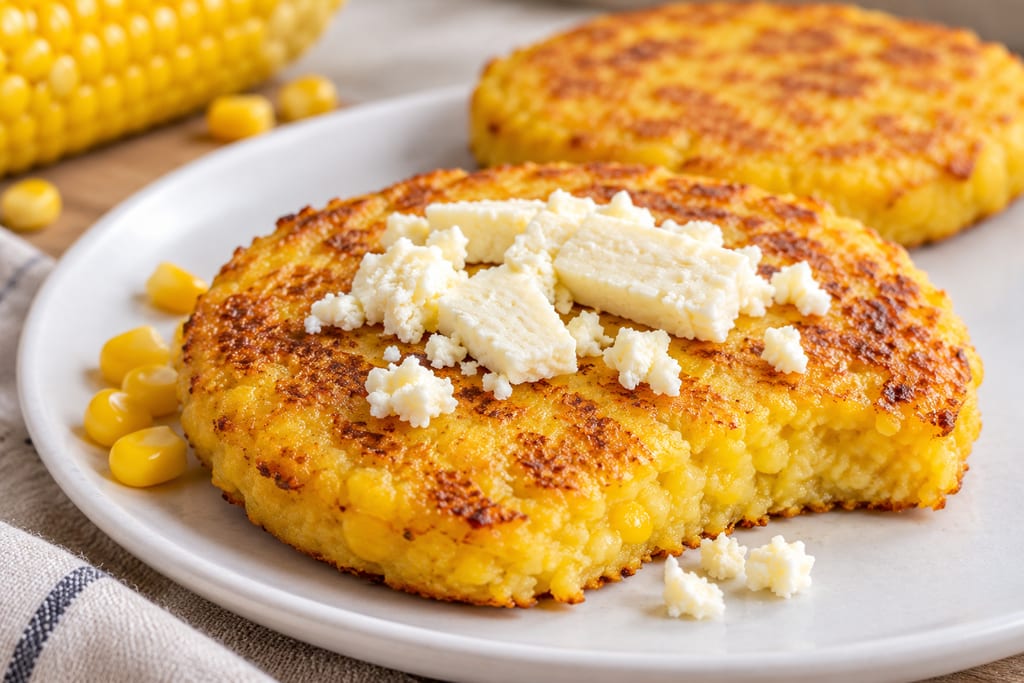
A Colombian Andean griddle cake made from fresh sweet-corn batter, cooked in butter and served with white cheese.
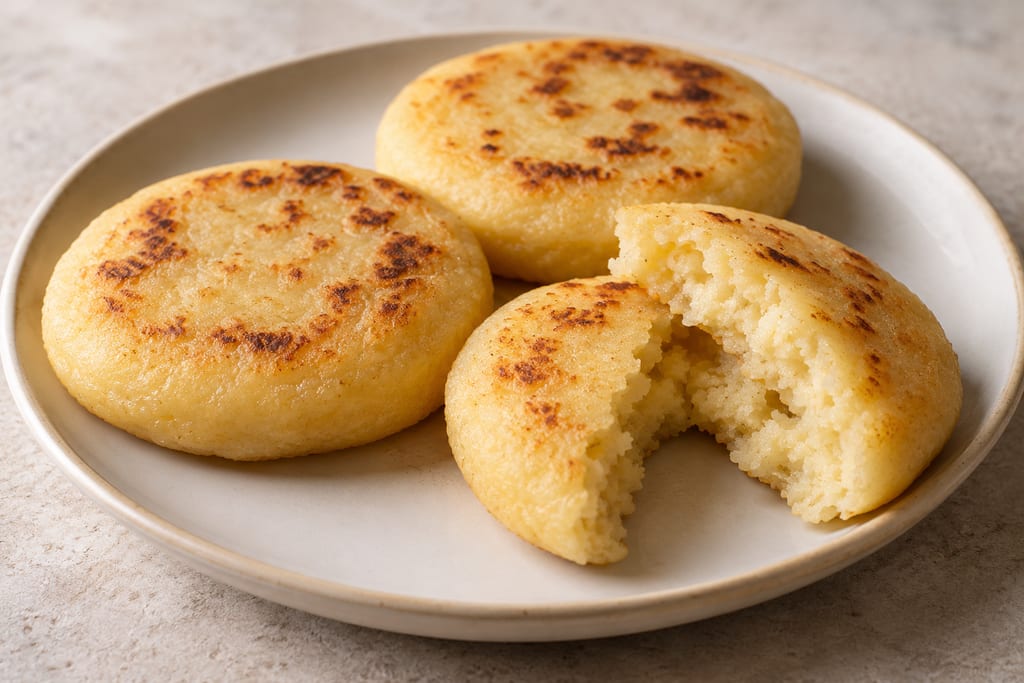
This household version combines precooked corn flour, warm water and salt, then cooks thick rounds on a lightly oiled skillet or griddle. It is one source-specific arepa method, not a universal Colombian or Venezuelan formula.
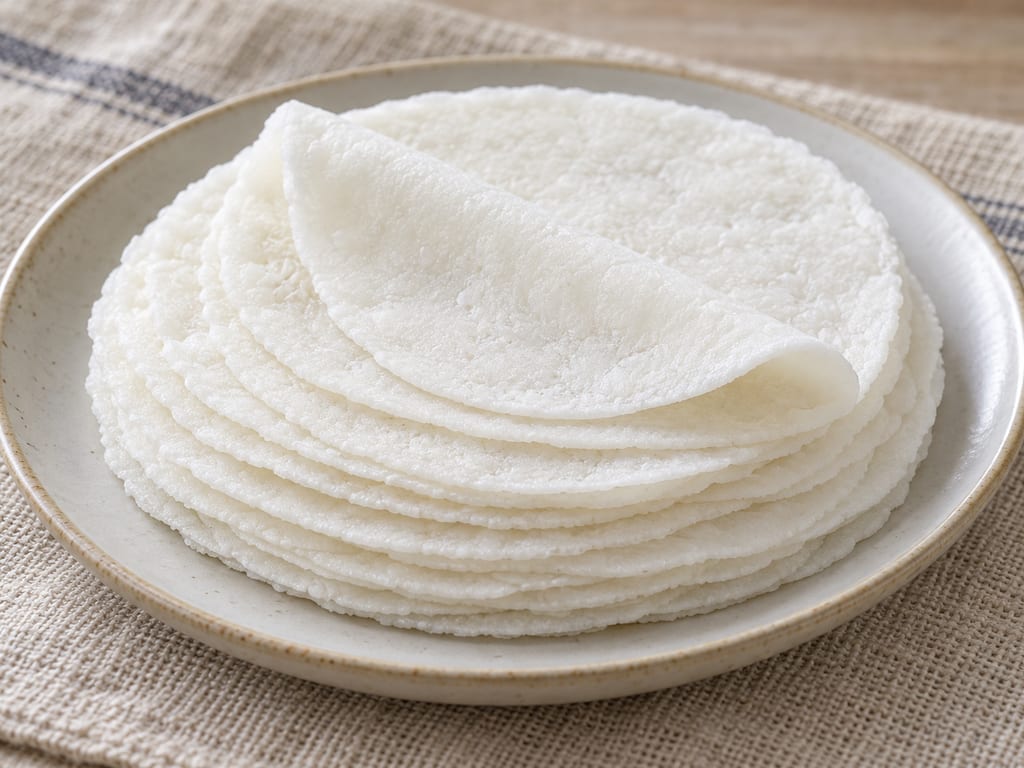
Thin Malabar rice-flour rounds made from roasted rice flour cooked into salted boiling water, kneaded after cooling, and rolled to about 1 mm. They cook on a hot griddle without taking on colour.
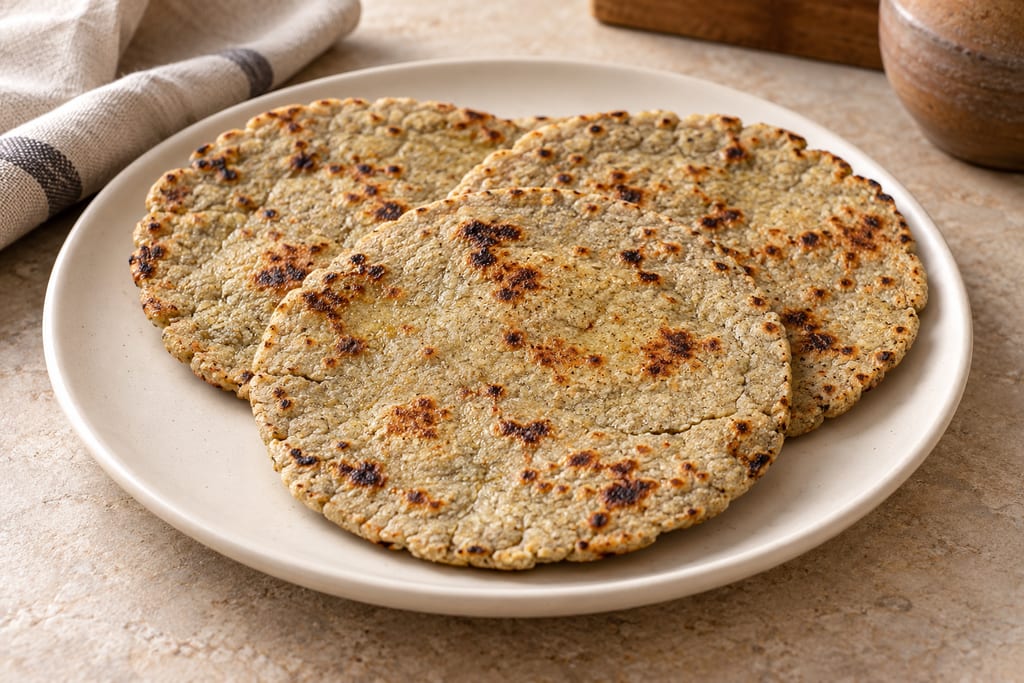
A pearl-millet flatbread shaped between sheets and cooked on a hot tawa. This home batch makes eight.
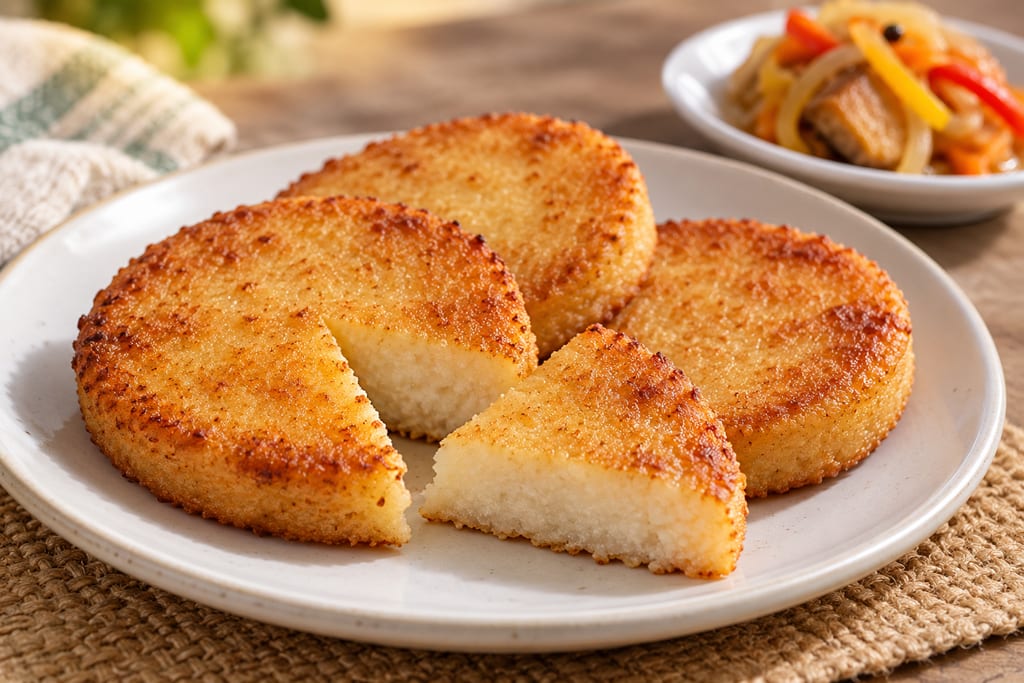
A serving method for approved, prepared bammy rounds: soak them in coconut milk and refry until golden. It does not process raw cassava.
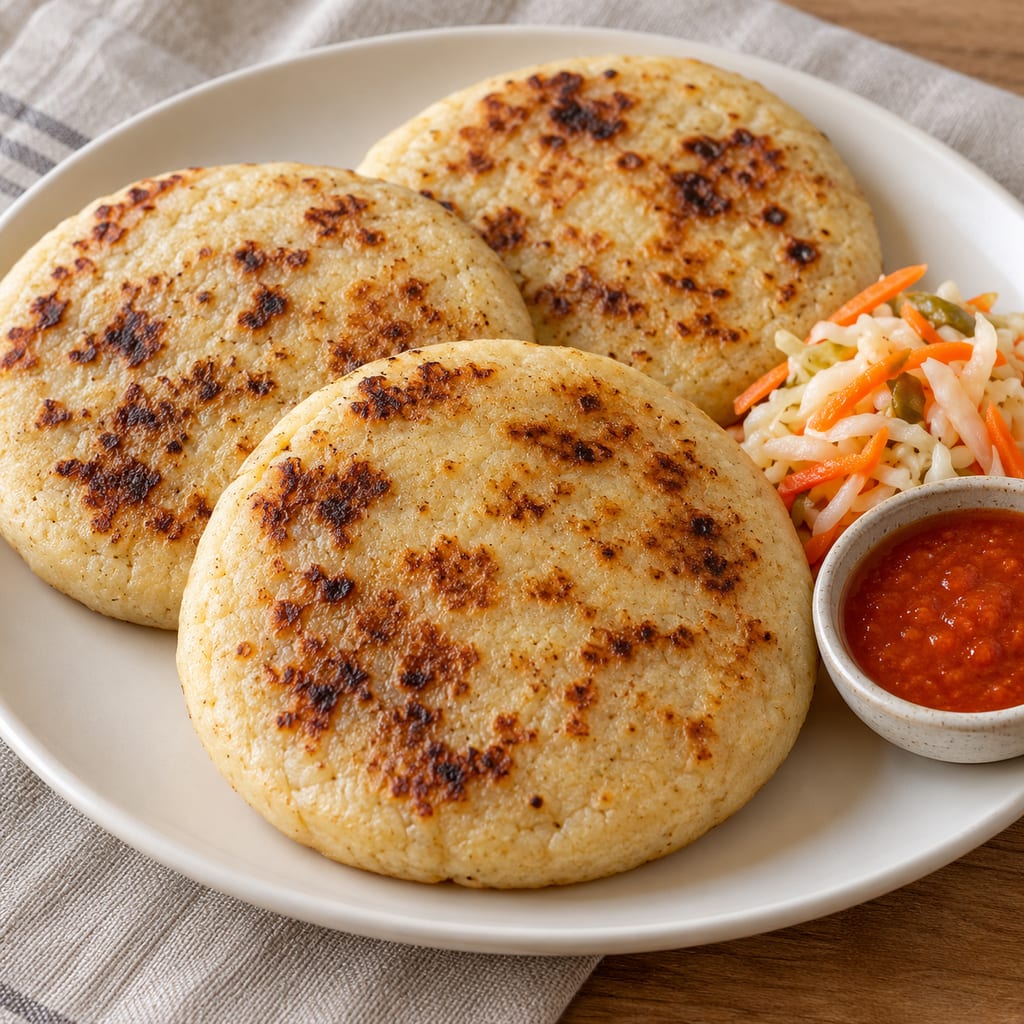
Salvadoran-style masa harina cakes filled with refried beans and cheese, sealed and cooked on an oiled skillet.
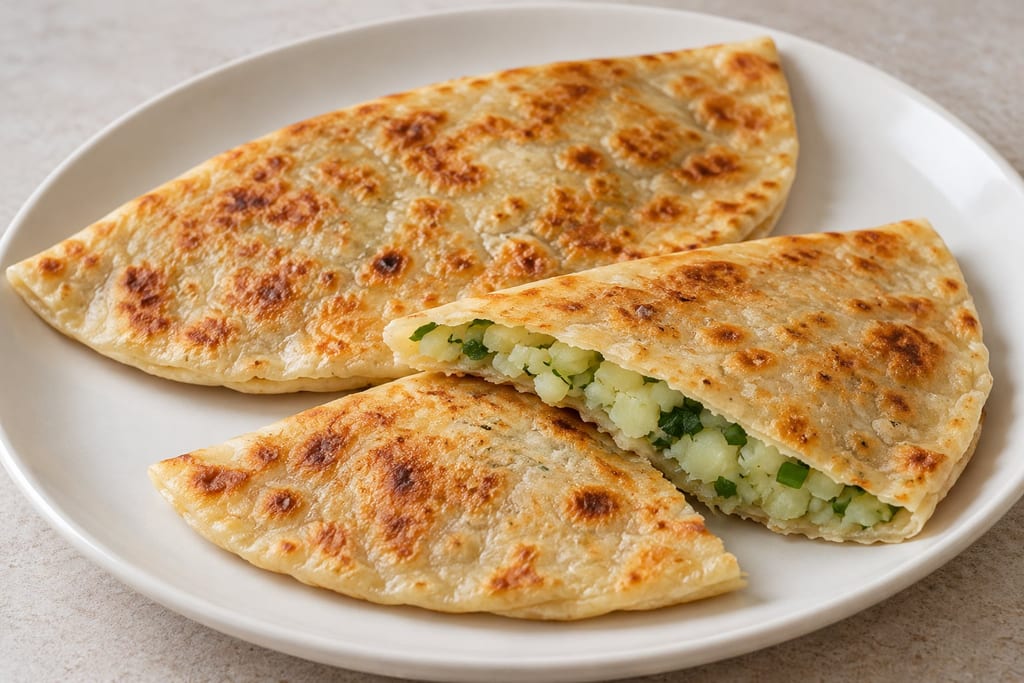
A thin, unleavened Afghan flatbread filled with mashed potato, scallion and cilantro, folded and pan-browned. This version uses a dough made from scratch.

Protected Italian vinegar made only from cooked grape must, fermented and aged in a battery of wooden barrels for at least 12 years: sweet, sharp and syrupy.

Airag is Mongolia’s fermented mare’s-milk drink, traditionally churned with saved starter in a reusable cowhide khokhuur.

Appam, or hoppers, are South Indian and Sri Lankan rice pancakes made from a fermented coconut-and-rice batter and cooked in a curved pan to a crisp lacy rim and a soft, spongy centre.

Auricularia tremellosa is a wood ear fungus of the genus that supplies most dried wood ear sold in China; its own food record is thin, and the culinary practice described here comes from the closely related wood ear species.

Ayran is Turkey’s cold, savoury yogurt drink: plain yogurt is loosened with water and lightly salted, then whisked smooth or aerated into a soft cap of foam.
A thin stone griddle used over an open hearth. Norwegian archaeology documents the established tradition from the early Middle Ages; a Viking-period origin is only a cautious suggestion linked to Shetland.

Black carrot is the anthocyanin-pigmented Eastern carrot (Daucus carota var. atrorubens), the purple root that preceded orange types and still colours kanji and şalgam.
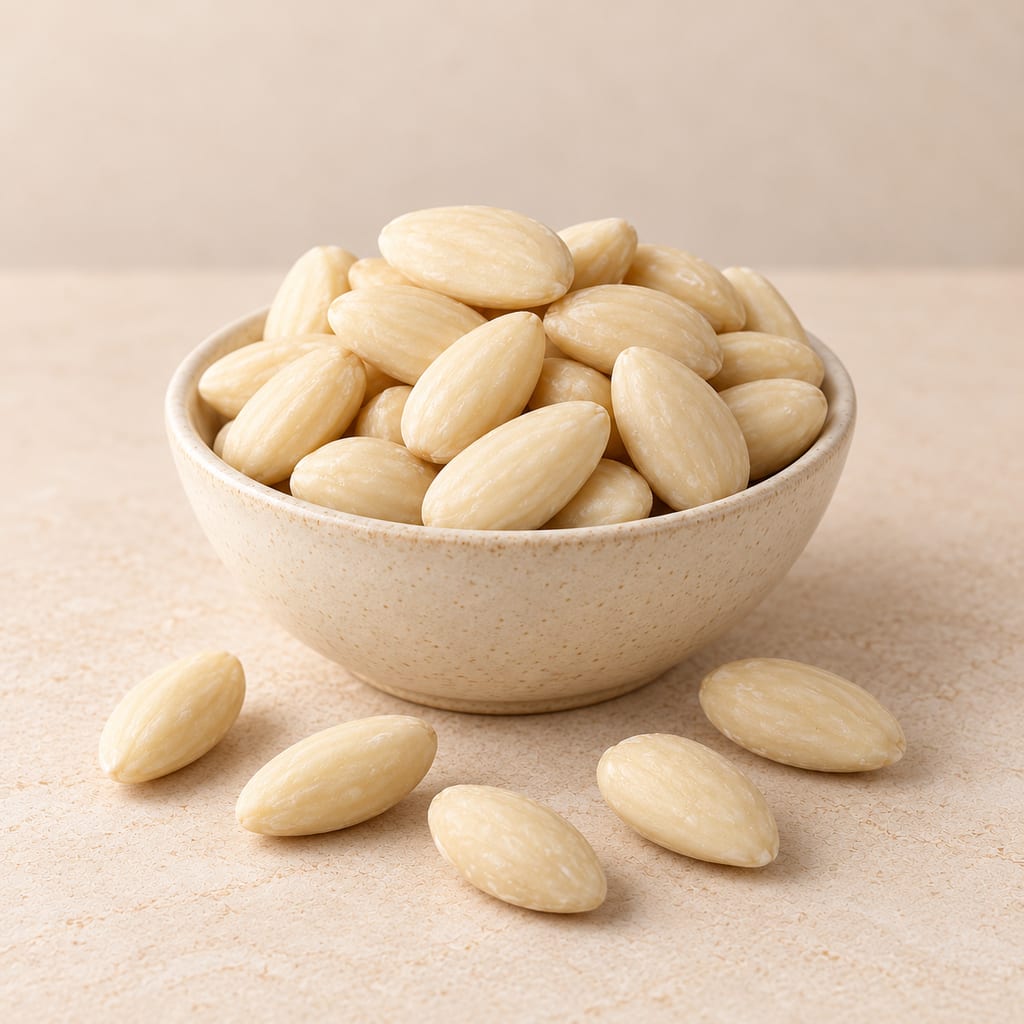
Blanched almonds are sweet almond kernels with the brown seed coat removed. A documented amla murabba cooks ten optional slivered kernels into the finishing syrup with spices and saffron.
No community contributions have been published for this entry yet.
Sign in to contribute. Published comments and photos are free to read.
National Museums ScotlandMethod
National Museums Scotland — Make your own Viking breadThe Birka-inspired reconstruction: 150 g barley flour, 50 g wholemeal wheat flour, 2 teaspoons crushed flaxseed, approximately 100 ml water, 2 teaspoons butter or lard and a pinch of salt, making approximately six small cakes.
Rest the covered dough in a cool place for at least one hour, shape to approximately 5 mm thickness, and cook several minutes a side in a dry cast-iron pan, with an oven alternative of 150°C for 10-13 minutes.
The museum states the formulation as a reconstruction derived from archaeological bread analysis and does not give a water activity, a shelf life or the additional water a dry dough needs.
Cited in: Is it fermented?; Reconstruction recipe: Birka-inspired barley cakes; Method; Bread breaks apart during shaping; Exterior burns before the centre cooks; Interior remains sticky; Bread becomes excessively hard; Safety and storage; What the evidence cannot tell us
JONASHistory · Science
Ann-Marie Hansson — Bread in Birka and on BjörköThe 1996 archaeological study of bread in Birka and on Bjoerko: numerous small carbonised bread remains from the cemeteries of a trading centre that developed in the eighth century and remained occupied into the tenth.
Barley occurs prominently in the Birka bread evidence alongside other cereals and plant ingredients, and the Swedish record contains bread-like cakes and prepared grain foods from before the Viking Age.
Many finds come from cremation burials, so bread selected for burial need not represent a statistically typical everyday loaf.
Cited in: What is Viking barley flatbread?; Archaeological history; How barley bread works; Is it fermented?; What the evidence cannot tell us
Stockholm UniversityScience
Hansson and Bergström — Archaeobotany in prehistoric gravesArchaeobotanical method for charred remains in prehistoric graves: carbonisation drives off water and volatile material and leaves a carbon-rich structure, which is why bread survives at all.
Microscopy and analysis of the structure and composition of charred food can recognise cereal tissues and seed fragments and so distinguish bread from undifferentiated charcoal.
Cited in: Archaeological history
Swedish History MuseumHistory
Swedish History Museum — Food for the poor and the richGrain and bread evidence in the museum's account of food for the poor and the rich, including the association of white wheat bread with high-status dining in later-recorded Old Norse poetry.
Cited in: Cereals, agriculture and social status
Ribe VikingeCenterMethod
Ribe VikingeCenter — FladbrødA second, separate reconstruction for four people: 2 dl each of rye flour, barley flour and wheat or graham flour with 2 dl yoghurt, ymer, beer or whey, 2 teaspoons salt and water as required, rested 30 minutes and formed into cakes approximately 1 cm thick for a medium-hot pan.
Suggested seasonings include honey and thyme, or wild garlic and savory, and dried cranberries, which the research identifies as a modern ingredient because commercial cranberries generally derive from North American plants.
Cited in: A second reconstruction: Ribe mixed-grain flatbread; How the bread was eaten
National Museum of DenmarkHistory
National Museum of Denmark — Bread and porridgeAgricultural and food history of Viking Age bread and porridge: barley suited to short, cool northern growing seasons, rye important in Denmark and southern Scandinavia, oats as a further resource, and wheat cultivated or obtained through exchange.
Cited in: What is Viking barley flatbread?; Names and terminology; Cereals, agriculture and social status; How barley bread works; Preparing barley flour; How the bread was eaten
Food Standards AgencySafety
Food Standards Agency — Cooking your foodModern household guidance used for the cooked-leftover rules quoted here: refrigerate cooked leftovers within two hours and eat them within 48 hours or freeze them.
Cited in: Mould appears during storage; Safety and storage