Remilled durum wheat flour
Remilled durum wheat flour (Italian semola rimacinata di grano duro) is durum semolina milled again to a finer particle size. It is used in regional and home breads, but handles differently from coarse semolina.
 FermenteaWhere food goes to change
Wheat is the edible seed of grasses in the Triticum genus, a diverse family of grain crops used whole, cracked and milled. The page covers the raw grain; flour grades and blends have separate pages.
Wheat is the grain harvested from grasses in the genus Triticum. It is bought as kernels, cracked grain, meal, or flour, and the word on a bag or recipe can conceal several species and many cultivars. This page covers the raw grain as a food ingredient. The separate wheat-flour pages describe the milled products and their differences; a kernel is not itself flour, and the name “wheat” does not identify a single milling grade.
The familiar loaf wheat is common or bread wheat, Triticum aestivum. Durum wheat, commonly named Triticum durum or Triticum turgidum subsp. durum in botanical treatments, is another important cultivated wheat, used especially for semolina. Other cultivated forms include einkorn, emmer and spelt. They are related crops, not simply alternate labels for one modern bread-wheat cultivar. Their husks, threshing, grain shape, flavor and processing needs differ. Kew treats spelt as a distinct, later-originating wheat and notes that it is often incorrectly called a biblical wheat.
Wheat belongs to the grass family Poaceae. Modern bread wheat is a domesticated hybrid crop rather than a wild plant that can be found growing naturally as the same species. Its ancestry includes a cultivated tetraploid wheat and goatgrass; the crop’s complex genome helps explain why wheat is discussed as a family of related grains even when a recipe merely says “wheat.” The common grain has a compact seed with a crease down one side, a hard outer covering, and an embryo at one end. Once the grain is milled, its components may be separated or recombined in different proportions.
The history of wheat starts before fields and loaves. Wild grasses were collected and ground before people domesticated cereal crops. A 2023 genomic study reports einkorn in bread-like foods made by hunter-gatherers at sites in present-day Jordan several millennia before farming. This is evidence for an early use of wild grain; it is not a recipe for the bread, nor proof that every later wheat species arose in one village or at one moment.
Einkorn is recognized as the earliest domesticated wheat species, around 10,000 years ago in the Fertile Crescent. Archaeological remains and genetic studies trace early domesticated emmer to the Levant around 9700 BCE. For generations the simple story of a single “birthplace of wheat” blurred several related crops, wild populations, and later crossings. Genome studies now describe domestication as a longer and more connected process: populations moved, crossed with wild relatives, and acquired traits through repeated selection. Recent ancient-DNA analysis of southern Levant grains supports multiple hybridization events and a mosaic ancestry for some domesticated wheat.
One visible change under domestication was a less fragile ear. Wild cereal heads shed seed readily, spreading the plant; domesticated forms with tougher rachises retain more grain for people to harvest and sow. Farmers then selected for traits that made a crop useful in their own conditions: grain size, threshing behavior, harvest timing, disease response and suitability for local foods. Einkorn, emmer and later free-threshing wheats record distinct parts of this history. A broad “wheat origin” claim therefore needs to name the species or lineage it means.
After cultivation began in western Asia, wheat travelled with farming communities and seed exchange into neighboring regions and beyond. Genetic evidence from ancient emmer in Egypt links it to the wider movement and diversification of cultivated grain in southwest Asia, northern Africa and Europe. Later varieties reflect local selection and breeding rather than a single unchanging grain carried intact from the Neolithic. The present-day crop geography is much wider than its early domestication regions.
Bread wheat is now cultivated across a wide range of climates and elevations. Kew records it on every continent except Antarctica, from the Jordan Valley below sea level to high-elevation farming on the Tibetan Plateau. Those figures describe the breadth of cultivation, not a claim that one cultivar grows everywhere. Season, rainfall, soil, disease pressure and the length of a growing season shape which types do well.
Farmers and breeders maintain thousands of named bread-wheat cultivars. Kew lists about 5,000 cultivars in current use and records many more developed historically, most no longer grown commercially. A cultivar’s name matters when a local recipe or producer identifies one, but it should not be guessed from a grain’s color or from the label “heritage.” Landraces are populations selected and maintained over time by farmers in particular environments and management systems. They can carry variation that modern breeding programs may use.
Common wheat and durum dominate the global commercial crop, while other cultivated species remain locally important or are being revived. Grain markets classify wheat by traits that matter to millers and bakers, including hardness, color and whether a cultivar is a spring or winter type. These classes do not always correspond one-to-one with botanical species. Spring wheat is sown in spring in some regions and harvested later that year; winter wheat is typically planted in autumn, survives the winter and is harvested the following summer. The calendar depends on climate and place.
Georgia illustrates how broad species identity and local heritage meet. Its national plant-genetic-resources report describes wheat as an important food grain, several cultivated wheat species, and local forms such as dolis puri, khoulugo, ipqli and rachula. It also records twentieth-century replacement of some landraces by breeder varieties. These names are evidence of specific Georgian diversity, not synonyms for every wheat used in Georgian cooking, and they do not establish a single origin for wheat as a genus.
Breeding can change how a harvest behaves in the mill or dough. A lot selected for bread flour may be valued for gluten-forming proteins, grain hardness, enzyme activity, or resistance to pre-harvest sprouting. The farmer’s field, the season, the weather near harvest, and post-harvest cleaning and drying all affect the grain received by the mill. A recipe that names only “wheat flour” leaves those variables open; a specified cultivar or flour class narrows them.
A harvested kernel is a seed, not a dry inert bead. Its embryo, called the germ in milling, can grow into a new plant. The starchy endosperm stores food for that seedling. Bran forms the outer layers. Milling separates these structures to make different ingredients: a refined white flour is mainly endosperm, while whole-grain wheat flour retains the kernel’s bran, germ and endosperm. Bran can also be sold on its own; wheat germ is another distinct product. These items have their own identities and should not be collapsed into a generic “wheat” line.
The proportion and behavior of these parts vary by wheat type, growing conditions and milling. Whole berries retain the seed’s original structure; cracking reduces particle size without turning the grain into the same material as fine flour. Durum is often milled into semolina, while other wheat may be milled to flour grades suited to bread, pastries or household cooking. When a source says atta, maida, semolina, wholemeal or bread flour, keep that name: each describes a product or milling tradition with properties that the broad grain label cannot supply.
Water activates enzymes already present in wheat. During germination, amylases mobilize stored starch into smaller sugars that feed the growing plant. In breadmaking, flour enzymes also make sugars available to yeast and other microbes, so grain condition can change fermentation and dough behavior. If grain starts sprouting before harvest, its enzyme activity may become excessive for some baking uses; flour from affected grain can become sticky and perform poorly. The small sprout that may begin inside a kernel and sprout damage in harvested grain are related through germination but are different situations.
Wheat is a substrate, not a starter culture. Flour, cracked grain or whole kernels supply starch, proteins and other grain components; the food’s microorganisms come from the culture, environment or process used in the particular preparation. Yeast and lactic-acid bacteria in sourdough dough transform available sugars and release fermentation products. Cereal enzymes help make sugars available, while acidification and microbial metabolism alter enzyme activity. Flour quality and the community of microbes both matter, so wheat alone does not make a sourdough.
In a leavened dough, water allows gluten-forming proteins to hydrate and connect into a network. The network gives dough a structure that can stretch and hold carbon dioxide produced by yeast. Starch provides much of the carbohydrate substrate, but yeast uses sugars rather than whole starch granules directly; cereal enzymes release sugars during dough preparation and fermentation. This explains why wheat can support a risen loaf while flour made from sprouted or otherwise enzymatically altered grain behaves differently. It does not supply a universal hydration, fermentation duration, or loaf formula.
Wheat also appears in fermented products outside bread. Soy sauce is made from soybeans and wheat in many production methods; fungal and other microbial activity transforms the raw materials, and wheat contributes to the system’s flavor and chemical changes. Wheat beer uses malted or unmalted wheat as part of a cereal bill, but the brewer’s chosen mash and yeast determine what starch becomes fermentable sugar and what is fermented. These foods are not interchangeable processes: wheat’s role in shoyu is not the same as its role in a sourdough, a wheat beer or an unfermented flatbread.
Some breads and batters use wheat flour in a dough that is left to ferment; others are chemically raised, puffed by steam, cooked without a leavener or not fermented at all. The ingredient list alone cannot tell the reader which process occurred. The living dough and its process belong on the preparation’s recipe page. Here the grain page explains what wheat can supply, while the linked recipes describe the culture, stages and conditions when those are documented.
Choose the form the source or recipe actually names. Whole kernels can be stored or milled; cracked wheat has been reduced to smaller pieces; semolina, atta, wholemeal and refined flours are milled products, not interchangeable names for whole grain. Flour labels such as hard, soft, red, white, spring, winter or high-protein describe different aspects of the crop and its expected behavior. These descriptions are useful clues but cannot replace a recipe that has been tested with a particular flour. A grain sold for planting may be treated or unsuitable as food; use grain sold for human consumption when preparing food.
For a home kitchen, milling wheat berries produces fresh whole-grain flour, but milling does not make raw grain or flour ready to eat. Flour is an agricultural raw food. Grain may encounter harmful bacteria in fields or during processing; grinding and bleaching do not remove that hazard. The FDA and CDC warn people not to taste uncooked flour, dough or batter. Cook or bake flour-containing food according to its recipe or package directions, and wash hands, utensils, work surfaces and bowls after handling raw flour or dough.
Whole grain retains the parts that refined milling separates, so it has more bran and germ in the flour than an endosperm-only product. That changes texture, flavor and the way dough handles. Bran absorbs water and can interrupt the gluten network; a recipe designed for white bread flour may not behave identically with wholemeal flour. Freshly milled flour can also differ from stored flour. These are reasons to follow a formula written for the ingredient in hand or to treat a substitution as a new adaptation rather than applying an unsupported universal adjustment.
Farm-scale grain storage and a household bag of flour are different contexts. University of Maine Extension describes cleaning and drying grain after harvest and protecting stored grain from moisture, mold, rodents and insects; its numerical moisture guidance is specific to grain storage practice, not a household flour shelf-life rule. For packaged grain or flour, follow the producer’s storage instructions and any recall notice. Do not assign a single safe storage period to every form of wheat, package, climate and milling date.
Wheat contains gluten-forming proteins, including gliadins and glutenins, and is a major food allergen in many jurisdictions. Celiac disease requires strict avoidance of gluten, including wheat, under medical guidance. Wheat allergy is a different condition from celiac disease. “Ancient wheat,” spelt or einkorn is not a safe substitute for someone who needs to avoid gluten; those are wheat relatives and still contain gluten proteins. A food’s fermentation or long rise does not change its identity into a gluten-free food.
Raw flour can carry Salmonella or pathogenic Escherichia coli even when it looks like a clean powder. Milling and bleaching do not kill these bacteria, and normal household smell, taste or appearance cannot certify that flour is free of them. Do not taste raw flour or dough. Keep flour and raw dough from ready-to-eat foods, clean flour dust and surfaces, and cook the food completely using the directions provided by a reliable recipe or the package.
Some grain lots also face crop-specific hazards such as Fusarium head blight and its mycotoxin deoxynivalenol. The risk is managed through crop selection, field monitoring, grain testing, cleaning and regulated supply chains; it cannot be diagnosed by a home cook from a kernel’s appearance. The numerical limits in grain-quality guidance address defined product and jurisdiction contexts, so this page does not turn them into a home recipe limit. If wheat is recalled or its condition is uncertain, follow the recall and supplier advice rather than trying to make it safe by washing, fermenting or milling it.
The word wheat names a crop family, not one flavor, flour, ferment or food tradition. Bread wheat and durum supply much of the world’s commercial grain, while ancient wheats, landraces and local breeding continue to shape particular places. Milling turns kernels into ingredients with distinct behavior; fermentation adds a separate community and process. Read “wheat” on a recipe as an identity clue, then follow the linked preparation for its actual form and method.
wheat, gluten
Genome and archaeological studies locate early domestication and later hybridization within this broad region; this row does not claim one birthplace for all wheat.
A Karacadağ-area hypothesis concerns domesticated einkorn and does not establish the birthplace of every Triticum species.
The evidence concerns emmer and ancient southern Levant grains, not an exclusive origin for modern bread wheat.
The country report documents locally maintained wheat diversity and replacement by breeder varieties; the row does not represent every Georgian wheat-growing locality.
Bread wheat is cultivated across the world, on every continent except Antarctica; this broad row represents crop distribution, not a recipe origin.
Remilled durum wheat flour (Italian semola rimacinata di grano duro) is durum semolina milled again to a finer particle size. It is used in regional and home breads, but handles differently from coarse semolina.
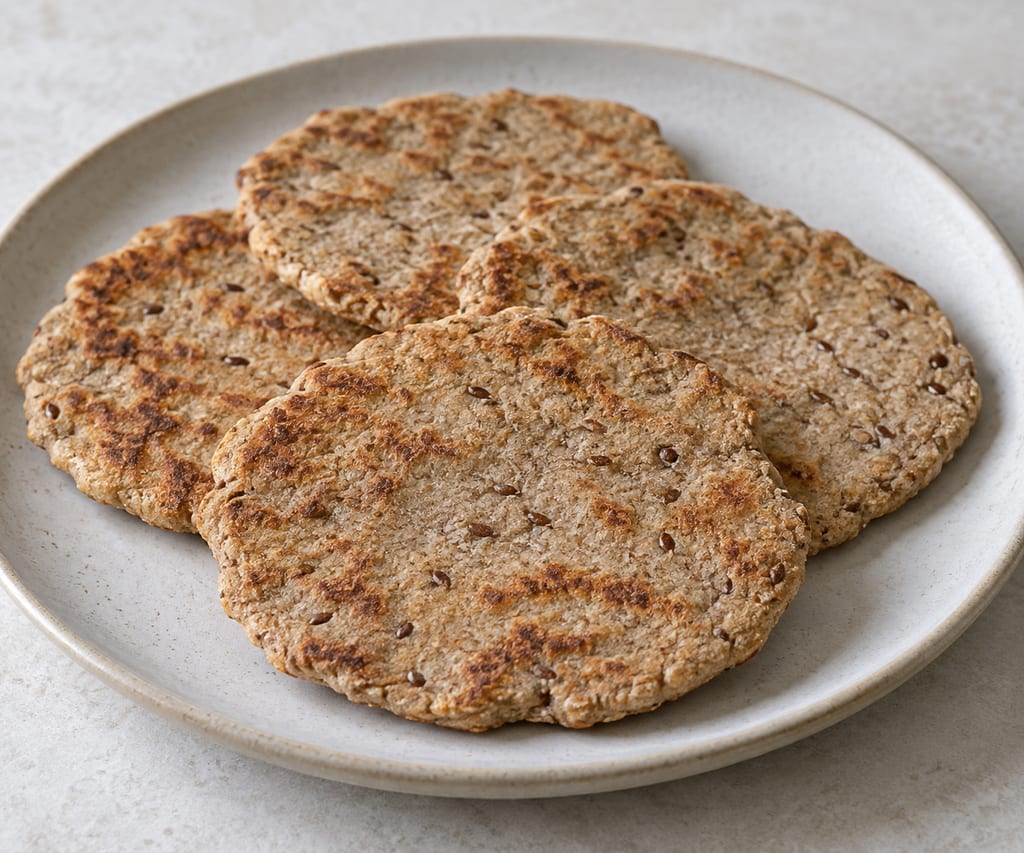
A small, dense cake of ground barley mixed with liquid and cooked against a hot surface, the form a low-gluten northern cereal takes when a household turns stored grain into bread.
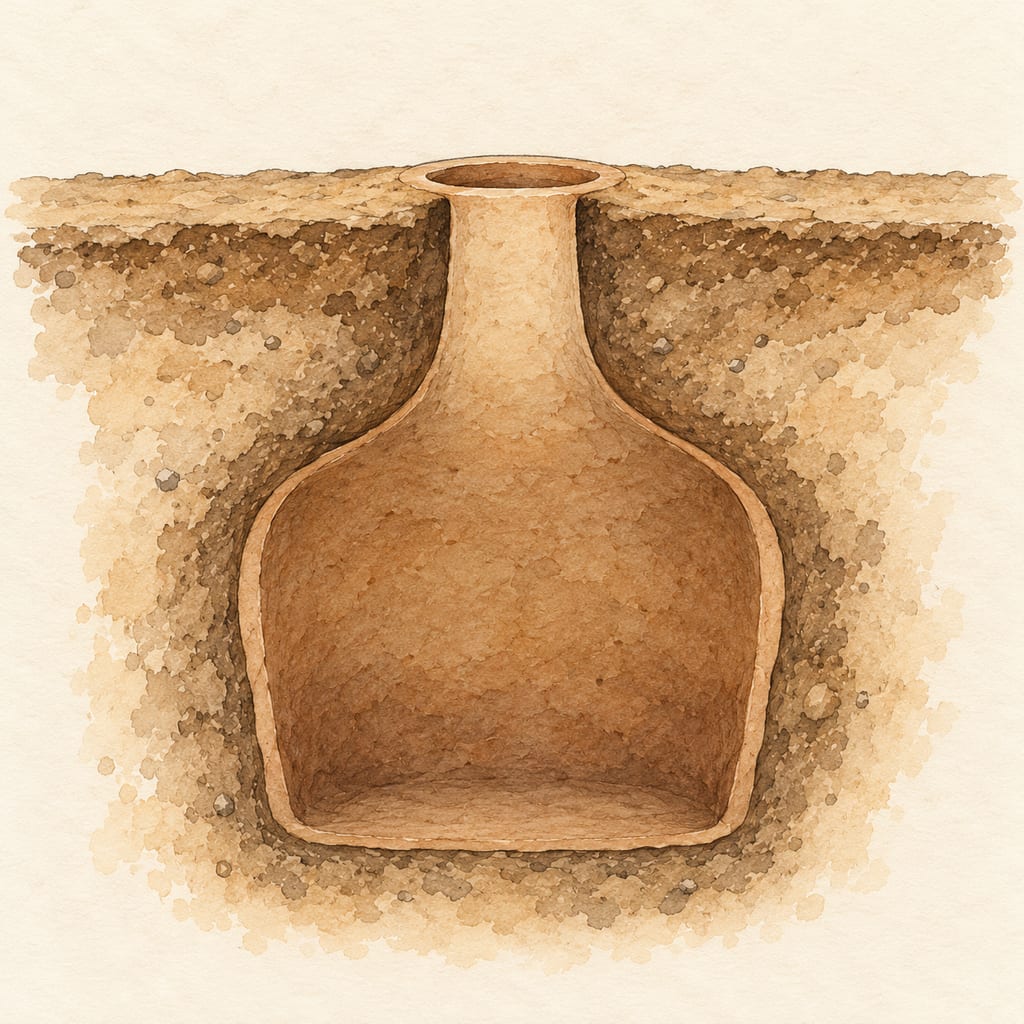
A Moroccan small-farm underground grain store, described as a matmora: a pit generally dug near the house for household grain or seed.
Neolithic underground grain-storage pits in Egypt's Fayum, identified through basketry linings and remains of emmer and hulled barley.
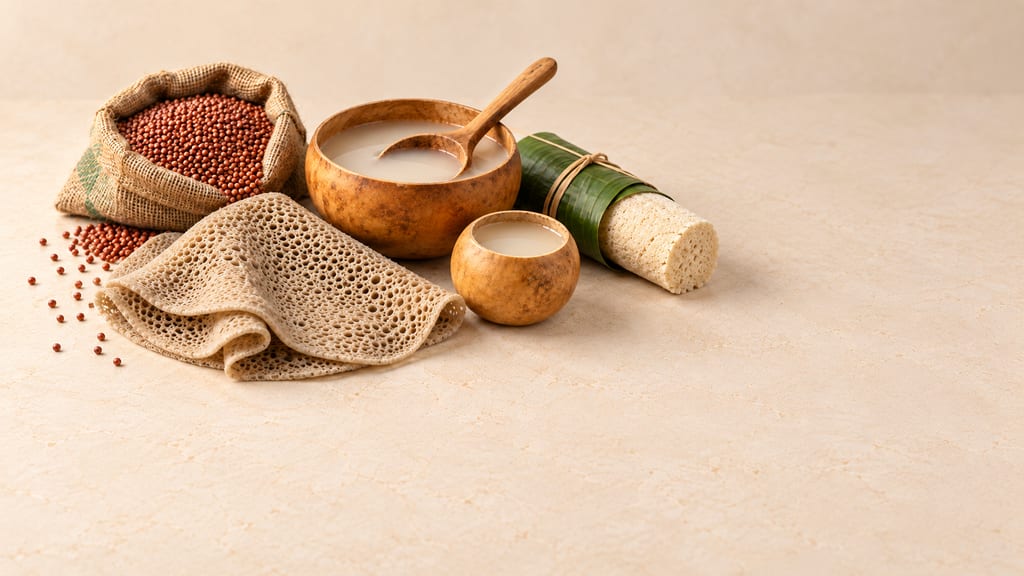
From sour breads and milk to savoury seeds, cassava staples and living beers, African fermentation follows the crop, the community and the work of transformation.
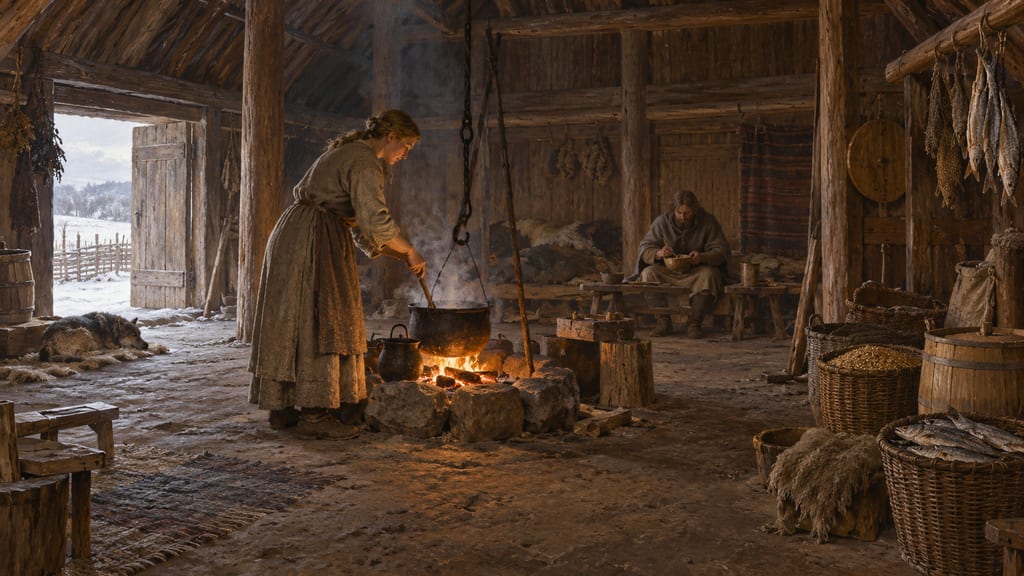
How ordinary Viking-Age households grew, dried, smoked, salted and cooked their food through the northern year, and how to cook their dishes today with supermarket ingredients.
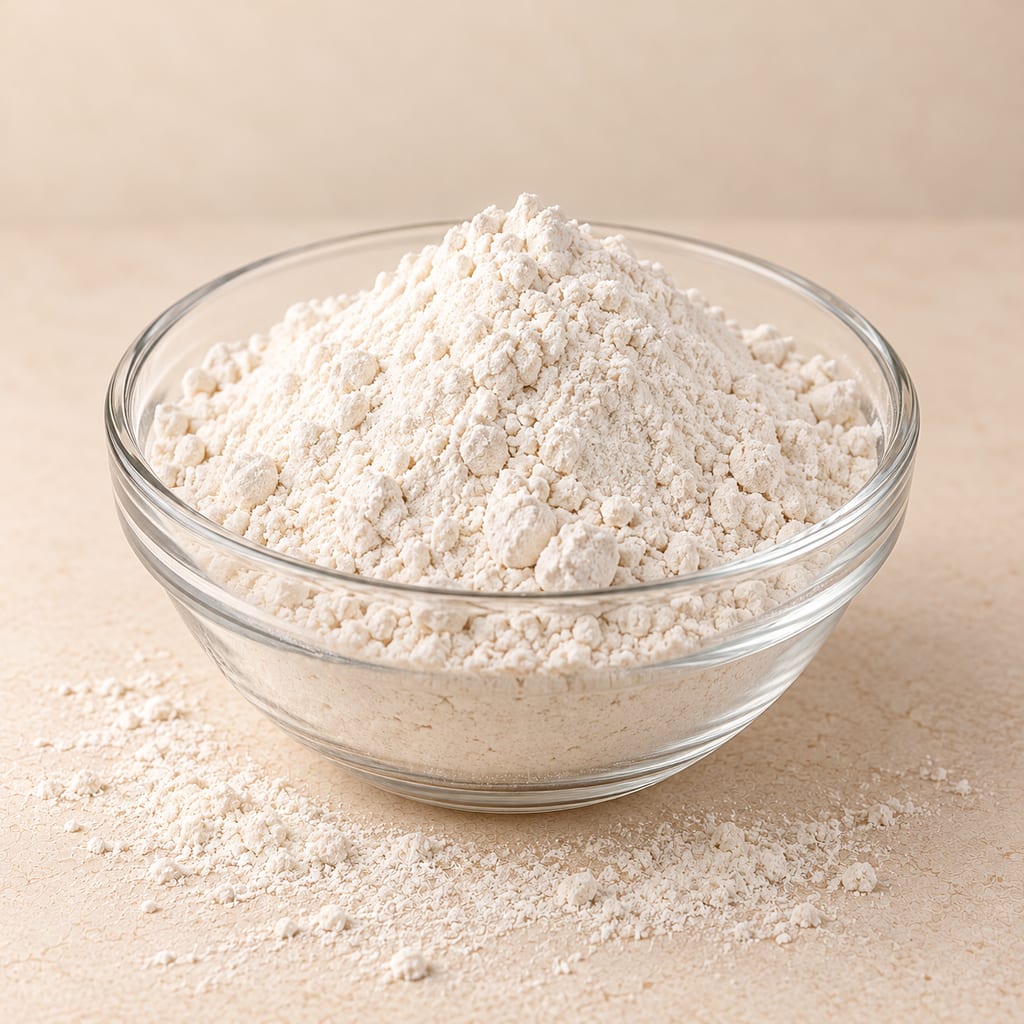
Wheat flour is milled wheat grain, from whole meal to fine white flour, used to make bread, thicken liquids and appear as an optional ingredient in fruit pastes such as Georgian mulberry tklapi.

At North Abydos in Egypt, a fixed early Dynastic brewery comprised parallel semi-subterranean installations with rows of ceramic mash vats; excavation reports revise their number, scale and estimated batch capacity.

Ají amarillo is the orange-yellow Peruvian chilli cultivar group of Capsicum baccatum, used to colour and season huancaína sauce and ají de gallina. Published heat estimates do not establish one range for the named cultivar.

Toasted almonds are whole sweet almond kernels dry-roasted until golden to brown. Heat replaces their marzipan note with a roasted, nutty one; they thicken and flavour romesco.

Kodiak salmon, halibut and cod cut as seg'aq and hung on an initaq rack to become tamuuq, with kac'amaasaq and kupcuunaq named as different results.

Aniseed is the dried ripe fruit of Pimpinella anisum, an aromatic Apiaceae spice commonly called a seed. It adds a sweet, warm aroma to breads such as Moroccan krachel and South African mosbolletjies, and is distinct from star anise.

A fixed Late Chalcolithic installation in Areni-1 cave combined a shallow clay pressing basin with a large jar set into the cave floor and storage vessels nearby.

Ripe avocado flesh is the soft, buttery, fat-rich pulp of Persea americana, eaten raw. It is low in acid, so it is a fresh ingredient that needs care in chilled dishes.

A portable dome and pan used over a hearth, with embers on the lid and heat from below. Regional peka and saç forms share this principle while differing in materials, pan shape and how the food is cooked.
No community contributions have been published for this entry yet.
Sign in to contribute. Published comments and photos are free to read.
Royal Botanic Gardens, Kew, Plants of the World OnlineIngredient identity · Cultivation and distribution
Triticum aestivum L.Triticum aestivum is a cultivated grass in Poaceae, known only from cultivation; bread wheat’s hybrid ancestry, cultivar diversity, global cultivated range, and landrace definition.
Cited in: Wheat is a family of cultivated grasses; Domestication left more than one history; A global crop with local varieties; A grain, not a single recipe
NatureHistory and domestication
Einkorn genomics sheds light on history of the oldest domesticated wheatGenomic study identifies einkorn as the first domesticated wheat species, around 10,000 years ago in the Fertile Crescent; wild einkorn was an ingredient in bread-like products from hunter-gatherer sites in present-day Jordan; Karacadağ region evidence and dispersal routes.
Cited in: Domestication left more than one history
Nature PlantsHistory and domestication
Ancient grains illuminate the mosaic origin of domesticated wheatAncient southern Levant grains dated 3,000–6,000 years ago support a staged and regionally interconnected domestication account, with repeated hybridization and later gene flow.
Cited in: Domestication left more than one history
Nature PlantsHistory and domestication · Regional variation
A 3,000-year-old Egyptian emmer wheat genome reveals dispersal and domestication historyEmmer was cultivated in the Levant around 9700 BCE and dispersed through southwest Asia, northern Africa, and Europe; genomic evidence from New Kingdom Egyptian emmer links ancient and modern landraces.
Cited in: Domestication left more than one history
CGIAR GenebanksIdentity and cultivation
WheatThe genus comprises multiple cultivated wheat groups; common wheat and durum dominate current production; wheat has spread widely and wheat genetic resources support crop breeding and conservation.
Cited in: Wheat is a family of cultivated grasses; A global crop with local varieties; A grain, not a single recipe
USDA Agricultural Research ServiceKernel structure and milling
Wheat: the Whole (Grain) StoryThe kernel comprises bran, germ, and endosperm; refining separates these parts, while whole-grain flour retains the kernel.
Cited in: Wheat is a family of cultivated grasses; Inside the kernel; Choosing and handling wheat at home
University of Maine Cooperative ExtensionCultivation and harvest · Grain quality · Fermentation role · Storage
Bulletin #1019, Understanding Wheat Quality — What Bakers and Millers Need, and What Farmers Can DoWheat is a living seed; germination activates amylase; field sprouting affects grain and flour; grain proteins form a dough network; variety, season, protein, harvest and post-harvest conditions affect performance; grain storage needs protection from moisture, mold, rodents and insects.
Cited in: A global crop with local varieties; Inside the kernel; What wheat contributes to fermentation; Choosing and handling wheat at home; Dietary context and safety
Food MicrobiologyFermentation mechanism
Enzymatic and bacterial conversions during sourdough fermentationCereal enzymes and sourdough microbes interact; flour enzymes release sugars and microbes transform carbohydrates, proteins and other components; microbial acidification and metabolism influence cereal-enzyme activity.
Cited in: What wheat contributes to fermentation; A grain, not a single recipe
Food and Agriculture Organization of the United NationsMilling and food uses
Wheat FlourWheat flour is the key product of wheat milling and is widely used in bread, confectionery, and home cooking; milling mechanically separates the endosperm.
Cited in: What wheat contributes to fermentation
Food and Agriculture Organization of the United NationsGrain forms and uses
Wheat for bread and other foodsWheat is used as whole or refined flour for leavened and flat breads and other baked products; durum is commonly milled as semolina for pasta.
Cited in: Inside the kernel; What wheat contributes to fermentation; A grain, not a single recipe
Journal of Industrial MicrobiologyFermentation role and use
Industrial production of soy sauceSoy sauce uses wheat and soybeans in a fermentation whose microbial, biochemical and chemical changes contribute to the product’s quality.
Cited in: What wheat contributes to fermentation
U.S. Food and Drug AdministrationFood safety
Handling Flour Safely: What You Need to KnowRaw grain flour can carry Salmonella or pathogenic E. coli; milling does not kill them; do not eat raw flour or dough; cook flour-containing foods and clean surfaces and utensils.
Cited in: Choosing and handling wheat at home; Dietary context and safety
U.S. Centers for Disease Control and PreventionFood safety
Raw Flour and DoughUncooked flour may contain E. coli or Salmonella; grinding and bleaching do not kill them; cooking kills germs in flour, and safe handling includes avoiding raw dough and cleaning hands and surfaces.
Cited in: Choosing and handling wheat at home; Dietary context and safety
National Institute of Diabetes and Digestive and Kidney DiseasesDietary context
Eating, Diet, & Nutrition for Celiac DiseasePeople with celiac disease need to avoid gluten, including wheat; dietary advice is condition-specific.
Cited in: Dietary context and safety
Georgian national authorities via FAOCultivation and regional diversity
Country Report on the State of Plant Genetic Resources for Food and Agriculture: GeorgiaThe national report documents wheat as an important food grain in Georgia, multiple cultivated wheat species, locally maintained landraces, and changes from landraces to breeder varieties during the twentieth century.
Cited in: A global crop with local varieties