Wheat
Wheat is the edible seed of grasses in the Triticum genus, a diverse family of grain crops used whole, cracked and milled. The page covers the raw grain; flour grades and blends have separate pages.
 FermenteaWhere food goes to change
Built structures · Pits and cavities
matmora · Moroccan underground wheat pit · Moroccan farm grain pit
A Moroccan small-farm underground grain store, described as a matmora: a pit generally dug near the house for household grain or seed.
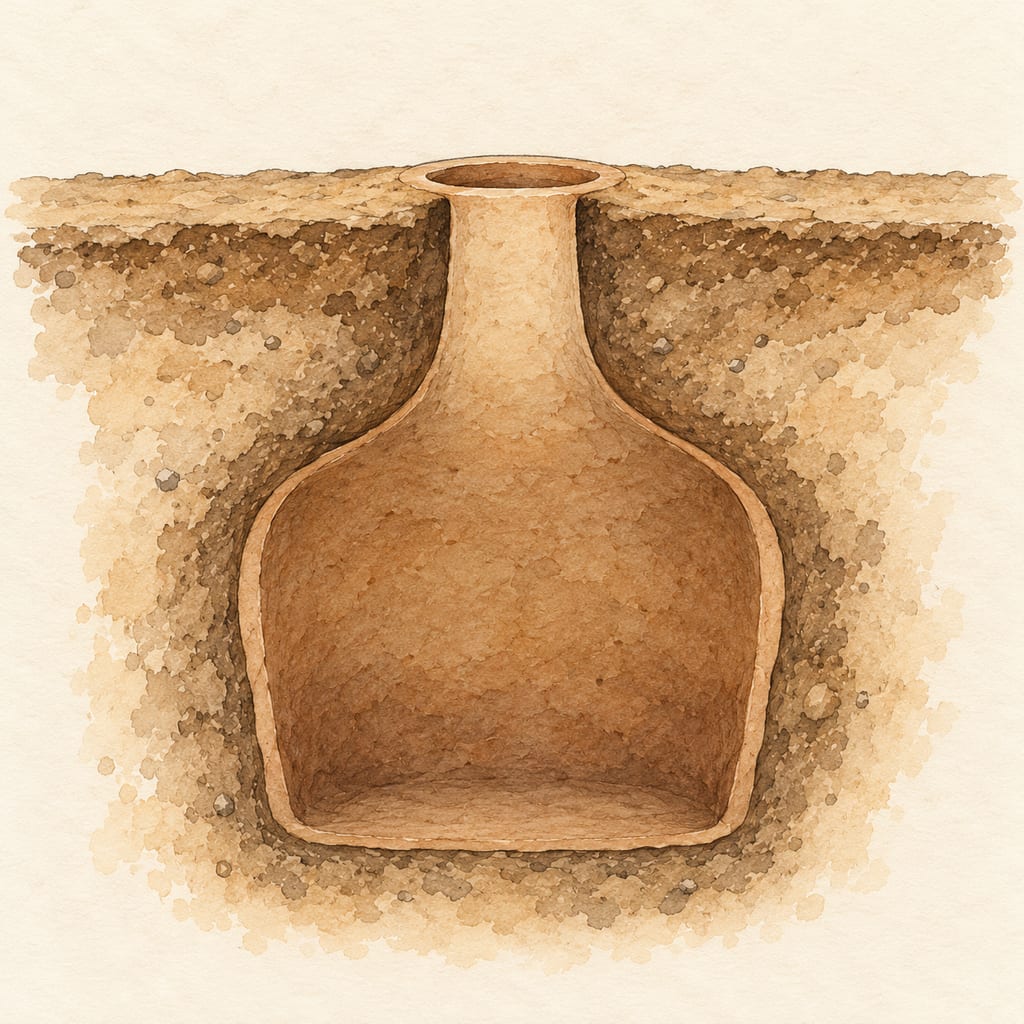
Matmora is the name used in Moroccan wheat-storage sources for an underground farm grain pit. The engineering paper describes pits used on small farms for storing grain or water, while a later wheat-chain study identifies matmoras as a traditional on-farm way to keep wheat. In that account, some grain is retained for household consumption or seed for the next season.
The wheat-chain study reports pits generally 3–4 metres deep and commonly dug near the house. Those figures describe a general reported range, not a standard design, and they do not give a safe excavation depth for a new pit. The 1987 engineering paper specifically discusses choices of site, construction, use and pit-wall lining. Its abstract reports that grain losses were not well evaluated and could be high. The sources do not justify a simple promise that underground storage will keep every grain dry or insect-free.
A 2022 national wheat-chain study estimates the combined capacity of Moroccan matmoras at about one million tonnes, or roughly 15 percent of annual wheat production. That is a study-level national estimate, not the size of an individual pit. The same study says on-farm wheat storage has declined because farmers face loss risk and often sell soft wheat soon after harvest. A comparative review depicts a Moroccan profile with a narrow opening above a widened chamber, but its diagram is adapted from earlier references and supplies no dimensions. It should be read as a schematic, not a construction drawing.
The published material discusses wall lining, including later comparisons of straw and plastic treatments, but it does not establish one lining method for every household or region. It also does not provide a complete sequence for excavation, filling, sealing and emptying, nor modern structural or confined-space safety procedures. The record therefore explains the structure and its documented use without turning the archaeological and agricultural descriptions into instructions.
Bartali's 1987 engineering paper reports underground grain or water pits on small Moroccan farms and discusses site selection, construction, exploitation and wall lining. A 2022 study describes matmoras as a traditional on-farm wheat-storage system, while noting that on-farm storage has declined because of loss risk. No source here establishes an origin date or an unbroken history.
A build is made where it stands: moving it means building it again.
The cited sources do not provide a modern excavation, structural-stability or confined-space safety procedure. Do not use this descriptive record as instructions to build, open or enter a pit.
The sources discuss the practice at country level; they do not identify a single village or claim every Moroccan farm uses the same pit.
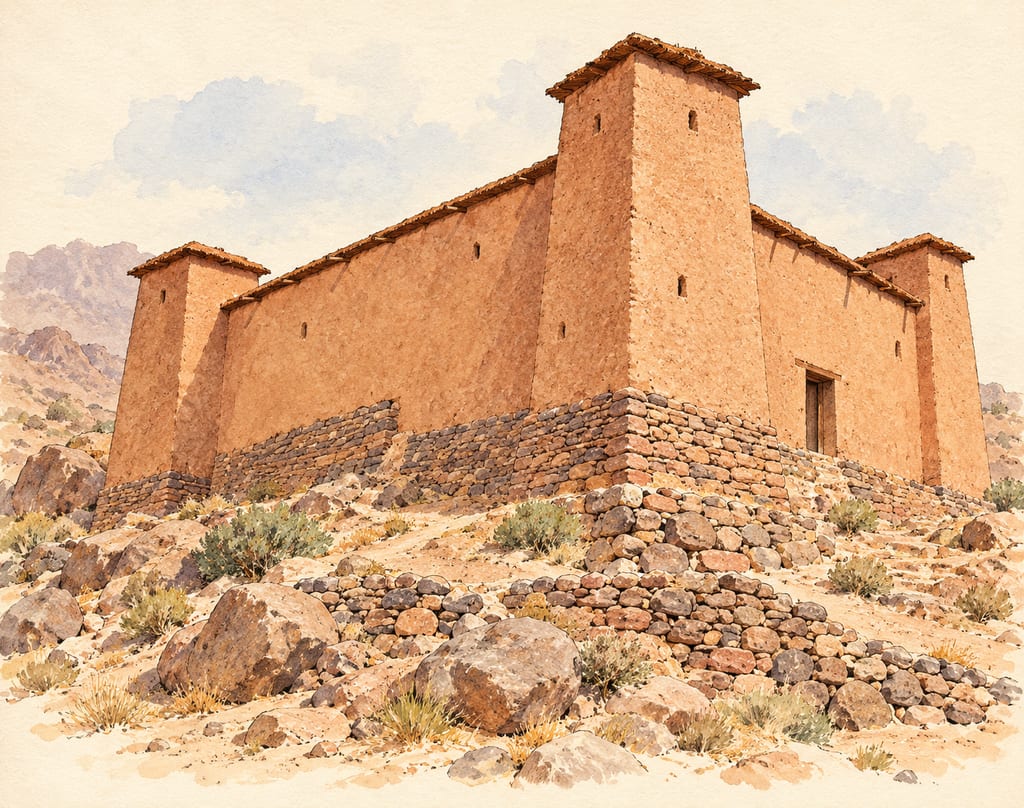
An agadir (plural igoudar) is a fixed Amazigh communal storehouse in Morocco for harvests and other valuables. Layout, materials and community rules vary by site; no single plan describes every granary.
No community contributions have been published for this entry yet.
Sign in to contribute. Published comments and photos are free to read.
Tunnelling and Underground Space Technology / ElsevierIdentity · Construction · Materials · Geography
Underground storage pits in MoroccoReports that underground pits were still widely used on small Moroccan farms for grain or water.
Discusses site-selection criteria, pit construction and exploitation, and lining of pit walls.
States that grain losses had not been well evaluated and could be high.
Cited in: A Moroccan farm grain store; Lining, location and the limits of the record
SustainabilityName · Geography · Use · Dimensions · History
Estimates of Food Losses and Wastes at Each Node of the Wheat Value Chain in MoroccoDescribes matmoras as traditional on-farm grain pits generally 3–4 m deep and commonly dug near the house.
Says the remaining on-farm wheat storage is used for household consumption and/or seed; many farmers sell soft wheat immediately because storage carries loss risk.
Reports a national capacity estimate of about one million tonnes, equivalent to about 15% of annual wheat production; this is not the capacity of an individual pit.
Discusses reported deterioration factors and compares lining research; those results do not define one universal pit construction.
Cited in: A Moroccan farm grain store; Lining, location and the limits of the record
Agriculture (MDPI)Terminology · Form · Comparison
Addressing Shortages with Storage: From Old Grain Pits to New Solutions for Underground Storage SystemsUses the term maṭmūra for Moroccan grain pits and distinguishes country-specific forms across the wider underground-storage discussion.
Figure 1 schematizes the Moroccan form with a narrow access and a widened chamber, but is adapted from earlier sources and is not a measured universal plan.
Cited in: Lining, location and the limits of the record