Wheat
Wheat is the edible seed of grasses in the Triticum genus, a diverse family of grain crops used whole, cracked and milled. The page covers the raw grain; flour grades and blends have separate pages.
 FermenteaWhere food goes to change
Substrates
Remilled durum wheat flour (Italian semola rimacinata di grano duro) is durum semolina milled again to a finer particle size. It is used in regional and home breads, but handles differently from coarse semolina.
The Italian name is semola rimacinata di grano duro: durum wheat semolina that has been milled again. English technical writing often calls it remilled semolina or remilled durum flour. The name captures the important distinction: the mill begins with semolina, then reduces its particle size further. This item covers that fine remilled form; it does not stand for every product called durum flour, because durum flour can also be made by milling the grain directly.
Codex defines durum wheat semolina and durum wheat flour as products ground or milled from durum wheat after the bran and germ are essentially removed, with the remaining material reduced to a suitable fineness. Its standard distinguishes whole durum semolina, which retains bran and part of the germ. That broad standard does not make every national trade name identical. The remilled product is specifically described in technical literature as a fine fraction made from already-produced semolina.
Fine remilled flour still feels slightly granular compared with many soft common-wheat flours. The yellow cast often associated with durum comes from the grain, but shade and texture vary with cultivar, extraction, milling and sifting. A mill or package that only says durum flour may be describing direct-milled flour, semolina, or a finer remilled product; the name and label should tell you which grind the baker intends.
The flour begins with durum wheat, accepted by Kew as Triticum turgidum subsp. durum. Kew records the plant as a cultigen whose native range is Egypt. That botanical statement concerns the crop, not this milling form. It does not show where or when people first remilled semolina.
The available sources place remilled semolina in a modern technical and legal record. A chapter in Durum Wheat: Chemistry and Technology, published in 2012, describes the fine remilled product as commonly used in Italy and cites Italian law 580 of 1967. Codex's standard for durum wheat semolina and flour was adopted in 1991. These dates establish documentation, not an invention date.
The European registration dossier for Pane di Altamura says that the bread tradition originated in Altamura in the sixteenth century. The same dossier specifies remilled durum semolina for the registered bread, whose formal EU registration came in 2003. The bread's stated age cannot be transferred to the flour form without an earlier source that identifies the same milling process. This distinction keeps a regional history useful without making it a false origin story.
The technical chapter describes two routes to breadmaking durum flour: direct milling of the grain, or remilling semolina. The second route reduces particle size. Because durum kernels are hard, that extra reduction can also damage starch. The chapter reports that excess damage can impair baking performance, while results depend on the flour and bread process; finer particles alone do not guarantee a better loaf.
Starch, protein and the way the mill handles the grain all matter. More damaged starch can change water absorption and the sugars available to the dough; durum proteins form gluten, but their balance of strength and stretch differs from common bread wheat. In the technical review, durum doughs generally show stronger resistance and less extensibility, and loaf volume varies with cultivar, protein composition, milling and fermentation. Those are tendencies from studied flours, not a promise about every bag.
A published milling study may report particle size, protein or damaged-starch values for the samples it tested. Such values should not be treated as universal buying thresholds. Even the exact product limits reported from Italian law in older technical literature are not a substitute for checking a current local label or standard. For a home baker, the useful point is that grind and mill performance can change hydration and dough feel; follow a formula written for the flour form you have.
Remilled durum semolina is used in breadmaking, and Italian mills also describe it for dusting and baking. Barilla presents its consumer product for traditional breads and fresh pasta. De Cecco likewise recommends its product for homemade bread and fresh pasta. These are current product uses, not claims that every traditional bread uses the same flour or that all packages behave alike.
Pane di Altamura provides a well-defined regional example. The EU specification identifies the flour as remilled durum semolina and ties the required grain and milled semolina to Altamura, Gravina di Puglia, Poggiorsini, Spinazzola and Minervino Murge in Apulia. The registered bread is made with sourdough, water and salt. The dossier describes its straw-yellow crumb and thick crust, and connects the local bread to a peasant-farmer food tradition in the Murgia uplands. These facts describe a protected bread and its supply area; they do not establish the place of origin for remilling as a broader practice.
The technical chapter also discusses durum breads across southern Italy and Mediterranean areas, including flat breads made with fine semolina or durum flour. Since the text groups several flour forms and local preparations, it supports a broad regional use of durum products rather than assigning this particular remilled form to every bread in the region. The atlas similarly treats fine durum flour and coarse semolina as distinct choices in Maghreb griddle breads. A recipe should keep the named grind it specifies.
For home bread, choose a package that actually says semola rimacinata or remilled durum semolina when a recipe calls for that form. Producers recommend it for home bread and fresh pasta. Its finer grind is useful when the recipe expects flour rather than the more visible granules of coarse semolina; the exact color, protein level and water absorption depend on the product.
Pane di Altamura's official specification is a regional production standard, not a universal household formula. It lists a specific durum flour, sourdough, salt and water and sets requirements for producers and processing. A home cook can learn from the ingredient relationship without assuming that the regional protected designation applies to bread made elsewhere or that its production conditions transfer unchanged to an ordinary kitchen.
When substituting, avoid treating remilled flour, coarse semolina and common wheat bread flour as interchangeable by volume. The literature reports differences in water absorption and dough extensibility. If a recipe gives no substitution, use the grind it names or select a recipe written for the flour on hand; texture differences are expected and are not, by themselves, signs of a failed or unsafe fermentation.
This is wheat and contains gluten. U.S. FDA guidance treats wheat as a major food allergen, and its gluten-free labeling rule says wheat flour is not a gluten-free ingredient unless processed to remove gluten in a way that meets the rule. Remilling does not remove the wheat proteins that matter to people with wheat allergy or coeliac disease. Check the full package for cross-contact statements and follow medical advice for individual dietary needs.
Like other ordinary flour, durum flour is usually raw. CDC explains that grain can encounter harmful bacteria in the field or during milling, and grinding does not kill them. Do not taste raw flour, dough or batter. Cook or bake the food as directed, wash hands and clean bowls, utensils and work surfaces after handling raw flour, and keep it away from ready-to-eat foods. These controls address flour handling; they do not validate a fermentation process or prove that a finished loaf is safe by smell or appearance.
Codex says containers should protect the hygienic, nutritional, technological and sensory qualities of durum flour and semolina, but that standard does not give a universal household shelf life for this particular product. Use the package's storage and date instructions, keep the flour dry and protected from pests, and avoid transferring it into a container that has not been cleaned and dried. Do not assume that an old bag is safe because it looks or smells normal; discard recalled flour and check official recall notices where relevant.
Commercial specifications differ. Molino Magri describes its product as yellowish and gives technical limits for that product, while other mills may use different grain, sifting and specifications. The reliable comparison starts with the product name and intended use: fine remilled semolina for bread, coarse semolina for applications that call for a grainier product, or direct-milled durum flour when that is the specified form. No single color or touch test can verify identity, gluten strength, or safety.
The source reports a broad Italian use of remilled semolina. It does not claim Italy as the invention point or imply that every Italian durum flour is remilled.
The EU Pane di Altamura specification requires remilled durum semolina for a bread associated with the five named municipalities around Altamura. This locates a documented product use, not the origin of the flour form.
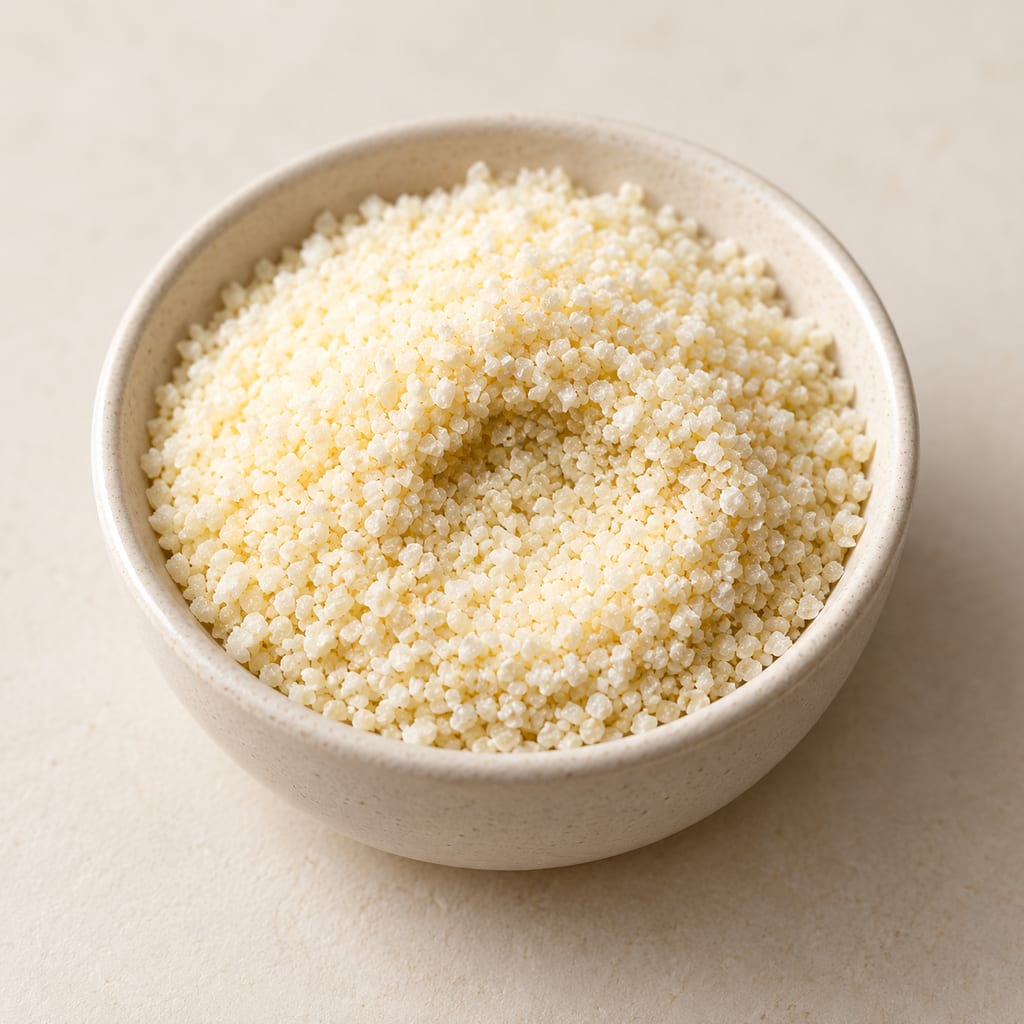
Semolina is a granular wheat milling product; in many markets it means durum, while some standards also use the name for other wheat. In sourdough English muffins, it is an optional surface coating, not the main flour.
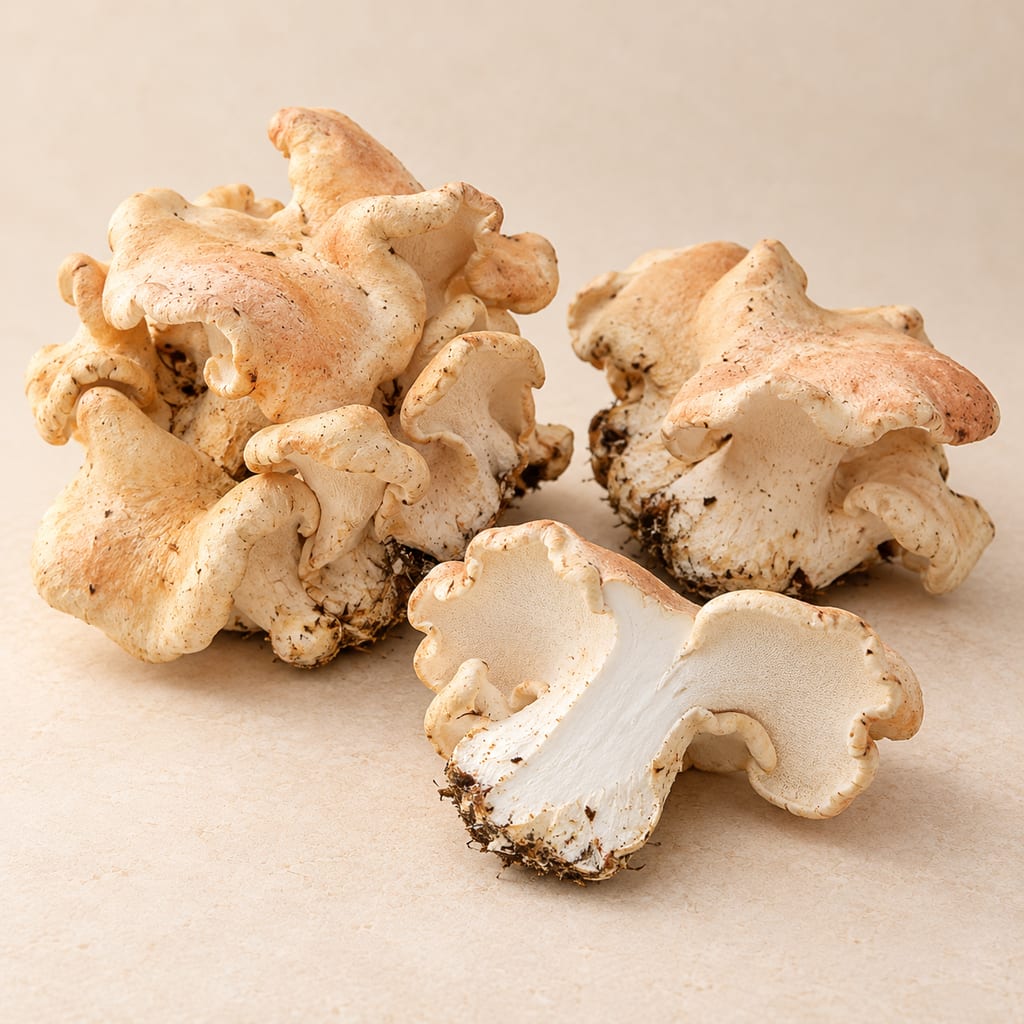
Albatrellus confluens is a ground-growing polypore with fused buff-orange caps. Sources document Chinese market use and regional edibility, but others reject it as too bitter; taxonomy also varies between Albatrellus and Albatrellopsis.

Cicerbita alpina is an alpine perennial whose tender shoots and leaves have been eaten raw or cooked. Sámi milk preparations and modern Carnian dishes are distinct uses, with serious identification and preservation limits.
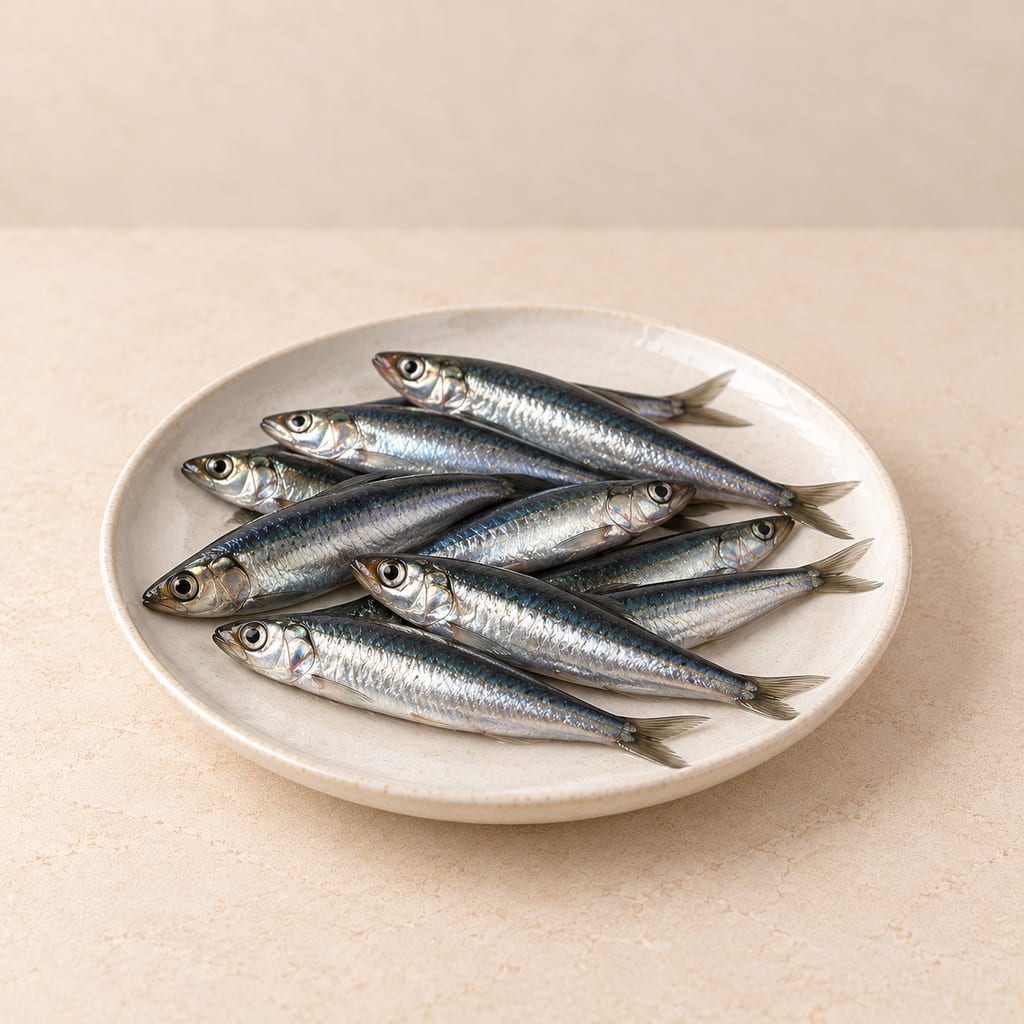
Anchovies are small schooling sea fish of the family Engraulidae, eaten fresh or dried and above all salted: as fillets in oil, whole salted fish or fish sauce.
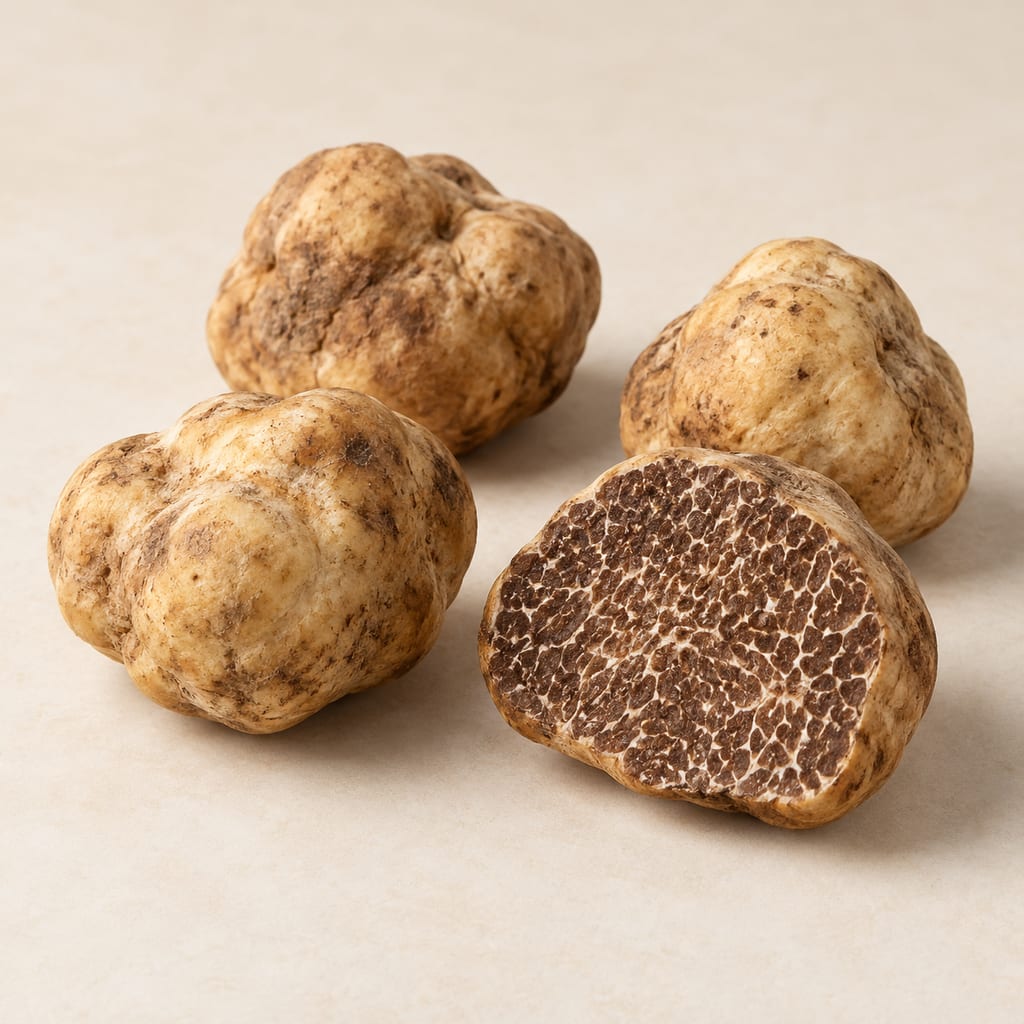
Tuber borchii, the bianchetto truffle, is a pale, pungent truffle that grows with trees and is now cultivated in Italy. It is used as a seasoning and is distinct from the costly white truffle, Tuber magnatum.
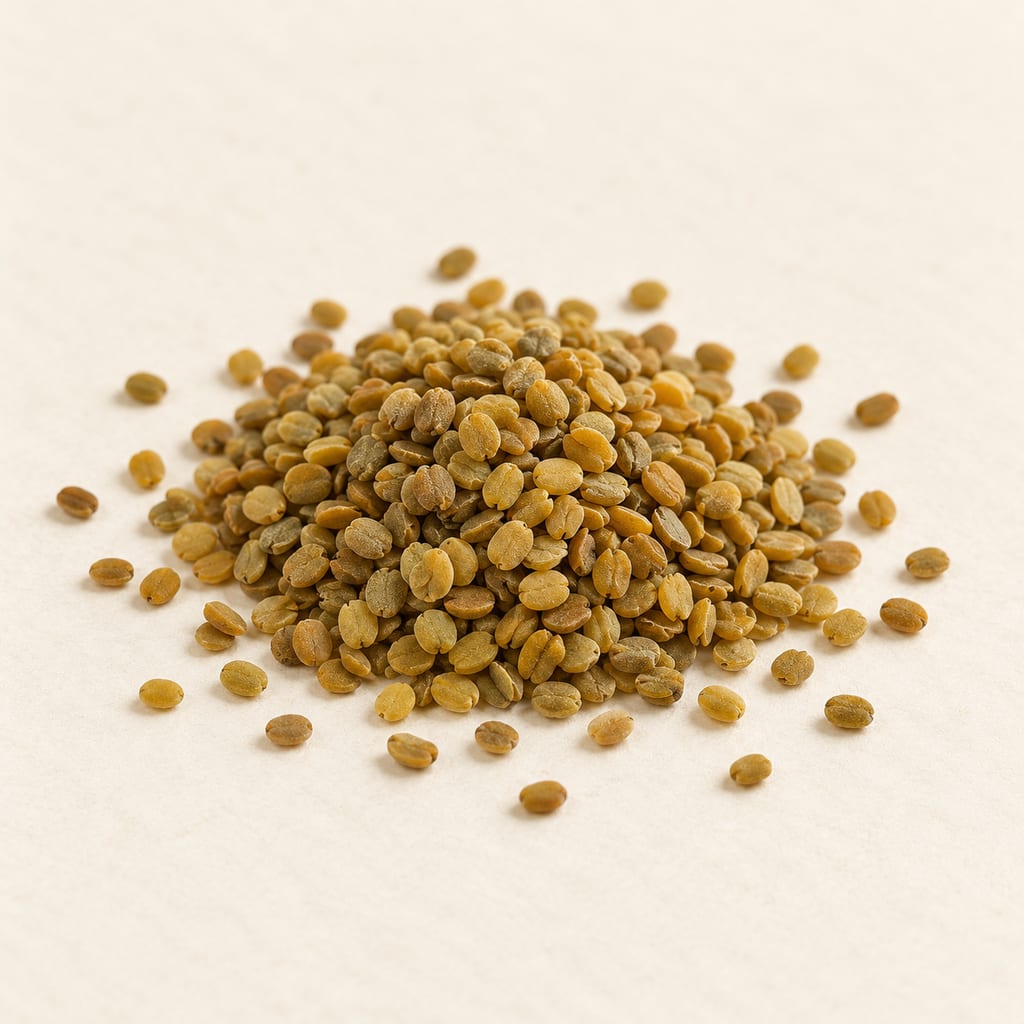
Blue fenugreek (Trigonella caerulea) is an aromatic annual used as an herb in Alpine cheese and bread and as a seed spice in Georgian cooking; its identity differs from common fenugreek.
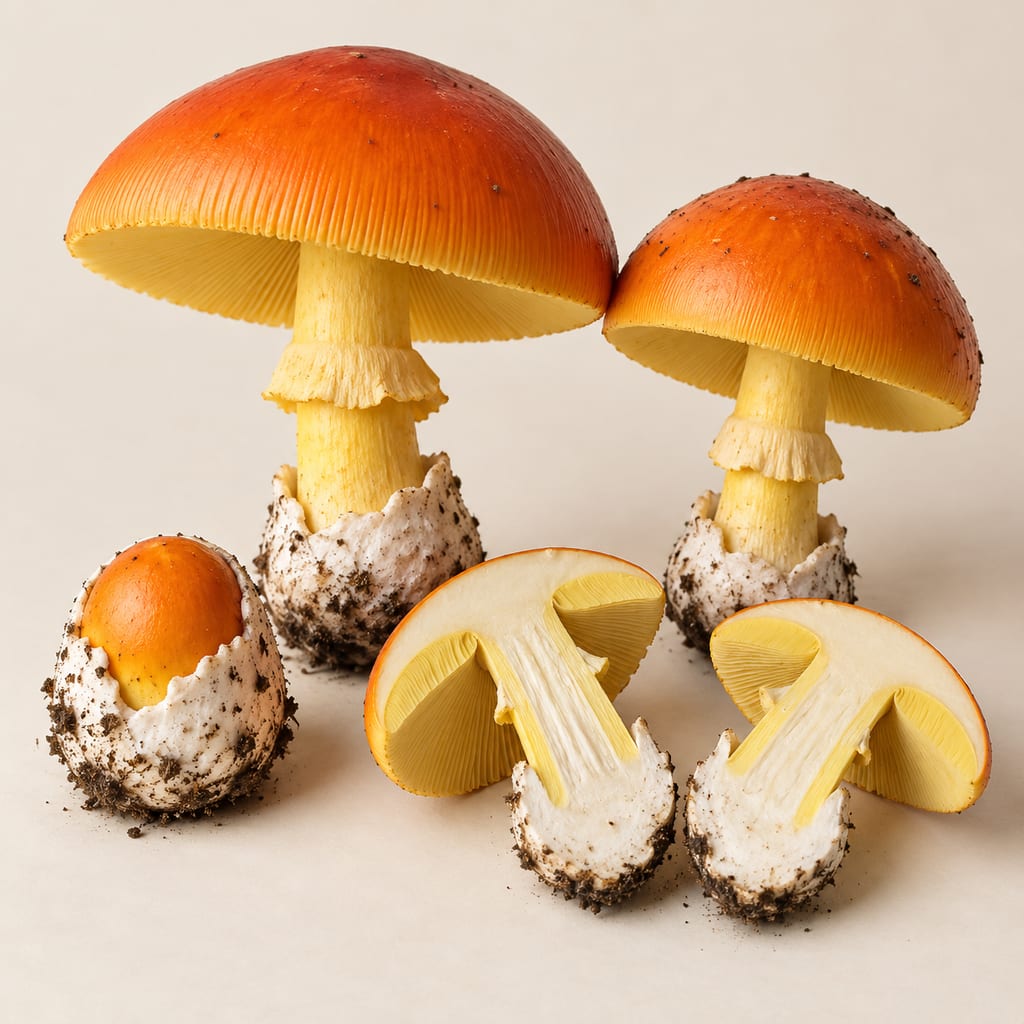
Caesar’s mushroom, Amanita caesarea, is a prized wild, tree-associated fungus of Mediterranean Europe, gathered seasonally for regional dishes. Its celebrated name and food traditions sit beside serious identification risks.
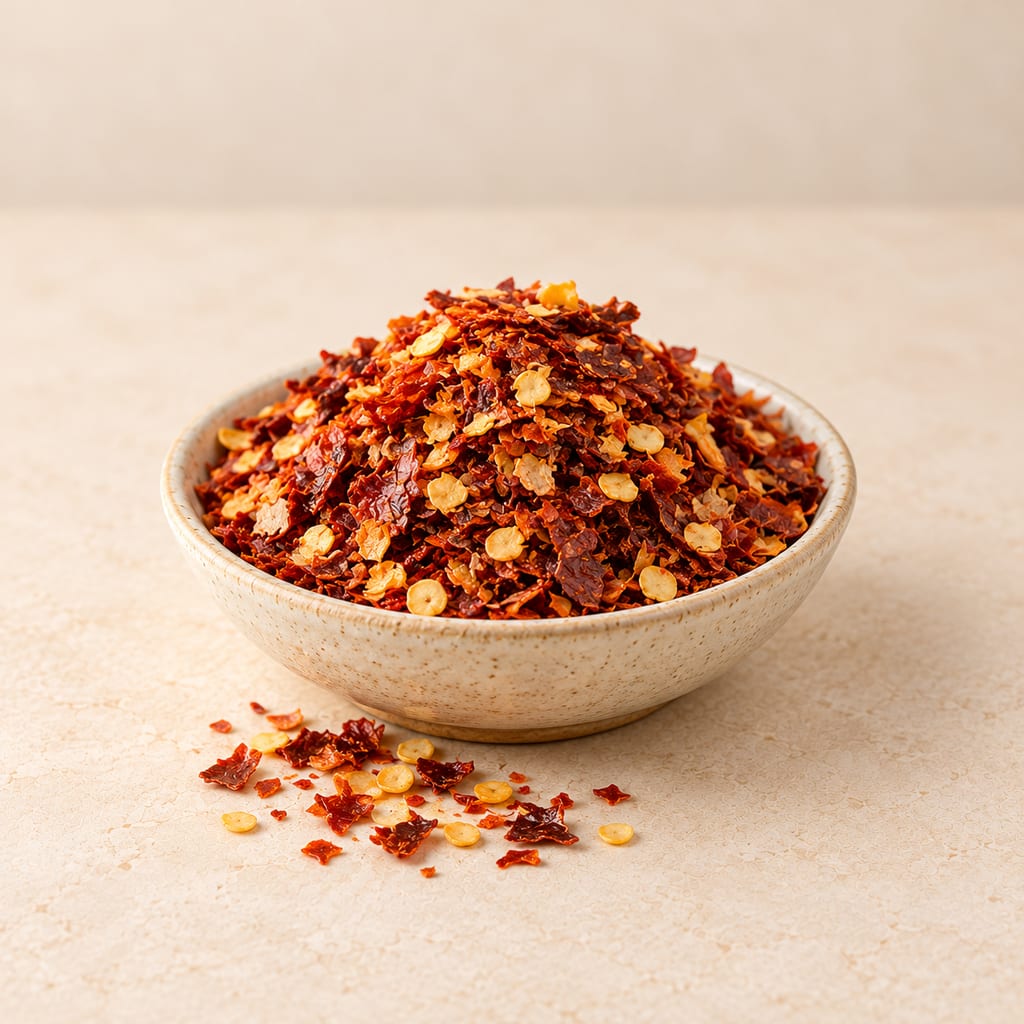
Calabrian pepper flakes are dried red Capsicum annuum from Calabria, crushed into coarse pieces; Peperoncino di Calabria is a protected geographical indication.
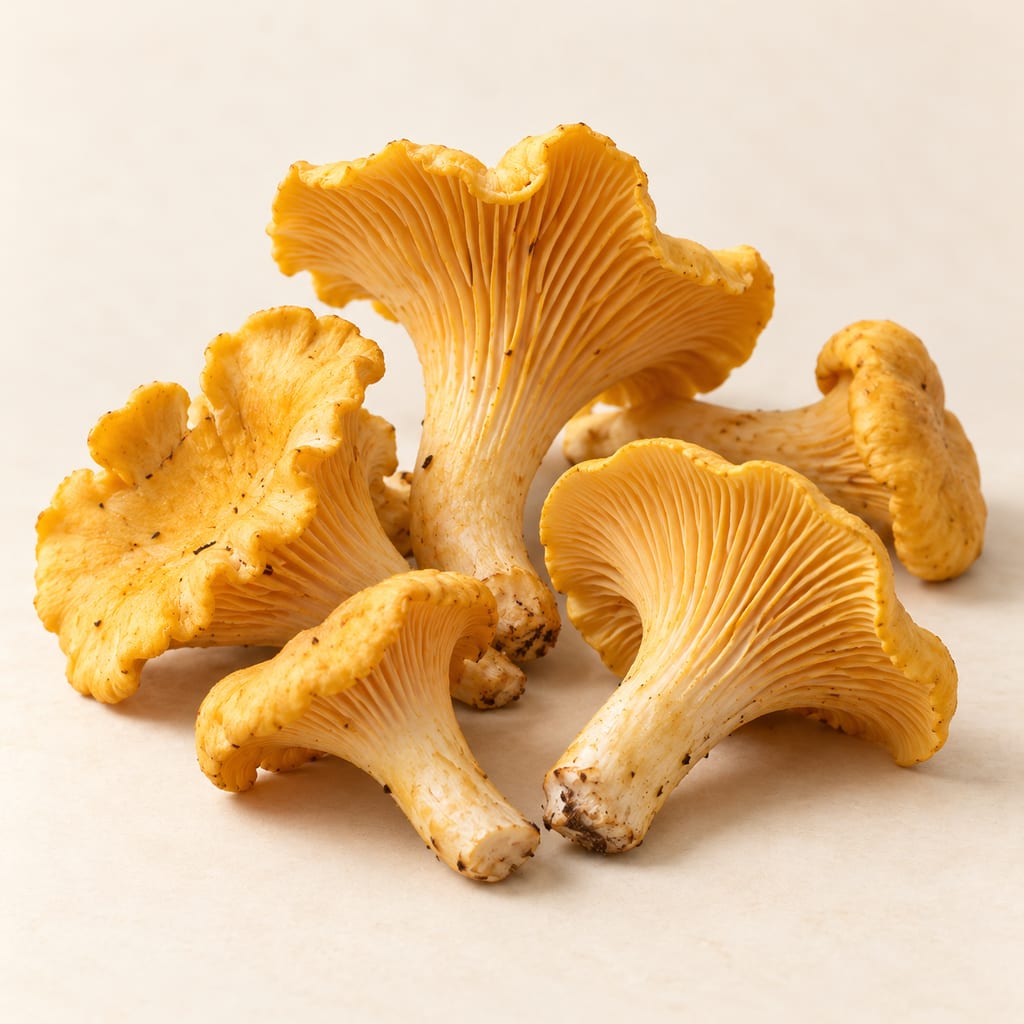
Chanterelles are wild, tree-associated edible mushrooms, particularly the European golden chanterelle Cantharellus cibarius, prized for their firm flesh, fruity aroma and use fresh, frozen, dried or pickled.
No community contributions have been published for this entry yet.
Sign in to contribute. Published comments and photos are free to read.
Codex Alimentarius Commission, FAO and WHOEditorial
Standard for Durum Wheat Semolina and Durum Wheat FlourDefines durum wheat semolina and durum wheat flour as durum grain milling products, with bran and germ essentially removed and comminuted to a suitable fineness; distinguishes whole durum semolina; standard adopted 1991, revised 1995.
Cited in: A finer form of durum semolina; Durum wheat and the limits of the history; What the second milling changes; Allergens and safe handling; Storage and quality
Joel Abecassis and Bernard Cuq, in Durum Wheat: Chemistry and Technology, 2nd ed., AACC InternationalEditorial
Other Traditional ProductsExplains direct durum flour milling versus semolina remilling, particle-size and starch-damage effects, Italian remilled-semolina use, bread behavior, and durum bread uses in Italy and North Africa.
Cited in: A finer form of durum semolina; Durum wheat and the limits of the history; What the second milling changes; Bread, pasta and regional use; Using it at home
Royal Botanic Gardens, Kew, Plants of the World OnlineEditorial
Triticum turgidum subsp. durum (Desf.) Husn.Accepts the durum wheat subspecies name and reports its cultigen native range as Egypt; this taxon-level origin does not date the flour-making practice.
Cited in: Durum wheat and the limits of the history
BarillaEditorial
Semola Rimacinata di Grano DuroNames the consumer product as remilled durum semolina and markets it for Italian breads and fresh pasta at home.
Cited in: A finer form of durum semolina; Bread, pasta and regional use; Using it at home
Molino MagriEditorial
Semola rimacinata di grano duroA mill describes its remilled durum semolina as selected-grain product used for dusting and breadmaking; color and technical properties are product-specific.
Cited in: What the second milling changes; Bread, pasta and regional use; Storage and quality
De CeccoEditorial
Semola di grano duro rimacinataA consumer product page recommends the named ingredient for homemade bread and fresh pasta.
Cited in: Using it at home
European Commission, EUR-LexEditorial
Commission Regulation (EC) No 1291/2003: Pane di Altamura PDORegistration dossier names remilled durum semolina and defines its area as Altamura, Gravina di Puglia, Poggiorsini, Spinazzola and Minervino Murge; separately records a 16th-century origin claim for the bread.
Cited in: Durum wheat and the limits of the history; Bread, pasta and regional use; Using it at home
Centers for Disease Control and PreventionEditorial
Raw Flour and DoughFlour is usually raw; grinding does not kill pathogens such as E. coli and Salmonella; do not taste raw flour dough or batter and wash hands, utensils and surfaces after handling.
Cited in: Allergens and safe handling; Storage and quality
U.S. Food and Drug AdministrationEditorial
Questions and Answers on the Gluten-Free Food Labeling Final RuleWheat flour is an ingredient derived from a gluten-containing grain and is not gluten-free under the U.S. FDA labeling definition.
Cited in: Allergens and safe handling