
Akazu (red sake-lees vinegar)
Japanese reddish-brown vinegar from sake lees matured about three years, turned to vinegar by acetic bacteria; the vinegar of Handa and Edomae sushi rice.
 FermenteaWhere food goes to change
溜醤油 (たまりじょうゆ) · Tamari · Tamari soy sauce · 溜まり醤油 · Thick soy sauce
Tamari is the soybean-dominant Japanese soy sauce of the Tokai region, made with little wheat and little brine, and aged longer than koikuchi.
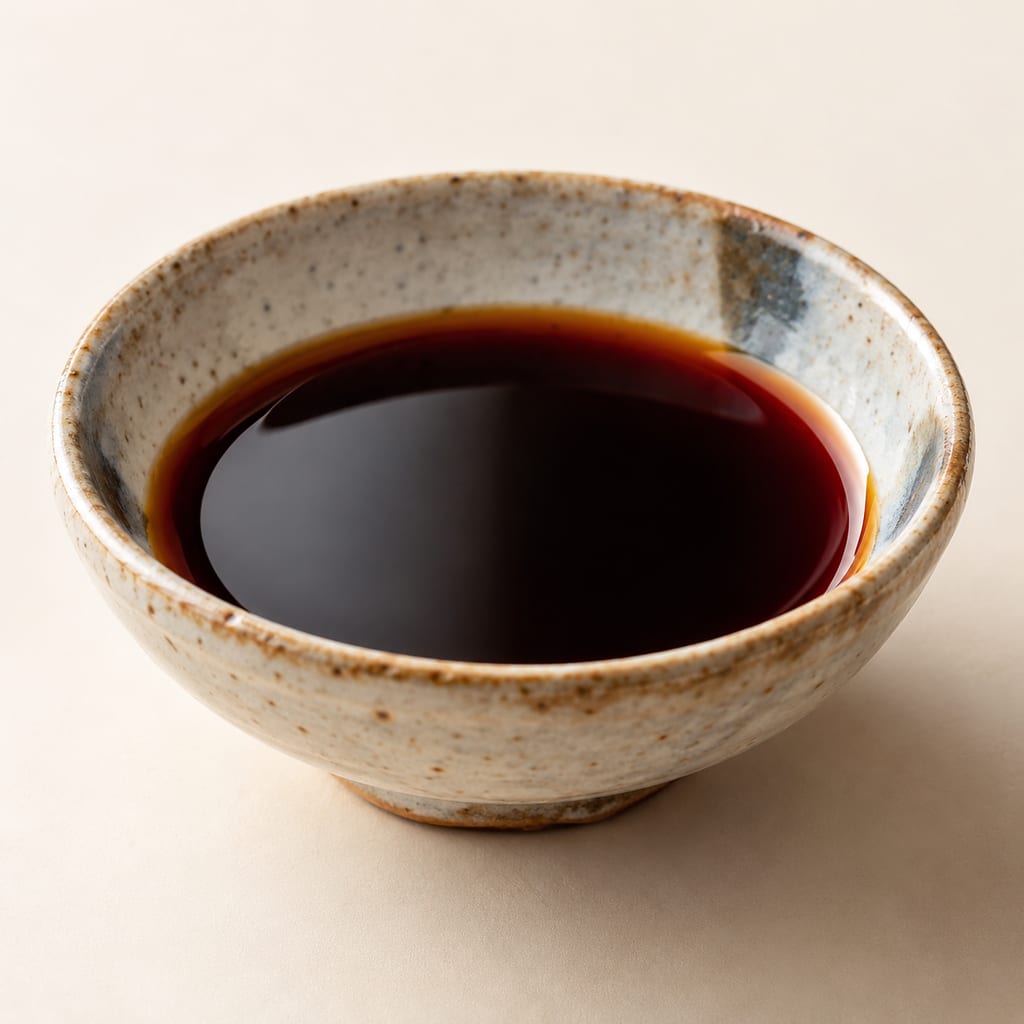
Tamari is the soy sauce that is closest to the old soy-based seasonings of Japan. MAFF describes it as soybean-dominant: it uses only a small quantity of wheat, forms the koji into balls rather than spreading it on trays, and ferments with very little brine. The sauce is thick, dark and rich, and it is made in the Tokai region of Aichi, Gifu and Mie, which is where MAFF places it.
The name is often read as meaning pooled liquid, from the way the sauce collects from a dense mash. The dossier for this item treats that reading as a description of the product rather than as a documented etymology, and the page does the same.
MAFF gives three differences from koikuchi: the wheat is a small share of the grain, the brine is small, and the sauce ages for longer. Less wheat means less of the sugar and the browning that wheat supplies, and a dense mash with little liquid changes how the enzymes and the koji mould act on the soybean protein. Longer ageing gives the sauce its depth and dark colour.
The difference is one of geometry as much as of recipe. Drawing sauce from a dense koji-ball mash is a different extraction problem from diluting a loose moromi with brine and pressing it, and the sources do not describe the tamari equipment in enough detail to settle how that problem is handled.
Tamari's small wheat share means that it is not a wheat-free product by the sources. The sources do not establish that commercial tamari is wheat-free or suitable for a gluten-free claim. The name describes a style, and a cook who needs to avoid wheat has to read the ingredient label of the product actually bought.
No source read for this page gives the koji-ball dimensions, the mash loading, the brine proportion as a number, or the pressing method for tamari. MAFF gives no measured home-vessel size and no pressing load. The dossier names a producer-specific process as the missing source; until one is read, the page gives no method and no shelf life.
The page is held as a working account. It is not a method for making tamari at home, and it should not be read as one.
MAFF places tamari within the five soy sauce categories and names the Tokai region. No source read gives a date for its origin.
Scaling: source batch only
The region is named by MAFF as the home of tamari; no dated origin is given.
Japanese reddish-brown vinegar from sake lees matured about three years, turned to vinegar by acetic bacteria; the vinegar of Handa and Edomae sushi rice.
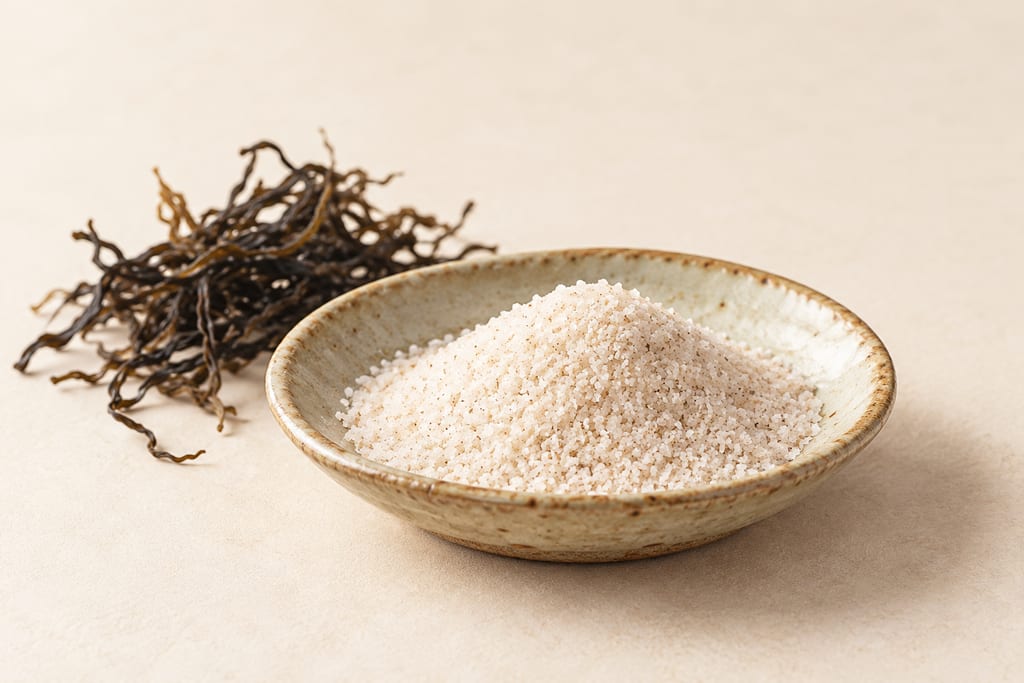
Amabito no Moshio is a modern, pale beige Japanese seaweed salt made from Seto Inland Sea water and hondawara seaweed. Its documented factory method concentrates filtered brine in kettles, then separates and dries the salt.
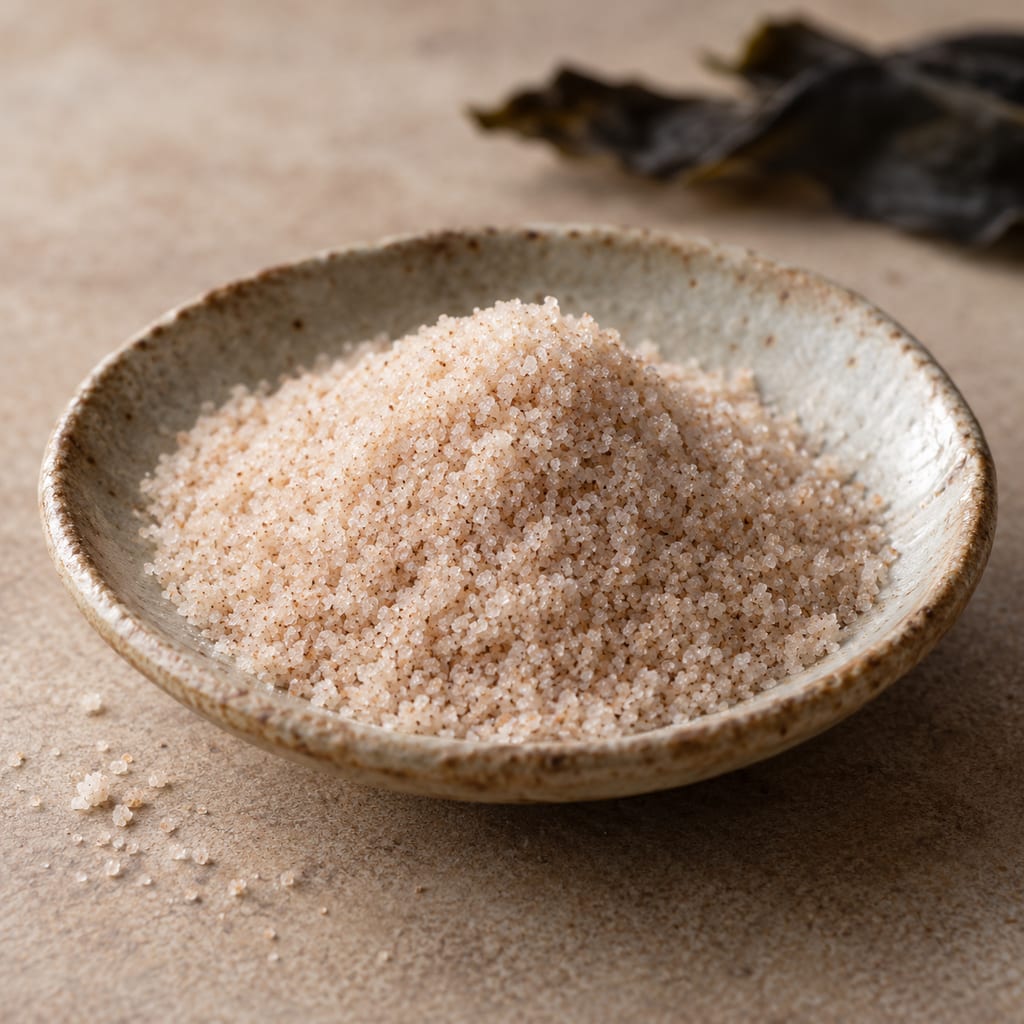
Awaji moshio is a modern Japanese seaweed salt made by TaDa PHILOSOPHY from Awaji Island seawater and seaweed. Its premium process concentrates brine, extracts seaweed flavor, then crystallizes, separates, dries and grades the salt.
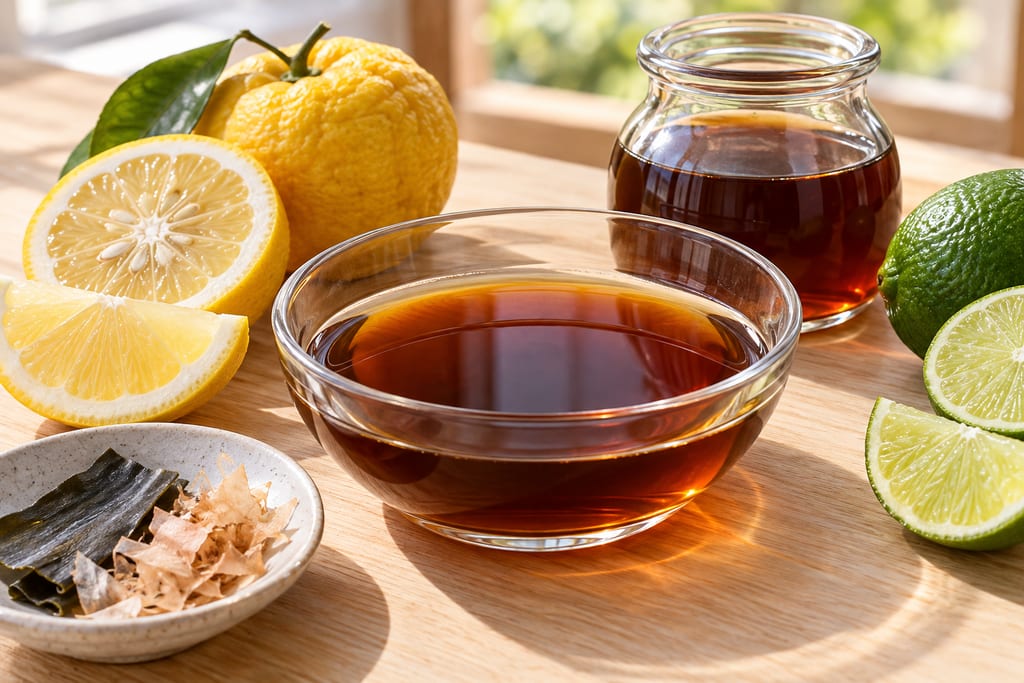
This fresh ponzu-shoyu mixes Japanese koikuchi soy sauce with yuzu or a lemon-lime blend, rice vinegar, water and sugar; optional kombu and bonito give a short chilled infusion.
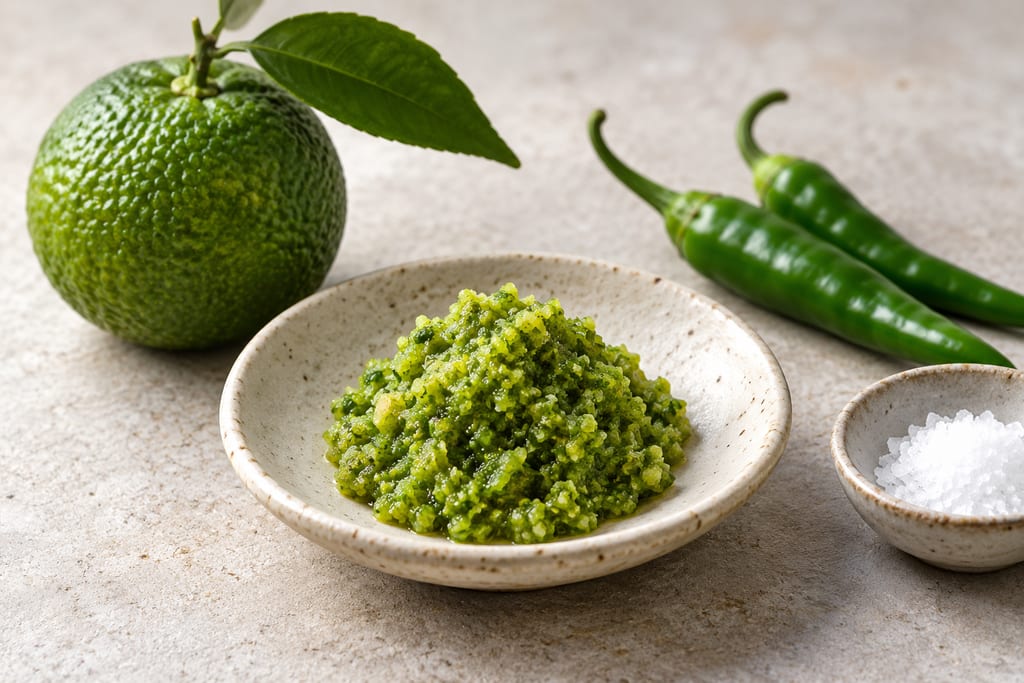
A fresh, uncooked yuzu and green chilli paste inspired by Kyushu’s yuzu kosho, made here as an untested small-batch seasoning rather than a preservation formula.
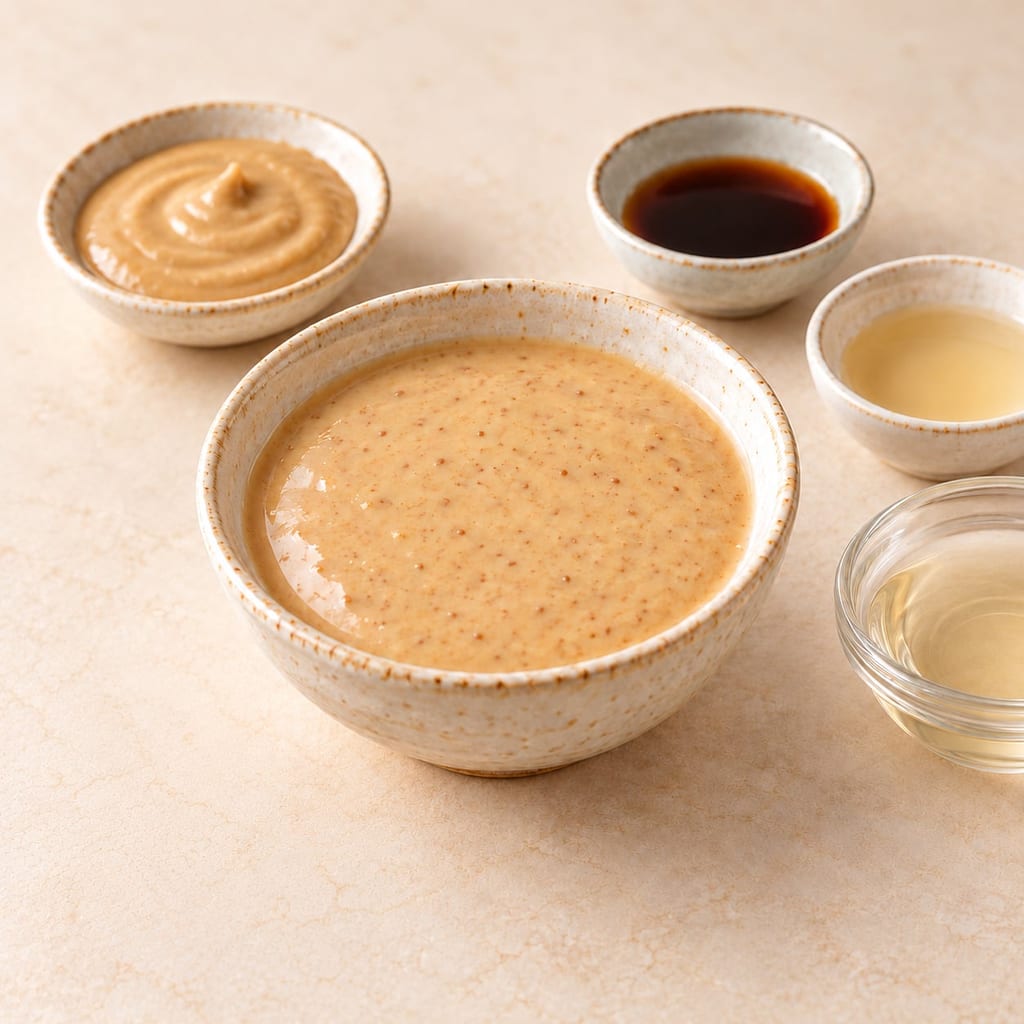
A creamy Japanese sesame dipping sauce with soy, rice vinegar and dashi. Gradual mixing turns the thick sesame paste into a smooth sauce.
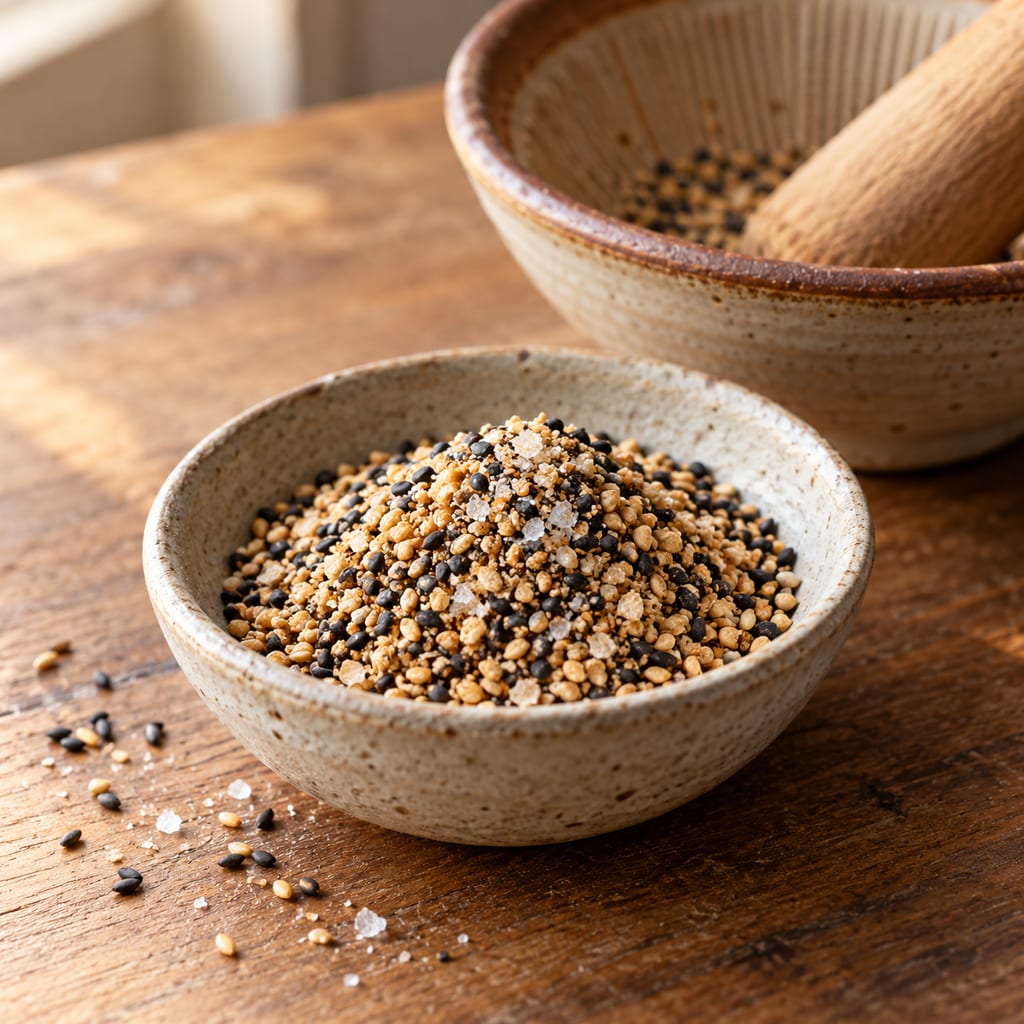
Toasted sesame seeds and sea salt are ground together into a coarse seasoning for rice. This small pan-roasted batch keeps most of the seed texture.
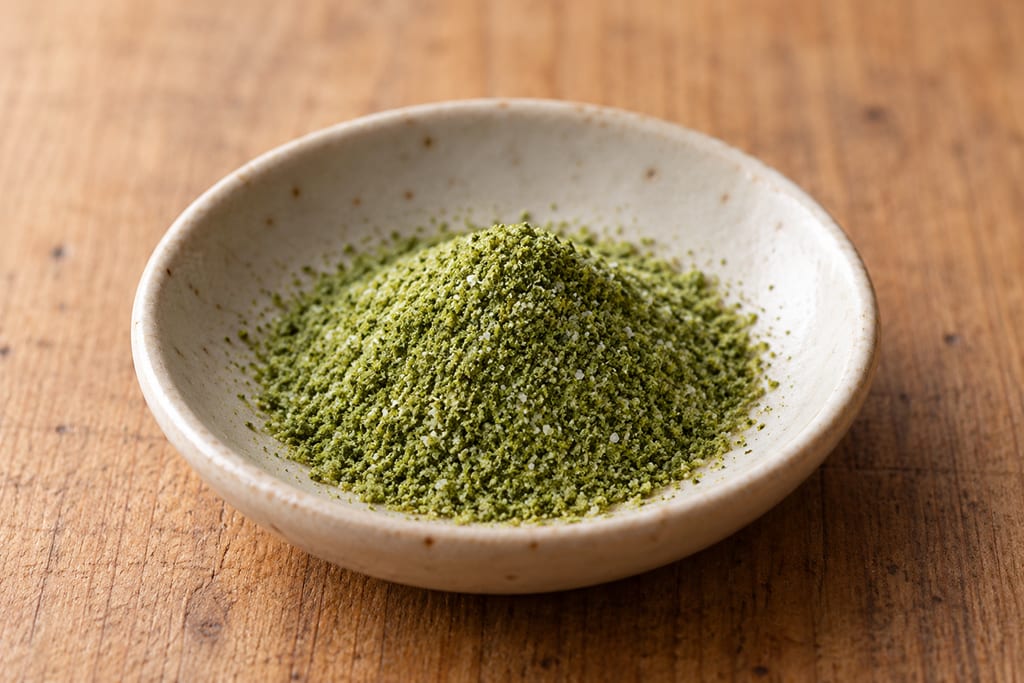
Green tea leaf salt is a dry seasoning made by grinding tea leaves, sieving them and mixing the powder with fine salt. This Japanese-style version follows a documented equal-parts method.
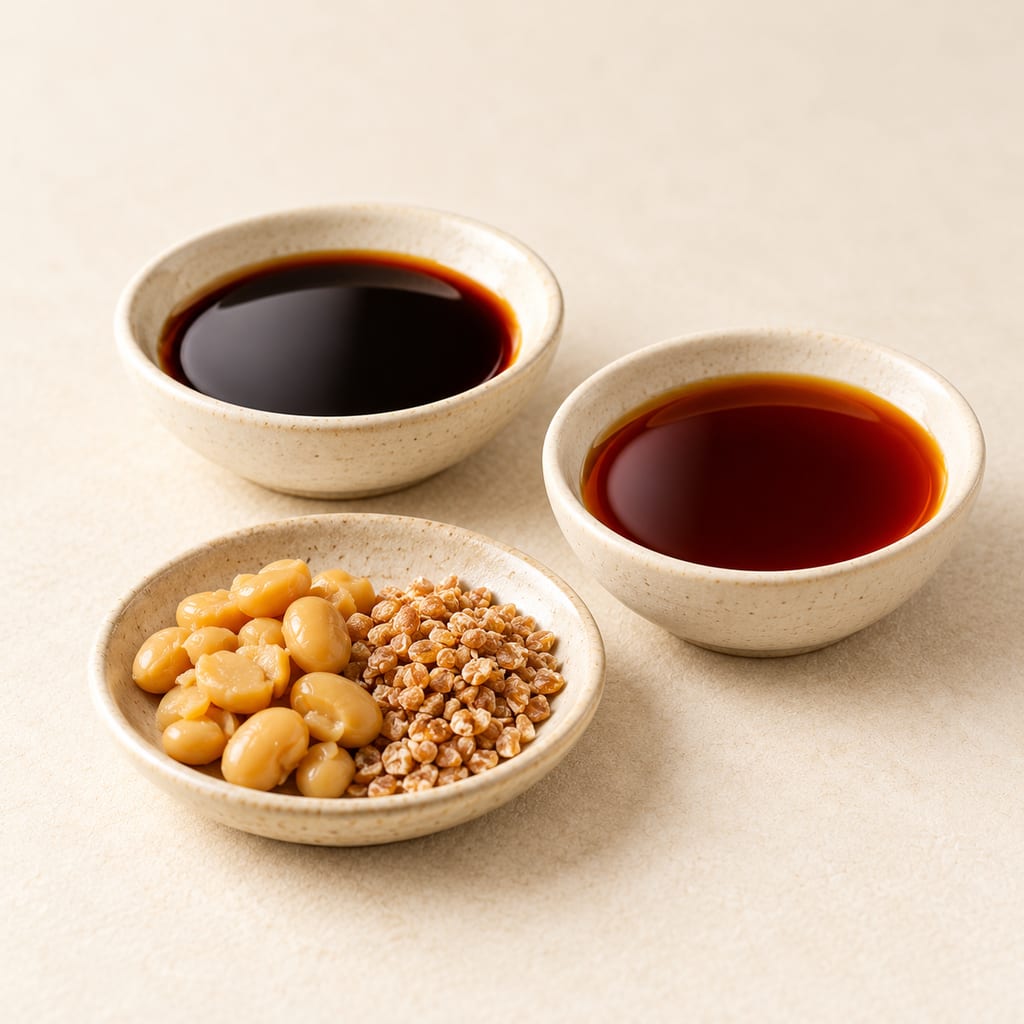
Jiangyou is the Chinese soy sauce family, an umbrella term for light, dark and seasoned sauces made by two main process families: high-salt liquid-state and low-salt solid-state brewing.
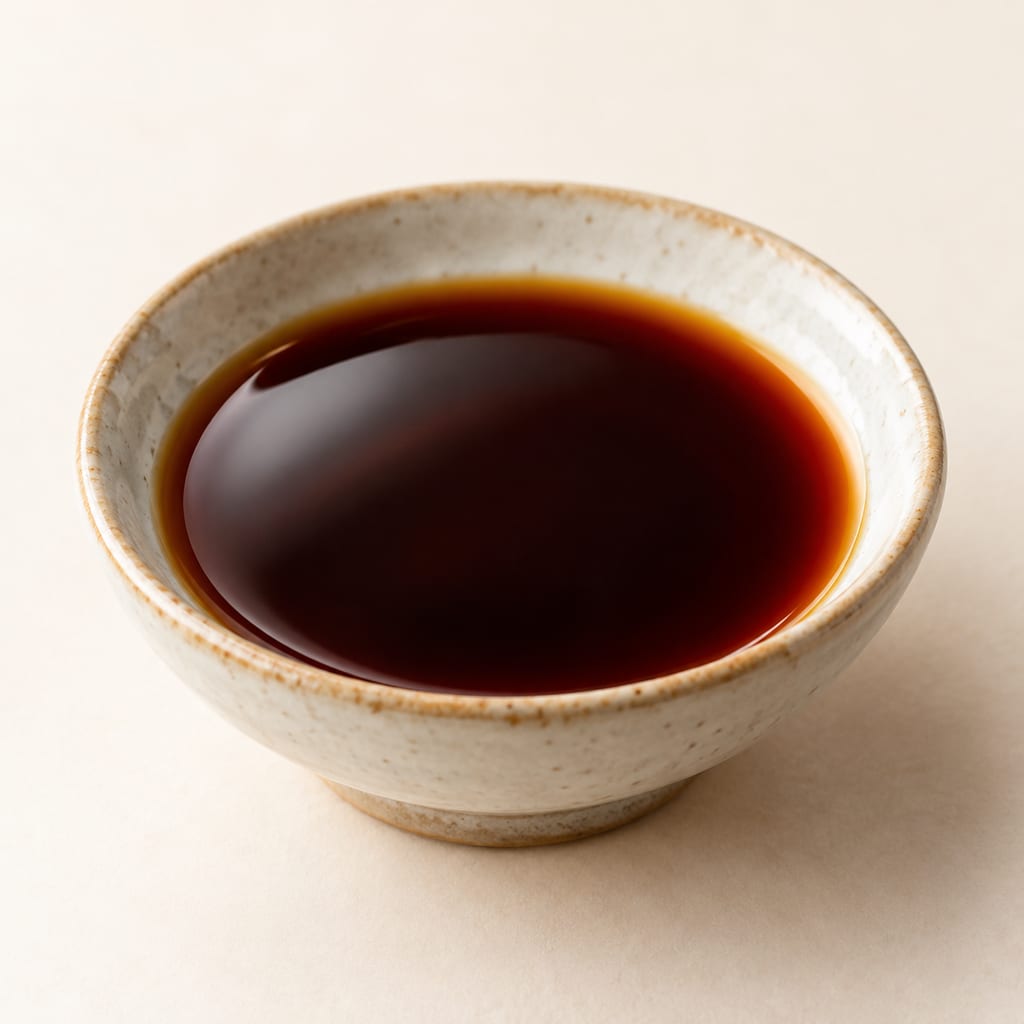
Japan's standard all-purpose soy sauce: soybeans and wheat grown over with koji mould, brined, fermented for months, pressed and usually heated into a reddish-brown, savoury liquid.
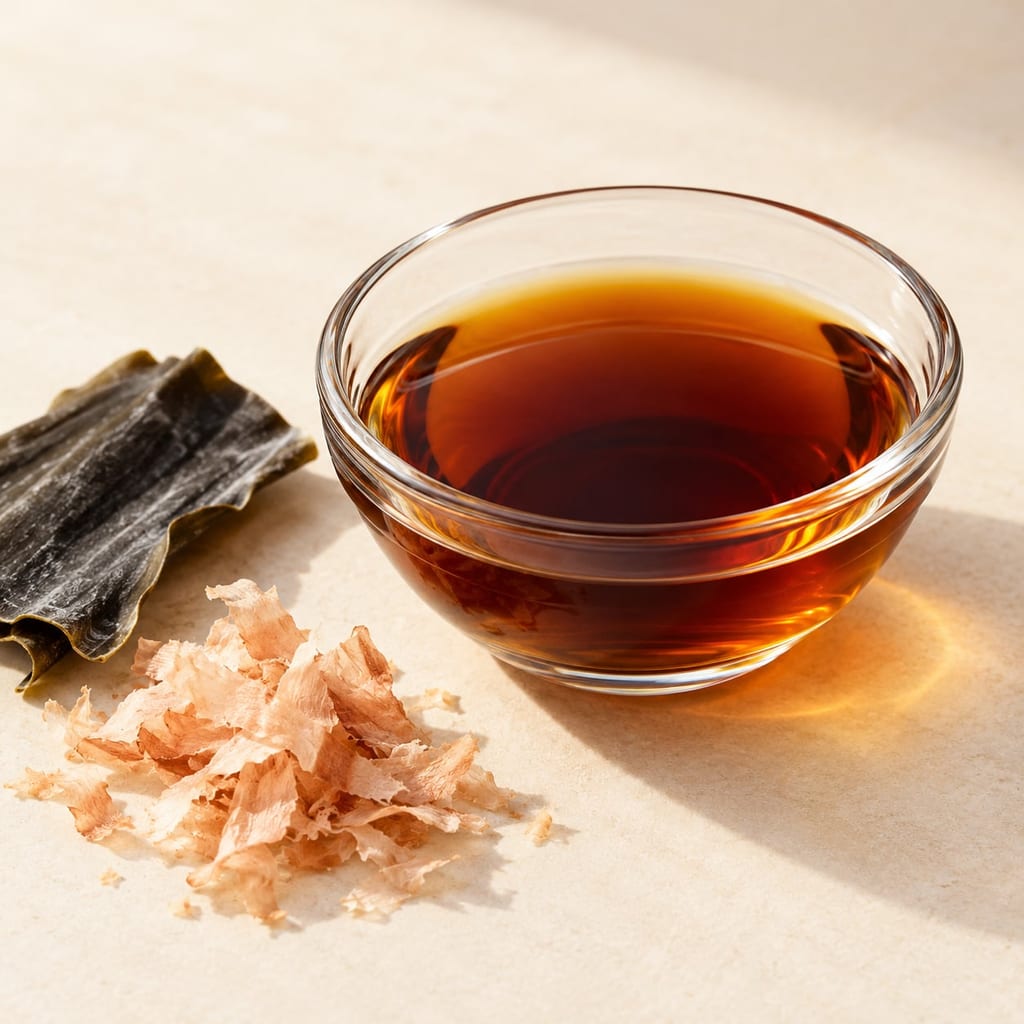
Mentsuyu seasons Japanese noodles with dashi, soy sauce and mirin. Two home formulas are recorded here: a 2012 light-soy and bonito sauce, and a concentrate diluted 1:2 for dipping or 1:4 for hot soup.
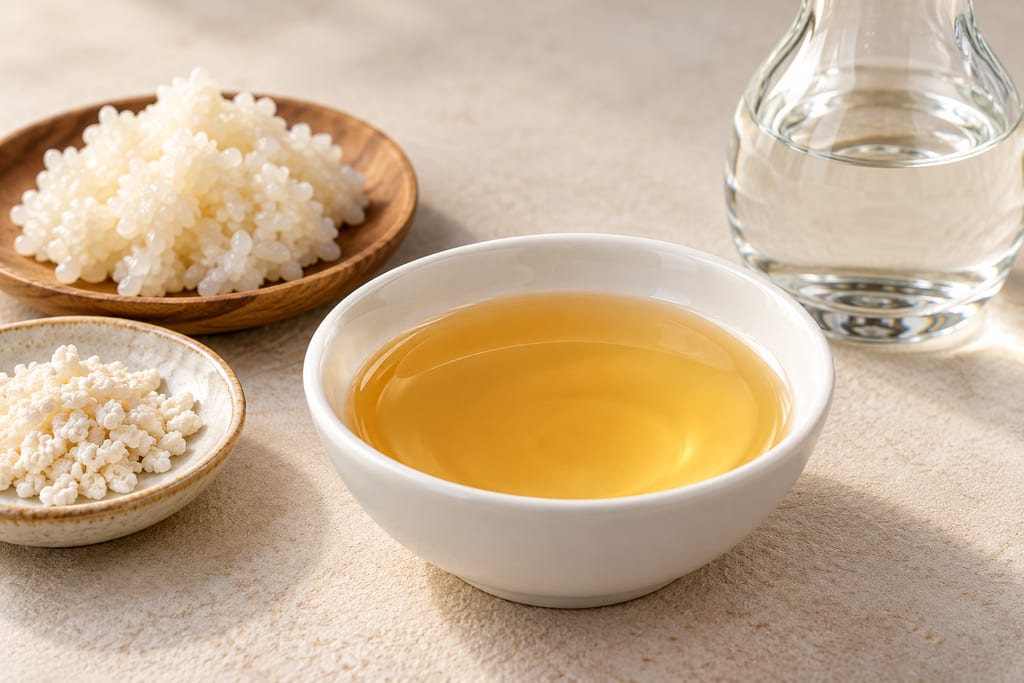
Hon-mirin is a Japanese rice seasoning made by saccharifying glutinous rice with rice koji in shochu, then pressing and usually heating the mash.
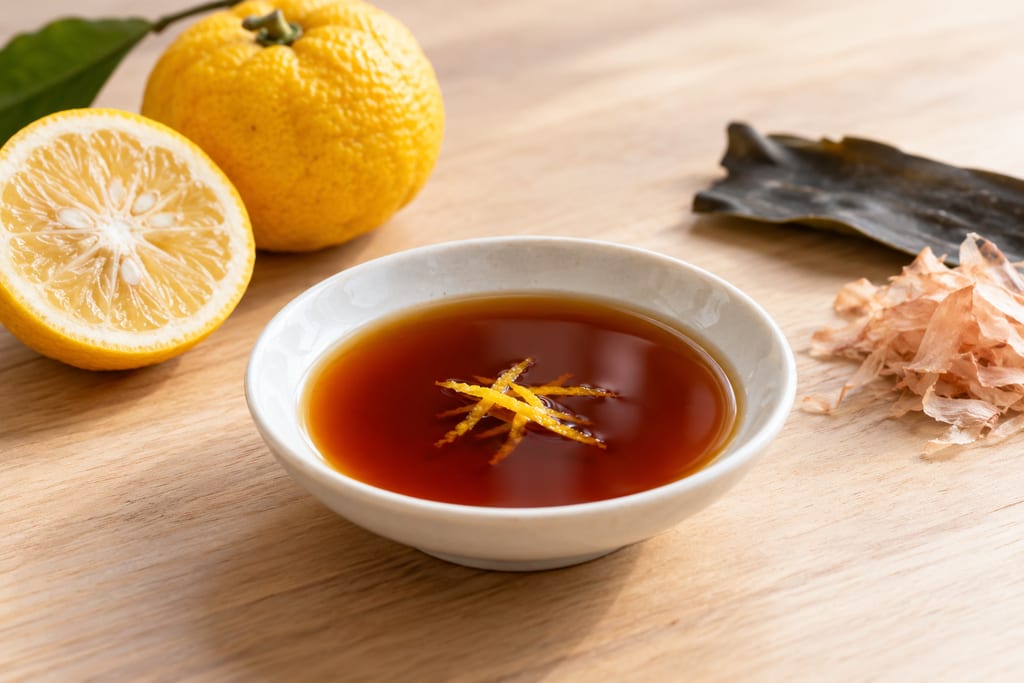
This quick ponzu combines soy sauce, vinegar, hon mirin, kombu, dried bonito and yuzu juice after a brief boil and a warm extraction; the recipe serves five.
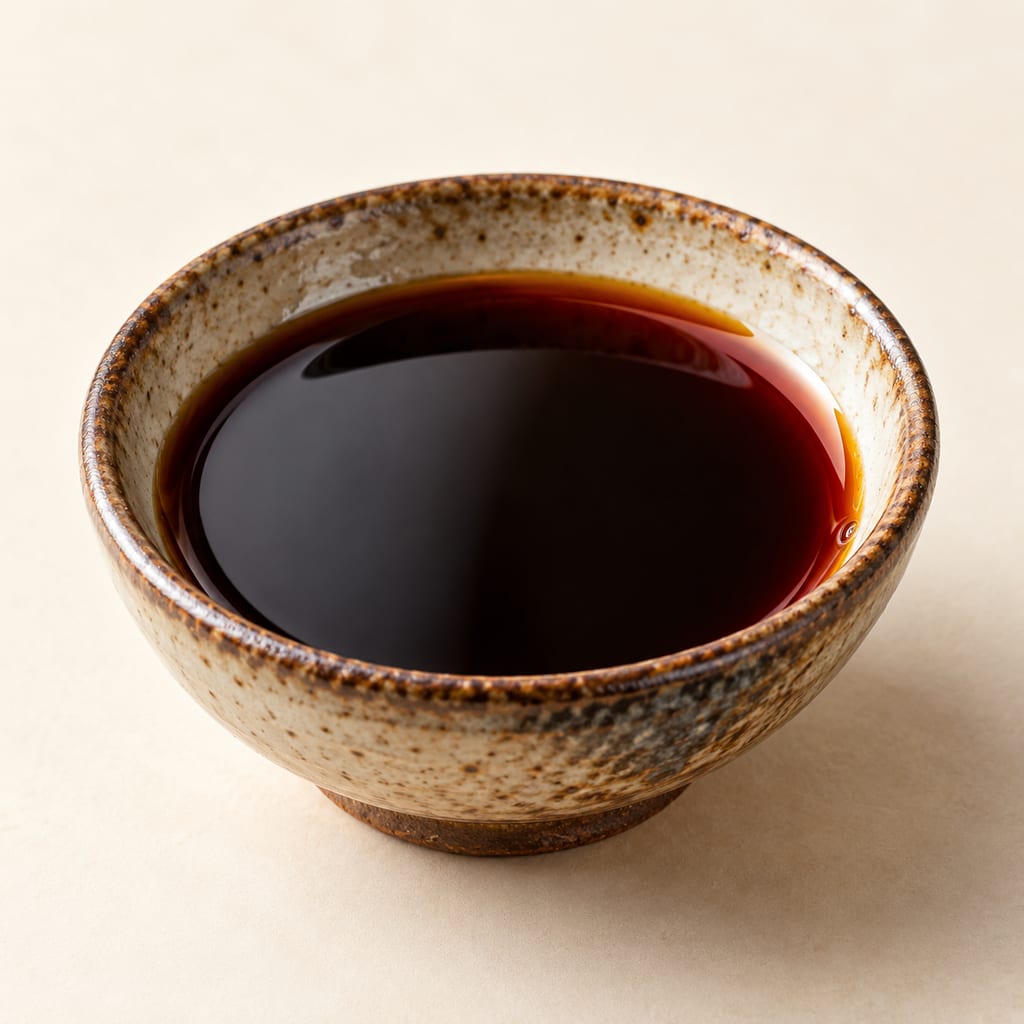
Saishikomi shoyu is a double-brewed soy sauce: a second moromi is made with a finished soy sauce in place of salt water, which makes a dark, concentrated sauce with softer salt.
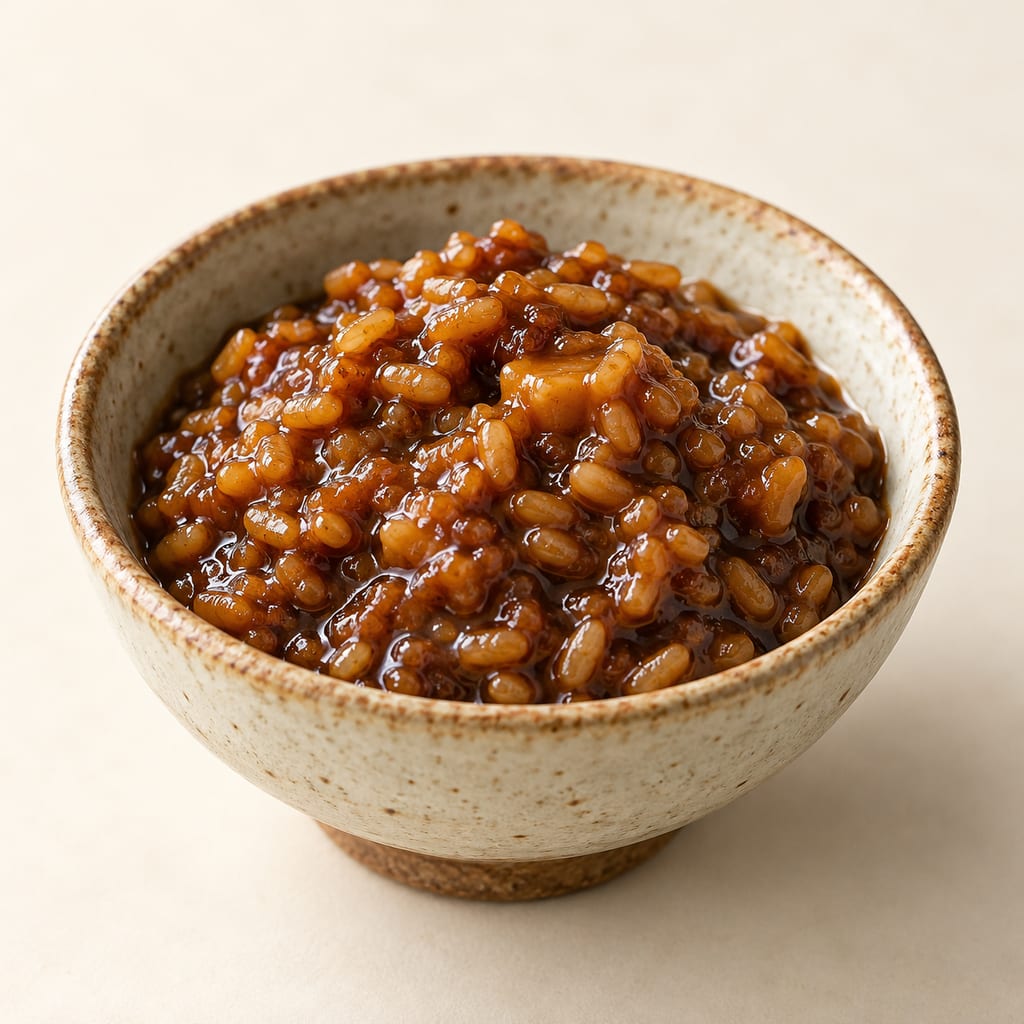
A Japanese kitchen condiment of rice koji matured in soy sauce until the grains turn soft and sweet. The same name also means the mould-grown soybean and wheat used to brew soy sauce.
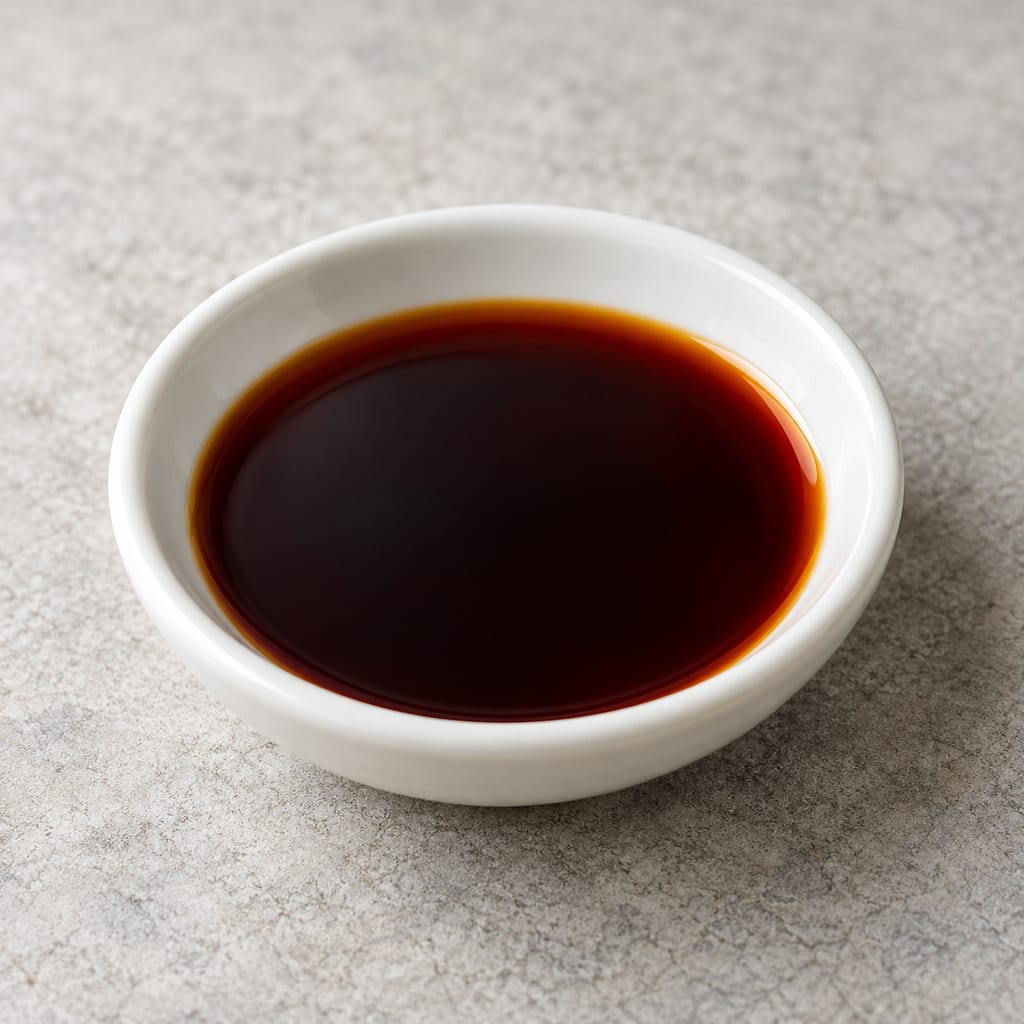
Soy sauce is a salted liquid seasoning made by growing koji mould on soybeans and grain, maturing the mash in brine and pressing out the liquid. Japan's shoyu is the best-documented form.
No community contributions have been published for this entry yet.
Sign in to contribute. Published comments and photos are free to read.
Ministry of Agriculture, Forestry and Fisheries (MAFF), JapanDefinition · Classification · Method
Soy sauce, miso, other seasoningsTamari is soybean-dominant, with a small quantity of wheat and little brine, and ages longer than koikuchi.
Tamari is made in Aichi, Gifu and Mie in the Tokai region.
Koji is formed into balls for tamari.
Cited in: What tamari is; Why it differs from koikuchi; A gluten caution; What is not yet established