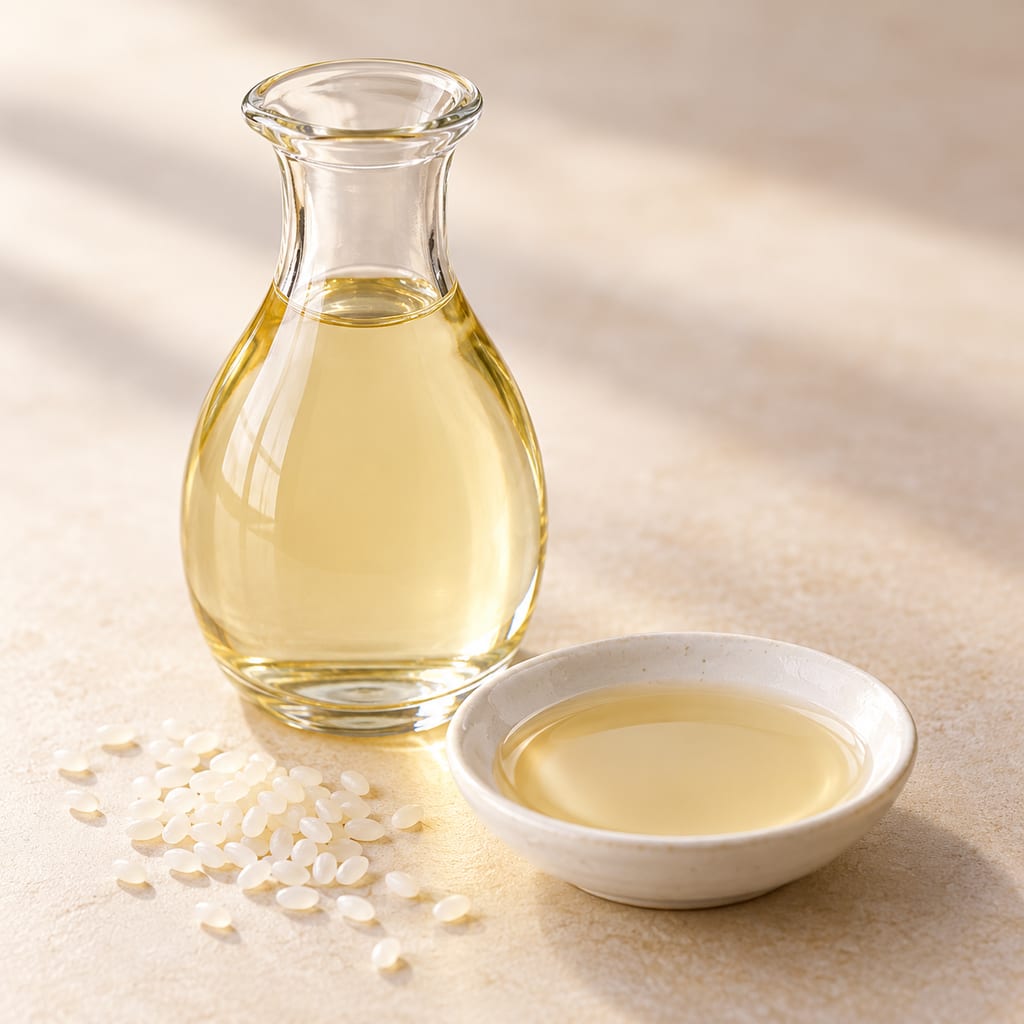
Unseasoned rice vinegar
Japanese komezu is a pale, unseasoned rice vinegar made through alcoholic and acetic fermentation; rice, water, koji and yeast shape its character.
 FermenteaWhere food goes to change
Modern method
胡麻だれ · Goma dare
A creamy Japanese sesame dipping sauce with soy, rice vinegar and dashi. Gradual mixing turns the thick sesame paste into a smooth sauce.
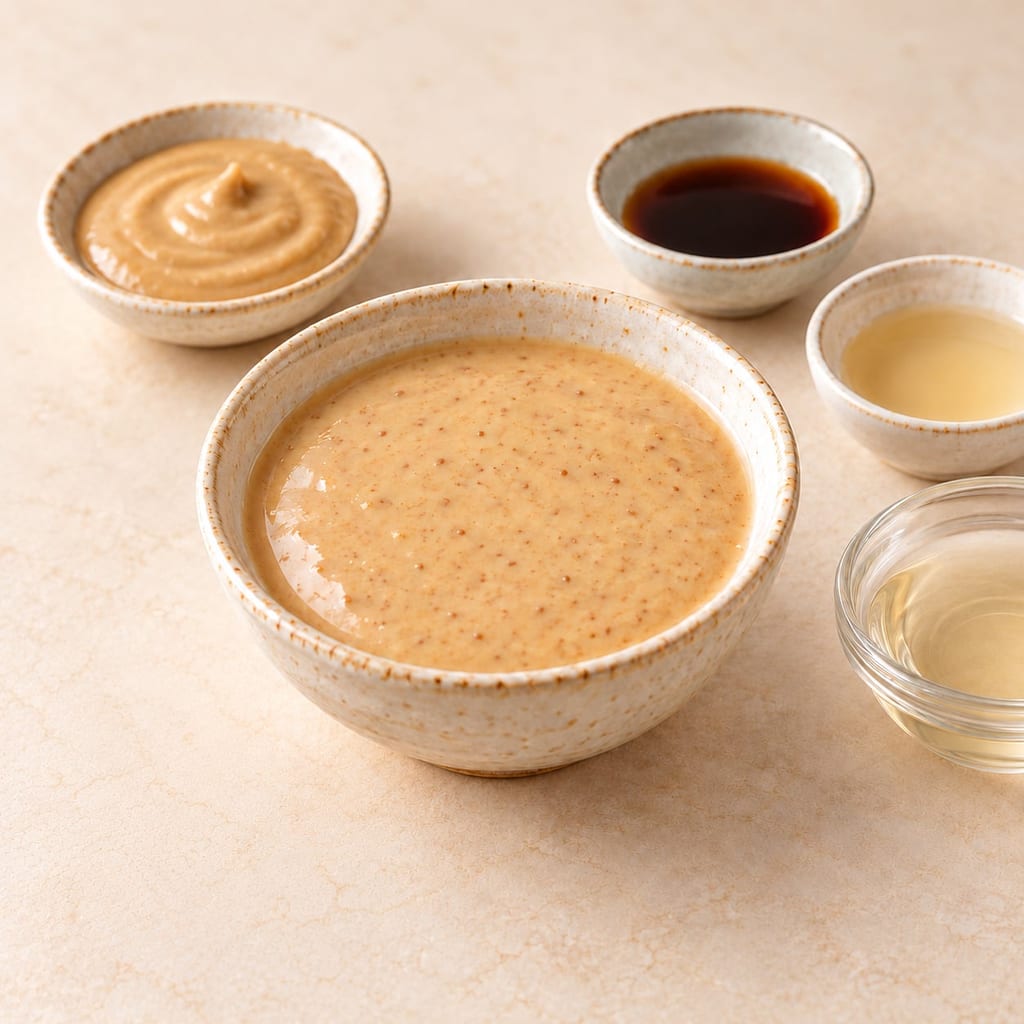
Goma dare is a Japanese sesame-based dipping sauce with a rich, creamy consistency and a balanced combination of nutty, savoury, sweet and acidic flavours.
The name is written 胡麻だれ. Goma means sesame, while tare or dare refers to sauce.
The condiment is particularly associated with shabu-shabu, in which thinly sliced meat, vegetables and other ingredients are briefly cooked in hot broth and dipped into sauces before eating.
Goma dare is also suitable for noodles, tofu, steamed vegetables and salads.
Its principal ingredient is nerigoma (練りごま), a paste made by grinding toasted sesame seeds.
The sesame paste gives the sauce its rich flavour and body.
Soy sauce contributes salinity and umami; vinegar adds acidity; sugar balances sharpness; and dashi provides additional savouriness and adjusts the texture.
The sauce is not newly fermented after mixing. Soy sauce may itself be fermented, but the completed mixture is a fresh condiment.
Sesame has been used in East Asian cooking for a very long time.
Japanese sesame preparations include whole toasted seeds, ground sesame, sesame dressings, pastes and sauces.
The development of goma dare belongs within that wider food culture.
Its familiar role alongside shabu-shabu connects it to a style of hot-pot dining in which cooked foods are dipped into individual sauces.
However, the available recipe does not establish an exact historical invention date for this particular sauce.
The current formula is a contemporary household version.
It was revised to distinguish thick homemade or premium nerigoma from thinner commercial sesame pastes.
That distinction is important because sesame paste varies considerably in viscosity.
A formula using three tablespoons of a thick paste may behave differently from the same quantity of a thin, oily paste.
Ingredient — Quantity
Thick Japanese sesame paste / nerigoma — 3 tablespoons
Sugar — 4 teaspoons
Soy sauce — 1 tablespoon
Unseasoned rice vinegar — 4 teaspoons
Prepared dashi — 2 tablespoons
Diamond Crystal kosher salt — ⅛ teaspoon, to taste
Yield: Approximately ½ cup (120 ml).
Servings: Two as a dipping sauce.
Preparation: Five minutes.
For a thinner sesame paste, the source specifies 4 tablespoons instead of three.
The thicker-paste formulation remains the main recipe.
Sesame, Sesamum indicum, is an oilseed.
Its seeds contain substantial quantities of oil, protein and other solids.
When toasted sesame seeds are finely ground, the released oil combines with particles of the seed material to form a paste.
The result resembles tahini in broad physical structure, but the roasting, seed selection and grinding may differ.
Sesame oil contains unsaturated fatty acids, while the solids contribute flavour and texture.
The characteristic toasted aroma comes from compounds formed or released during roasting.
Nerigoma is therefore more than a neutral thickener. It supplies much of the sauce's fundamental flavour.
Stored sesame paste can separate into an oil-rich upper layer and a denser layer of sesame solids.
This is a physical separation rather than necessarily a sign of spoilage.
If the paste is measured without remixing, one tablespoon may contain much more oil than another.
The source specifically instructs the cook to stir the paste thoroughly before measuring.
That helps produce a consistent starting mixture.
Soy sauce supplies salt, amino acids and fermentation-derived flavour compounds.
Japanese soy sauce is commonly made through a process involving koji, brine fermentation and subsequent maturation.
The precise method varies by manufacturer and sauce category.
Proteins from soybeans and, in many Japanese varieties, wheat are broken into smaller compounds.
Glutamate and other amino acids contribute savouriness.
The resulting soy sauce is already a finished fermented ingredient.
Adding it to goma dare does not initiate a new controlled fermentation.
Dashi is a Japanese stock.
Common versions use kombu seaweed, dried bonito or combinations of ingredients.
Kombu provides glutamate.
Bonito contributes additional compounds associated with savoury taste, including nucleotides.
Their combination can reinforce the perception of umami.
A vegan dashi made from kombu and suitable mushrooms is another documented option.
The type of dashi affects flavour and dietary suitability.
This recipe uses two tablespoons of prepared dashi but does not require a particular commercial product.
Open the sesame-paste container.
Stir thoroughly to reincorporate separated oil.
Measure 3 tablespoons thick nerigoma.
Transfer it to a small bowl.
Add 4 teaspoons sugar.
Mix until evenly incorporated.
The dense paste may initially resist mixing, but the sugar should be distributed before the liquid ingredients are added.
Measure 1 tablespoon soy sauce.
Stir it into the sesame mixture.
The sauce may begin to thicken or form clumps.
This is a common physical response when a small amount of watery liquid is introduced into a concentrated paste.
Add 4 teaspoons unseasoned rice vinegar.
Continue mixing.
The vinegar contributes acidity and additional liquid.
Use unseasoned vinegar because seasoned sushi vinegar already contains added sugar and salt.
Measure 2 tablespoons dashi.
Add a small amount at a time, mixing completely after each addition.
The mixture may initially become thicker.
Continue until all the dashi is incorporated and the sauce becomes smooth and pourable.
Add up to ⅛ teaspoon Diamond Crystal kosher salt, adjusting to taste.
Stir thoroughly.
Transfer to individual dipping bowls.
Serve with shabu-shabu ingredients, tofu, vegetables or noodles.
A concentrated sesame paste contains oil and finely divided seed solids.
When a small amount of water-rich liquid is introduced, the mixture may form dense aggregates instead of immediately becoming fluid.
The available liquid is initially insufficient to disperse the solids evenly.
As more liquid is incorporated through mixing, the mixture can become smooth.
This behaviour resembles the temporary thickening seen in other concentrated pastes and dispersions.
It does not mean the sauce has spoiled or curdled through fermentation.
The gradual addition of dashi is therefore a functional instruction.
Adding all the liquid simultaneously can make smooth mixing more difficult.
The documented recipe uses three tablespoons of thick nerigoma.
A thinner commercial paste, including some products resembling tahini, may require four tablespoons to reach the desired richness.
These are variations within the same preparation.
The choice affects flavour, viscosity and the amount of suspended sesame solids.
It does not create a separate fermentation process.
The source also describes an older recipe containing sake, ponzu, miso and sesame oil. That earlier formulation is materially different in its ingredient composition and can be retained as a historical version of the author's sauce, rather than combined with the present measured recipe.
The classic use is with shabu-shabu.
Cooked slices of meat and vegetables are dipped into the sauce.
Its richness contrasts with the comparatively mild broth-cooked ingredients.
Goma dare is also useful with cold or hot tofu.
Tofu provides a soft, mild surface for the nutty sauce.
For noodles, the sauce can be loosened with additional dashi.
For salad dressing, additional rice vinegar may make it lighter and sharper.
These are serving adaptations, not new base recipes.
A properly mixed goma dare should be creamy and uniform.
Small clumps during early mixing are normal.
If it remains excessively thick after all the dashi is added, the actual sesame paste may be thicker than the one used in the source.
If it is too thin, a different commercial paste may be responsible.
If the flavour is excessively salty, the dashi or soy sauce may be more concentrated than expected.
A bitter or rancid sesame smell suggests poor-quality or deteriorated paste.
Visible mould or other spoilage after storage requires rejection.
Sesame and soy are important allergens.
Ordinary Japanese soy sauce may also contain wheat.
Bonito-based dashi contains fish.
Check ingredient labels for the exact products used.
The current publisher recommends storing the sauce in an airtight container in the refrigerator for up to five days. This is a culinary storage recommendation, not independent process validation.
The sauce is not shelf-stable and should not be left indefinitely at room temperature.
A contemporary Japanese sesame dipping sauce served with hot-pot foods, vegetables or noodles.
Yield 0.5 cup · Scaling: source batch only
Contains sesame and soy sauce; dashi ingredients vary. Check the products you use.
No storage interval is established for this dashi-containing batch.
Culinary association of this preparation; no exact birthplace is established.
Japanese komezu is a pale, unseasoned rice vinegar made through alcoholic and acetic fermentation; rice, water, koji and yeast shape its character.
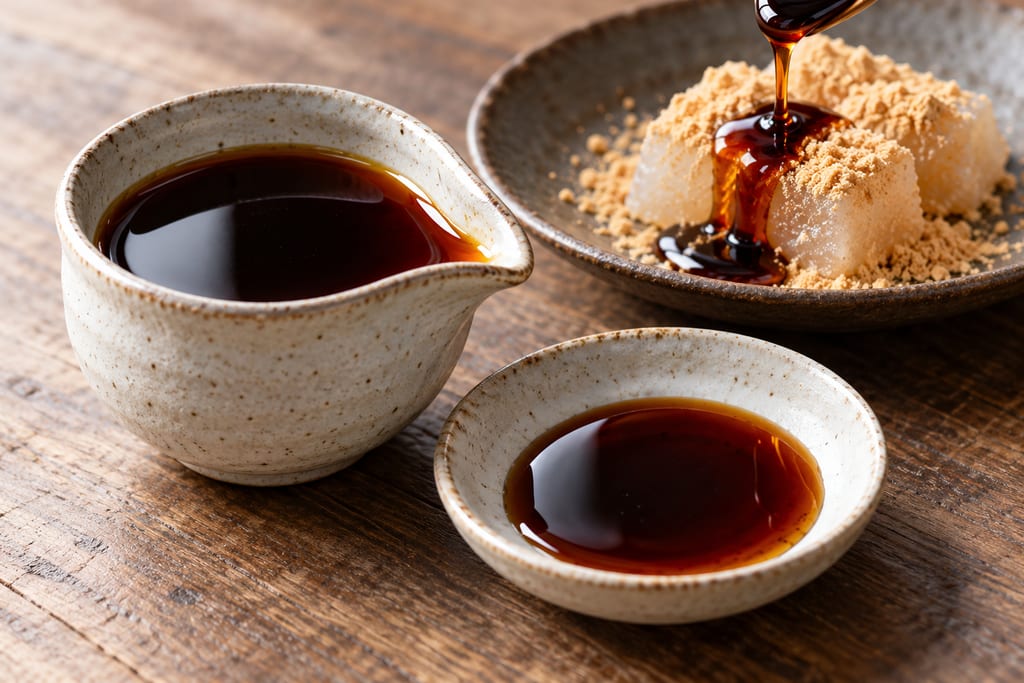
A dark Japanese syrup made by simmering black sugar with water and optional extra sugar. Drizzle it over mochi, ice cream or other desserts.
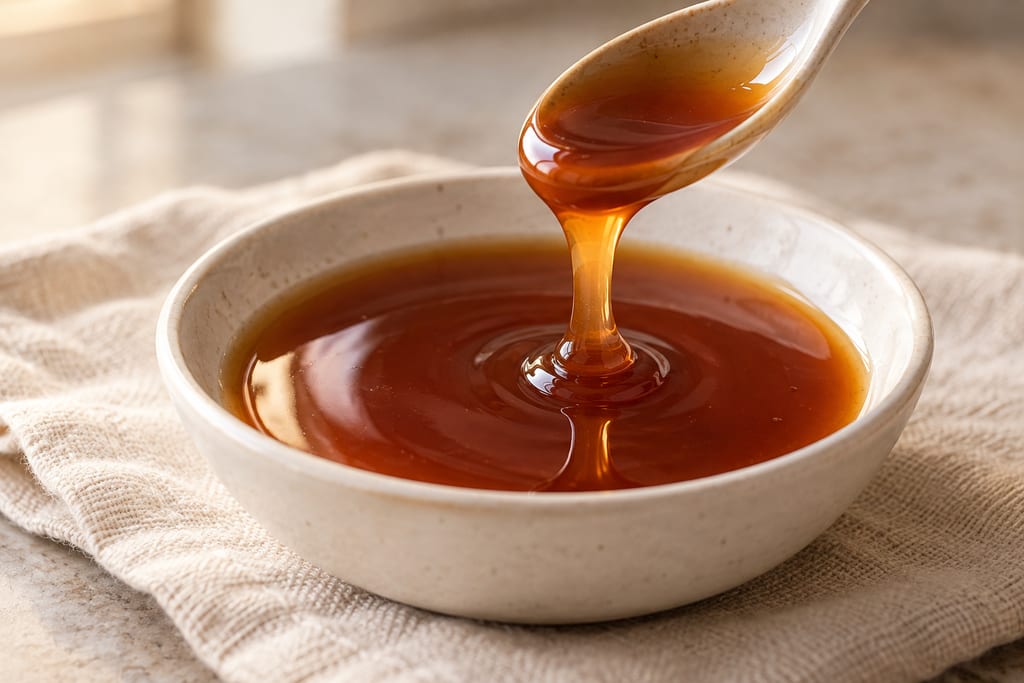
A glossy Japanese glaze thickened with starch, sugar, soy sauce and mirin. Spoon it over cooked rice dumplings while the glaze is still fluid.
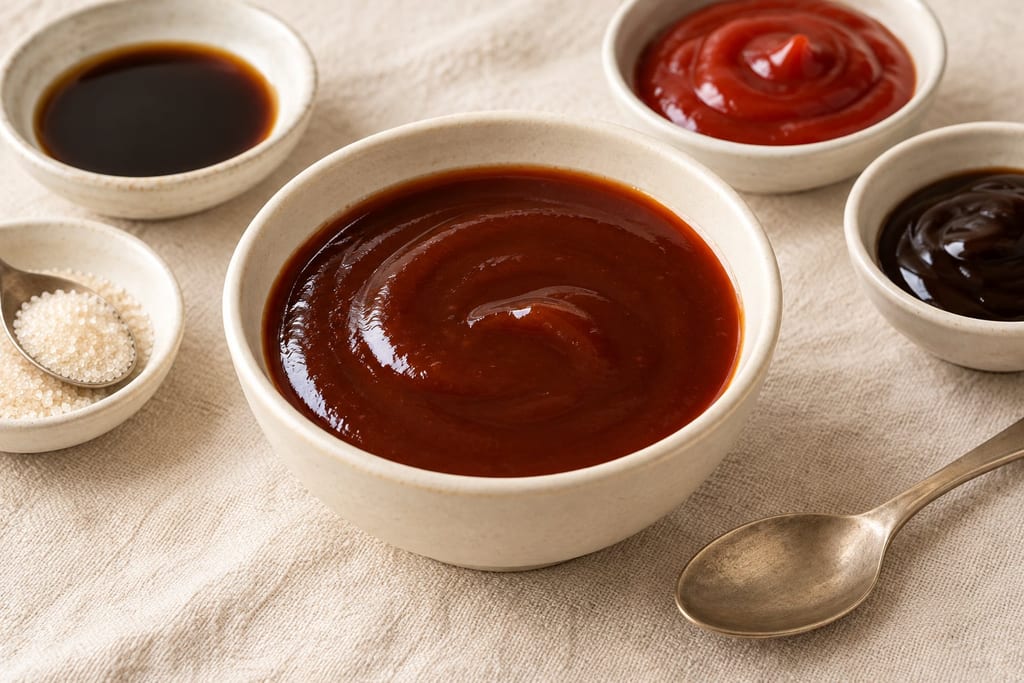
A sweet, tangy Japanese sauce mixed from Worcestershire sauce, ketchup, oyster sauce and sugar. Serve with breaded cutlets or croquettes.
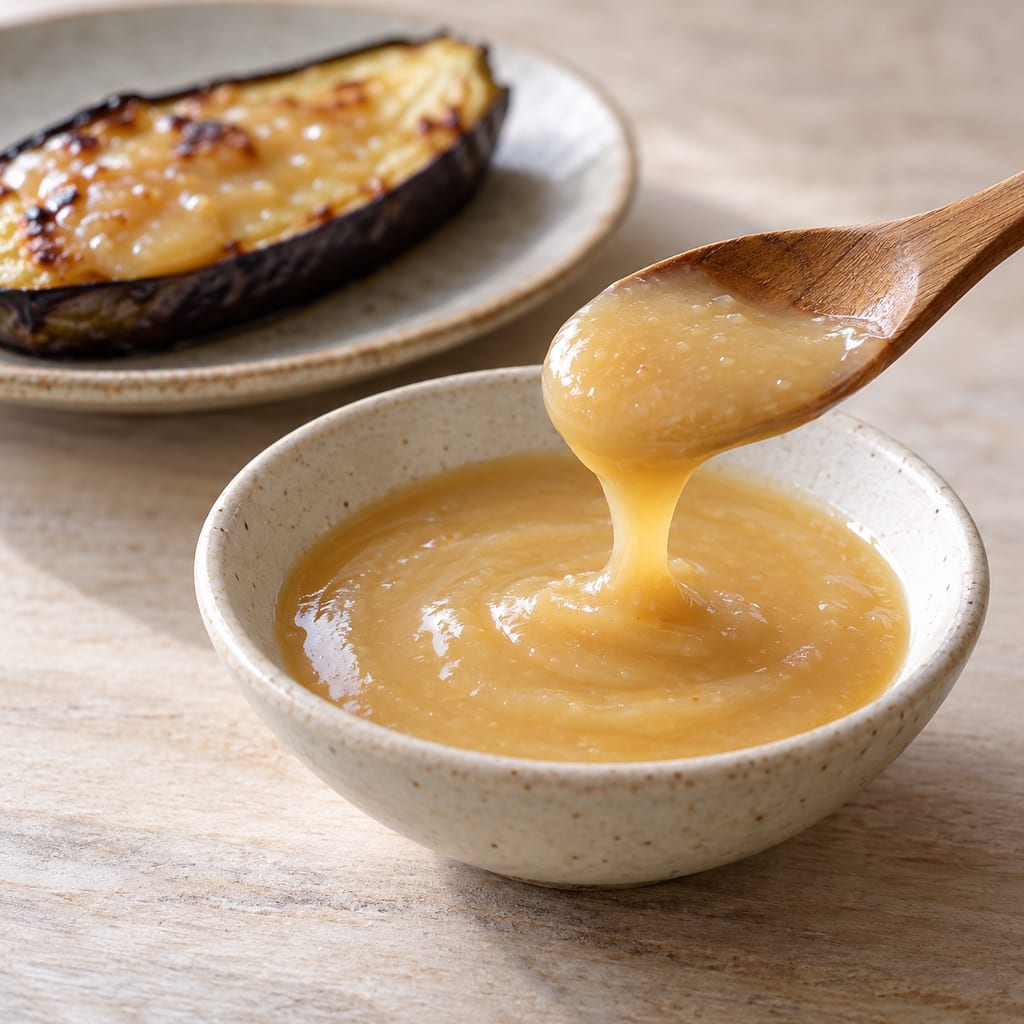
A Japanese-style glaze of pale rice miso, water, sugar and rice vinegar, heated gently until it coats a spoon and spread over cooked aubergine, tofu or vegetables.
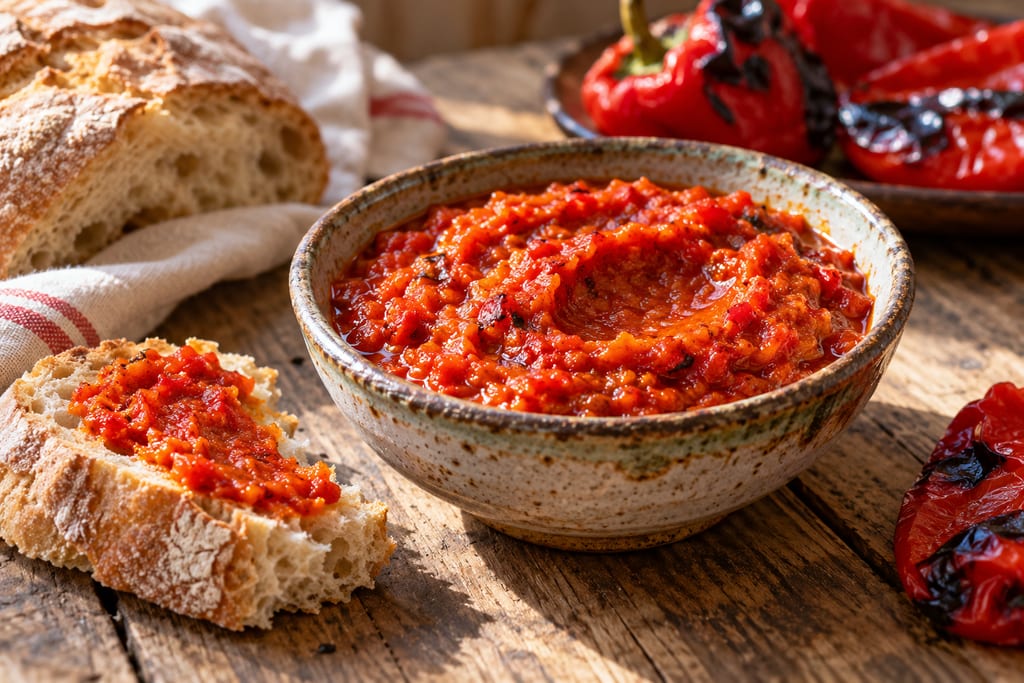
Ajvar is a cooked Balkan pepper preserve built around roasted red peppers, peeled, drained, ground and slowly fried with oil and seasoning. Leskovac’s protected version is a pepper specialty; regional versions vary.
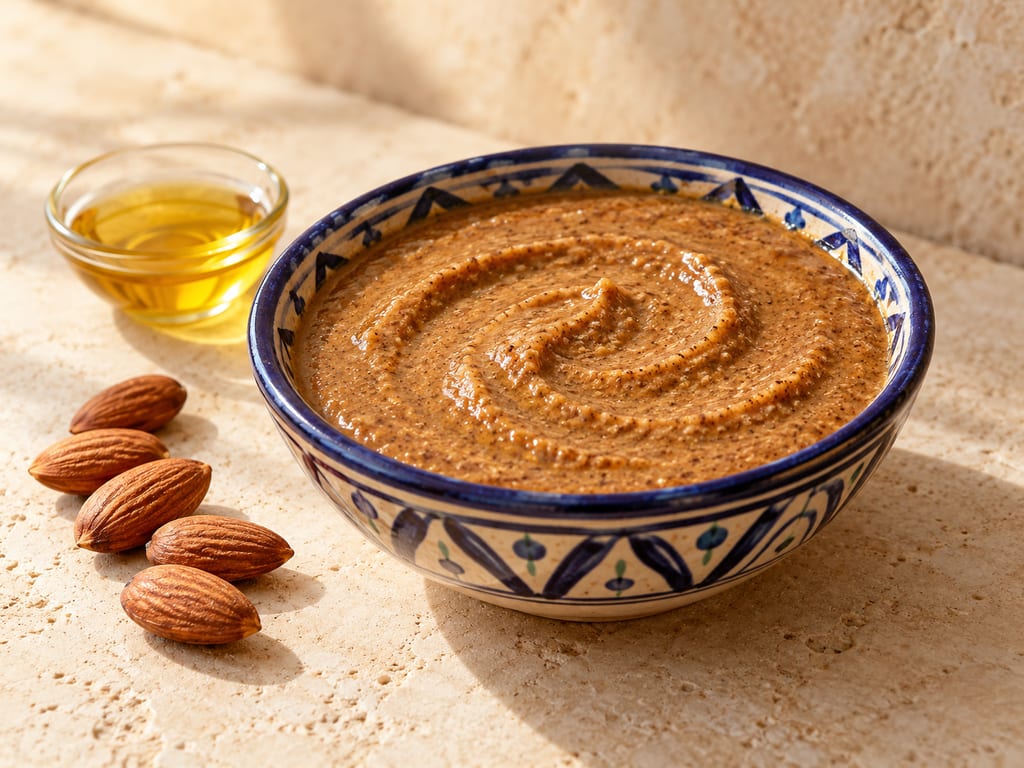
Amlou is a nutty, lightly sweet Moroccan spread of roasted almonds, culinary argan oil and honey. The almonds are ground first, then loosened with oil and sweetened; the balance can range from a thick spread to a dip.
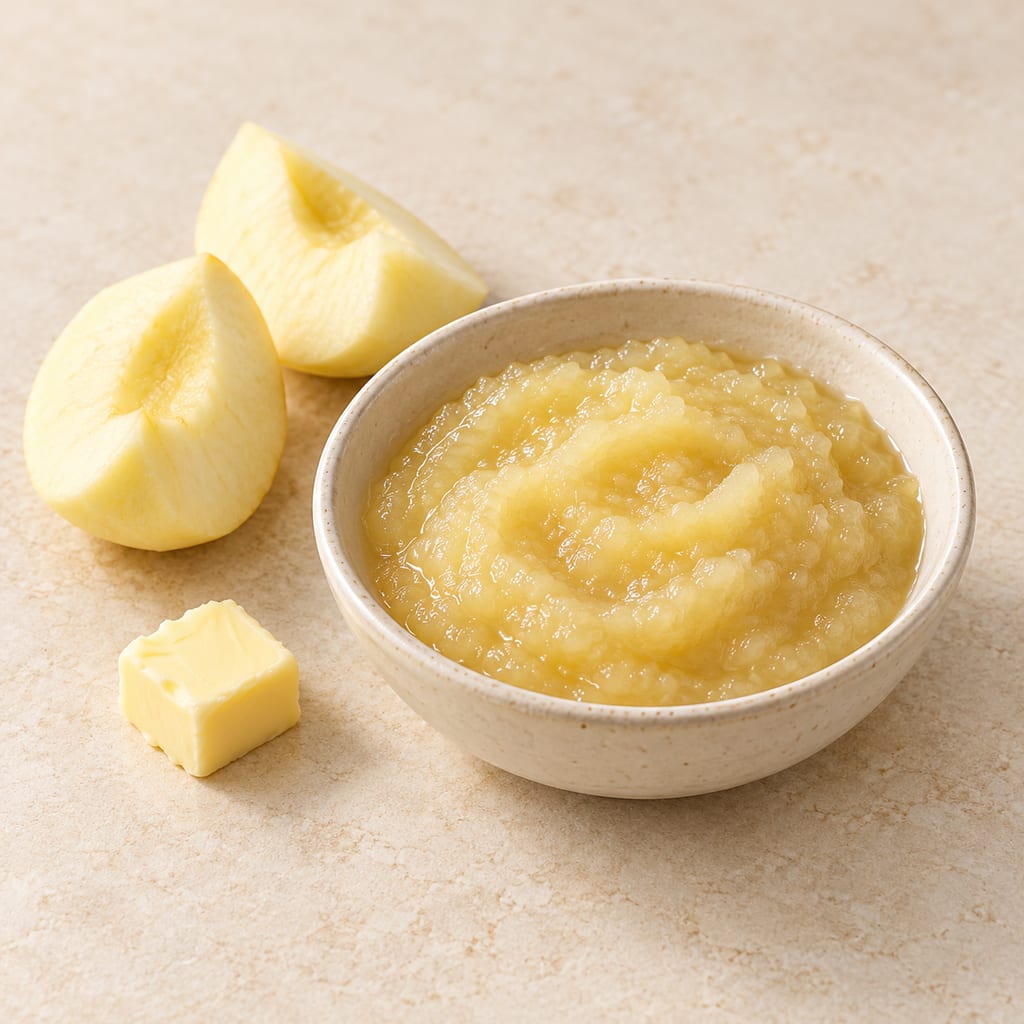
Apple sauce for goose and pork is a plain English accompaniment: cooked apples pulped with water, then sweetened with sugar and finished with a little butter.

A warm dip of garlic, anchovy and olive oil, often enriched with butter, that Piedmont serves over a flame with raw and cooked vegetables and bread.
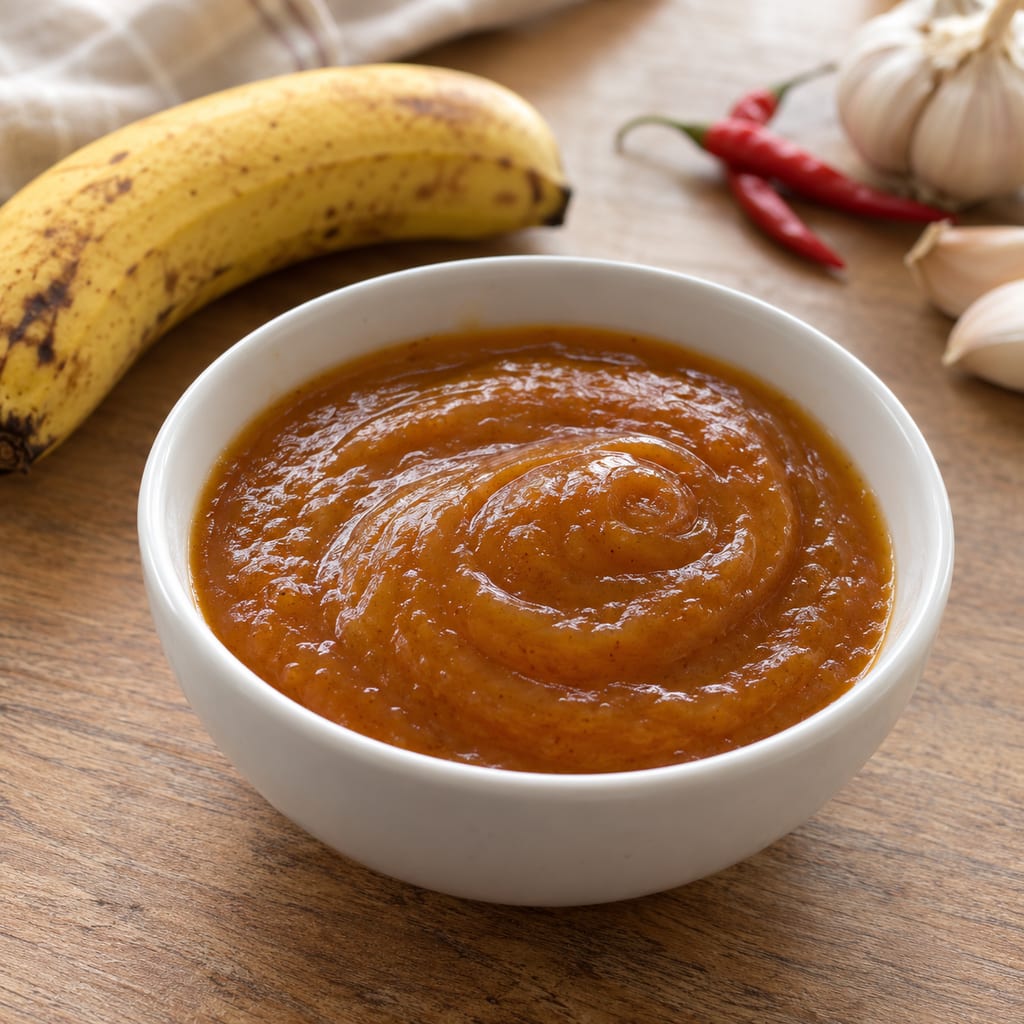
A sweet-hot table sauce of ripe banana simmered with vinegar, sugar, onion, garlic and fresh chilli, in the manner of Philippine banana ketchup. An untested development batch of about 500 g.
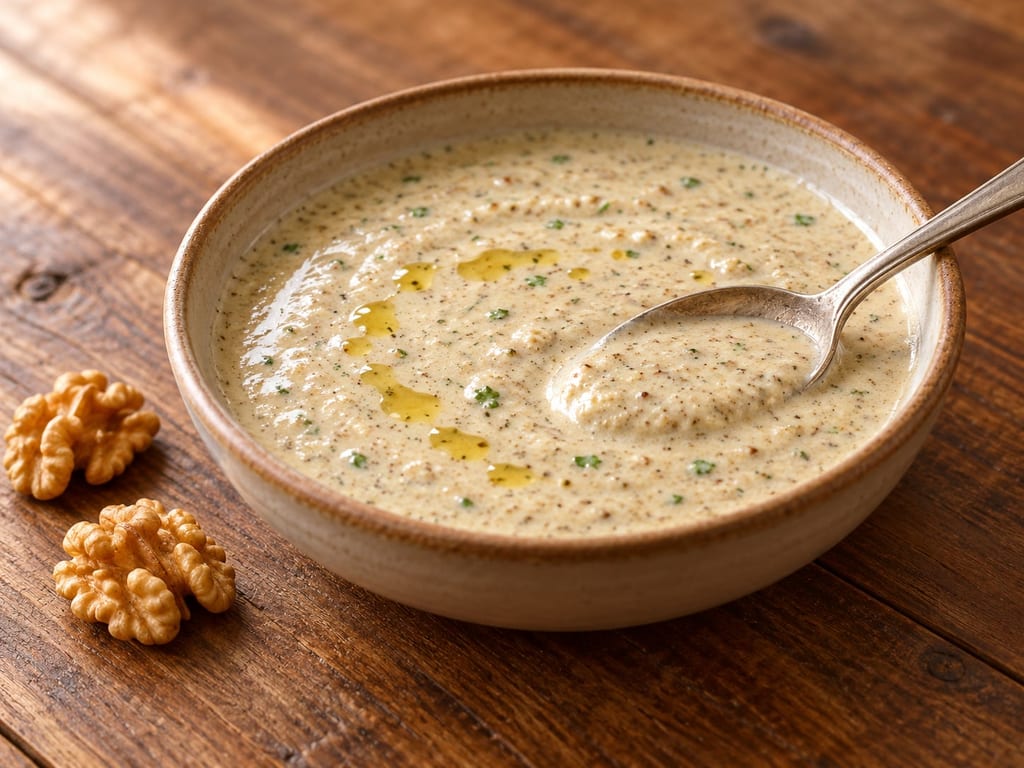
A Georgian walnut sauce of ground walnuts, garlic, vinegar and spices, thinned with water or broth. It is served with poultry, vegetables and bread, and is the sauce of the dish satsivi.
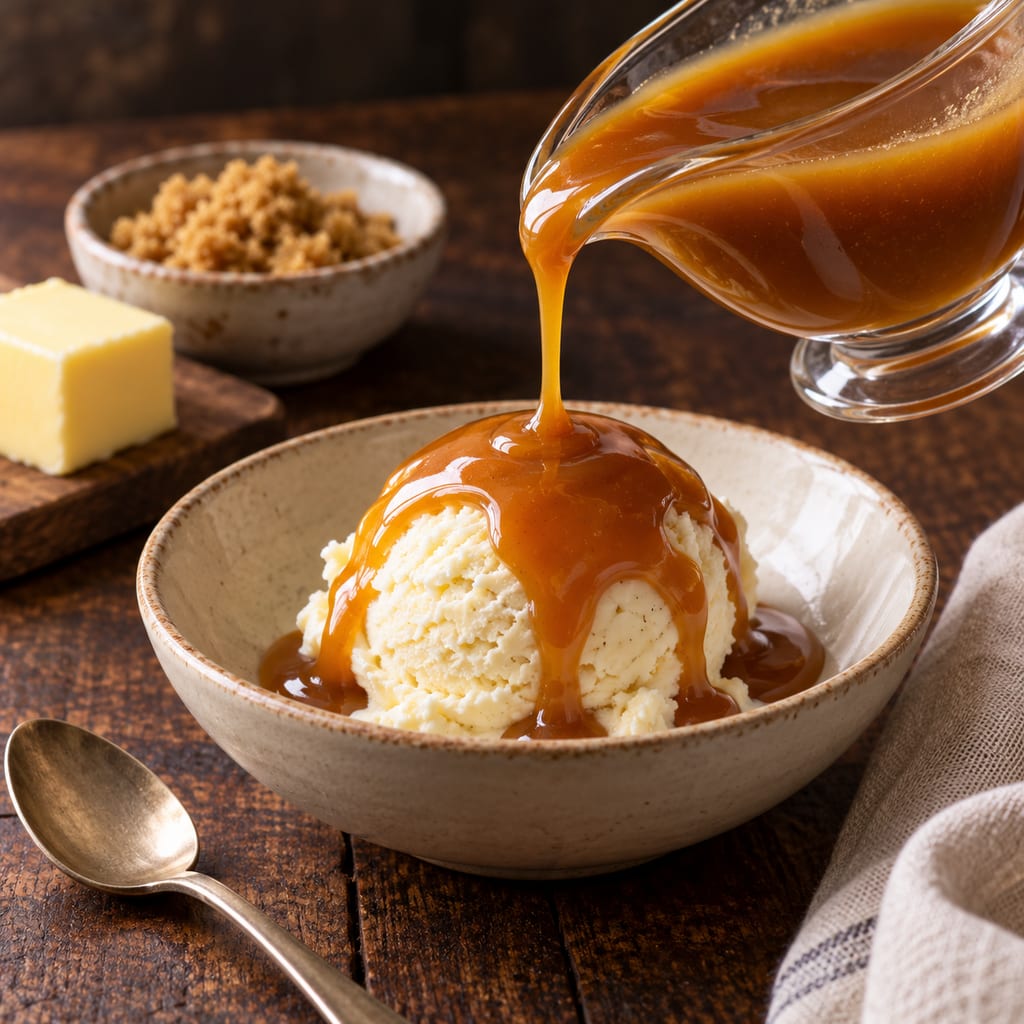
A pourable dessert sauce of brown sugar, butter and cream, with a little corn syrup and salt. It is the sauce form of the butterscotch confection and is made without water, unlike caramel.
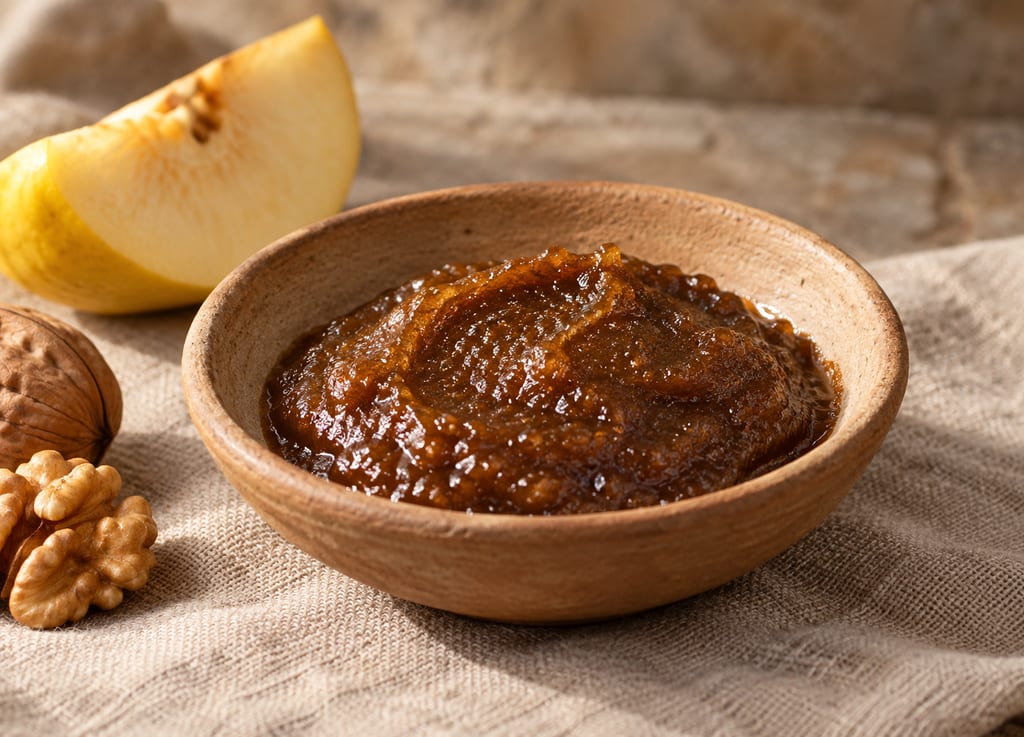
Byzantine murrī is a cooked imitation of murrī from the medieval Arabic repertoire, made from scorched honey, toasted bread, walnuts, quince, carob and spices rather than from a long grain fermentation.
No community contributions have been published for this entry yet.
Sign in to contribute. Published comments and photos are free to read.
Just One Cookbook; Namiko Hirasawa ChenInspiration · Process · Geography
How to Make Sesame Sauce (Goma Dare)Revised card: 3 tbsp thick sesame paste, 4 tsp sugar, 1 tbsp soy sauce, 4 tsp unseasoned rice vinegar, 2 tbsp dashi, ⅛ tsp Diamond Crystal kosher salt; ½ cup, two servings.
Mix paste and sugar, add soy/vinegar, gradually blend dashi and finish with salt; source distinguishes 4 tbsp thinner-paste alternative.
Cited in: What is goma dare?; Historical context; Ingredients; Nerigoma and sesame chemistry; Why the oil separates; What soy sauce contributes; Dashi and umami; 1. Prepare the sesame paste; 2. Add sugar; 3. Add soy sauce; 4. Add vinegar; 5. Incorporate dashi gradually; 6. Season; 7. Serve; Why the sauce thickens before thinning; Thick versus thin sesame paste; How goma dare is eaten; Quality and troubleshooting; Safety and storage
Context
Just One Cookbook — Homemade Sesame PasteSupporting account in the written batch for this record.
Cited in: What is goma dare?; Historical context; Ingredients; Nerigoma and sesame chemistry; Why the oil separates; 1. Prepare the sesame paste; 2. Add sugar; 3. Add soy sauce; Why the sauce thickens before thinning; Thick versus thin sesame paste; Quality and troubleshooting; Safety and storage
Context
Just One Cookbook — Japanese DashiSupporting account in the written batch for this record.
Cited in: What is goma dare?; Historical context; Ingredients; What soy sauce contributes; Dashi and umami; 5. Incorporate dashi gradually; Why the sauce thickens before thinning; How goma dare is eaten; Quality and troubleshooting; Safety and storage