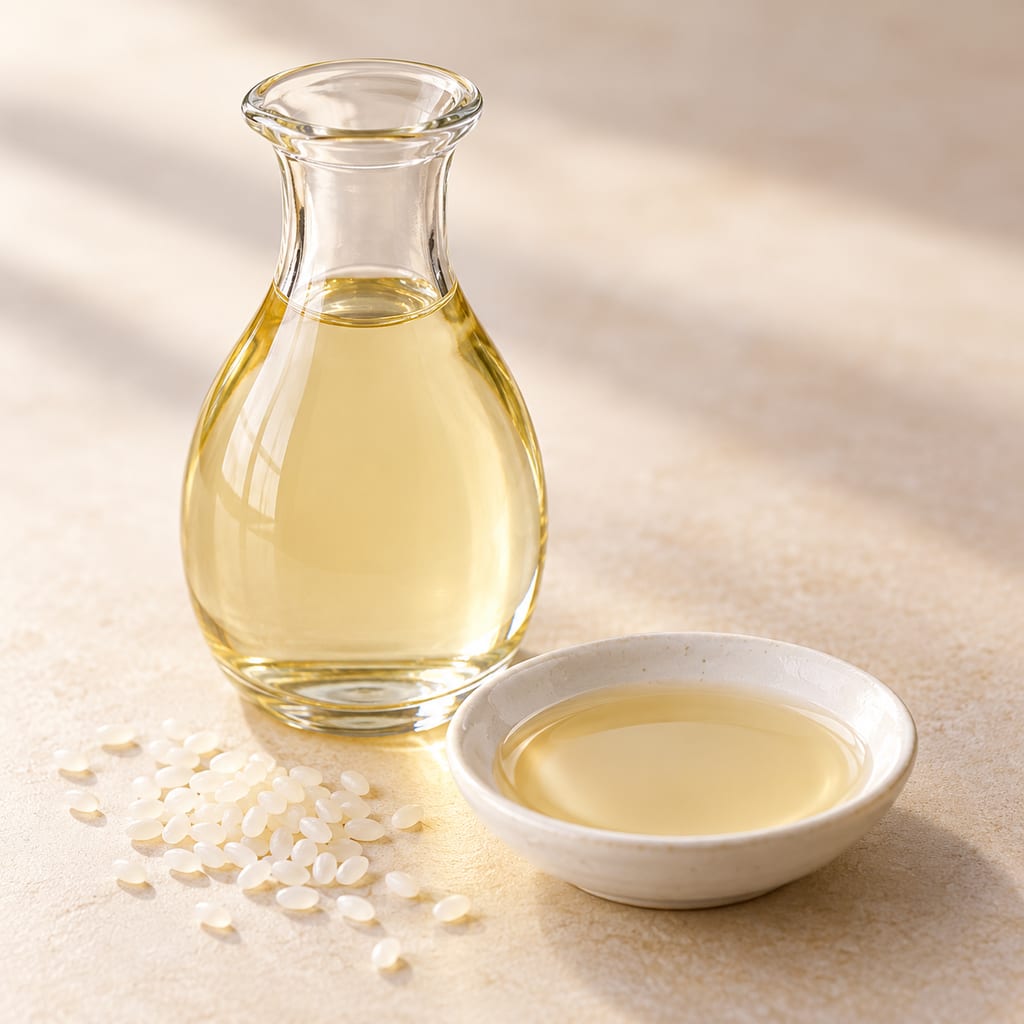
Unseasoned rice vinegar
Japanese komezu is a pale, unseasoned rice vinegar made through alcoholic and acetic fermentation; rice, water, koji and yeast shape its character.
 FermenteaWhere food goes to change
Modern adaptation
A Japanese-style glaze of pale rice miso, water, sugar and rice vinegar, heated gently until it coats a spoon and spread over cooked aubergine, tofu or vegetables.
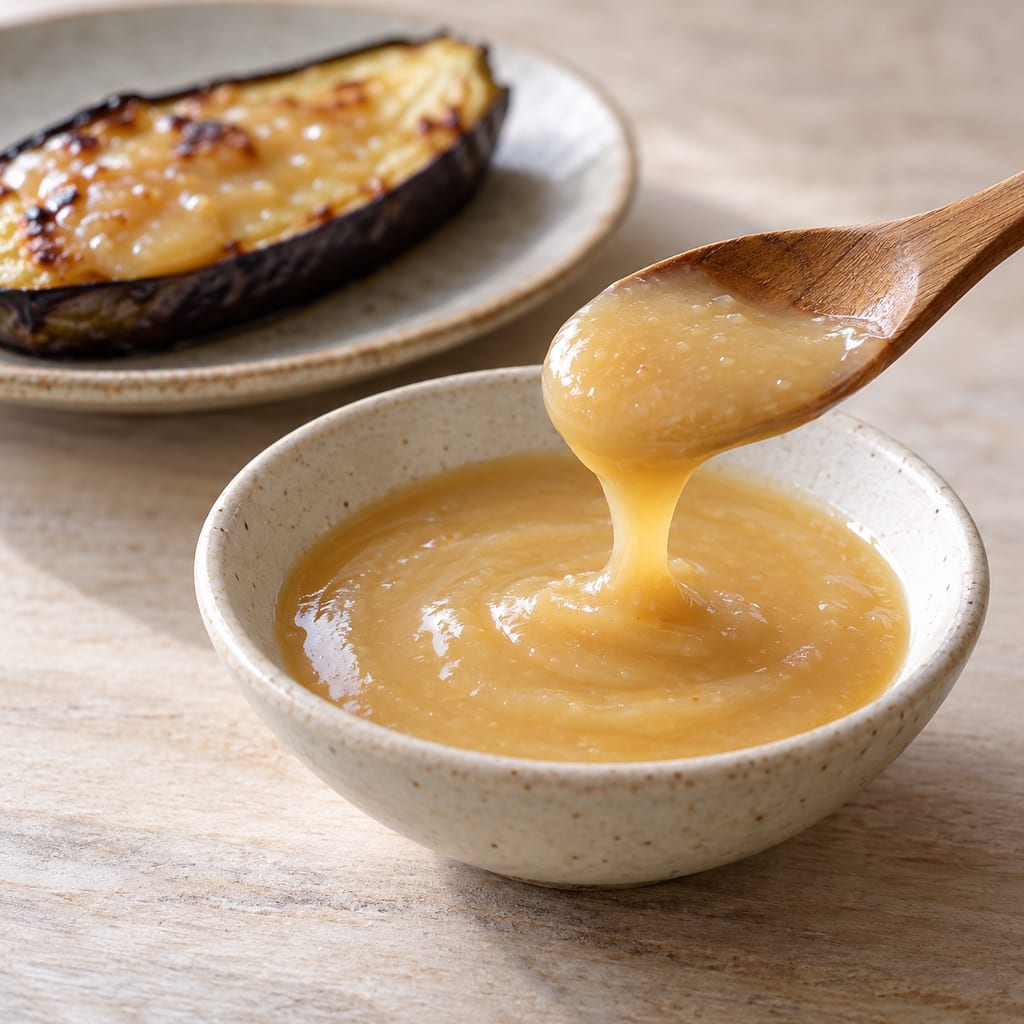
Miso is not one uniform paste. Marukome distinguishes rice, barley, soybean and blended misos, and describes lighter types as mellower while darker ones are richer. These categories carry flavour differences; they do not establish a universal sweetness or salt level for every product.
Use the pale rice miso listed in the formula, and check its package for ingredients and storage instructions. Soybeans are a regulated allergen in the United Kingdom, so read the product's allergen statement; other ingredients can vary by brand.
For leftovers, cool and refrigerate the glaze promptly in a clean covered container. UK Food Standards Agency guidance recommends eating leftovers within 48 hours. This is general handling advice, not a measured shelf life for this particular formula.
This exact formula is a contemporary development in a Japanese sweet-miso, dengaku-style frame, not a documented traditional standard. No date of creation or earlier attestation is given.
Scaling: source batch only
The archived recipe identifies soy in the miso; soybeans are a regulated allergen. Check the miso label for its exact ingredients and allergen statement.
Hazard sourceRefrigerate leftovers promptly in a clean, covered container and use within 48 hours under the general UK leftovers guidance. This is a handling guideline, not a measured shelf life for this glaze.
Control sourceContains soy from the miso; check the product label for other ingredients and allergens.
This original development formula has not been kitchen-tested, sensory-validated or shelf-life-tested.
It is not a validated canning or room-temperature recipe. Thickness, taste and a closed container do not establish safety.
The archived R03 entry frames this original formula as Japanese and dengaku-style; it does not claim a traditional standard or a more precise regional origin.
Japanese komezu is a pale, unseasoned rice vinegar made through alcoholic and acetic fermentation; rice, water, koji and yeast shape its character.
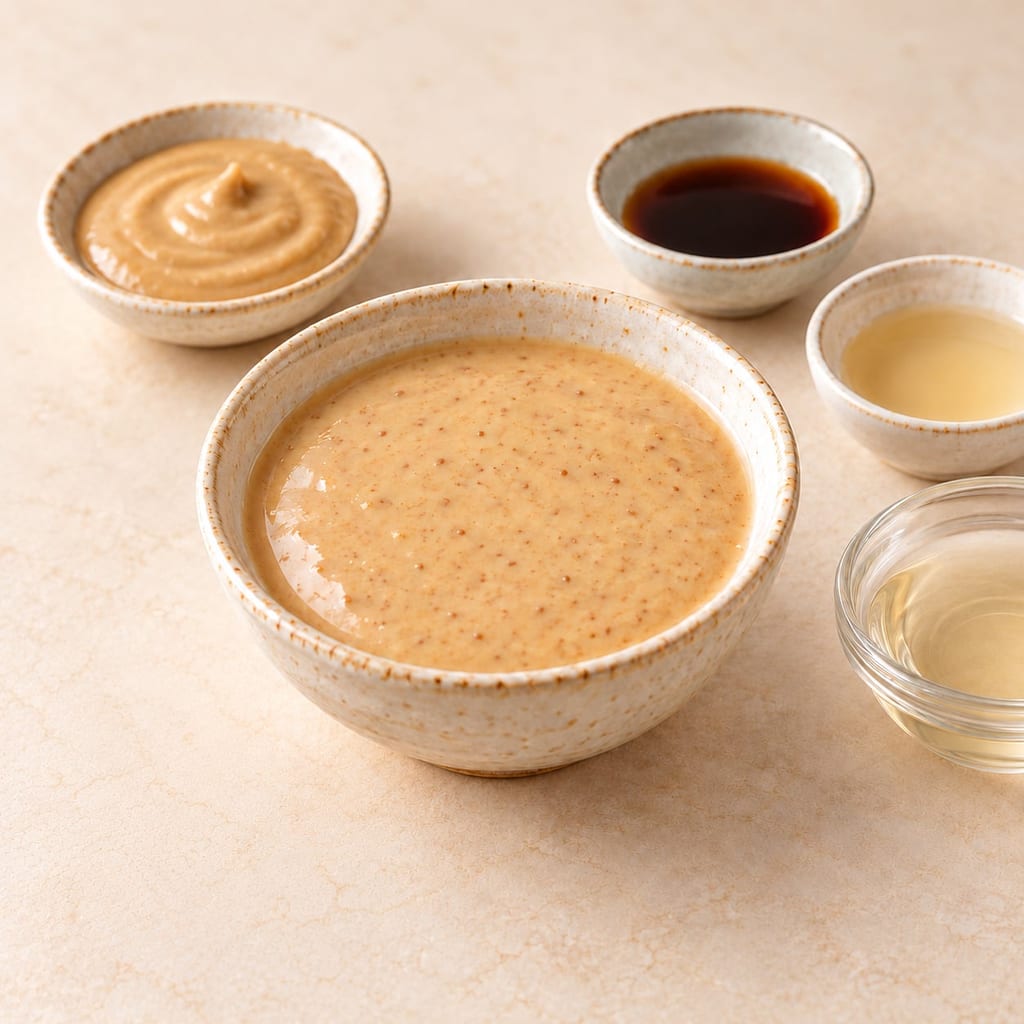
A creamy Japanese sesame dipping sauce with soy, rice vinegar and dashi. Gradual mixing turns the thick sesame paste into a smooth sauce.
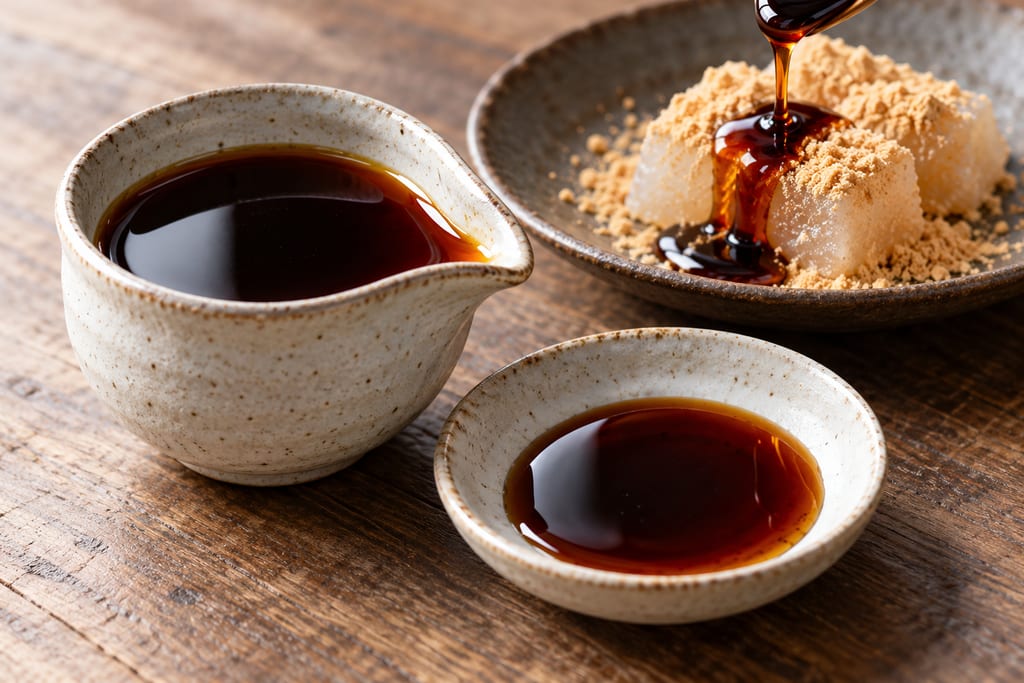
A dark Japanese syrup made by simmering black sugar with water and optional extra sugar. Drizzle it over mochi, ice cream or other desserts.
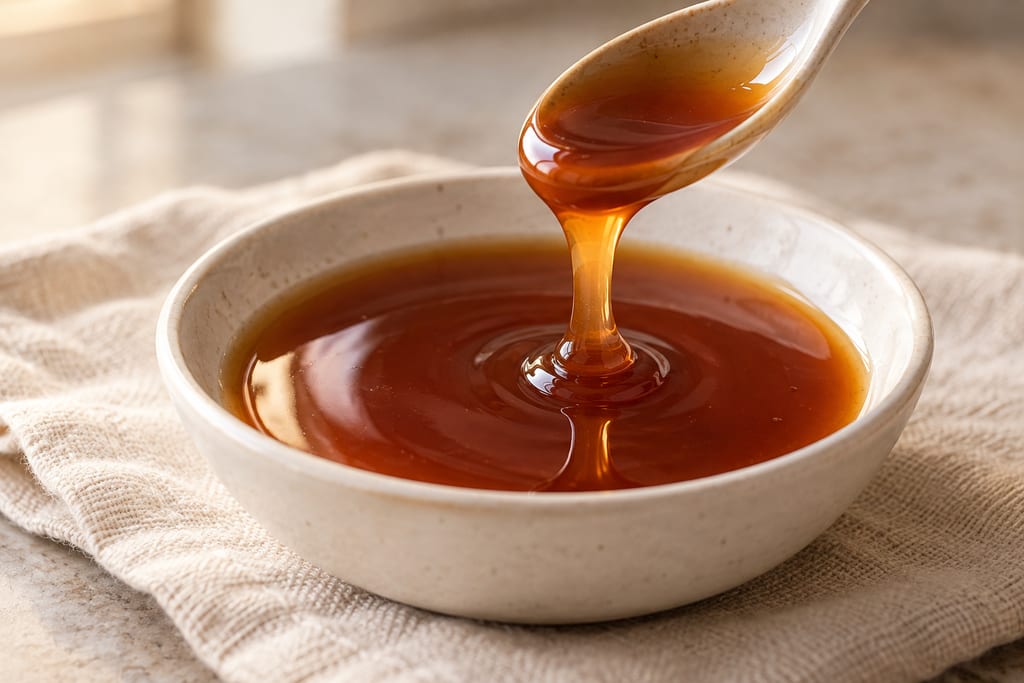
A glossy Japanese glaze thickened with starch, sugar, soy sauce and mirin. Spoon it over cooked rice dumplings while the glaze is still fluid.
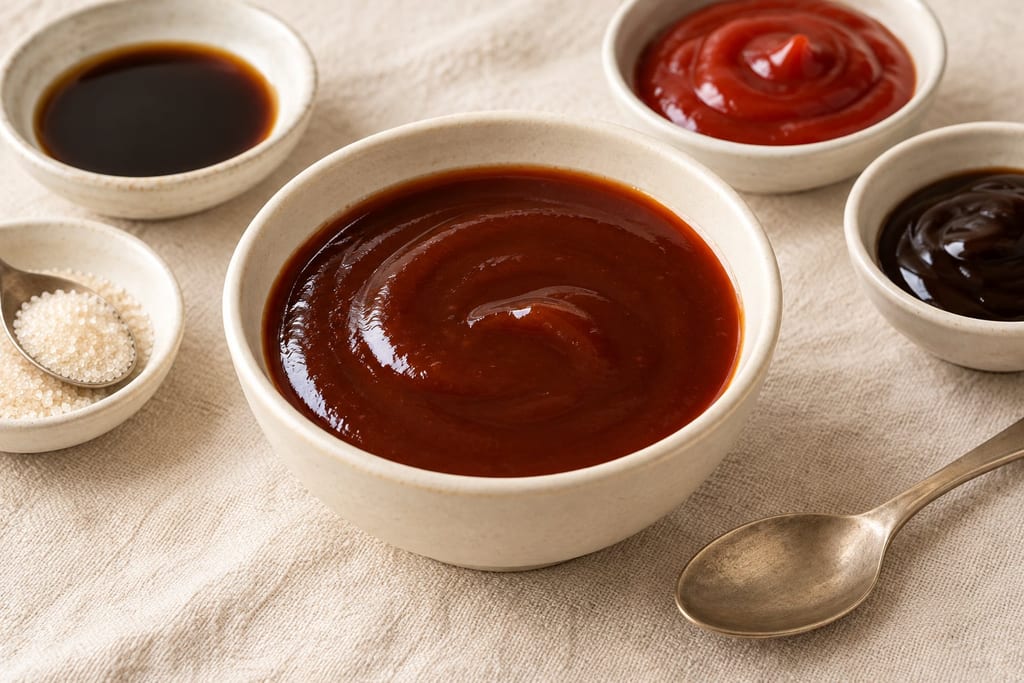
A sweet, tangy Japanese sauce mixed from Worcestershire sauce, ketchup, oyster sauce and sugar. Serve with breaded cutlets or croquettes.
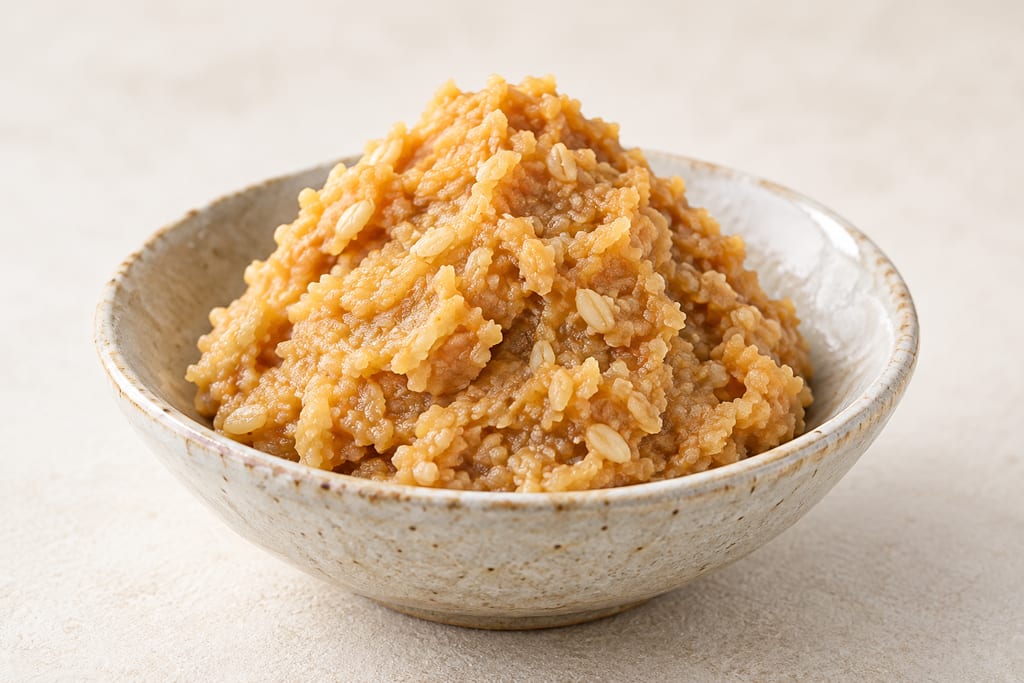
A Japanese soybean paste fermented with barley koji and salt, made mostly in Kyushu, Shikoku and western Japan. It is sweet, savoury and grainy.
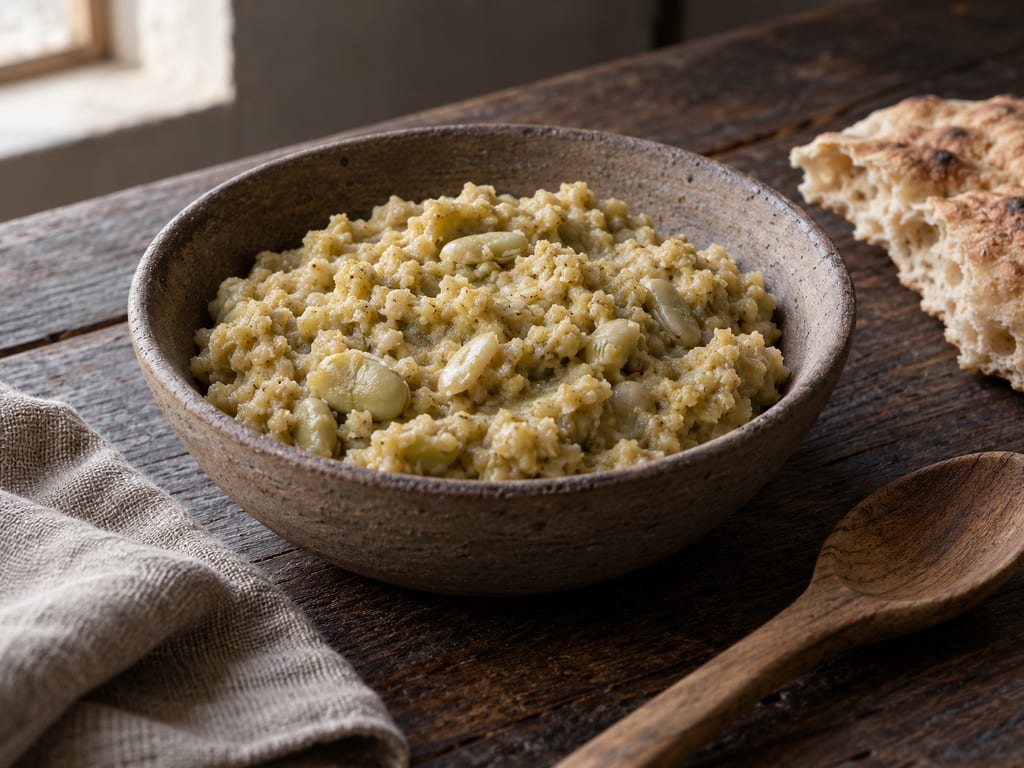
Cooked broad beans crushed to a thick paste with garlic and salt, a museum preparation built on the one European pulse that was already old when the Viking Age began.
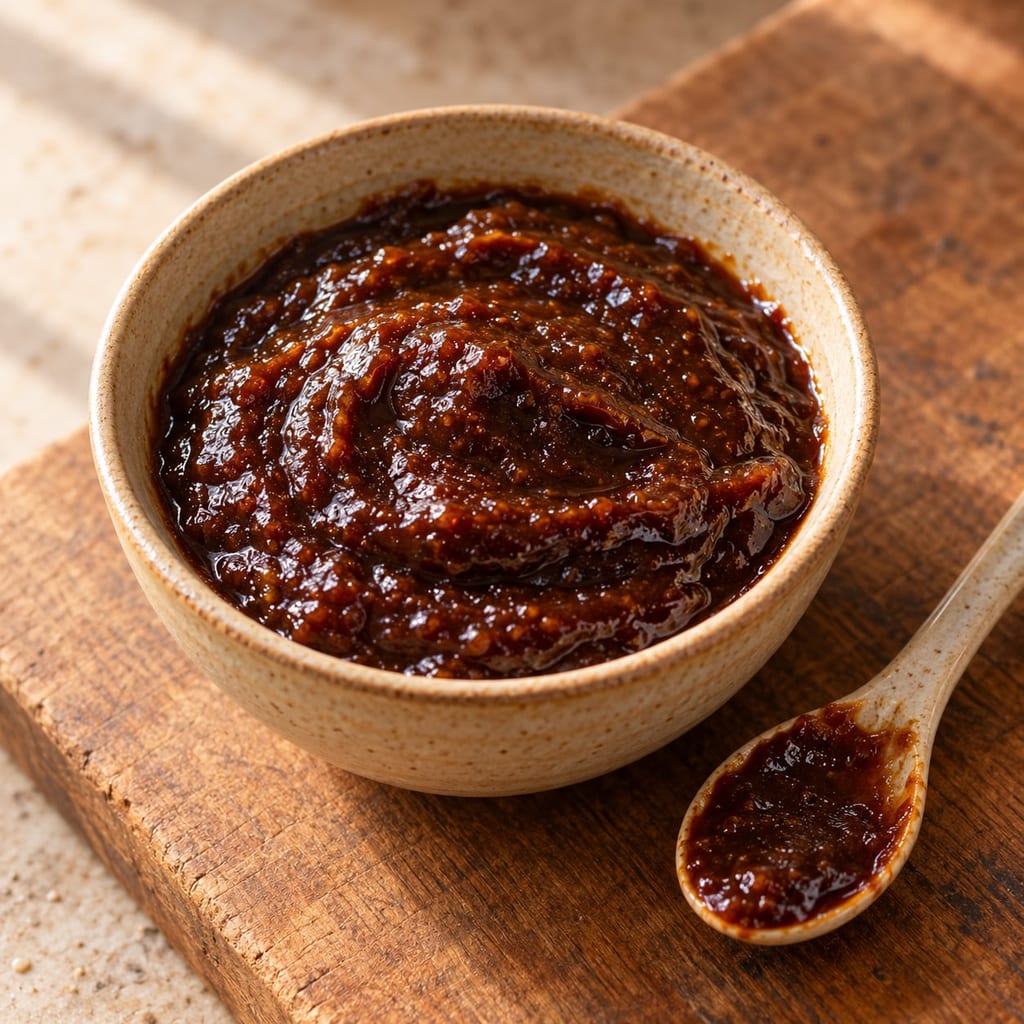
Chu hou is a sweet, savoury Cantonese paste of fermented soybeans, fermented bean curd, garlic, ginger and sesame, used mainly to braise meat.
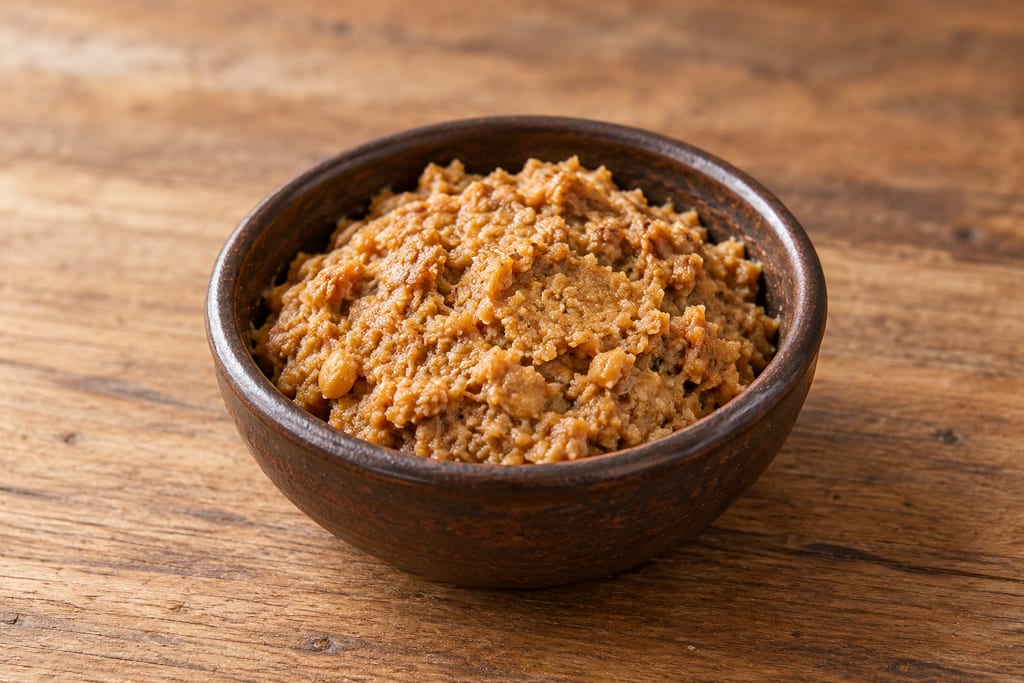
Doenjang (된장) is a Korean fermented soybean paste made by brining meju, separating ganjang, then mashing and aging the solids. This recipe follows one documented Sunchang processing study.
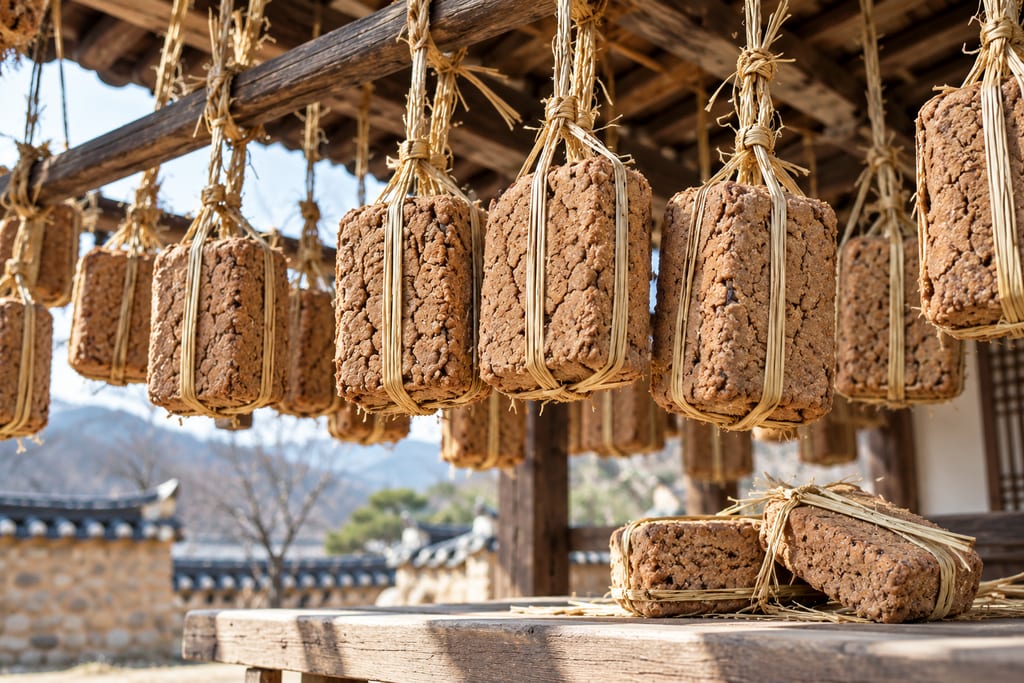
A cooked soybean brick, shaped and dried, that is fermented as a solid and later brined to make the Korean soy paste doenjang and the soy sauce ganjang.
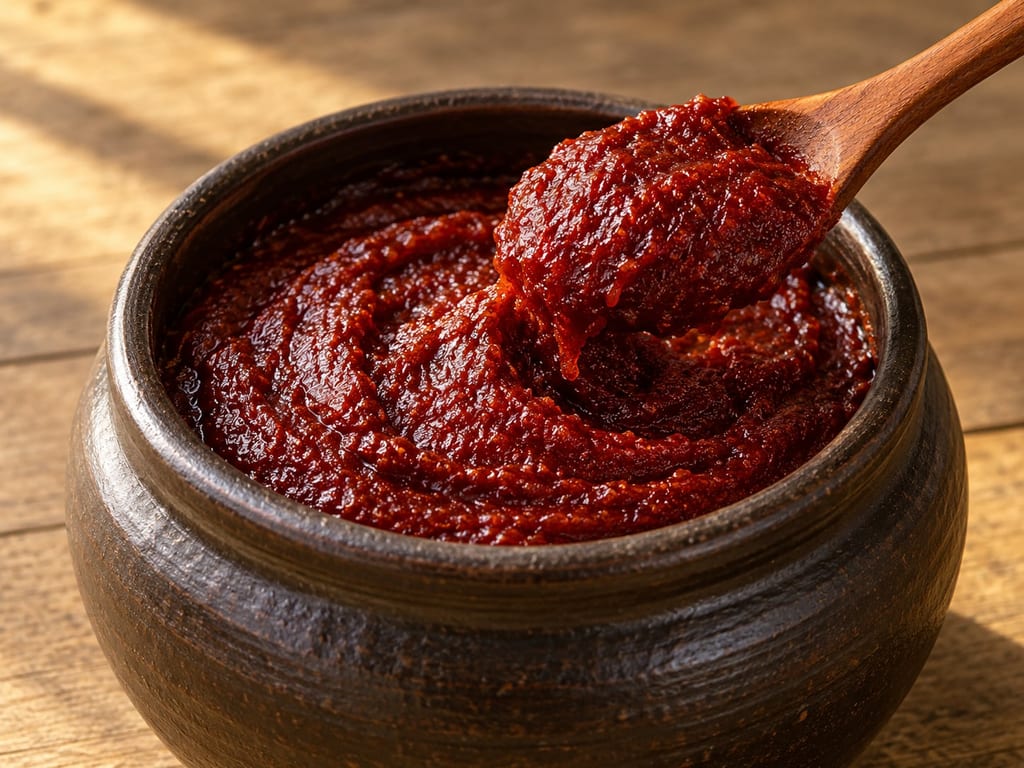
Korea’s sweet, savoury and fiery red paste of glutinous rice, barley-malt enzymes, fermented soybean meju powder and chilli powder, matured in earthenware.
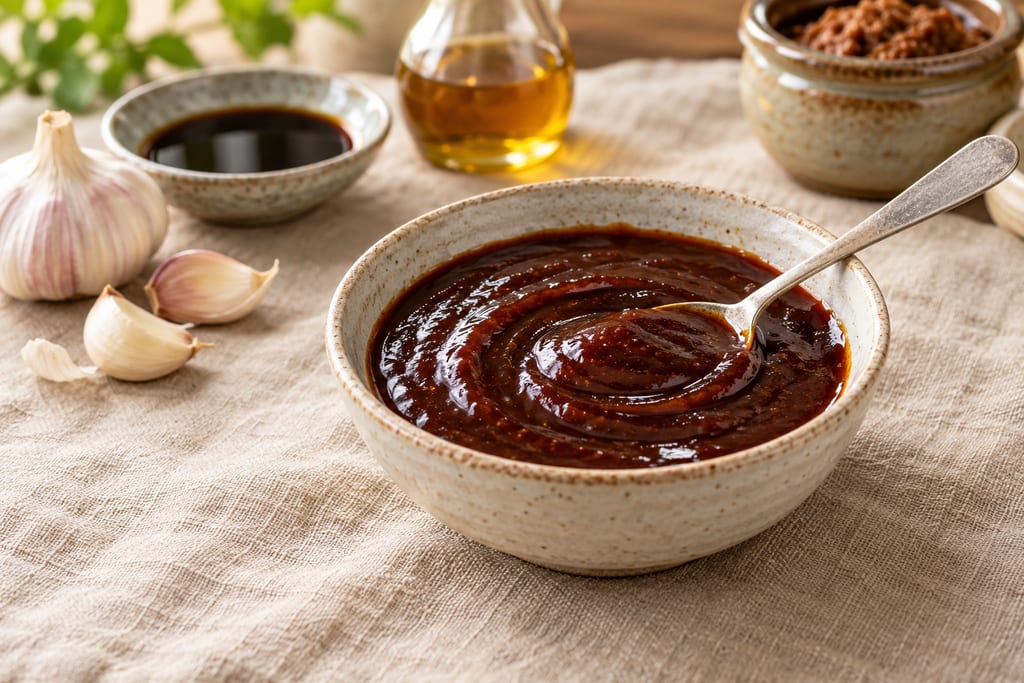
A thick, dark, sweet-salty Chinese condiment built on fermented soybean paste. This page gives one quick home version and records how commercial formulas differ.
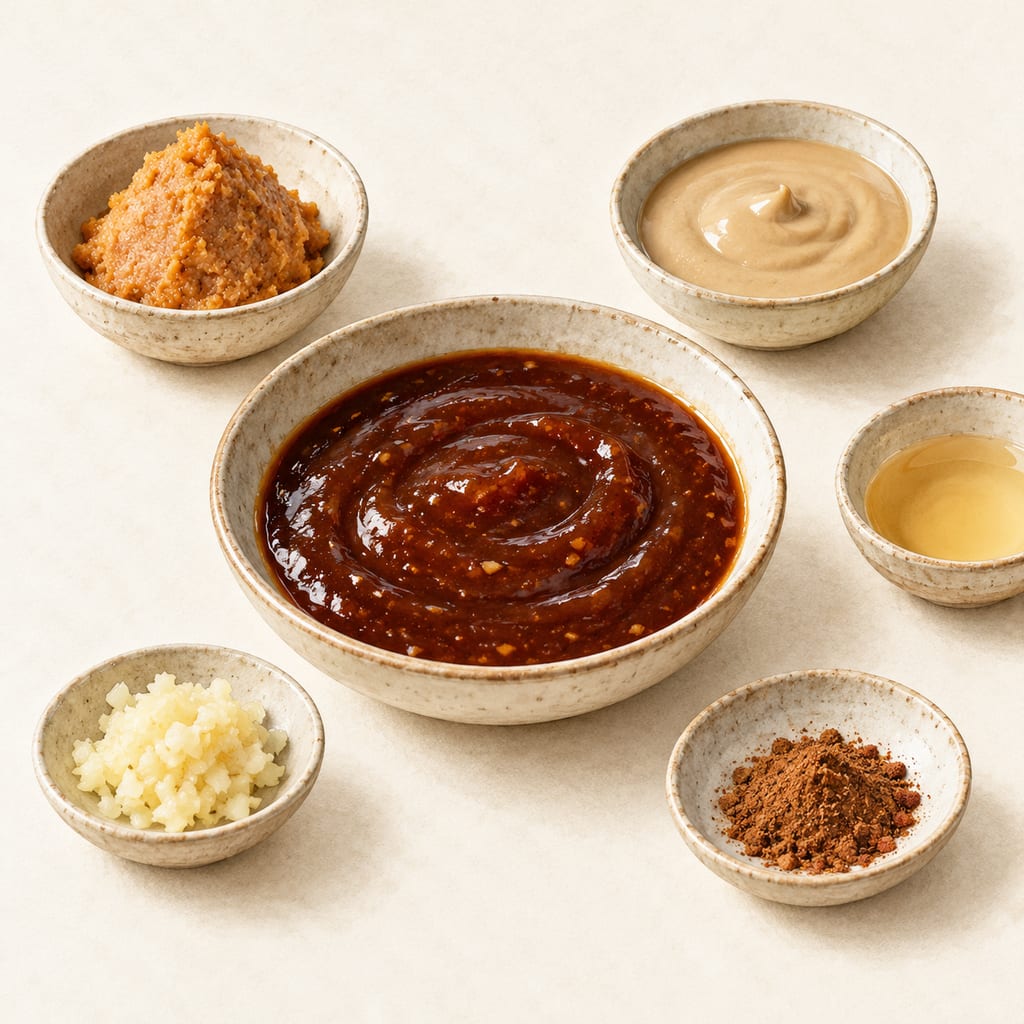
An untested modern miso-based sauce inspired by hoisin's sweet, savory profile; this prototype is not traditional hoisin or a copy of a commercial brand.
No community contributions have been published for this entry yet.
Sign in to contribute. Published comments and photos are free to read.
Marukome USAIdentity · Variation
Types of MisoDistinguishes rice, barley, soybean and blended miso types.
Describes lighter misos as mellower in flavour and darker misos as richer.
Cited in: Miso types and flavour
Food Standards Agency, United KingdomSafety · Storage
How to chill, freeze and defrost food safelyRecommends eating leftovers within 48 hours and cooling cooked food before refrigeration under its consumer guidance.
Cited in: Keeping the cooked glaze
Food Standards Agency, United KingdomSafety · Allergens
Allergen guidance for food businessesLists soybeans among the regulated allergens that food businesses must declare when present as an ingredient.
Cited in: Miso types and flavour