Mirin
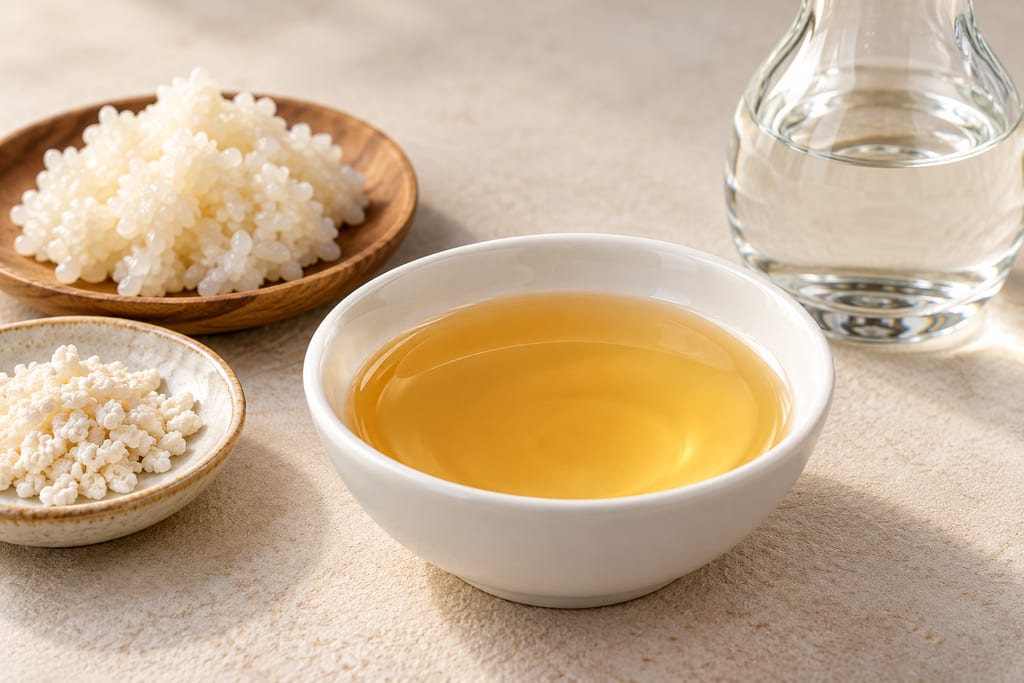
Hon-mirin is a Japanese rice seasoning made by saccharifying glutinous rice with rice koji in shochu, then pressing and usually heating the mash.
 FermenteaWhere food goes to change
Modern method
みたらし団子のたれ · Mitarashi glaze
A glossy Japanese glaze thickened with starch, sugar, soy sauce and mirin. Spoon it over cooked rice dumplings while the glaze is still fluid.
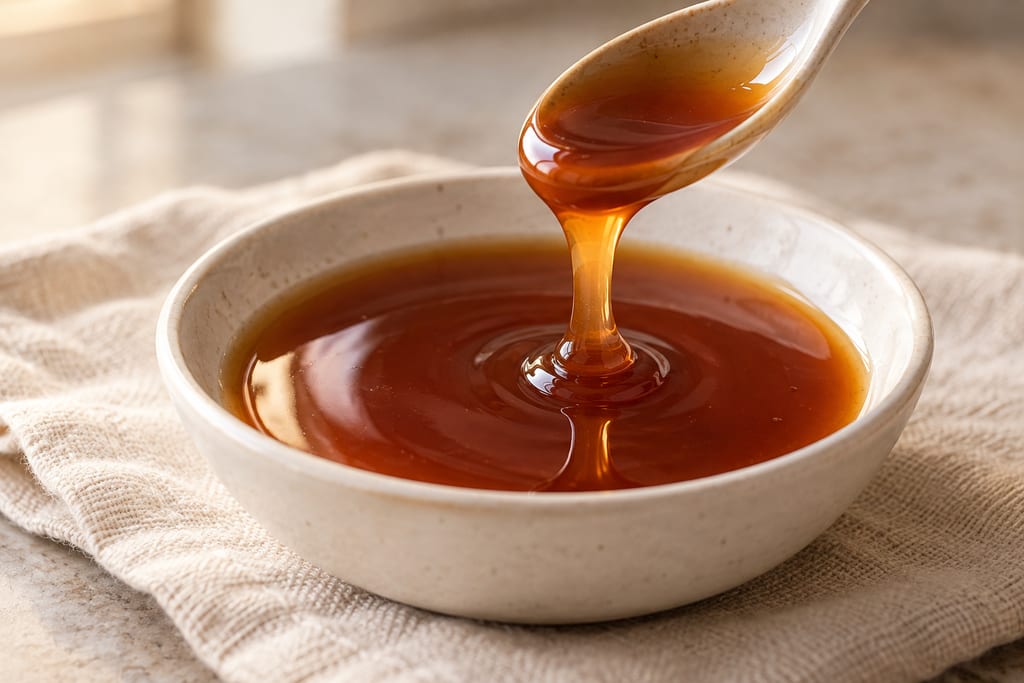
Mitarashi glaze is a sweet and savoury Japanese sauce most closely associated with mitarashi dango, skewered rice dumplings coated in a glossy, amber-brown glaze.
The sauce combines sugar, soy sauce, mirin, water and starch.
Its texture is one of its defining characteristics.
Unlike a thin soy dressing, it must be sufficiently thick to adhere to the rounded surfaces of the dumplings.
Unlike a rigid sugar coating, it remains soft and fluid.
The flavour balances sweetness, saltiness and a mild savoury depth.
The recipe in this record covers only the glaze. The dango dough and its cooking process are separate preparations.
That distinction should be retained in Fermentea's structured recipe data.
The glaze does not undergo a new fermentation stage, although soy sauce and some varieties of mirin are fermentation-derived ingredients.
Mitarashi dango is strongly associated with Kyoto and the area around Shimogamo Shrine.
Traditions connect the food with purification rites and with the mitarashi water associated with the shrine.
Historical explanations of the name refer to the sacred water and bubbles appearing on its surface.
However, those stories should be distinguished from a securely dated invention of the present sugar-soy glaze.
The modern sweet and savoury coating is one stage in the evolution of the food.
Dango itself belongs to a much wider Japanese family of rice-flour sweets.
Different dango preparations use different seasonings, coatings and serving contexts.
The present source is a contemporary home-cooking formula. Its ingredient ratio does not establish the precise composition of earlier shrine offerings.
Ingredient — Quantity
Granulated sugar — 4 tablespoons
Mirin — 2 tablespoons
Soy sauce — 2 tablespoons
Water — ⅔ cup
Potato starch — 2 tablespoons
The source permits replacing the potato starch with 2 tablespoons cornstarch.
Yield: Not stated for the glaze alone.
The associated complete dango recipe serves five skewers, but that figure must not be incorrectly recorded as an independently measured glaze yield.
Cooking time: Not specified separately.
No numeric burner temperature is provided.
Sugar supplies the principal sweetness.
It also affects the sauce's viscosity and the way sweetness balances soy sauce.
Soy sauce provides salt, colour, umami and fermented aromatic compounds.
Its brown colour is already present before the sauce is cooked.
Mirin is a Japanese sweet rice seasoning.
Traditional hon mirin is an alcoholic product made through saccharification and maturation involving rice and koji-related ingredients.
Other products labelled mirin or mirin-style seasoning may differ substantially.
Their alcohol content, sweetness and acidity are not interchangeable.
The recipe specifies mirin without requiring a particular brand.
Potato starch is responsible for the distinctive thickening.
Its botanical source is potato, Solanum tuberosum.
When heated in sufficient water, starch granules swell and gelatinise.
This turns a comparatively thin liquid into a glossy sauce.
Set a clean saucepan on the work surface.
Do not turn on the heat yet.
This first instruction matters because starch can clump if dry powder is added directly to hot liquid.
Place 4 tablespoons sugar, 2 tablespoons mirin, 2 tablespoons soy sauce, ⅔ cup water and 2 tablespoons potato starch in the pan.
Whisk until the starch is dispersed and the mixture appears smooth.
Check the bottom of the pan for dry powder.
Turn on the heat.
Continue whisking.
The original recipe does not specify an exact temperature setting.
The sauce may remain relatively thin initially.
As the starch gelatinises, its viscosity can increase rapidly.
Keep whisking to prevent lumps and uneven thickening.
As soon as the sauce has thickened to a pourable glaze, remove the saucepan from the heat.
Transfer it to a bowl.
The sauce will continue changing in consistency as it cools.
Spoon the glaze over cooked dango.
Serve while its consistency remains fluid enough to coat the dumplings.
Potato starch contains amylose and amylopectin.
In cold water, native starch granules disperse but do not dissolve completely.
When heated, they absorb water and swell.
Their internal ordered structure is disrupted.
Starch molecules interact with the surrounding water, creating a thicker continuous mixture.
This process is called gelatinisation.
It explains the instruction to whisk continuously and remove the pan when the glaze thickens.
The sauce's texture depends on the starch quantity, available water, dissolved sugar and heat treatment.
A sauce cooked too long or allowed to evaporate excessively may become thicker than desired.
Cornstarch comes from maize, Zea mays.
It can also thicken sauces through gelatinisation.
However, potato and maize starch differ in granule characteristics and thickening behaviour.
The source permits substituting the same quantity, but the finished texture may not be identical.
Potato starch often produces a particularly glossy appearance in suitable sauces.
Cornstarch may produce a slightly different opacity and mouthfeel.
These differences are ordinary culinary variations rather than separate recipes.
Sweetness from sugar and mirin contrasts with the salt and umami of soy sauce.
The starch supplies texture but comparatively little independent flavour.
The sauce therefore coats the dumplings while allowing the simple rice-based flavour of the dango to remain recognisable.
This balance is especially important because dango themselves can be relatively mild.
The contrast between chewy dumpling and glossy sauce defines the familiar eating experience.
Mitarashi glaze is most commonly associated with skewered dango.
Dango may be lightly grilled or seared before coating.
A browned surface adds toasted flavour and changes the texture.
The sauce can also be used as inspiration for other sweet-savoury glazed rice preparations, although those should be labelled adaptations.
Different commercial recipes vary in sweetness, soy concentration and thickness.
The present source's potato-starch and cornstarch options belong together.
The original recipe does not establish a separate Okinawan, Kyoto or Tokyo variant of this exact five-ingredient glaze.
The sauce forms lumps: Starch may not have been dispersed before heating.
It thickens suddenly: This is normal when gelatinisation becomes extensive. Continue whisking and remove from heat promptly.
It becomes too thick while cooling: The sauce may have been cooked beyond the intended fluid endpoint.
The glaze is too thin: It may not have been heated sufficiently for starch gelatinisation.
A scorched flavour develops: Heat was excessive or whisking inadequate.
The sauce loses gloss: Starch type, concentration and handling affect appearance.
The correct consistency is a smooth sauce that coats rather than rigidly encases the dumplings.
The original recipe provides no separate validated storage period for the glaze.
Its freezing instructions concern the dango, not this sauce.
The glaze should therefore be treated as a freshly cooked condiment.
Soy sauce may contain wheat and soy allergens.
Mirin may contain alcohol, and the recipe does not provide a measured residual alcohol concentration after cooking.
Use suitable ingredient labels when preparing the dish for people with dietary restrictions.
The sweet soy glaze component of a contemporary Japanese mitarashi dango recipe; the dumpling dough is a separate preparation.
Scaling: source batch only
The page’s freezing instructions concern dumplings, not storage of the separate glaze.
Soy sauce and mirin ingredients vary; check the products you use.
Culinary association of this preparation; no exact birthplace is established.
Hon-mirin is a Japanese rice seasoning made by saccharifying glutinous rice with rice koji in shochu, then pressing and usually heating the mash.
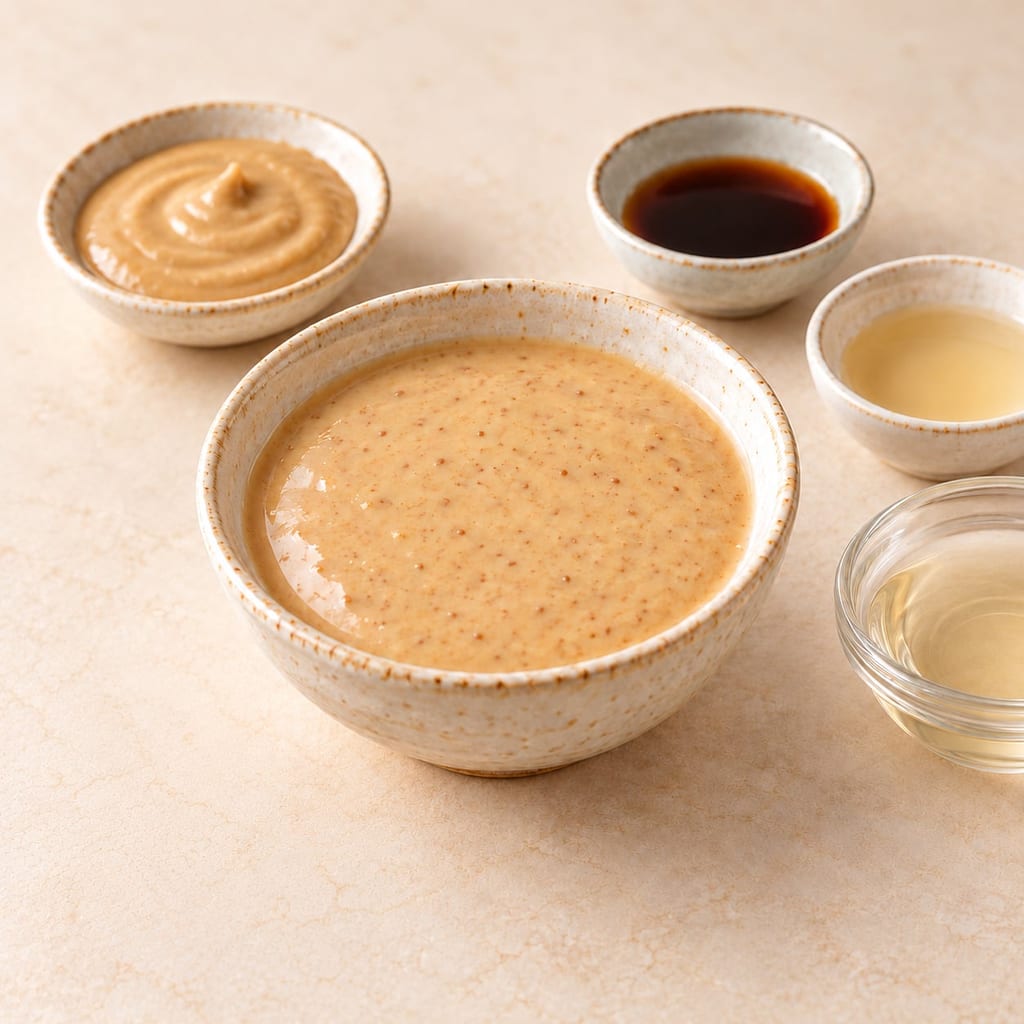
A creamy Japanese sesame dipping sauce with soy, rice vinegar and dashi. Gradual mixing turns the thick sesame paste into a smooth sauce.
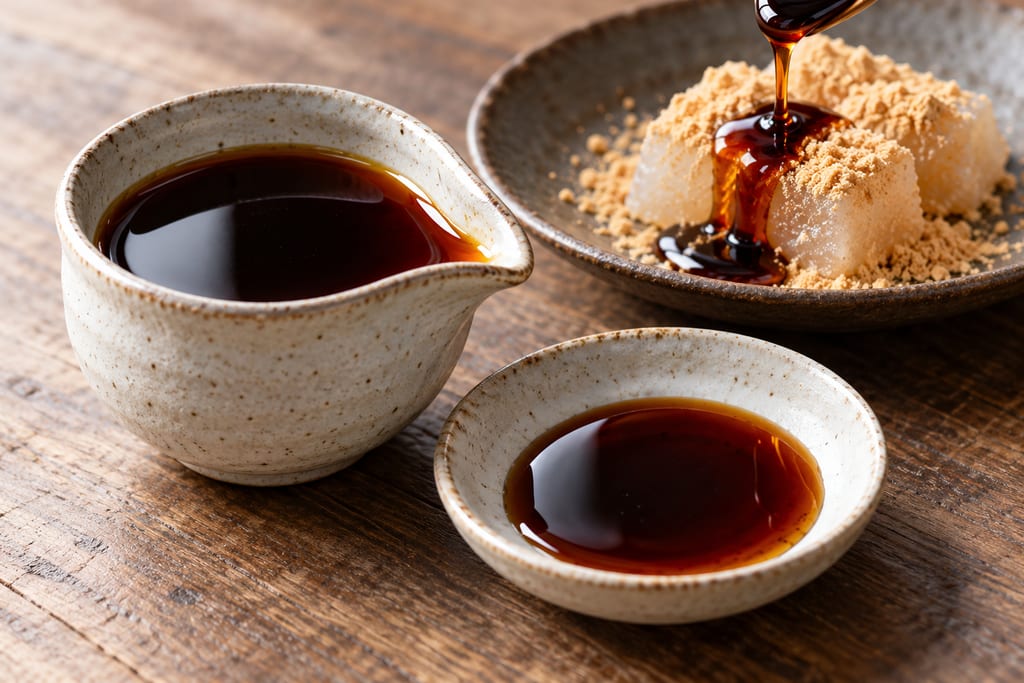
A dark Japanese syrup made by simmering black sugar with water and optional extra sugar. Drizzle it over mochi, ice cream or other desserts.
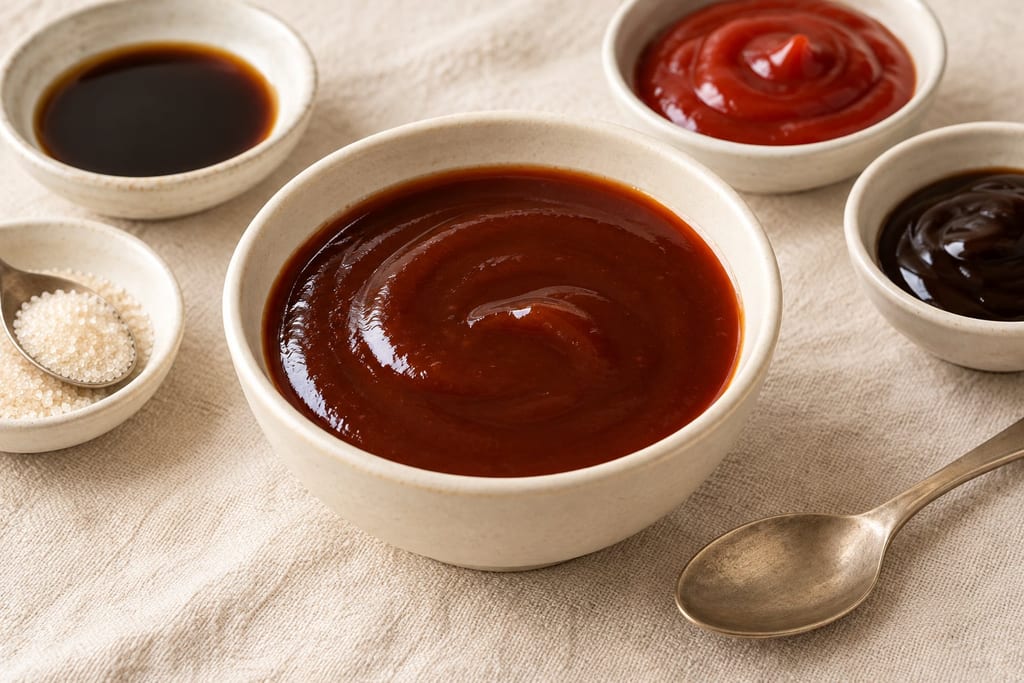
A sweet, tangy Japanese sauce mixed from Worcestershire sauce, ketchup, oyster sauce and sugar. Serve with breaded cutlets or croquettes.
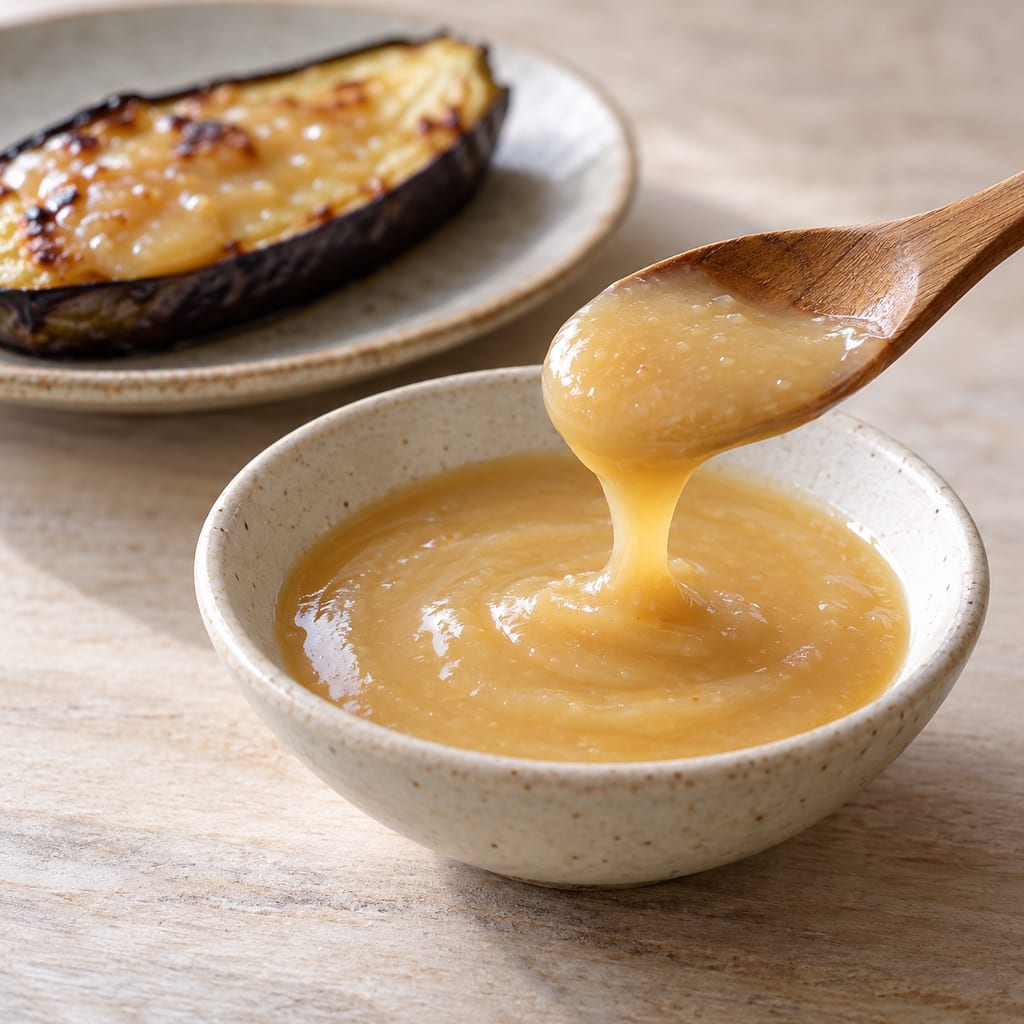
A Japanese-style glaze of pale rice miso, water, sugar and rice vinegar, heated gently until it coats a spoon and spread over cooked aubergine, tofu or vegetables.

Ajvar is a cooked Balkan pepper preserve built around roasted red peppers, peeled, drained, ground and slowly fried with oil and seasoning. Leskovac’s protected version is a pepper specialty; regional versions vary.

Amlou is a nutty, lightly sweet Moroccan spread of roasted almonds, culinary argan oil and honey. The almonds are ground first, then loosened with oil and sweetened; the balance can range from a thick spread to a dip.

Apple sauce for goose and pork is a plain English accompaniment: cooked apples pulped with water, then sweetened with sugar and finished with a little butter.

A warm dip of garlic, anchovy and olive oil, often enriched with butter, that Piedmont serves over a flame with raw and cooked vegetables and bread.

A sweet-hot table sauce of ripe banana simmered with vinegar, sugar, onion, garlic and fresh chilli, in the manner of Philippine banana ketchup. An untested development batch of about 500 g.

A Georgian walnut sauce of ground walnuts, garlic, vinegar and spices, thinned with water or broth. It is served with poultry, vegetables and bread, and is the sauce of the dish satsivi.

A pourable dessert sauce of brown sugar, butter and cream, with a little corn syrup and salt. It is the sauce form of the butterscotch confection and is made without water, unlike caramel.

Byzantine murrī is a cooked imitation of murrī from the medieval Arabic repertoire, made from scorched honey, toasted bread, walnuts, quince, carob and spices rather than from a long grain fermentation.
No community contributions have been published for this entry yet.
Sign in to contribute. Published comments and photos are free to read.
Just One Cookbook; Namiko Hirasawa ChenInspiration · Process · Geography
Mitarashi Dango みたらし団子Sweet-soy-glaze component: 4 tbsp sugar, 2 tbsp mirin, 2 tbsp soy sauce, ⅔ cup water, 2 tbsp potato starch or cornstarch.
Blend in cold saucepan before heating; whisk continuously, remove on thickening. Separate glaze yield and elapsed cooking time are absent. Dango freezing instructions do not establish glaze storage.
Cited in: What is mitarashi glaze?; Cultural and historical context; Ingredients; Sugar; Soy sauce; Mirin; Potato starch; 1. Prepare an unheated saucepan; 2. Add the ingredients; 3. Mix while cold; 4. Begin heating; 5. Watch for thickening; 6. Remove promptly; 7. Serve; The chemistry of starch gelatinisation; Potato starch versus cornstarch; Why the sauce is sweet and savoury; Serving traditions and variations; Troubleshooting; Storage and safety
Context
Just One Cookbook — MirinSupporting account in the written batch for this record.
Cited in: What is mitarashi glaze?; Ingredients; Mirin; 2. Add the ingredients; Why the sauce is sweet and savoury; Storage and safety
Context
Just One Cookbook — Dango Flour and Rice DumplingsSupporting account in the written batch for this record.
Cited in: What is mitarashi glaze?; Cultural and historical context; Ingredients; Mirin; 7. Serve; Why the sauce is sweet and savoury; Serving traditions and variations; Troubleshooting; Storage and safety